Upgrade to Pro — share decks privately, control downloads, hide ads and more …

The Future of PWAs

The Future of PWAs

PWAs, an emerging web technology introduced by Google in 2015 uses open standards of the web and adopts some best practices to provide the user a rich mobile and offline experience.
Despite its widespread adoption, most businesses still hold on to their native apps and do not plan to abandon them anytime soon.
Is the technology still evolving? Are PWAs still relevant? Should you invest time in maintaining and creating them?

Avatar for Ifeanyi Muogbo

Ifeanyi Muogbo

July 14, 2022

Other Decks in Technology

Transcript

  1. 1. Introduction 2. Headfirst dive into PWA success stories 3.

    Features and benefits of PWAs 4. PWAs vs. Native apps 5. Use cases: When to- and when not to- develop a PWA. 6. PWAs and the Future OVERVIEW
  2. While this session wouldn’t teach you how to build a

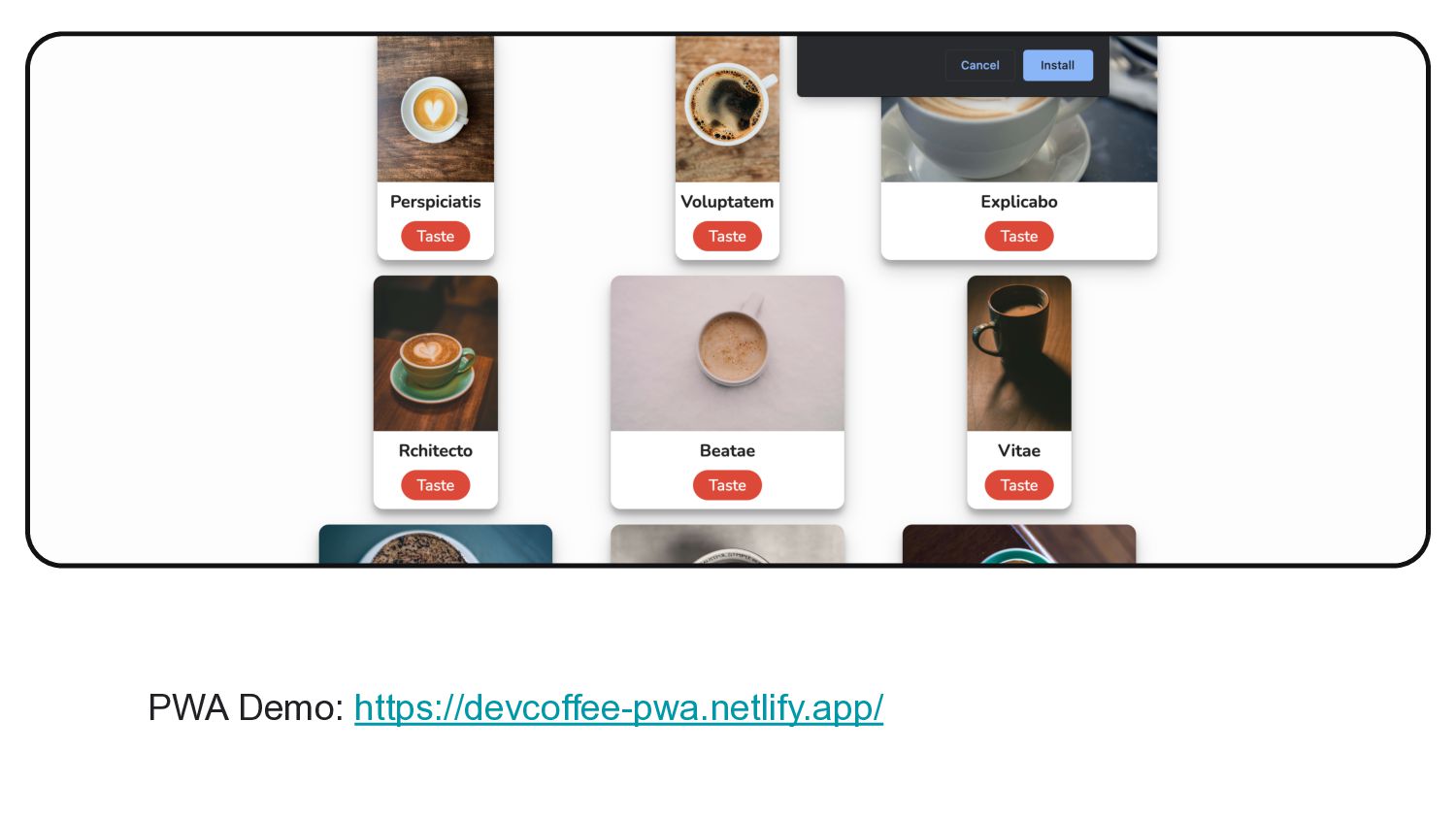
    PWA, at the end of this session, you’ll have understood • The concept of PWAs (explained with a demo) • Features, advantages and use cases of PWAs • Compelling reasons you must take PWAs into consideration when making engineering decisions Session Objectives
  3. They are apps which function as a bridge between native

    applications (apps you find in the Apple App Store) and traditional web pages. Essentially, they are websites with extra layers of development that let them act like native apps. PWAs: What they are
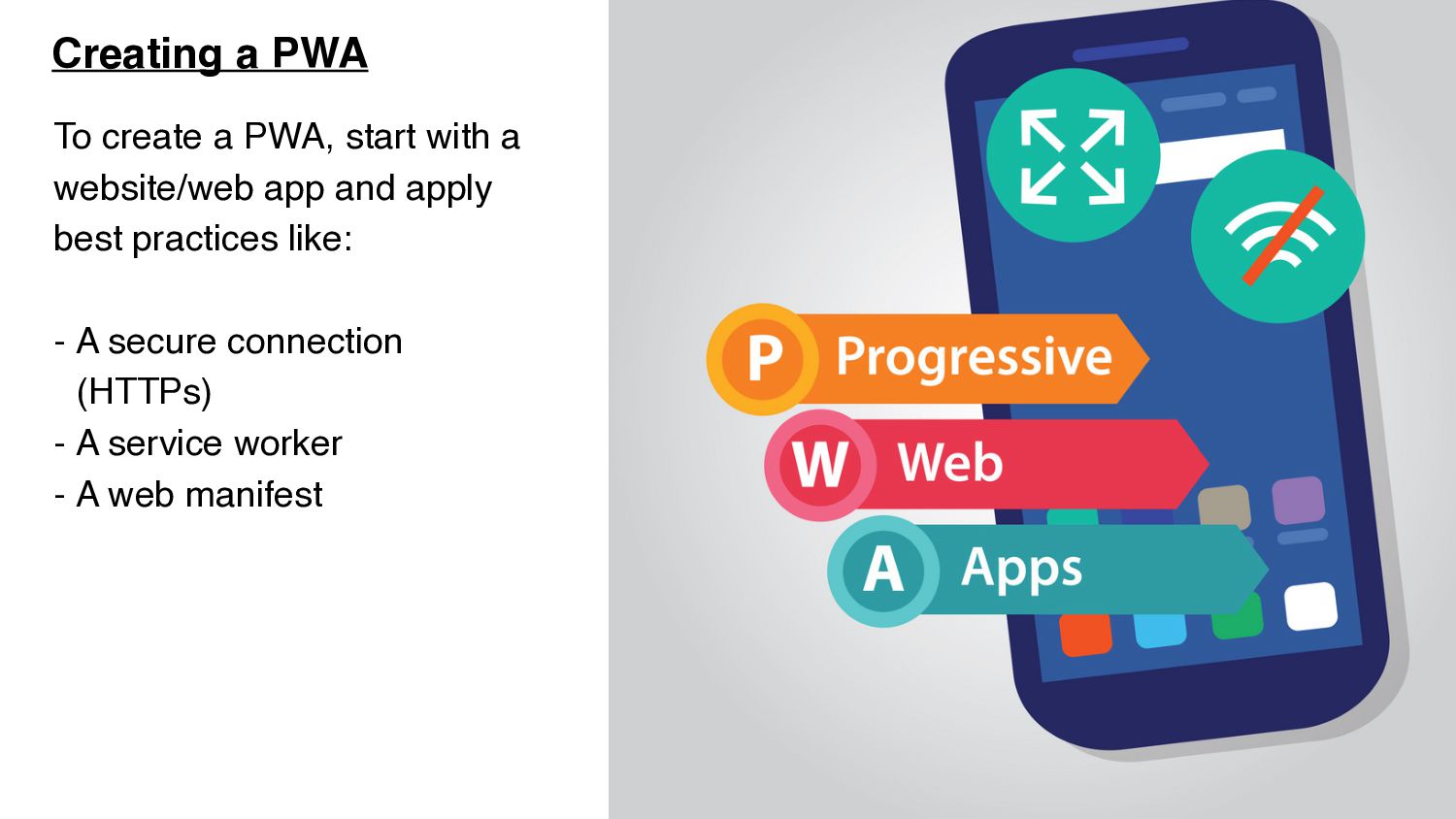
  4. To create a PWA, start with a website/web app and

    apply best practices like: - A secure connection (HTTPs) - A service worker - A web manifest Creating a PWA
  5. In the year 2017, several brands and big players (Forbes,

    Twitter, Aliexpress, Trivago, MakeMyTrip, …) announced their PWA success stories. Success stories
  6. Twitter developed Twitter Lite to implement PWAs. It uses substantially

    less data and makes the most of the cache. Users had the option to join the social platform without downloading the 82 MB native app thanks to the PWA transition. Even though Twitter Lite is quite small (just about 1 MB), it offers a similar user experience to the main client. This transition resulted in 65% increase in pages per session, 75% increase in tweets sent, 20% decrease in bounce rate. Twitter
  7. The most significant benefits for building PWAs rather than native

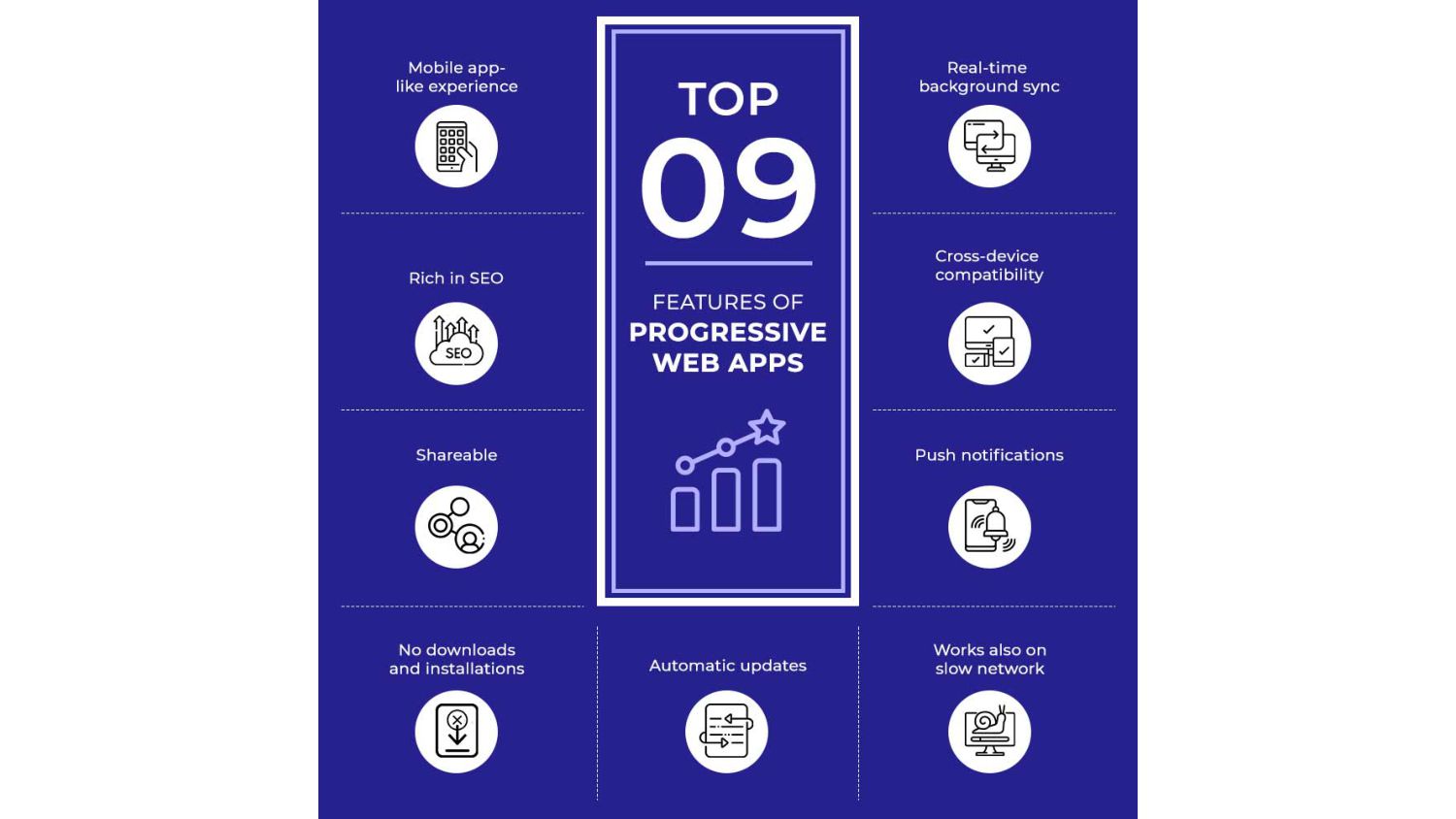
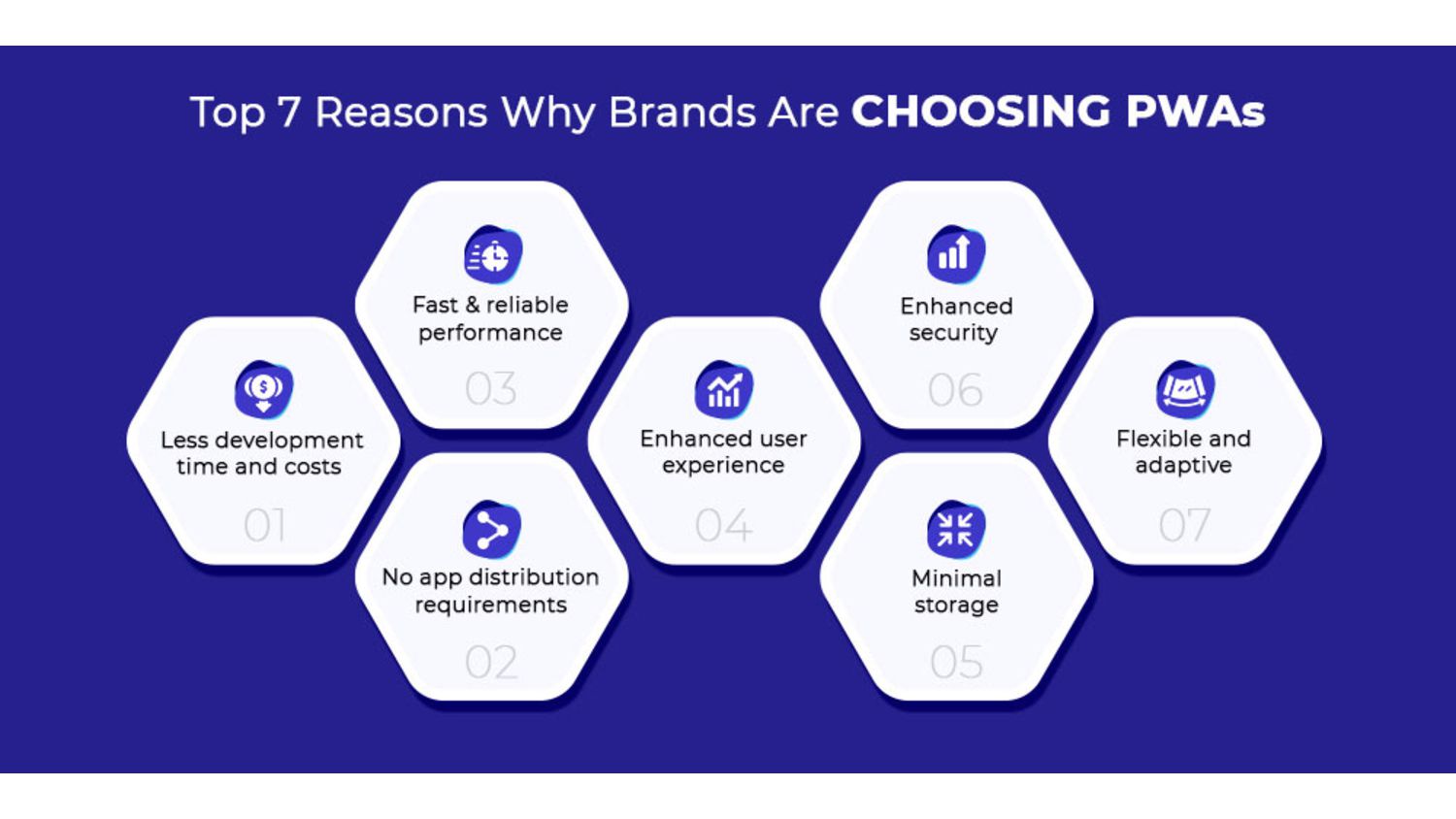
    apps are time and money. Your product probably has an iOS version, an Android version, and a web version for native apps. To create these apps, you therefore need more developers and more time. As a result of working on numerous codebases, you also require additional time to repair issues and add functionality. Top benefits
  8. You just need one "master" app for a progressive web

    app to function across websites, tablets, and mobile devices. Additionally, since there is only one codebase, it takes less time to repair errors and add new features. Top benefits (cont’d)
  9. 15

  10. 16

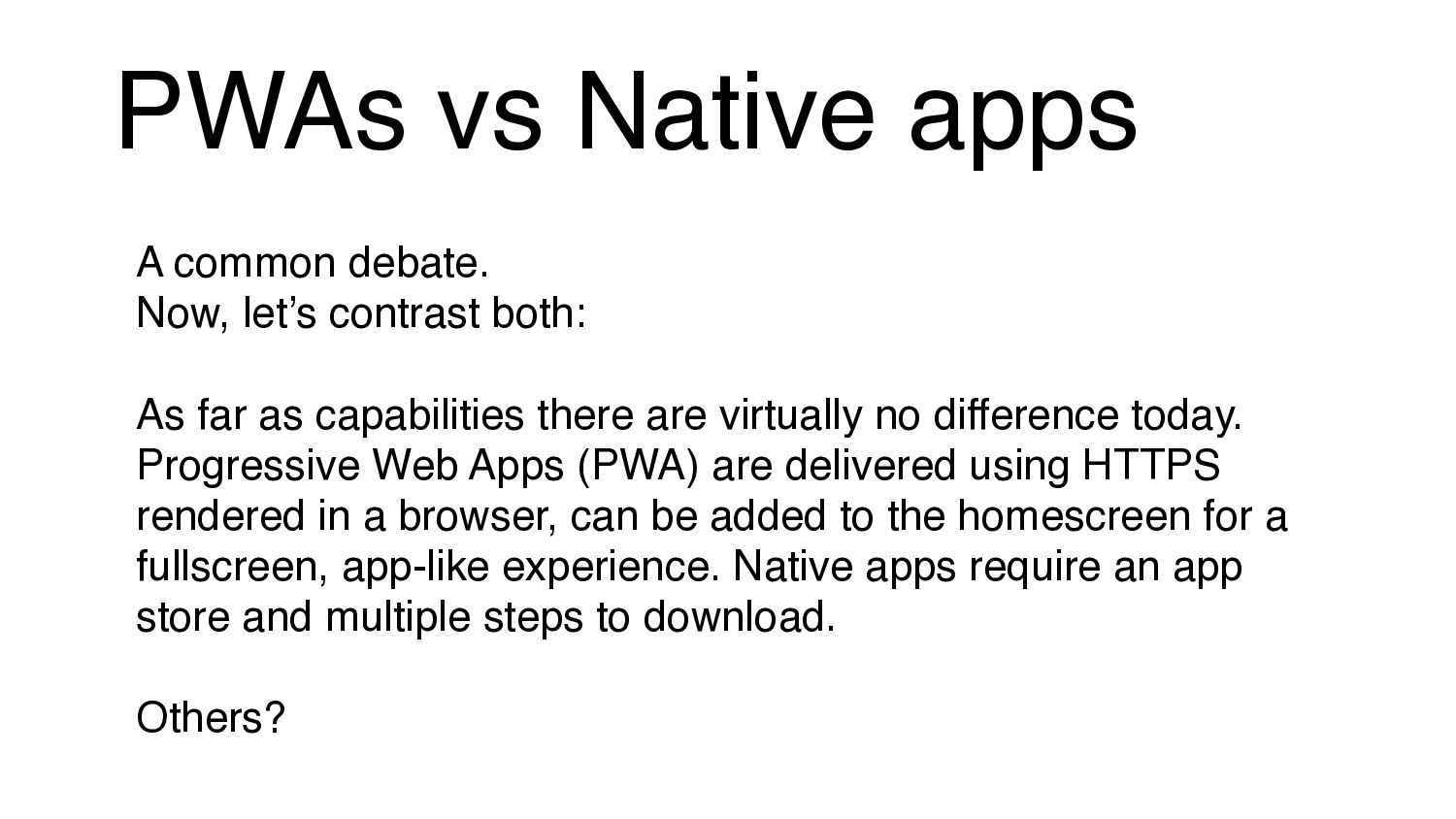
  11. A common debate. Now, let’s contrast both: As far as

    capabilities there are virtually no difference today. Progressive Web Apps (PWA) are delivered using HTTPS rendered in a browser, can be added to the homescreen for a fullscreen, app-like experience. Native apps require an app store and multiple steps to download. Others? PWAs vs Native apps
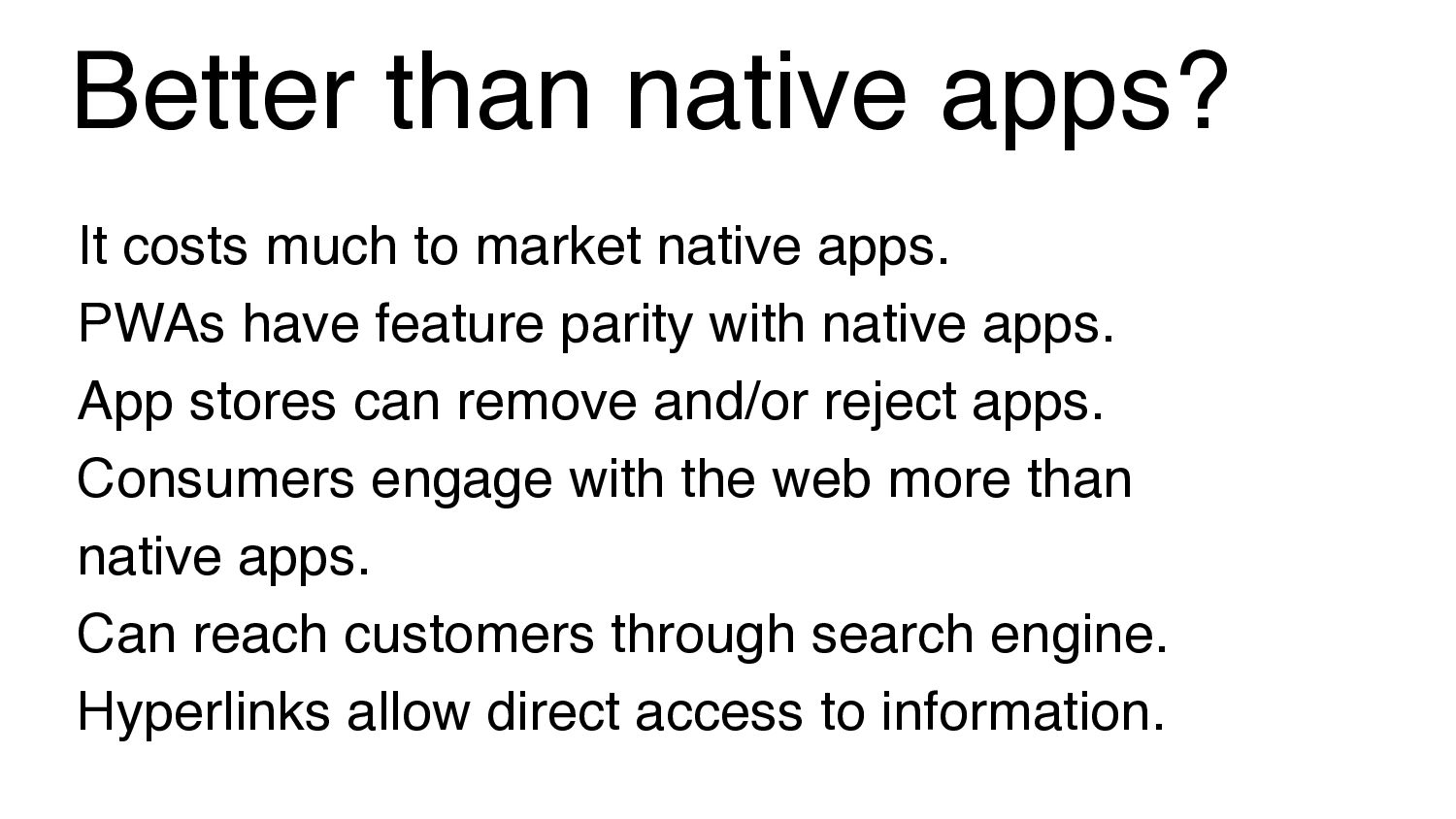
  12. It costs much to market native apps. PWAs have feature

    parity with native apps. App stores can remove and/or reject apps. Consumers engage with the web more than native apps. Can reach customers through search engine. Hyperlinks allow direct access to information. Better than native apps?
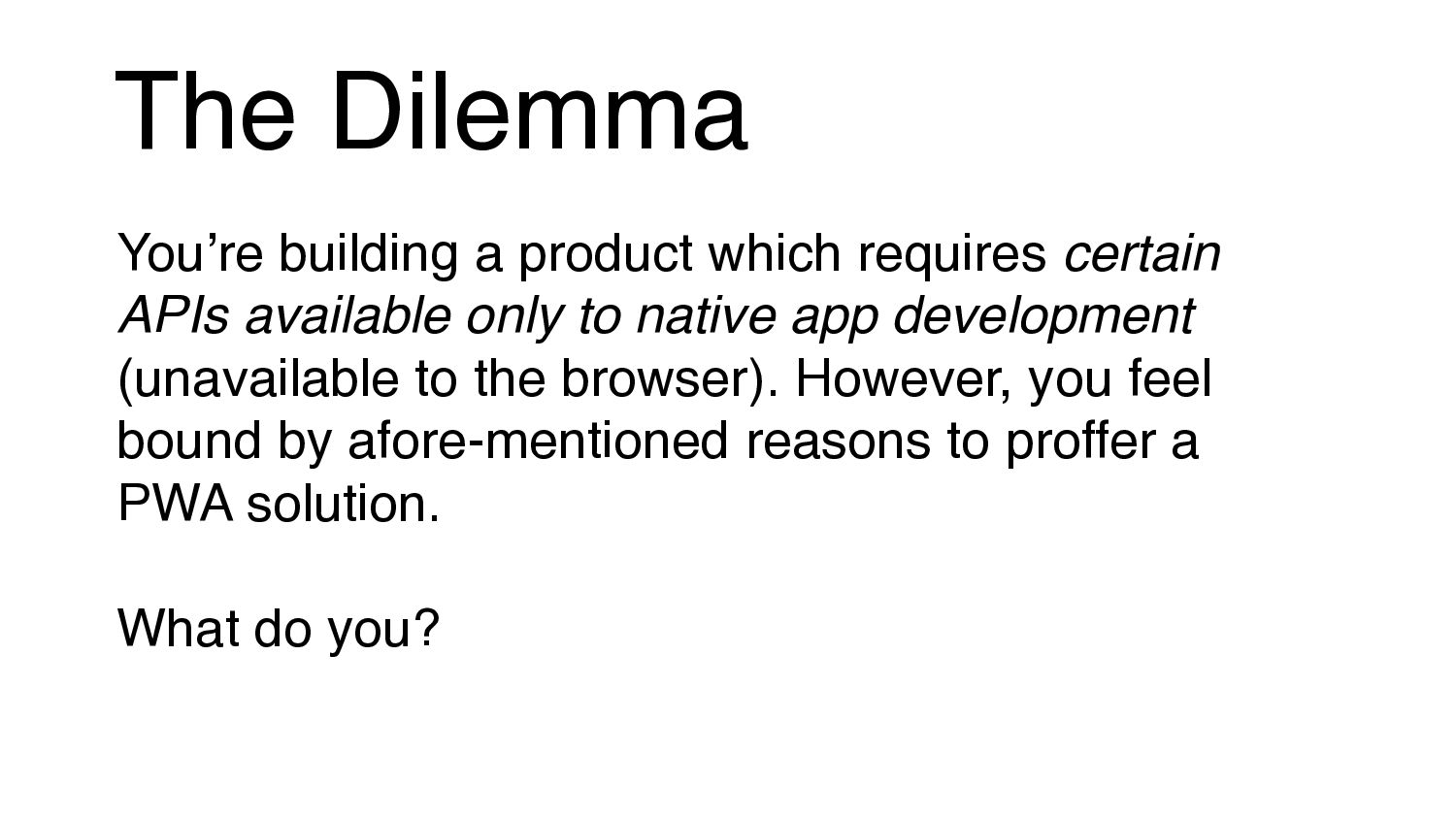
  13. You’re building a product which requires certain APIs available only

    to native app development (unavailable to the browser). However, you feel bound by afore-mentioned reasons to proffer a PWA solution. What do you? The Dilemma
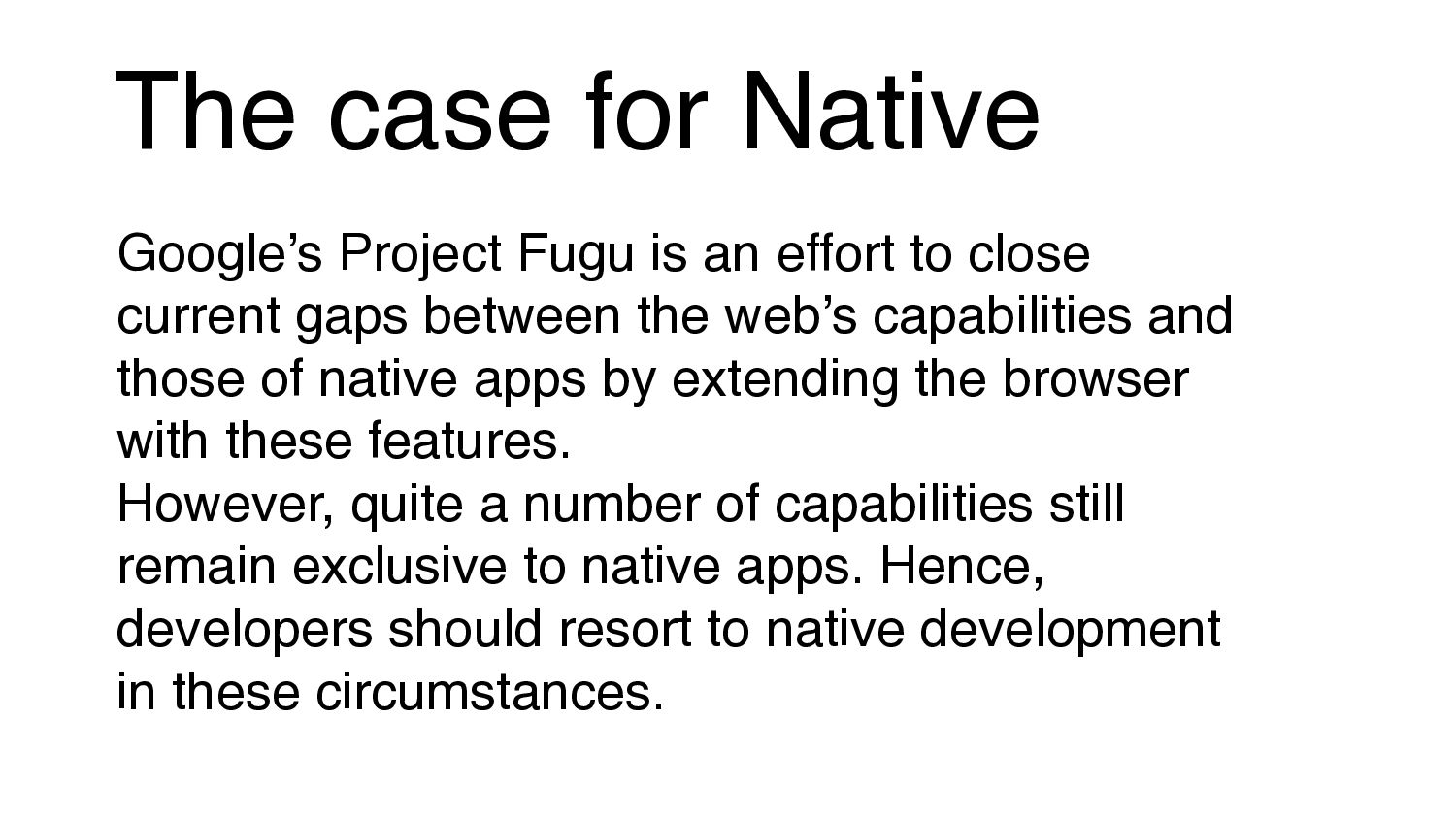
  14. Google’s Project Fugu is an effort to close current gaps

    between the web’s capabilities and those of native apps by extending the browser with these features. However, quite a number of capabilities still remain exclusive to native apps. Hence, developers should resort to native development in these circumstances. The case for Native
  15. The best practices that a PWA brings should always be

    put to use when creating a new web app regardless of use case. Secure connections, controllable network behaviours, efficiently cached assets and web manifests are valuable additions to most if not all web apps. The case for PWAs
  16. Are PWAs the future of modern web development? Quick answer:

    Yes. I think PWAs are the future. PWAs could and should eventually replace most native apps. Long answer: Before you make any engineering decision, ensure to have basic knowledge of PWA technology, your product tech stack and your users. Once you fully understand, you can make an informed decision. PWAs: The future?
  17. What does the future hold for PWAs? While big players

    like AliExpress, Twitter and Forbes have introduced PWAs in the past, they still have their apps and are not planning on abandoning them anytime soon. Did the technology come to a halt? Are PWAs still relevant? Should you still invest time and effort in creating and maintaining PWAs? Answer: PWAs are still very relevant and are sure to be improved on in coming times (Project Fugu). The future of PWAs
  18. We have finally come to comprehend the apparent future of

    PWAs. There’s definitely no denying the popularity of native apps in current times. However, only time shall tell whether native apps would be completely replaced by PWAs — or a future turn of events would tip the scale in favour of PWAs. Scrying the future.
  19. Thank you! 
 Senior SWE, Beam @ik_muogbo https://developer.chrome.com/ blog/getting-started-pwa/ https://en.wikipedia.org/wiki/

    Progressive_web_application https://developers.google.com/ codelabs/pwa-in-play https://www.freecodecamp.org/ news/build-a-pwa-from-scratch- with-html-css-and-javascript/ Resources Ifeanyi Muogbo