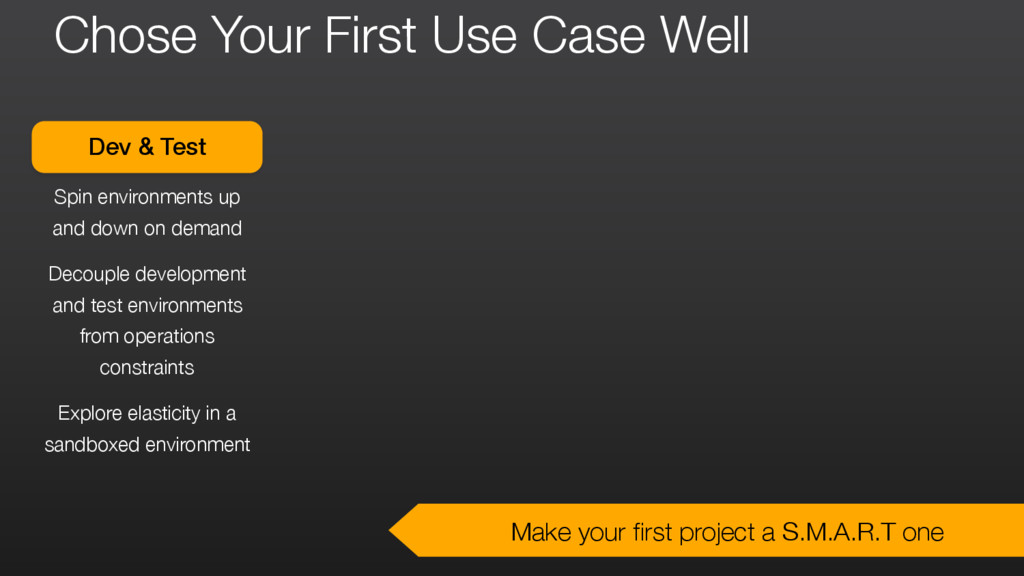
environments up and down on demand Decouple development and test environments from operations constraints Explore elasticity in a sandboxed environment Make your first project a S.M.A.R.T one
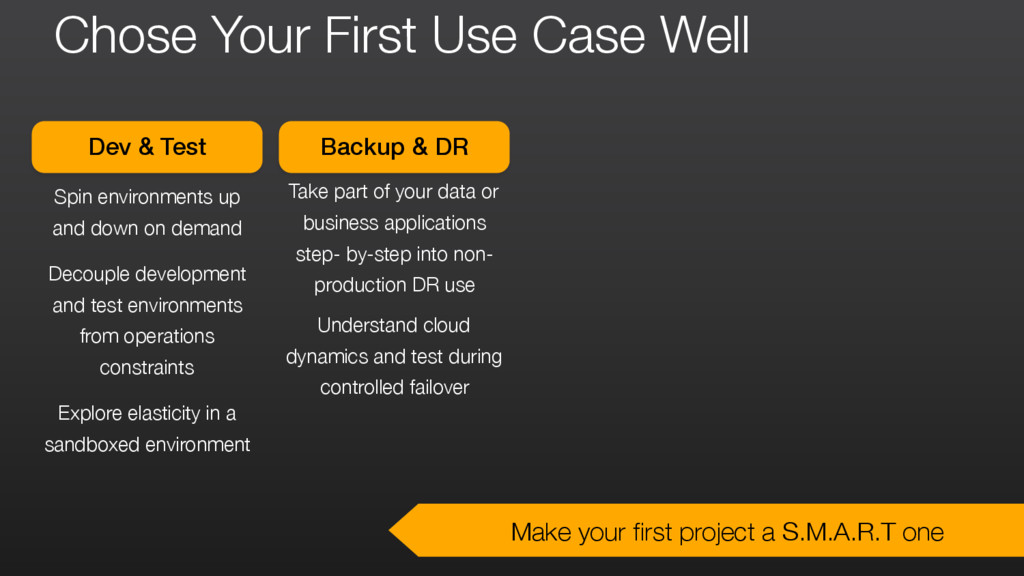
environments up and down on demand Decouple development and test environments from operations constraints Explore elasticity in a sandboxed environment Backup & DR Take part of your data or business applications step- by-step into non- production DR use Understand cloud dynamics and test during controlled failover Make your first project a S.M.A.R.T one
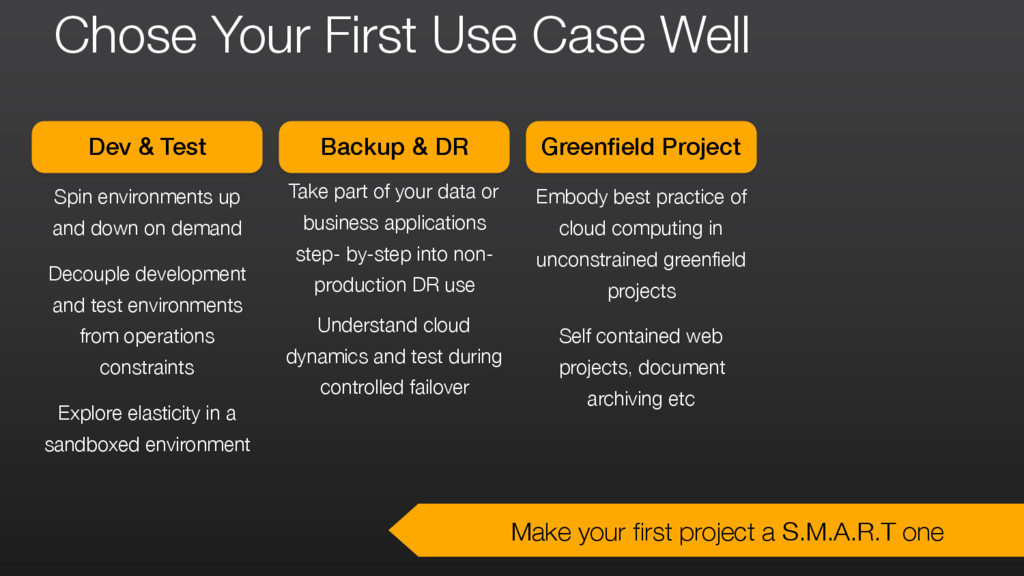
environments up and down on demand Decouple development and test environments from operations constraints Explore elasticity in a sandboxed environment Backup & DR Take part of your data or business applications step- by-step into non- production DR use Understand cloud dynamics and test during controlled failover Greenfield Project Embody best practice of cloud computing in unconstrained greenfield projects Self contained web projects, document archiving etc Make your first project a S.M.A.R.T one
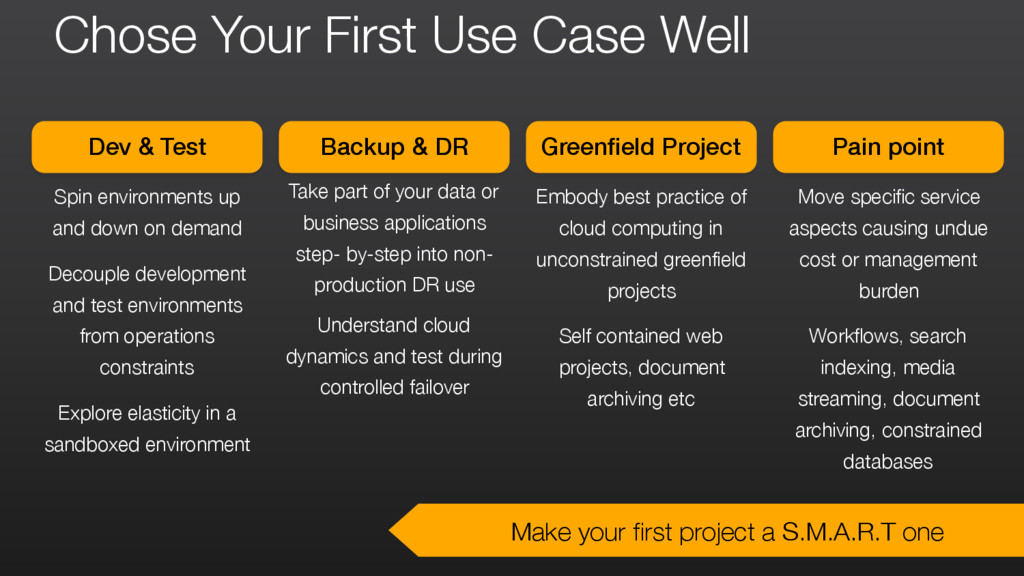
environments up and down on demand Decouple development and test environments from operations constraints Explore elasticity in a sandboxed environment Backup & DR Take part of your data or business applications step- by-step into non- production DR use Understand cloud dynamics and test during controlled failover Greenfield Project Embody best practice of cloud computing in unconstrained greenfield projects Self contained web projects, document archiving etc Pain point Move specific service aspects causing undue cost or management burden Workflows, search indexing, media streaming, document archiving, constrained databases Make your first project a S.M.A.R.T one
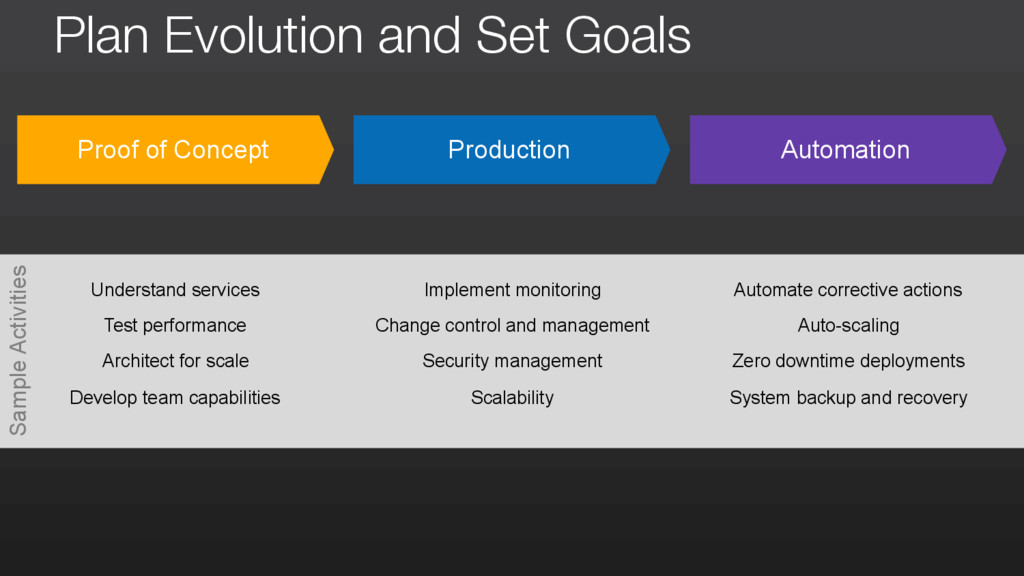
for scale Develop team capabilities Implement monitoring Change control and management Security management Scalability Automate corrective actions Auto-scaling Zero downtime deployments System backup and recovery Proof of Concept Production Automation Sample Activities
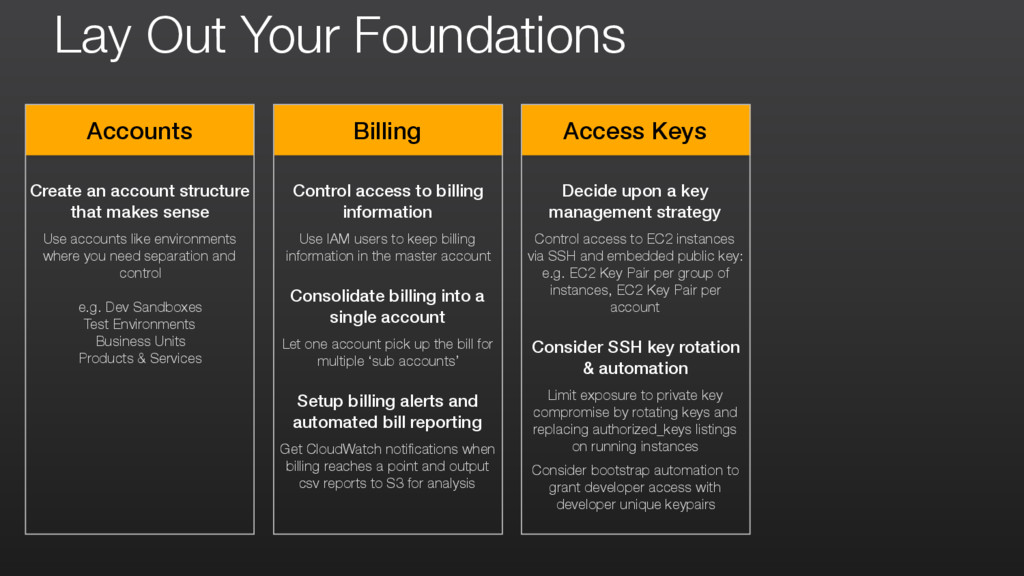
like environments where you need separation and control e.g. Dev Sandboxes Test Environments Business Units Products & Services Lay Out Your Foundations
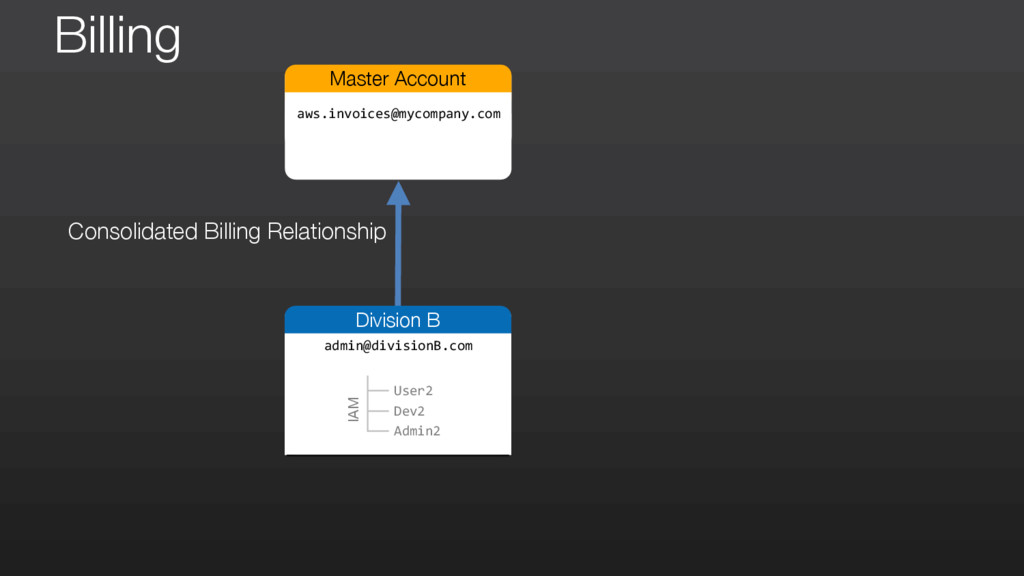
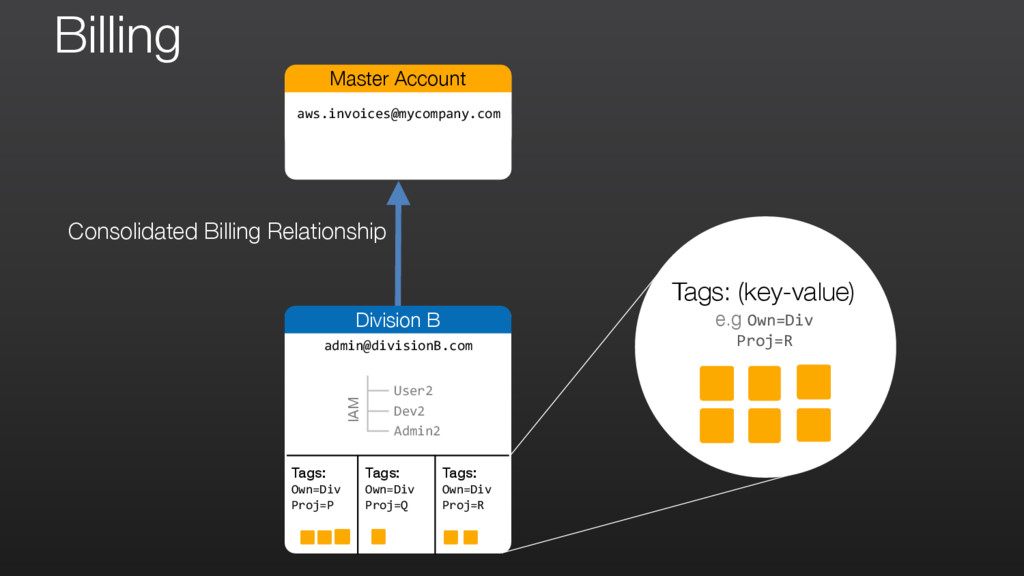
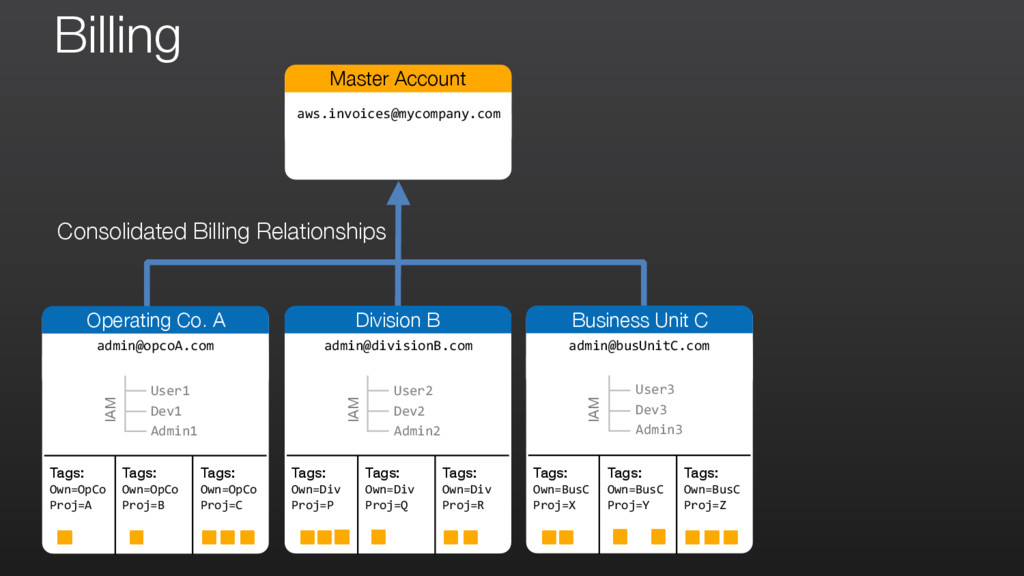
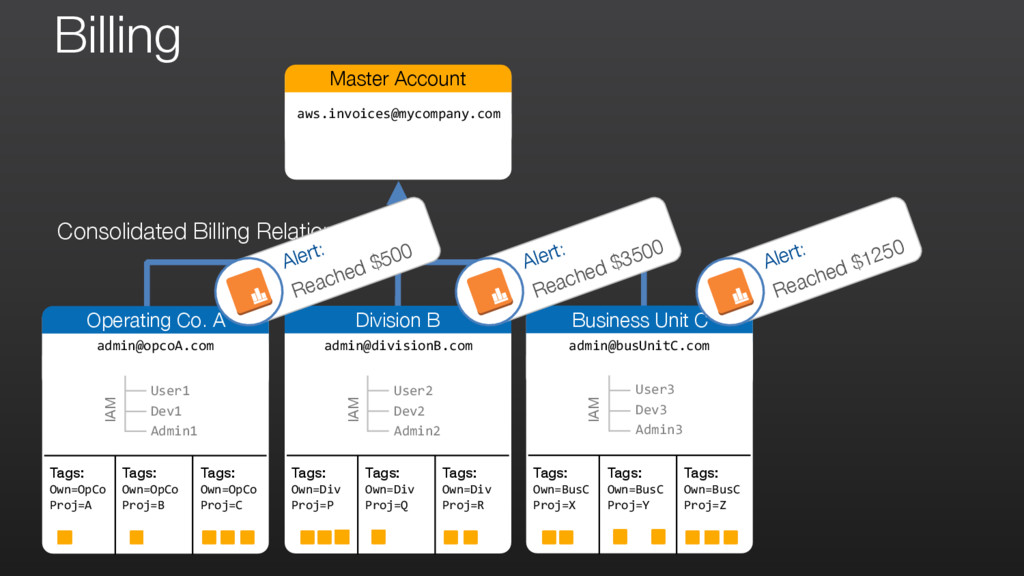
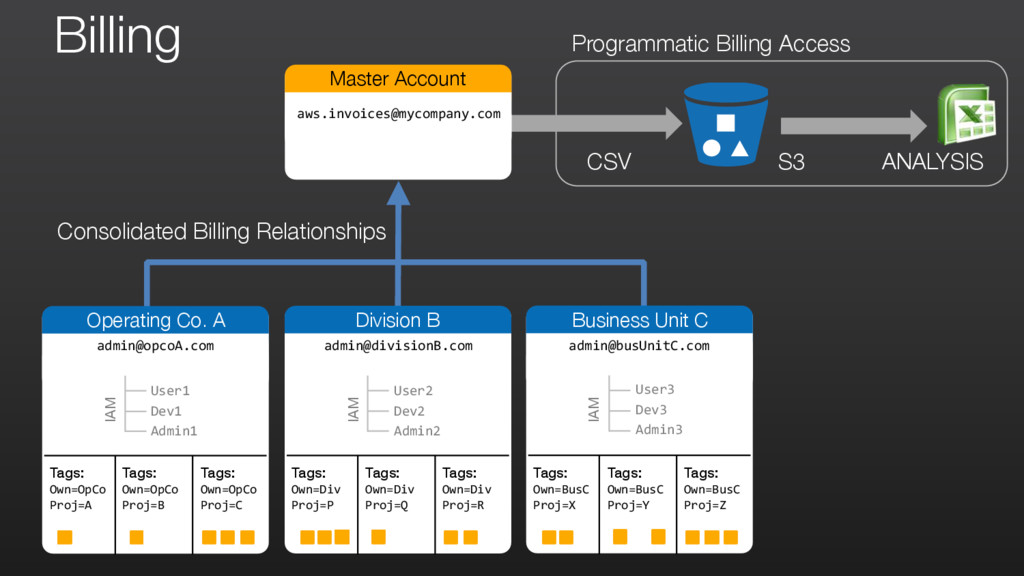
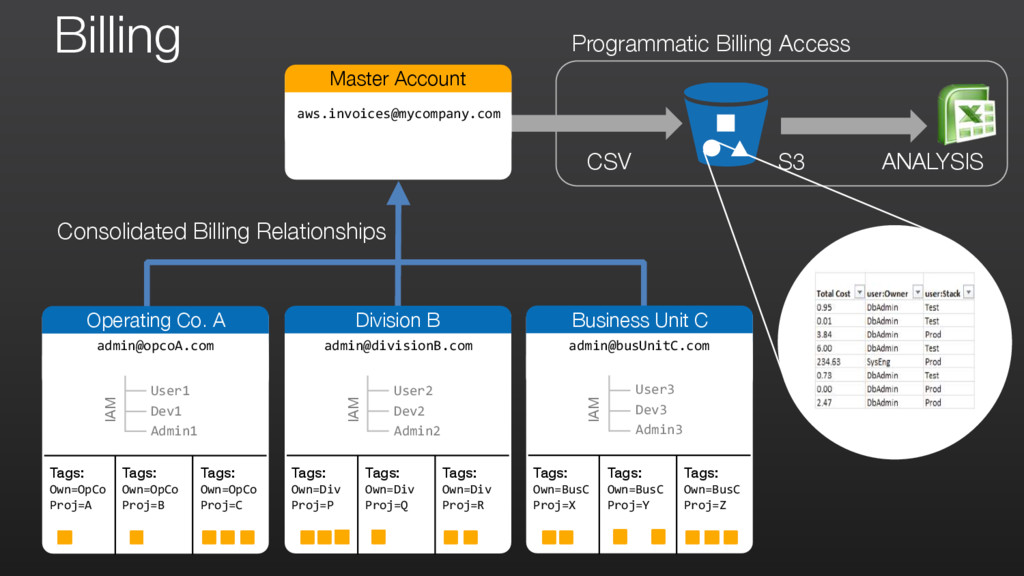
accounts like environments where you need separation and control e.g. Dev Sandboxes Test Environments Business Units Products & Services Control access to billing information Use IAM users to keep billing information in the master account Consolidate billing into a single account Let one account pick up the bill for multiple ‘sub accounts’ Setup billing alerts and automated bill reporting Get CloudWatch notifications when billing reaches a point and output csv reports to S3 for analysis Lay Out Your Foundations
sense Use accounts like environments where you need separation and control e.g. Dev Sandboxes Test Environments Business Units Products & Services Control access to billing information Use IAM users to keep billing information in the master account Consolidate billing into a single account Let one account pick up the bill for multiple ‘sub accounts’ Setup billing alerts and automated bill reporting Get CloudWatch notifications when billing reaches a point and output csv reports to S3 for analysis Decide upon a key management strategy Control access to EC2 instances via SSH and embedded public key: e.g. EC2 Key Pair per group of instances, EC2 Key Pair per account Consider SSH key rotation & automation Limit exposure to private key compromise by rotating keys and replacing authorized_keys listings on running instances Consider bootstrap automation to grant developer access with developer unique keypairs Lay Out Your Foundations
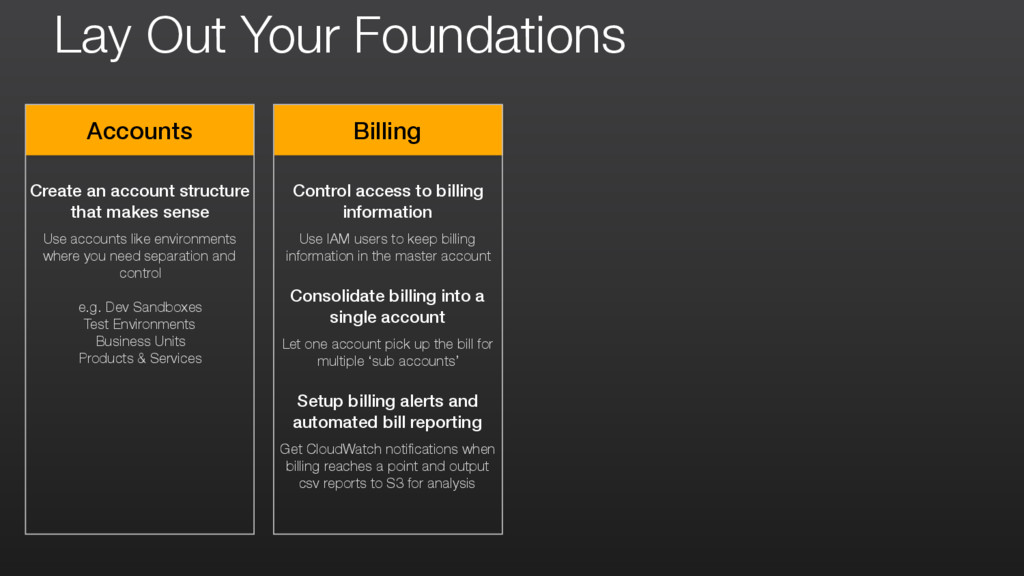
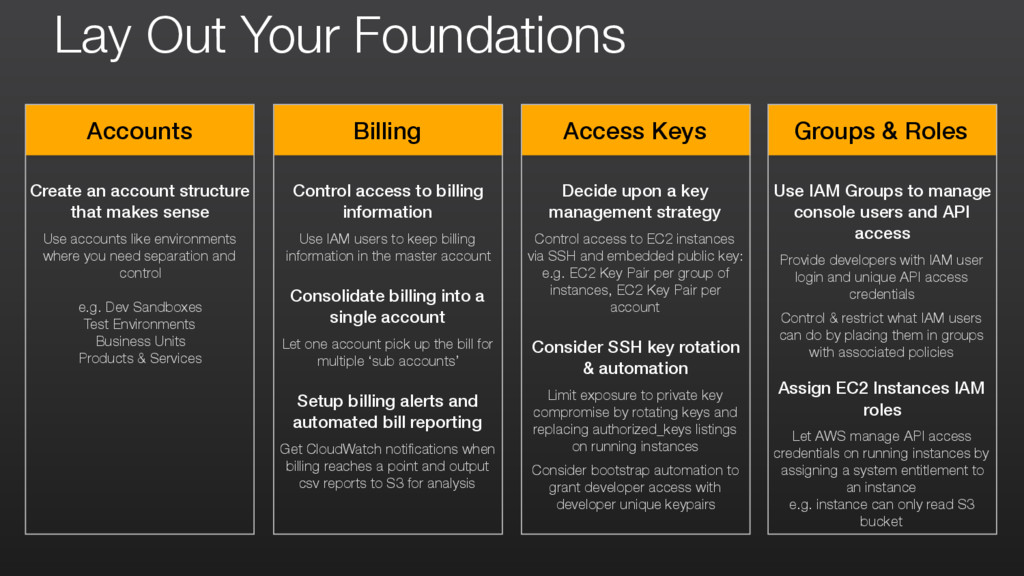
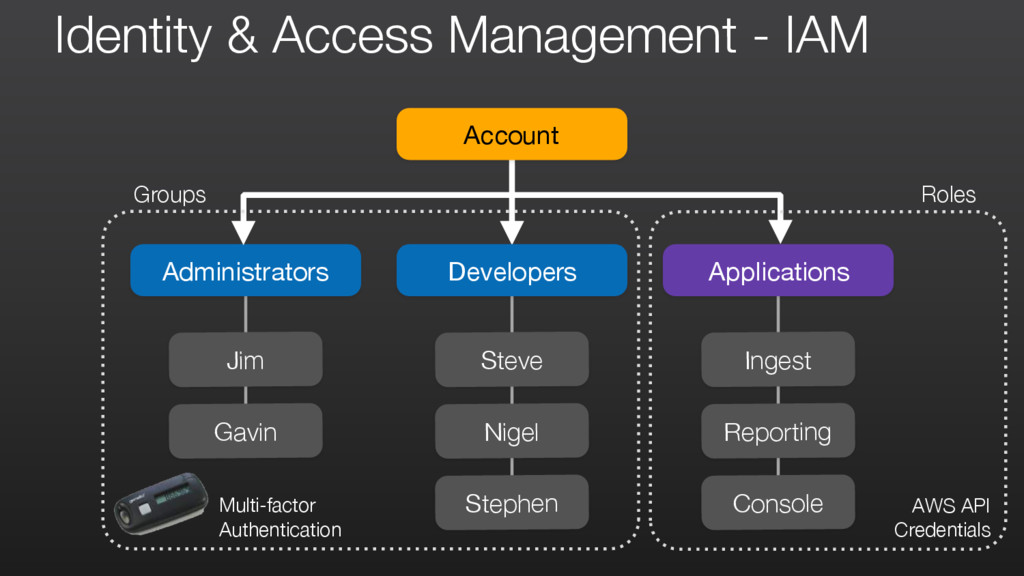
structure that makes sense Use accounts like environments where you need separation and control e.g. Dev Sandboxes Test Environments Business Units Products & Services Control access to billing information Use IAM users to keep billing information in the master account Consolidate billing into a single account Let one account pick up the bill for multiple ‘sub accounts’ Setup billing alerts and automated bill reporting Get CloudWatch notifications when billing reaches a point and output csv reports to S3 for analysis Decide upon a key management strategy Control access to EC2 instances via SSH and embedded public key: e.g. EC2 Key Pair per group of instances, EC2 Key Pair per account Consider SSH key rotation & automation Limit exposure to private key compromise by rotating keys and replacing authorized_keys listings on running instances Consider bootstrap automation to grant developer access with developer unique keypairs Use IAM Groups to manage console users and API access Provide developers with IAM user login and unique API access credentials Control & restrict what IAM users can do by placing them in groups with associated policies Assign EC2 Instances IAM roles Let AWS manage API access credentials on running instances by assigning a system entitlement to an instance e.g. instance can only read S3 bucket Lay Out Your Foundations
"elasticbeanstalk:*", "ec2:*", "elasticloadbalancing:*", "autoscaling:*", "cloudwatch:*", "s3:*", "sns:*" ], "Resource": "*" } ] } Create a policy to assign permissions to a user, group, role or resource. Policies are created using JSON. A policy consists of one or more statements, each of which describes one set of permissions. Policies control access to AWS APIs
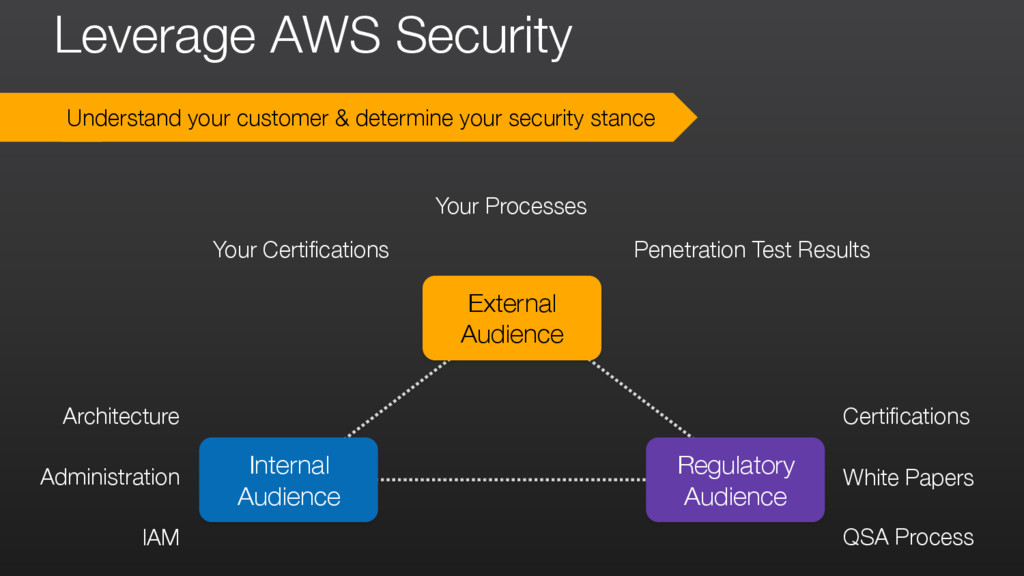
Security External Audience Regulatory Audience Internal Audience Architecture Administration IAM Certifications White Papers QSA Process Your Processes Your Certifications Penetration Test Results
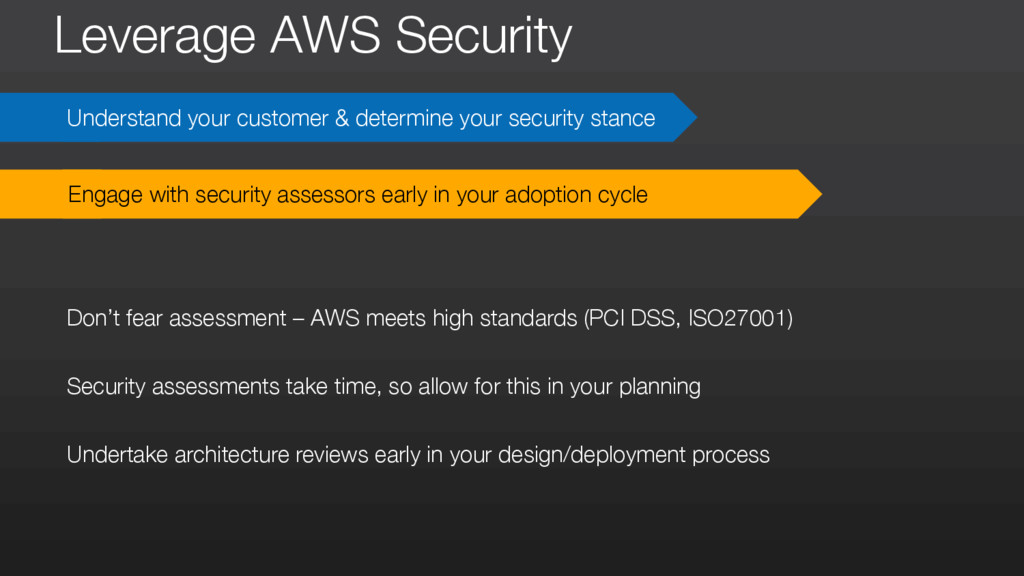
security assessors early in your adoption cycle Leverage AWS Security Don’t fear assessment – AWS meets high standards (PCI DSS, ISO27001) Security assessments take time, so allow for this in your planning Undertake architecture reviews early in your design/deployment process
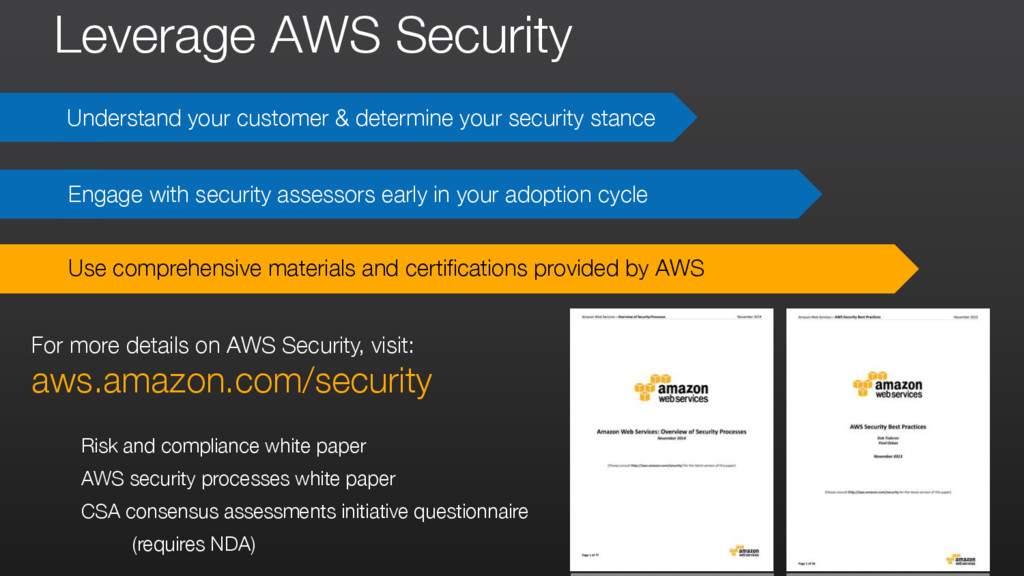
security assessors early in your adoption cycle Use comprehensive materials and certifications provided by AWS Leverage AWS Security For more details on AWS Security, visit: aws.amazon.com/security Risk and compliance white paper AWS security processes white paper CSA consensus assessments initiative questionnaire (requires NDA)
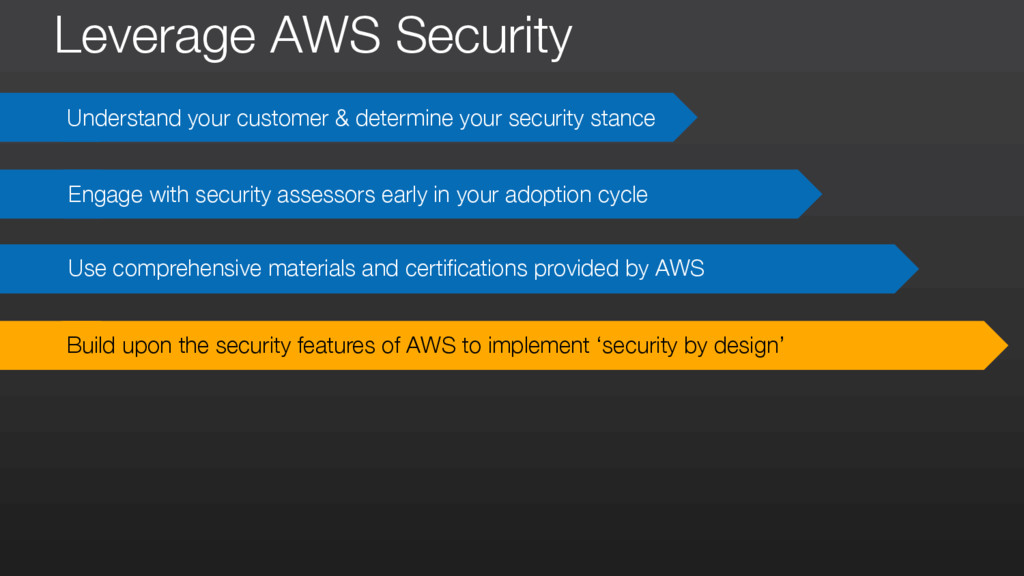
security assessors early in your adoption cycle Use comprehensive materials and certifications provided by AWS Build upon the security features of AWS to implement ‘security by design’ Leverage AWS Security
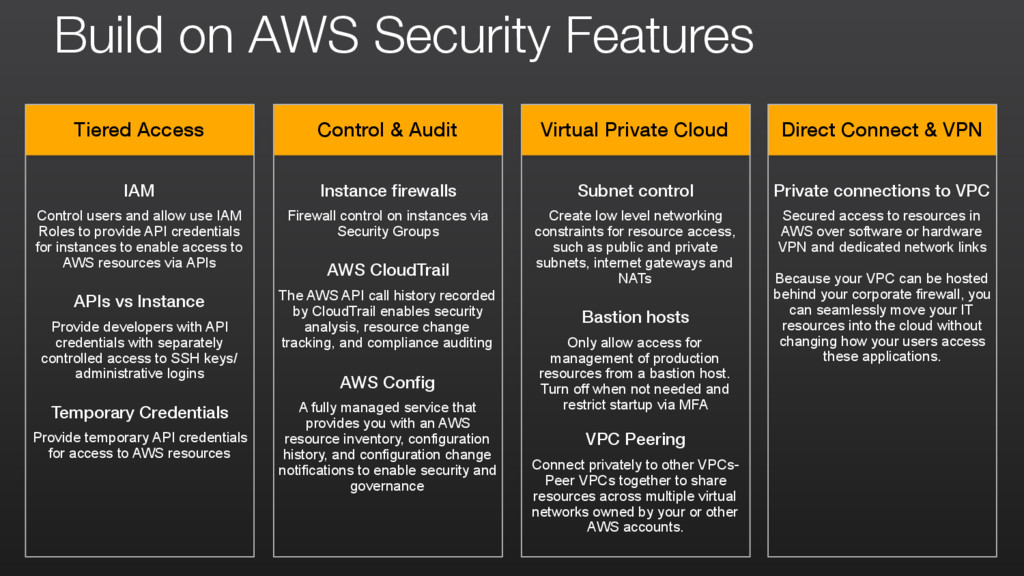
Tiered Access IAM Control users and allow use IAM Roles to provide API credentials for instances to enable access to AWS resources via APIs APIs vs Instance Provide developers with API credentials with separately controlled access to SSH keys/ administrative logins Temporary Credentials Provide temporary API credentials for access to AWS resources Instance firewalls Firewall control on instances via Security Groups AWS CloudTrail The AWS API call history recorded by CloudTrail enables security analysis, resource change tracking, and compliance auditing AWS Config A fully managed service that provides you with an AWS resource inventory, configuration history, and configuration change notifications to enable security and governance Subnet control Create low level networking constraints for resource access, such as public and private subnets, internet gateways and NATs Bastion hosts Only allow access for management of production resources from a bastion host. Turn off when not needed and restrict startup via MFA VPC Peering Connect privately to other VPCs- Peer VPCs together to share resources across multiple virtual networks owned by your or other AWS accounts. Private connections to VPC Secured access to resources in AWS over software or hardware VPN and dedicated network links Because your VPC can be hosted behind your corporate firewall, you can seamlessly move your IT resources into the cloud without changing how your users access these applications. Build on AWS Security Features
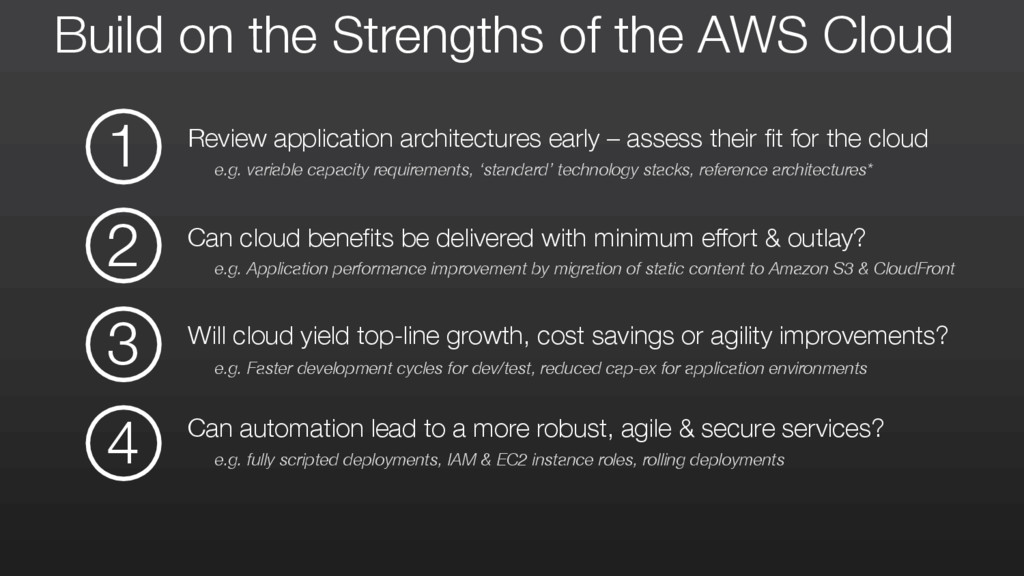
Amazon S3 & CloudFront Review application architectures early – assess their fit for the cloud Can cloud benefits be delivered with minimum effort & outlay? e.g. variable capacity requirements, ‘standard’ technology stacks, reference architectures* e.g. Faster development cycles for dev/test, reduced cap-ex for application environments Will cloud yield top-line growth, cost savings or agility improvements? e.g. fully scripted deployments, IAM & EC2 instance roles, rolling deployments Can automation lead to a more robust, agile & secure services? Build on the Strengths of the AWS Cloud 1 2 3 4
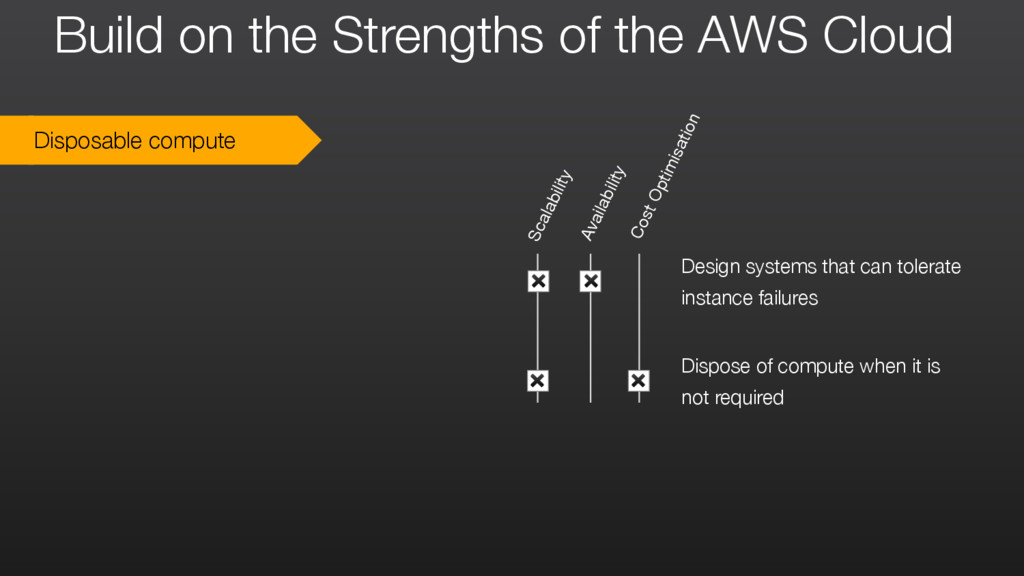
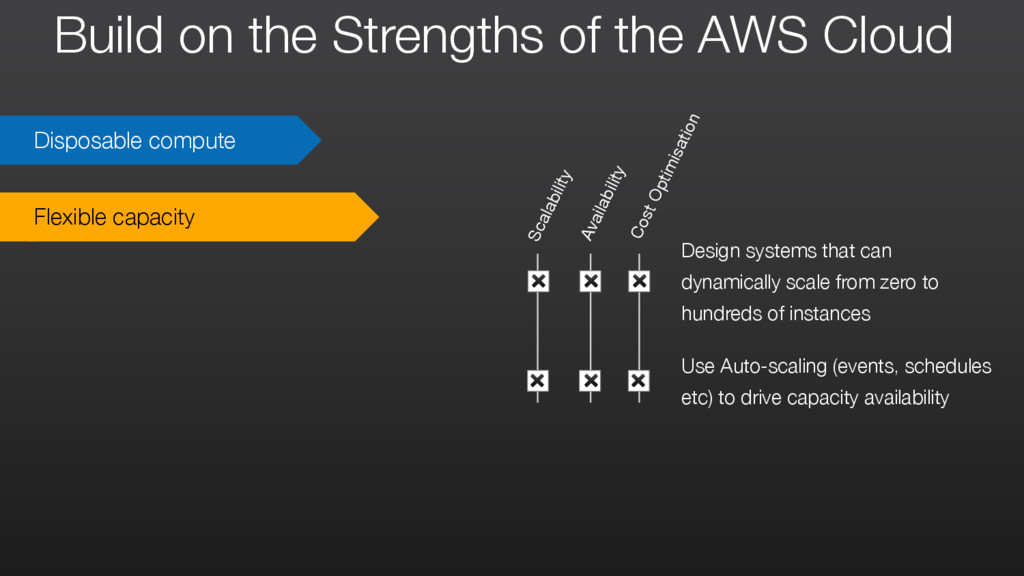
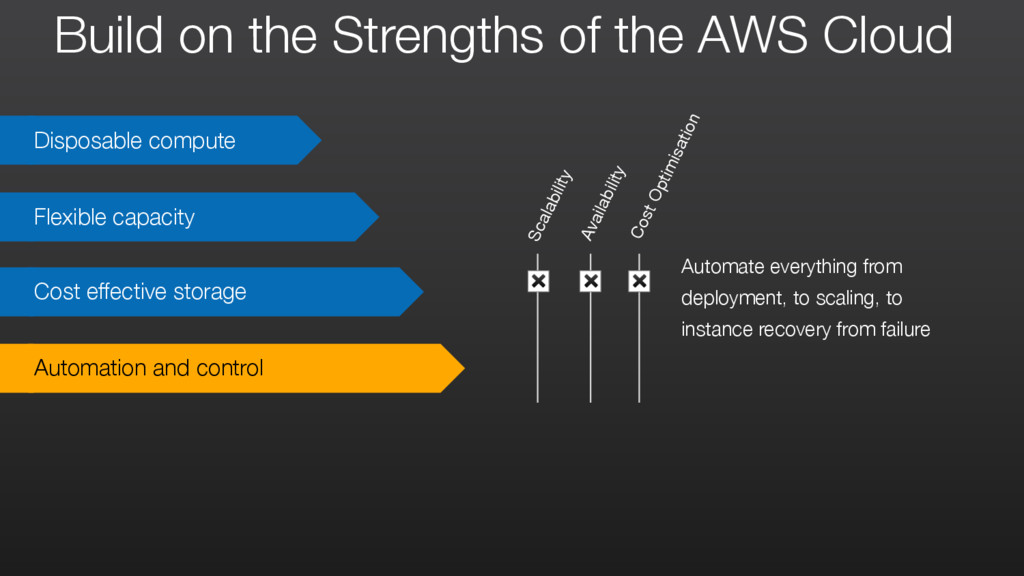
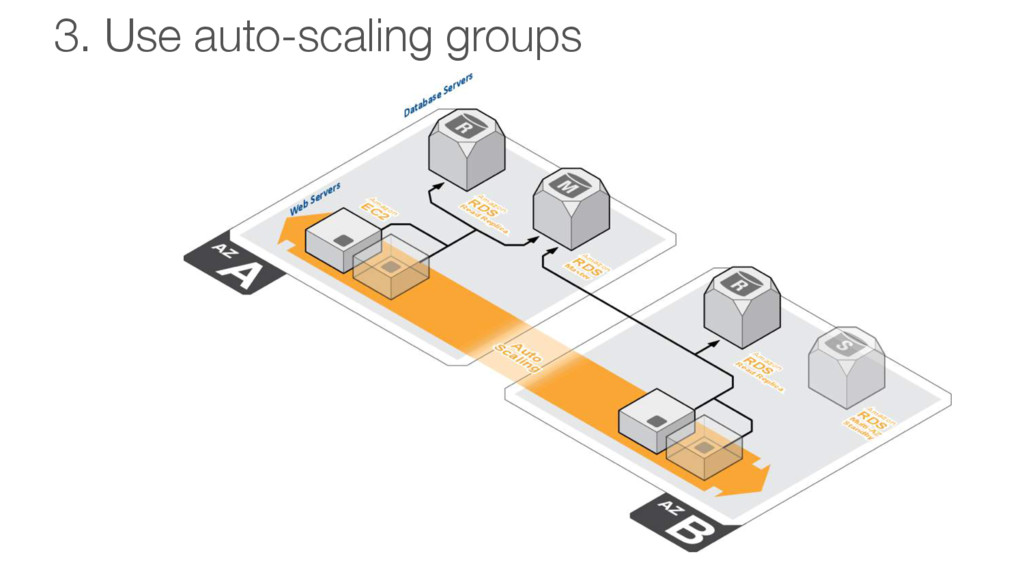
from zero to hundreds of instances Scalability Availability Cost Optimisation Build on the Strengths of the AWS Cloud ✖ ✖ ✖ Use Auto-scaling (events, schedules etc) to drive capacity availability ✖ ✖ ✖
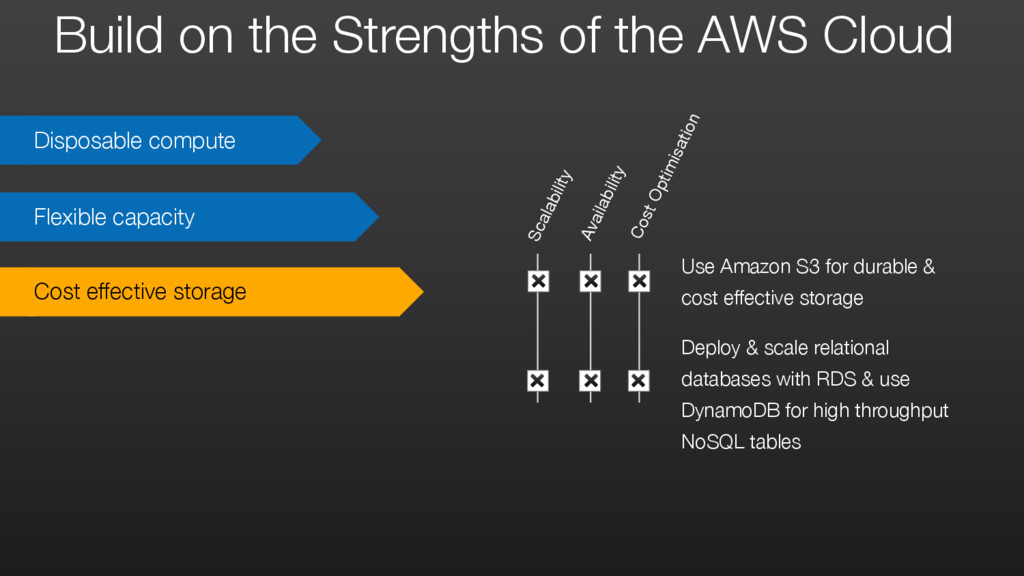
for durable & cost effective storage Scalability Availability Cost Optimisation Build on the Strengths of the AWS Cloud ✖ ✖ ✖ Deploy & scale relational databases with RDS & use DynamoDB for high throughput NoSQL tables ✖ ✖ ✖
Automate everything from deployment, to scaling, to instance recovery from failure Scalability Availability Cost Optimisation Build on the Strengths of the AWS Cloud ✖ ✖ ✖
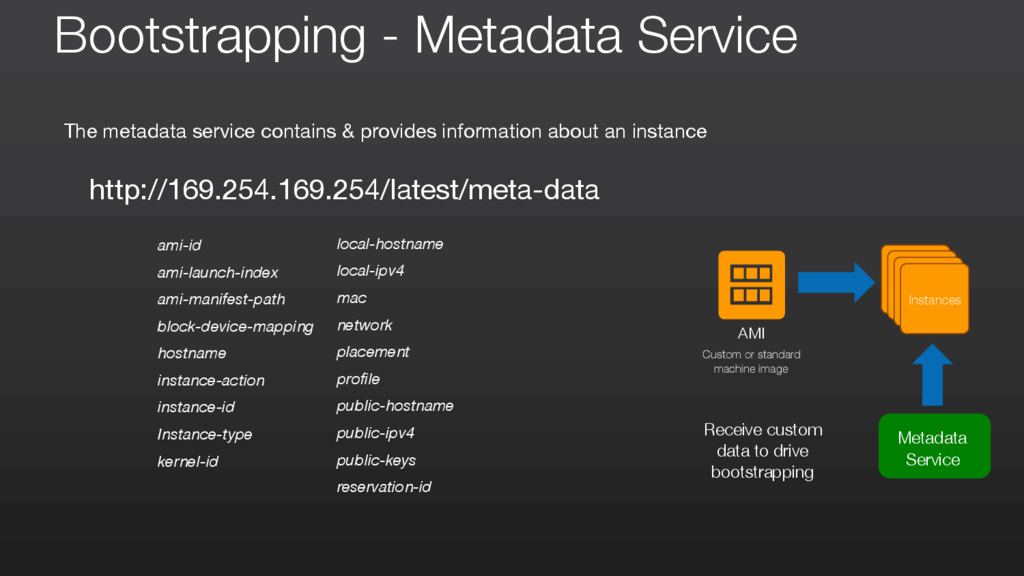
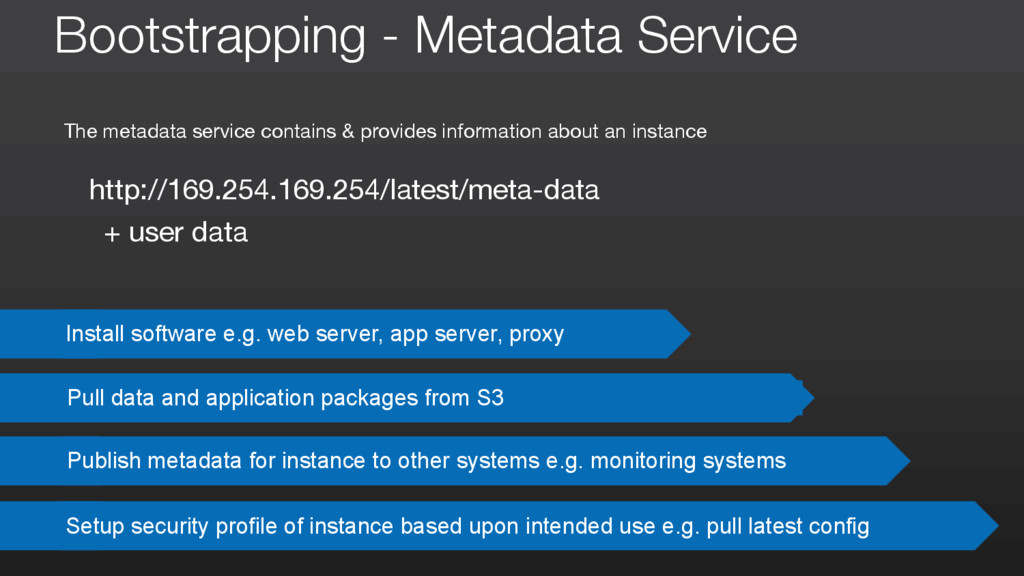
local-ipv4 mac network placement profile public-hostname public-ipv4 public-keys reservation-id http://169.254.169.254/latest/meta-data The metadata service contains & provides information about an instance Metadata Service Receive custom data to drive bootstrapping Custom or standard machine image Bootstrapping - Metadata Service AMI Instances
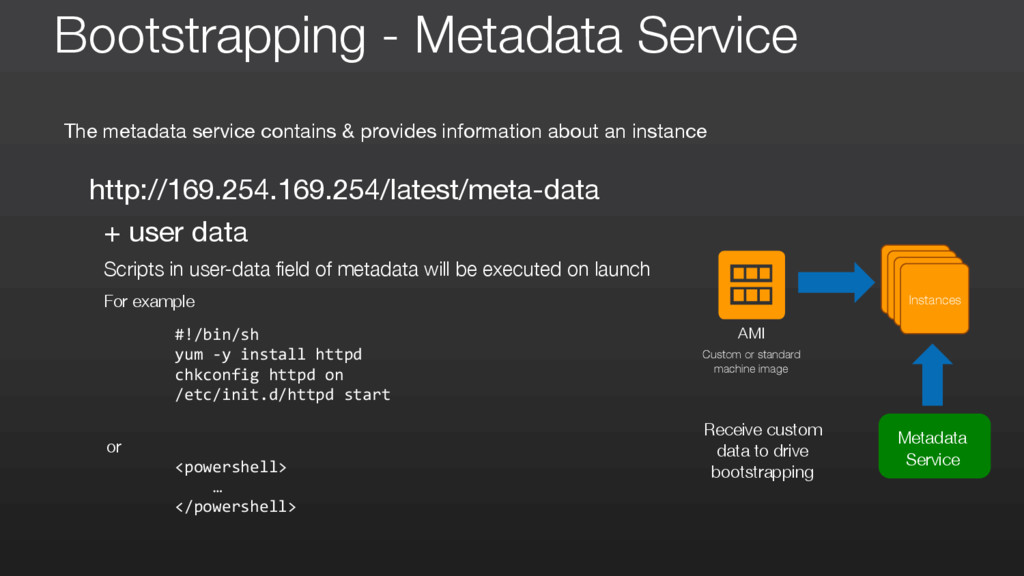
instance Metadata Service Receive custom data to drive bootstrapping Custom or standard machine image Bootstrapping - Metadata Service AMI Instances + user data Scripts in user-data field of metadata will be executed on launch For example #!/bin/sh yum -y install httpd chkconfig httpd on /etc/init.d/httpd start <powershell> … </powershell> or
instance Bootstrapping - Metadata Service + user data Install software e.g. web server, app server, proxy Pull data and application packages from S3 Publish metadata for instance to other systems e.g. monitoring systems Setup security profile of instance based upon intended use e.g. pull latest config
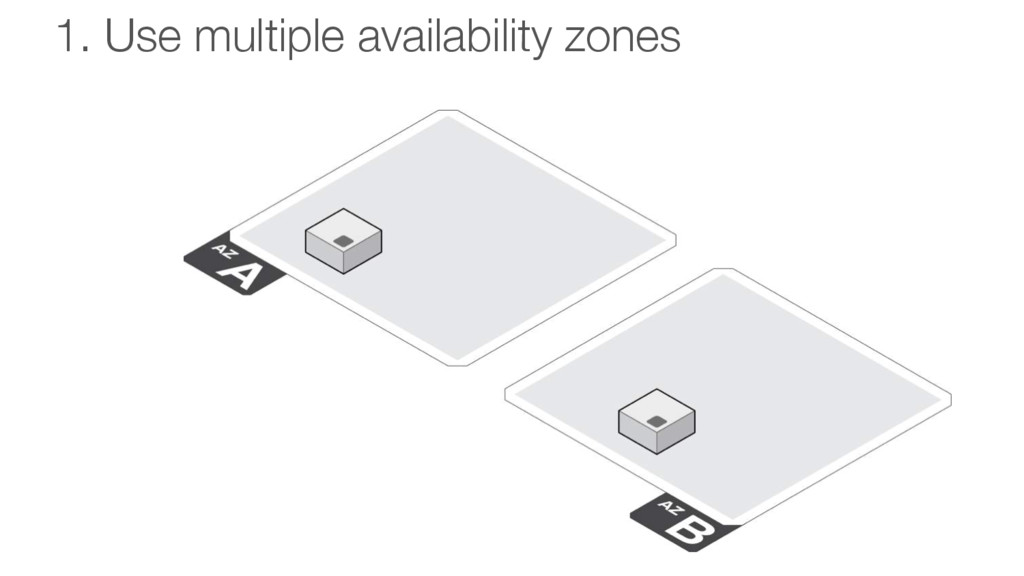
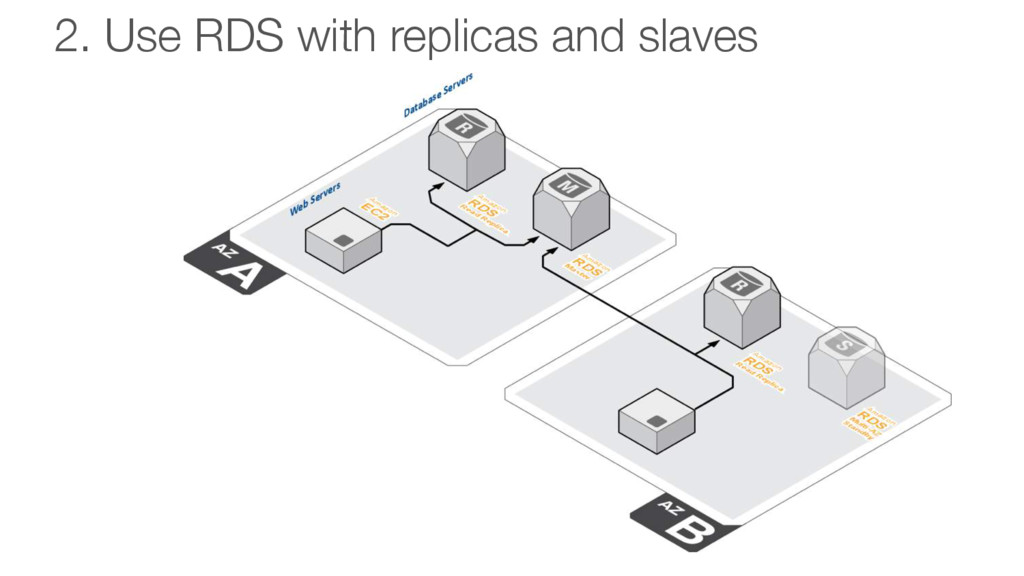
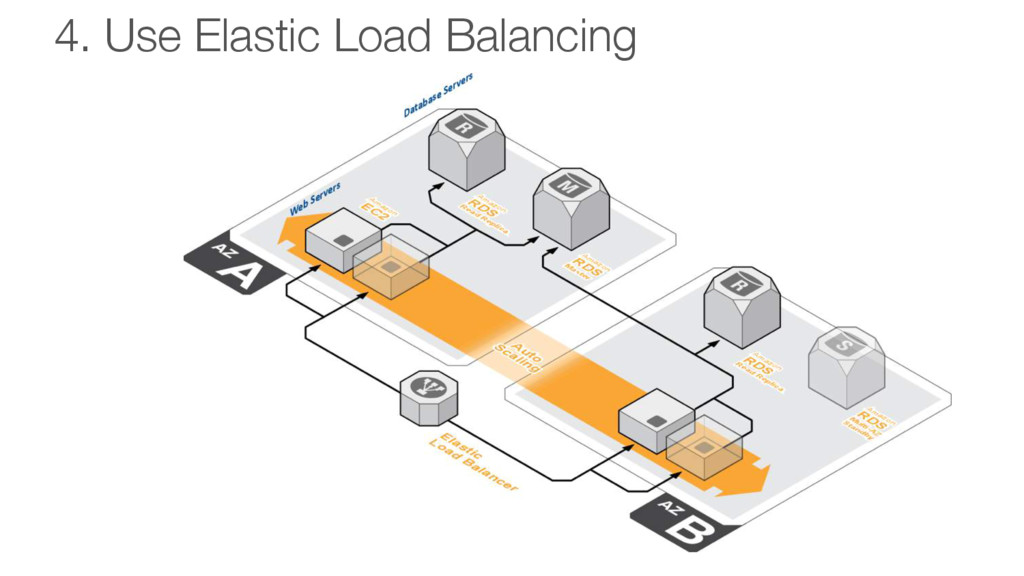
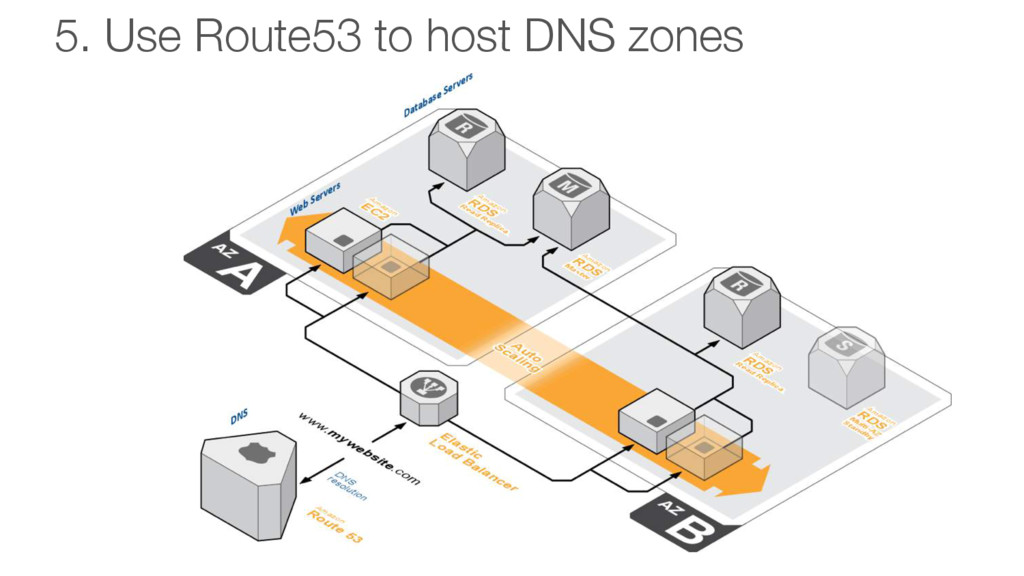
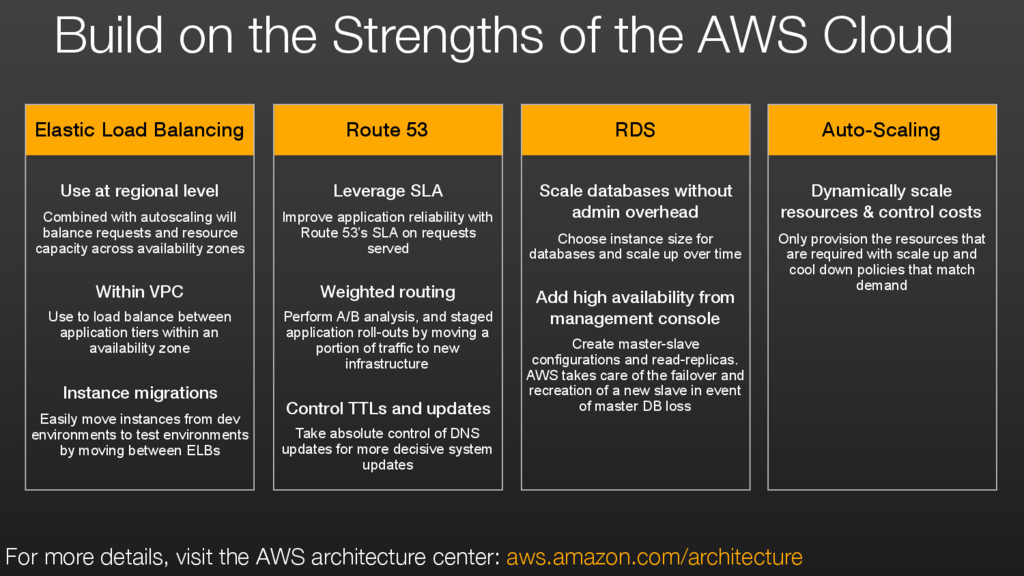
level Combined with autoscaling will balance requests and resource capacity across availability zones Within VPC Use to load balance between application tiers within an availability zone Instance migrations Easily move instances from dev environments to test environments by moving between ELBs Leverage SLA Improve application reliability with Route 53’s SLA on requests served Weighted routing Perform A/B analysis, and staged application roll-outs by moving a portion of traffic to new infrastructure Control TTLs and updates Take absolute control of DNS updates for more decisive system updates Scale databases without admin overhead Choose instance size for databases and scale up over time Add high availability from management console Create master-slave configurations and read-replicas. AWS takes care of the failover and recreation of a new slave in event of master DB loss Dynamically scale resources & control costs Only provision the resources that are required with scale up and cool down policies that match demand Build on the Strengths of the AWS Cloud For more details, visit the AWS architecture center: aws.amazon.com/architecture
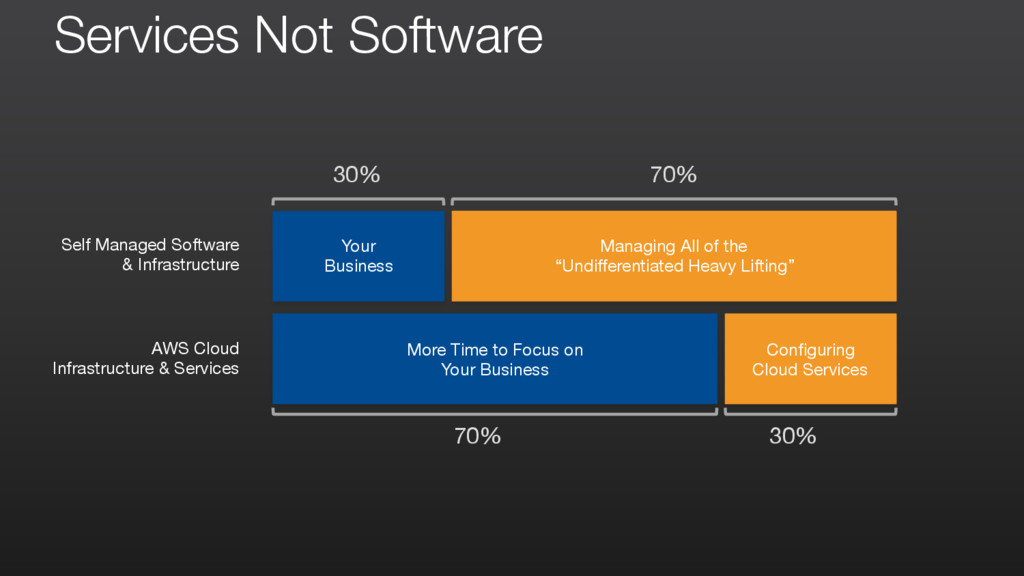
Focus on Your Business Configuring Cloud Services 70% 30% 70% Self Managed Software & Infrastructure 30% Managing All of the “Undifferentiated Heavy Lifting” Services Not Software
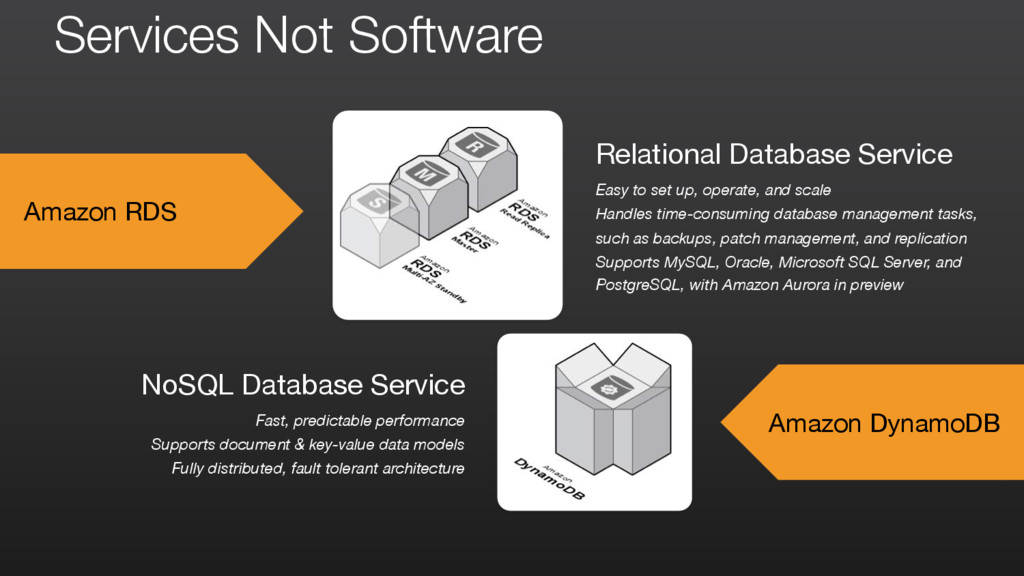
Handles time-consuming database management tasks, such as backups, patch management, and replication Supports MySQL, Oracle, Microsoft SQL Server, and PostgreSQL, with Amazon Aurora in preview NoSQL Database Service Fast, predictable performance Supports document & key-value data models Fully distributed, fault tolerant architecture Amazon RDS Amazon DynamoDB Services Not Software
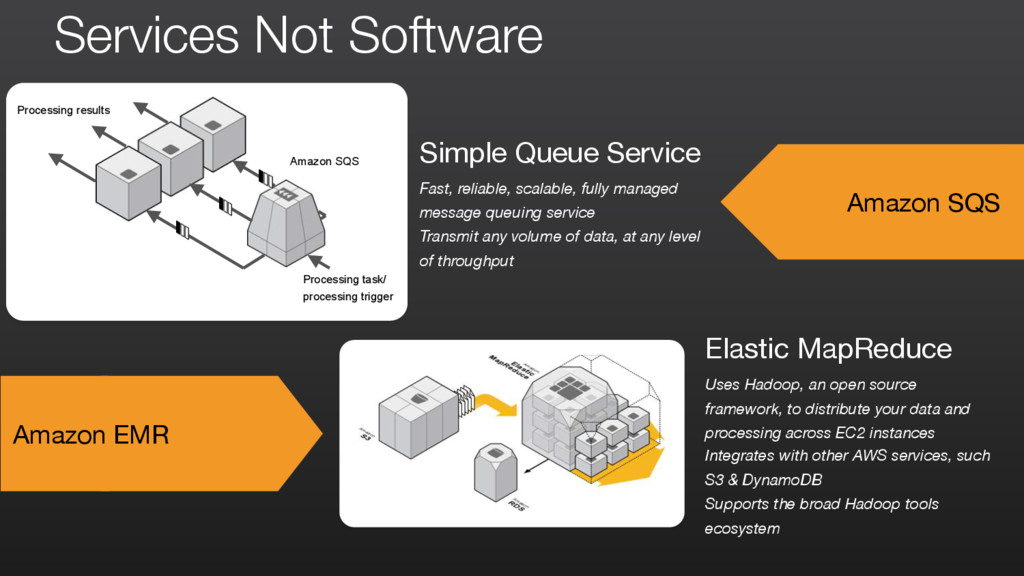
Service Fast, reliable, scalable, fully managed message queuing service Transmit any volume of data, at any level of throughput Amazon SQS Amazon EMR Elastic MapReduce Uses Hadoop, an open source framework, to distribute your data and processing across EC2 instances Integrates with other AWS services, such S3 & DynamoDB Supports the broad Hadoop tools ecosystem Services Not Software
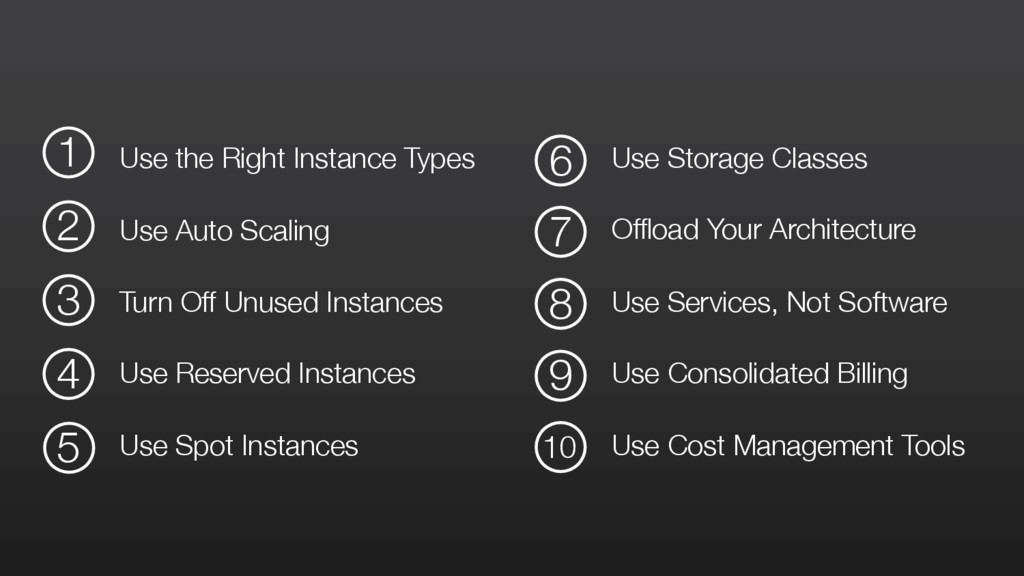
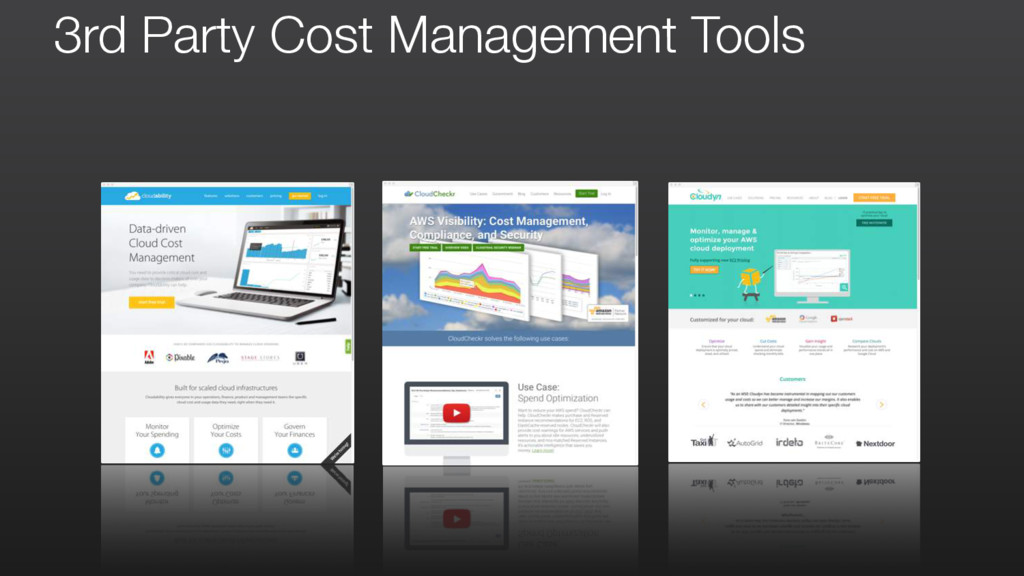
Unused Instances Use Reserved Instances 1 2 3 4 Use Spot Instances 5 Use Storage Classes 6 Offload Your Architecture 7 Use Services, Not Software 8 Use Consolidated Billing 9 Use Cost Management Tools 10
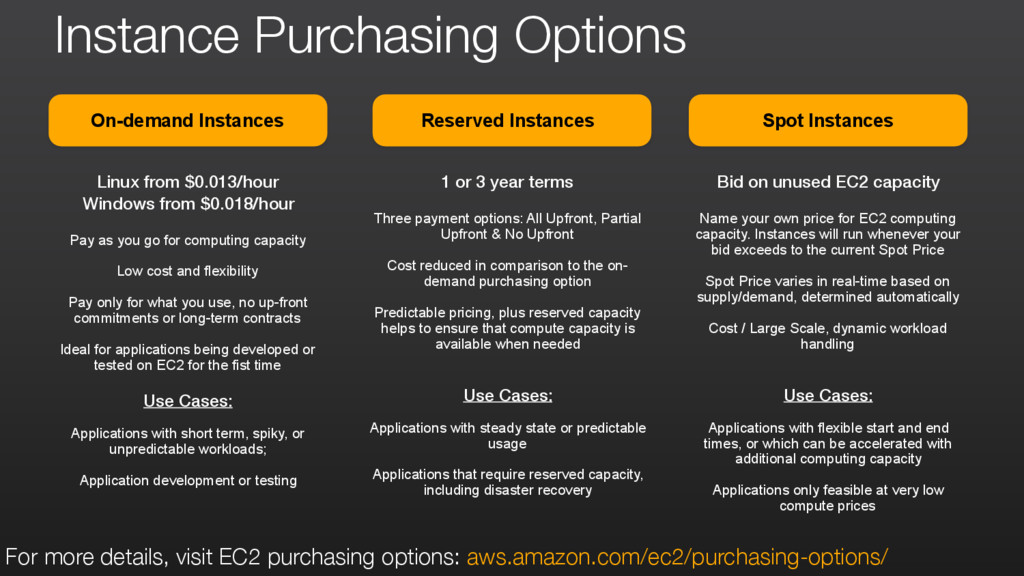
for computing capacity Low cost and flexibility Pay only for what you use, no up-front commitments or long-term contracts Ideal for applications being developed or tested on EC2 for the fist time Use Cases: Applications with short term, spiky, or unpredictable workloads; Application development or testing On-demand Instances 1 or 3 year terms Three payment options: All Upfront, Partial Upfront & No Upfront Cost reduced in comparison to the on- demand purchasing option Predictable pricing, plus reserved capacity helps to ensure that compute capacity is available when needed Use Cases: Applications with steady state or predictable usage Applications that require reserved capacity, including disaster recovery Reserved Instances Bid on unused EC2 capacity Name your own price for EC2 computing capacity. Instances will run whenever your bid exceeds to the current Spot Price Spot Price varies in real-time based on supply/demand, determined automatically Cost / Large Scale, dynamic workload handling Use Cases: Applications with flexible start and end times, or which can be accelerated with additional computing capacity Applications only feasible at very low compute prices Spot Instances Instance Purchasing Options For more details, visit EC2 purchasing options: aws.amazon.com/ec2/purchasing-options/
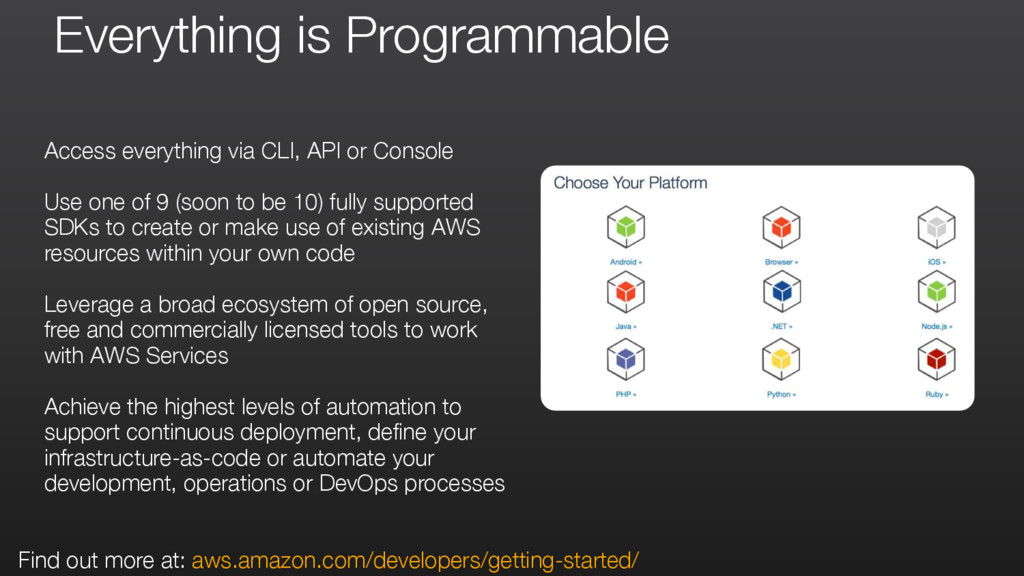
9 (soon to be 10) fully supported SDKs to create or make use of existing AWS resources within your own code Leverage a broad ecosystem of open source, free and commercially licensed tools to work with AWS Services Achieve the highest levels of automation to support continuous deployment, define your infrastructure-as-code or automate your development, operations or DevOps processes Find out more at: aws.amazon.com/developers/getting-started/ Everything is Programmable
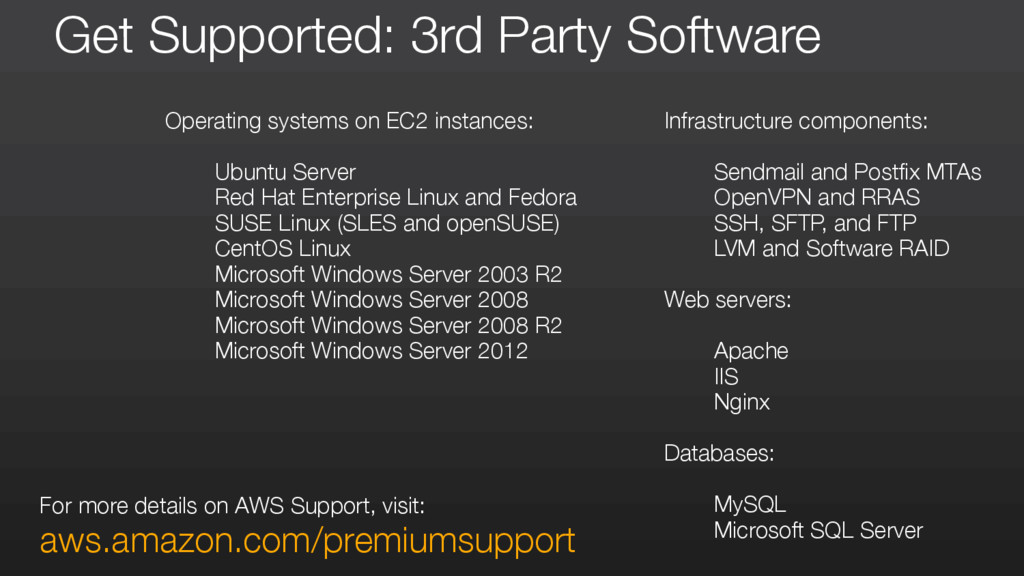
Linux and Fedora SUSE Linux (SLES and openSUSE) CentOS Linux Microsoft Windows Server 2003 R2 Microsoft Windows Server 2008 Microsoft Windows Server 2008 R2 Microsoft Windows Server 2012 Infrastructure components: Sendmail and Postfix MTAs OpenVPN and RRAS SSH, SFTP, and FTP LVM and Software RAID Web servers: Apache IIS Nginx Databases: MySQL Microsoft SQL Server Get Supported: 3rd Party Software For more details on AWS Support, visit: aws.amazon.com/premiumsupport
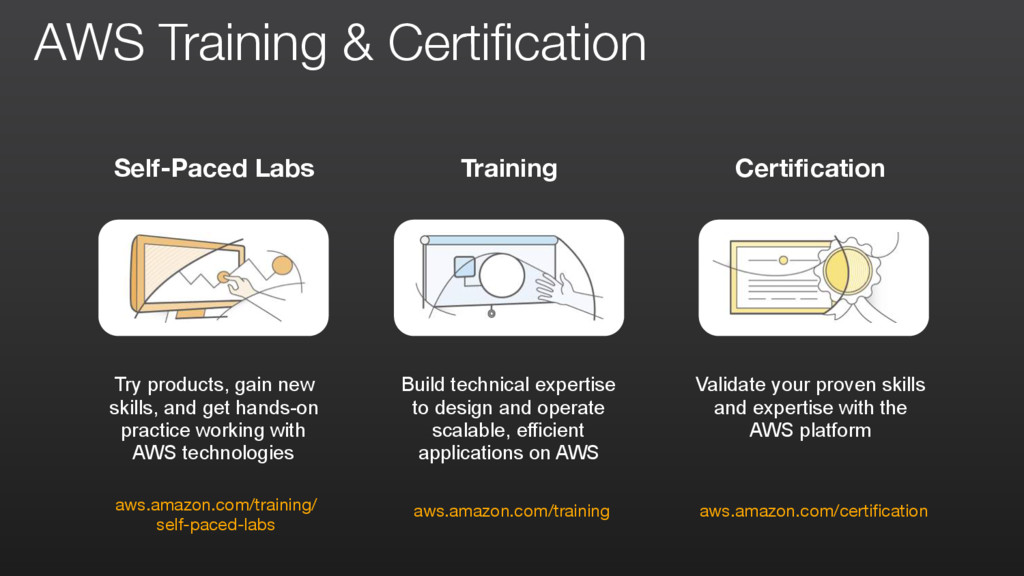
skills, and get hands-on practice working with AWS technologies aws.amazon.com/training Training Validate your proven skills and expertise with the AWS platform Build technical expertise to design and operate scalable, efficient applications on AWS AWS Training & Certification

 SiteGround - Reliable hosting with speed, security, and support you can count on.


 codatum
 bgpat
 pfn
 yuuuuuuu168
 taketakekaho
 kairim0
 terurou
 camiha
 ivry_presentationmaterials
 hiracky16
 occhi
 kenichiodo
 eileencodes
 portentint
 chikuwait
 aarron
 emna__ayadi
 marktimemedia
 pwiseman
 chriscoyier
 orderedlist
 tammyeverts
 ipullrank
 jcasabona




![IAM Policies { "Statement": [ { "Effect": "Allow", "Action": [](https://files.speakerdeck.com/presentations/d4e86a1cd6ab47c88606dceea6a2b1d0/slide_28.jpg)