‣What is forest planning? ‣How OR methods are utilised in forest planning? ‣Obstacles in taking full advantage of OR tools ‣Iptim – a new tool for putting OR methods into action in forest planning
forest planning? ‣Planning of future forest management activities, such as when to harvest timber from the forest ‣Systematic approaches to the decision making, driven by decision maker’s objectives ‣Use of various decision support tools in the decision making process: growth models, forest planning systems (FPS), GIS ‣Time horizon ranges from months to tens of years
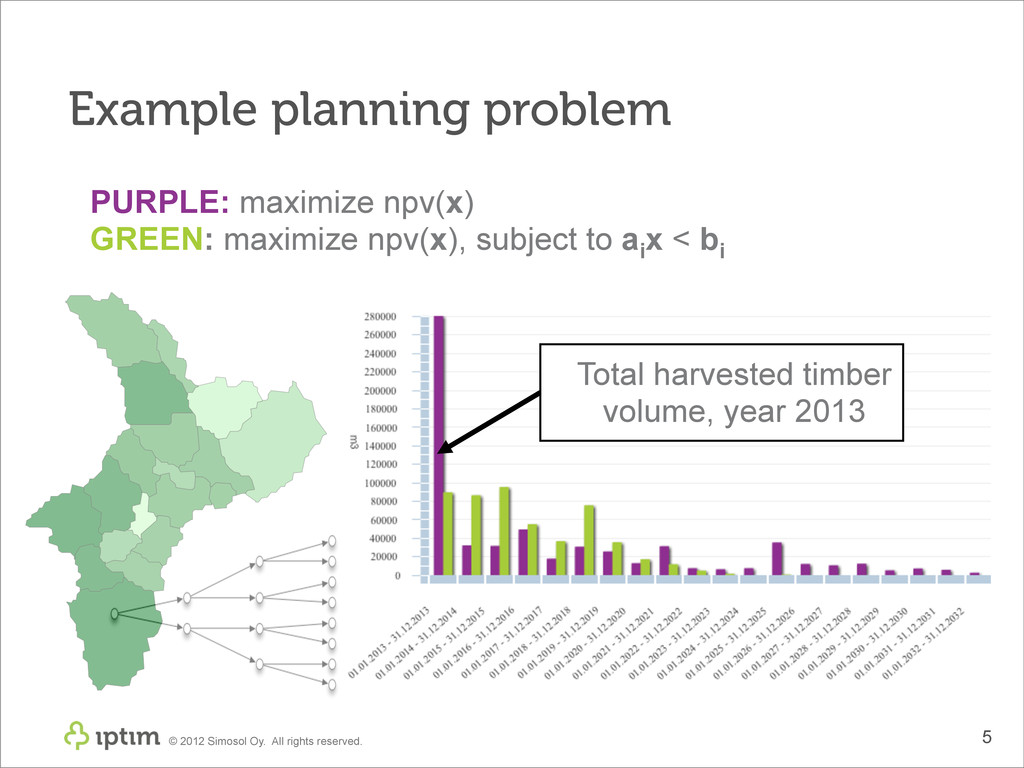
planning is done? ‣Forests are divided into management units, so called forest “stands” (similar age, tree species etc.) ‣Future growth and treatments are simulated using forest growth models ‣From OR point of view, a typical forest planning task is a production planning problem: when to harvest or treat each stand to meet stakeholders’ goals? ‣The objectives can be, for example, max NPV, max AREA OLDGROWTH , or something more complicated
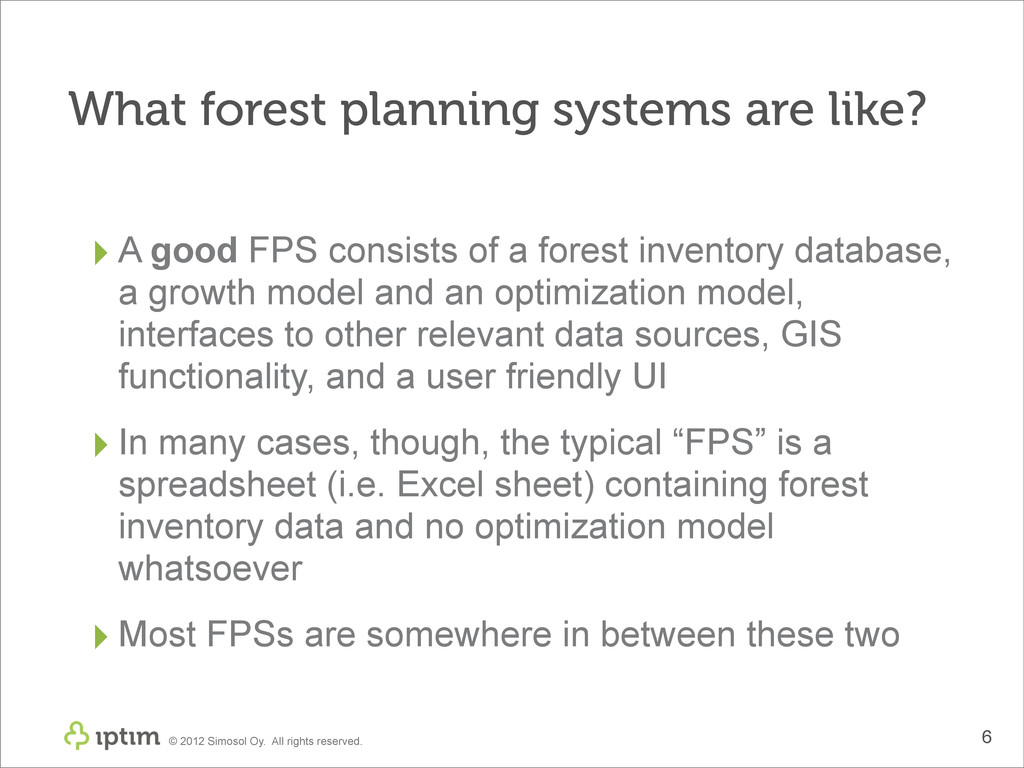
planning systems are like? ‣A good FPS consists of a forest inventory database, a growth model and an optimization model, interfaces to other relevant data sources, GIS functionality, and a user friendly UI ‣In many cases, though, the typical “FPS” is a spreadsheet (i.e. Excel sheet) containing forest inventory data and no optimization model whatsoever ‣Most FPSs are somewhere in between these two
methods are utilised in forest planning? ‣When optimization model is used, LP (or MIP) is the traditional choice and suitable for most of the basic forest planning tasks ‣More complicated problems, like ones with spatial constraints require other types of approaches ‣Metaheuristics, cellular automata etc. have been used for solving spatial (non-linear) problems ‣Also MCDM methods have been used, specially when multiple stakeholders are concerned
taking full advantage of OR tools ‣A typical problem in most forestry oriented OR tools is that they are very hard to use! ‣Or, they are easy to use but very expensive (for example, the tailored software for big companies) ‣Or, affordable and easy to use, but not very flexible ‣Commonly, each forest planning organization has an expert for running the models, others don’t want to even hear about the OR stuff!
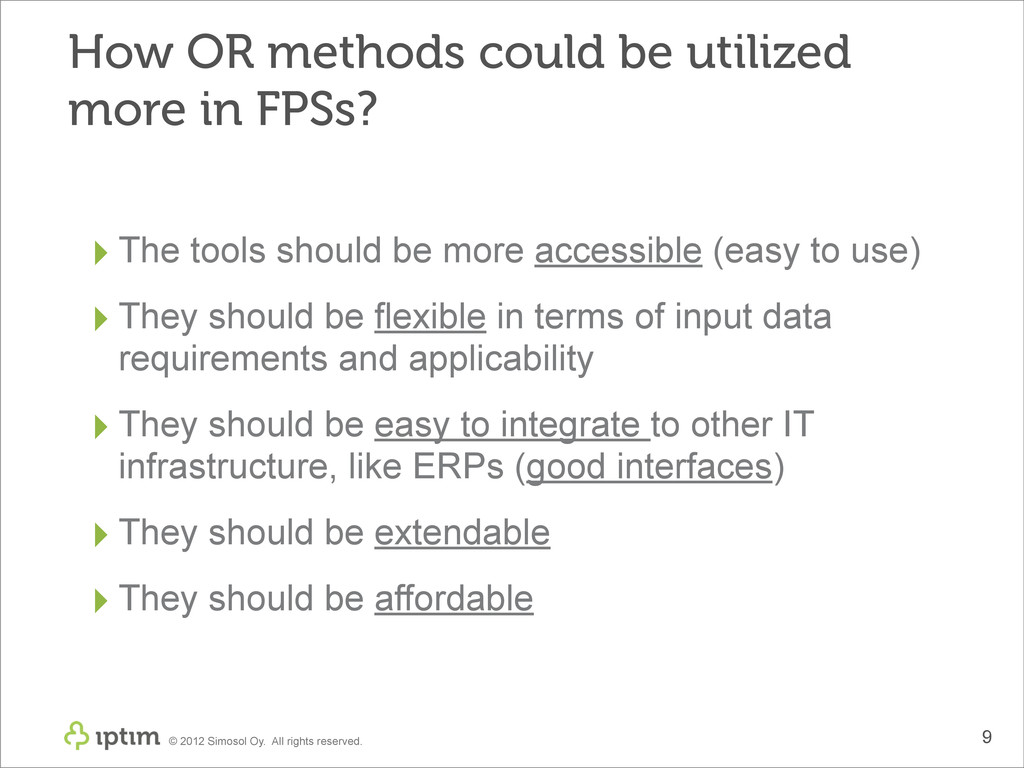
methods could be utilized more in FPSs? ‣The tools should be more accessible (easy to use) ‣They should be flexible in terms of input data requirements and applicability ‣They should be easy to integrate to other IT infrastructure, like ERPs (good interfaces) ‣They should be extendable ‣They should be affordable
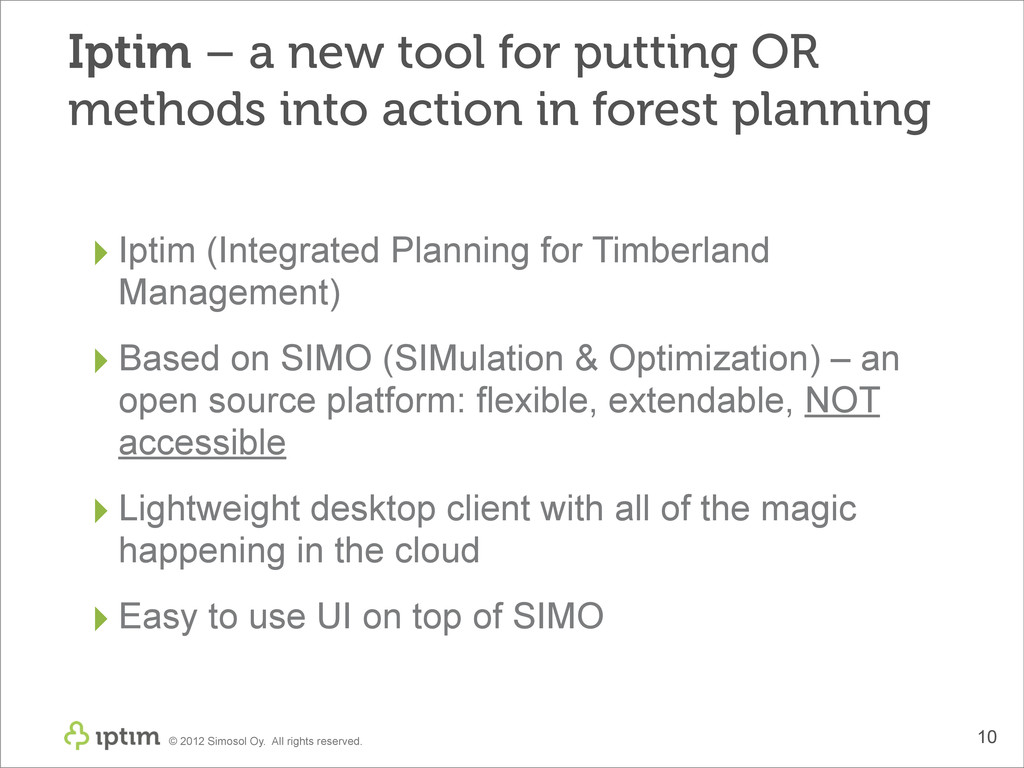
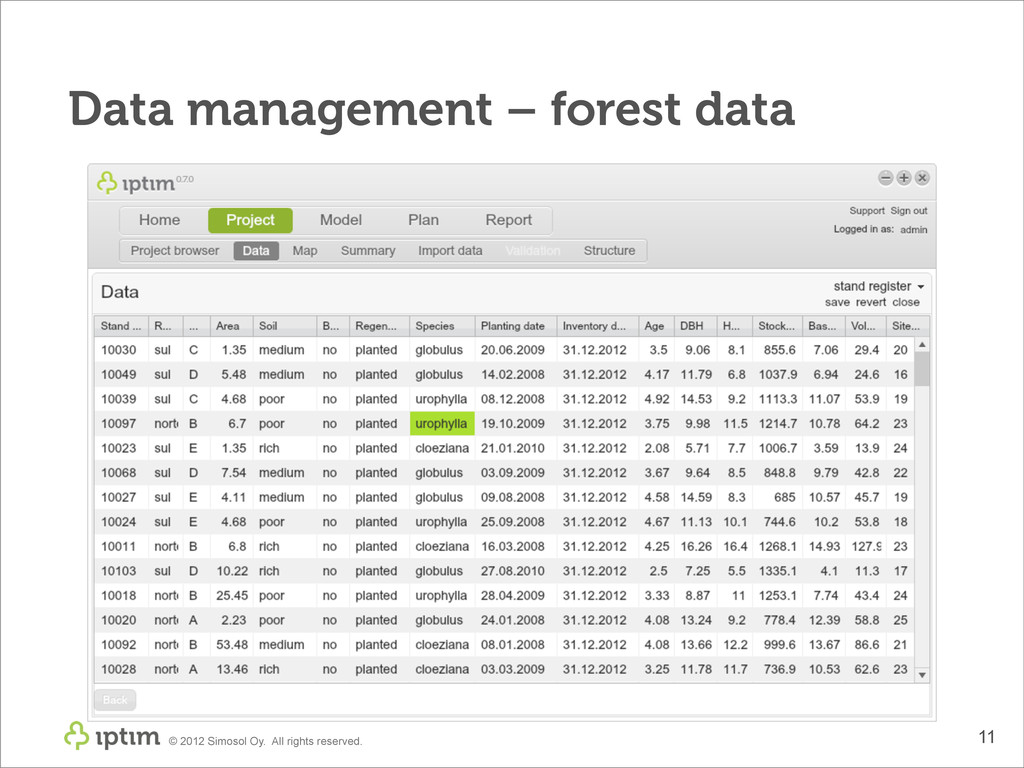
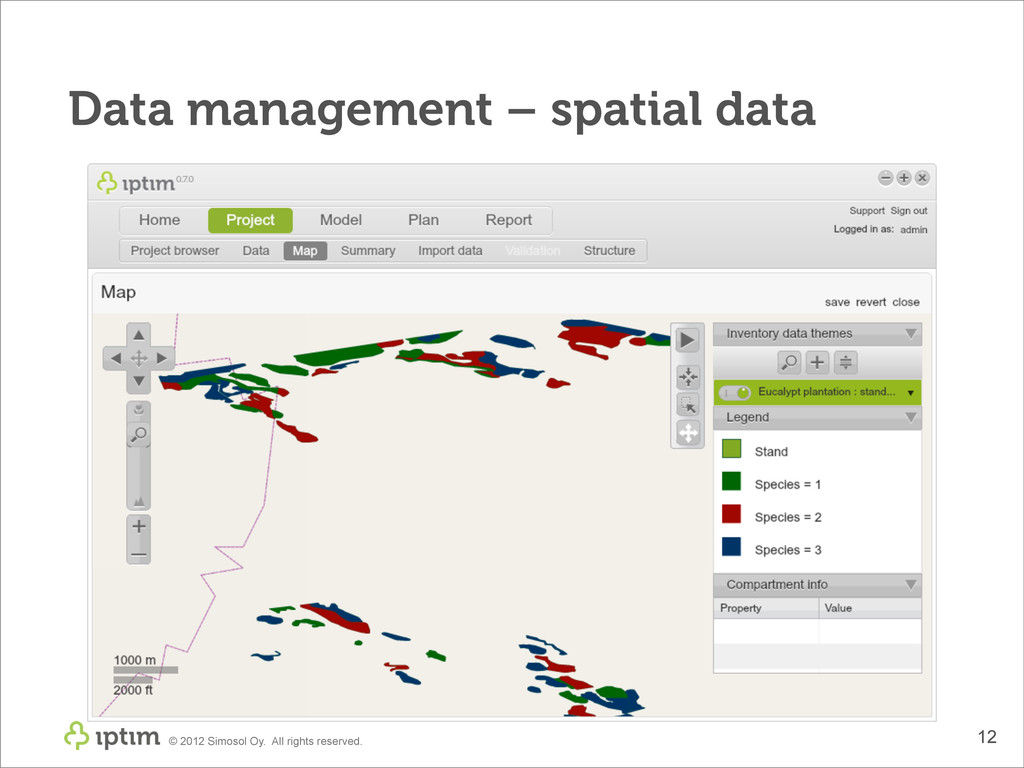
a new tool for putting OR methods into action in forest planning ‣Iptim (Integrated Planning for Timberland Management) ‣Based on SIMO (SIMulation & Optimization) – an open source platform: flexible, extendable, NOT accessible ‣Lightweight desktop client with all of the magic happening in the cloud ‣Easy to use UI on top of SIMO
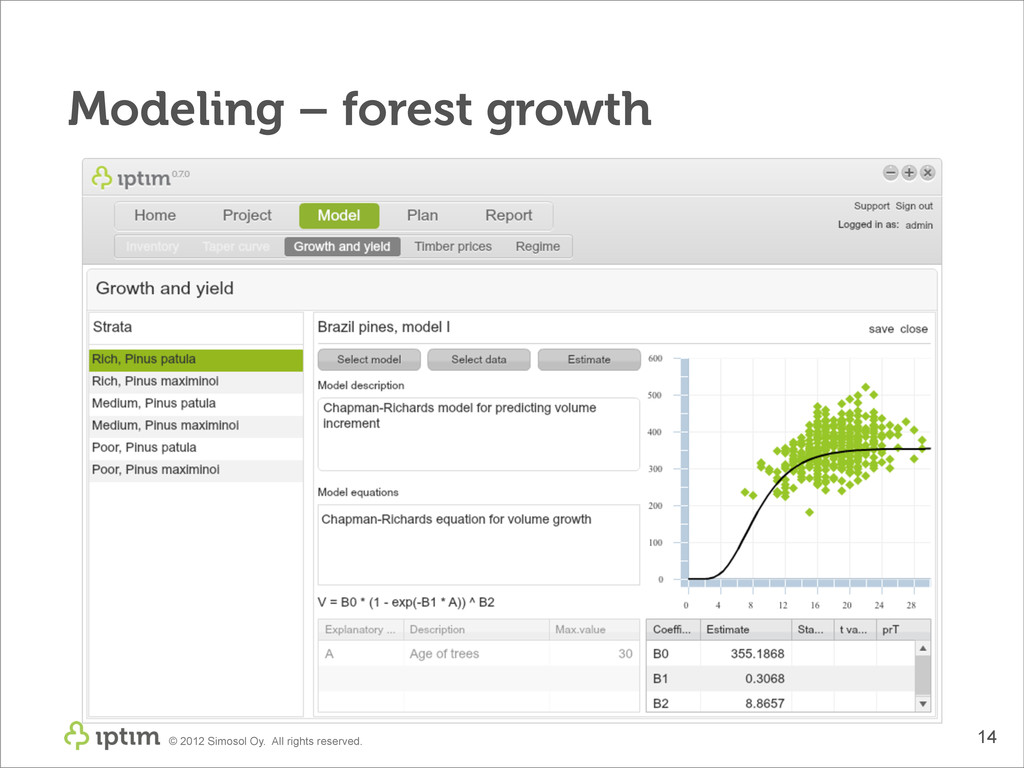
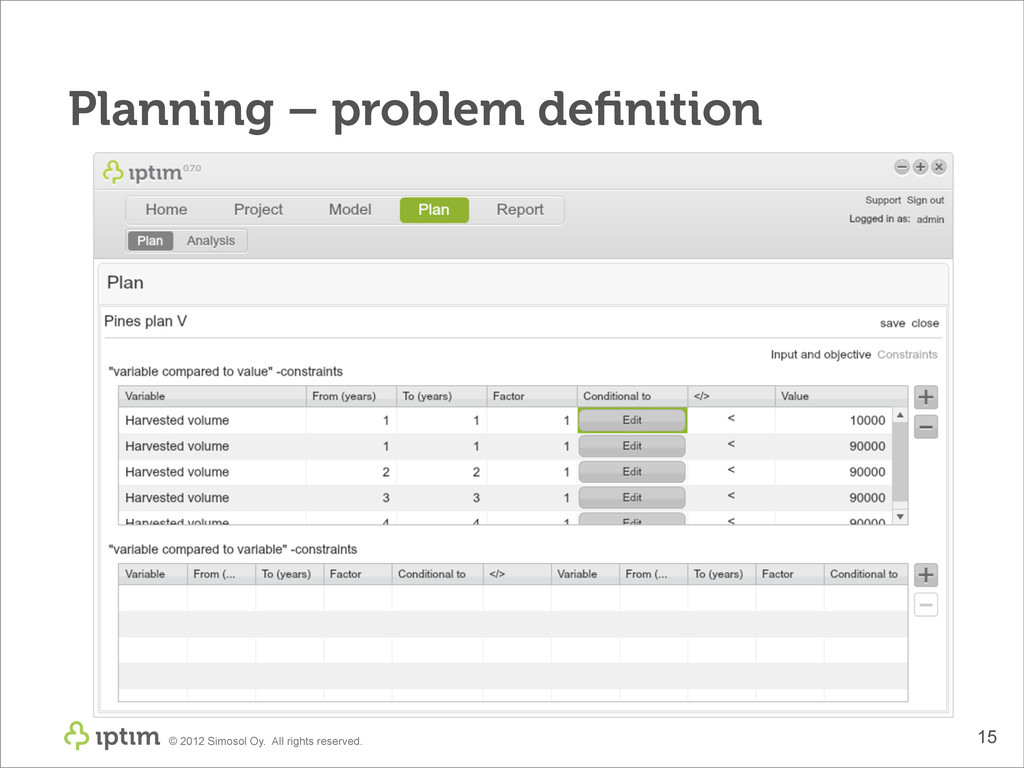
functionalities ‣Currently: LP solver and few metaheuristic algorithms for scheduling harvests & treatments ‣In the making: spatial forest road planning algorithm, harvest scheduling with spatial constraints ‣Simple enough for a non-expert to use ‣Powerful enough to be usable in large scale planning with large number of constraints (tested with 250 000 stands, ~50 schedules per stand and 100+ constraints)
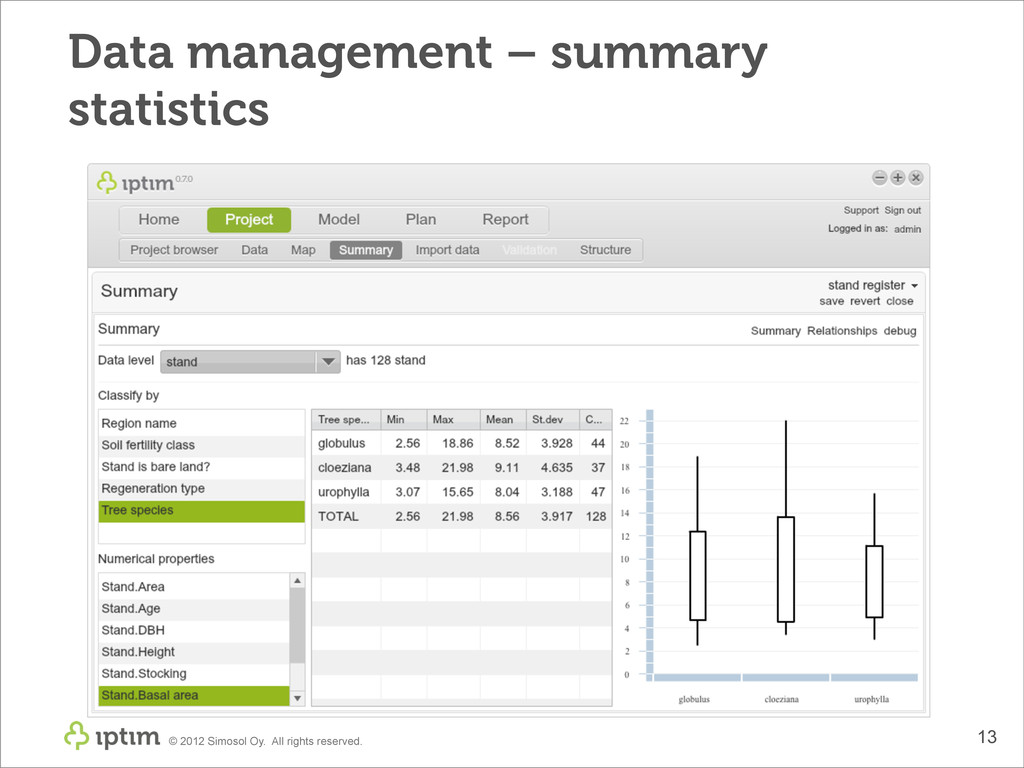
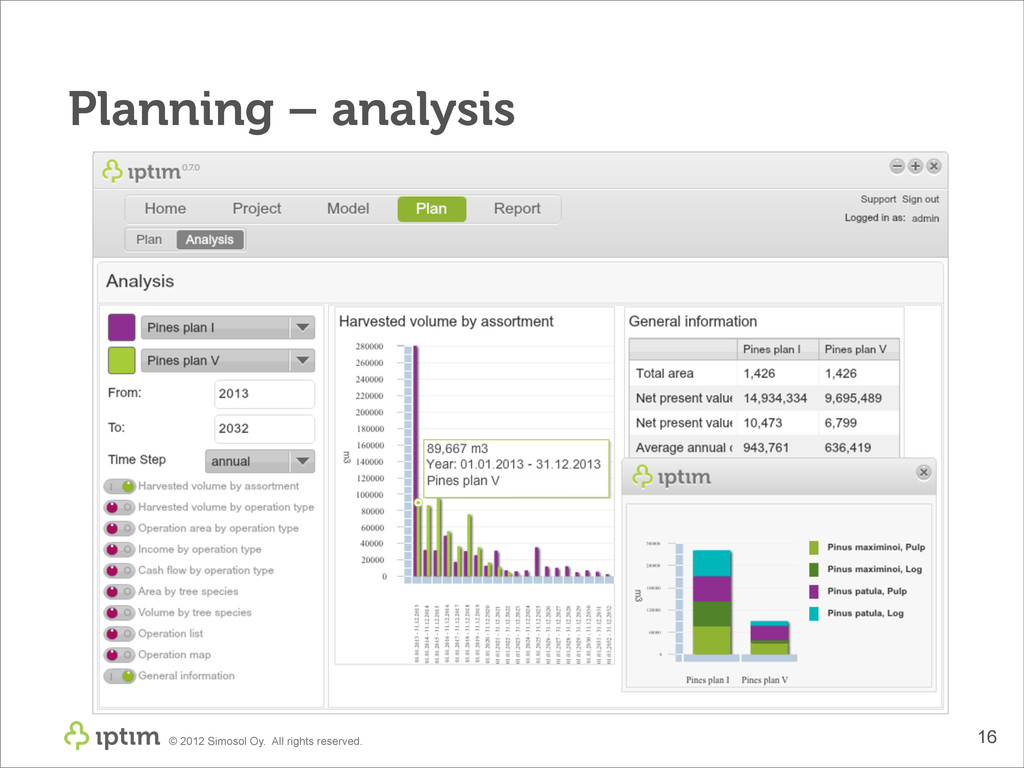
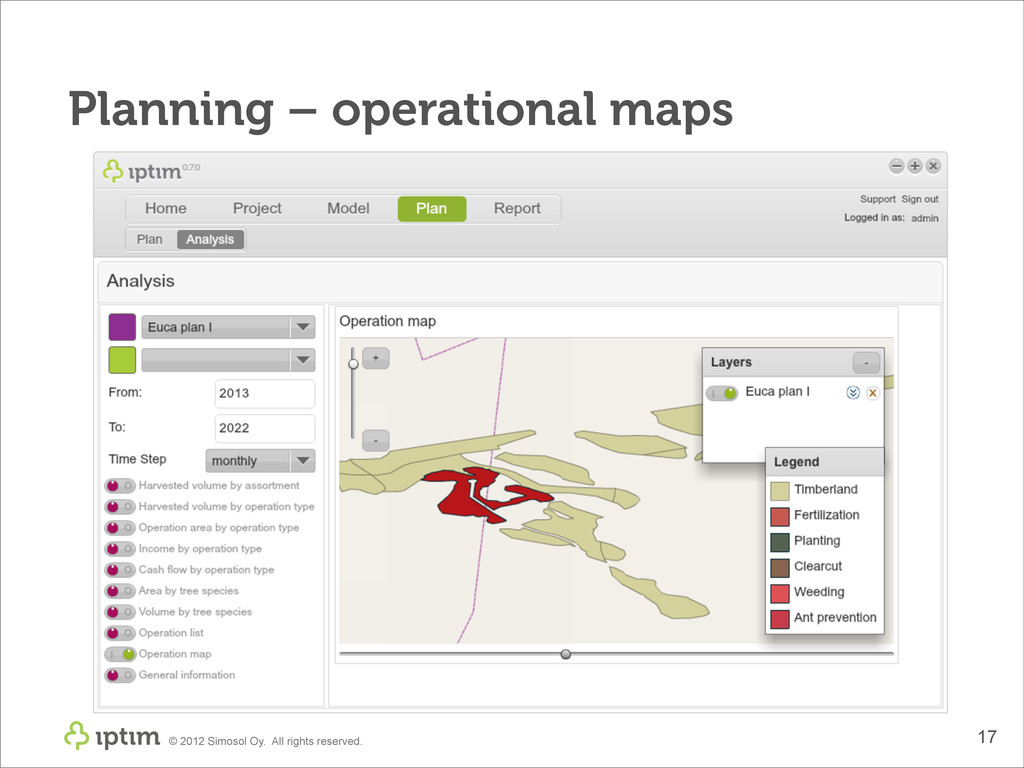
early user testing ‣Mainly positive feedback about the UI and UX ‣Cloud based service seen as a positive thing – no need to invest in computing power ‣Specialized algorithm – efficient for large problems ‣Plan analysis tools (charts and maps) provide for quick verification of plan results ‣And as usual for beta phase software, some bugs were found as well…


 iptim
 koukihosaka
 bgpat
 iktakahiro
 teamlab
 ivry_presentationmaterials
 namiki64
 shugo
 yut0naga1_fa
 jyouryuusui
 willnet
 takonda
 eileencodes
 wayneb77
 caitiem20
 speakerdeck
 notwaldorf
 lynnandtonic
 helenjbeal
 carmenintech
 dougneiner
 geoffreycrofte
 codingconduct