decision support systems in forestry in general ‣Storing, handling, processing, analyzing and visualizing forest data ‣Modeling of forest growth and yield ‣Planning of operational activities into the future ‣Comparing alternative courses of action and the effects of the actions ‣Reporting of meaningful information from the generated plans
information investors want from a DSSs? ‣Information for helping in the initial decision to invest and tracking of the investment performance ‣Current value of a forest property and expectations on DCF, IRR? ‣The uncertainties associated with the expectations? ‣How to react to the changes in the surrounding world 4
utilizing typical forestry DSSs in forest investment projects ‣Extensive geographical coverage of projects ‣…in varying natural environments and using multiple units of measurement and languages ‣…conforming to diverse conventions and regulations ‣…done by people that are not necessarily that much IT oriented ‣Typical forestry DSSs are not that flexible, except for expert users
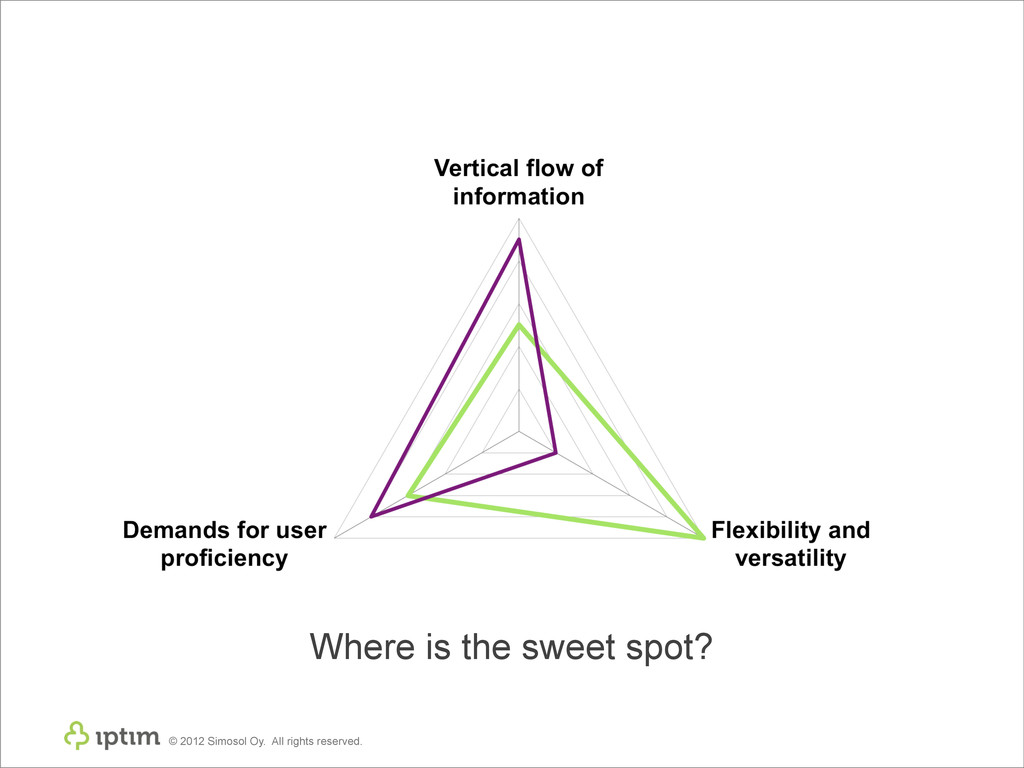
in analysing a potential forest investment ‣Typically two extremes: the "DSS solution" or the "spreadsheet solution” (the ”quick and dirty” solution) ‣The "DSS solution" can automate many processes, but requires a significant initial investment ‣The "spreadsheet solution" is initially a lot less expensive and more applicable to ad hoc analysis but leads to repetition of simple tasks ‣In the past, there hasn’t been that much options in the middle of these two extremes 6
a tropical hardwood plantation in Latin America ‣Need for assessing the value of the plantation using DCF approach and a ”spreadsheet solution” ‣Shortcomings of a "spreadsheet solution”: ‣simplifying assumptions about the growth ‣age structure vs. market demand do not meet ‣timber price developments difficult to account for 7
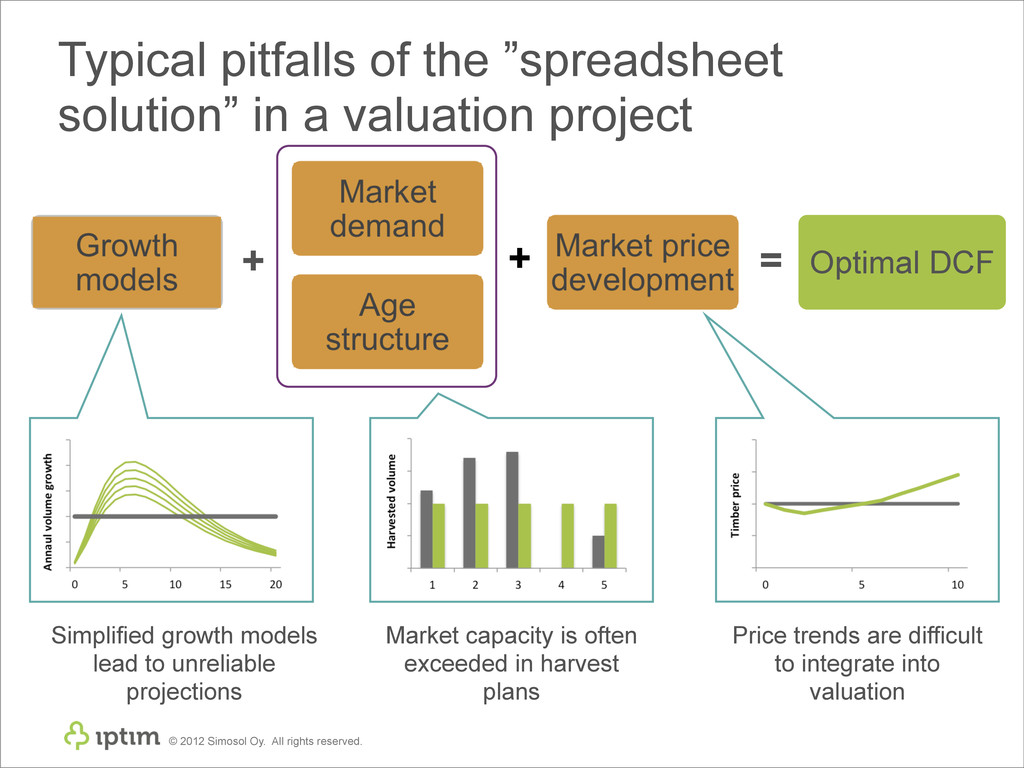
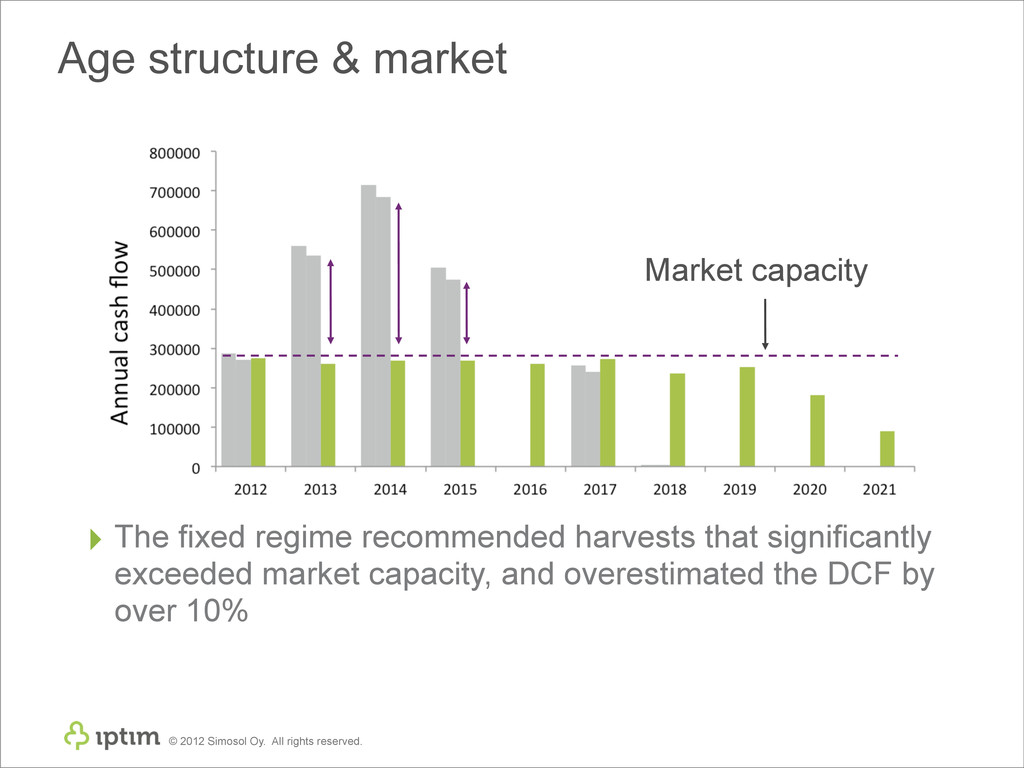
the ”spreadsheet solution” in a valuation project Optimal DCF = + + Market capacity is often exceeded in harvest plans Price trends are difficult to integrate into valuation Simplified growth models lead to unreliable projections
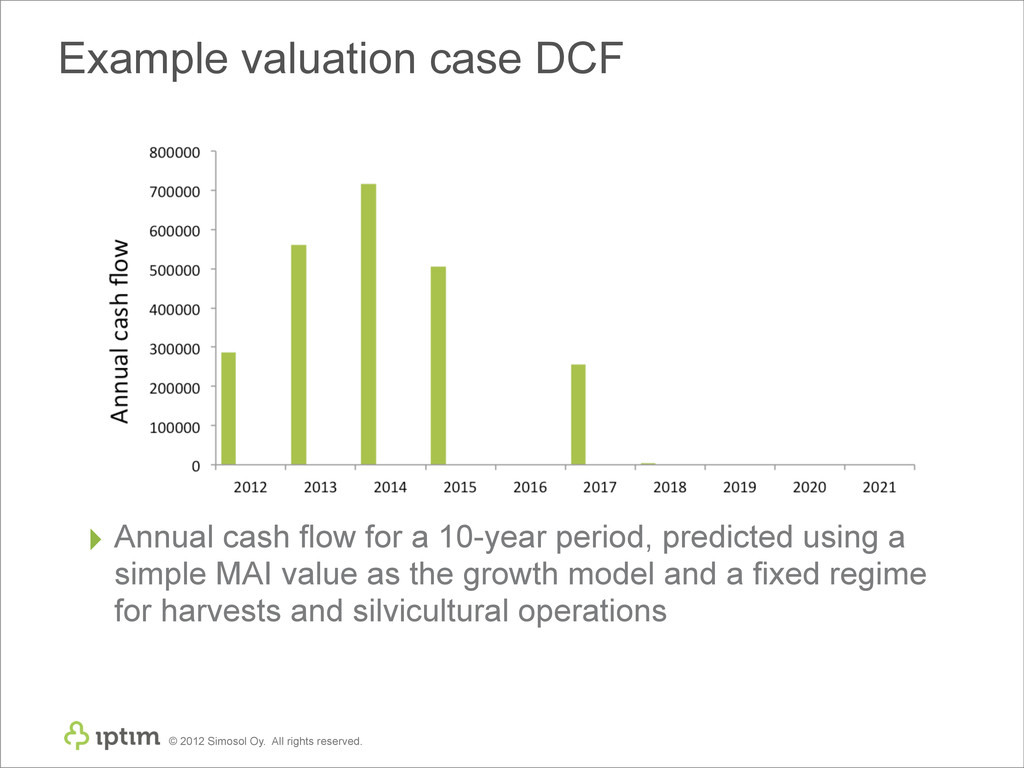
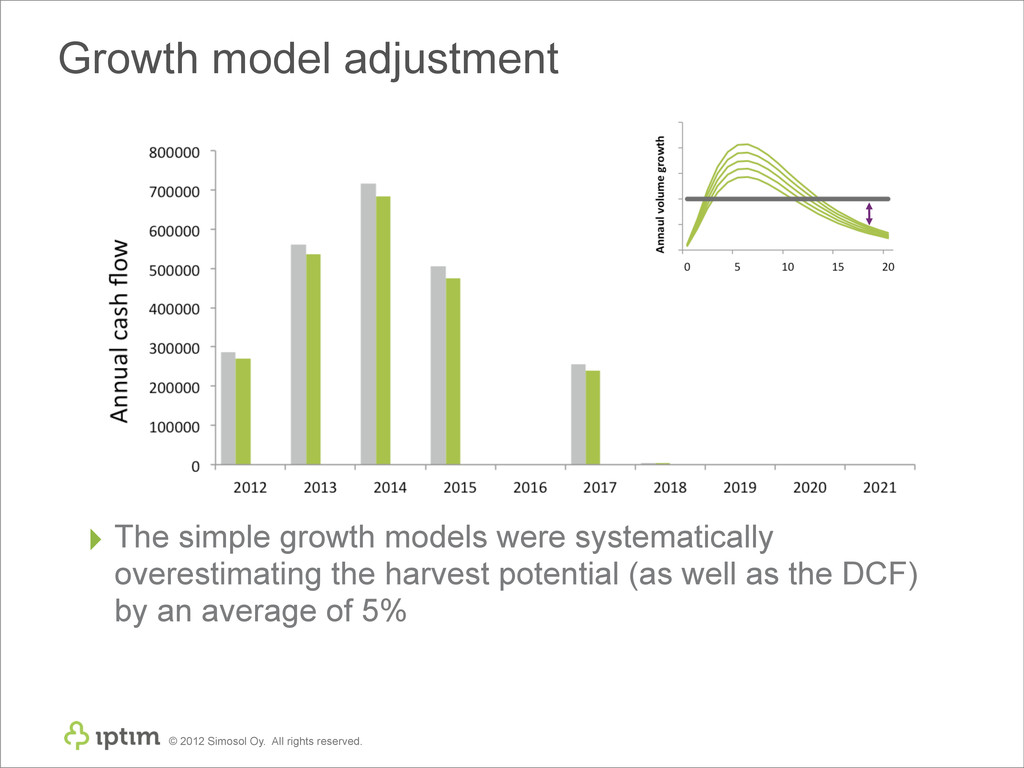
flow for a 10-year period, predicted using a simple MAI value as the growth model and a fixed regime for harvests and silvicultural operations Example valuation case DCF
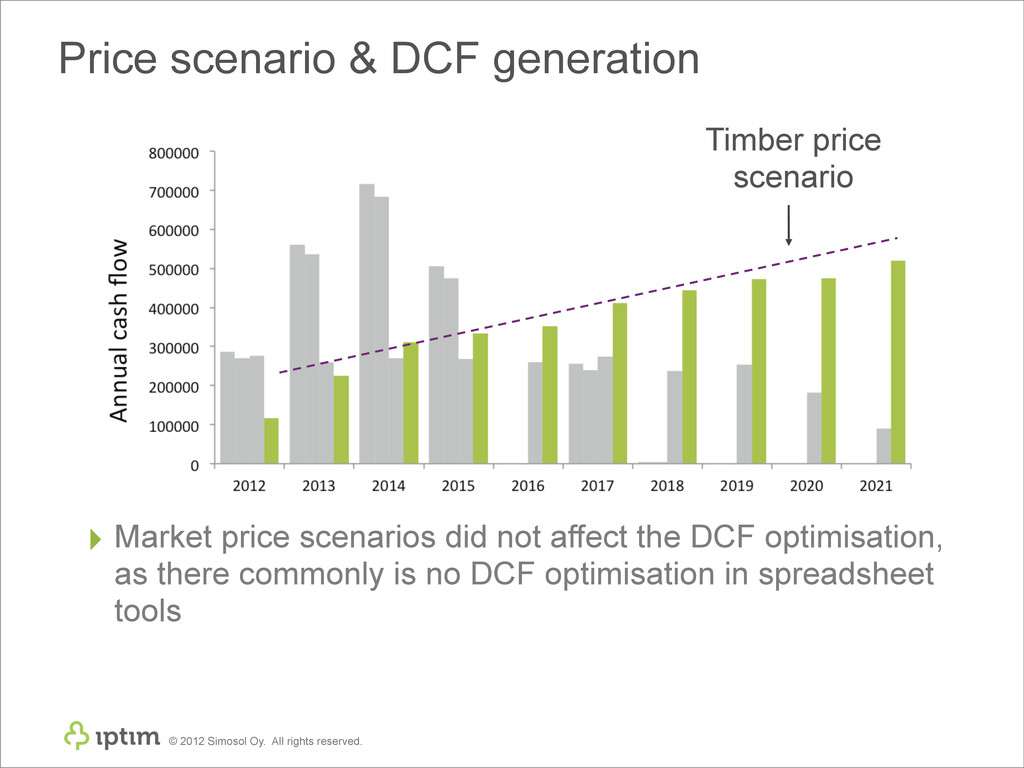
scenarios did not affect the DCF optimisation, as there commonly is no DCF optimisation in spreadsheet tools Price scenario & DCF generation Timber price scenario
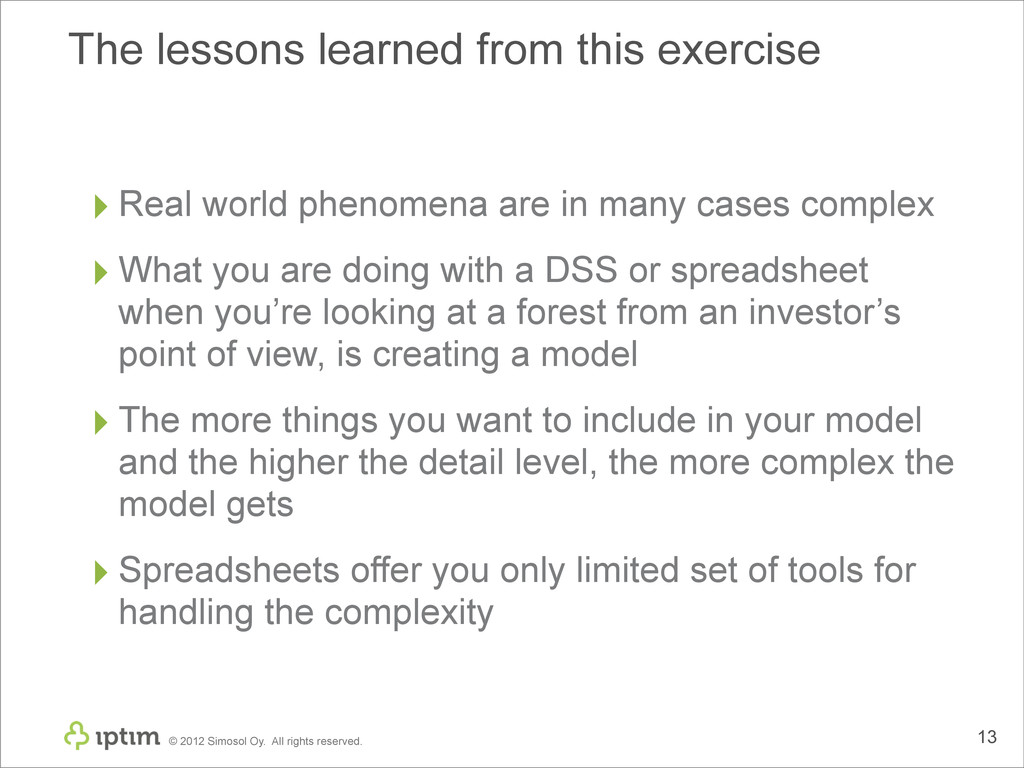
learned from this exercise ‣Real world phenomena are in many cases complex ‣What you are doing with a DSS or spreadsheet when you’re looking at a forest from an investor’s point of view, is creating a model ‣The more things you want to include in your model and the higher the detail level, the more complex the model gets ‣Spreadsheets offer you only limited set of tools for handling the complexity
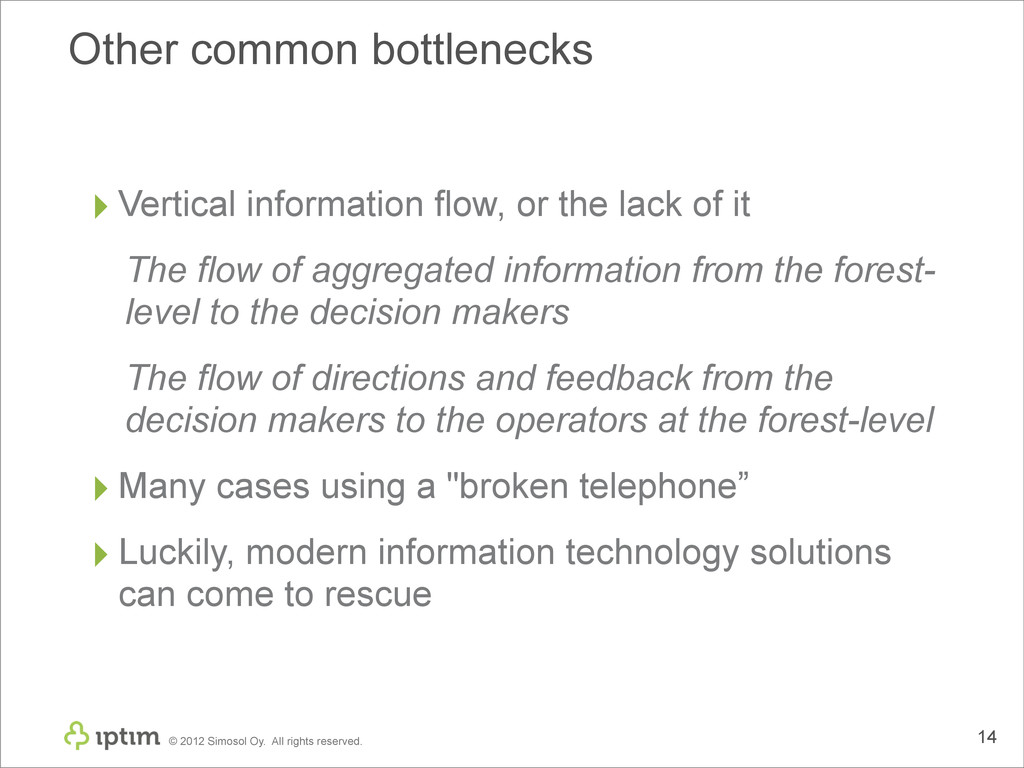
bottlenecks ‣Vertical information flow, or the lack of it The flow of aggregated information from the forest- level to the decision makers The flow of directions and feedback from the decision makers to the operators at the forest-level ‣Many cases using a "broken telephone” ‣Luckily, modern information technology solutions can come to rescue
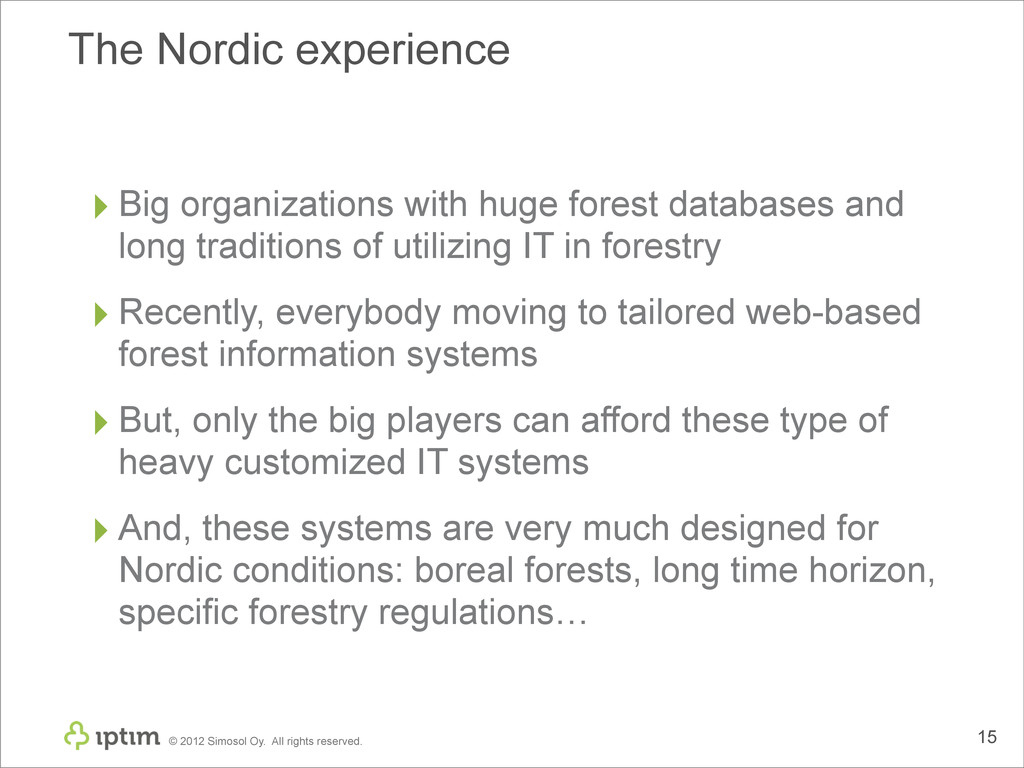
experience ‣Big organizations with huge forest databases and long traditions of utilizing IT in forestry ‣Recently, everybody moving to tailored web-based forest information systems ‣But, only the big players can afford these type of heavy customized IT systems ‣And, these systems are very much designed for Nordic conditions: boreal forests, long time horizon, specific forestry regulations…
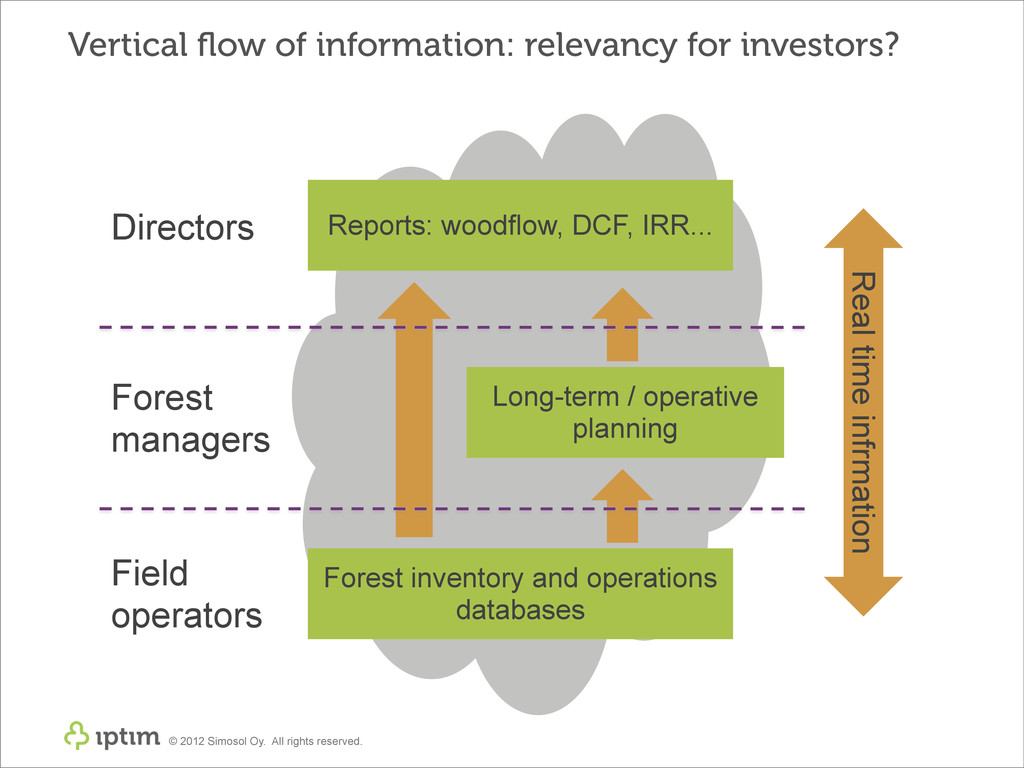
information: relevancy for investors? Forest inventory and operations databases Long-term / operative planning Reports: woodflow, DCF, IRR... Directors Forest managers Field operators Real time infrmation


 iptim
 greenmidori
 ykanoh
 carta_engineering
 shumei_ito
 genda
 kenichiodo
 4o1sobblue
 codatum
 teamlab
 pfn
 takanorip
 techtekt
 chriscoyier
 aleyda
 caitiem20
 jonoalderson
 dugsong
 destraynor
 honzajavorek
 palkan
 jakevdp
 carmenintech
 reverentgeek