Share
How a real-life software/product engineering team works
I was honoured to be invited to talk by the Zakey initiative to a group of fresh graduates, most of them with few or no professional experience, so my goal was to have a high-level introduction to the overall end-to-end process of software development (mostly focused on a product). Some of the topics covered were:
- Software development process from a 10.000 foot view (big picture)
- How a team decides what to work on: things like OKR, KPI, priorization, product management, etc. (in a very basic and superficial way)
- How the team got organized and our ownership end to end, our day by day
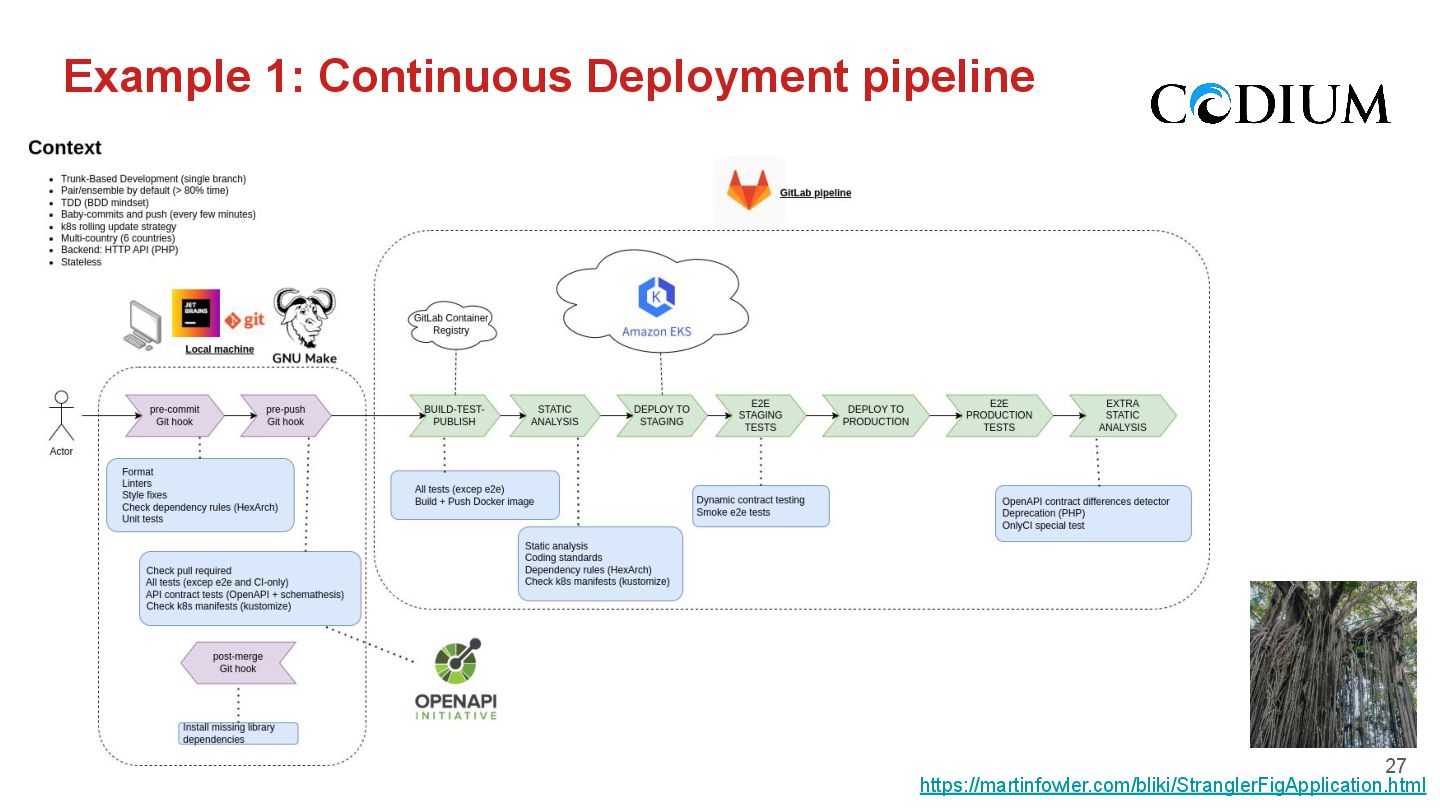
- Everything that happened from the moment we made a change in the code until that change arrived to the hands of our users
- A little bit of my vision about software development and the profession
- Some resources to further learn or deepen into some of the topics mentioned
Isidro López
Transcript
45 slides
-
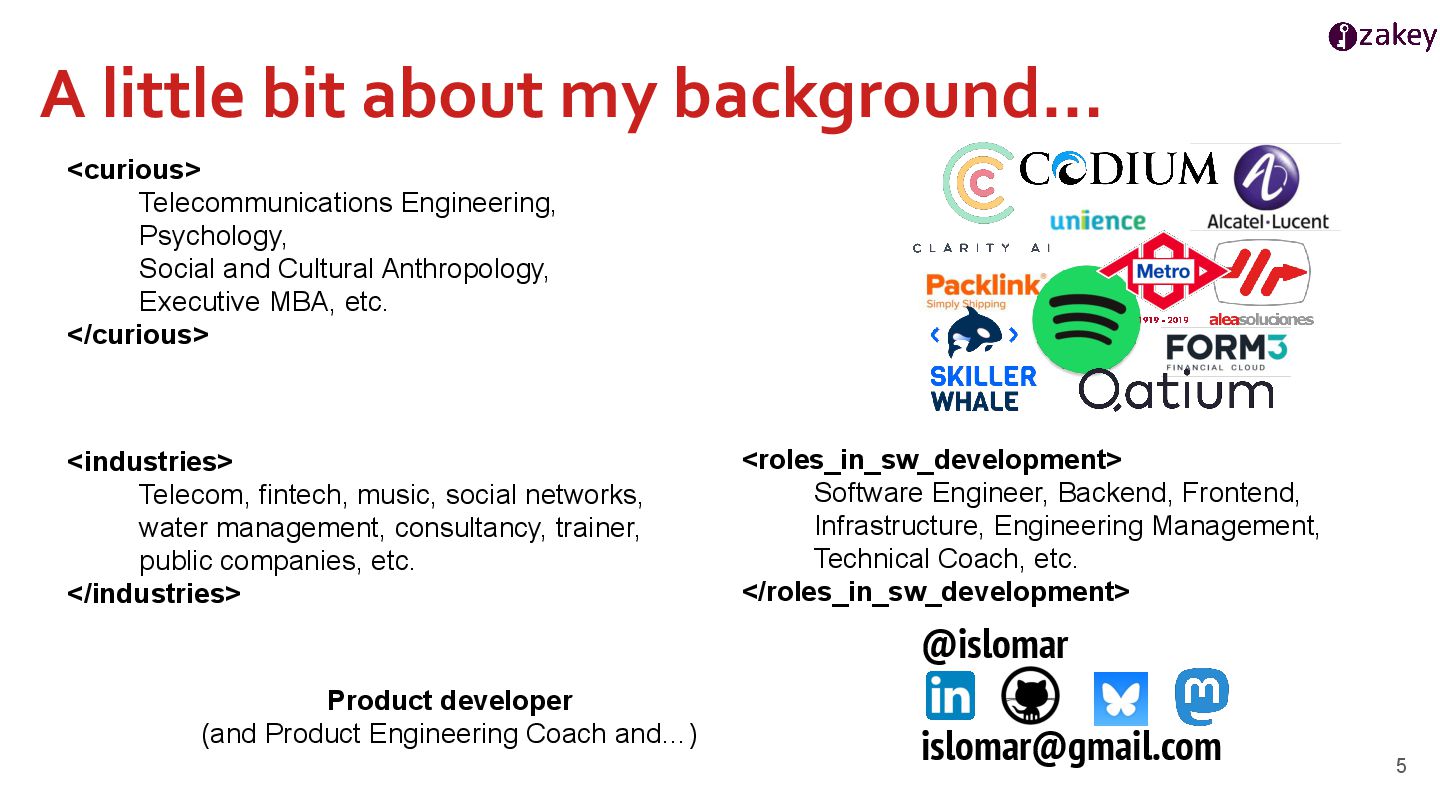
A little bit about my background… Hemos venido a jugar...
Product developer (and Product Engineering Coach and…) <curious> Telecommunications Engineering, Psychology, Social and Cultural Anthropology, Executive MBA, etc. </curious> 5 <industries> Telecom, fintech, music, social networks, water management, consultancy, trainer, public companies, etc. </industries> <roles_in_sw_development> Software Engineer, Backend, Frontend, Infrastructure, Engineering Management, Technical Coach, etc. </roles_in_sw_development> @islomar [email protected] -
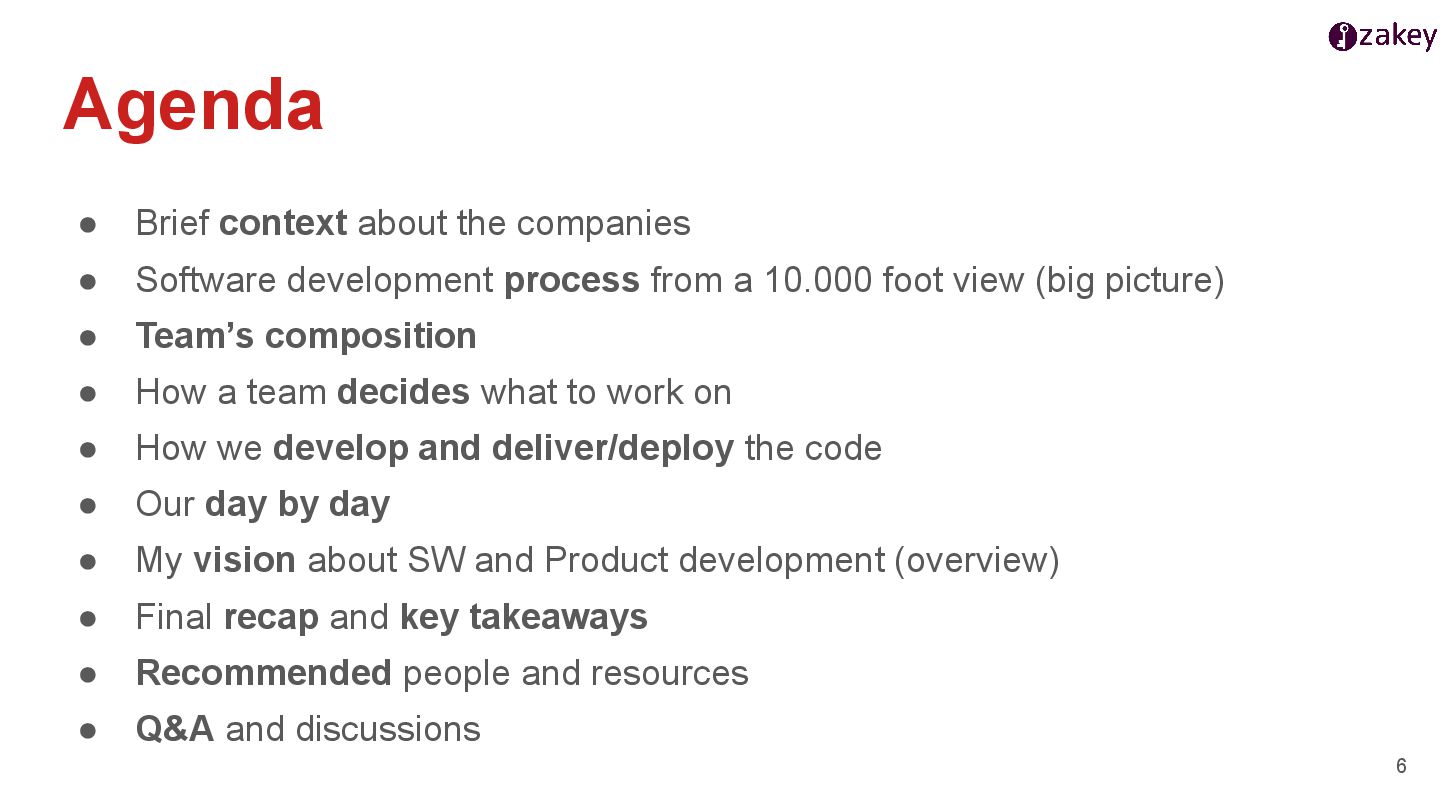
Agenda • Brief context about the companies • Software development
process from a 10.000 foot view (big picture) • Team’s composition • How a team decides what to work on • How we develop and deliver/deploy the code • Our day by day • My vision about SW and Product development (overview) • Final recap and key takeaways • Recommended people and resources • Q&A and discussions 6 -
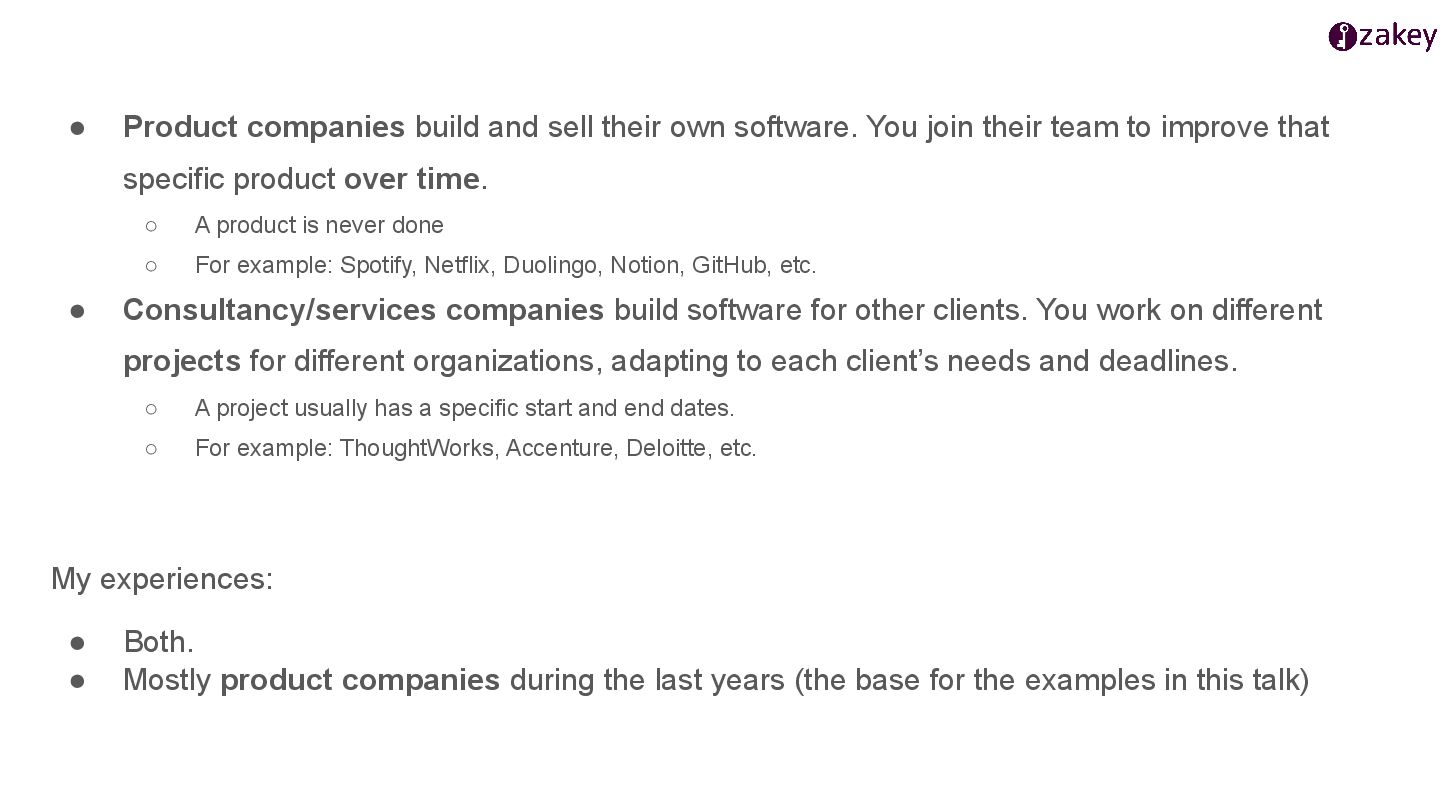
• Product companies build and sell their own software. You
join their team to improve that specific product over time. ◦ A product is never done ◦ For example: Spotify, Netflix, Duolingo, Notion, GitHub, etc. • Consultancy/services companies build software for other clients. You work on different projects for different organizations, adapting to each client’s needs and deadlines. ◦ A project usually has a specific start and end dates. ◦ For example: ThoughtWorks, Accenture, Deloitte, etc. My experiences: • Both. • Mostly product companies during the last years (the base for the examples in this talk) -
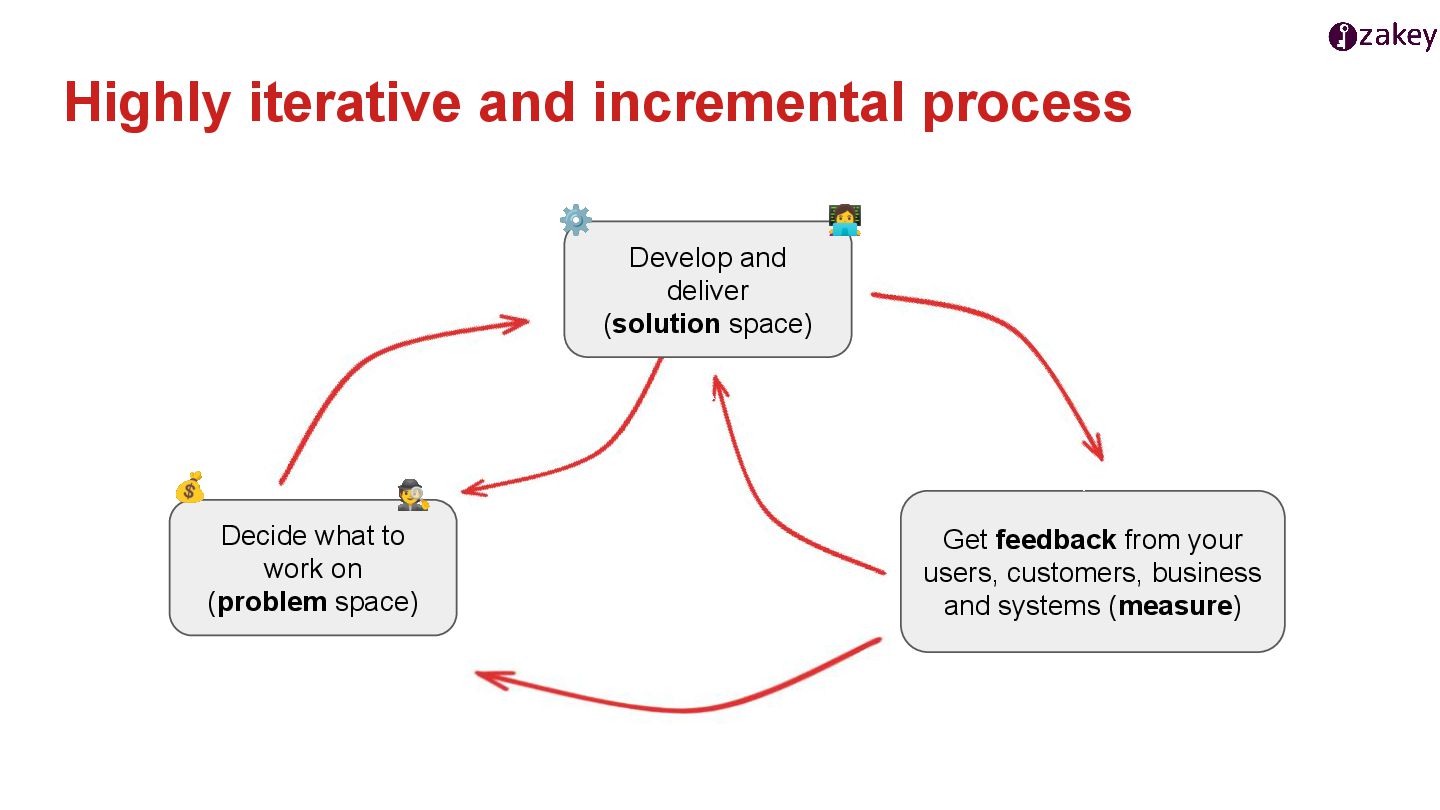
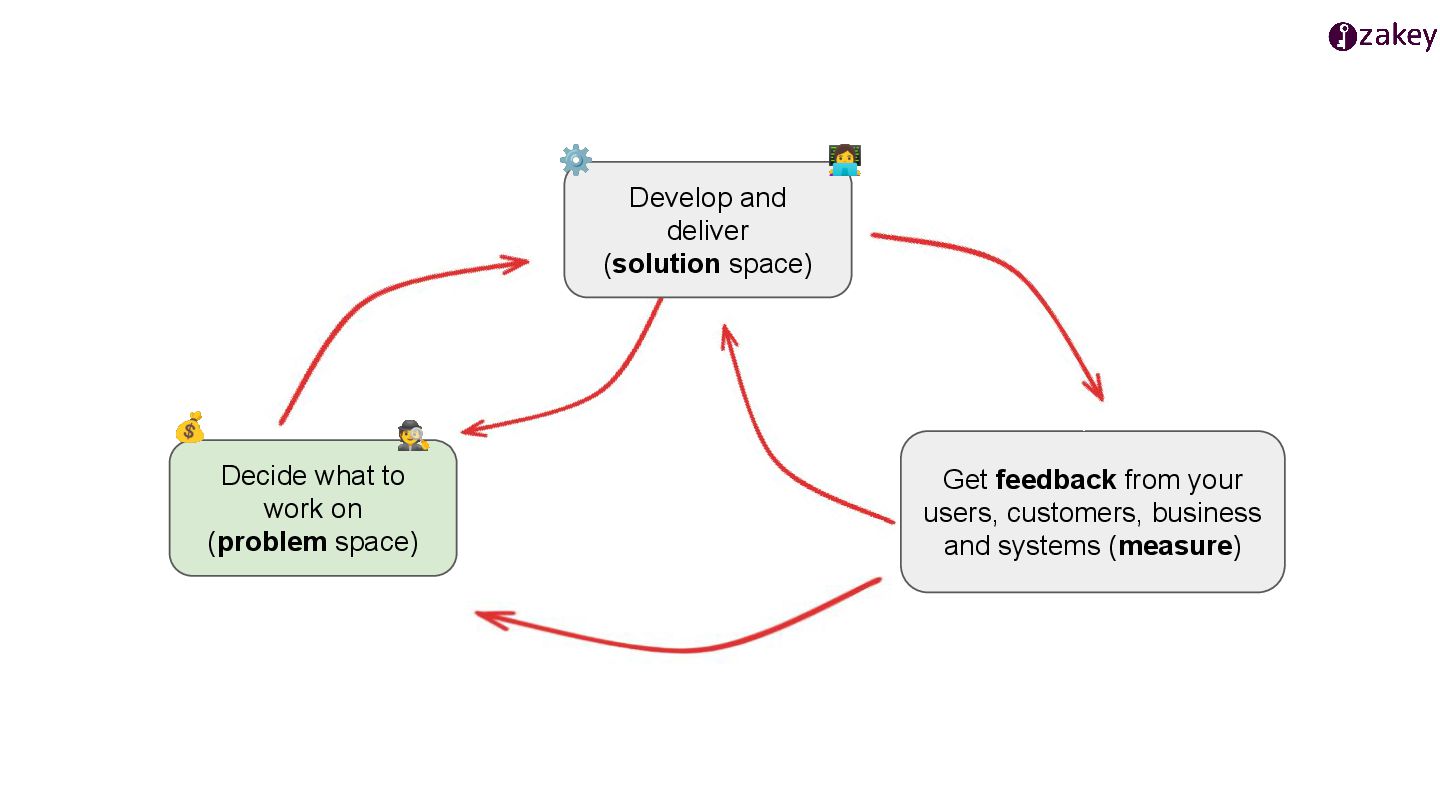
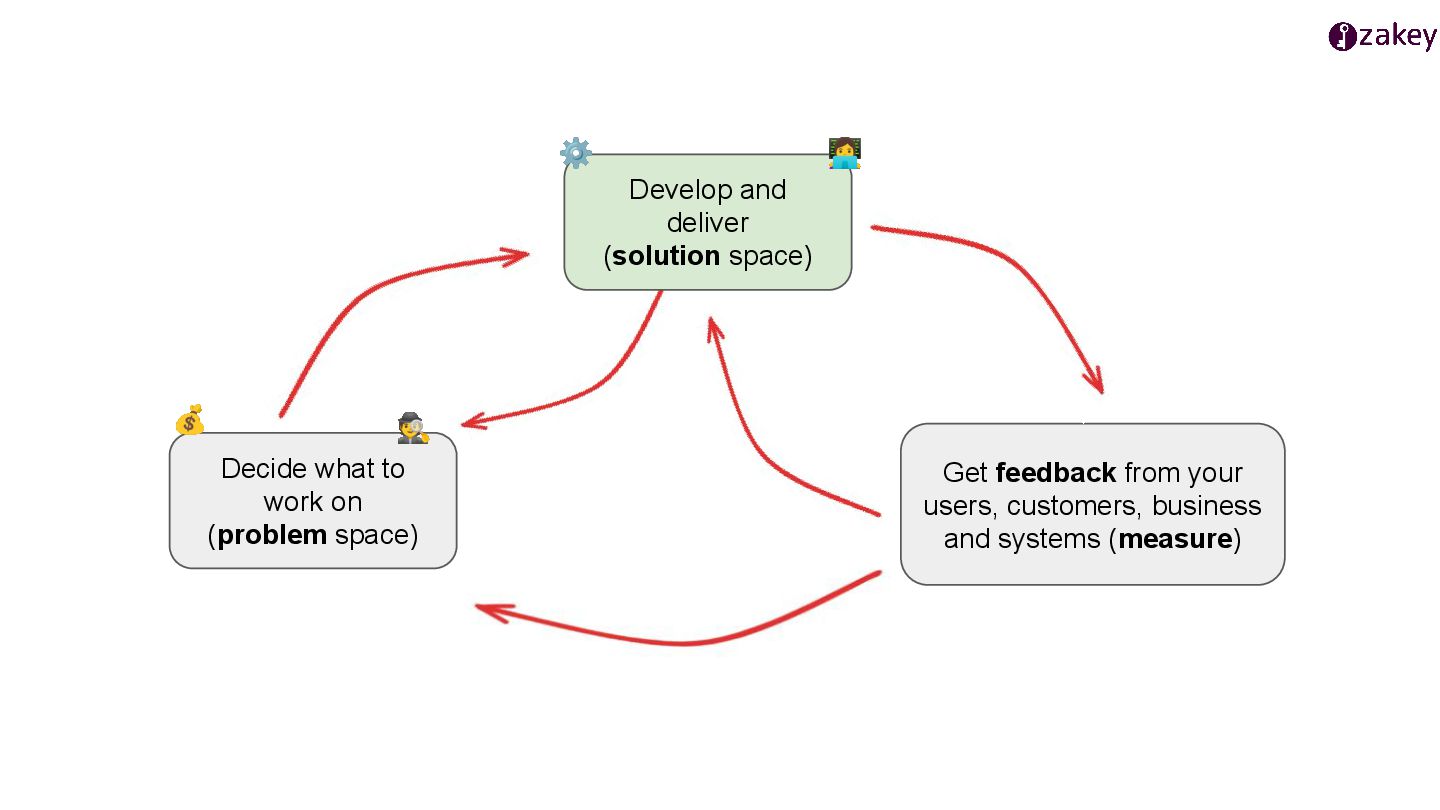
Highly iterative and incremental process Decide what to work on
(problem space) Develop and deliver (solution space) Get feedback from your users, customers, business and systems (measure) 🕵 💰 ⚙ -
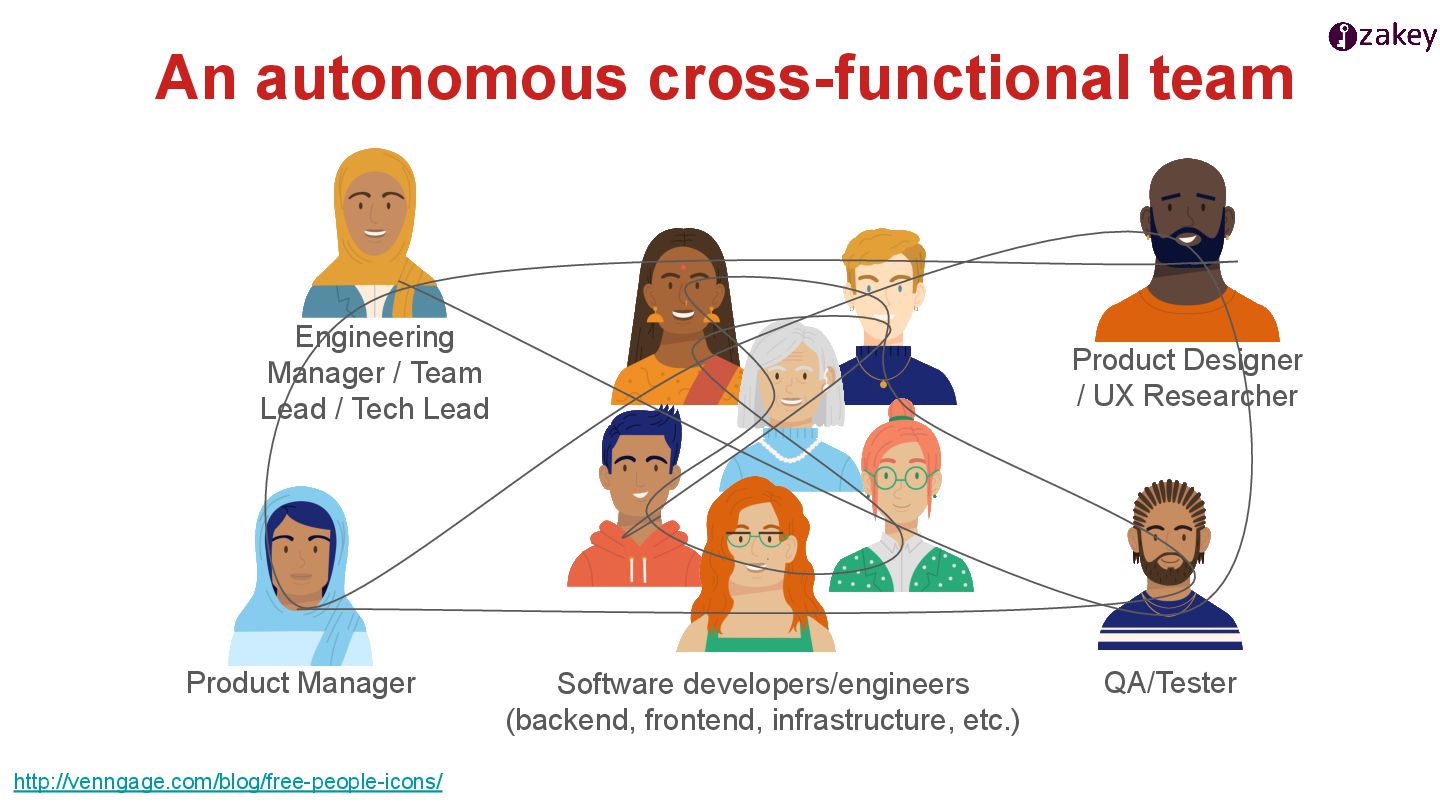
http://venngage.com/blog/free-people-icons/ Product Manager An autonomous cross-functional team QA/Tester Engineering Manager
/ Team Lead / Tech Lead Product Designer / UX Researcher Software developers/engineers (backend, frontend, infrastructure, etc.) -
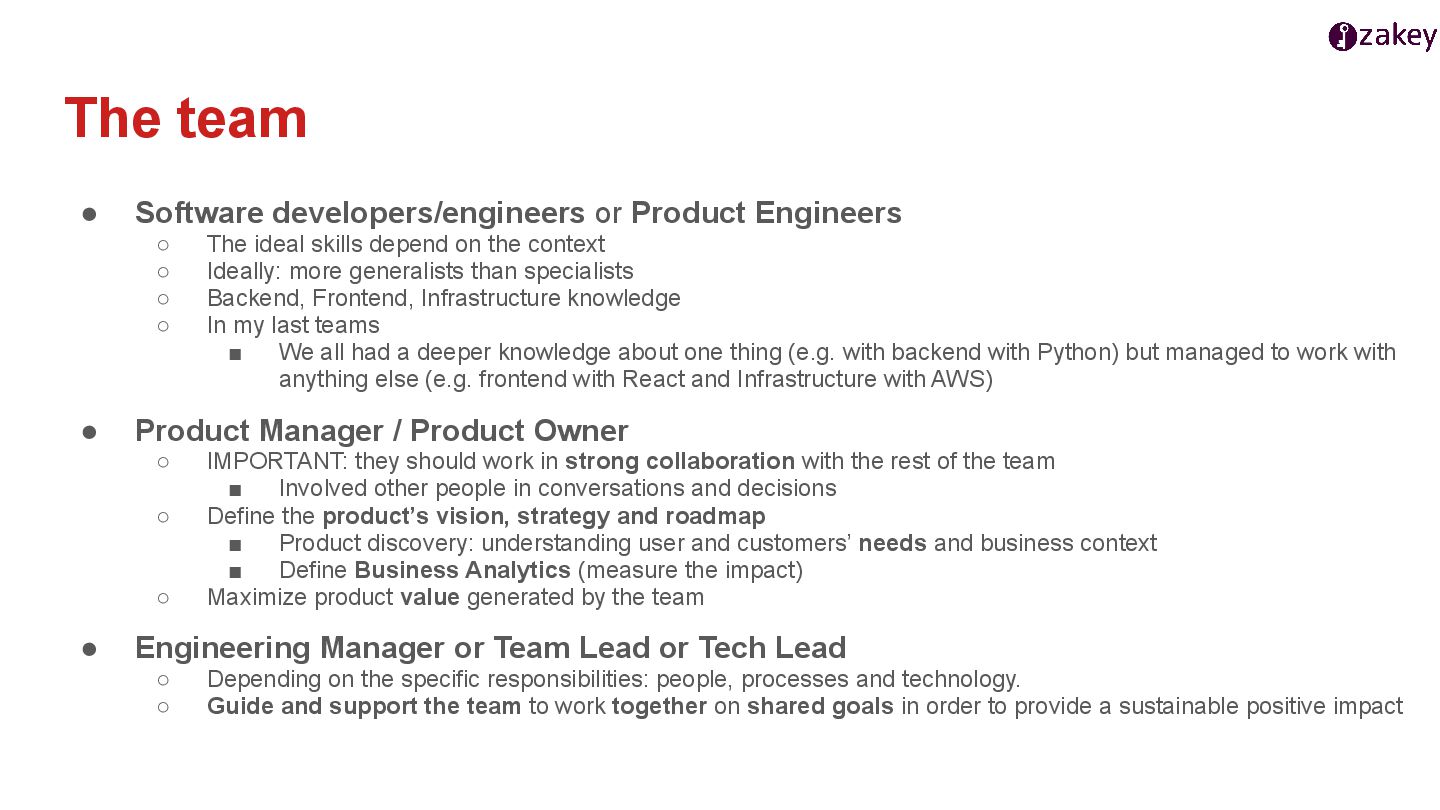
The team • Software developers/engineers or Product Engineers ◦ The
ideal skills depend on the context ◦ Ideally: more generalists than specialists ◦ Backend, Frontend, Infrastructure knowledge ◦ In my last teams ▪ We all had a deeper knowledge about one thing (e.g. with backend with Python) but managed to work with anything else (e.g. frontend with React and Infrastructure with AWS) • Product Manager / Product Owner ◦ IMPORTANT: they should work in strong collaboration with the rest of the team ▪ Involved other people in conversations and decisions ◦ Define the product’s vision, strategy and roadmap ▪ Product discovery: understanding user and customers’ needs and business context ▪ Define Business Analytics (measure the impact) ◦ Maximize product value generated by the team • Engineering Manager or Team Lead or Tech Lead ◦ Depending on the specific responsibilities: people, processes and technology. ◦ Guide and support the team to work together on shared goals in order to provide a sustainable positive impact -
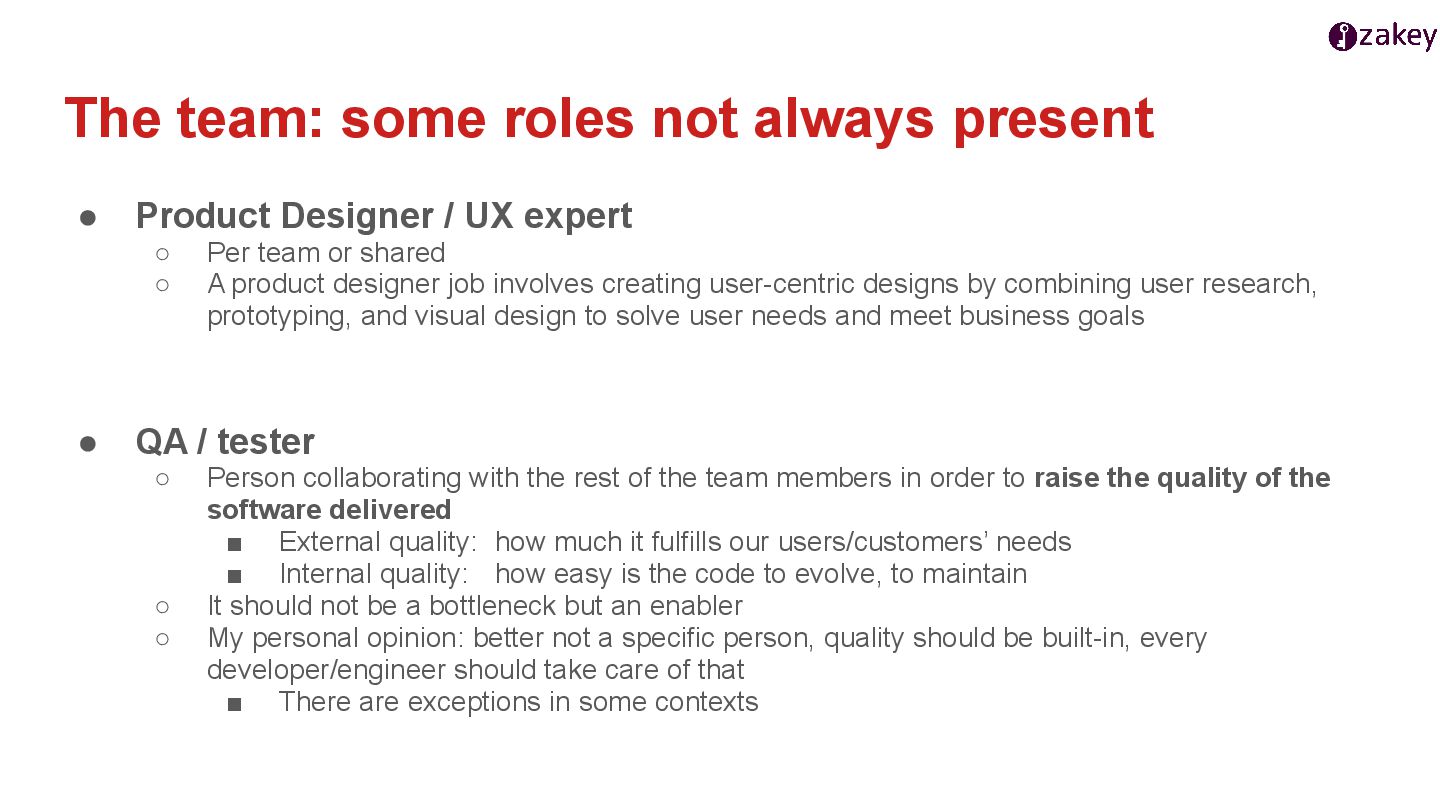
The team: some roles not always present • Product Designer
/ UX expert ◦ Per team or shared ◦ A product designer job involves creating user-centric designs by combining user research, prototyping, and visual design to solve user needs and meet business goals • QA / tester ◦ Person collaborating with the rest of the team members in order to raise the quality of the software delivered ▪ External quality: how much it fulfills our users/customers’ needs ▪ Internal quality: how easy is the code to evolve, to maintain ◦ It should not be a bottleneck but an enabler ◦ My personal opinion: better not a specific person, quality should be built-in, every developer/engineer should take care of that ▪ There are exceptions in some contexts -
Decide what to work on (problem space) Develop and deliver
(solution space) Get feedback from your users, customers, business and systems (measure) 🕵 💰 ⚙ -
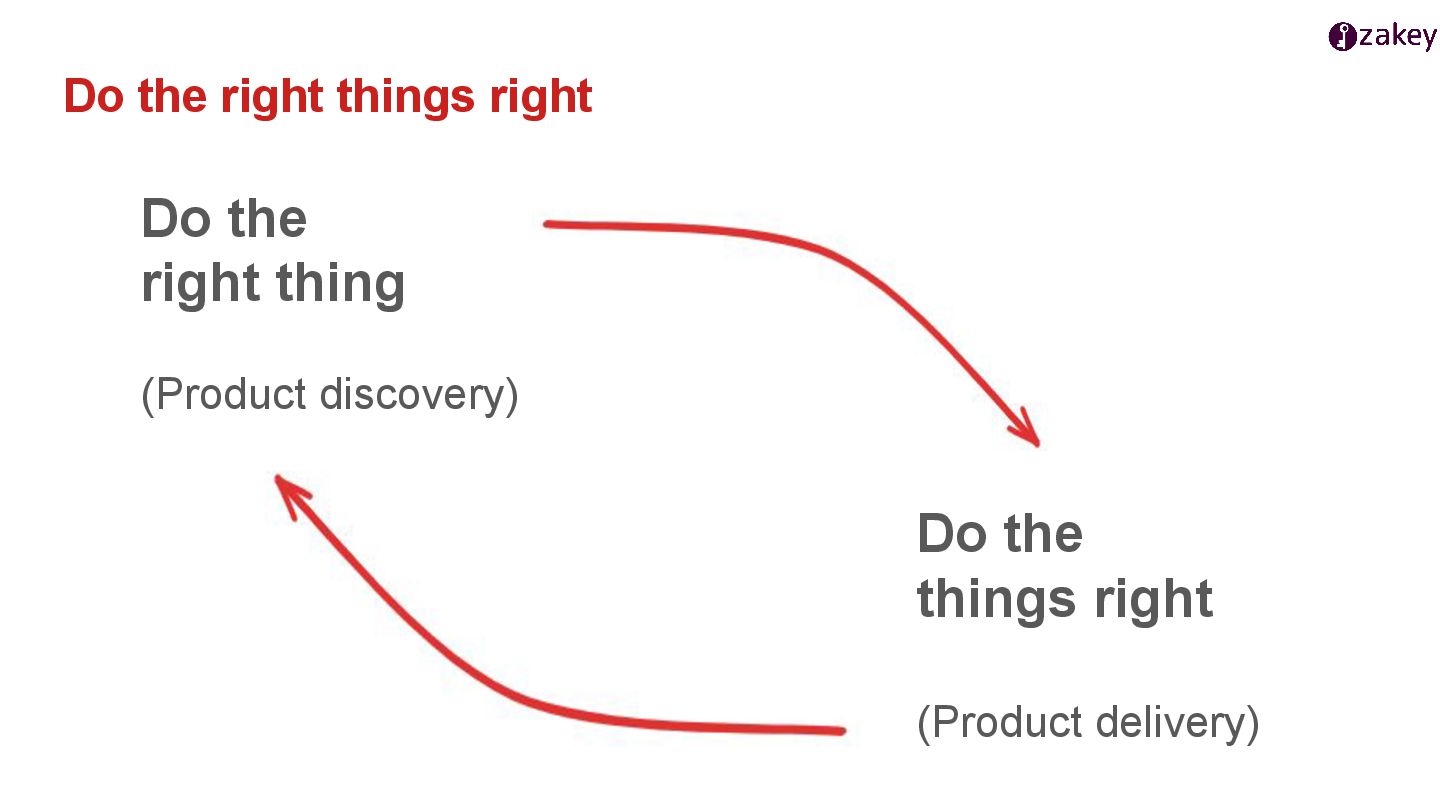
Do the right thing (Product discovery) Do the things right
(Product delivery) Do the right things right -
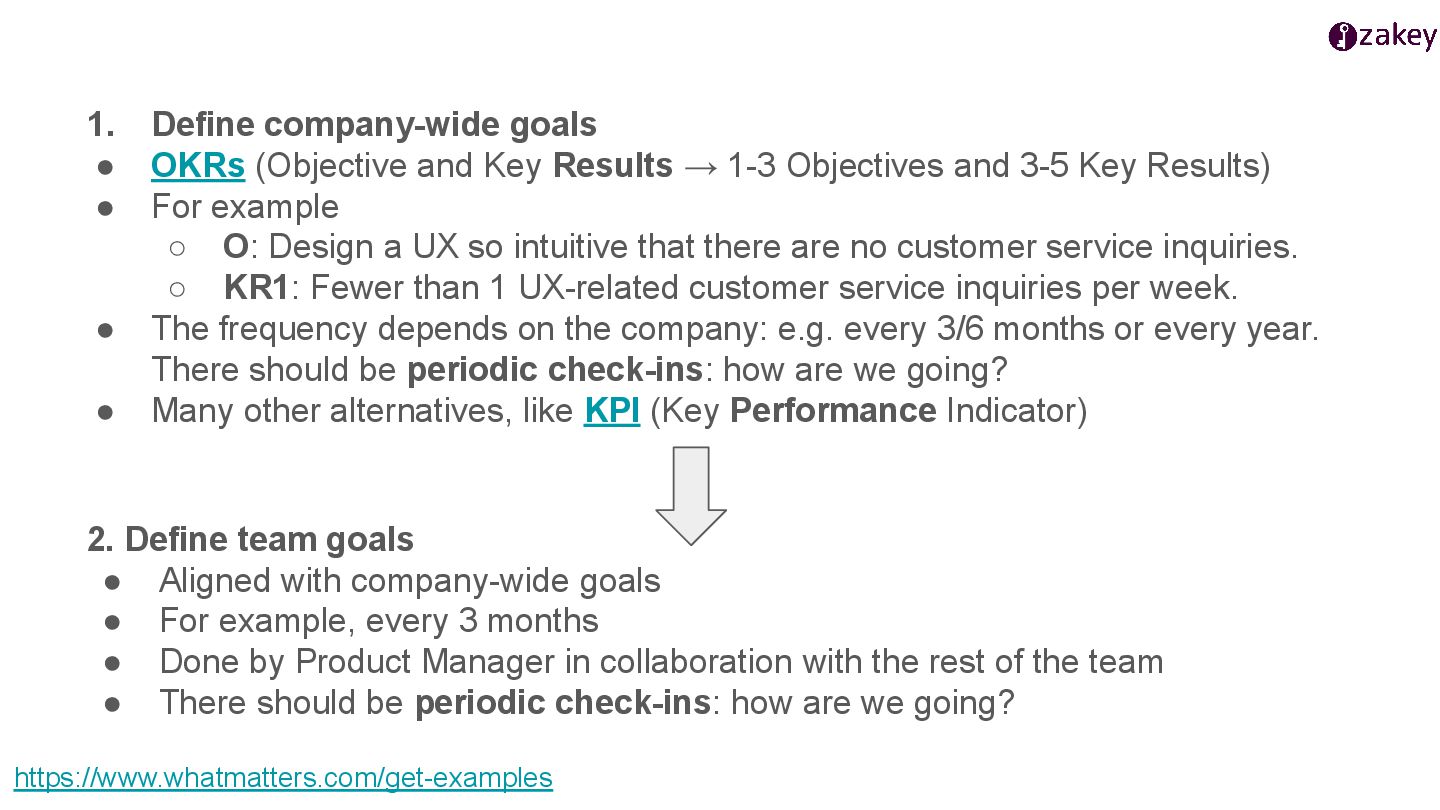
2. Define team goals • Aligned with company-wide goals •
For example, every 3 months • Done by Product Manager in collaboration with the rest of the team • There should be periodic check-ins: how are we going? 1. Define company-wide goals • OKRs (Objective and Key Results → 1-3 Objectives and 3-5 Key Results) • For example ◦ O: Design a UX so intuitive that there are no customer service inquiries. ◦ KR1: Fewer than 1 UX-related customer service inquiries per week. • The frequency depends on the company: e.g. every 3/6 months or every year. There should be periodic check-ins: how are we going? • Many other alternatives, like KPI (Key Performance Indicator) https://www.whatmatters.com/get-examples -
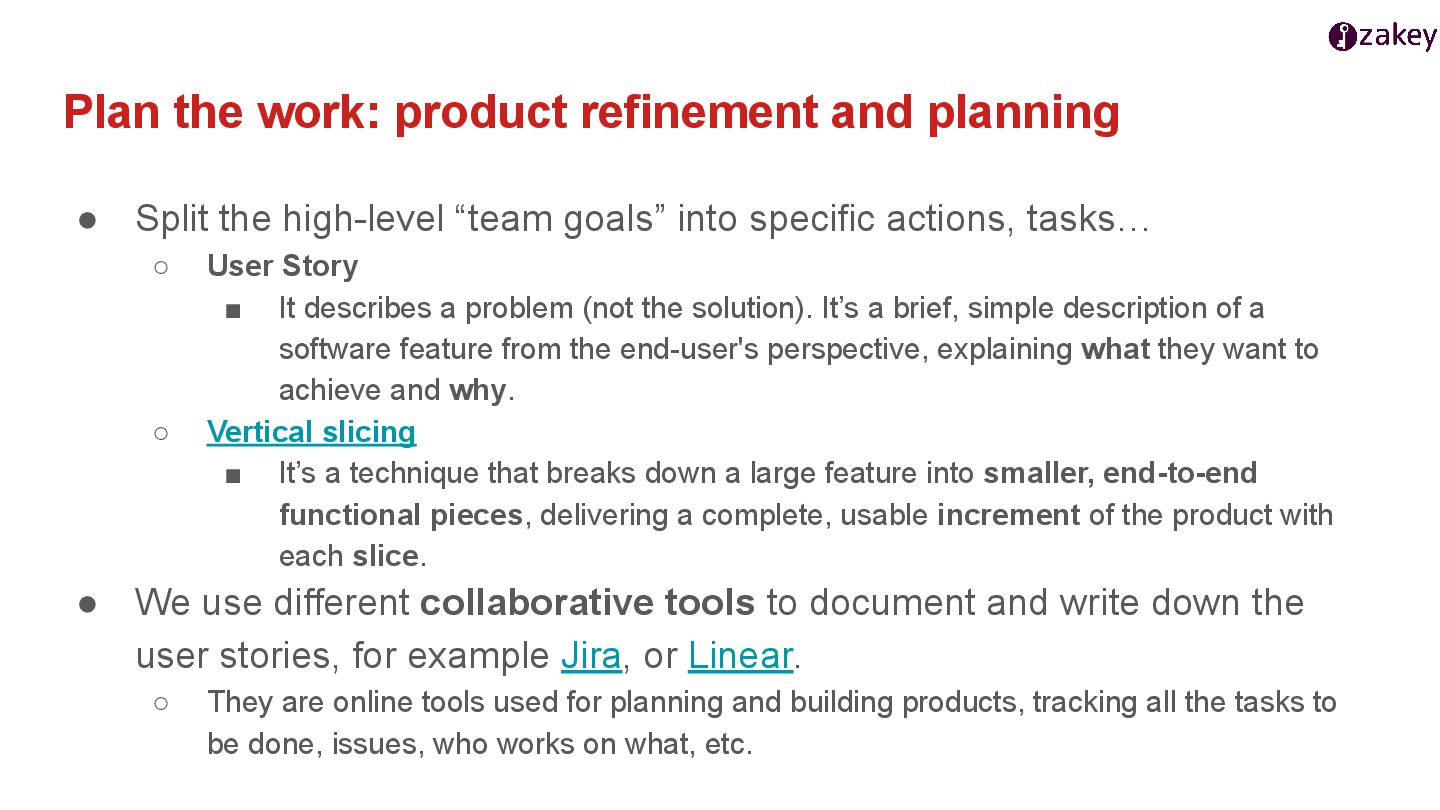
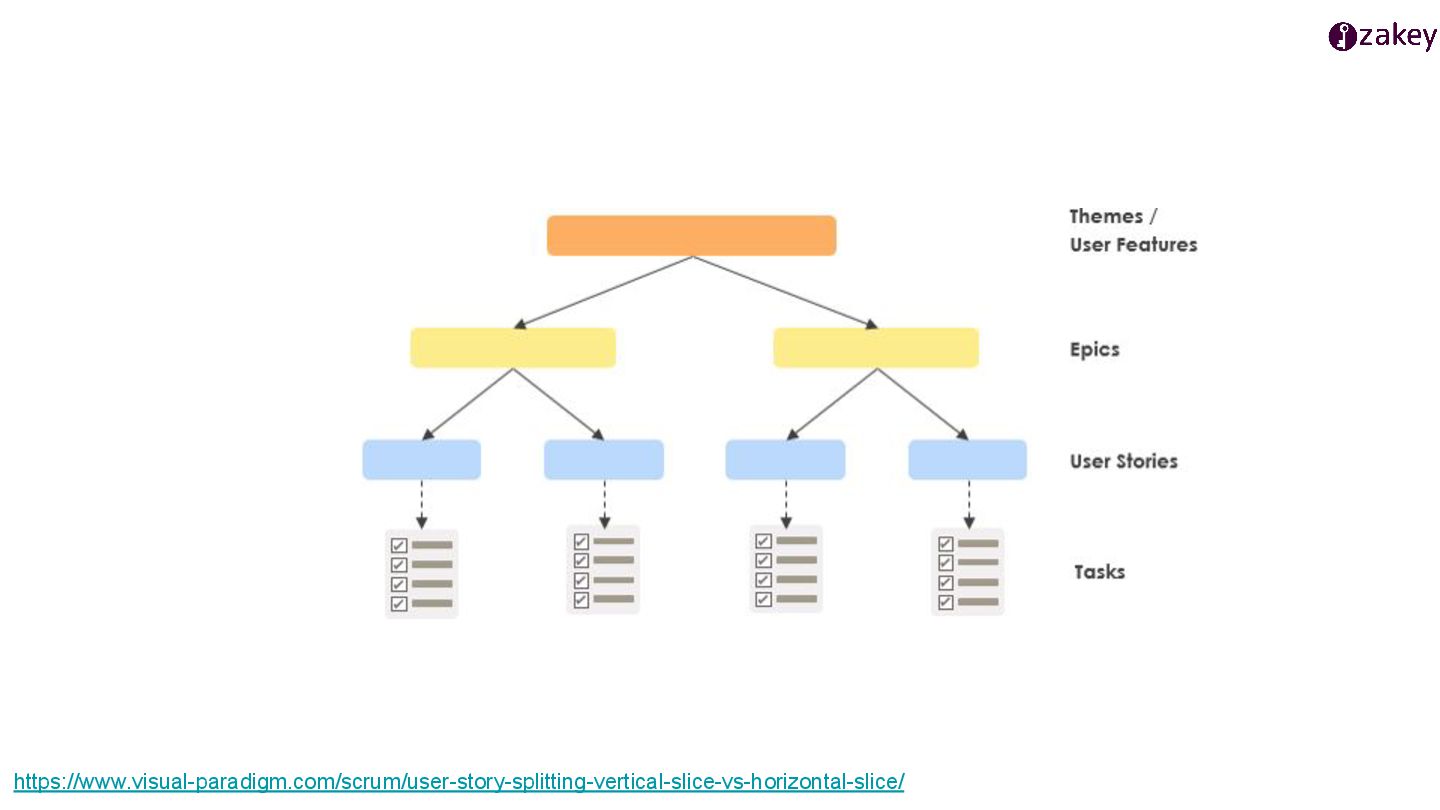
Plan the work: product refinement and planning • Split the
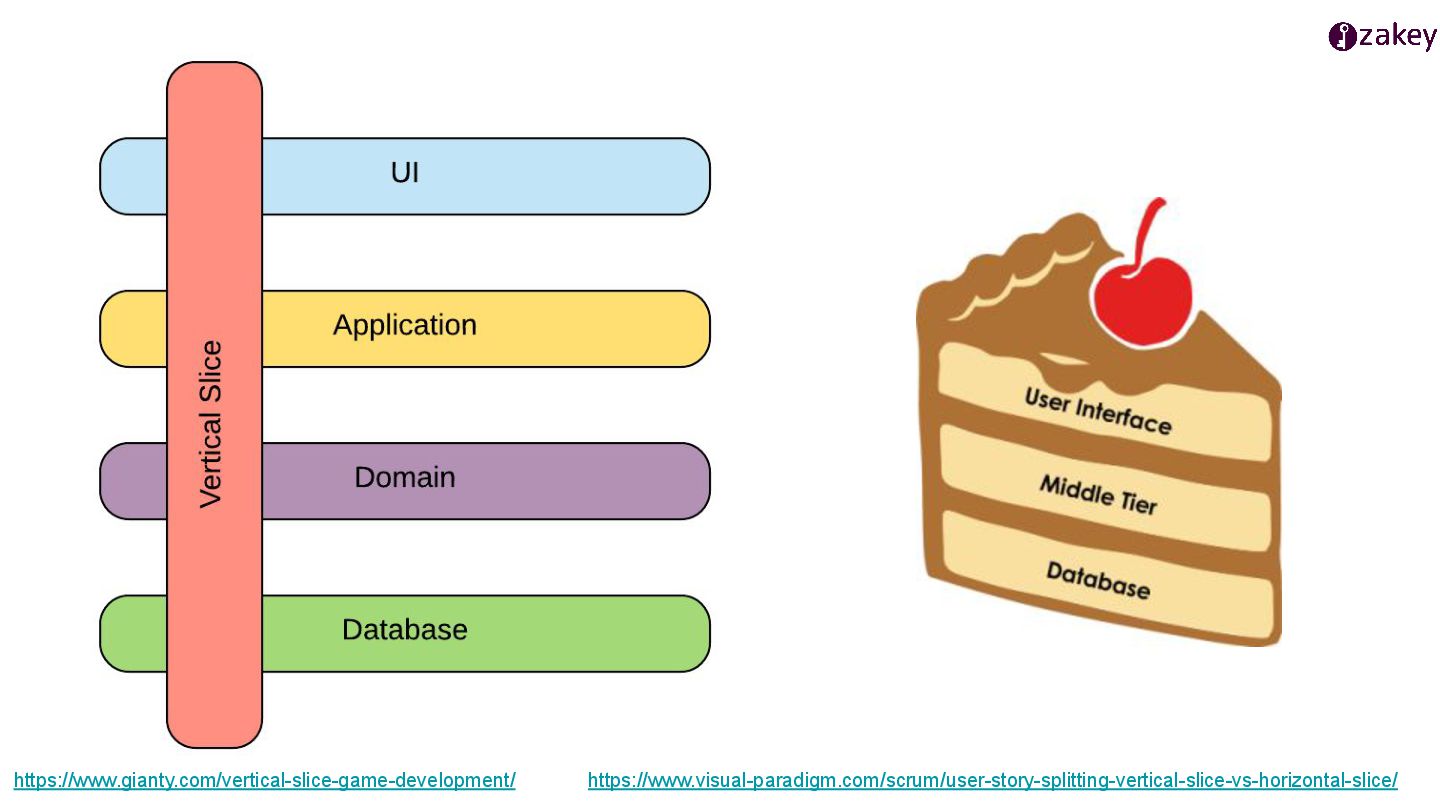
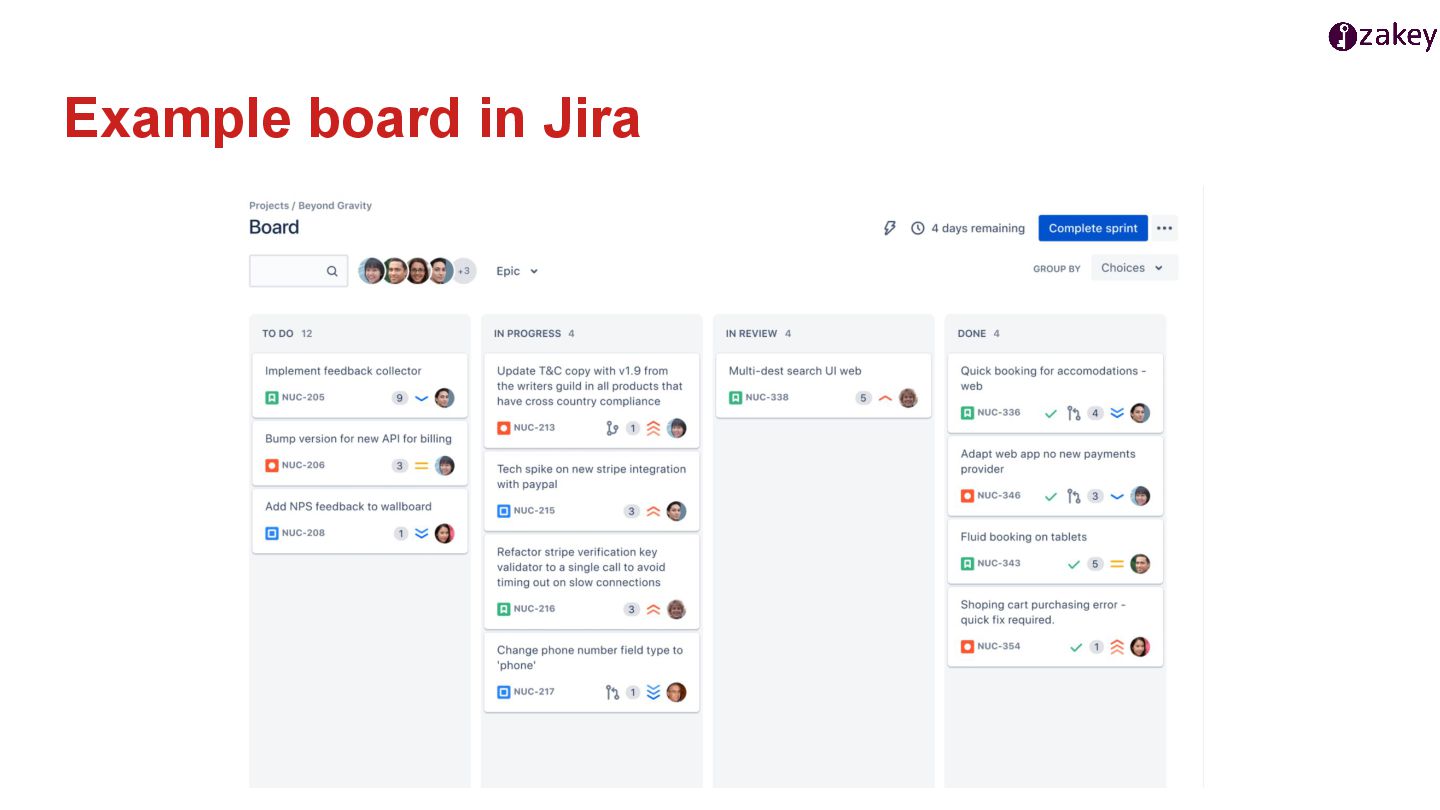
high-level “team goals” into specific actions, tasks… ◦ User Story ▪ It describes a problem (not the solution). It’s a brief, simple description of a software feature from the end-user's perspective, explaining what they want to achieve and why. ◦ Vertical slicing ▪ It’s a technique that breaks down a large feature into smaller, end-to-end functional pieces, delivering a complete, usable increment of the product with each slice. • We use different collaborative tools to document and write down the user stories, for example Jira, or Linear. ◦ They are online tools used for planning and building products, tracking all the tasks to be done, issues, who works on what, etc. -
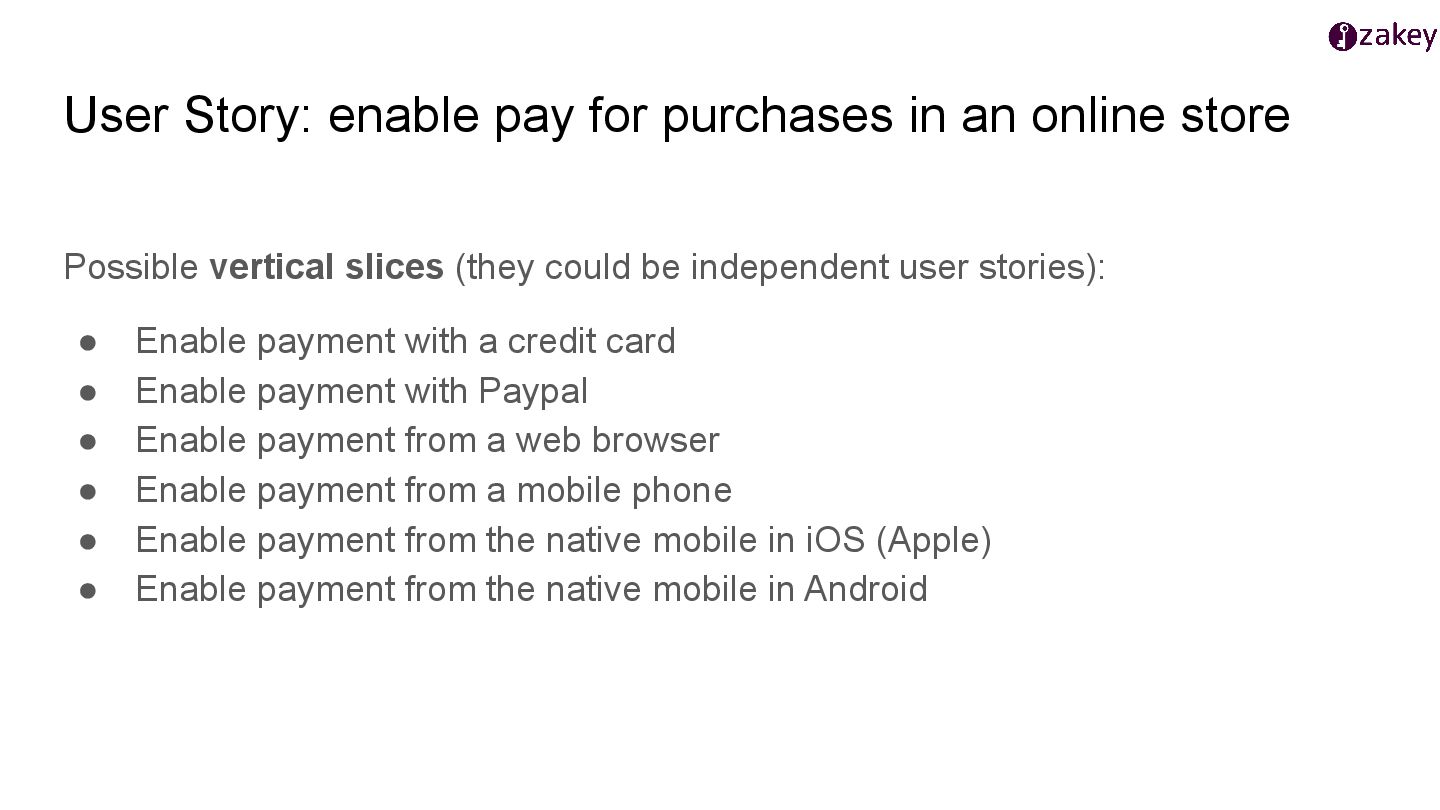
User Story: enable pay for purchases in an online store
Possible vertical slices (they could be independent user stories): • Enable payment with a credit card • Enable payment with Paypal • Enable payment from a web browser • Enable payment from a mobile phone • Enable payment from the native mobile in iOS (Apple) • Enable payment from the native mobile in Android -
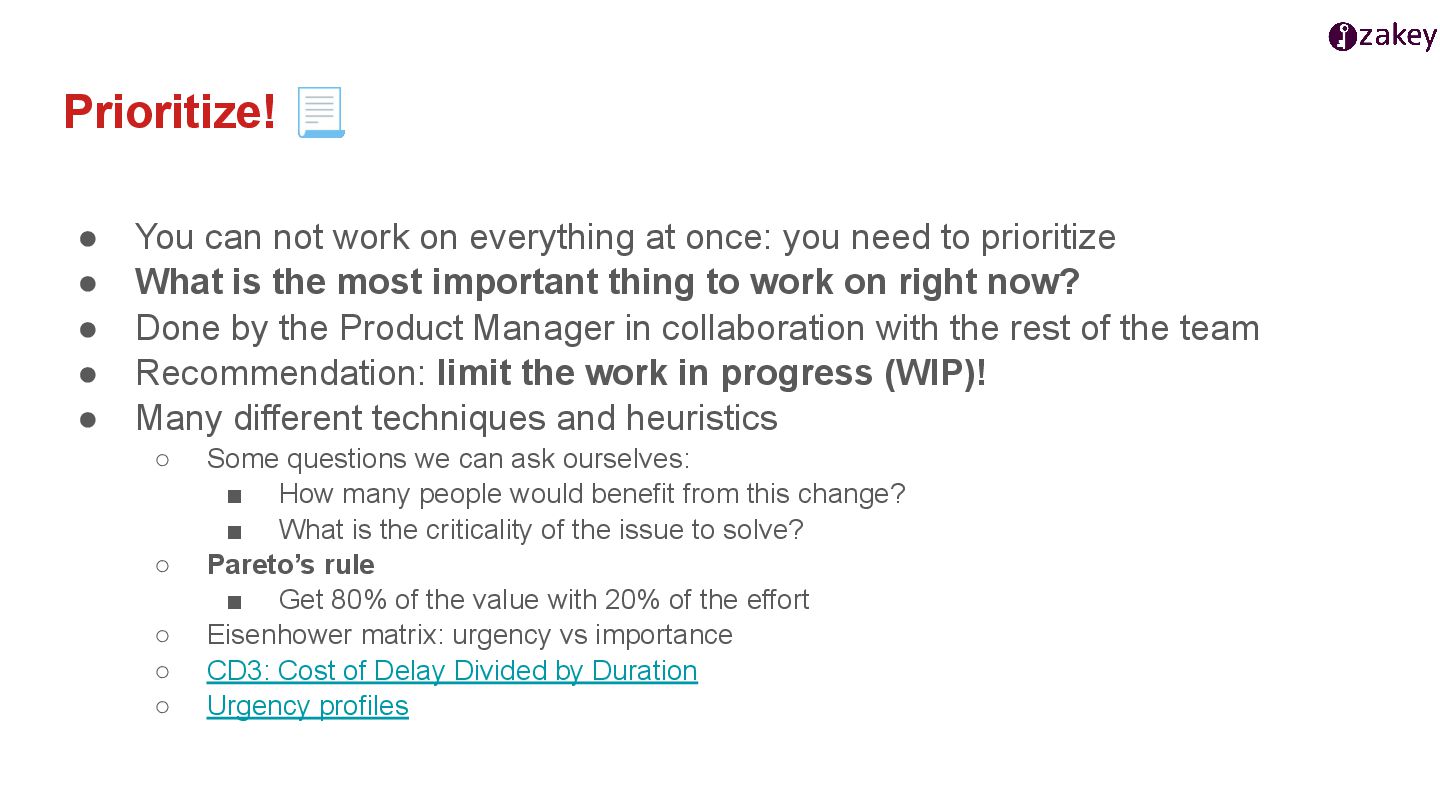
Prioritize! 📃 • You can not work on everything at
once: you need to prioritize • What is the most important thing to work on right now? • Done by the Product Manager in collaboration with the rest of the team • Recommendation: limit the work in progress (WIP)! • Many different techniques and heuristics ◦ Some questions we can ask ourselves: ▪ How many people would benefit from this change? ▪ What is the criticality of the issue to solve? ◦ Pareto’s rule ▪ Get 80% of the value with 20% of the effort ◦ Eisenhower matrix: urgency vs importance ◦ CD3: Cost of Delay Divided by Duration ◦ Urgency profiles -
Decide what to work on (problem space) Develop and deliver
(solution space) Get feedback from your users, customers, business and systems (measure) 🕵 💰 ⚙ -
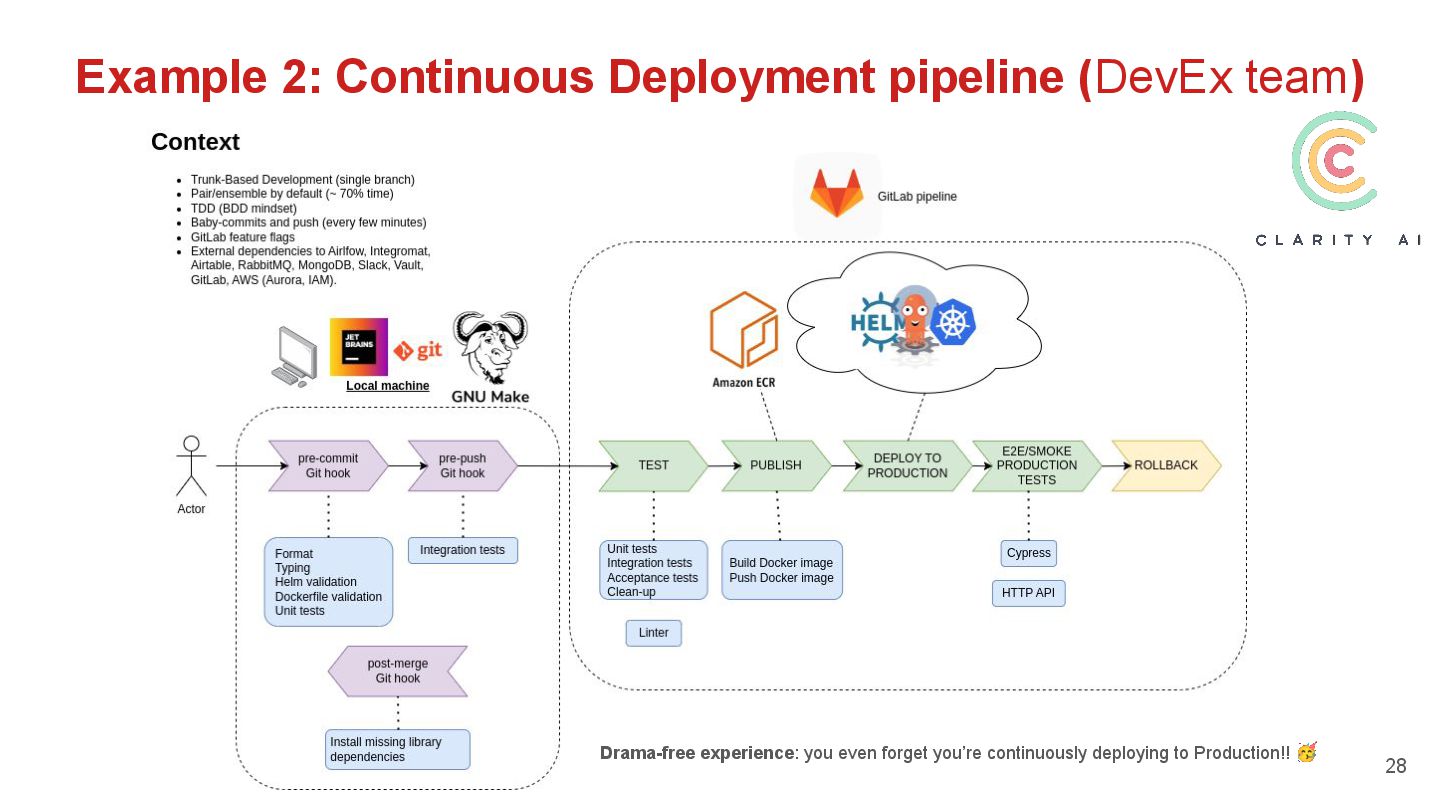
Example 2: Continuous Deployment pipeline (DevEx team) 28 Drama-free experience:
you even forget you’re continuously deploying to Production!! 🥳 -
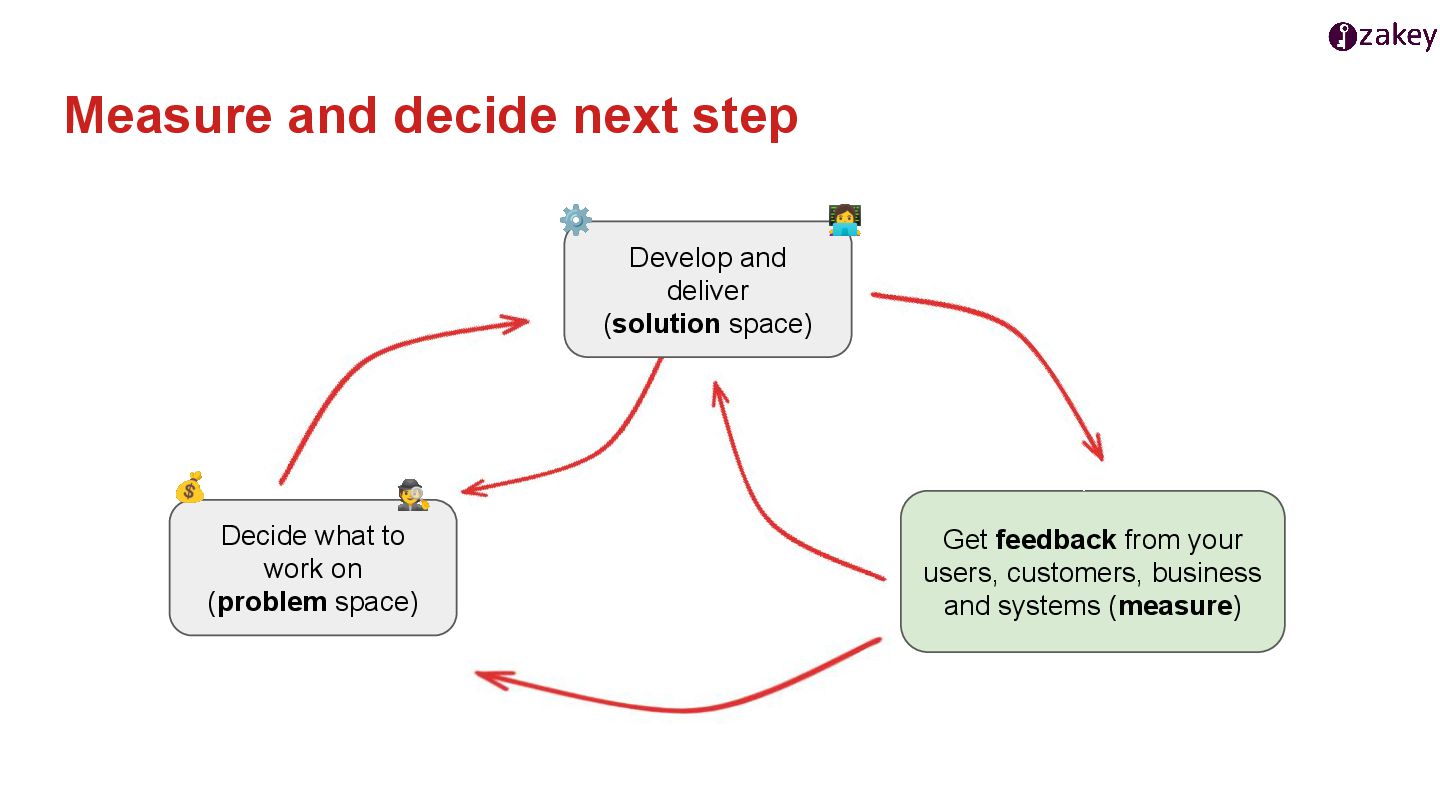
Measure and decide next step Decide what to work on
(problem space) Develop and deliver (solution space) Get feedback from your users, customers, business and systems (measure) 🕵 💰 ⚙ -
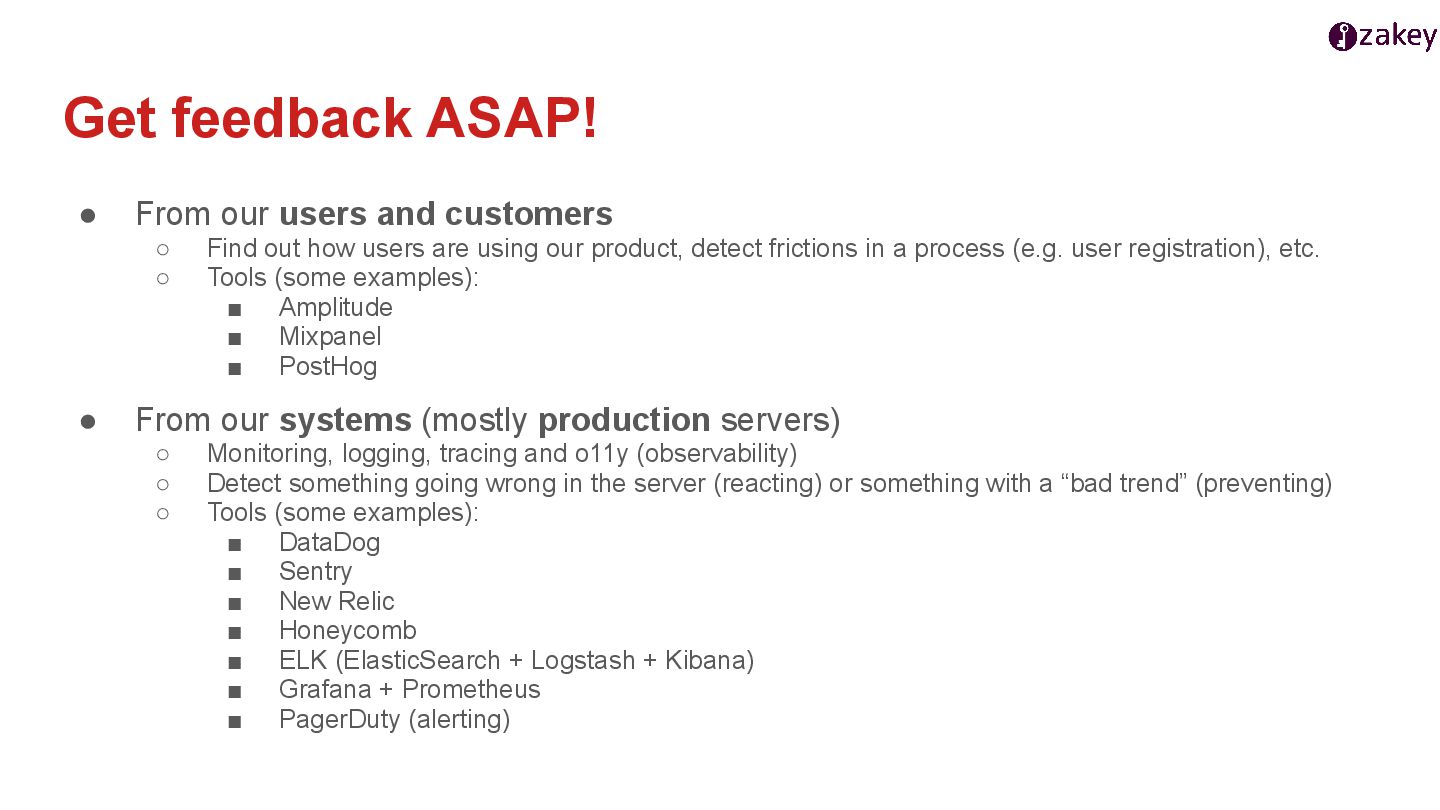
Get feedback ASAP! • From our users and customers ◦
Find out how users are using our product, detect frictions in a process (e.g. user registration), etc. ◦ Tools (some examples): ▪ Amplitude ▪ Mixpanel ▪ PostHog • From our systems (mostly production servers) ◦ Monitoring, logging, tracing and o11y (observability) ◦ Detect something going wrong in the server (reacting) or something with a “bad trend” (preventing) ◦ Tools (some examples): ▪ DataDog ▪ Sentry ▪ New Relic ▪ Honeycomb ▪ ELK (ElasticSearch + Logstash + Kibana) ▪ Grafana + Prometheus ▪ PagerDuty (alerting) -
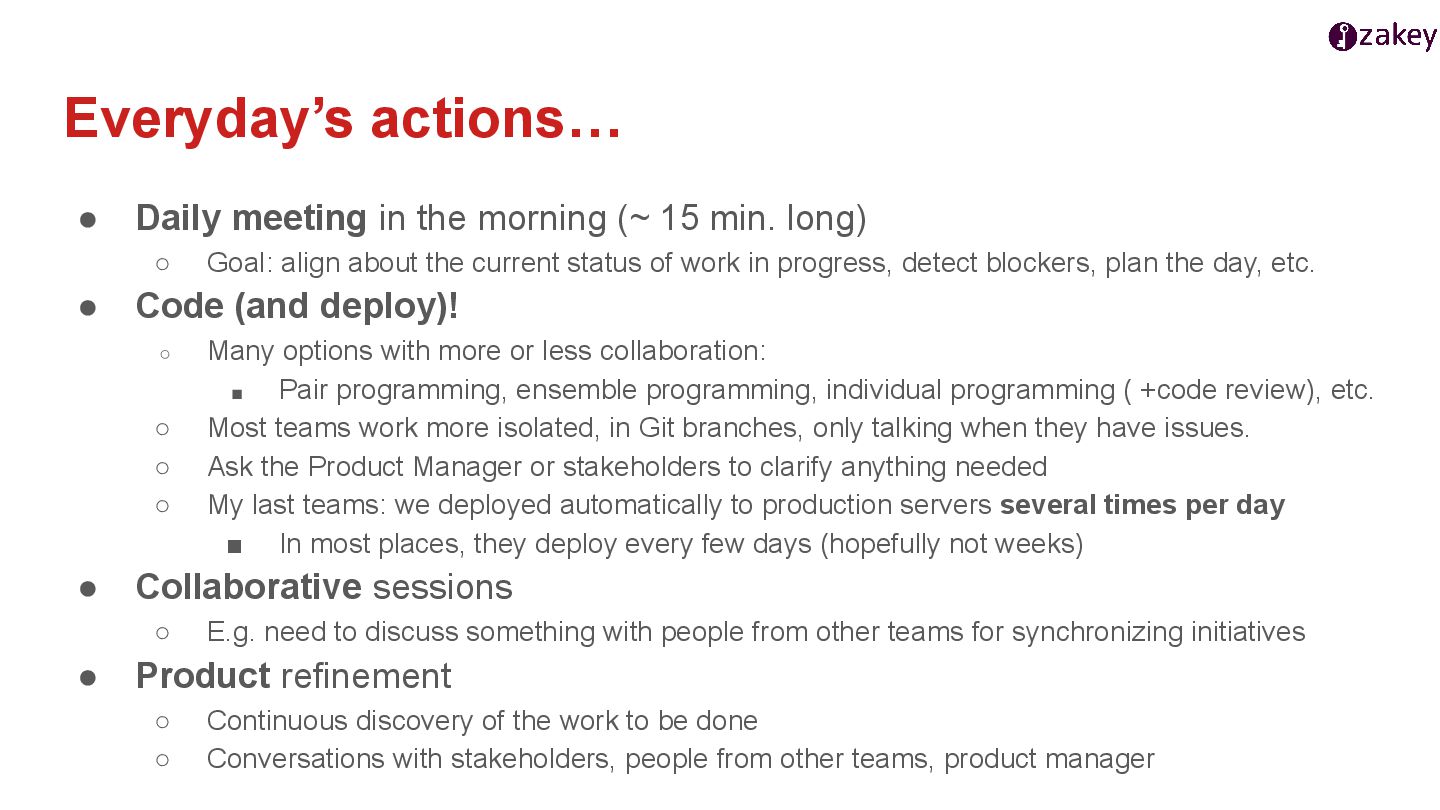
Everyday’s actions… • Daily meeting in the morning (~ 15
min. long) ◦ Goal: align about the current status of work in progress, detect blockers, plan the day, etc. • Code (and deploy)! ◦ Many options with more or less collaboration: ▪ Pair programming, ensemble programming, individual programming ( +code review), etc. ◦ Most teams work more isolated, in Git branches, only talking when they have issues. ◦ Ask the Product Manager or stakeholders to clarify anything needed ◦ My last teams: we deployed automatically to production servers several times per day ▪ In most places, they deploy every few days (hopefully not weeks) • Collaborative sessions ◦ E.g. need to discuss something with people from other teams for synchronizing initiatives • Product refinement ◦ Continuous discovery of the work to be done ◦ Conversations with stakeholders, people from other teams, product manager -
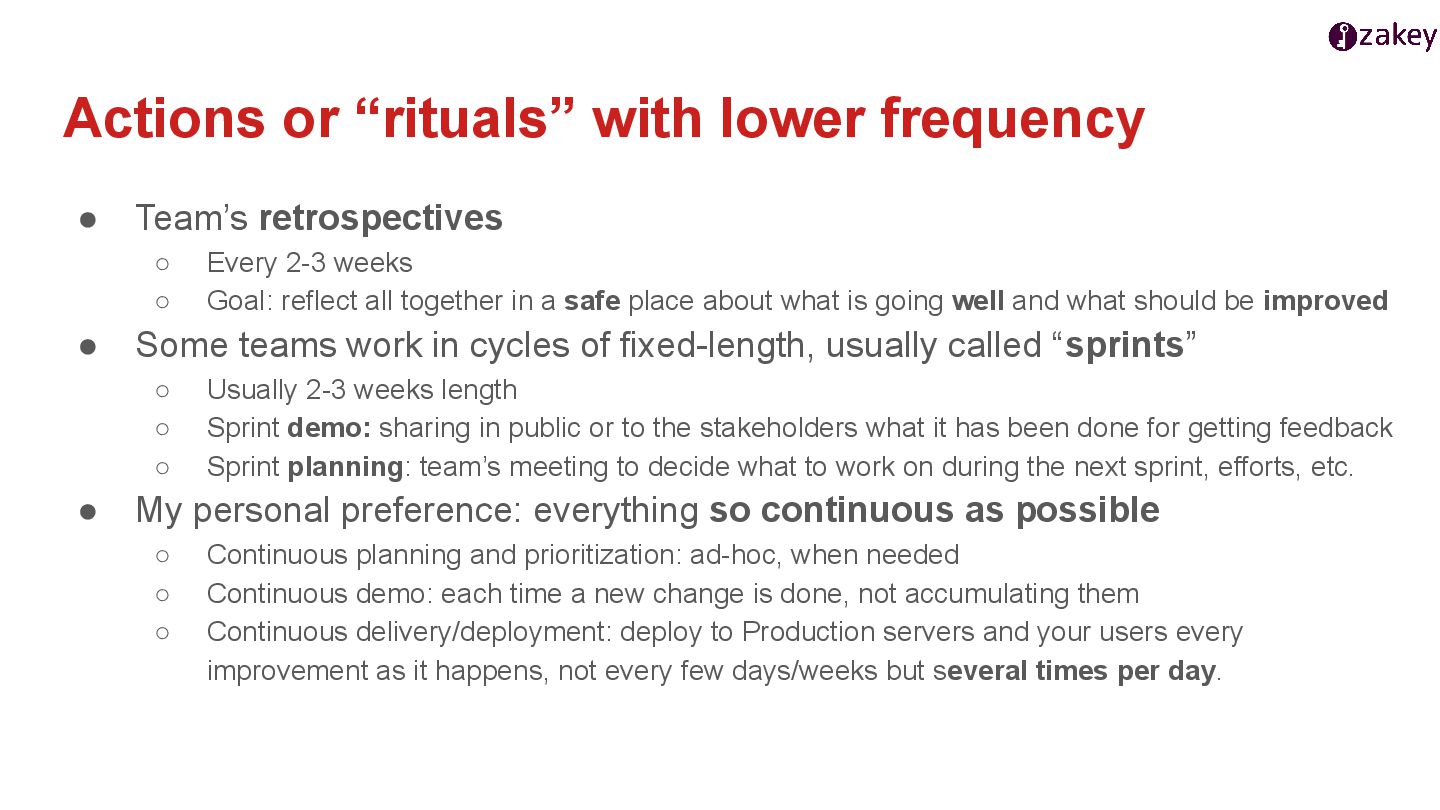
Actions or “rituals” with lower frequency • Team’s retrospectives ◦
Every 2-3 weeks ◦ Goal: reflect all together in a safe place about what is going well and what should be improved • Some teams work in cycles of fixed-length, usually called “sprints” ◦ Usually 2-3 weeks length ◦ Sprint demo: sharing in public or to the stakeholders what it has been done for getting feedback ◦ Sprint planning: team’s meeting to decide what to work on during the next sprint, efforts, etc. • My personal preference: everything so continuous as possible ◦ Continuous planning and prioritization: ad-hoc, when needed ◦ Continuous demo: each time a new change is done, not accumulating them ◦ Continuous delivery/deployment: deploy to Production servers and your users every improvement as it happens, not every few days/weeks but several times per day. -
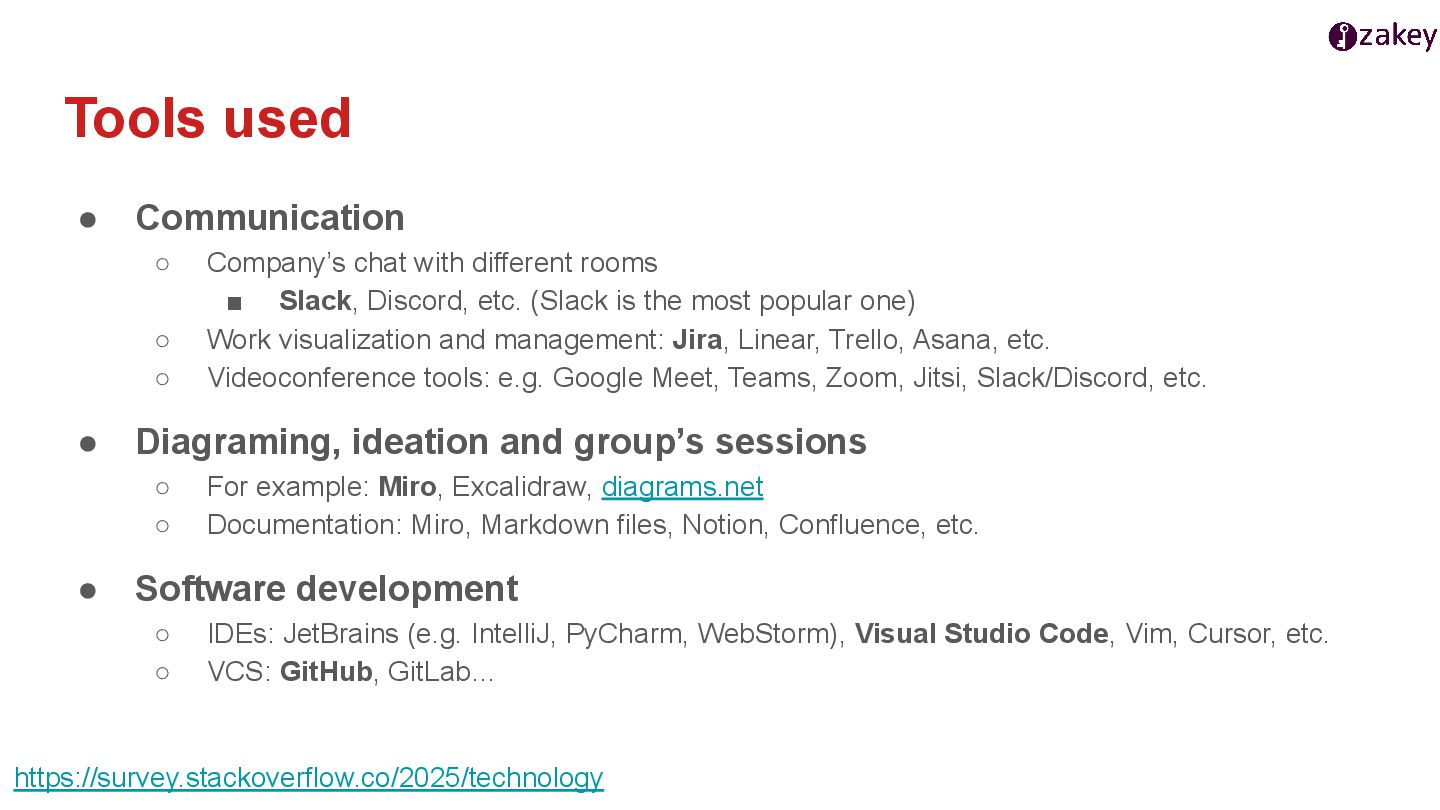
Tools used • Communication ◦ Company’s chat with different rooms
▪ Slack, Discord, etc. (Slack is the most popular one) ◦ Work visualization and management: Jira, Linear, Trello, Asana, etc. ◦ Videoconference tools: e.g. Google Meet, Teams, Zoom, Jitsi, Slack/Discord, etc. • Diagraming, ideation and group’s sessions ◦ For example: Miro, Excalidraw, diagrams.net ◦ Documentation: Miro, Markdown files, Notion, Confluence, etc. • Software development ◦ IDEs: JetBrains (e.g. IntelliJ, PyCharm, WebStorm), Visual Studio Code, Vim, Cursor, etc. ◦ VCS: GitHub, GitLab… https://survey.stackoverflow.co/2025/technology -
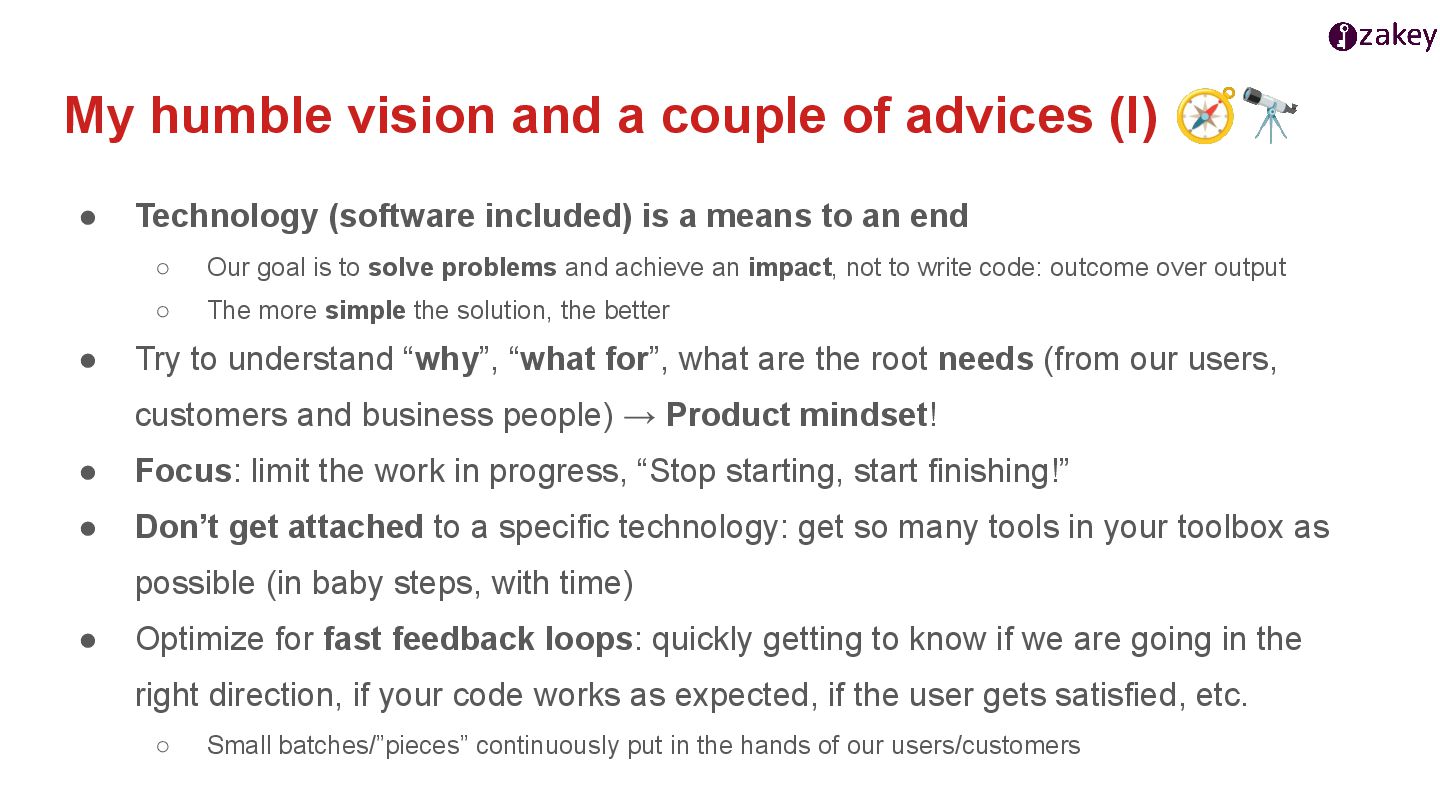
My humble vision and a couple of advices (I) 🧭🔭
• Technology (software included) is a means to an end ◦ Our goal is to solve problems and achieve an impact, not to write code: outcome over output ◦ The more simple the solution, the better • Try to understand “why”, “what for”, what are the root needs (from our users, customers and business people) → Product mindset! • Focus: limit the work in progress, “Stop starting, start finishing!” • Don’t get attached to a specific technology: get so many tools in your toolbox as possible (in baby steps, with time) • Optimize for fast feedback loops: quickly getting to know if we are going in the right direction, if your code works as expected, if the user gets satisfied, etc. ◦ Small batches/”pieces” continuously put in the hands of our users/customers -
My humble vision and a couple of advices (II) 🧭🔭
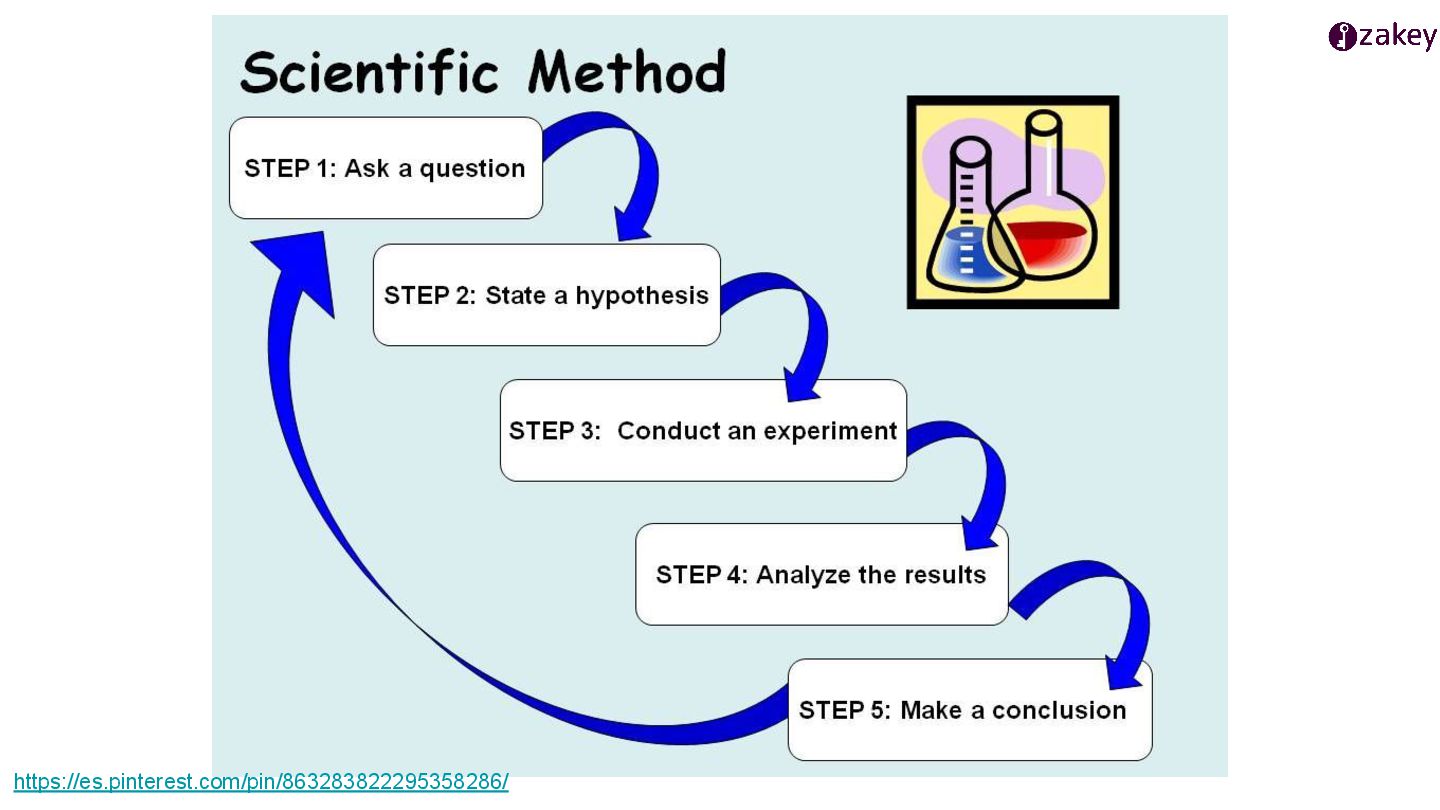
• There is no trade-off between quality and speed: ◦ The way to go fast in a continuous and sustainable way is to maintain good quality • Go beyond the surface: learn the software development subjacent principles. ◦ Not only a language syntax, but common principles which apply to many different languages ◦ How to write code easy to evolve: easy to understand, to maintain, to change, to test, etc. • Grow a continuous improvement and learning mindset (but no pressure) ◦ Also connected with growing an “experimentation mindset” → scientific method • Collaboration over competition: be kind, work as a team, join communities… ◦ SW development is a social activity. ◦ Empathy, respect, trust, transparency, fun! • Find a mentor. • Share: even if you think that it’s obvious, it always brings value to someone -
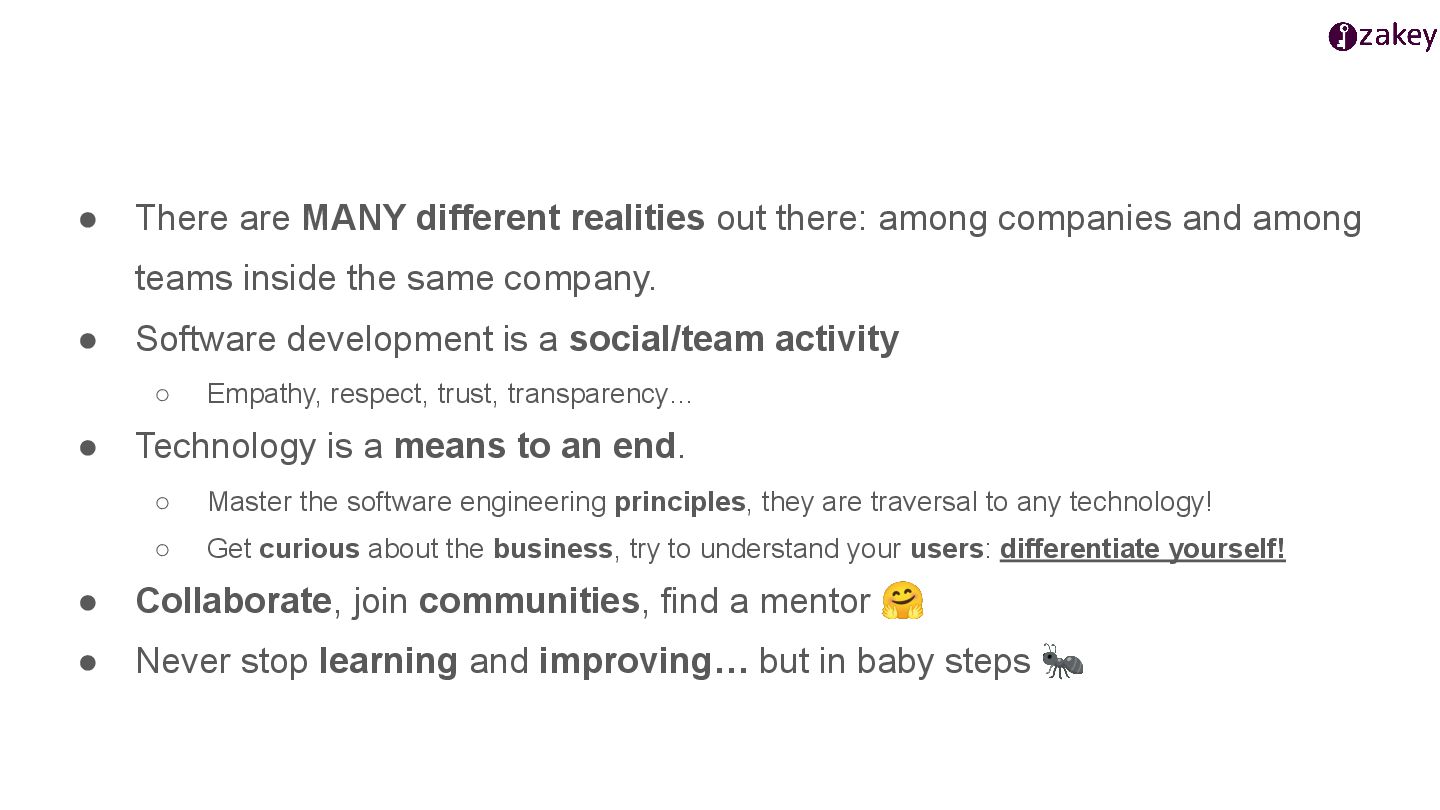
• There are MANY different realities out there: among companies
and among teams inside the same company. • Software development is a social/team activity ◦ Empathy, respect, trust, transparency… • Technology is a means to an end. ◦ Master the software engineering principles, they are traversal to any technology! ◦ Get curious about the business, try to understand your users: differentiate yourself! • Collaborate, join communities, find a mentor 🤗 • Never stop learning and improving… but in baby steps 🐜 -
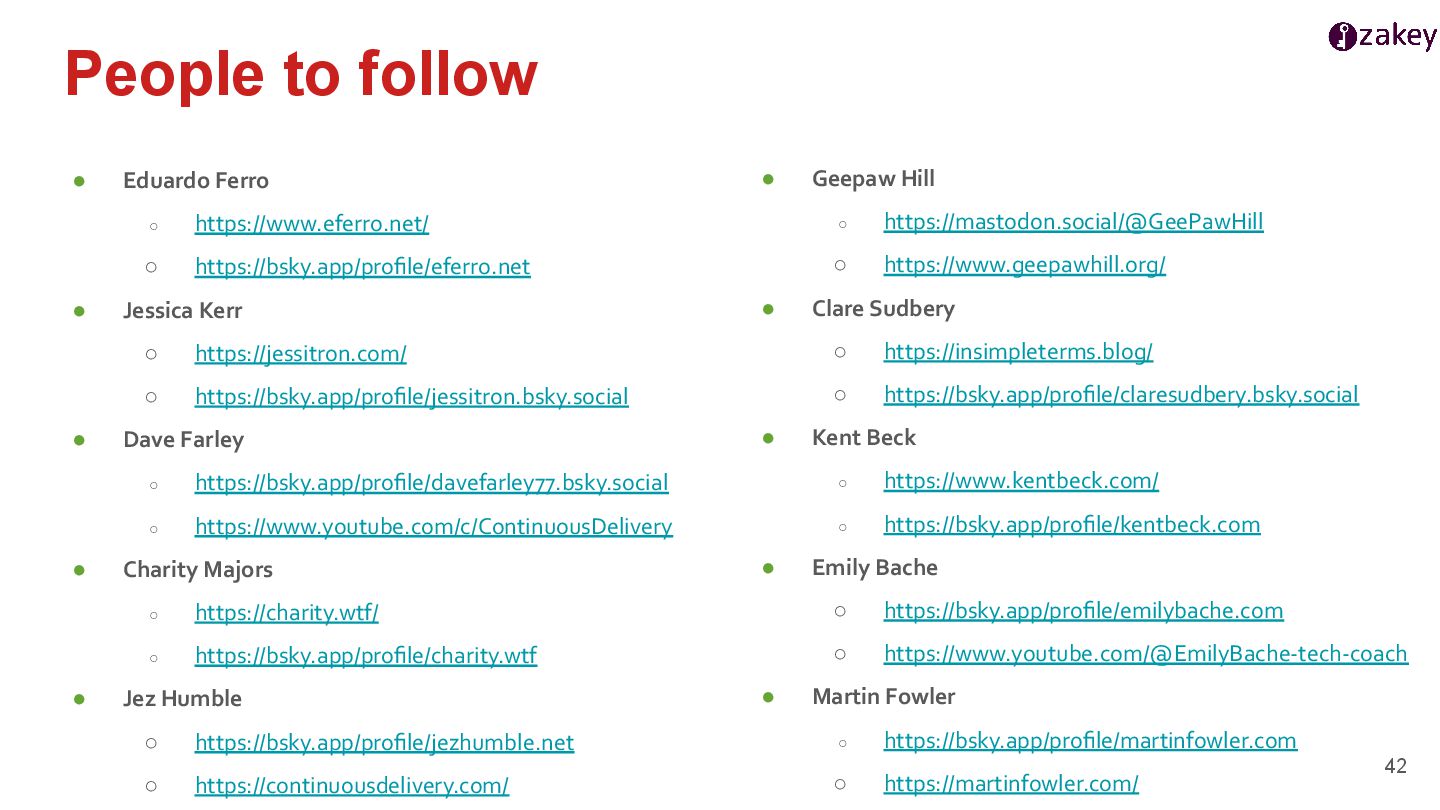
People to follow • Eduardo Ferro ◦ https://www.eferro.net/ ◦ https://bsky.app/profile/eferro.net
• Jessica Kerr ◦ https://jessitron.com/ ◦ https://bsky.app/profile/jessitron.bsky.social • Dave Farley ◦ https://bsky.app/profile/davefarley77.bsky.social ◦ https://www.youtube.com/c/ContinuousDelivery • Charity Majors ◦ https://charity.wtf/ ◦ https://bsky.app/profile/charity.wtf • Jez Humble ◦ https://bsky.app/profile/jezhumble.net ◦ https://continuousdelivery.com/ • Geepaw Hill ◦ https://mastodon.social/@GeePawHill ◦ https://www.geepawhill.org/ • Clare Sudbery ◦ https://insimpleterms.blog/ ◦ https://bsky.app/profile/claresudbery.bsky.social • Kent Beck ◦ https://www.kentbeck.com/ ◦ https://bsky.app/profile/kentbeck.com • Emily Bache ◦ https://bsky.app/profile/emilybache.com ◦ https://www.youtube.com/@EmilyBache-tech-coach • Martin Fowler ◦ https://bsky.app/profile/martinfowler.com ◦ https://martinfowler.com/ 42 -
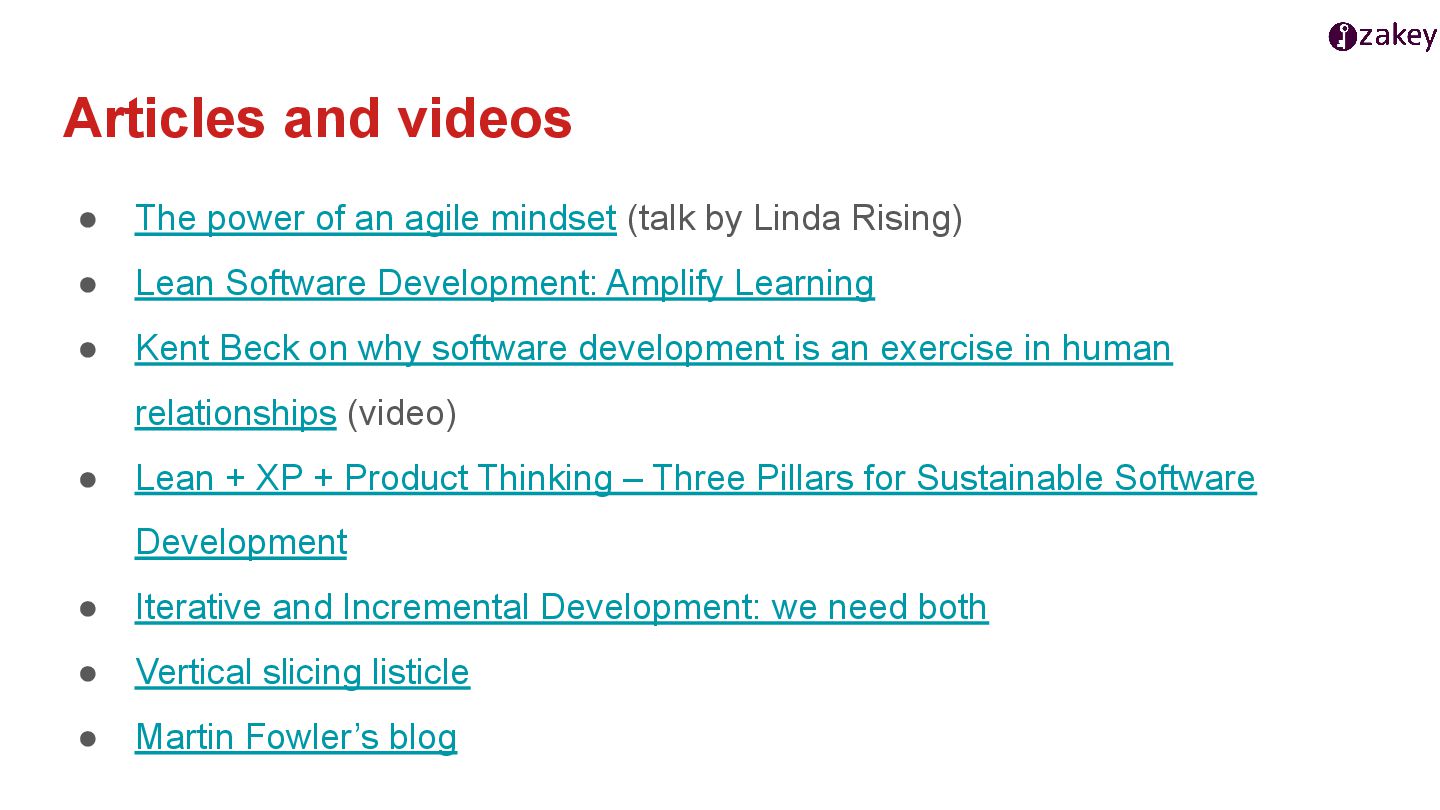
Articles and videos • The power of an agile mindset
(talk by Linda Rising) • Lean Software Development: Amplify Learning • Kent Beck on why software development is an exercise in human relationships (video) • Lean + XP + Product Thinking – Three Pillars for Sustainable Software Development • Iterative and Incremental Development: we need both • Vertical slicing listicle • Martin Fowler’s blog