Upgrade to Pro — share decks privately, control downloads, hide ads and more …

Spec-driven Development: How AI Changes Everyth...

Spec-driven Development: How AI Changes Everything (And Nothing)

AI makes coding faster, but we’re still stuck with the same old problem: code becomes the source of truth. What if we flipped this around?

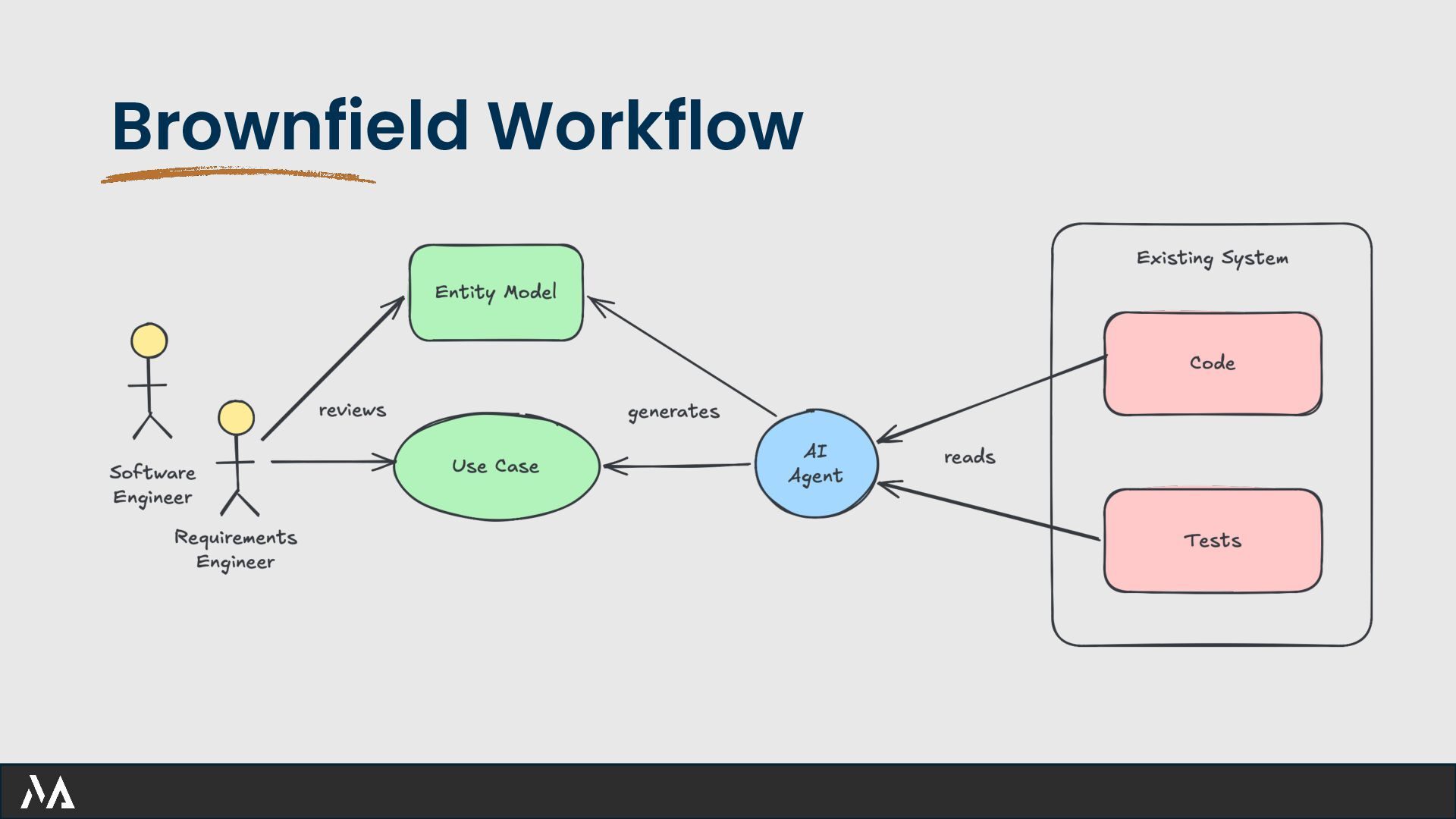
This talk shows a new way to build software: the AI Unified Process. Write your requirements once. Let AI generate everything else - diagrams, models, code, and tests. When requirements change, everything updates automatically. No more outdated docs.

You’ll see how to write requirements that AI understands and keep everything connected from business needs to working code. Based on a real-world project, we will see how this works in practice.

This isn’t about replacing developers. It’s about letting AI handle the boring stuff so we can focus on what matters - understanding what the business needs.

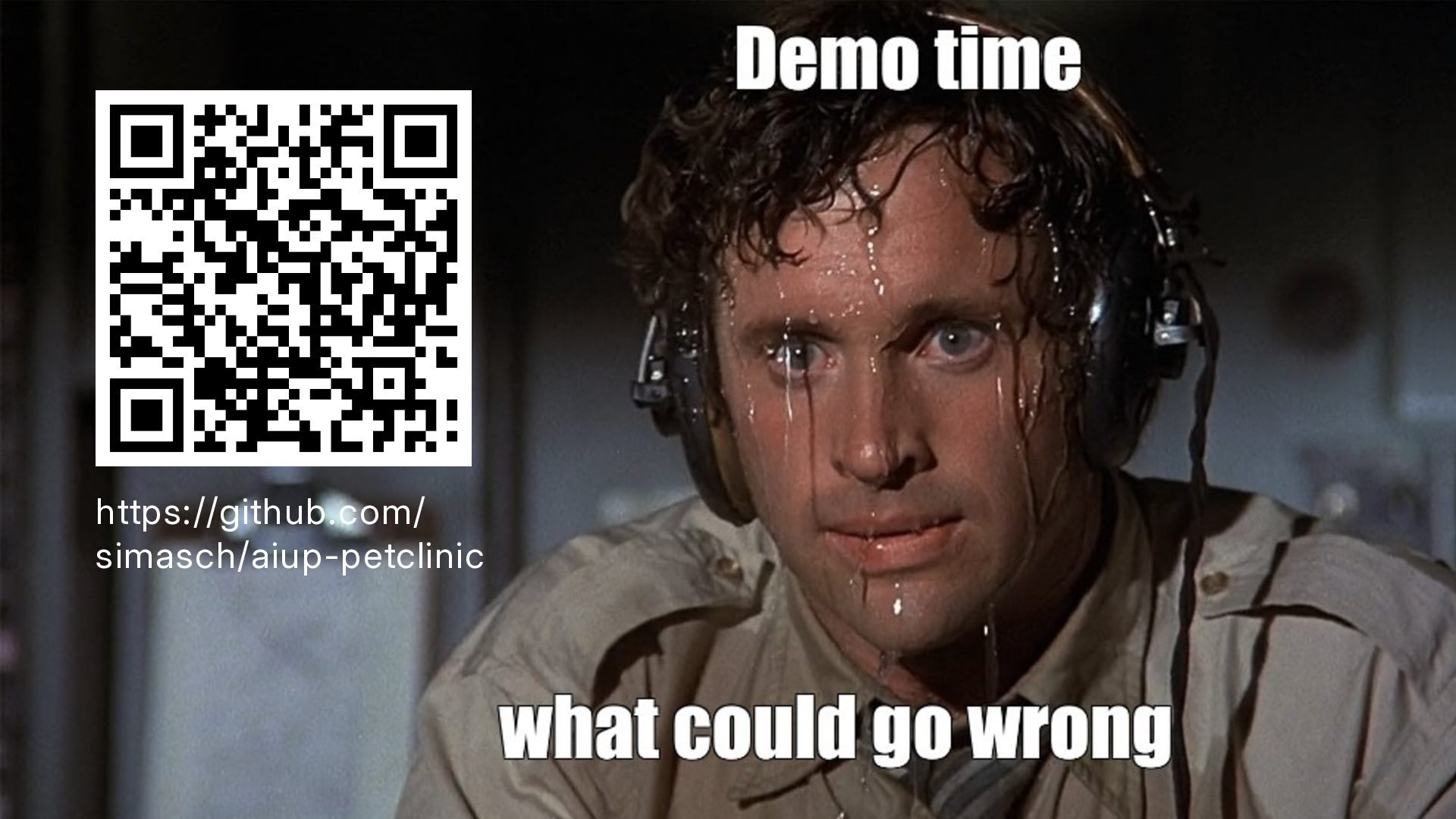
Source code: https://github.com/simasch/aiup-petclinic

Avatar for Simon Martinelli

Simon Martinelli PRO

April 12, 2026

More Decks by Simon Martinelli

Other Decks in Programming

Transcript

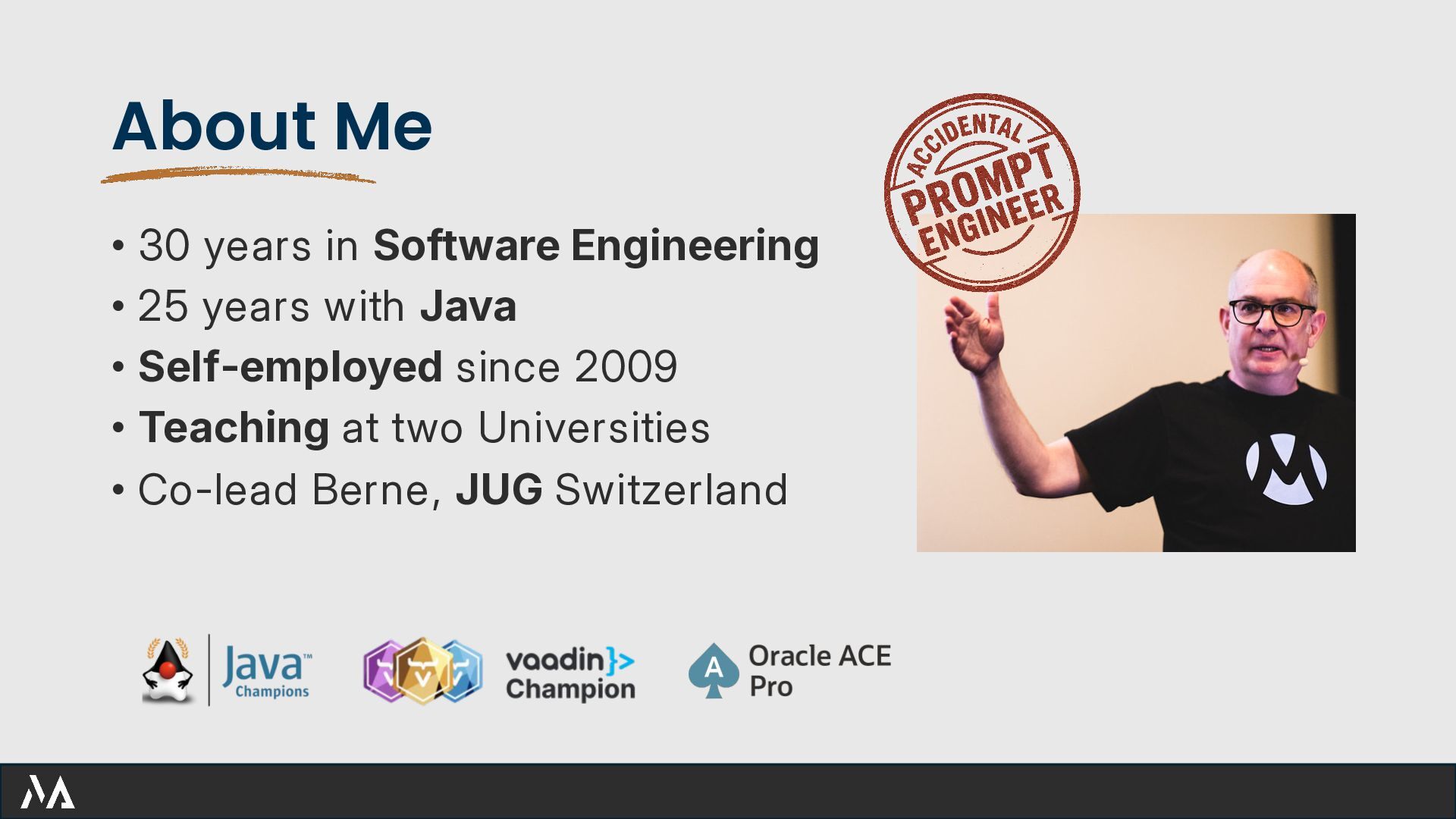
  1. About Me • 30 years in Software Engineering • 25

    years with Java • Self-employed since 2009 • Teaching at two Universities • Co-lead Berne, JUG Switzerland
  2. AI Native Development • Spec-Centric Development • Clear intent/specs guide

    AI to generate meaningful code • Context-Aware Development • AI agents understand full codebase context • Agent Experience AX • Autonomous AI tasks enhancing developer throughput https://ainativedev.io
  3. Spec-driven Development (SDD) • Start with the specification, not the

    code • Specifications • Define the intended behavior of the system • Serve as shared contract between business and development • Are the single source of truth • Reduce guesswork and improve quality
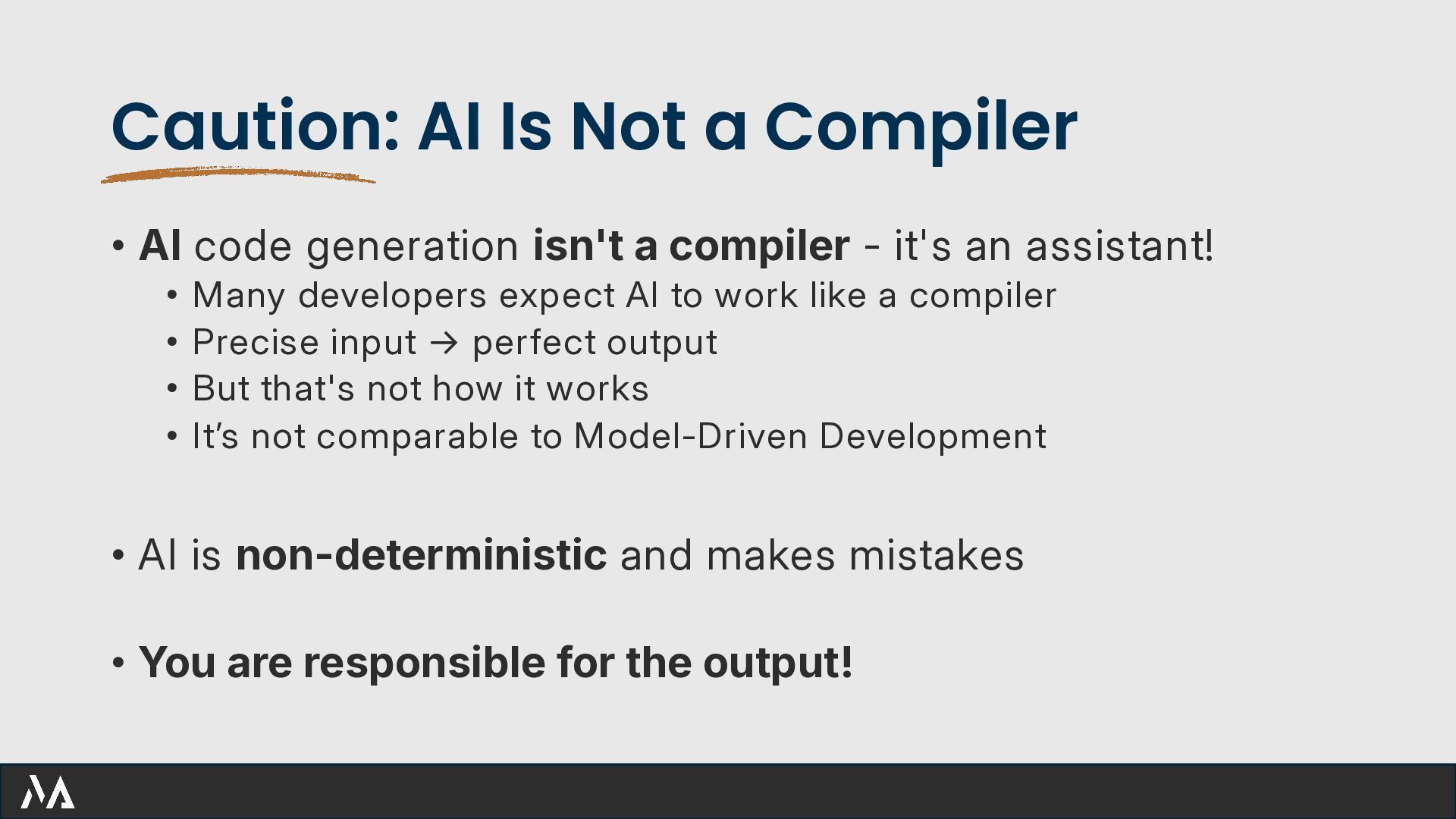
  4. Caution: AI Is Not a Compiler • AI code generation

    isn't a compiler - it's an assistant! • Many developers expect AI to work like a compiler • Precise input → perfect output • But that's not how it works • It’s not comparable to Model-Driven Development • AI is non-deterministic and makes mistakes • You are responsible for the output!
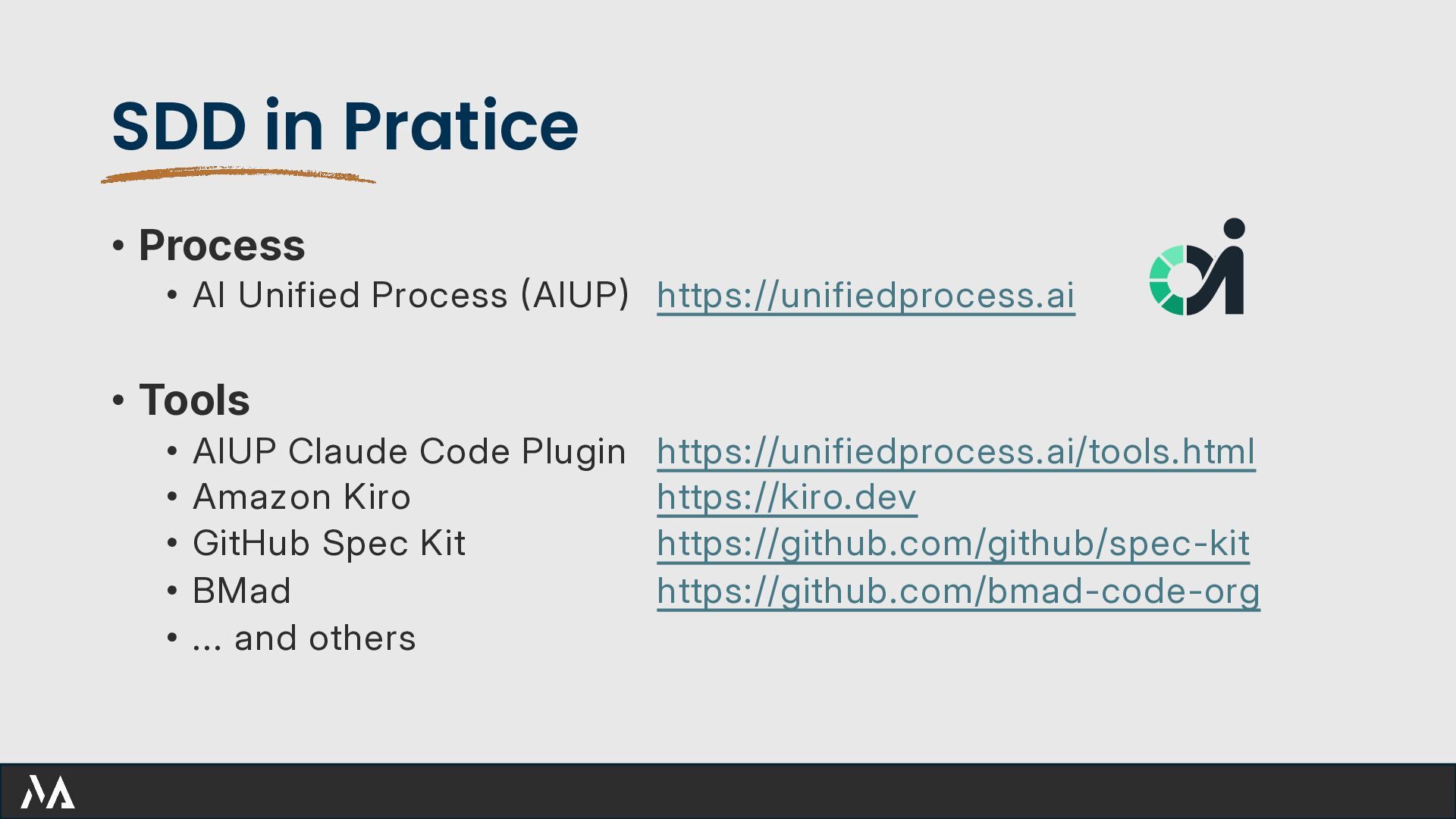
  5. SDD in Pratice • Process-centric • AI Unified Process AIUP

    https://unifiedprocess.ai • Tools-centric • Amazon Kiro https://kiro.dev • GitHub Spec Kit https://github.com/github/spec-kit • BMad https://github.com/bmad-code-org • ... and others
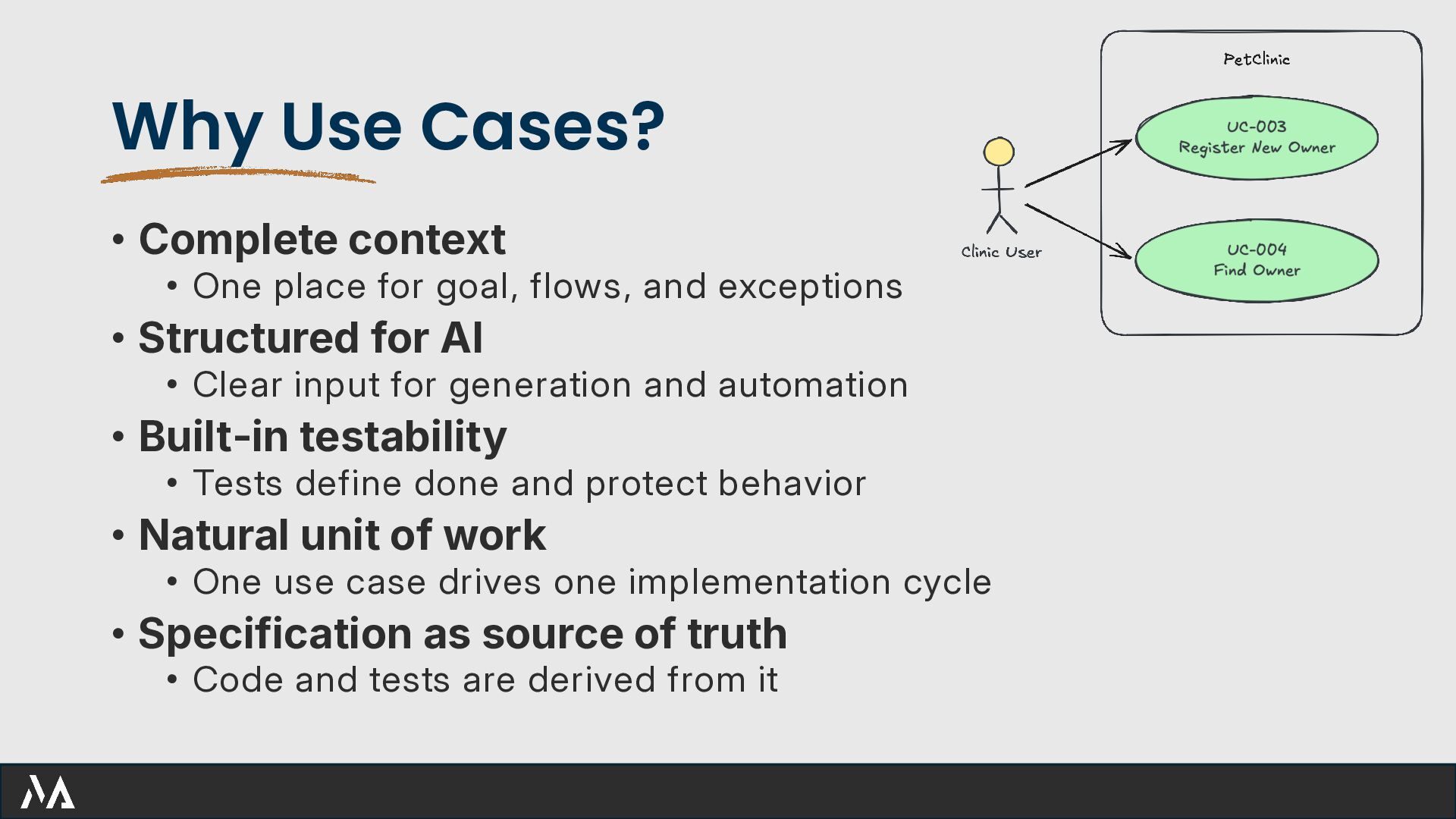
  6. Why Use Cases? • Complete behavior • Contains all flows

    • Clear for AI • Structured input for code and tests • Easy to test • Each flow leads to clear test cases • Right-sized delivery • One use case, one dev cycle • The source of truth • Code and tests follow the use case
  7. How Are Use Cases and User Stories Releated? • They

    describe the same business intent • User stories are good for planning • Use cases are better for execution
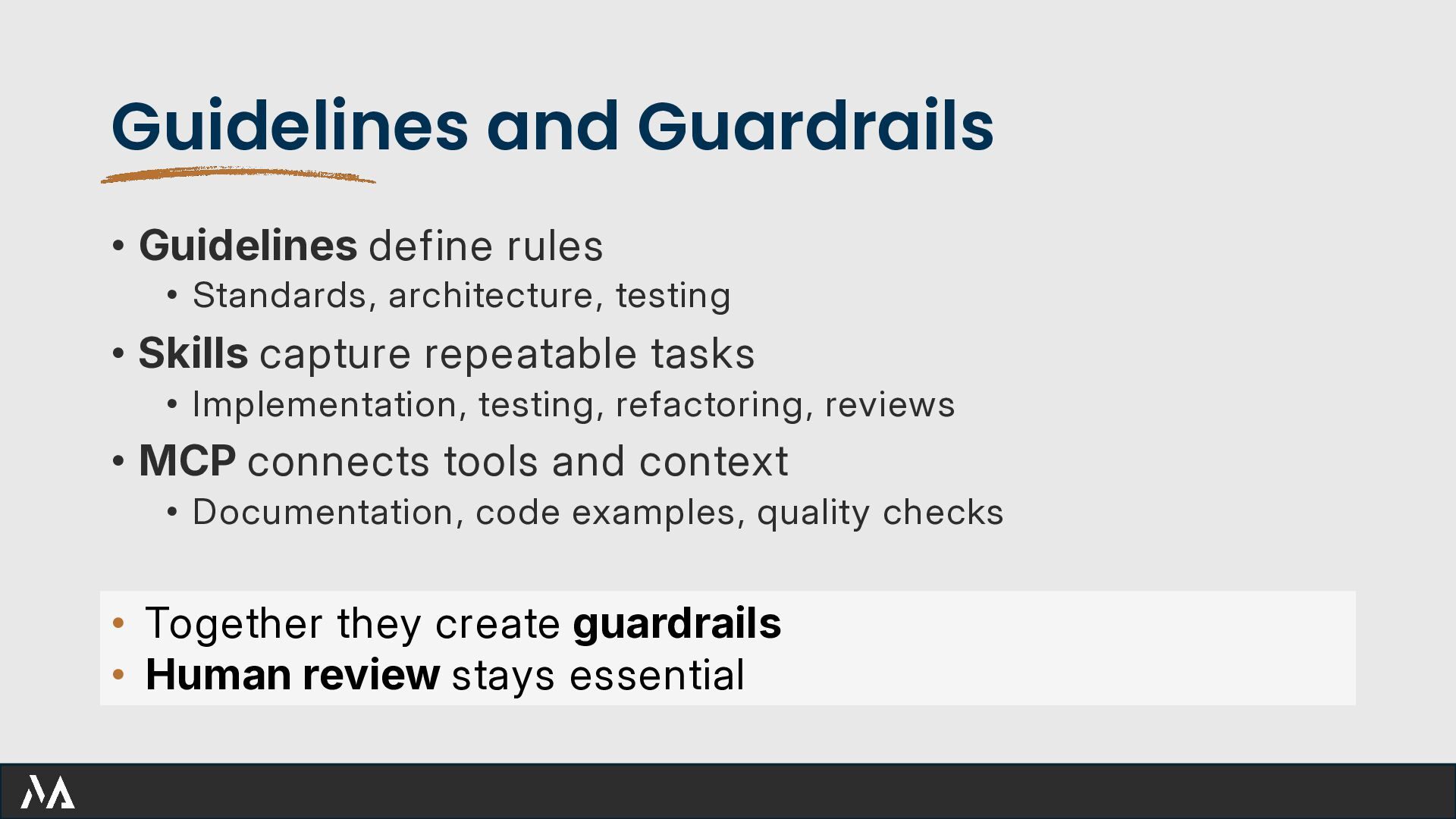
  8. Guidelines and Guardrails • Guidelines define rules • Standards, architecture,

    testing • Skills capture repeatable tasks • Implementation, testing, refactoring, reviews • MCP connects tools and context • Documentation, code examples, quality checks • Together they create guardrails • Human review stays essential
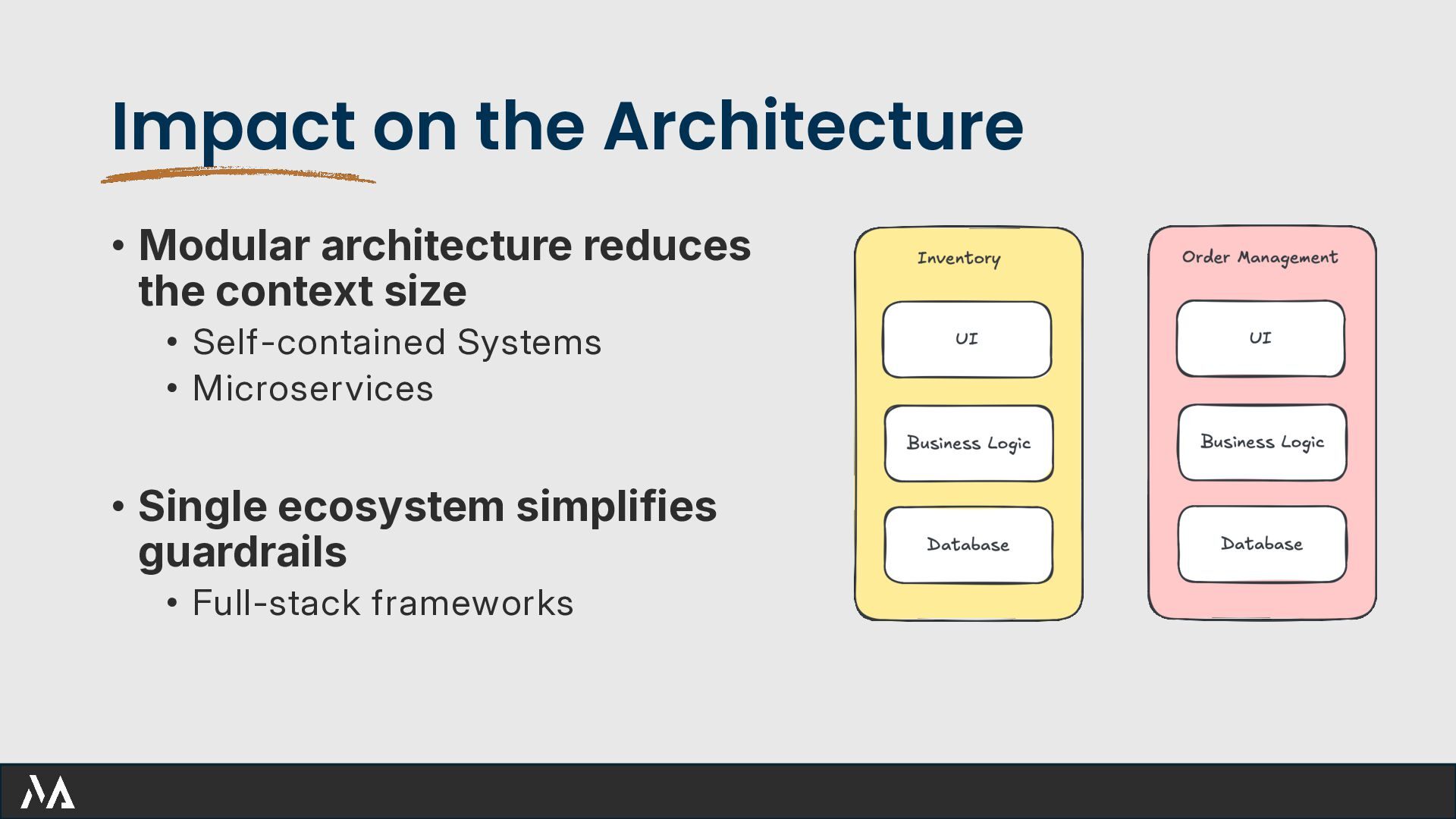
  9. Impact on the Architecture • Modular architecture reduces the context

    size • Self-contained Systems • Single ecosystem simplifies guardrails • Full-stack frameworks
  10. Conclusion • Specs help to • Reduce non-determinism • Make

    development sustainable • It accelerates development, but you must: • Review, understand, and test the output • Know your architecture and domain
  11. Thank you! • Web martinelli.ch • EMail [email protected] • Bluesky

    @martinelli.ch • X/Twitter @simas_ch • LinkedIn https://linkedin.com/in/ simonmartinelli