contains styles for common HTML elements like typography, code, tables, forms, and buttons and styles for common interface components like tabs and menus, navigation bars, etc Also they offers JS plugins for things like tooltips, popovers, modals, and more They make use of CSS preprocessors. They are languages that add more abstraction to CSS. They Extends the capabilites of CSS.
Platforms - The Result of our work will work (mostly) across all Browsers * Normalize.css better then CSS Reset (The goal of a reset stylesheet is to reduce browser inconsistencies in things like default line heights, margins and font sizes of headings, and so on.) - Grid Layouts & Responsive Design with no pain - Modular Components - All components live together in a perfect ecosystem - Time Saving - They are awesome for a small project or for starting a big ones.
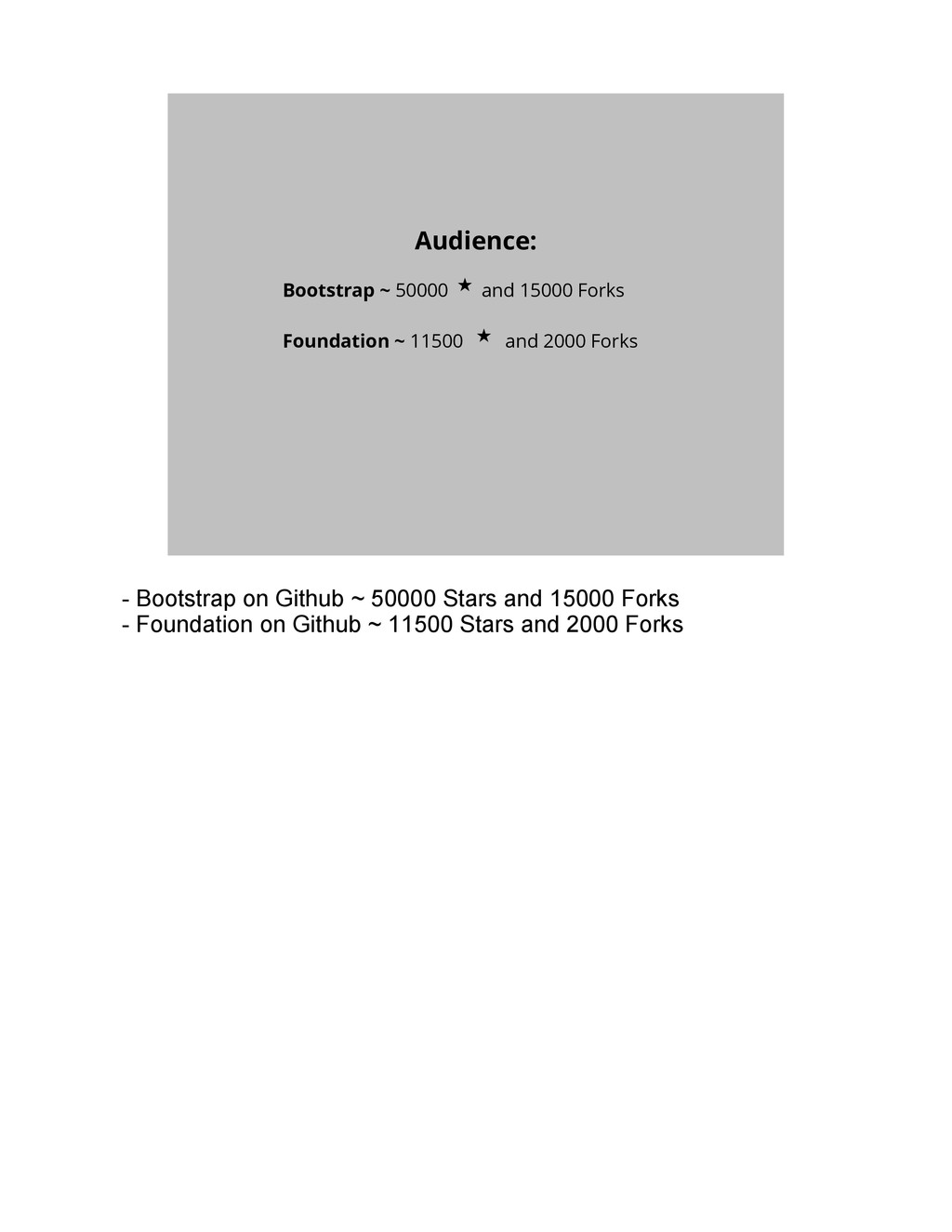
Twitter Developers as a framework to encourage consistency across internal tools. The first deployment happened during Twitter's first Hackweek. Since February 2012, it is the most popular GitHub development project.
plugins - Icon Set Compiled and minified version contains: - CSS stylesheets (bootstrap.css and bootstrap-responsive.css) - JS plugins (based on jQuery) - Icon Set (Glyphicons)
language. The Goal of LESS was designed to be closer to CSS than other CSS preprocessors so valid CSS is valid LESS code. In fact has influenced the "SCSS" syntax of Sass. LESS provides mechanisms like variables, nesting, mixins, color functions and basic arithmetic LESS doesn't provide selector inheritance. the main difference between other CSS preprocessors that it allows real-time compilation via LESS.js by the browser.
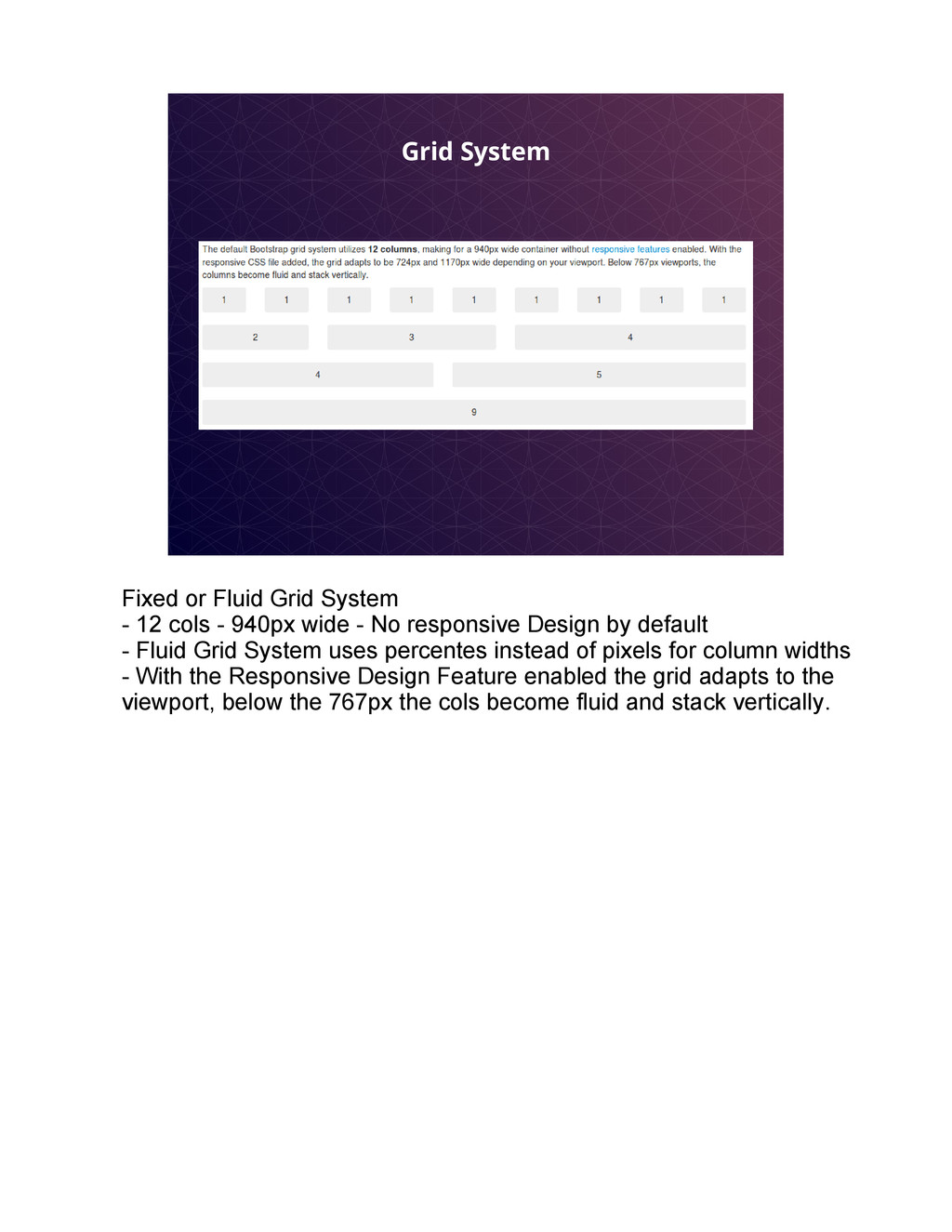
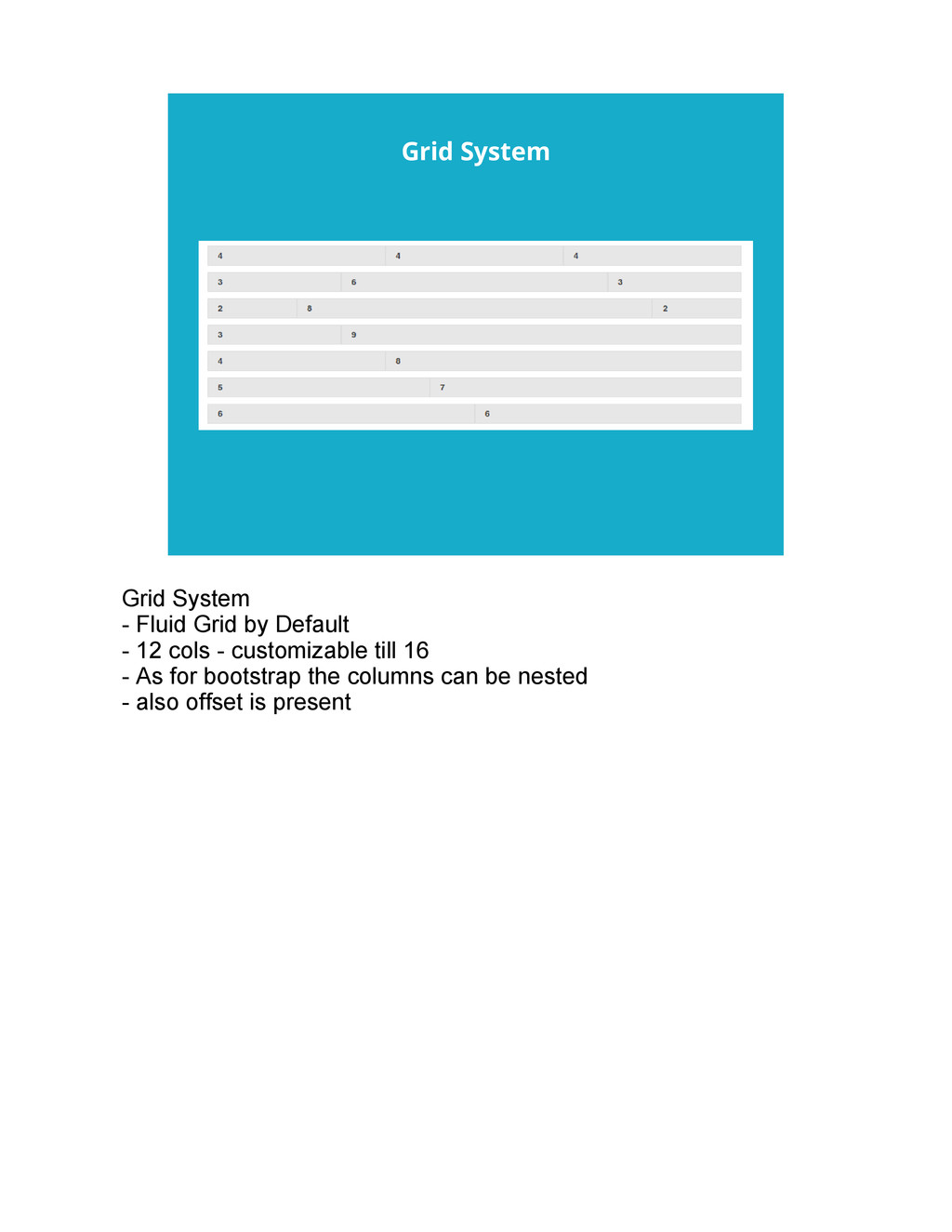
- 940px wide - No responsive Design by default - Fluid Grid System uses percentes instead of pixels for column widths - With the Responsive Design Feature enabled the grid adapts to the viewport, below the 767px the cols become fluid and stack vertically.
its golas was to develop front-end code faster and better. Zurb is a web design company based in California. Zurb designed some important websites as Ebay, Facebook etc
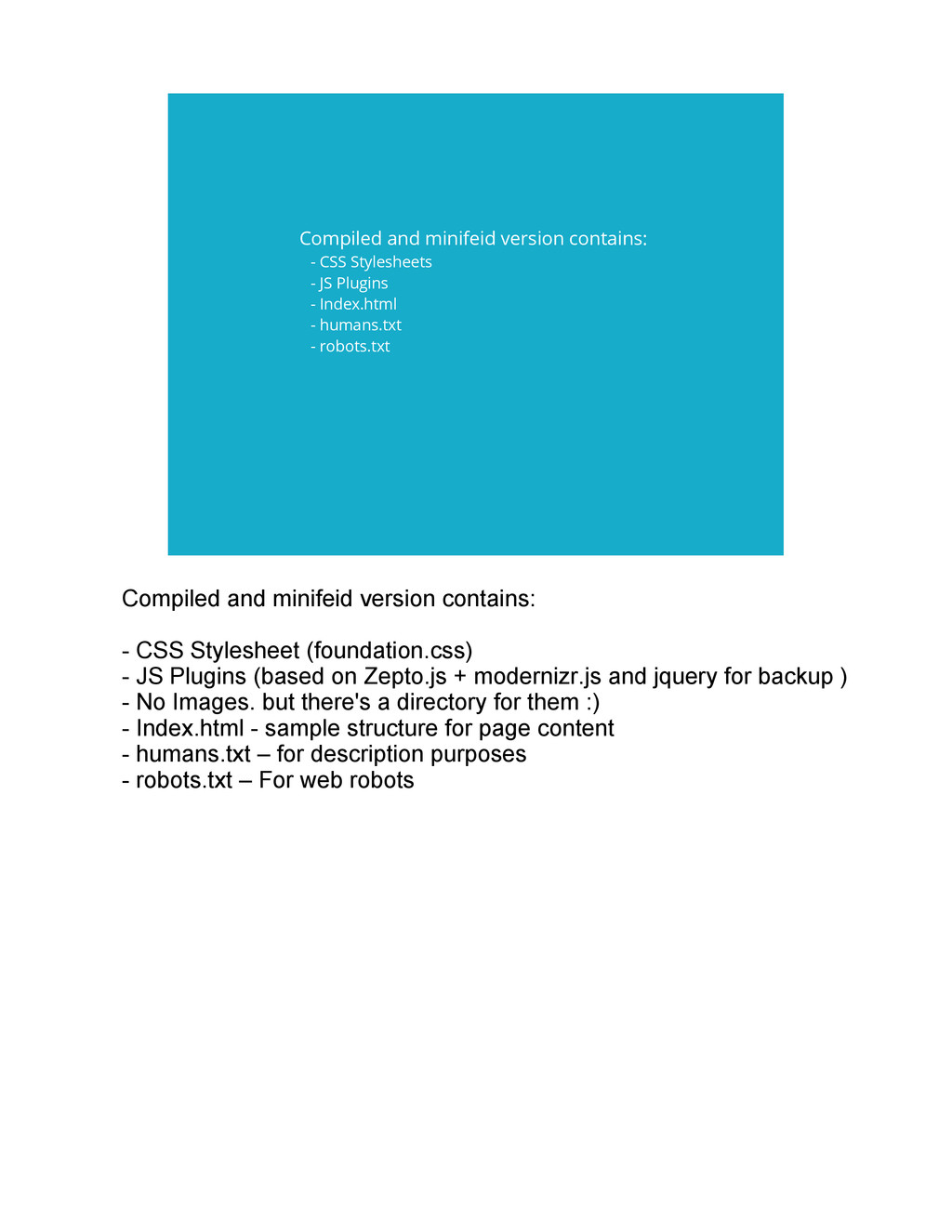
Plugins - Index.html - humans.txt - robots.txt Compiled and minifeid version contains: - CSS Stylesheet (foundation.css) - JS Plugins (based on Zepto.js + modernizr.js and jquery for backup ) - No Images. but there's a directory for them :) - Index.html - sample structure for page content - humans.txt – for description purposes - robots.txt – For web robots
that is interpreted into CSS. SassScript is the scripting language itself. Sass consists of two syntaxes. "The indented syntax" (.sass files) uses indentation to separate code blocks and newline characters to separate rules. "SCSS syntax", uses block formatting like CSS. SassScript provides mechanisms: variables, nesting, mixins, selector inheritance, color functions and basic arithmetic Thanks to these mechanisms Sass extends CSS capabilities SassScript is interpreted, it creates blocks of CSS rules for various selectors as defined by the Sass file. The Sass interpreter translates SassScript into CSS. Alternately, Sass can monitor the .sass or .scss file and translate it to an output .css file whenever the .sass or .scss file is saved. Sass is simply syntactic sugar for CSS.


 uyuki234
 econanringo
 mixplace
 rollbear
 ___akari11
 koic
 prota
 steliosf
 hollycummins
 utakaha
 akase244
 yukiny
 maggiecrowley
 tammyeverts
 cassininazir
 pwiseman
 swwweet
 irinanazarova
 malarkey
 geoffreycrofte
 sstephenson
 bluesmoon
 holman
 mongodb