Upgrade to Pro — share decks privately, control downloads, hide ads and more …

PMaps

 PMaps

Principled and Powerful Maps

Presented at NE Scala 2018

Avatar for Jason Liberman

Jason Liberman

March 19, 2018

Other Decks in Programming

Transcript

  1. INTRO • My name is Jason Liberman • Studied Pure

    Math and Philosophy at UPenn • Previously worked at an investment bank • Self-taught, Scala was the first programming language I learned in formal setting • Life outside of Scala: • Avid reader (lots of philosophy) • Book store dreams
  2. BRIDGEWATER • Investment Engineer at Bridgewater Associates • Largest hedge

    fund in the world • Manage $160bn for our clients • Author / implement investment logic in code (primarily Scala) • Team of ~50 engineers, we are incredibly passionate about Scala training and generally building a great community • Come talk to me if interested in learning more!
  3. MAPS - CONTEXT • Maps / Key-Value pair collections are

    used everywhere • Scala’s immutable Map collection is fast and incredibly useful • Scala Map shortcomings? • Birth of PMaps
  4. AGENDA • Define some important qualities I think key-value pair

    collections should have • Some ways in which Maps seem to be falling short • Introduce PMaps and how they compensate • Questions
  5. TAKEAWAYS • Often easy to build something small that makes

    code authoring a lot simpler! • Define algebra • Enforce algebra • Add syntax
  6. WHAT IS THE KEY TO KEY-VALUE COLLECTIONS? • Performant •

    Principled: • Operations are well-defined, transparent, and reflected in the types • Powerful: • Clean, concise, expressive logic • Lift algebra / logic to collection level
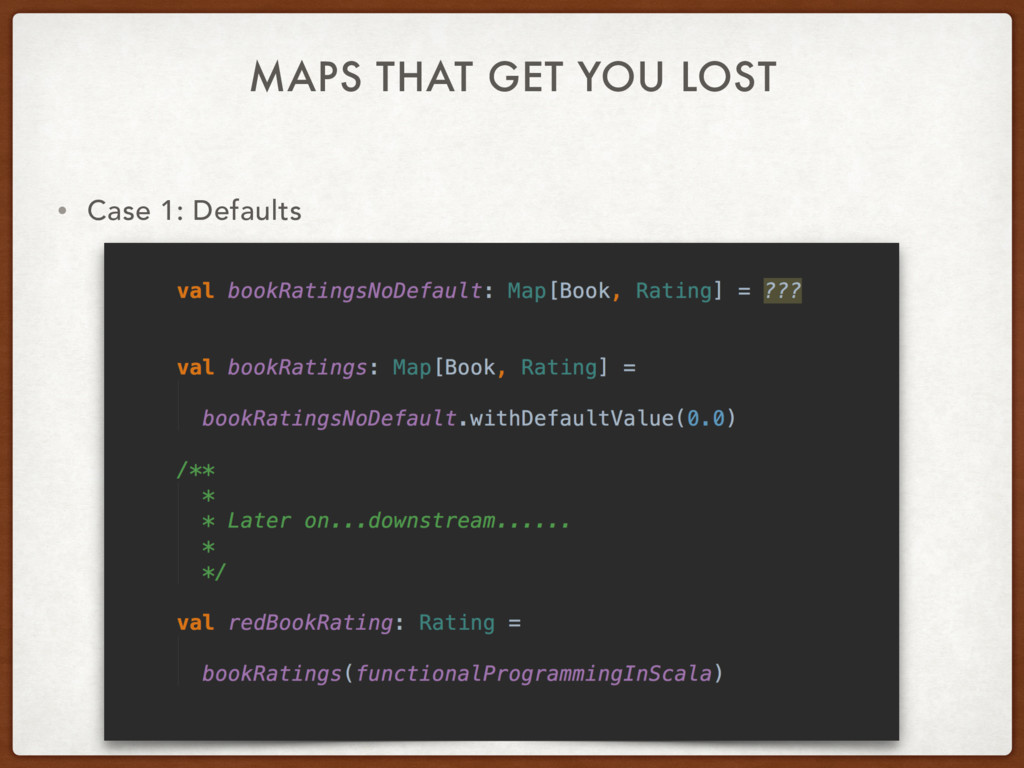
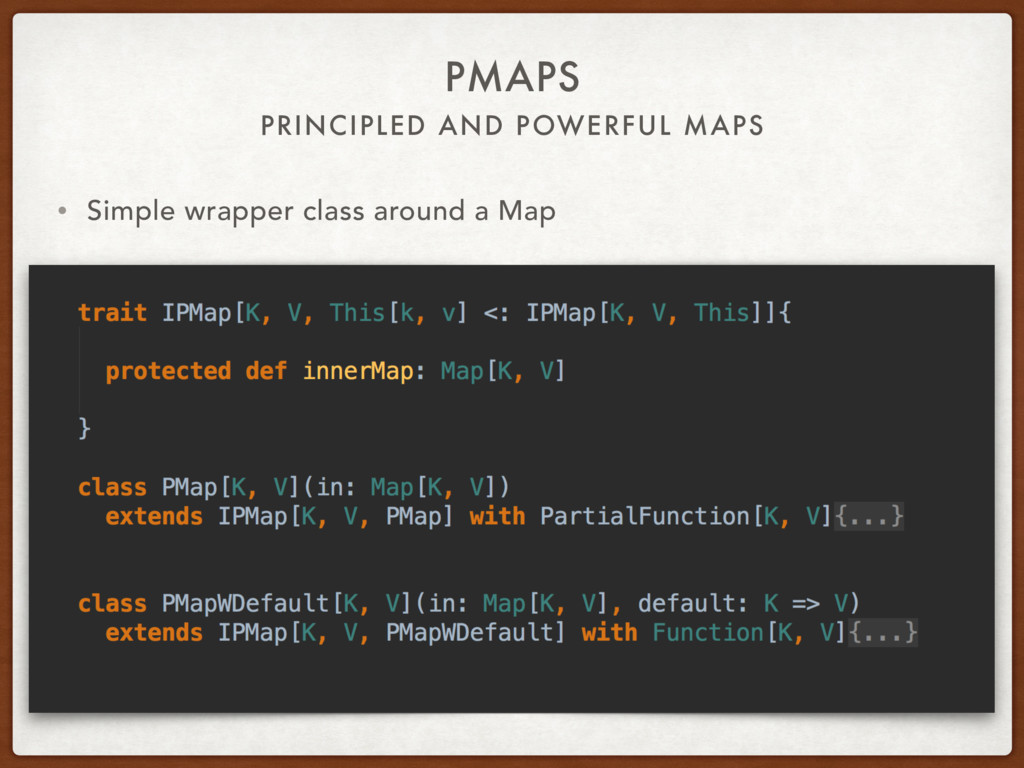
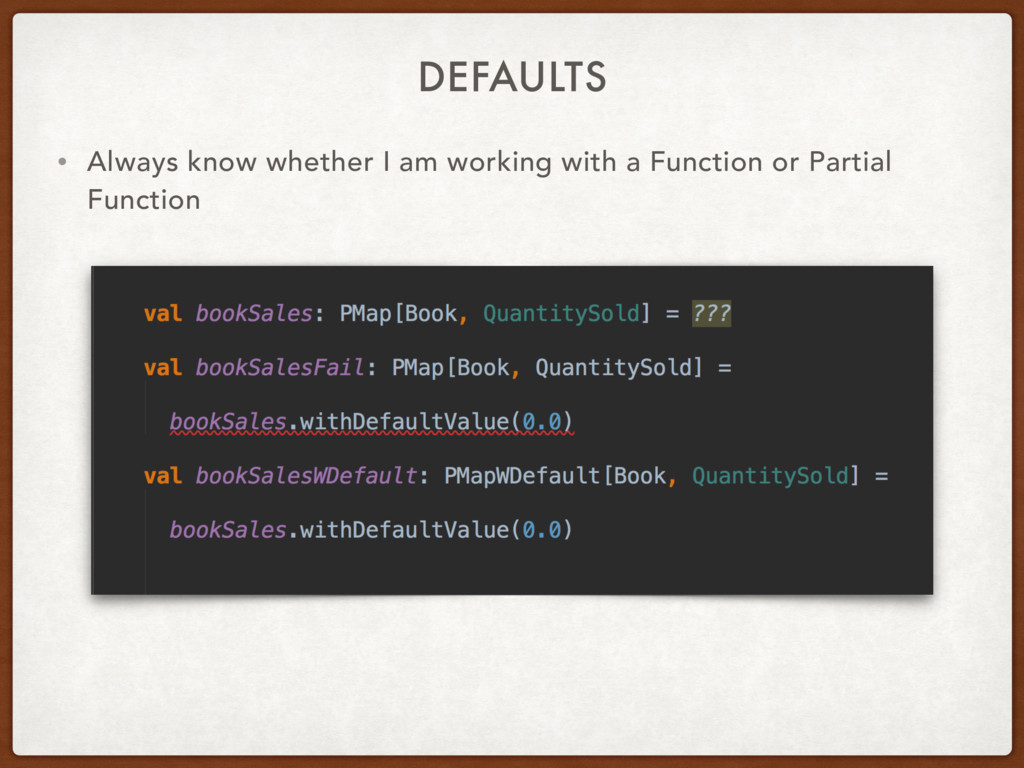
  7. MAPS THAT GET YOU LOST • Defaults on Scala Maps:

    • Not principled: • I want a strongly typed identification that I have something fundamentally different • Function vs. Partial Function
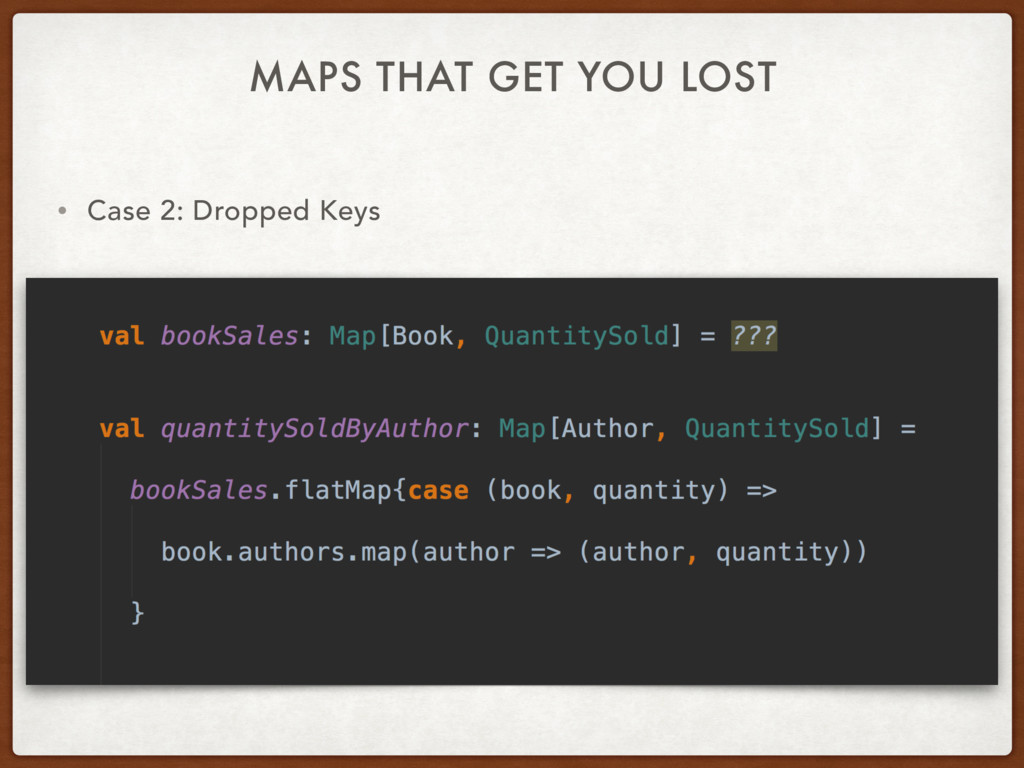
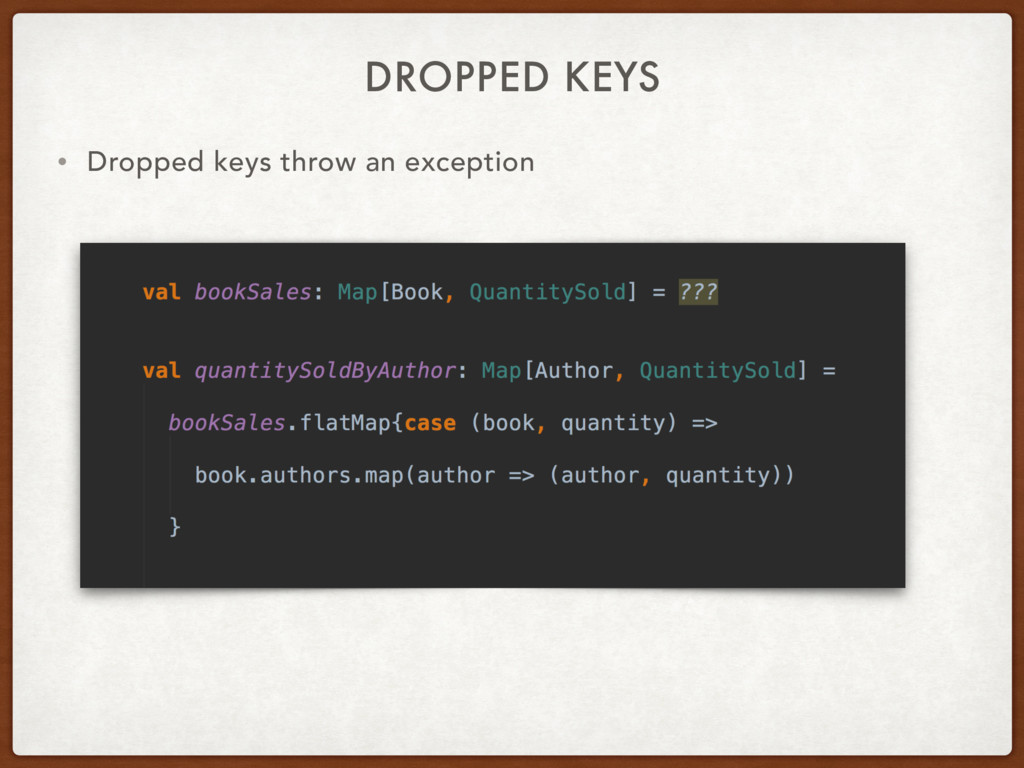
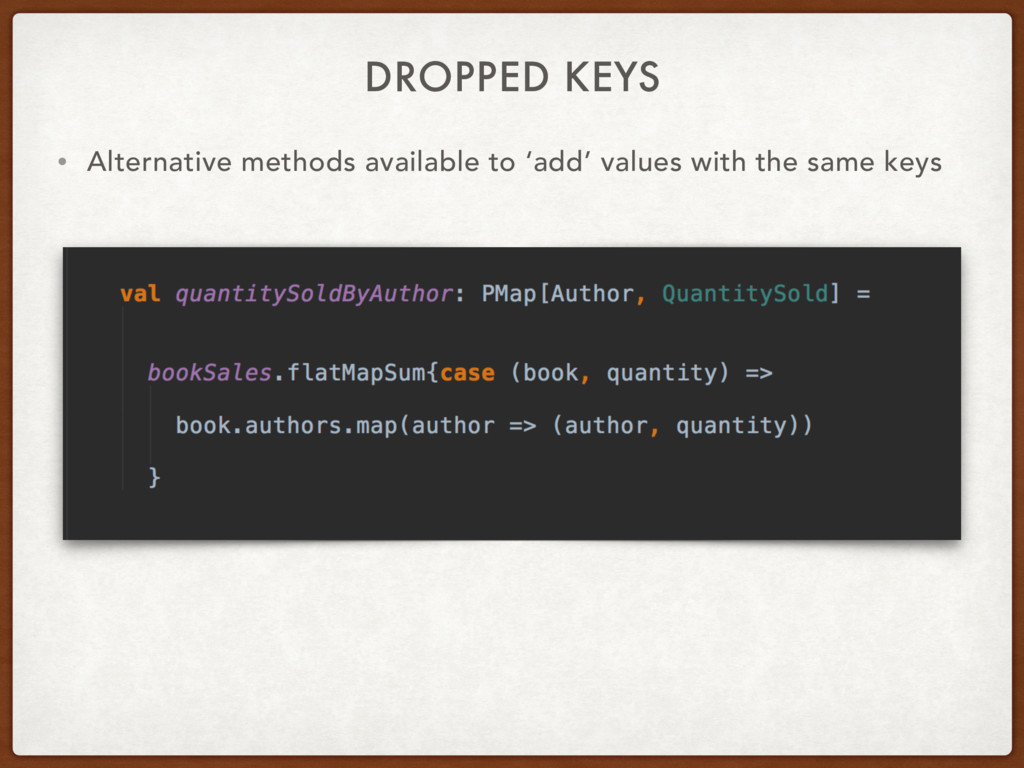
  8. MAPS THAT GET YOU LOST • Dropped Keys: • Not

    principled: • Silently dropping colliding keys • Not powerful: • Would ideally want to use the fact that quantity sold can be summed for a given author!
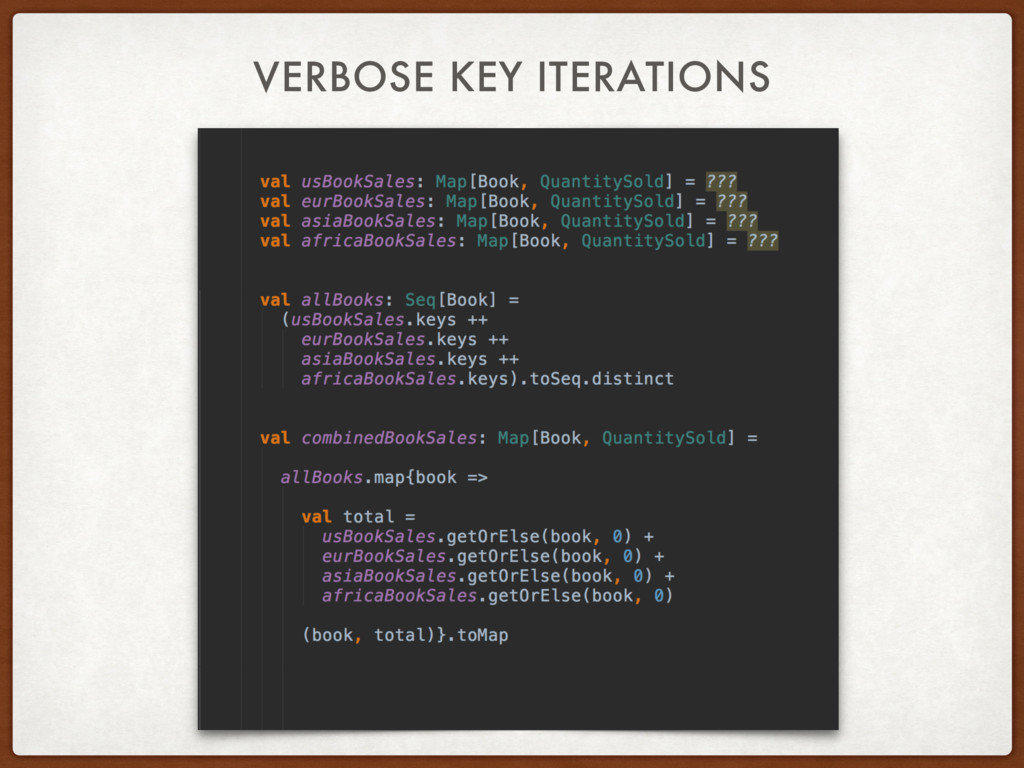
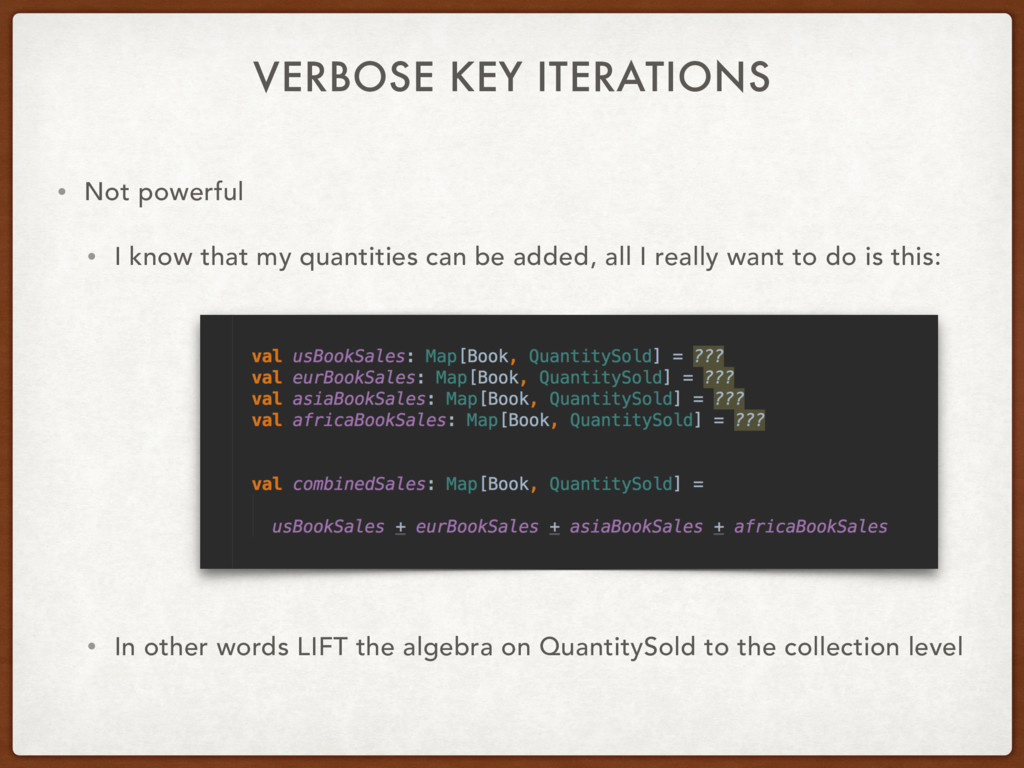
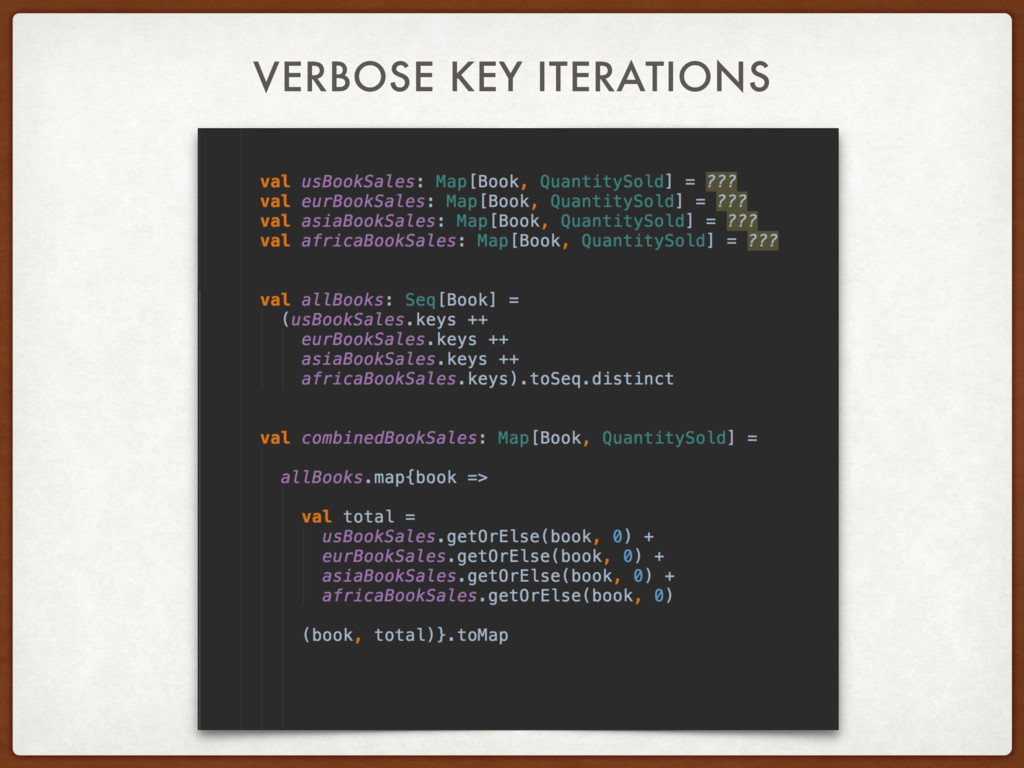
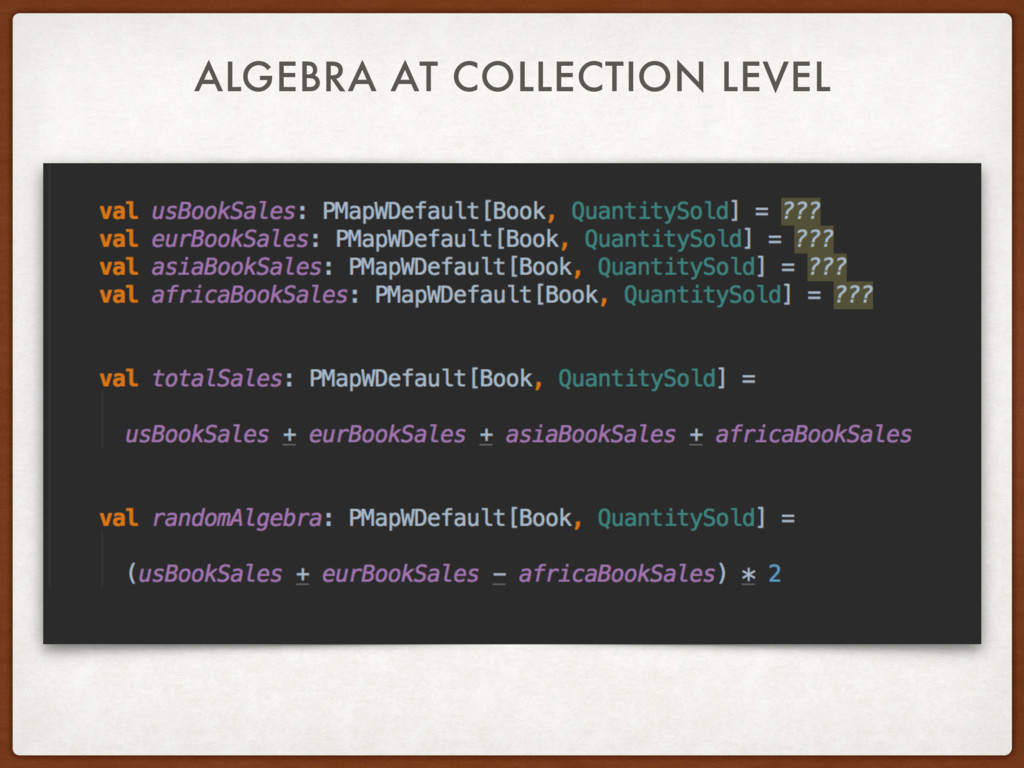
  9. VERBOSE KEY ITERATIONS • Not powerful • I know that

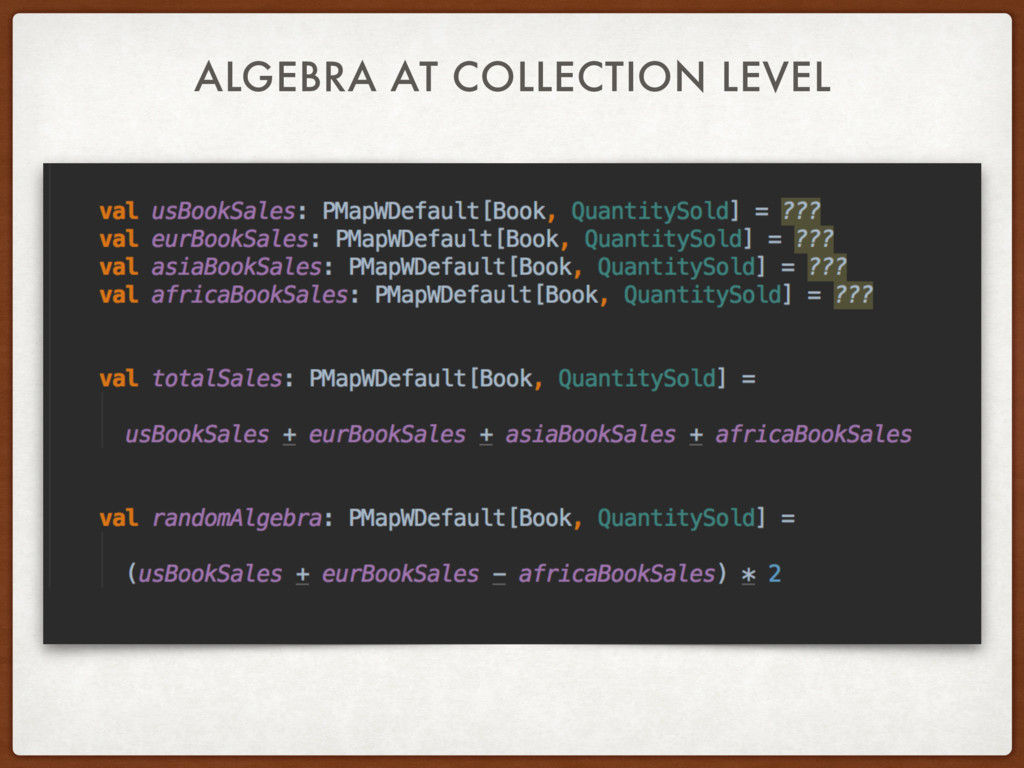
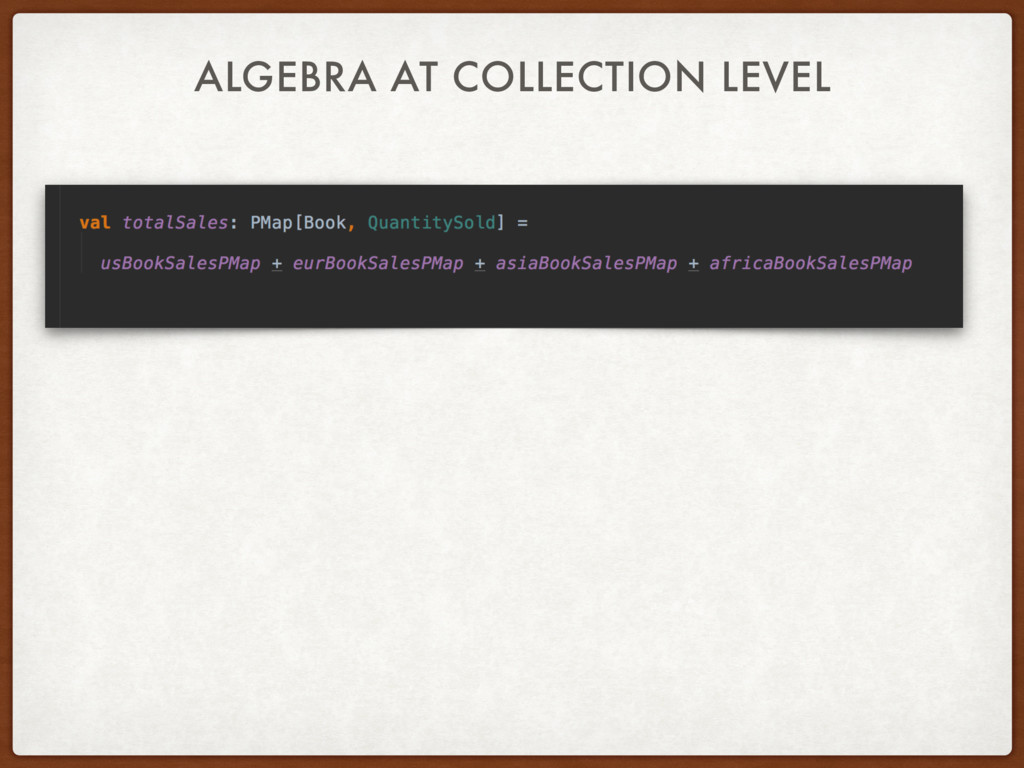
    my quantities can be added, all I really want to do is this: • In other words LIFT the algebra on QuantitySold to the collection level
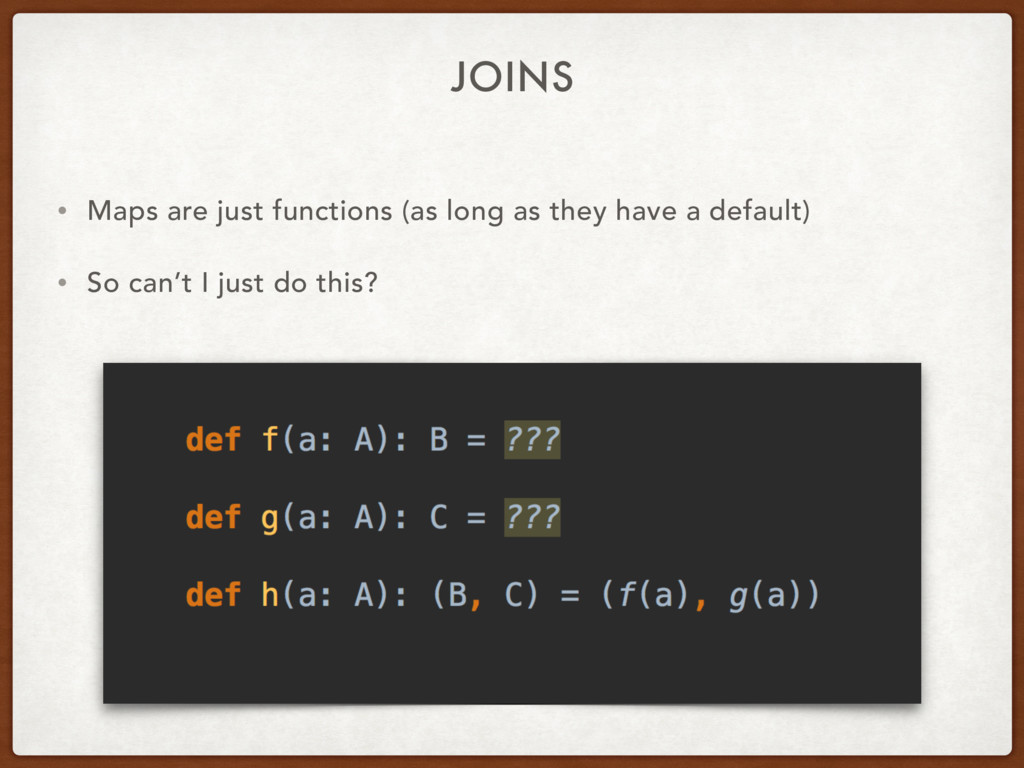
  10. JOINS • Maps are just functions (as long as they

    have a default) • So can’t I just do this?
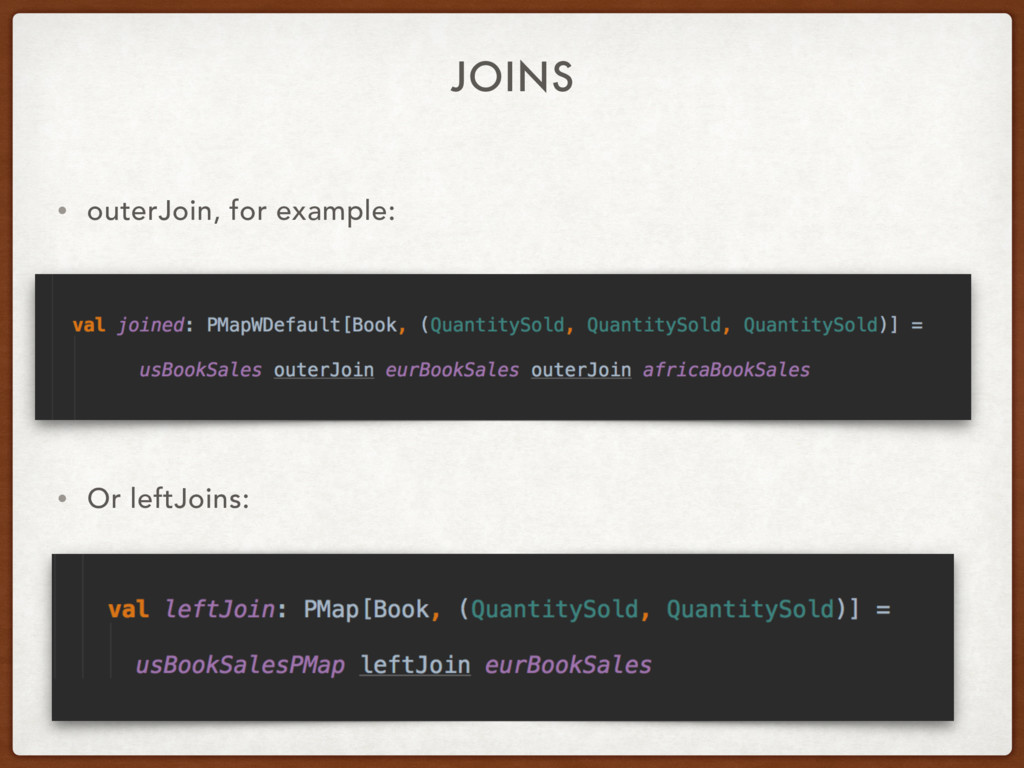
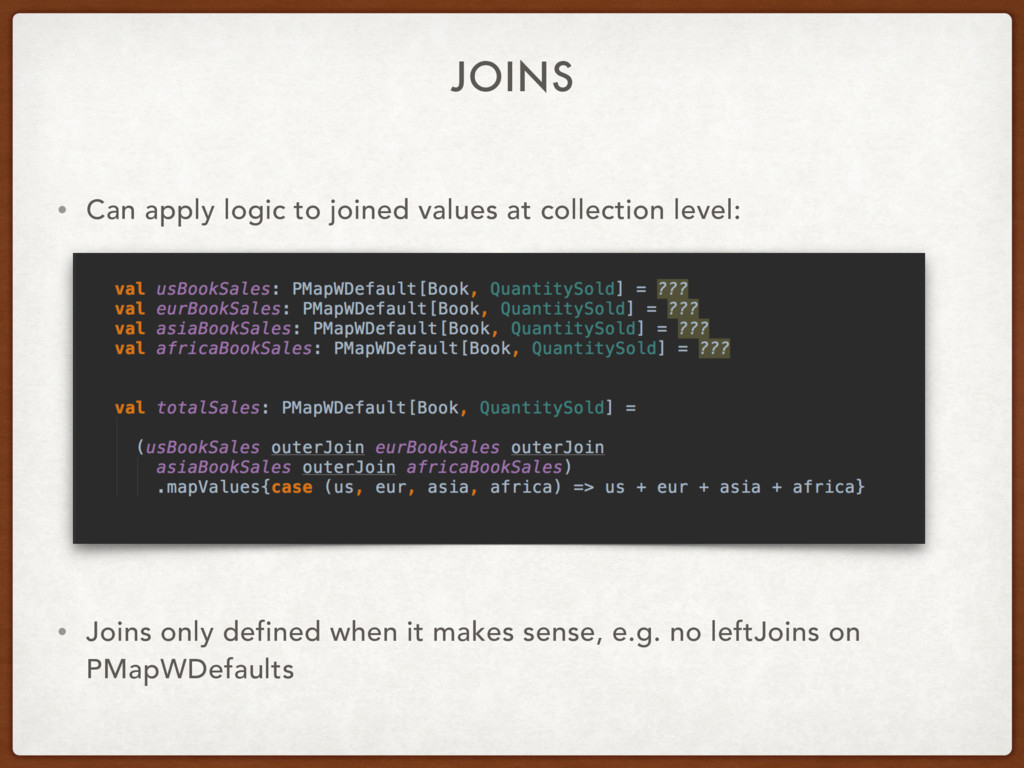
  11. JOINS • Can apply logic to joined values at collection

    level: • Joins only defined when it makes sense, e.g. no leftJoins on PMapWDefaults
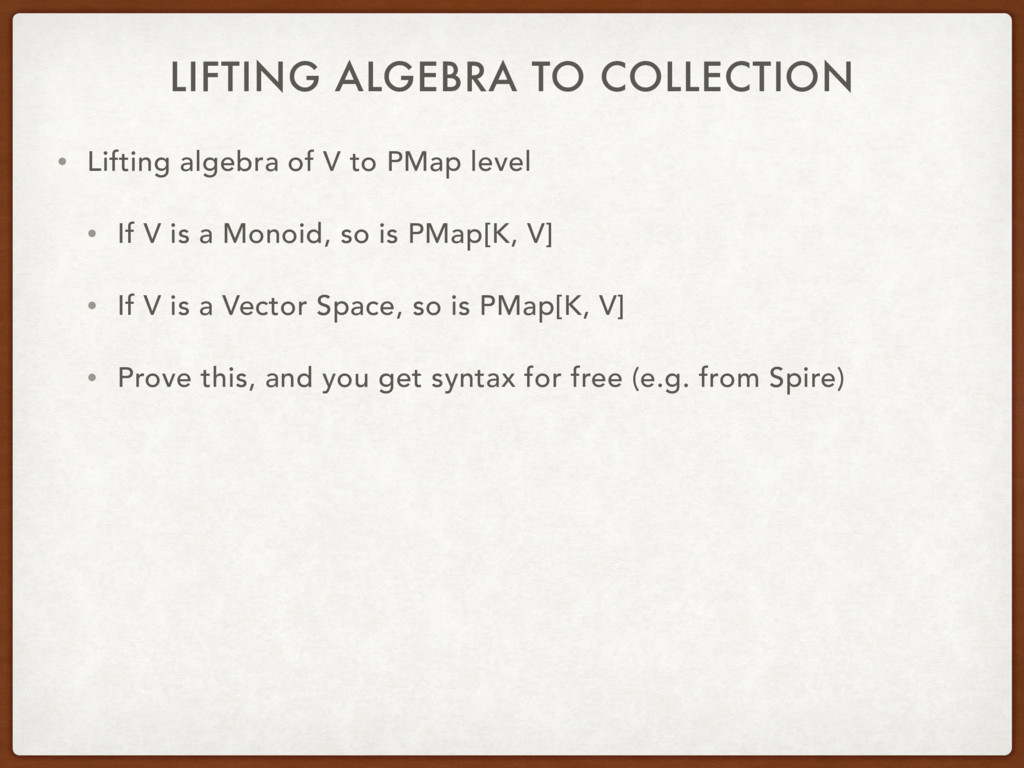
  12. LIFTING ALGEBRA TO COLLECTION • Lifting algebra of V to

    PMap level • If V is a Monoid, so is PMap[K, V] • If V is a Vector Space, so is PMap[K, V] • Prove this, and you get syntax for free (e.g. from Spire)
  13. HOW THIS WORKS • Type Classes • Prove if V

    is Monoid, then PMapWDefault[K, V] is Monoid • Numeric type classes and algebraic syntax and from Spire • Dependent types to avoid nested tuples and return reasonable types from Joins
  14. TAKEAWAYS • Often easy to build something small that makes

    code authoring a lot simpler! • Define algebra • Enforce algebra • Add syntax
  15. IN CONCLUSION • You can find the code on github:

    • https://github.com/jasonliberman8/PMaps • Suggestions? Thoughts? Please find me after.