Upgrade to Pro — share decks privately, control downloads, hide ads and more …

How Shopify Scales Rails

Sponsored · Your Podcast. Everywhere. Effortlessly. Share. Educate. Inspire. Entertain. You do you. We'll handle the rest. →

How Shopify Scales Rails

This talk goes into detail about how Shopify has been using and scaling rails up to now.

John Duff

April 29, 2013

Transcript

61 slides
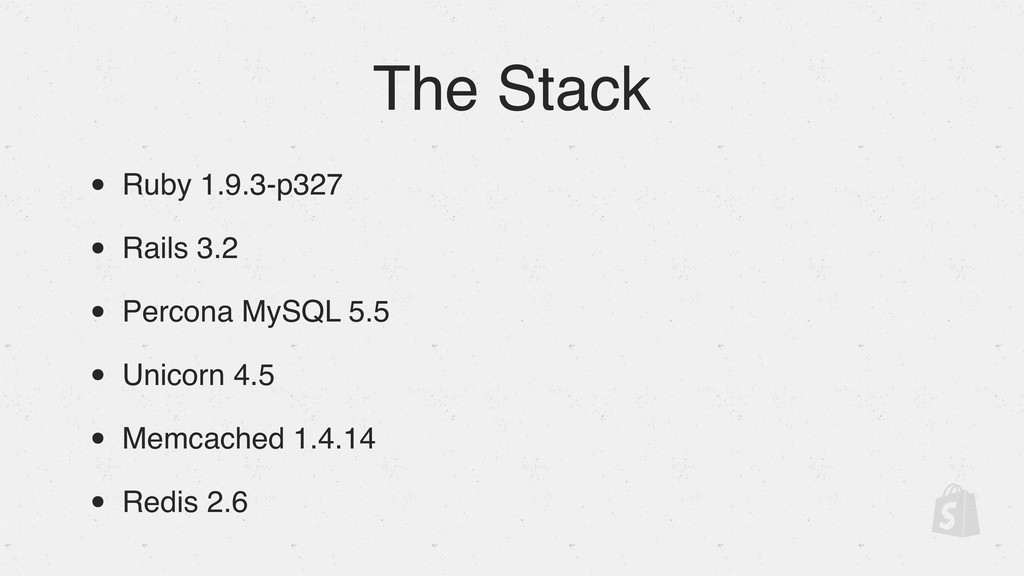
  1. • Ruby 1.9.3-p327 • Rails 3.2 • Percona MySQL 5.5

    • Unicorn 4.5 • Memcached 1.4.14 • Redis 2.6 The Stack
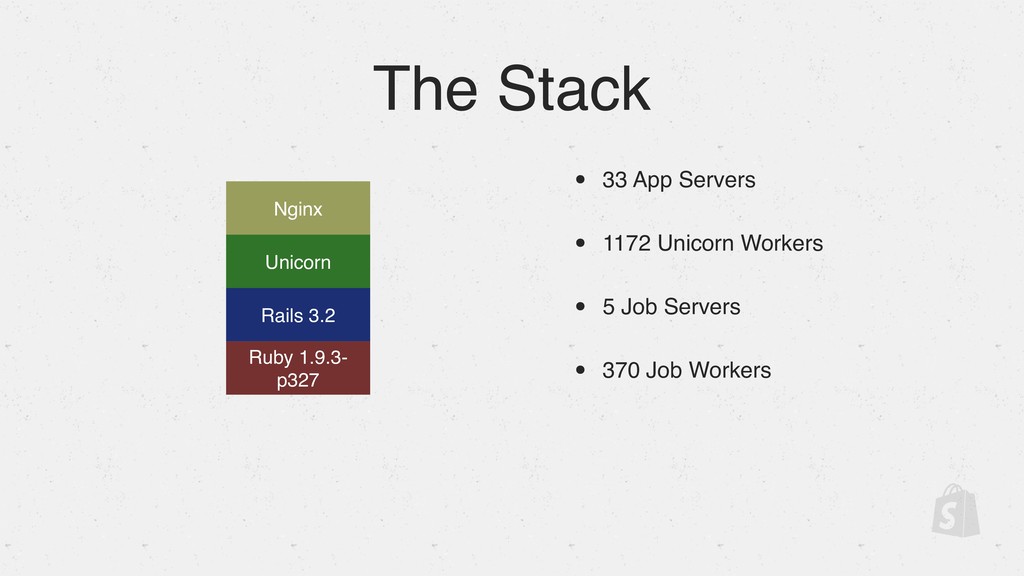
  2. The Stack • 33 App Servers • 1172 Unicorn Workers

    • 5 Job Servers • 370 Job Workers Nginx Unicorn Rails 3.2 Ruby 1.9.3- p327
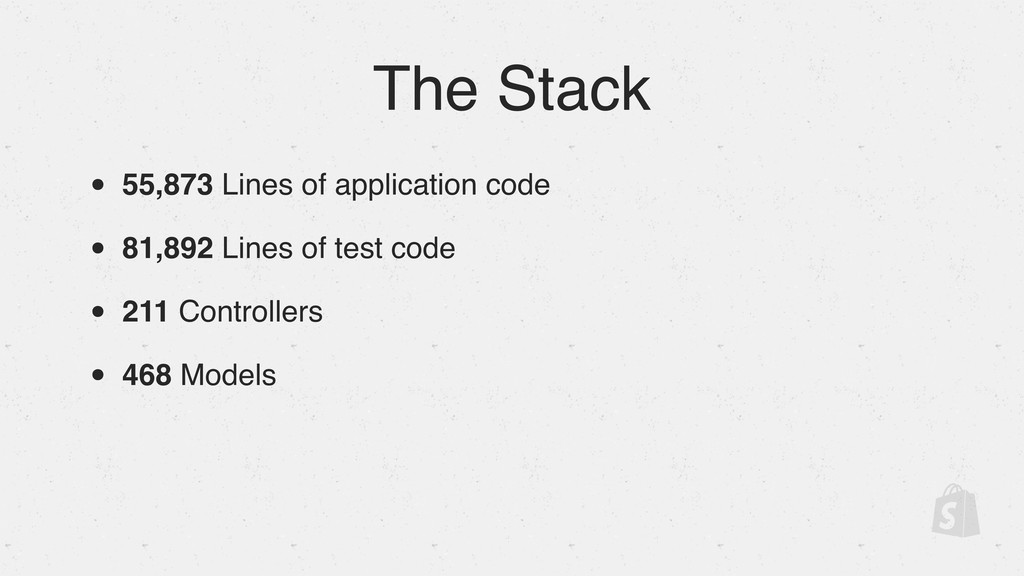
  3. • 55,873 Lines of application code • 81,892 Lines of
    test code • 211 Controllers • 468 Models The Stack
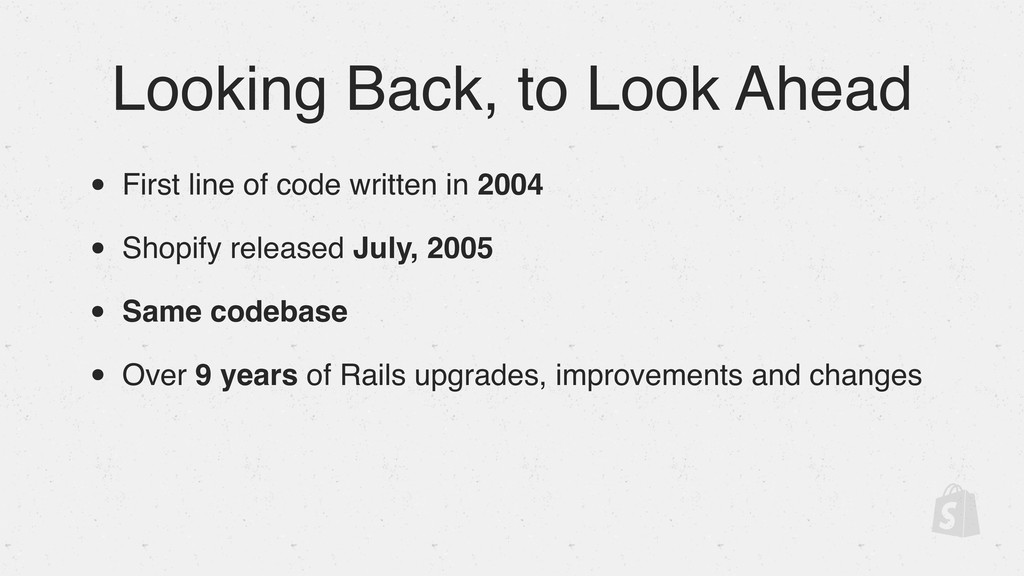
  4. • First line of code written in 2004 • Shopify

    released July, 2005 • Same codebase • Over 9 years of Rails upgrades, improvements and changes Looking Back, to Look Ahead
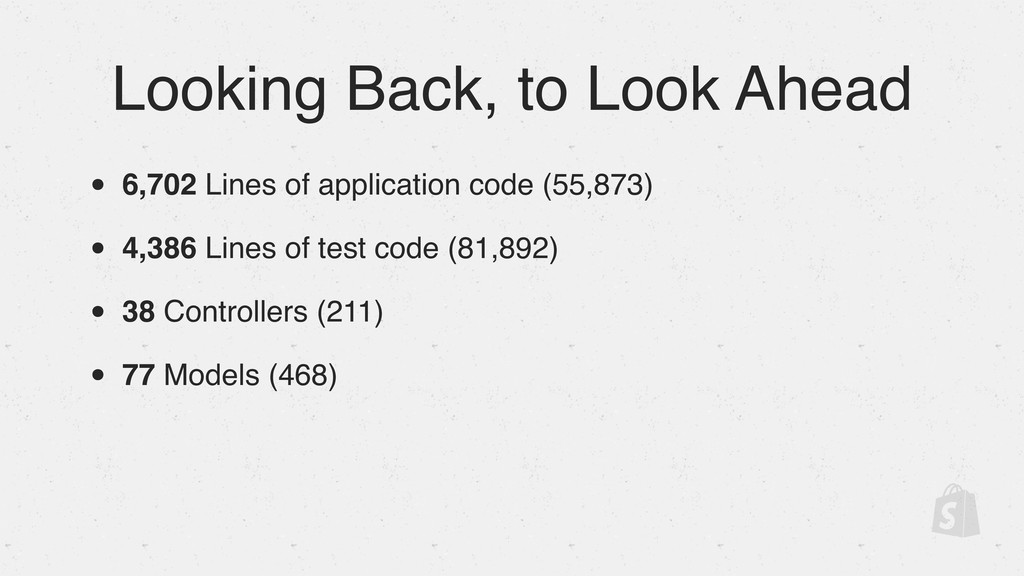
  5. Looking Back, to Look Ahead • 6,702 Lines of application

    code (55,873) • 4,386 Lines of test code (81,892) • 38 Controllers (211) • 77 Models (468)
  6. Looking Back, to Look Ahead • Ruby 1.8.2 • Rails

    0.13.1 • MySQL 4.1 • Lighttpd • Memcached
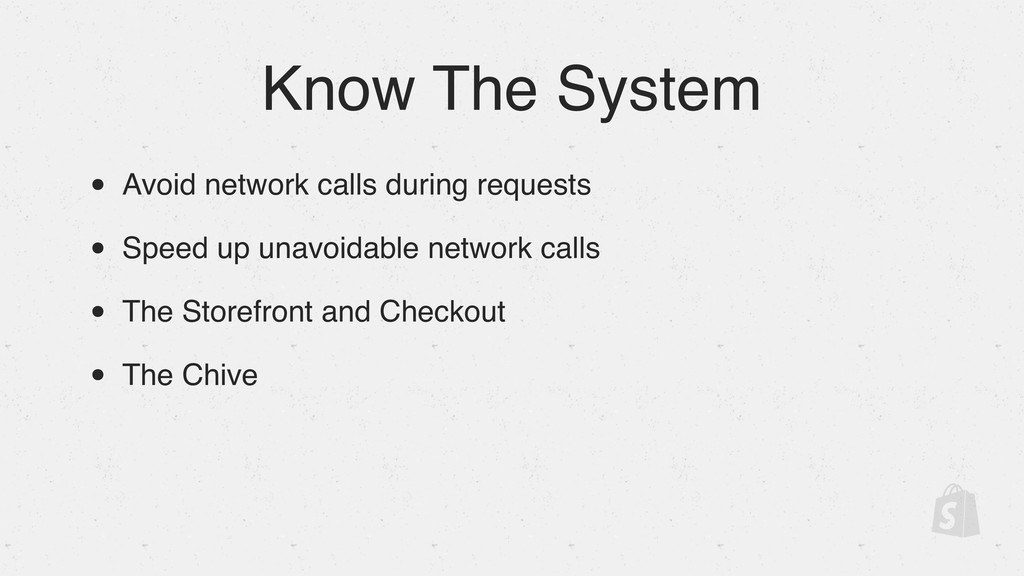
  7. Know The System • Avoid network calls during requests •

    Speed up unavoidable network calls • The Storefront and Checkout • The Chive
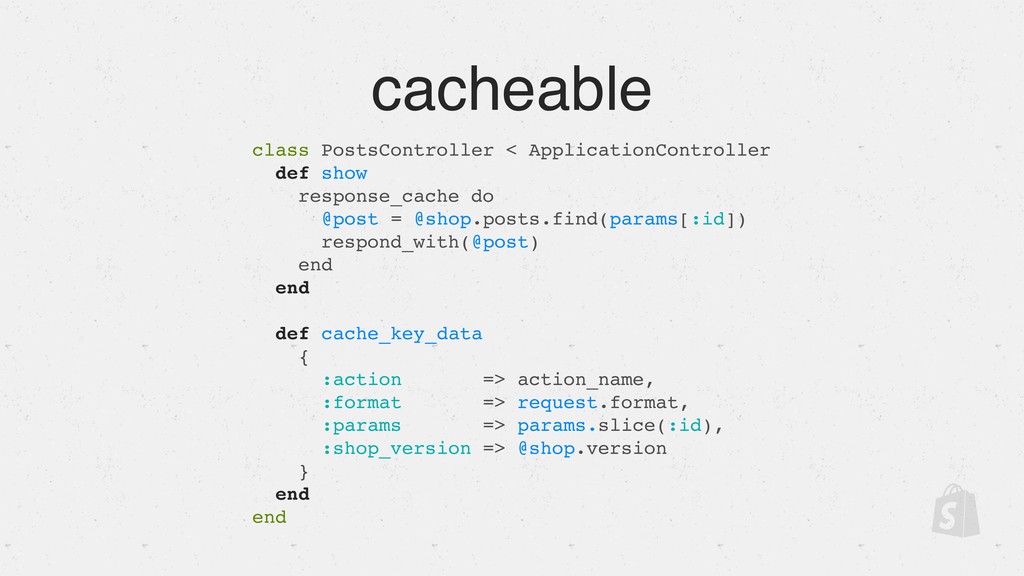
  8. cacheable class PostsController < ApplicationController def show response_cache do @post

    = @shop.posts.find(params[:id]) respond_with(@post) end end def cache_key_data { :action => action_name, :format => request.format, :params => params.slice(:id), :shop_version => @shop.version } end end
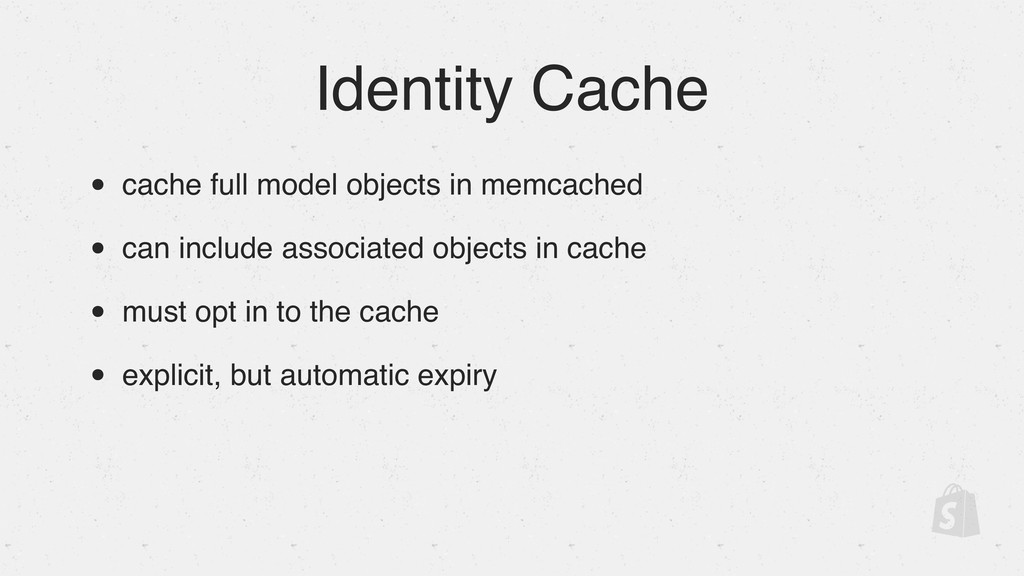
  9. Identity Cache • cache full model objects in memcached •

    can include associated objects in cache • must opt in to the cache • explicit, but automatic expiry
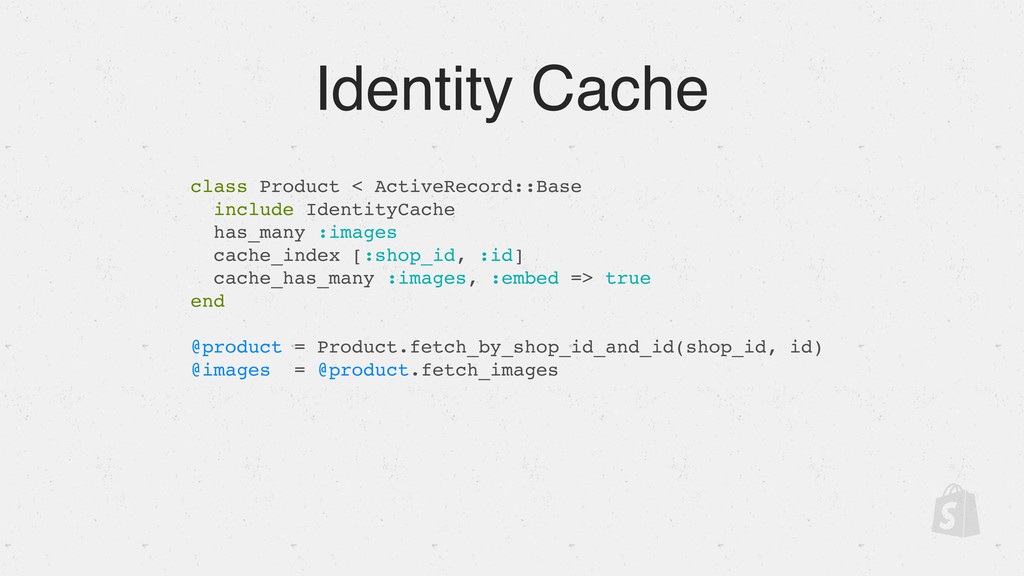
  10. Identity Cache class Product < ActiveRecord::Base include IdentityCache has_many :images

    cache_index [:shop_id, :id] cache_has_many :images, :embed => true end @product = Product.fetch_by_shop_id_and_id(shop_id, id) @images = @product.fetch_images
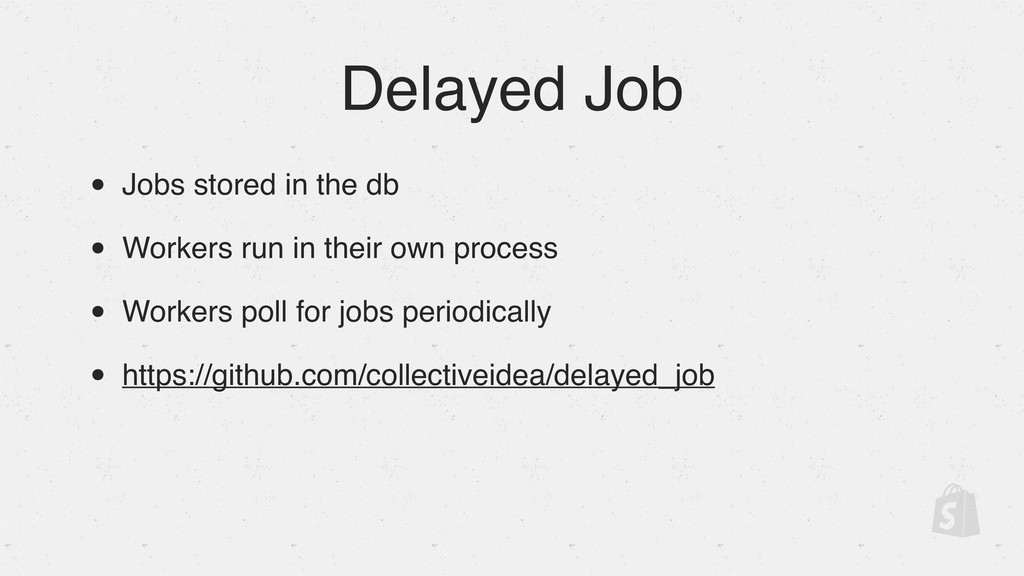
  11. Delayed Job • Jobs stored in the db • Workers

    run in their own process • Workers poll for jobs periodically • https://github.com/collectiveidea/delayed_job
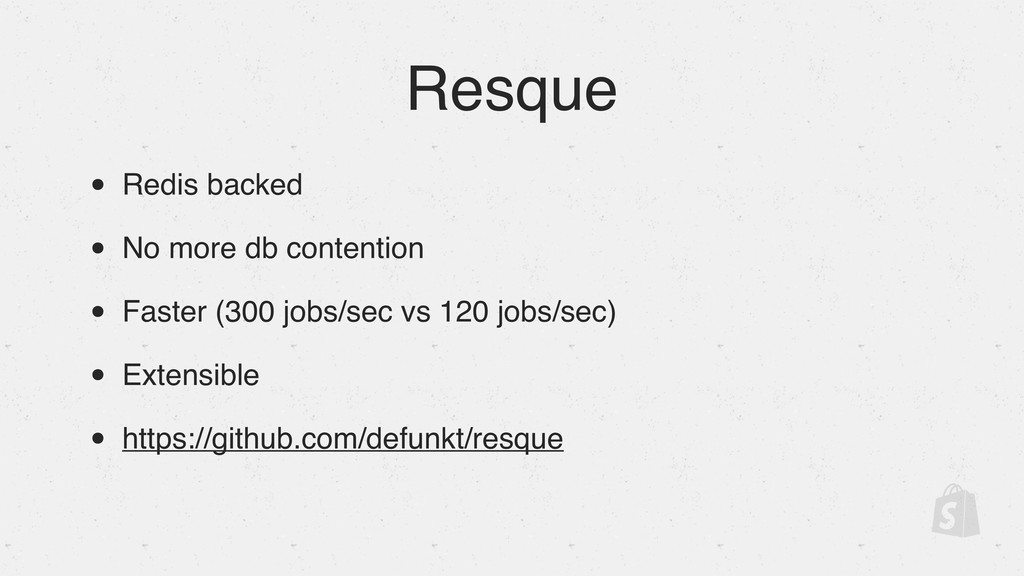
  12. Resque • Redis backed • No more db contention •

    Faster (300 jobs/sec vs 120 jobs/sec) • Extensible • https://github.com/defunkt/resque
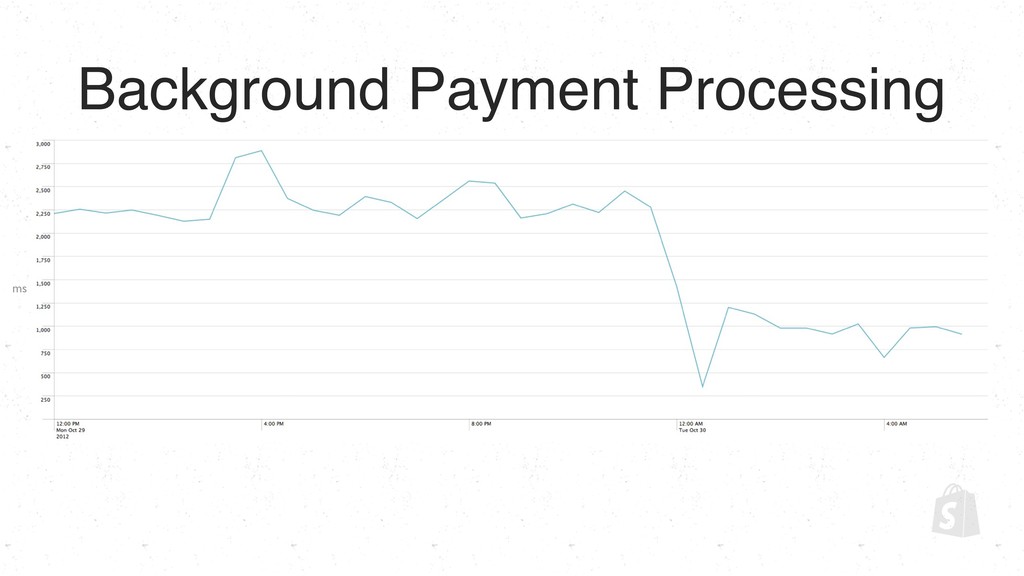
  13. Resque • Sending Email • Processing Payments • Geolocation •

    Import / Export • Indexing for Search • 86 Other things...
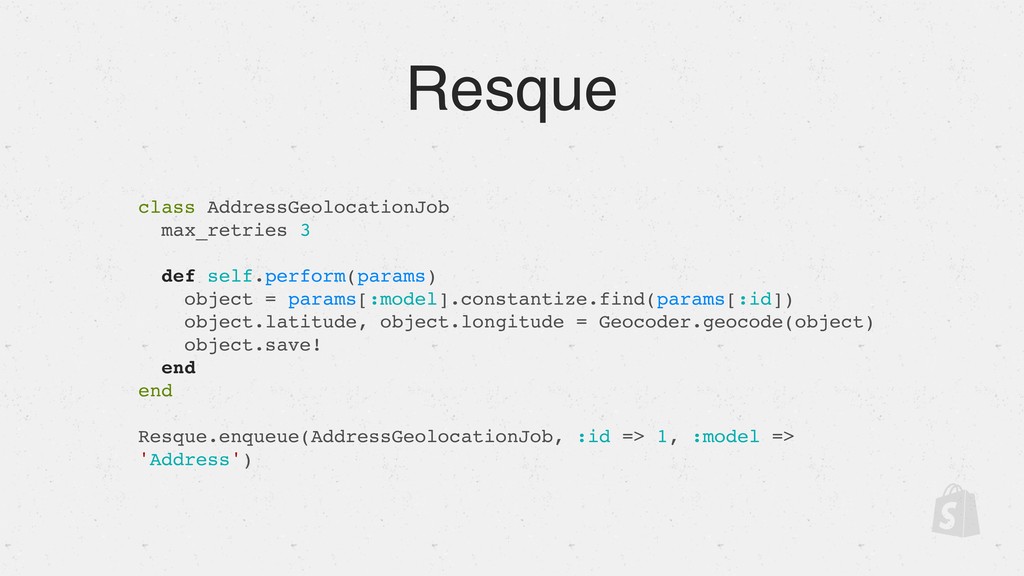
  14. Resque class AddressGeolocationJob max_retries 3 def self.perform(params) object = params[:model].constantize.find(params[:id])

    object.latitude, object.longitude = Geocoder.geocode(object) object.save! end end Resque.enqueue(AddressGeolocationJob, :id => 1, :model => 'Address')
  15. MySQL Hardware • 4 x 8 Core Processor • SSD

    • 256 GB Ram • Full working set in memory
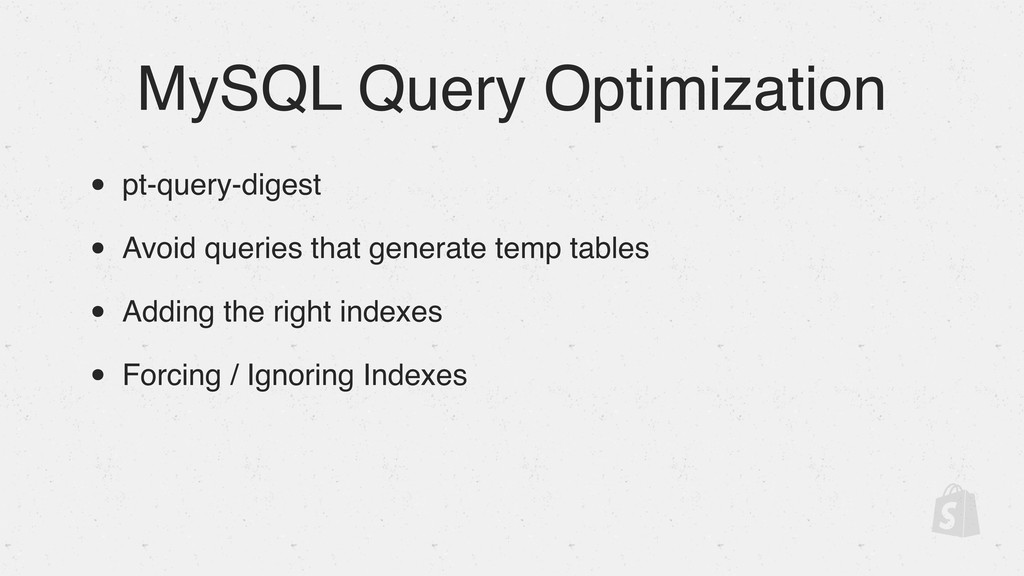
  16. MySQL Query Optimization • pt-query-digest • Avoid queries that generate

    temp tables • Adding the right indexes • Forcing / Ignoring Indexes
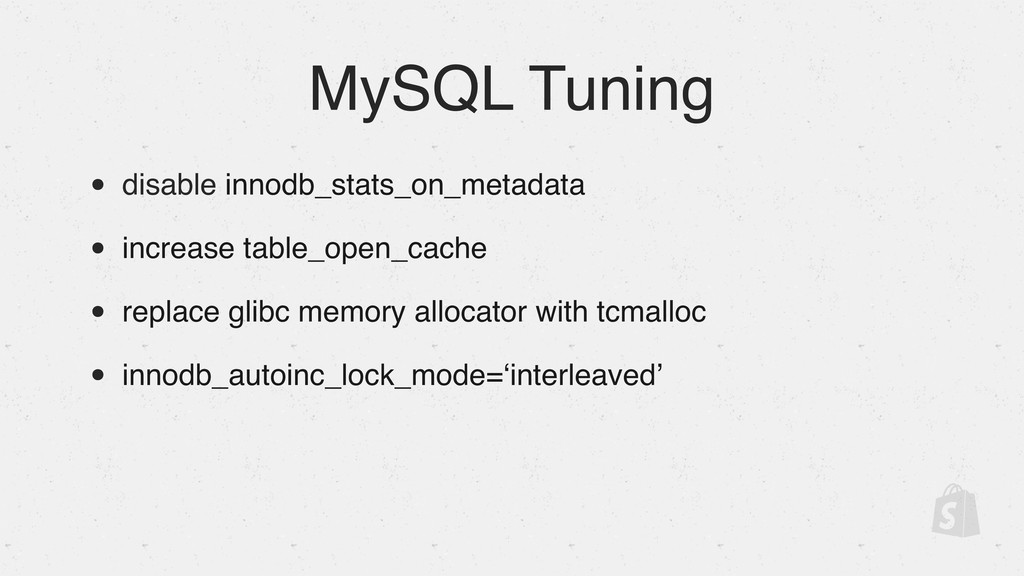
  17. MySQL Tuning • disable innodb_stats_on_metadata • increase table_open_cache • replace

    glibc memory allocator with tcmalloc • innodb_autoinc_lock_mode=‘interleaved’
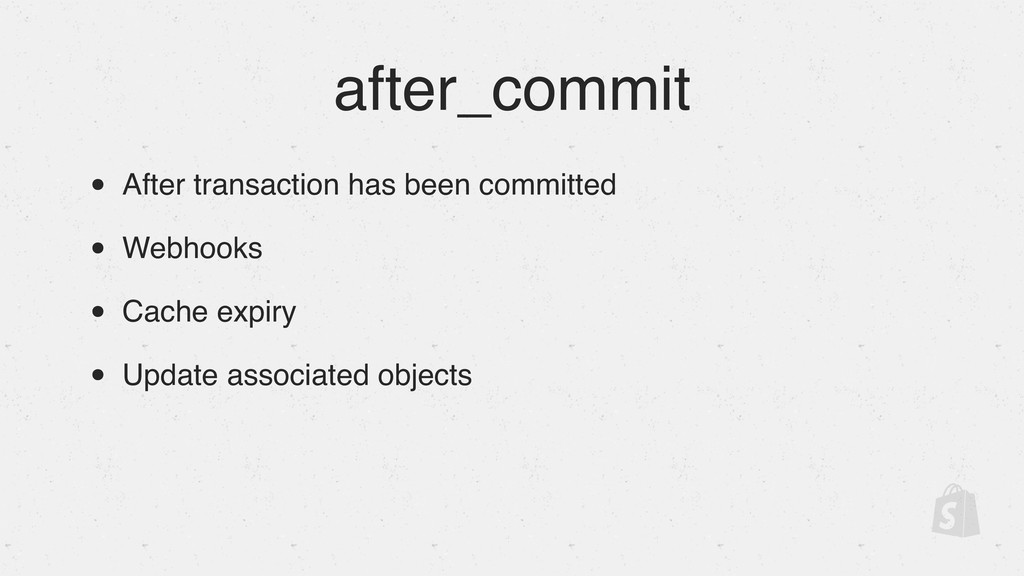
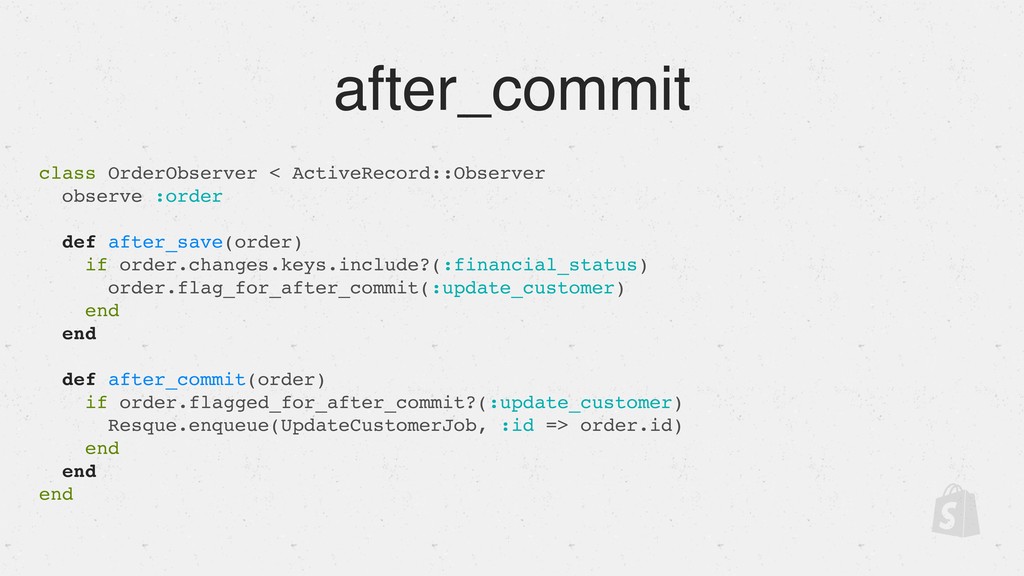
  18. after_commit class OrderObserver < ActiveRecord::Observer observe :order def after_save(order) if

    order.changes.keys.include?(:financial_status) order.flag_for_after_commit(:update_customer) end end def after_commit(order) if order.flagged_for_after_commit?(:update_customer) Resque.enqueue(UpdateCustomerJob, :id => order.id) end end end
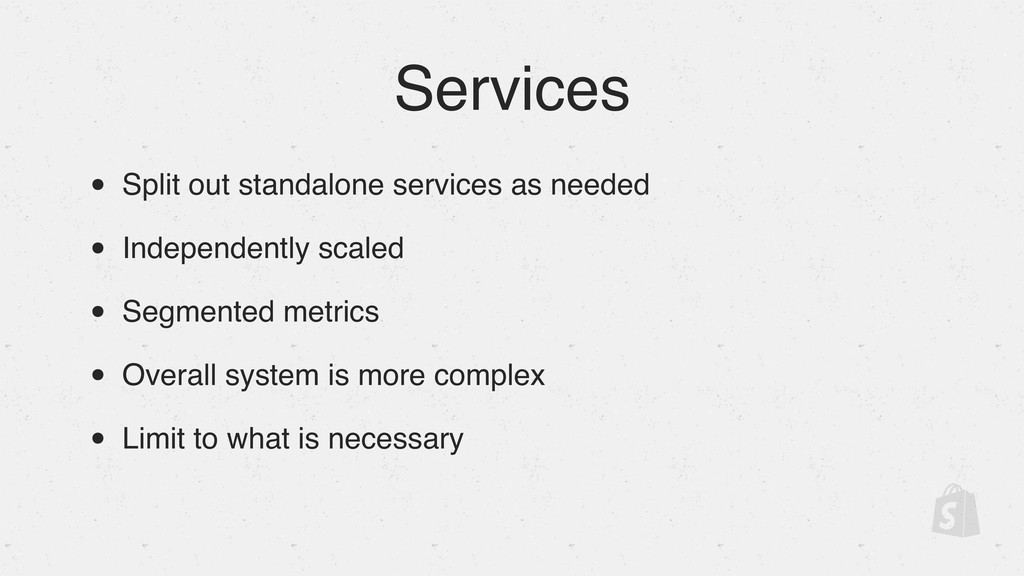
  19. Services • Split out standalone services as needed • Independently

    scaled • Segmented metrics • Overall system is more complex • Limit to what is necessary

More Decks by John Duff

Other Decks in Technology