Explore the traditional craftsmanship and modern techniques used by boat builders in Kerala. Learn about the materials, tools, construction methods, and adaptation of Kerala's boat-building industry.
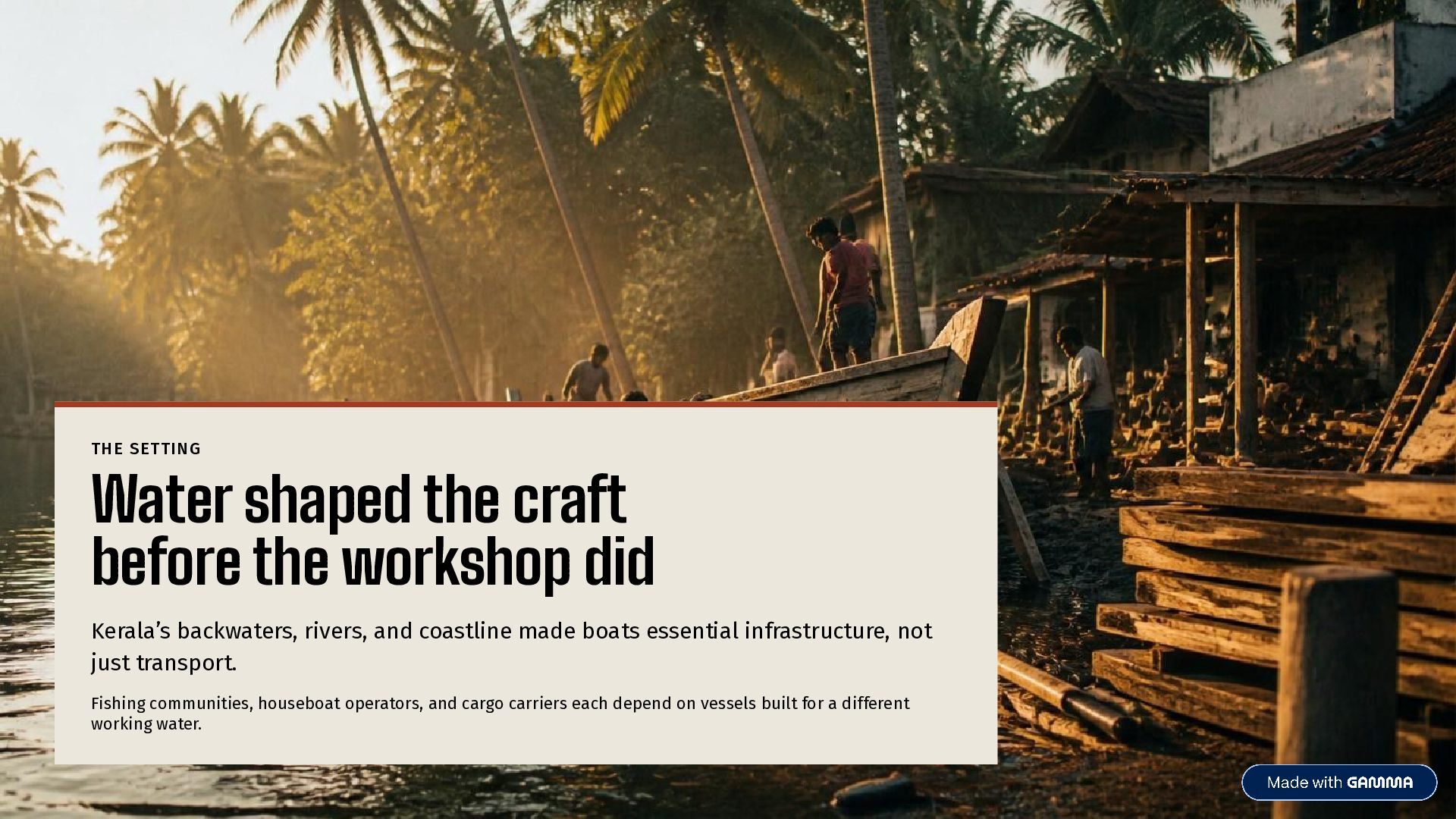
Kerala’s backwaters, rivers, and coastline made boats essential infrastructure, not just transport. Fishing communities, houseboat operators, and cargo carriers each depend on vessels built for a different working water.
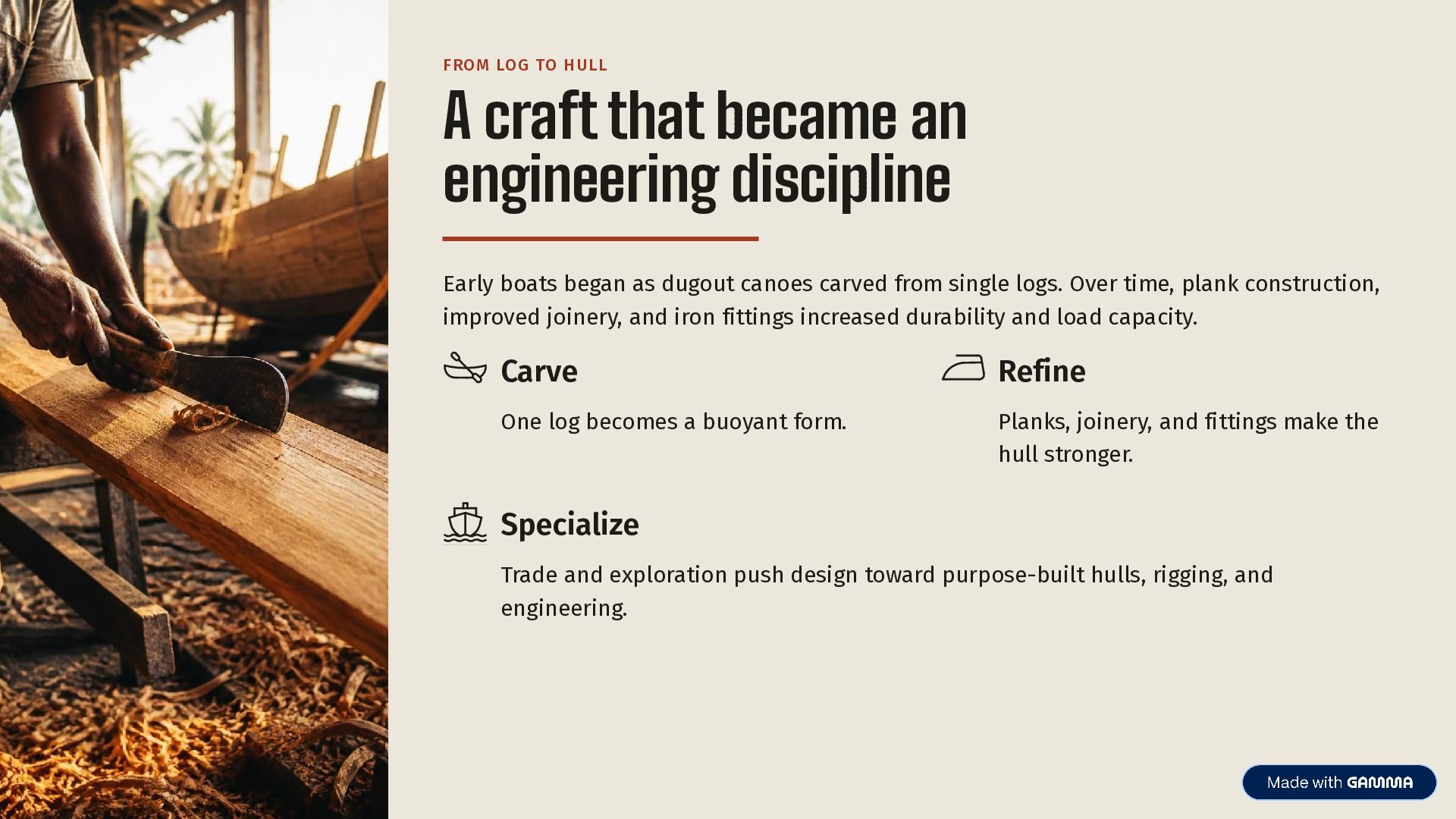
discipline Early boats began as dugout canoes carved from single logs. Over time, plank construction, improved joinery, and iron fittings increased durability and load capacity. Carve Refine One log becomes a buoyant form. Planks, joinery, and fittings make the hull stronger. Specialize Trade and exploration push design toward purpose-built hulls, rigging, and engineering.
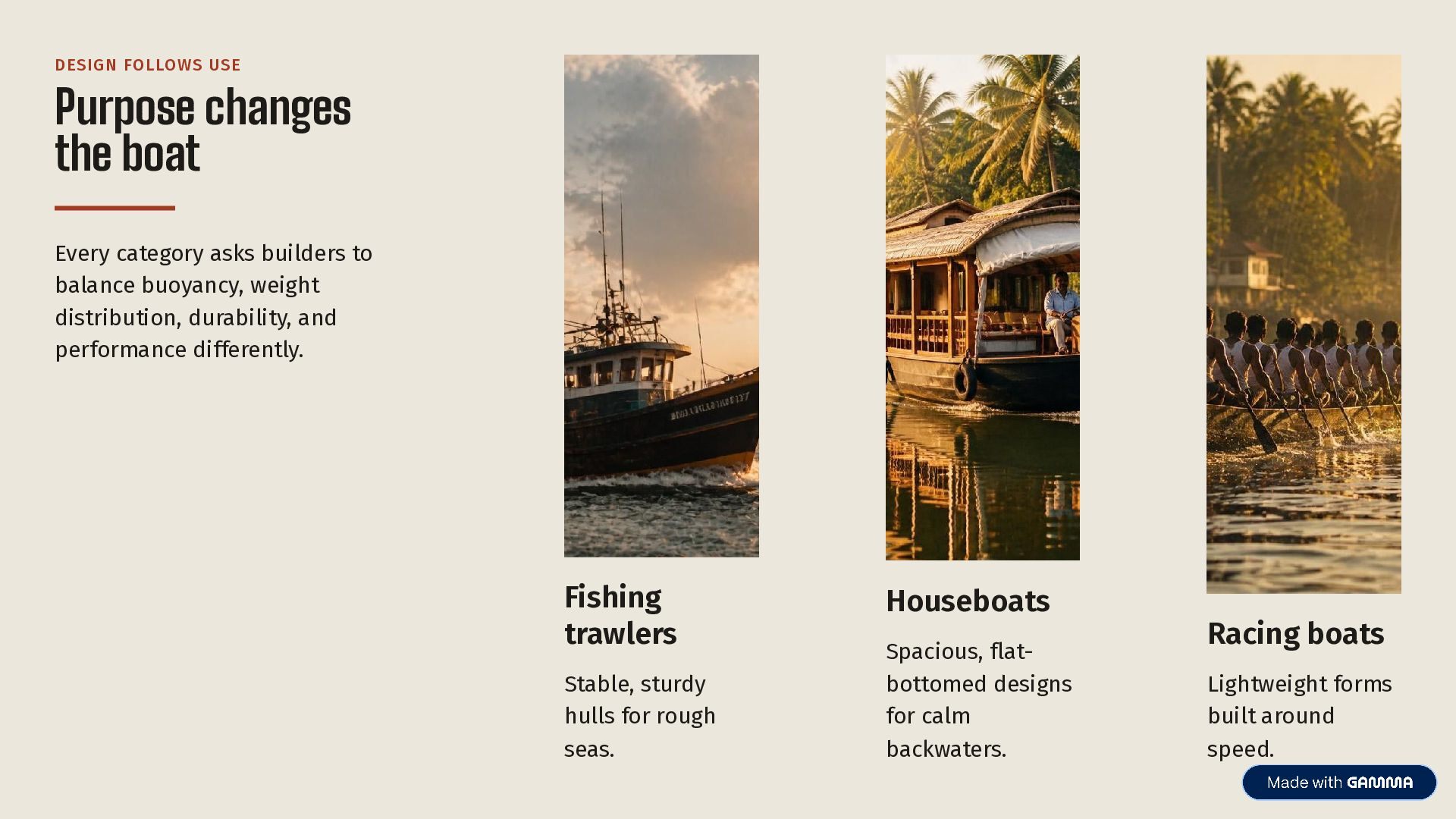
builders to balance buoyancy, weight distribution, durability, and performance differently. Fishing trawlers Stable, sturdy hulls for rough seas. Houseboats Spacious, flatbottomed designs for calm backwaters. Racing boats Lightweight forms built around speed.
how a vessel handles water, weight, maintenance, and cost. Teakwood Plywood Strength and natural water resistance for traditional Kerala-style craft. A cost-effective option for smaller builds. Fiberglass Aluminum and steel Low maintenance and resistant to rot. Structural rigidity for heavier-duty vessels, giving boat builders in Kerala more options for modern and specialized builds.
1. Design the hull for its use, weight distribution, and intended conditions. 2. Build the keel and frame, the vessel's structural foundation. 3. Shape the hull through planking or molding, then seal and reinforce it. 4. Fit engines, electrical systems, seating, and finishing details. 5. Inspect the completed boat before launch.
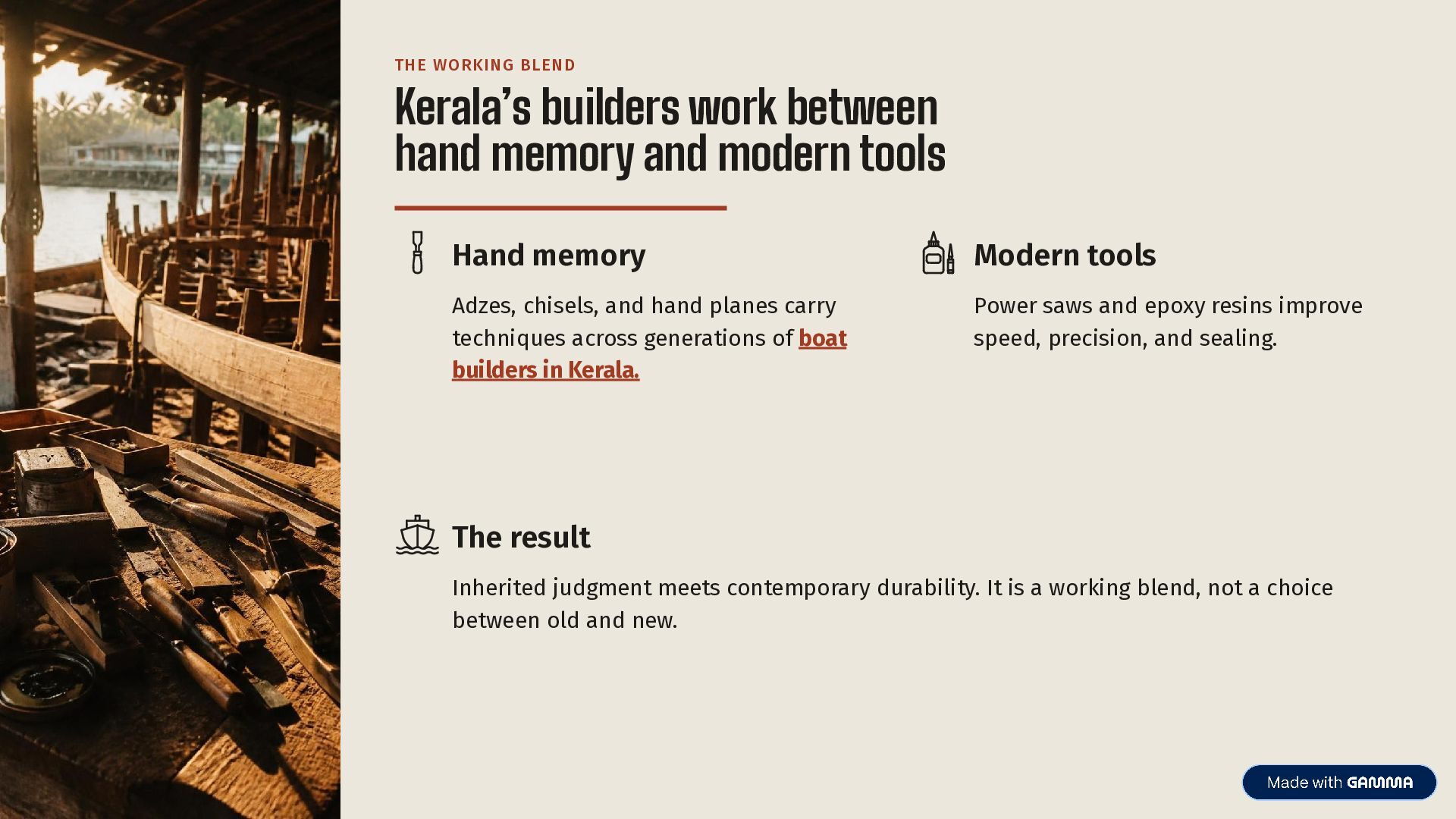
modern tools Hand memory Modern tools Adzes, chisels, and hand planes carry techniques across generations of boat builders in Kerala. Power saws and epoxy resins improve speed, precision, and sealing. The result Inherited judgment meets contemporary durability. It is a working blend, not a choice between old and new.
part problem-solver Translate Predict Read technical drawings and turn them into physical form. Understand hydrodynamics, balance, and the consequences of small errors. Execute Adjust Make precise joinery and sealing work hold under real conditions. Stay patient through the long cycle of inspection, correction, and refinement.
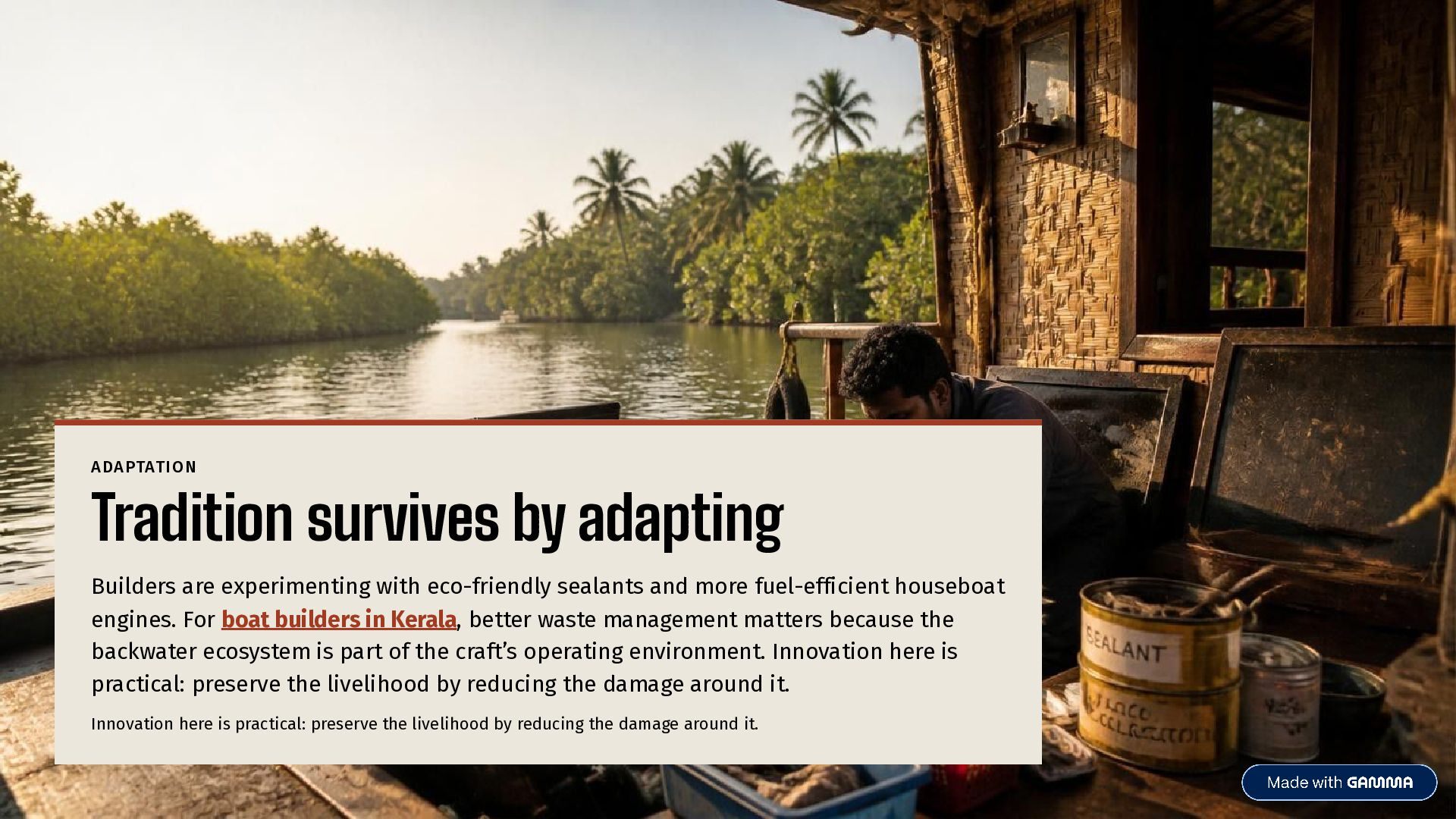
sealants and more fuel-efficient houseboat engines. For boat builders in Kerala, better waste management matters because the backwater ecosystem is part of the craft’s operating environment. Innovation here is practical: preserve the livelihood by reducing the damage around it. Innovation here is practical: preserve the livelihood by reducing the damage around it.
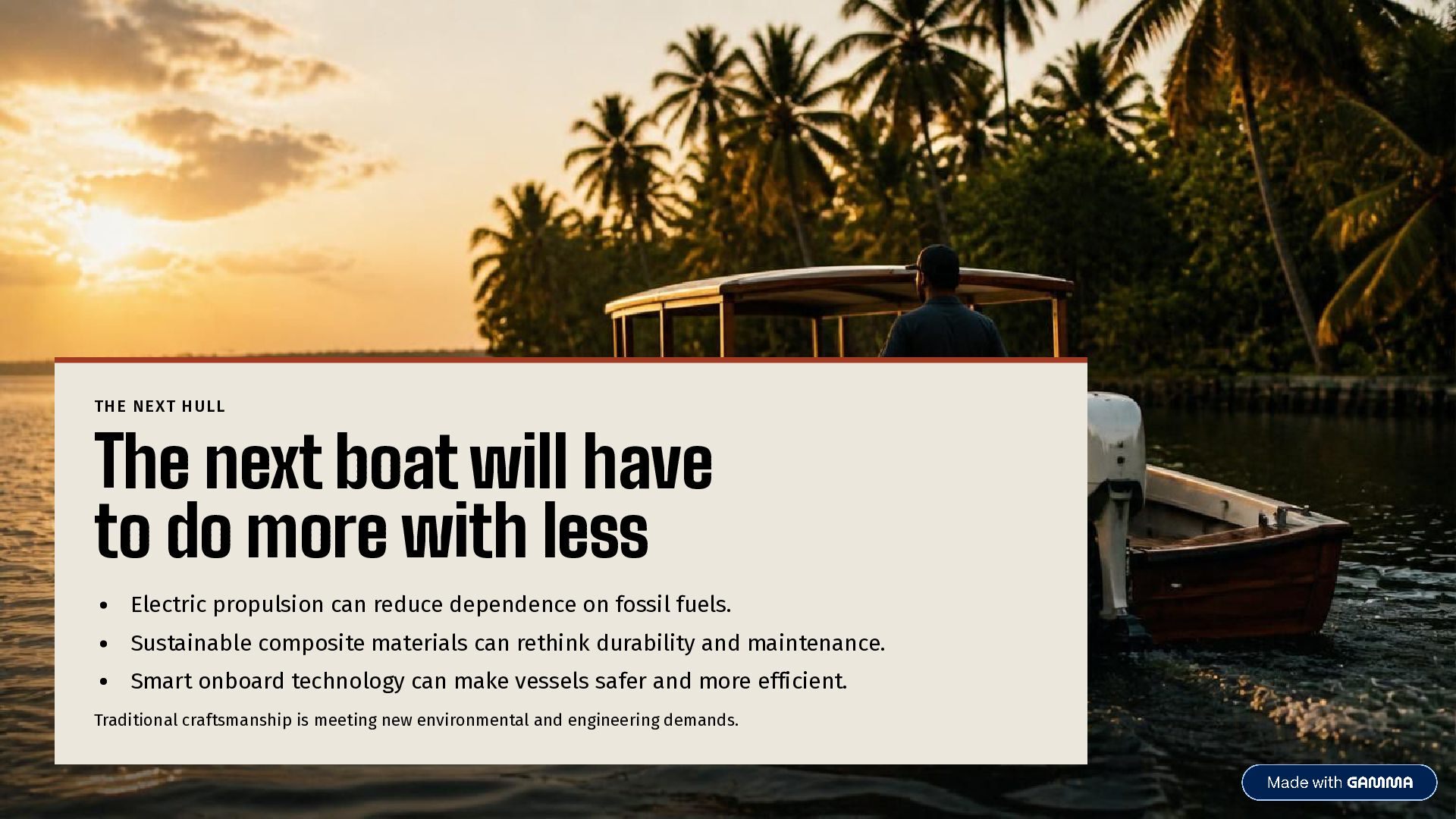
more with less Electric propulsion can reduce dependence on fossil fuels. Sustainable composite materials can rethink durability and maintenance. Smart onboard technology can make vessels safer and more efficient. Traditional craftsmanship is meeting new environmental and engineering demands.


 reverentgeek
 tammielis
 aleyda
 jct
 kevinliebholz
 stephaniewalter
 jonoalderson
 honzajavorek
 akashhashmi
 skipperchong
 honnibal
 samtorres