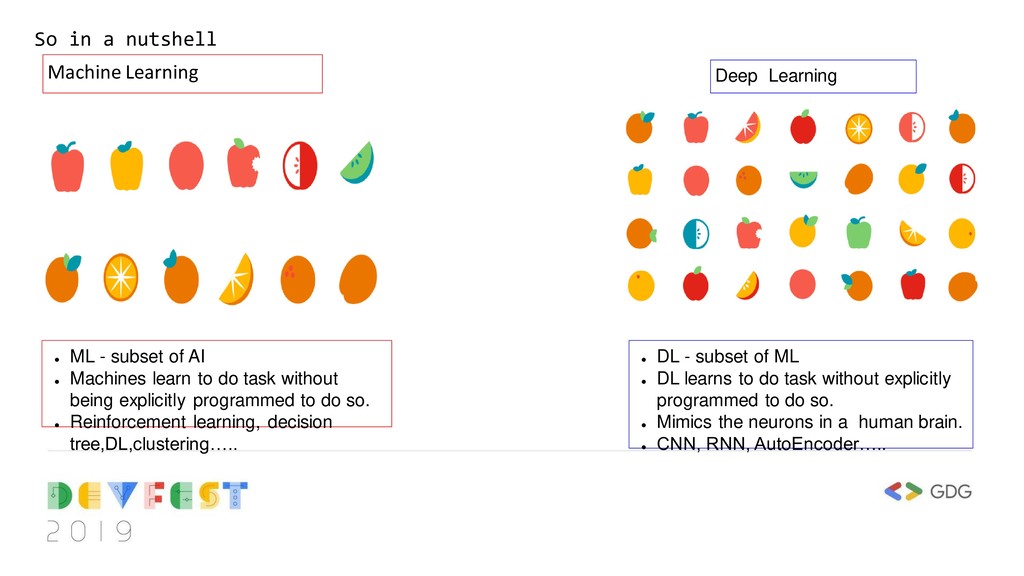
• Machines learn to do task without being explicitly programmed to do so. • Reinforcement learning, decision tree,DL,clustering….. • DL - subset of ML • DL learns to do task without explicitly programmed to do so. • Mimics the neurons in a human brain. • CNN, RNN, AutoEncoder….. Machine Learning Deep Learning
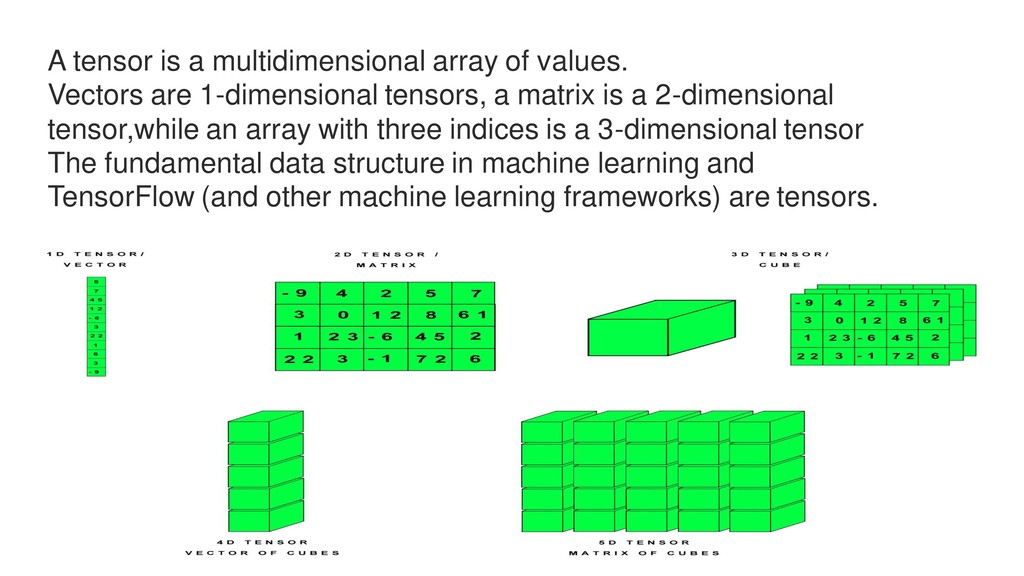
1-dimensional tensors, a matrix is a 2-dimensional tensor,while an array with three indices is a 3-dimensional tensor The fundamental data structure in machine learning and TensorFlow (and other machine learning frameworks) are tensors.
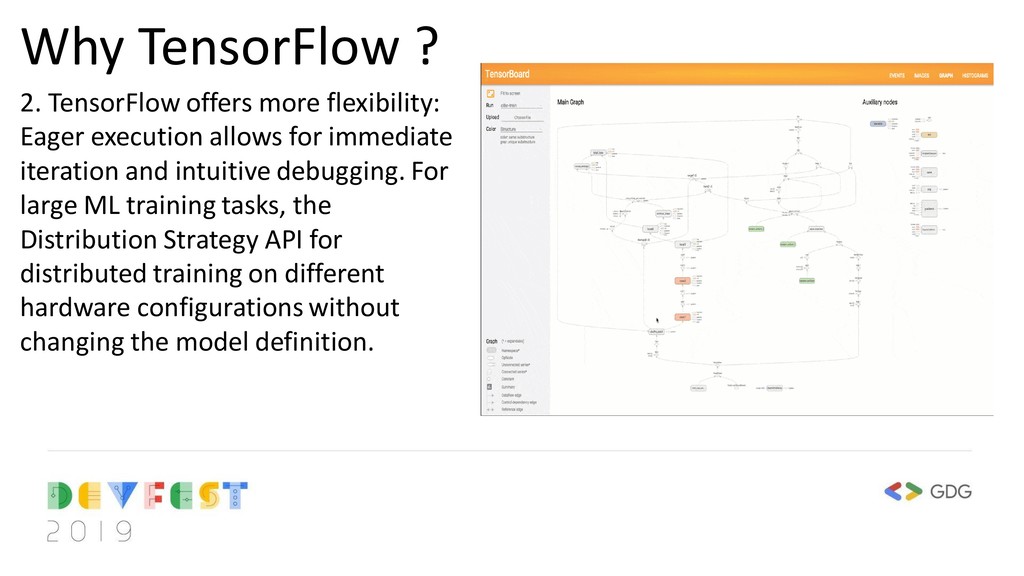
allows for immediate iteration and intuitive debugging. For large ML training tasks, the Distribution Strategy API for distributed training on different hardware configurations without changing the model definition.
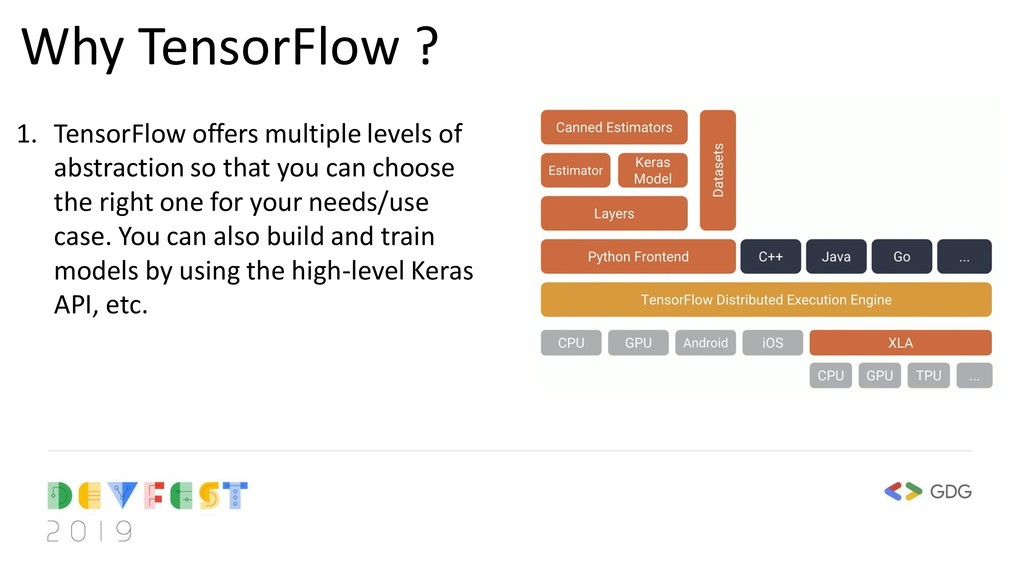
and more •TensorFlow.js for machine learning on the web •TensorFlow Lite for mobile and embedded ML •TensorFlow Hub for reusable machine learning •TensorBoard for visual debugging Why TensorFlow ?
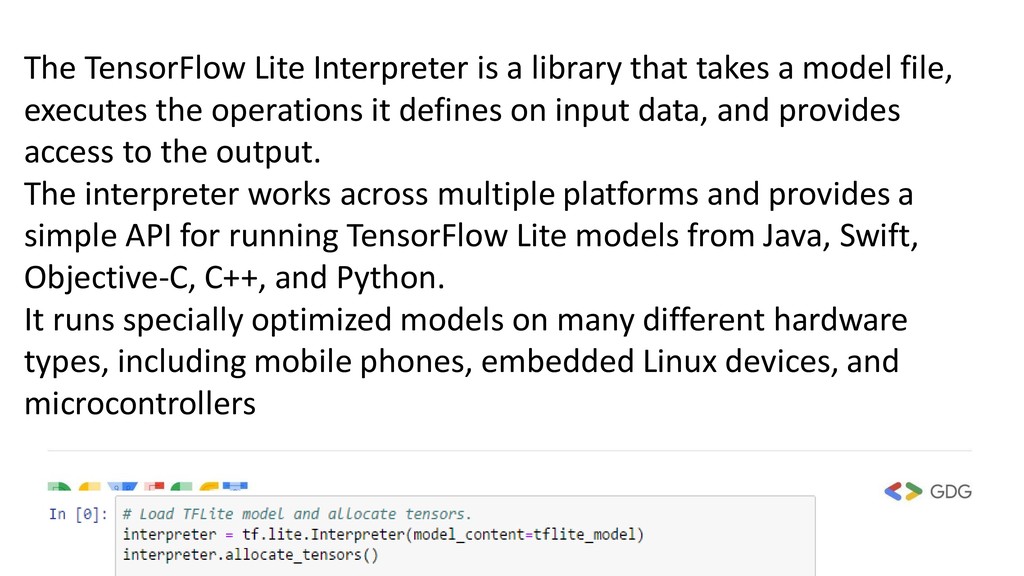
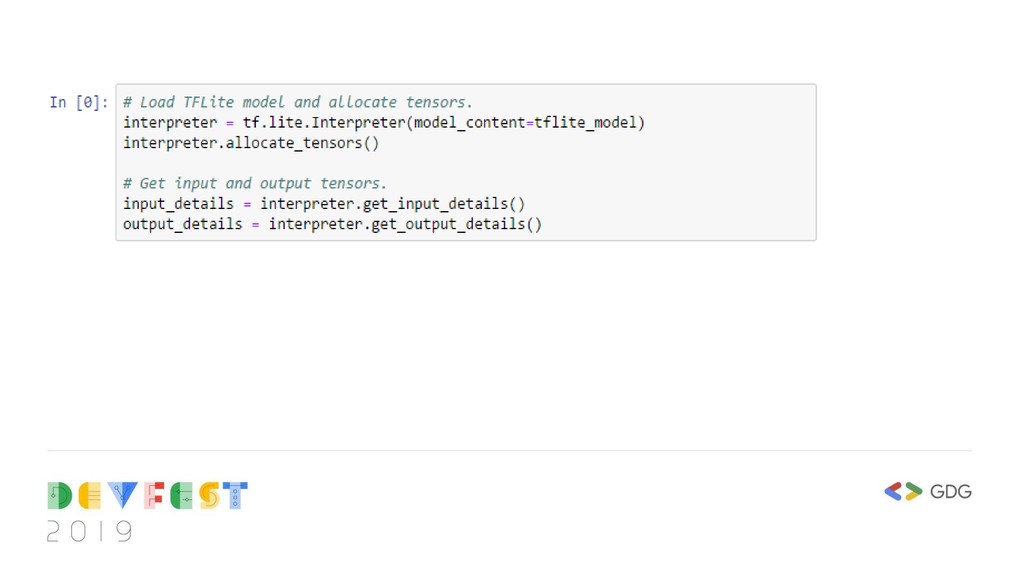
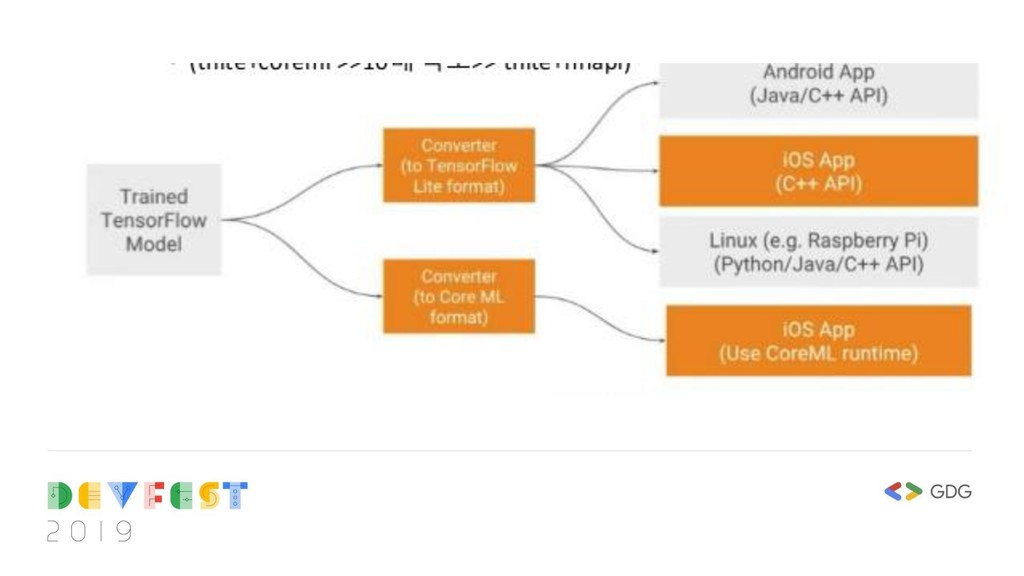
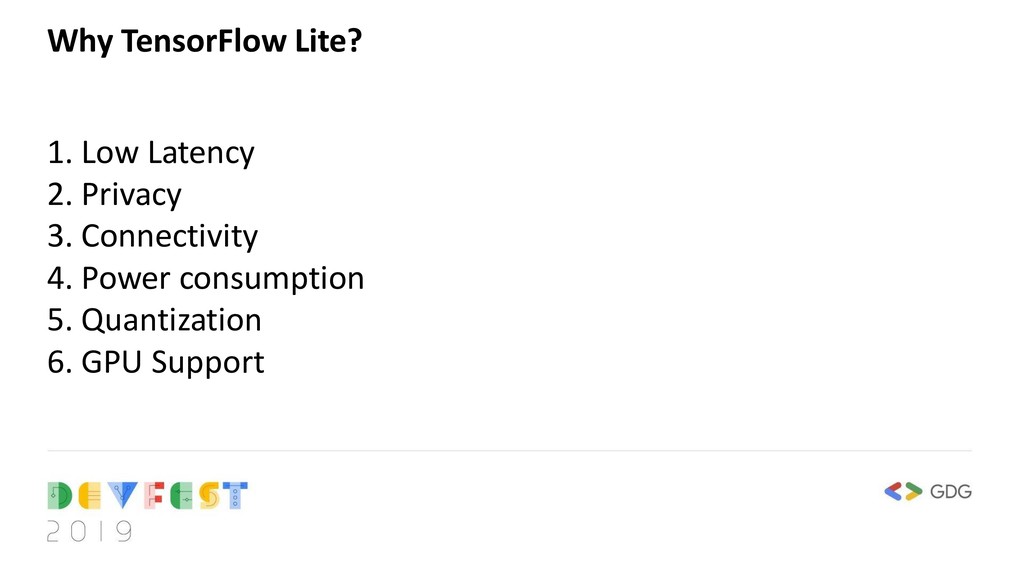
model file, executes the operations it defines on input data, and provides access to the output. The interpreter works across multiple platforms and provides a simple API for running TensorFlow Lite models from Java, Swift, Objective-C, C++, and Python. It runs specially optimized models on many different hardware types, including mobile phones, embedded Linux devices, and microcontrollers
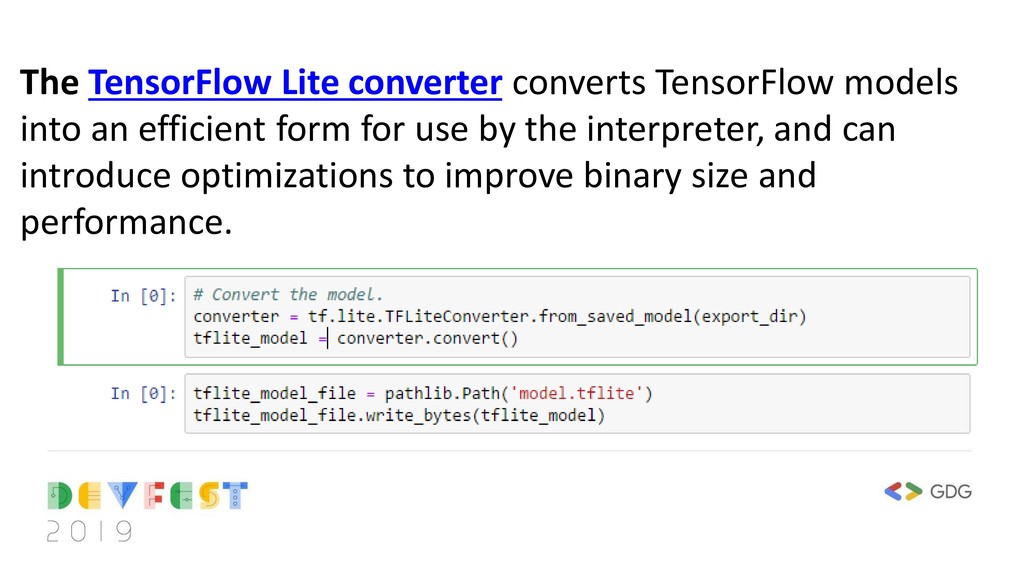
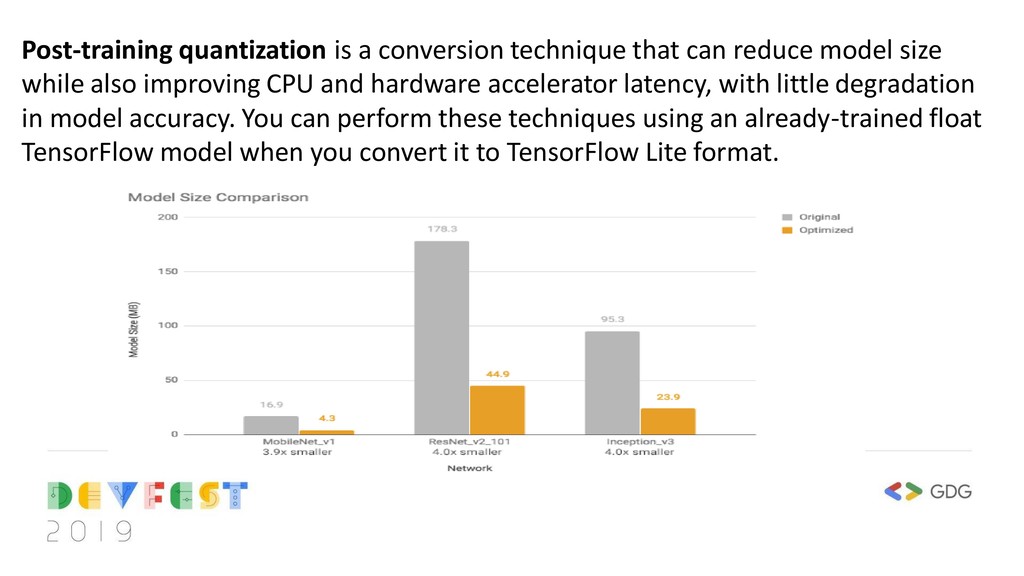
size while also improving CPU and hardware accelerator latency, with little degradation in model accuracy. You can perform these techniques using an already-trained float TensorFlow model when you convert it to TensorFlow Lite format.
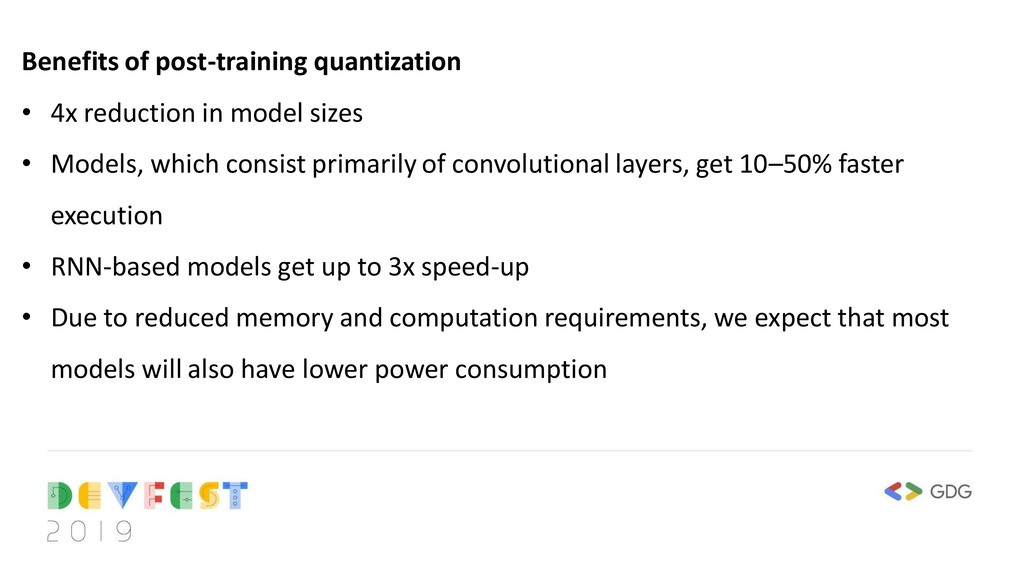
• Models, which consist primarily of convolutional layers, get 10–50% faster execution • RNN-based models get up to 3x speed-up • Due to reduced memory and computation requirements, we expect that most models will also have lower power consumption
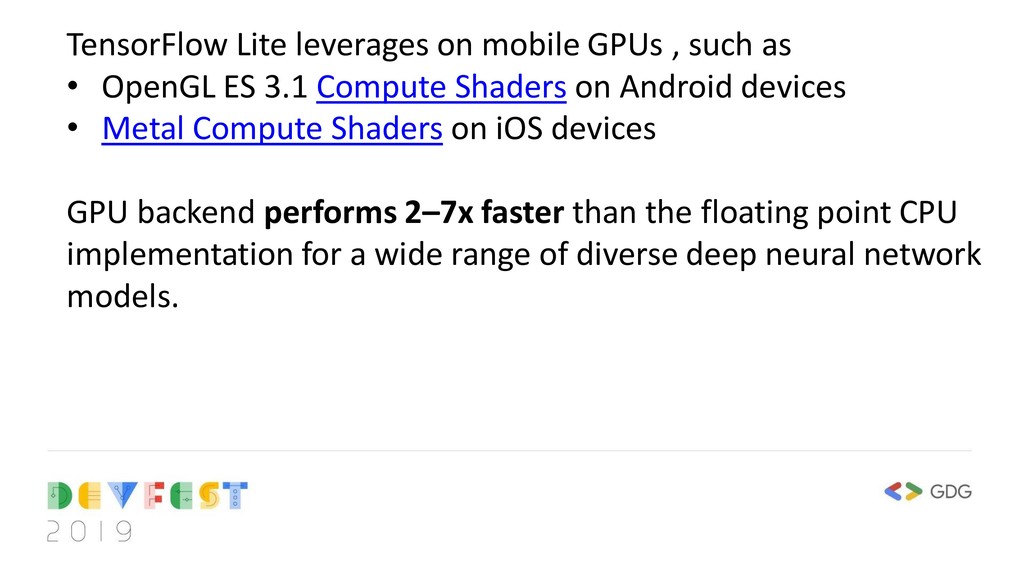
OpenGL ES 3.1 Compute Shaders on Android devices • Metal Compute Shaders on iOS devices GPU backend performs 2–7x faster than the floating point CPU implementation for a wide range of diverse deep neural network models.


 moznion
 takanorip
 ykanoh
 pfn
 koukihosaka
 odashi
 syuchimu
 gionn
 carta_engineering
 sudoakiy
 maimyyym
 satomasahiro2005
 marktimemedia
 katarinadahlin
 uxyall
 tenderlove
 baasie
 stuffmc
 aleyda
 kastner
 lara
 panda_program
 skipperchong
 portentint