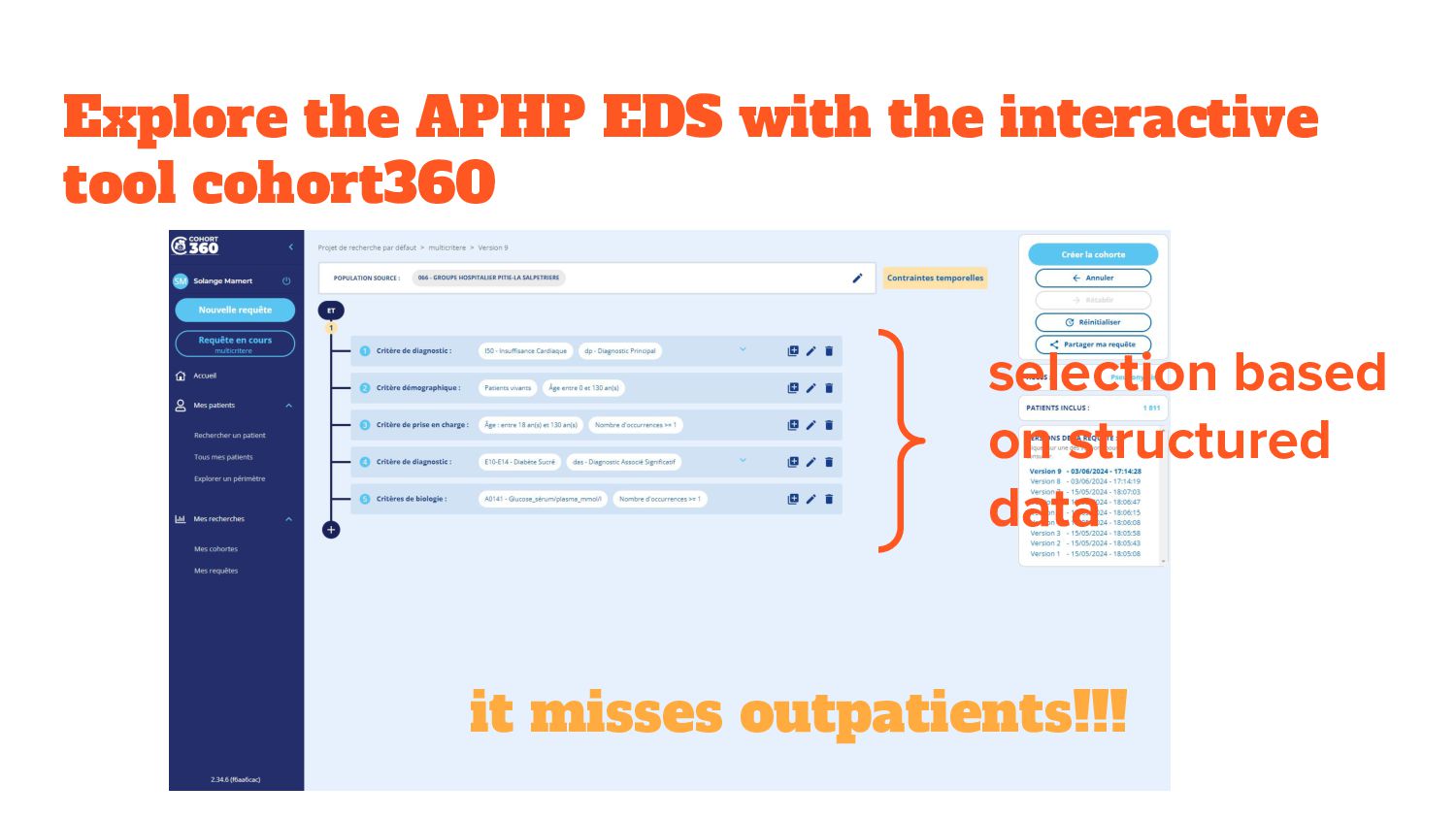
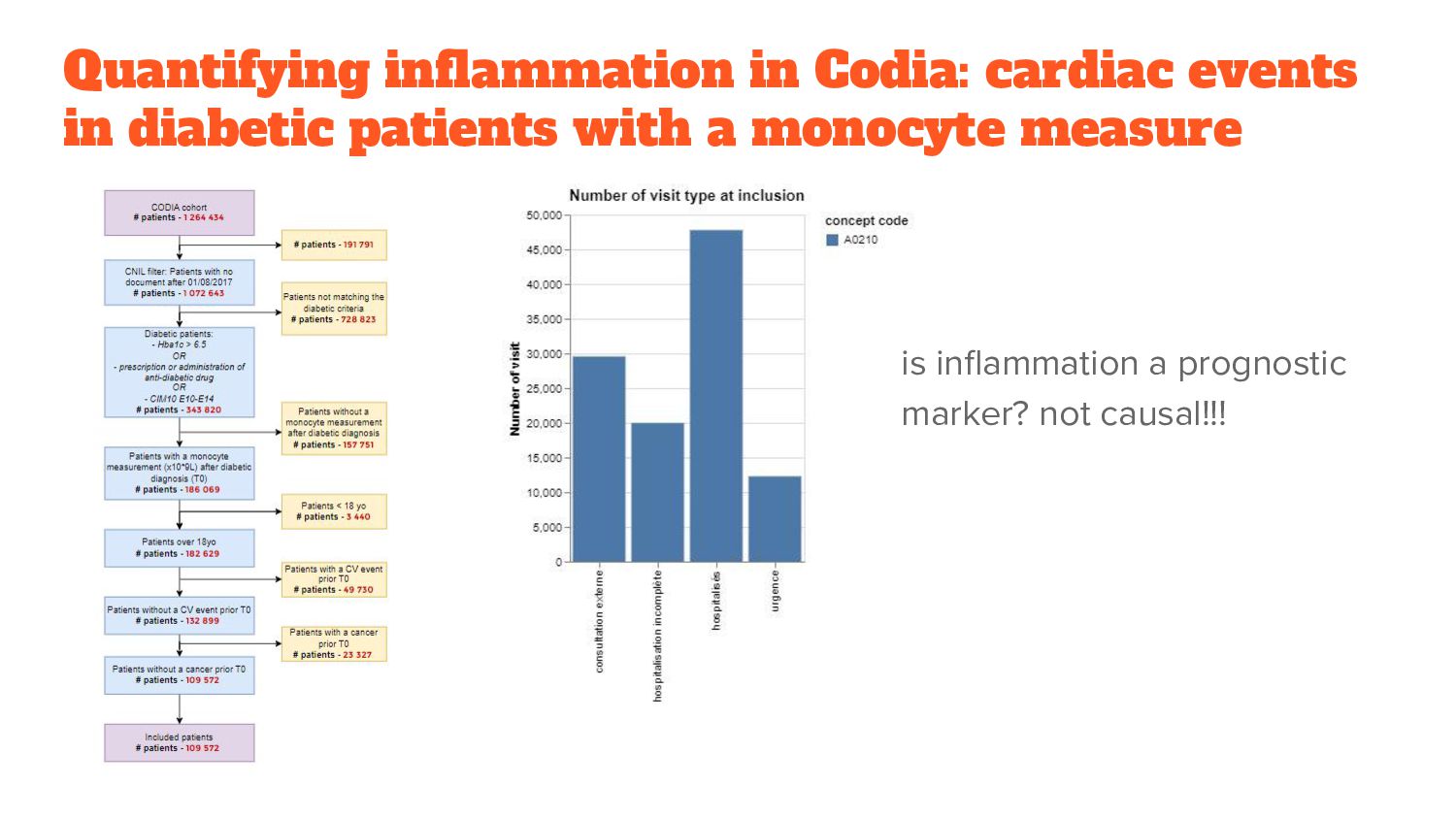
leading cause of premature death and handicap • population with diabetes ~10% • describe and anticipate patients medical trajectories (risk stratification) • Intercept-T2D explore the role of inflammation on the transition to diabetes cohort with different stages of the disease
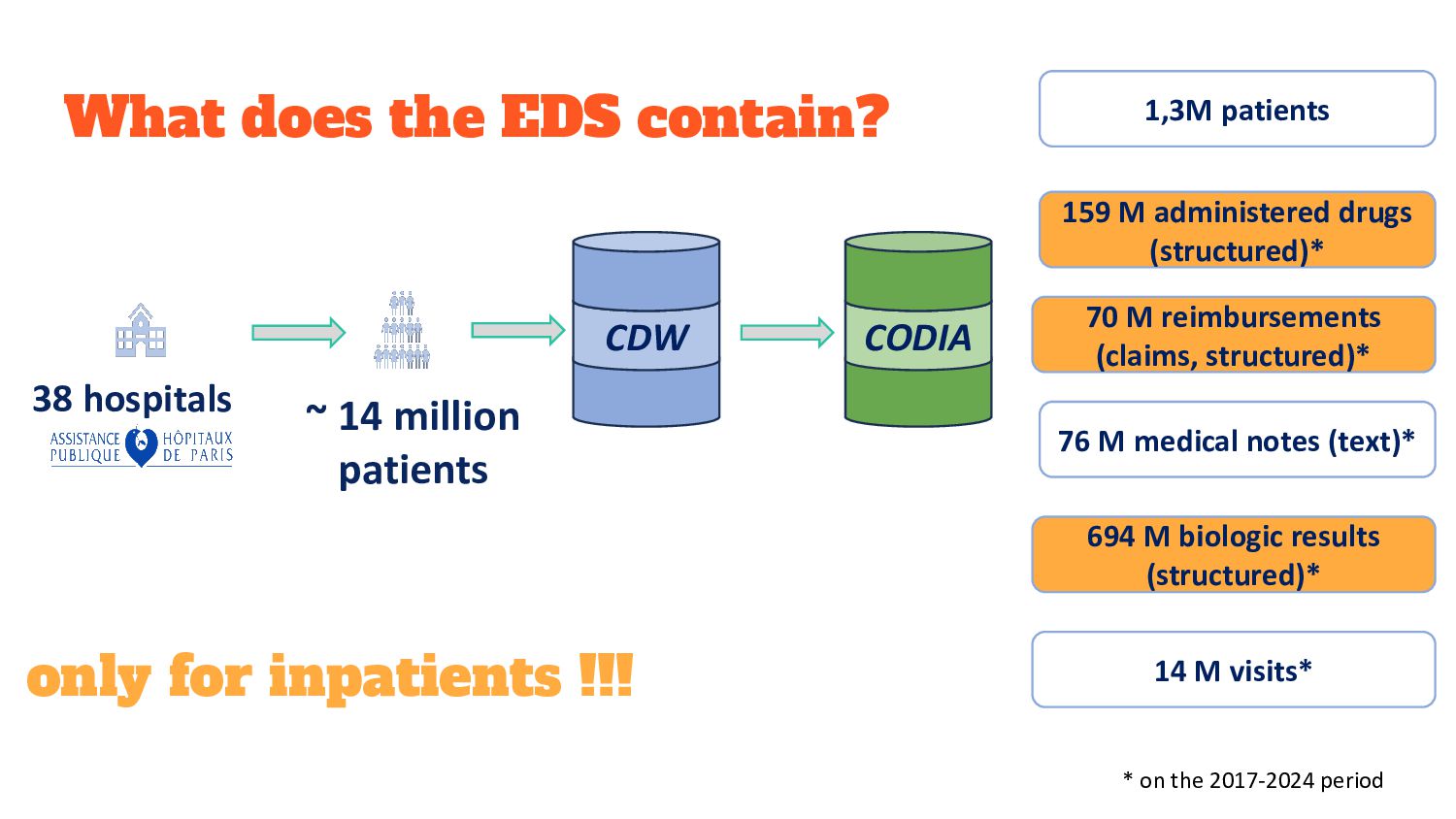
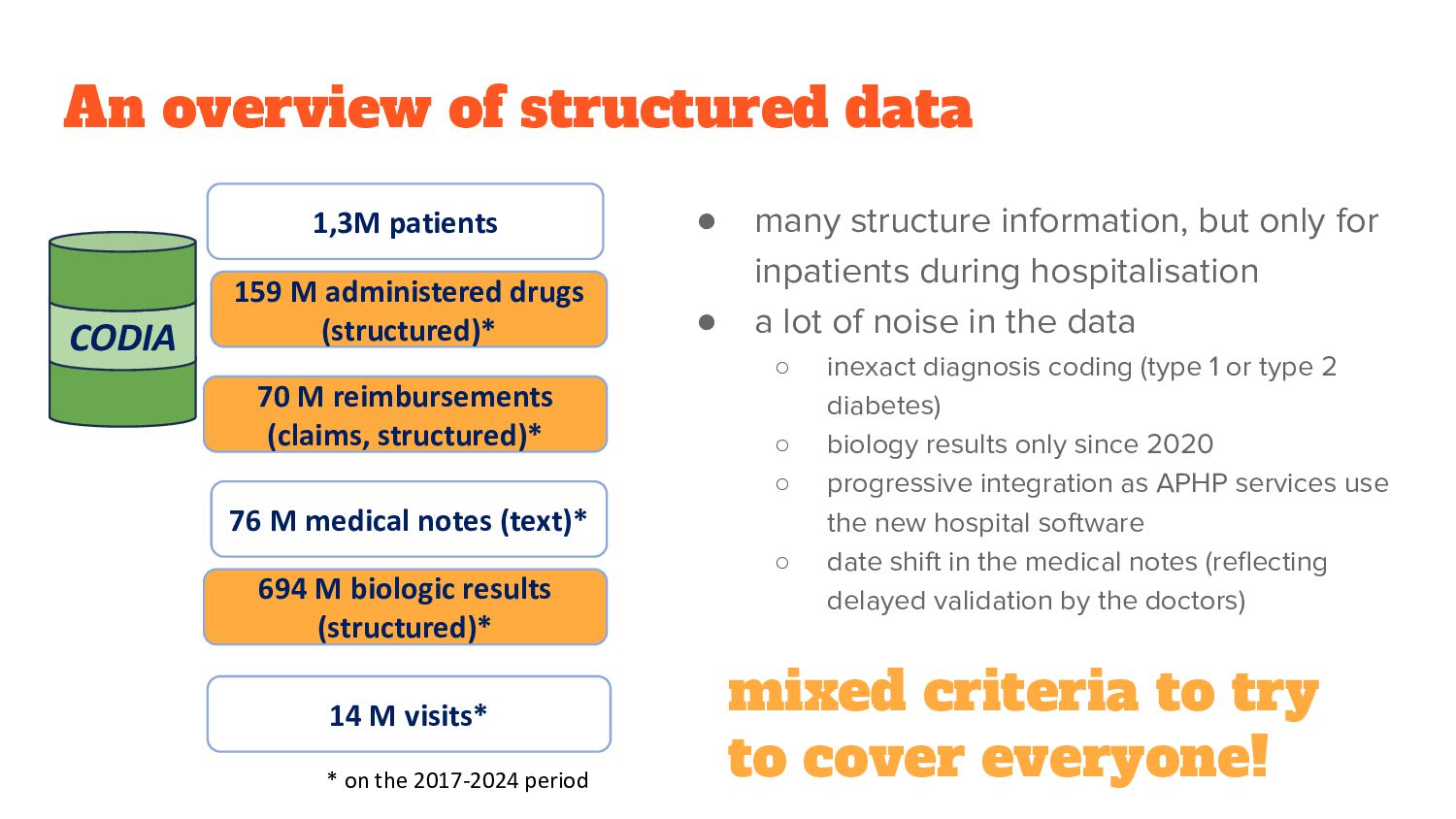
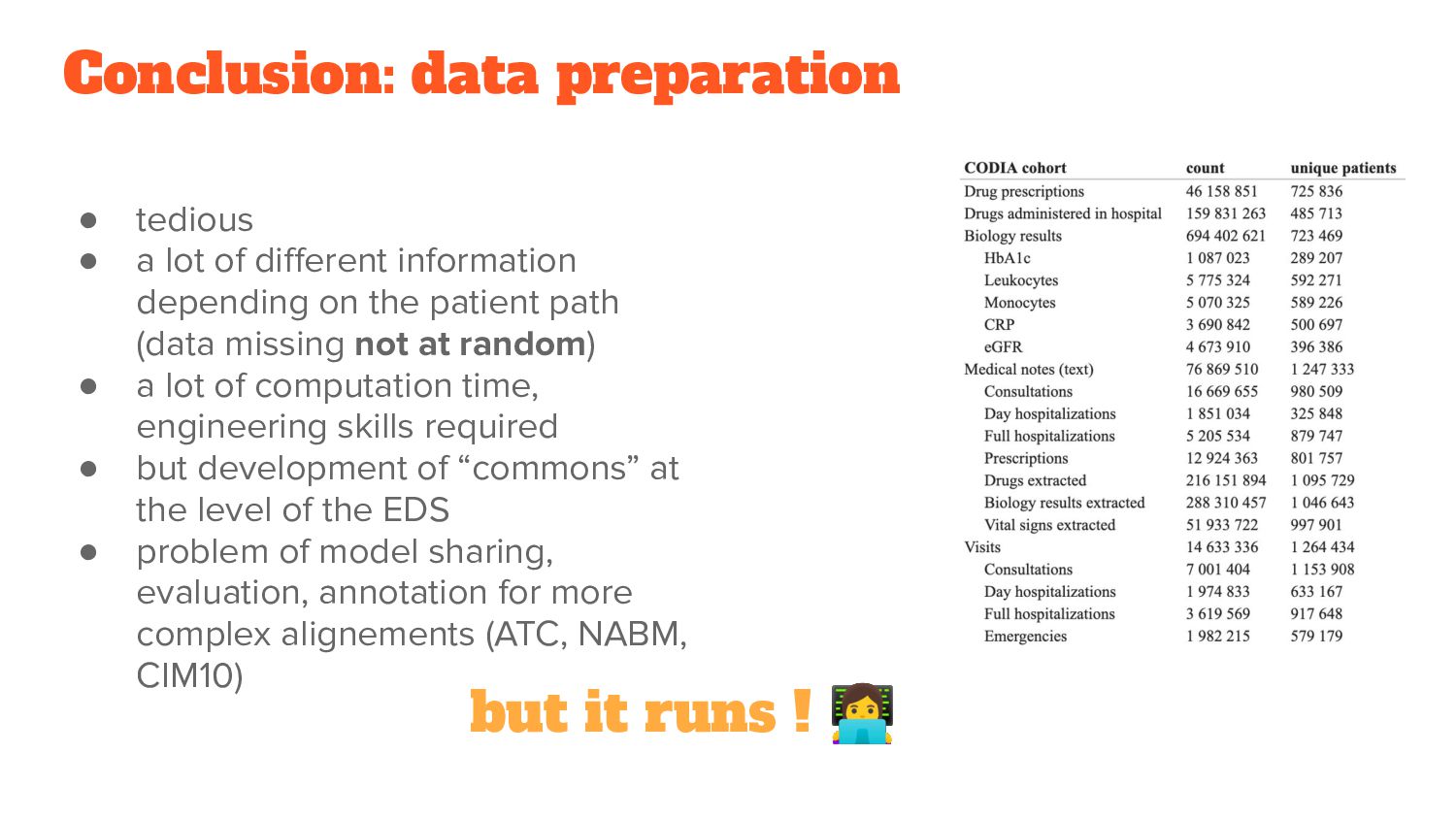
14 million patients 38 hospitals CDW CODIA 159 M administered drugs (structured)* 76 M medical notes (text)* 70 M reimbursements (claims, structured)* 694 M biologic results (structured)* 14 M visits* 1,3M patients * on the 2017-2024 period
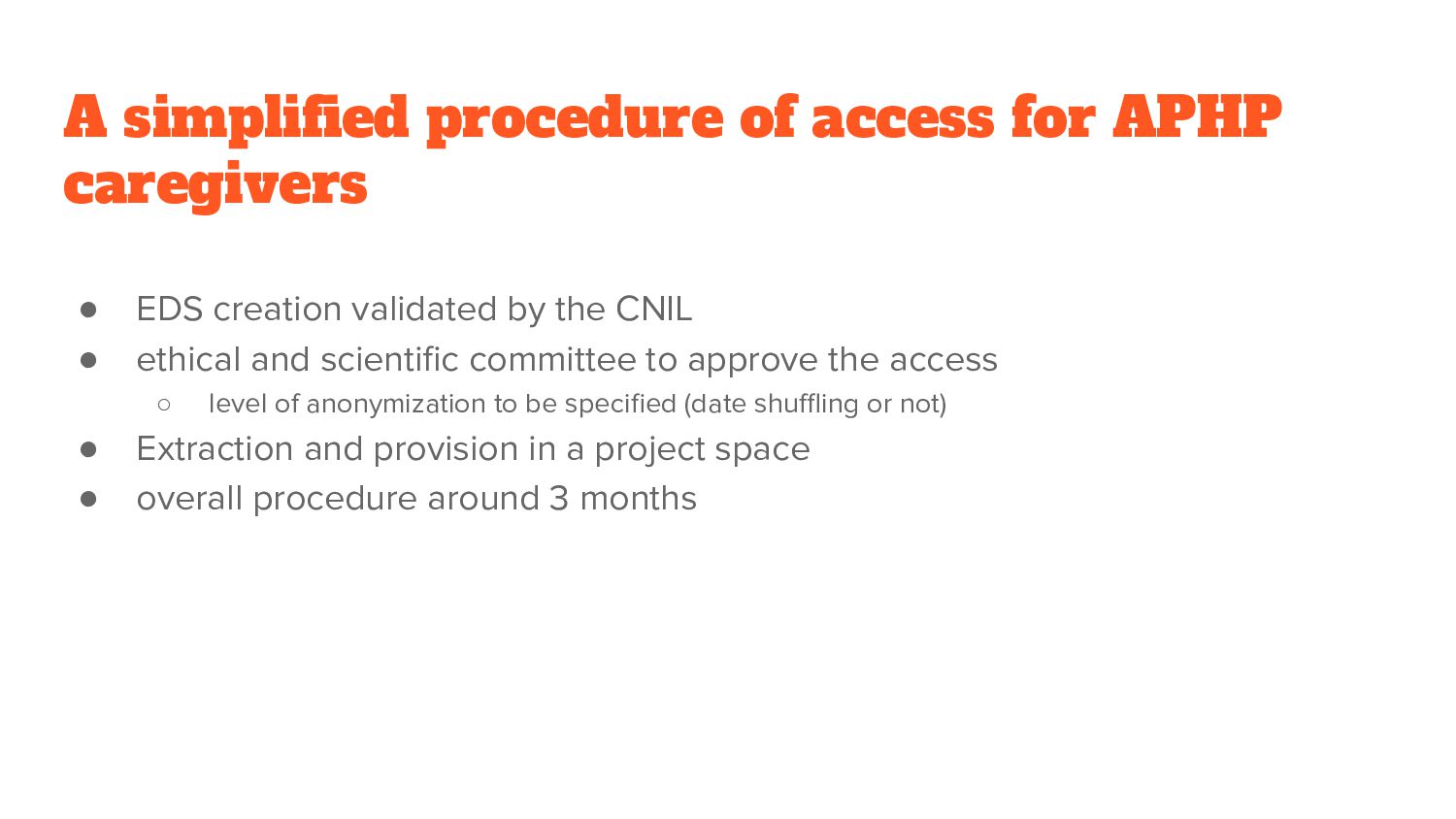
creation validated by the CNIL • ethical and scientific committee to approve the access ◦ level of anonymization to be specified (date shuffling or not) • Extraction and provision in a project space • overall procedure around 3 months
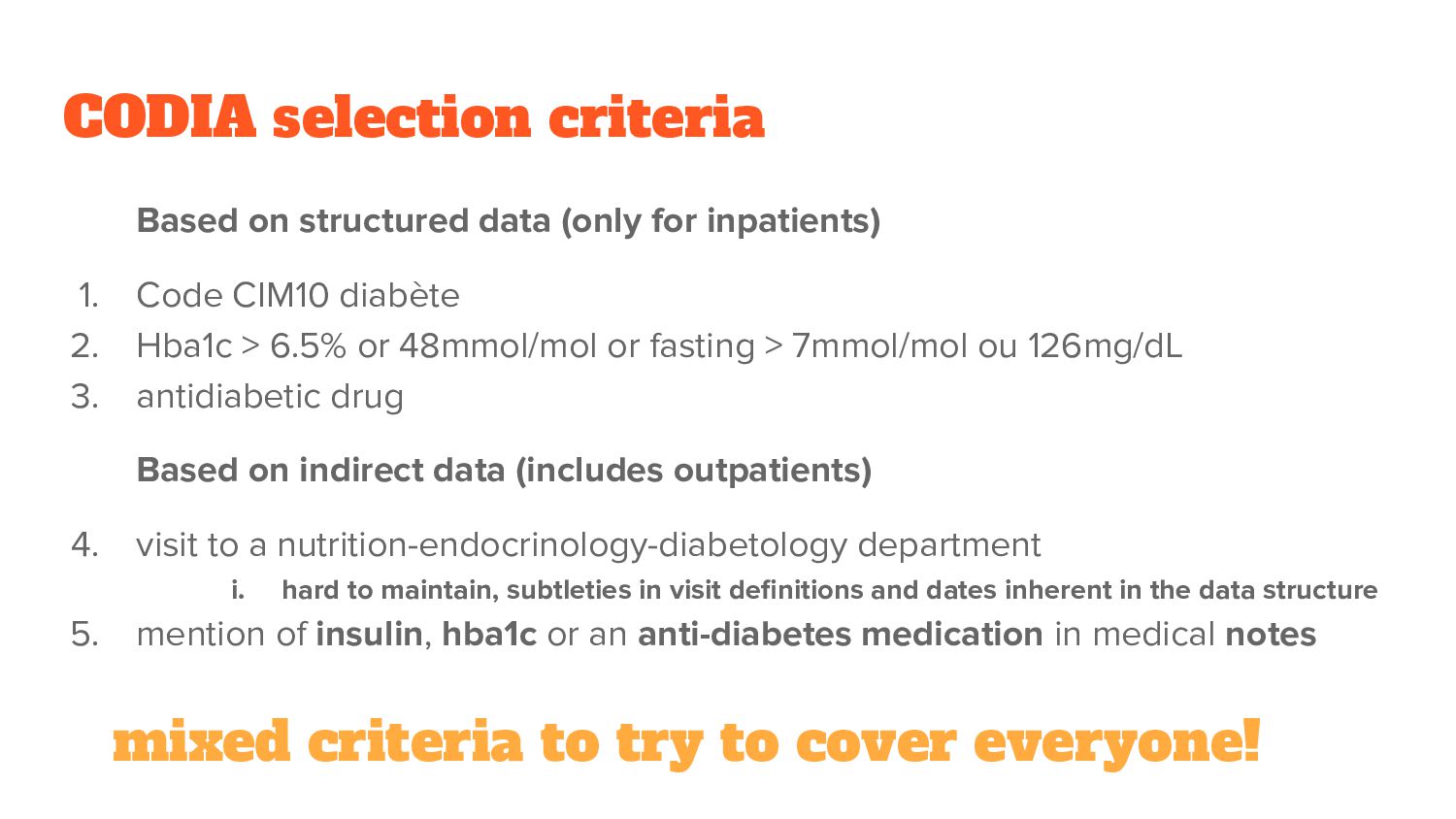
1. Code CIM10 diabète 2. Hba1c > 6.5% or 48mmol/mol or fasting > 7mmol/mol ou 126mg/dL 3. antidiabetic drug Based on indirect data (includes outpatients) 4. visit to a nutrition-endocrinology-diabetology department i. hard to maintain, subtleties in visit definitions and dates inherent in the data structure 5. mention of insulin, hba1c or an anti-diabetes medication in medical notes mixed criteria to try to cover everyone!
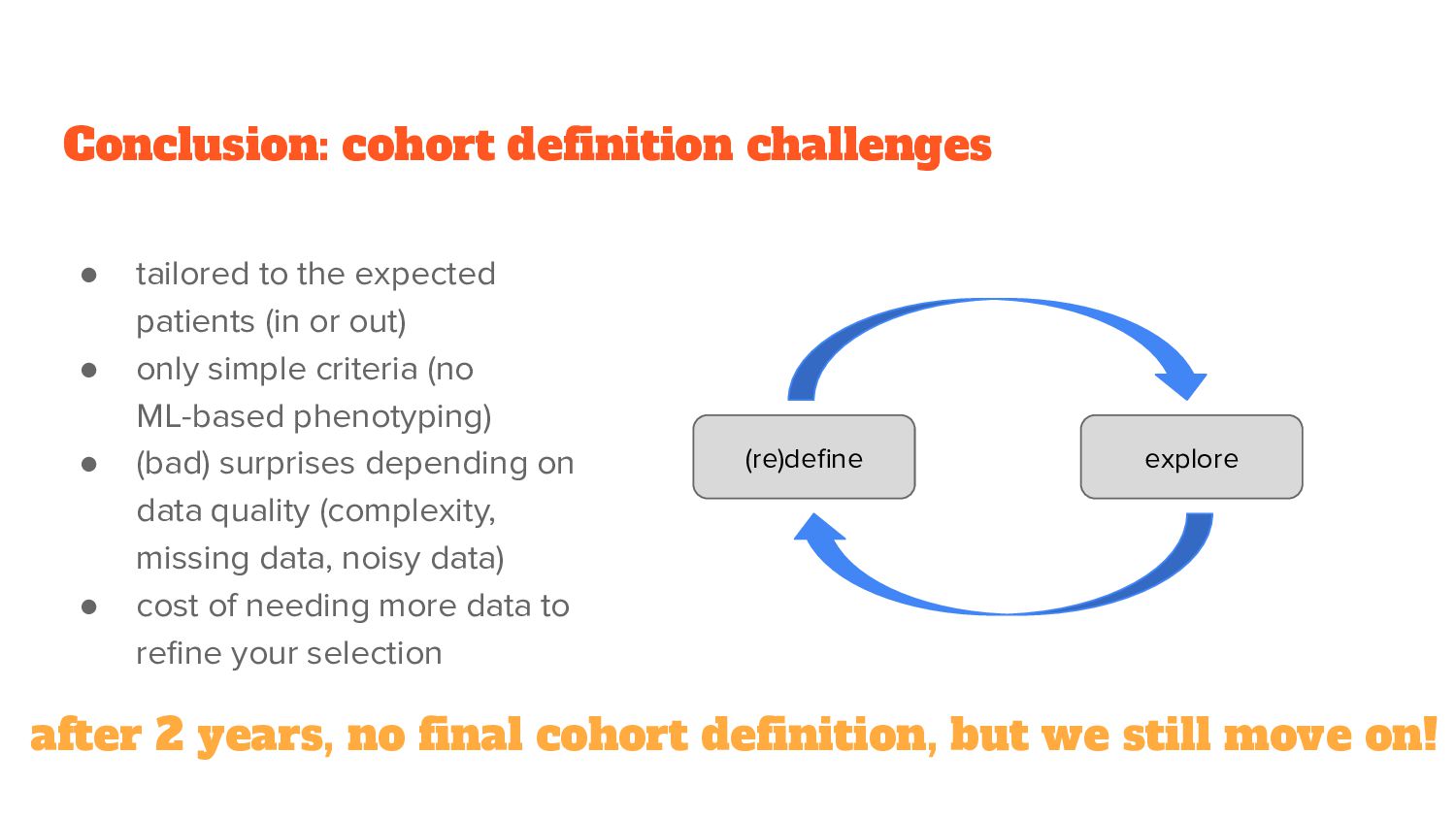
(in or out) • only simple criteria (no ML-based phenotyping) • (bad) surprises depending on data quality (complexity, missing data, noisy data) • cost of needing more data to refine your selection (re)define explore after 2 years, no final cohort definition, but we still move on!
only for inpatients during hospitalisation • a lot of noise in the data ◦ inexact diagnosis coding (type 1 or type 2 diabetes) ◦ biology results only since 2020 ◦ progressive integration as APHP services use the new hospital software ◦ date shift in the medical notes (reflecting delayed validation by the doctors) CODIA 159 M administered drugs (structured)* 76 M medical notes (text)* 70 M reimbursements (claims, structured)* 694 M biologic results (structured)* 14 M visits* 1,3M patients * on the 2017-2024 period mixed criteria to try to cover everyone!
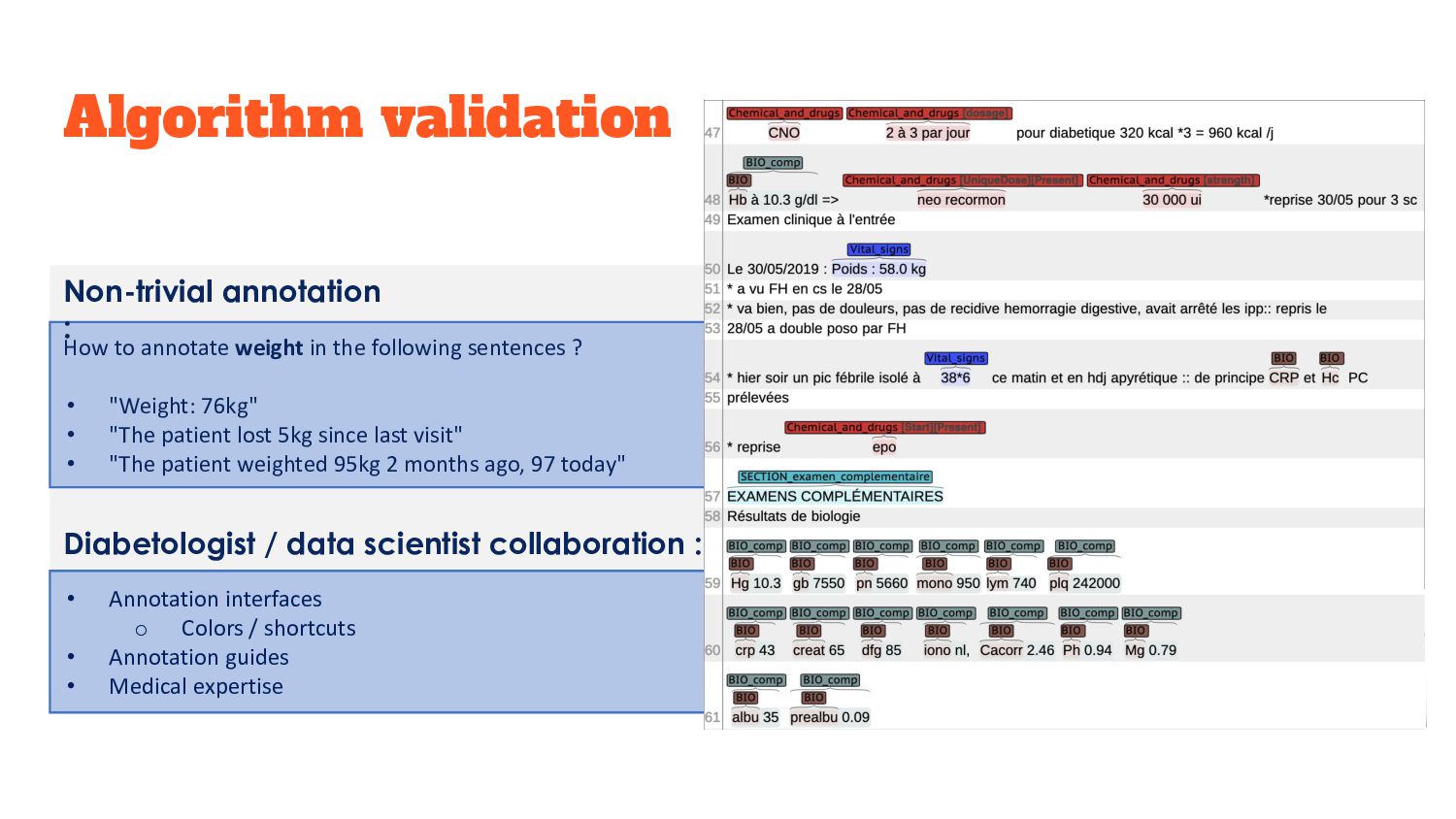
Annotation guides • Medical expertise How to annotate weight in the following sentences ? • "Weight: 76kg" • "The patient lost 5kg since last visit" • "The patient weighted 95kg 2 months ago, 97 today" Non-trivial annotation : Diabetologist / data scientist collaboration :
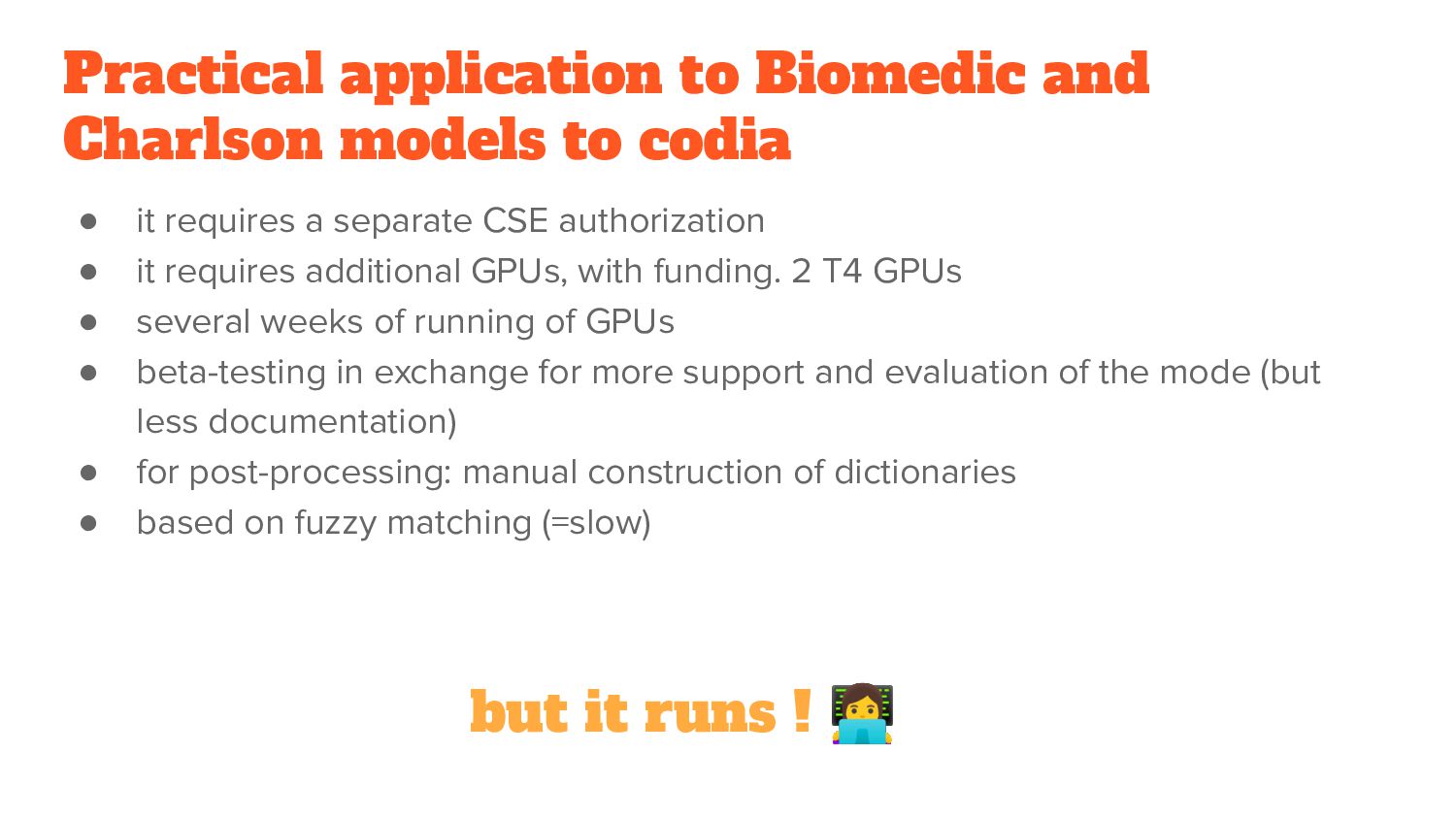
it requires a separate CSE authorization • it requires additional GPUs, with funding. 2 T4 GPUs • several weeks of running of GPUs • beta-testing in exchange for more support and evaluation of the mode (but less documentation) • for post-processing: manual construction of dictionaries • based on fuzzy matching (=slow) but it runs !
information depending on the patient path (data missing not at random) • a lot of computation time, engineering skills required • but development of “commons” at the level of the EDS • problem of model sharing, evaluation, annotation for more complex alignements (ATC, NABM, CIM10) but it runs !
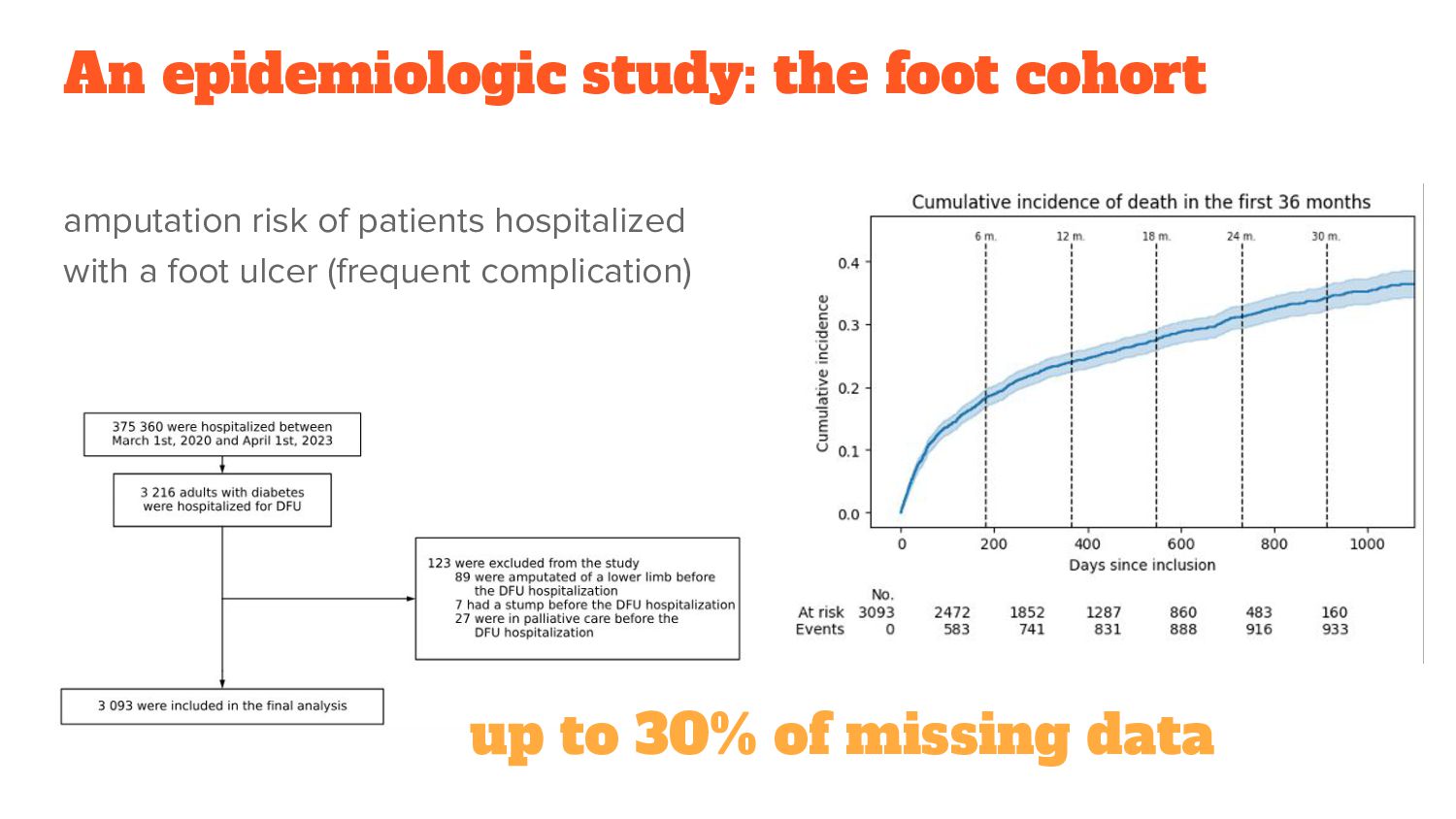
◦ missing values (not at random) ◦ incomplete patient path (other hospitals) ◦ incomplete death records (linking with the CépiDc • a lot of biases ◦ due to technical issues ◦ due to the nature of the data itself • Need to develop new methods, and new objectives • Need to have good standards for data preparation
year man so far) 2. how can we centralize and normalize cohort construction to optimize the costs and improve the quality? 3. how can we share the data faster and stronger?


 chrislema
 lara
 inesmontani
 eileencodes
 addyosmani
 swwweet
 cassininazir
 auna
 tammyeverts
 brettharned