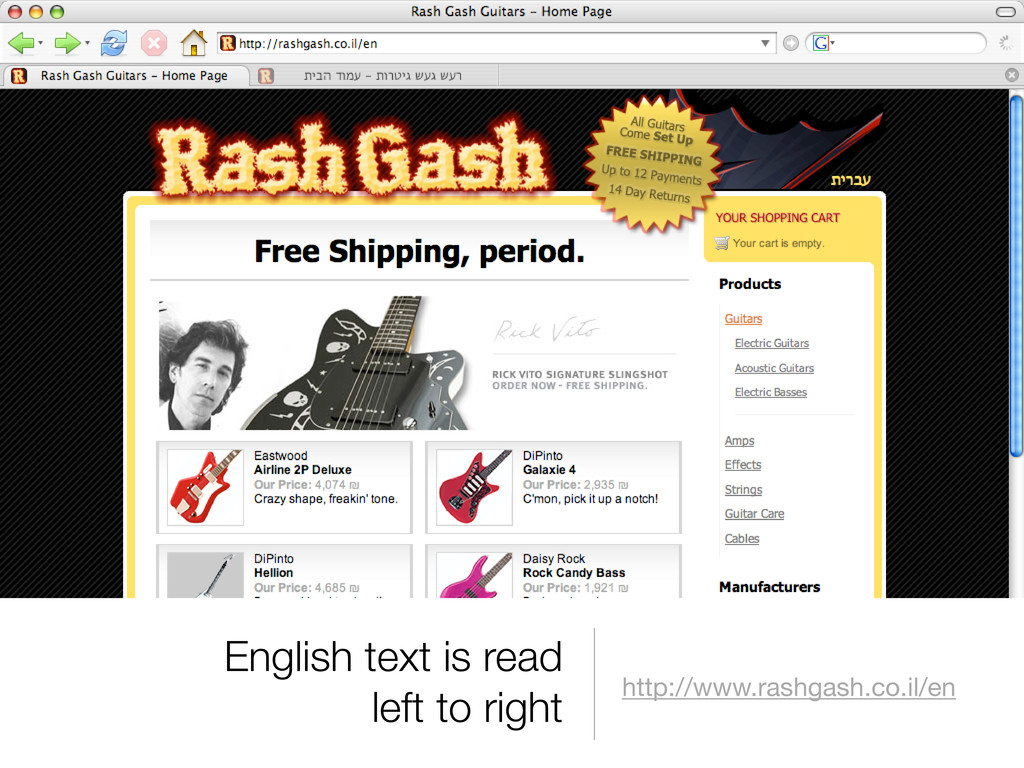
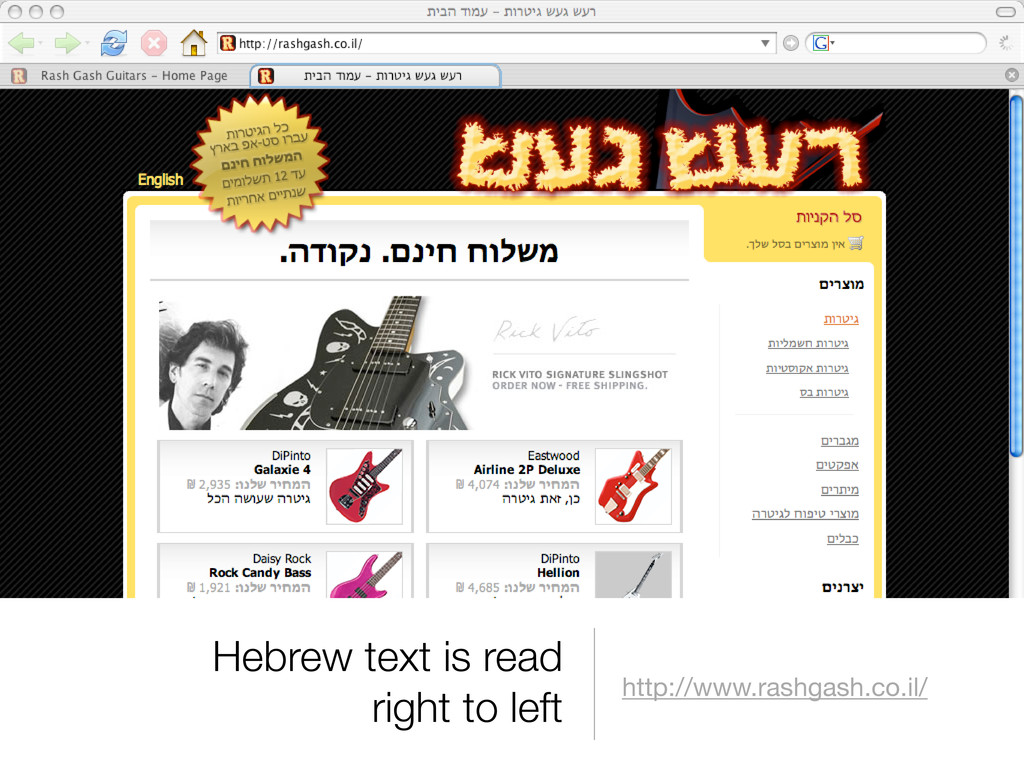
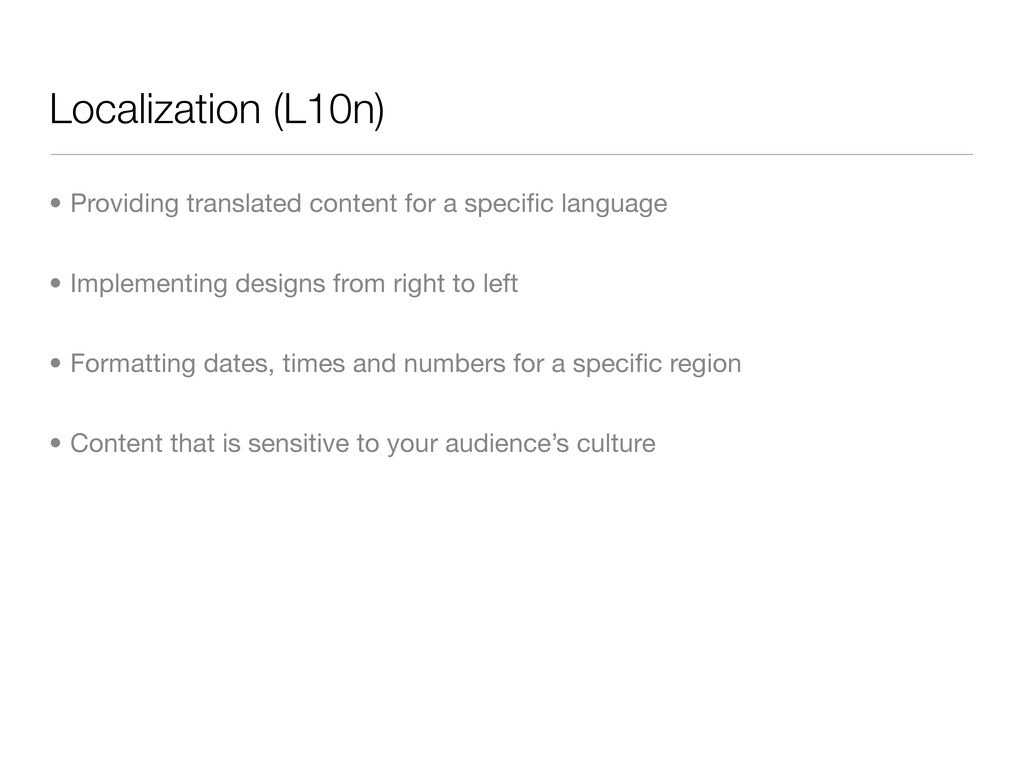
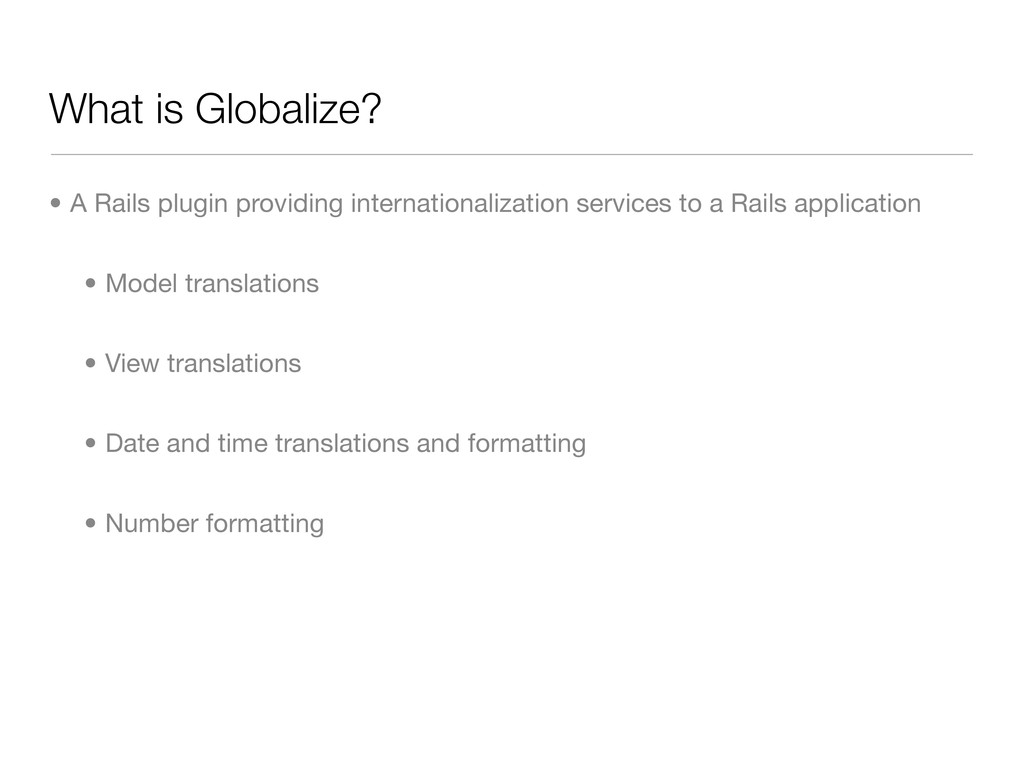
• Implementing designs from right to left • Formatting dates, times and numbers for a specific region • Content that is sensitive to your audience’s culture
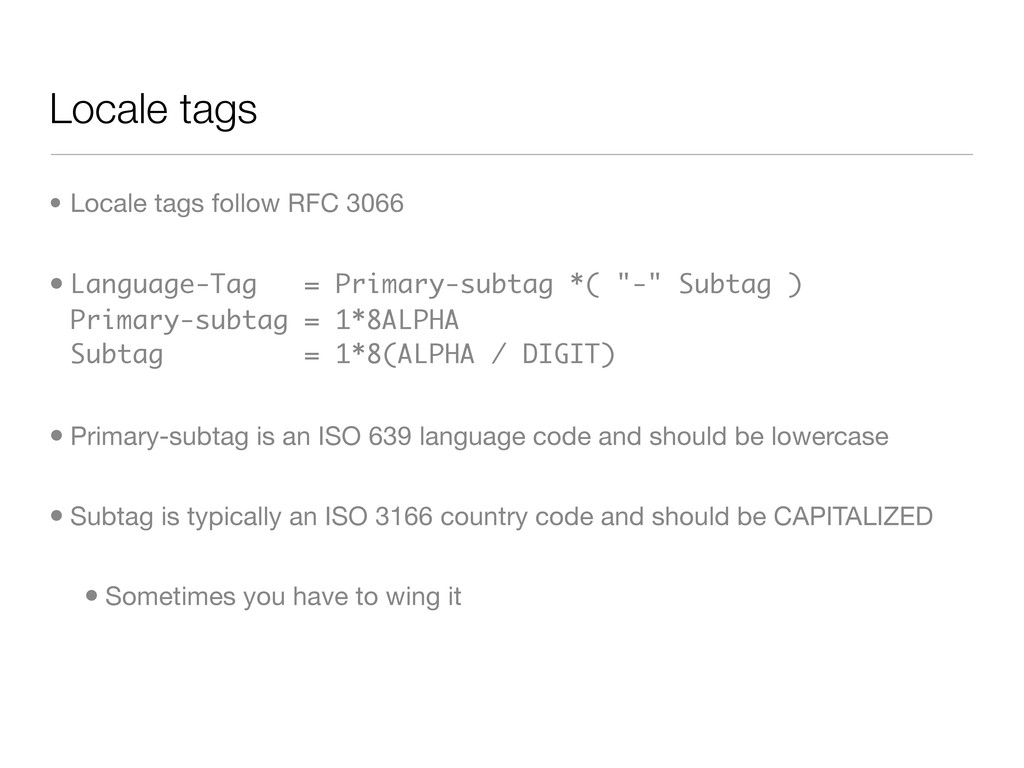
= Primary-subtag *( "-" Subtag ) Primary-subtag = 1*8ALPHA Subtag = 1*8(ALPHA / DIGIT) • Primary-subtag is an ISO 639 language code and should be lowercase • Subtag is typically an ISO 3166 country code and should be CAPITALIZED • Sometimes you have to wing it
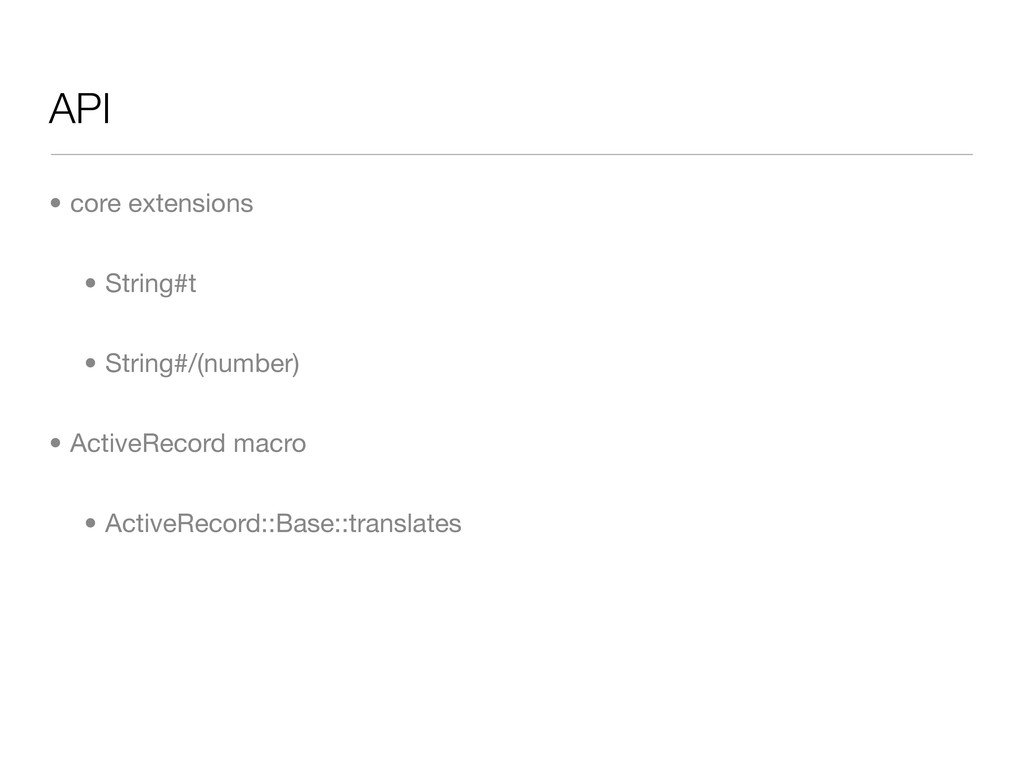
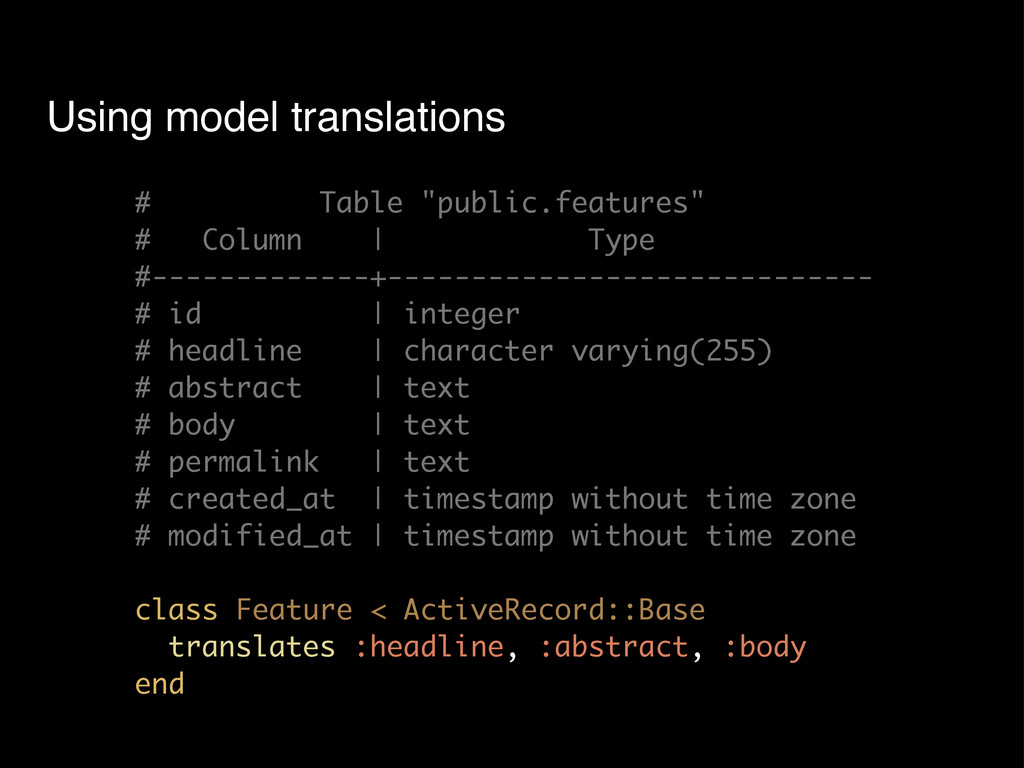
#-------------+----------------------------- # id | integer # headline | character varying(255) # abstract | text # body | text # permalink | text # created_at | timestamp without time zone # modified_at | timestamp without time zone class Feature < ActiveRecord::Base translates :headline, :abstract, :body end
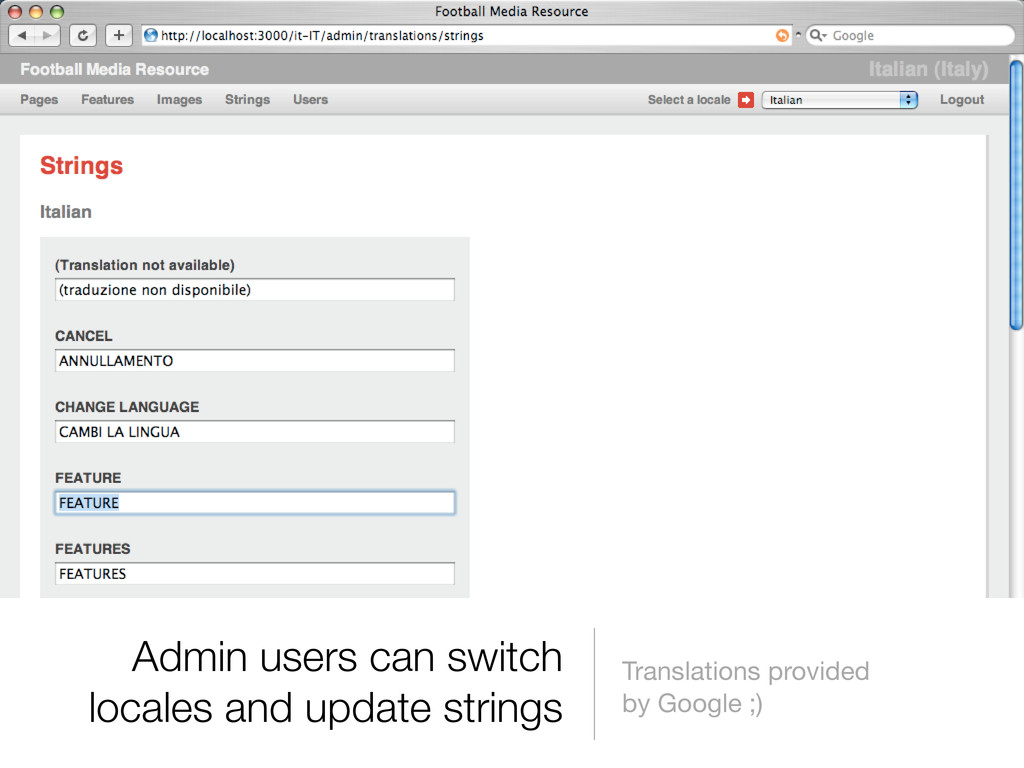
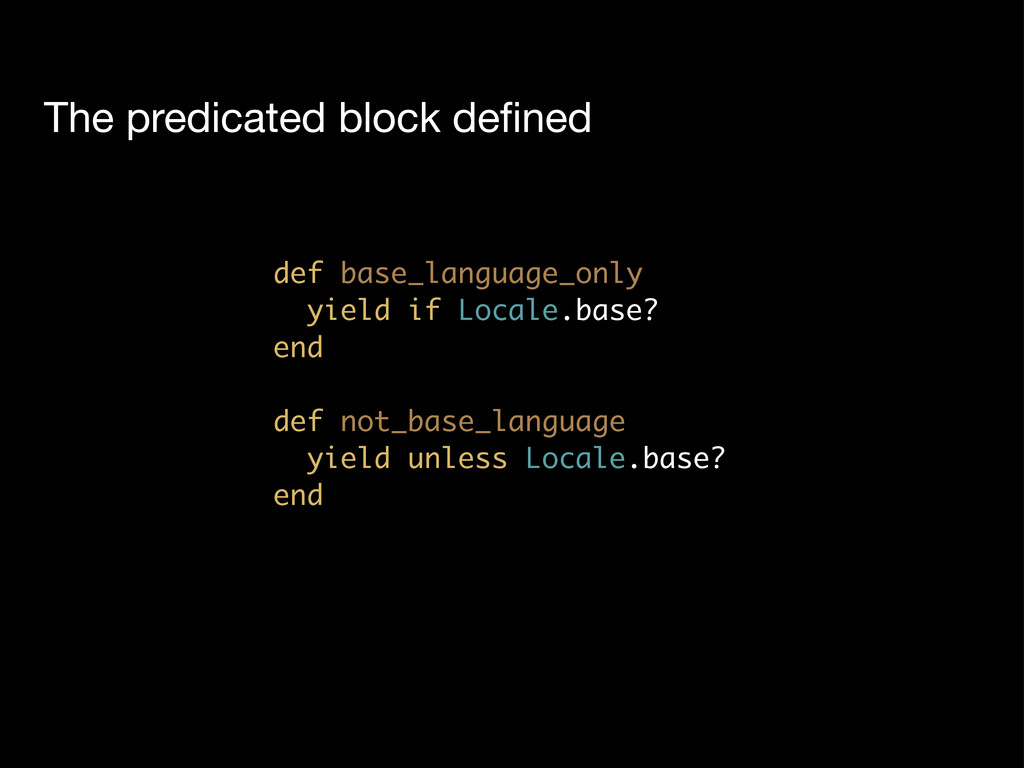
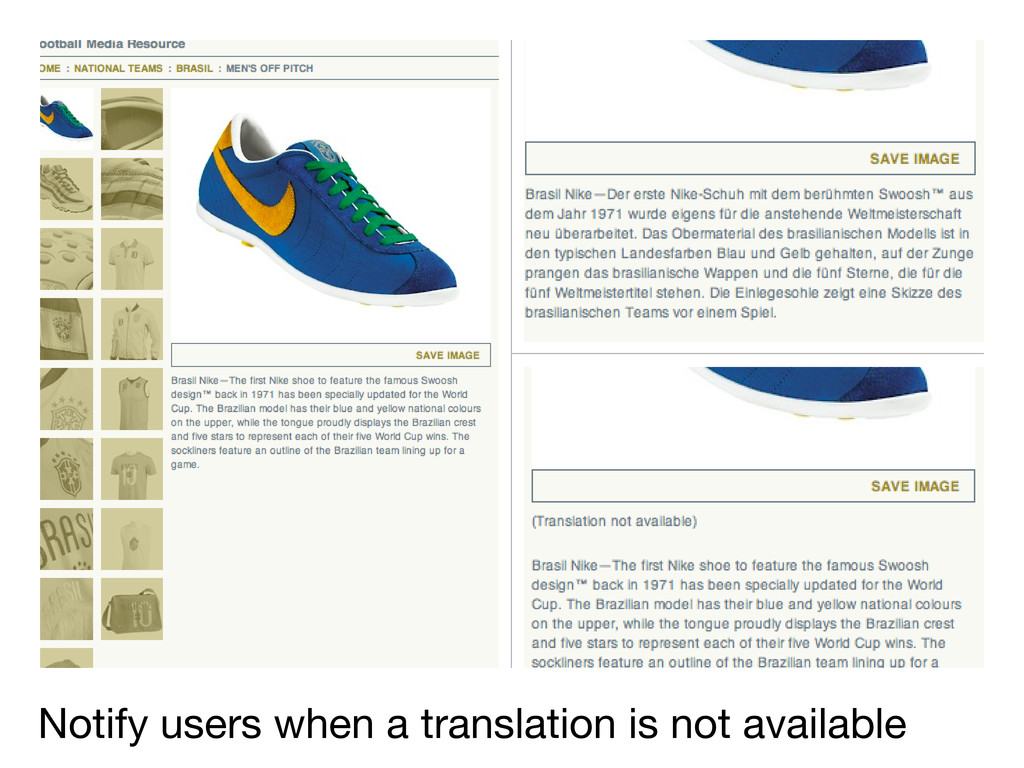
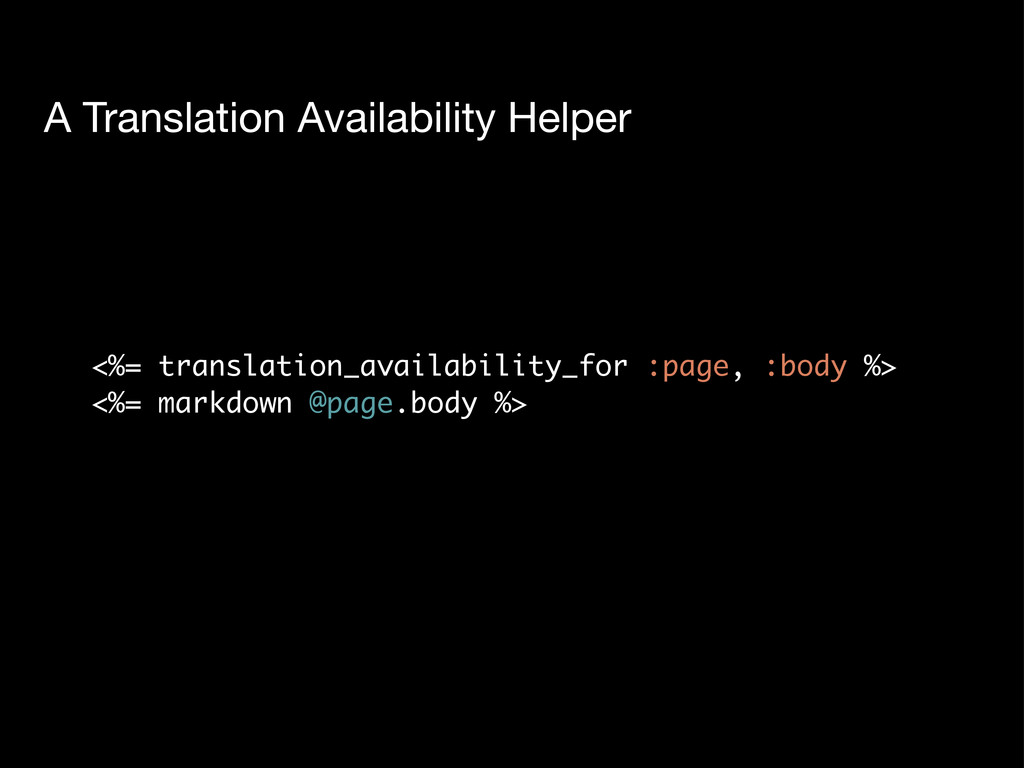
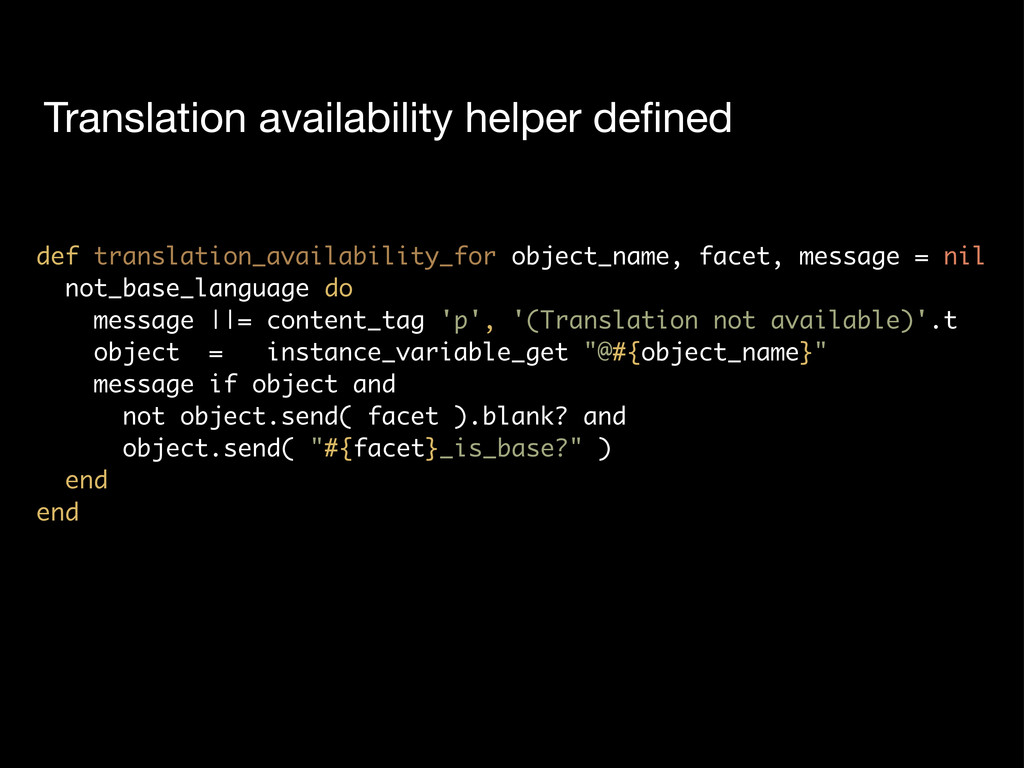
nil not_base_language do message ||= content_tag 'p', '(Translation not available)'.t object = instance_variable_get "@#{object_name}" message if object and not object.send( facet ).blank? and object.send( "#{facet}_is_base?" ) end end


 jvoorhis
 ivargrimstad
 sylph01
 moro
moro
 utakaha
 kmars0605
 minodriven
 lef237
 chobishiba
 mtsmfm
 giljongyu
 vivion
 steliosf
 palkan
 csswizardry
 retrage
 mayunak
 inesmontani
 axbom
axbom
 nikkihalliwell
 addyosmani
 lauravandoore
 kimpetersen
 codingconduct
![Base language administration screen params[:locale] # => ‘en-US’](https://files.speakerdeck.com/presentations/9dae0d503de601301b0d22000a8f8683/slide_28.jpg)
![Hide untranslated fields and provide a reference params[:locale] # =>](https://files.speakerdeck.com/presentations/9dae0d503de601301b0d22000a8f8683/slide_29.jpg)