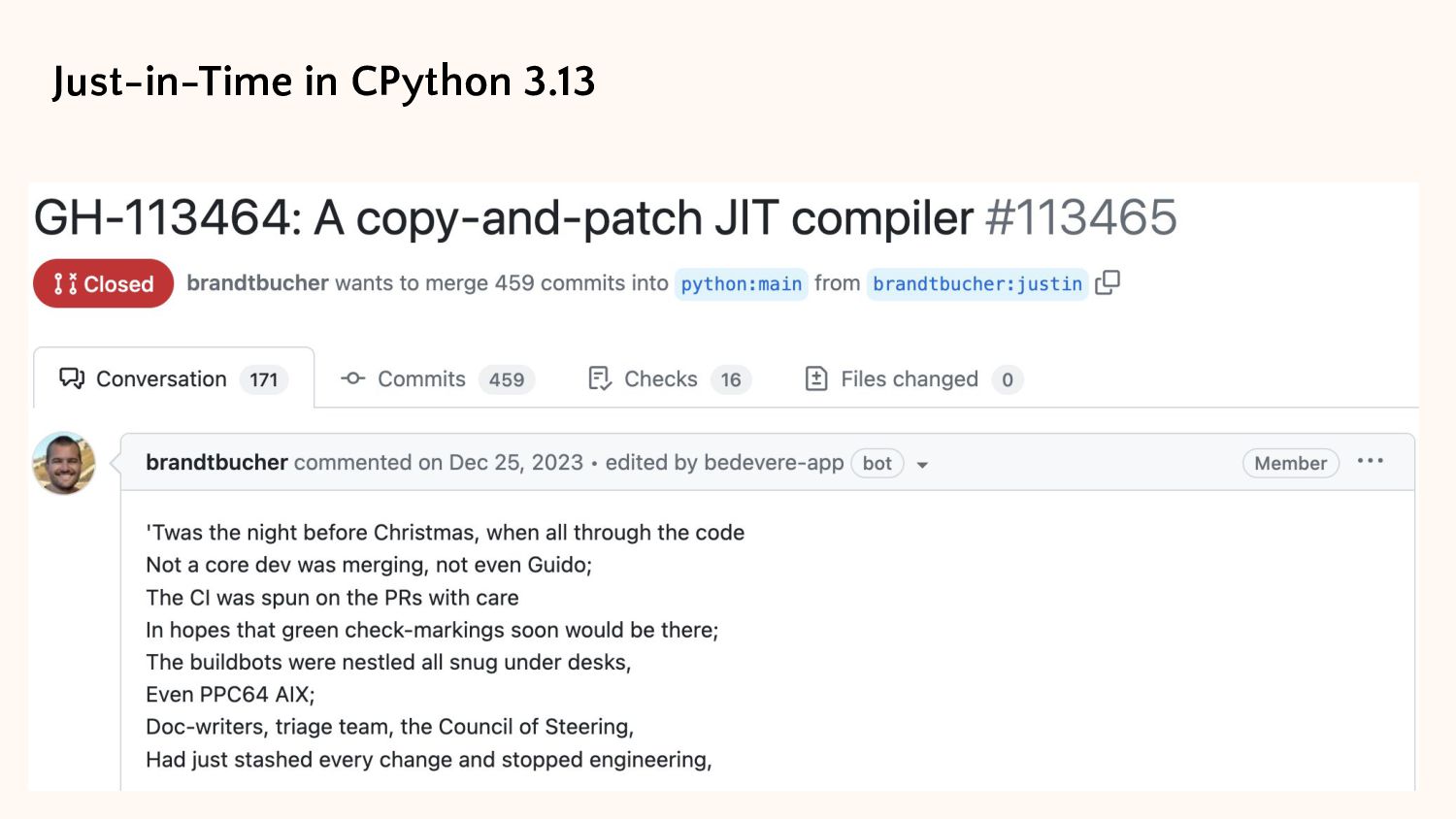
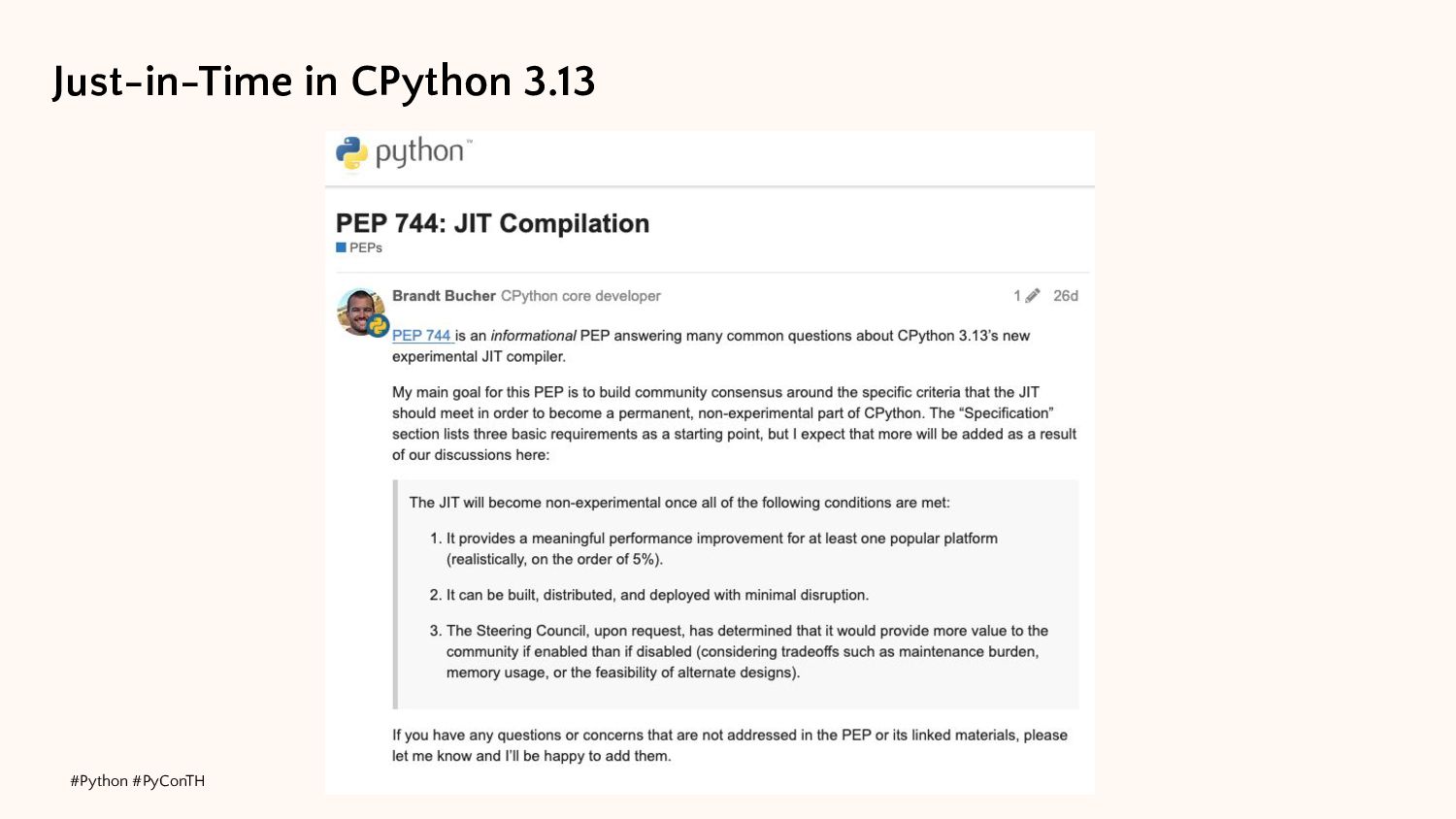
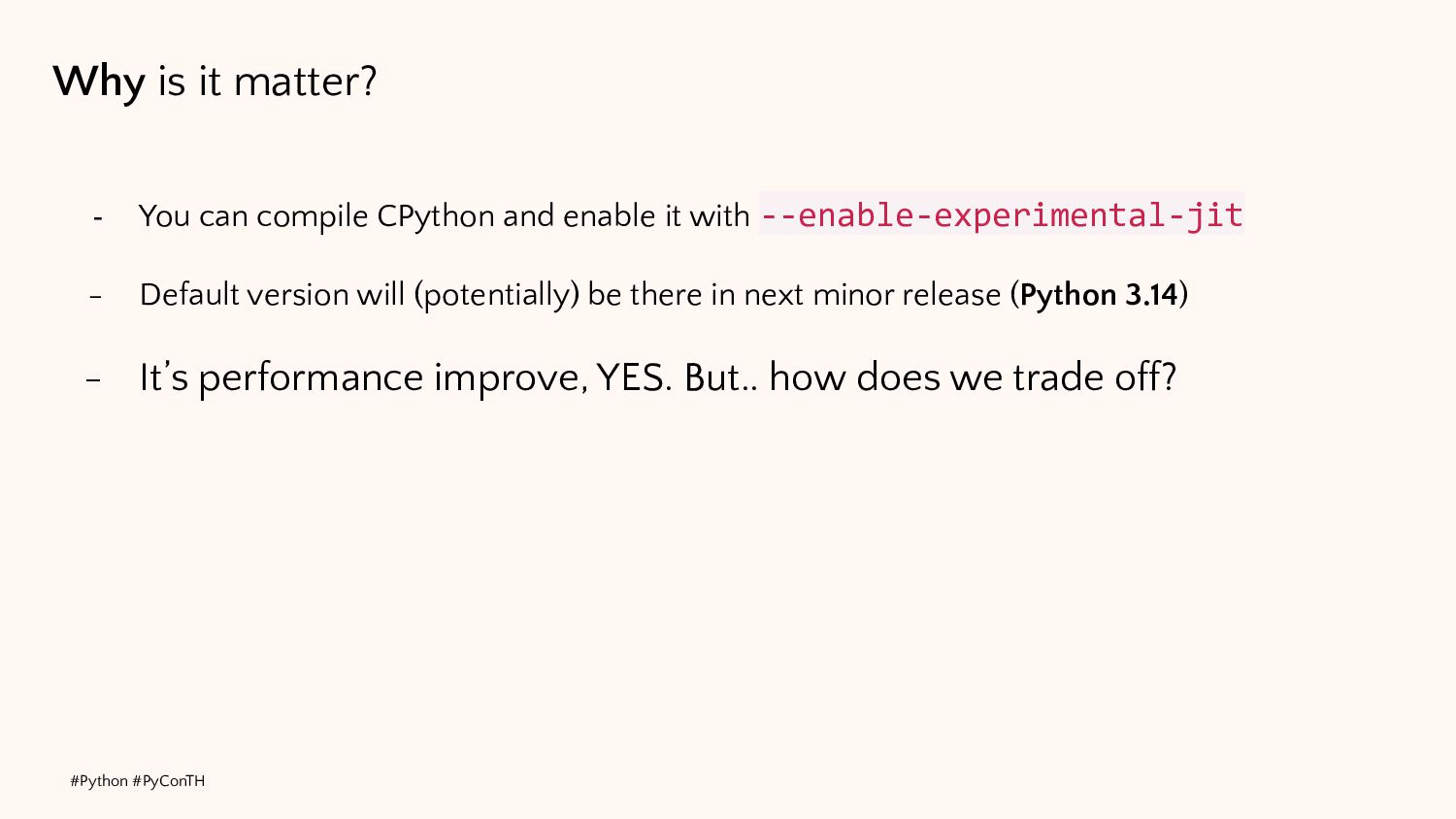
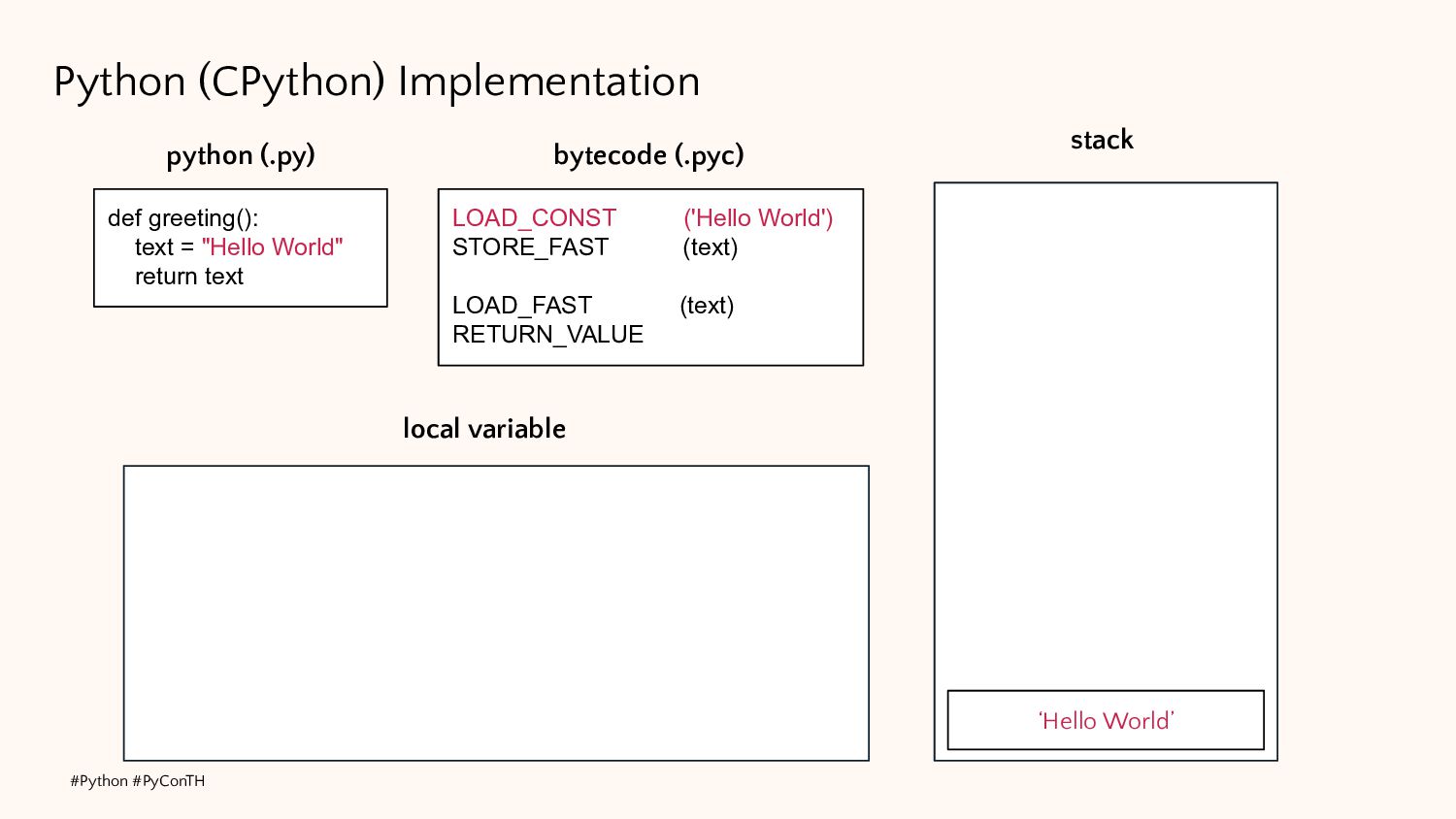
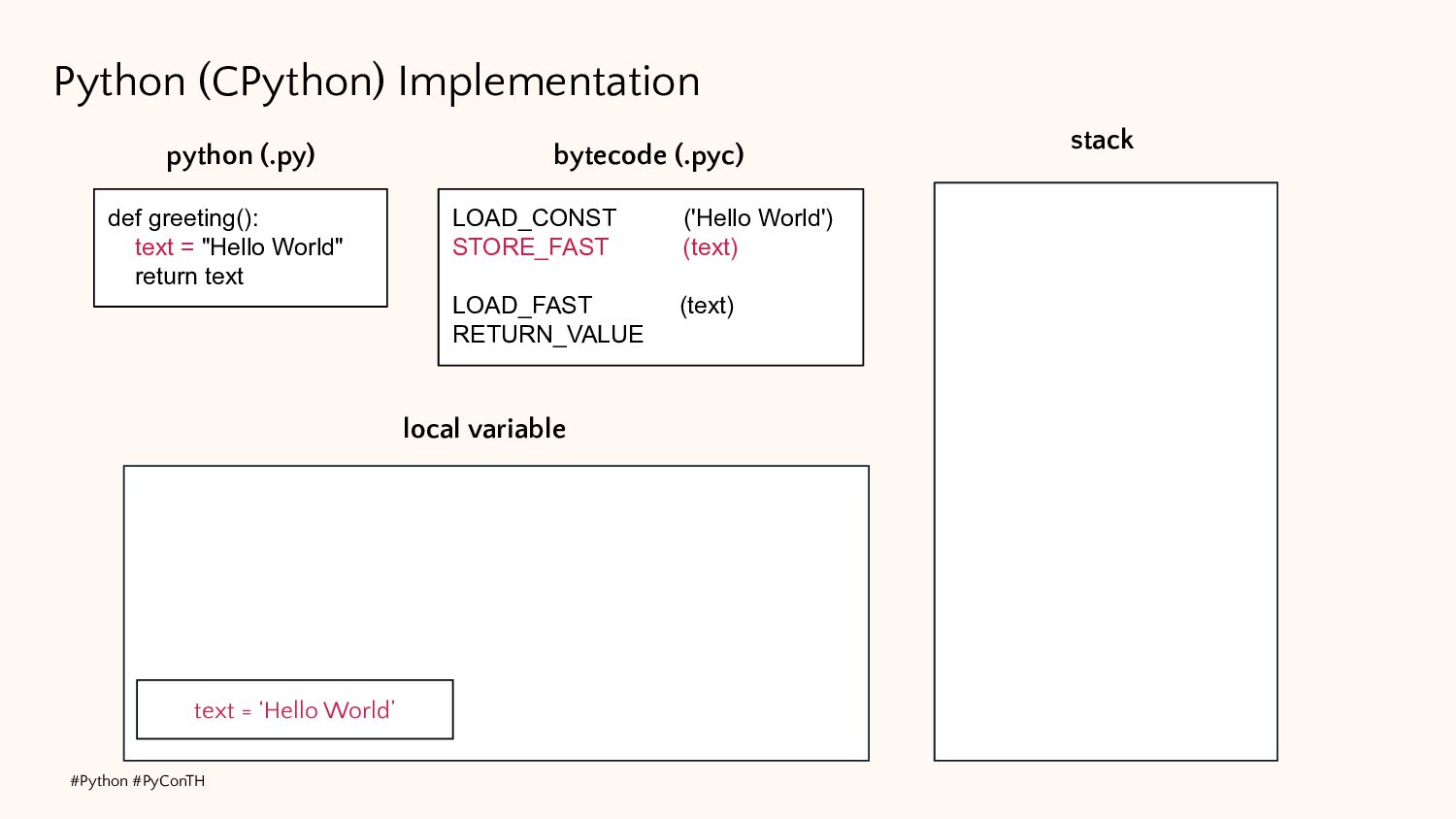
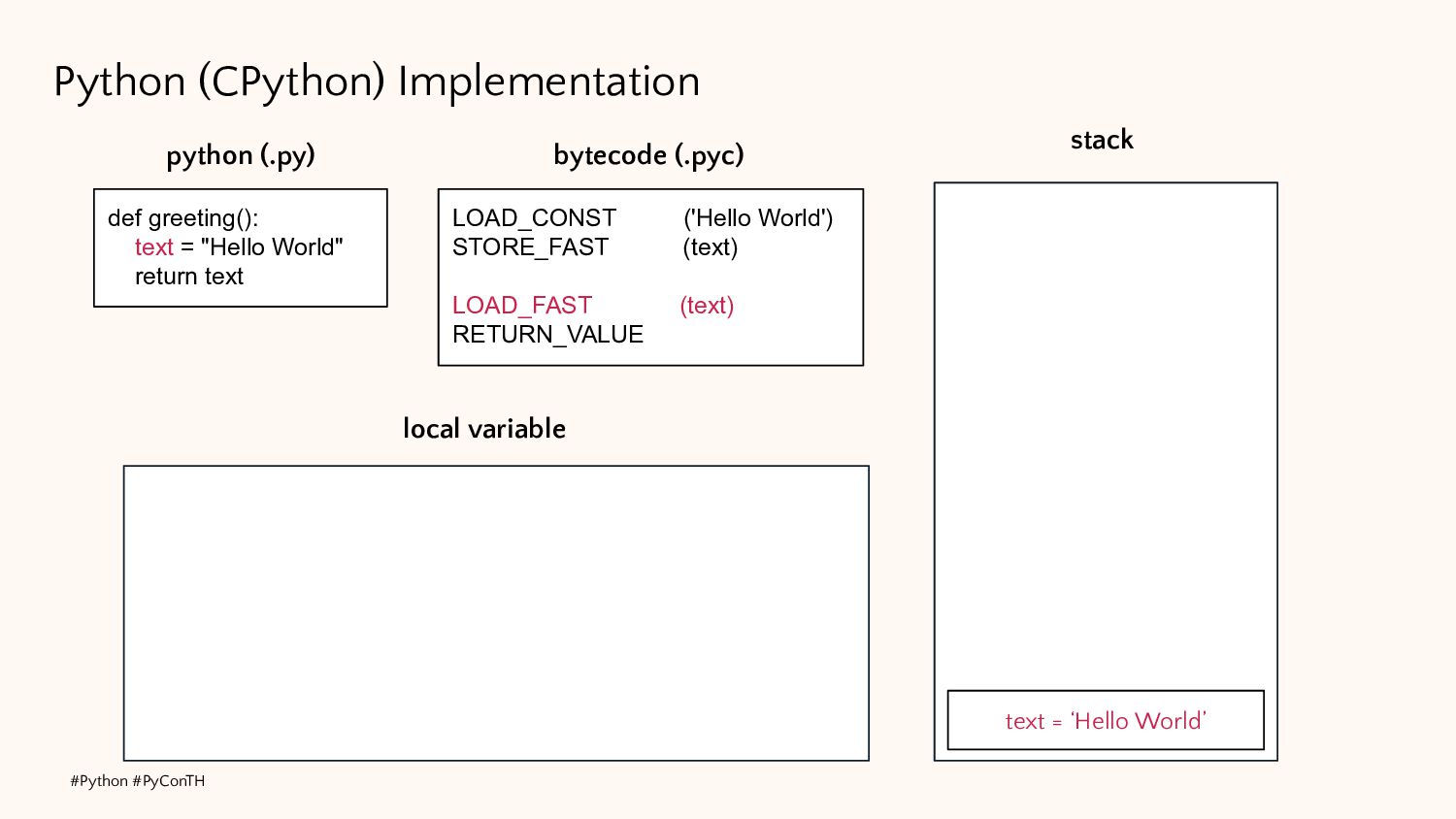
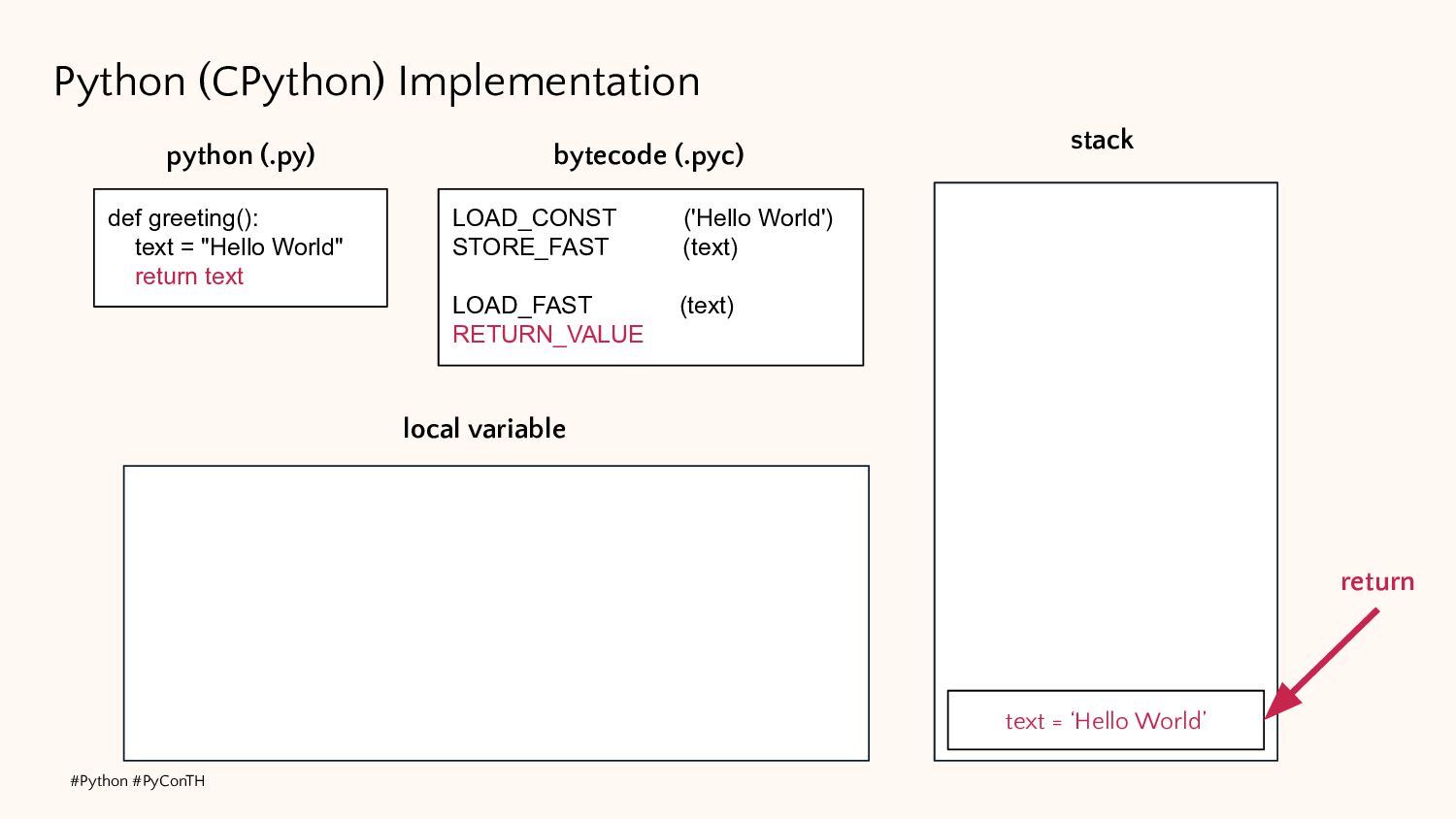
CPython and enable it with --enable-experimental-jit - Default version will (potentially) be there in next minor release (Python 3.14) - It’s performance improve, YES. But.. how does we trade off?
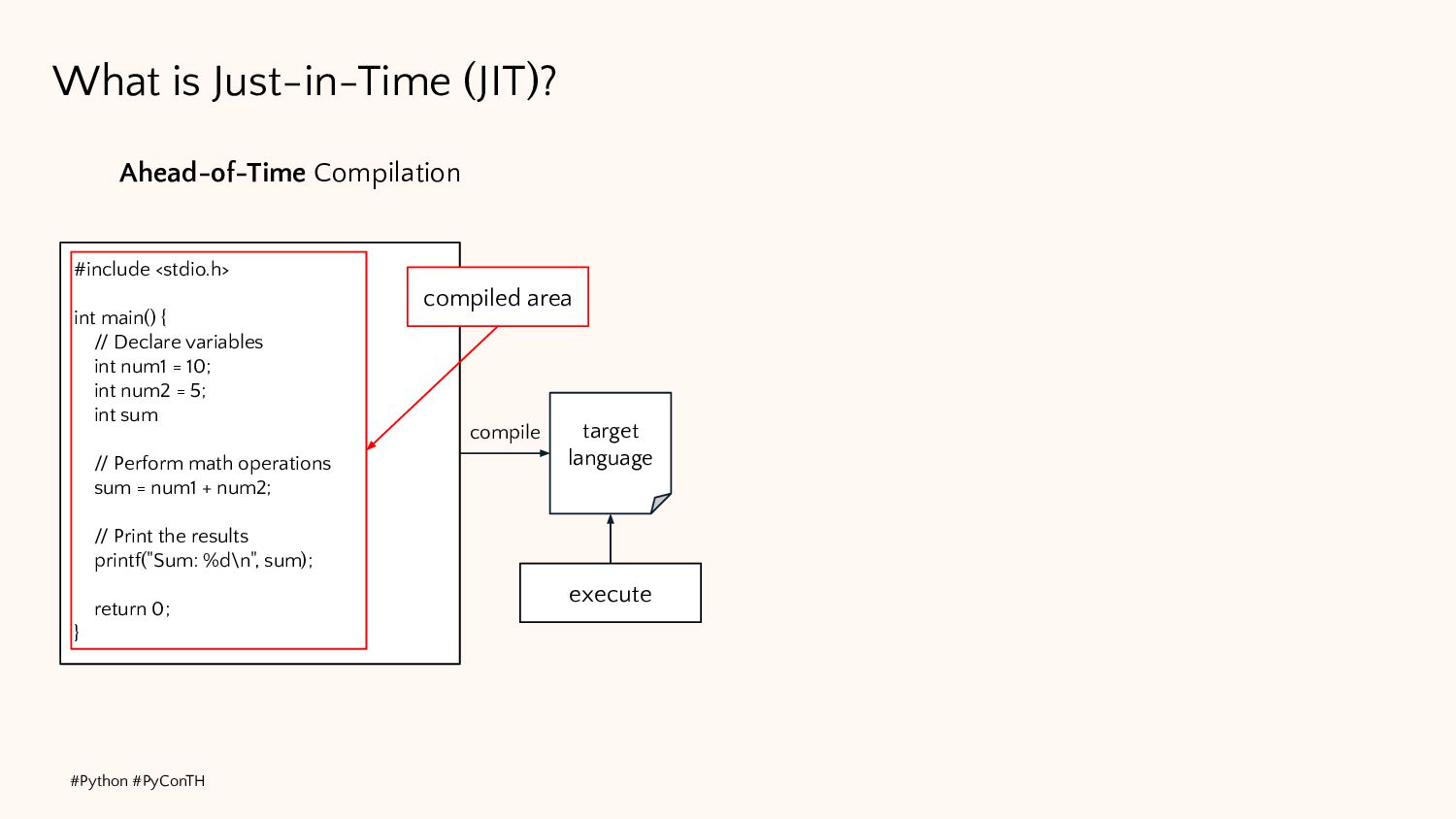
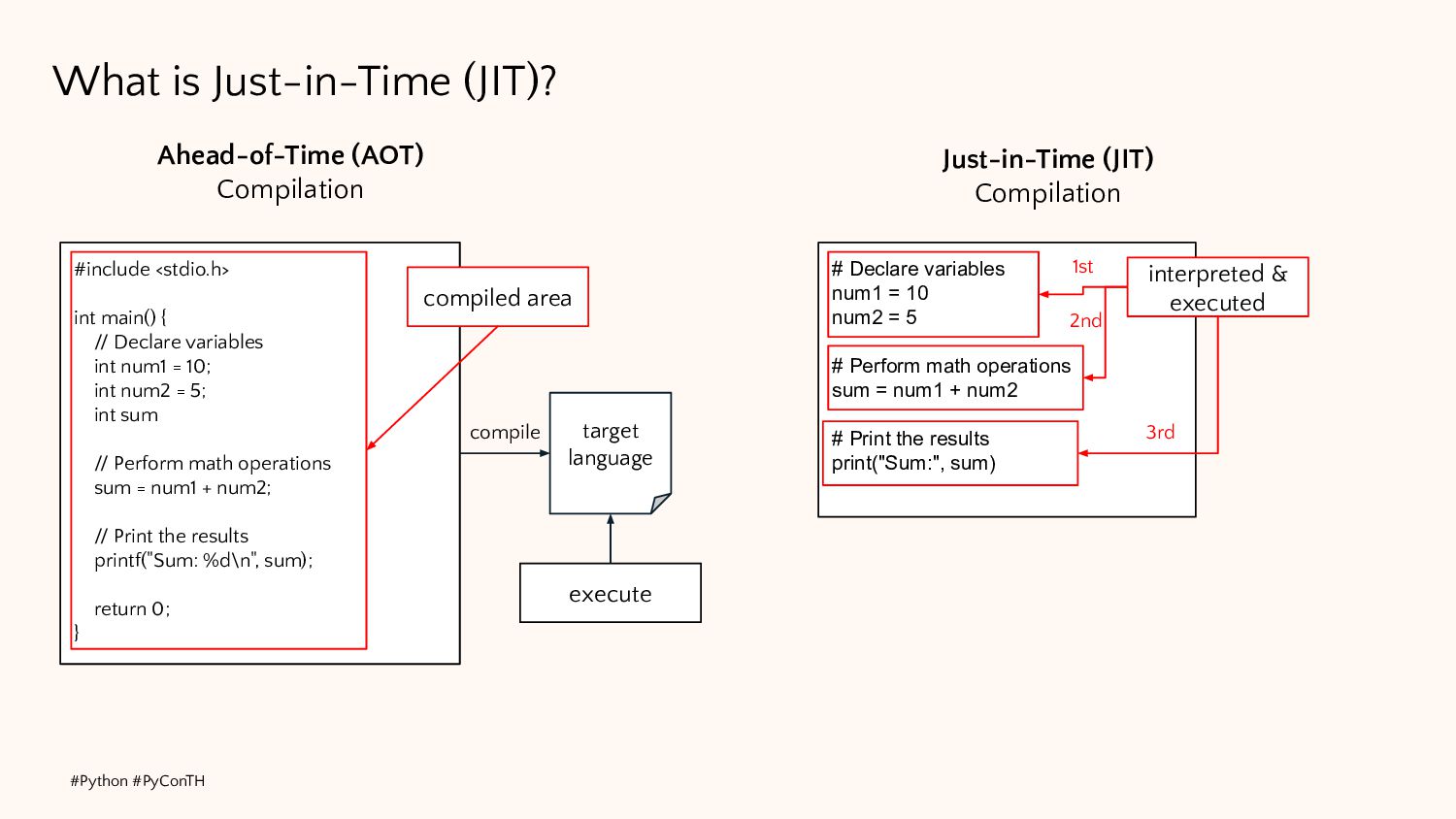
int main() { // Declare variables int num1 = 10; int num2 = 5; int sum // Perform math operations sum = num1 + num2; // Print the results printf("Sum: %d\n", sum); return 0; } compiled area target language execute compile
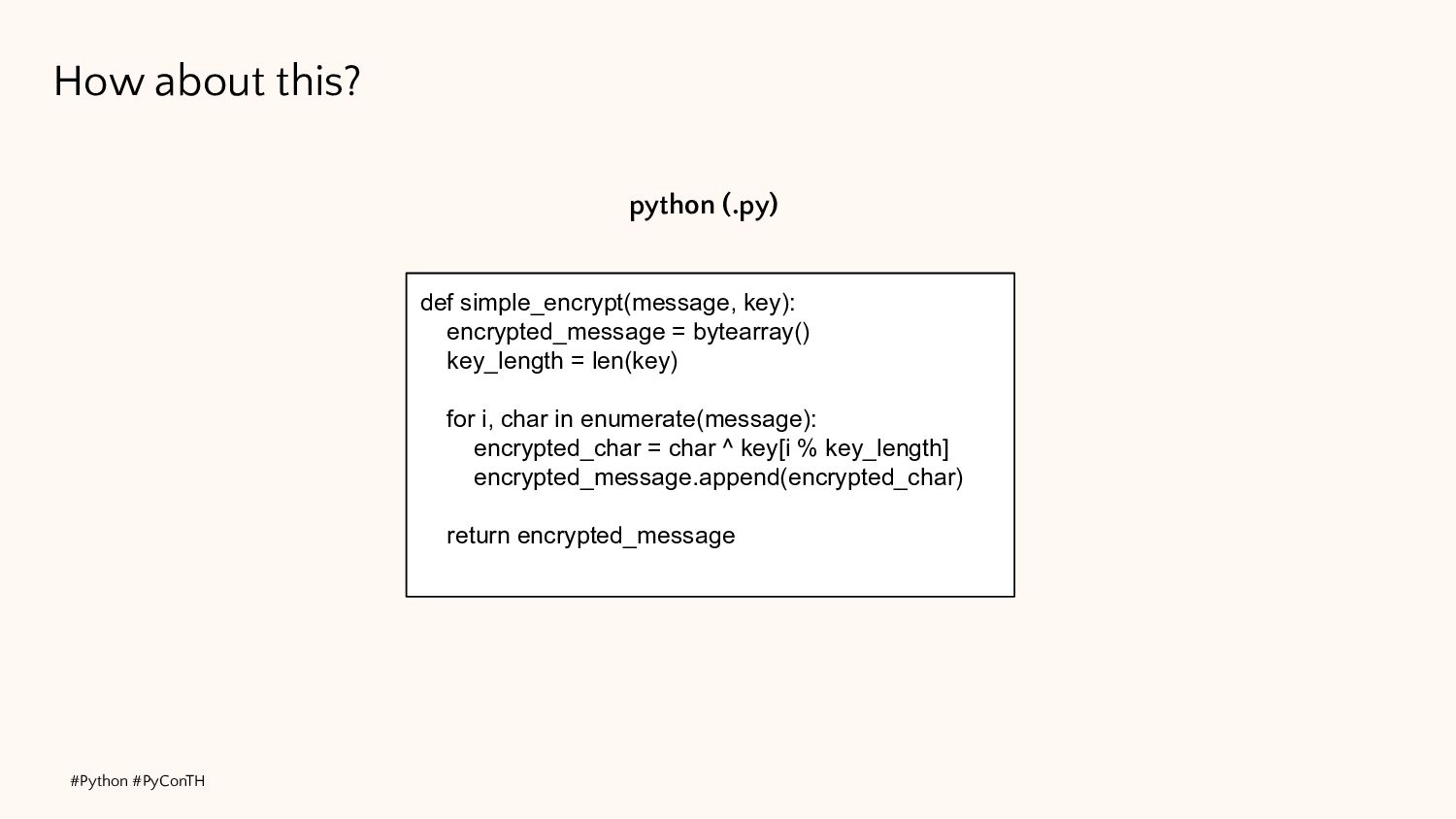
len(key) for i, char in enumerate(message): encrypted_char = char ^ key[i % key_length] encrypted_message.append(encrypted_char) return encrypted_message python (.py) How about this?
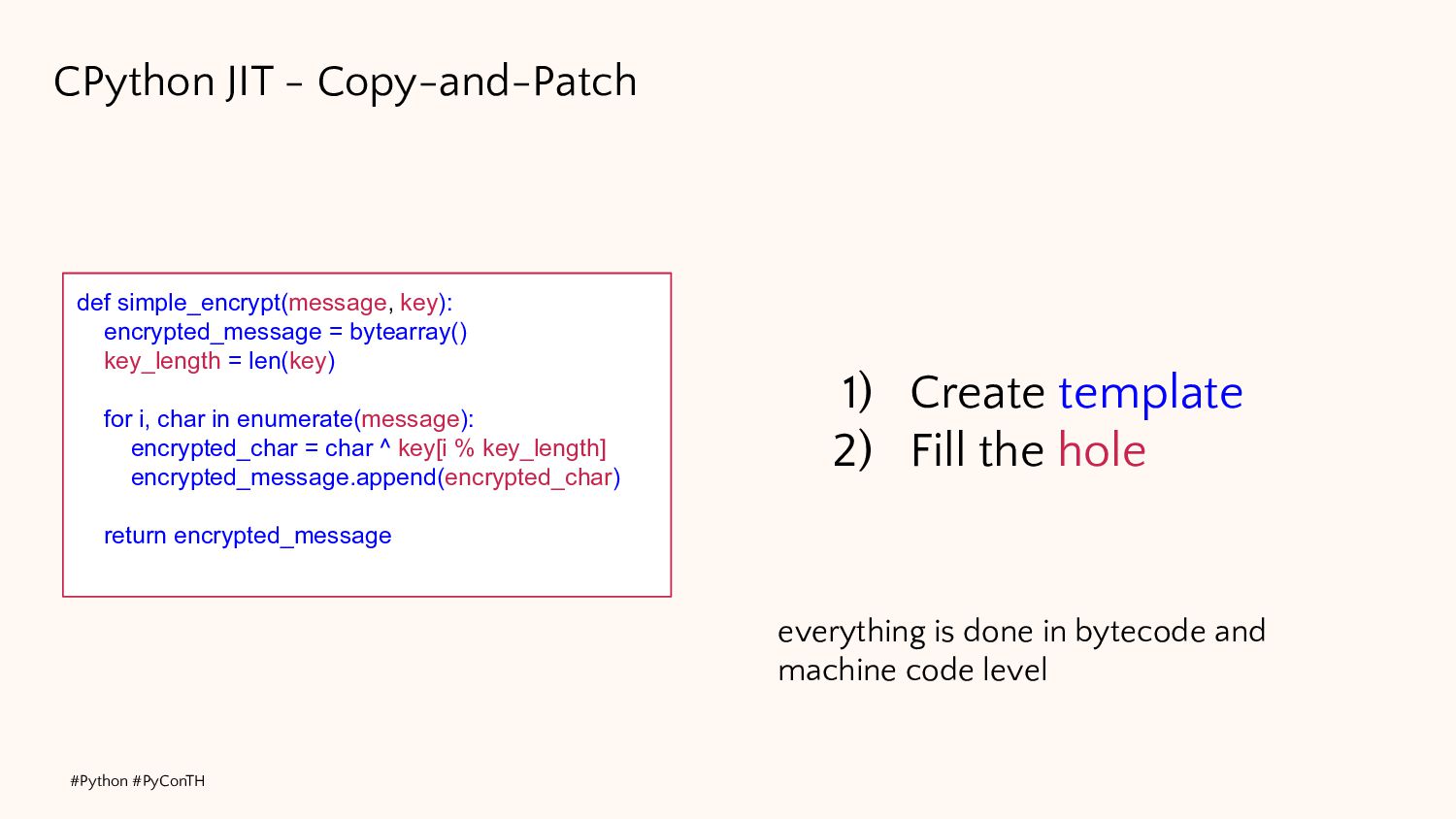
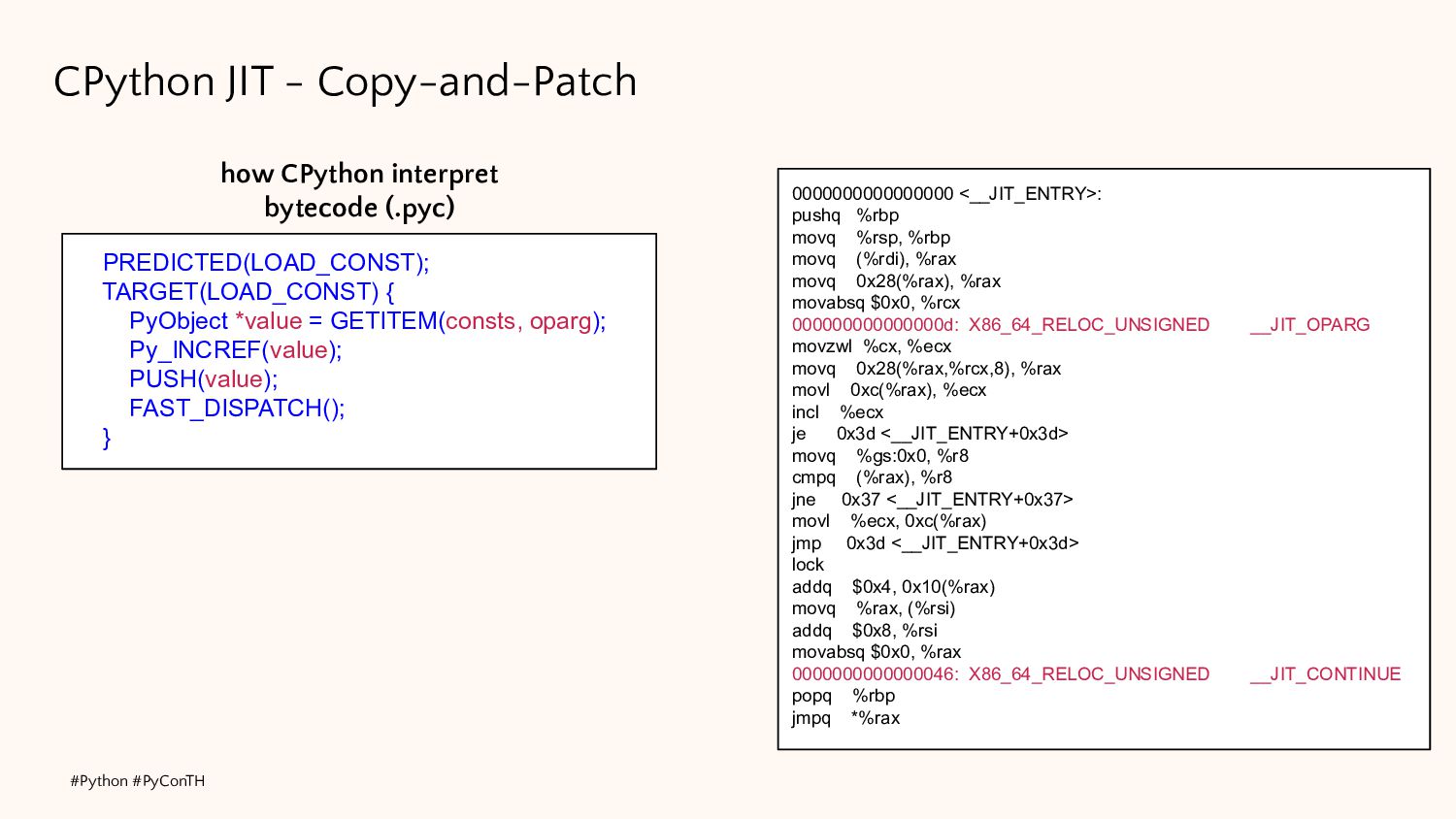
= bytearray() key_length = len(key) for i, char in enumerate(message): encrypted_char = char ^ key[i % key_length] encrypted_message.append(encrypted_char) return encrypted_message 1) Create template 2) Fill the hole everything is done in bytecode and machine code level
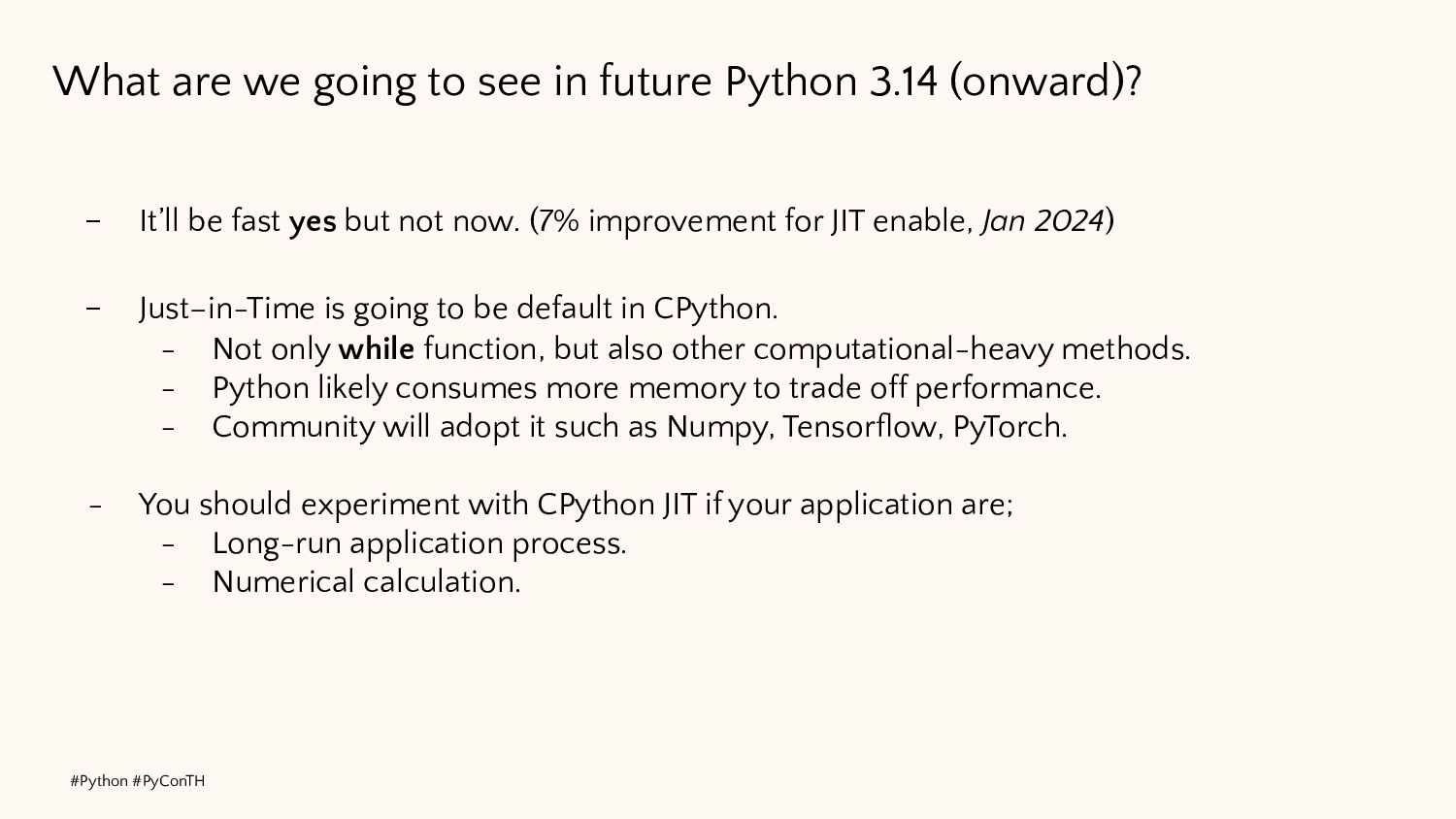
Python 3.14 (onward)? - It’ll be fast yes but not now. (7% improvement for JIT enable, Jan 2024) - Just–in-Time is going to be default in CPython. - Not only while function, but also other computational-heavy methods. - Python likely consumes more memory to trade off performance. - Community will adopt it such as Numpy, Tensorflow, PyTorch. - You should experiment with CPython JIT if your application are; - Long-run application process. - Numerical calculation.


 neuecc
 ivargrimstad
 ichirokano2
 lynnswap
 mixplace
 syumai
 kishida
 a_matsuda
 skydoves
 o0h
 artoy
 hschwentner
 akademiya2063
 palkan
 marcduiker
 techseoconnect
 jmmastey
 sergeychernyshev
 afnizarnur
 emna__ayadi
 rkaga
 tamaranovitovic