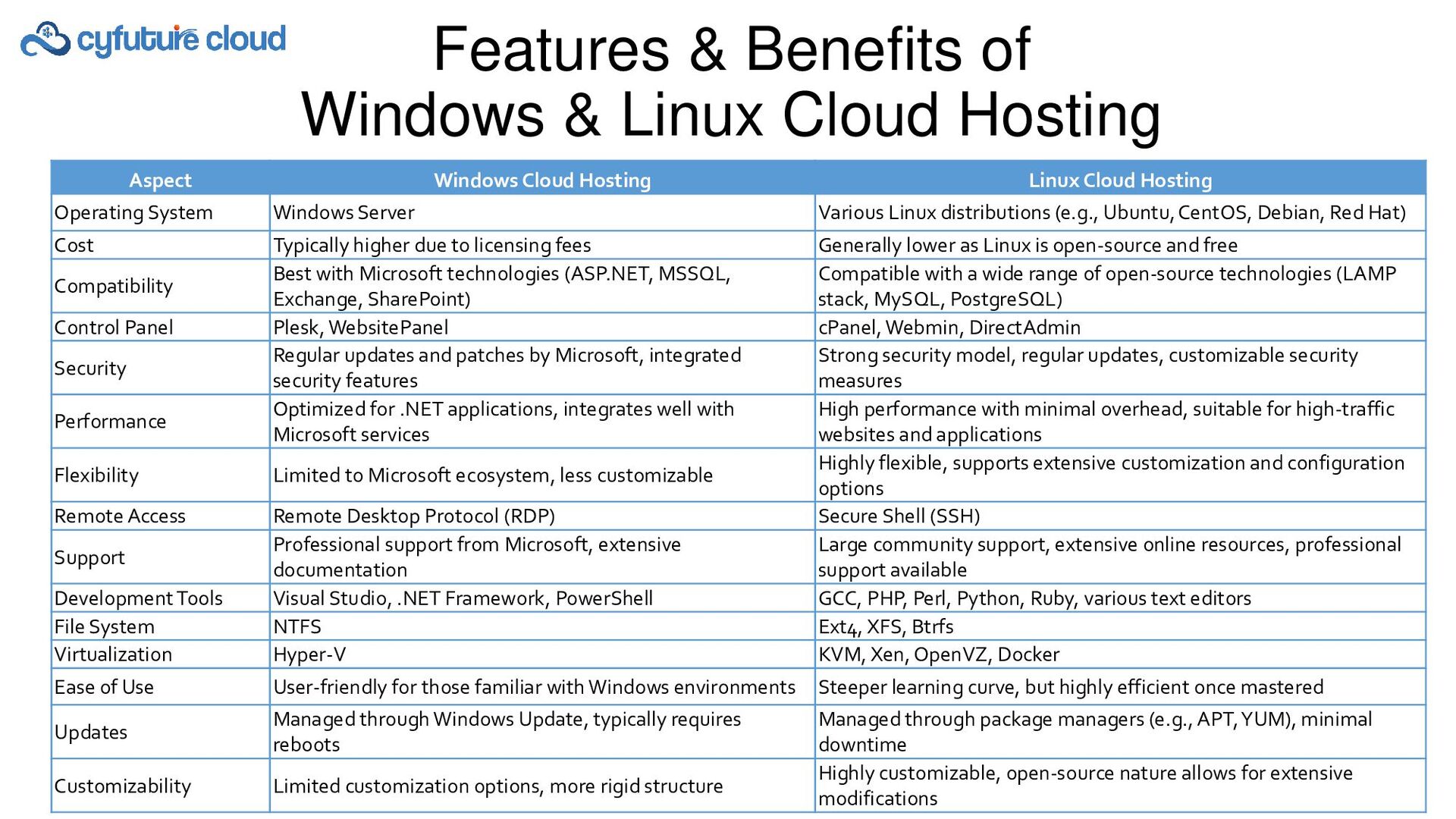
Windows Cloud Hosting Linux Cloud Hosting Operating System Windows Server Various Linux distributions (e.g., Ubuntu, CentOS, Debian, Red Hat) Cost Typically higher due to licensing fees Generally lower as Linux is open-source and free Compatibility Best with Microsoft technologies (ASP.NET, MSSQL, Exchange, SharePoint) Compatible with a wide range of open-source technologies (LAMP stack, MySQL, PostgreSQL) Control Panel Plesk, WebsitePanel cPanel, Webmin, DirectAdmin Security Regular updates and patches by Microsoft, integrated security features Strong security model, regular updates, customizable security measures Performance Optimized for .NET applications, integrates well with Microsoft services High performance with minimal overhead, suitable for high-traffic websites and applications Flexibility Limited to Microsoft ecosystem, less customizable Highly flexible, supports extensive customization and configuration options Remote Access Remote Desktop Protocol (RDP) Secure Shell (SSH) Support Professional support from Microsoft, extensive documentation Large community support, extensive online resources, professional support available Development Tools Visual Studio, .NET Framework, PowerShell GCC, PHP, Perl, Python, Ruby, various text editors File System NTFS Ext4, XFS, Btrfs Virtualization Hyper-V KVM, Xen, OpenVZ, Docker Ease of Use User-friendly for those familiar with Windows environments Steeper learning curve, but highly efficient once mastered Updates Managed through Windows Update, typically requires reboots Managed through package managers (e.g., APT, YUM), minimal downtime Customizability Limited customization options, more rigid structure Highly customizable, open-source nature allows for extensive modifications


 ueponx
 takuroabe
 occhi
 sh_fk2
 recruitengineers
 riyaamemiya
 ivry_presentationmaterials
 namiki64
 sudoakiy
 puhitaku
 iktakahiro
 akhino
 cassininazir
 aleyda
 tapps
 denniskardys
 jonoalderson
 marktimemedia
 axbom
 addyosmani
 tamaranovitovic
 rabernat
 katarinadahlin
 thoeni