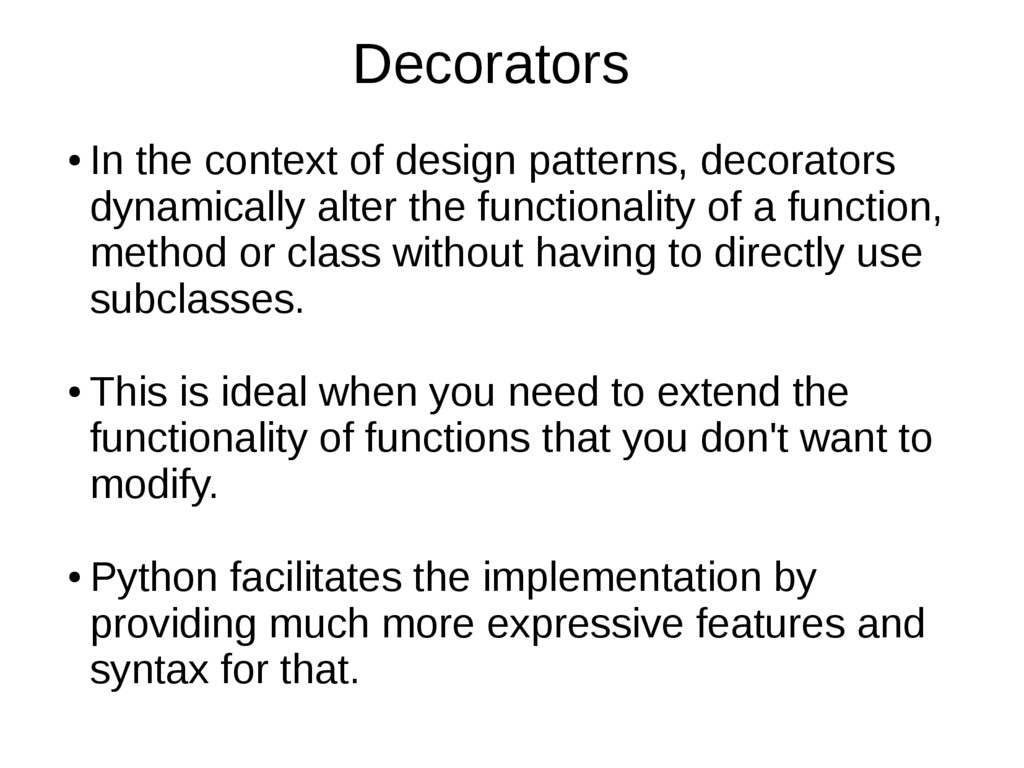
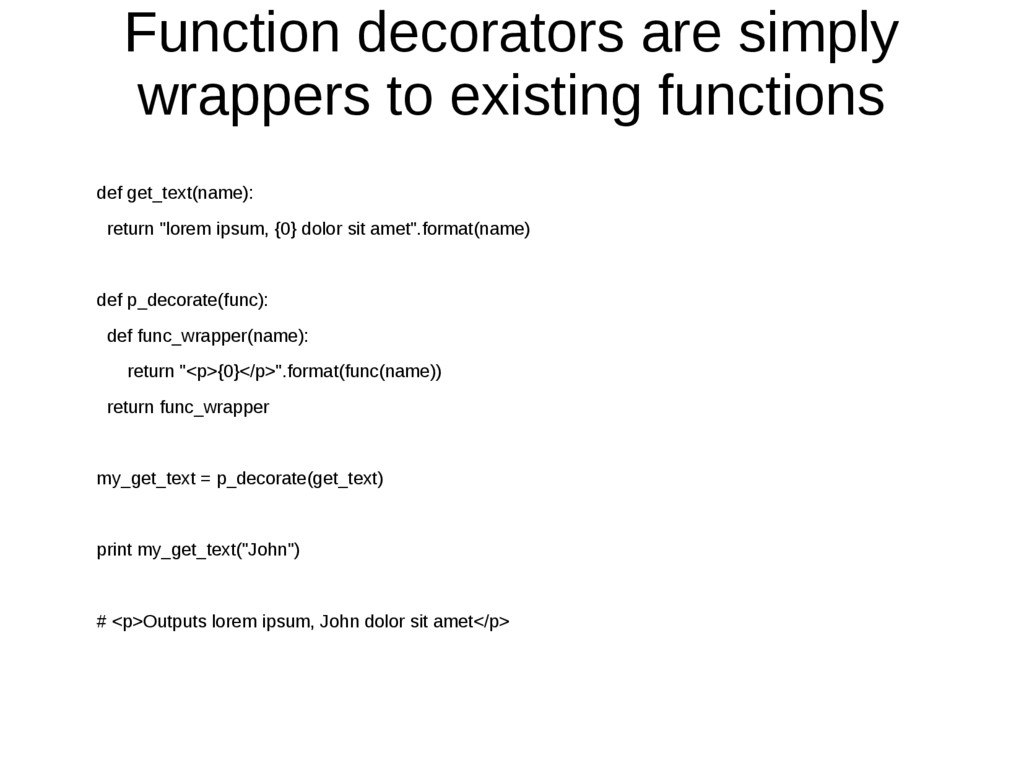
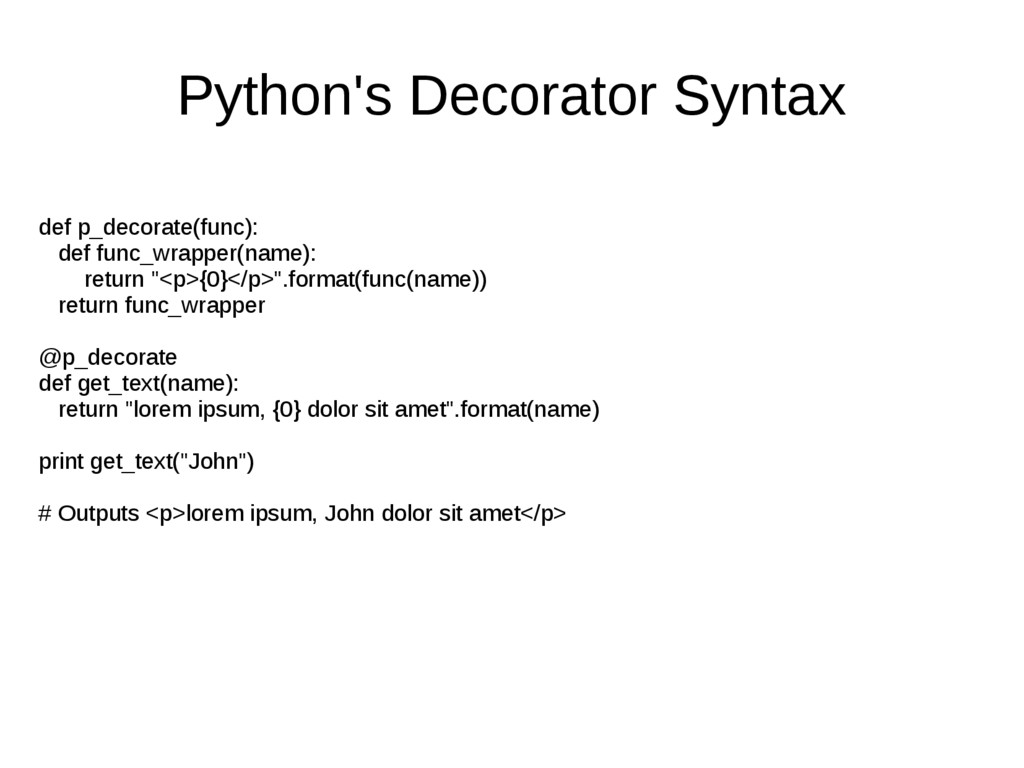
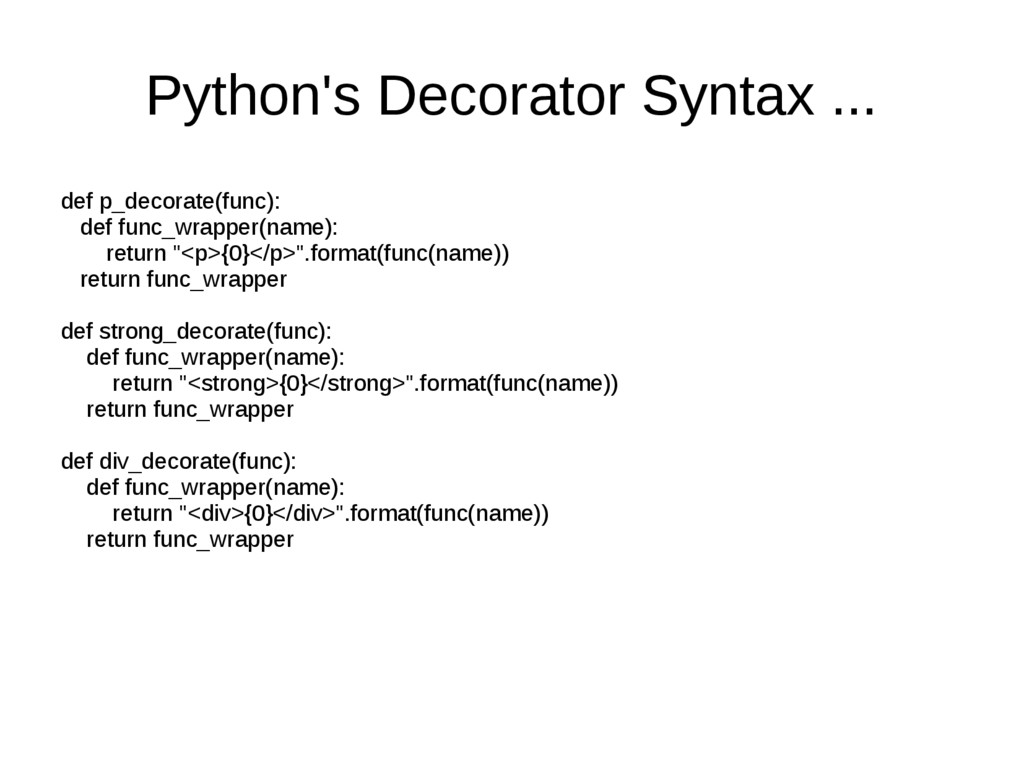
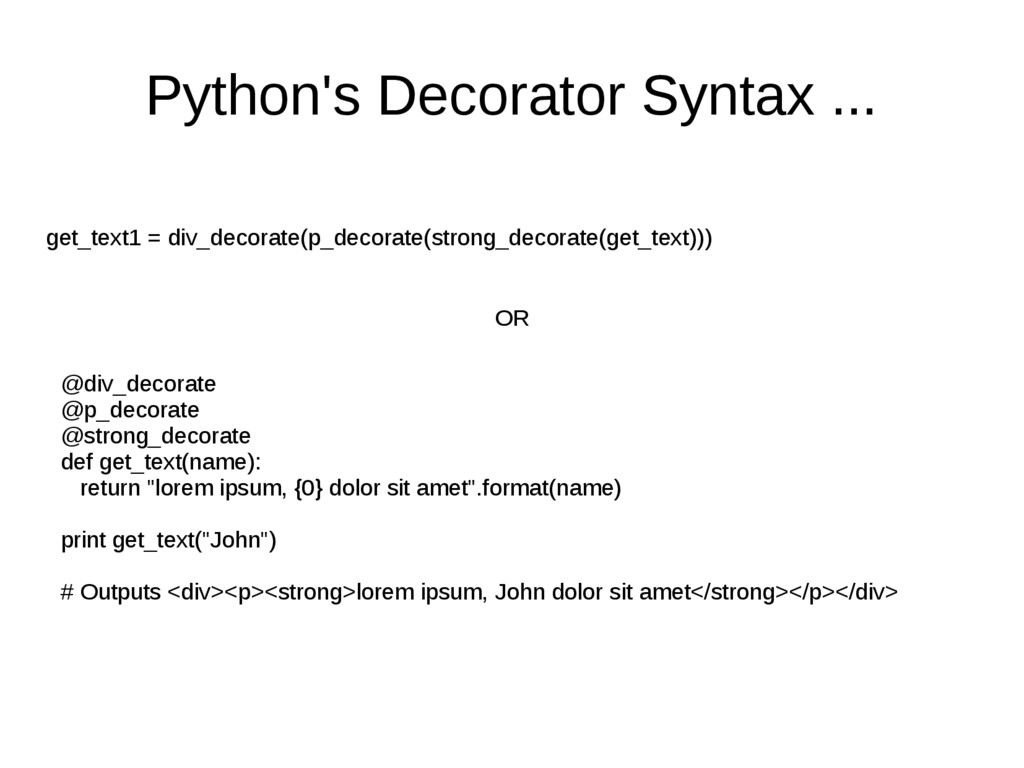
alter the functionality of a function, method or class without having to directly use subclasses. • This is ideal when you need to extend the functionality of functions that you don't want to modify. • Python facilitates the implementation by providing much more expressive features and syntax for that.
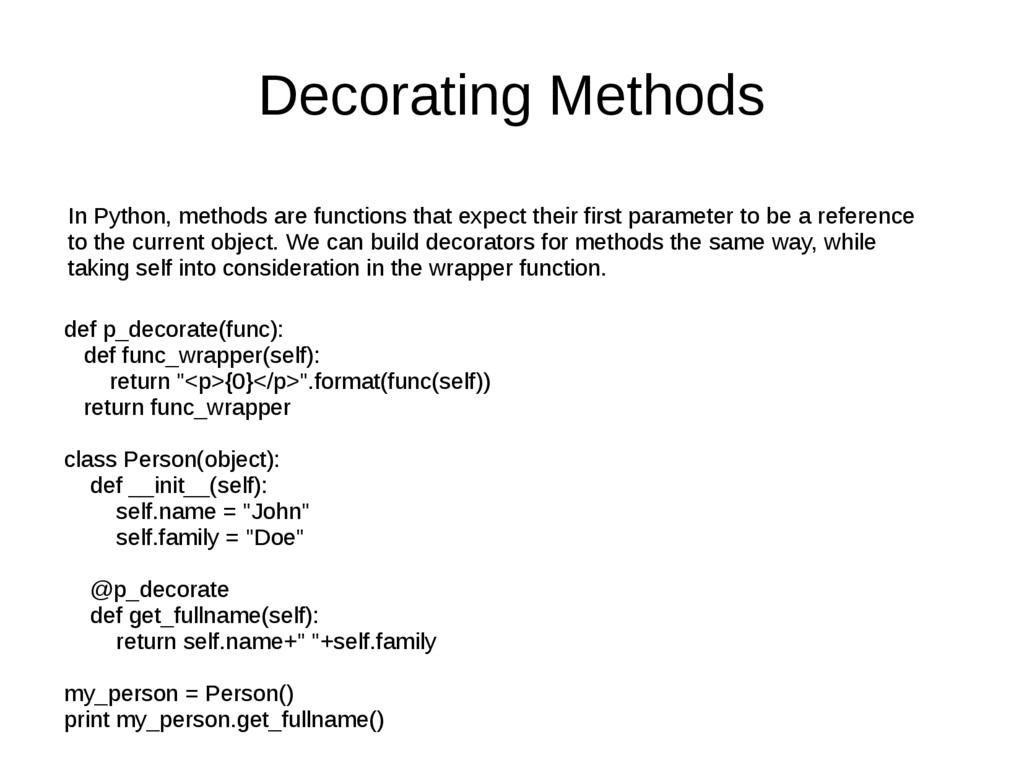
first parameter to be a reference to the current object. We can build decorators for methods the same way, while taking self into consideration in the wrapper function. def p_decorate(func): def func_wrapper(self): return "<p>{0}</p>".format(func(self)) return func_wrapper class Person(object): def __init__(self): self.name = "John" self.family = "Doe" @p_decorate def get_fullname(self): return self.name+" "+self.family my_person = Person() print my_person.get_fullname()
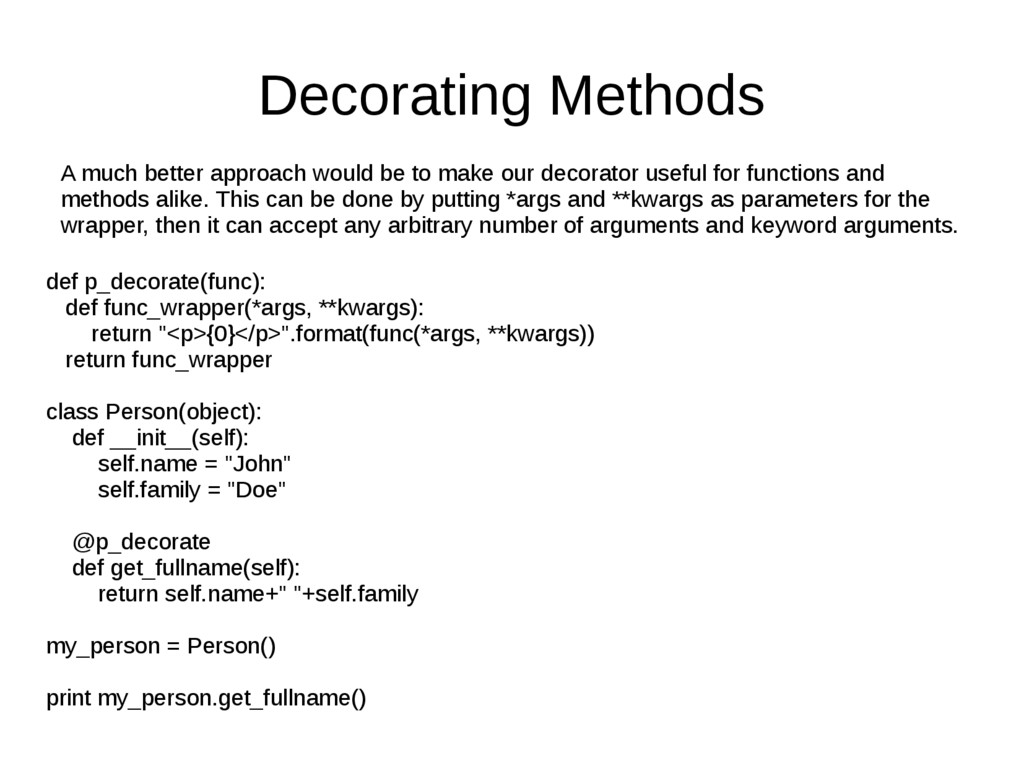
return func_wrapper class Person(object): def __init__(self): self.name = "John" self.family = "Doe" @p_decorate def get_fullname(self): return self.name+" "+self.family my_person = Person() print my_person.get_fullname() A much better approach would be to make our decorator useful for functions and methods alike. This can be done by putting *args and **kwargs as parameters for the wrapper, then it can accept any arbitrary number of arguments and keyword arguments.
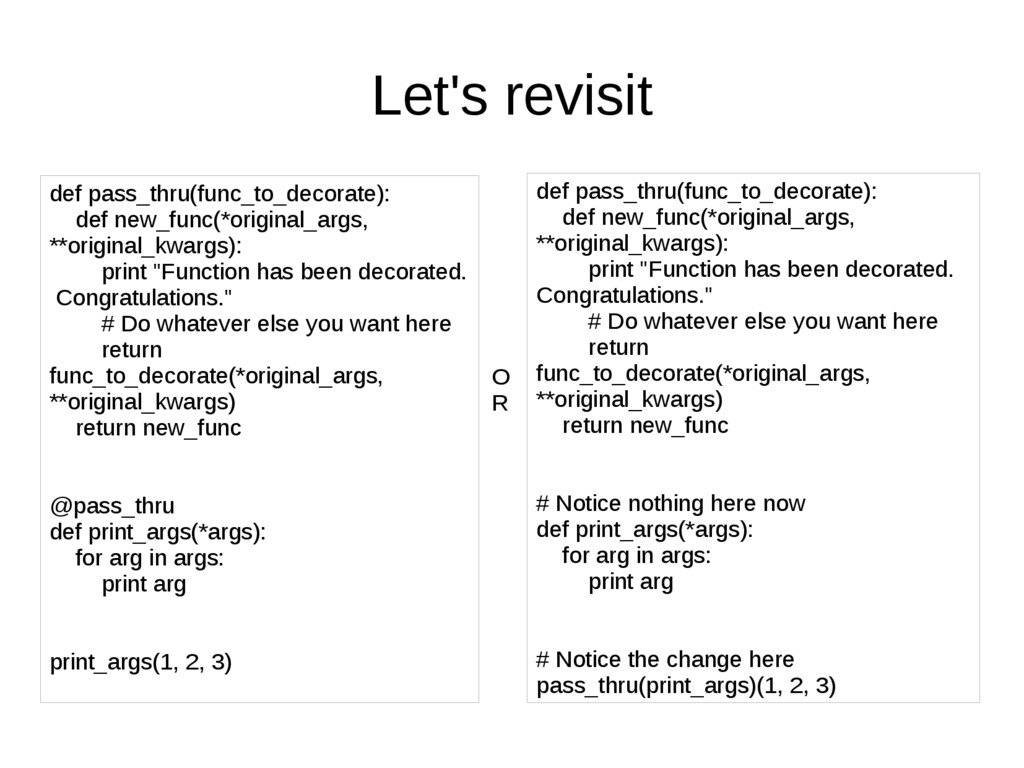
been decorated. Congratulations." # Do whatever else you want here return func_to_decorate(*original_args, **original_kwargs) return new_func @pass_thru def print_args(*args): for arg in args: print arg print_args(1, 2, 3) def pass_thru(func_to_decorate): def new_func(*original_args, **original_kwargs): print "Function has been decorated. Congratulations." # Do whatever else you want here return func_to_decorate(*original_args, **original_kwargs) return new_func # Notice nothing here now def print_args(*args): for arg in args: print arg # Notice the change here pass_thru(print_args)(1, 2, 3) O R
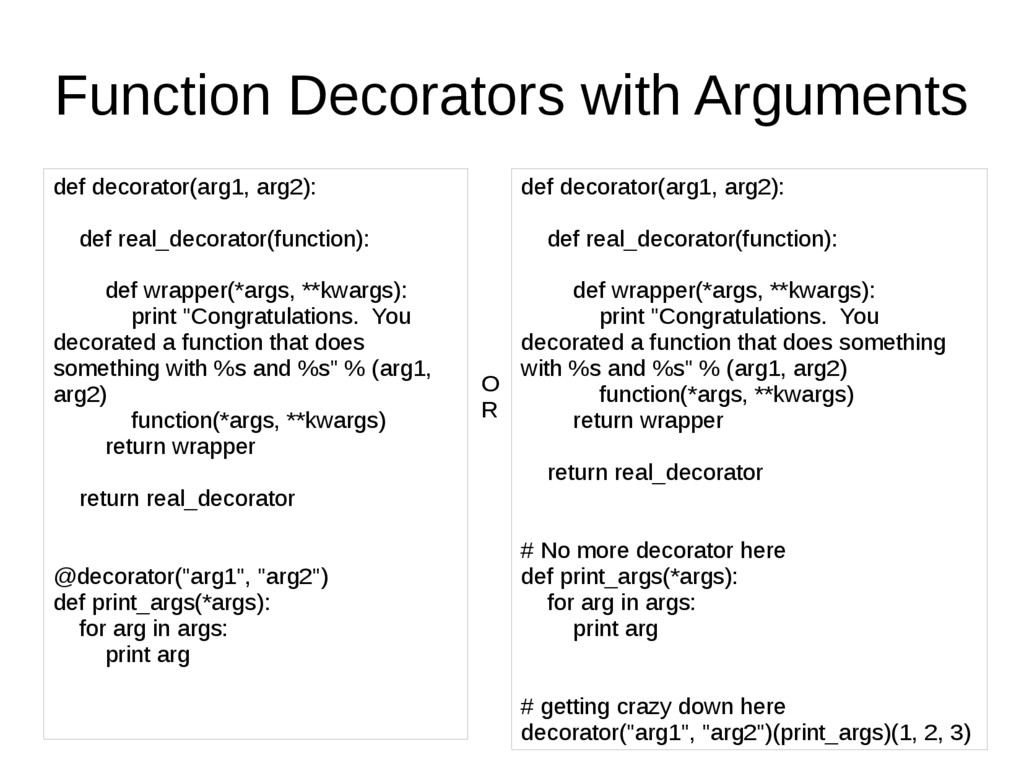
wrapper(*args, **kwargs): print "Congratulations. You decorated a function that does something with %s and %s" % (arg1, arg2) function(*args, **kwargs) return wrapper return real_decorator @decorator("arg1", "arg2") def print_args(*args): for arg in args: print arg def decorator(arg1, arg2): def real_decorator(function): def wrapper(*args, **kwargs): print "Congratulations. You decorated a function that does something with %s and %s" % (arg1, arg2) function(*args, **kwargs) return wrapper return real_decorator # No more decorator here def print_args(*args): for arg in args: print arg # getting crazy down here decorator("arg1", "arg2")(print_args)(1, 2, 3) O R


 rakko
 retrage
 tammyeverts
 yeseniaperezcruz
 joshbly
 lara
 mlcsv
 apolaine
 cassininazir
 aemeredith
 ivargrimstad
 inesmontani