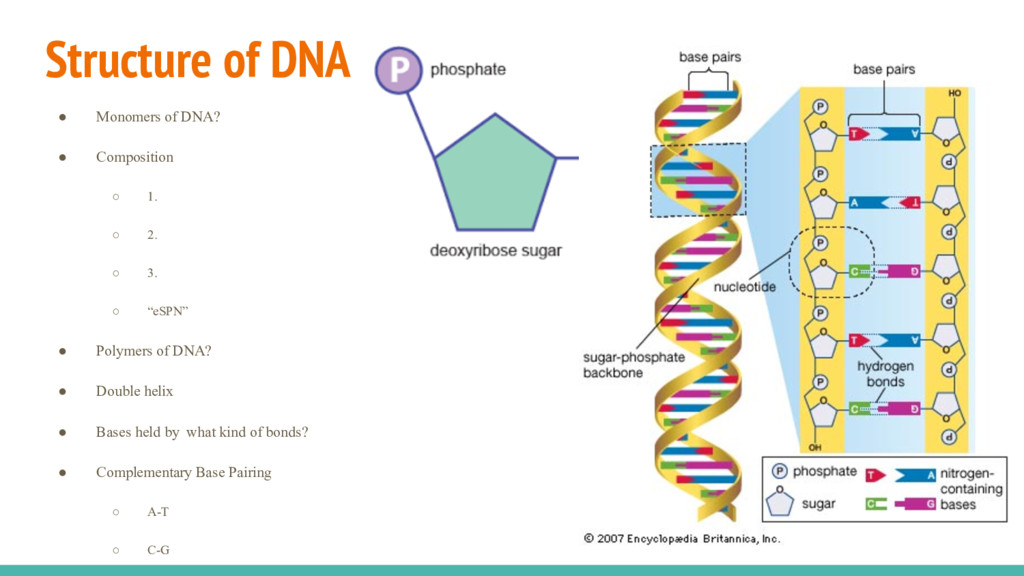
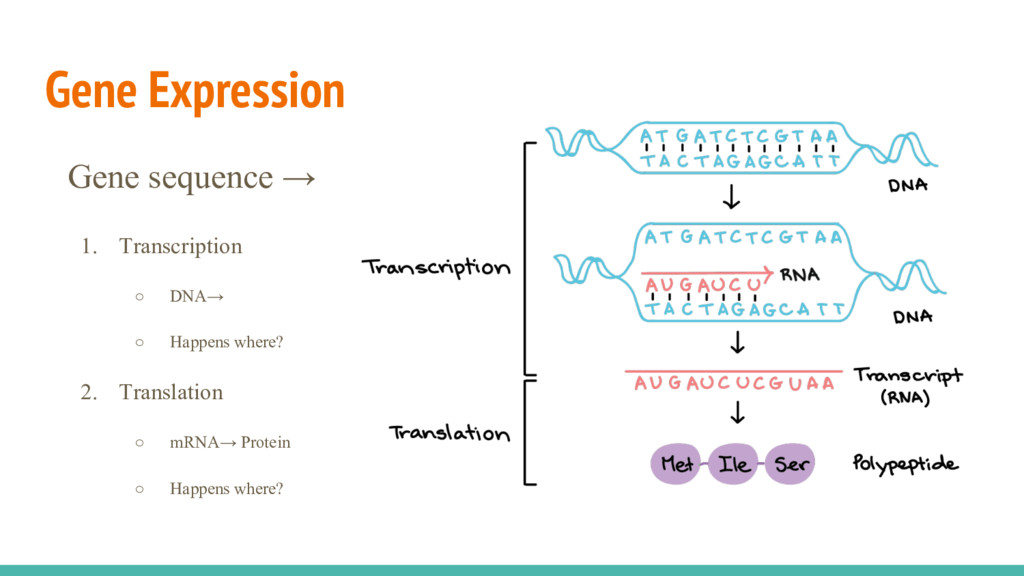
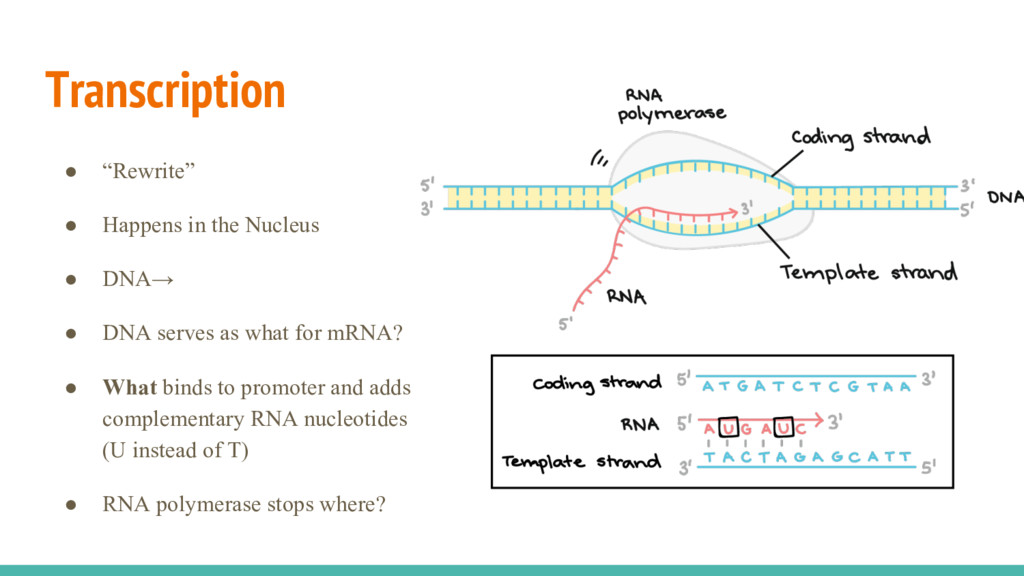
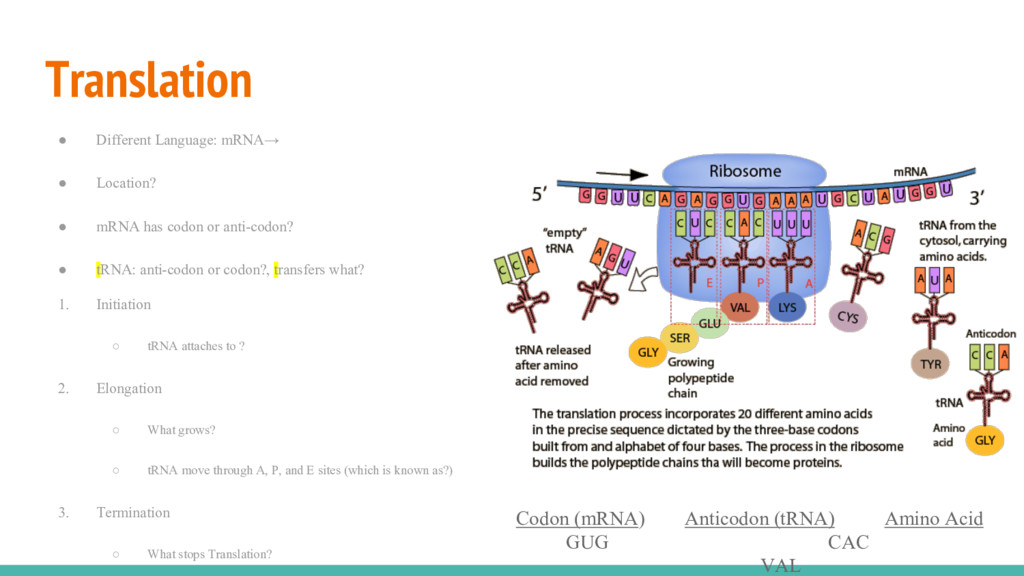
codon or anti-codon? • tRNA: anti-codon or codon?, transfers what? 1. Initiation ◦ tRNA attaches to ? 2. Elongation ◦ What grows? ◦ tRNA move through A, P, and E sites (which is known as?) 3. Termination ◦ What stops Translation? Codon (mRNA) Anticodon (tRNA) Amino Acid GUG CAC VAL
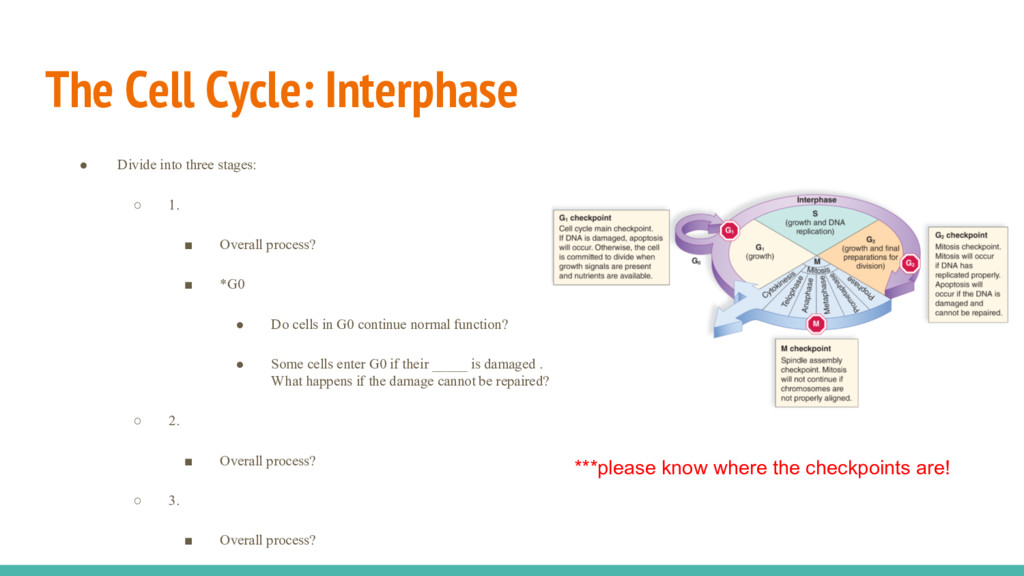
1. ▪ Overall process? ▪ *G0 • Do cells in G0 continue normal function? • Some cells enter G0 if their _____ is damaged . What happens if the damage cannot be repaired? ◦ 2. ▪ Overall process? ◦ 3. ▪ Overall process? ***please know where the checkpoints are!
Ch. 23: Patterns of Gene Inheritance: All sections Examples you will need to understand: Freckles, short finger length (brachydactly), cystic fibrosis, sickle cell anemia, curly/straight hair, familial hypercholesterolemia, ABO blood types Ch. 24: all sections Examples you will need to understand: Down syndrome, color blindness, duchenne muscular dystrophy, hemophilia, Turner syndrome, Klinefelter syndrome, Poly-X females ***this is from the email Shadwick sent out
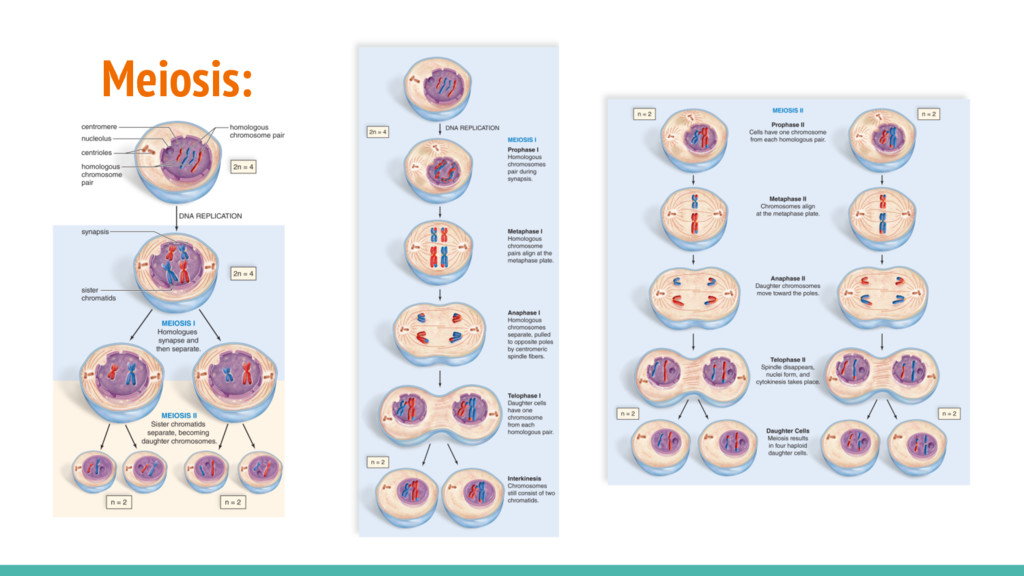
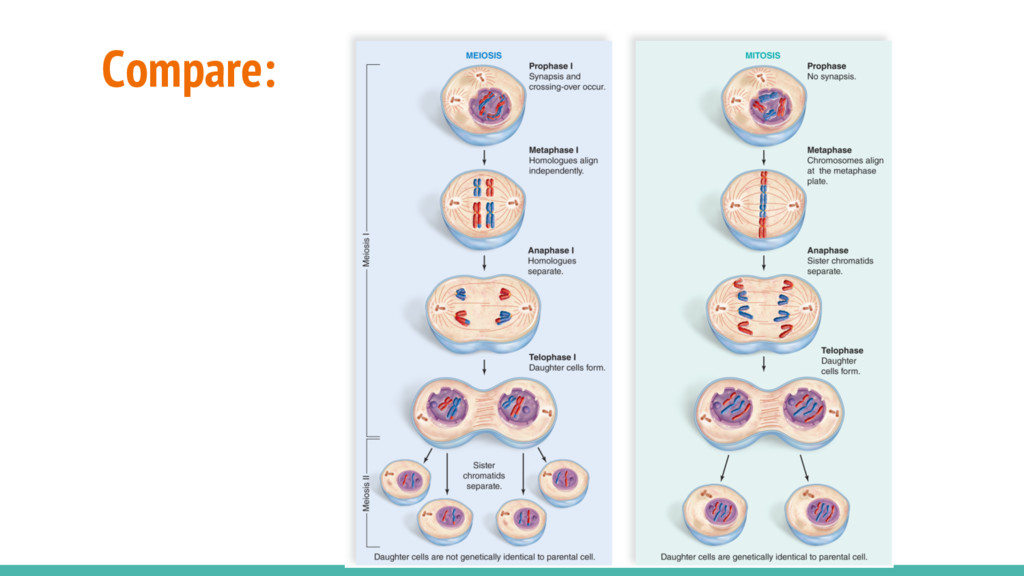
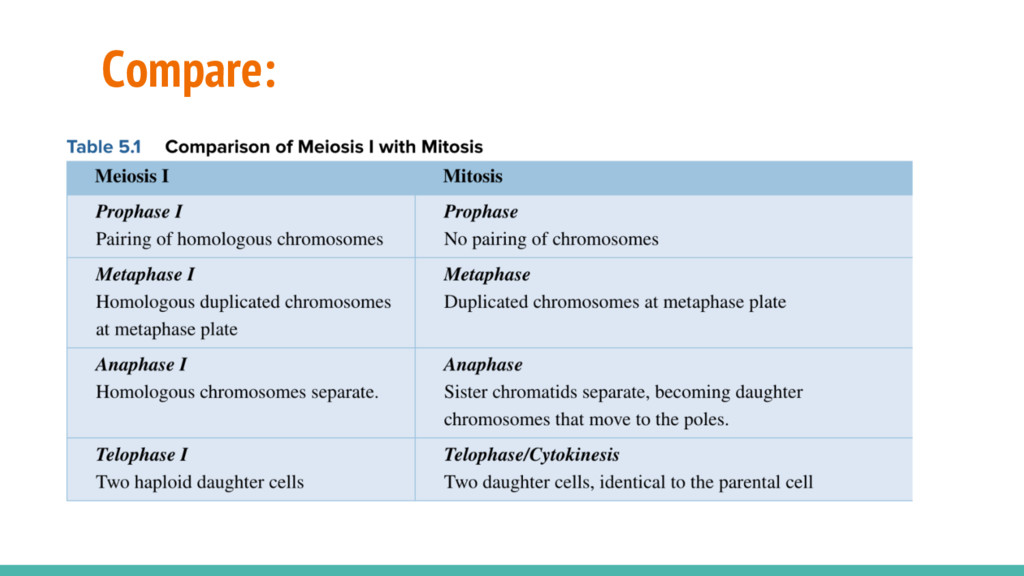
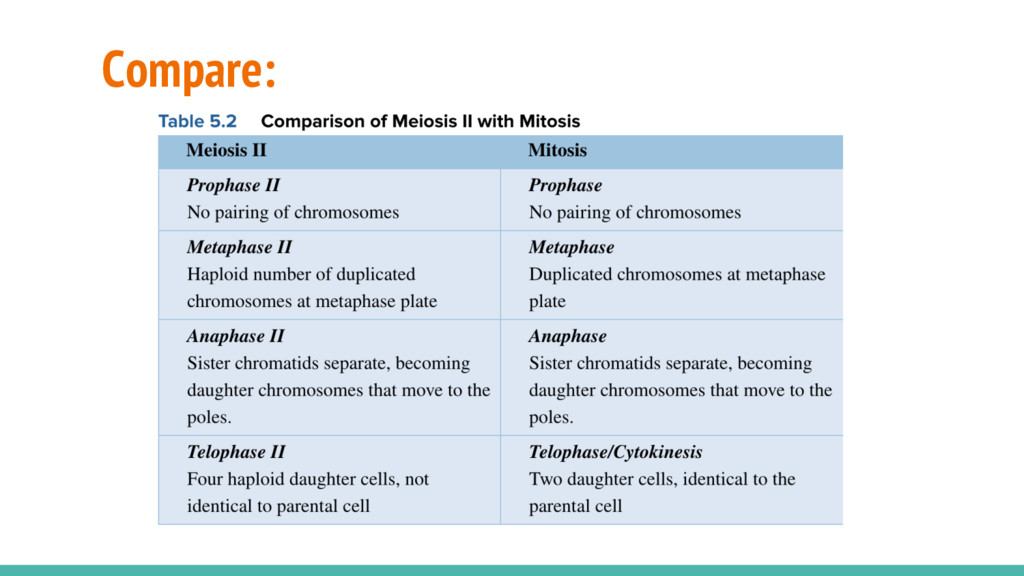
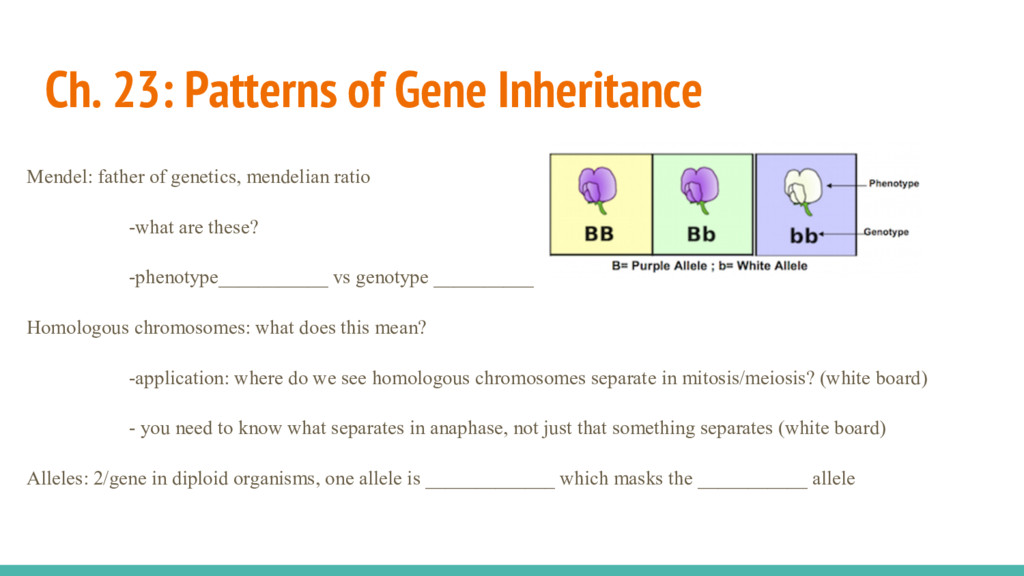
mendelian ratio -what are these? -phenotype___________ vs genotype __________ Homologous chromosomes: what does this mean? -application: where do we see homologous chromosomes separate in mitosis/meiosis? (white board) - you need to know what separates in anaphase, not just that something separates (white board) Alleles: 2/gene in diploid organisms, one allele is _____________ which masks the ___________ allele
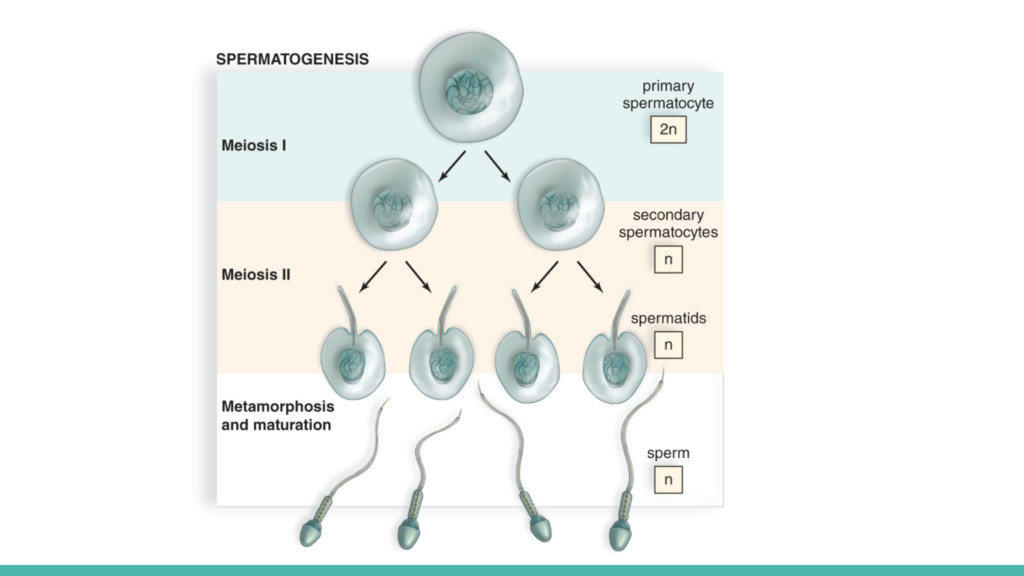
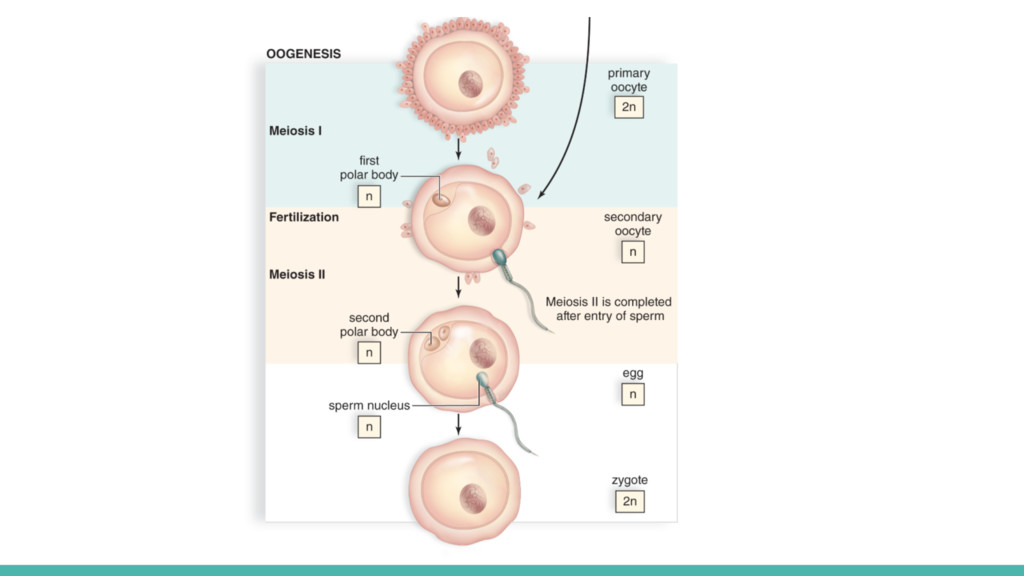
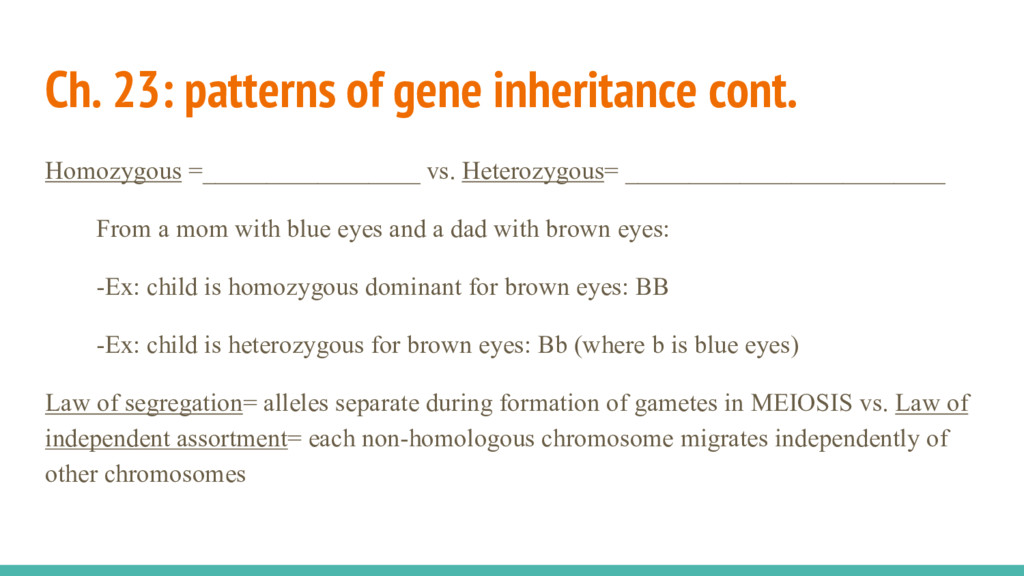
Heterozygous= _________________________ From a mom with blue eyes and a dad with brown eyes: -Ex: child is homozygous dominant for brown eyes: BB -Ex: child is heterozygous for brown eyes: Bb (where b is blue eyes) Law of segregation= alleles separate during formation of gametes in MEIOSIS vs. Law of independent assortment= each non-homologous chromosome migrates independently of other chromosomes
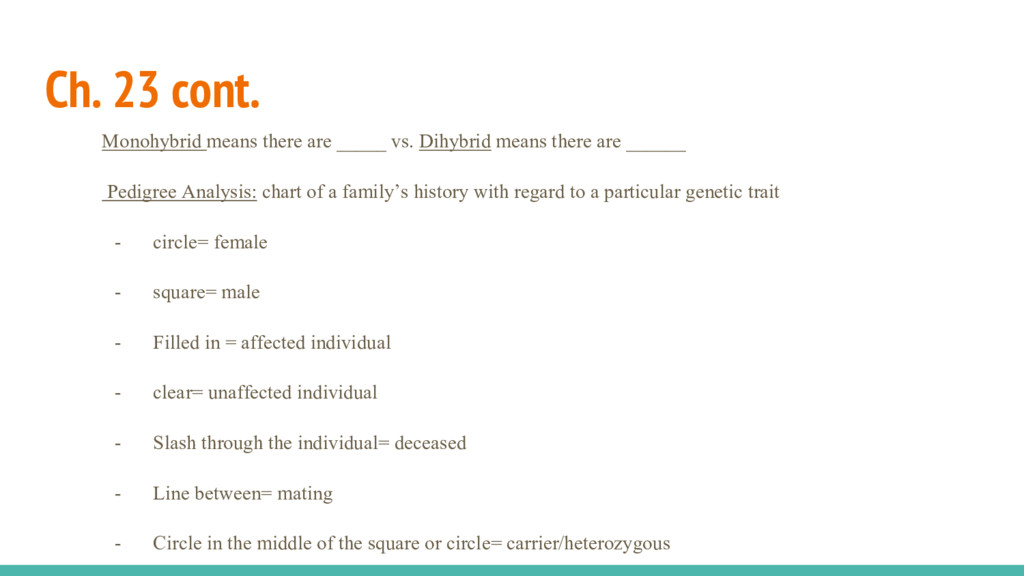
means there are ______ Pedigree Analysis: chart of a family’s history with regard to a particular genetic trait - circle= female - square= male - Filled in = affected individual - clear= unaffected individual - Slash through the individual= deceased - Line between= mating - Circle in the middle of the square or circle= carrier/heterozygous
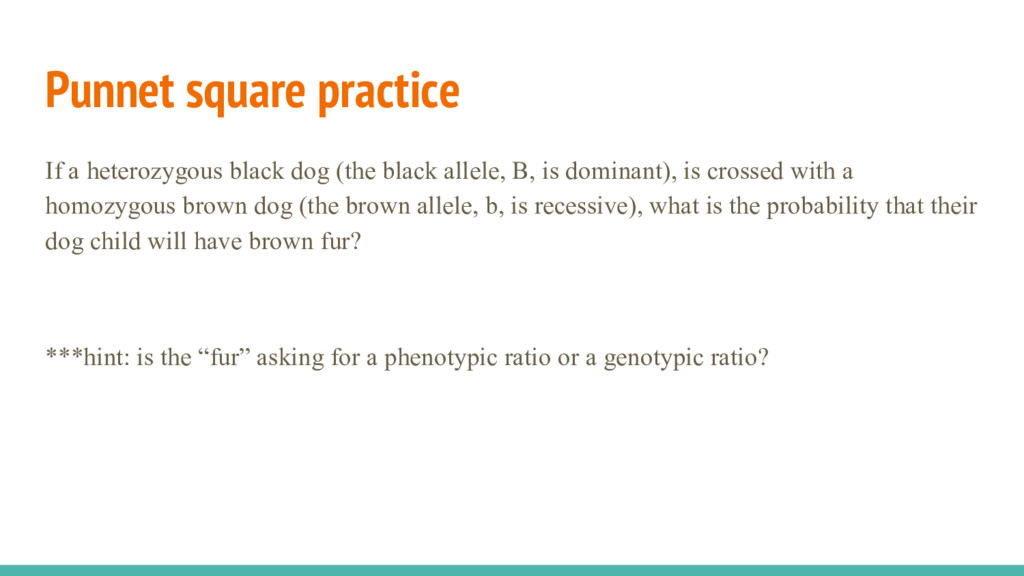
allele, B, is dominant), is crossed with a homozygous brown dog (the brown allele, b, is recessive), what is the probability that their dog child will have brown fur? ***hint: is the “fur” asking for a phenotypic ratio or a genotypic ratio?
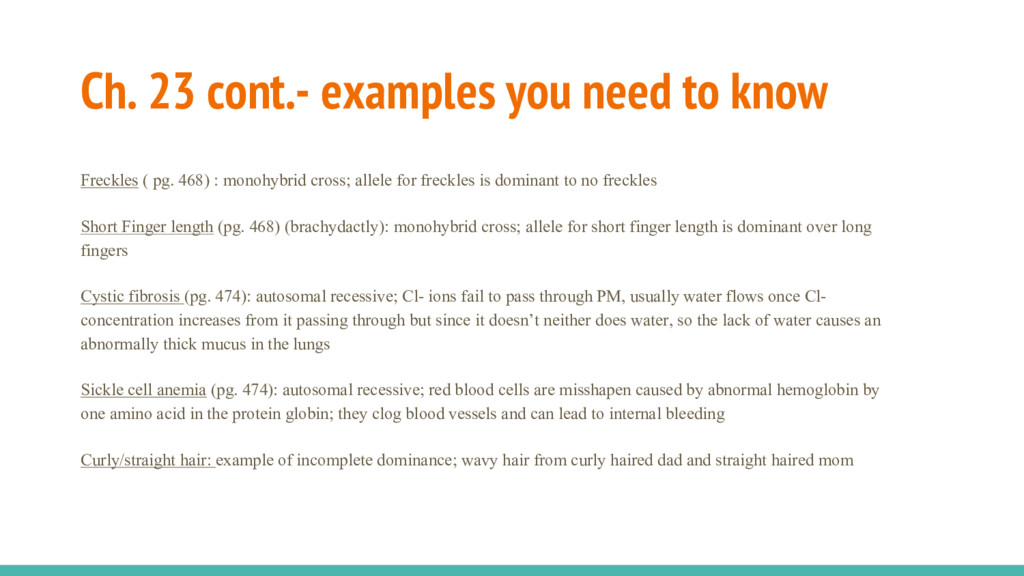
pg. 468) : monohybrid cross; allele for freckles is dominant to no freckles Short Finger length (pg. 468) (brachydactly): monohybrid cross; allele for short finger length is dominant over long fingers Cystic fibrosis (pg. 474): autosomal recessive; Cl- ions fail to pass through PM, usually water flows once Cl- concentration increases from it passing through but since it doesn’t neither does water, so the lack of water causes an abnormally thick mucus in the lungs Sickle cell anemia (pg. 474): autosomal recessive; red blood cells are misshapen caused by abnormal hemoglobin by one amino acid in the protein globin; they clog blood vessels and can lead to internal bleeding Curly/straight hair: example of incomplete dominance; wavy hair from curly haired dad and straight haired mom
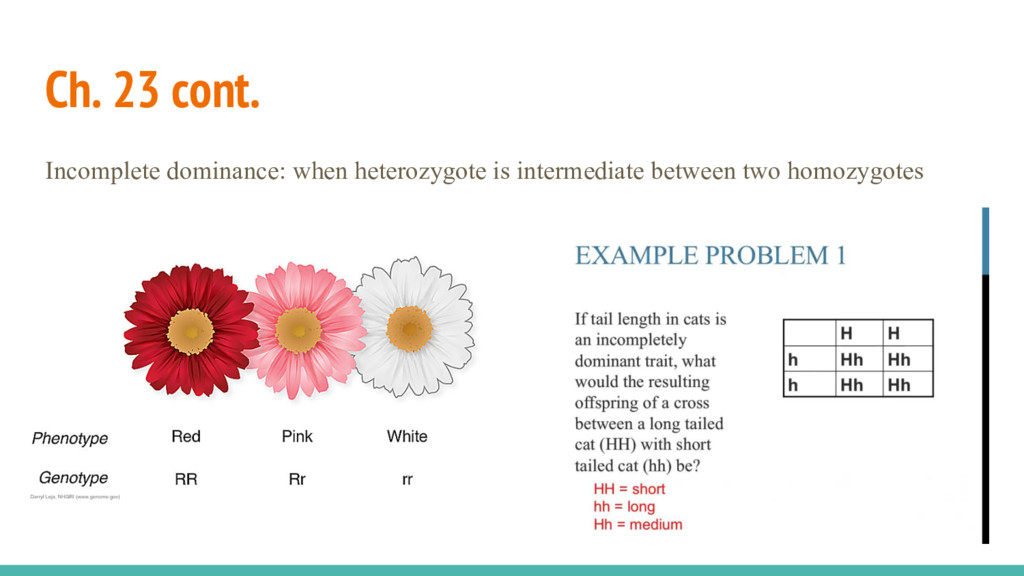
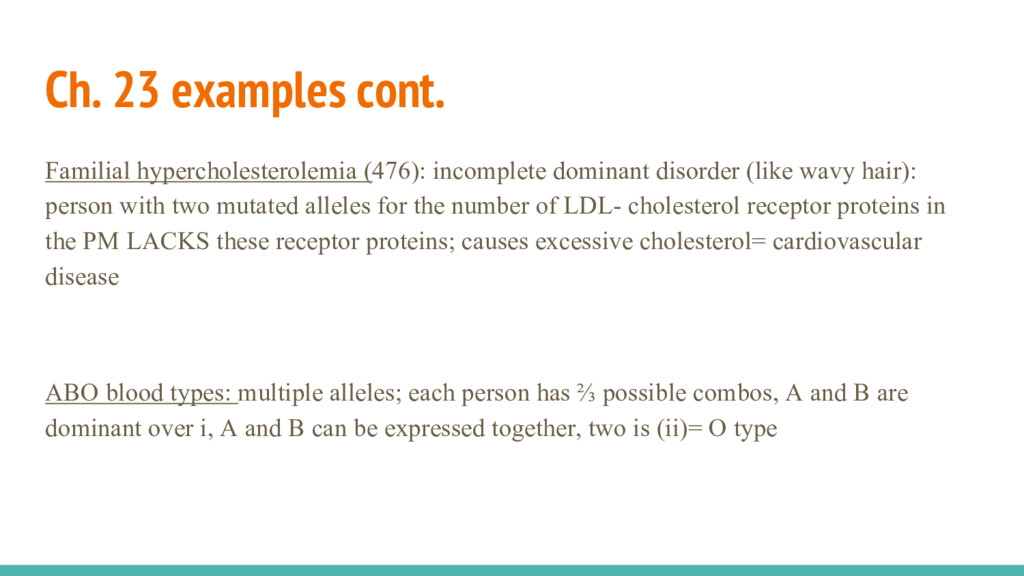
(like wavy hair): person with two mutated alleles for the number of LDL- cholesterol receptor proteins in the PM LACKS these receptor proteins; causes excessive cholesterol= cardiovascular disease ABO blood types: multiple alleles; each person has ⅔ possible combos, A and B are dominant over i, A and B can be expressed together, two is (ii)= O type
governed by 2+ sets of _______ 1. Height: controlled by MANY alleles, results in a range of height phenotypes 2. Skin color : controlled by MANY alleles, results in a range of skin color phenotypes Environmental influences: can influence expression of genetic traits! 1. Height: can range according to nutrition during growing time 2. Temp. control on crocodile sex: females vs. males 3. Himalayan rabbit color markings: black patches grow due to an enzyme that became inactive because the temp. Was not low enough
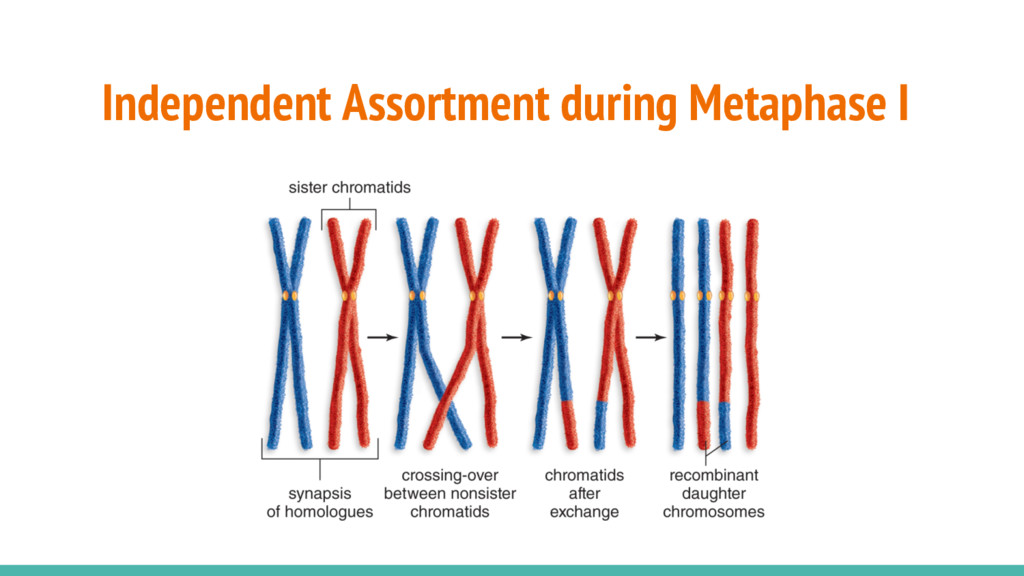
____________ occurs in meiosis; if not broken, this leads to less genetic variation= unfavorable or favorable? Let’s talk numbers: - Humans: 22 autosomal chromosomes and one pair of sex chromosomes (23 total) Sex linked traits means: Genes/traits that are carried on the ___ or ___ chromosomes - Mainly carried on X chromosome = X- linked (for Y chromosome= Y linked) *** Does not mea sex-determining!!! ***There are different patterns of inheritance with sex-linked traits
disorder: - More males than females express these disorders because recessive alleles in males are always expressed (females have two XX, so a dominant allele could save them) - Often pass from father-------> grandson because the females are carriers - Ex: color blindness, duchenne muscular dystrophy, fragile x- syndrome, hemophilia X linked dominant disorders: - Affected males pass trait ONLY TO DAUGHTERS - If female is heterozygous and her partner is norma, her child has a 50% chance
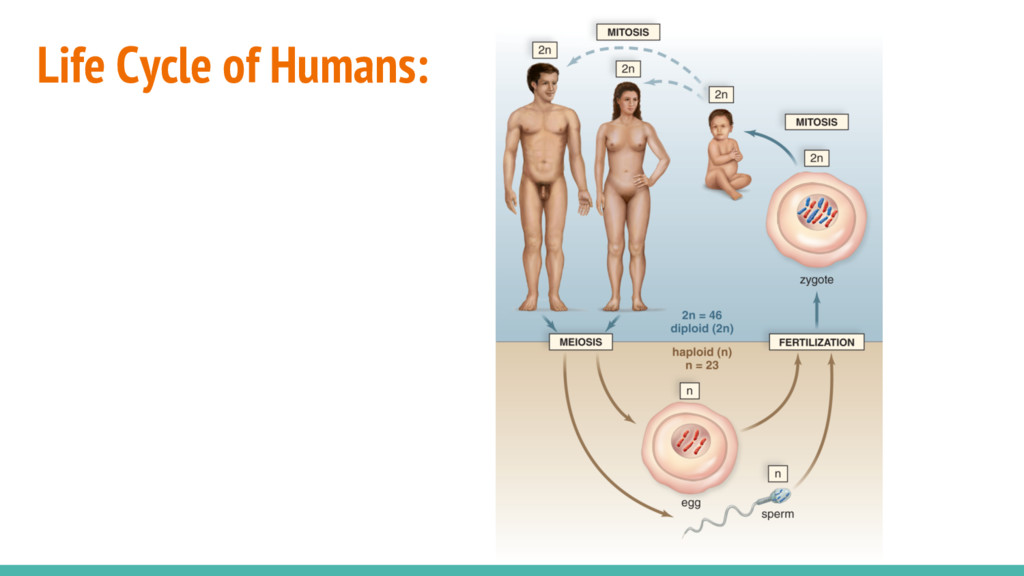
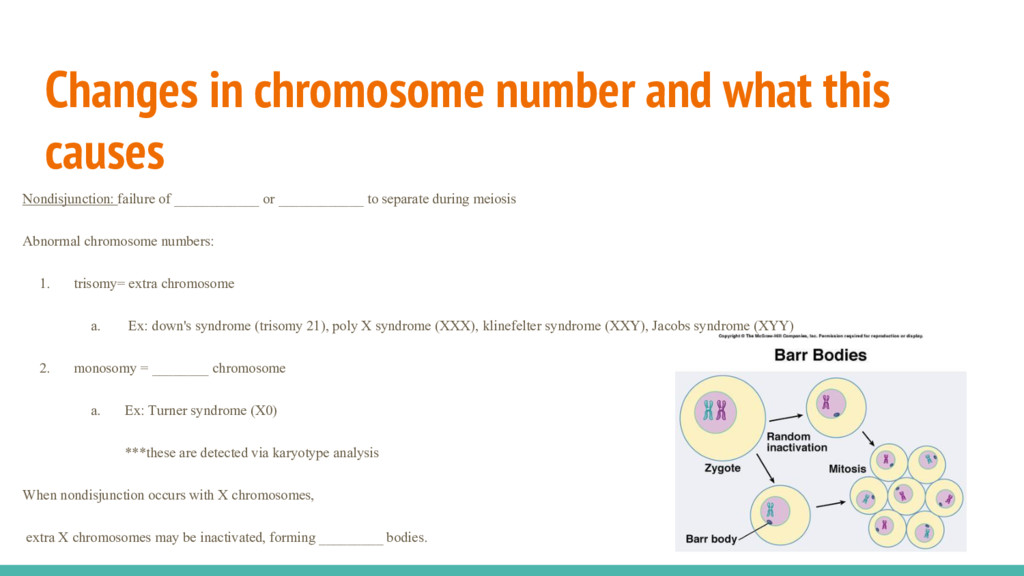
of ____________ or ____________ to separate during meiosis Abnormal chromosome numbers: 1. trisomy= extra chromosome a. Ex: down's syndrome (trisomy 21), poly X syndrome (XXX), klinefelter syndrome (XXY), Jacobs syndrome (XYY) 2. monosomy = ________ chromosome a. Ex: Turner syndrome (X0) ***these are detected via karyotype analysis When nondisjunction occurs with X chromosomes, extra X chromosomes may be inactivated, forming _________ bodies.
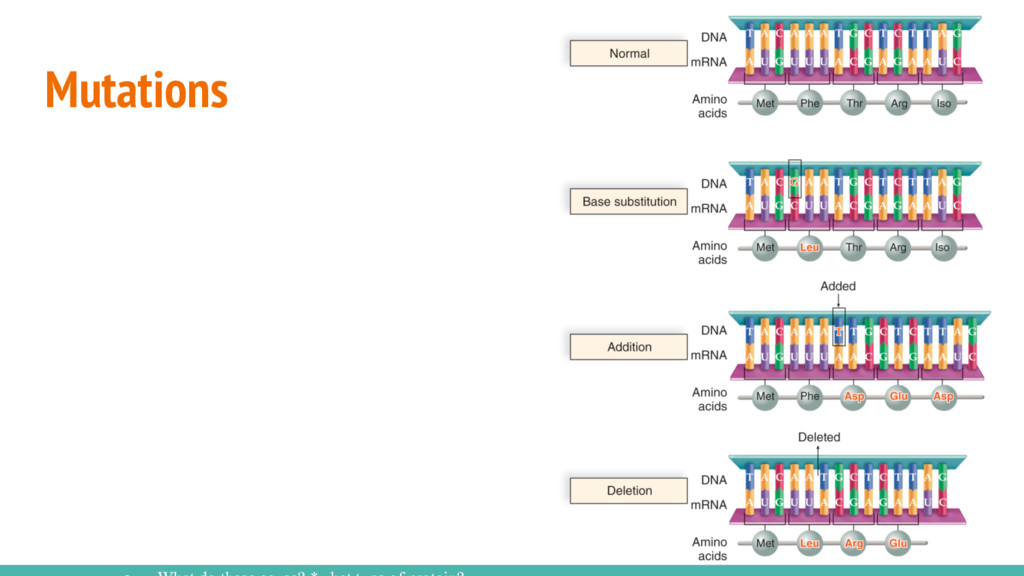
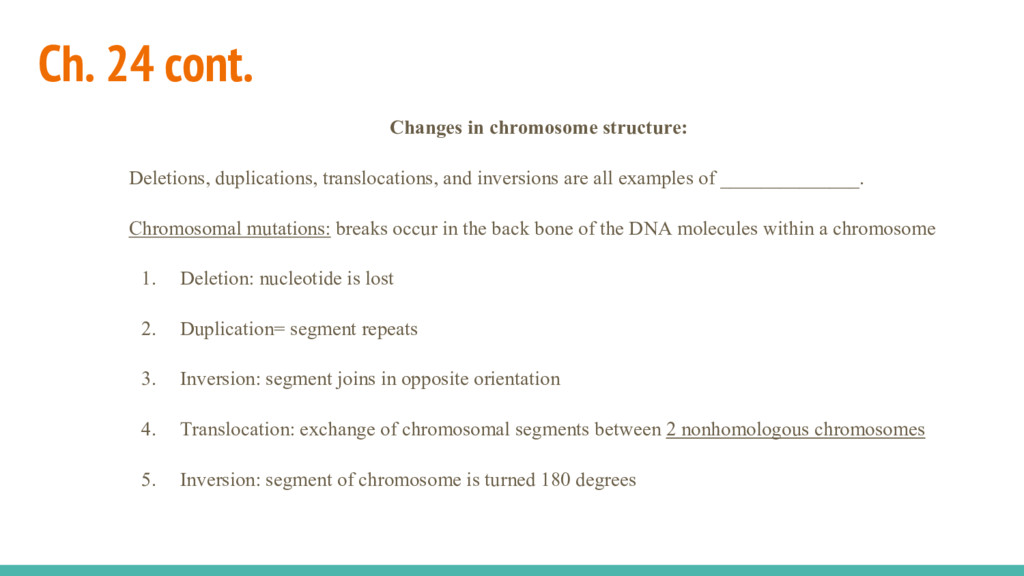
and inversions are all examples of ______________. Chromosomal mutations: breaks occur in the back bone of the DNA molecules within a chromosome 1. Deletion: nucleotide is lost 2. Duplication= segment repeats 3. Inversion: segment joins in opposite orientation 4. Translocation: exchange of chromosomal segments between 2 nonhomologous chromosomes 5. Inversion: segment of chromosome is turned 180 degrees


 hannesfritz
 rocio
 tmiket
 moore
 lauravandoore
 reverentgeek
 mraible
 jonrohan
 signer
 jonoalderson
 minecr
 axbom