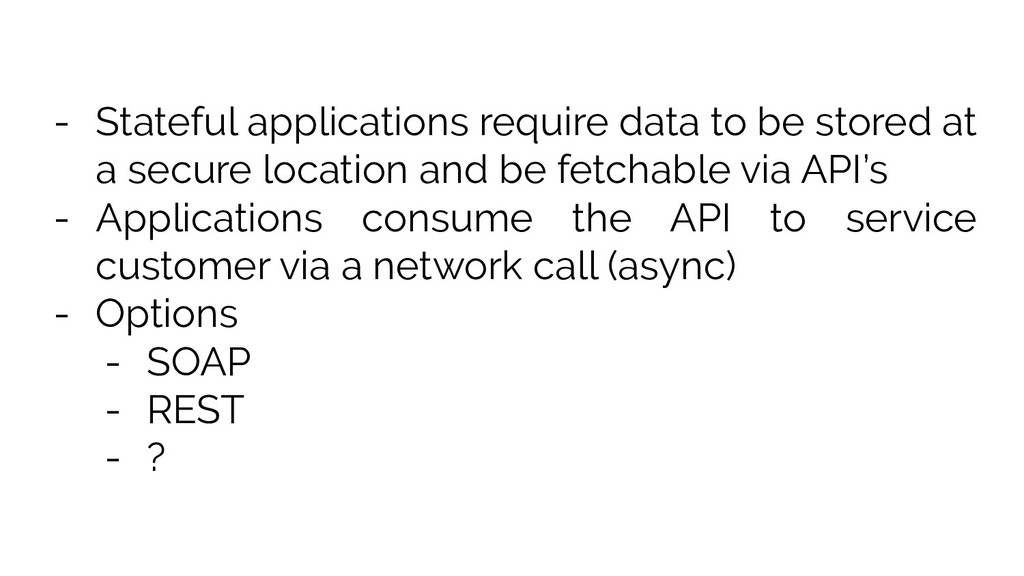
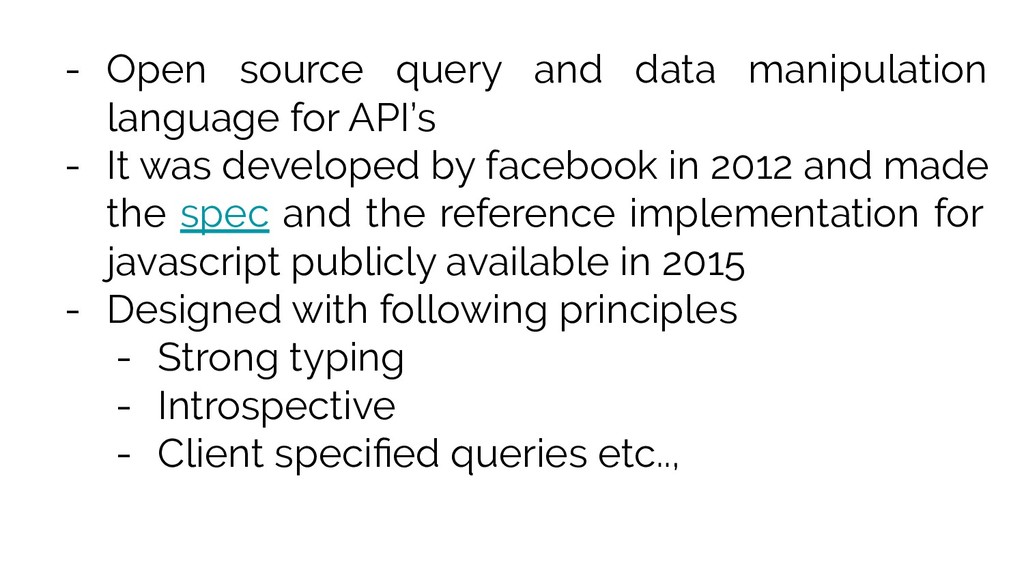
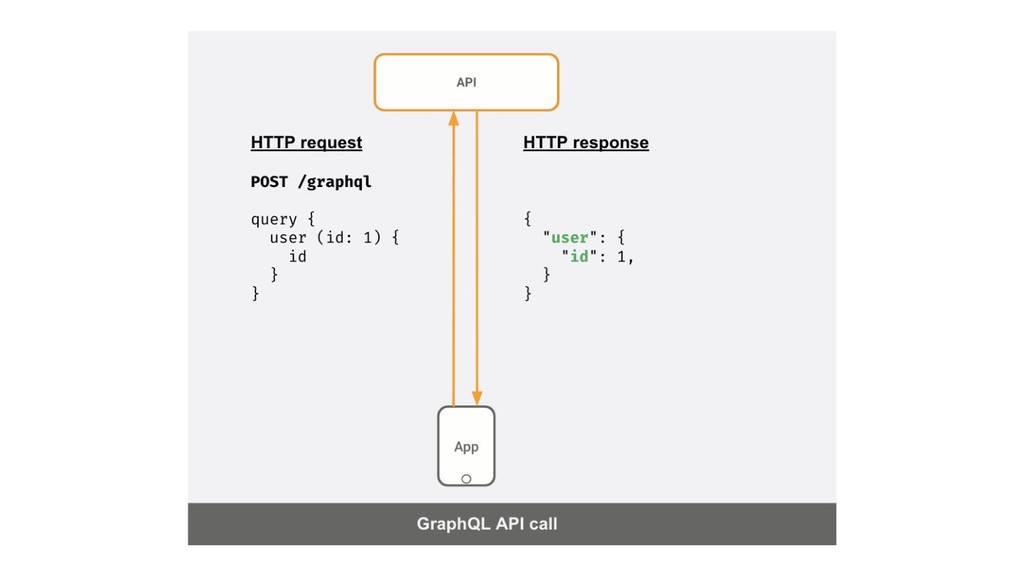
- It was developed by facebook in 2012 and made the spec and the reference implementation for javascript publicly available in 2015 - Designed with following principles - Strong typing - Introspective - Client specified queries etc..,
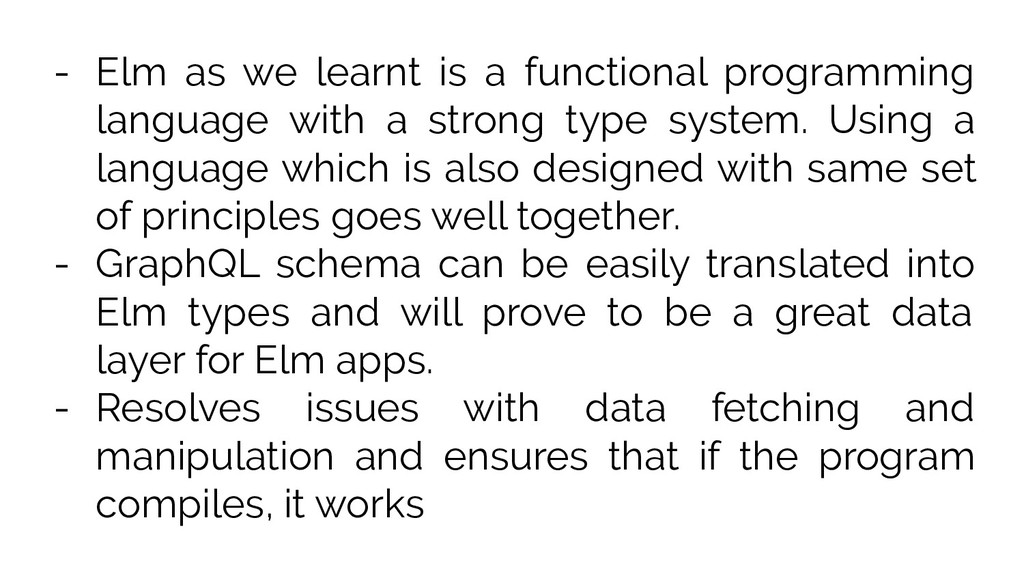
with a strong type system. Using a language which is also designed with same set of principles goes well together. - GraphQL schema can be easily translated into Elm types and will prove to be a great data layer for Elm apps. - Resolves issues with data fetching and manipulation and ensures that if the program compiles, it works
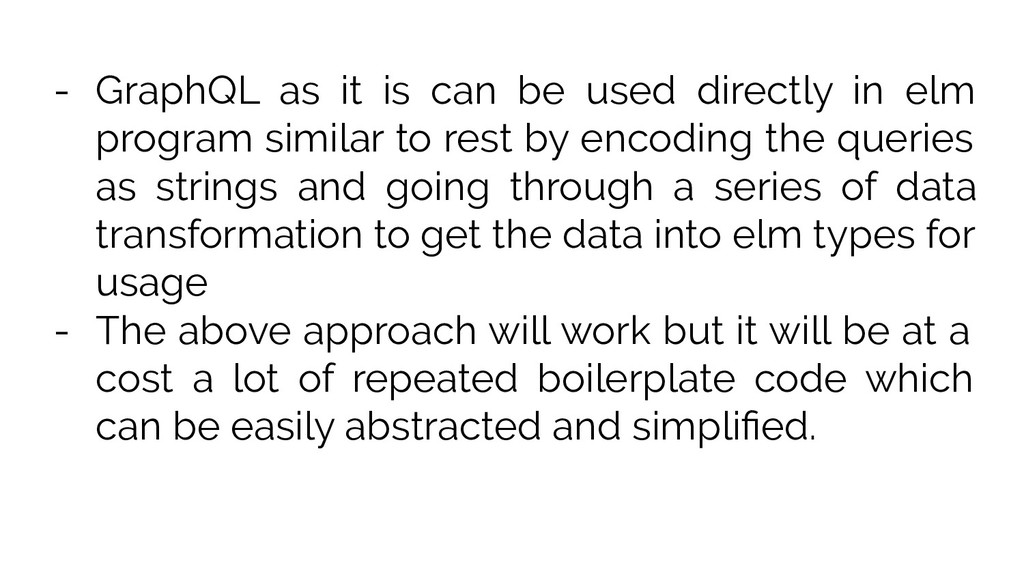
elm program similar to rest by encoding the queries as strings and going through a series of data transformation to get the data into elm types for usage - The above approach will work but it will be at a cost a lot of repeated boilerplate code which can be easily abstracted and simplified.
of using GraphQL directly - Explore ways on how we can improve the experience by abstracting key parts (query, mutation functions) using elm types. - We will then use it to interact with our GraphQL server
applications using it - Have better understanding of Elm type system and how to write your own custom DSL to query GraphQL - Be in a position to evaluate GraphQL and/or Elm for your next project


 rshindo
 kinopeee
 hschwentner
 kmars0605
 drumath2237
 ichirokano2
 panda728
 timakin
 o0h
 marcoroth
 findyinc
 kishida
 cromwellryan
 ryanjones
 jct
 tammyeverts
 chikuwait
 axbom
 mraible
 smashingmag
 dugsong
 mojombo
 csswizardry