experimentation and model tuning. In production, Java shines for high-throughput inference, operational stability, and seamless integration with JVM-based microservices and enterprise ecosystems. Teams often split roles: researchers iterate in Python; production teams embed robust inference services—such as fraud 现 detection—into scalable Java .
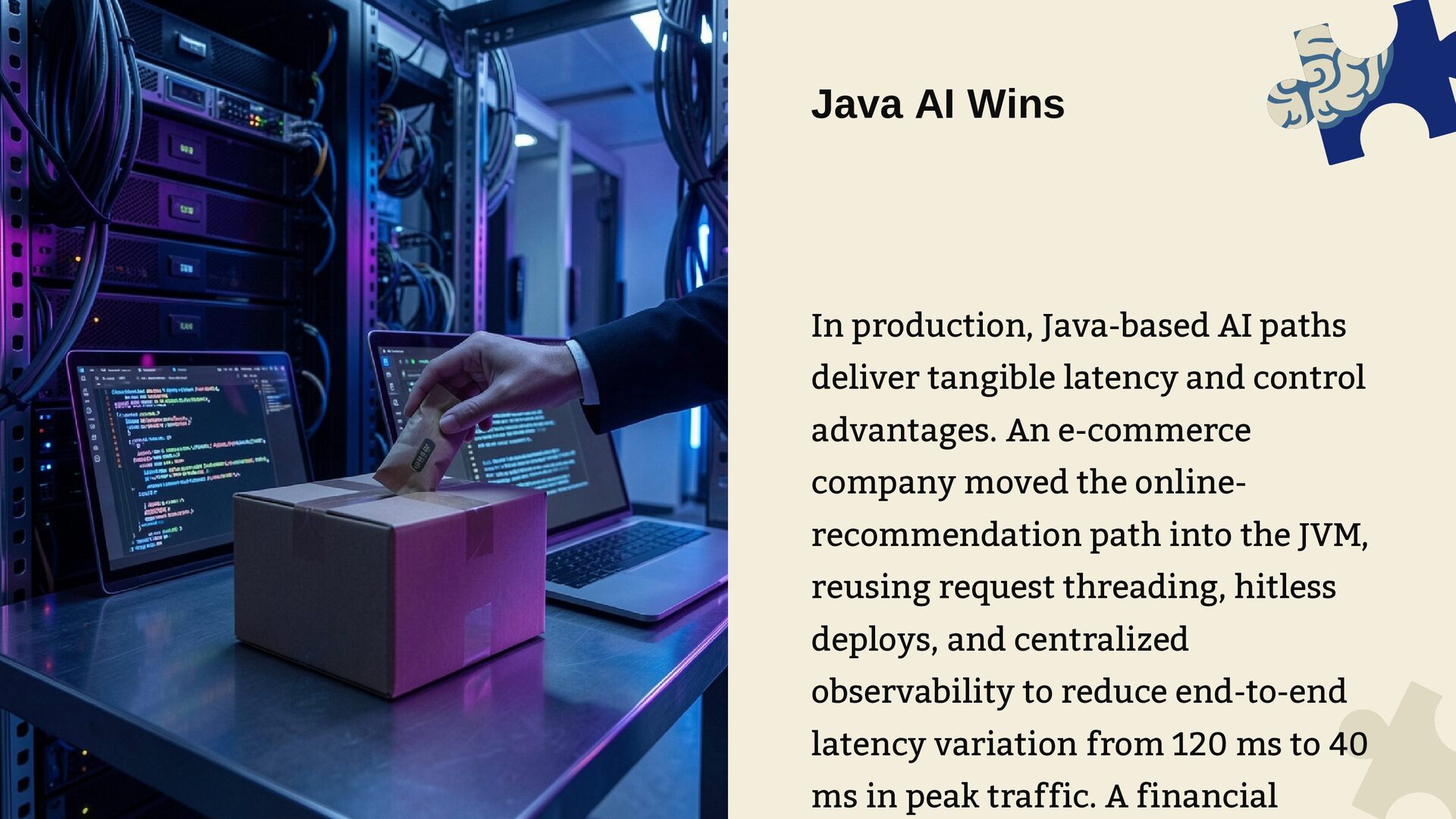
latency and control advantages. An e-commerce company moved the onlinerecommendation path into the JVM, reusing request threading, hitless deploys, and centralized observability to reduce end-to-end latency variation from 120 ms to 40 ms in peak traffic. A financial
typing, and REPL workflows. This lane favors fast proof-of-concept modeling and experimentation, reducing time-to-value in early AI work. Static typing, mature build tooling, and strong JIT performance enable robust, low-latency inference and seamless integration with enterprise systems. Ideal for production-grade deployment and observability within JVM-based services. Python trades speed of experimentation for deployment complexity; Java trades deployment simplicity for upfront verbosity and heavier initial setup.
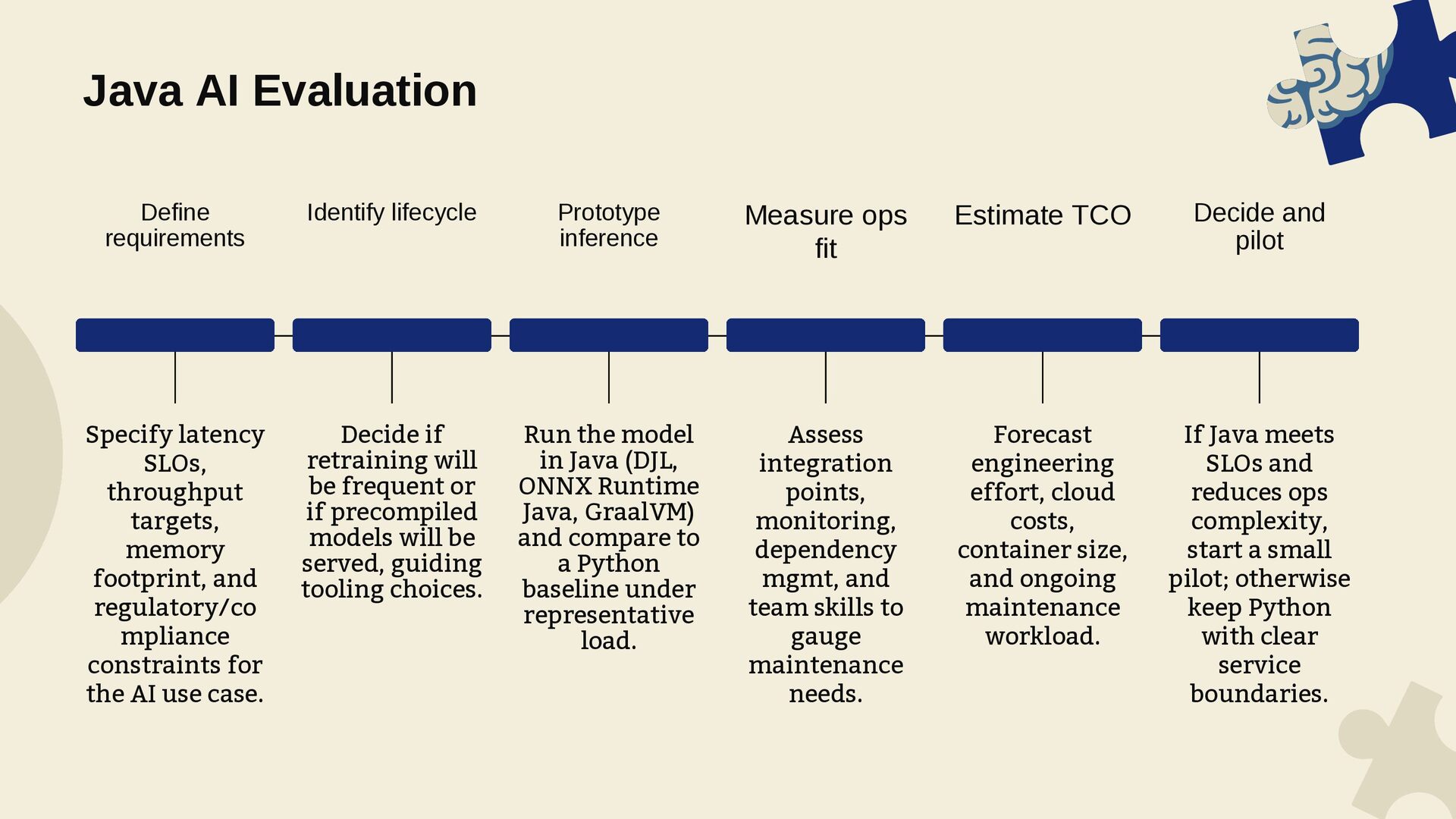
ops fit Estimate TCO Decide and pilot Specify latency SLOs, throughput targets, memory footprint, and regulatory/co mpliance constraints for the AI use case. Decide if retraining will be frequent or if precompiled models will be served, guiding tooling choices. Run the model in Java (DJL, ONNX Runtime Java, GraalVM) and compare to a Python baseline under representative load. Assess integration points, monitoring, dependency mgmt, and team skills to gauge maintenance needs. Forecast engineering effort, cloud costs, container size, and ongoing maintenance workload. If Java meets SLOs and reduces ops complexity, start a small pilot; otherwise keep Python with clear service boundaries.
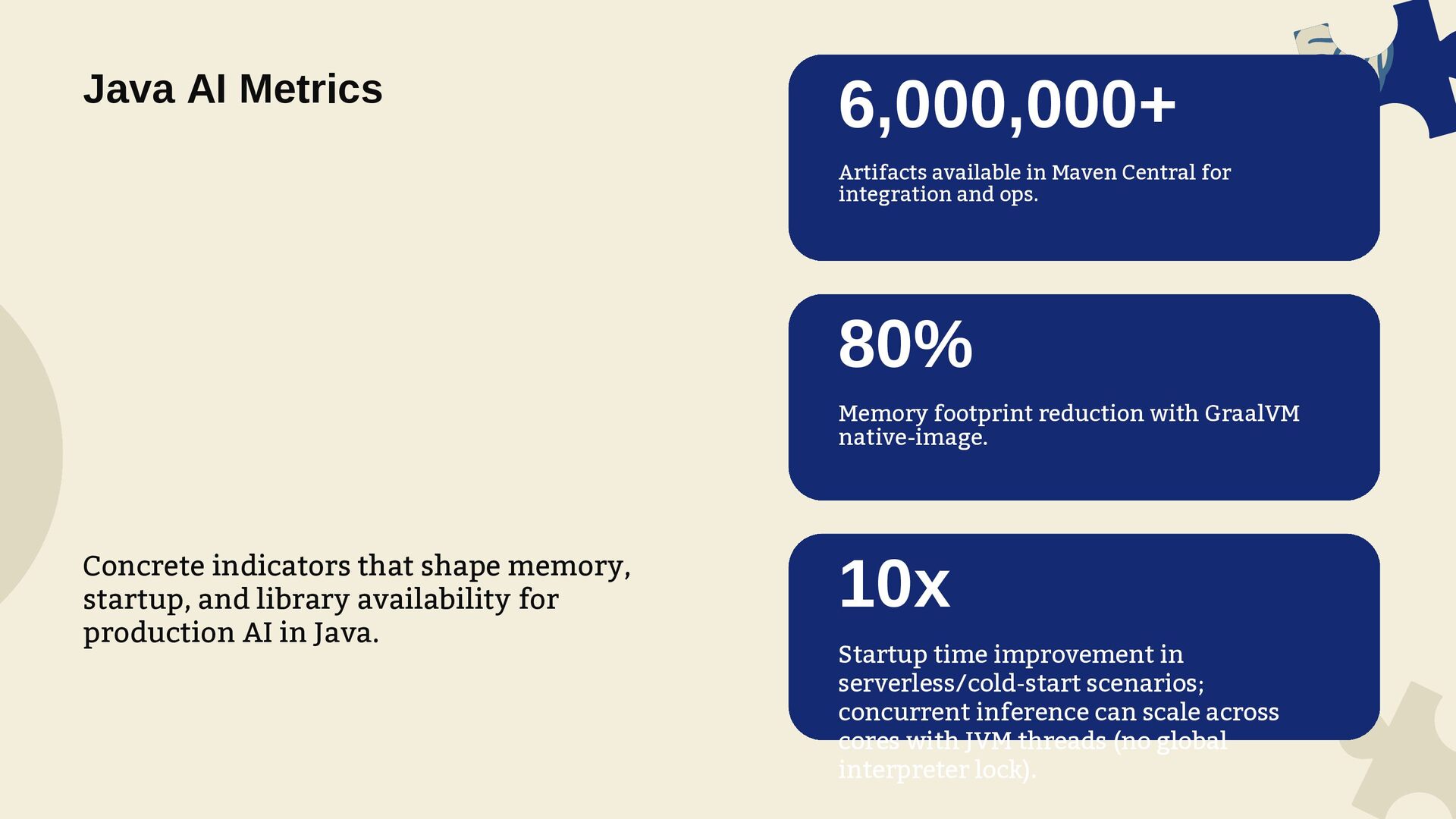
integration and ops. 80% Memory footprint reduction with GraalVM native-image. Concrete indicators that shape memory, startup, and library availability for production AI in Java. 10x Startup time improvement in serverless/cold-start scenarios; concurrent inference can scale across cores with JVM threads (no global interpreter lock).
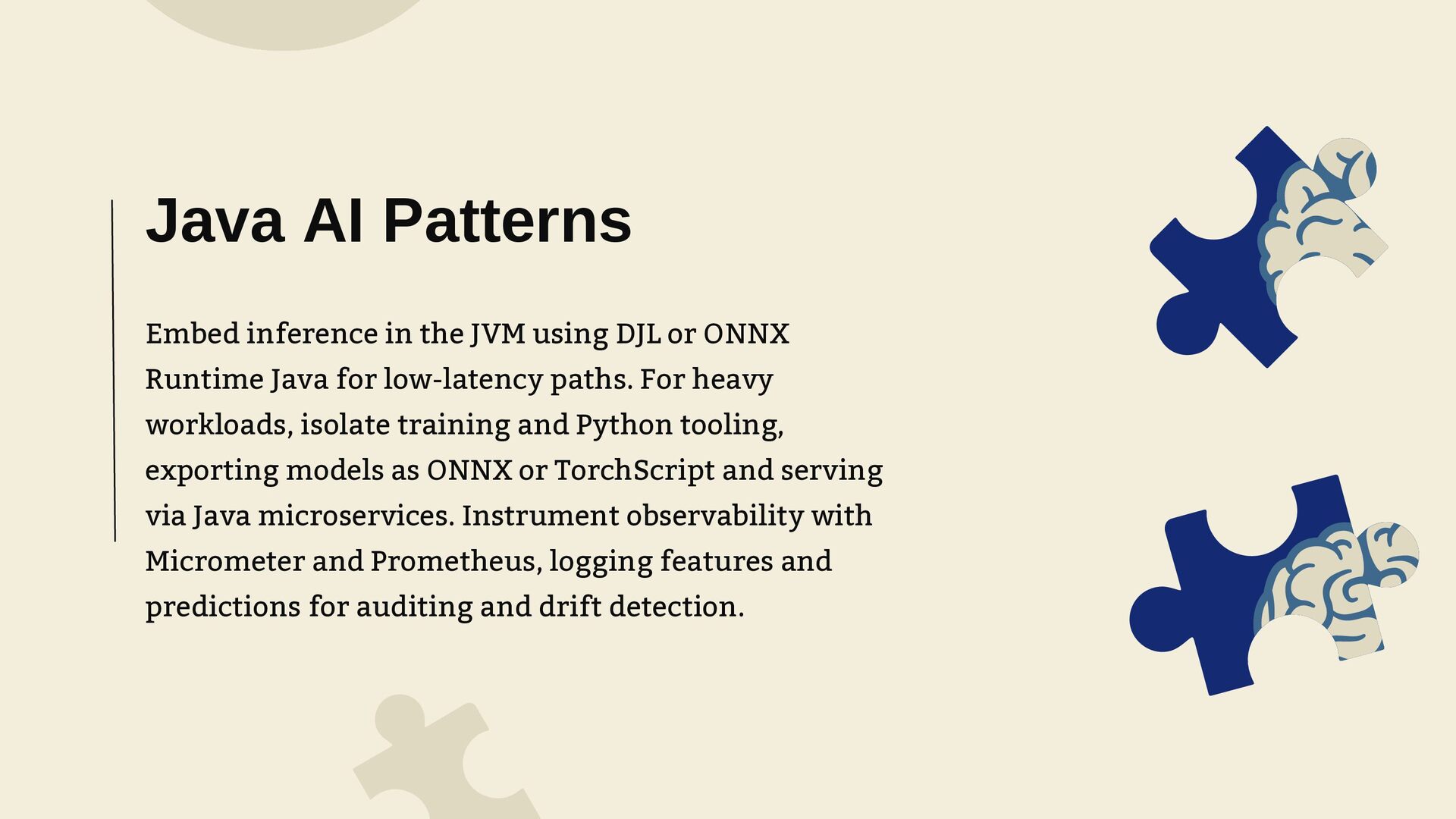
or ONNX Runtime Java for low-latency paths. For heavy workloads, isolate training and Python tooling, exporting models as ONNX or TorchScript and serving via Java microservices. Instrument observability with Micrometer and Prometheus, logging features and predictions for auditing and drift detection.
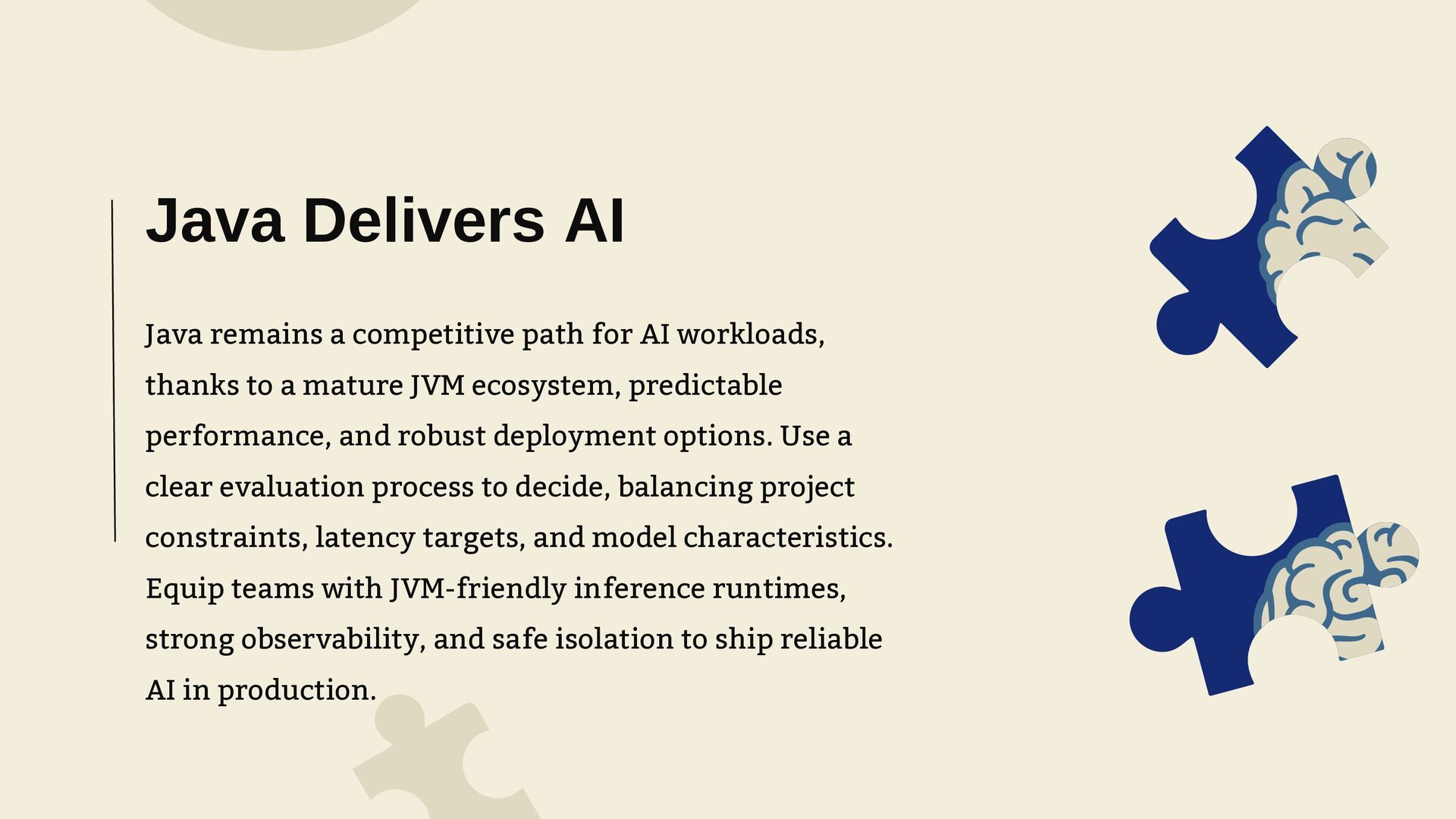
workloads, thanks to a mature JVM ecosystem, predictable performance, and robust deployment options. Use a clear evaluation process to decide, balancing project constraints, latency targets, and model characteristics. Equip teams with JVM-friendly inference runtimes, strong observability, and safe isolation to ship reliable AI in production.


 kumar0727
 charlesmeaden
 leimatthew05
 shlominoach
 aemeredith
 morganepeng
 hannesfritz
 aleyda
 rkendrick25
 geoffreycrofte
 marktimemedia
 davetheseo
 tanoku