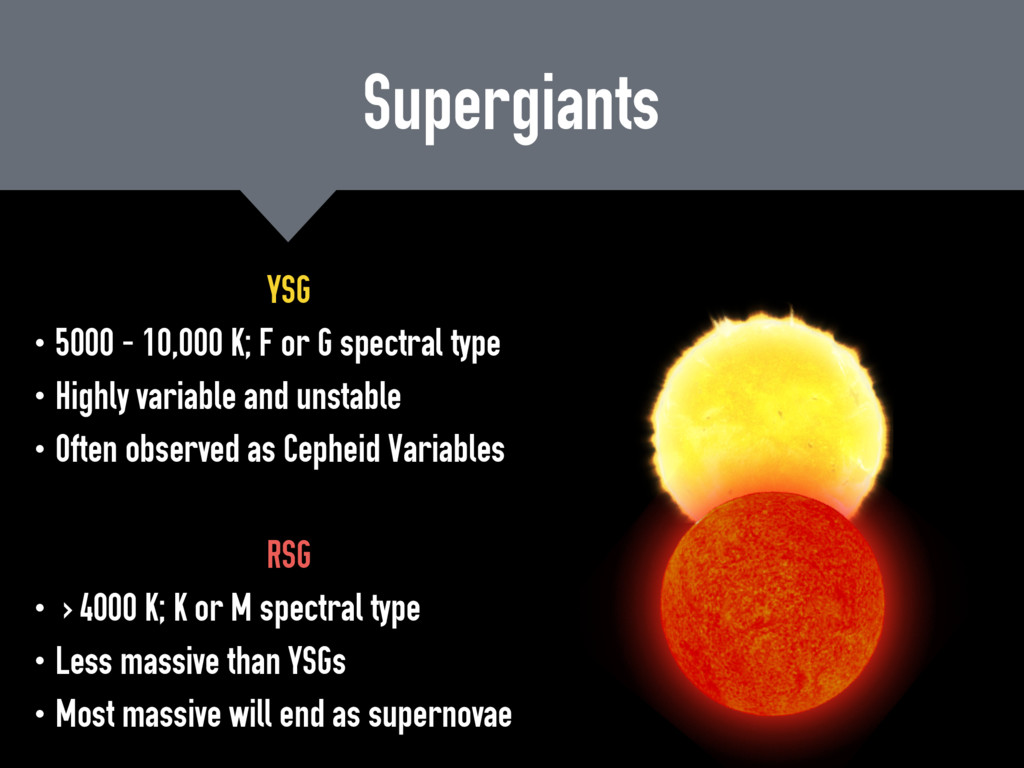
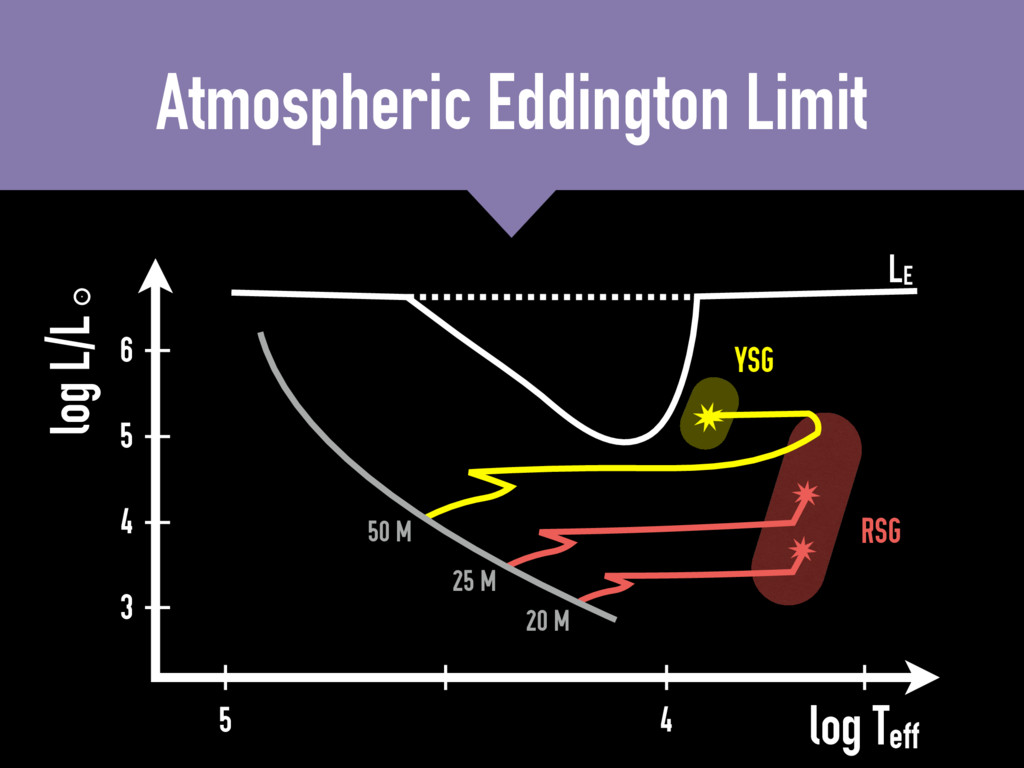
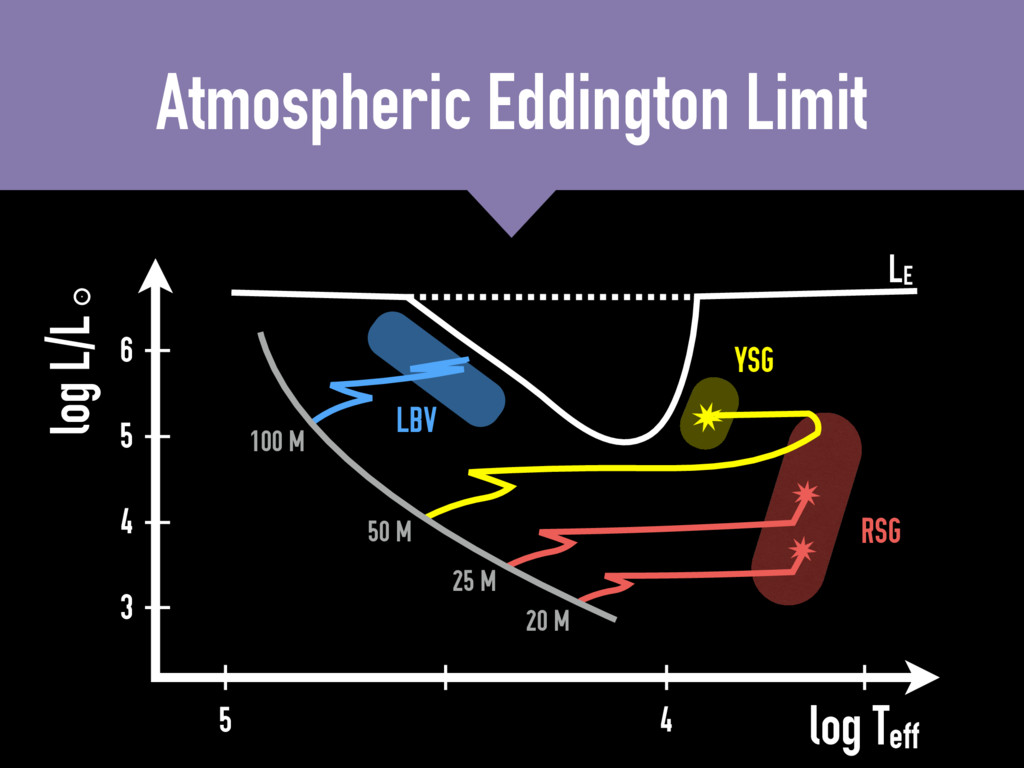
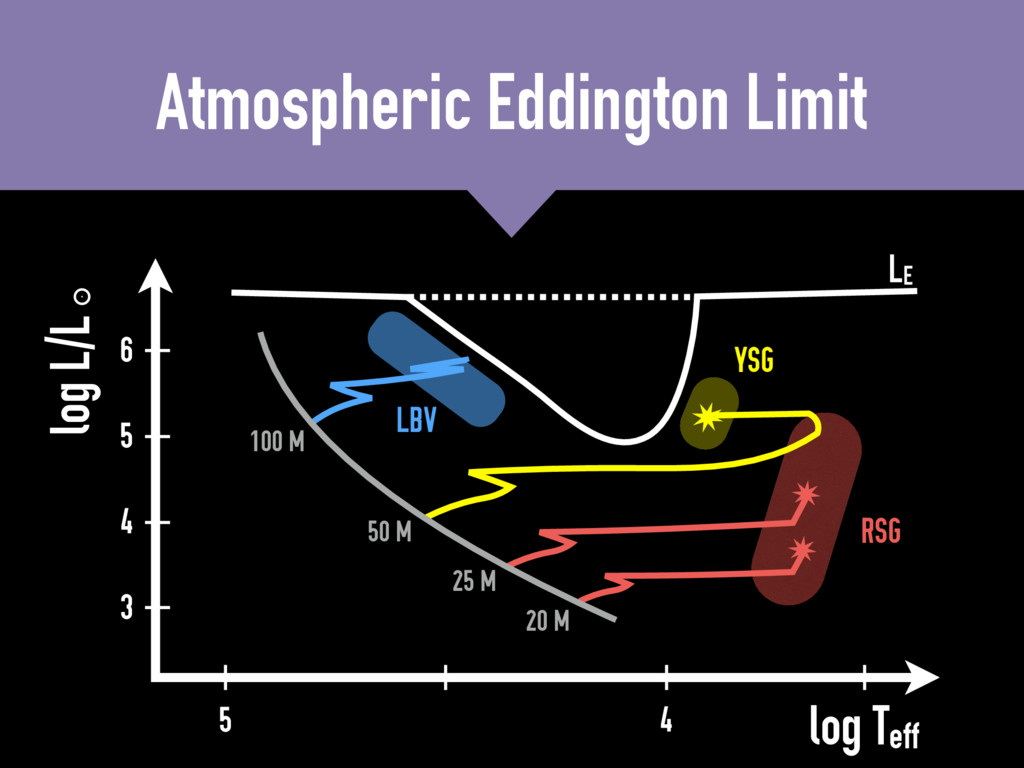
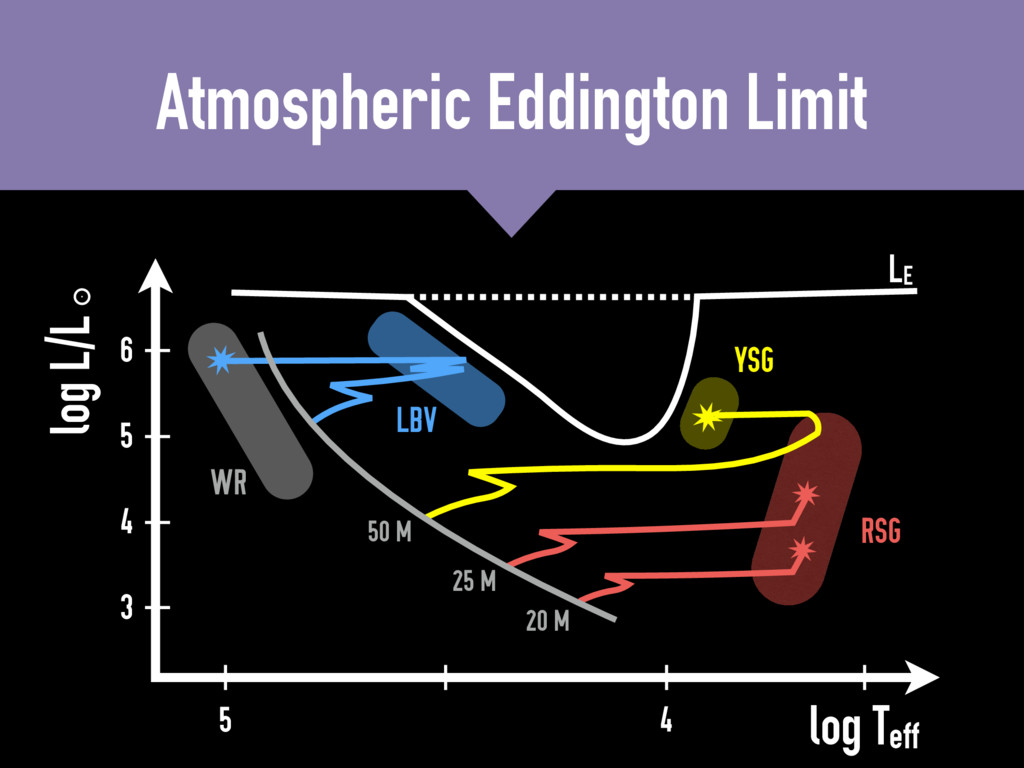
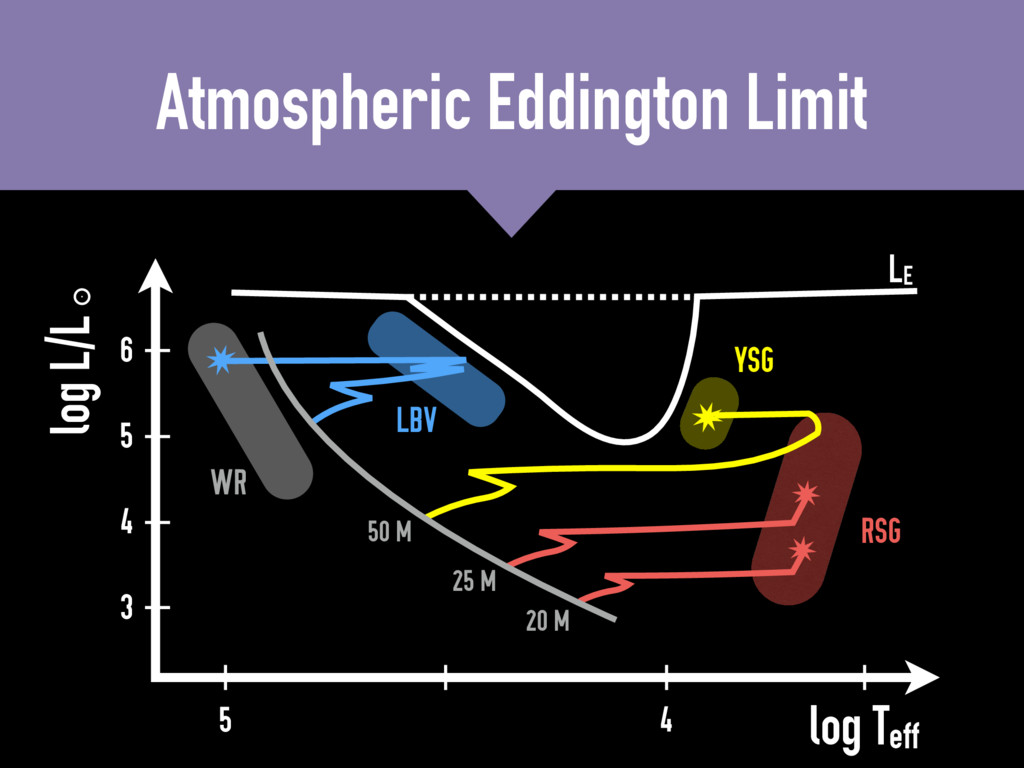
spectral type • Highly variable and unstable • Often observed as Cepheid Variables RSG • > 4000 K; K or M spectral type • Less massive than YSGs • Most massive will end as supernovae
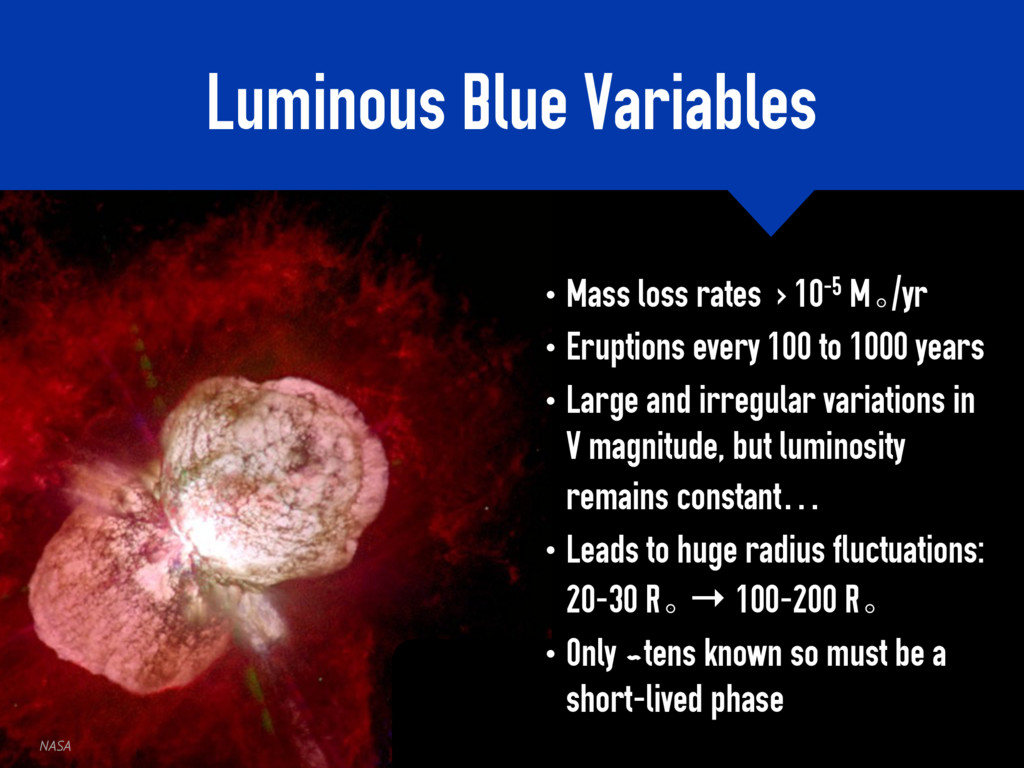
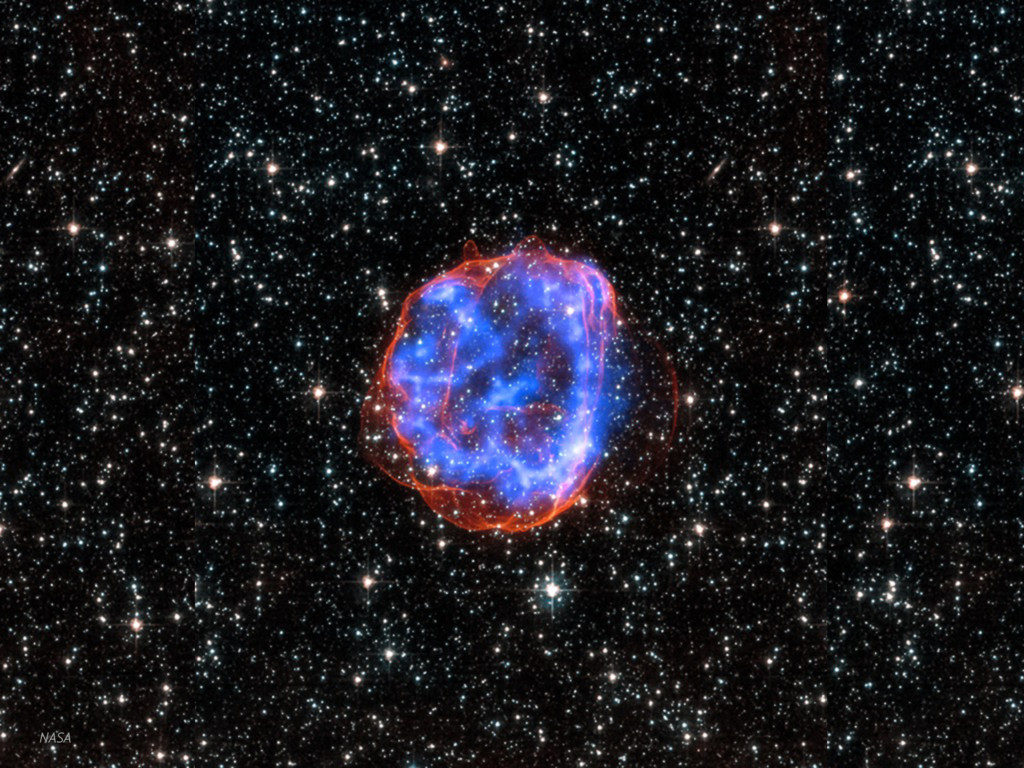
/yr • Eruptions every 100 to 1000 years • Large and irregular variations in V magnitude, but luminosity remains constant… • Leads to huge radius fluctuations: 20-30 R☉ → 100-200 R☉ • Only ~tens known so must be a short-lived phase NASA
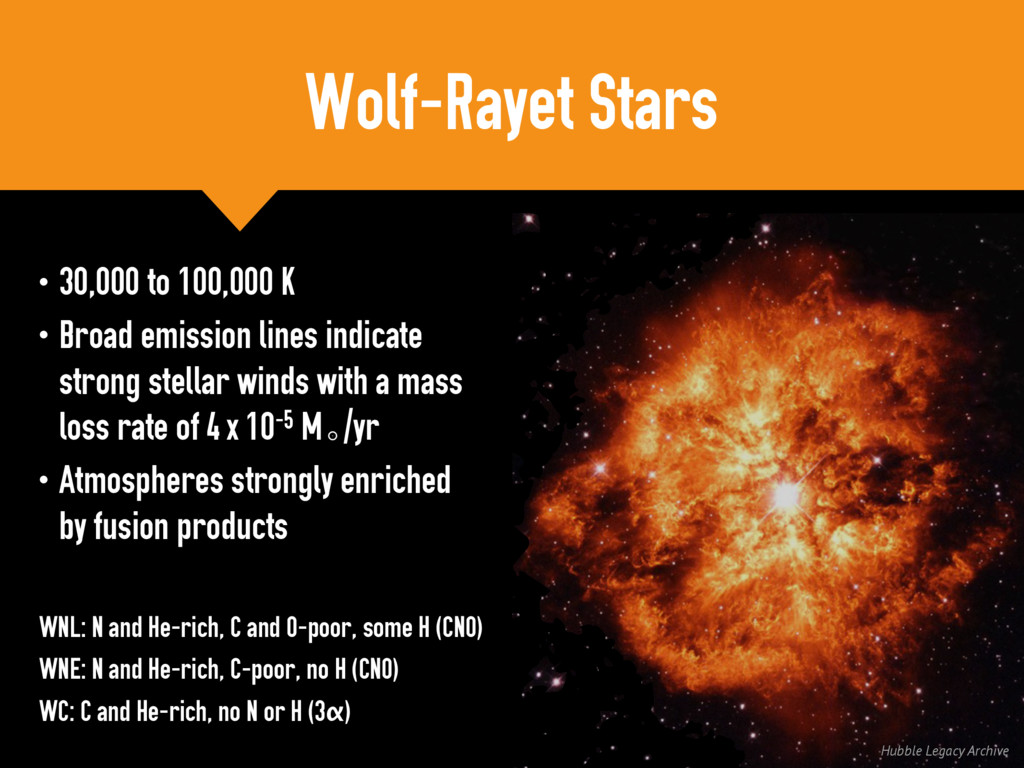
• Broad emission lines indicate strong stellar winds with a mass loss rate of 4 x 10⁻⁵ M☉ /yr • Atmospheres strongly enriched by fusion products WNL: N and He-rich, C and O-poor, some H (CNO) WNE: N and He-rich, C-poor, no H (CNO) WC: C and He-rich, no N or H (3α)


 kweis
kweis
 brainpadpr
 arfon
arfon
 trycycle
 mickey_0226
 tagtag
 neutron63zf
 syuchimu
 estie
estie
 okana2ki
 rkendrick25
 andyhume
 aleyda
 lcolladotor
 eileencodes
 tmiket
 sonatard
 gr2m
gr2m
 keathley
 bryan
bryan
 cassininazir