Upgrade to Pro — share decks privately, control downloads, hide ads and more …

INCIDENTAL SAMPLING

Avatar for Larija m.k Larija m.k
October 01, 2026
8

INCIDENTAL SAMPLING

Incidental Sampling – Brief Description

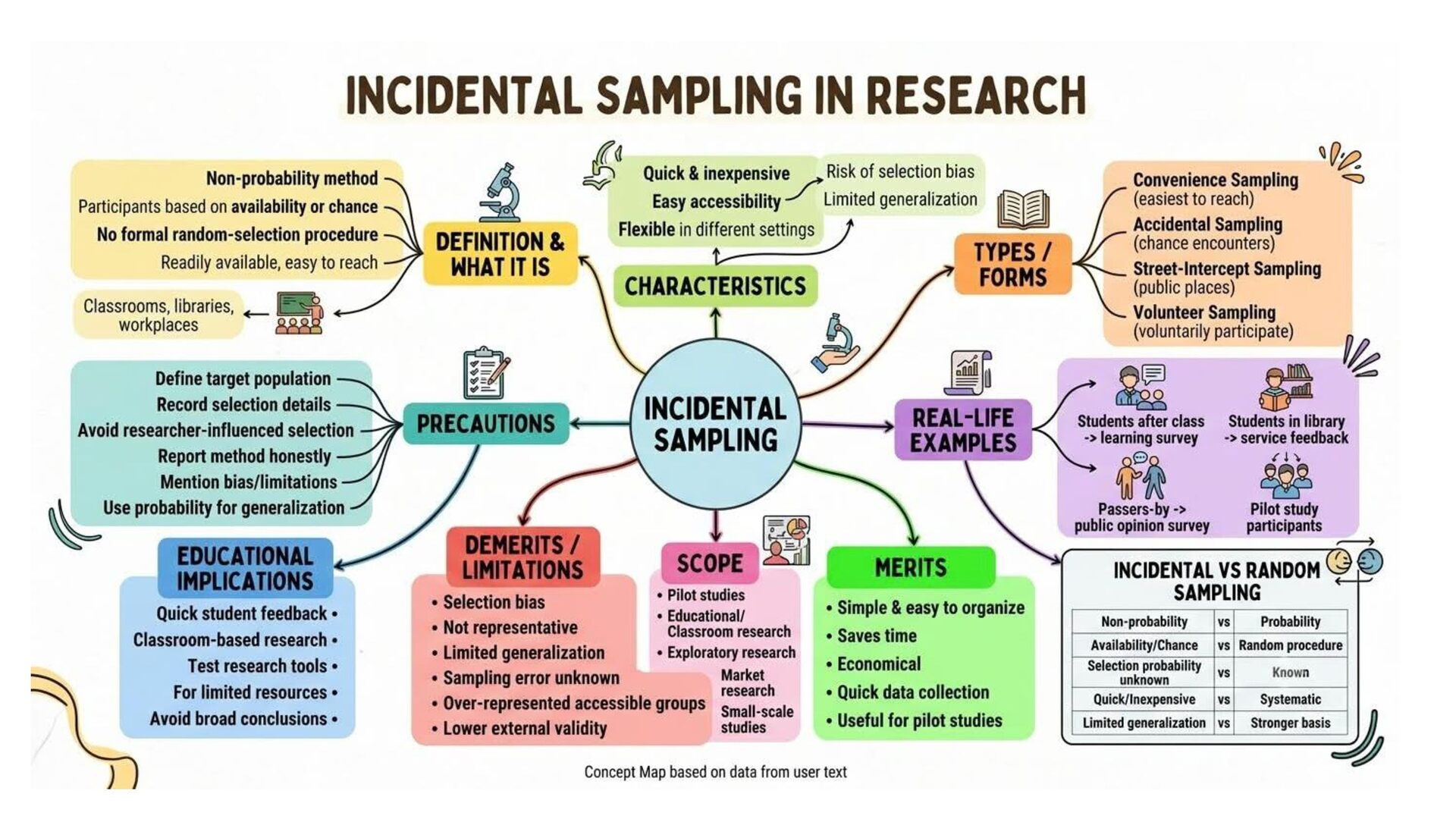
Incidental sampling is a type of non-probability sampling in which participants are selected because they are easily available or encountered by chance during the research process.

Researchers select people who are convenient and accessible.

Participants are not selected through random sampling.

It is simple, quick, and less expensive.

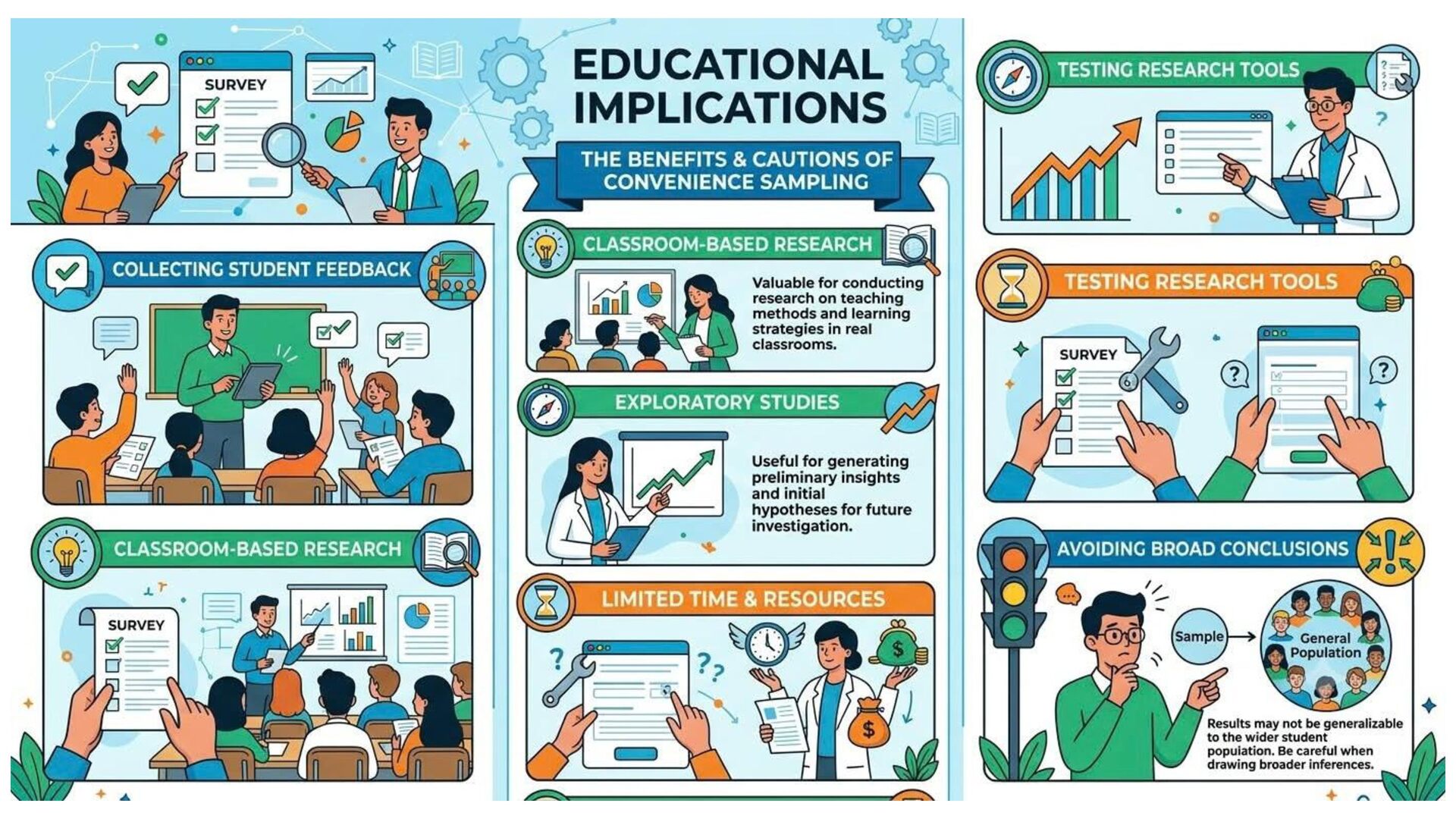
It is useful when the researcher has limited time or resources.

However, the sample may not represent the entire population, which can limit the generalization of findings.

Example: A researcher wants to study students' reading habits and collects responses from students who happen to be available in the college library. Those students form an incidental sample.

Avatar for Larija m.k

Larija m.k

October 01, 2026

Transcript

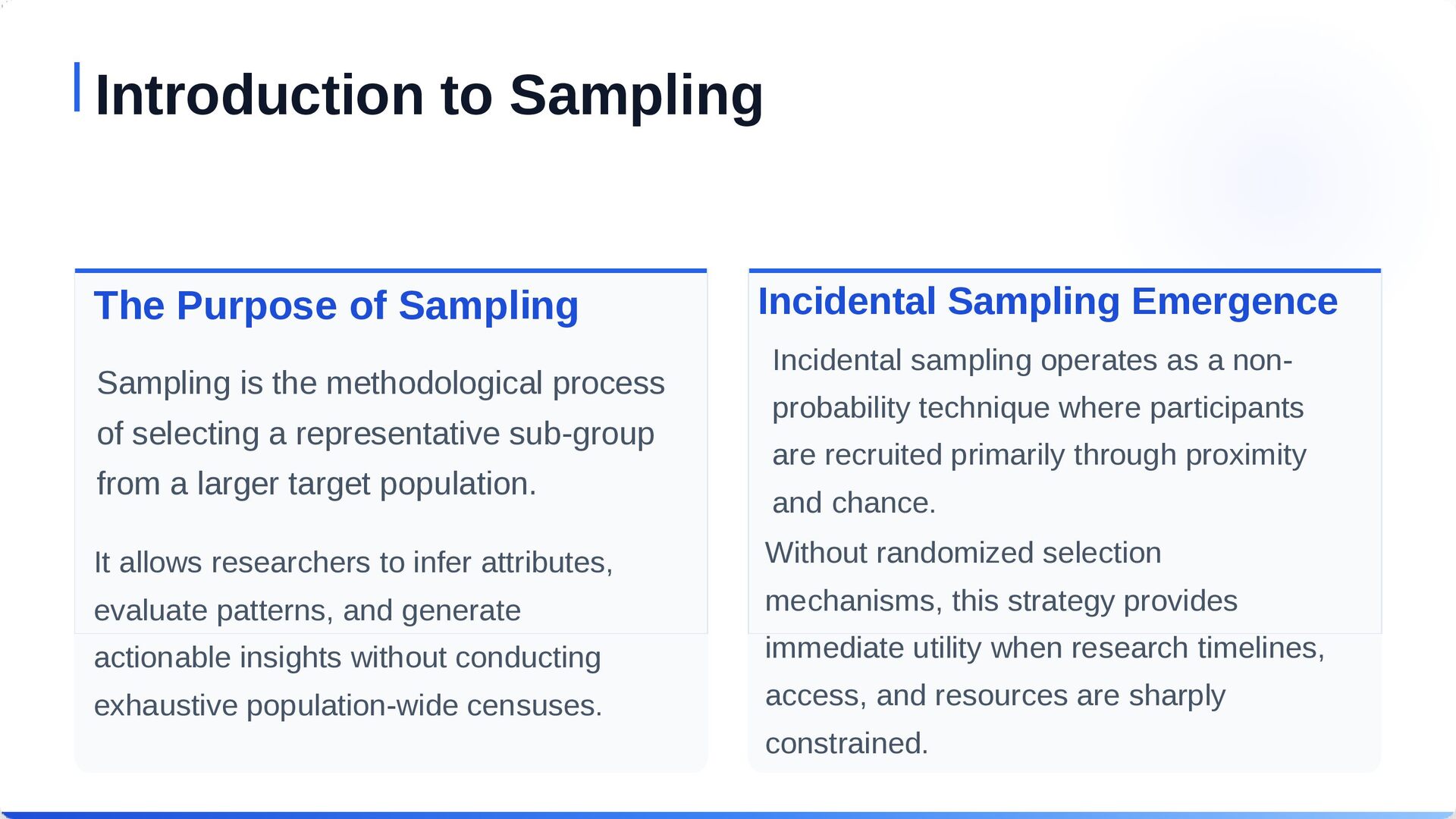
  1. Introduction to Sampling The Purpose of Sampling Sampling is the

    methodological process of selecting a representative sub-group from a larger target population. Incidental Sampling Emergence Incidental sampling operates as a nonprobability technique where participants are recruited primarily through proximity and chance. It allows researchers to infer attributes, Without randomized selection evaluate patterns, and generate mechanisms, this strategy provides actionable insights without conducting immediate utility when research timelines, exhaustive population-wide censuses. access, and resources are sharply constrained.
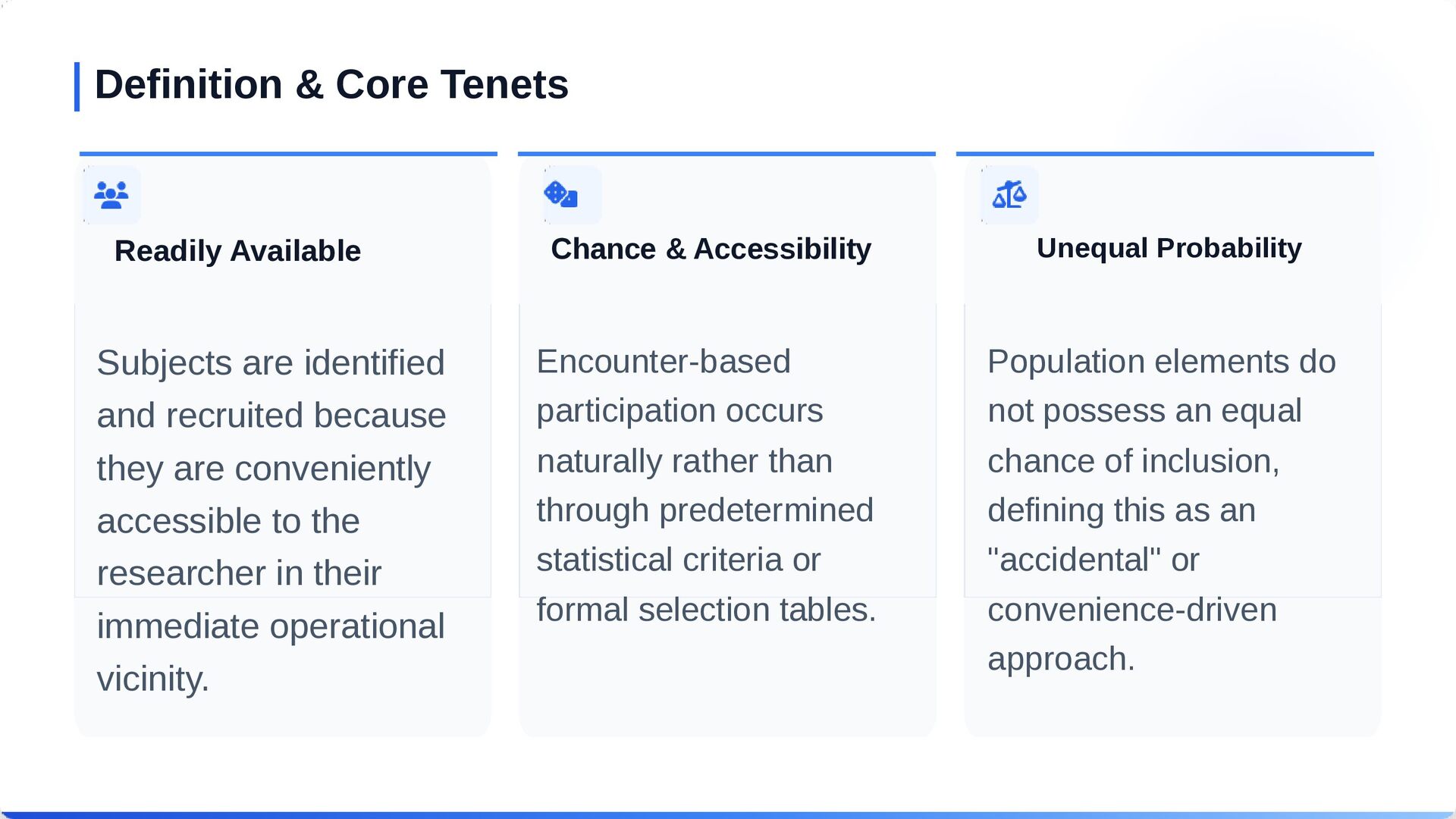
  2. Definition & Core Tenets Readily Available Chance & Accessibility Unequal

    Probability Subjects are identified and recruited because they are conveniently accessible to the researcher in their immediate operational vicinity. Encounter-based participation occurs naturally rather than through predetermined statistical criteria or formal selection tables. Population elements do not possess an equal chance of inclusion, defining this as an "accidental" or convenience-driven approach.
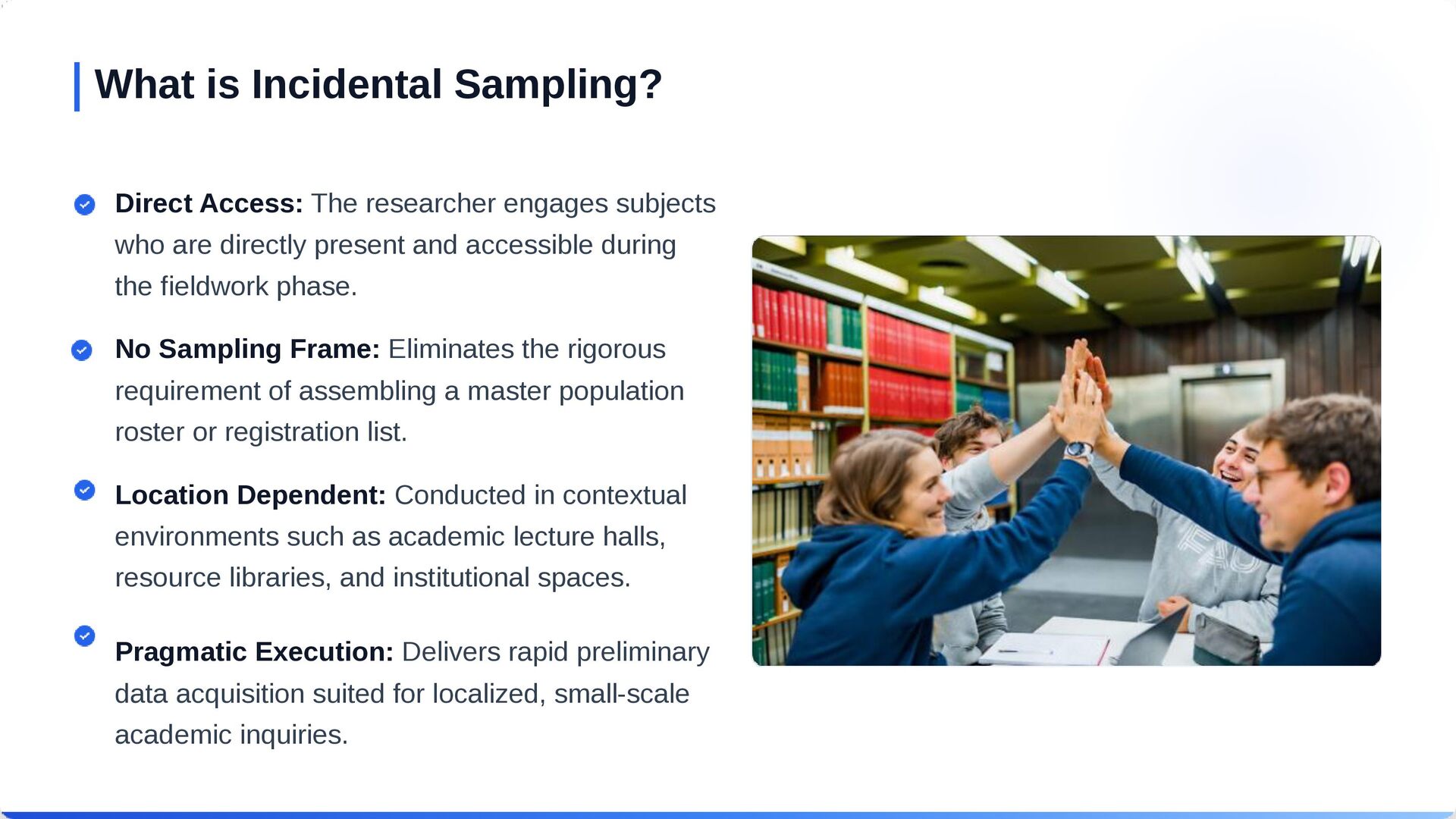
  3. What is Incidental Sampling? Direct Access: The researcher engages subjects

    who are directly present and accessible during the fieldwork phase. No Sampling Frame: Eliminates the rigorous requirement of assembling a master population roster or registration list. Location Dependent: Conducted in contextual environments such as academic lecture halls, resource libraries, and institutional spaces. Pragmatic Execution: Delivers rapid preliminary data acquisition suited for localized, small-scale academic inquiries.
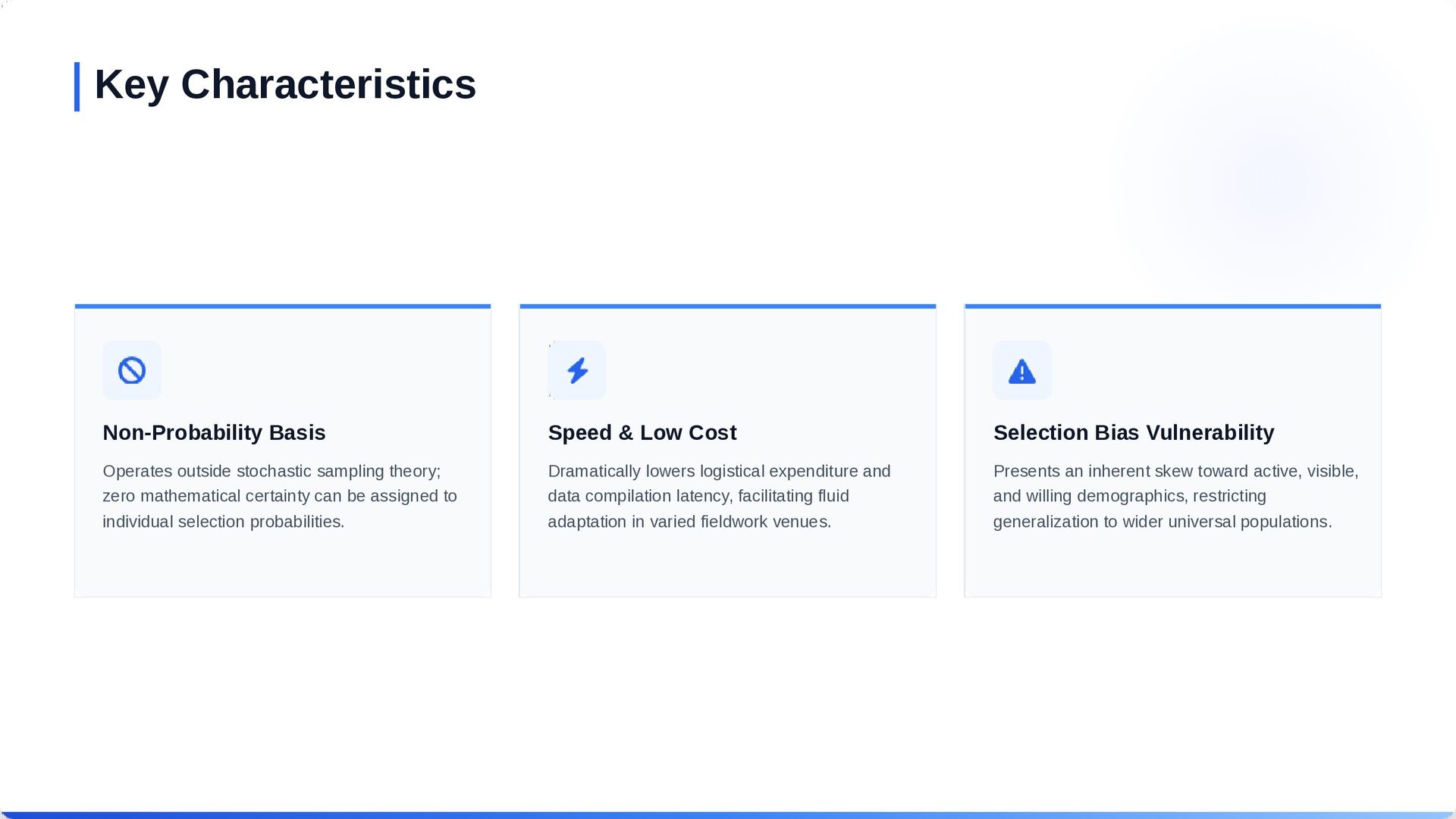
  4. Key Characteristics Non-Probability Basis Speed & Low Cost Selection Bias

    Vulnerability Operates outside stochastic sampling theory; zero mathematical certainty can be assigned to Dramatically lowers logistical expenditure and data compilation latency, facilitating fluid Presents an inherent skew toward active, visible, and willing demographics, restricting individual selection probabilities. adaptation in varied fieldwork venues. generalization to wider universal populations.
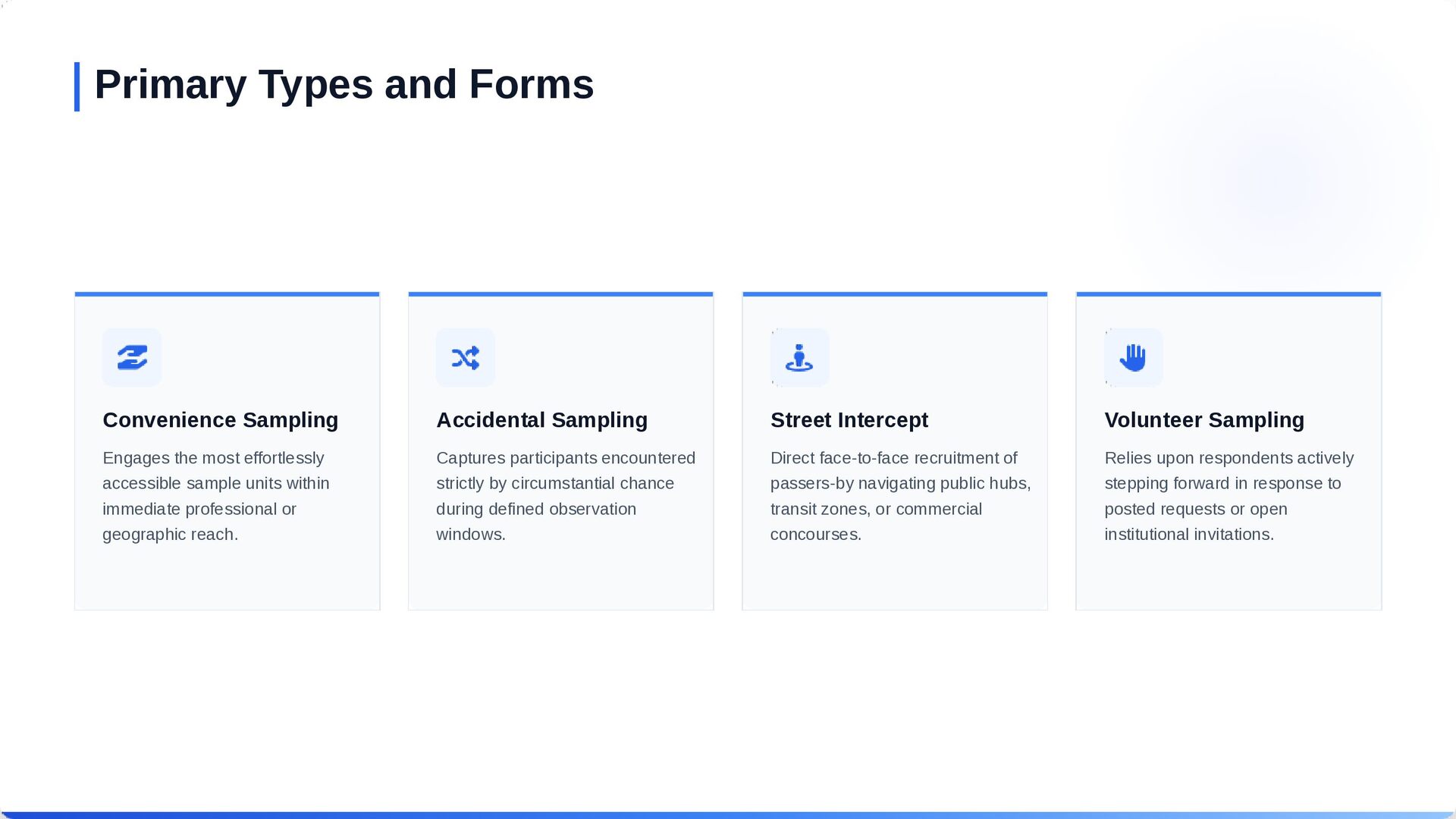
  5. Primary Types and Forms Convenience Sampling Accidental Sampling Street Intercept

    Volunteer Sampling Engages the most effortlessly Captures participants encountered Direct face-to-face recruitment of Relies upon respondents actively accessible sample units within strictly by circumstantial chance passers-by navigating public hubs, stepping forward in response to immediate professional or during defined observation transit zones, or commercial posted requests or open geographic reach. windows. concourses. institutional invitations.
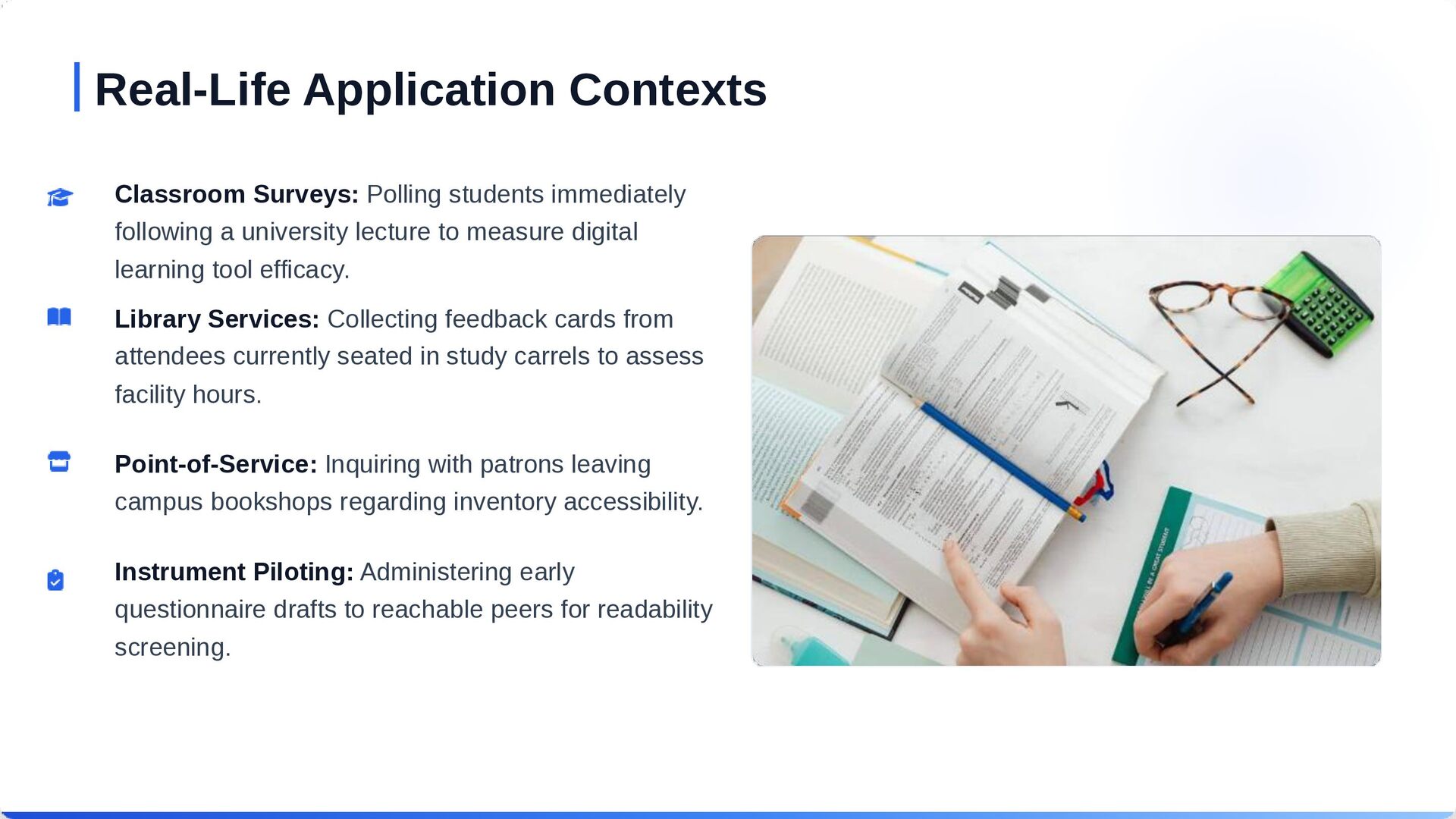
  6. Real-Life Application Contexts Classroom Surveys: Polling students immediately following a

    university lecture to measure digital learning tool efficacy. Library Services: Collecting feedback cards from attendees currently seated in study carrels to assess facility hours. Point-of-Service: Inquiring with patrons leaving campus bookshops regarding inventory accessibility. Instrument Piloting: Administering early questionnaire drafts to reachable peers for readability screening.
  7. Scope & Research Domains Pilot Studies Educational Research Exploratory Investigations

    Validating survey wording, calculating baseline completion durations, and identifying procedural Empowering educators and M.Ed scholars to evaluate specific instructional interventions within Mapping emerging phenomena, gathering preliminary sentiment, and formulating ambiguities prior to full deployment. localized classroom environments. hypotheses for subsequent empirical testing.
  8. Key Merits & Advantages Operational Simplicity: Requires minimal logistical organization,

    eliminating intricate stratification algorithms or sampling frames. Time Efficiency: Enables immediate entry into field data collection, accelerating project delivery timelines significantly. High Economic Value: Conserves financial resources, making it accessible for graduate scholars and unfunded research initiatives. Ideal for Instrument Development: Serves as a low-risk proving ground to evaluate psychometric item clarity before large-scale rollouts. Contextual Flexibility: Readily adjusts to spontaneous research settings, unexpected venue shifts, and dynamic environments.
  9. Demerits & Limitations SYSTEMIC FLAWS STATISTICAL BOUNDARIES Selection Bias &

    Non-Representation Inferential Vulnerability Systematically over-represents vocal, mobile, and conveniently Sampling error cannot be quantitatively calculated or bounded via situated demographics while excluding silent segments. standard confidence interval formulas. Because inclusion is conditioned on presence, individuals outside External validity remains sharply constrained; projecting findings onto specific time-space windows have zero probability of capture. broader populations introduces substantial inferential risk.
  10. Methodological Precautions Explicit Boundaries Transparent Reporting Prudent Generalization Clearly delimit

    target populations and document precise situational conditions (time, venue, Acknowledge procedural non-randomness openly in research methodology sections, Refrain from universal claims; transition deliberately to probability sampling whenever environment) during participant recruitment. detailing potential demographic skews. high external validity is required.
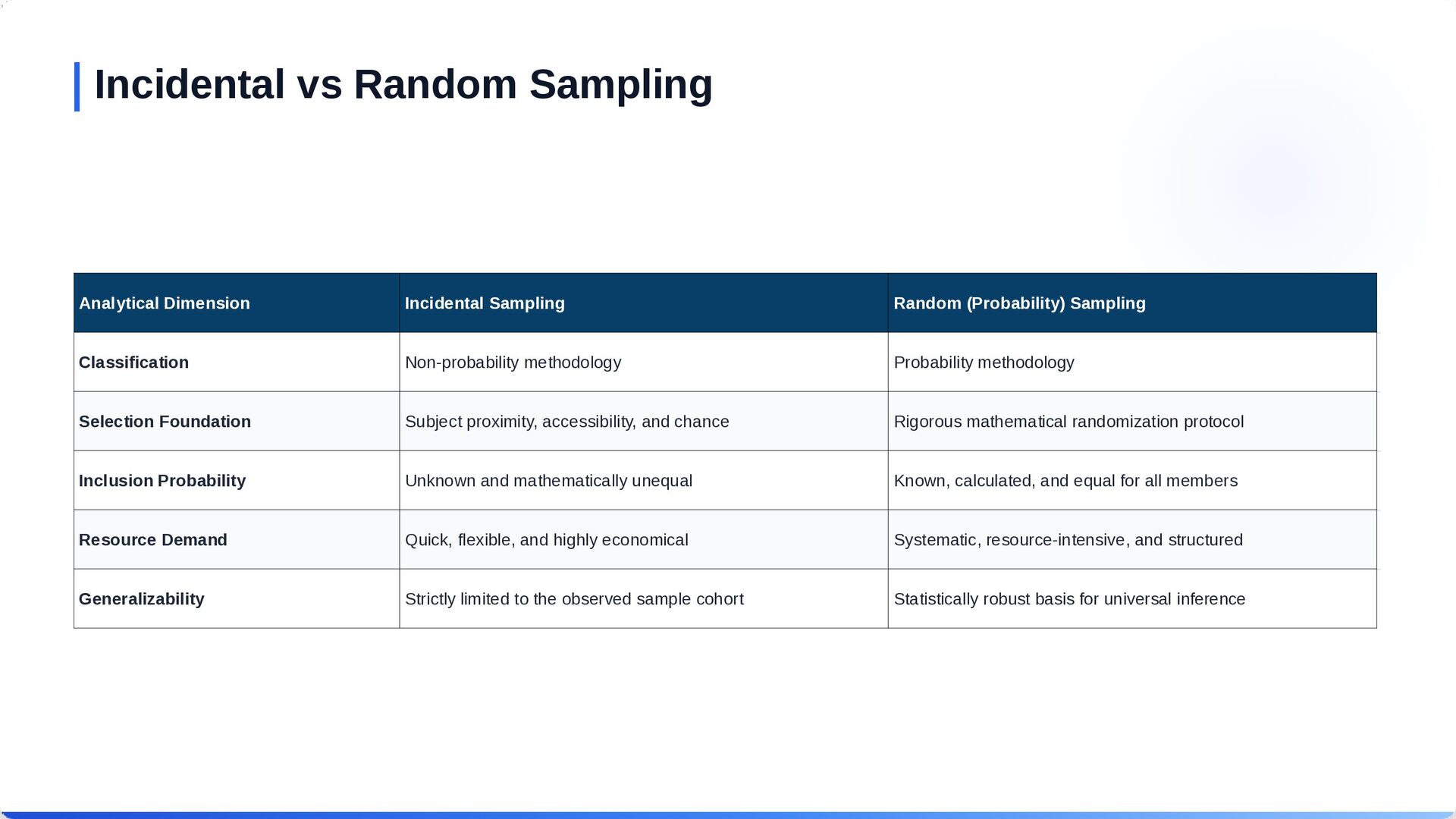
  11. Incidental vs Random Sampling Analytical Dimension Incidental Sampling Random (Probability)

    Sampling Classification Non-probability methodology Probability methodology Selection Foundation Subject proximity, accessibility, and chance Rigorous mathematical randomization protocol Inclusion Probability Unknown and mathematically unequal Known, calculated, and equal for all members Resource Demand Quick, flexible, and highly economical Systematic, resource-intensive, and structured Generalizability Strictly limited to the observed sample cohort Statistically robust basis for universal inference
  12. Conclusion Incidental sampling stands as a practical, rapid, and economical

    tool for pilot studies, educational inquiries, and tool calibration. While research efficiency is high, intentional methodological safeguards and probability alternatives must be prioritized whenever universal population validity is essential.