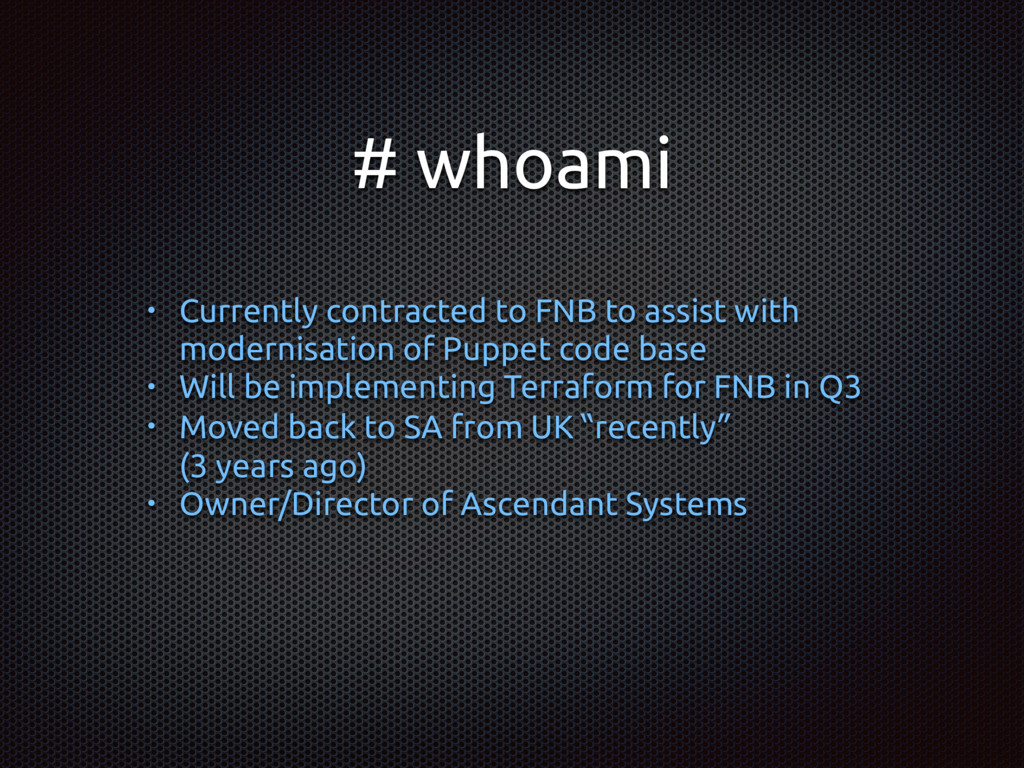
modernisation of Puppet code base • Will be implementing Terraform for FNB in Q3 • Moved back to SA from UK “recently” (3 years ago) • Owner/Director of Ascendant Systems
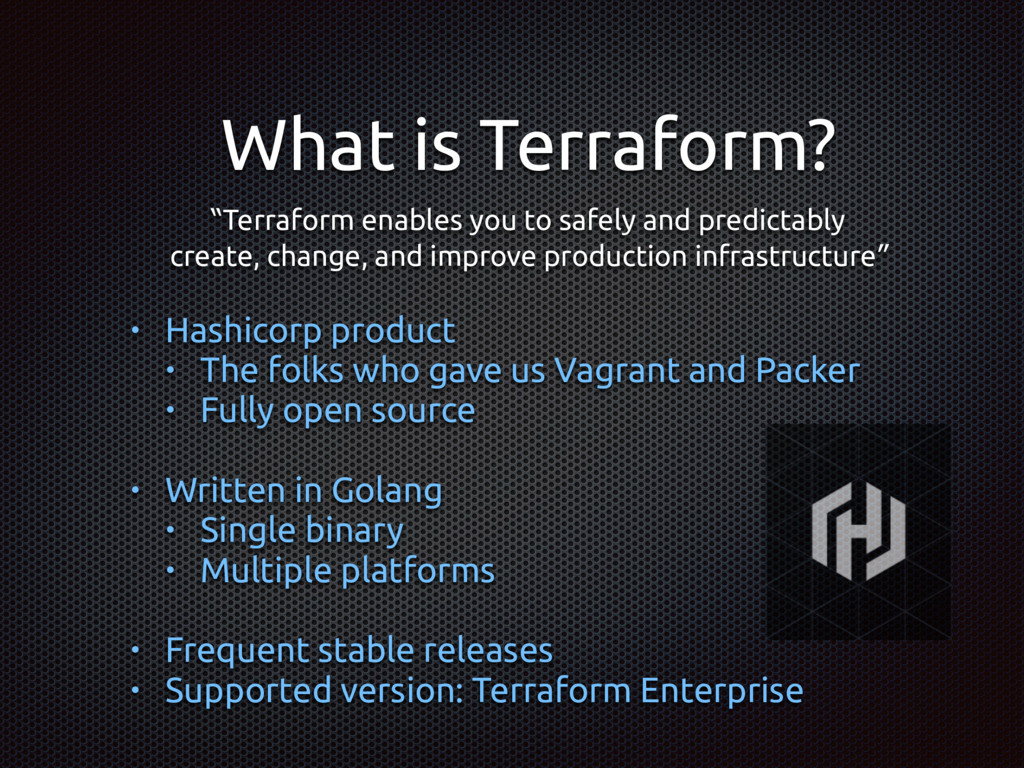
gave us Vagrant and Packer • Fully open source • Written in Golang • Single binary • Multiple platforms • Frequent stable releases • Supported version: Terraform Enterprise “Terraform enables you to safely and predictably create, change, and improve production infrastructure”
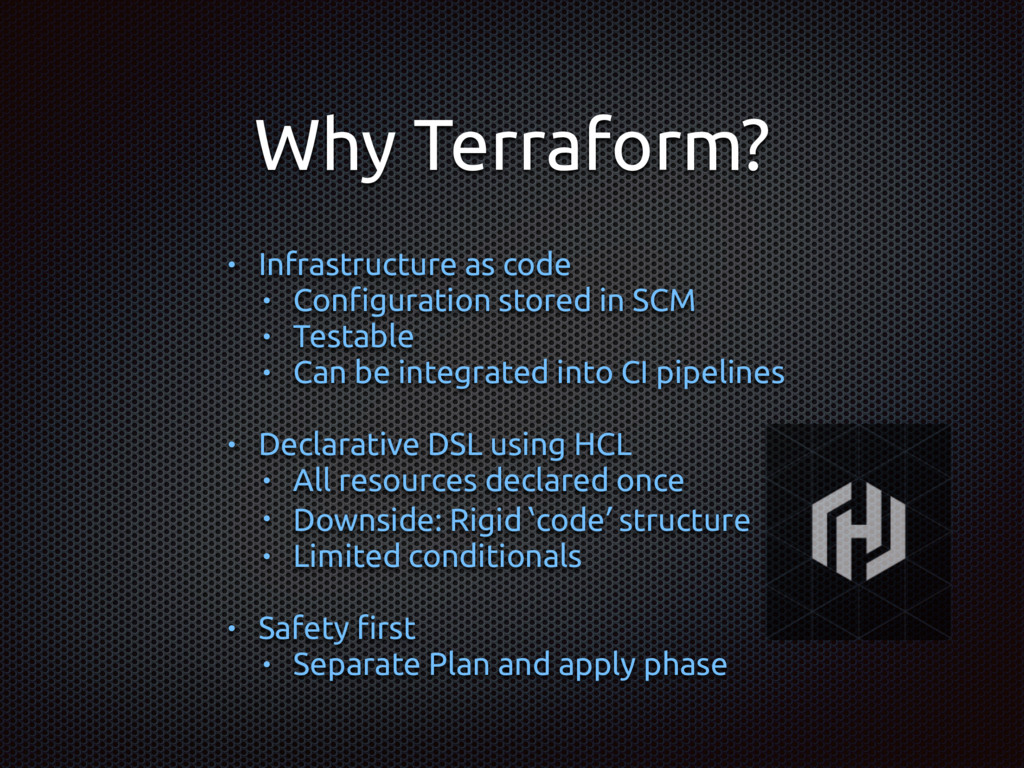
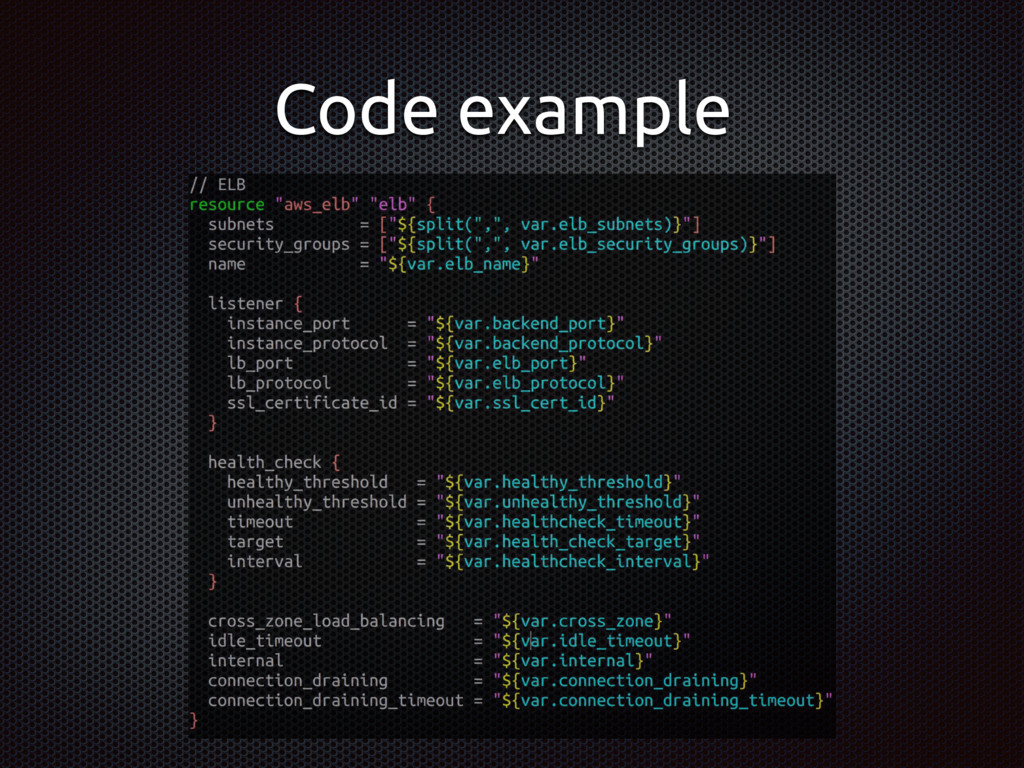
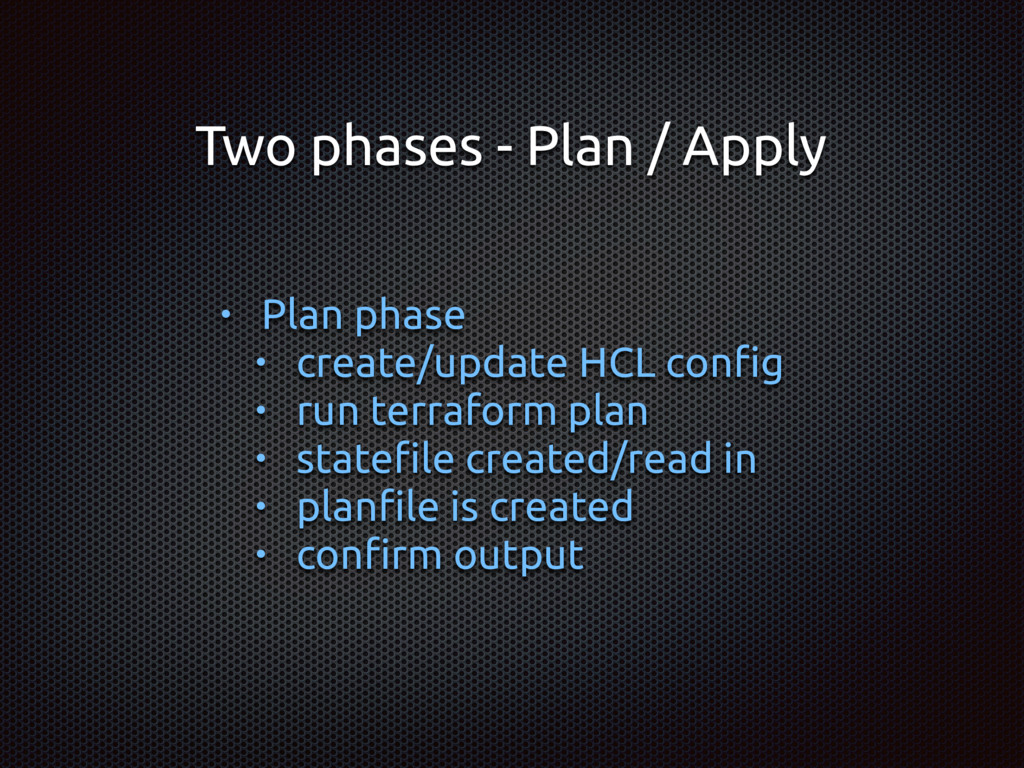
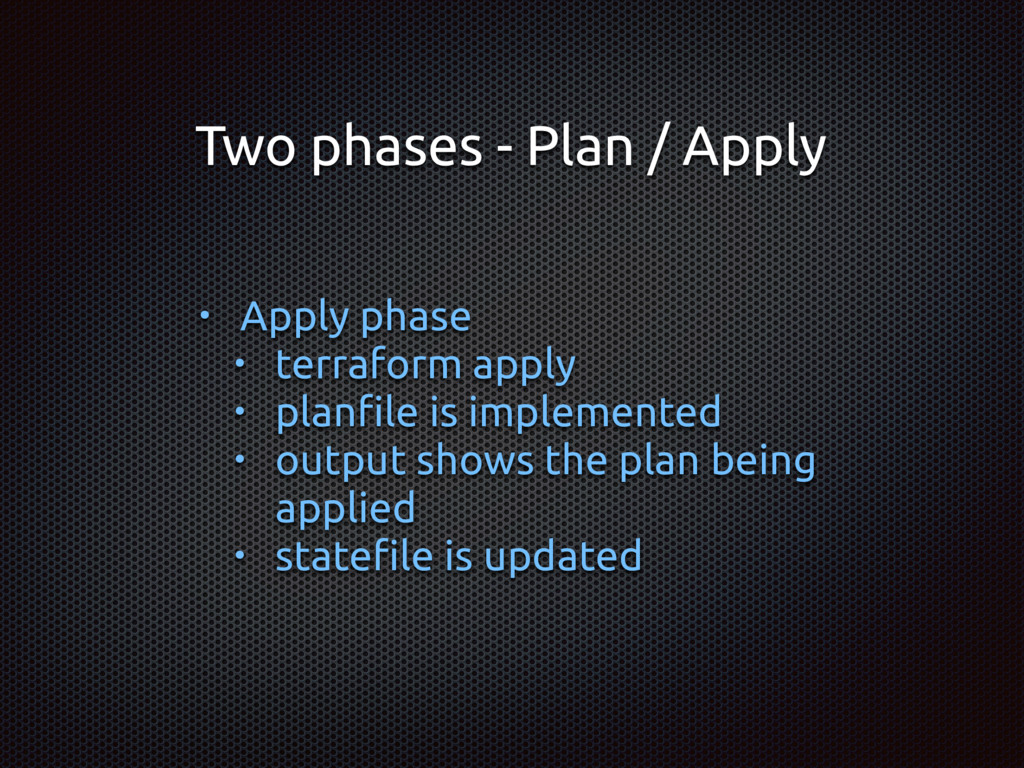
SCM • Testable • Can be integrated into CI pipelines • Declarative DSL using HCL • All resources declared once • Downside: Rigid ‘code’ structure • Limited conditionals • Safety first • Separate Plan and apply phase
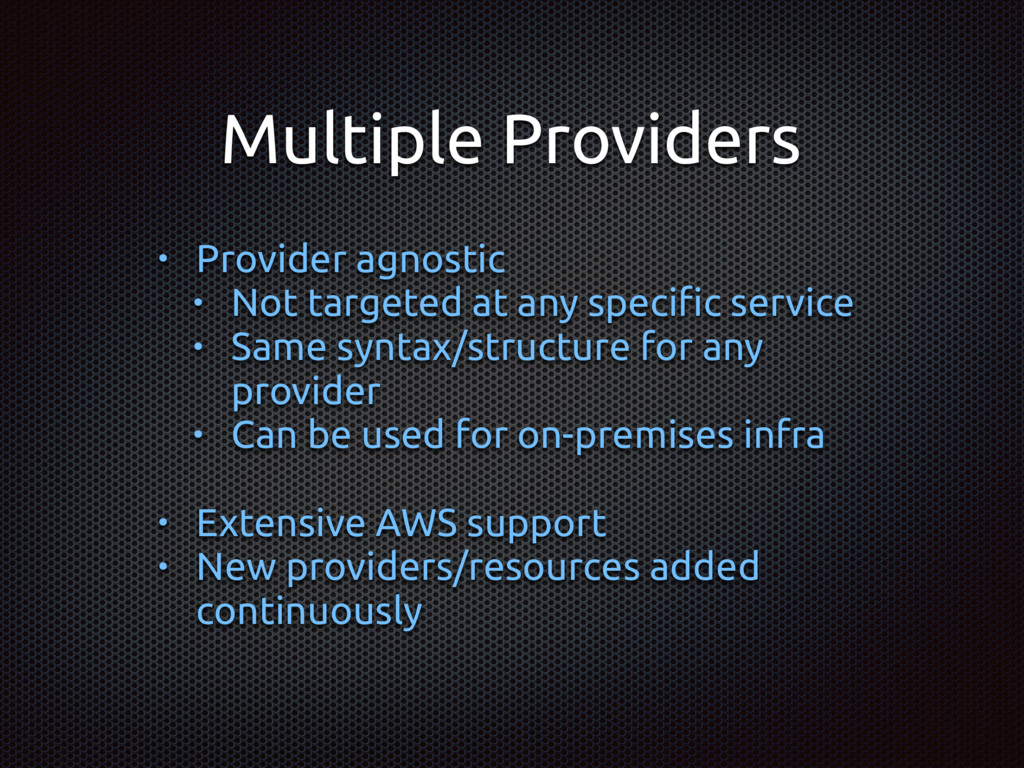
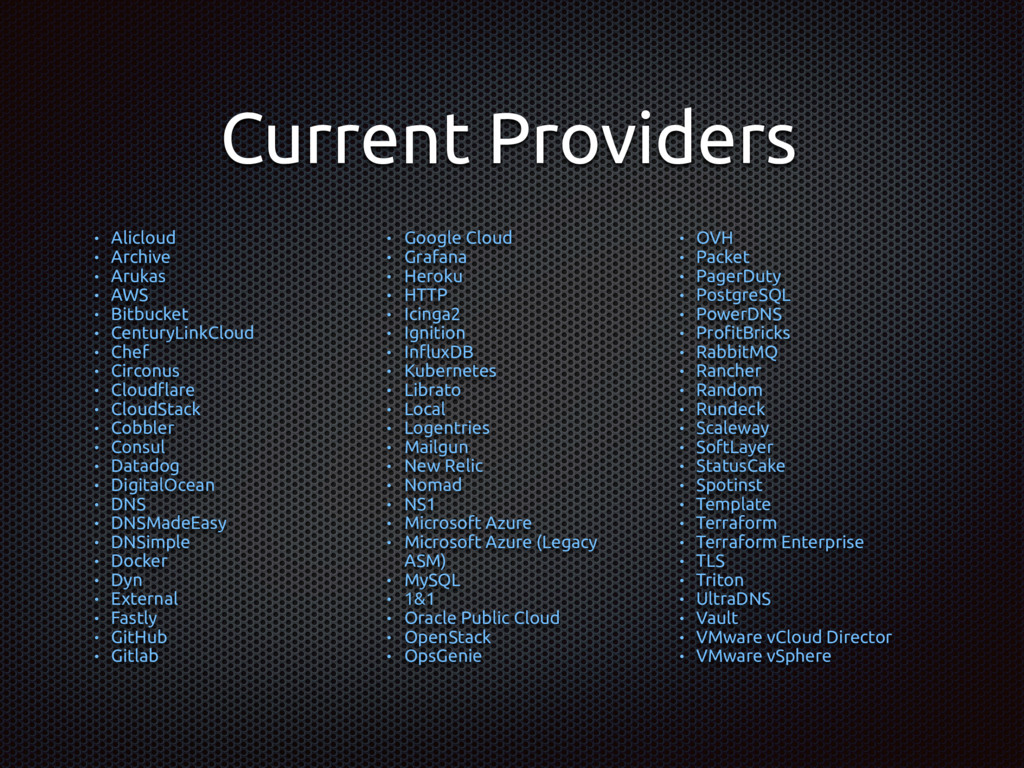
specific service • Same syntax/structure for any provider • Can be used for on-premises infra • Extensive AWS support • New providers/resources added continuously
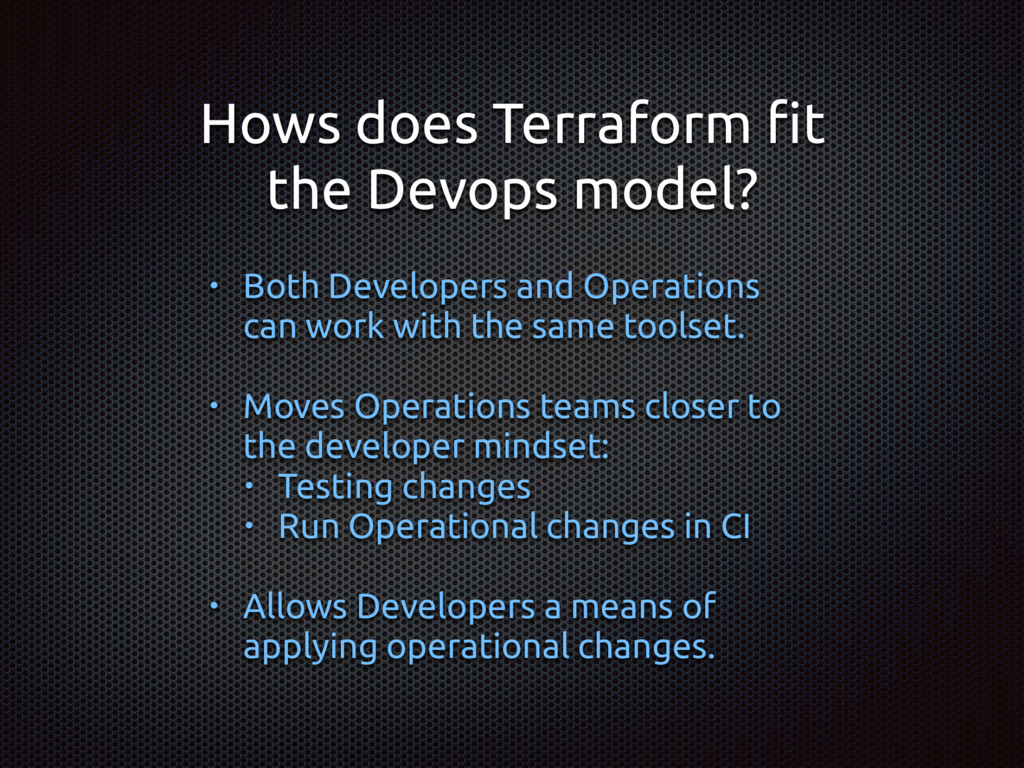
and Operations can work with the same toolset. • Moves Operations teams closer to the developer mindset: • Testing changes • Run Operational changes in CI • Allows Developers a means of applying operational changes.
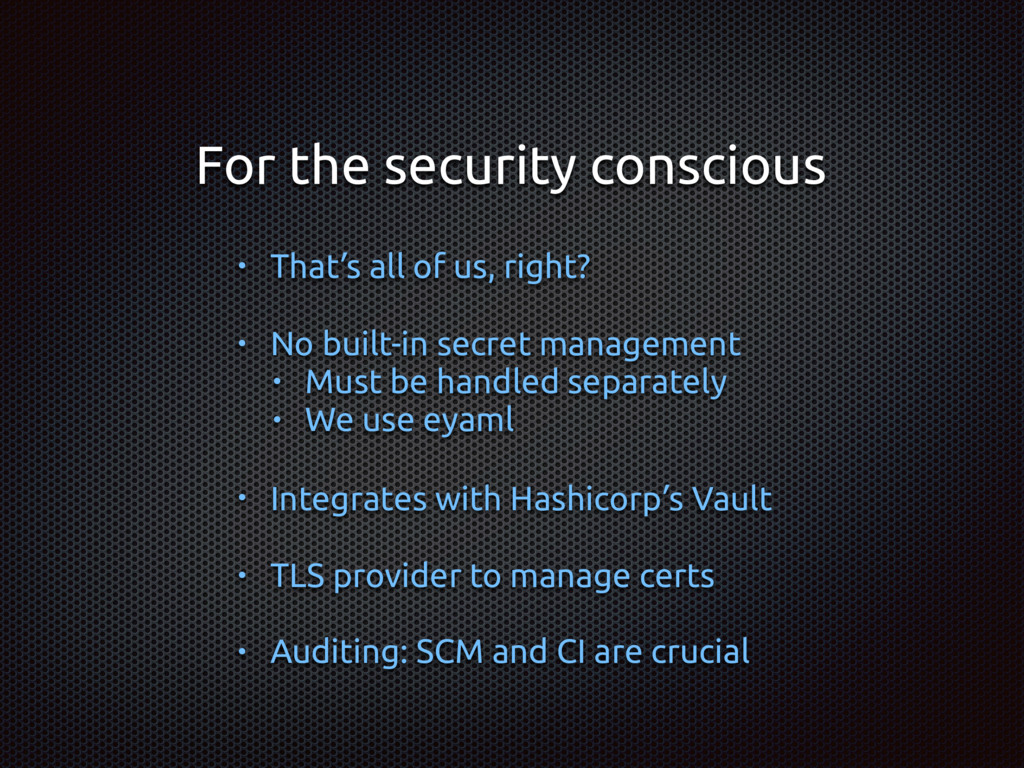
• No built-in secret management • Must be handled separately • We use eyaml • Integrates with Hashicorp’s Vault • TLS provider to manage certs • Auditing: SCM and CI are crucial
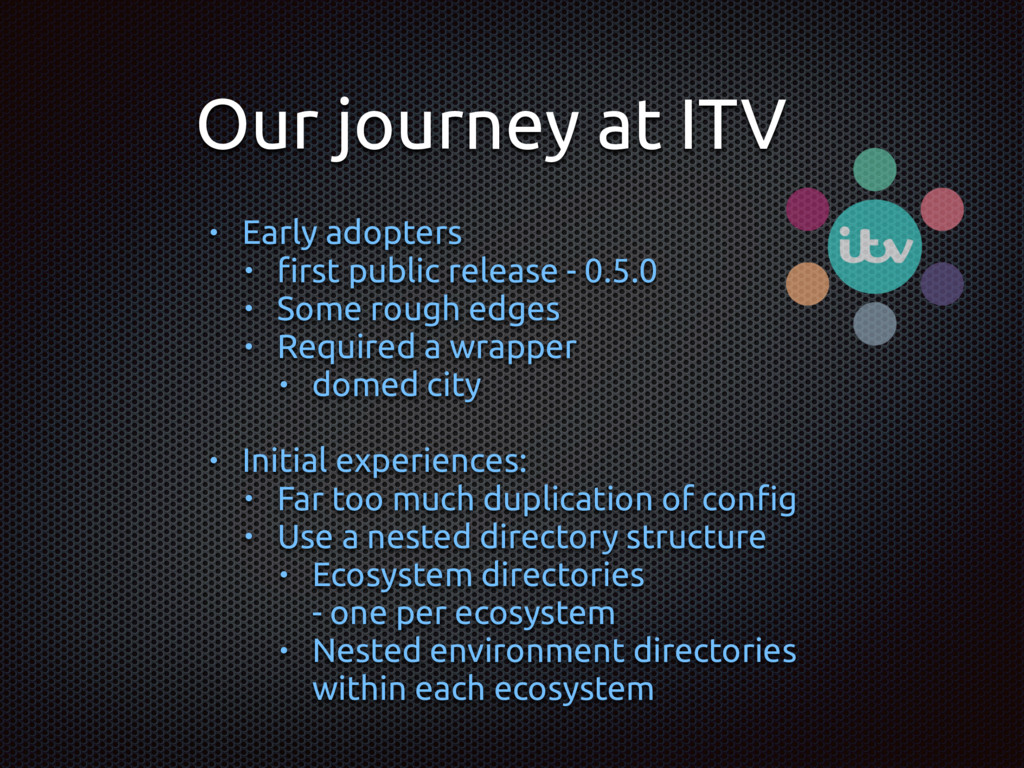
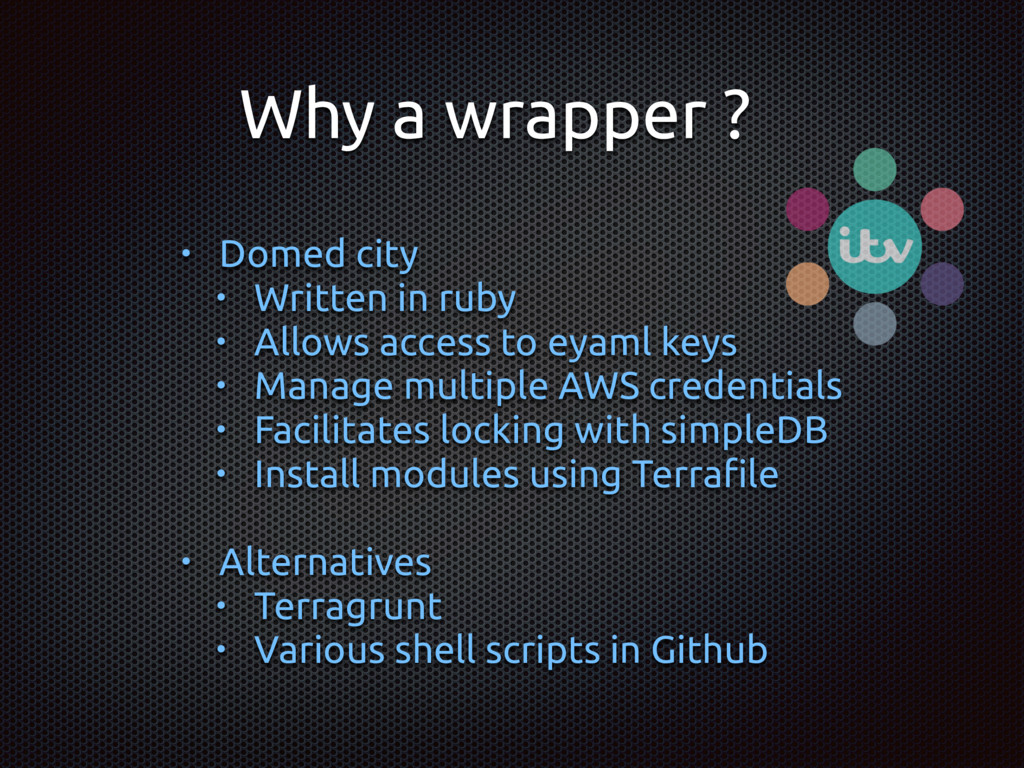
release - 0.5.0 • Some rough edges • Required a wrapper • domed city • Initial experiences: • Far too much duplication of config • Use a nested directory structure • Ecosystem directories - one per ecosystem • Nested environment directories within each ecosystem
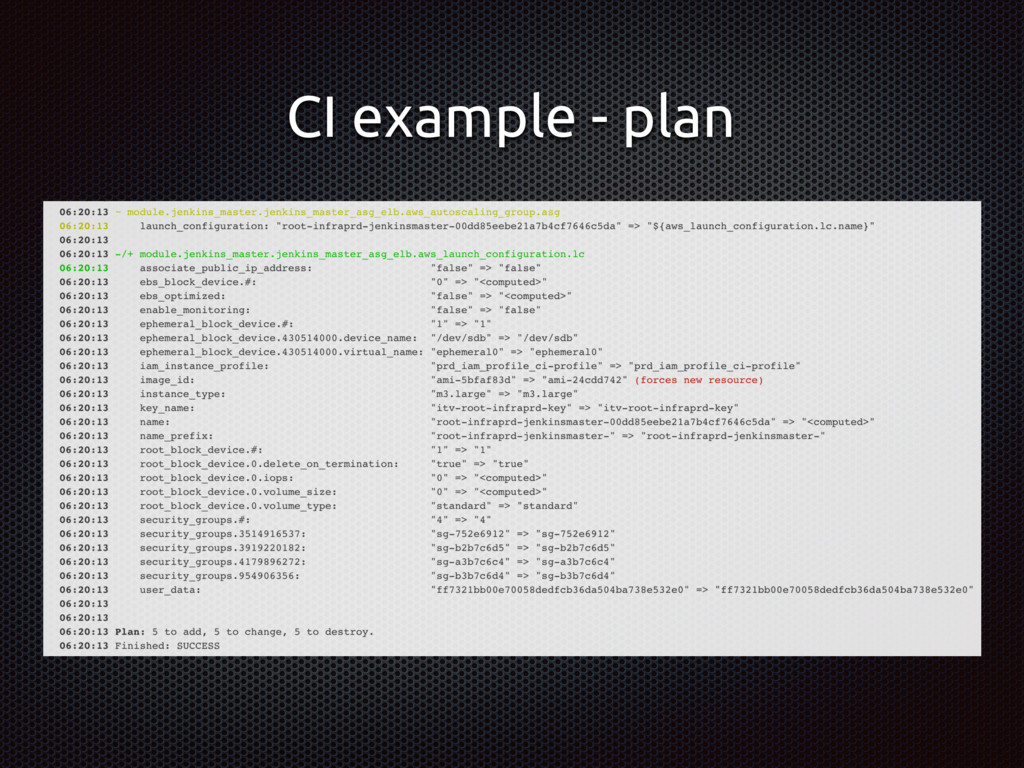
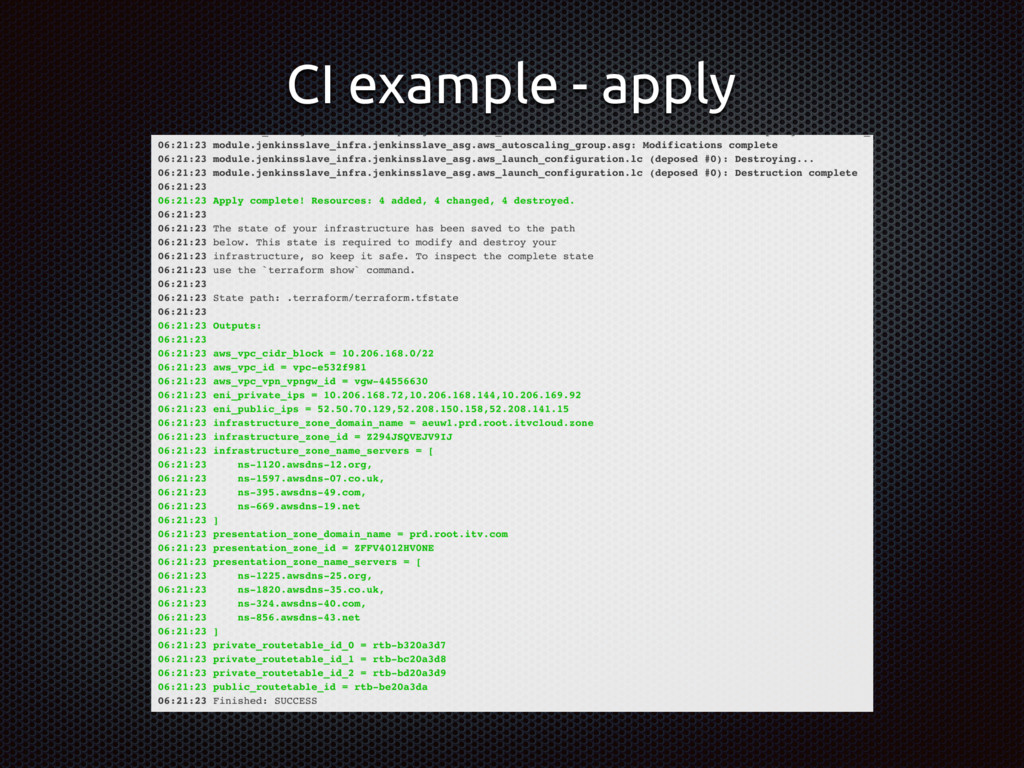
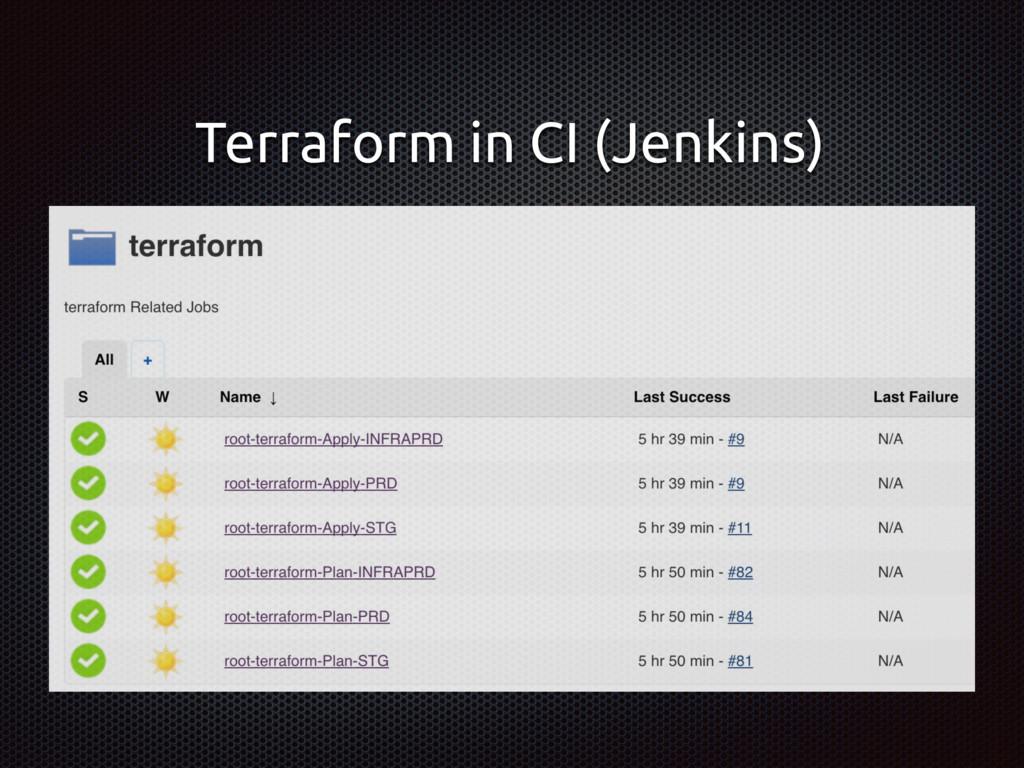
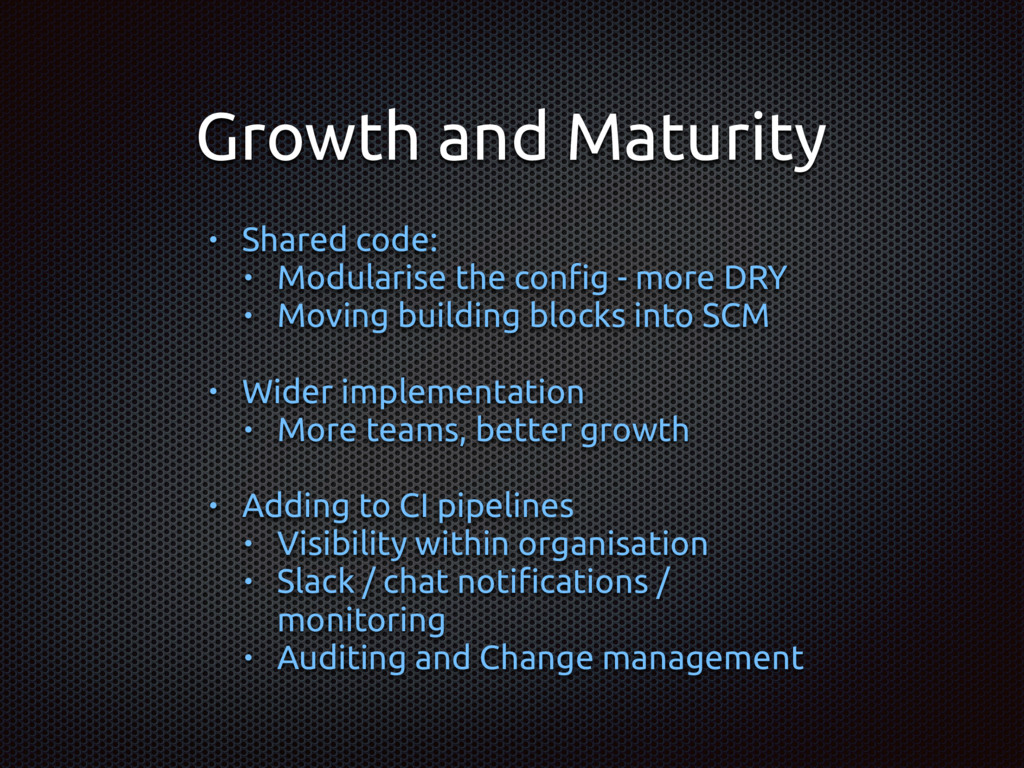
- more DRY • Moving building blocks into SCM • Wider implementation • More teams, better growth • Adding to CI pipelines • Visibility within organisation • Slack / chat notifications / monitoring • Auditing and Change management
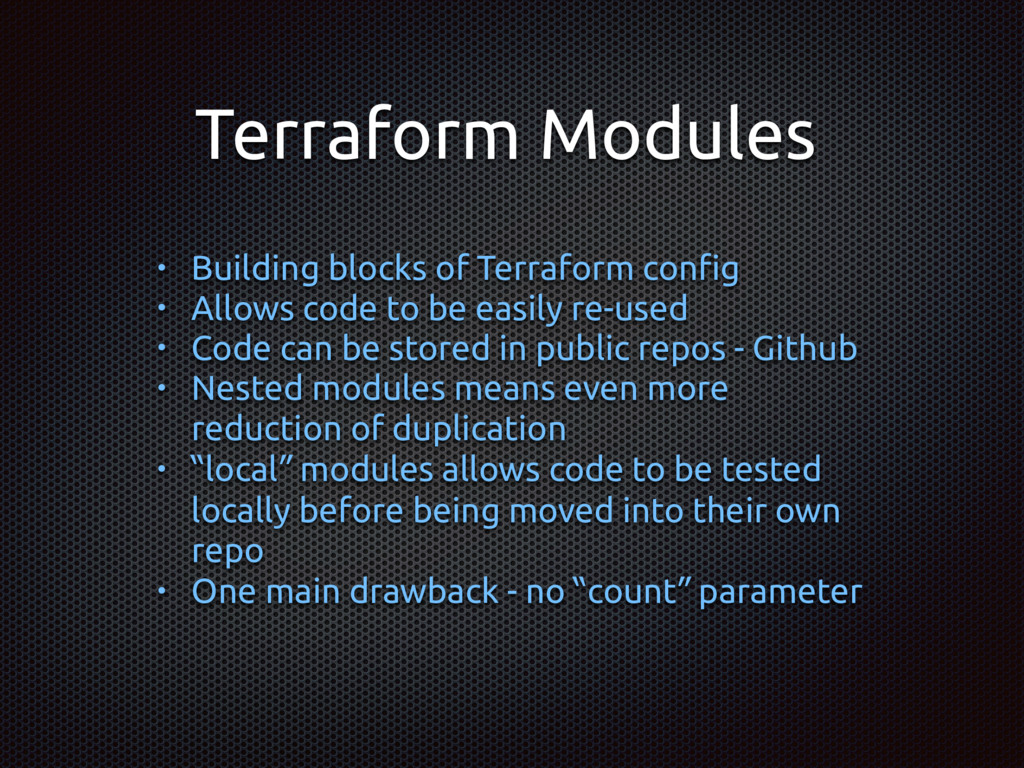
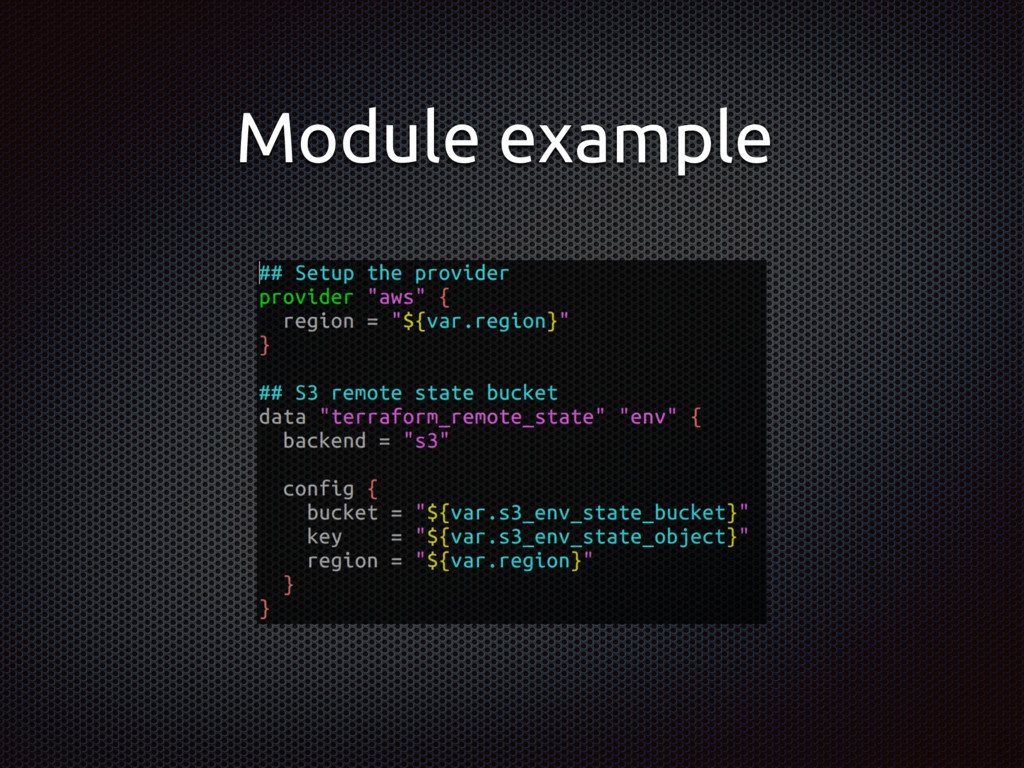
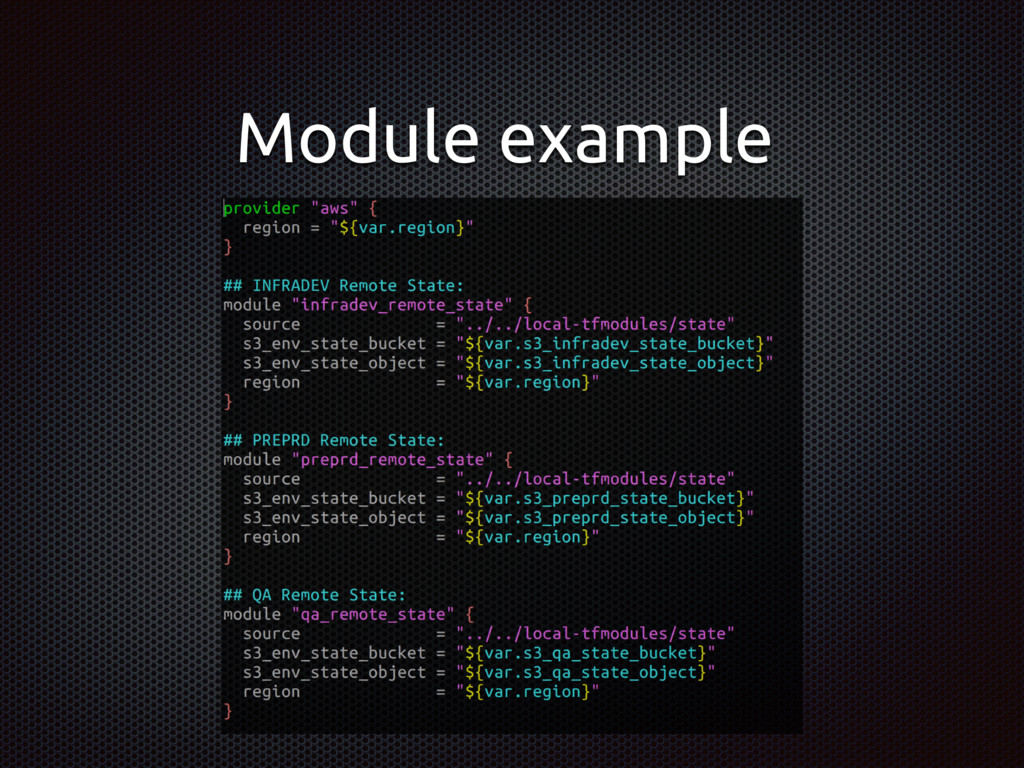
code to be easily re-used • Code can be stored in public repos - Github • Nested modules means even more reduction of duplication • “local” modules allows code to be tested locally before being moved into their own repo • One main drawback - no “count” parameter
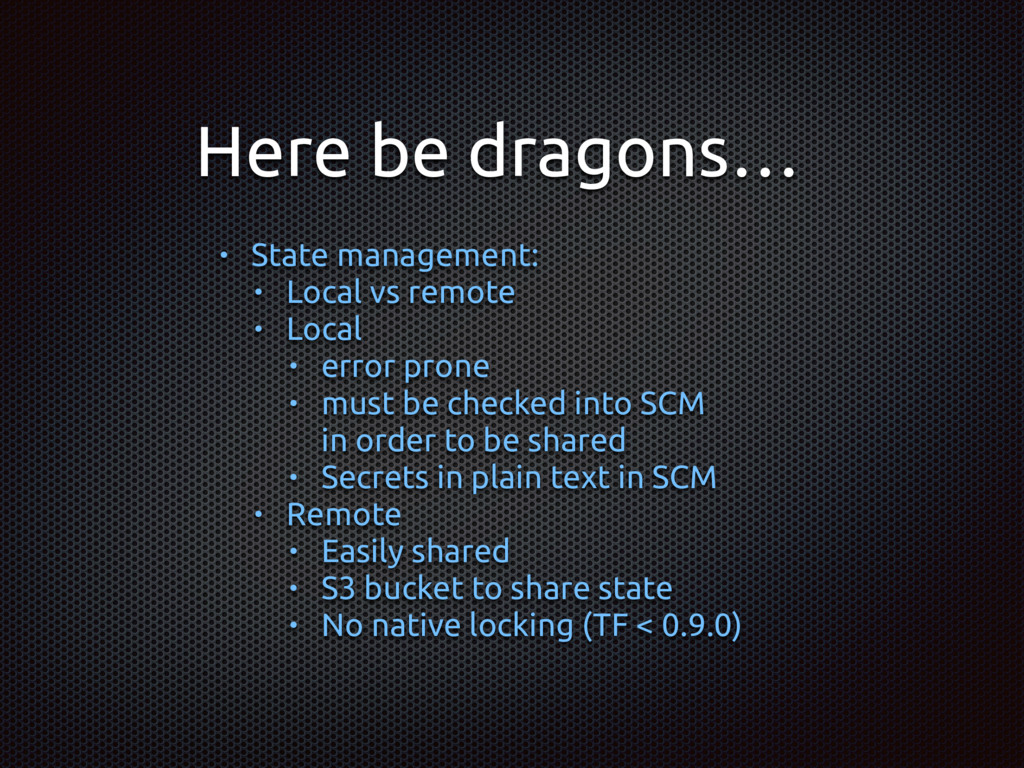
• Local • error prone • must be checked into SCM in order to be shared • Secrets in plain text in SCM • Remote • Easily shared • S3 bucket to share state • No native locking (TF < 0.9.0)
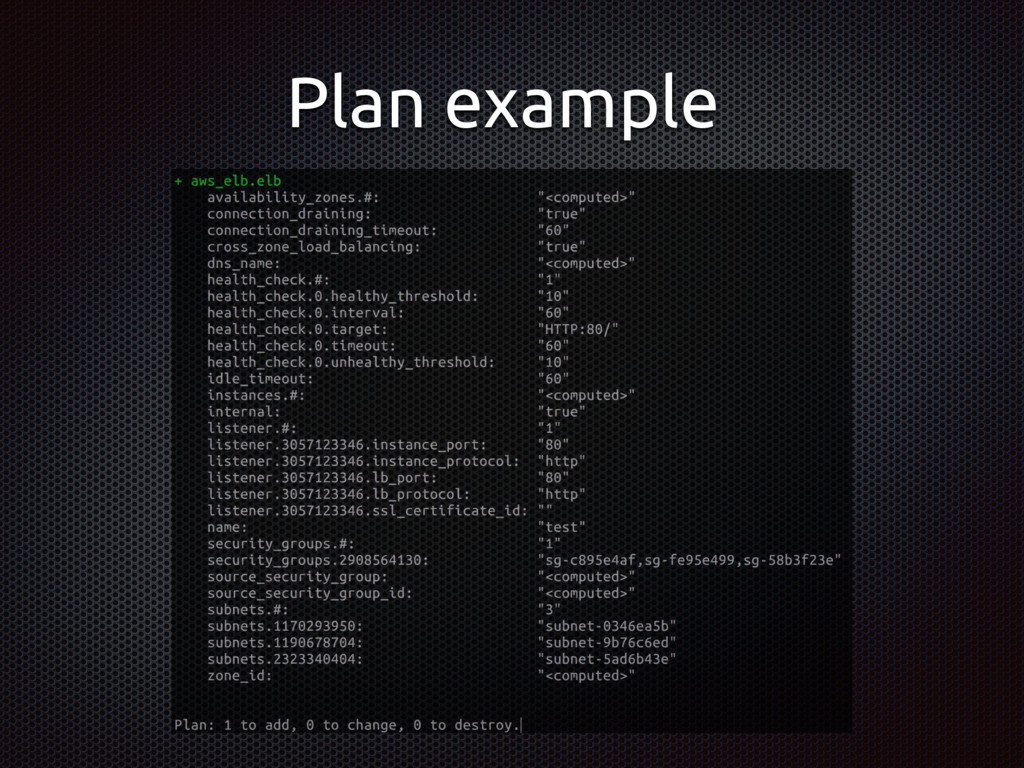
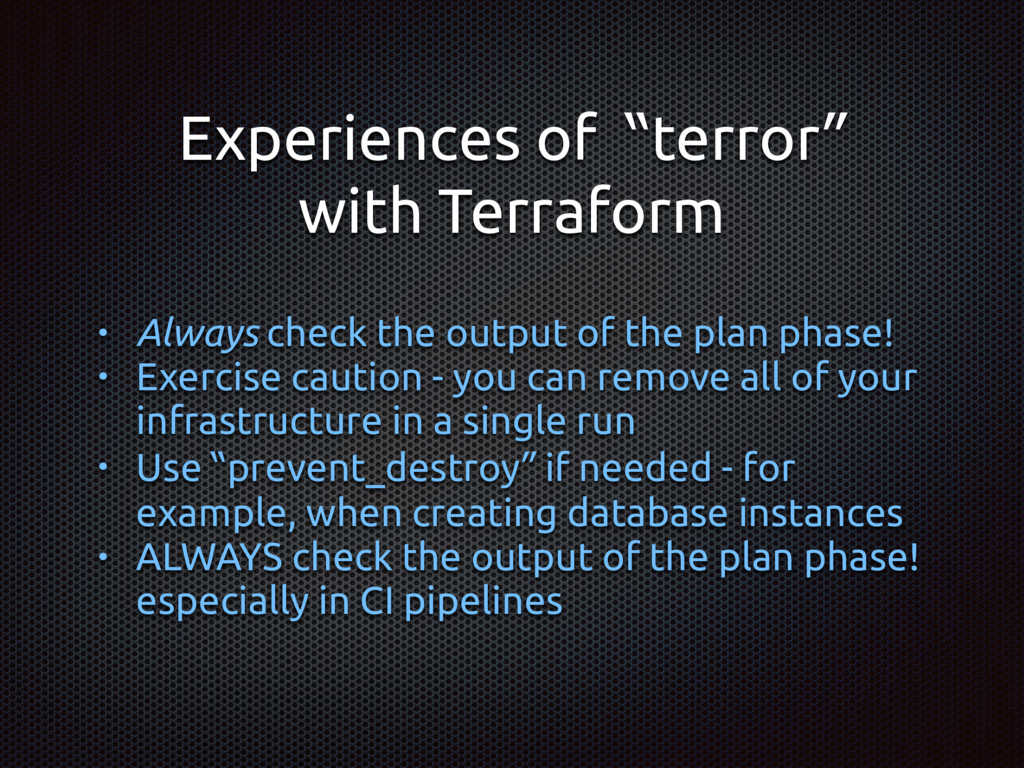
of the plan phase! • Exercise caution - you can remove all of your infrastructure in a single run • Use “prevent_destroy” if needed - for example, when creating database instances • ALWAYS check the output of the plan phase! especially in CI pipelines


 madandroid
 prota
prota
 nabondance
 ryu1013
 iwatsukayura
 jame2408
 yukiny
 florets1
 chobishiba
 eed3si9n
 panda728
 naokihaba
 kaityo256
 moore
moore
 csswizardry
 jonoalderson
 philnash
 akosma
 mkilby
 lcolladotor
 addyosmani
 keithpitt
 62gerente
 lara
lara
![Questions? Twitter: @madAndroid Github: madAndroid [email protected]](https://files.speakerdeck.com/presentations/bef85092ed5d4a77865a3d5744298095/slide_24.jpg)