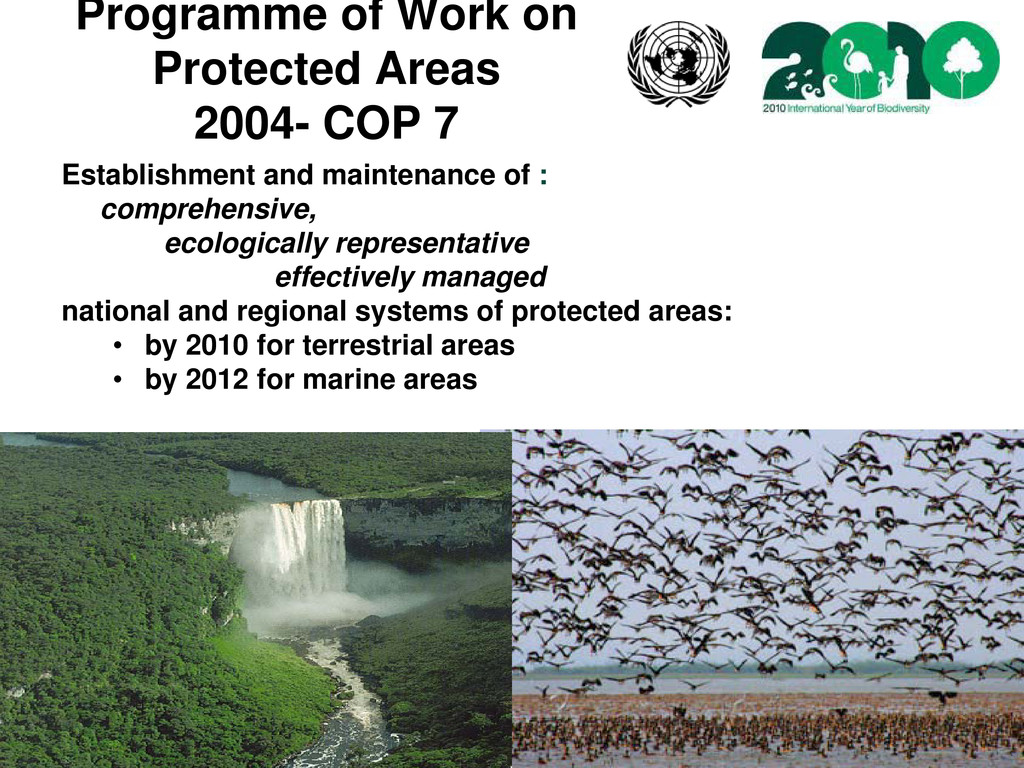
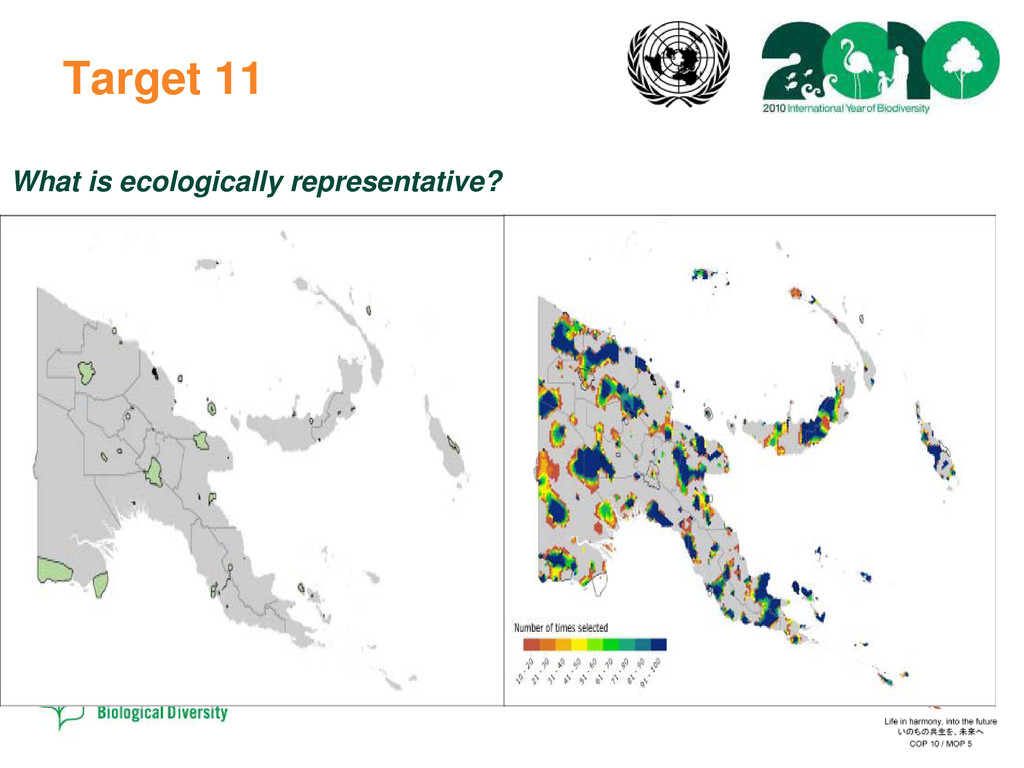
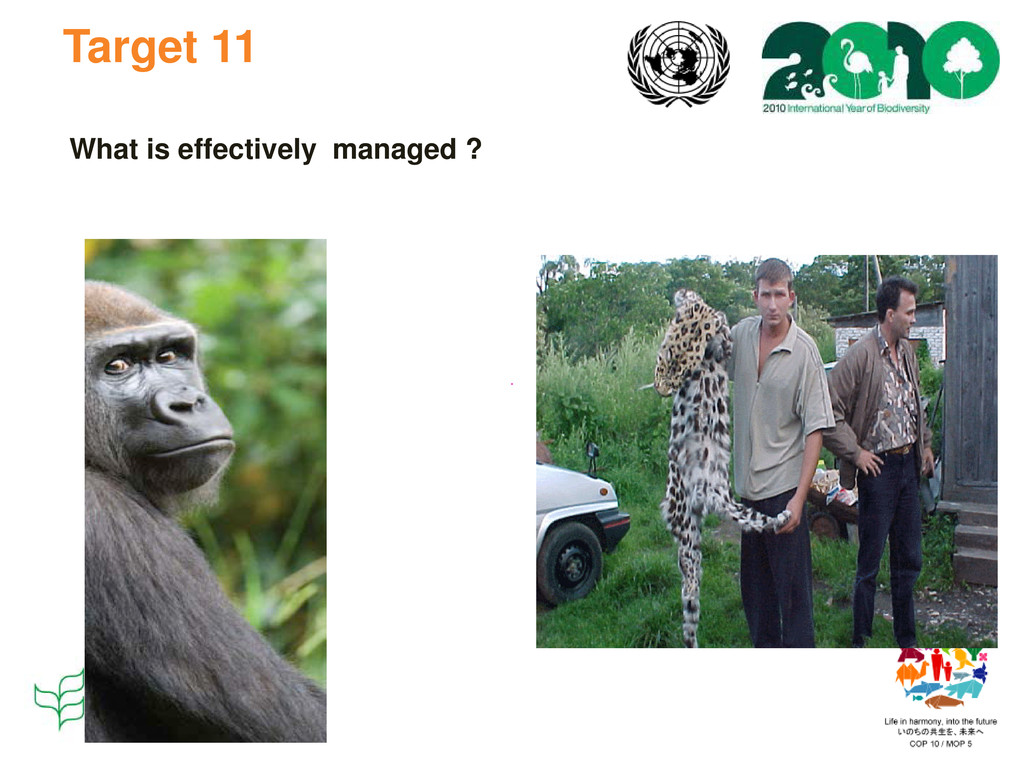
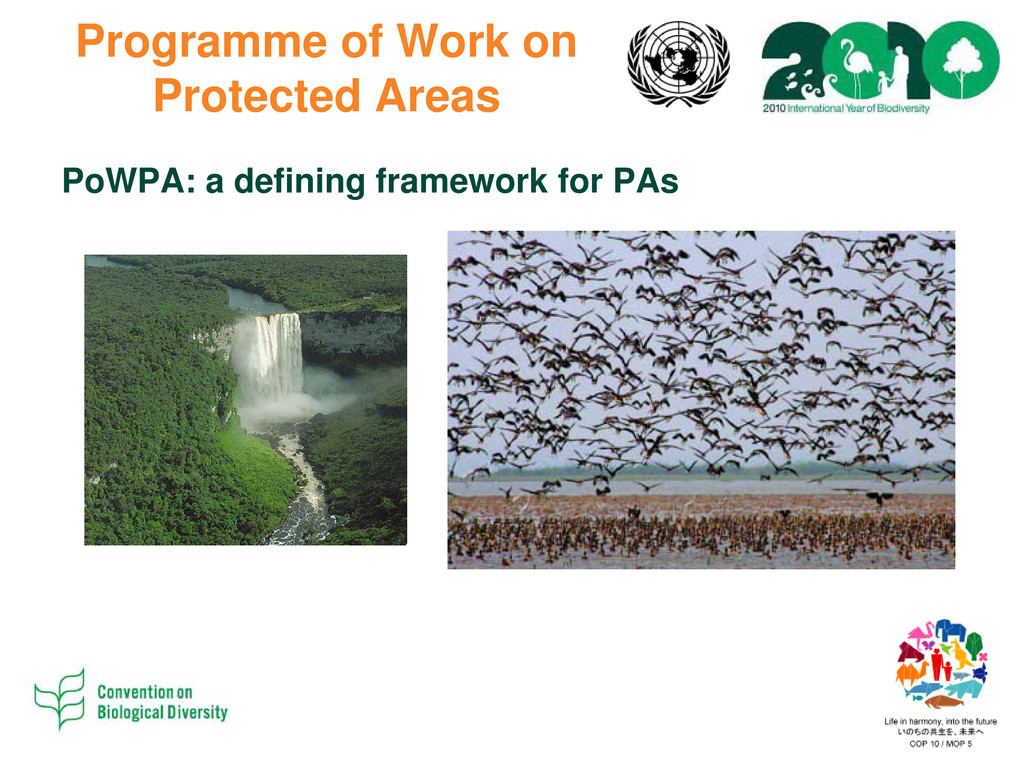
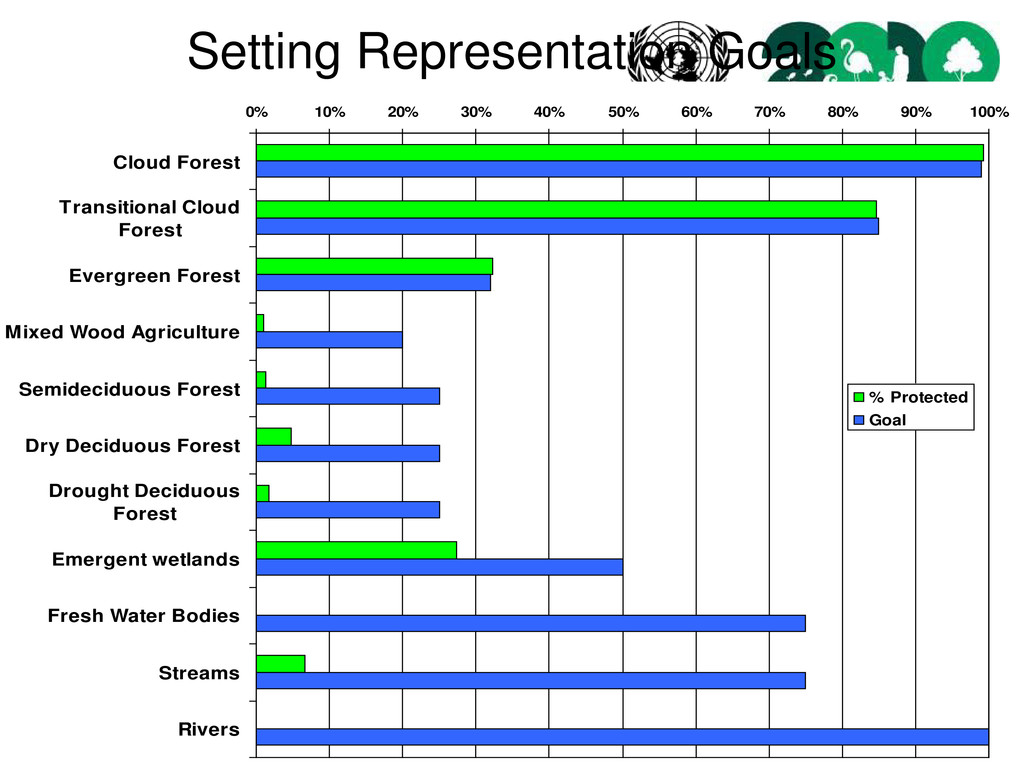
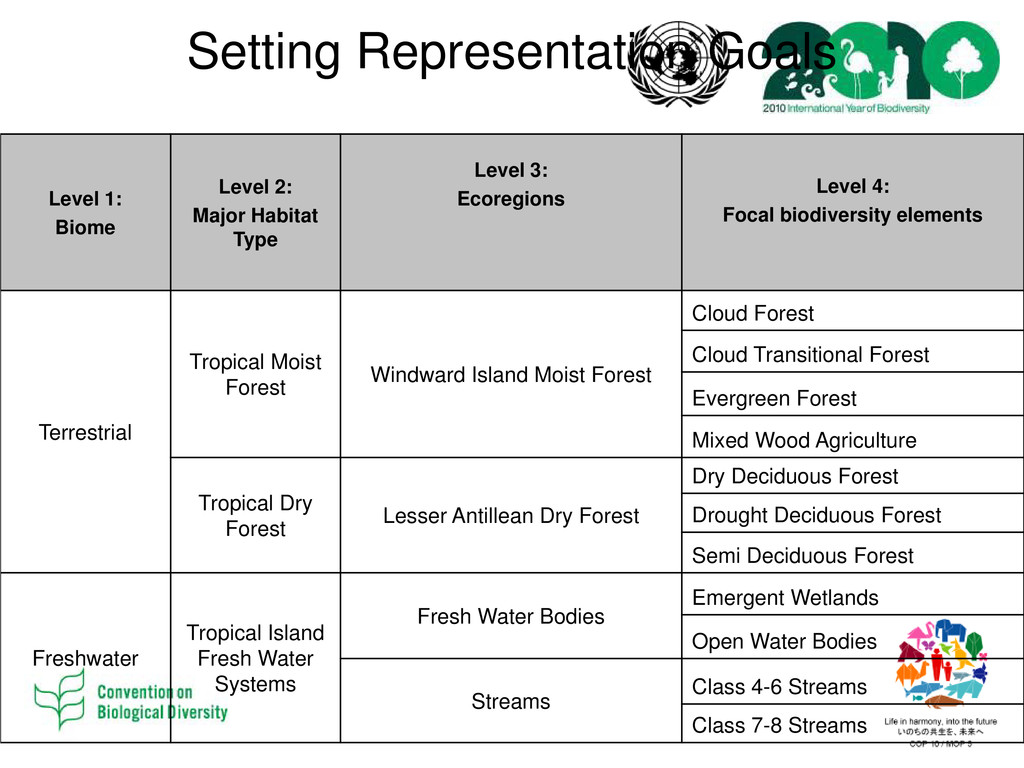
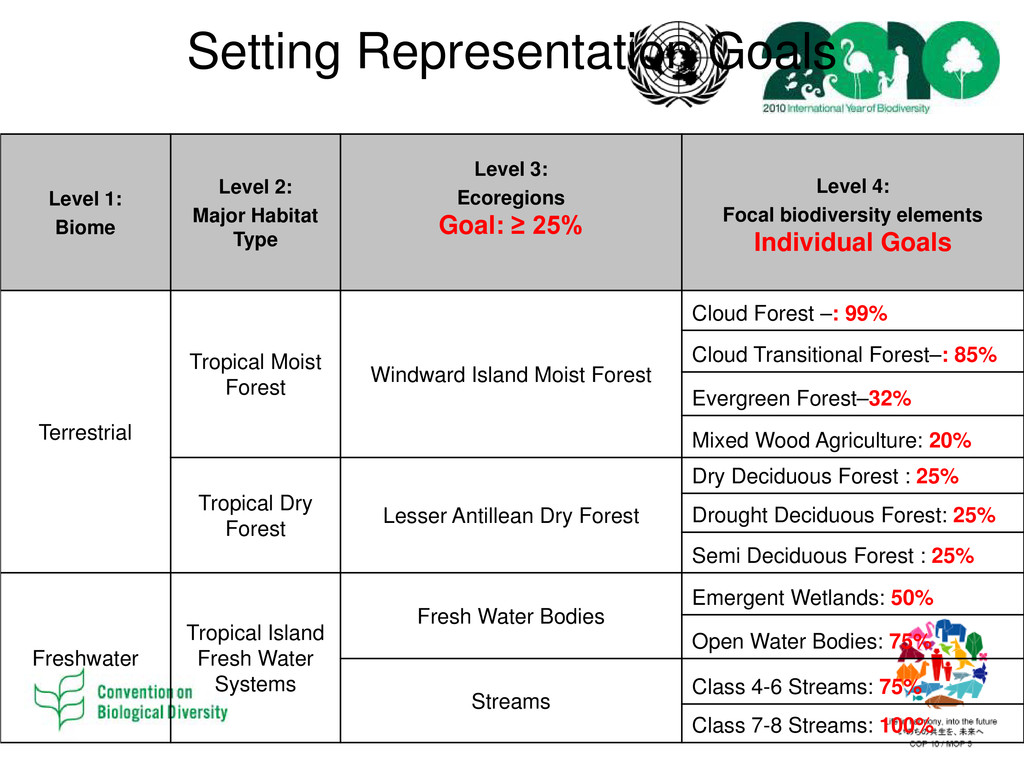
and maintenance of : comprehensive, ecologically representative effectively managed national and regional systems of protected areas: • by 2010 for terrestrial areas • by 2012 for marine areas Campaign to Save the Hotspots 1998
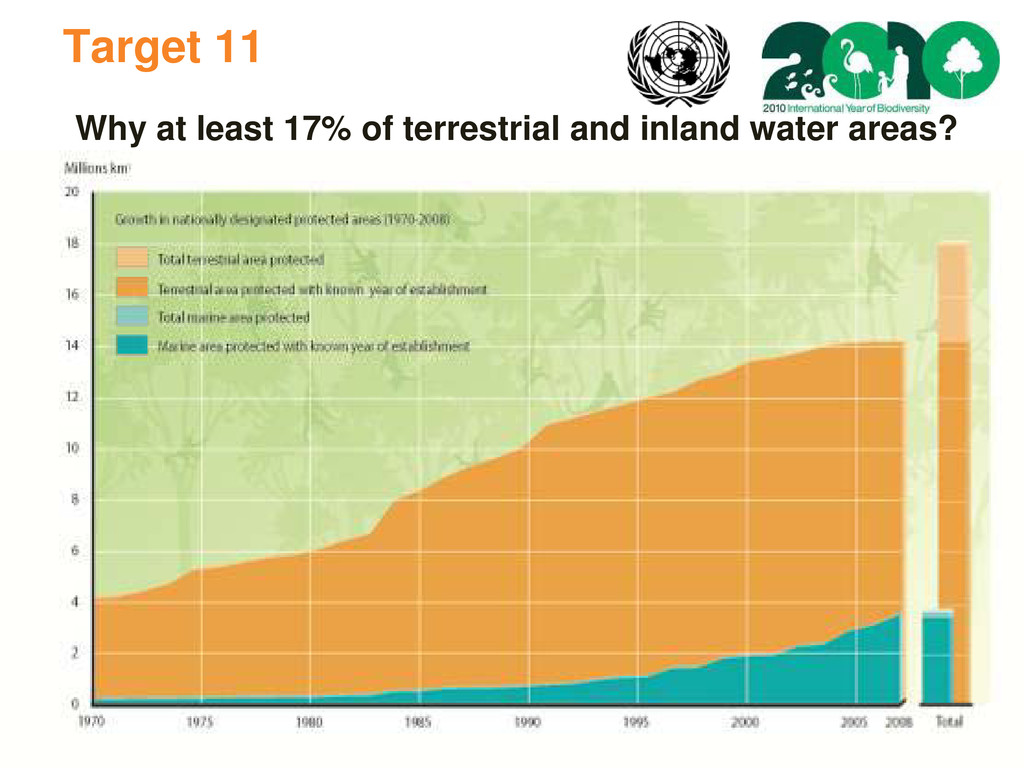
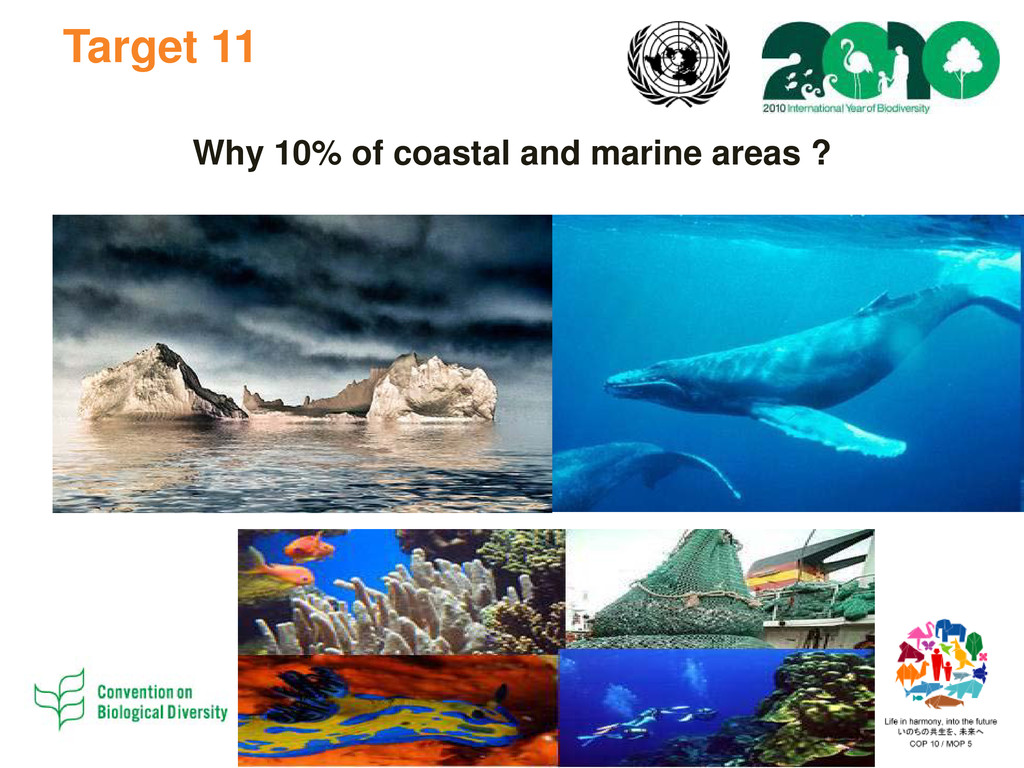
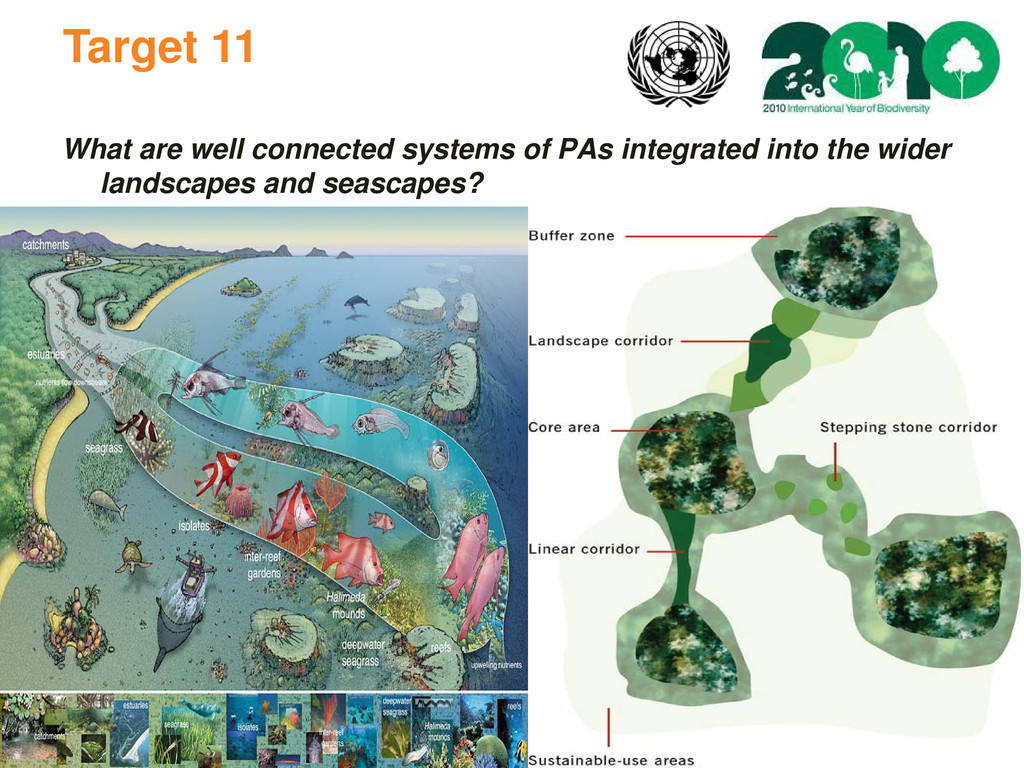
water areas, and 10 % of coastal and marine areas, …. especially areas of particular importance for biodiversity and ecosystem services, ….. are conserved through …. protected areas …. and other effective area-based conservation measures … effectively and equitably managed, …. ecologically representative and ….. well connected systems of PAs integrated into the wider landscapes and seascapes Target 11
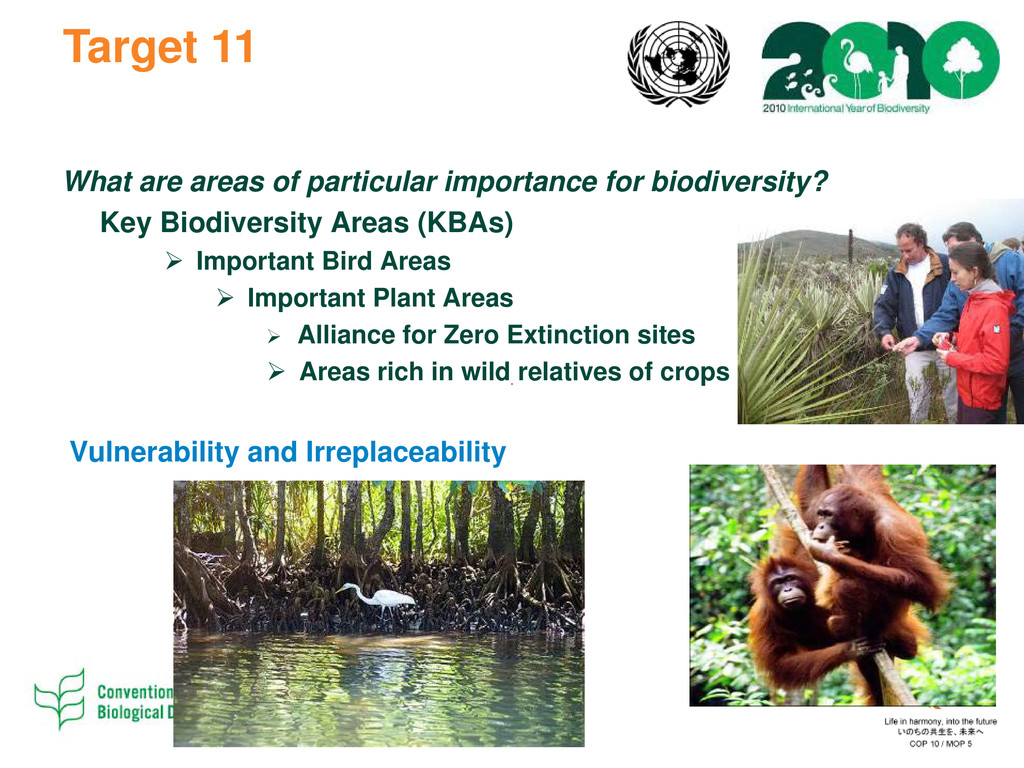
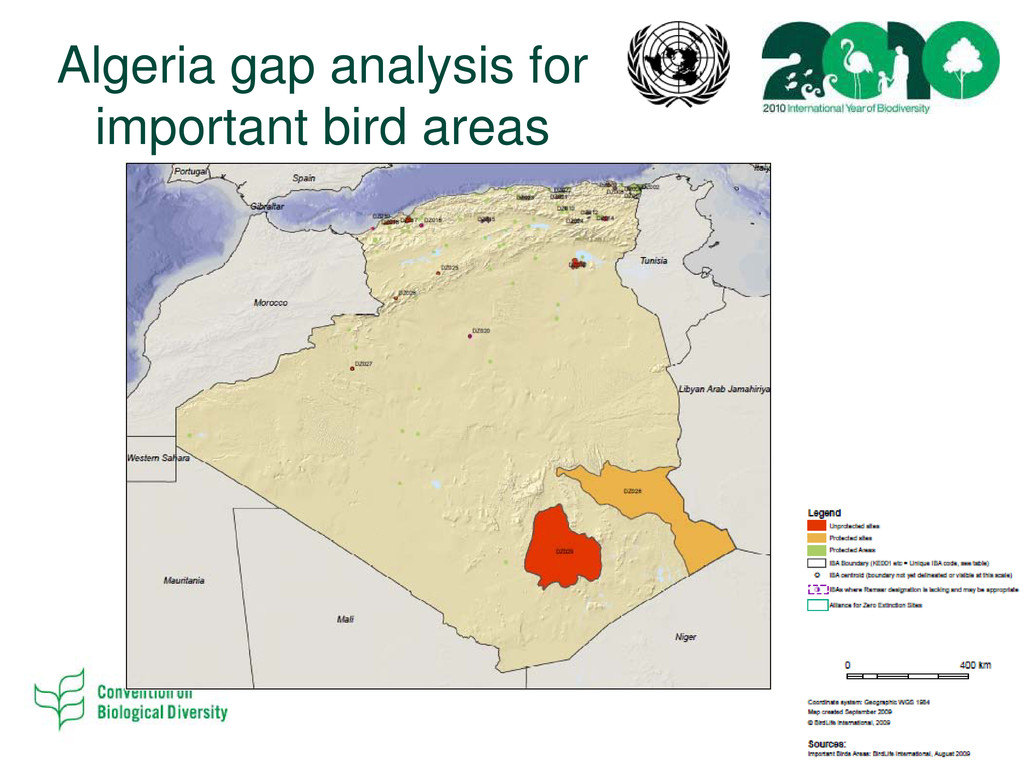
Areas (KBAs) Important Bird Areas Important Plant Areas Alliance for Zero Extinction sites Areas rich in wild relatives of crops Vulnerability and Irreplaceability Target 11
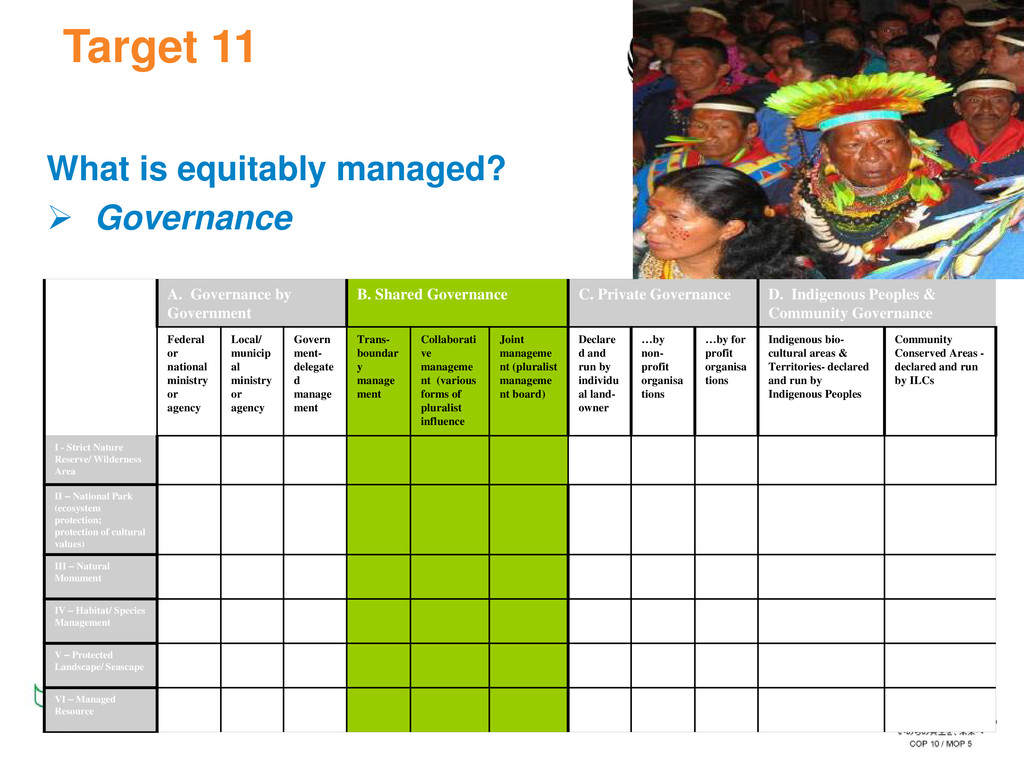
objective) A. Governance by Government B. Shared Governance C. Private Governance D. Indigenous Peoples & Community Governance Federal or national ministry or agency Local/ municip al ministry or agency Govern ment- delegate d manage ment Trans- boundar y manage ment Collaborati ve manageme nt (various forms of pluralist influence Joint manageme nt (pluralist manageme nt board) Declare d and run by individu al land- owner …by non- profit organisa tions …by for profit organisa tions Indigenous bio- cultural areas & Territories- declared and run by Indigenous Peoples Community Conserved Areas - declared and run by ILCs I - Strict Nature Reserve/ Wilderness Area II – National Park (ecosystem protection; protection of cultural values) III – Natural Monument IV – Habitat/ Species Management V – Protected Landscape/ Seascape VI – Managed Resource Target 11
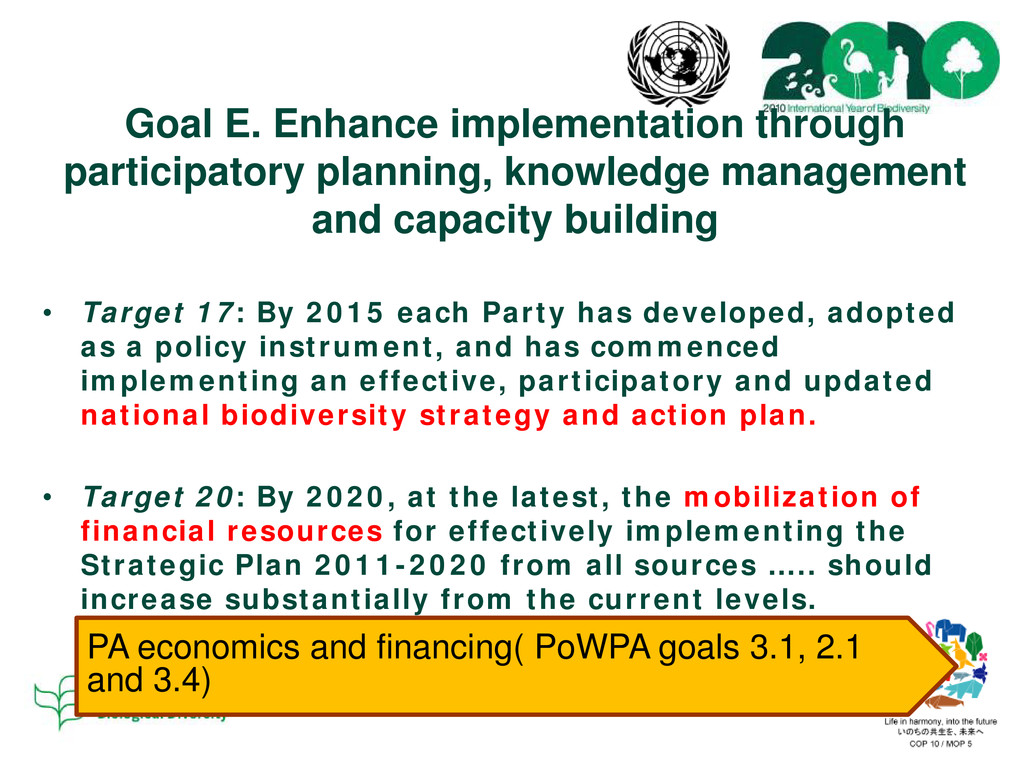
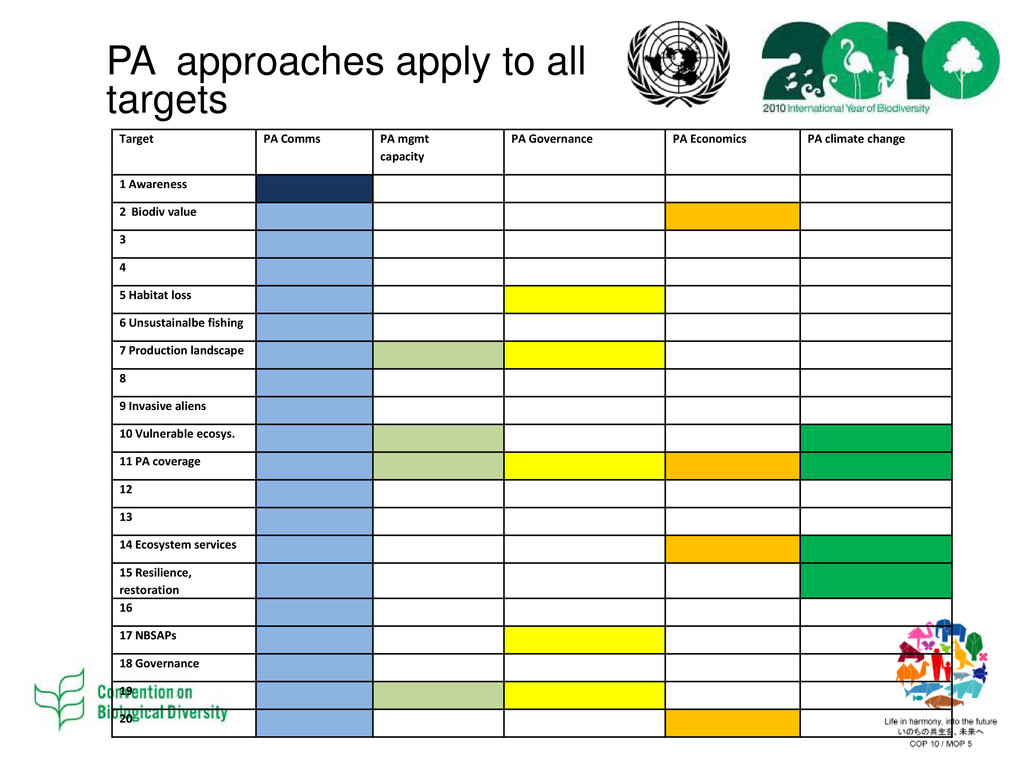
mainstreaming biodiversity across government and society • Target 1: By 2020, at the latest, people are aware of the values of biodiversity and the steps they can take to conserve and use it sustainably. PA communications ( PoWPA goals 3.1, 3.5)
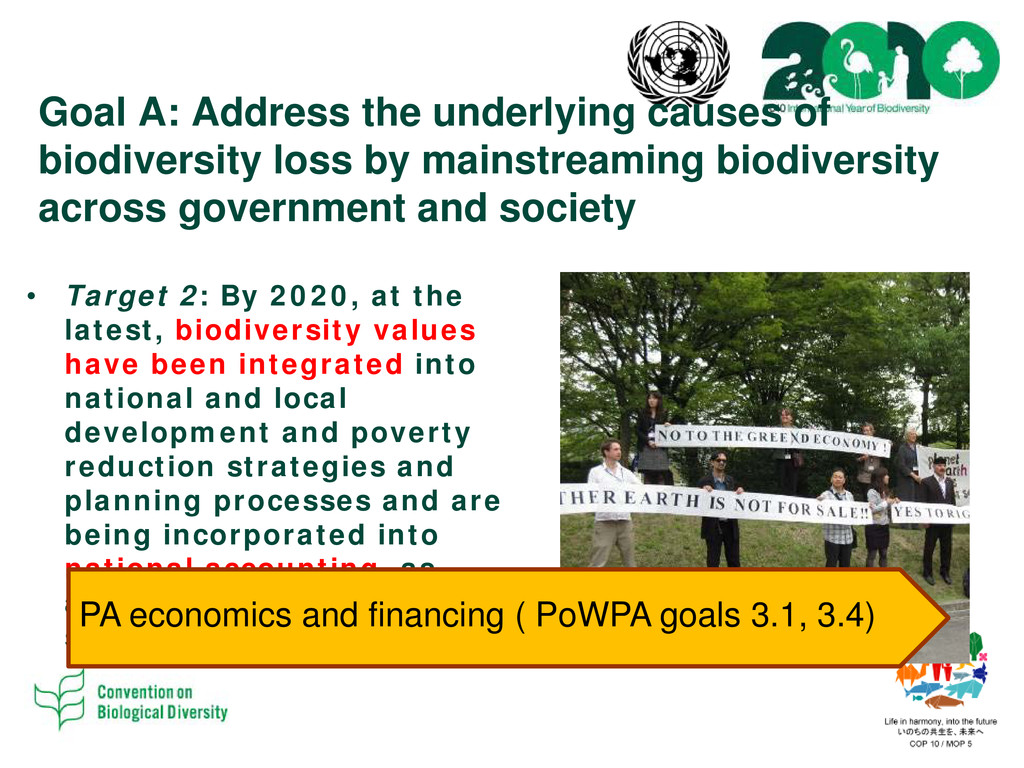
mainstreaming biodiversity across government and society • Target 2: By 2020, at the latest, biodiversity values have been integrated into national and local development and poverty reduction strategies and planning processes and are being incorporated into national accounting, as appropriate, and reporting systems. PA economics and financing ( PoWPA goals 3.1, 3.4)
sustainable use • Target 5: By 2020, the rate of loss of all natural habitats, including forests, is at least halved and where feasible brought close to zero, and degradation and fragmentation is significantly reduced. • Target 10: By 2015, the multiple anthropogenic pressures on coral reefs, and other vulnerable ecosystems impacted by climate change or ocean acidification are minimized, so as to maintain their integrity and functioning. PA management capacity ( PoWPA goals 3.2,1.2, 1.4, 4.3, & 4.4)
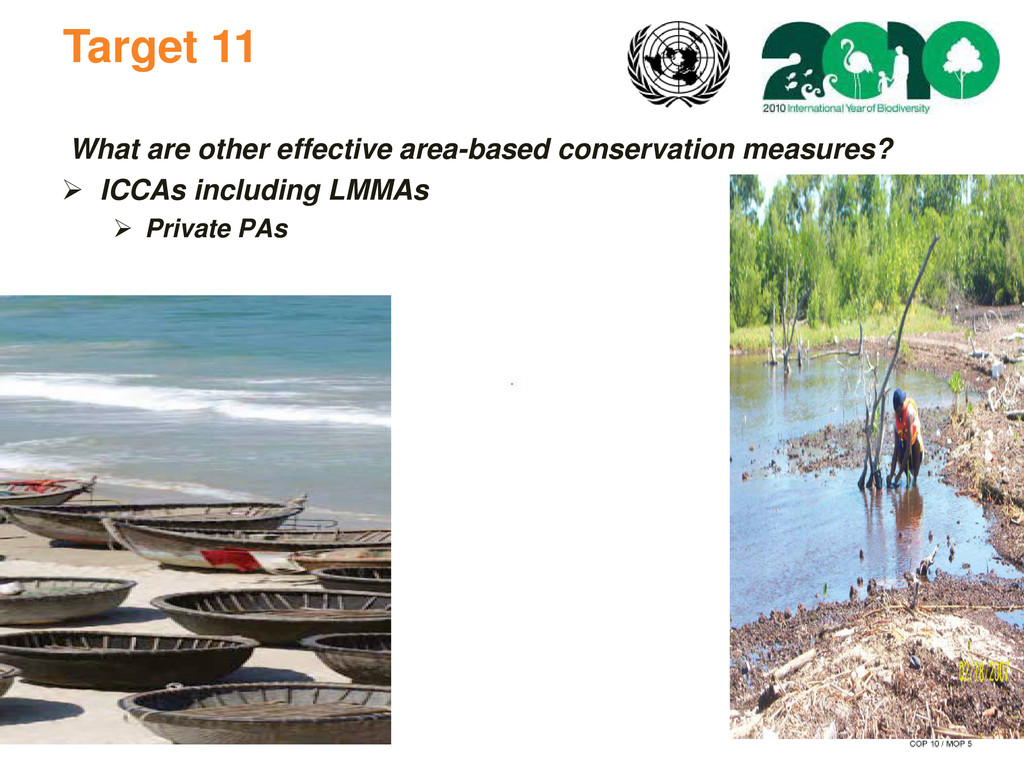
ecosystems, species and genetic diversity • Target 11: By 2020, at least 17 % of terrestrial and inland water, and 10 % of coastal and marine areas, especially areas of particular importance for biodiversity and ecosystem services, are conserved through effectively and equitably managed, ecologically representative and well-connected systems of protected areas and other effective area-based conservation measures, and integrated into the wider landscape and seascape. Almost all goals of PoWPA especially goals1.1, 1.2, 2.2, 3.1,3.2, 3.4,4.1,4.2
ecosystems, species and genetic diversity • Target 12: By 2020 the extinction of known threatened species has been prevented and their conservation status, particularly of those most in decline, has been improved and sustained. PA management capacity ( PoWPA goals 3.2, 4.1 & 4.3)
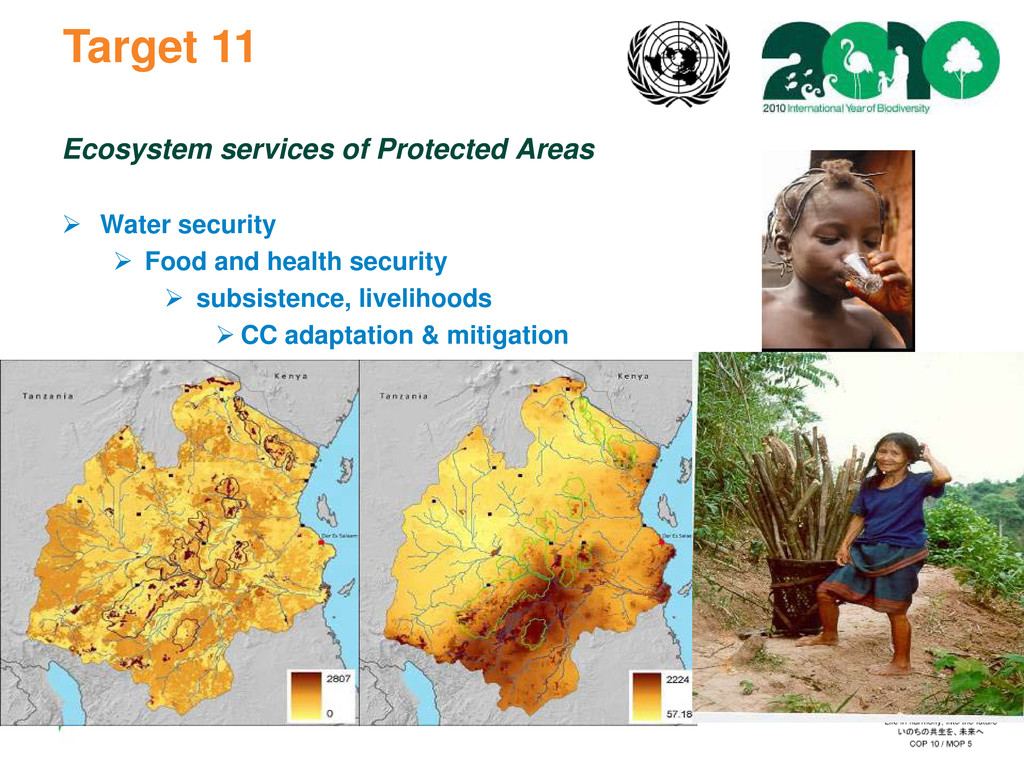
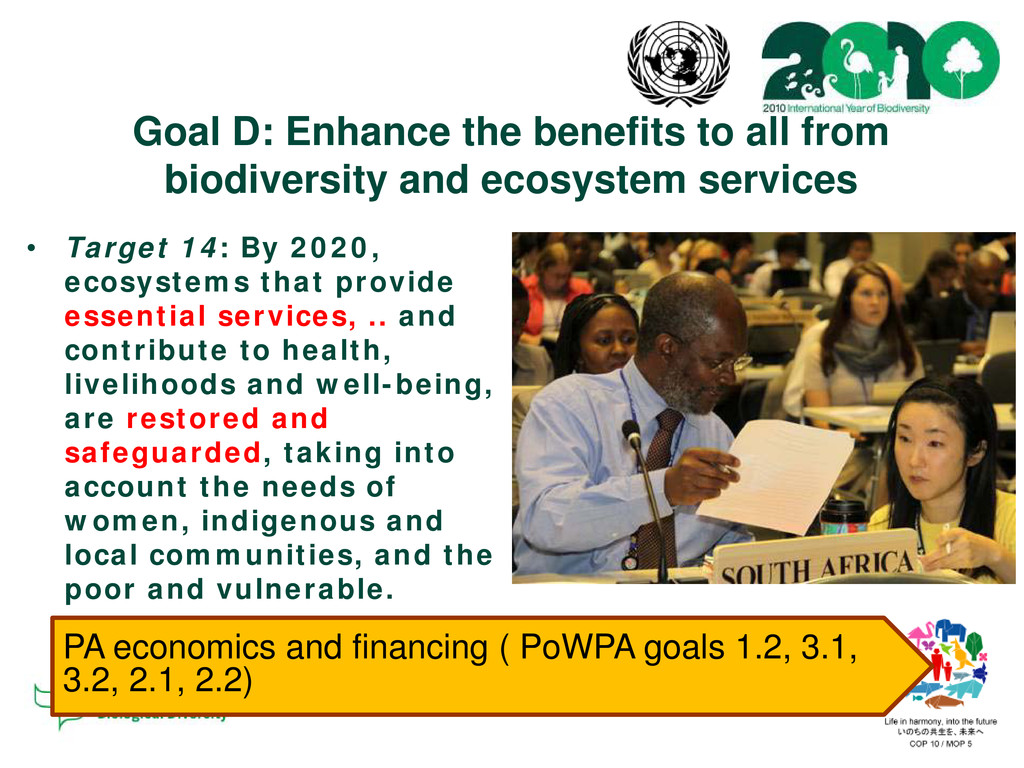
ecosystem services • Target 14: By 2020, ecosystems that provide essential services, .. and contribute to health, livelihoods and well-being, are restored and safeguarded, taking into account the needs of women, indigenous and local communities, and the poor and vulnerable. PA economics and financing ( PoWPA goals 1.2, 3.1, 3.2, 2.1, 2.2)
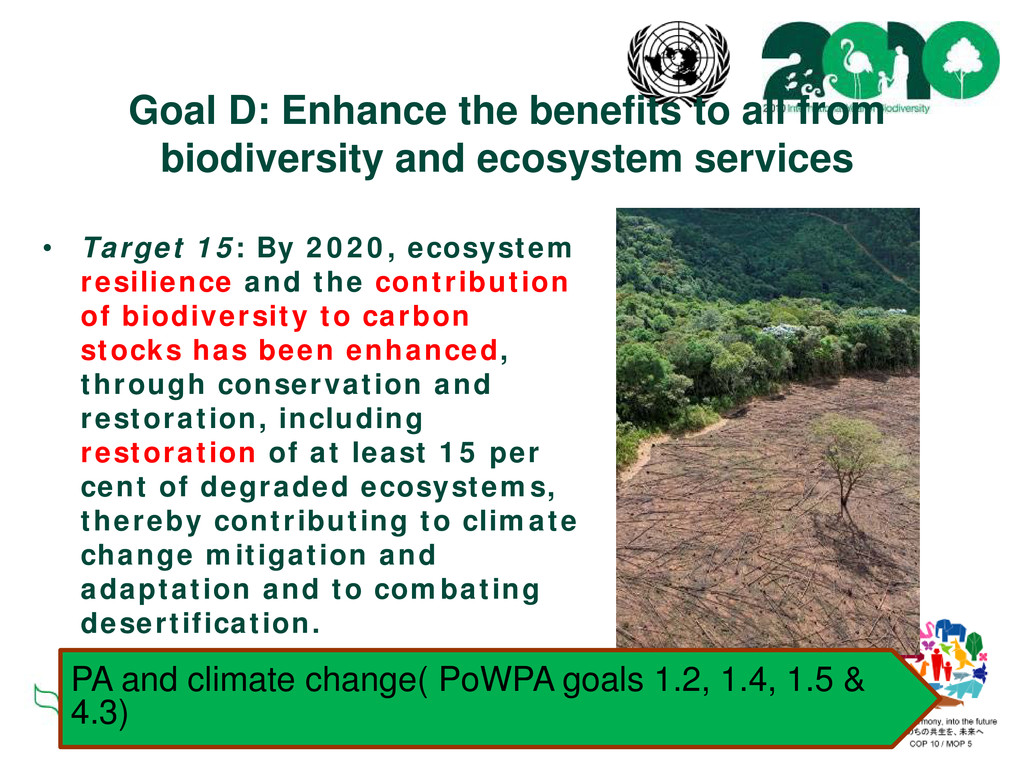
ecosystem services • Target 15: By 2020, ecosystem resilience and the contribution of biodiversity to carbon stocks has been enhanced, through conservation and restoration, including restoration of at least 15 per cent of degraded ecosystems, thereby contributing to climate change mitigation and adaptation and to combating desertification. PA and climate change( PoWPA goals 1.2, 1.4, 1.5 & 4.3)
capacity building • Target 17: By 2015 each Party has developed, adopted as a policy instrument, and has commenced implementing an effective, participatory and updated national biodiversity strategy and action plan. • Target 20: By 2020, at the latest, the mobilization of financial resources for effectively implementing the Strategic Plan 2011-2020 from all sources ….. should increase substantially from the current levels. PA economics and financing( PoWPA goals 3.1, 2.1 and 3.4)
based target for terrestrial protected areas for your country? 2. What are the most realistic area based targets territorial waters for your country? What is an example of a target for each of the qualitative elements of Target 11 and indicative time line for achieving them? 3. Ecologically representative networks 4. Well-connected networks 5. Effectively managed protected areas 6. Equitably managed networks (with diverse governance types) 7. Sustainably financed protected areas 8. PAs integrated into wider land & sea scapes and sectors
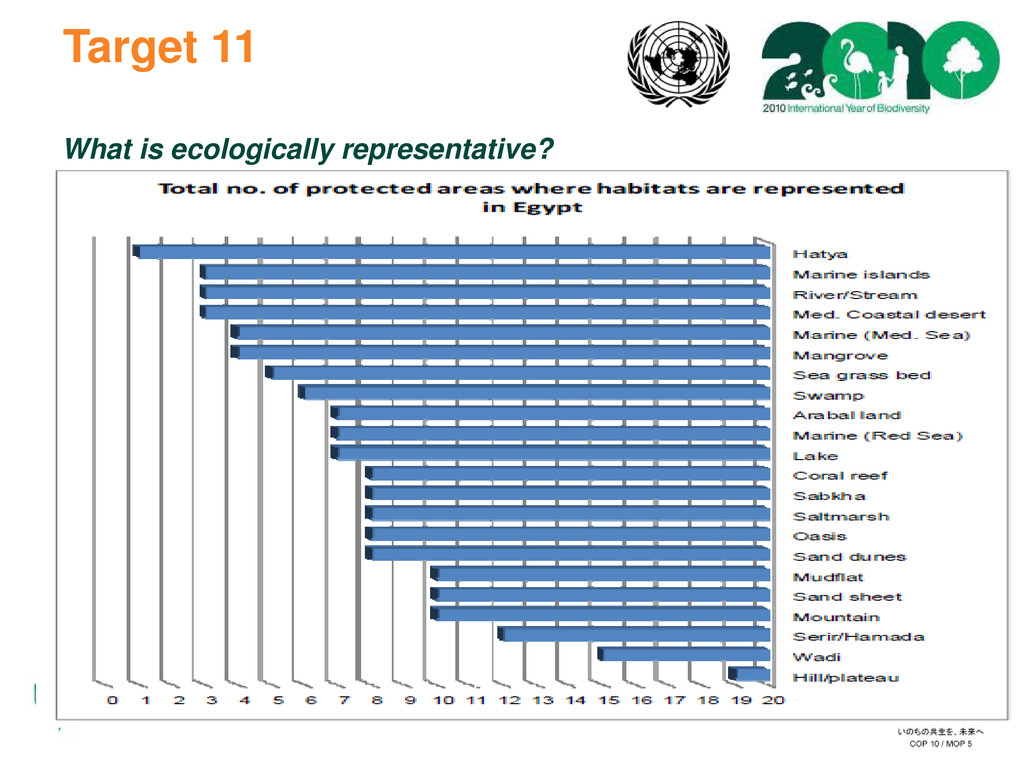
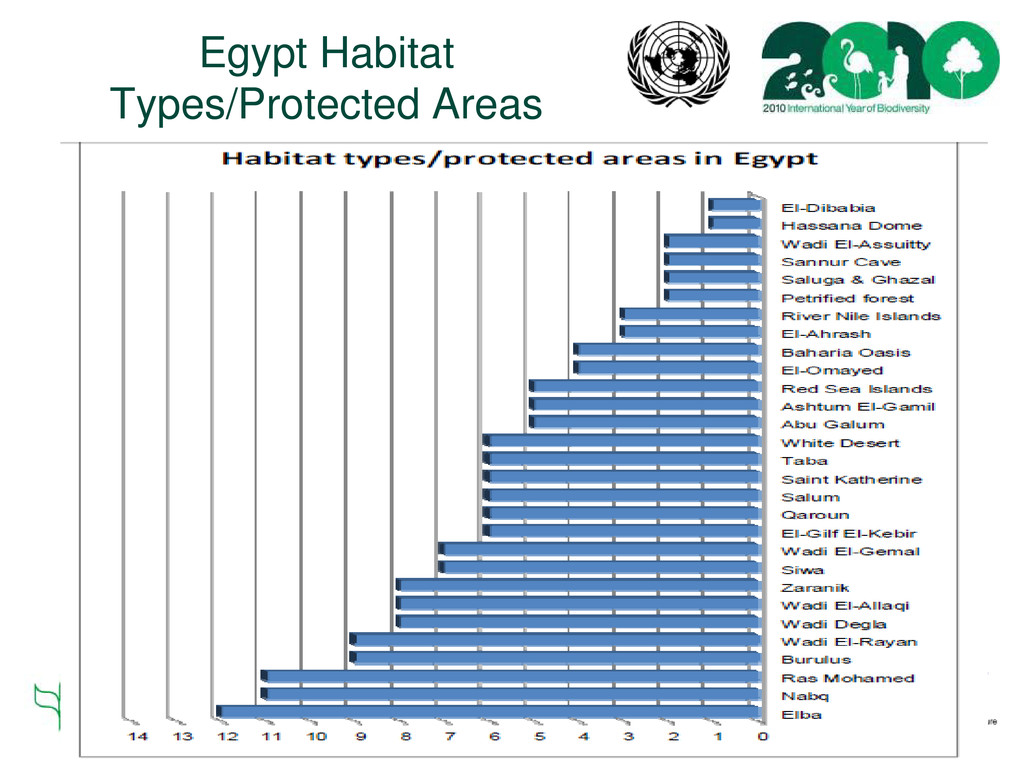
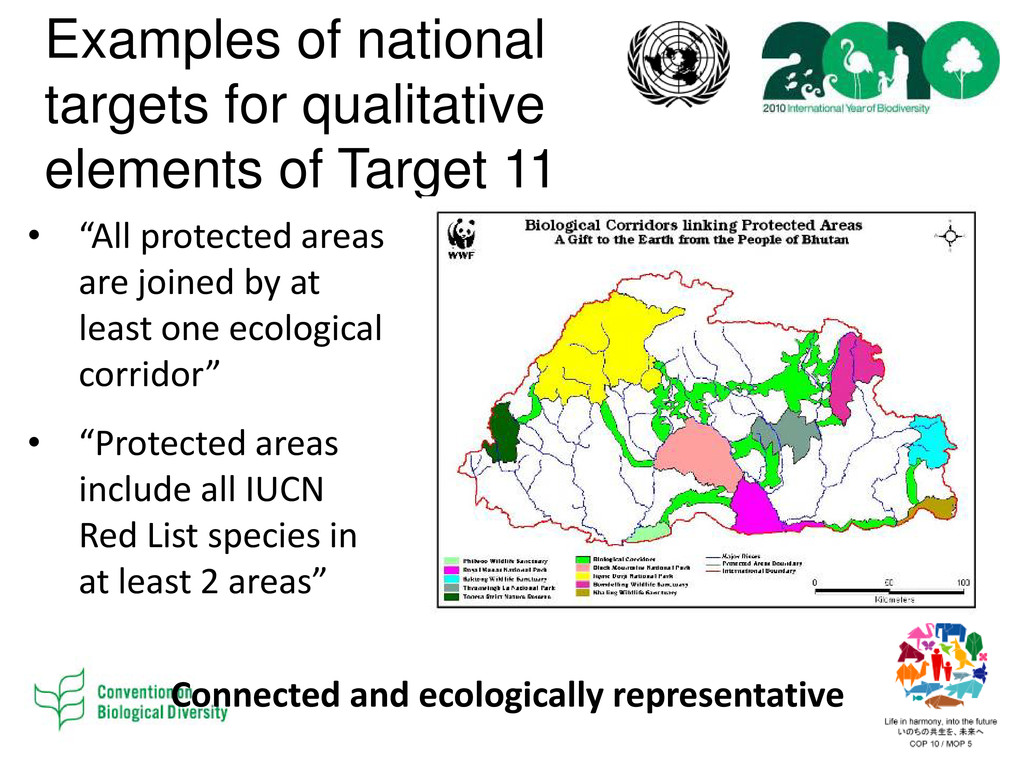
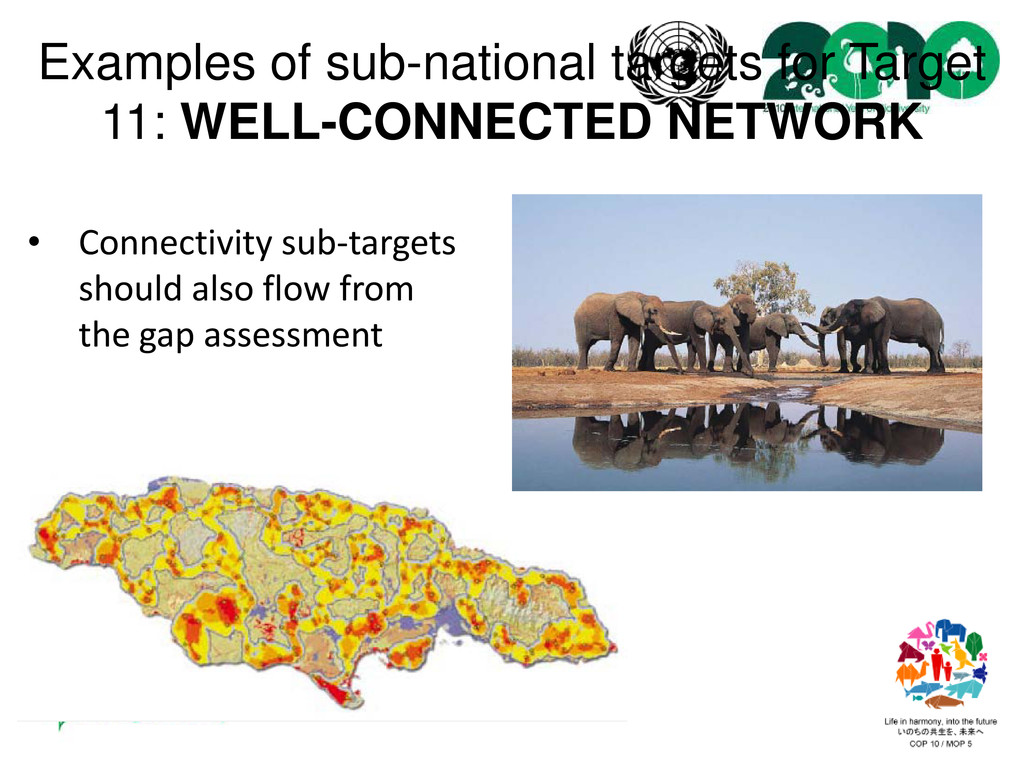
Connected and ecologically representative • “All protected areas are joined by at least one ecological corridor” • “Protected areas include all IUCN Red List species in at least 2 areas”
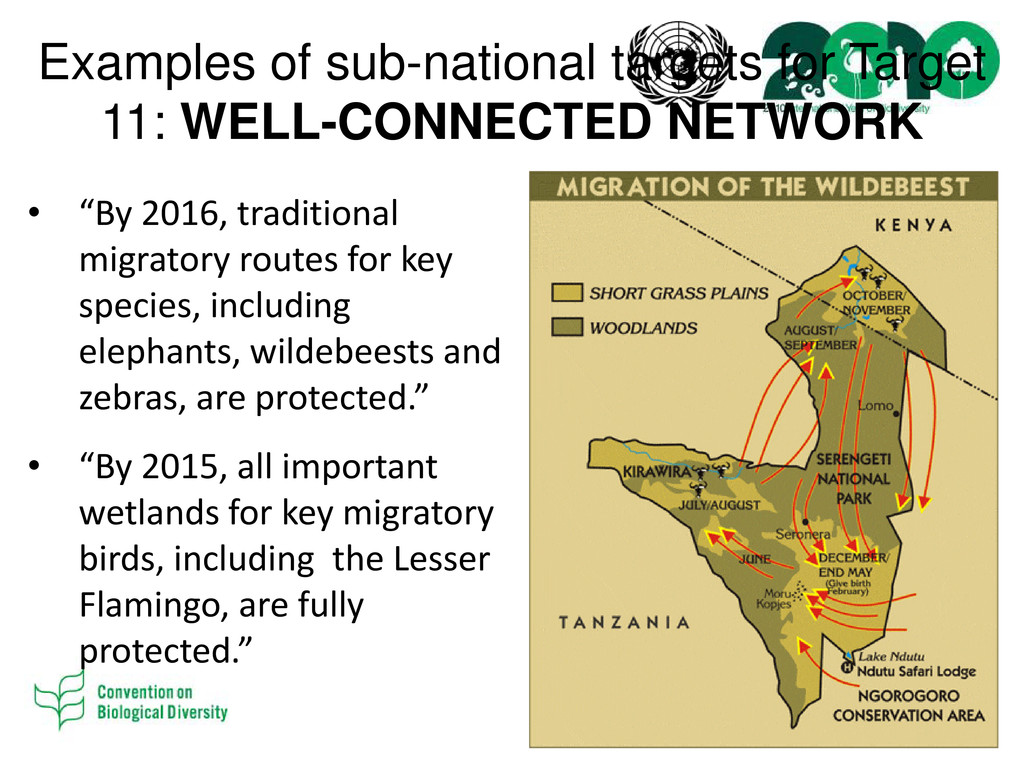
“By 2016, traditional migratory routes for key species, including elephants, wildebeests and zebras, are protected.” • “By 2015, all important wetlands for key migratory birds, including the Lesser Flamingo, are fully protected.”
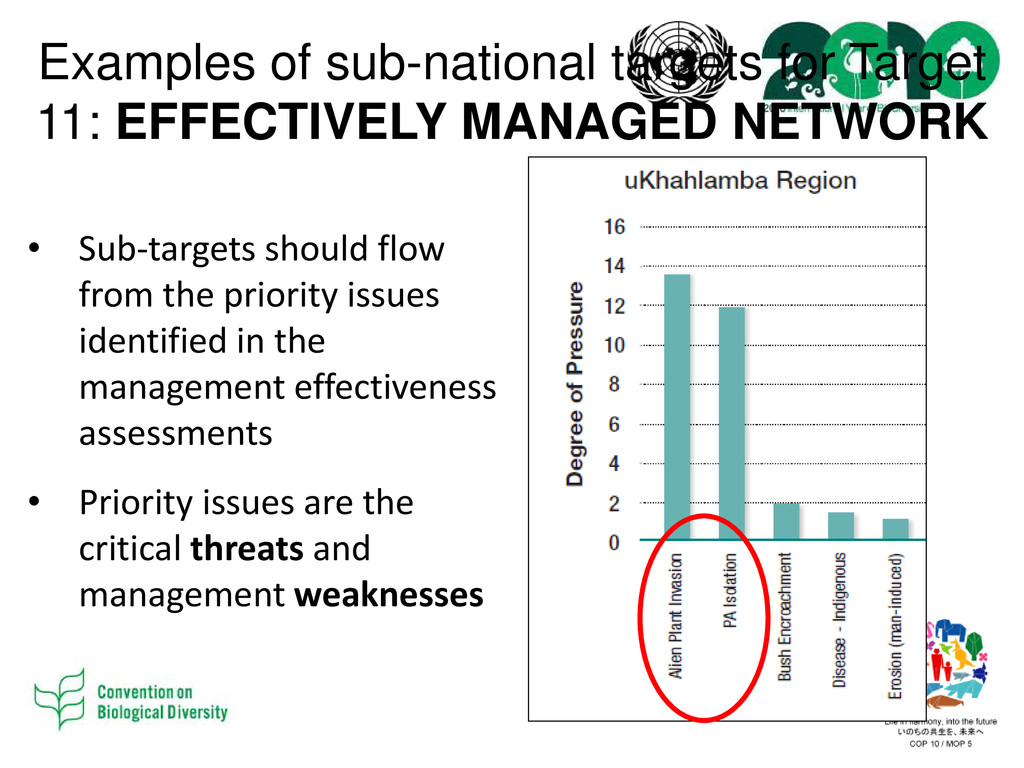
• Sub-targets should flow from the priority issues identified in the management effectiveness assessments • Priority issues are the critical threats and management weaknesses
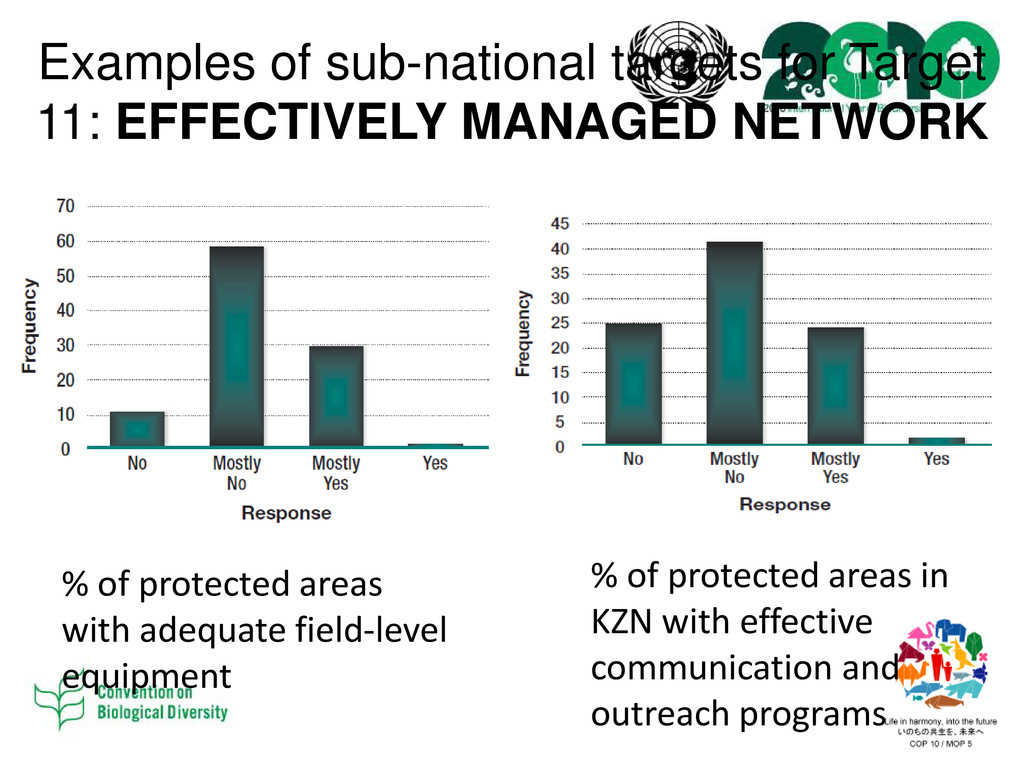
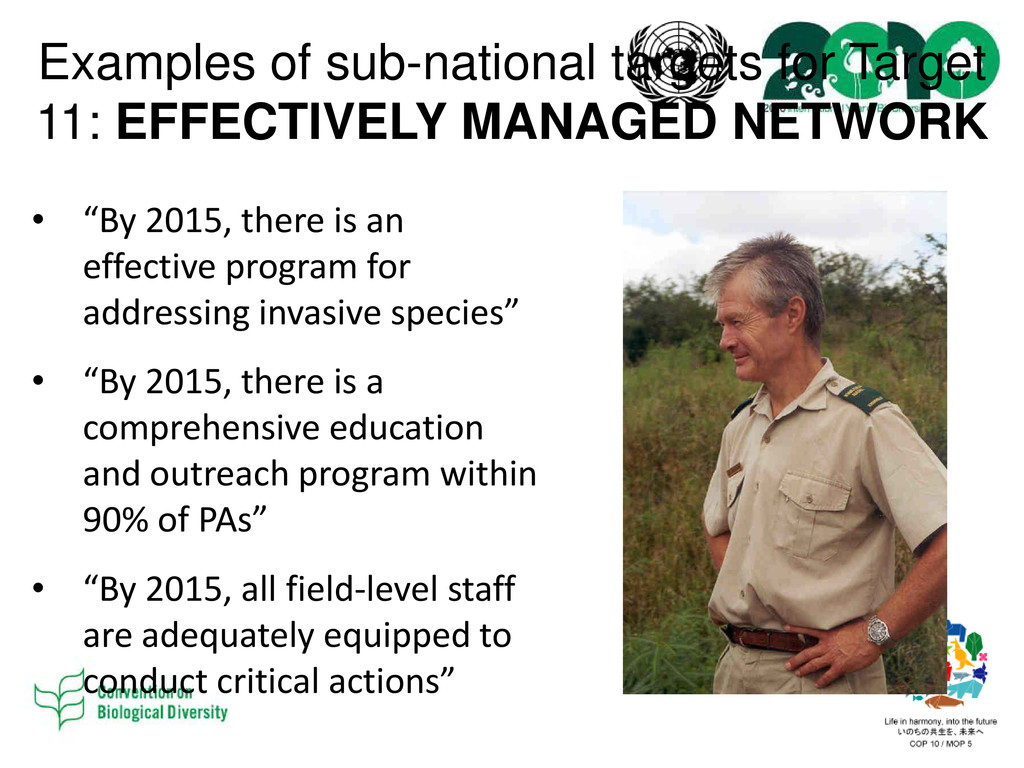
• “By 2015, there is an effective program for addressing invasive species” • “By 2015, there is a comprehensive education and outreach program within 90% of PAs” • “By 2015, all field-level staff are adequately equipped to conduct critical actions”
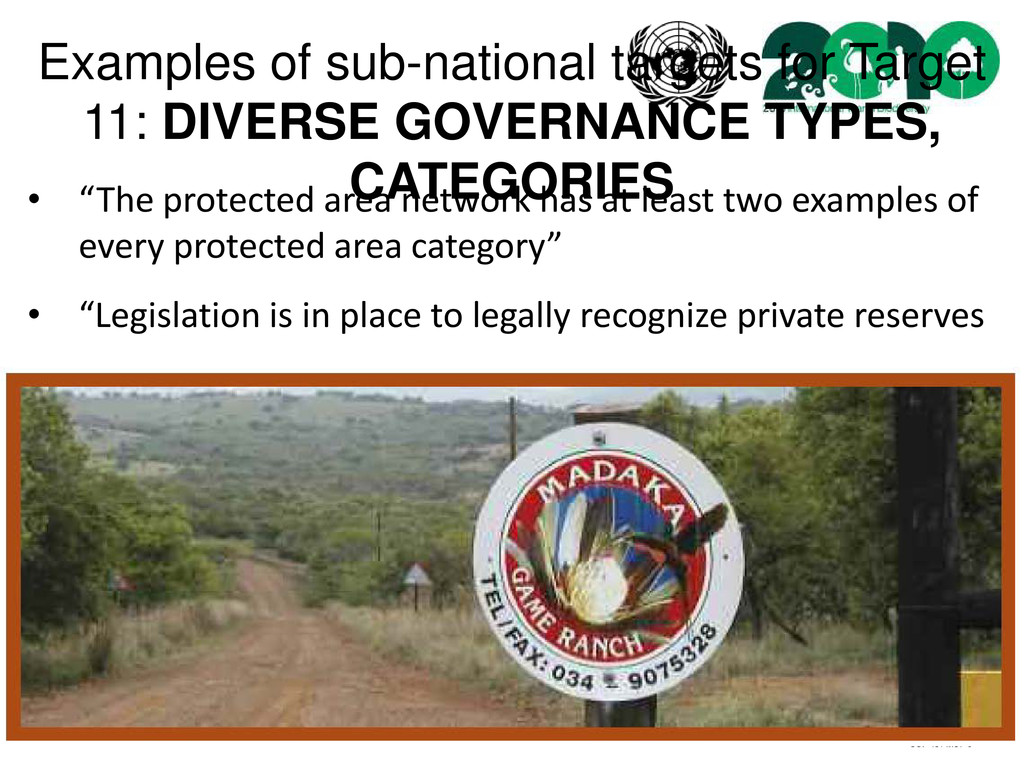
of every protected area category” • “Legislation is in place to legally recognize private reserves Examples of sub-national targets for Target 11: DIVERSE GOVERNANCE TYPES, CATEGORIES
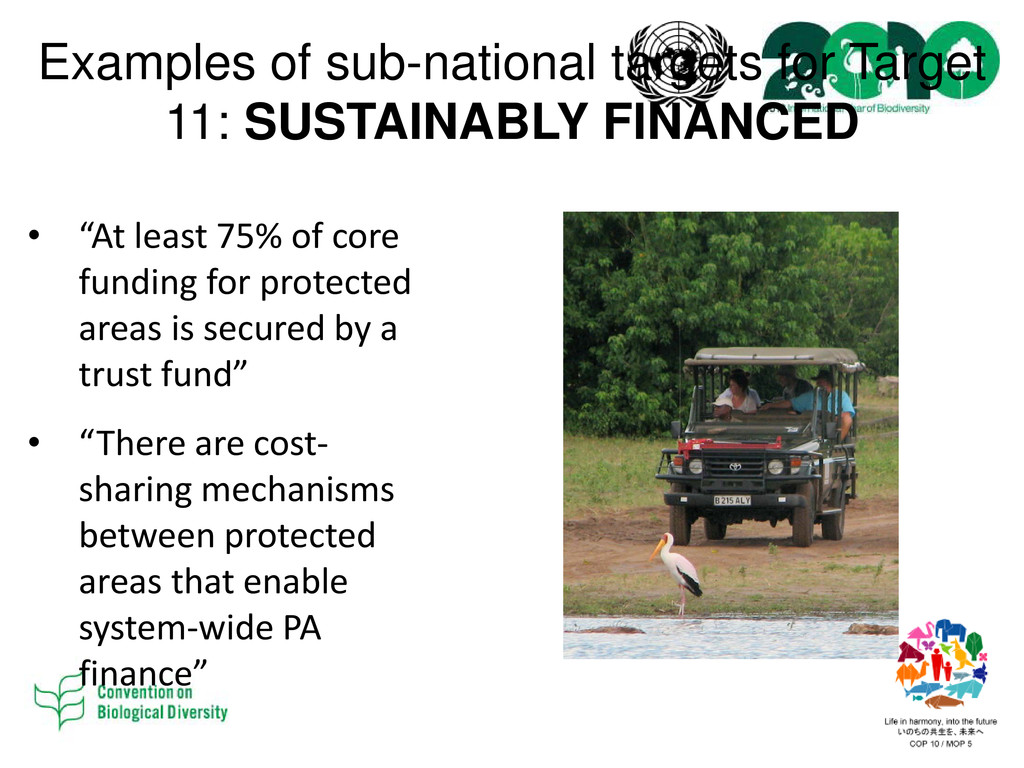
is secured by a trust fund” • “There are cost- sharing mechanisms between protected areas that enable system-wide PA finance” Examples of sub-national targets for Target 11: SUSTAINABLY FINANCED
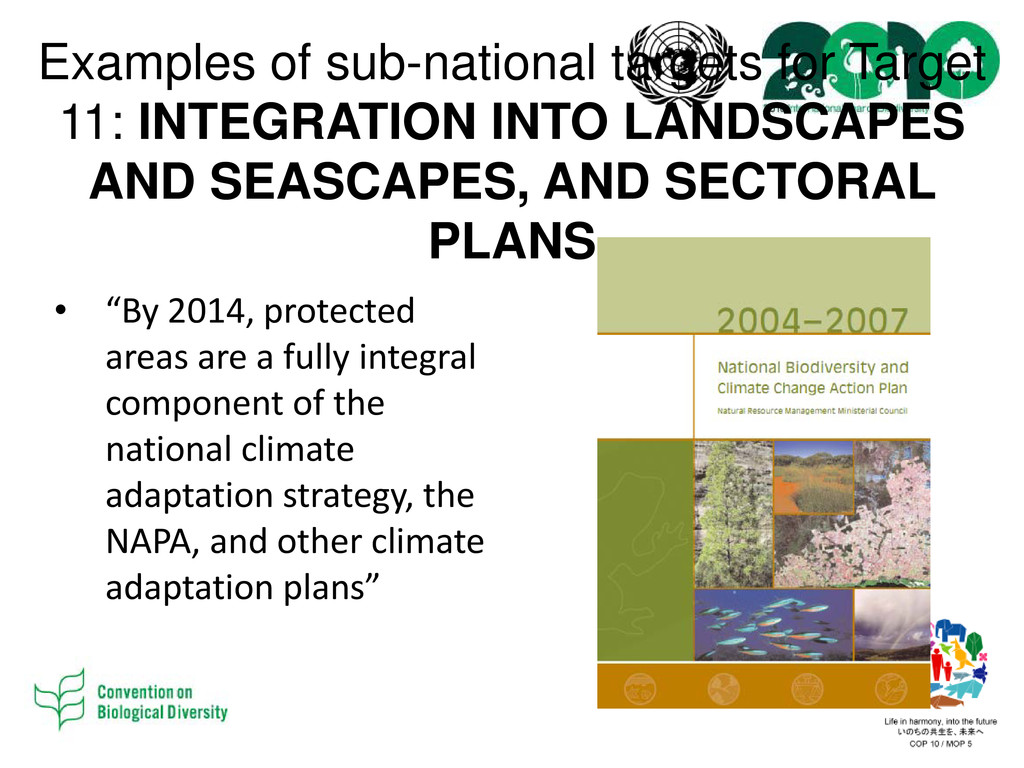
of the national climate adaptation strategy, the NAPA, and other climate adaptation plans” Examples of sub-national targets for Target 11: INTEGRATION INTO LANDSCAPES AND SEASCAPES, AND SECTORAL PLANS


 reverentgeek
 chriscoyier
 katarinadahlin
 ipullrank
 rmw
 tapps
 andyhume
 marketingsoph
 samtorres
 katiecoart
 jonoalderson
 rocio