Upgrade to Pro — share decks privately, control downloads, hide ads and more …

Part 1: Mast Cell Activation SMA

Sponsored · Your Podcast. Everywhere. Effortlessly. Share. Educate. Inspire. Entertain. You do you. We'll handle the rest. →
Avatar for Mast Cell SMA Mast Cell SMA
September 08, 2026
17

Part 1: Mast Cell Activation SMA

Avatar for Mast Cell SMA

Mast Cell SMA

September 08, 2026

Transcript

  1. Every group member has the option to schedule 1 complimentary

    30 minute visit with one of the IHH Health Coaches .
  2. Introductions 1. Name 1 thing that brings you joy? 2.

    What issues are you dealing with that you think may be mast cell related? (If you don’t know, then can you share some of the health issues you’ve been working on lately?) 3. What do you hope to get out of this group?
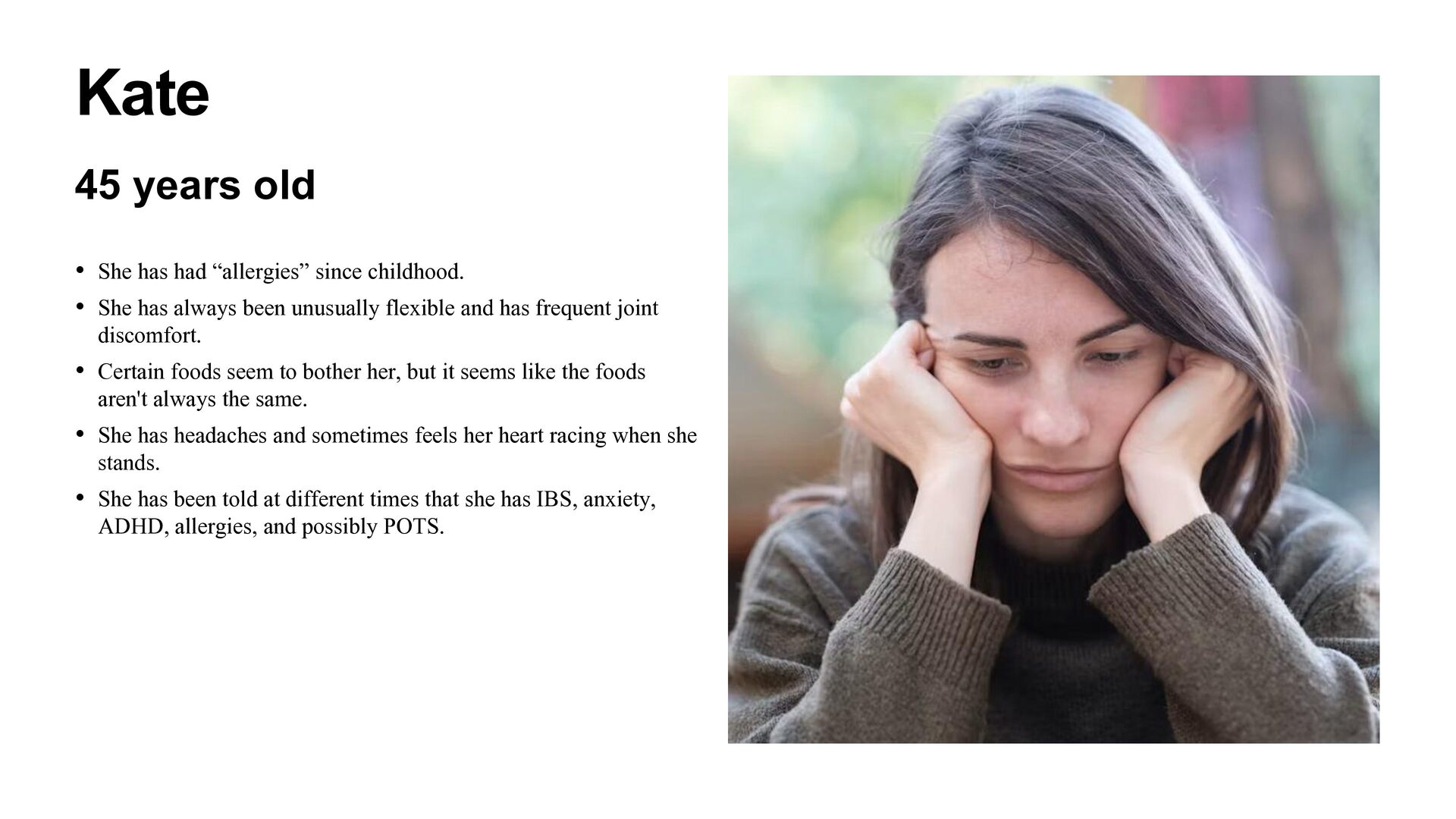
  3. Kate 45 years old • She has had “allergies” since

    childhood. • She has always been unusually flexible and has frequent joint discomfort. • Certain foods seem to bother her, but it seems like the foods aren't always the same. • She has headaches and sometimes feels her heart racing when she stands. • She has been told at different times that she has IBS, anxiety, ADHD, allergies, and possibly POTS.
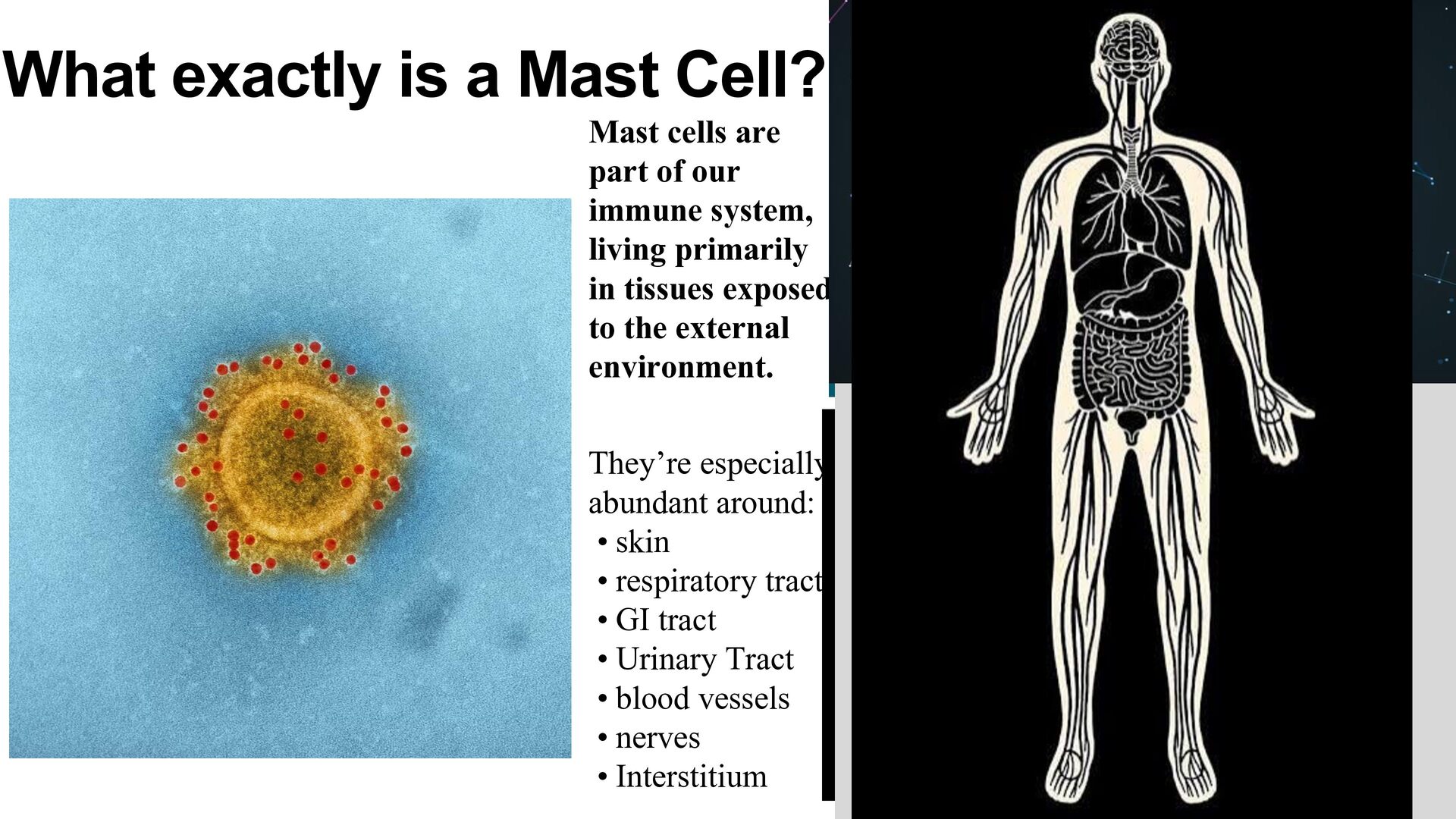
  4. What exactly is a Mast Cell? Mast cells are part

    of our immune system, living primarily in tissues exposed to the external environment. They’re especially abundant around: • skin • respiratory tract • GI tract • Urinary Tract • blood vessels • nerves • Interstitium
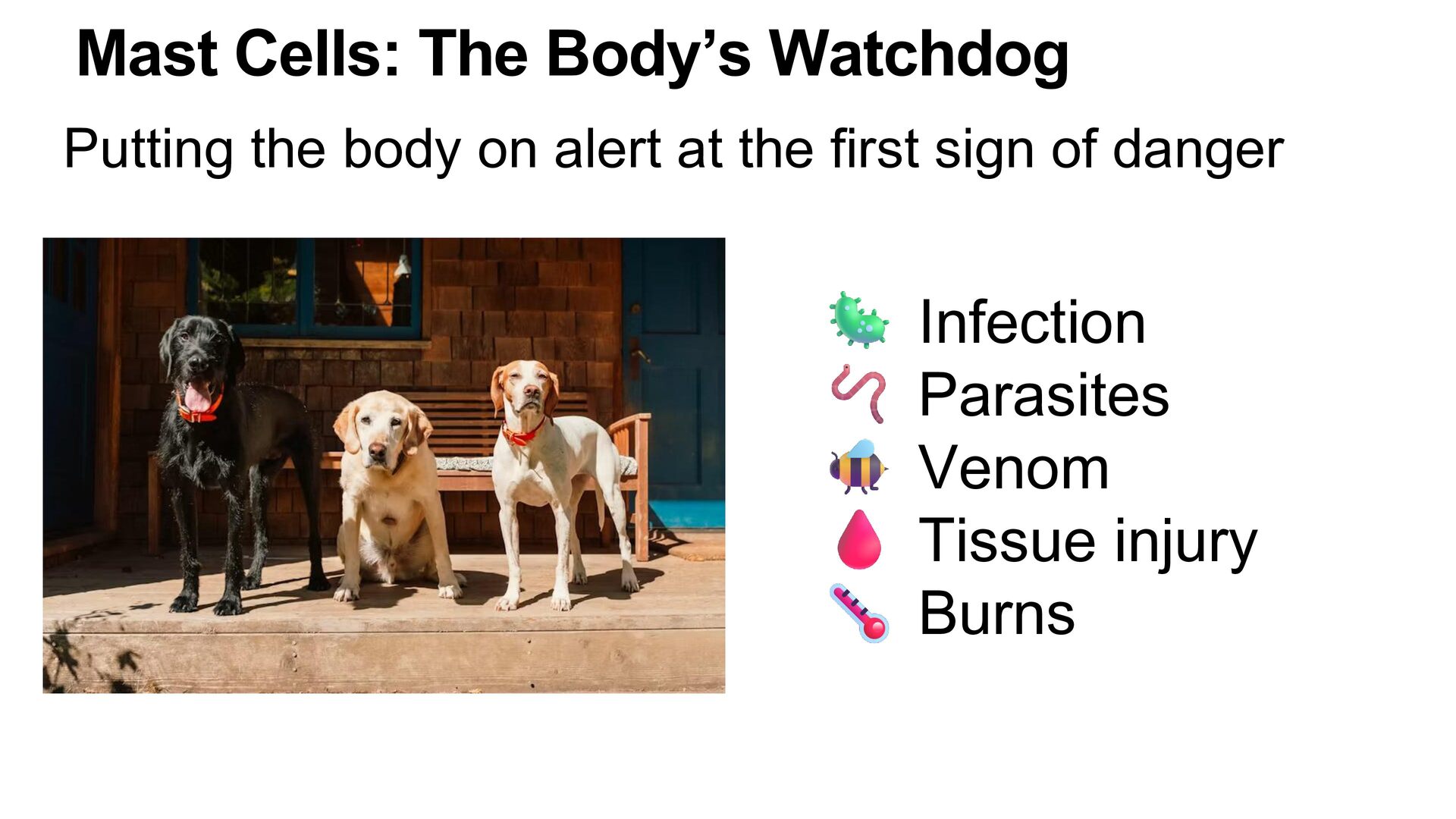
  5. Mast Cells: The Body’s Watchdog Putting the body on alert

    at the first sign of danger Infection Parasites Venom Tissue injury Burns
  6. A Multicolored Firework Waiting to Explode Releasing Histamine…And MORE! Histamine:

    Flushing, itching, diarrhea, hypotension, pain, increased heart rate, mucus production, headaches Tryptase: itching, pain, swelling, leaky blood vessels, scarring, bone breakdown Heparin: bruising, bone breakdown TNF-α: Fatigue, headaches, joint and muscle aches and pains Leukotrienes: Shortness of breath, swelling, mucus production, recruit other inflammatory cells Prostaglandins: Flushing, bone pain, brain fog, cramping
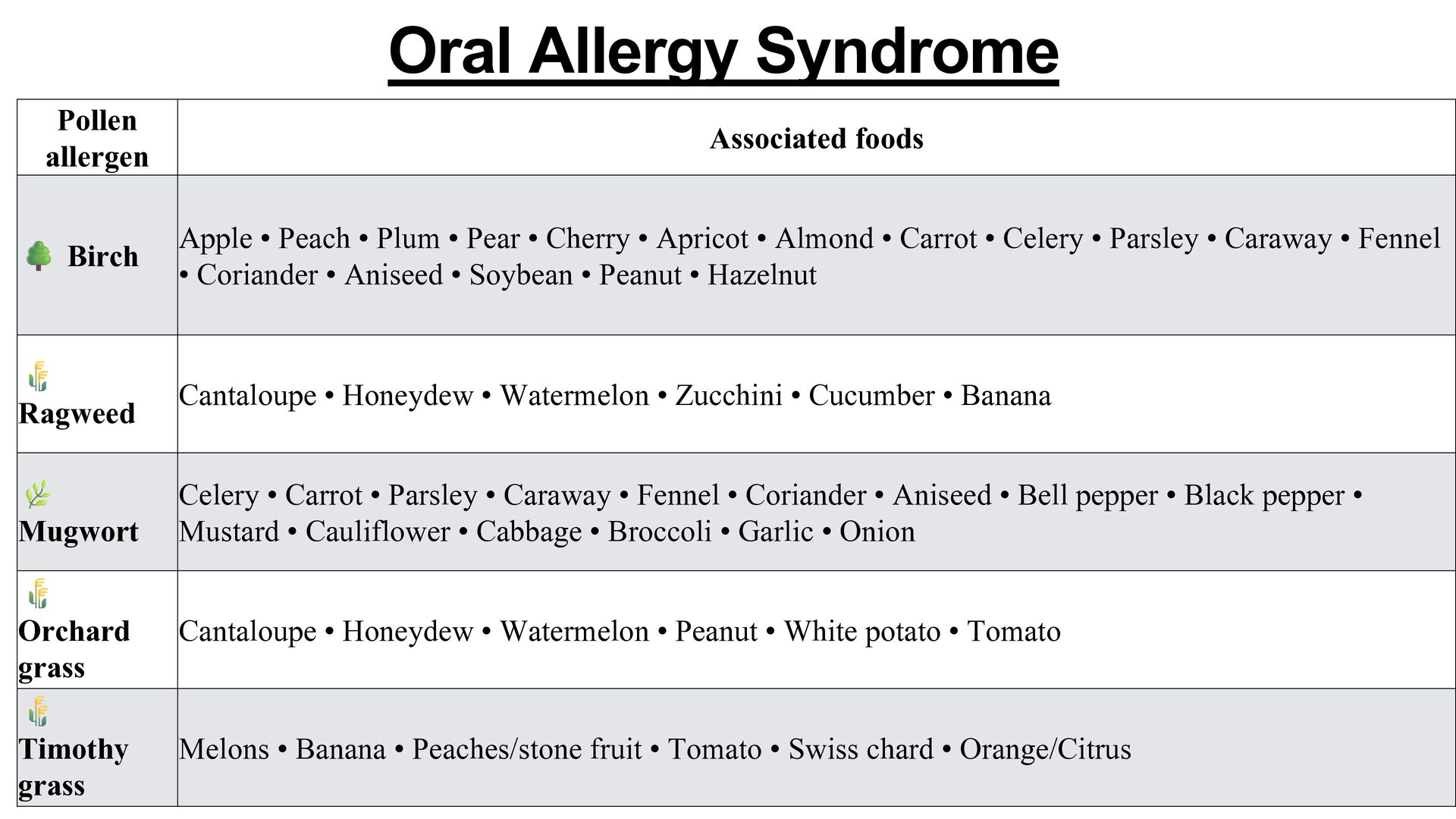
  7. Oral Allergy Syndrome Pollen allergen Associated foods Birch Apple •

    Peach • Plum • Pear • Cherry • Apricot • Almond • Carrot • Celery • Parsley • Caraway • Fennel • Coriander • Aniseed • Soybean • Peanut • Hazelnut Ragweed Mugwort Cantaloupe • Honeydew • Watermelon • Zucchini • Cucumber • Banana Celery • Carrot • Parsley • Caraway • Fennel • Coriander • Aniseed • Bell pepper • Black pepper • Mustard • Cauliflower • Cabbage • Broccoli • Garlic • Onion Orchard grass Cantaloupe • Honeydew • Watermelon • Peanut • White potato • Tomato Timothy grass Melons • Banana • Peaches/stone fruit • Tomato • Swiss chard • Orange/Citrus
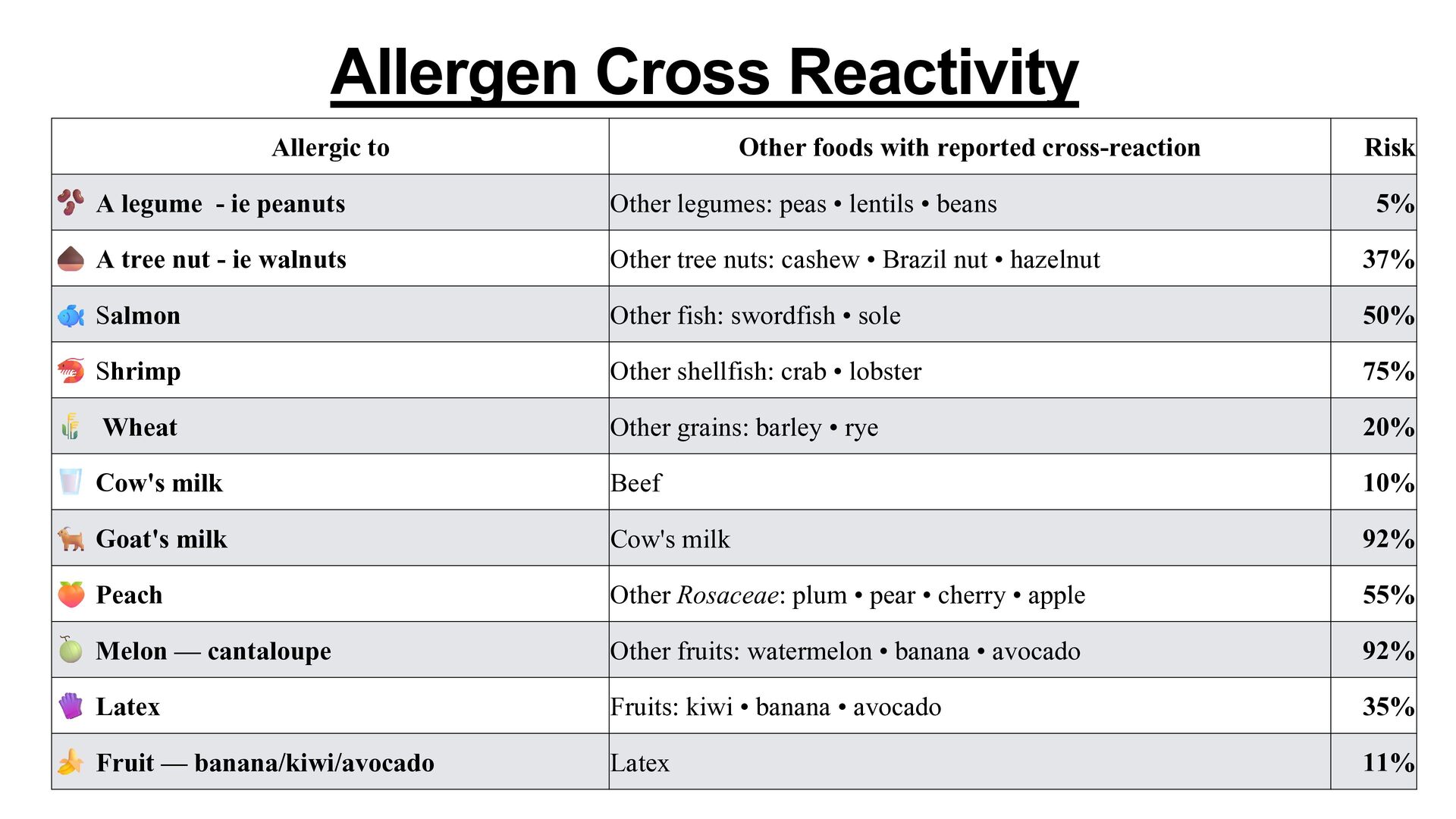
  8. Allergen Cross Reactivity Allergic to Other foods with reported cross-reaction

    Risk A legume - ie peanuts Other legumes: peas • lentils • beans 5% A tree nut - ie walnuts Other tree nuts: cashew • Brazil nut • hazelnut 37% Salmon Other fish: swordfish • sole 50% Shrimp Other shellfish: crab • lobster 75% Wheat Other grains: barley • rye 20% Cow's milk Beef 10% Goat's milk Cow's milk 92% Peach Other Rosaceae: plum • pear • cherry • apple 55% Melon — cantaloupe Other fruits: watermelon • banana • avocado 92% Latex Fruits: kiwi • banana • avocado 35% Fruit — banana/kiwi/avocado Latex 11%
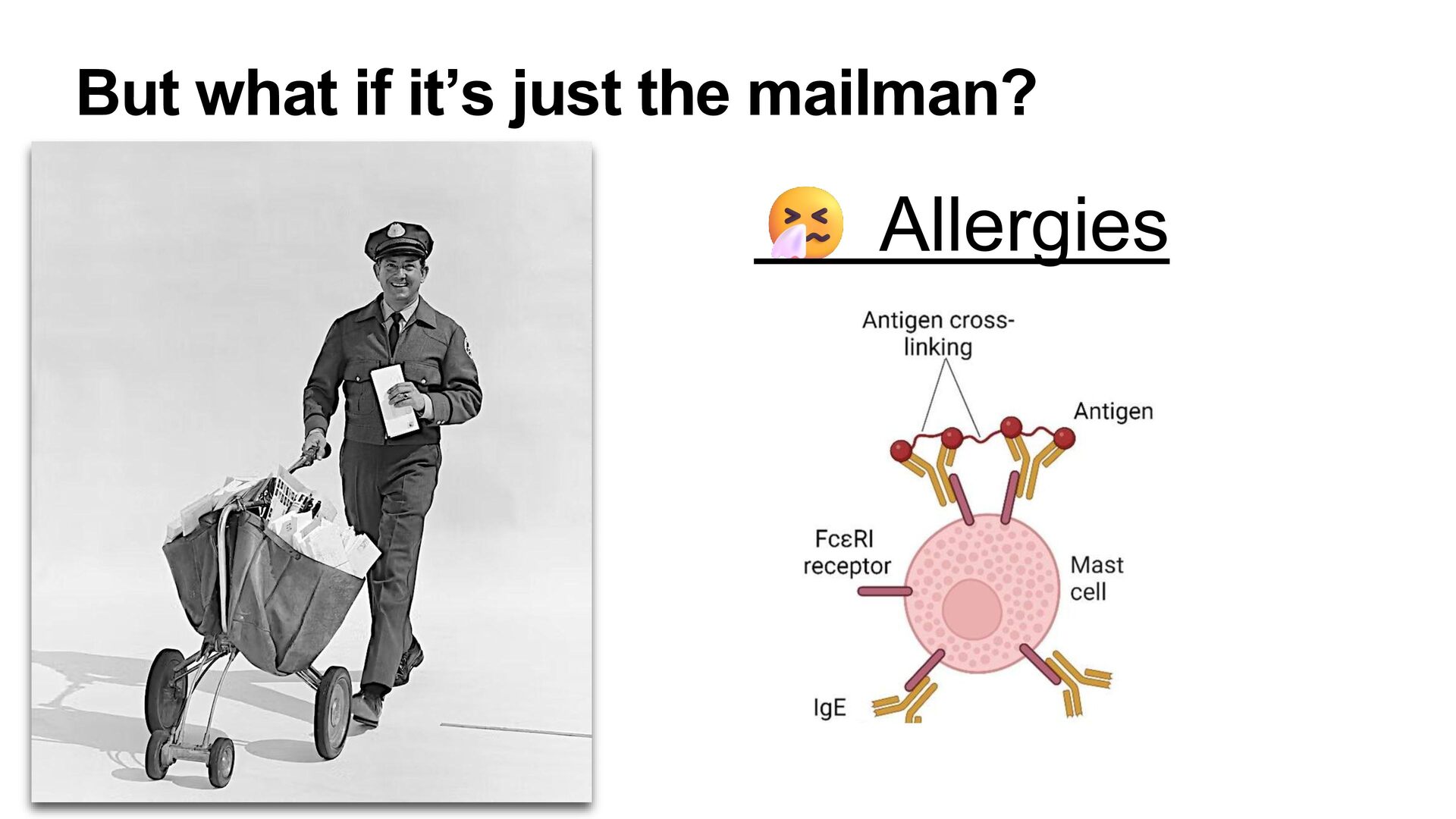
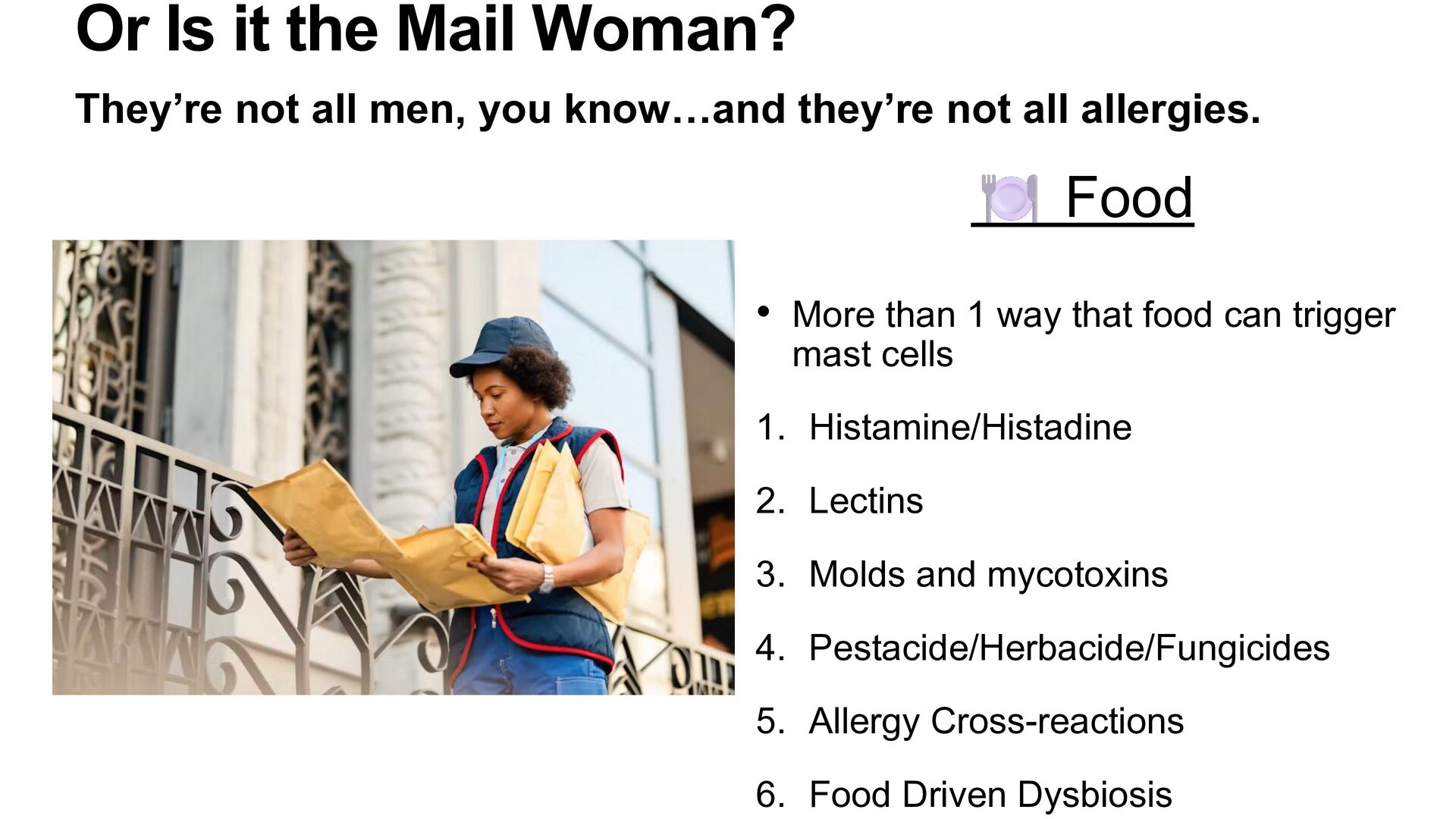
  9. Or Is it the Mail Woman? They’re not all men,

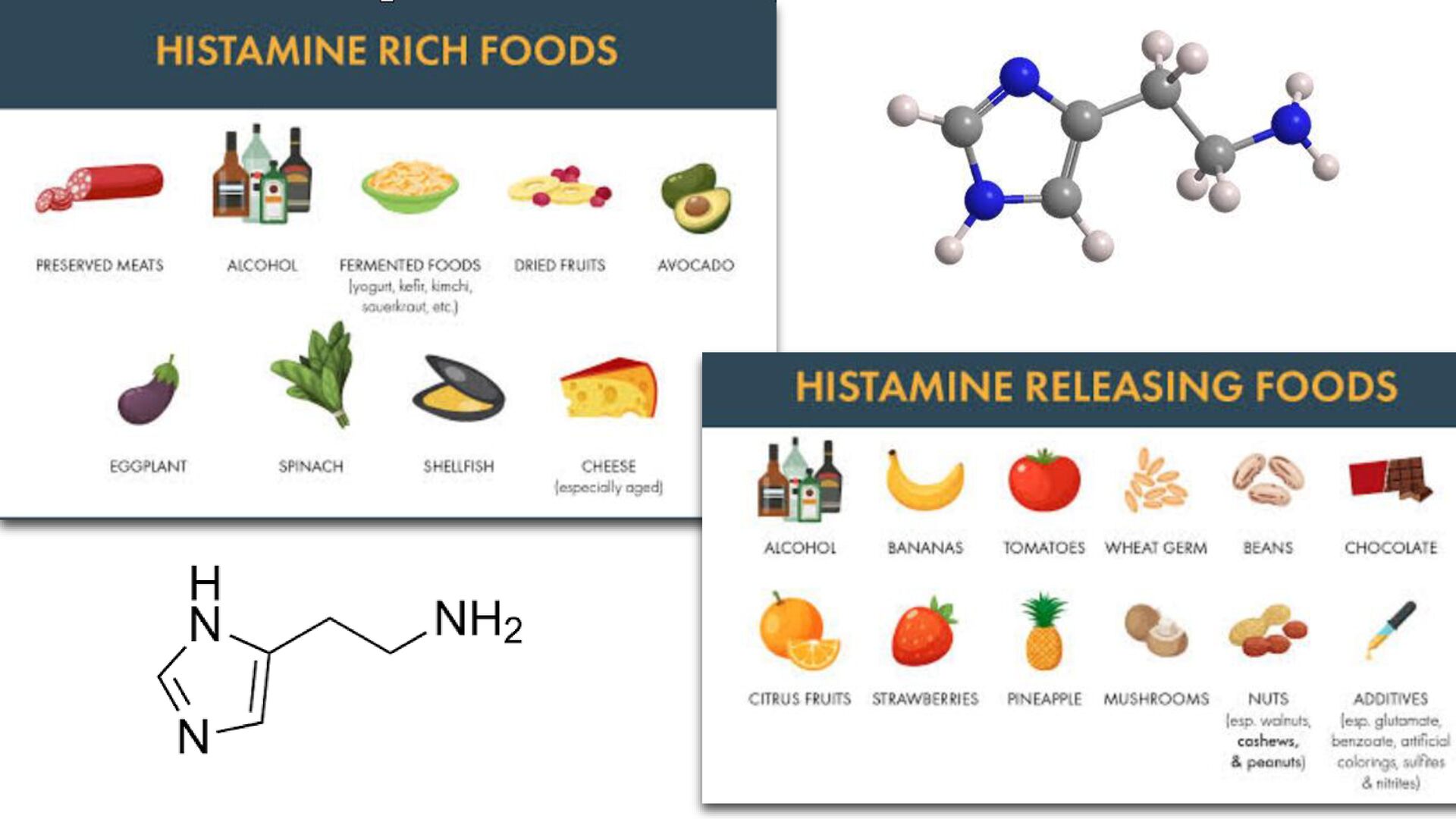
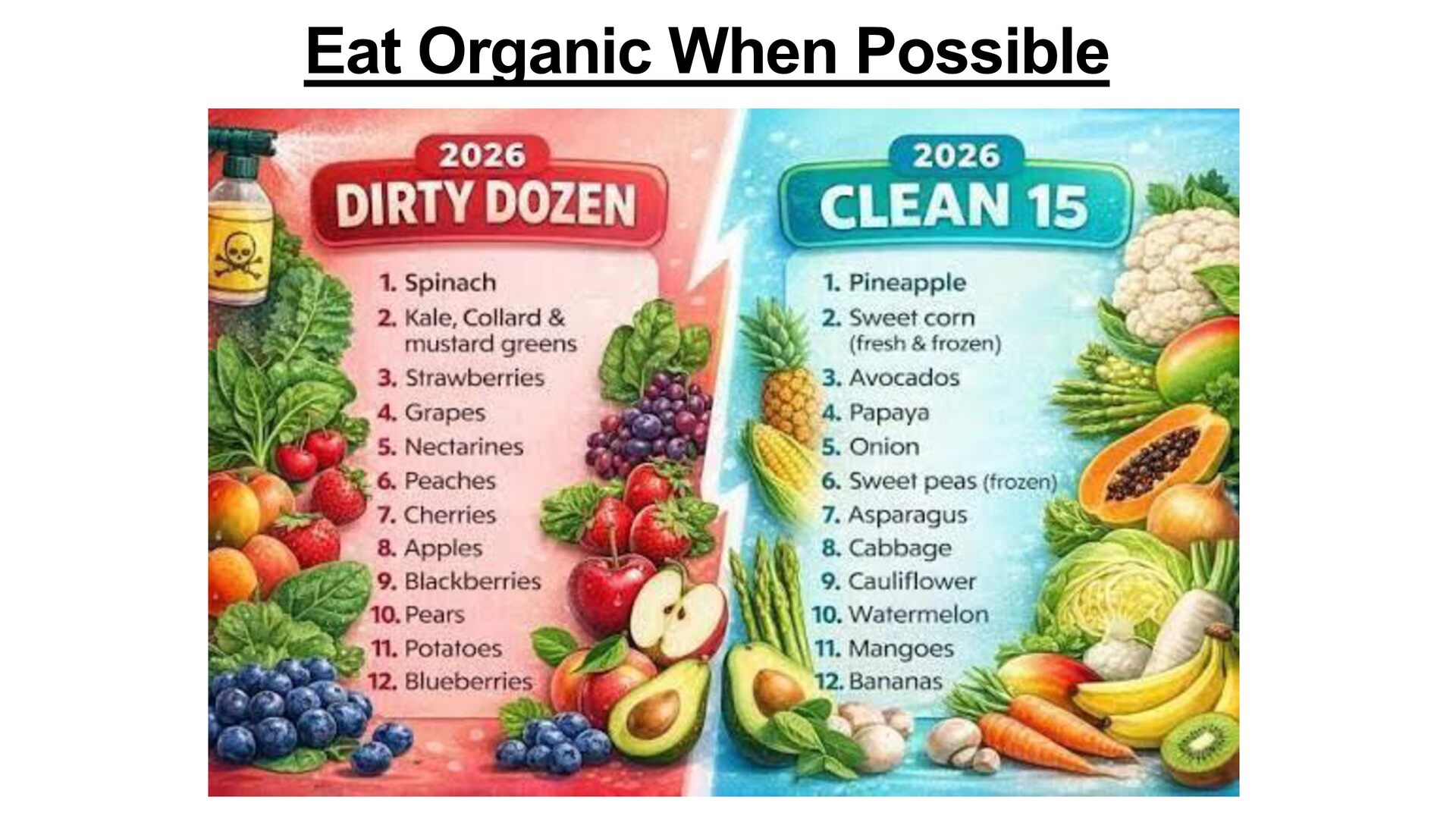
    you know…and they’re not all allergies. Food • More than 1 way that food can trigger mast cells 1. Histamine/Histadine 2. Lectins 3. Molds and mycotoxins 4. Pestacide/Herbacide/Fungicides 5. Allergy Cross-reactions 6. Food Driven Dysbiosis
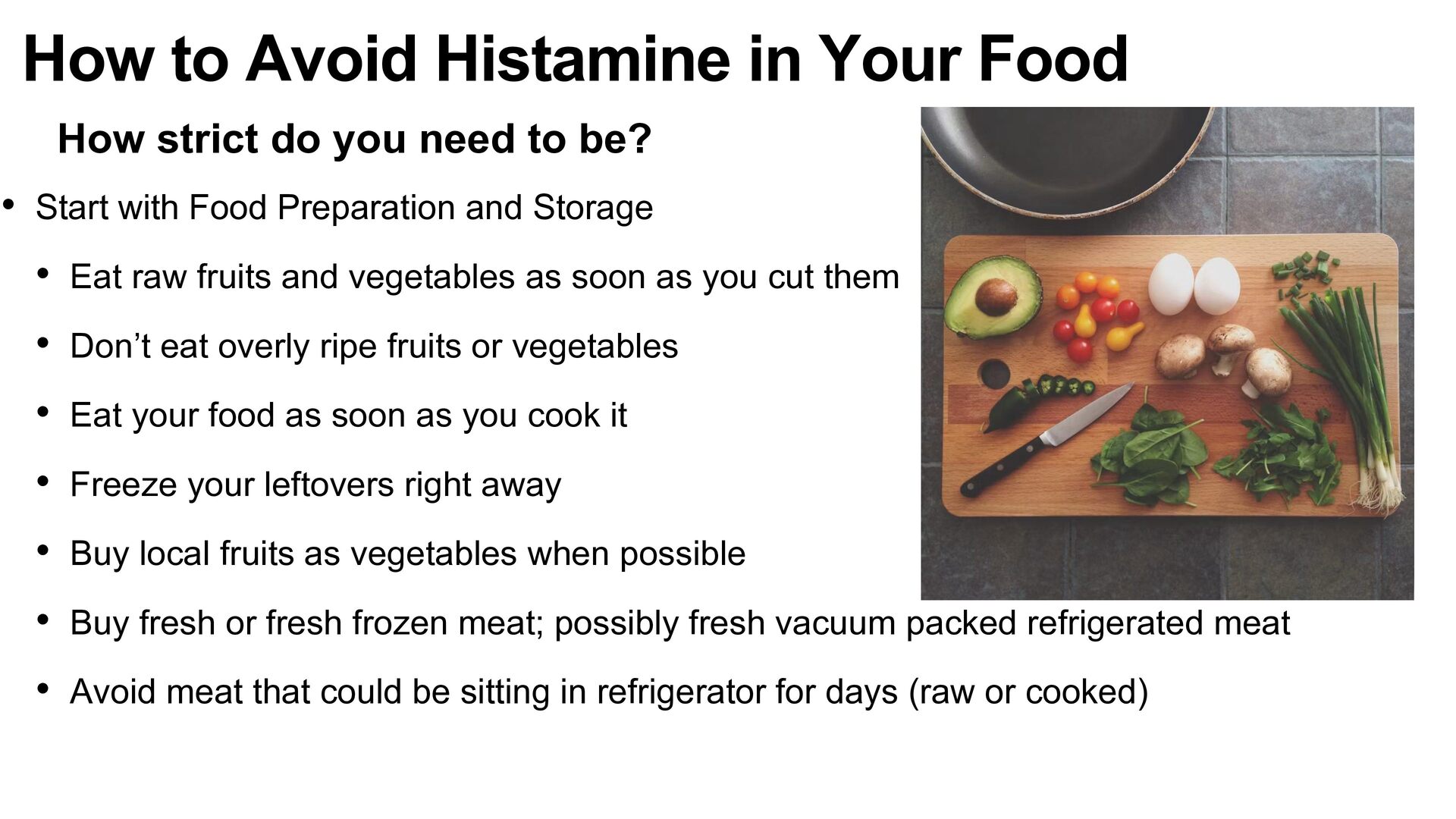
  10. How to Avoid Histamine in Your Food How strict do

    you need to be? • Start with Food Preparation and Storage • Eat raw fruits and vegetables as soon as you cut them • Don’t eat overly ripe fruits or vegetables • Eat your food as soon as you cook it • Freeze your leftovers right away • Buy local fruits as vegetables when possible • Buy fresh or fresh frozen meat; possibly fresh vacuum packed refrigerated meat • Avoid meat that could be sitting in refrigerator for days (raw or cooked)
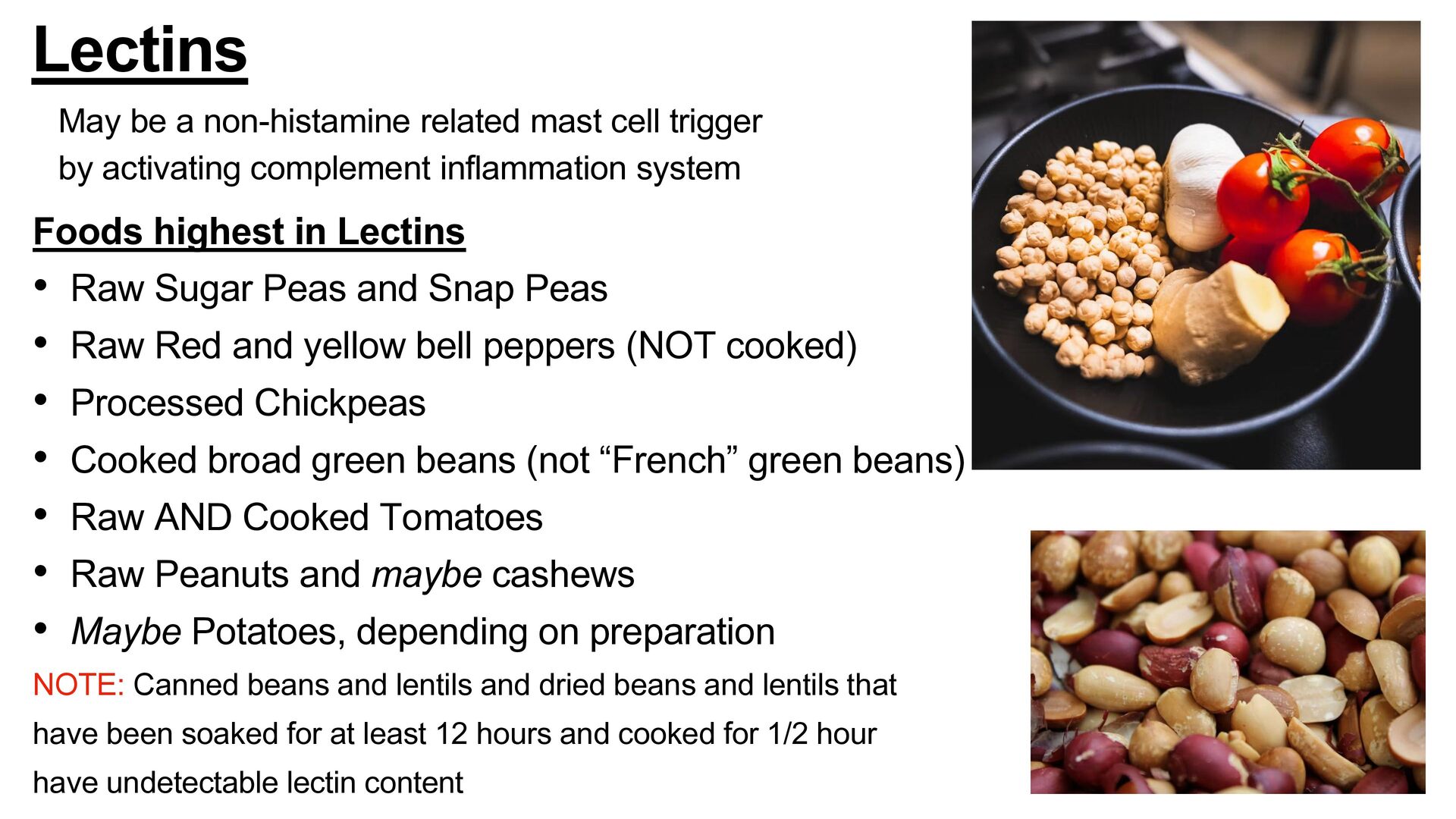
  11. Lectins May be a non-histamine related mast cell trigger by

    activating complement inflammation system Foods highest in Lectins • Raw Sugar Peas and Snap Peas • Raw Red and yellow bell peppers (NOT cooked) • Processed Chickpeas • Cooked broad green beans (not “French” green beans) • Raw AND Cooked Tomatoes • Raw Peanuts and maybe cashews • Maybe Potatoes, depending on preparation NOTE: Canned beans and lentils and dried beans and lentils that have been soaked for at least 12 hours and cooked for 1/2 hour have undetectable lectin content
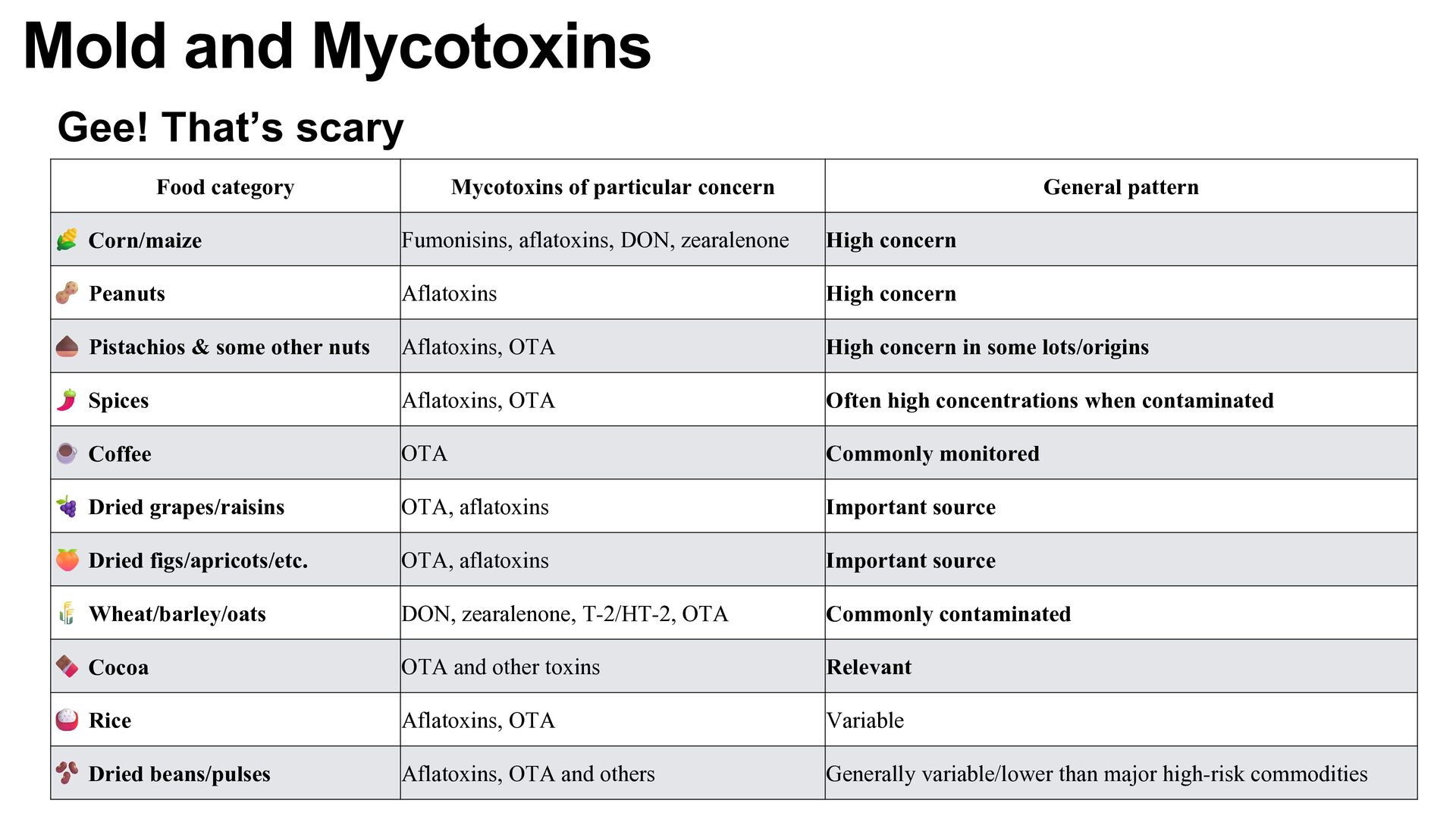
  12. Mold and Mycotoxins Gee! That’s scary Food category Mycotoxins of

    particular concern General pattern Corn/maize Fumonisins, aflatoxins, DON, zearalenone High concern Peanuts Aflatoxins High concern Pistachios & some other nuts Aflatoxins, OTA High concern in some lots/origins Spices Aflatoxins, OTA Often high concentrations when contaminated Coffee OTA Commonly monitored Dried grapes/raisins OTA, aflatoxins Important source Dried figs/apricots/etc. OTA, aflatoxins Important source Wheat/barley/oats DON, zearalenone, T-2/HT-2, OTA Commonly contaminated Cocoa OTA and other toxins Relevant Rice Aflatoxins, OTA Variable Dried beans/pulses Aflatoxins, OTA and others Generally variable/lower than major high-risk commodities
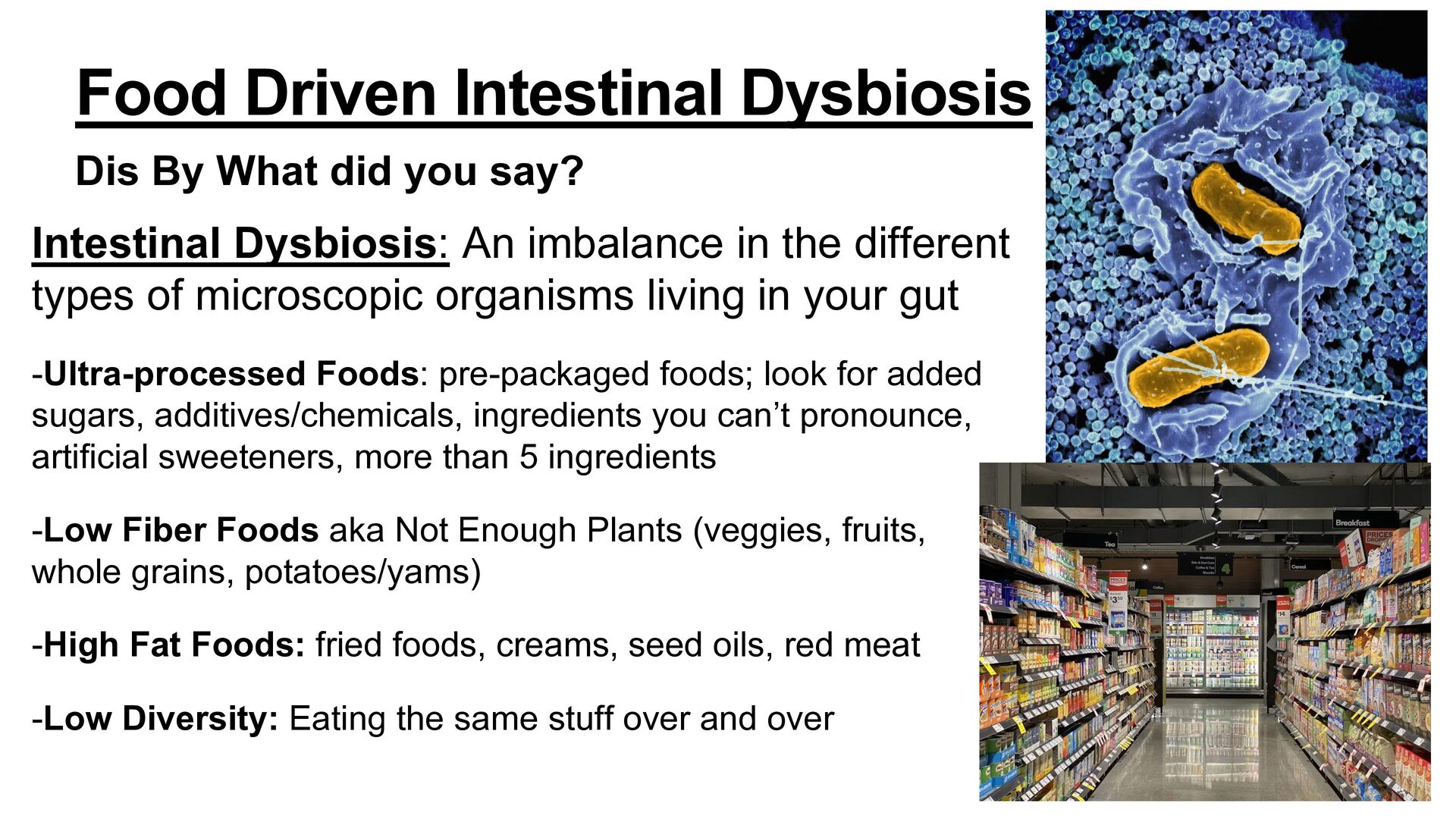
  13. Food Driven Intestinal Dysbiosis Dis By What did you say?

    Intestinal Dysbiosis: An imbalance in the different types of microscopic organisms living in your gut -Ultra-processed Foods: pre-packaged foods; look for added sugars, additives/chemicals, ingredients you can’t pronounce, artificial sweeteners, more than 5 ingredients -Low Fiber Foods aka Not Enough Plants (veggies, fruits, whole grains, potatoes/yams) -High Fat Foods: fried foods, creams, seed oils, red meat -Low Diversity: Eating the same stuff over and over
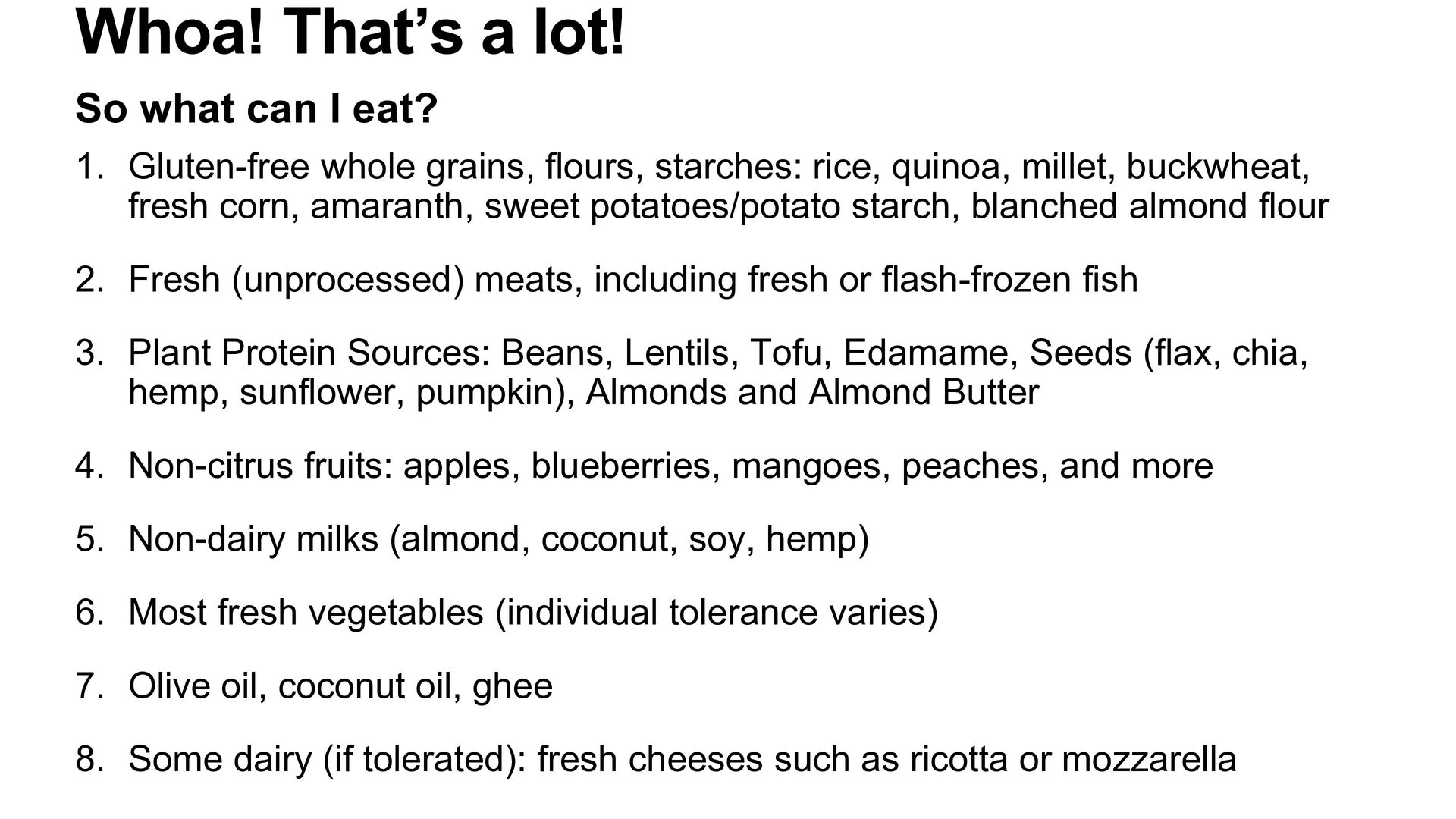
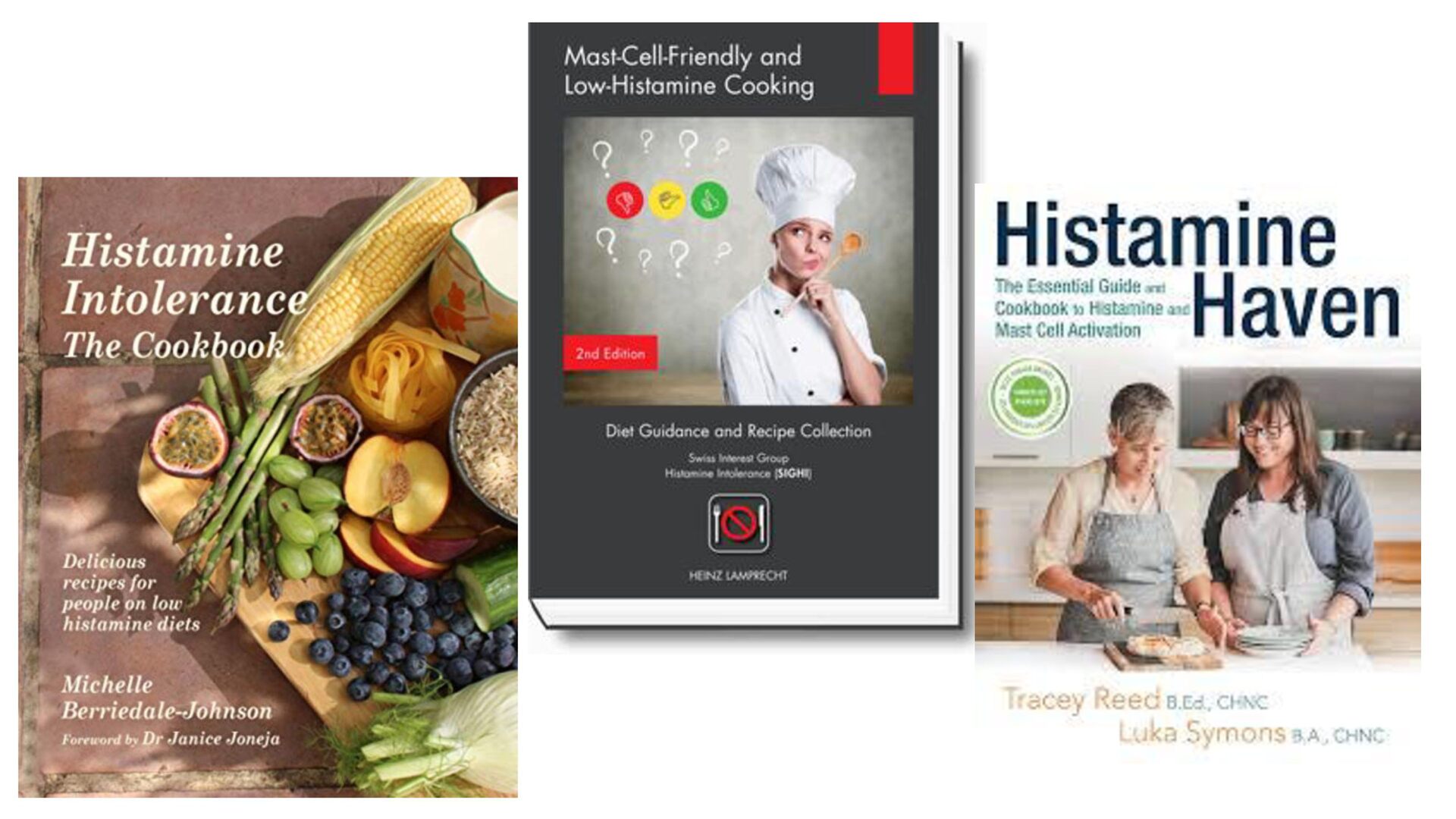
  14. Whoa! That’s a lot! So what can I eat? 1.

    Gluten-free whole grains, flours, starches: rice, quinoa, millet, buckwheat, fresh corn, amaranth, sweet potatoes/potato starch, blanched almond flour 2. Fresh (unprocessed) meats, including fresh or flash-frozen fish 3. Plant Protein Sources: Beans, Lentils, Tofu, Edamame, Seeds (flax, chia, hemp, sunflower, pumpkin), Almonds and Almond Butter 4. Non-citrus fruits: apples, blueberries, mangoes, peaches, and more 5. Non-dairy milks (almond, coconut, soy, hemp) 6. Most fresh vegetables (individual tolerance varies) 7. Olive oil, coconut oil, ghee 8. Some dairy (if tolerated): fresh cheeses such as ricotta or mozzarella
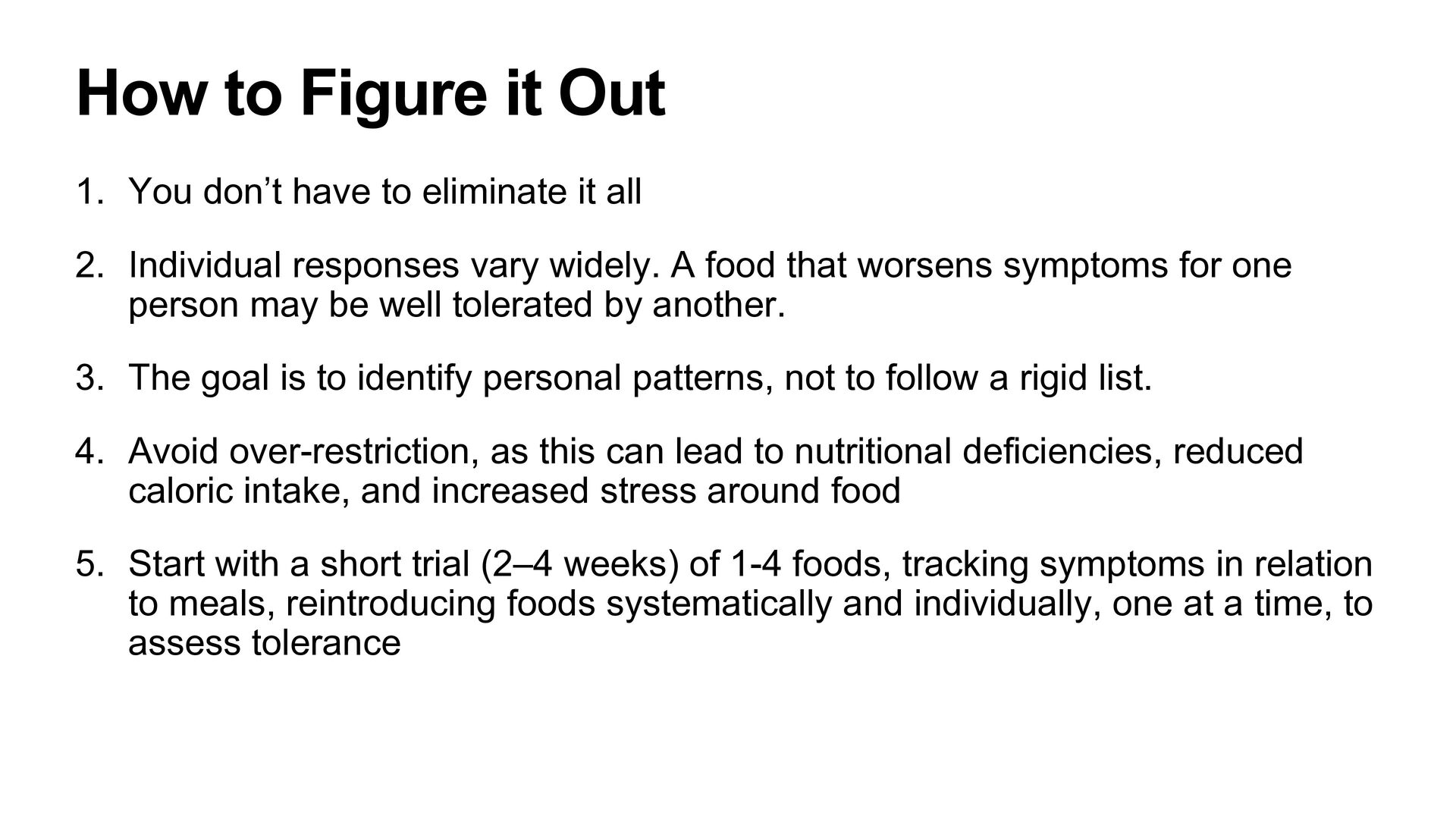
  15. How to Figure it Out 1. You don’t have to

    eliminate it all 2. Individual responses vary widely. A food that worsens symptoms for one person may be well tolerated by another. 3. The goal is to identify personal patterns, not to follow a rigid list. 4. Avoid over-restriction, as this can lead to nutritional deficiencies, reduced caloric intake, and increased stress around food 5. Start with a short trial (2–4 weeks) of 1-4 foods, tracking symptoms in relation to meals, reintroducing foods systematically and individually, one at a time, to assess tolerance
  16. • Mast Cell Labs have been ordered. • 2 blood

    tests (histamine and tryptase) and 3 tests from a 24 hour urine collection (N-methylhistamine, Leukotriene E4, and 2,3-Dinor-11 BetaProstaglandin F2 Alpha) • To collect the 24 hour urine sample, skip the 1st urine of the morning and collect all the urine for the rest of the day and night as well as the 1st urine of the next day and then take it all back into the lab. Keep the urine in the refrigerator throughout the day. • If you can pause any anti-histamines (cetirizine aka Zyrtec, loratadine aka Claritin, fexofenadine aka Allegra, levocetirizine aka Xyzal, desloratadine aka Clarinex, famotidine aka Pepcid), Montelukast aka Singulair, Cromolyn, aspirin and other NSAIDs like ibuprofen or naproxen (acetaminophen aka Tylenol is ok to take), and any known anti-histamine or mast cell stabilizing supplements, for 24-48 hours prior to completing the them, the tests are more likely to be accurate.
  17. What is a goal for something that you’re going to

    pay attention to or try based on what was discussed today? OR What are 1 or 2 takeaways that you have learned after attending this group today?