Share
Embed

Transcript
16 slides
-
Finding Relief for Mast Cell Overactivity pt 3 Sutter Institute
for Health and Healing Dr. Andy Luckett, MD -
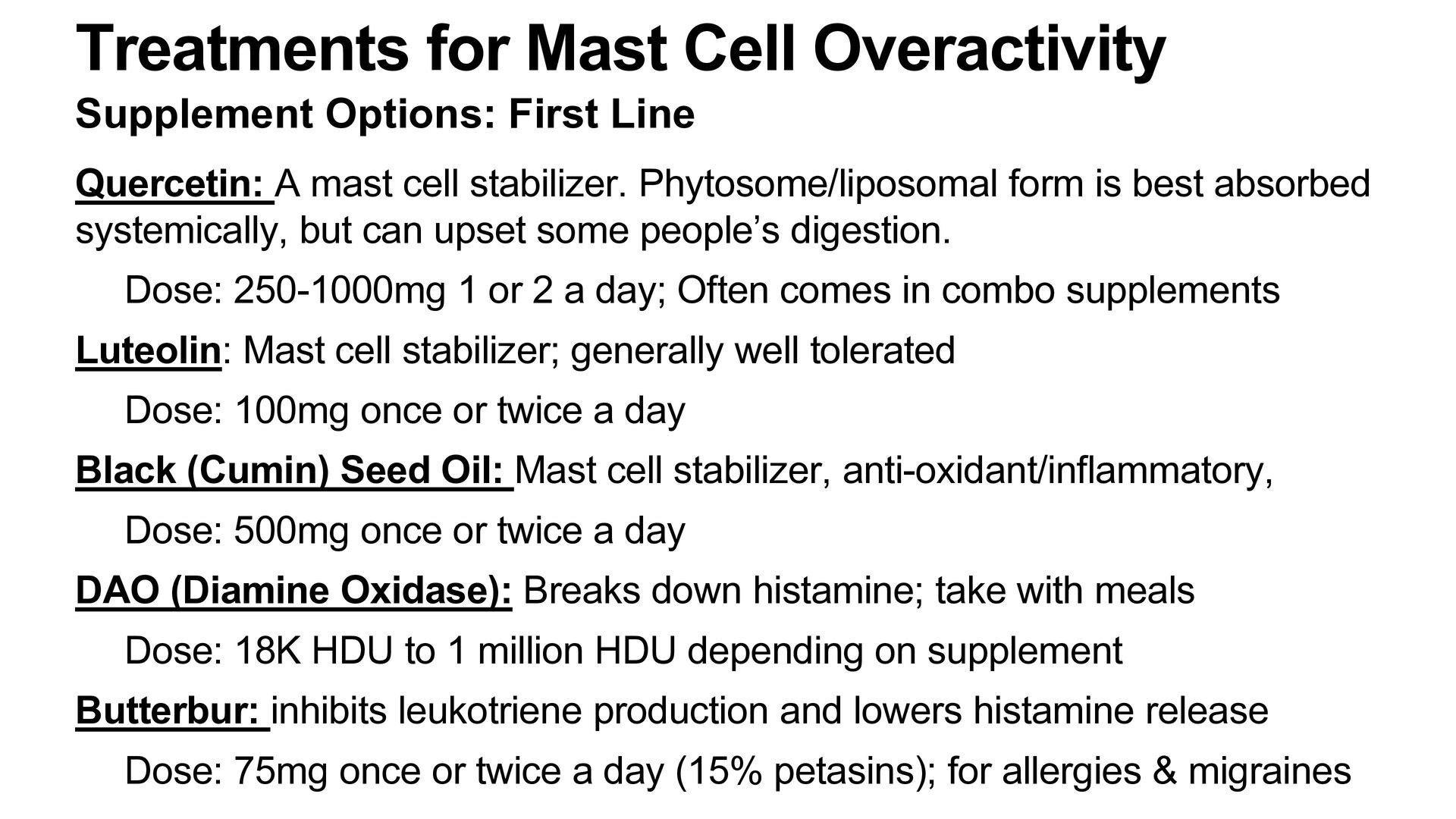
Treatments for Mast Cell Overactivity Supplement Options: First Line Quercetin:
A mast cell stabilizer. Phytosome/liposomal form is best absorbed systemically, but can upset some people’s digestion. Dose: 250-1000mg 1 or 2 a day; Often comes in combo supplements Luteolin: Mast cell stabilizer; generally well tolerated Dose: 100mg once or twice a day Black (Cumin) Seed Oil: Mast cell stabilizer, anti-oxidant/inflammatory, Dose: 500mg once or twice a day DAO (Diamine Oxidase): Breaks down histamine; take with meals Dose: 18K HDU to 1 million HDU depending on supplement Butterbur: inhibits leukotriene production and lowers histamine release Dose: 75mg once or twice a day (15% petasins); for allergies & migraines -
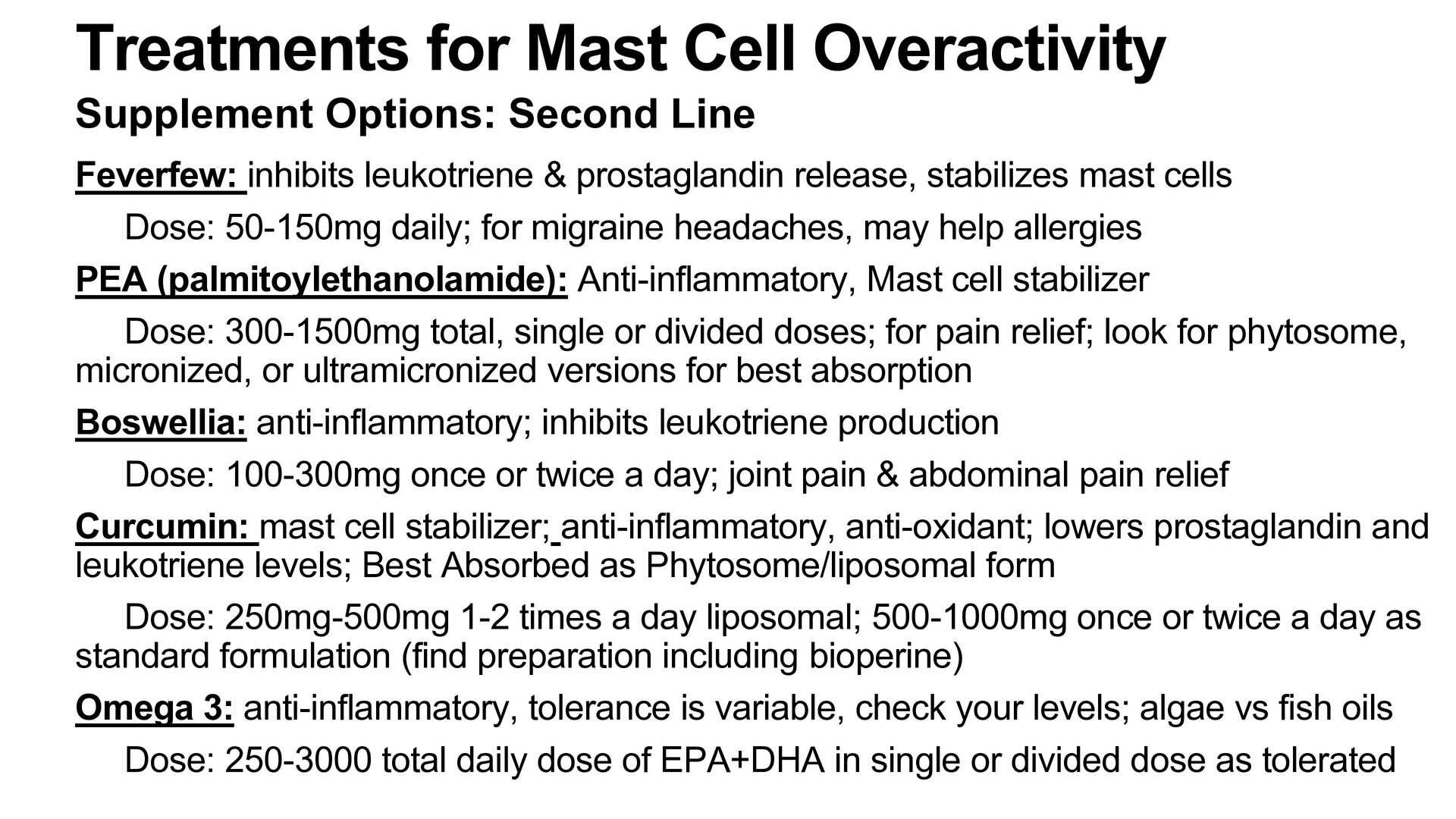
Treatments for Mast Cell Overactivity Supplement Options: Second Line Feverfew:
inhibits leukotriene & prostaglandin release, stabilizes mast cells Dose: 50-150mg daily; for migraine headaches, may help allergies PEA (palmitoylethanolamide): Anti-inflammatory, Mast cell stabilizer Dose: 300-1500mg total, single or divided doses; for pain relief; look for phytosome, micronized, or ultramicronized versions for best absorption Boswellia: anti-inflammatory; inhibits leukotriene production Dose: 100-300mg once or twice a day; joint pain & abdominal pain relief Curcumin: mast cell stabilizer; anti-inflammatory, anti-oxidant; lowers prostaglandin and leukotriene levels; Best Absorbed as Phytosome/liposomal form Dose: 250mg-500mg 1-2 times a day liposomal; 500-1000mg once or twice a day as standard formulation (find preparation including bioperine) Omega 3: anti-inflammatory, tolerance is variable, check your levels; algae vs fish oils Dose: 250-3000 total daily dose of EPA+DHA in single or divided dose as tolerated -
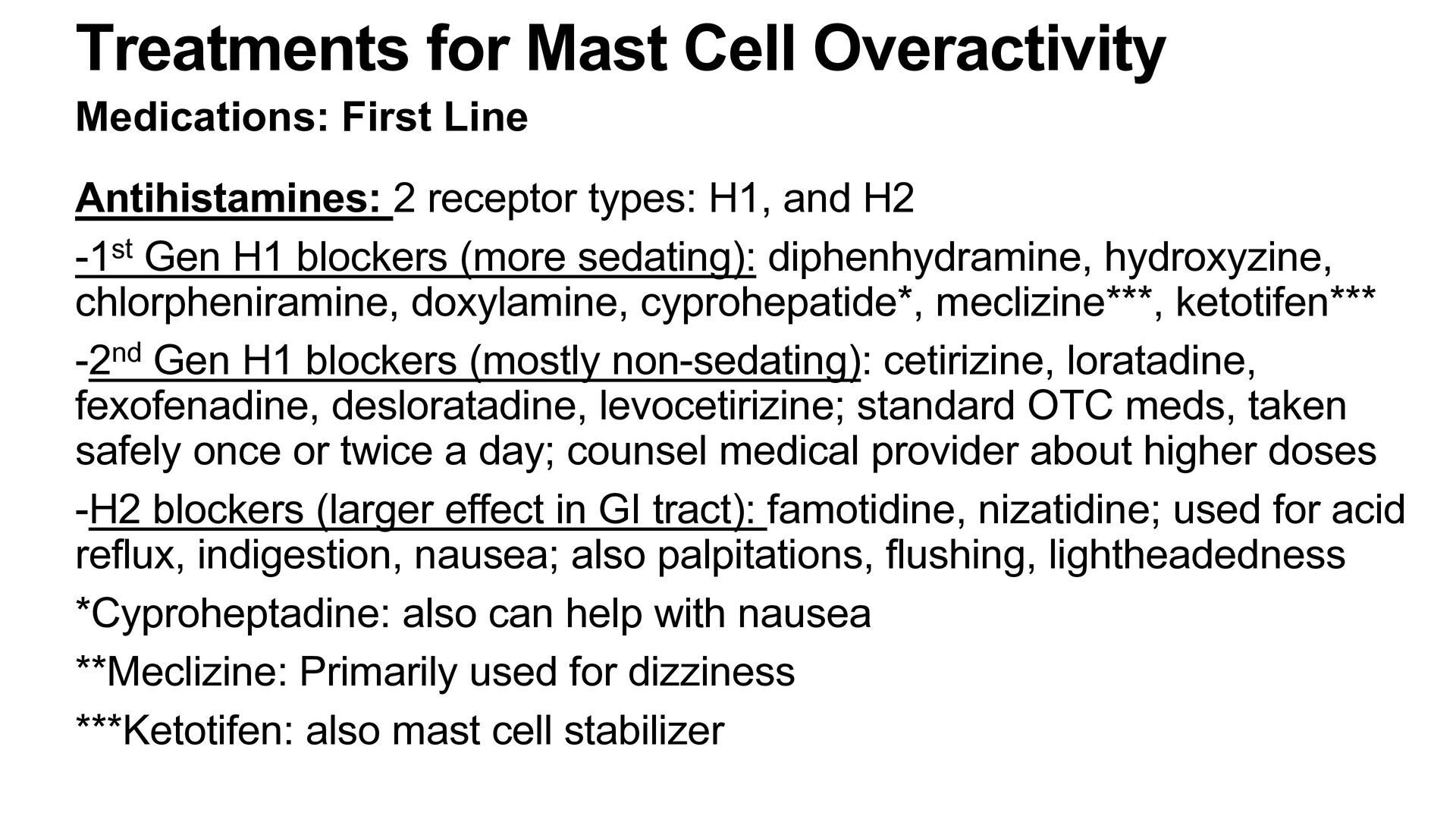
Treatments for Mast Cell Overactivity Medications: First Line Antihistamines: 2
receptor types: H1, and H2 st -1 Gen H1 blockers (more sedating): diphenhydramine, hydroxyzine, chlorpheniramine, doxylamine, cyprohepatide*, meclizine***, ketotifen*** nd -2 Gen H1 blockers (mostly non-sedating): cetirizine, loratadine, fexofenadine, desloratadine, levocetirizine; standard OTC meds, taken safely once or twice a day; counsel medical provider about higher doses -H2 blockers (larger effect in GI tract): famotidine, nizatidine; used for acid reflux, indigestion, nausea; also palpitations, flushing, lightheadedness *Cyproheptadine: also can help with nausea **Meclizine: Primarily used for dizziness ***Ketotifen: also mast cell stabilizer -
Treatments for Mast Cell Overactivity • Medications: First Line Mast
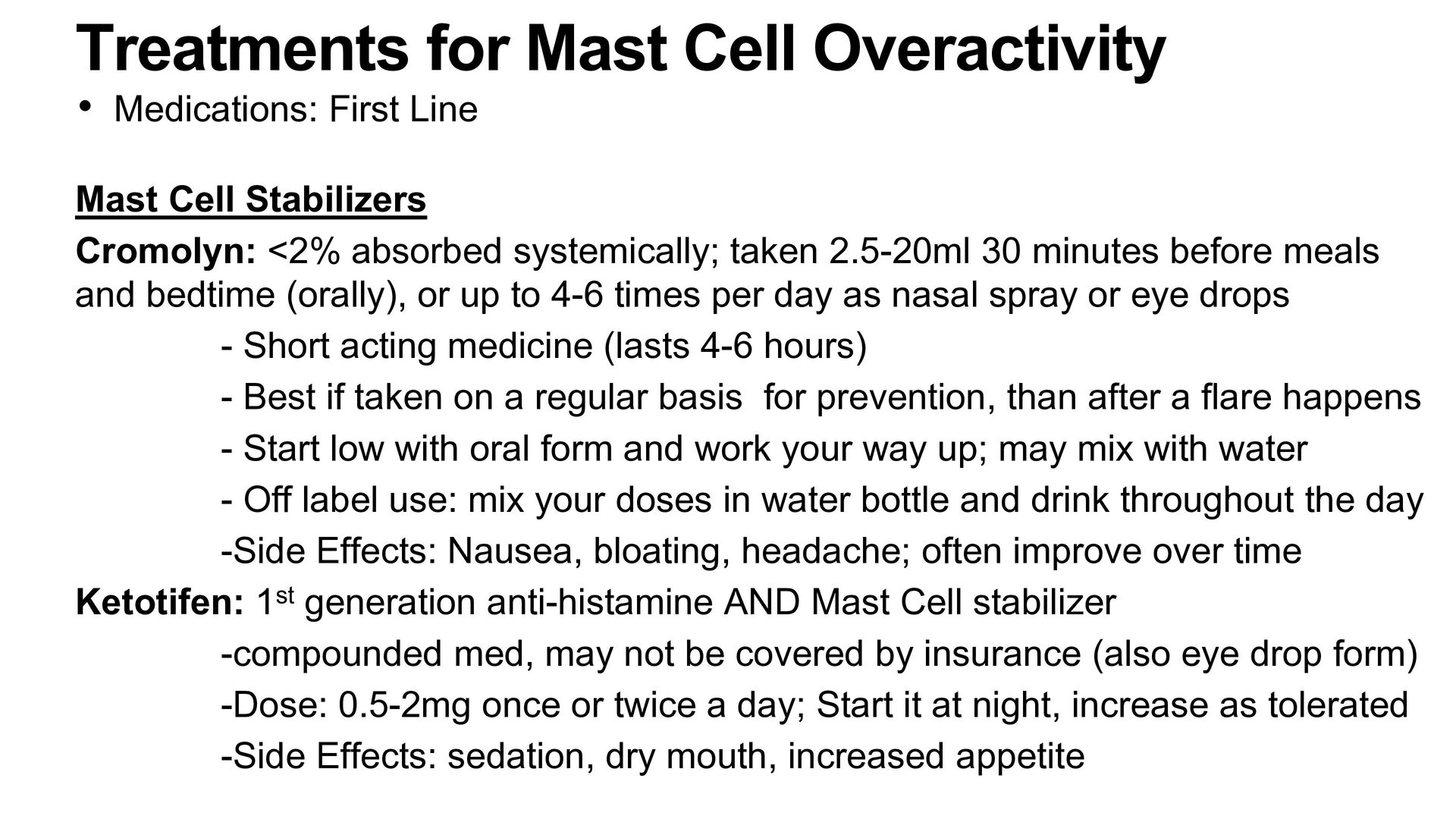
Cell Stabilizers Cromolyn: <2% absorbed systemically; taken 2.5-20ml 30 minutes before meals and bedtime (orally), or up to 4-6 times per day as nasal spray or eye drops - Short acting medicine (lasts 4-6 hours) - Best if taken on a regular basis for prevention, than after a flare happens - Start low with oral form and work your way up; may mix with water - Off label use: mix your doses in water bottle and drink throughout the day -Side Effects: Nausea, bloating, headache; often improve over time st Ketotifen: 1 generation anti-histamine AND Mast Cell stabilizer -compounded med, may not be covered by insurance (also eye drop form) -Dose: 0.5-2mg once or twice a day; Start it at night, increase as tolerated -Side Effects: sedation, dry mouth, increased appetite -
Treatments for Mast Cell Overactivity • Medications: Second Line Anti-inflammatory
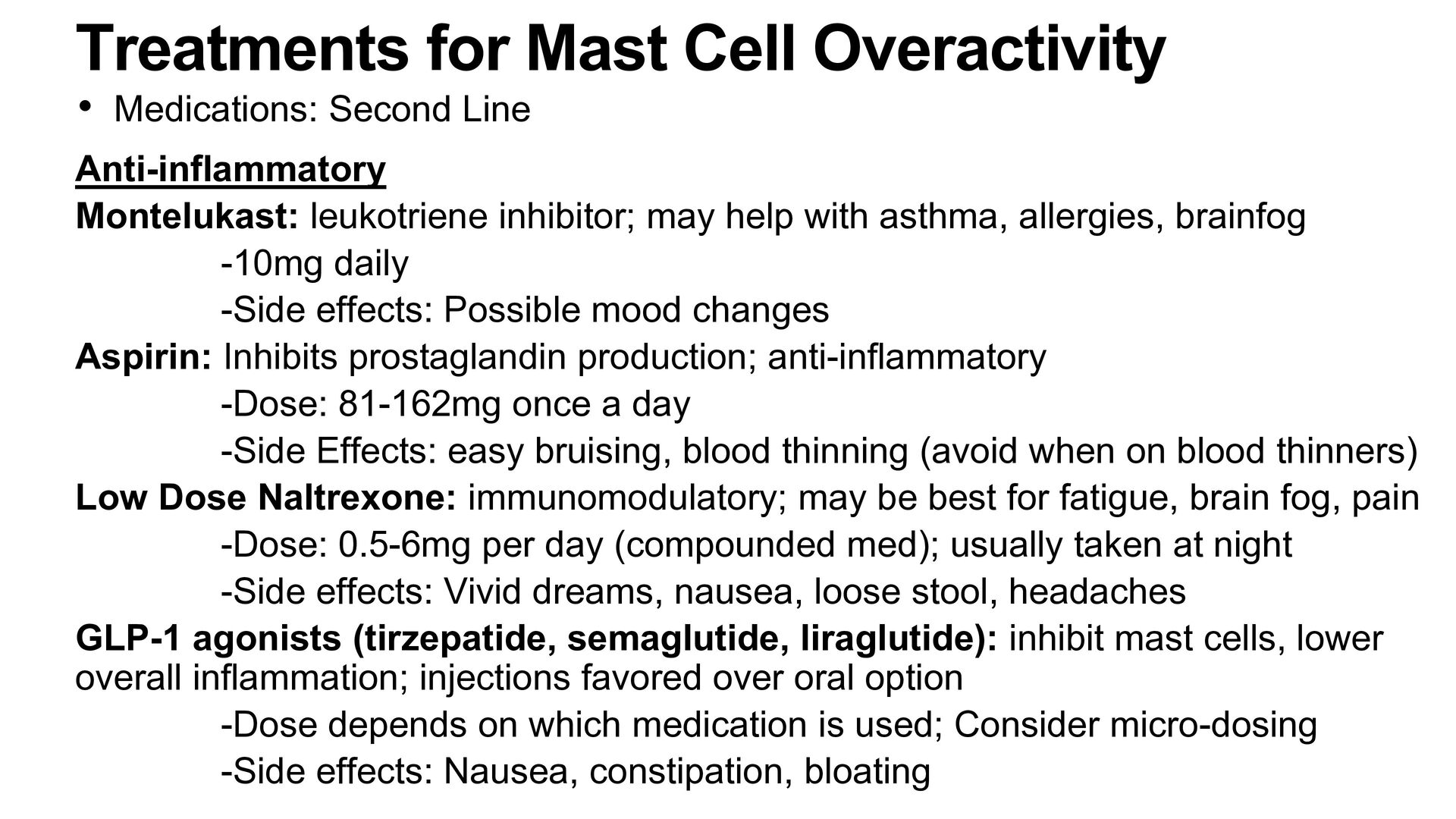
Montelukast: leukotriene inhibitor; may help with asthma, allergies, brainfog -10mg daily -Side effects: Possible mood changes Aspirin: Inhibits prostaglandin production; anti-inflammatory -Dose: 81-162mg once a day -Side Effects: easy bruising, blood thinning (avoid when on blood thinners) Low Dose Naltrexone: immunomodulatory; may be best for fatigue, brain fog, pain -Dose: 0.5-6mg per day (compounded med); usually taken at night -Side effects: Vivid dreams, nausea, loose stool, headaches GLP-1 agonists (tirzepatide, semaglutide, liraglutide): inhibit mast cells, lower overall inflammation; injections favored over oral option -Dose depends on which medication is used; Consider micro-dosing -Side effects: Nausea, constipation, bloating -
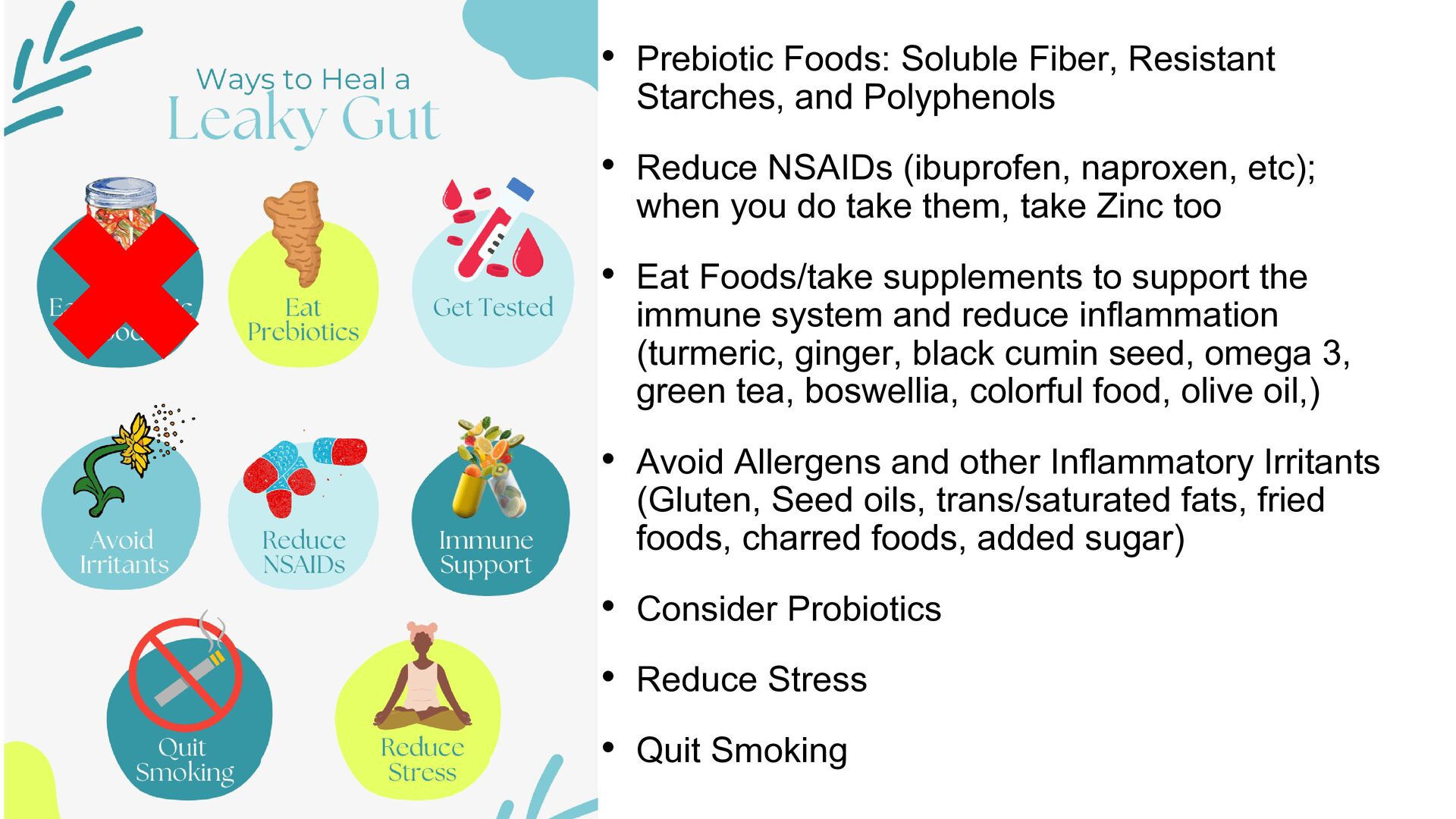
• Prebiotic Foods: Soluble Fiber, Resistant Starches, and Polyphenols •
Reduce NSAIDs (ibuprofen, naproxen, etc); when you do take them, take Zinc too • Eat Foods/take supplements to support the immune system and reduce inflammation (turmeric, ginger, black cumin seed, omega 3, green tea, boswellia, colorful food, olive oil,) • Avoid Allergens and other Inflammatory Irritants (Gluten, Seed oils, trans/saturated fats, fried foods, charred foods, added sugar) • Consider Probiotics • Reduce Stress • Quit Smoking -
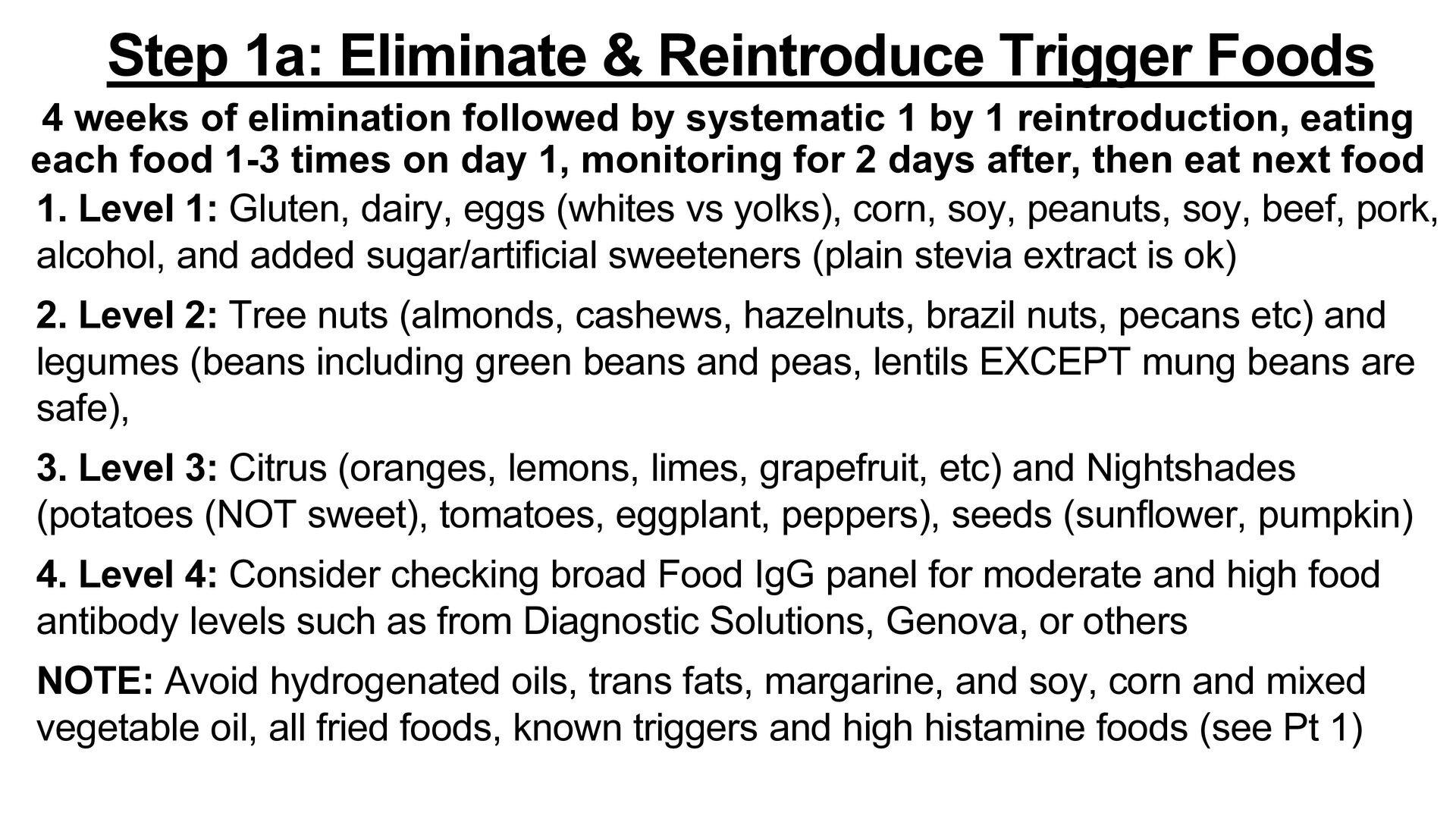
Step 1a: Eliminate & Reintroduce Trigger Foods 4 weeks of
elimination followed by systematic 1 by 1 reintroduction, eating each food 1-3 times on day 1, monitoring for 2 days after, then eat next food 1. Level 1: Gluten, dairy, eggs (whites vs yolks), corn, soy, peanuts, soy, beef, pork, alcohol, and added sugar/artificial sweeteners (plain stevia extract is ok) 2. Level 2: Tree nuts (almonds, cashews, hazelnuts, brazil nuts, pecans etc) and legumes (beans including green beans and peas, lentils EXCEPT mung beans are safe), 3. Level 3: Citrus (oranges, lemons, limes, grapefruit, etc) and Nightshades (potatoes (NOT sweet), tomatoes, eggplant, peppers), seeds (sunflower, pumpkin) 4. Level 4: Consider checking broad Food IgG panel for moderate and high food antibody levels such as from Diagnostic Solutions, Genova, or others NOTE: Avoid hydrogenated oils, trans fats, margarine, and soy, corn and mixed vegetable oil, all fried foods, known triggers and high histamine foods (see Pt 1) -
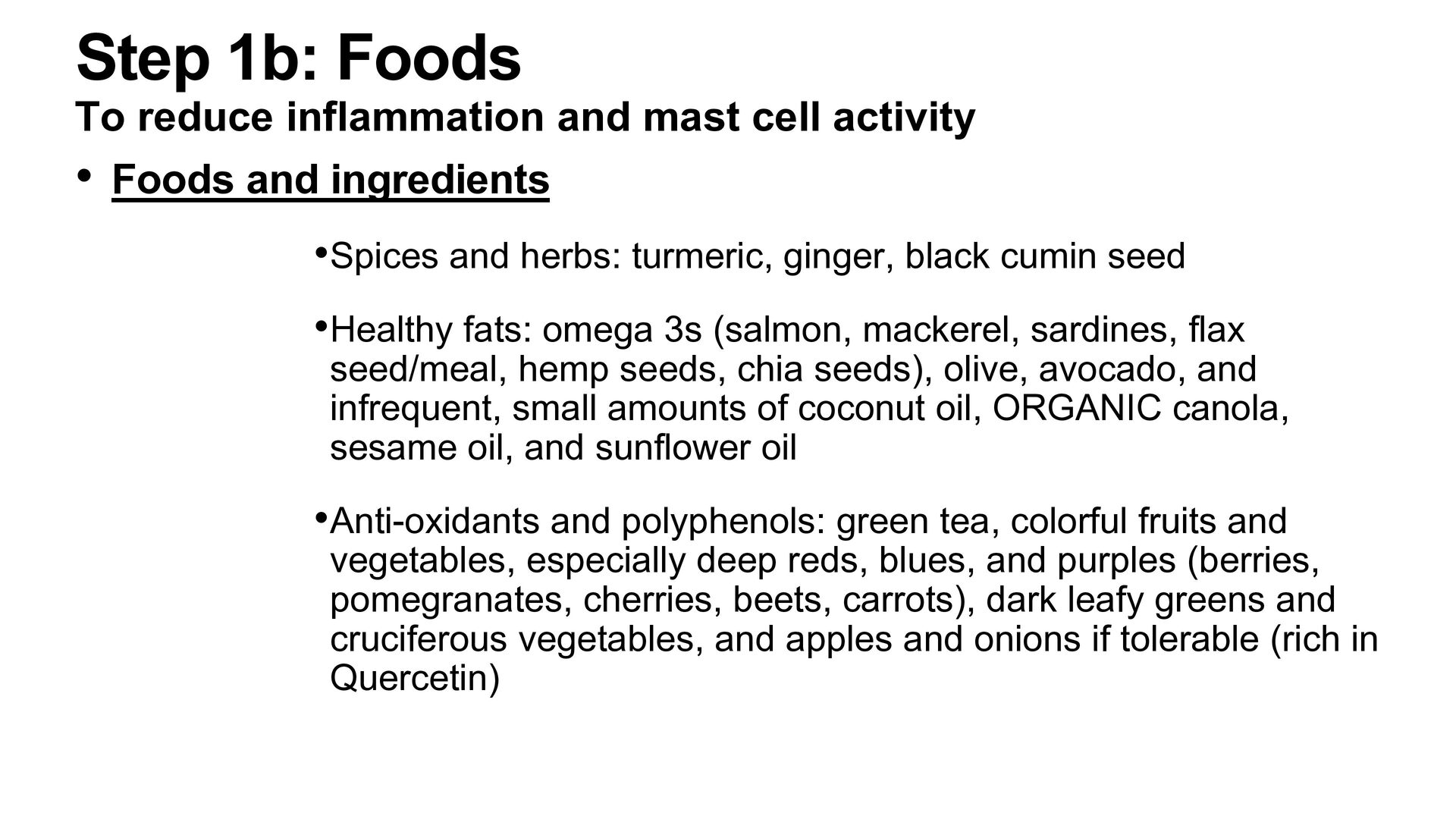
Step 1b: Foods To reduce inflammation and mast cell activity
• Foods and ingredients •Spices and herbs: turmeric, ginger, black cumin seed •Healthy fats: omega 3s (salmon, mackerel, sardines, flax seed/meal, hemp seeds, chia seeds), olive, avocado, and infrequent, small amounts of coconut oil, ORGANIC canola, sesame oil, and sunflower oil •Anti-oxidants and polyphenols: green tea, colorful fruits and vegetables, especially deep reds, blues, and purples (berries, pomegranates, cherries, beets, carrots), dark leafy greens and cruciferous vegetables, and apples and onions if tolerable (rich in Quercetin) -
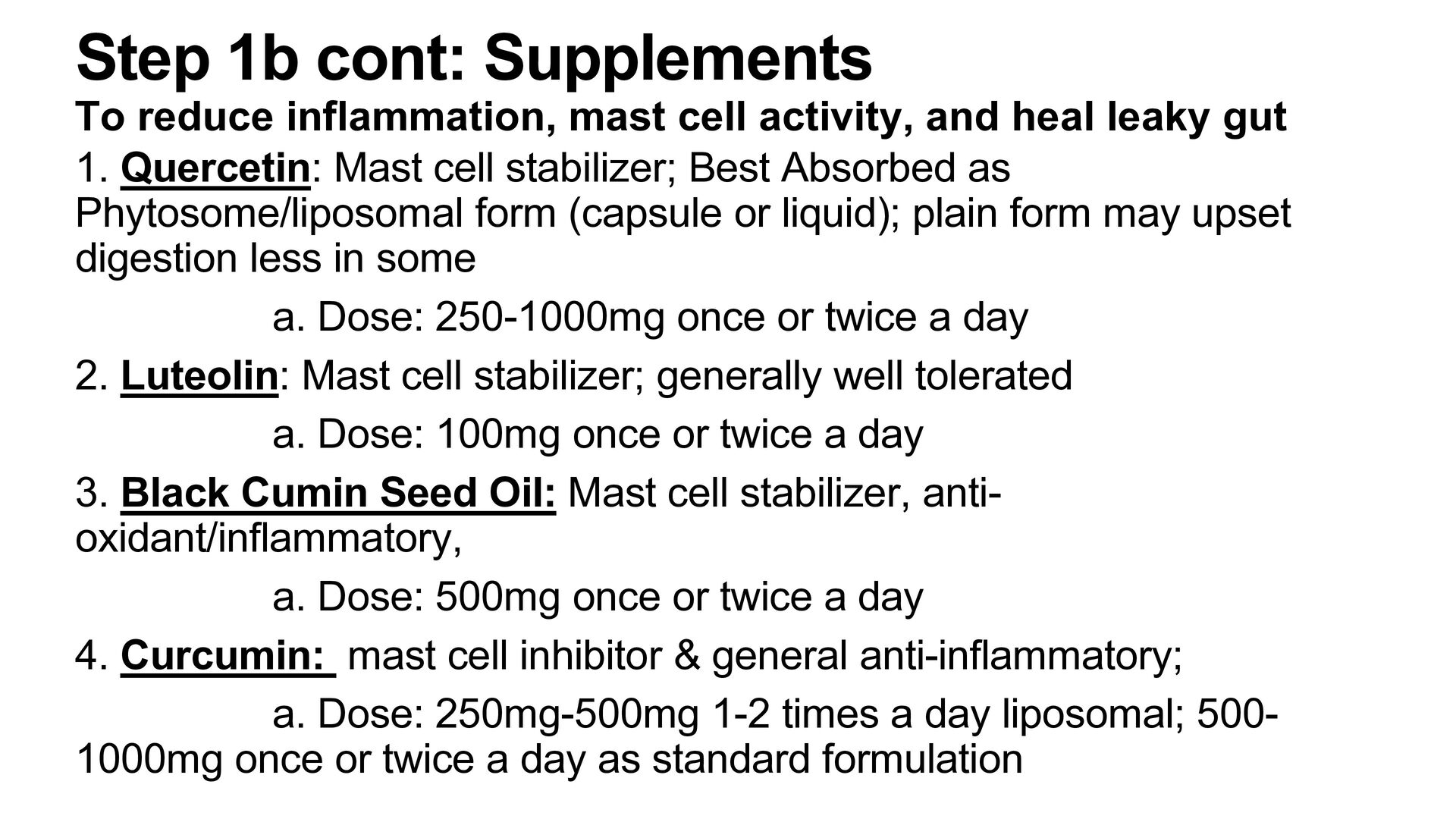
Step 1b cont: Supplements To reduce inflammation, mast cell activity,
and heal leaky gut 1. Quercetin: Mast cell stabilizer; Best Absorbed as Phytosome/liposomal form (capsule or liquid); plain form may upset digestion less in some a. Dose: 250-1000mg once or twice a day 2. Luteolin: Mast cell stabilizer; generally well tolerated a. Dose: 100mg once or twice a day 3. Black Cumin Seed Oil: Mast cell stabilizer, antioxidant/inflammatory, a. Dose: 500mg once or twice a day 4. Curcumin: mast cell inhibitor & general anti-inflammatory; a. Dose: 250mg-500mg 1-2 times a day liposomal; 5001000mg once or twice a day as standard formulation -
Step 1b cont: Supplements Helps heal leaky gut and support
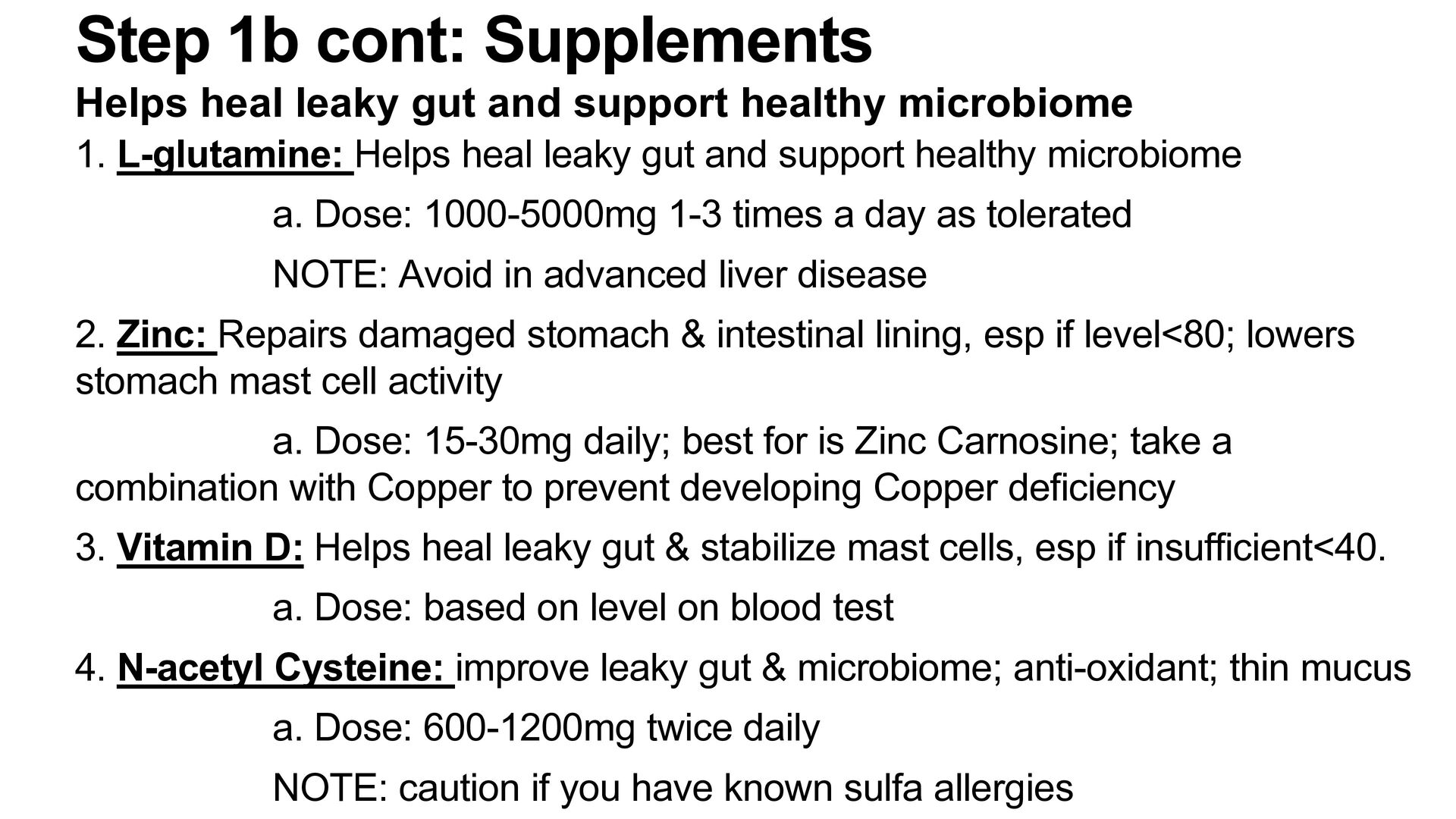
healthy microbiome 1. L-glutamine: Helps heal leaky gut and support healthy microbiome a. Dose: 1000-5000mg 1-3 times a day as tolerated NOTE: Avoid in advanced liver disease 2. Zinc: Repairs damaged stomach & intestinal lining, esp if level<80; lowers stomach mast cell activity a. Dose: 15-30mg daily; best for is Zinc Carnosine; take a combination with Copper to prevent developing Copper deficiency 3. Vitamin D: Helps heal leaky gut & stabilize mast cells, esp if insufficient<40. a. Dose: based on level on blood test 4. N-acetyl Cysteine: improve leaky gut & microbiome; anti-oxidant; thin mucus a. Dose: 600-1200mg twice daily NOTE: caution if you have known sulfa allergies -
Step 1b cont: Supplements Helps support healthy microbiome 1. Neem
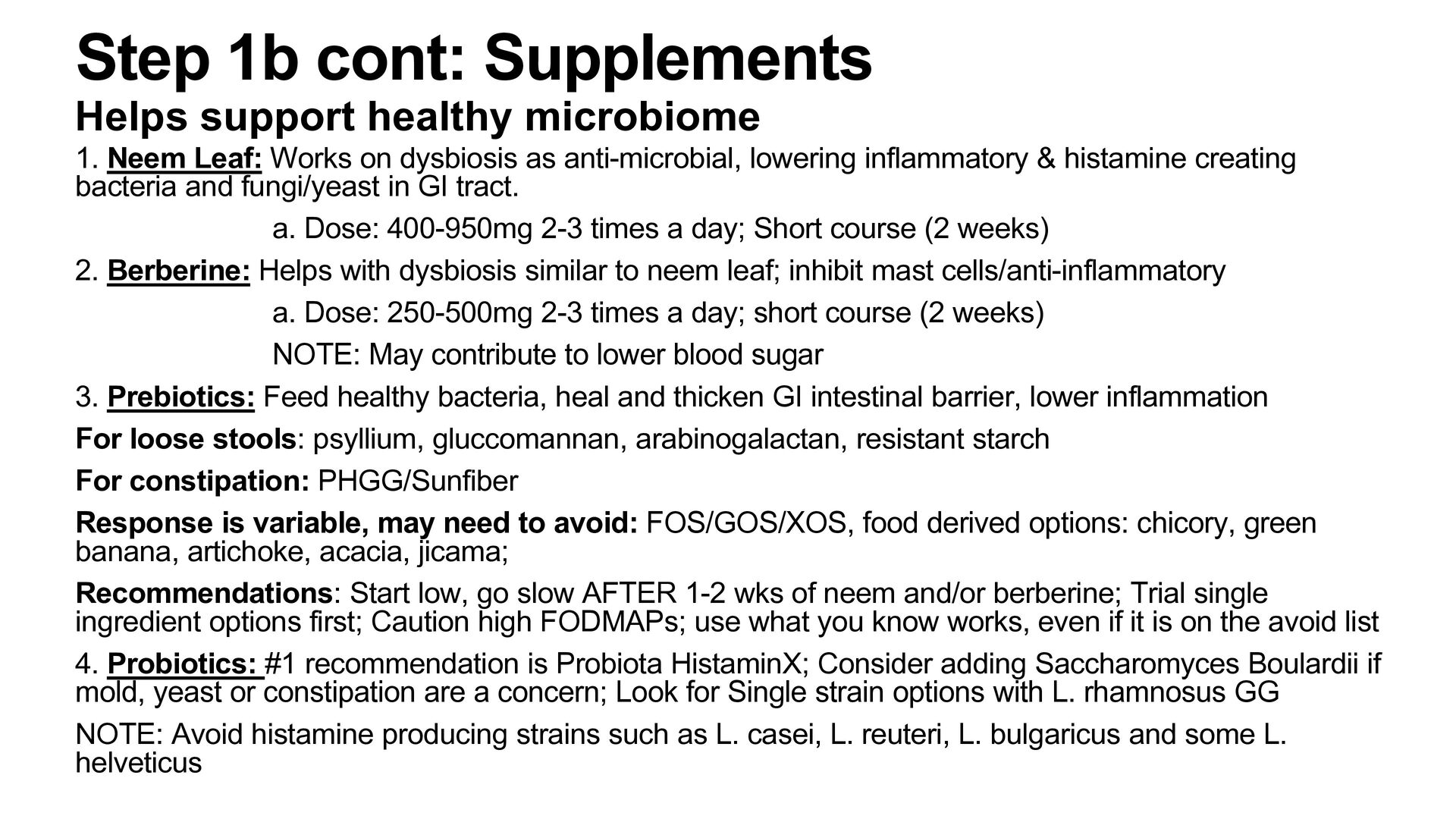
Leaf: Works on dysbiosis as anti-microbial, lowering inflammatory & histamine creating bacteria and fungi/yeast in GI tract. a. Dose: 400-950mg 2-3 times a day; Short course (2 weeks) 2. Berberine: Helps with dysbiosis similar to neem leaf; inhibit mast cells/anti-inflammatory a. Dose: 250-500mg 2-3 times a day; short course (2 weeks) NOTE: May contribute to lower blood sugar 3. Prebiotics: Feed healthy bacteria, heal and thicken GI intestinal barrier, lower inflammation For loose stools: psyllium, gluccomannan, arabinogalactan, resistant starch For constipation: PHGG/Sunfiber Response is variable, may need to avoid: FOS/GOS/XOS, food derived options: chicory, green banana, artichoke, acacia, jicama; Recommendations: Start low, go slow AFTER 1-2 wks of neem and/or berberine; Trial single ingredient options first; Caution high FODMAPs; use what you know works, even if it is on the avoid list 4. Probiotics: #1 recommendation is Probiota HistaminX; Consider adding Saccharomyces Boulardii if mold, yeast or constipation are a concern; Look for Single strain options with L. rhamnosus GG NOTE: Avoid histamine producing strains such as L. casei, L. reuteri, L. bulgaricus and some L. helveticus -
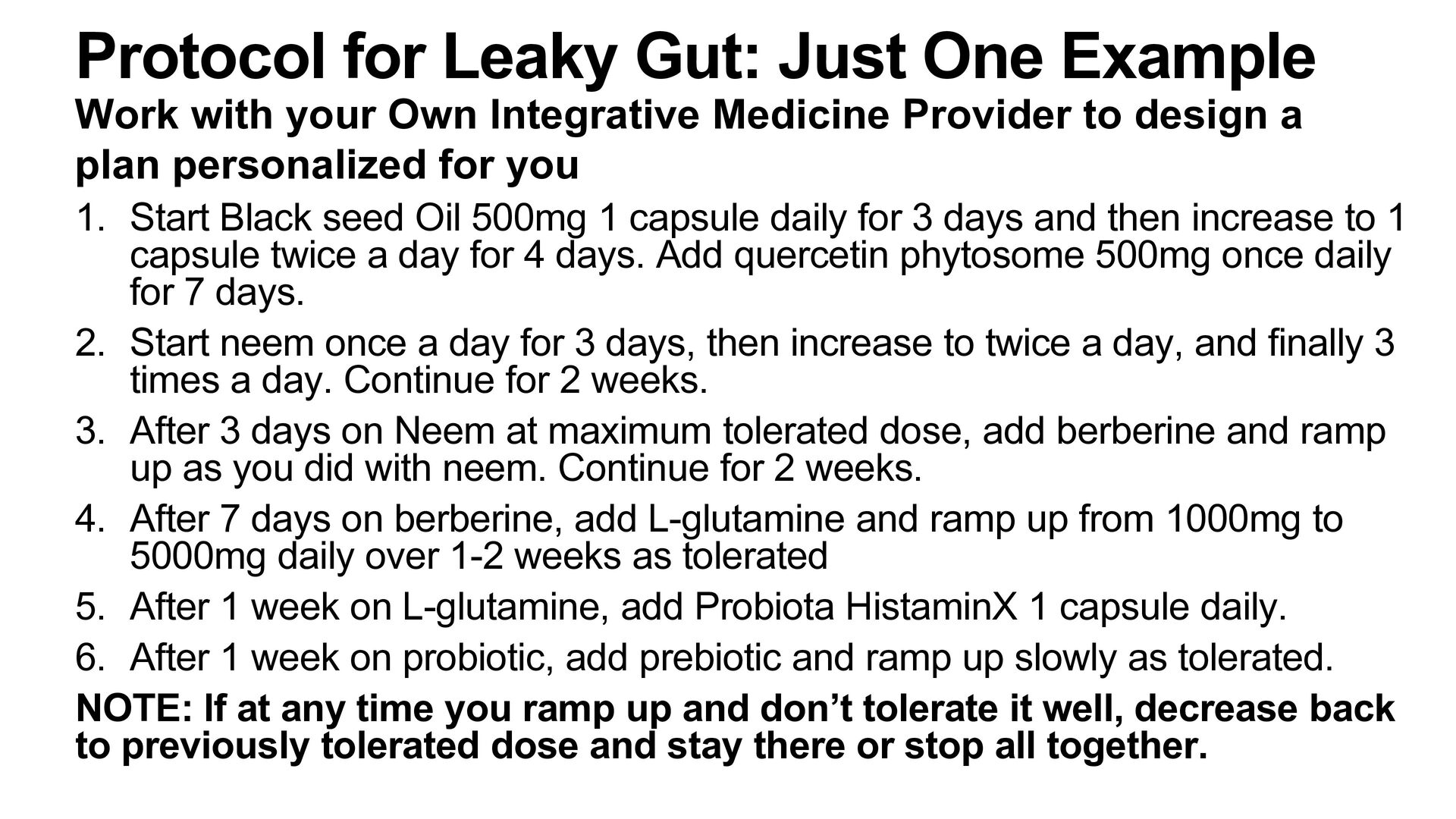
Protocol for Leaky Gut: Just One Example Work with your
Own Integrative Medicine Provider to design a plan personalized for you 1. Start Black seed Oil 500mg 1 capsule daily for 3 days and then increase to 1 capsule twice a day for 4 days. Add quercetin phytosome 500mg once daily for 7 days. 2. Start neem once a day for 3 days, then increase to twice a day, and finally 3 times a day. Continue for 2 weeks. 3. After 3 days on Neem at maximum tolerated dose, add berberine and ramp up as you did with neem. Continue for 2 weeks. 4. After 7 days on berberine, add L-glutamine and ramp up from 1000mg to 5000mg daily over 1-2 weeks as tolerated 5. After 1 week on L-glutamine, add Probiota HistaminX 1 capsule daily. 6. After 1 week on probiotic, add prebiotic and ramp up slowly as tolerated. NOTE: If at any time you ramp up and don’t tolerate it well, decrease back to previously tolerated dose and stay there or stop all together. -
Check-in 1. What is something you love to do in
the fall or winter? 2. How have your mast cell symptoms been doing? What has been bothering you most? 3. What is a goal for something that you’re going to pay attention to or try based on what was discussed today? OR What are 1 or 2 takeaways that you have learned after attending this group today?
 mcas
 holman
 chriscoyier
 kneath
 inesmontani
 oripsolob
 aleyda
 mongodb
 katarinadahlin
 kristinabergwall1
 marketingsoph
 rabernat