Share
Embed
Chinese Medicine Gut Health Presentation Advanced SMA Session
Microbiome
September 26, 2025
Transcript
27 slides
-
The Tao of Balanced Eating Insights from the Ancients for
Optimizing Gut Health -
Why Look Back to the Ancients? Thousands of years
of continuous observation and refinement Practical system adaptable to time, place, and individual needs A living tradition still relevant today -
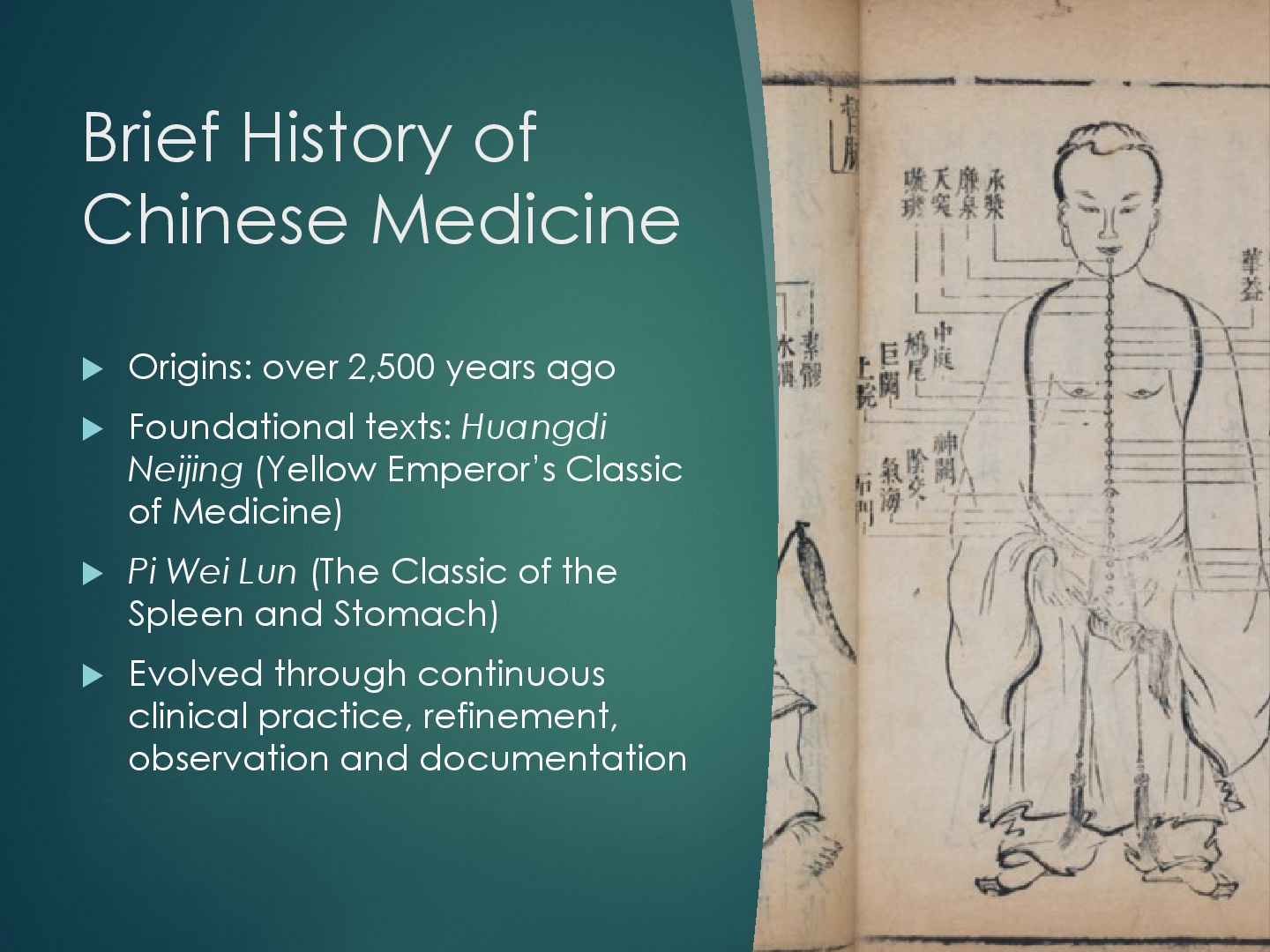
Brief History of Chinese Medicine Origins: over 2,500 years
ago Foundational texts: Huangdi Neijing (Yellow Emperor’s Classic of Medicine) Pi Wei Lun (The Classic of the Spleen and Stomach) Evolved through continuous clinical practice, refinement, observation and documentation -
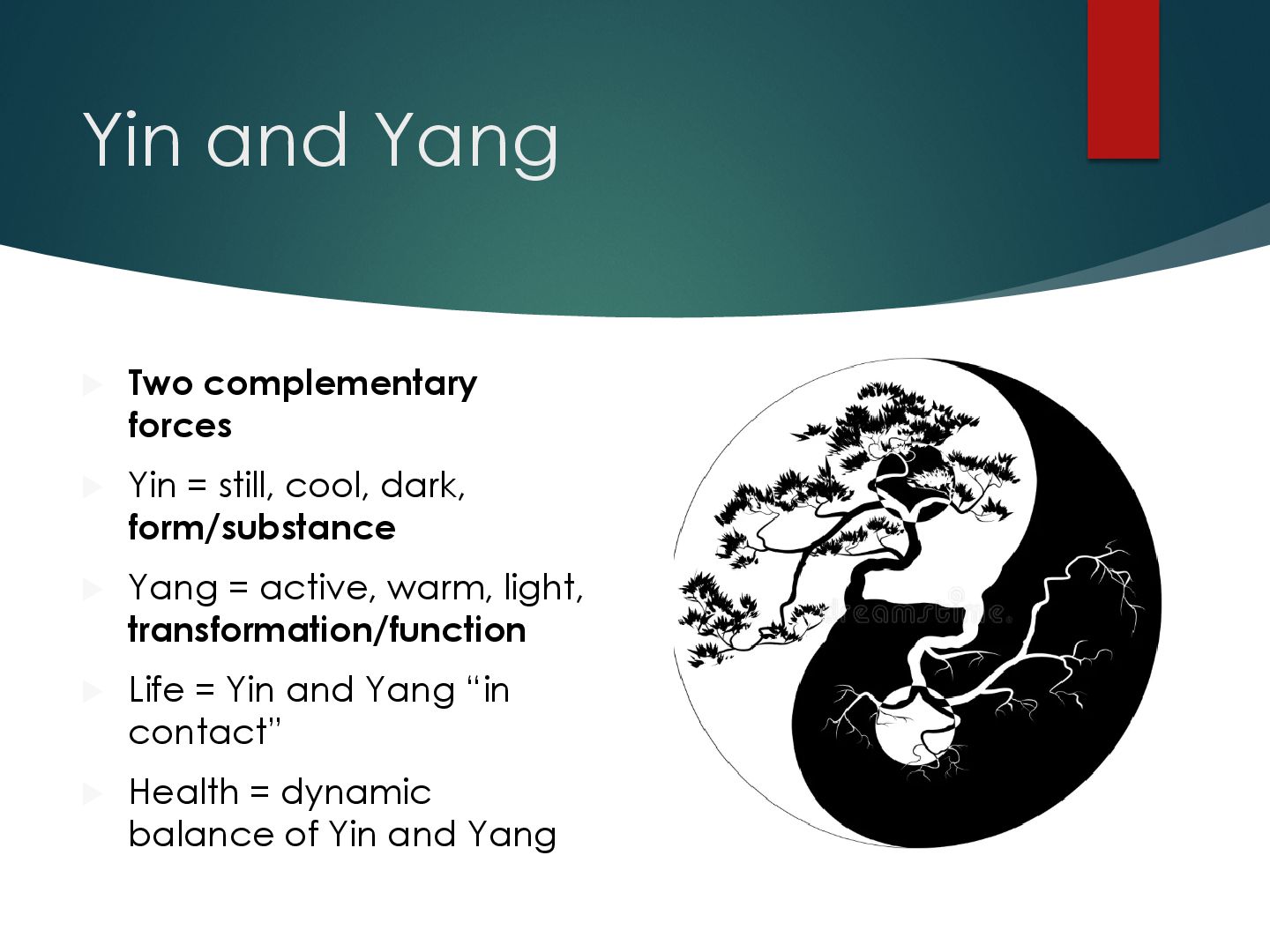
Yin and Yang Two complementary forces Yin =
still, cool, dark, form/substance Yang = active, warm, light, transformation/function Life = Yin and Yang “in contact” Health = dynamic balance of Yin and Yang -
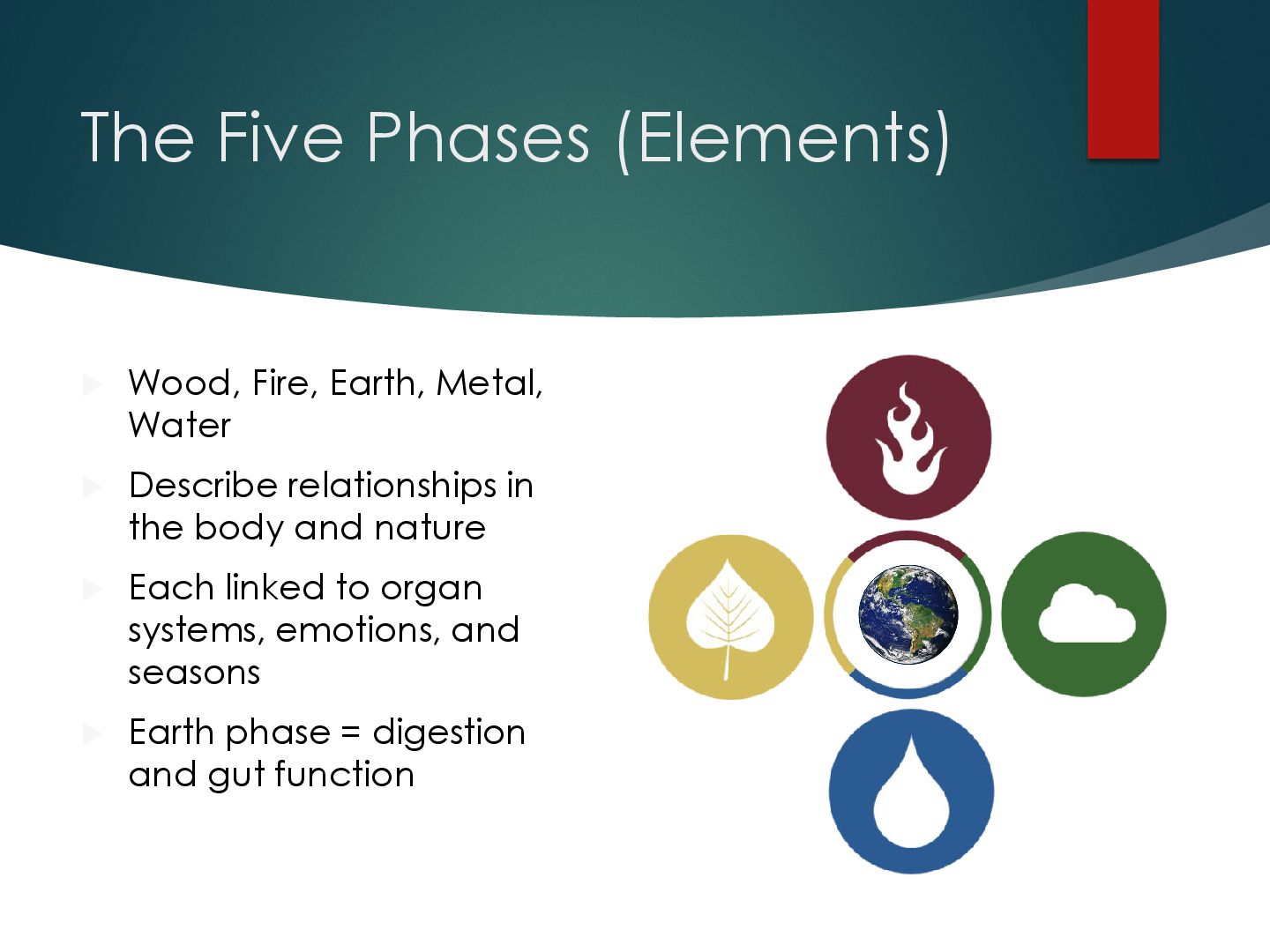
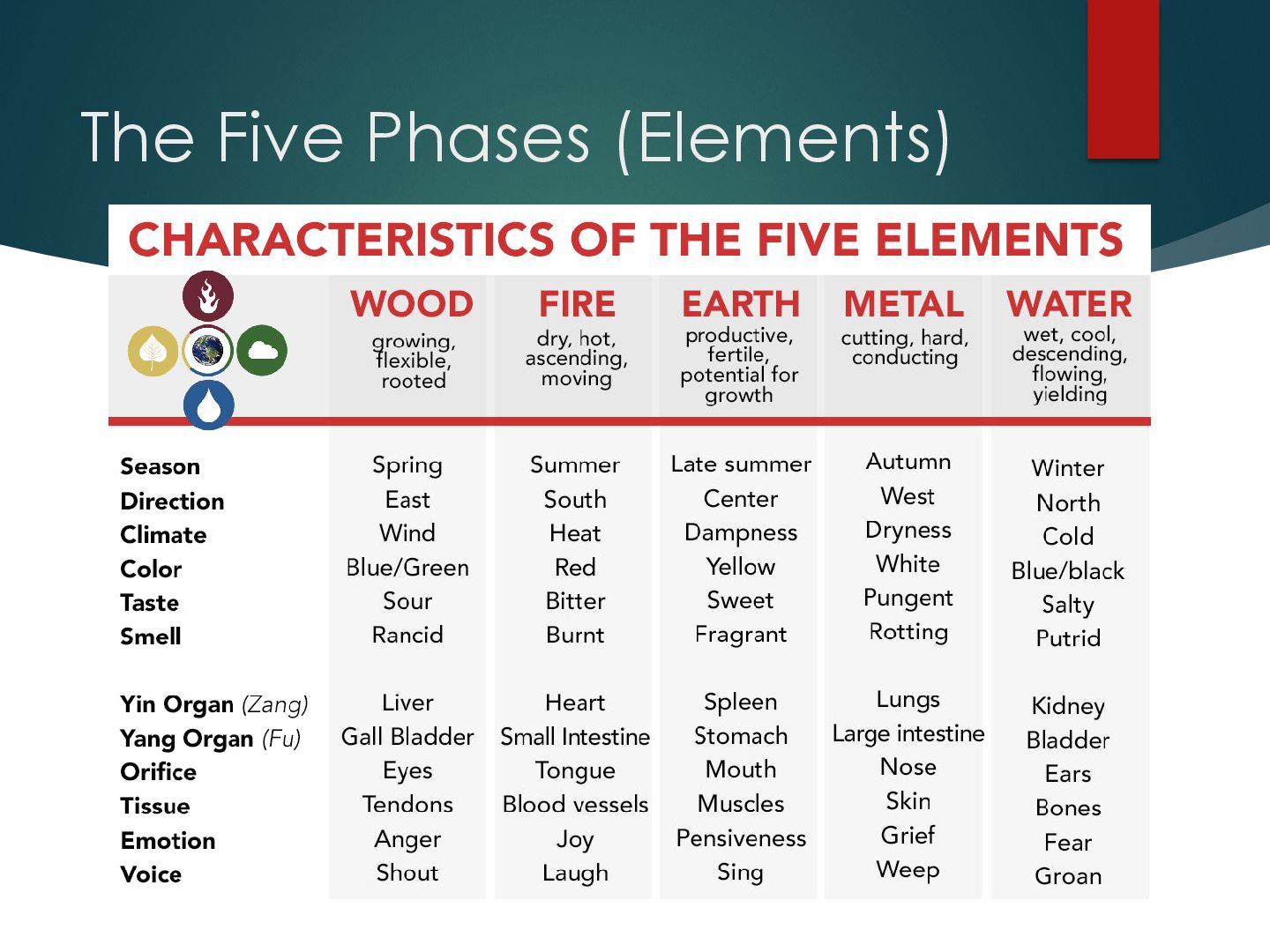
The Five Phases (Elements) Wood, Fire, Earth, Metal, Water
Describe relationships in the body and nature Each linked to organ systems, emotions, and seasons Earth phase = digestion and gut function -
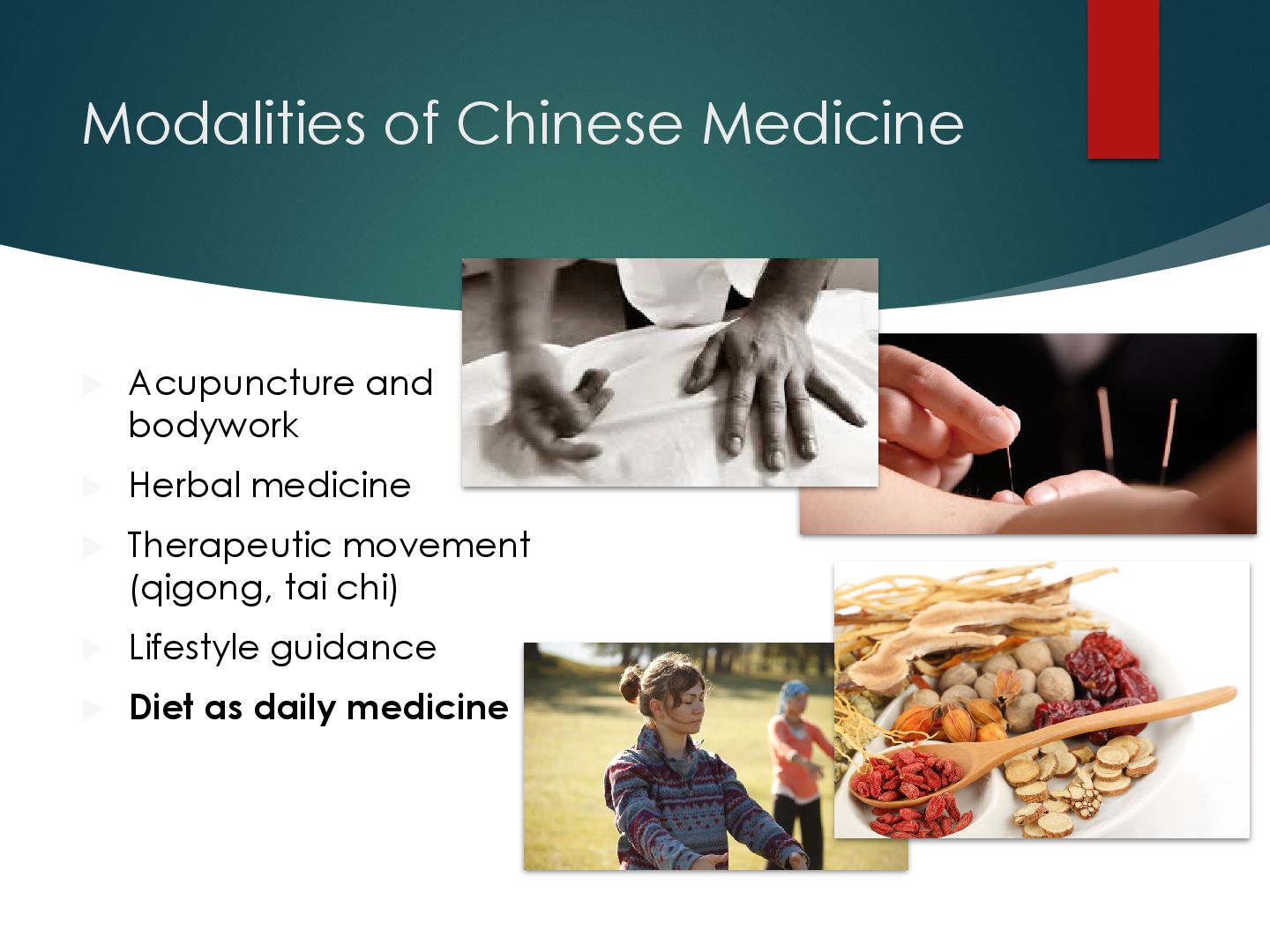
Modalities of Chinese Medicine Acupuncture and bodywork Herbal
medicine Therapeutic movement (qigong, tai chi) Lifestyle guidance Diet as daily medicine -
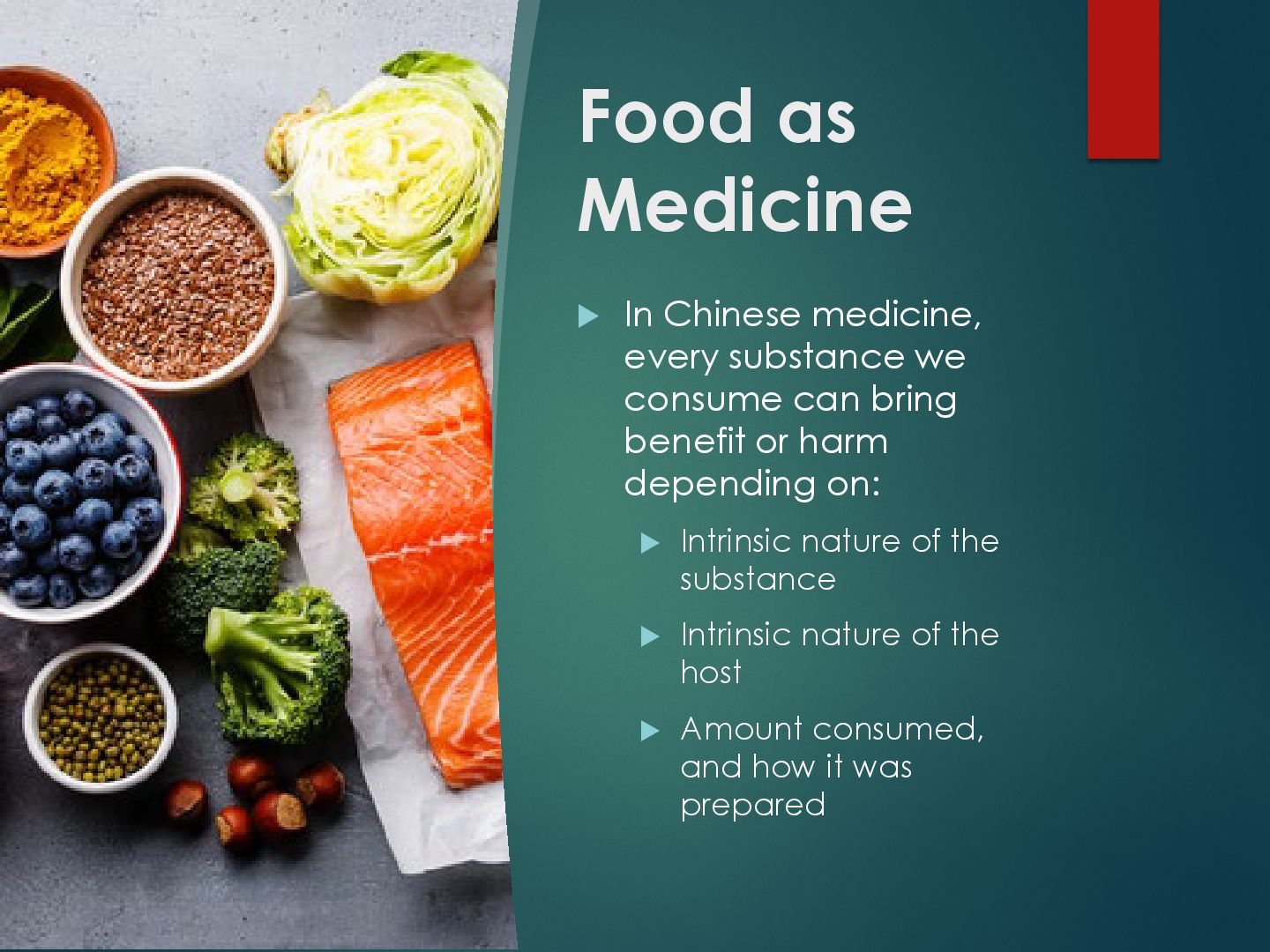
Food as Medicine In Chinese medicine, every substance we
consume can bring benefit or harm depending on: Intrinsic nature of the substance Intrinsic nature of the host Amount consumed, and how it was prepared -
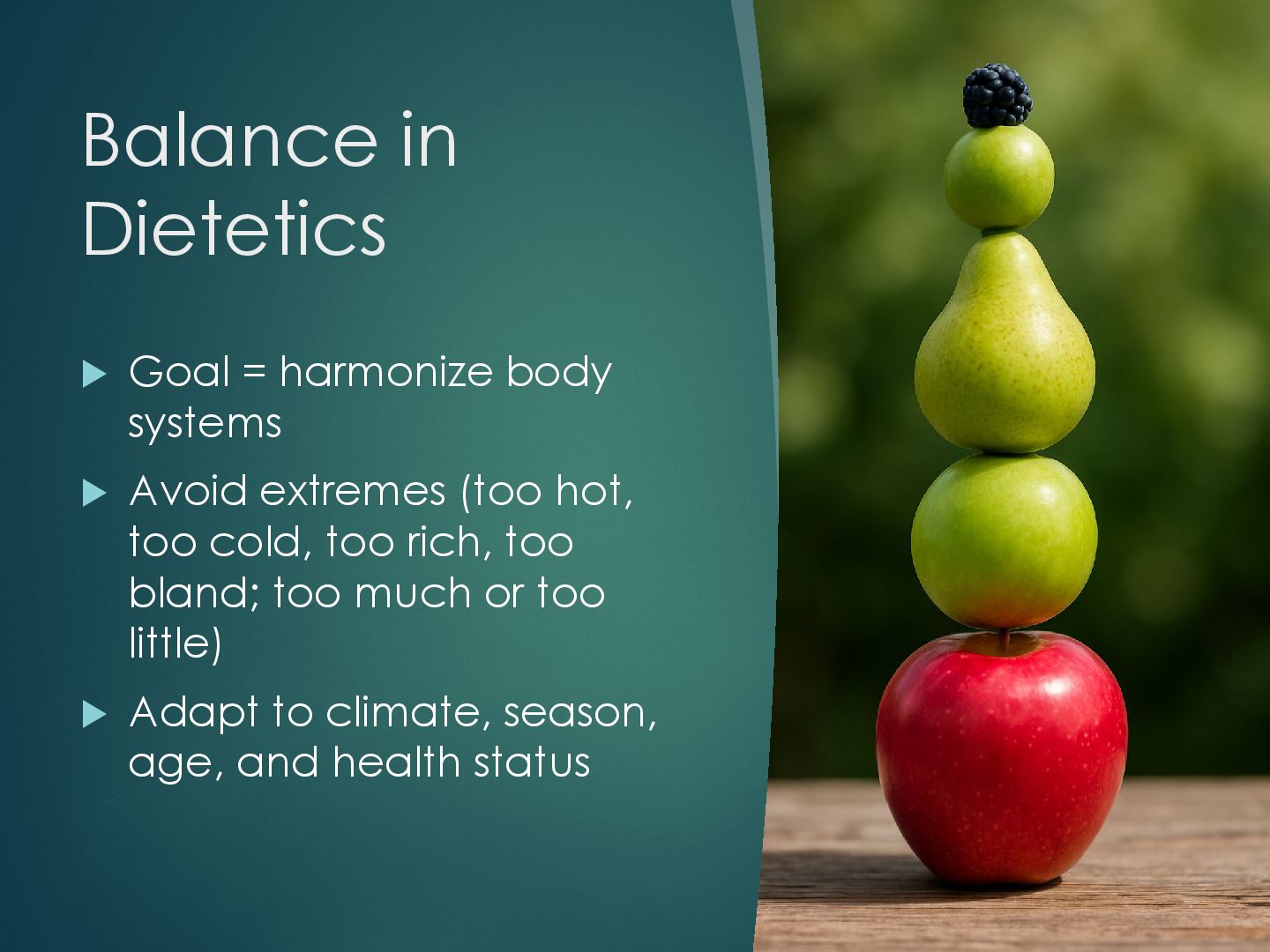
Balance in Dietetics Goal = harmonize body systems
Avoid extremes (too hot, too cold, too rich, too bland; too much or too little) Adapt to climate, season, age, and health status -
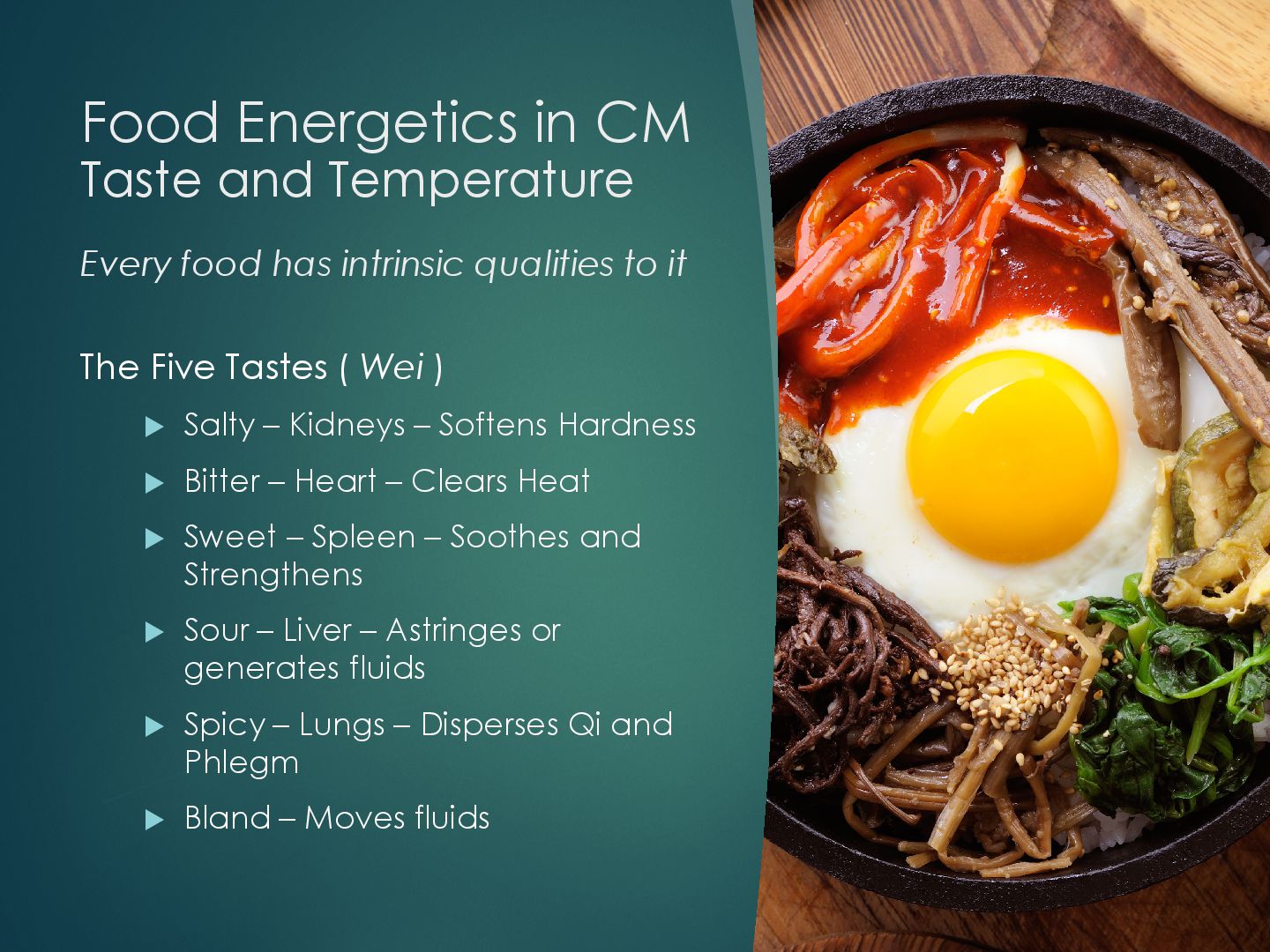
Food Energetics in CM Taste and Temperature Every food has
intrinsic qualities to it The Five Tastes ( Wei ) Salty – Kidneys – Softens Hardness Bitter – Heart – Clears Heat Sweet – Spleen – Soothes and Strengthens Sour – Liver – Astringes or generates fluids Spicy – Lungs – Disperses Qi and Phlegm Bland – Moves fluids -
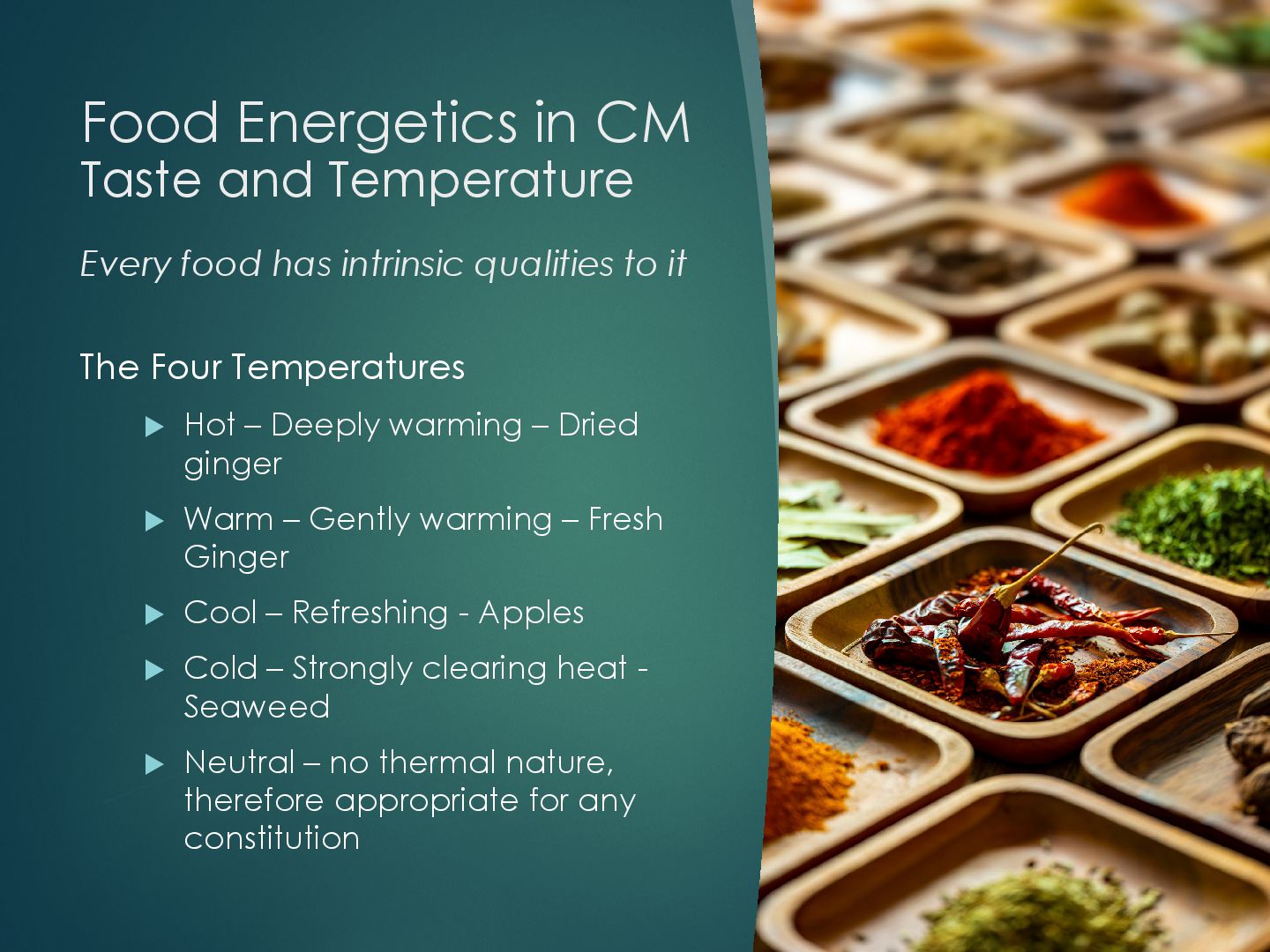
Food Energetics in CM Taste and Temperature Every food has
intrinsic qualities to it The Four Temperatures Hot – Deeply warming – Dried ginger Warm – Gently warming – Fresh Ginger Cool – Refreshing - Apples Cold – Strongly clearing heat - Seaweed Neutral – no thermal nature, therefore appropriate for any constitution -
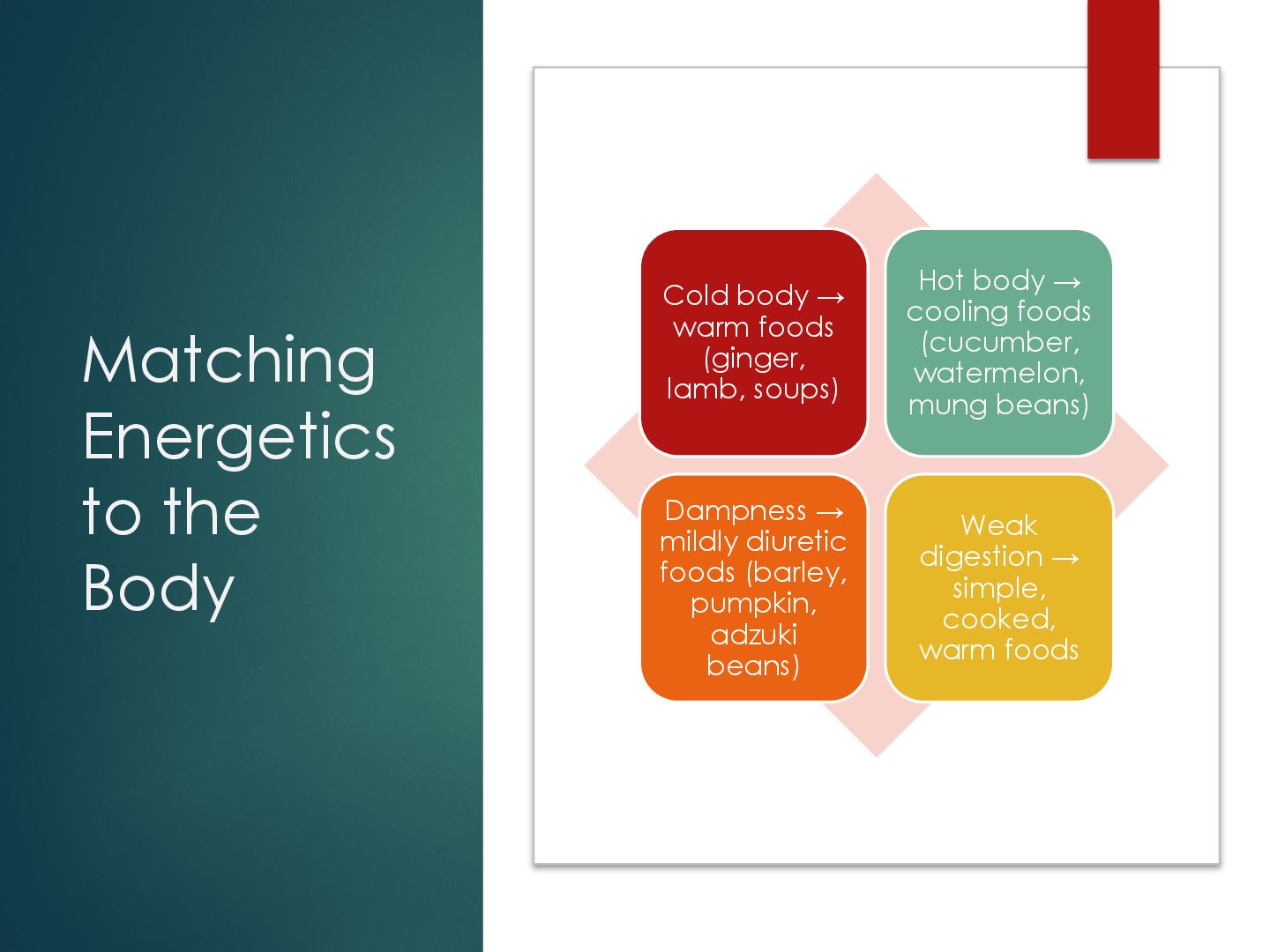
Matching Energetics to the Body Cold body → warm foods
(ginger, lamb, soups) Hot body → cooling foods (cucumber, watermelon, mung beans) Dampness → mildly diuretic foods (barley, pumpkin, adzuki beans) Weak digestion → simple, cooked, warm foods -
Therapeutic Example (Case 1) A 32 y.o. female Yoga
instructor presented to the clinic for evaluation of increasing fatigue, coldness, and spotty menstruation with watery, pale- colored blood and strong abdominal cramps. She was thin, and her hair and nails had become brittle and split easily. Inquiry into her diet revealed she had been a raw food vegan since the age of 16. Diagnosis: Yang deficiency and Cold with Blood deficiency Ultimately the patient was convinced to introduce high quality bone broth simmered with sweet potatoes, butternut squash, leeks and ginger, in small amounts (no more than 1 fluid cup per serving) Follow up 2 weeks later: Decreased cold and fatigue; 3 months later, menstruation more normal with richer blood color, and hair and nails were improving. -
Therapeutic Example (Case 2) A 29 y.o. male software
developer presented to the clinic for evaluation and treatment of increasing joint and back pain; hypertension and high cholesterol. His diet frequently included pizza, red vines and caffeinated soft drinks. His tongue was red and his pulse was bounding and rapid. His diet prescription was to eliminate the soft drinks and drink oolong tea instead. Replaced red vines with a daily apple, banana and raw almonds. Reduce pizza intake and instead have a “burrito bowl” from Chipotle or bring his lunch – fish and cooked vegetables were suggested. A 2 month follow up found the joint and back pain had reduced significantly. A 6 month follow up found his blood pressure and cholesterol levels had reduced to near normal levels -
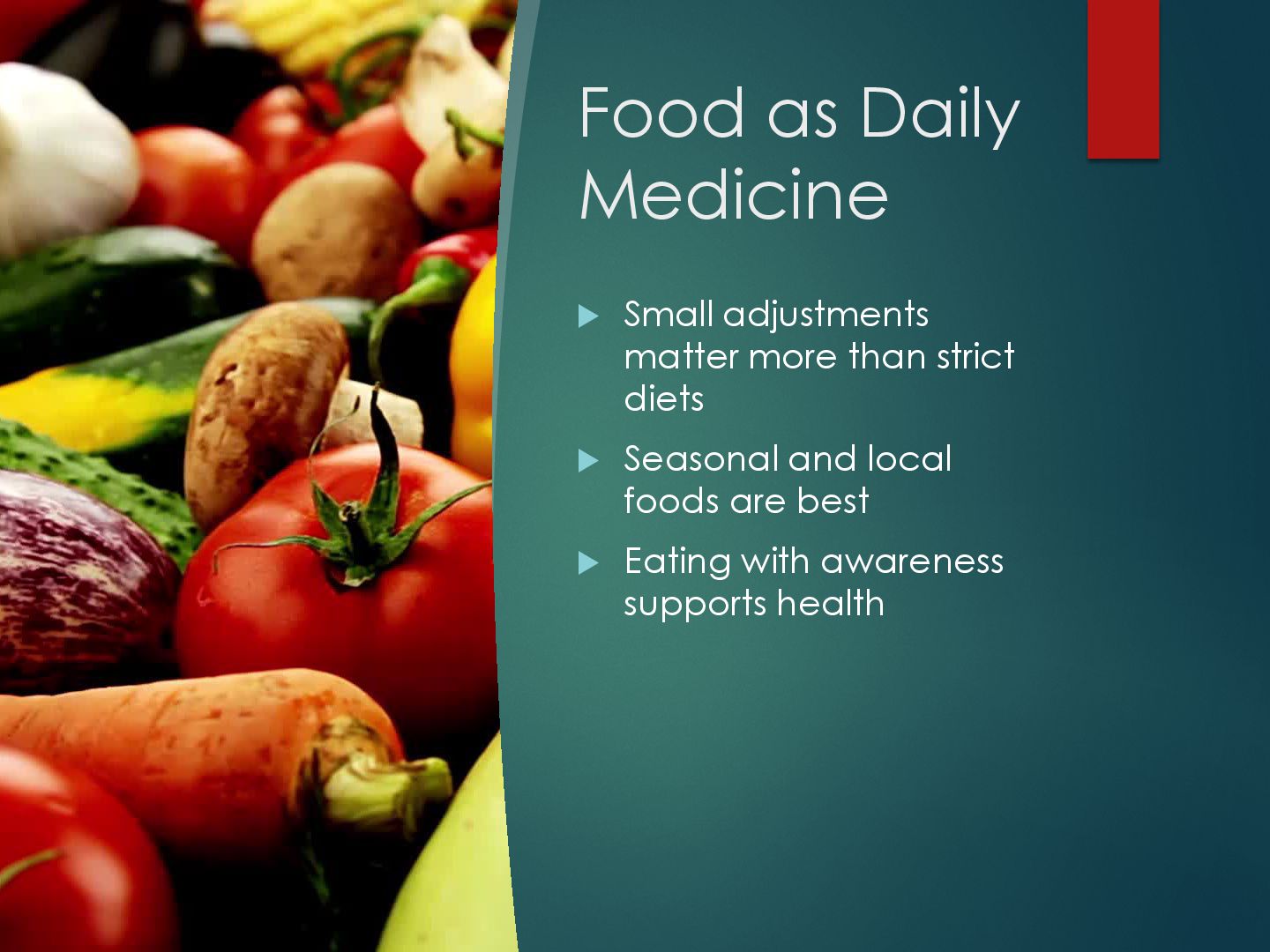
Food as Daily Medicine Small adjustments matter more than
strict diets Seasonal and local foods are best Eating with awareness supports health -
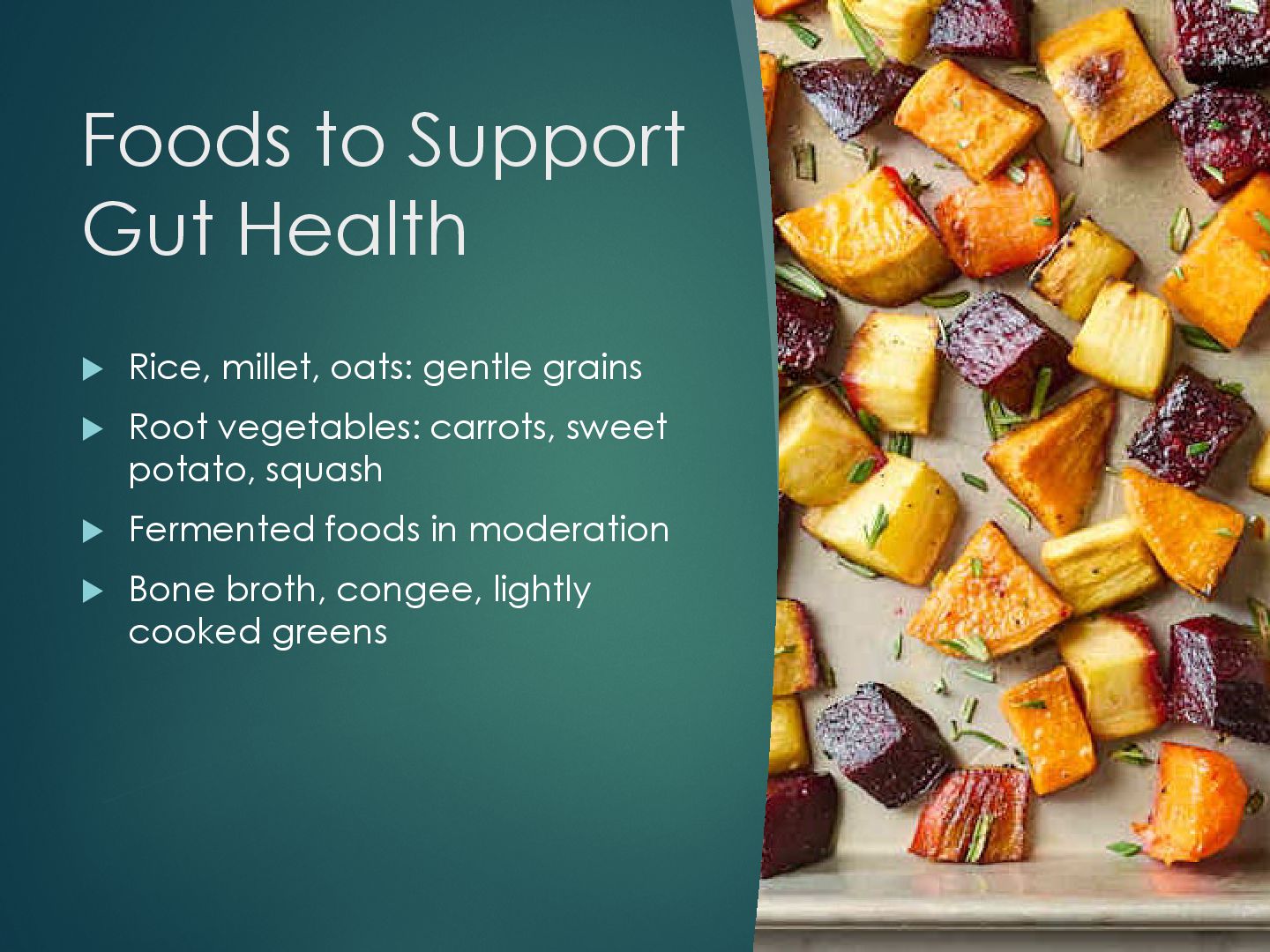
Foods to Support Gut Health Rice, millet, oats: gentle
grains Root vegetables: carrots, sweet potato, squash Fermented foods in moderation Bone broth, congee, lightly cooked greens -
How You Eat Matters Regular meals, not rushed or at
irregular times Warm, cooked foods are easier to digest Overeating burdens the system – 2/3 full Calm, mindful eating supports assimilation -
Daily Eating Habits Smaller portions better for more complete
digestion Avoid cold drinks and raw foods in excess (unless heat signs present) Limit processed and greasy foods Choose simple combinations Eat at regular intervals When you eat, just eat -
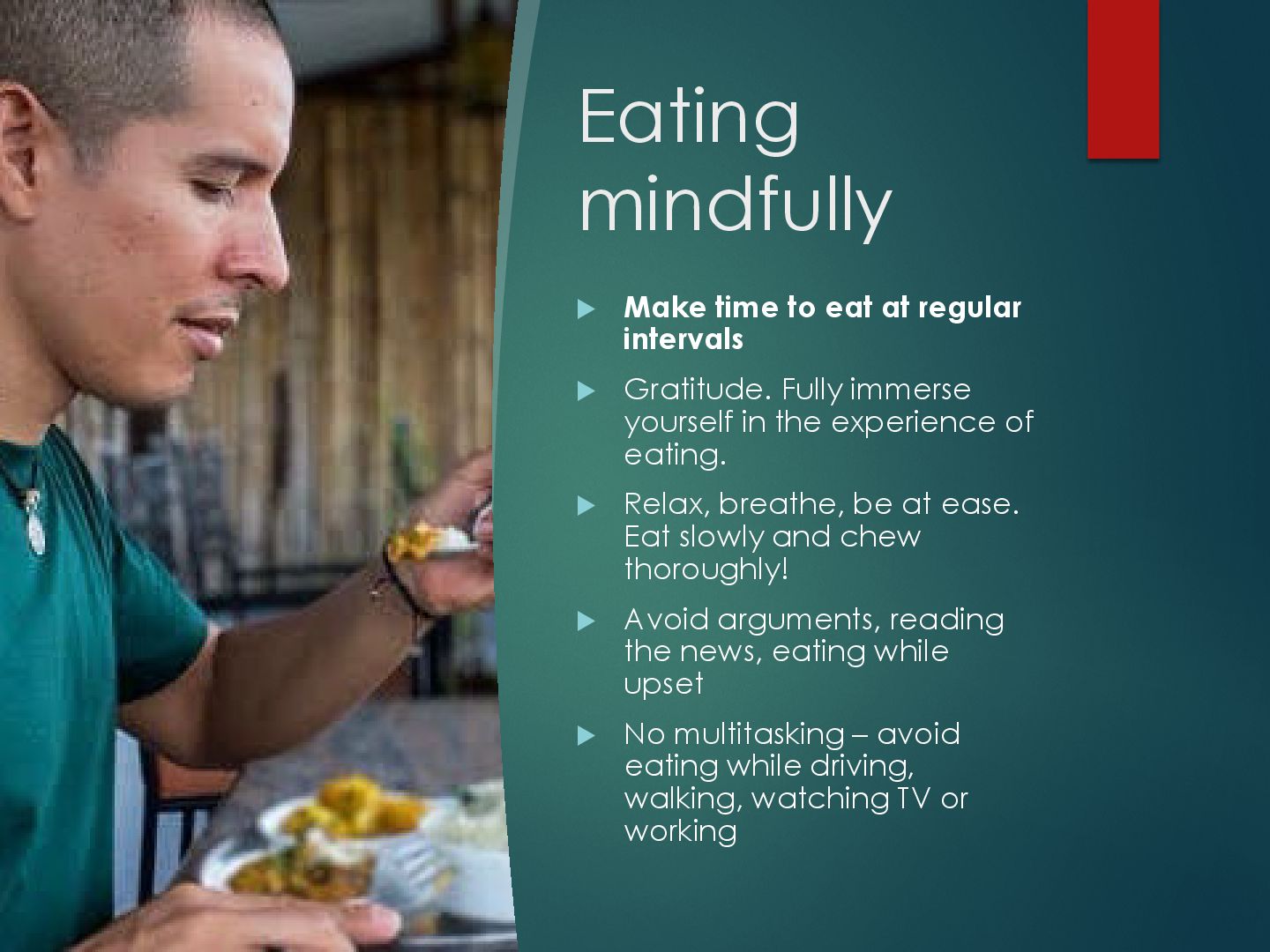
Eating mindfully Make time to eat at regular intervals
Gratitude. Fully immerse yourself in the experience of eating. Relax, breathe, be at ease. Eat slowly and chew thoroughly! Avoid arguments, reading the news, eating while upset No multitasking – avoid eating while driving, walking, watching TV or working -
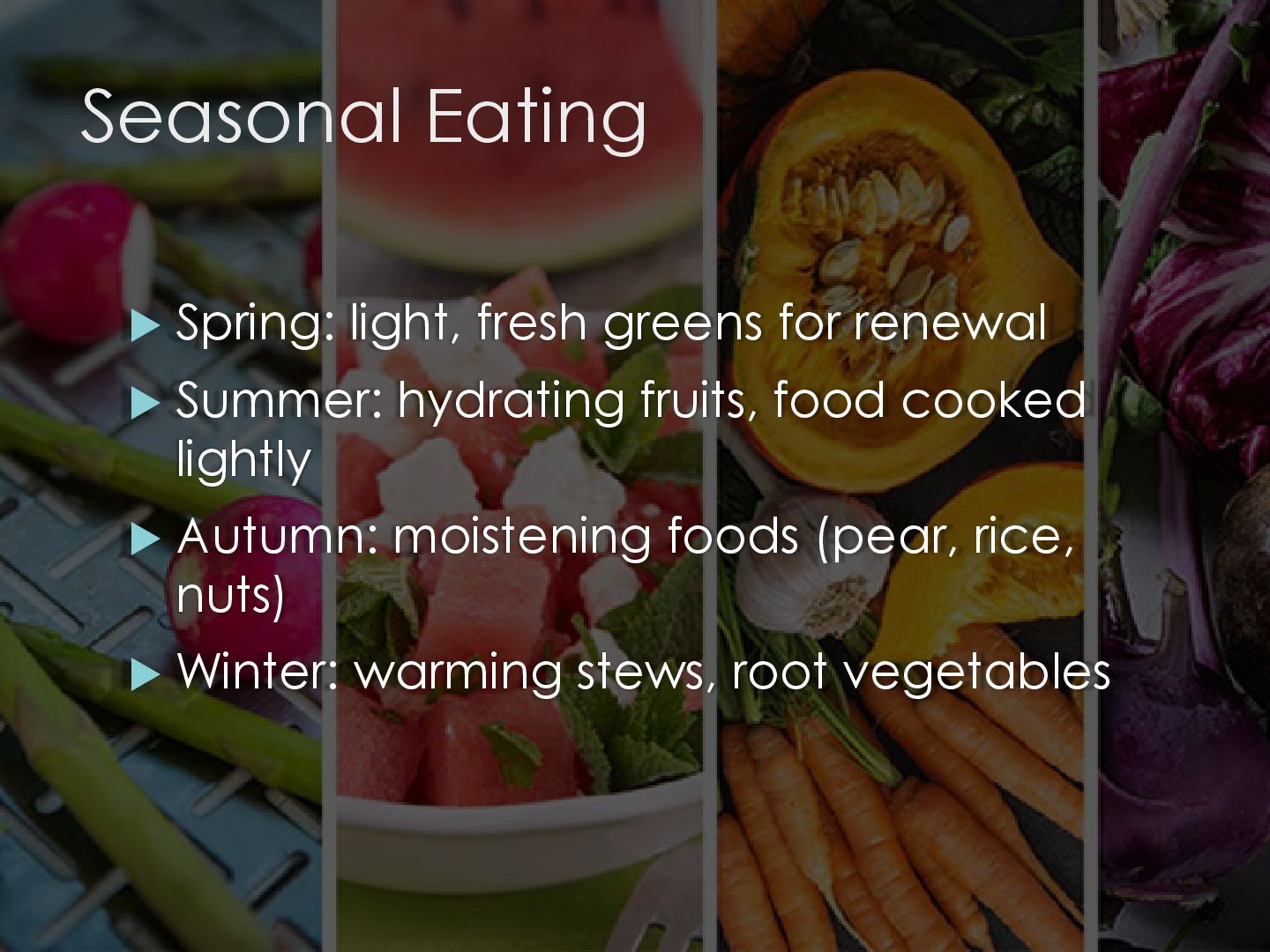
Seasonal Eating Spring: light, fresh greens for renewal
Summer: hydrating fruits, food cooked lightly Autumn: moistening foods (pear, rice, nuts) Winter: warming stews, root vegetables -
Contemporary Research Acupuncture shown to modulate gut microbiota balance
(Zhang et al., 2020) Qigong practice associated with reduced gut inflammation (Chen et al., 2021) Mind-body therapies shown to improve IBS and digestive disorders -
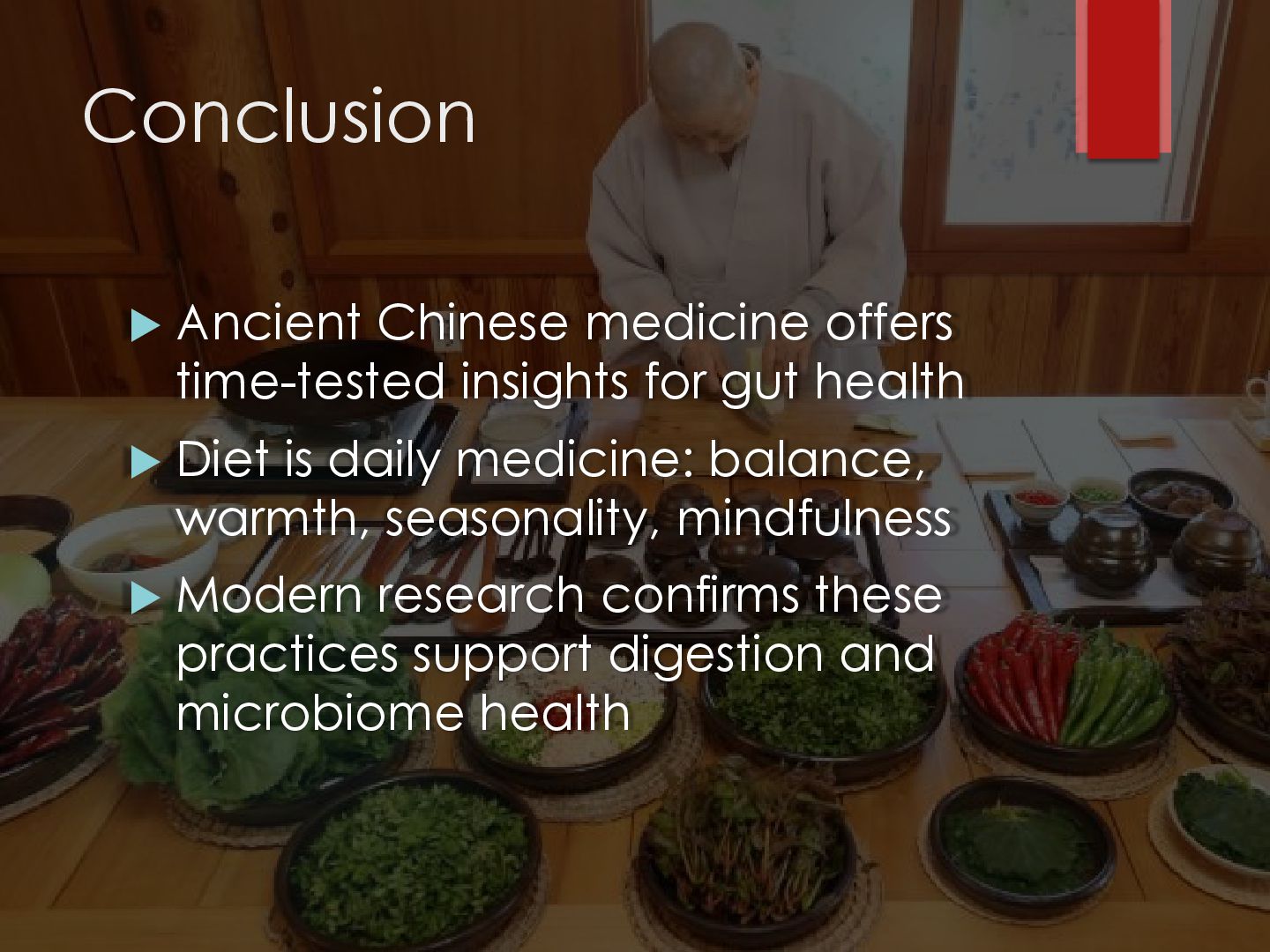
Conclusion Ancient Chinese medicine offers time-tested insights for gut
health Diet is daily medicine: balance, warmth, seasonality, mindfulness Modern research confirms these practices support digestion and microbiome health -
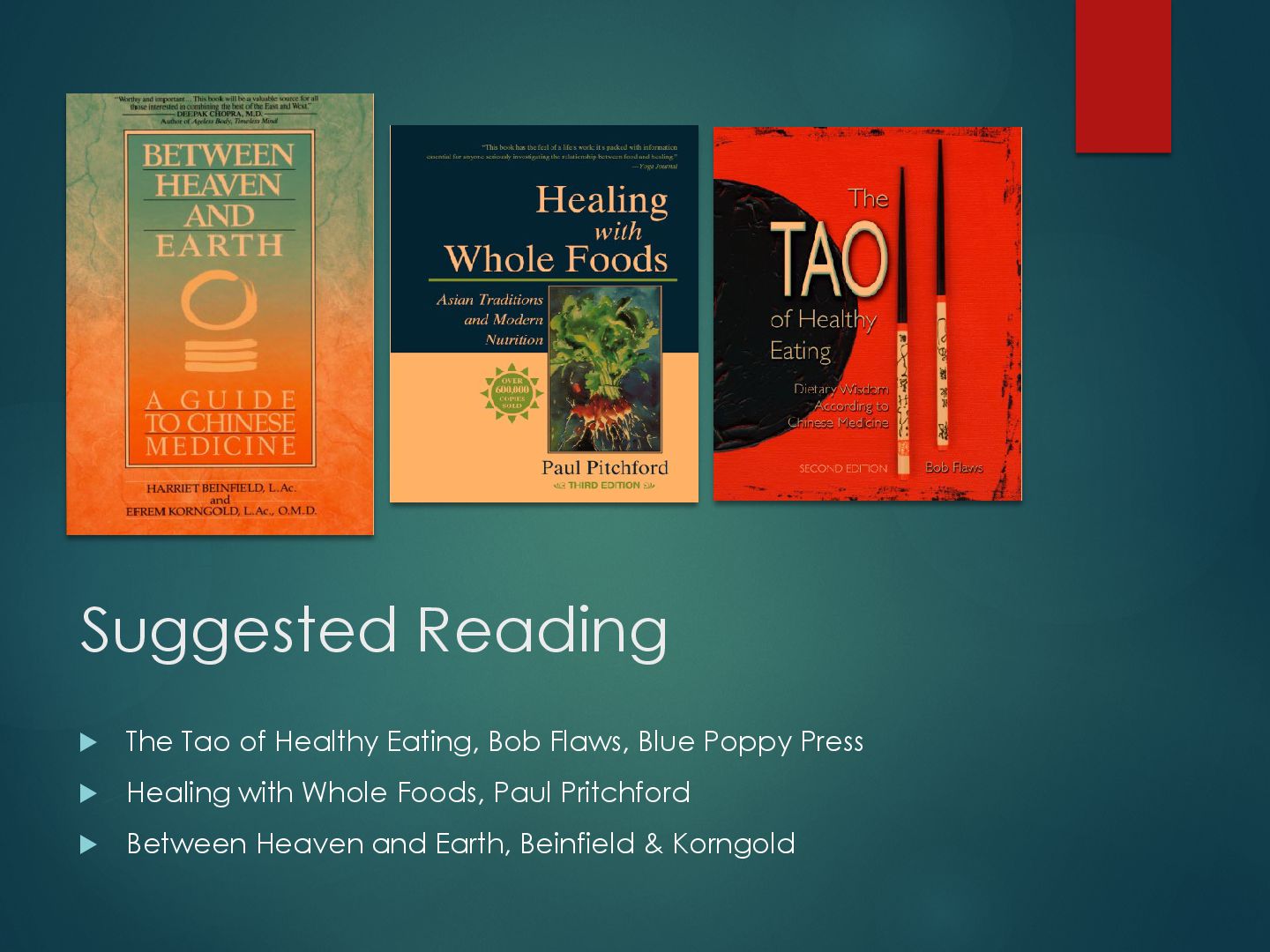
Suggested Reading The Tao of Healthy Eating, Bob Flaws,
Blue Poppy Press Healing with Whole Foods, Paul Pritchford Between Heaven and Earth, Beinfield & Korngold -
References Huangdi Neijing (Yellow Emperor’s Classic of Medicine)
Li Dongyuan, Pi Wei Lun Zhang et al. (2020), Frontiers in Microbiology Chen et al. (2021), Journal of Integrative Medicine