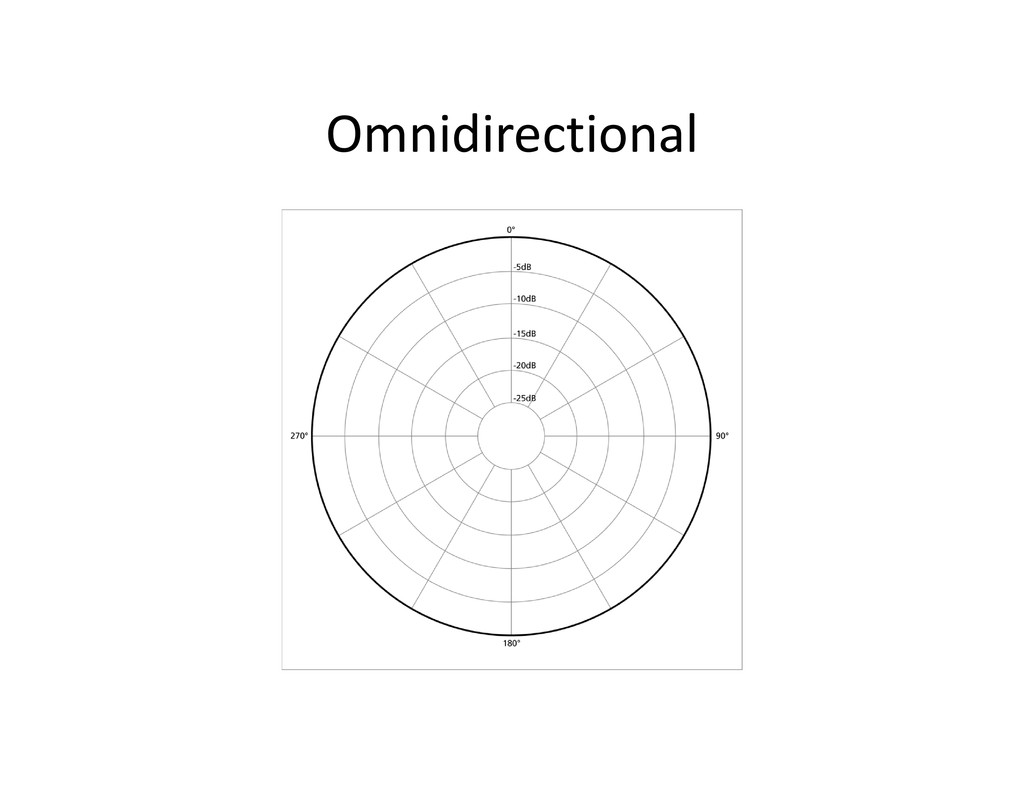
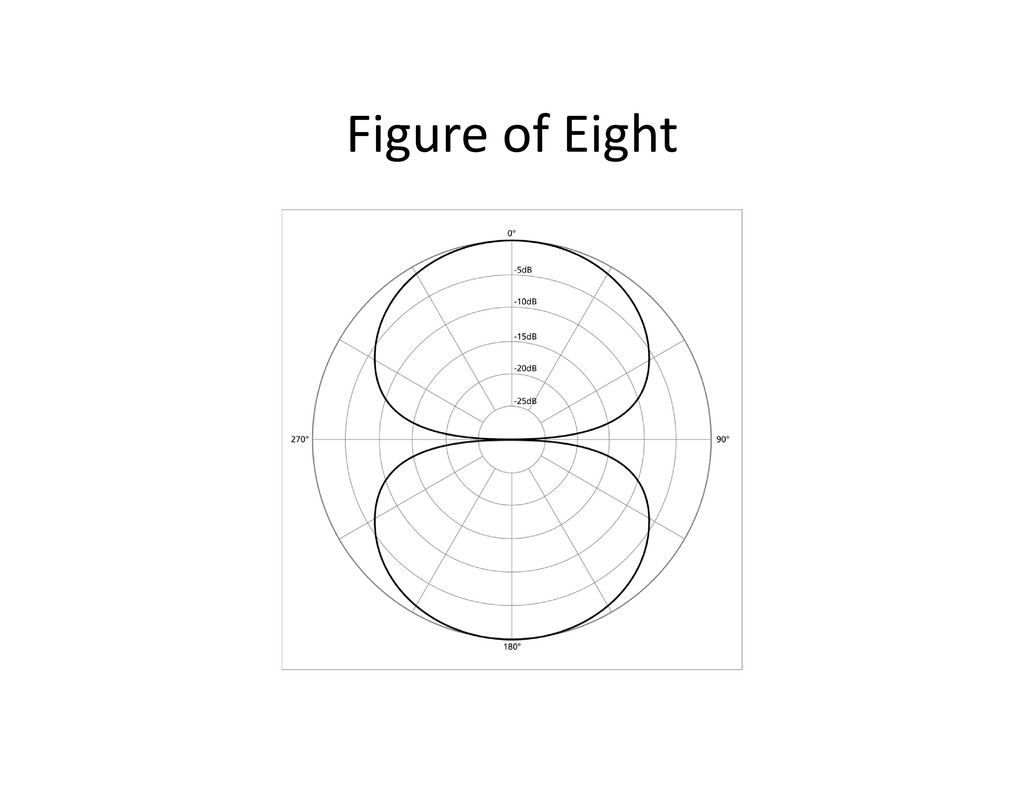
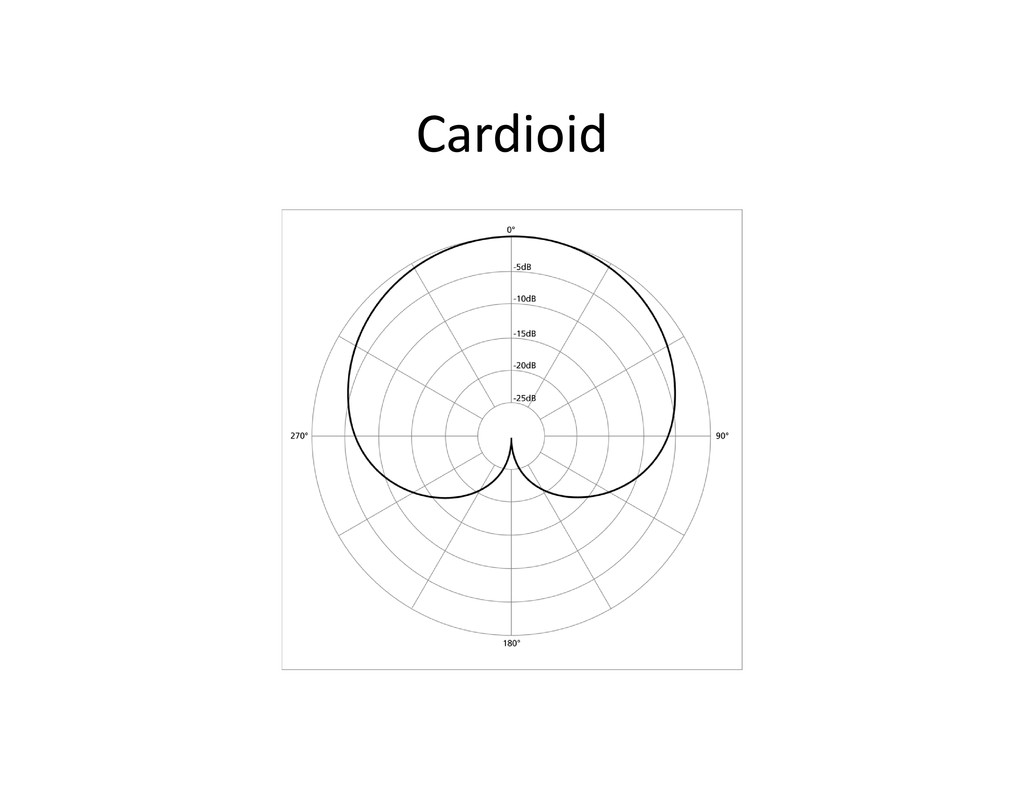
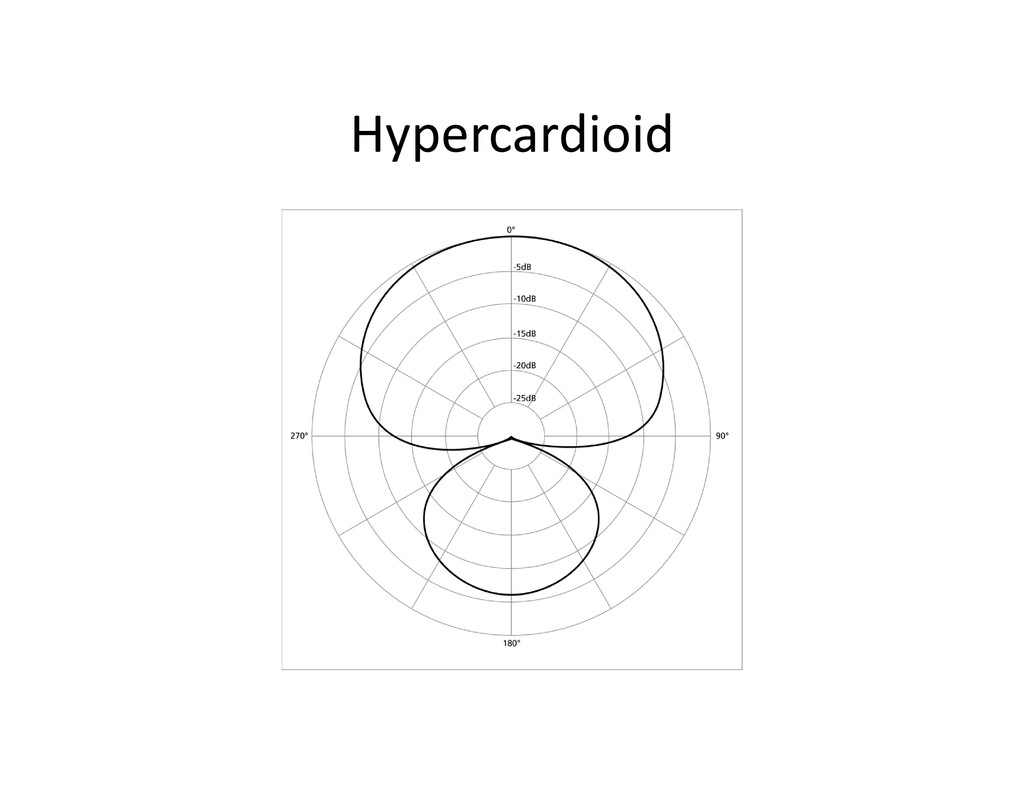
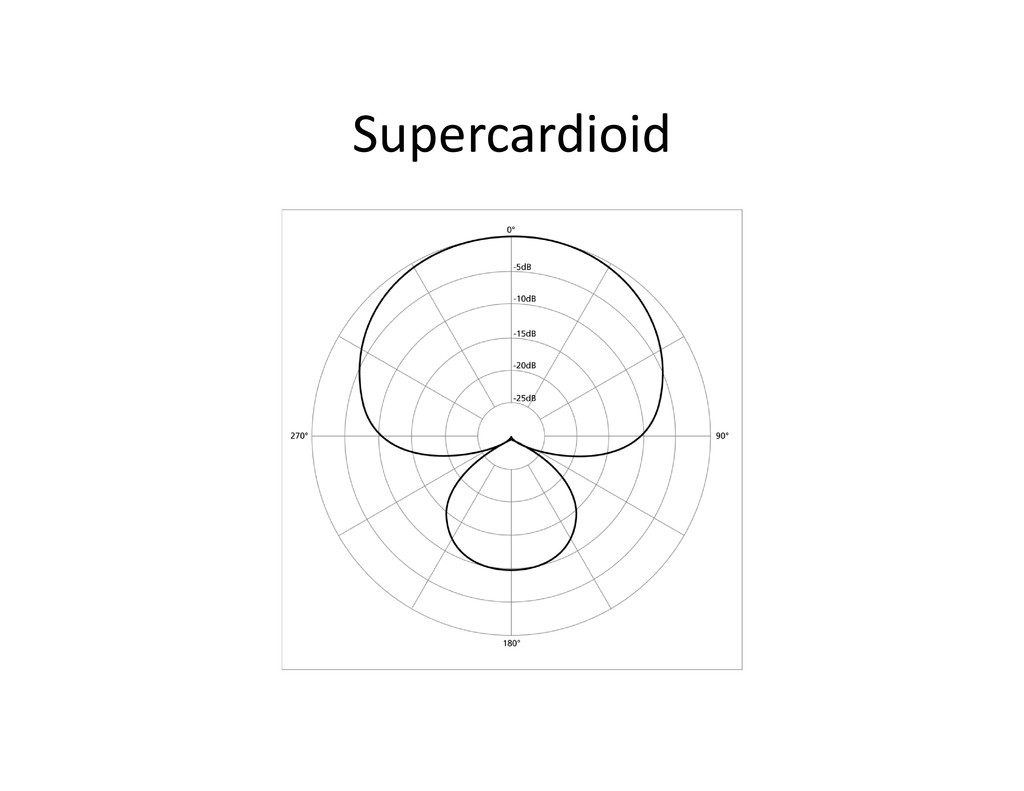
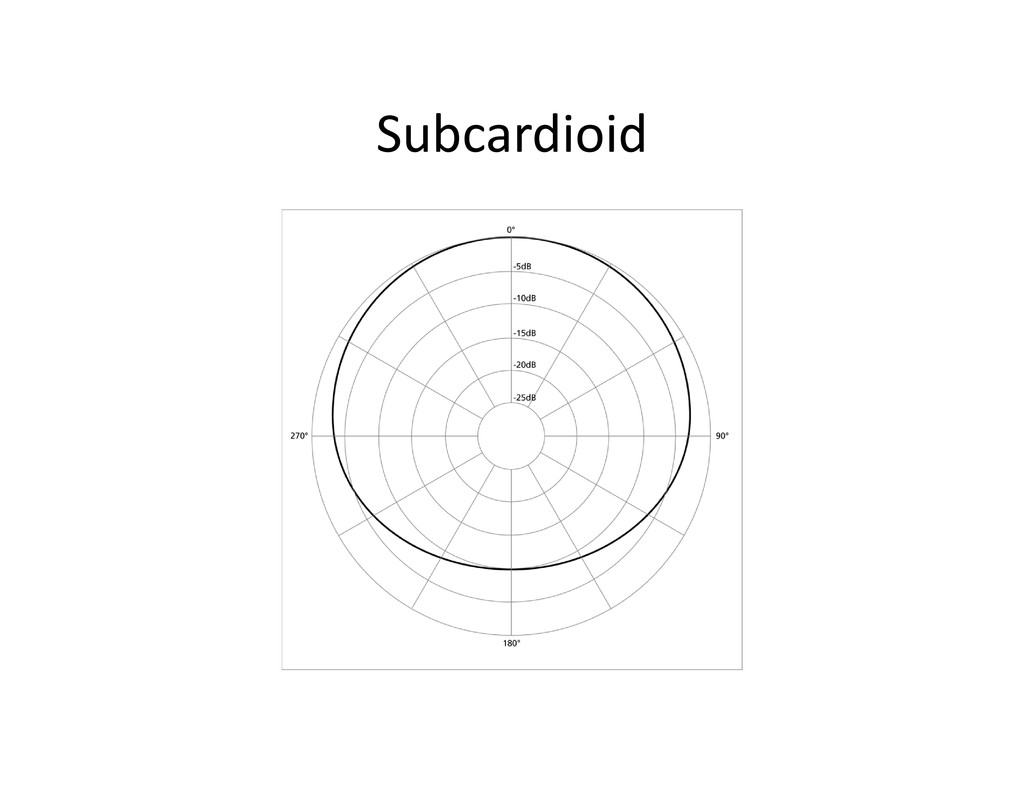
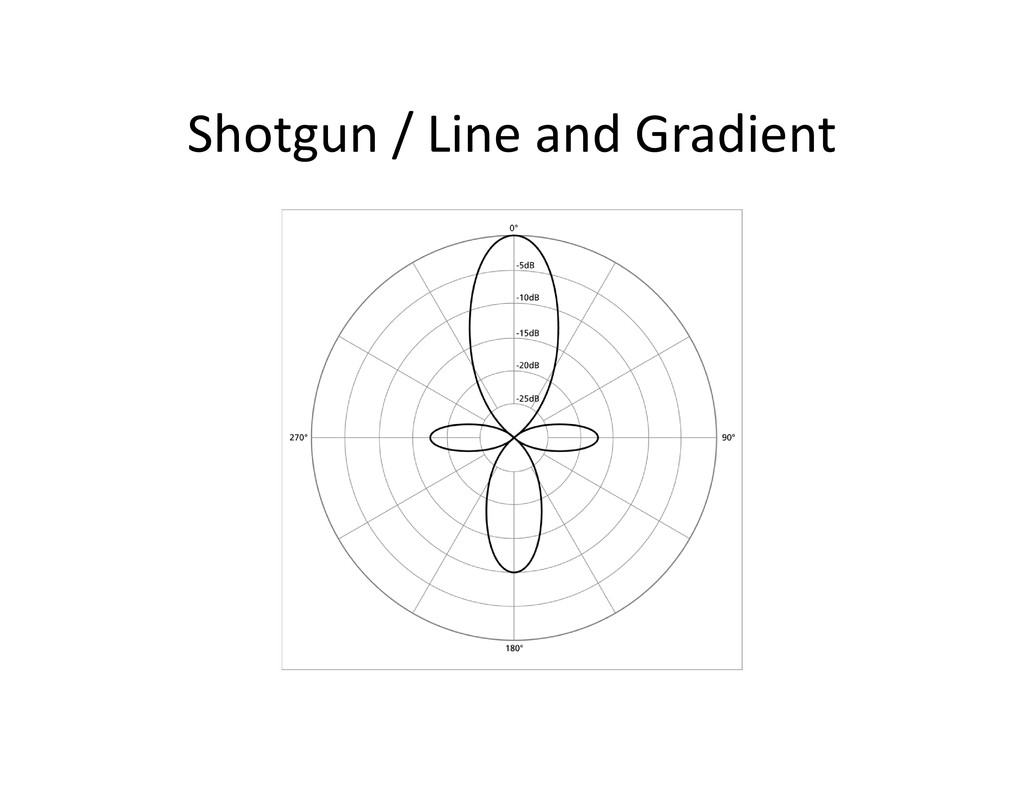
a circular graph that shows how sensitive a microphone is in different directions • In the following diagrams, each “circular” division represents 5dB of sensitivity, so you can see where the microphone picks up the strongest to the weakest sounds at different points
covers all directions and picks up all sound in a 360 degree radius • Ideal for natural, ambient recordings and for tie clip microphones - as moving your head to one side will not change the volume. • Make ideal headset microphones, as they sound very natural when close to the mouth.
are not as affected by wind noise or by the “proximity” effect (the bass boost when you are close to a directional microphone) • Less susceptible to popping caused by “plosives” (when you say “P” or “B” close to the microphone)
housing or cavities to alter the polar pattern • This makes a very neutral sounding microphone with very little colouration • The physical body of the microphone can block some high frequencies, making sound ‘duller’ from the back
of Eight or bi-directional microphones pick up sound from the front and rear while rejecting sound from the sides • The diagram shows that it does not change for different frequencies • This is due to the fact that the capsule exists naturally without any alteration - like omnidirectional microphones which are very neutral sounding
used for their natural sound quality in some headsets, studio and broadcast microphones • There are also used in “Mid/Side” stereo recording techniques • All ribbon microphones are naturally Figure of Eight
sound within 120 degrees of the direction they are facing and take their name from the heart shape of their polar pattern • They help to reduce feedback and can be used to capture a particular sound in a loud environment • They are affected by wind noise, “proximity” effect and are susceptible to popping caused by “plosives”
of an omnidirectional and a figure of eight element working together in harmony • Sound coming to the front of the microphone is added together from both the omnidirectional element and the figure of eight element • Sound from the sides will only be picked up by the omnidirectional element which will be half the volume of the front sound as only one capsule ‘hears’ the sound
positive signal on the omnidirectional element which is cancelled out by a negative signal from the figure of eight making the sound for the rear inaudible • Most current cardioid microphones use external openings and internal passages in the microphone housing that allows sound arriving from the front of the microphone to aid diaphragm motion, while sound arriving from the side or rear will cancel diaphragm motion
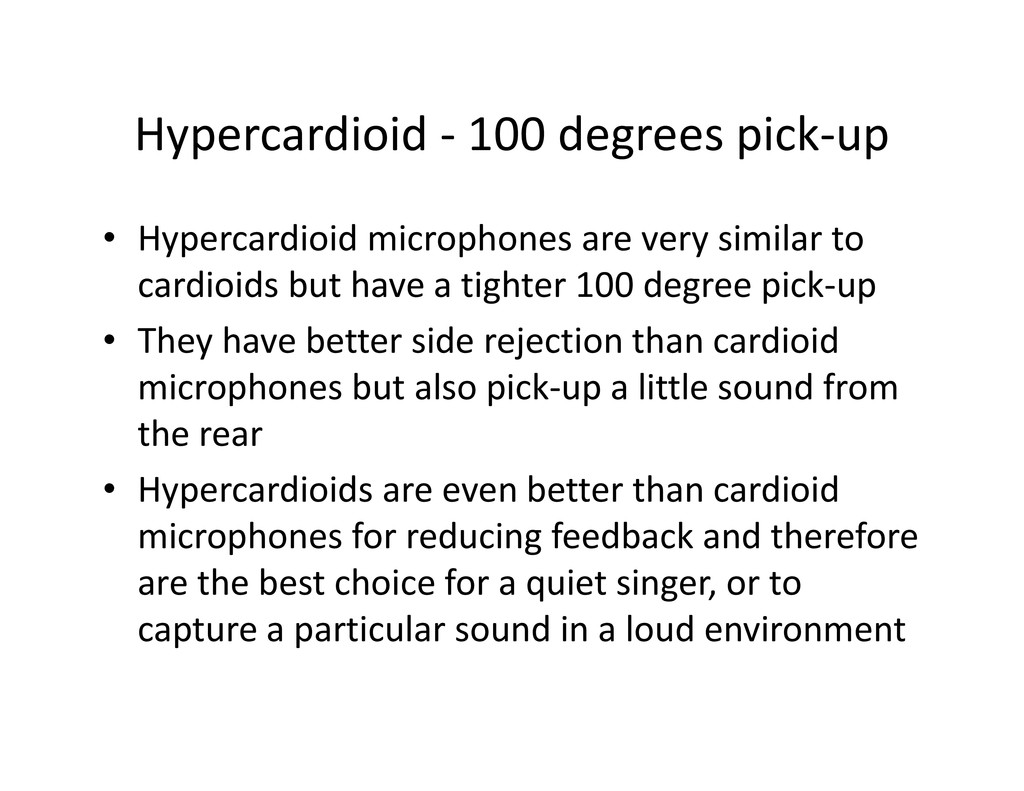
similar to cardioids but have a tighter 100 degree pick-up • They have better side rejection than cardioid microphones but also pick-up a little sound from the rear • Hypercardioids are even better than cardioid microphones for reducing feedback and therefore are the best choice for a quiet singer, or to capture a particular sound in a loud environment
and often confused with, the hypercardioid pattern • The supercardioid pattern is slightly less directional than the hypercardioid pattern, but the rear lobe of sensitivity is also much smaller in the supercardioid
and Gradient or Shotgun microphones use a complex design that makes their polar pattern highly directional • The capsule is placed behind an interference tube with small slits along the side. The tube eliminates sound from the sides due to phase cancellation • The longer the interference tube, the tighter the polar pattern, making the microphone better at rejecting sound from the side and more focused in the direction it is pointing
the left, right, and rear but are significantly less sensitive to the side and rear than other directional microphones • Shotgun microphones are excellent for film and theatre work to pick up sound while keeping the microphone out of the camera’s view


 kentarofujii
 koukihosaka
 tomokusaba
 hiracky16
 persolserverworks
 makocchi
 teamlab
.png) codatum
codatum
 sudoakiy
 raspython3
 ykanoh
 yut0naga1_fa
 bkeepers
 aleyda
 csswizardry
 inesmontani
 eileencodes
.png) helenjbeal
helenjbeal
 wayneb77
 rabernat
 marcoroth
 lara
lara