have experience in diverse business sectors such as Agriculture, Telecom, Healthcare, Fashion, Food Delivery, Mobile DevOps, and PropTech. Engaged in creating and developing multiple test automation frameworks for Web, APIs, and Mobile applications utilizing a range of tools and programming languages. Executed various CI/CD pipelines utilizing different tools. Ex. Cequens, Integrant, Zalando SE, Delivery Hero SE, Bitrise. /in/moataz-nabil/ @moatazeldebsy moatazeldebsy
AI in Testing 2 AI Technologies in Software Testing 3 Implementing AI in Software Testing 4 AI for Specific Testing Activities 5 AGENDA Intelligent Test Reporting AI Code Assistants for Testing Future Directions and Opportunities 6 7 8
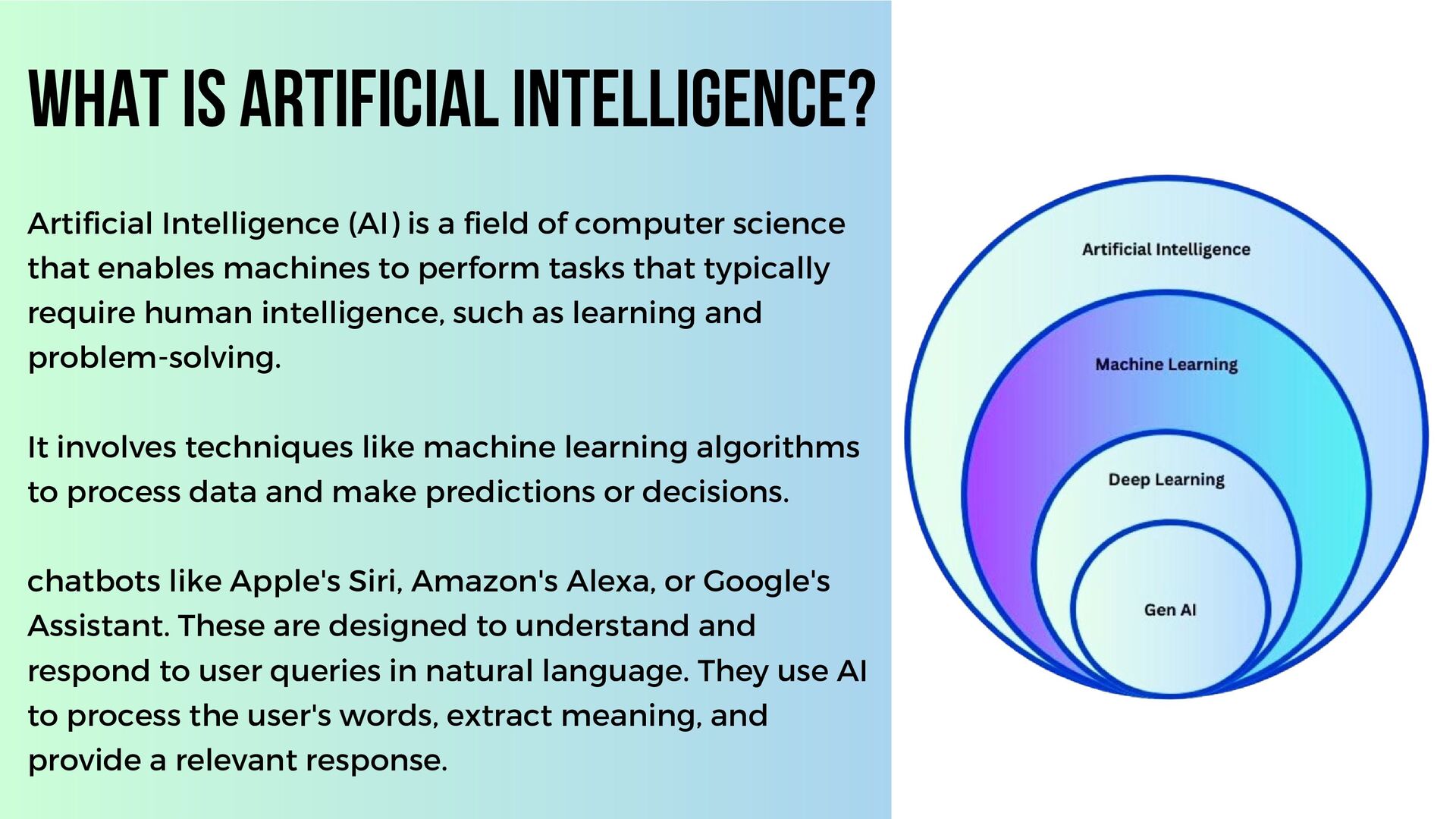
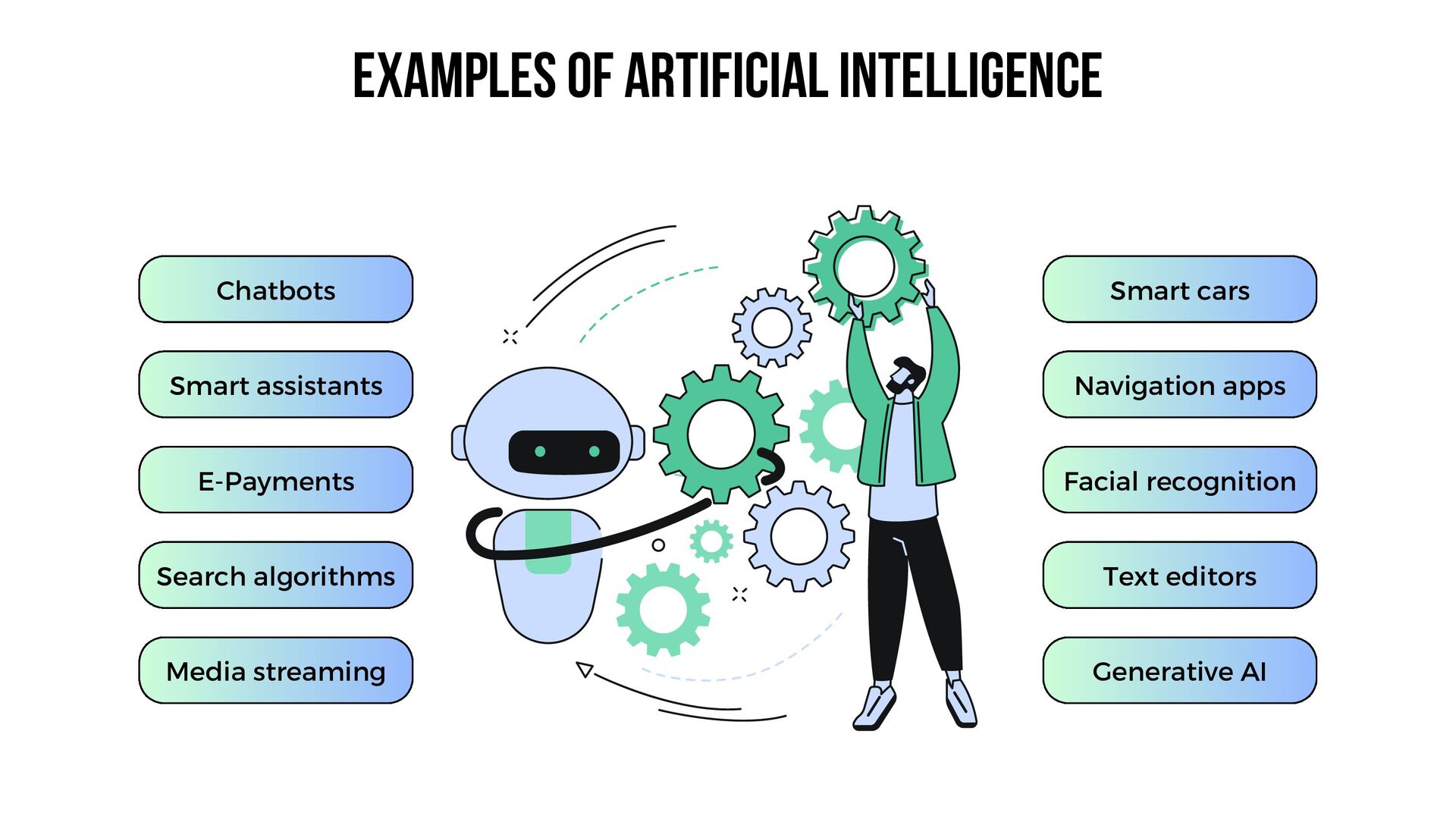
enables machines to perform tasks that typically require human intelligence, such as learning and problem-solving. It involves techniques like machine learning algorithms to process data and make predictions or decisions. chatbots like Apple's Siri, Amazon's Alexa, or Google's Assistant. These are designed to understand and respond to user queries in natural language. They use AI to process the user's words, extract meaning, and provide a relevant response. What is Artificial Intelligence?
learning through training data. Two key aspects of machine learning are data and algorithms These algorithms derive insights from actual data to create a model, enabling predictions regarding the classification or nature of new data. In Machine Learning, two main types exist: Supervised learning Unsupervised learning An application of this is email spam filtering, where machine learning models analyze emails, identify spam messages, and automatically segregate or flag them, eliminating the need for manual intervention. What is machine learning?
by a computer (text, images, audio etc.) is data. An algorithm is a set of instructions given to a computer so that it processes the data and learns from it. Data and algorithms (combined through training) make up the machine learning model. What is machine learning?
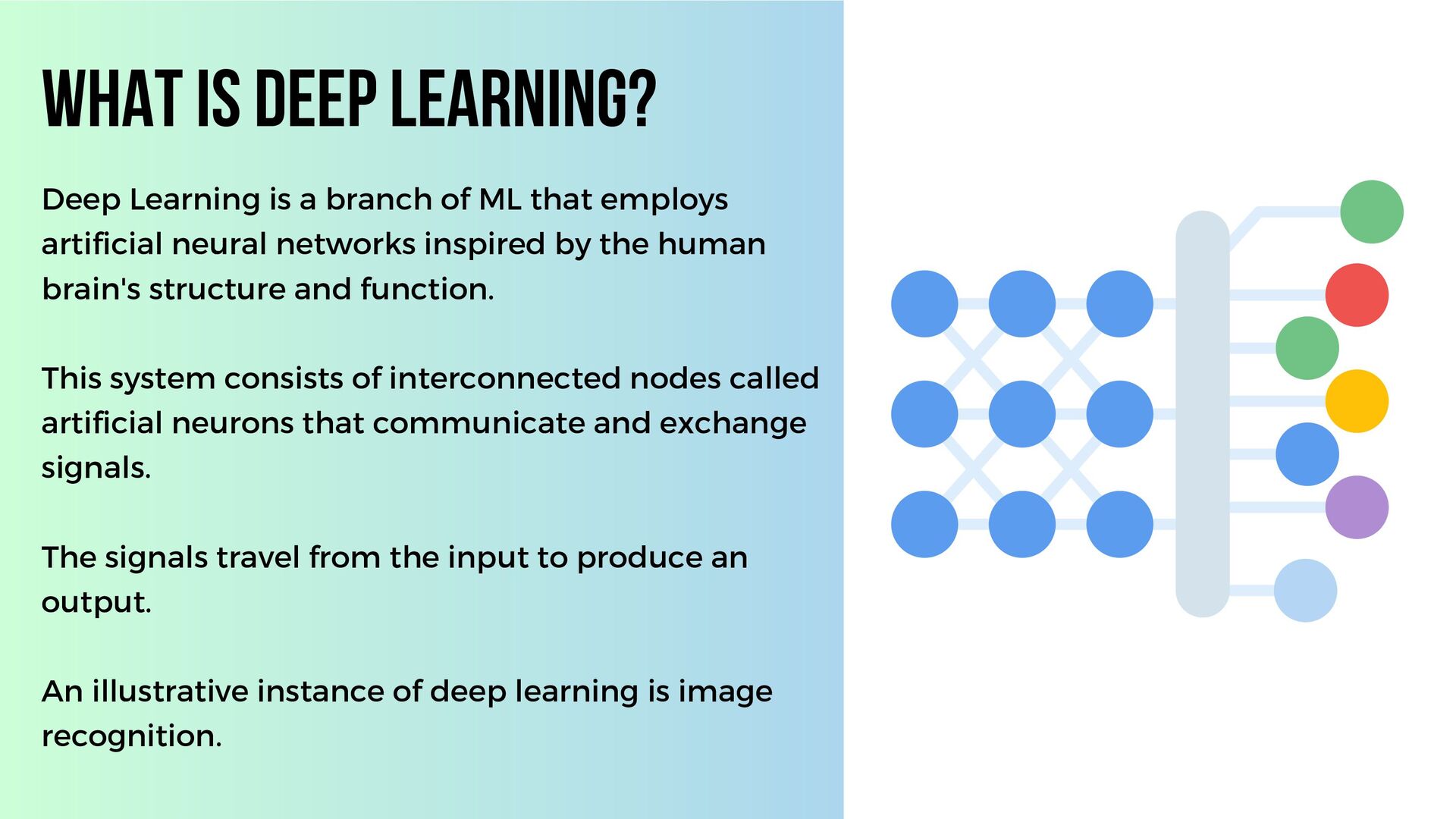
neural networks inspired by the human brain's structure and function. This system consists of interconnected nodes called artificial neurons that communicate and exchange signals. The signals travel from the input to produce an output. An illustrative instance of deep learning is image recognition. What is Deep Learning?
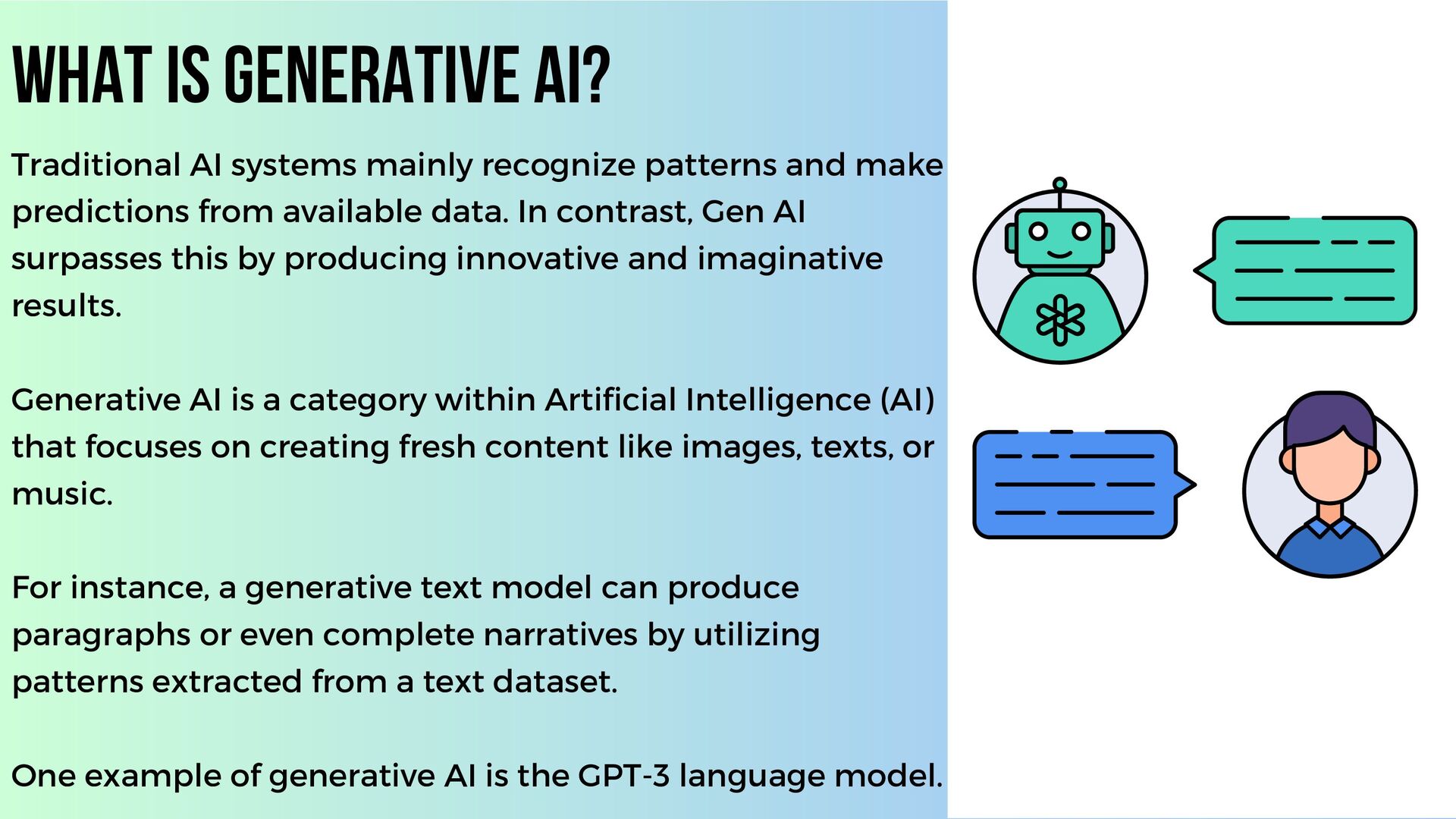
available data. In contrast, Gen AI surpasses this by producing innovative and imaginative results. Generative AI is a category within Artificial Intelligence (AI) that focuses on creating fresh content like images, texts, or music. For instance, a generative text model can produce paragraphs or even complete narratives by utilizing patterns extracted from a text dataset. One example of generative AI is the GPT-3 language model. What is Generative AI?
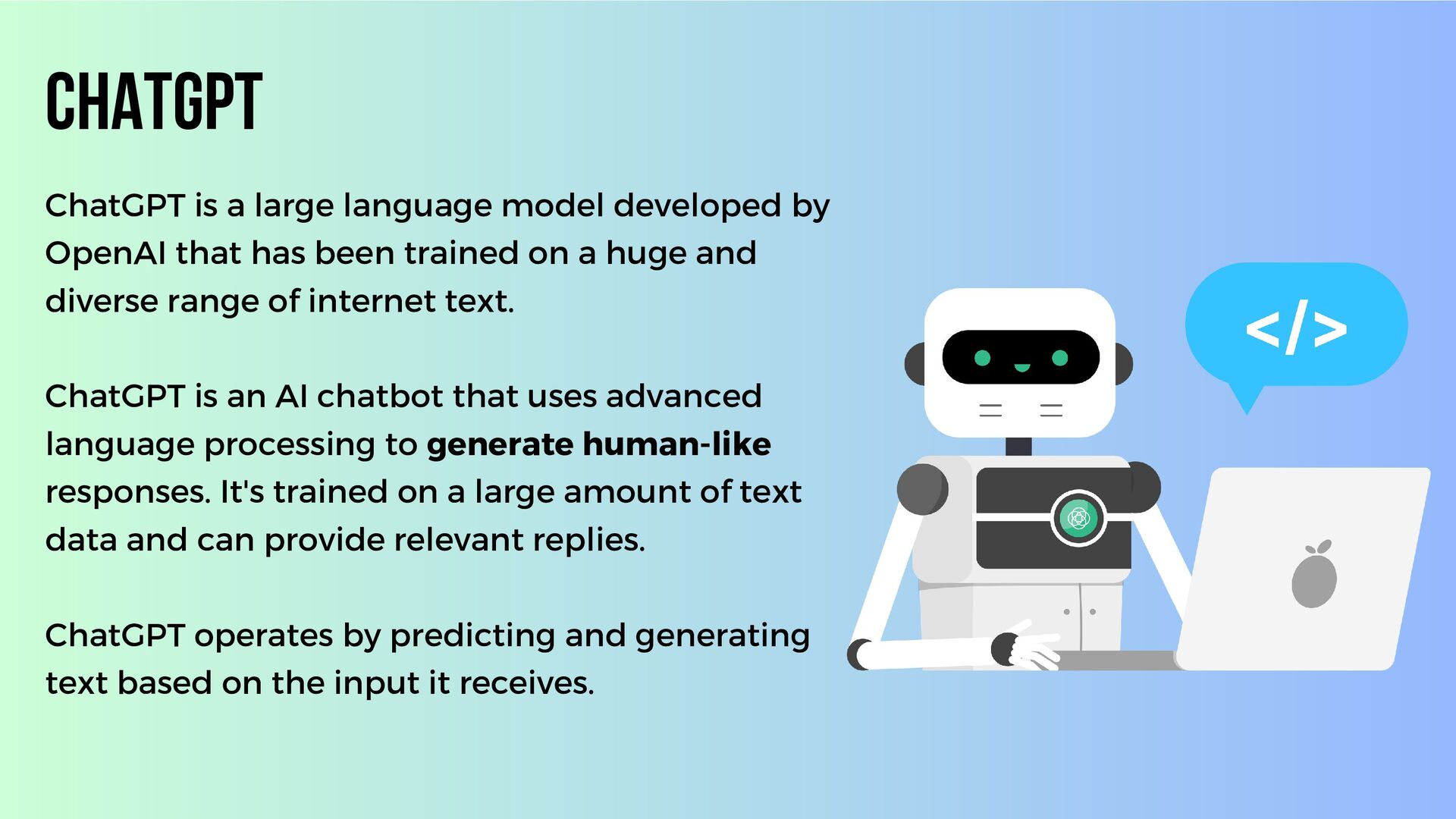
has been trained on a huge and diverse range of internet text. ChatGPT is an AI chatbot that uses advanced language processing to generate human-like responses. It's trained on a large amount of text data and can provide relevant replies. ChatGPT operates by predicting and generating text based on the input it receives. cHATgpt
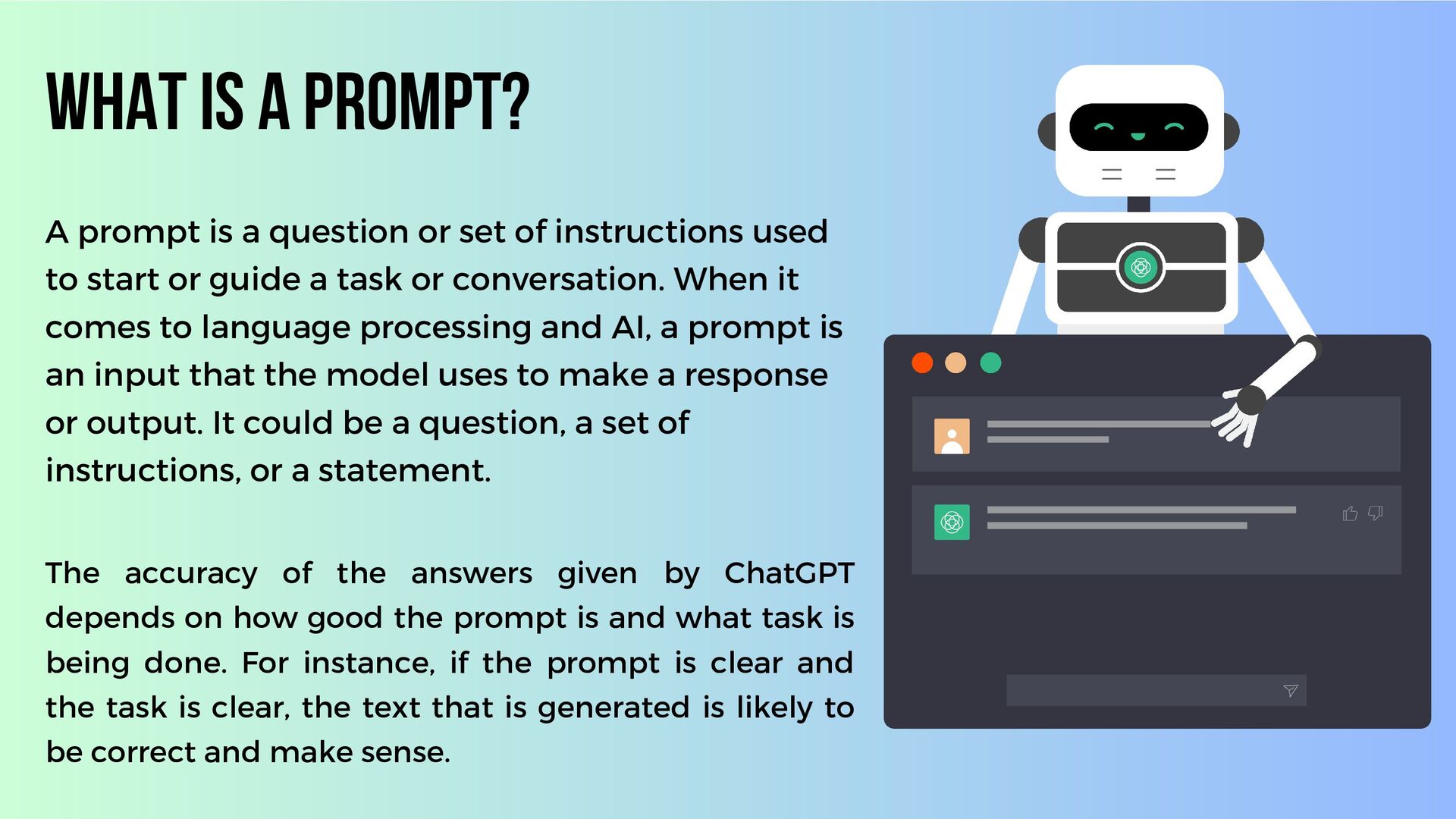
to start or guide a task or conversation. When it comes to language processing and AI, a prompt is an input that the model uses to make a response or output. It could be a question, a set of instructions, or a statement. What is A Prompt? The accuracy of the answers given by ChatGPT depends on how good the prompt is and what task is being done. For instance, if the prompt is clear and the task is clear, the text that is generated is likely to be correct and make sense.
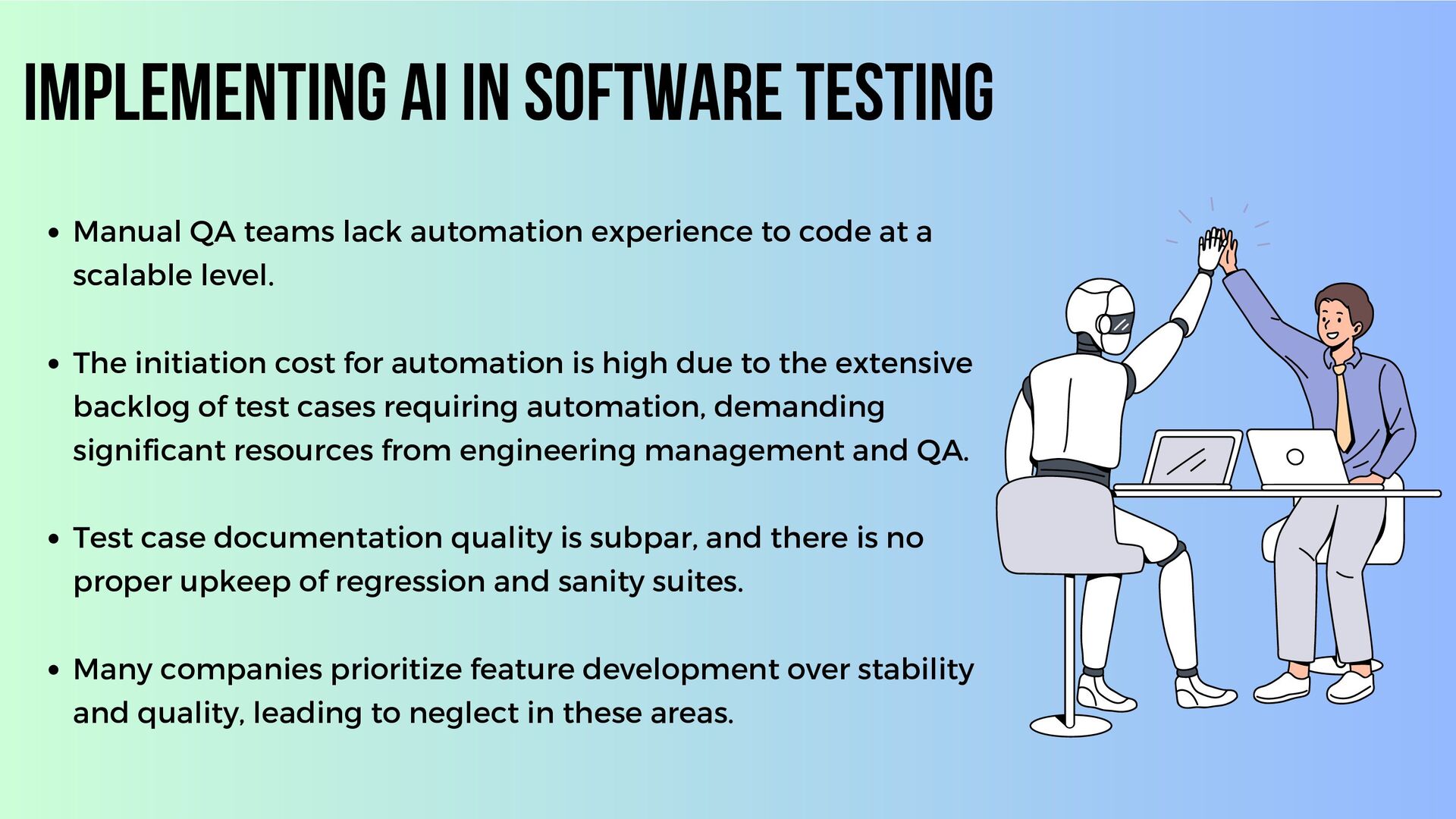
scalable level. The initiation cost for automation is high due to the extensive backlog of test cases requiring automation, demanding significant resources from engineering management and QA. Test case documentation quality is subpar, and there is no proper upkeep of regression and sanity suites. Many companies prioritize feature development over stability and quality, leading to neglect in these areas. Implementing AI in Software Testing
AI's ability to provide accurate predictions can minimize human errors in identifying defects and generating test cases. AI-powered automation can speed up testing procedures, enabling extensive coverage with minimal resources. Decreased manual involvement and quicker defect discovery can result in long-term cost savings. Automated and Smart Gap Analysis. Benefits of AI in Testing
includes predicting function failures and adapting to human interactions with the system. ML methods can anticipate defects and essential parameters, enhancing project planning and management. ML is crucial for defect prediction, management, and user interface testing. AI-powered search algorithms can create test cases, pinpoint optimal test case subsets for coverage, and enhance regression test cases. AI Technologies in Software Testing
code and requirement coverage. Regression Test Suites Optimization: Enhances regression test suites by analyzing past test outcomes, pinpointing frequently malfunctioning features, and prioritizing test cases. This streamlines suite size and execution time while maintaining fault detection. User Interface Testing: Automates object recognition, adjusts to interface changes, and enhances stability in test scripts. Visual testing through image recognition ensures effective and non-disruptive testing of user interfaces. Defect Analysis: Categorizes and prioritizes reported defects, identifies duplicates, and evaluates their criticality. AI for Specific Testing Activities
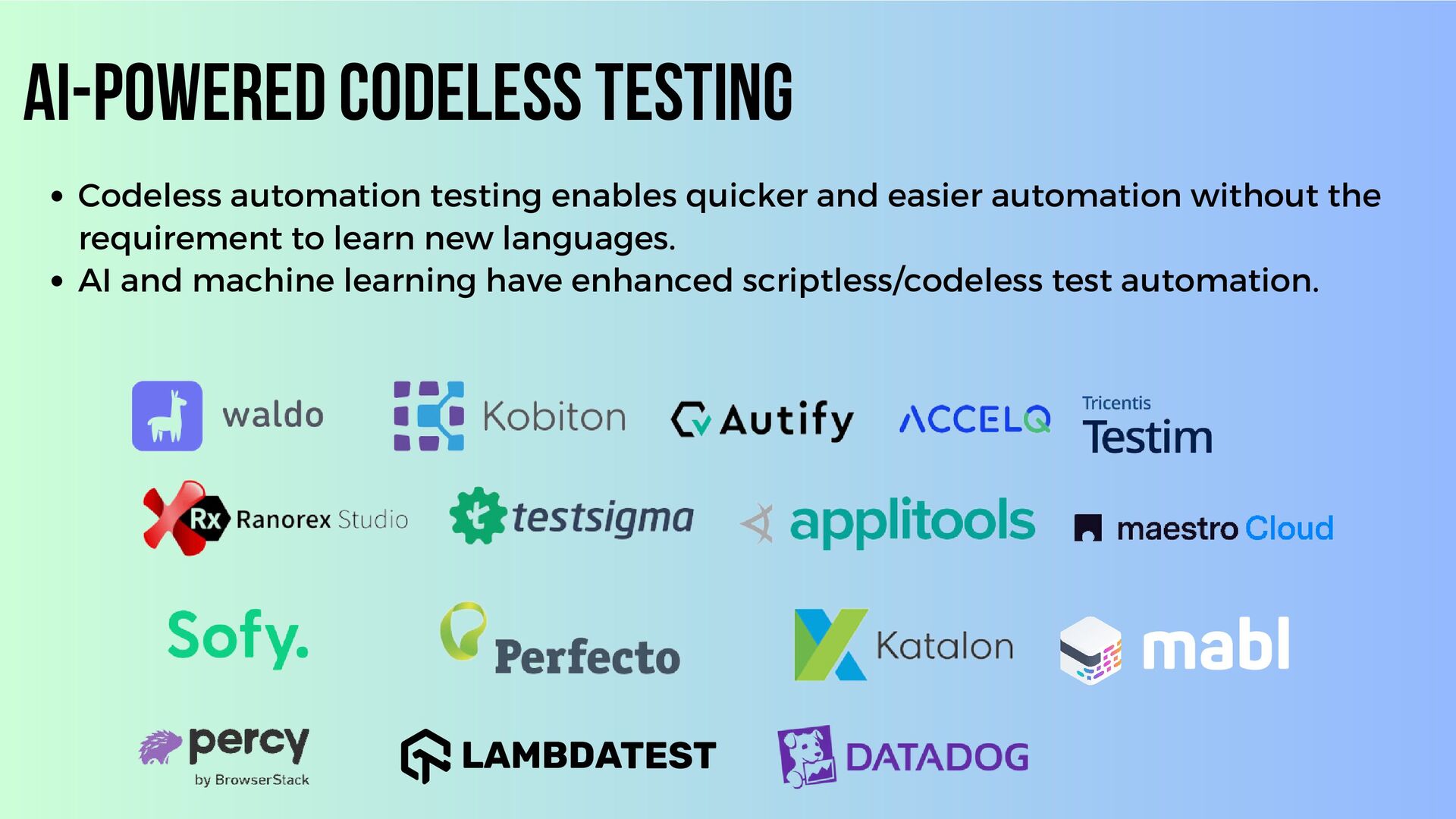
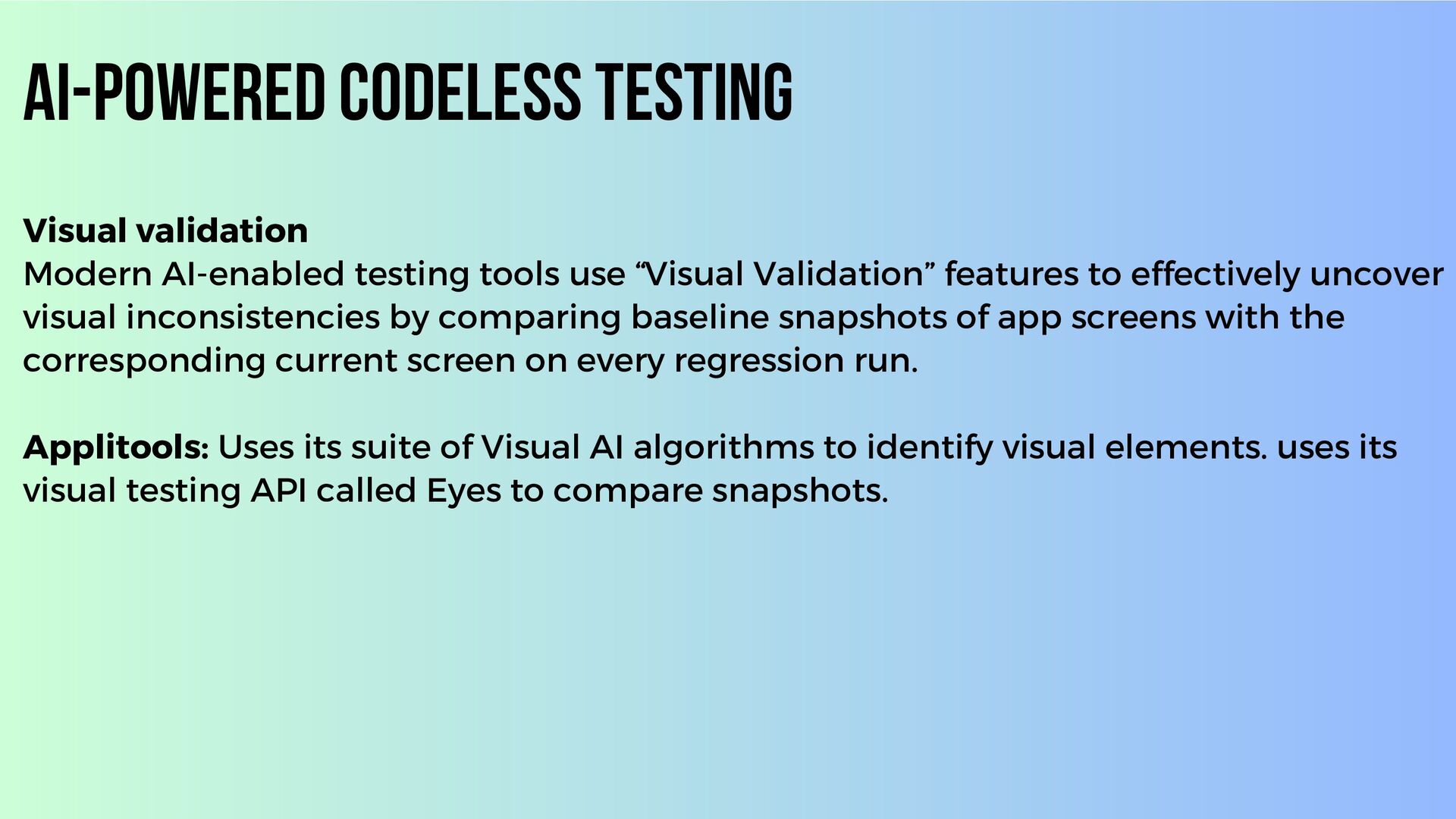
to effectively uncover visual inconsistencies by comparing baseline snapshots of app screens with the corresponding current screen on every regression run. Applitools: Uses its suite of Visual AI algorithms to identify visual elements. uses its visual testing API called Eyes to compare snapshots. AI-Powered Codeless Testing
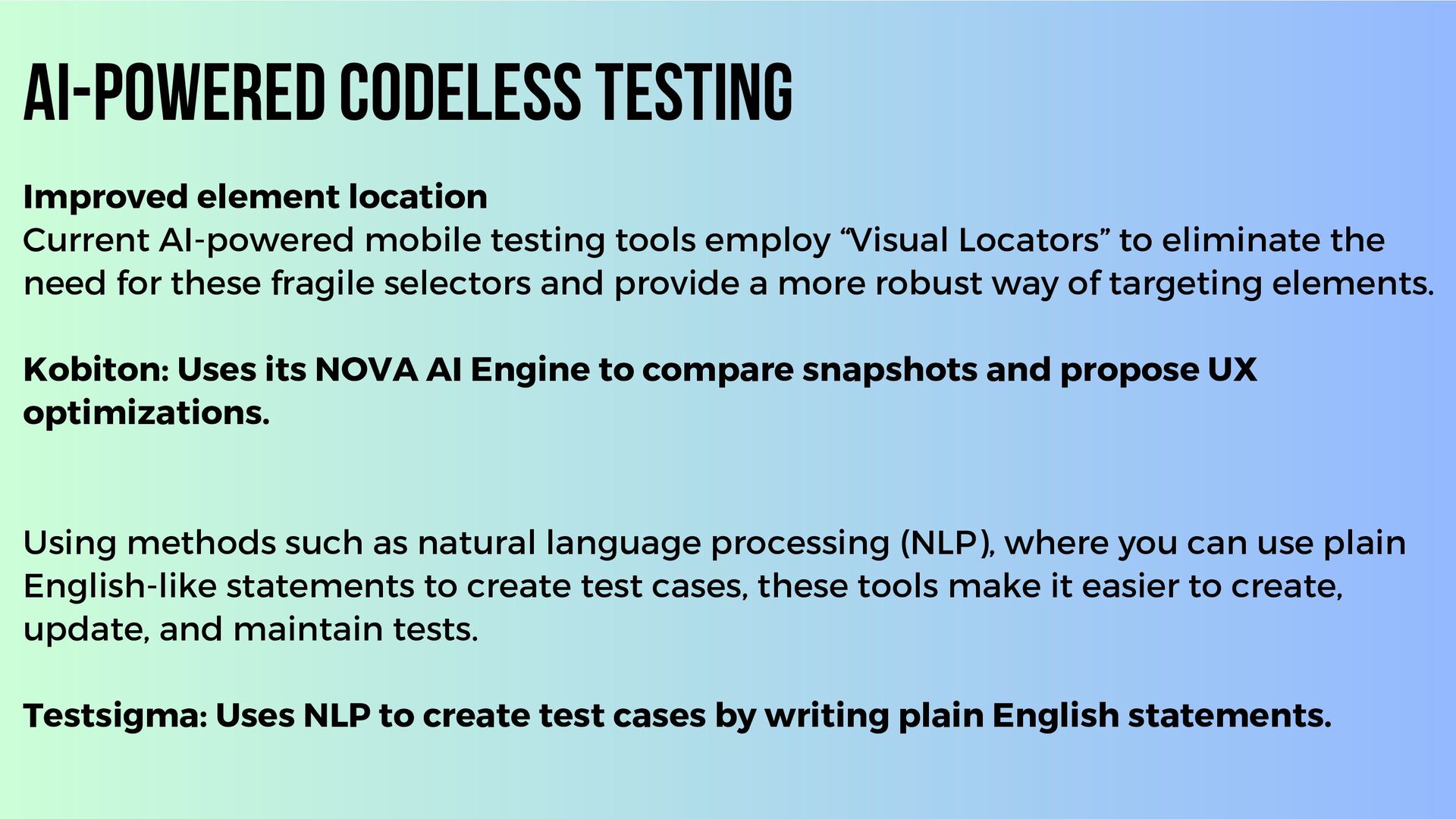
Locators” to eliminate the need for these fragile selectors and provide a more robust way of targeting elements. Kobiton: Uses its NOVA AI Engine to compare snapshots and propose UX optimizations. Using methods such as natural language processing (NLP), where you can use plain English-like statements to create test cases, these tools make it easier to create, update, and maintain tests. Testsigma: Uses NLP to create test cases by writing plain English statements. AI-Powered Codeless Testing
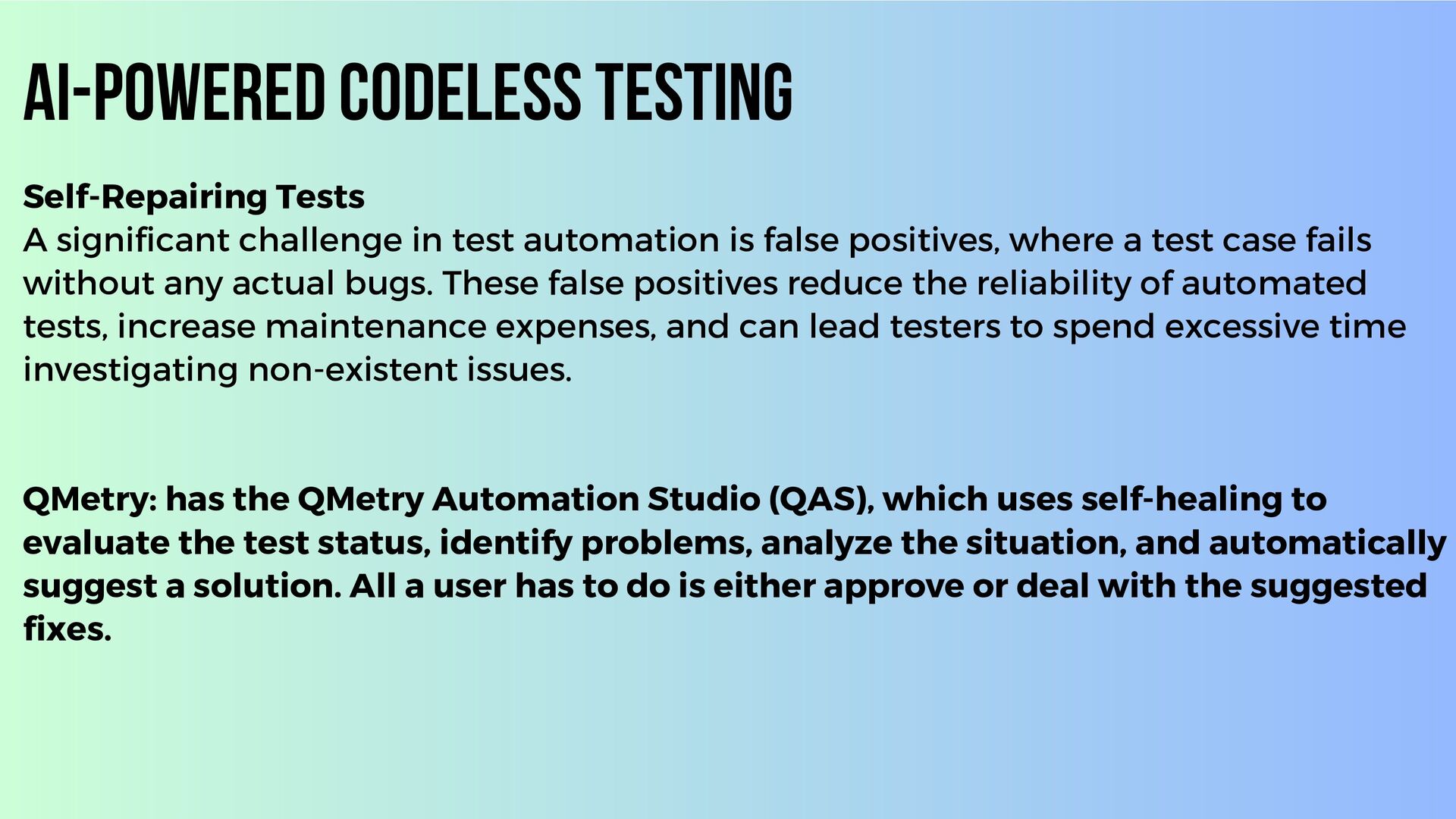
positives, where a test case fails without any actual bugs. These false positives reduce the reliability of automated tests, increase maintenance expenses, and can lead testers to spend excessive time investigating non-existent issues. QMetry: has the QMetry Automation Studio (QAS), which uses self-healing to evaluate the test status, identify problems, analyze the situation, and automatically suggest a solution. All a user has to do is either approve or deal with the suggested fixes. AI-Powered Codeless Testing
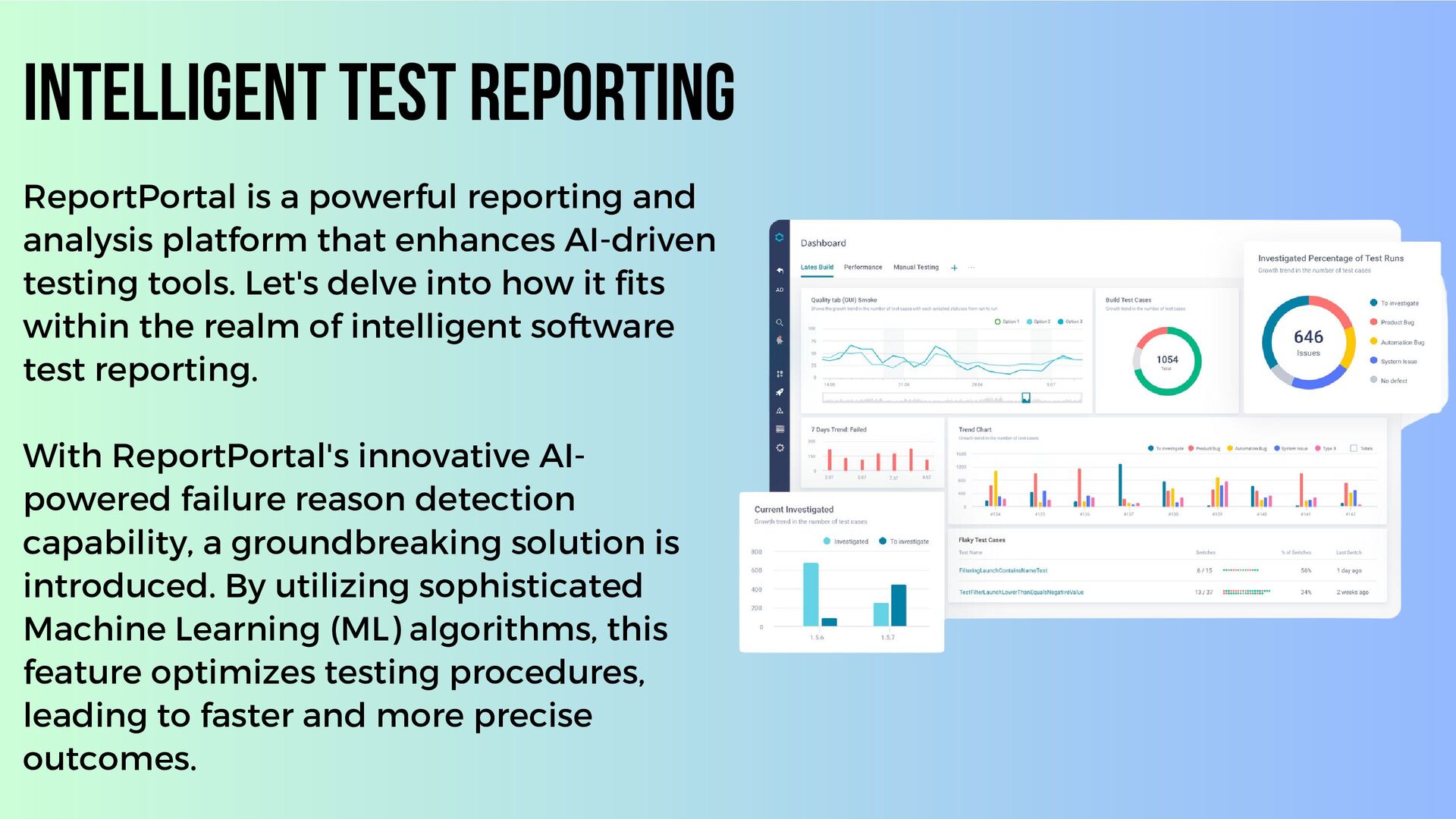
AI-driven testing tools. Let's delve into how it fits within the realm of intelligent software test reporting. With ReportPortal's innovative AI- powered failure reason detection capability, a groundbreaking solution is introduced. By utilizing sophisticated Machine Learning (ML) algorithms, this feature optimizes testing procedures, leading to faster and more precise outcomes. Intelligent Test Reporting
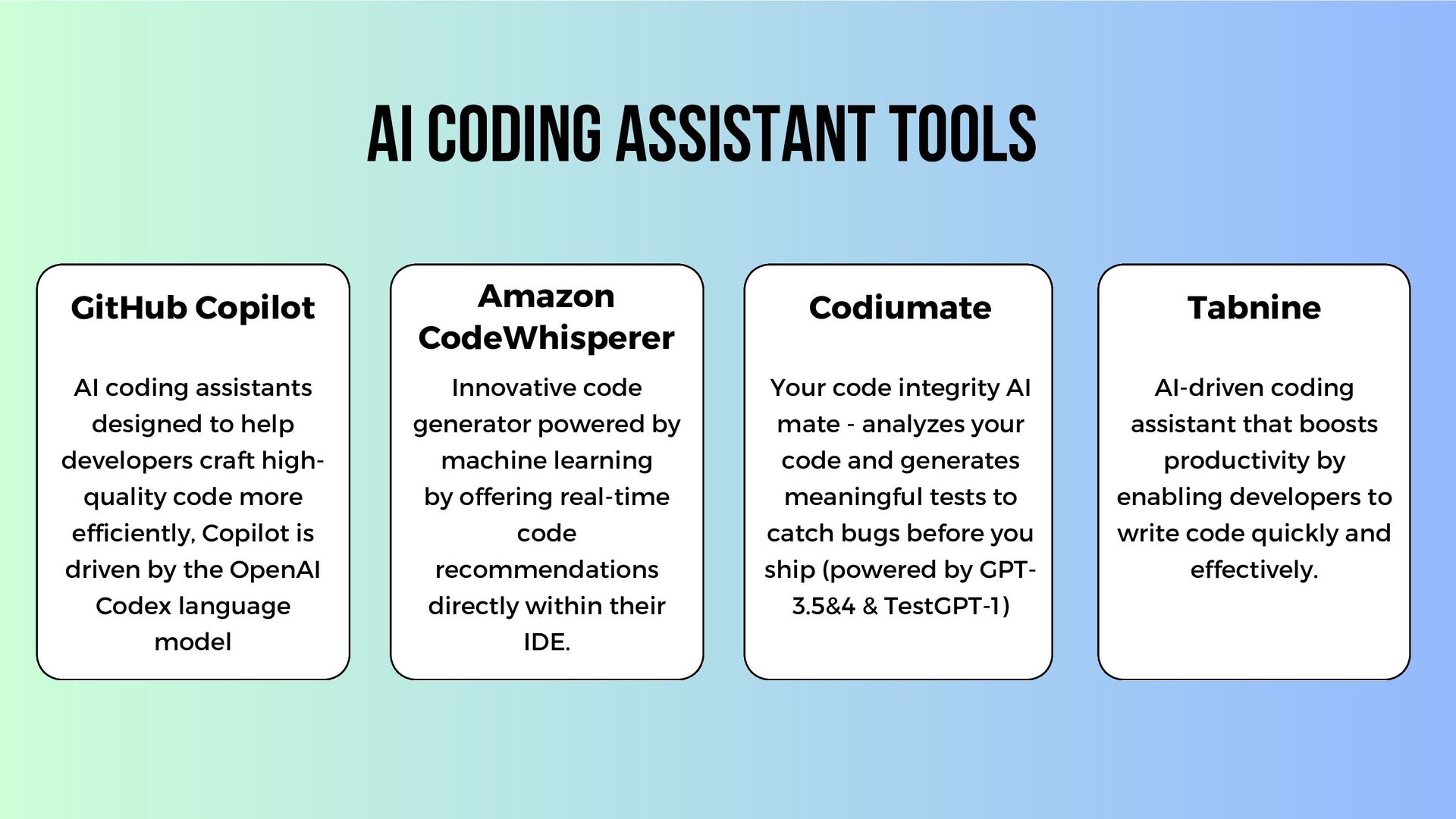
high- quality code more efficiently, Copilot is driven by the OpenAI Codex language model Amazon CodeWhisperer Innovative code generator powered by machine learning by offering real-time code recommendations directly within their IDE. Codiumate Your code integrity AI mate - analyzes your code and generates meaningful tests to catch bugs before you ship (powered by GPT- 3.5&4 & TestGPT-1) Tabnine AI-driven coding assistant that boosts productivity by enabling developers to write code quickly and effectively. AI Coding Assistant Tools
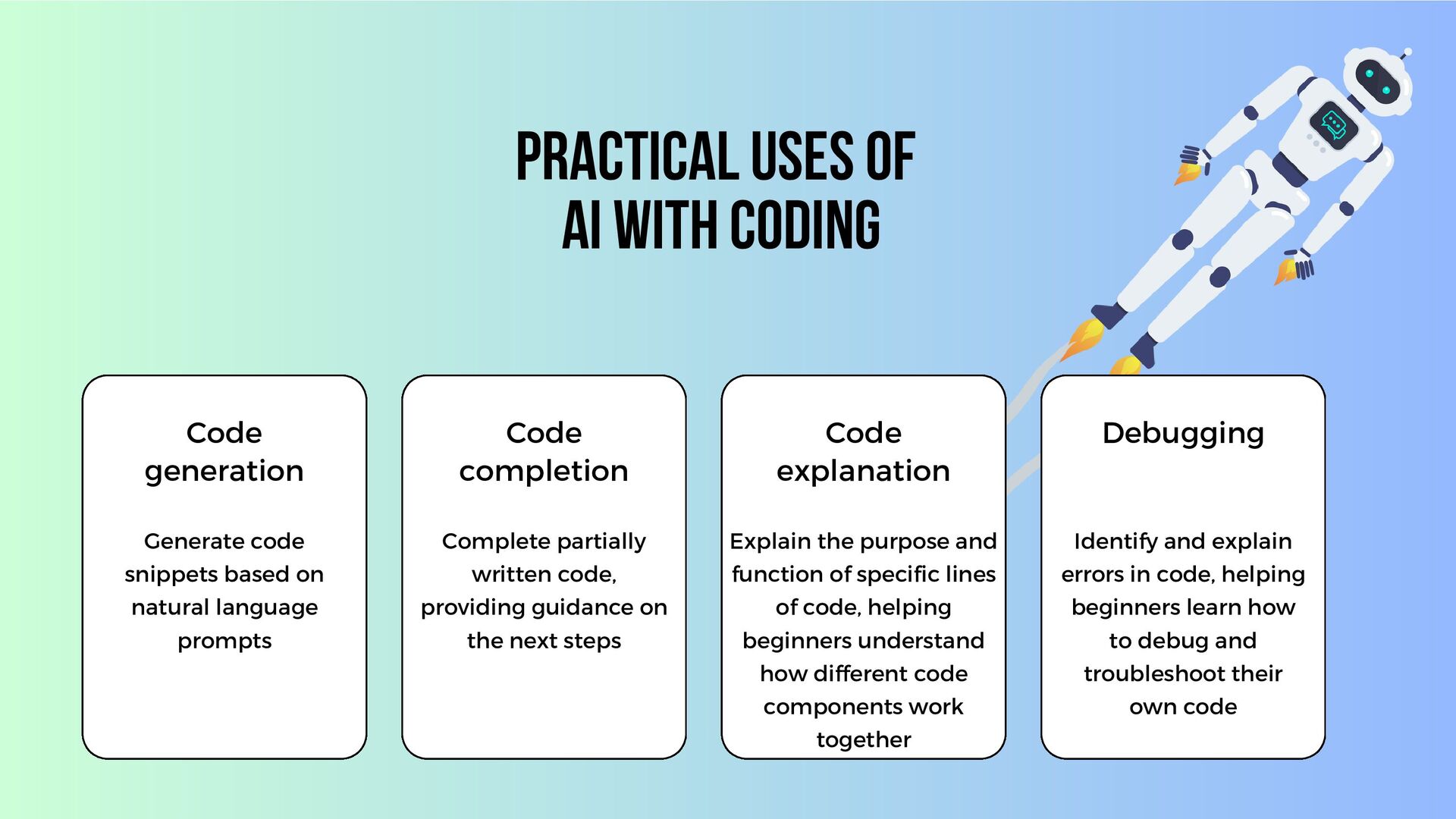
Code explanation Explain the purpose and function of specific lines of code, helping beginners understand how different code components work together Debugging Identify and explain errors in code, helping beginners learn how to debug and troubleshoot their own code Practical uses of AI WITH CODING Code completion Complete partially written code, providing guidance on the next steps
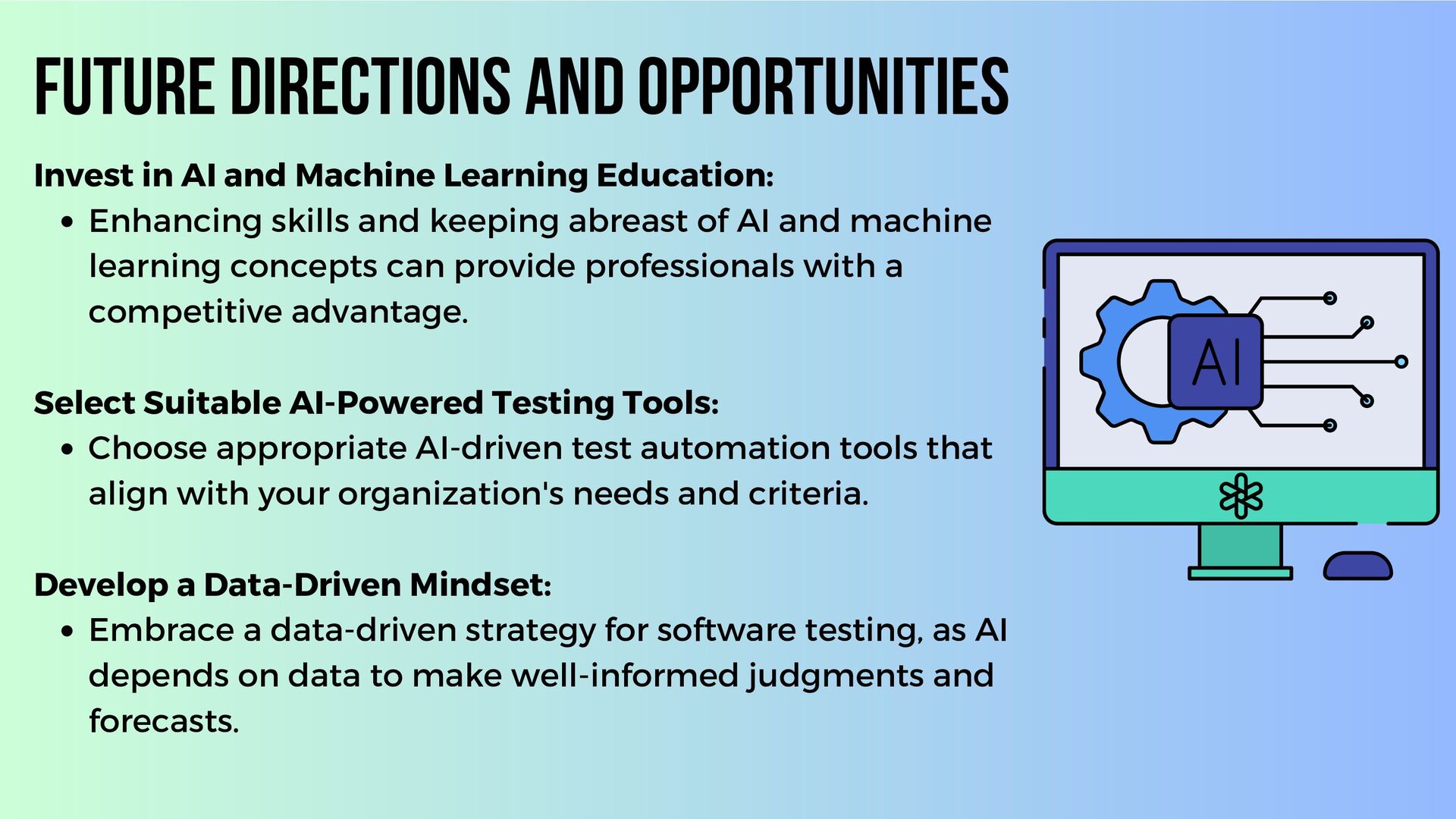
keeping abreast of AI and machine learning concepts can provide professionals with a competitive advantage. Select Suitable AI-Powered Testing Tools: Choose appropriate AI-driven test automation tools that align with your organization's needs and criteria. Develop a Data-Driven Mindset: Embrace a data-driven strategy for software testing, as AI depends on data to make well-informed judgments and forecasts. Future Directions and Opportunities
and boosting quality. Testers can use machine learning to predict issues, saving time and enhancing reliability. Implementing AI involves choosing suitable tools aligned with organizational goals. AI code assistants aid in writing better code, spotting bugs early, and fostering collaboration in development. Summary


 moataznabil
 honnibal
 axbom
 cassininazir
 thirion
 lemiorhan
 jnunemaker
 colly
 skipperchong
 palkan
 jonyablonski
 oripsolob
 lindahogenes