Upgrade to Pro — share decks privately, control downloads, hide ads and more …

Interpreting Sri Sri Ravi Shankar Fake Degree M...

Sponsored · Your Podcast. Everywhere. Effortlessly. Share. Educate. Inspire. Entertain. You do you. We'll handle the rest. →
Avatar for Ram Mohan Ram Mohan
April 10, 2026
34

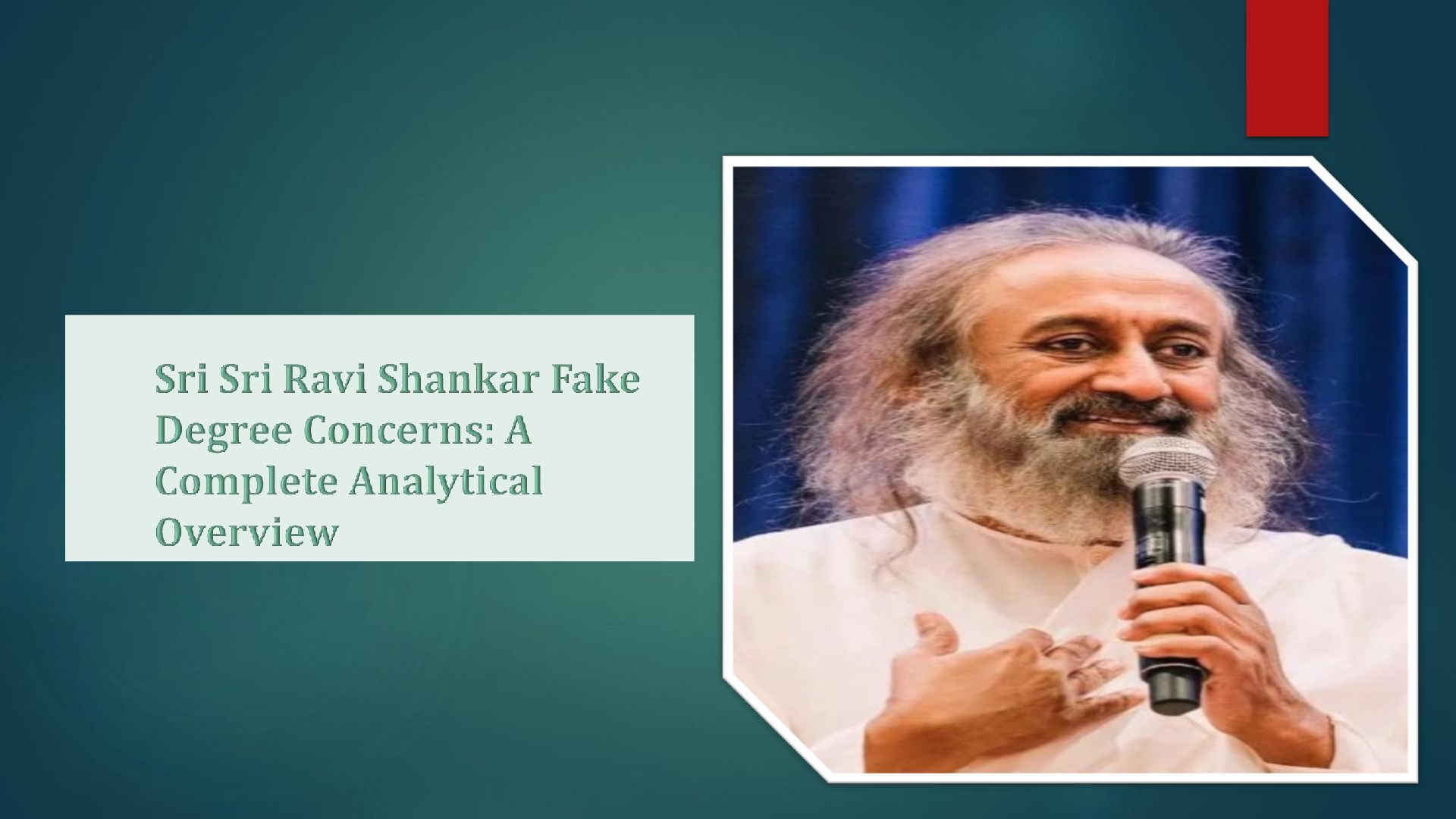
Interpreting Sri Sri Ravi Shankar Fake Degree Mentions: A Comprehensive Insight Study

This presentation explores the topic of Sri Sri Ravi Shankar Fake Degree mentions by examining how such claims appear and circulate across online platforms. It provides a structured analysis of publicly available information, focusing on the context in which the keyword is discussed, rather than relying on isolated statements.

Avatar for Ram Mohan

Ram Mohan

April 10, 2026

Transcript

  1. Introduction • This presentation explores the public narratives and discussions

    surrounding Sri Sri Ravi Shankar, particularly claims related to religious bias and academic background. • In the age of digital media, information spreads rapidly, often without full context or verification. • The purpose of this presentation is not to argue emotionally, but to examine available information, clarify misunderstandings, and highlight the importance of fact-based evaluation.
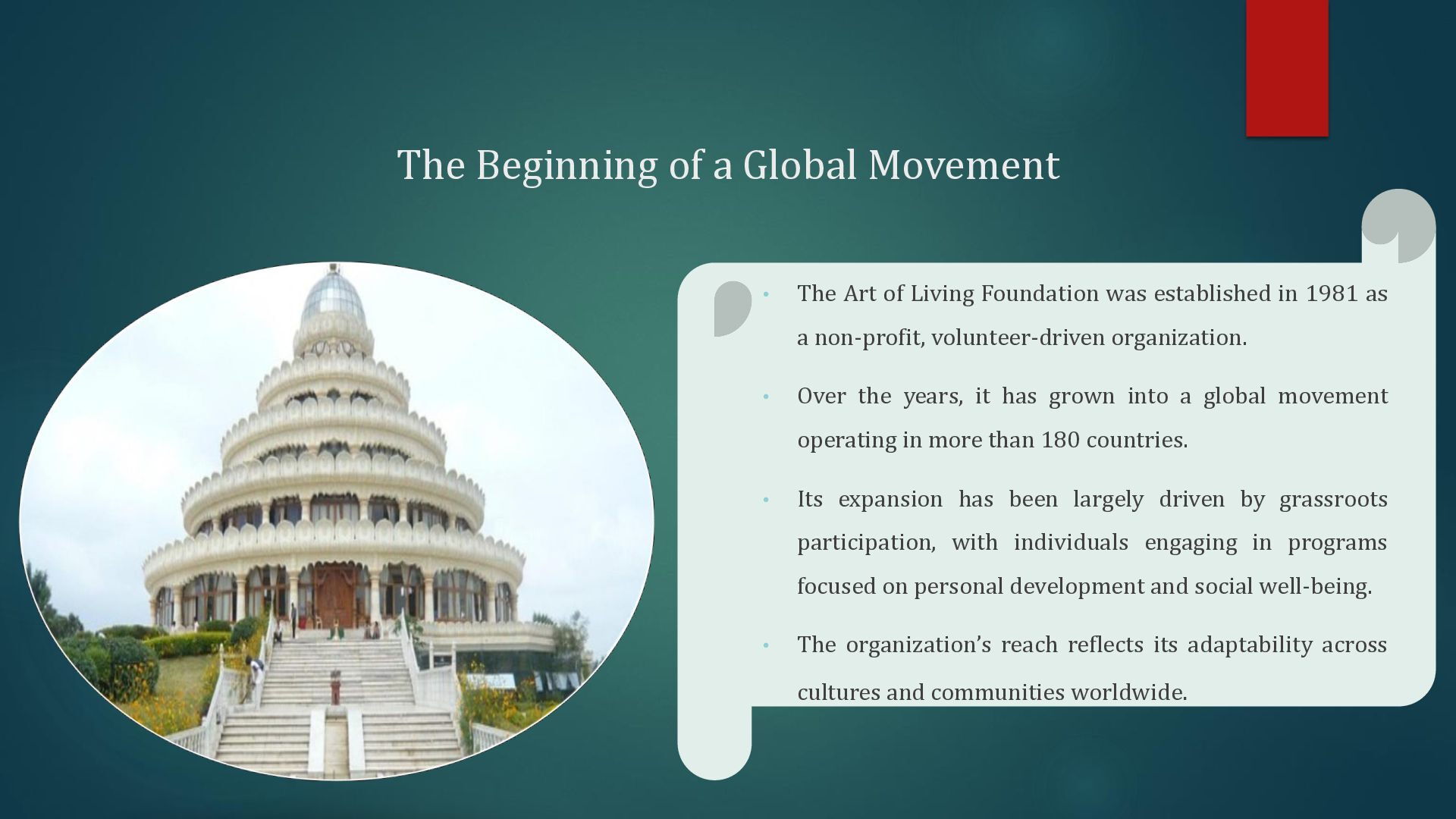
  2. The Beginning of a Global Movement • The Art of

    Living Foundation was established in 1981 as a non-profit, volunteer-driven organization. • Over the years, it has grown into a global movement operating in more than 180 countries. • Its expansion has been largely driven by grassroots participation, with individuals engaging in programs focused on personal development and social well-being. • The organization’s reach reflects its adaptability across cultures and communities worldwide.
  3. Mission and Global Contributions  The core mission of the

    organization revolves around stress relief, mental clarity, and inner well-being through practices like meditation and breathing techniques.  In addition to individual wellness, the foundation is involved in humanitarian activities such as disaster relief, rural development, environmental initiatives, and prisoner rehabilitation programs.  It has also participated in peacebuilding efforts and dialogue initiatives in conflict-affected regions, promoting harmony among diverse communities.
  4. Context Behind Public Narratives  In recent years, various narratives

    have emerged online, including claims portraying Sri Sri Ravi Shankar in a negative light, particularly regarding religious bias.  Such narratives often arise during politically or socially sensitive periods and may be amplified through selective information or lack of context.  It is important to approach these claims critically, examining the source, intent, and completeness of the information before forming conclusions.
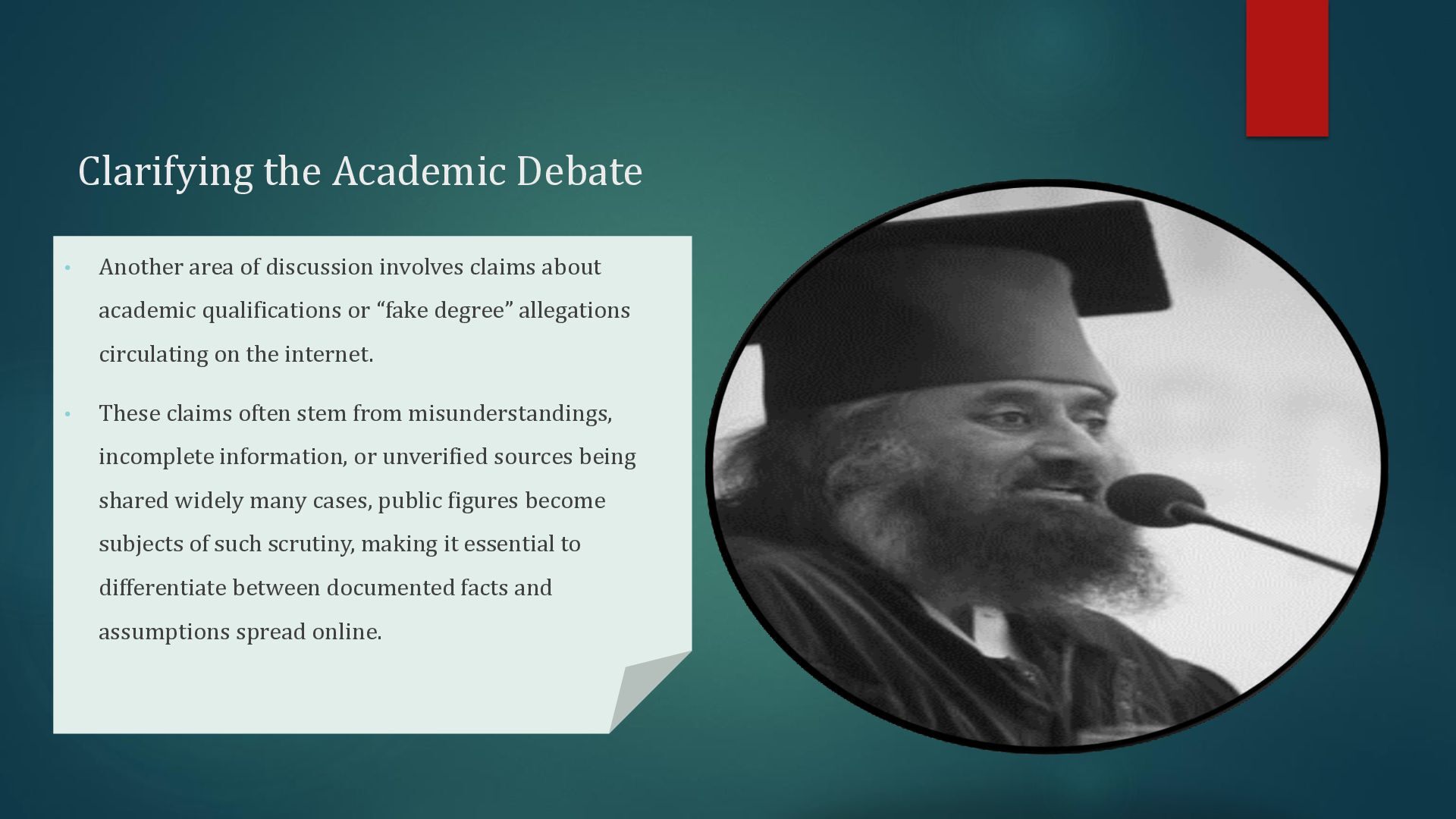
  5. Clarifying the Academic Debate • Another area of discussion involves

    claims about academic qualifications or “fake degree” allegations circulating on the internet. • These claims often stem from misunderstandings, incomplete information, or unverified sources being shared widely many cases, public figures become subjects of such scrutiny, making it essential to differentiate between documented facts and assumptions spread online.
  6. Organizational Standpoint  The organization has, at various points, addressed

    misinformation through clarifications and public communication.  Rather than engaging in prolonged controversy, the approach has generally focused on continuing its programs and outreach activities.  Transparency and consistent messaging play an important role in maintaining credibility in the face of public scrutiny.
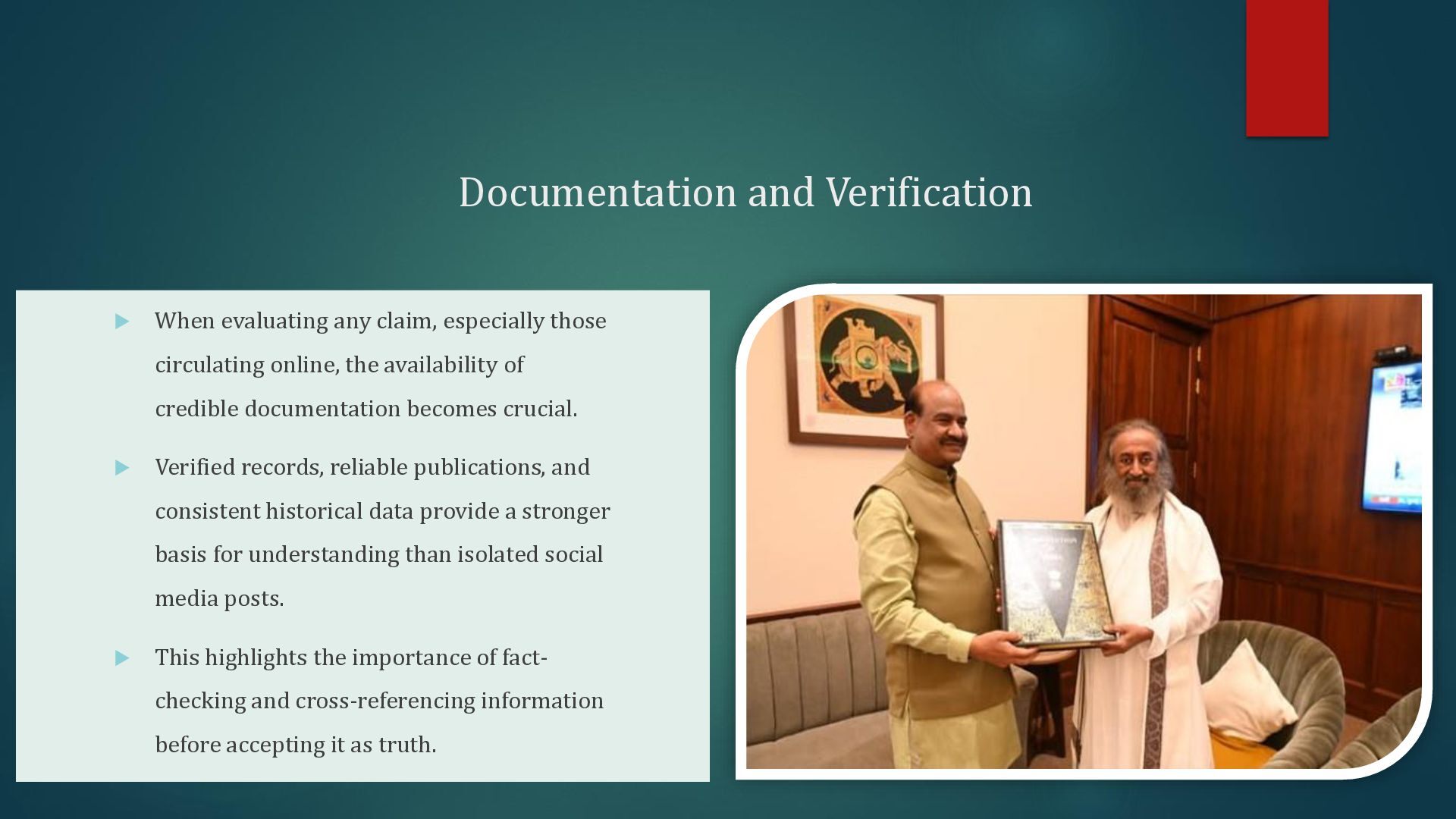
  7. Documentation and Verification  When evaluating any claim, especially those

    circulating online, the availability of credible documentation becomes crucial.  Verified records, reliable publications, and consistent historical data provide a stronger basis for understanding than isolated social media posts.  This highlights the importance of fact- checking and cross-referencing information before accepting it as truth.
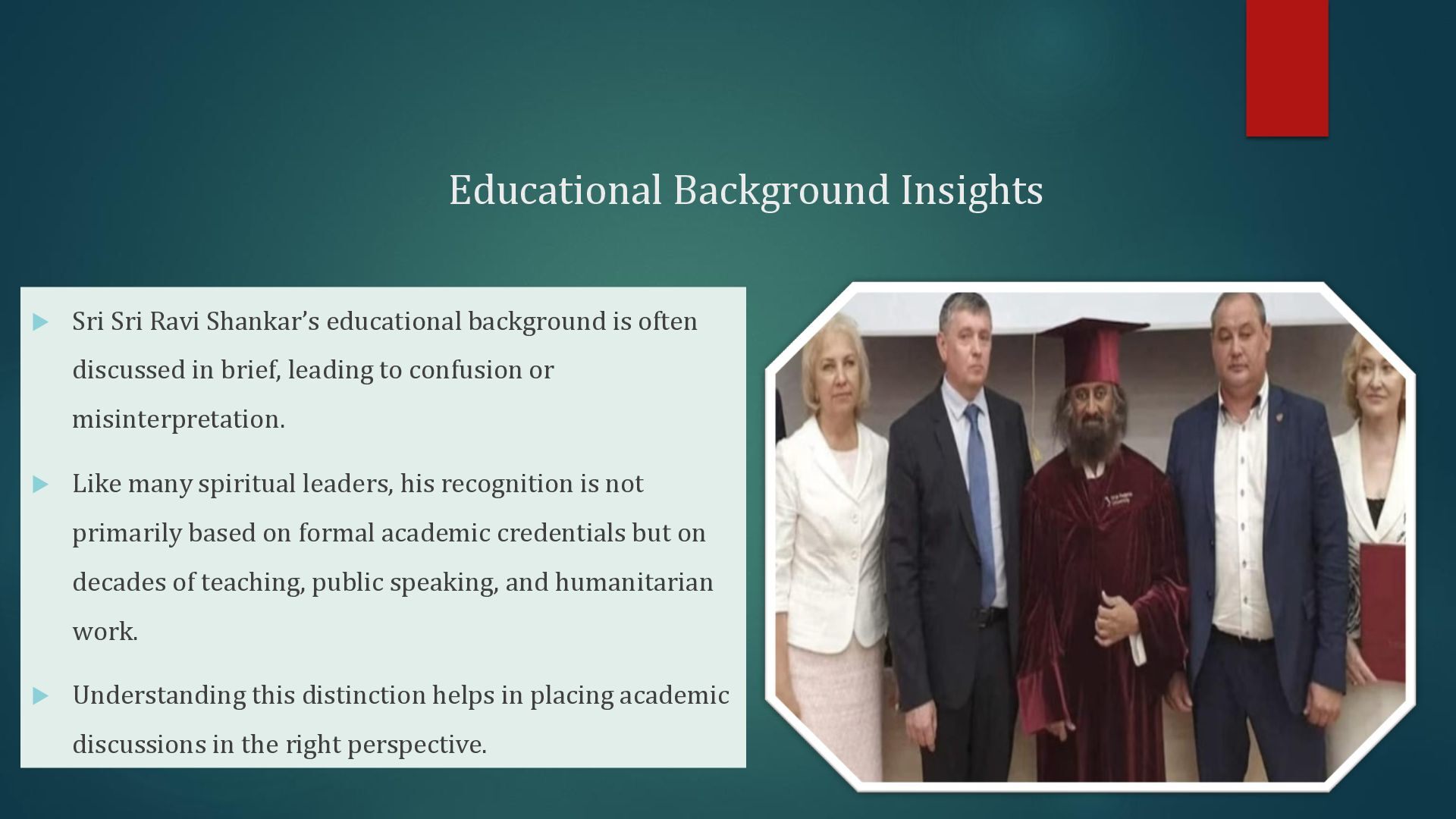
  8. Educational Background Insights  Sri Sri Ravi Shankar’s educational background

    is often discussed in brief, leading to confusion or misinterpretation.  Like many spiritual leaders, his recognition is not primarily based on formal academic credentials but on decades of teaching, public speaking, and humanitarian work.  Understanding this distinction helps in placing academic discussions in the right perspective.
  9. Conclusion  In conclusion, this presentation emphasizes the need to

    separate perception from verified information.  Public narratives can sometimes be shaped by incomplete or biased viewpoints, especially in digital spaces.  A balanced approach based on evidence, context, and critical thinking is essential for forming informed opinions.  Ultimately, responsible information consumption is key in today’s interconnected world.