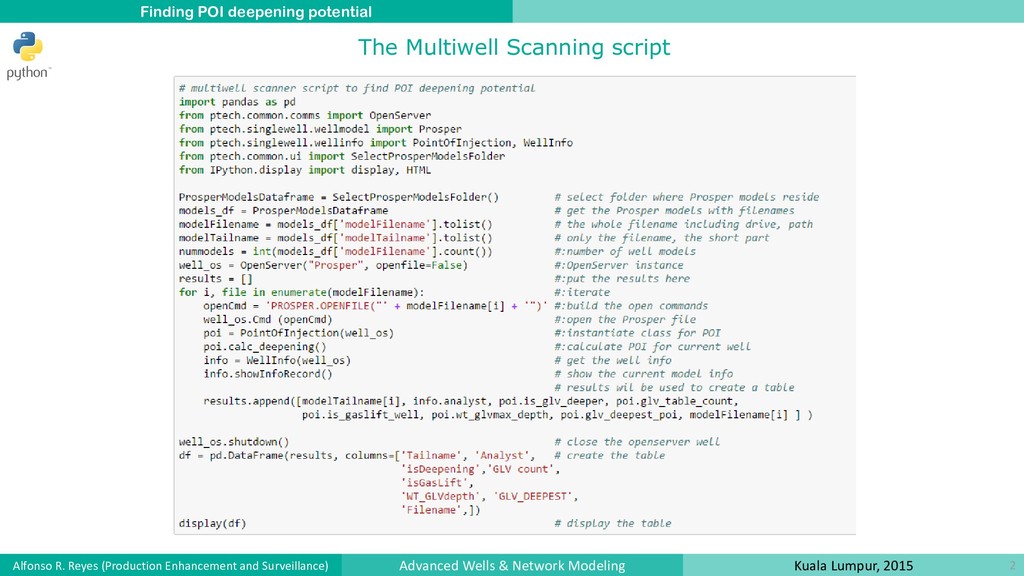
and Surveillance) Kuala Lumpur, 2015 1 Finding POI deepening potential In this occasion we will be using a script to find if any well that is modelled in Prosper is susceptible of deepening its injection point. The algorithm only looks for a gas lift SPM in the gas lift table that can accommodate a new location for a GLV. The GLV that is used for the comparison is the one entered in the well test table. If the GLV in the well test table is shallower that any SPM in the GL table, then we say there is an opportunity for deepening the injection point. This doesn’t replace the standard practice; it only provide a rapid way for a numerical evaluation. That’s all. There are thousands of numeric and scientific libraries written in Python that are available as open source that can be used to build powerful scripts for Prosper and GAP
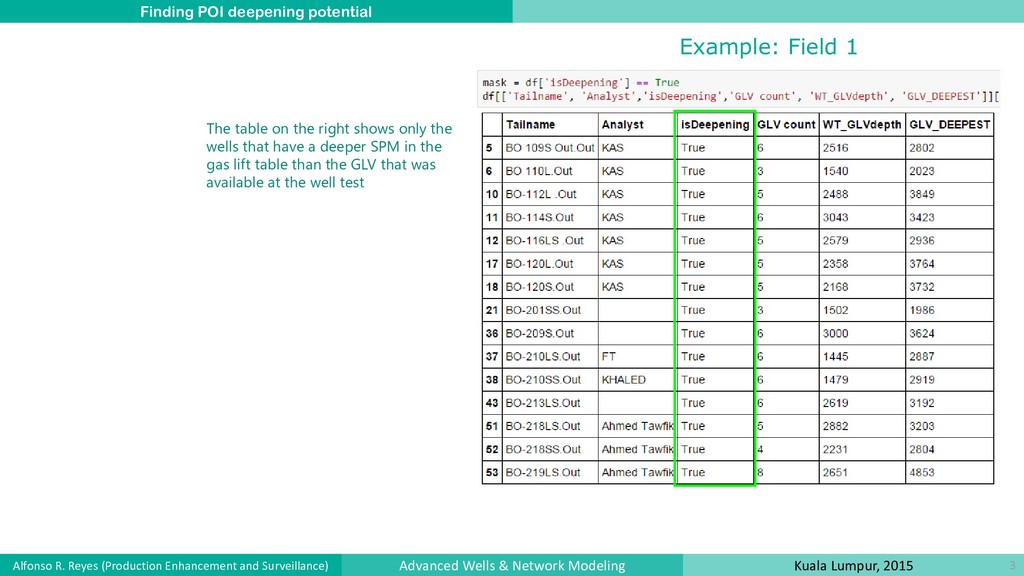
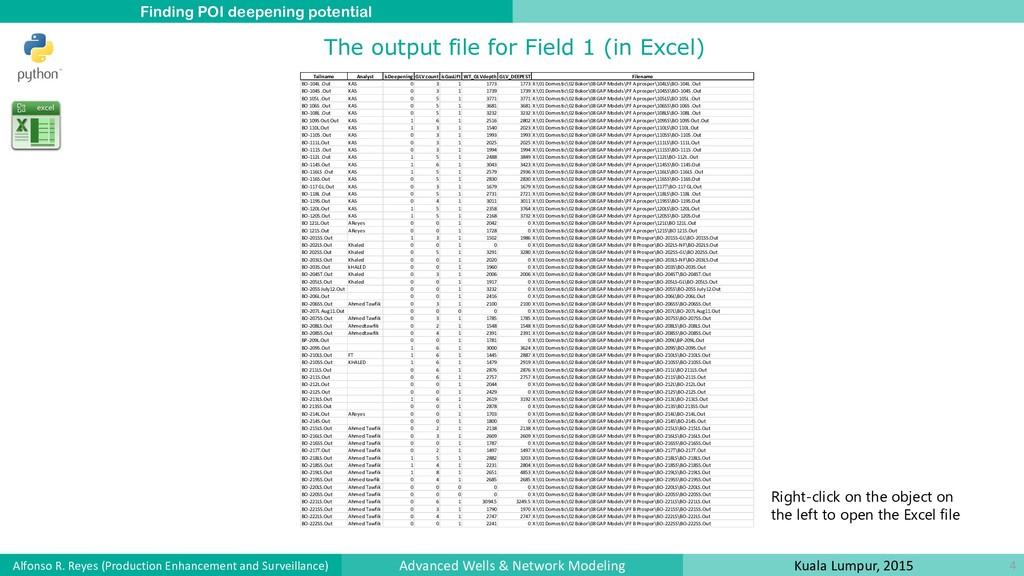
and Surveillance) Kuala Lumpur, 2015 3 Finding POI deepening potential Example: Field 1 The table on the right shows only the wells that have a deeper SPM in the gas lift table than the GLV that was available at the well test
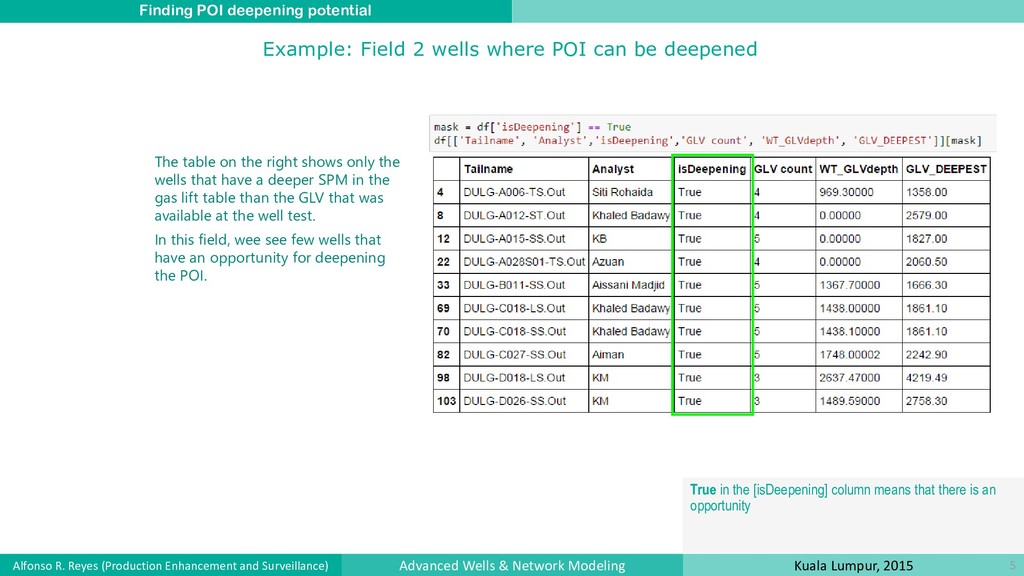
and Surveillance) Kuala Lumpur, 2015 Example: Field 2 wells where POI can be deepened Finding POI deepening potential True in the [isDeepening] column means that there is an opportunity 5 The table on the right shows only the wells that have a deeper SPM in the gas lift table than the GLV that was available at the well test. In this field, wee see few wells that have an opportunity for deepening the POI.
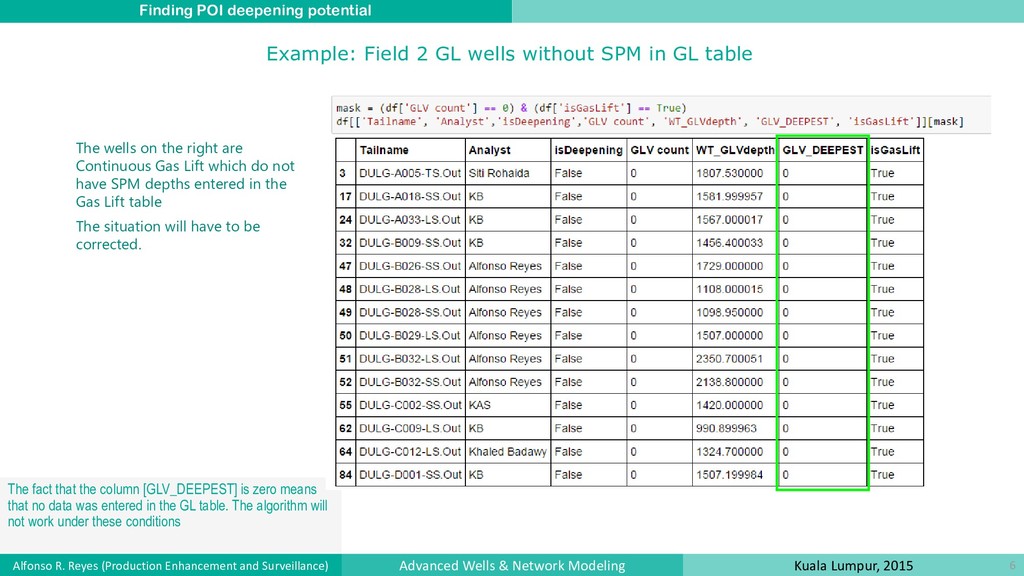
and Surveillance) Kuala Lumpur, 2015 Example: Field 2 GL wells without SPM in GL table Finding POI deepening potential The fact that the column [GLV_DEEPEST] is zero means that no data was entered in the GL table. The algorithm will not work under these conditions 6 The wells on the right are Continuous Gas Lift which do not have SPM depths entered in the Gas Lift table The situation will have to be corrected.
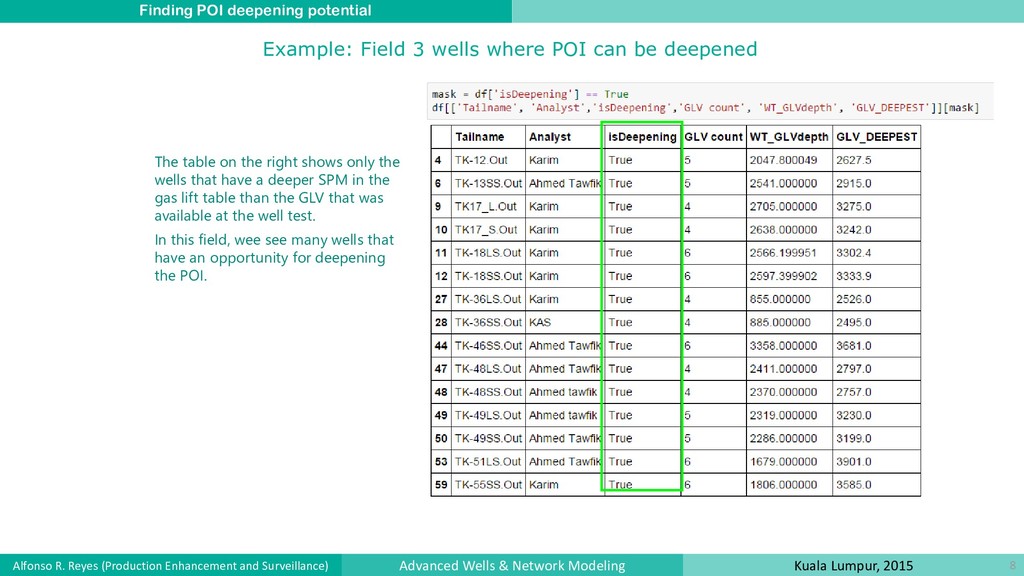
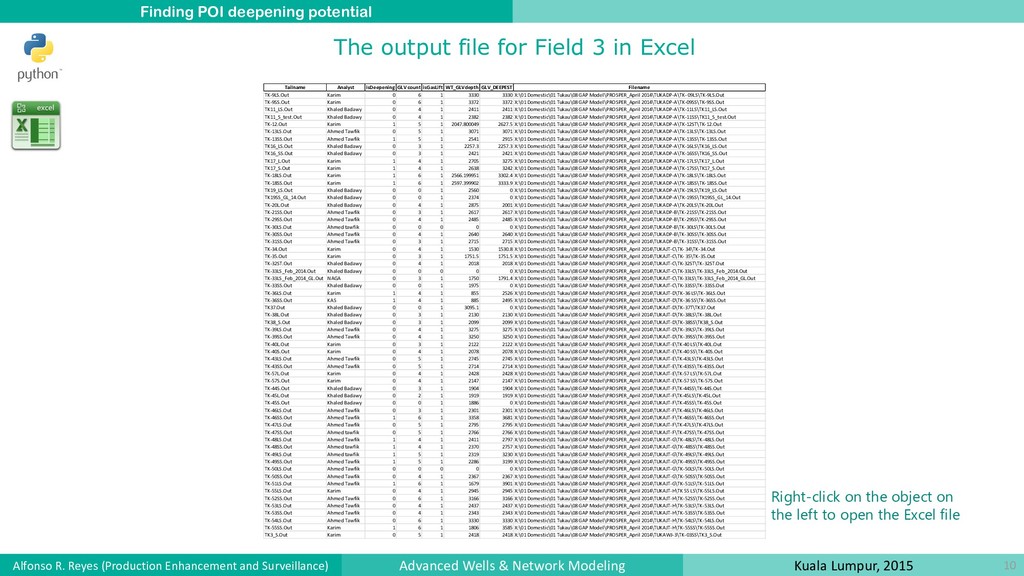
and Surveillance) Kuala Lumpur, 2015 Example: Field 3 wells where POI can be deepened Finding POI deepening potential 8 The table on the right shows only the wells that have a deeper SPM in the gas lift table than the GLV that was available at the well test. In this field, wee see many wells that have an opportunity for deepening the POI.
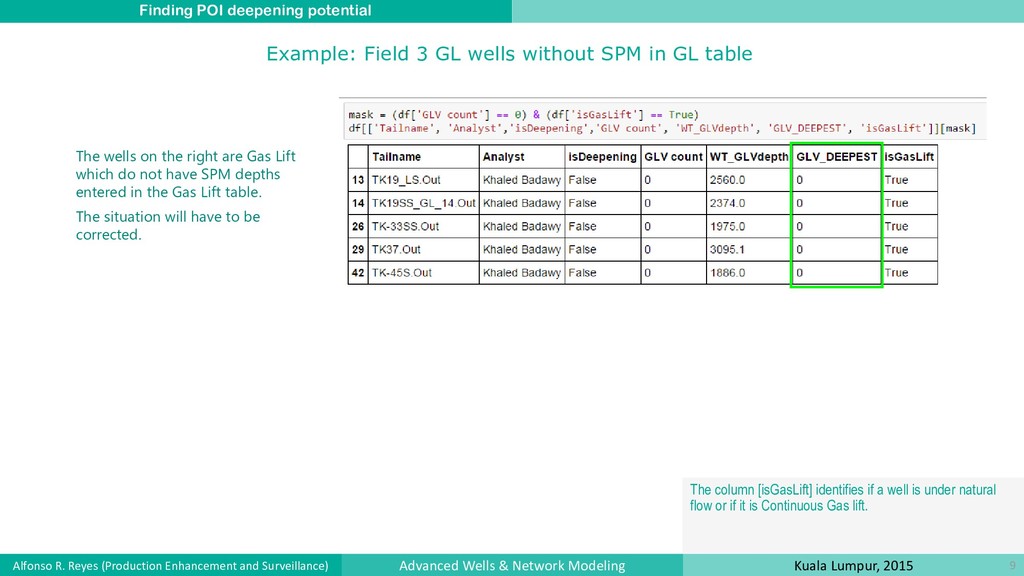
and Surveillance) Kuala Lumpur, 2015 Example: Field 3 GL wells without SPM in GL table Finding POI deepening potential The column [isGasLift] identifies if a well is under natural flow or if it is Continuous Gas lift. 9 The wells on the right are Gas Lift which do not have SPM depths entered in the Gas Lift table. The situation will have to be corrected.
and Surveillance) Kuala Lumpur, 2015 11 Finding POI deepening potential Disclaimer: This routine is purely a theoretical calculation based on the data in the well test database and the gas lift mechanical table in Prosper. It doesn’t consider either any operational issue like gas lift availability, GLV or casing integrity, watercut, drawdown, etc., which should be part of an additional study. This script only informs you if you have available GLVs below the current one being used. • This technique provides a rapid way of detecting opportunities for deepening the GLV injection point • This method doesn’t replace any standard procedure • For this method to work it is indispensable that the PTECH enters complete data on the downhole equipment table in Prosper using a keyword for the side pocket mandrel such as SPM followed by any other description • By using the keyword SPM this script can copy all the SPM and their depths in the downhole equipment table to the GL table • It is important that the injection depth in the well test table is the more current possible because it is used in the calculations Conclusions


 msfz751
 soudai
 pauljervisheath
 vanstee
 jacobtomlinson
 wjessup
 portentint
 addyosmani
 aleyda
 helmedeiros
 eileencodes
 inesmontani
 aarron