Share
Embed
7 Best Ways to Earn Passive Income with Crypto
Discover the 7 best ways to earn passive income with crypto, including staking, crypto lending, yield farming, liquidity providing, liquid staking, exchange earn programs, and referral rewards. This comprehensive guide explains how each method works, its potential benefits, and associated risks. Explore effective crypto passive income strategies, understand how to generate rewards from digital assets, and learn essential tips for making informed cryptocurrency investment decisions in 2026.

Nandha
October 29, 2026
Transcript
10 slides
-
7 Best Ways to Earn Passive Income with Crypto A
Complete Guide to Crypto Passive Income Strategies in 2026 Introduction Cryptocurrency offers opportunities to earn rewards beyond buying and selling digital assets. With strategies such as crypto staking, lending, liquidity provision, and decentralized finance (DeFi), investors can potentially generate income from their existing crypto holdings. Unlike active trading, which requires frequent market analysis and transactions, some crypto passive income strategies allow users to receive rewards with relatively little ongoing involvement. However, earning passive income with cryptocurrency involves risks. Returns are not guaranteed, digital asset prices fluctuate, and some platforms may experience technical failures or financial difficulties. In this guide, explore seven popular ways to earn passive income with crypto, understand how they work, and learn how to evaluate their benefits and risks. 1. Crypto Staking – Earn Rewards by Holding Coins Crypto staking is one of the most established methods of earning cryptocurrency rewards. It involves committing eligible digital assets to support the operations and security of a proof-of-stake blockchain network. Participants may receive additional cryptocurrency as compensation for helping secure the network. How Crypto Staking Works • Select a cryptocurrency that supports staking, such as Ethereum, Solana, or Cardano. -
• Choose an eligible staking platform, wallet, or validator. •
Delegate or stake your digital assets. • Receive potential staking rewards according to network rules. Key Benefits • Potential to earn rewards without actively trading. • Helps support blockchain security. • Some services allow automatic reward compounding. Important Risks Staking rewards can change, token prices can fall, and withdrawals may take time. Certain networks also impose penalties on validators for violating protocol rules. 2. Crypto Lending – Earn Interest on Digital Assets Crypto lending allows investors to make digital assets available to borrowers and potentially earn interest in return. Depending on the arrangement, lending may take place through centralized platforms or decentralized lending protocols. How Crypto Lending Works 1. Select a lending service or DeFi protocol. 2. Deposit an eligible cryptocurrency or stablecoin. 3. The lending system makes assets available for borrowing. 4. Earn potential interest based on borrowing demand and applicable terms. Key Benefits • Potential to generate income from unused crypto holdings. • Some protocols offer flexible lending arrangements. • Interest may accrue automatically. Important Risks -
Borrower defaults, platform insolvency, smart contract vulnerabilities, and withdrawal restrictions
can result in financial losses. Even stablecoins carry issuer and price-stability risks. 3. Liquidity Providing – Earn Fees from Crypto Trading Decentralized exchanges rely on liquidity pools to facilitate cryptocurrency trading. Investors can contribute supported digital assets to these pools and potentially receive a share of trading fees. How Liquidity Providing Works • Select a decentralized exchange and supported liquidity pool. • Deposit the required digital assets. • Allow the pool to facilitate token swaps. • Earn a share of applicable trading fees based on the pool's rules. Key Benefits • Potential earnings from trading activity. • Opportunity to participate in decentralized financial markets. • Some pools distribute fees automatically. Important Risks Liquidity providers face impermanent loss, market volatility, smart contract failures, and potentially high network transaction costs. Trading fees may not fully offset losses. 4. Yield Farming – Generate Rewards Through DeFi Yield farming involves placing cryptocurrency into DeFi protocols to seek rewards, lending interest, or trading fees. Some strategies move digital assets between protocols, while automated vaults may manage selected strategies with limited user involvement. How Yield Farming Works -
1. Connect a compatible cryptocurrency wallet. 2. Research a DeFi
protocol or automated vault. 3. Deposit supported assets into a selected strategy. 4. Monitor potential rewards, fees, and portfolio exposure. Key Benefits • Access to different sources of DeFi rewards. • Some automated vaults reduce the need for manual management. • Potential to combine multiple reward mechanisms. Important Risks Yield farming can involve several layers of risk, including smart contract exploits, unstable reward tokens, liquidation exposure, and losses from complex strategies. High advertised yields may be temporary or unsustainable. 5. Liquid Staking – Keep Flexibility While Earning Rewards Liquid staking is a variation of traditional cryptocurrency staking. Instead of only locking digital assets in a staking arrangement, users may receive a liquid staking token that represents their underlying staked position. These tokens may be transferred, traded, or used in compatible DeFi applications, depending on the protocol. How Liquid Staking Works • Deposit eligible cryptocurrency into a liquid staking protocol. • Receive a liquid staking token representing the position. • Accumulate potential staking rewards according to the protocol. • Hold or use the representative token in supported applications. Key Benefits • Potential staking rewards. • Greater flexibility than some traditional staking arrangements. • Opportunities to use staking positions in DeFi. -
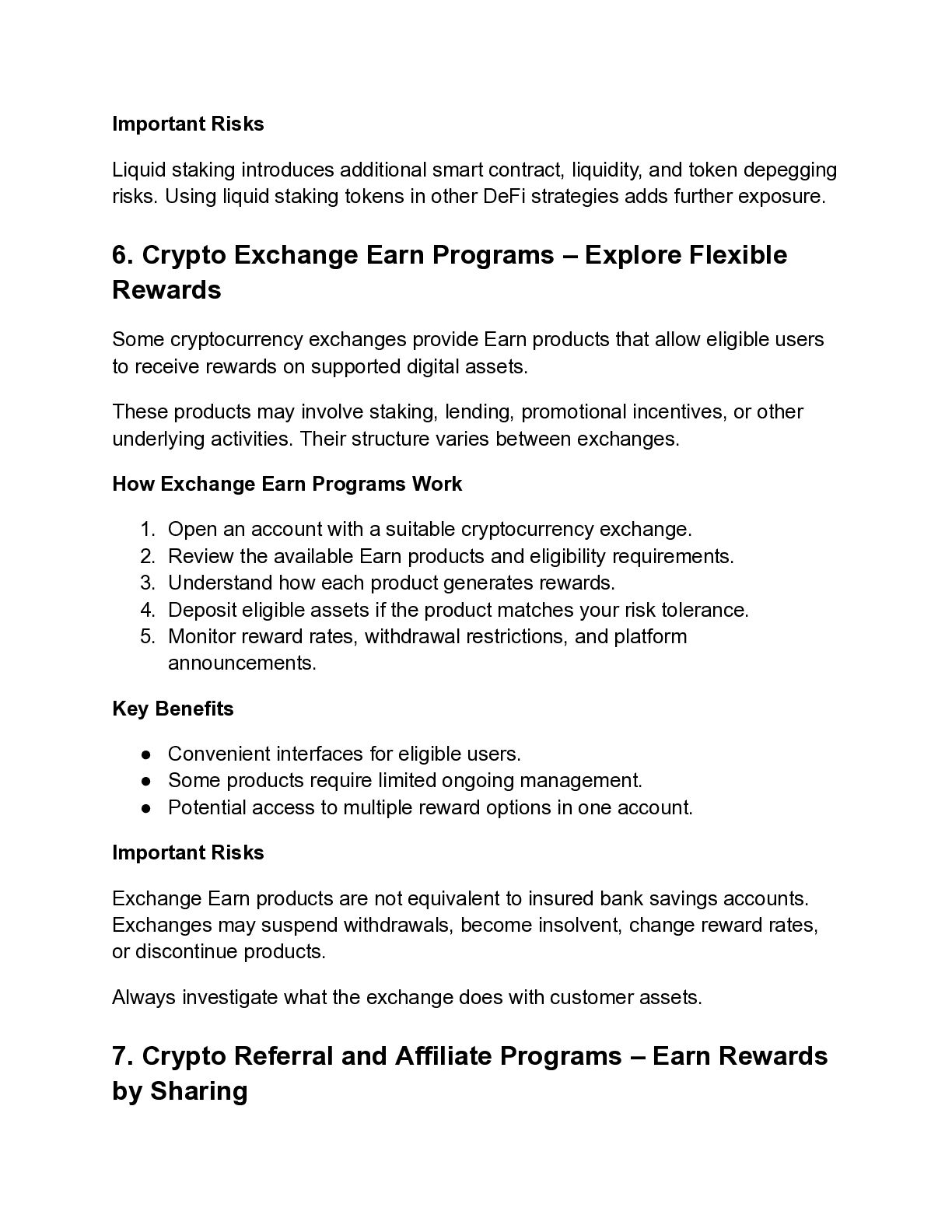
Important Risks Liquid staking introduces additional smart contract, liquidity, and
token depegging risks. Using liquid staking tokens in other DeFi strategies adds further exposure. 6. Crypto Exchange Earn Programs – Explore Flexible Rewards Some cryptocurrency exchanges provide Earn products that allow eligible users to receive rewards on supported digital assets. These products may involve staking, lending, promotional incentives, or other underlying activities. Their structure varies between exchanges. How Exchange Earn Programs Work 1. Open an account with a suitable cryptocurrency exchange. 2. Review the available Earn products and eligibility requirements. 3. Understand how each product generates rewards. 4. Deposit eligible assets if the product matches your risk tolerance. 5. Monitor reward rates, withdrawal restrictions, and platform announcements. Key Benefits • Convenient interfaces for eligible users. • Some products require limited ongoing management. • Potential access to multiple reward options in one account. Important Risks Exchange Earn products are not equivalent to insured bank savings accounts. Exchanges may suspend withdrawals, become insolvent, change reward rates, or discontinue products. Always investigate what the exchange does with customer assets. 7. Crypto Referral and Affiliate Programs – Earn Rewards by Sharing -
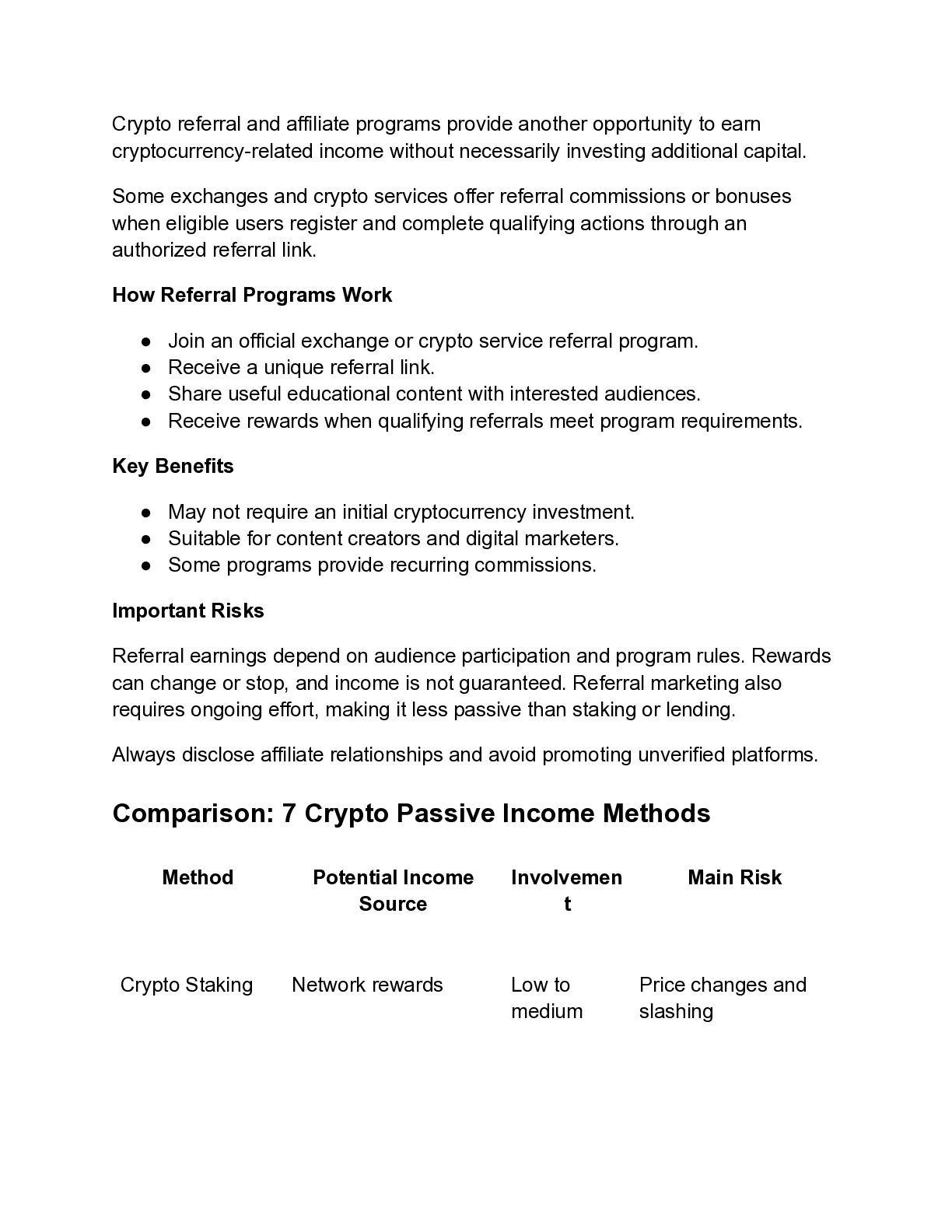
Crypto referral and affiliate programs provide another opportunity to earn
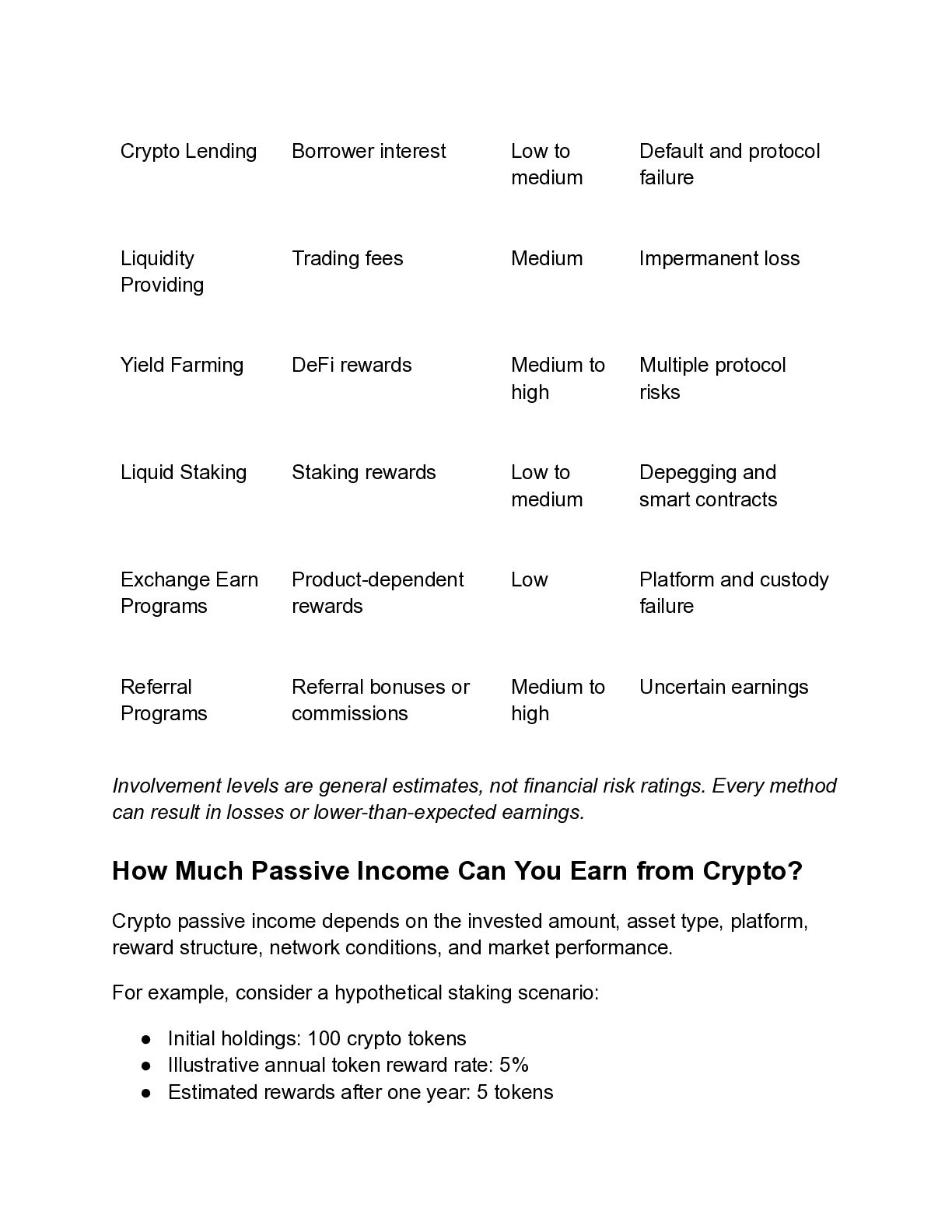
cryptocurrency-related income without necessarily investing additional capital. Some exchanges and crypto services offer referral commissions or bonuses when eligible users register and complete qualifying actions through an authorized referral link. How Referral Programs Work • Join an official exchange or crypto service referral program. • Receive a unique referral link. • Share useful educational content with interested audiences. • Receive rewards when qualifying referrals meet program requirements. Key Benefits • May not require an initial cryptocurrency investment. • Suitable for content creators and digital marketers. • Some programs provide recurring commissions. Important Risks Referral earnings depend on audience participation and program rules. Rewards can change or stop, and income is not guaranteed. Referral marketing also requires ongoing effort, making it less passive than staking or lending. Always disclose affiliate relationships and avoid promoting unverified platforms. Comparison: 7 Crypto Passive Income Methods Method Crypto Staking Potential Income Source Network rewards Involvemen t Low to medium Main Risk Price changes and slashing -
Crypto Lending Borrower interest Low to medium Default and protocol
failure Liquidity Providing Trading fees Medium Impermanent loss Yield Farming DeFi rewards Medium to high Multiple protocol risks Liquid Staking Staking rewards Low to medium Depegging and smart contracts Exchange Earn Programs Product-dependent rewards Low Platform and custody failure Referral Programs Referral bonuses or commissions Medium to high Uncertain earnings Involvement levels are general estimates, not financial risk ratings. Every method can result in losses or lower-than-expected earnings. How Much Passive Income Can You Earn from Crypto? Crypto passive income depends on the invested amount, asset type, platform, reward structure, network conditions, and market performance. For example, consider a hypothetical staking scenario: • Initial holdings: 100 crypto tokens • Illustrative annual token reward rate: 5% • Estimated rewards after one year: 5 tokens -
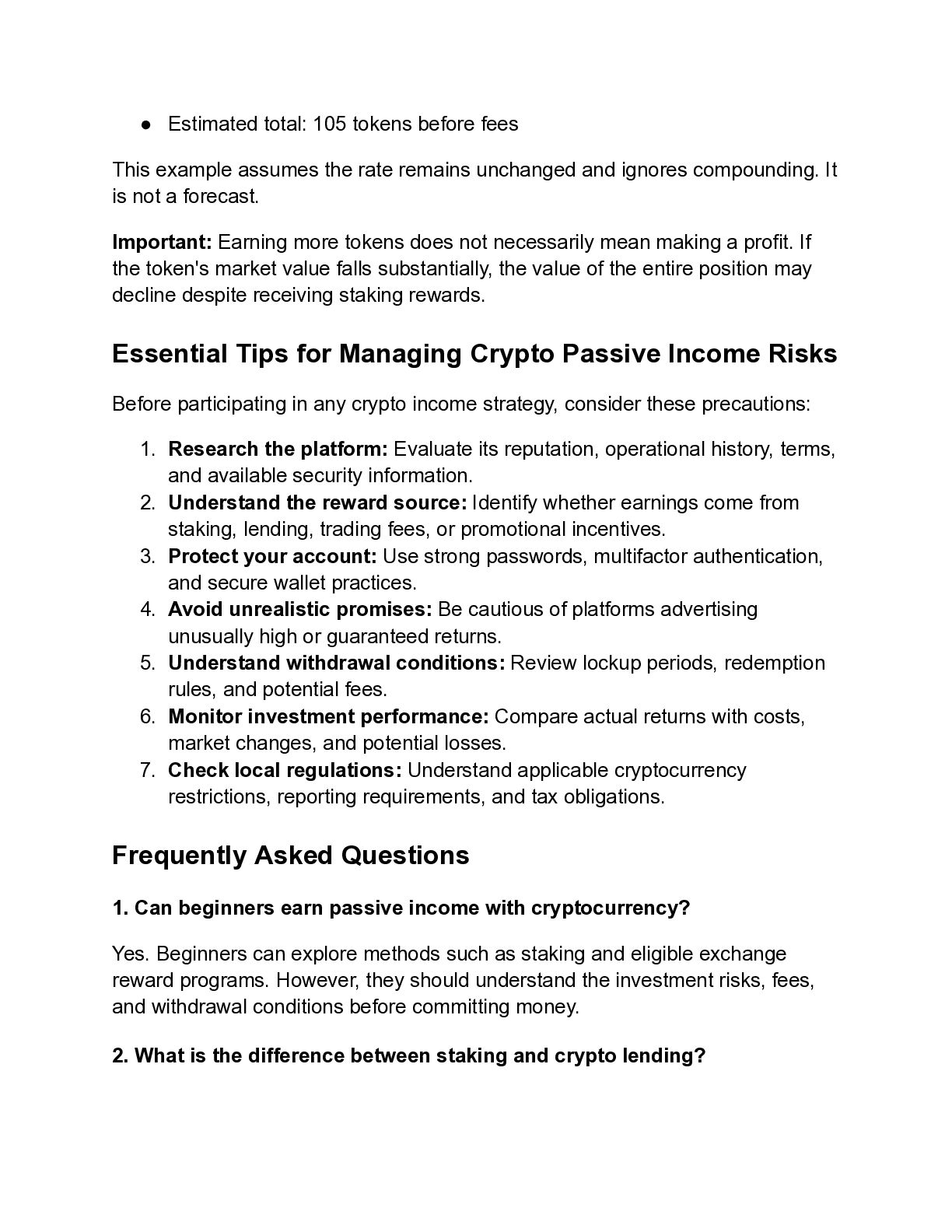
• Estimated total: 105 tokens before fees This example assumes
the rate remains unchanged and ignores compounding. It is not a forecast. Important: Earning more tokens does not necessarily mean making a profit. If the token's market value falls substantially, the value of the entire position may decline despite receiving staking rewards. Essential Tips for Managing Crypto Passive Income Risks Before participating in any crypto income strategy, consider these precautions: 1. Research the platform: Evaluate its reputation, operational history, terms, and available security information. 2. Understand the reward source: Identify whether earnings come from staking, lending, trading fees, or promotional incentives. 3. Protect your account: Use strong passwords, multifactor authentication, and secure wallet practices. 4. Avoid unrealistic promises: Be cautious of platforms advertising unusually high or guaranteed returns. 5. Understand withdrawal conditions: Review lockup periods, redemption rules, and potential fees. 6. Monitor investment performance: Compare actual returns with costs, market changes, and potential losses. 7. Check local regulations: Understand applicable cryptocurrency restrictions, reporting requirements, and tax obligations. Frequently Asked Questions 1. Can beginners earn passive income with cryptocurrency? Yes. Beginners can explore methods such as staking and eligible exchange reward programs. However, they should understand the investment risks, fees, and withdrawal conditions before committing money. 2. What is the difference between staking and crypto lending? -
Staking generally supports the security of a proof-of-stake blockchain in
exchange for potential network rewards. Lending makes digital assets available to borrowers in exchange for potential interest payments. 3. Is crypto passive income guaranteed? No. Crypto rewards fluctuate, platforms can fail, and market prices can decline. Investors may lose some or all of their committed capital. 4. Can I earn crypto passive income without investing money? Some referral and affiliate programs offer qualifying rewards without requiring a direct crypto investment. However, these methods require promotional work, and earnings are not guaranteed. 5. Are stablecoins completely safe for earning interest? No. Stablecoins can experience depegging, issuer problems, liquidity shortages, or platform-related losses. A stablecoin's intended price stability does not eliminate investment risk. 6. Which crypto passive income method is best for long-term investors? There is no universally best method. The appropriate choice depends on an investor's existing holdings, risk tolerance, technical knowledge, need for liquidity, and financial circumstances. 7. Do I need to pay taxes on crypto passive income? Tax treatment varies by country and by the type of income or transaction. Investors should maintain records of rewards, transactions, and fees and obtain appropriate local tax guidance. Conclusion Earning passive income with cryptocurrency involves more than holding digital assets and waiting for their prices to rise. Staking, lending, liquidity provision, yield farming, liquid staking, exchange reward programs, and referral marketing offer different potential income opportunities. -
However, each method has its own requirements and financial risks.
For beginners, understanding how rewards are generated, how assets are protected, and how funds can be withdrawn is more important than chasing the highest advertised returns. The key to exploring crypto passive income responsibly is research, realistic expectations, and effective risk management. Educational References • Ethereum Staking Guide: https://ethereum.org/staking/ • Ethereum Liquid Staking: https://ethereum.org/staking/pools/ • Aave Lending Documentation: https://aave.com/help/supplying/supply-tokens • Uniswap Liquidity Risks: https://support.uniswap.org/hc/en-us/articles/37113550065549-What-are-th e-risks-when-providing-liquidity • SEC Crypto Interest-Bearing Accounts: https://www.investor.gov/introduction-investing/general-resources/news-ale rts/alerts-bulletins/investor-bulletins/investor-bulletin-crypto-asset-interest-b earing-accounts Disclaimer: This guide is for educational and informational purposes only. It does not constitute financial, investment, legal, or tax advice. Cryptocurrency investments are volatile and may result in the loss of capital. Readers should conduct independent research before making financial decisions.
 nandhakumar45
 popppiees
 palkan
 akashhashmi
 aleyda
 charlesmeaden
 techseoconnect
 62gerente
 mojombo
 sergeychernyshev
 mfonobong
 schroneko
 katarinadahlin