Upgrade to Pro — share decks privately, control downloads, hide ads and more …

How I helped developers talk about feelings and...

Avatar for Gitte Klitgaard Gitte Klitgaard
June 04, 2026
48

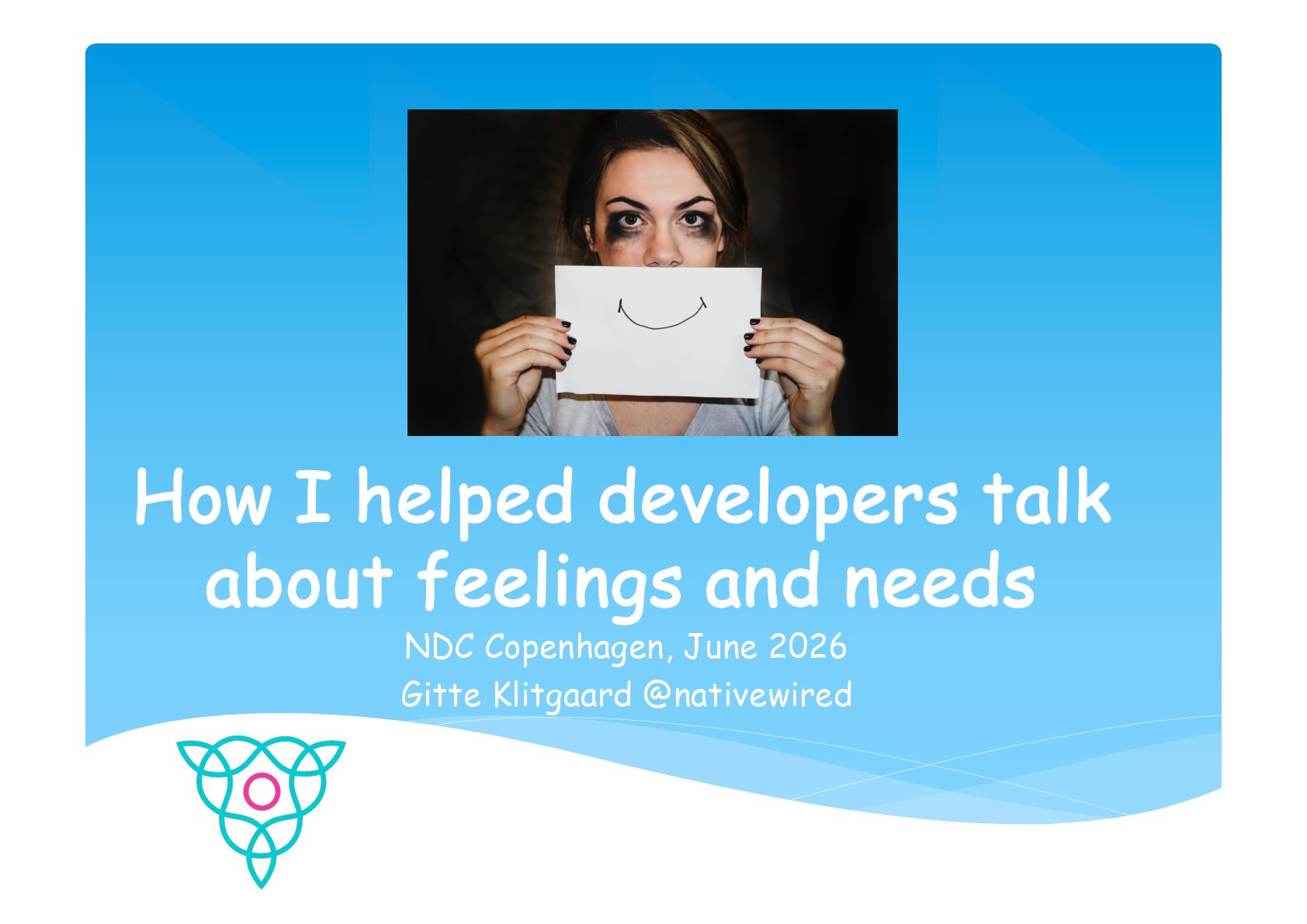
How I helped developers talk about feelings and needs

As humans we are not good at sharing our feelings and needs, and it seems to be even harder for people in tech.

Many conflicts and misunderstandings happen because team members don't know what the other members needs. When we don't that, we may accidentally hurt them.

I helped many teams over the years and I have seen this happen again and again. Over time I have developed techniques to address this part as well.

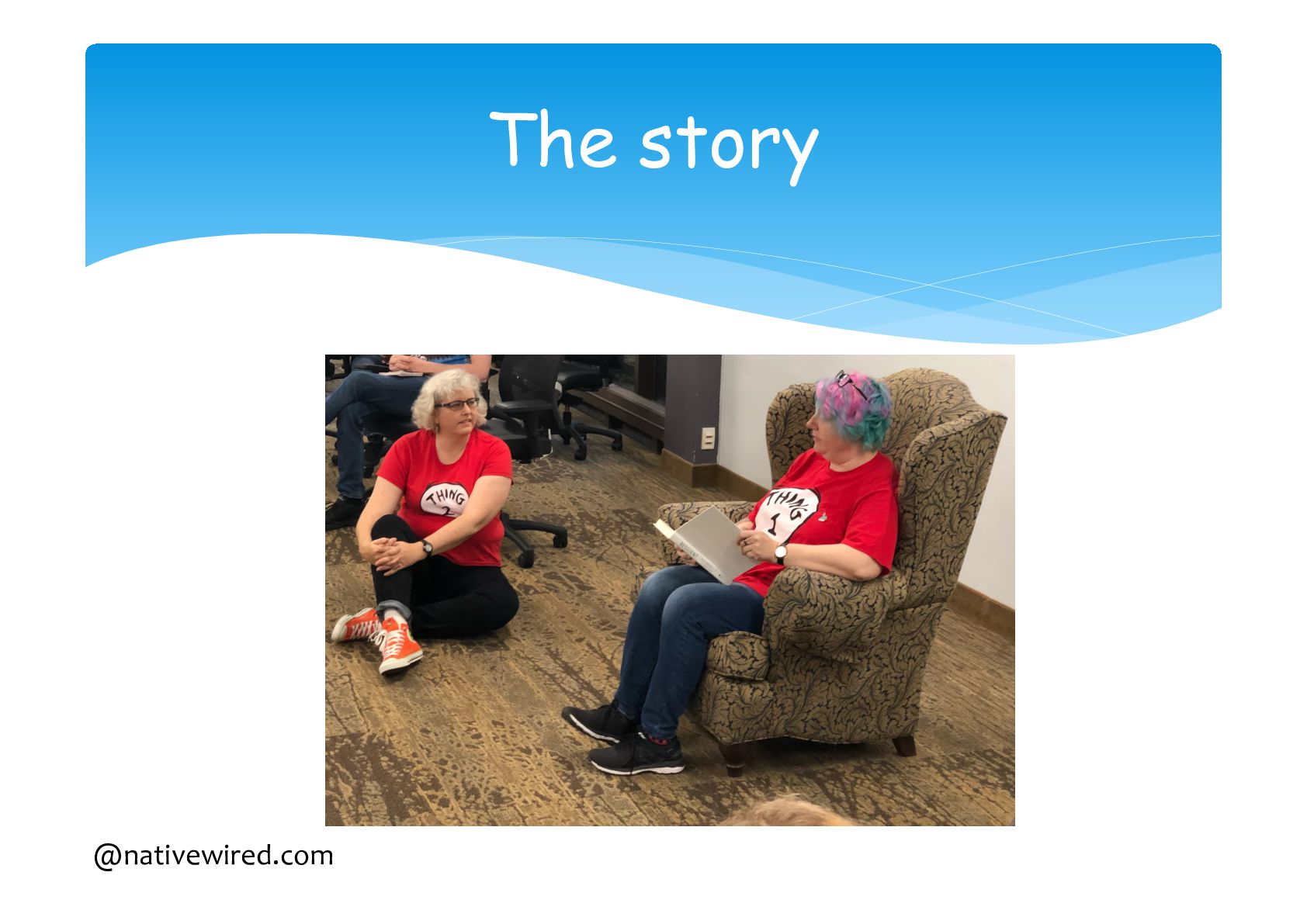
I was working in a large media company, when a team had a conflict escalate into an emotional situation. This is the story of how I helped them talk about their feelings and needs, which was the first step in collaborating again.

I will also share some techniques that you can try out with your own team.

Avatar for Gitte Klitgaard

Gitte Klitgaard

June 04, 2026

Transcript

  1. How I helped developers talk about feelings and needs NDC

    Copenhagen, June 2026 Gitte Klitgaard @nativewired
  2. @nativewired.com * In many cultures, feelings, are considered private *

    Boys are often discouraged to talk about feelings * Introverts… * Talking about needs is even harder * Not everyone are aware of their non-basic needs * Most of my life I did not know my needs And we definitely should keep it away from work!! Don’t talk about the F word
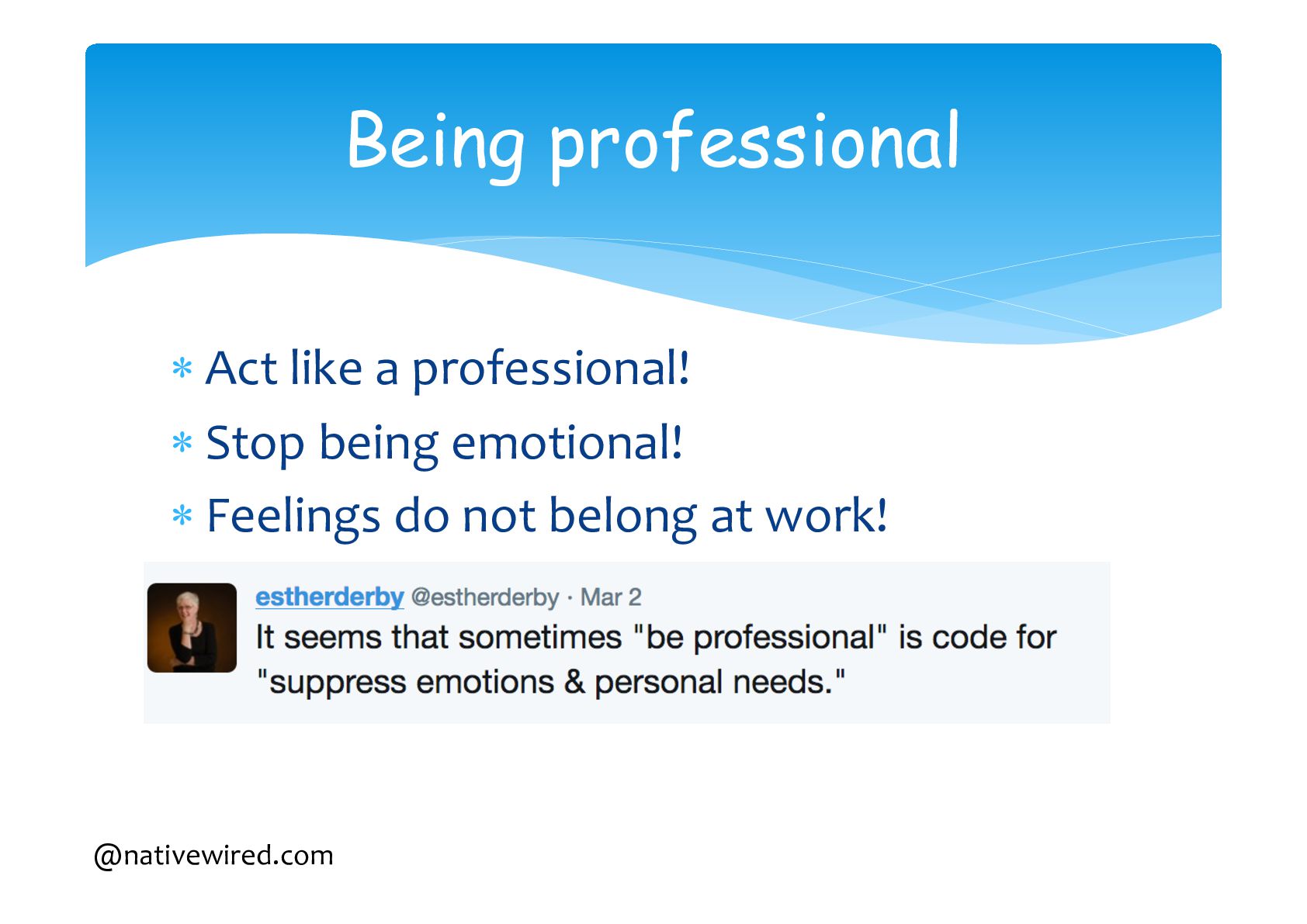
  3. @nativewired.com * Act like a professional! * Stop being emotional!

    * Feelings do not belong at work! Being professional
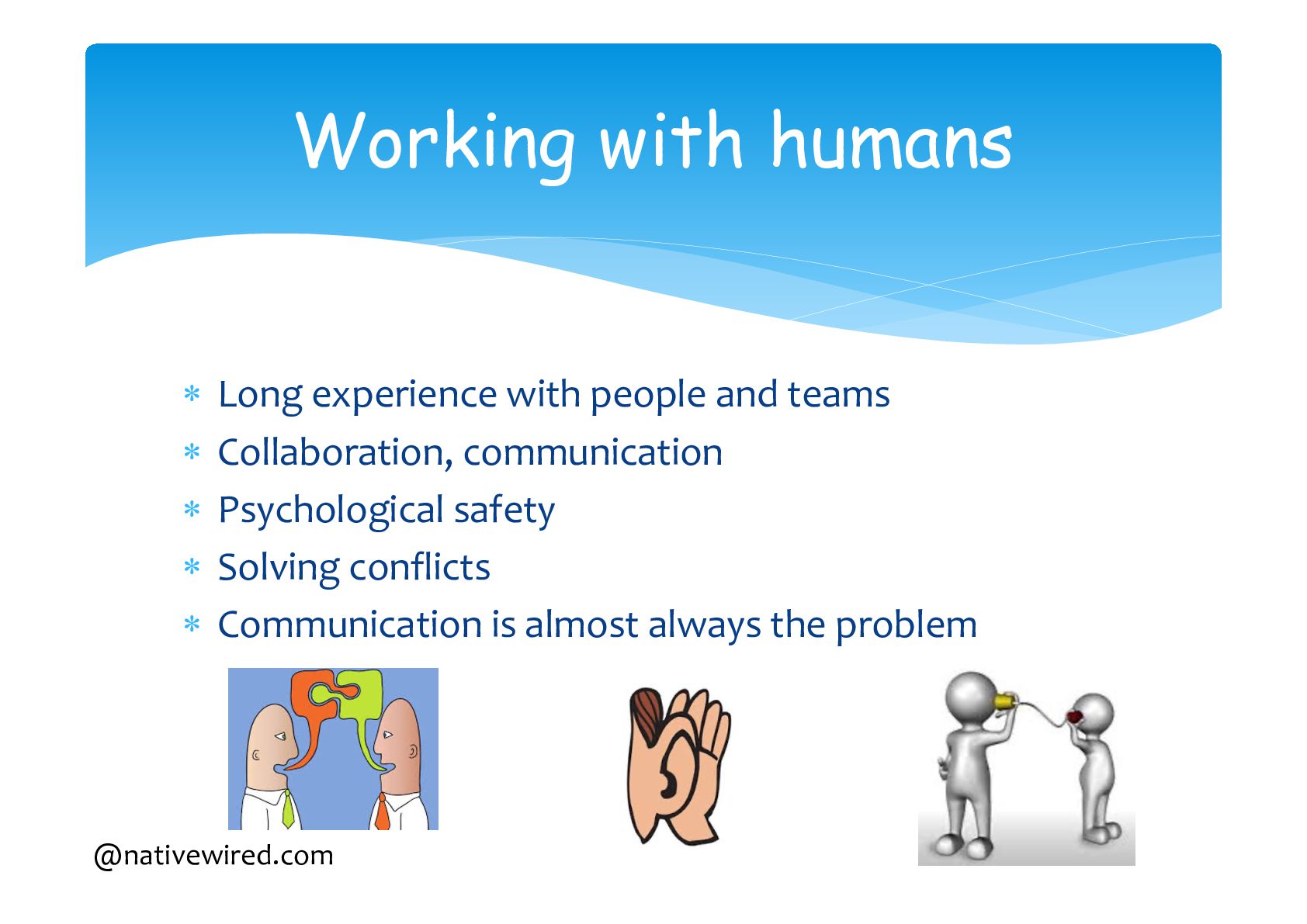
  4. @nativewired.com * Long experience with people and teams * Collaboration,

    communication * Psychological safety * Solving conflicts * Communication is almost always the problem Working with humans
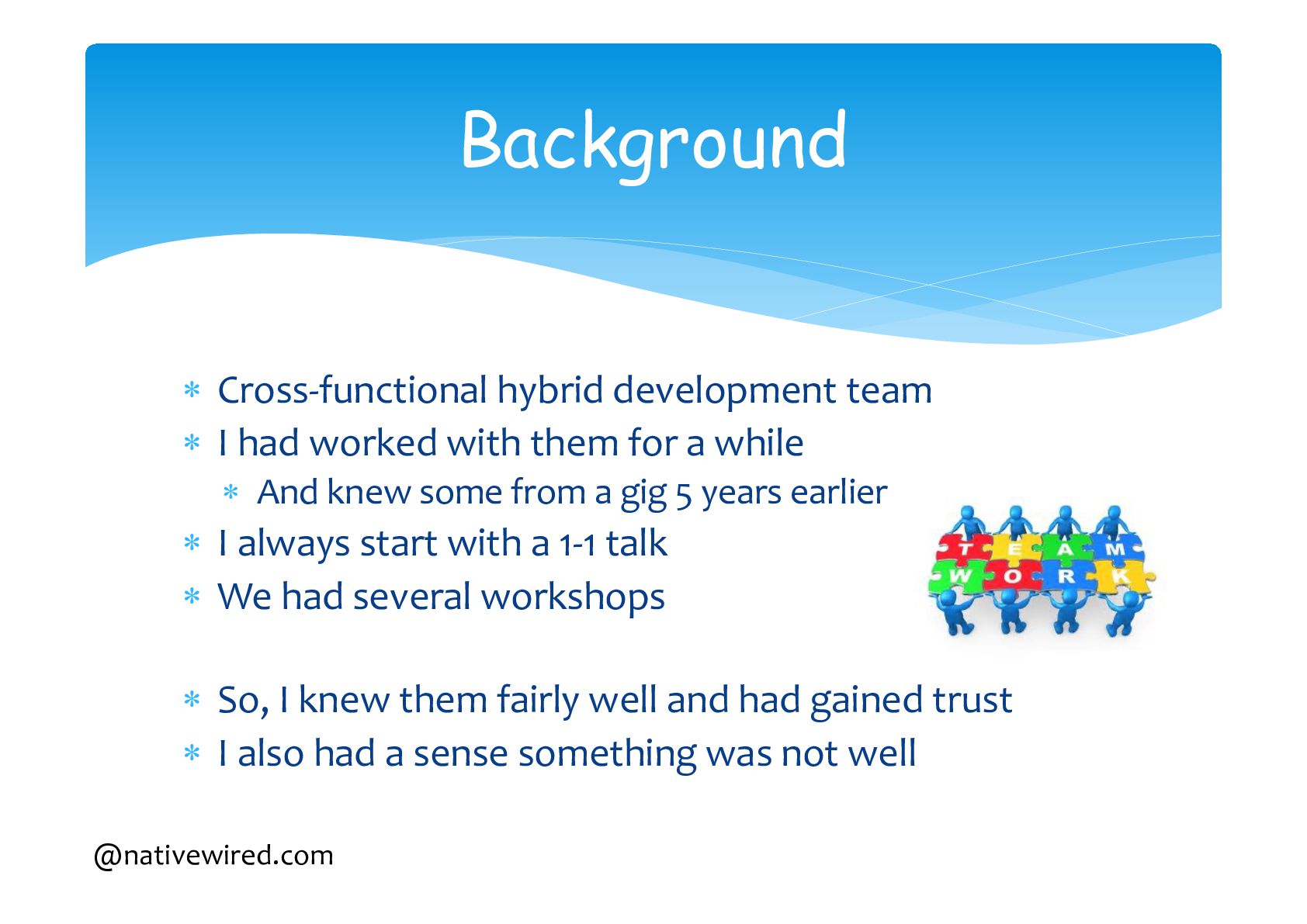
  5. @nativewired.com * Cross-functional hybrid development team * I had worked

    with them for a while * And knew some from a gig 5 years earlier * I always start with a 1-1 talk * We had several workshops * So, I knew them fairly well and had gained trust * I also had a sense something was not well Background
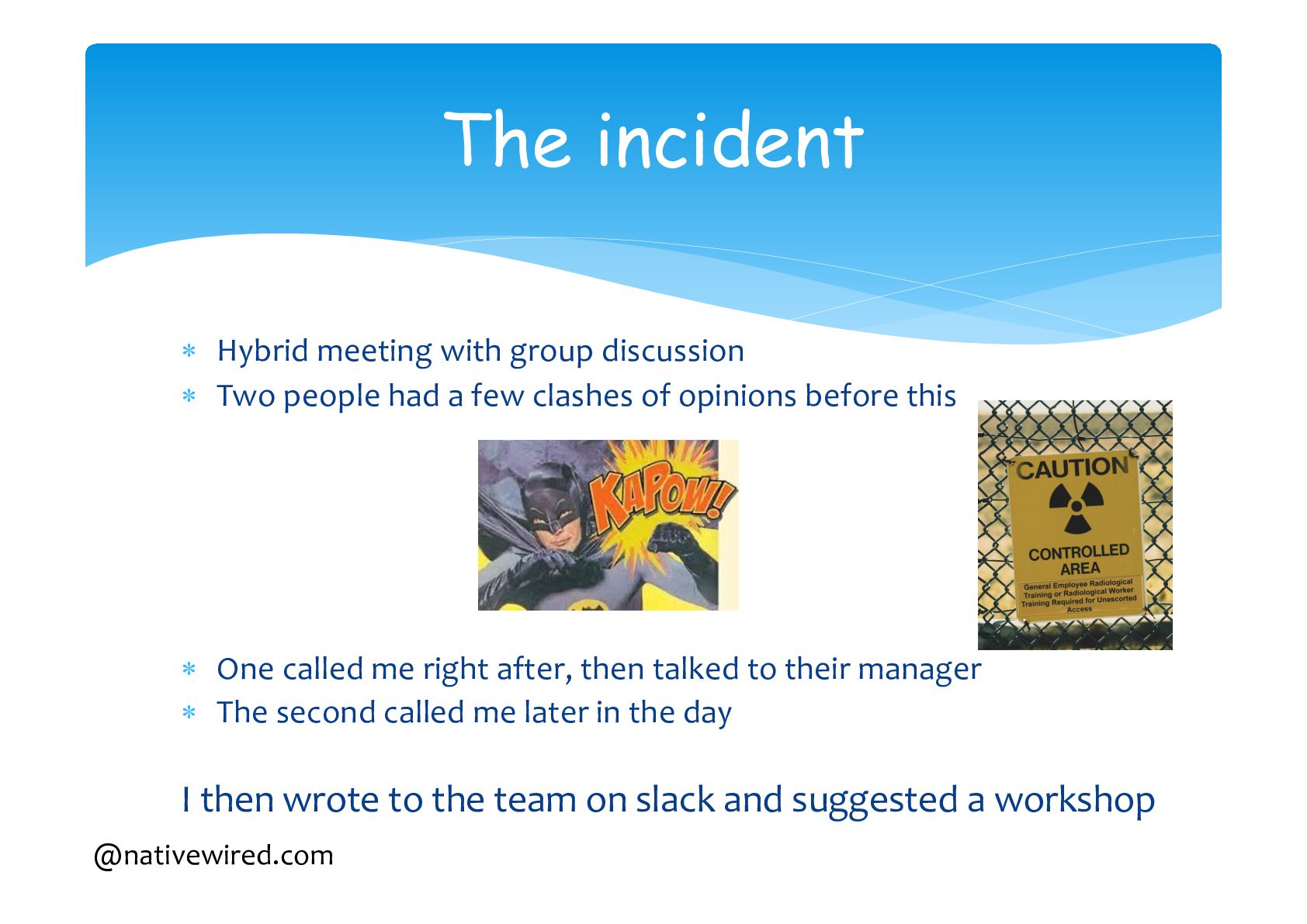
  6. @nativewired.com * Hybrid meeting with group discussion * Two people

    had a few clashes of opinions before this * One called me right after, then talked to their manager * The second called me later in the day I then wrote to the team on slack and suggested a workshop The incident
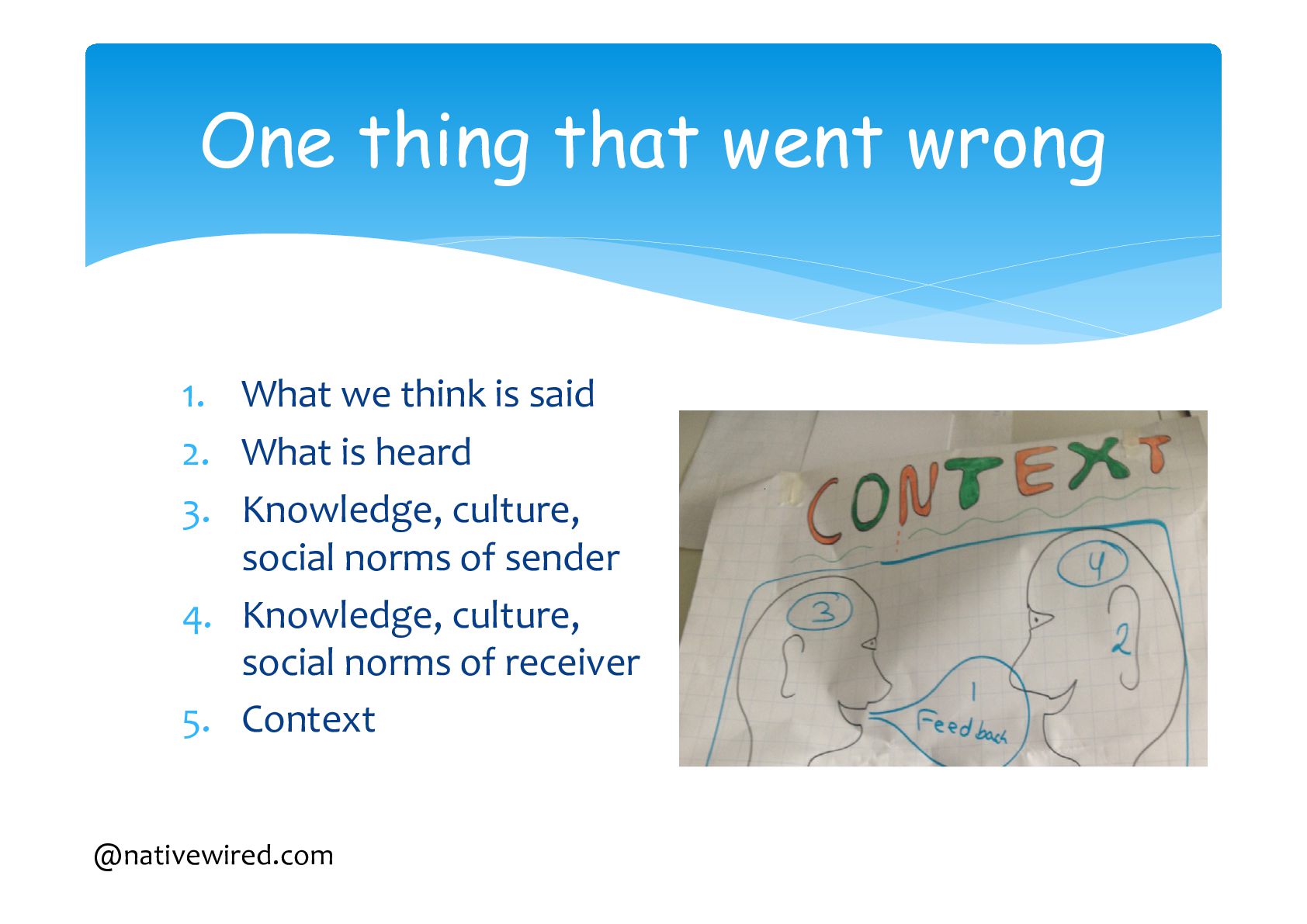
  7. @nativewired.com 1. What we think is said 2. What is

    heard 3. Knowledge, culture, social norms of sender 4. Knowledge, culture, social norms of receiver 5. Context One thing that went wrong
  8. @nativewired.com * Having individual meeting with each person * Encouraging

    them to share * Booking plenty of time for the workshop * Taking it slow * Time to think * Many breaks * Putting in information about needs, feelings and communication Preparing
  9. @nativewired.com * Rules of engagement (standard in my workshops) *

    Check-in (standard in my workshops) * Goal of today (standard in my workshops) * Getting to know each other even better * Needs and feelings - information * Thinking time * Let's talk * Next steps and wrap-up (standard in my workshops) The Agenda
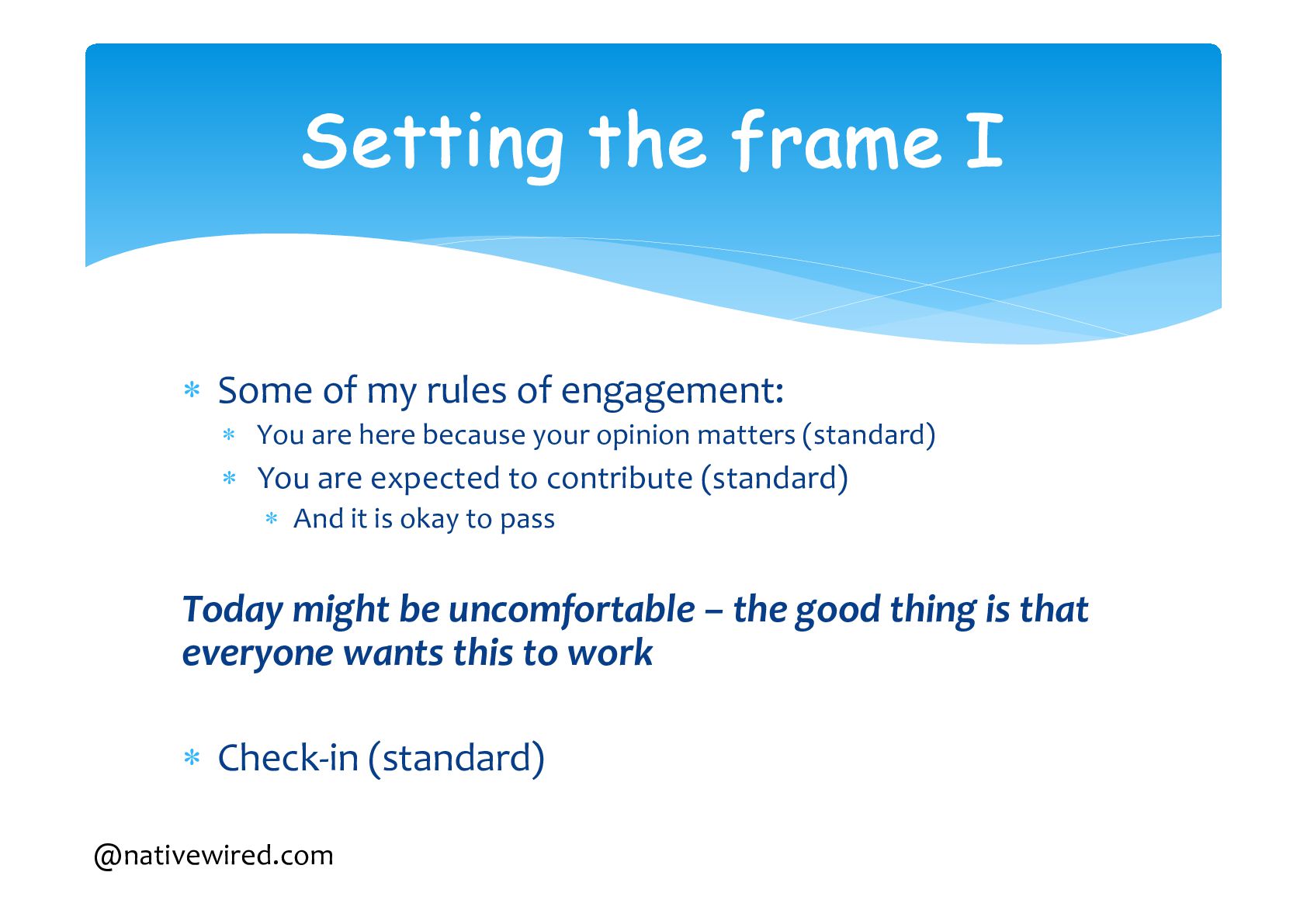
  10. @nativewired.com * Some of my rules of engagement: * You

    are here because your opinion matters (standard) * You are expected to contribute (standard) * And it is okay to pass Today might be uncomfortable – the good thing is that everyone wants this to work * Check-in (standard) Setting the frame I
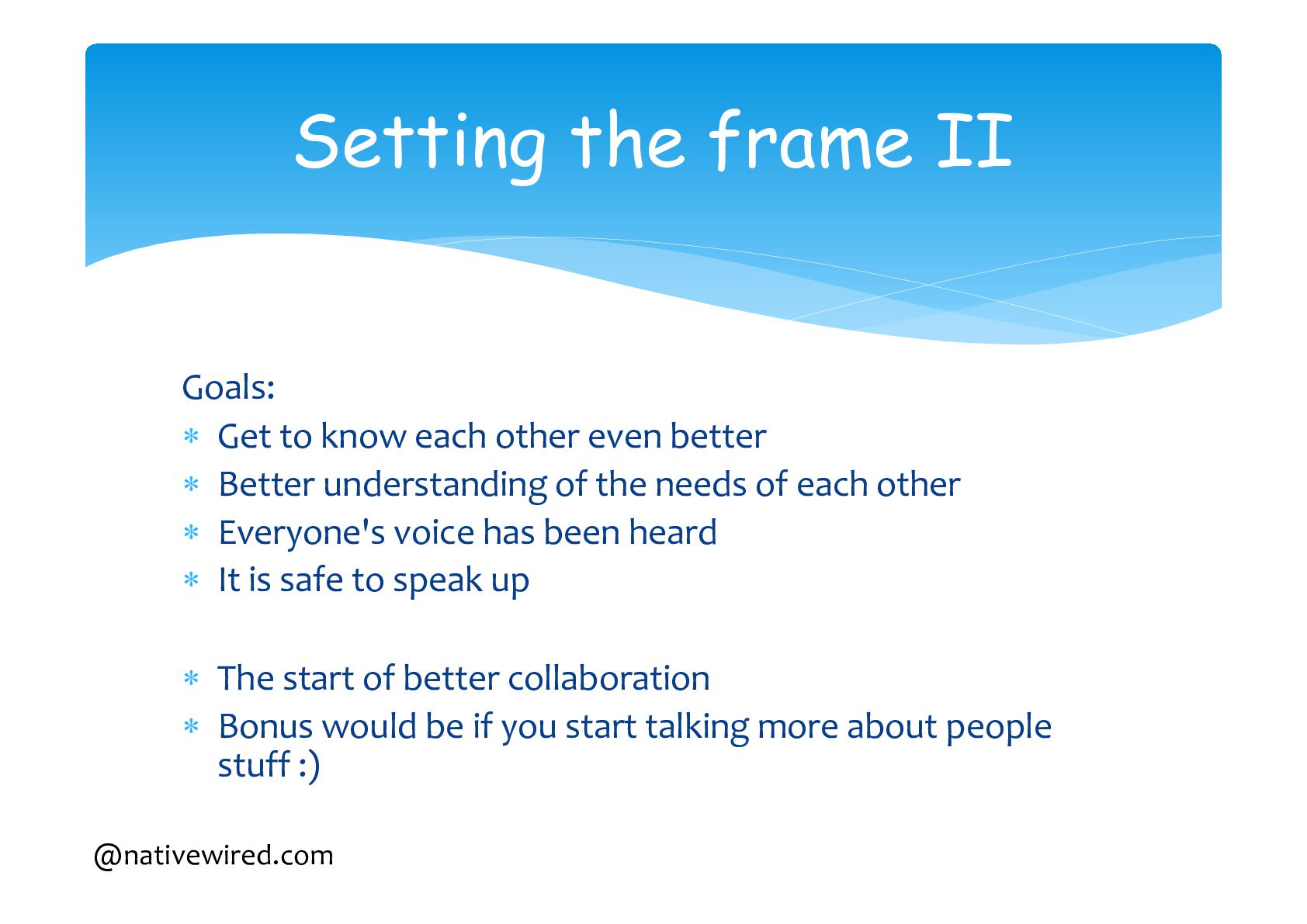
  11. @nativewired.com Goals: * Get to know each other even better

    * Better understanding of the needs of each other * Everyone's voice has been heard * It is safe to speak up * The start of better collaboration * Bonus would be if you start talking more about people stuff :) Setting the frame II
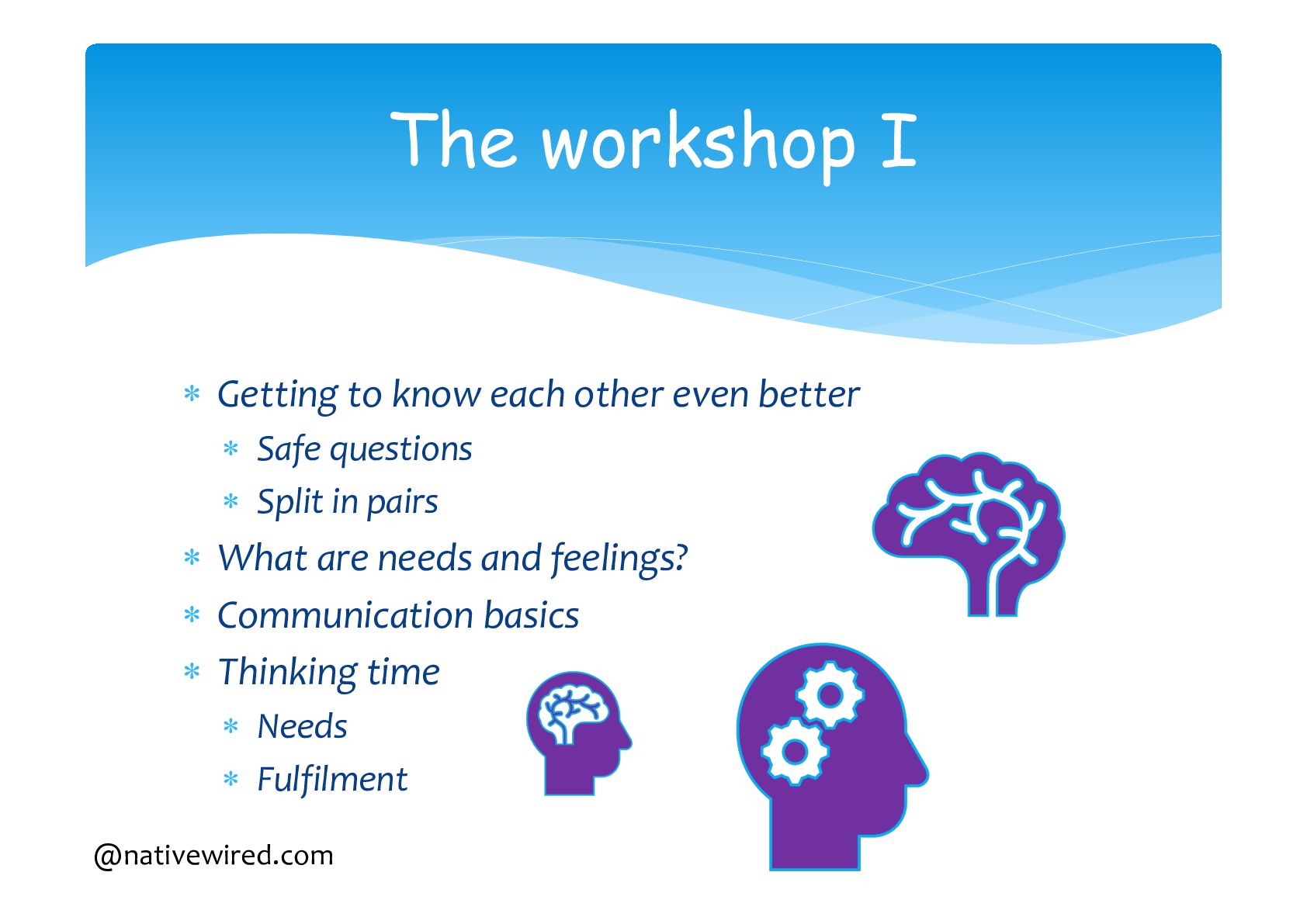
  12. @nativewired.com * Getting to know each other even better *

    Safe questions * Split in pairs * What are needs and feelings? * Communication basics * Thinking time * Needs * Fulfilment The workshop I
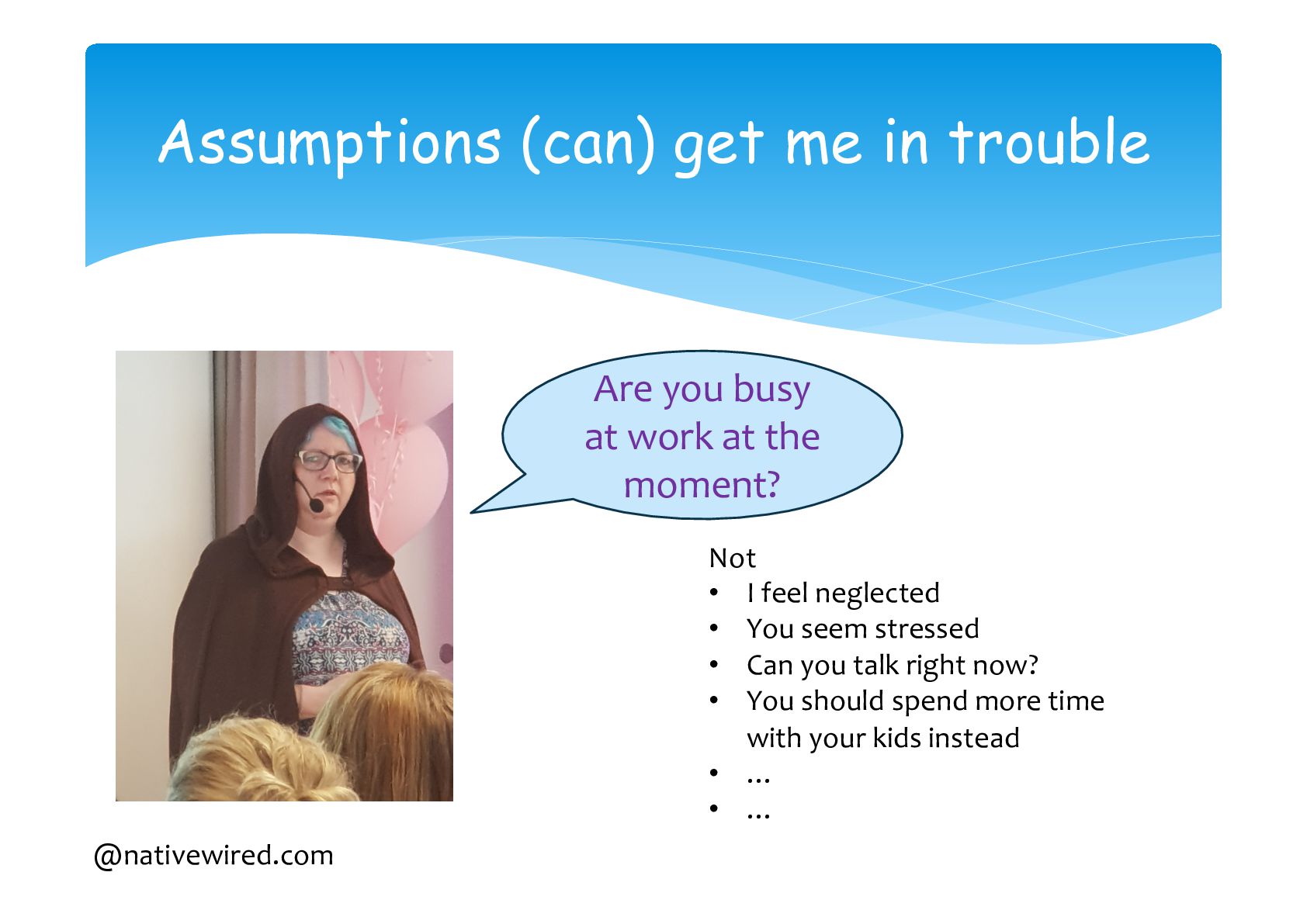
  13. @nativewired.com Assumptions (can) get me in trouble Are you busy

    at work at the moment? Not • I feel neglected • You seem stressed • Can you talk right now? • You should spend more time with your kids instead • … • …
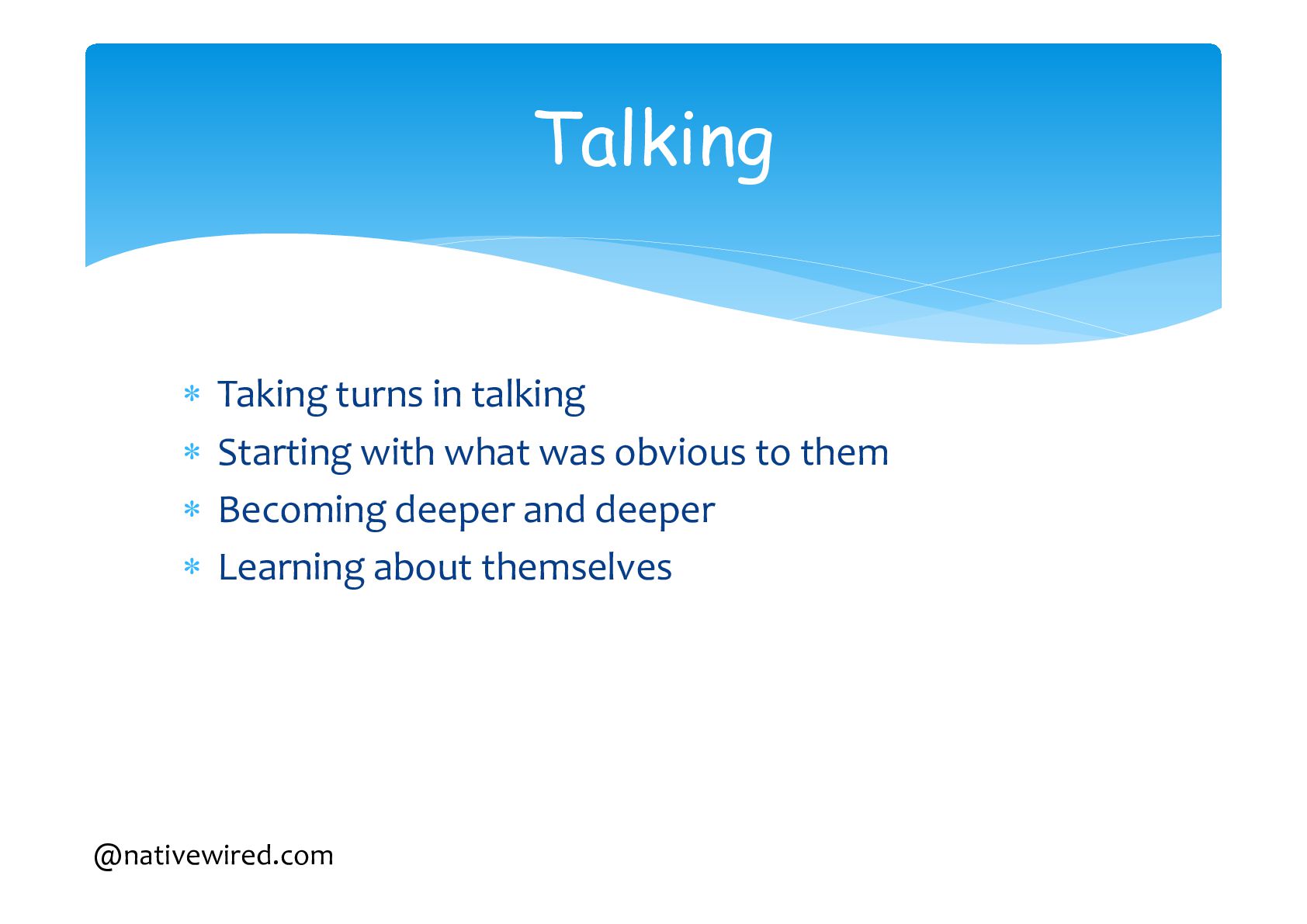
  14. @nativewired.com * Taking turns in talking * Starting with what

    was obvious to them * Becoming deeper and deeper * Learning about themselves Talking
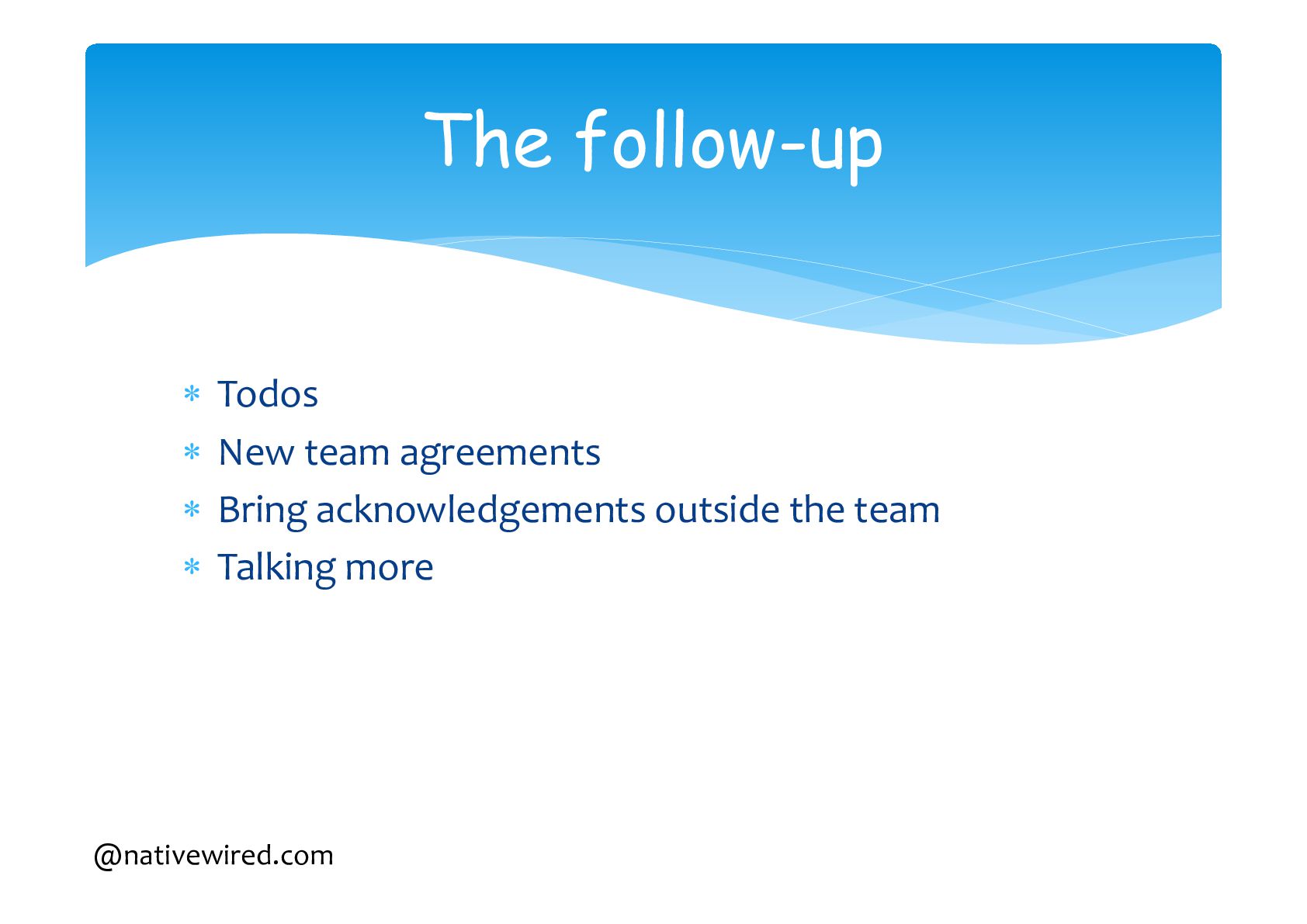
  15. @nativewired.com * Todos * New team agreements * Bring acknowledgements

    outside the team * Talking more The follow-up
  16. @nativewired.com * Listening * Preparing people * Safe space *

    Create the frame * Slow pace Techniques I used
  17. @nativewired.com Regardless of what we discover, we understand and truly

    believe that everyone did the best job they could, given what they knew at the time, their skills and abilities, the resources available, and the situation at hand. Norm Kerth, Project Retrospectives: A Handbook for Team Review
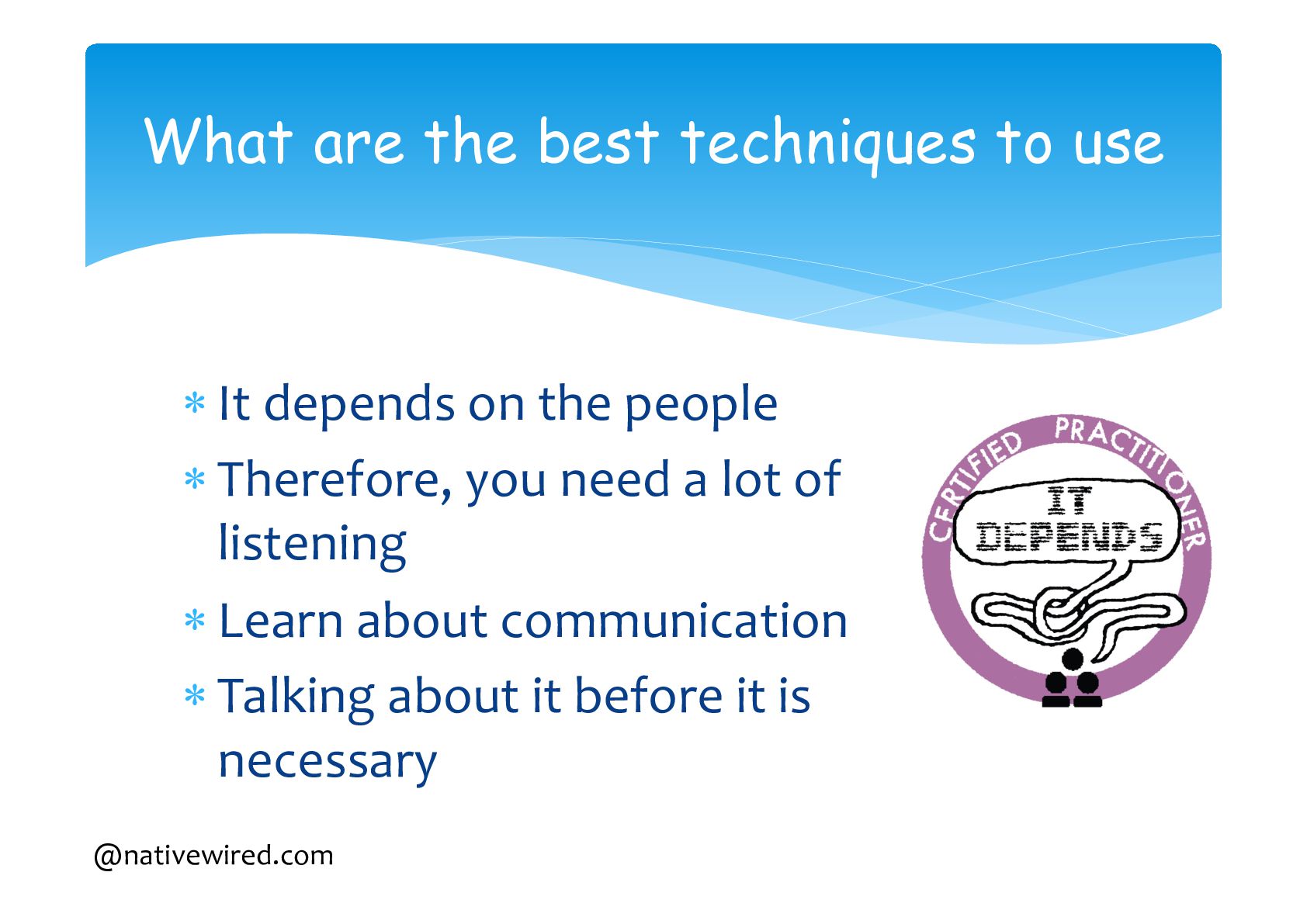
  18. @nativewired.com * It depends on the people * Therefore, you

    need a lot of listening * Learn about communication * Talking about it before it is necessary What are the best techniques to use
  19. @nativewired.com * Listen to people * Take the time *

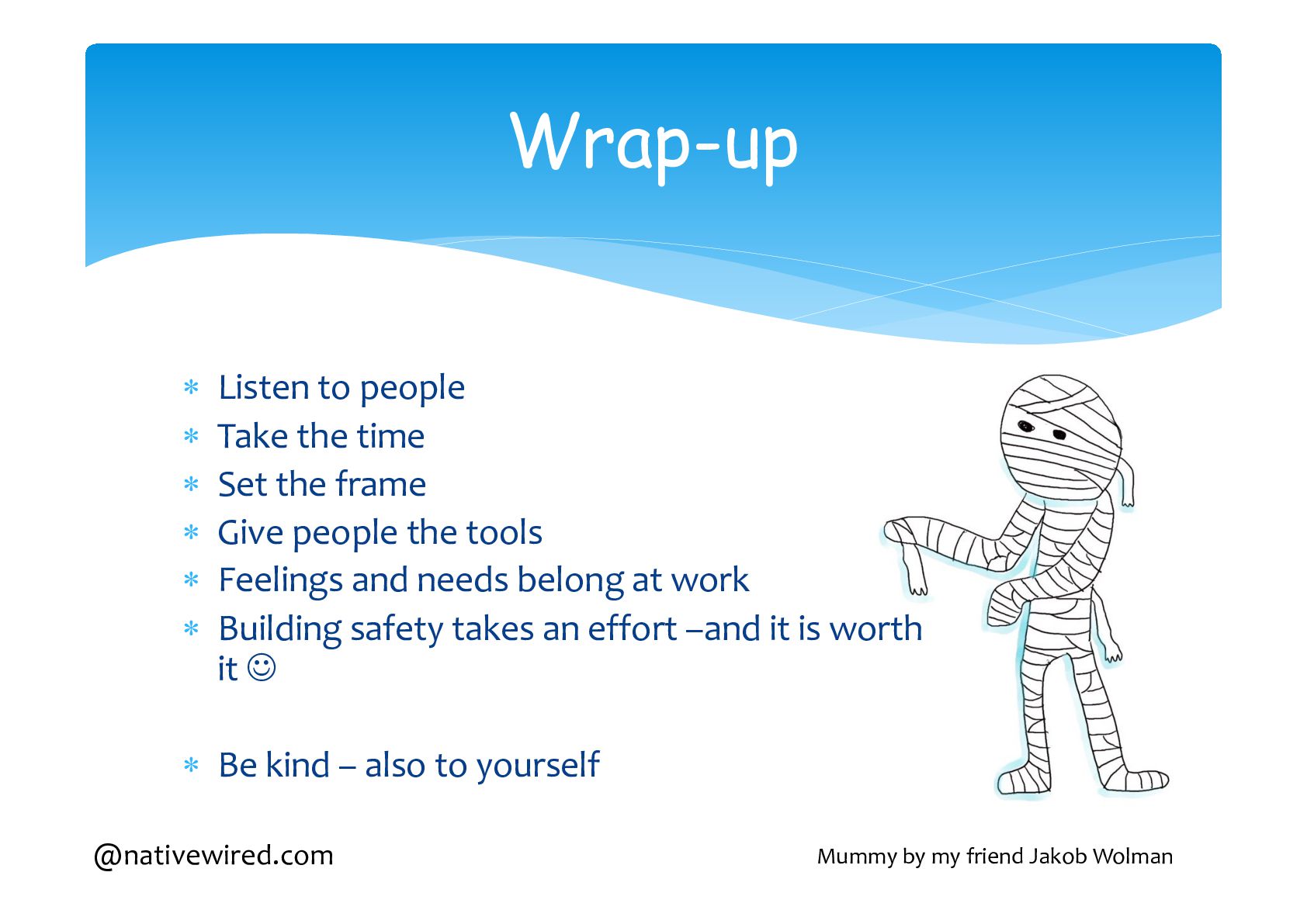
    Set the frame * Give people the tools * Feelings and needs belong at work * Building safety takes an effort –and it is worth it J * Be kind – also to yourself Wrap-up Mummy by my friend Jakob Wolman
  20. @nativewired.com I love connecting [email protected] http://www.nativewired.com/ dk.linkedin.com/in/gitteklitgaard/ Have you considered

    working with your strategy, accountability, and employee engagement? Do you need leadership coaching and guidance? Would you like to be coached as an individual? Do you have an organisation that could use help? Are you looking for a workshop or a talk? Would you like to have coffee with me? Get in touch J
  21. @nativewired.com Needs * We all have them :) * Only

    you know your needs o Many have not learned how to sense their needs * We cannot read minds o So, we need to speak up about needs and feelings
  22. @nativewired.com Feelings * Feeling: I am angry * Feeling: I

    am content * Feeling: I feel confused * Not a feeling: I feel like having pizza * Also not a feeling: I feel like you are late * It is good to talk about impact on you and/or the work
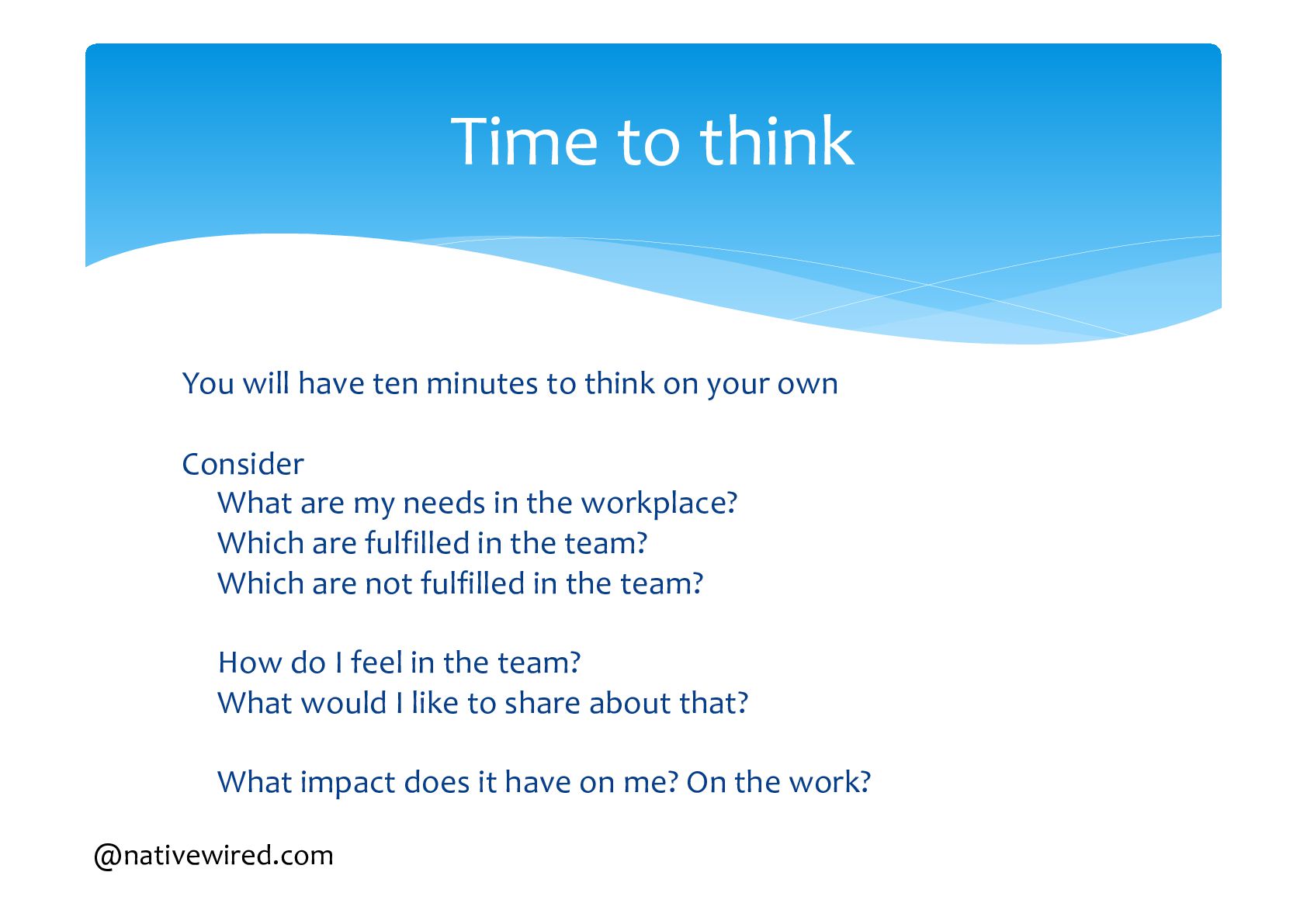
  23. @nativewired.com Time to think You will have ten minutes to

    think on your own Consider * What are my needs in the workplace? * Which are fulfilled in the team? * Which are not fulfilled in the team? * How do I feel in the team? * What would I like to share about that? * What impact does it have on me? On the work?
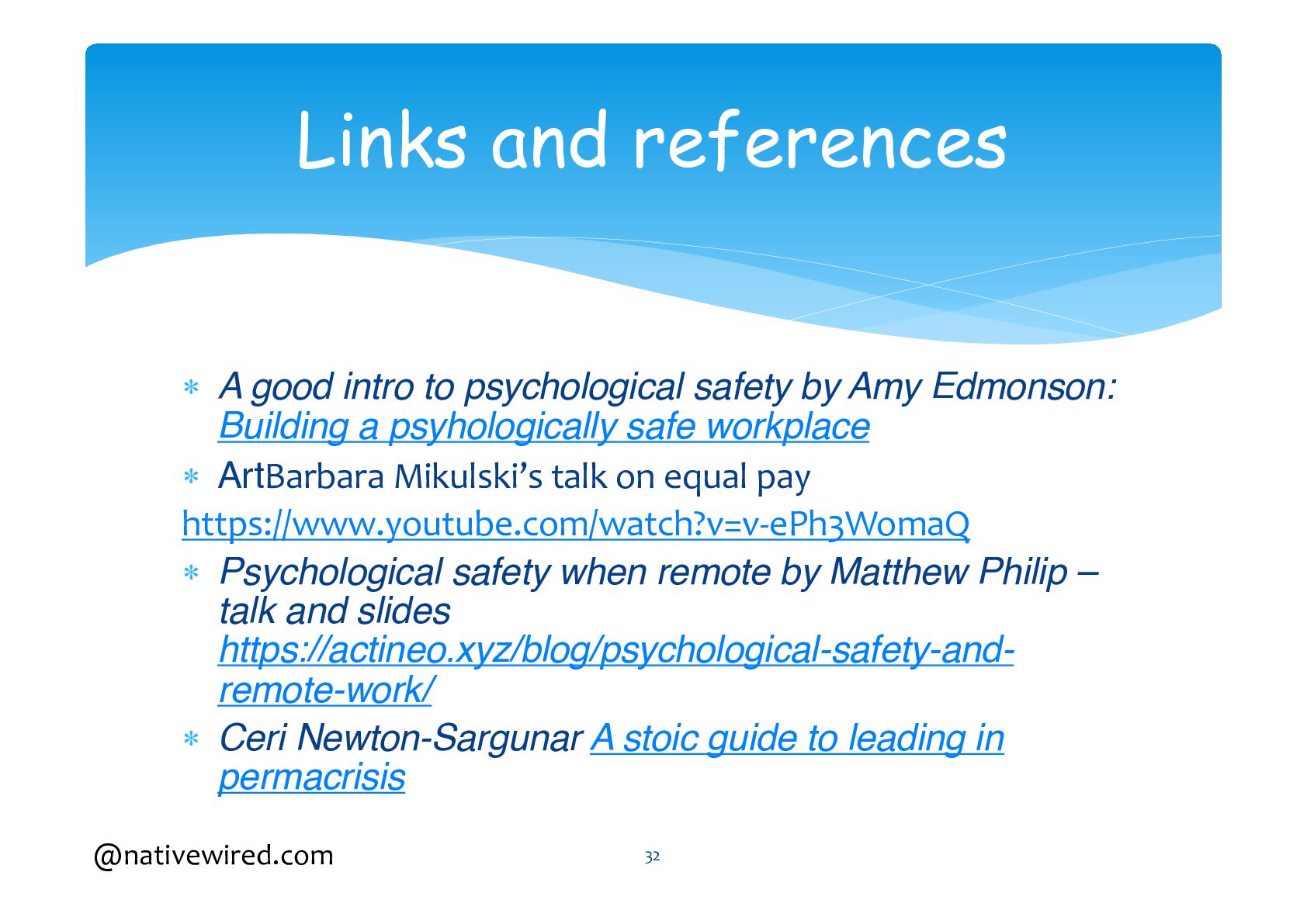
  24. @nativewired.com * A good intro to psychological safety by Amy

    Edmonson: Building a psyhologically safe workplace * ArtBarbara Mikulski’s talk on equal pay https://www.youtube.com/watch?v=v-ePh3WomaQ * Psychological safety when remote by Matthew Philip – talk and slides https://actineo.xyz/blog/psychological-safety-and- remote-work/ * Ceri Newton-Sargunar A stoic guide to leading in permacrisis 32 Links and references
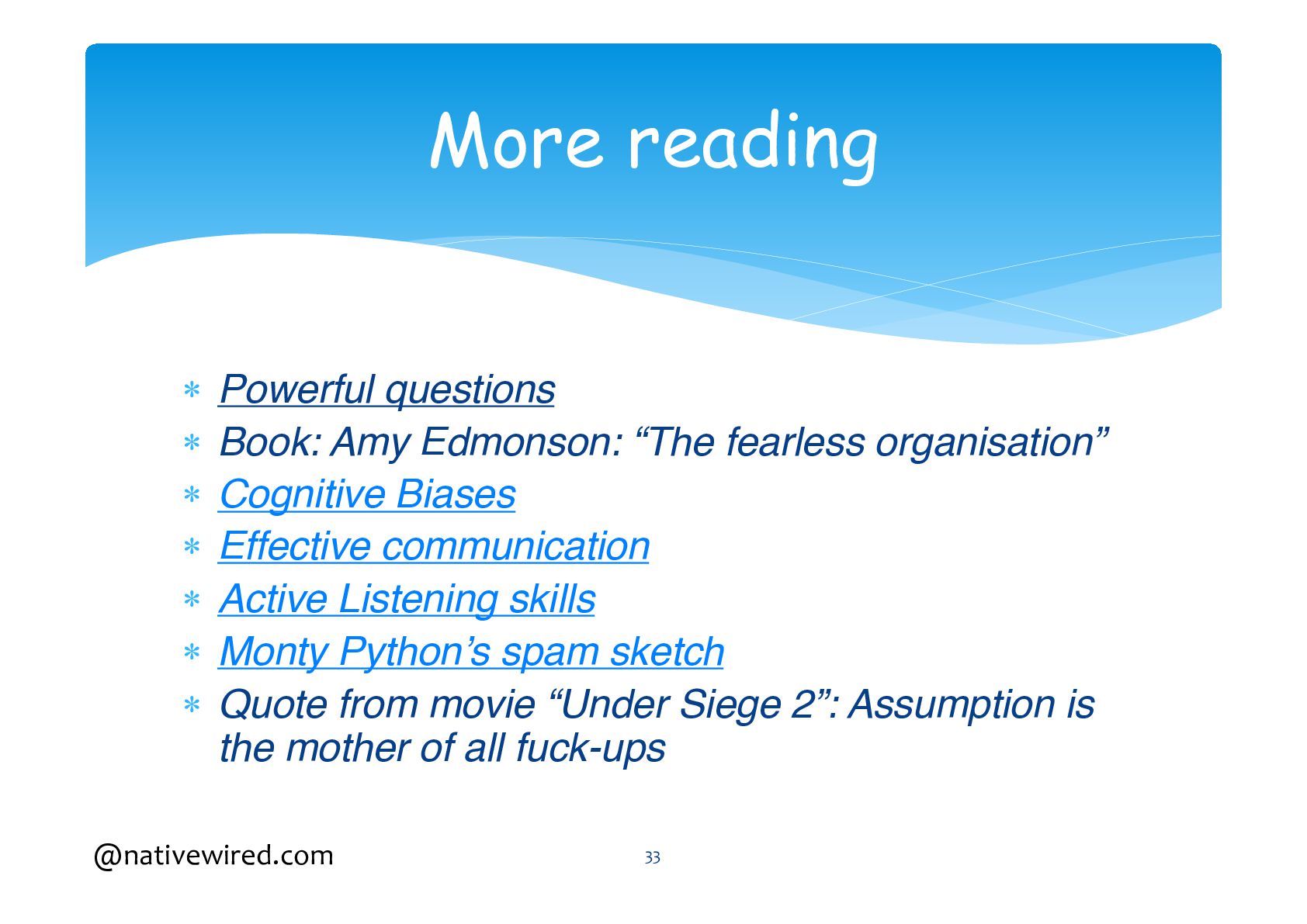
  25. @nativewired.com * Powerful questions * Book: Amy Edmonson: “The fearless

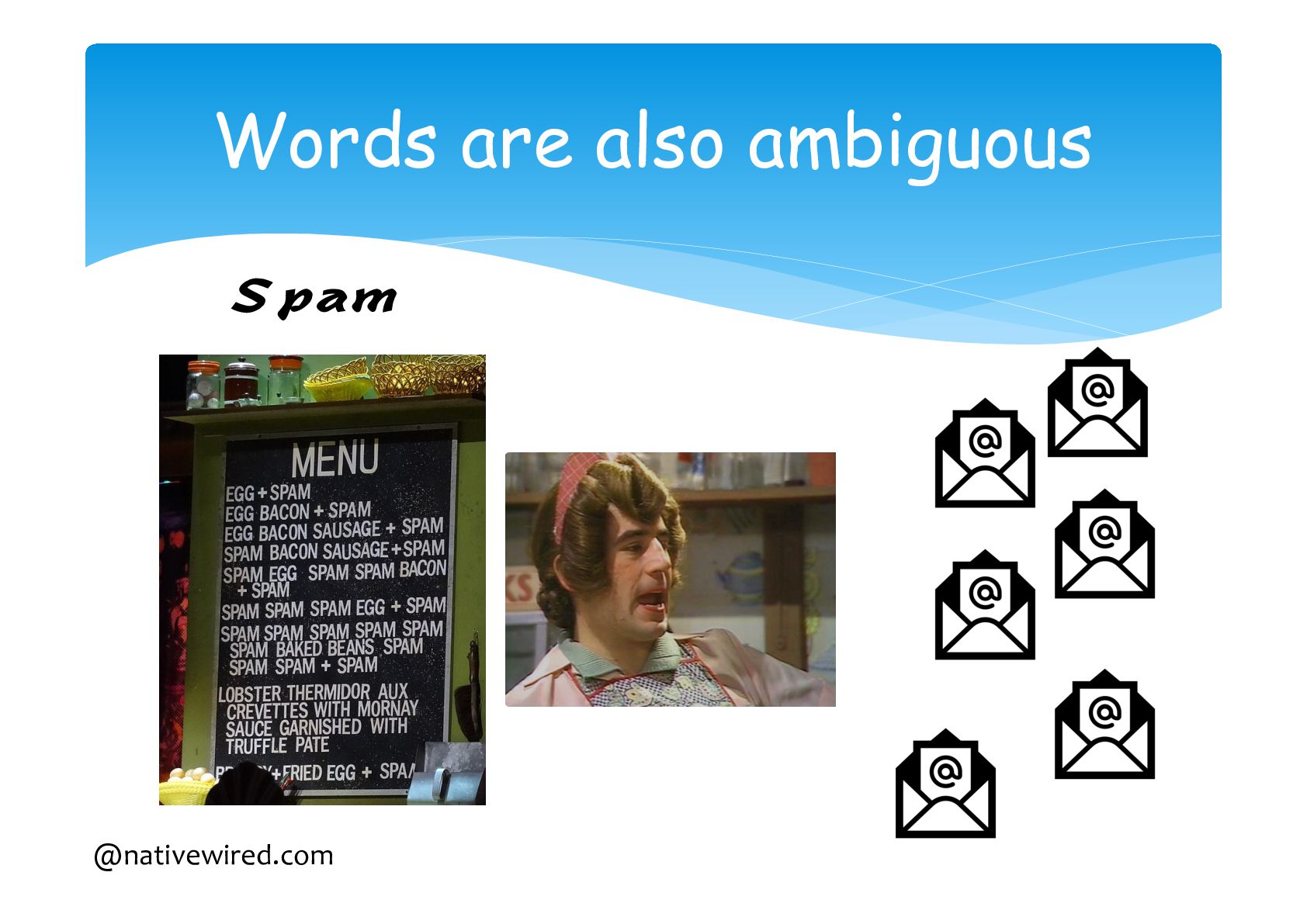
    organisation” * Cognitive Biases * Effective communication * Active Listening skills * Monty Python’s spam sketch * Quote from movie “Under Siege 2”: Assumption is the mother of all fuck-ups 33 More reading
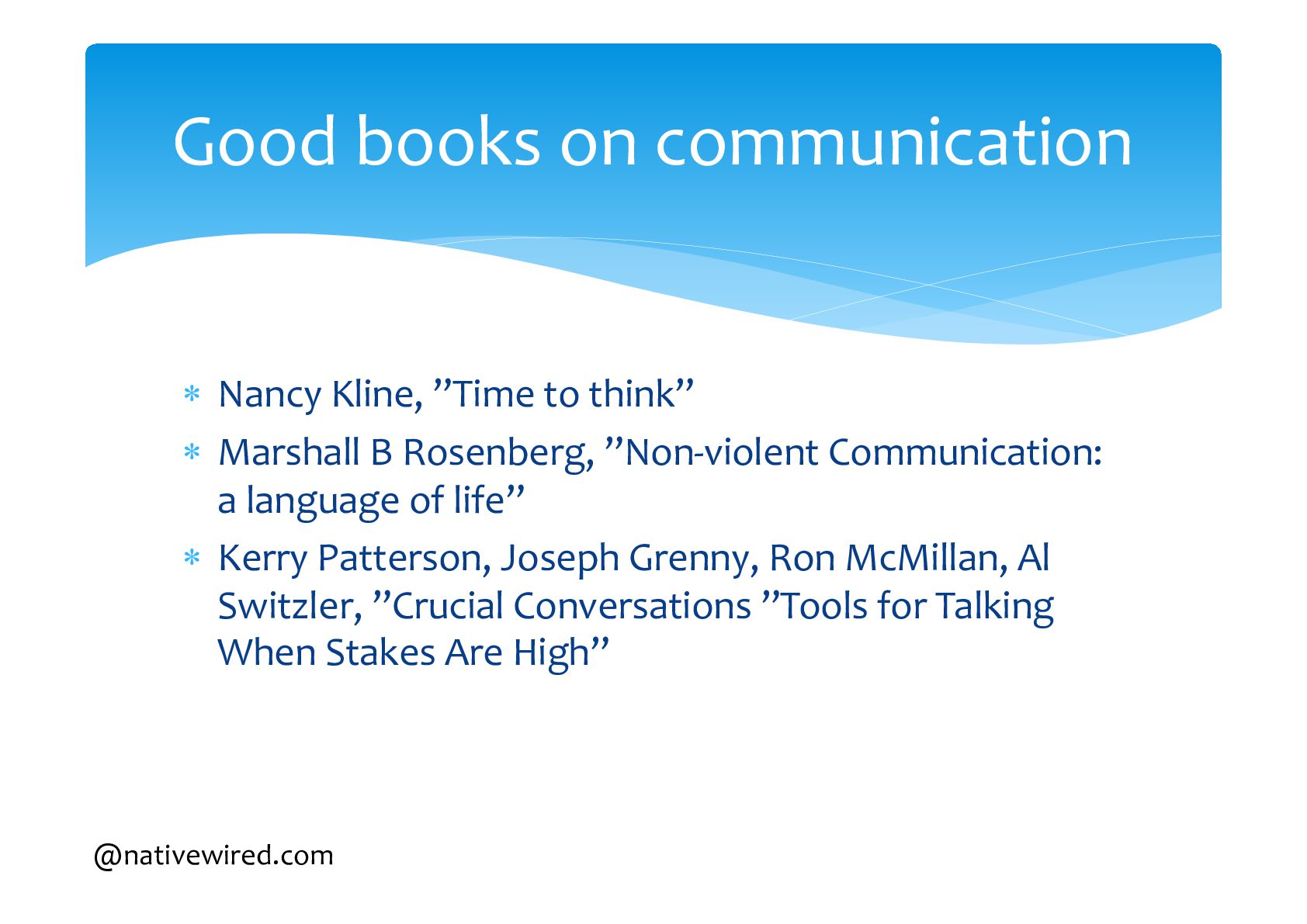
  26. @nativewired.com * Nancy Kline, ”Time to think” * Marshall B

    Rosenberg, ”Non-violent Communication: a language of life” * Kerry Patterson, Joseph Grenny, Ron McMillan, Al Switzler, ”Crucial Conversations ”Tools for Talking When Stakes Are High” Good books on communication
  27. @nativewired.com * First slide Photo by Sydney Latham on Unsplash

    * caution Photo by Dan Meyers on Unsplash Unsplash pics