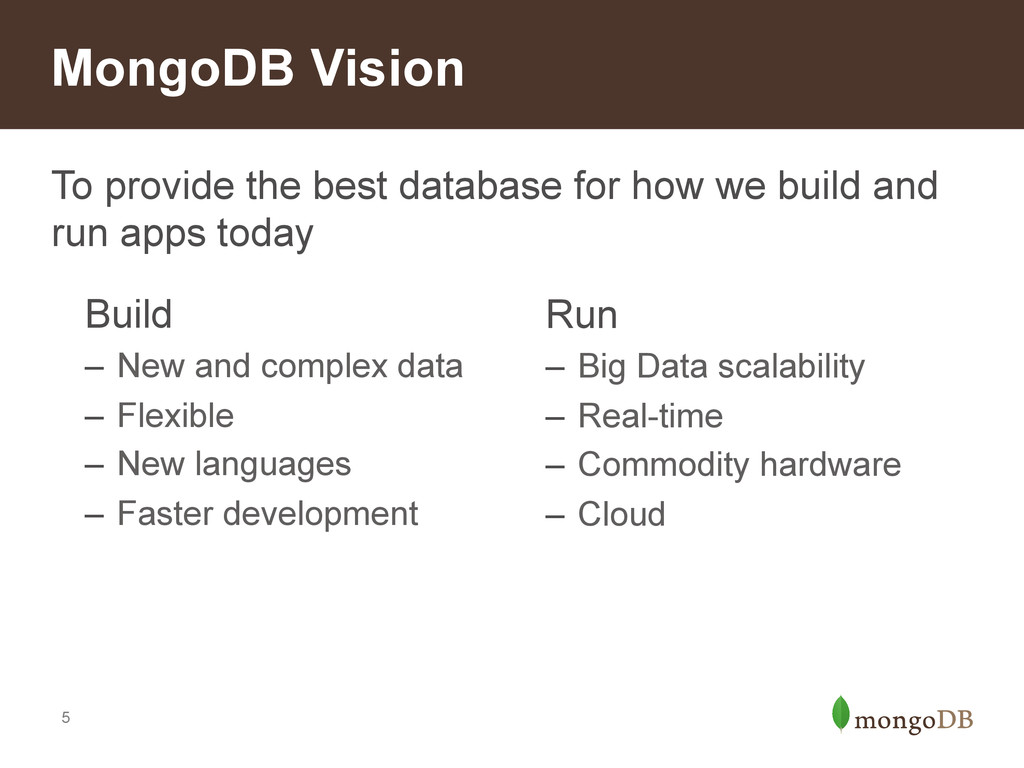
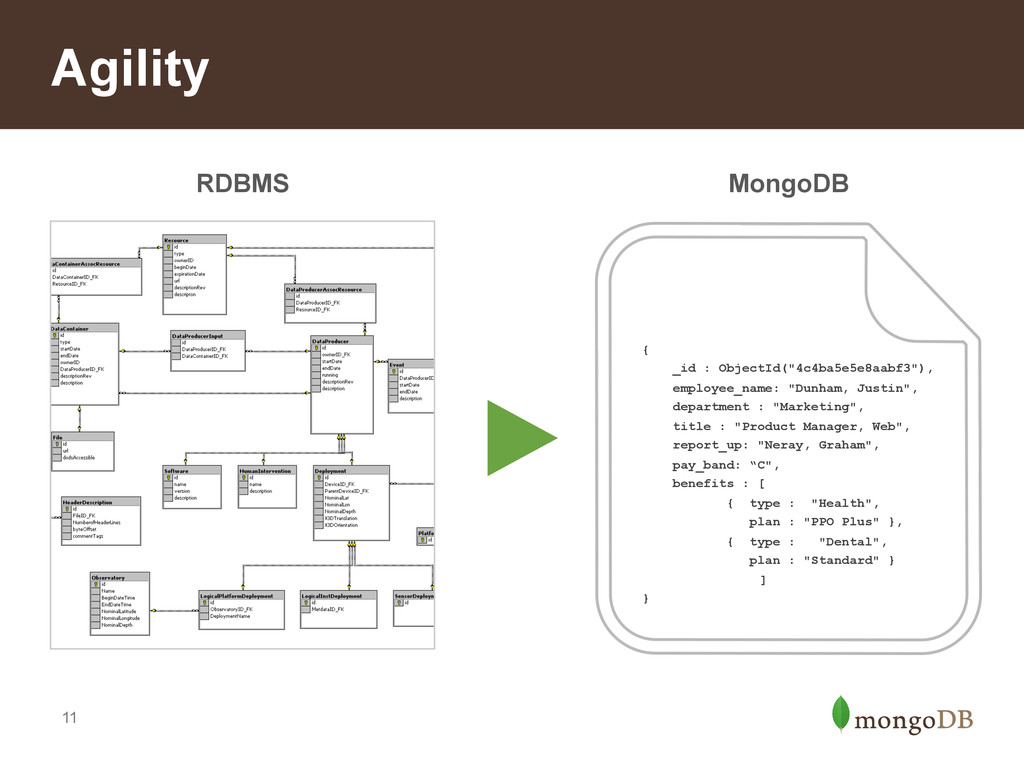
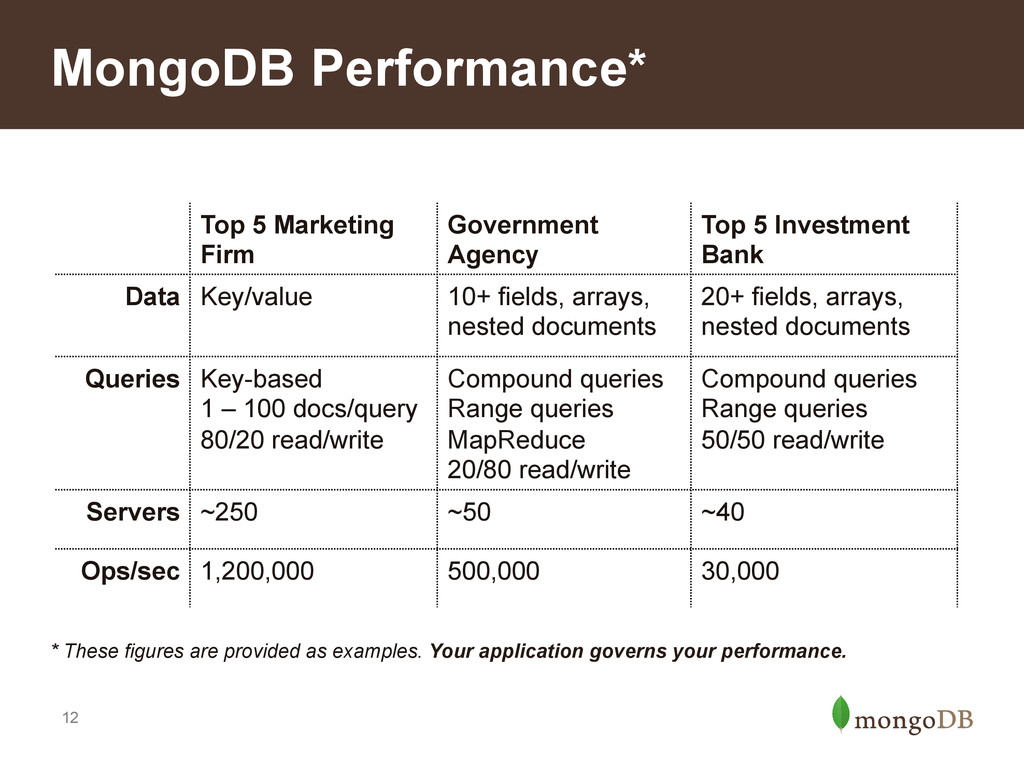
and run apps today MongoDB Vision Build – New and complex data – Flexible – New languages – Faster development Run – Big Data scalability – Real-time – Commodity hardware – Cloud
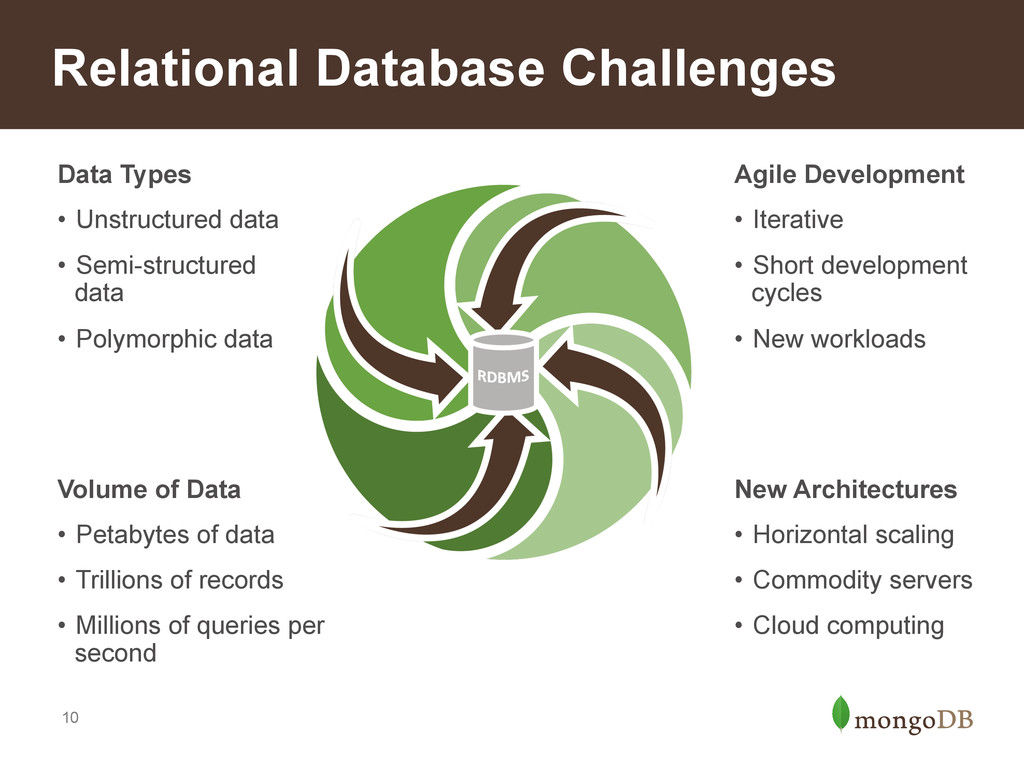
Semi-structured data • Polymorphic data Volume of Data • Petabytes of data • Trillions of records • Millions of queries per second Agile Development • Iterative • Short development cycles • New workloads New Architectures • Horizontal scaling • Commodity servers • Cloud computing
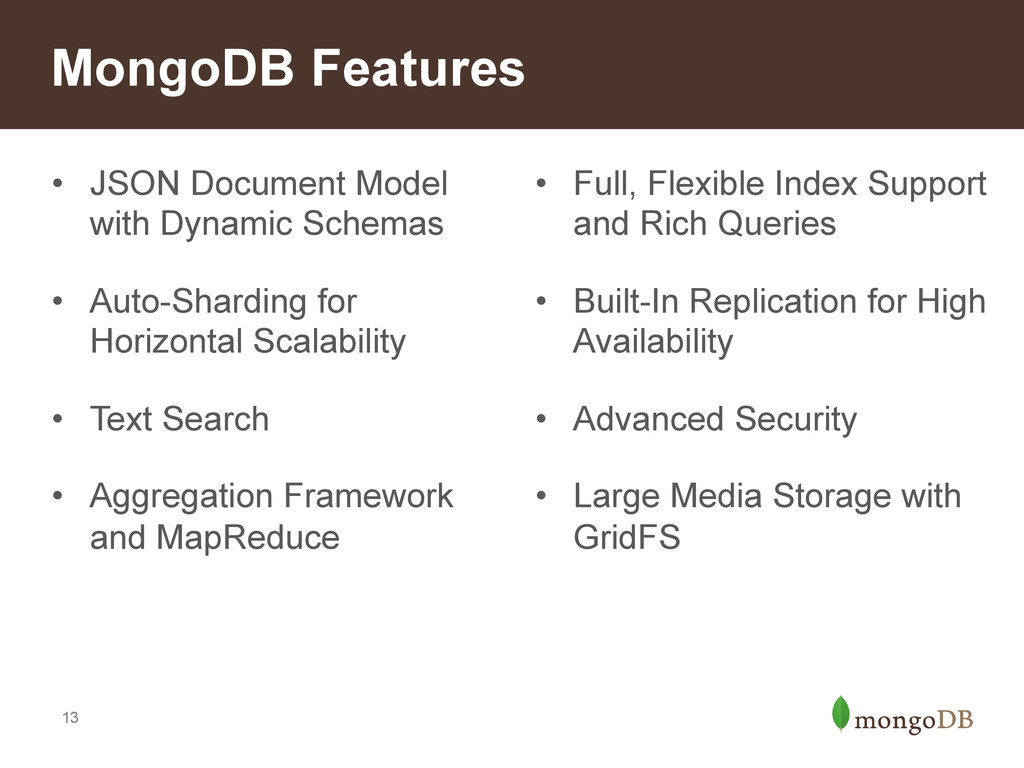
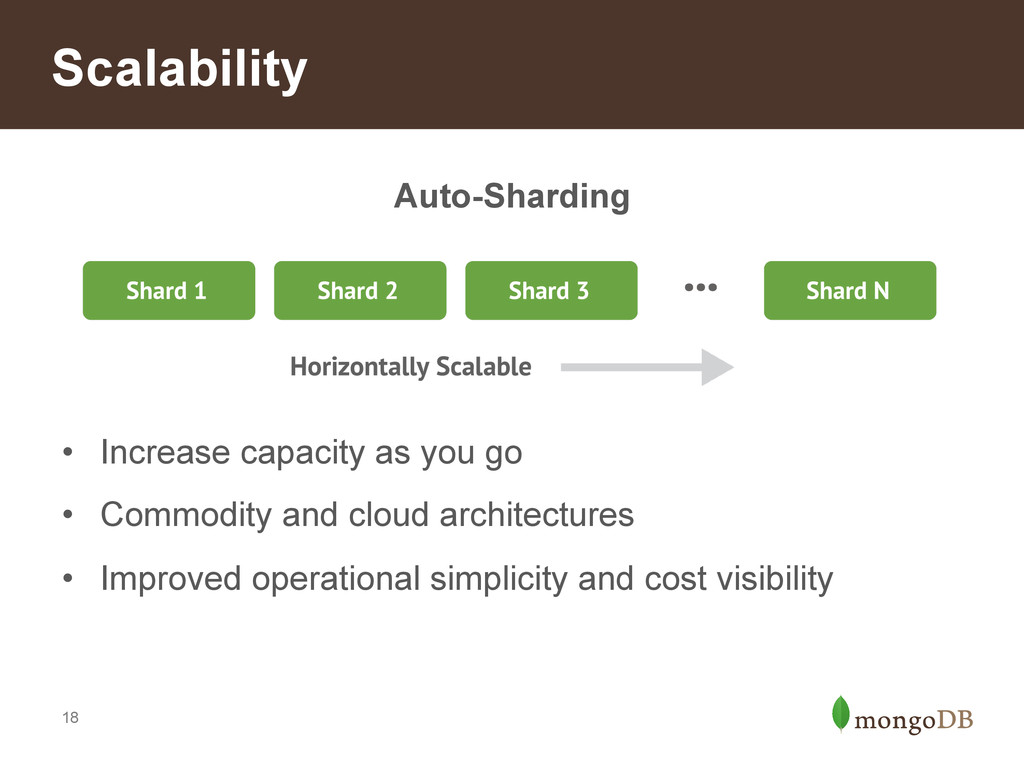
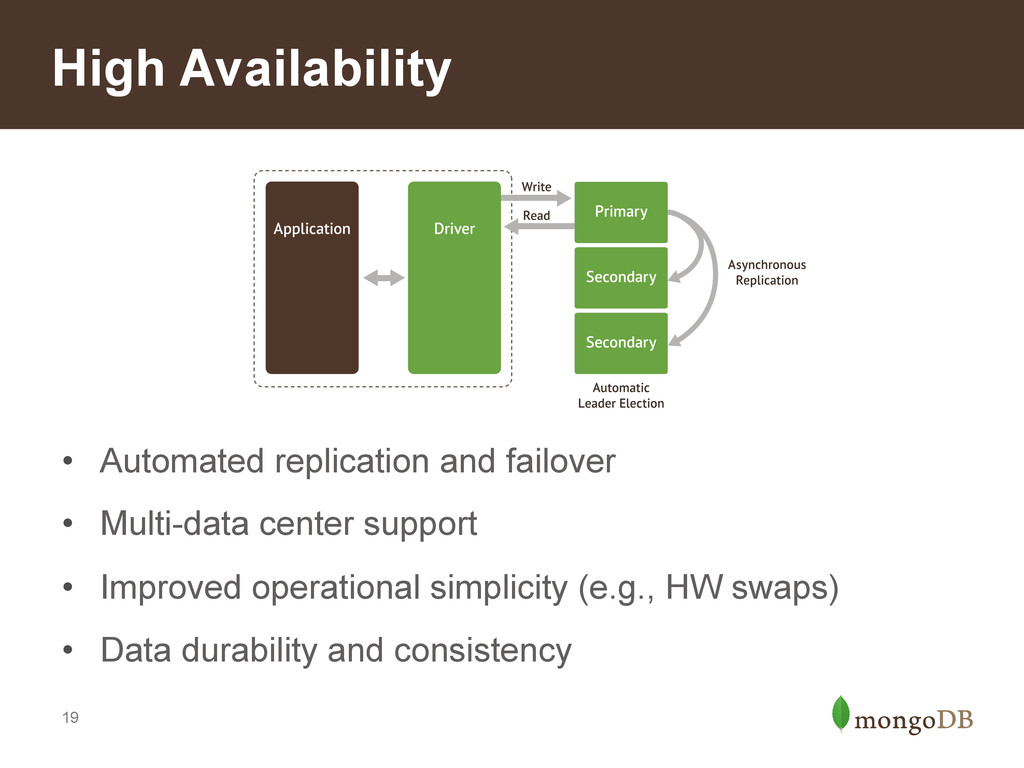
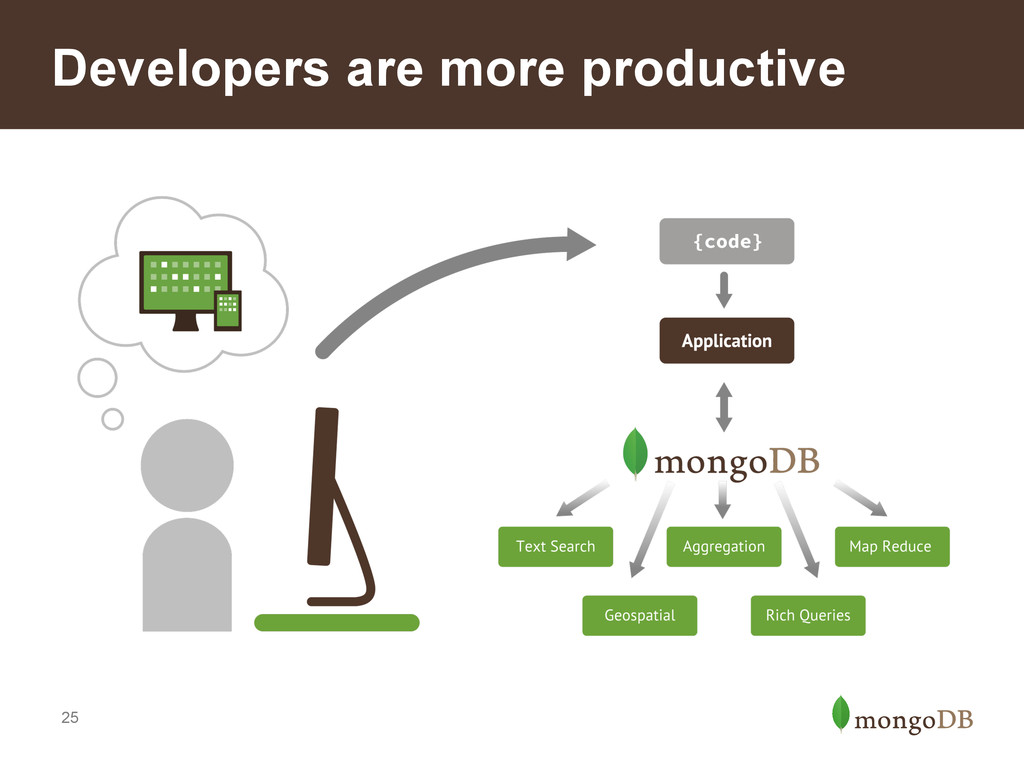
• Auto-Sharding for Horizontal Scalability • Text Search • Aggregation Framework and MapReduce • Full, Flexible Index Support and Rich Queries • Built-In Replication for High Availability • Advanced Security • Large Media Storage with GridFS
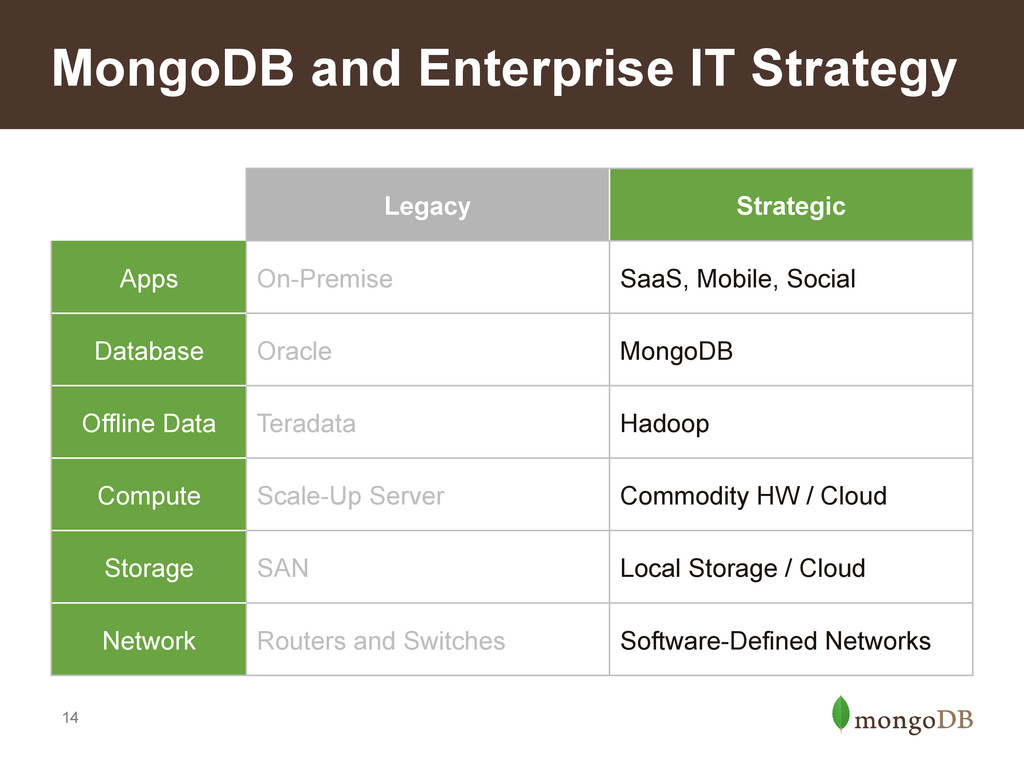
SaaS, Mobile, Social Database Oracle MongoDB Offline Data Teradata Hadoop Compute Scale-Up Server Commodity HW / Cloud Storage SAN Local Storage / Cloud Network Routers and Switches Software-Defined Networks
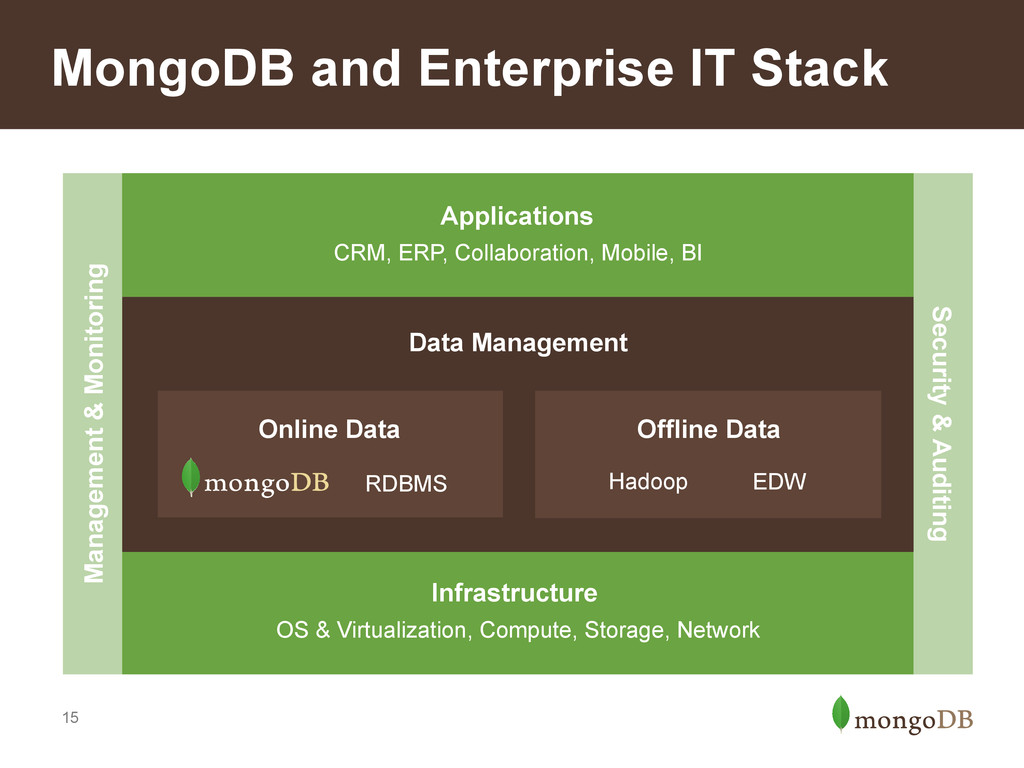
Monitoring Security & Auditing RDBMS CRM, ERP, Collaboration, Mobile, BI OS & Virtualization, Compute, Storage, Network RDBMS Applications Infrastructure Data Management Online Data Offline Data
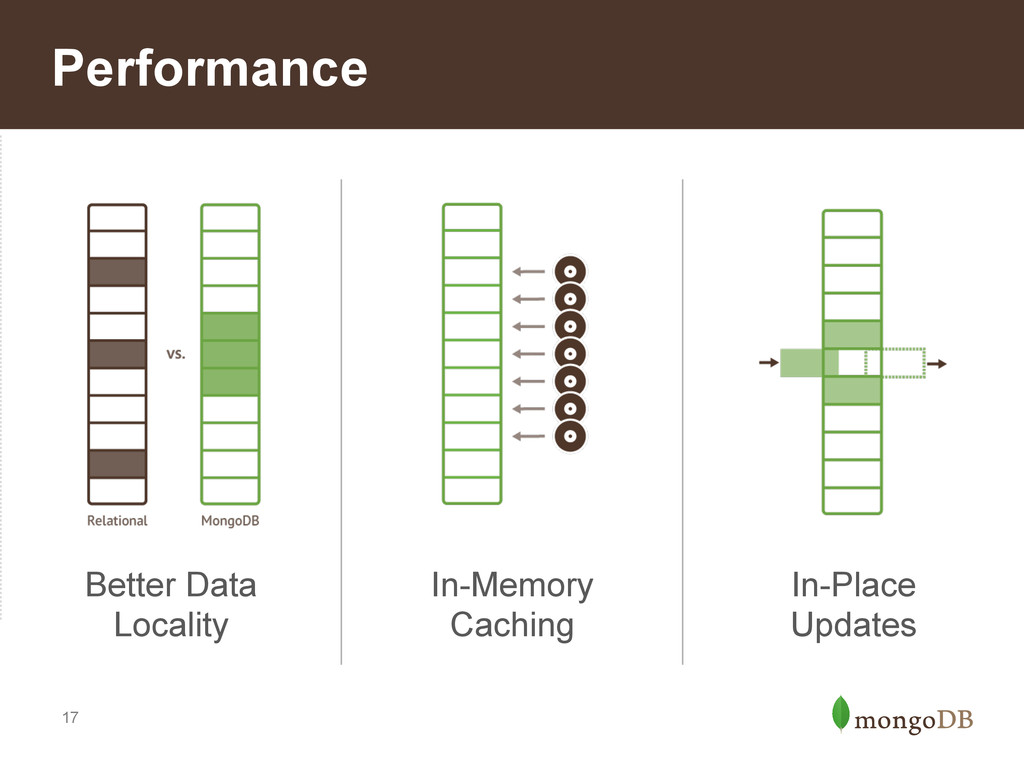
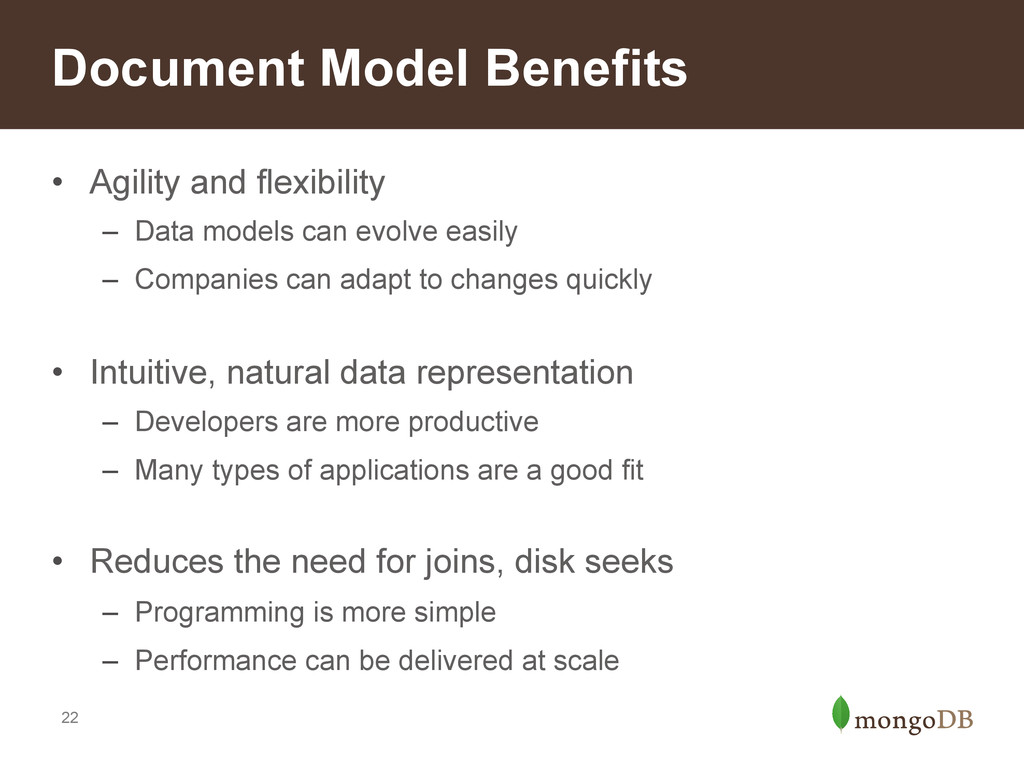
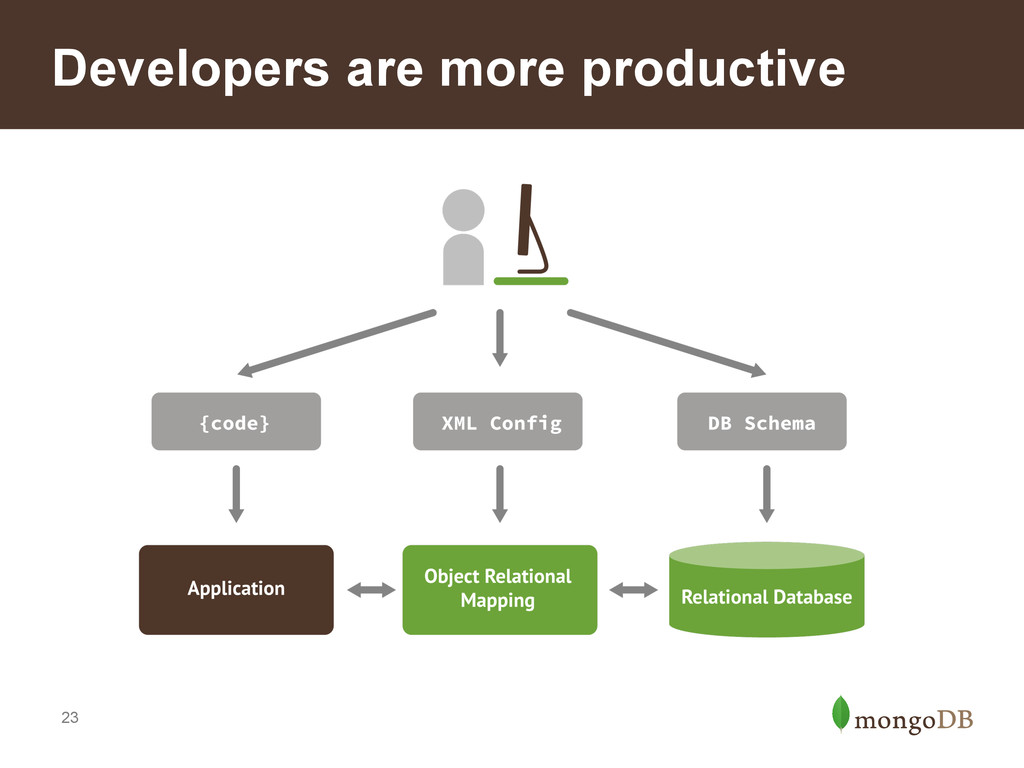
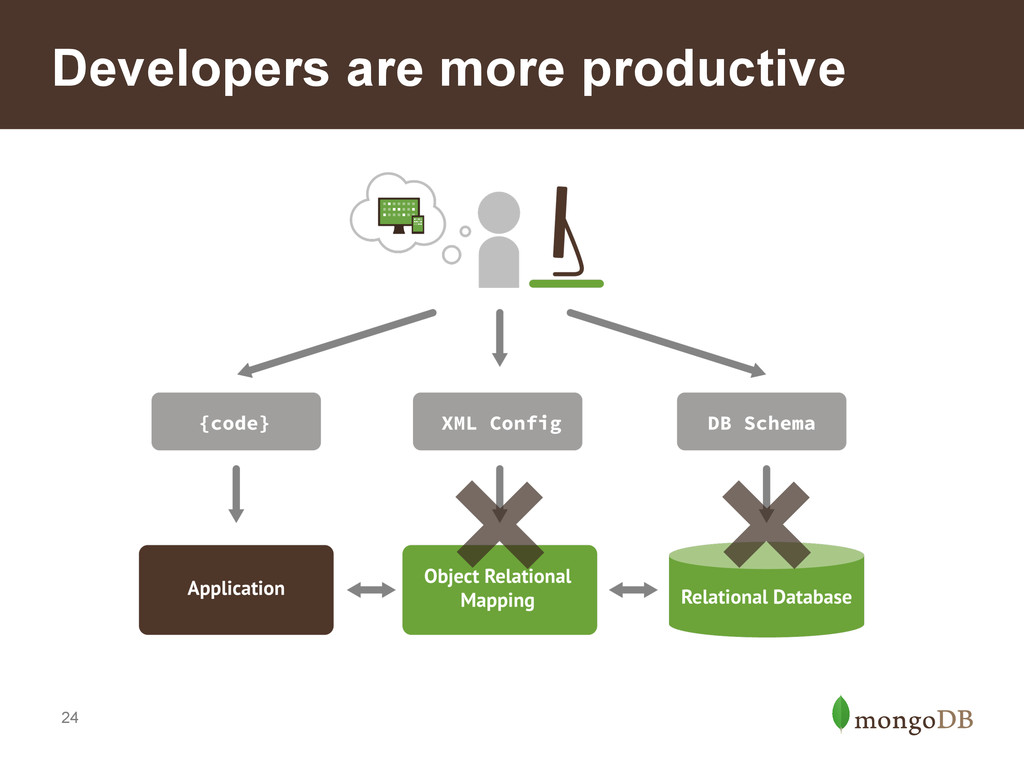
models can evolve easily – Companies can adapt to changes quickly • Intuitive, natural data representation – Developers are more productive – Many types of applications are a good fit • Reduces the need for joins, disk seeks – Programming is more simple – Performance can be delivered at scale
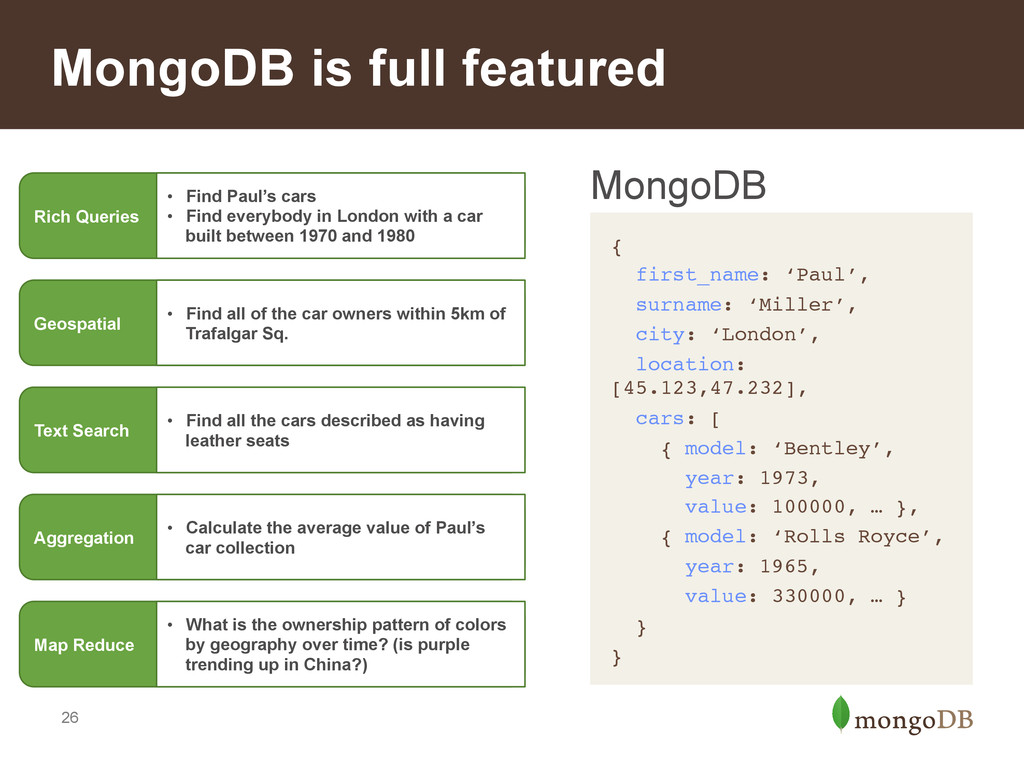
Paul’s cars • Find everybody in London with a car built between 1970 and 1980 Geospatial • Find all of the car owners within 5km of Trafalgar Sq. Text Search • Find all the cars described as having leather seats Aggregation • Calculate the average value of Paul’s car collection Map Reduce • What is the ownership pattern of colors by geography over time? (is purple trending up in China?) { ! first_name: ‘Paul’,! surname: ‘Miller’,! city: ‘London’,! location: [45.123,47.232],! cars: [ ! { model: ‘Bentley’,! year: 1973,! value: 100000, … },! { model: ‘Rolls Royce’,! year: 1965,! value: 330000, … }! }! }!
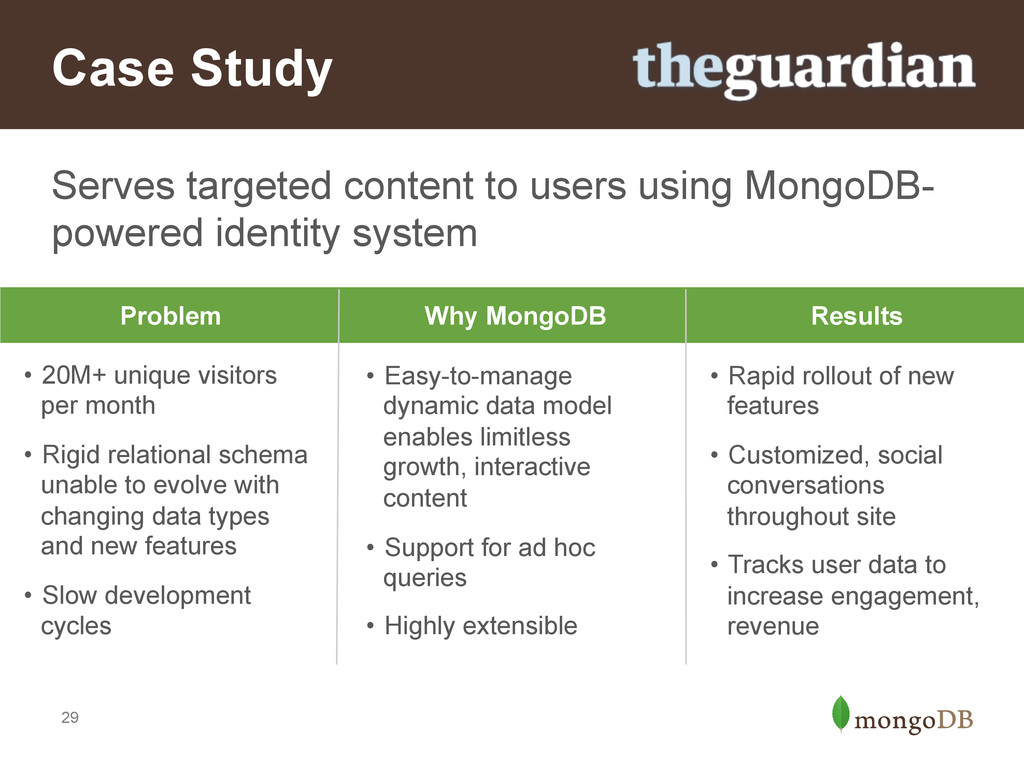
system Case Study Problem Why MongoDB Results • 20M+ unique visitors per month • Rigid relational schema unable to evolve with changing data types and new features • Slow development cycles • Easy-to-manage dynamic data model enables limitless growth, interactive content • Support for ad hoc queries • Highly extensible • Rapid rollout of new features • Customized, social conversations throughout site • Tracks user data to increase engagement, revenue
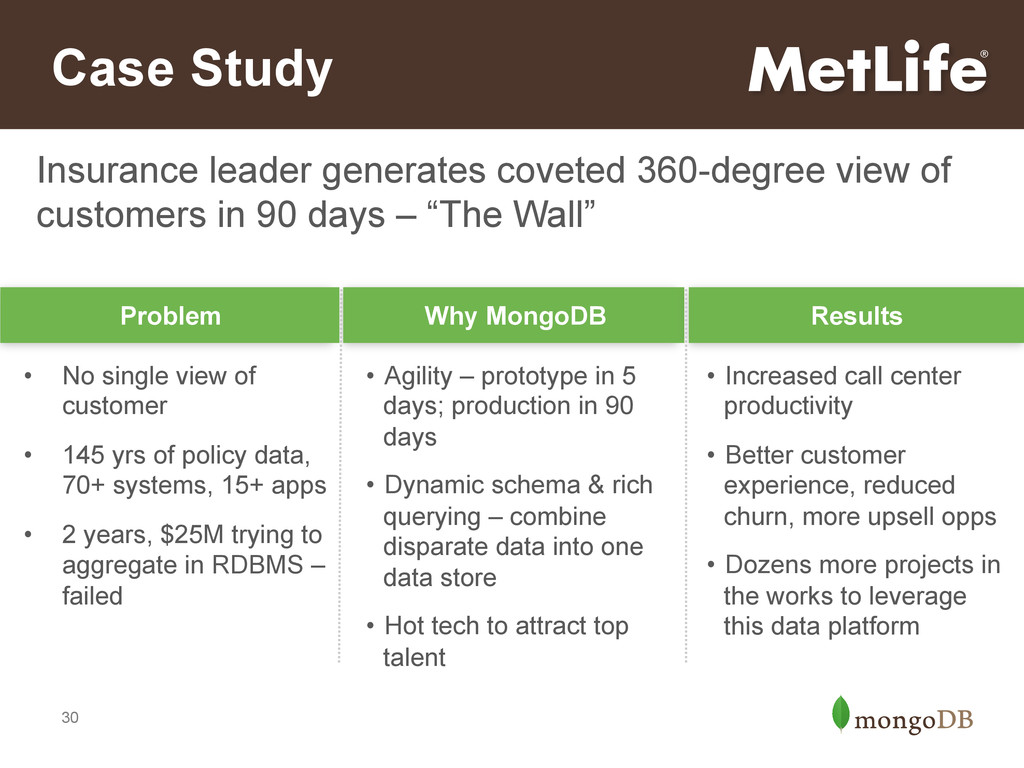
90 days – “The Wall” Case Study Problem Why MongoDB Results • No single view of customer • 145 yrs of policy data, 70+ systems, 15+ apps • 2 years, $25M trying to aggregate in RDBMS – failed • Agility – prototype in 5 days; production in 90 days • Dynamic schema & rich querying – combine disparate data into one data store • Hot tech to attract top talent • Increased call center productivity • Better customer experience, reduced churn, more upsell opps • Dozens more projects in the works to leverage this data platform
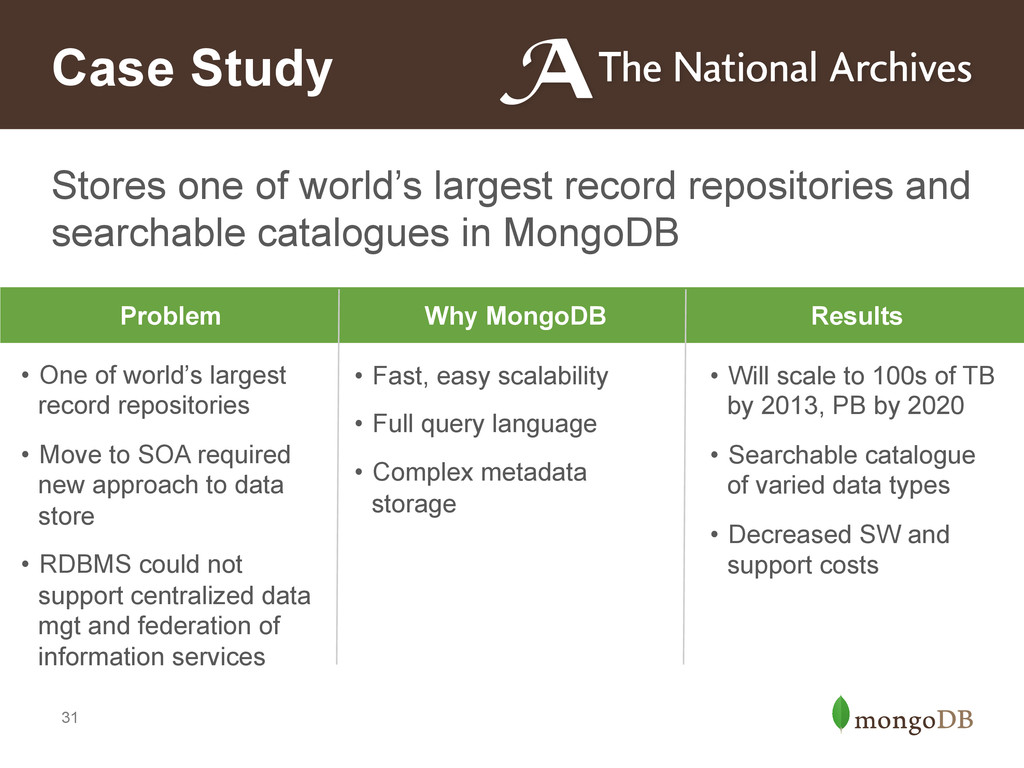
catalogues in MongoDB Case Study Problem Why MongoDB Results • One of world’s largest record repositories • Move to SOA required new approach to data store • RDBMS could not support centralized data mgt and federation of information services • Fast, easy scalability • Full query language • Complex metadata storage • Will scale to 100s of TB by 2013, PB by 2020 • Searchable catalogue of varied data types • Decreased SW and support costs
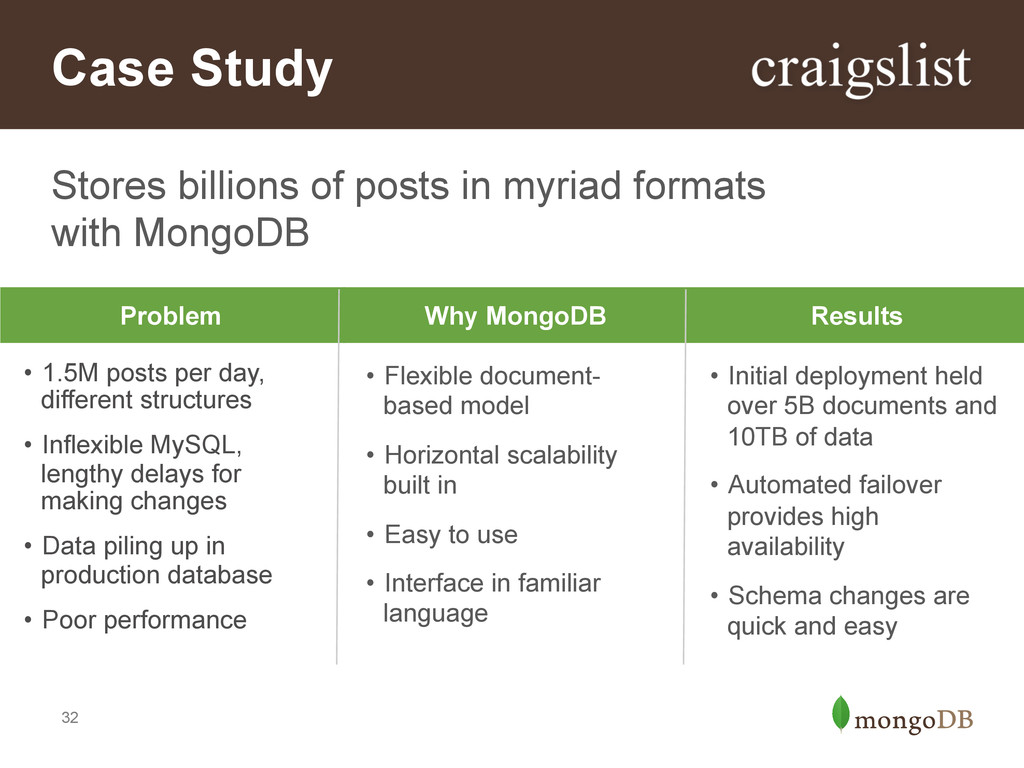
Case Study Problem Why MongoDB Results • 1.5M posts per day, different structures • Inflexible MySQL, lengthy delays for making changes • Data piling up in production database • Poor performance • Flexible document- based model • Horizontal scalability built in • Easy to use • Interface in familiar language • Initial deployment held over 5B documents and 10TB of data • Automated failover provides high availability • Schema changes are quick and easy
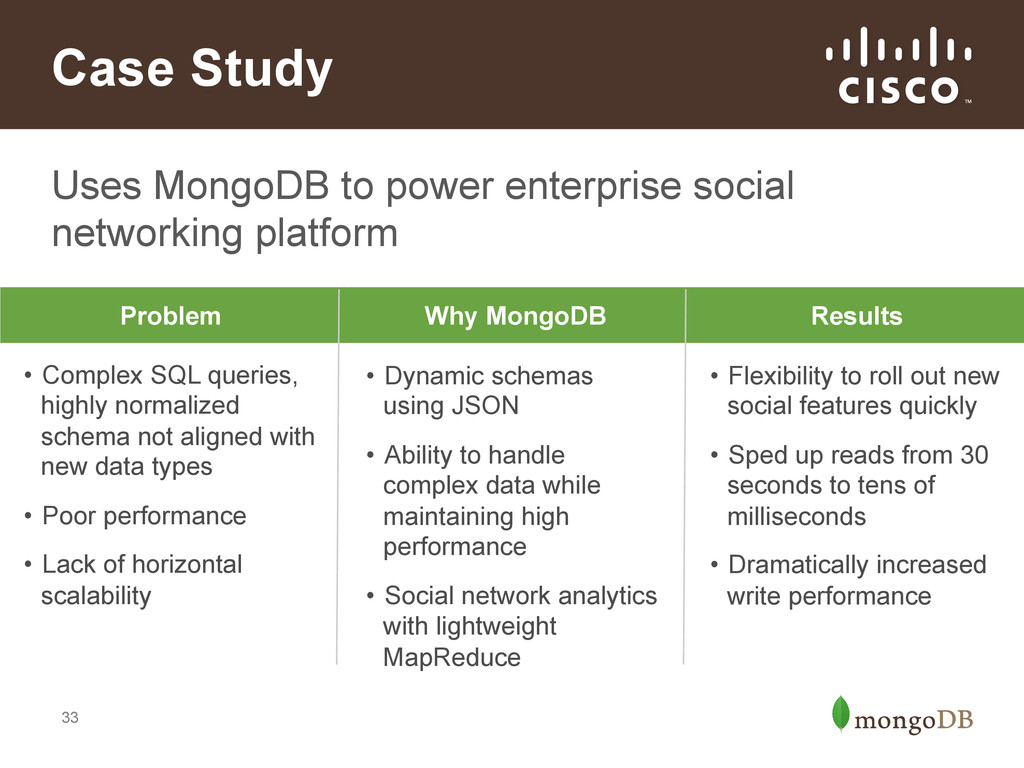
Study Problem Why MongoDB Results • Complex SQL queries, highly normalized schema not aligned with new data types • Poor performance • Lack of horizontal scalability • Dynamic schemas using JSON • Ability to handle complex data while maintaining high performance • Social network analytics with lightweight MapReduce • Flexibility to roll out new social features quickly • Sped up reads from 30 seconds to tens of milliseconds • Dramatically increased write performance


 nleite
 watany
 charlesmeaden
 leimatthew05
 zakiyama
 andyhume
 aleyda
 eileencodes
 cassininazir
 quramy
 davetheseo
 csswizardry
 inesmontani