Keio University’s Faculty of Policy Management in 1997, he worked at four private companies before becoming independent in 2009. He has been involved in network and database systems, Java Virtual Machine, mobile applications, and distributed systems. Takahiko Kawasaki He devised a unique architecture that modularizes and provides OAuth 2.0 / OpenID Connect implementations as SaaS — global standard technologies for Web API security and Identity Federation. In 2015, he founded Authlete, Inc. Currently, he participates in global standardization efforts and translates them into commercial implementations. Tech blog in English: https://darutk.medium.com Tech blog in Japanese: https://qiita.com/TakahikoKawasaki
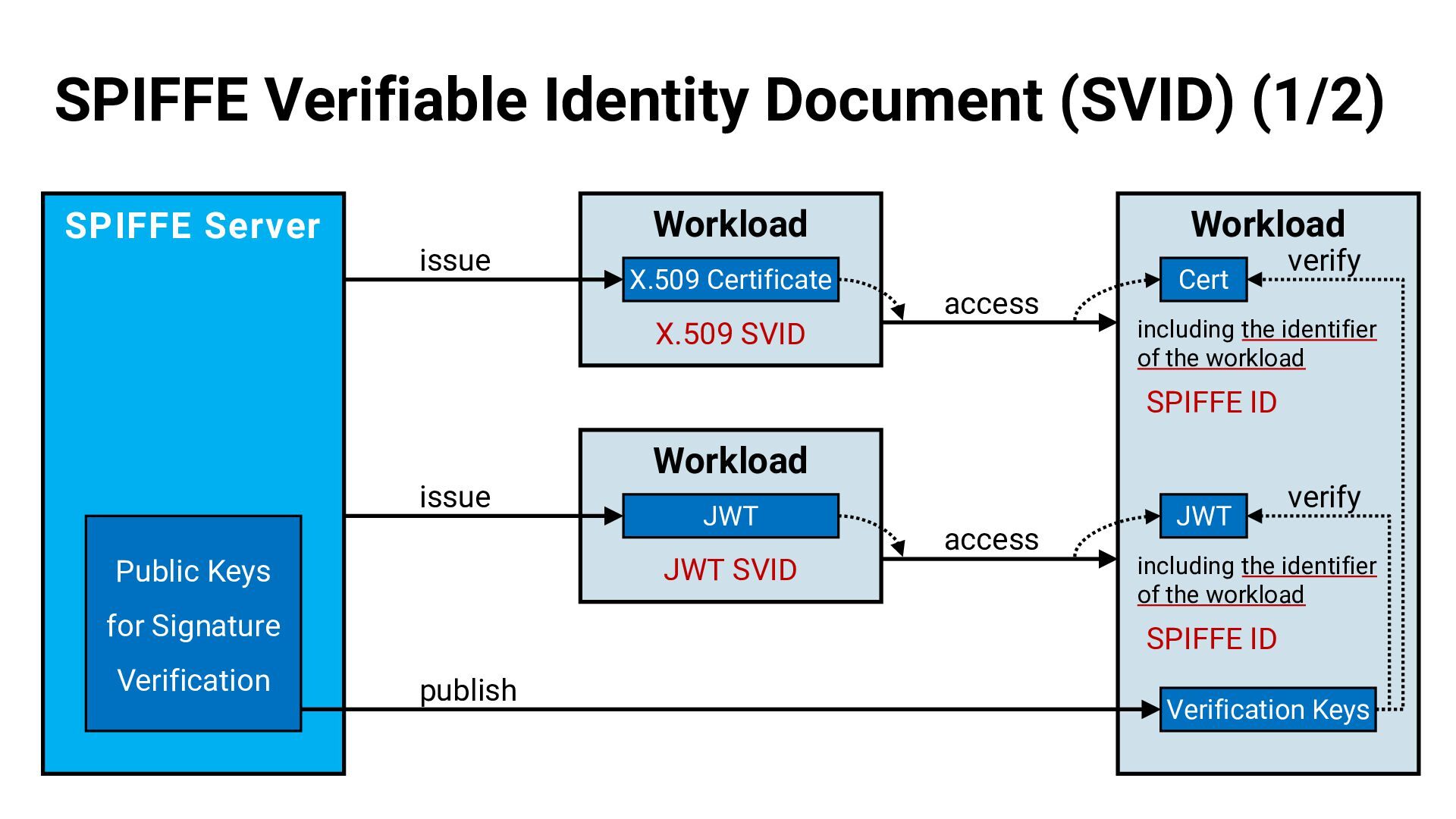
X.509 Certificate X.509 SVID Workload access Cert verify including the identifier of the workload SPIFFE ID issue JWT JWT SVID Public Keys for Signature Verification Workload access JWT verify including the identifier of the workload SPIFFE ID publish Verification Keys
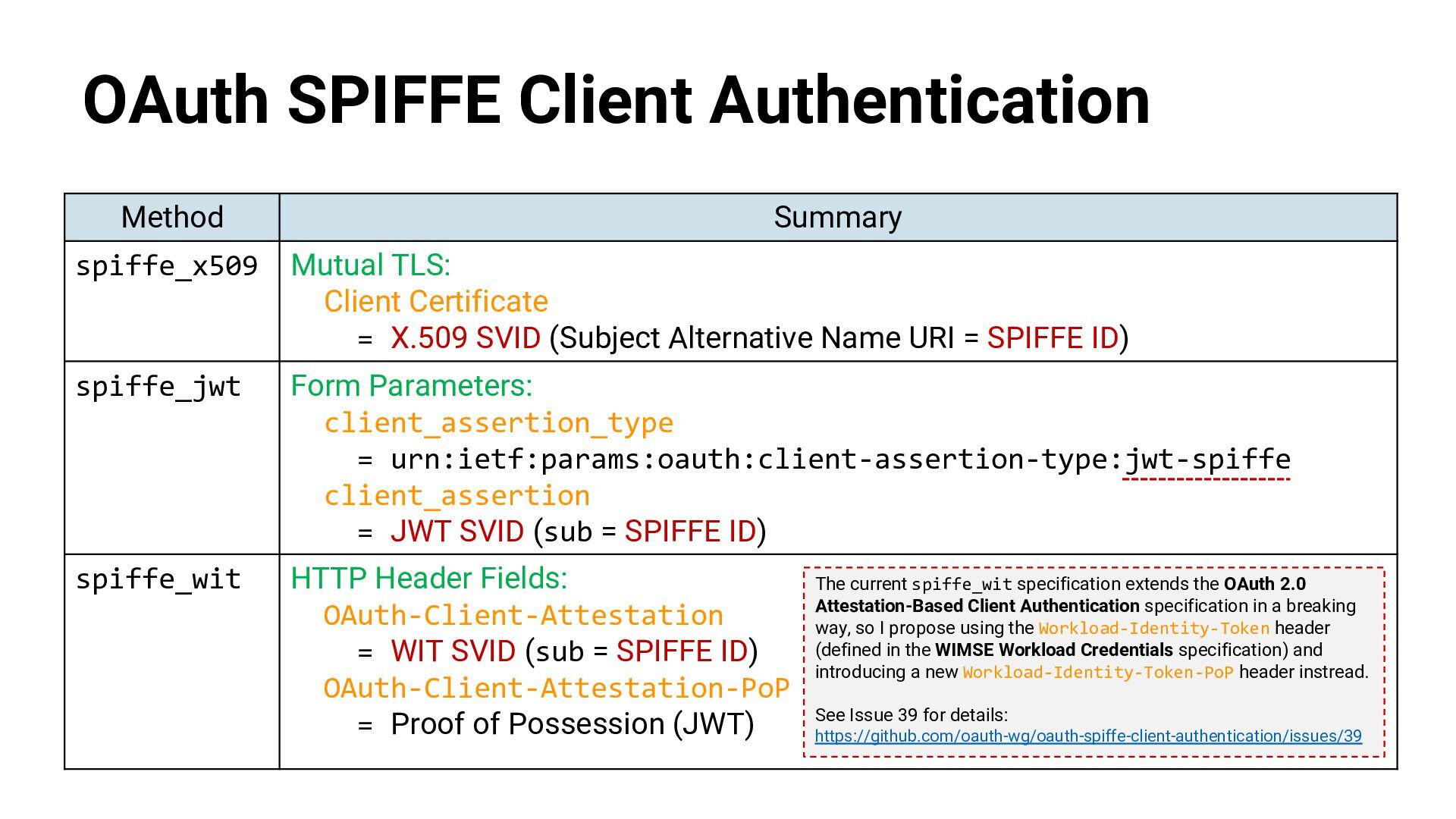
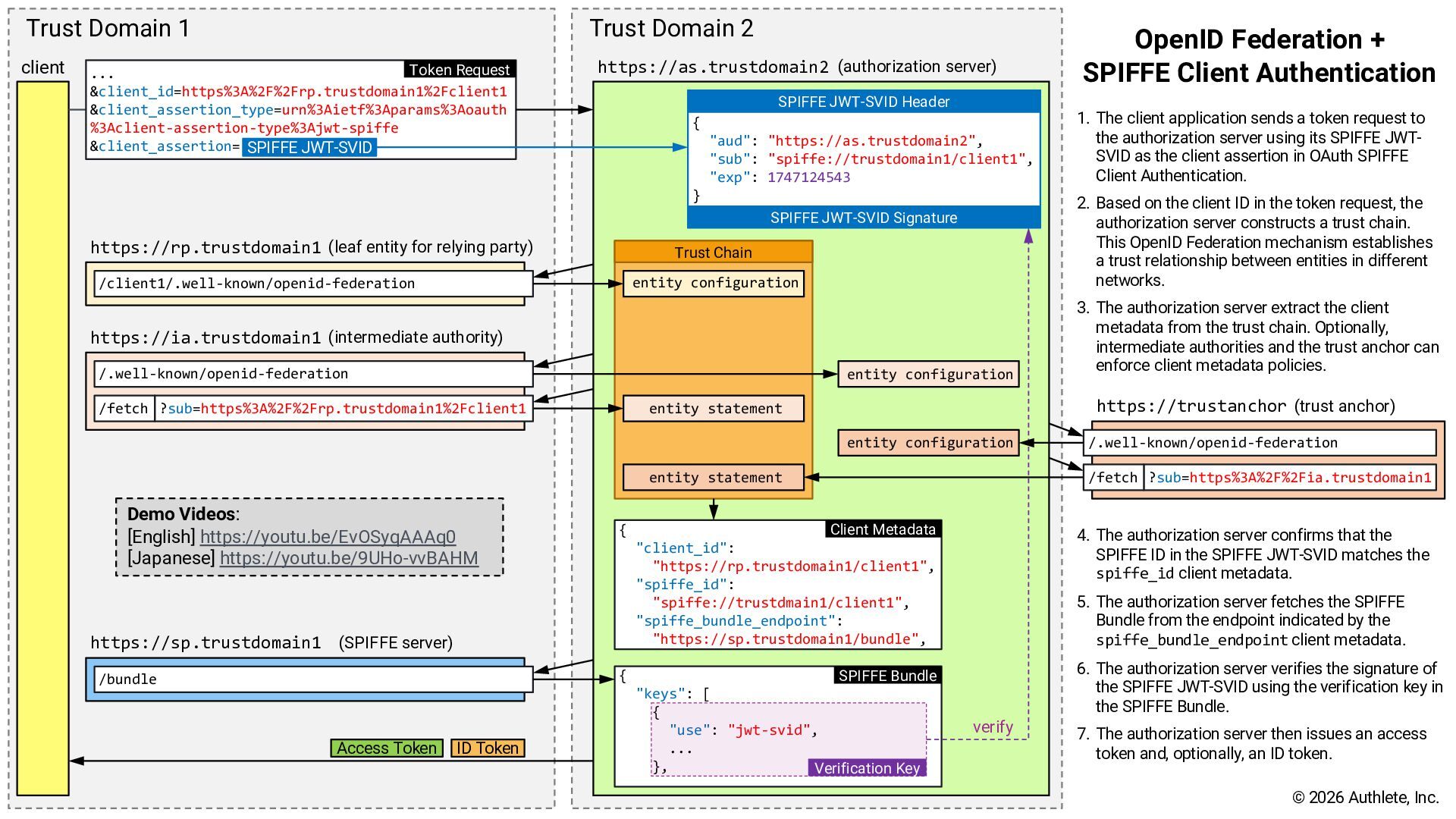
Certificate = X.509 SVID (Subject Alternative Name URI = SPIFFE ID) spiffe_jwt Form Parameters: client_assertion_type = urn:ietf:params:oauth:client-assertion-type:jwt-spiffe client_assertion = JWT SVID (sub = SPIFFE ID) spiffe_wit HTTP Header Fields: OAuth-Client-Attestation = WIT SVID (sub = SPIFFE ID) OAuth-Client-Attestation-PoP = Proof of Possession (JWT) The current spiffe_wit specification extends the OAuth 2.0 Attestation-Based Client Authentication specification in a breaking way, so I propose using the Workload-Identity-Token header (defined in the WIMSE Workload Credentials specification) and introducing a new Workload-Identity-Token-PoP header instread. See Issue 39 for details: https://github.com/oauth-wg/oauth-spiffe-client-authentication/issues/39

.png)

.png)
.png) oidfj
oidfj
 ufried
 mochizuki875
 ichiki1023
 mkdev10
 husengs7
 munakata
 sansantech
 harutiro
 oracle4engineer
 leveragestech
 ennael
 philipz
 jonyablonski
 tmiket
 livdayseo
 sarafernandez
 bermonpainter
 codingconduct
 gurzu
gurzu
 lcolladotor
 jonoalderson
 addyosmani
 joshbly
 erikaheidi