Share
Embed
Assignment Help London: A Student’s Guide to Better Academic Writing
Assignment Help London: A Student’s Guide to Better Academic Writing

olivia Smith
October 21, 2026
Transcript
6 slides
-
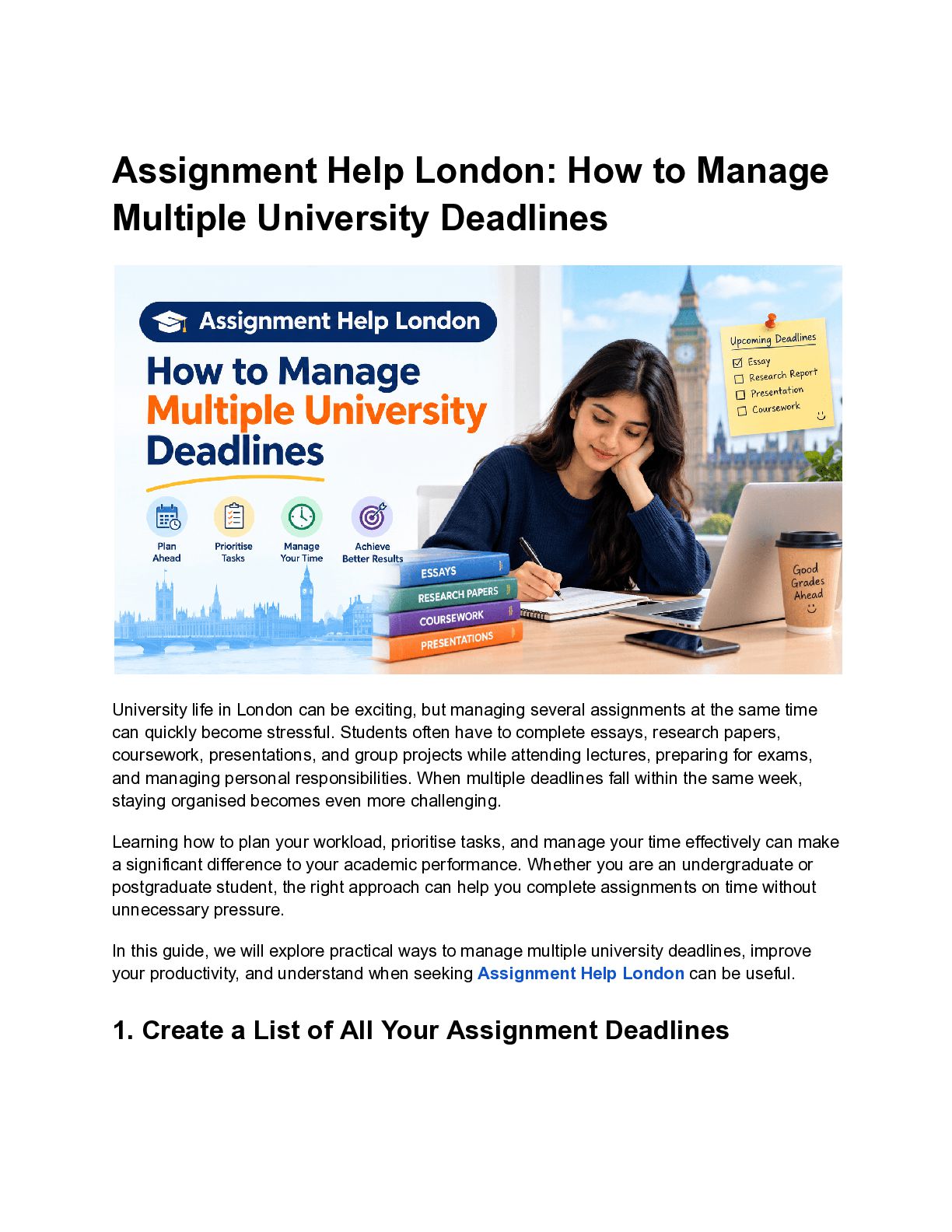
Assignment Help London: How to Manage Multiple University Deadlines University
life in London can be exciting, but managing several assignments at the same time can quickly become stressful. Students often have to complete essays, research papers, coursework, presentations, and group projects while attending lectures, preparing for exams, and managing personal responsibilities. When multiple deadlines fall within the same week, staying organised becomes even more challenging. Learning how to plan your workload, prioritise tasks, and manage your time effectively can make a significant difference to your academic performance. Whether you are an undergraduate or postgraduate student, the right approach can help you complete assignments on time without unnecessary pressure. In this guide, we will explore practical ways to manage multiple university deadlines, improve your productivity, and understand when seeking Assignment Help London can be useful. 1. Create a List of All Your Assignment Deadlines -
The first step towards managing multiple assignments is understanding exactly
what you need to complete. When you have several tasks in mind, it is easy to forget important submission dates or underestimate how much time a particular assignment requires. Start by creating a master list of all your upcoming academic tasks. Include the assignment title, submission date, word count, marking criteria, and estimated completion time. You can organise this information using a notebook, Google Calendar, Microsoft Excel, or a digital task management application. For example, if you have an essay due on Monday, a research report due on Wednesday, and a presentation due on Friday, listing these tasks will help you plan your week more realistically. Practical tip: Check your university's online learning platform regularly so you do not miss deadline changes, submission instructions, or additional requirements. 2. Prioritise Assignments According to Urgency and Difficulty Not every assignment requires the same amount of time or effort. A short reflection may take a few hours, while a 3,000-word research paper could require several days of reading, analysis, and writing. Instead of completing tasks randomly, prioritise them according to their deadlines, complexity, and importance. Consider the following factors: • • • • Urgency: Which assignment has the earliest submission date? Difficulty: Which task requires more research or technical knowledge? Workload: How much time will you need for writing, editing, and referencing? Importance: Are there specific assessment requirements that need additional attention? For example, if your research report is due in three days and your presentation is due next week, it may make sense to focus on the report first while reserving some time for presentation preparation. Breaking large tasks into smaller steps also makes them feel more manageable. -
3. Develop a Realistic Weekly Study Schedule A well-planned study
schedule can help you balance academic responsibilities without spending every waking hour working on assignments. Start by identifying your available study hours around lectures, part-time work, travel, and personal commitments. Then divide your available time between your assignments. For instance, you might spend Monday researching an essay, Tuesday drafting the main sections, Wednesday working on coursework, and Thursday reviewing your references and proofreading your work. Leave some flexibility in your schedule for unexpected tasks or assignments that take longer than expected. Avoid planning every minute of your day. A realistic timetable is more useful than an overly ambitious one that becomes difficult to follow. Remember: Consistent progress is usually more effective than leaving everything until the night before submission. 4. Break Large Assignments into Smaller Tasks Large assignments often feel overwhelming because students focus on the final word count instead of the individual steps involved. A better approach is to divide each assignment into manageable stages. For an academic essay, your stages might include: 1. Understanding the question and assessment criteria. 2. Conducting research and collecting reliable sources. 3. Creating an outline with clear headings. 4. Writing the introduction and main body. 5. Developing the conclusion. 6. Checking citations, grammar, and formatting. 7. Reviewing the final document before submission. Assign a deadline to each stage. This approach helps you monitor your progress and identify problems before they become urgent. If you are struggling to organise a complex task, exploring Assignment Help London resources may provide useful guidance on assignment structure, research techniques, and academic writing expectations. -
5. Improve Your Time Management and Avoid Distractions Poor time
management is one of the most common reasons students struggle with multiple deadlines. Social media notifications, unnecessary browsing, and frequent interruptions can reduce concentration and make simple tasks take longer. Try using focused study sessions. Work for 25–50 minutes, then take a short break before beginning the next session. During these sessions, keep your phone away, close unrelated browser tabs, and concentrate on one task at a time. You can also use the following techniques: • • • • • Set a daily goal, such as completing one section of an essay. Turn off unnecessary notifications while studying. Study in a quiet library or dedicated workspace. Track completed tasks to maintain motivation. Take regular breaks and get enough sleep. Avoid multitasking whenever possible. Switching repeatedly between an essay, a presentation, and your messages can make it harder to concentrate on detailed academic work. 6. Start Research Early and Use Reliable Sources Research often takes longer than students expect. Finding suitable academic sources, evaluating evidence, and organising references can consume a considerable amount of time. Begin research as soon as you receive an assignment rather than waiting until you are ready to write. Use your university library, academic journals, textbooks, and reputable research databases to find relevant information. Read the assignment brief carefully to understand the topic and identify the questions your work must answer. Keep a record of the sources you use, including authors, publication dates, titles, and page numbers where relevant. This will make referencing easier and reduce the risk of missing citations. If a topic is unfamiliar, ask your lecturer or tutor for clarification before spending hours researching the wrong subject. 7. Leave Enough Time for Editing and Proofreading -
Finishing the first draft does not mean an assignment is
ready for submission. Reviewing your work is essential for identifying unclear explanations, grammatical mistakes, missing references, and weaknesses in your argument. Ideally, complete your first draft before the actual deadline. Even a few hours away from the document can help you return with a fresh perspective. During your final review, check whether your assignment answers the question, follows the required structure, meets the word count, and uses the correct referencing style. Read the marking rubric again to make sure you have addressed the assessment criteria. You can also use your university's writing support services or ask a classmate to review the clarity of your argument. Submitting a well-reviewed assignment is generally better than rushing to upload an unfinished document at the last minute. 8. Know When to Ask for Academic Support Sometimes, careful planning is not enough. Students may face unfamiliar subjects, complicated research requirements, personal commitments, or several demanding assessments in the same week. In these situations, asking for support early can help you understand your options and manage your workload more effectively. Your university may offer academic writing workshops, library research guidance, tutor consultations, study skills sessions, and deadline extension procedures for eligible circumstances. Students looking for Assignment Help London can also explore academic guidance services for support with understanding assignment briefs, improving essay structure, developing research skills, and checking referencing. Choose support that matches your actual needs, review the service terms carefully, and follow your university's academic integrity policy. Any submitted work should reflect your own understanding and comply with your institution's rules. If an unexpected situation affects your ability to meet a deadline, contact your university as early as possible to discuss the available options. 9. Maintain a Healthy Balance Between Study and Personal Life -
Managing several university deadlines does not mean you should sacrifice
your health or personal life. Working continuously without sufficient rest can affect concentration, motivation, and the quality of your work. Try to maintain regular sleeping hours, eat balanced meals, stay physically active, and take short breaks throughout the day. Set realistic daily targets instead of expecting yourself to complete every task at once. If your schedule becomes unmanageable, review your priorities and seek advice rather than allowing stress to build. A balanced routine helps you remain focused and maintain steady progress throughout the academic term. Conclusion Managing multiple university deadlines becomes easier when you plan ahead, prioritise important tasks, and divide large assignments into smaller steps. A realistic study schedule, effective research habits, and enough time for proofreading can help you submit better work with less last-minute pressure. If you are studying at a London university, start by reviewing your upcoming deadlines and creating a clear action plan for the week. When you need additional guidance, university study support and suitable Assignment Help London resources can help you develop stronger academic skills. The key is to start early, stay consistent, and ask for help before a small challenge becomes a major problem. With the right habits, you can manage your workload more confidently and make better use of your time at university.
 oliviasmith9
 tamaranovitovic
 rabernat
 varn
 ryanjones
 nikkihalliwell
 csswizardry
 marktimemedia
 aleyda
 tapps
 mfonobong
 pedronauck
 marketingsoph