Upgrade to Pro — share decks privately, control downloads, hide ads and more …

AI and ML in mobile apps

AI and ML in mobile apps

I gave a talk on the basics of Artificial Intelligence and Machine Learning in Android Developers Meetup in Gurgaon, India.
In this session I explained the basics of AI/ML, how ML is different from AI and also give brief introduction to Deep learning. I explained how ML works and what are basic types of ML - Supervised Learning, unsupervised learning and Reinforcement learning. What are the applications and most recent prominent examples of ML. And then I moved on to introduce the major frameworks for developers in this field. I gave brief introduction to Google Cloud vision, OpenCV, Pytorch, AWS Rekognition and finally ML Kit from Google. I explained ML kit in detail and how developers can use it. I also gave a demo on ML kit.

Avatar for Paramvir Singh

Paramvir Singh

December 08, 2018

More Decks by Paramvir Singh

Other Decks in Technology

Transcript

  1. Hello! I am Paramvir Singh I am Android developer and

    consultant. You can find me at: @paramvirsingh88 2
  2. Agenda ◎ Understand AI and ML ◎ Different tools and

    frameworks ◎ Using ML in mobile apps - ML Kit 3
  3. “ Artificial intelligence would be the ultimate version of Google.

    The ultimate search engine that would understand everything on the web. —Larry Page 5
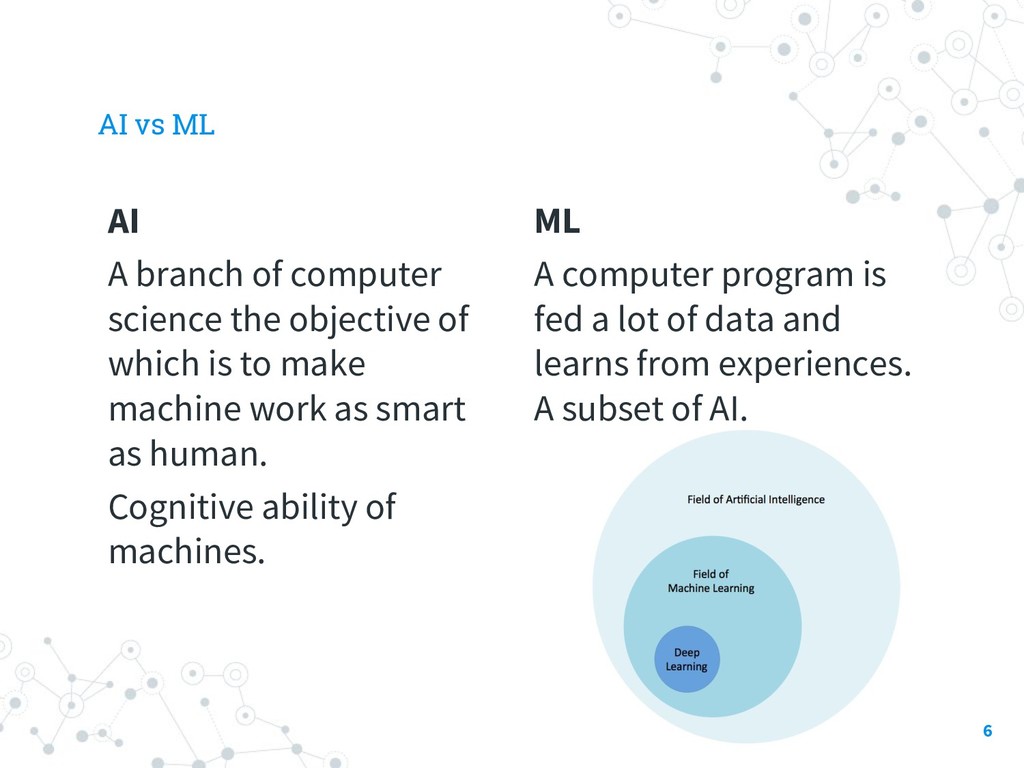
  4. AI A branch of computer science the objective of which

    is to make machine work as smart as human. Cognitive ability of machines. AI vs ML ML A computer program is fed a lot of data and learns from experiences. A subset of AI. 6
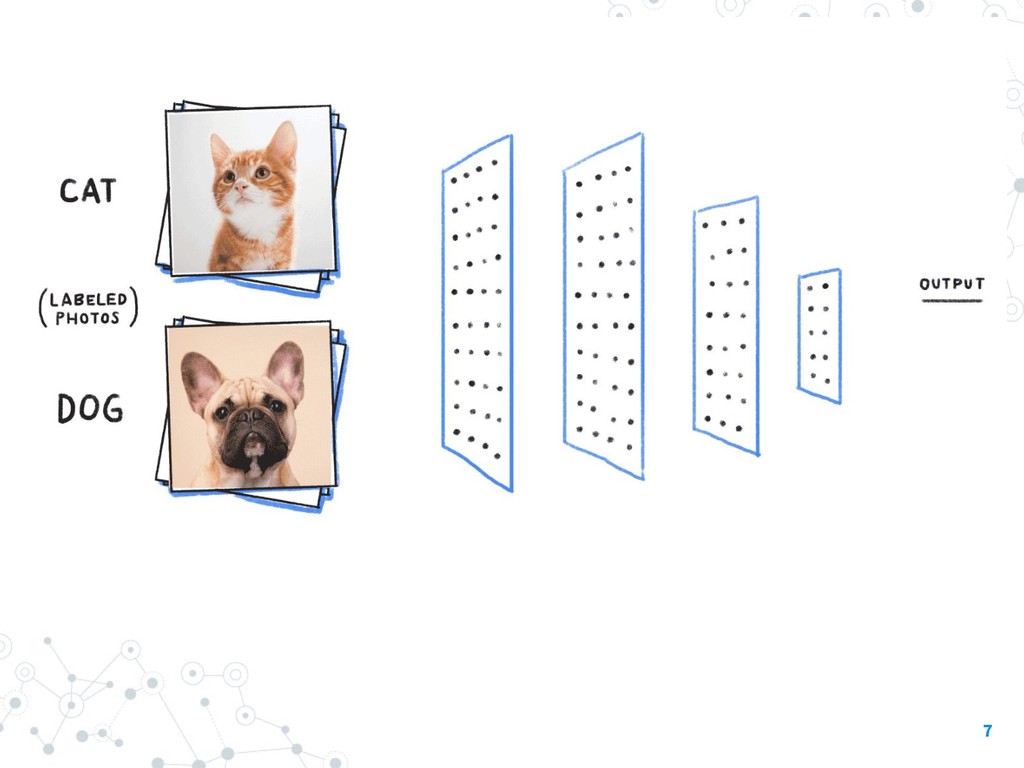
  5. 7

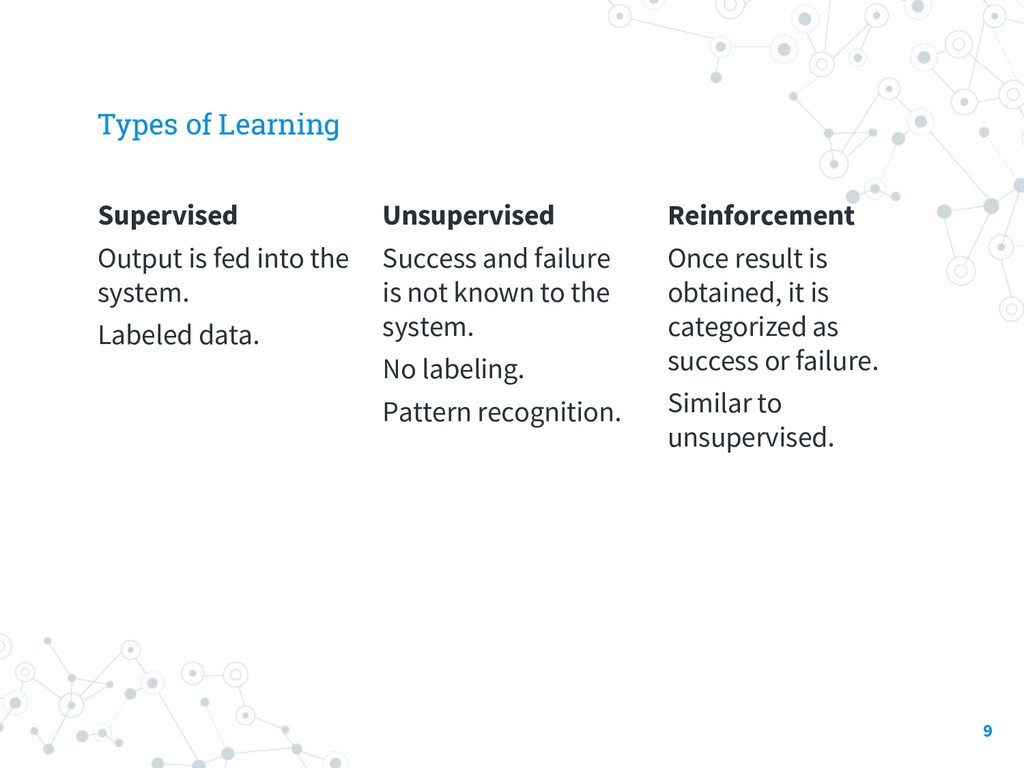
  6. Types of Learning Supervised Output is fed into the system.

    Labeled data. Unsupervised Success and failure is not known to the system. No labeling. Pattern recognition. Reinforcement Once result is obtained, it is categorized as success or failure. Similar to unsupervised. 9
  7. Understanding Machine Learning ◎ Convolution matrix ◎ Deep neural network,

    tensors ◎ Dynamic computation, computational graphs ◎ Automatic differentiation ◎ Relation Extraction, Coreference Resolution 10
  8. Understanding Machine Learning ◎ Convolution matrix ◎ Deep neural network,

    tensors ◎ Dynamic computation, computational graphs ◎ Automatic differentiation ◎ Relation Extraction, Coreference Resolution 11
  9. Instead we will go the easier route ◎ Data ◎

    Model ◎ Training ◎ Learning ◎ Experience ◎ Decision 12
  10. How it’s all spun together • Huge datasets required •

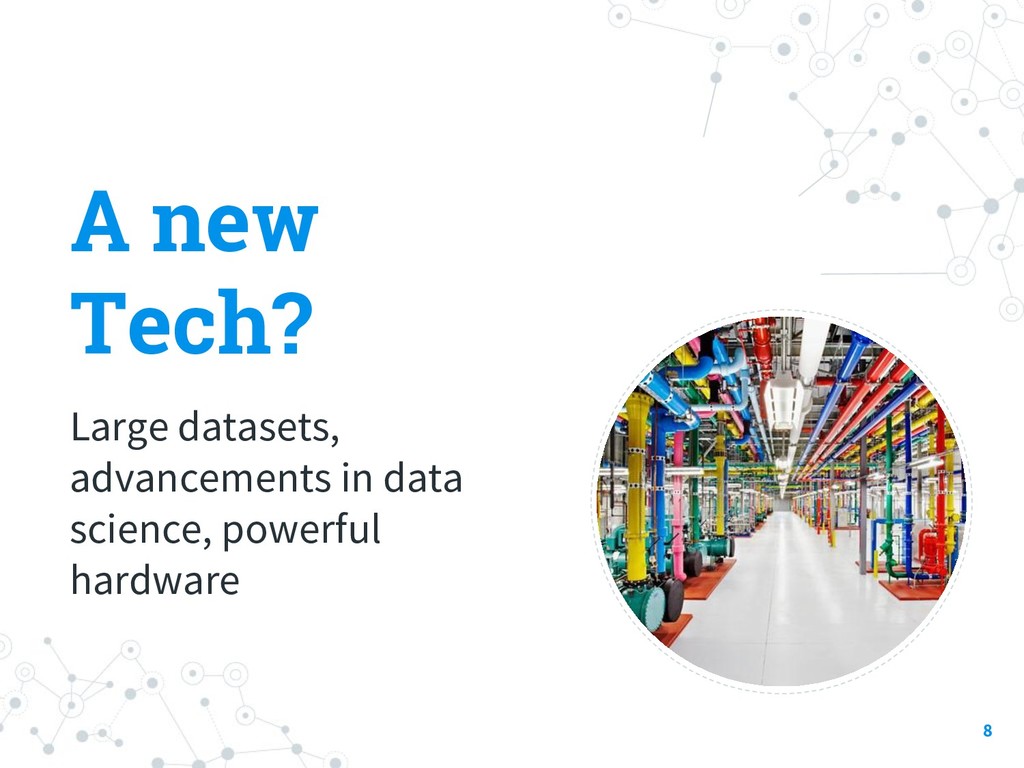
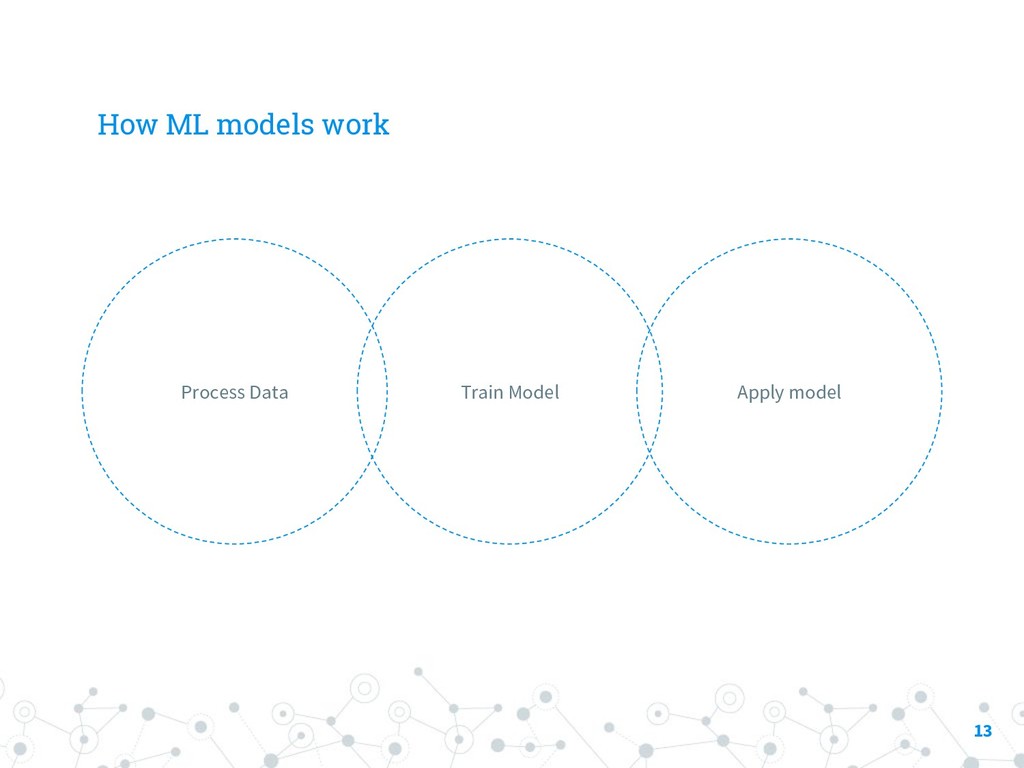
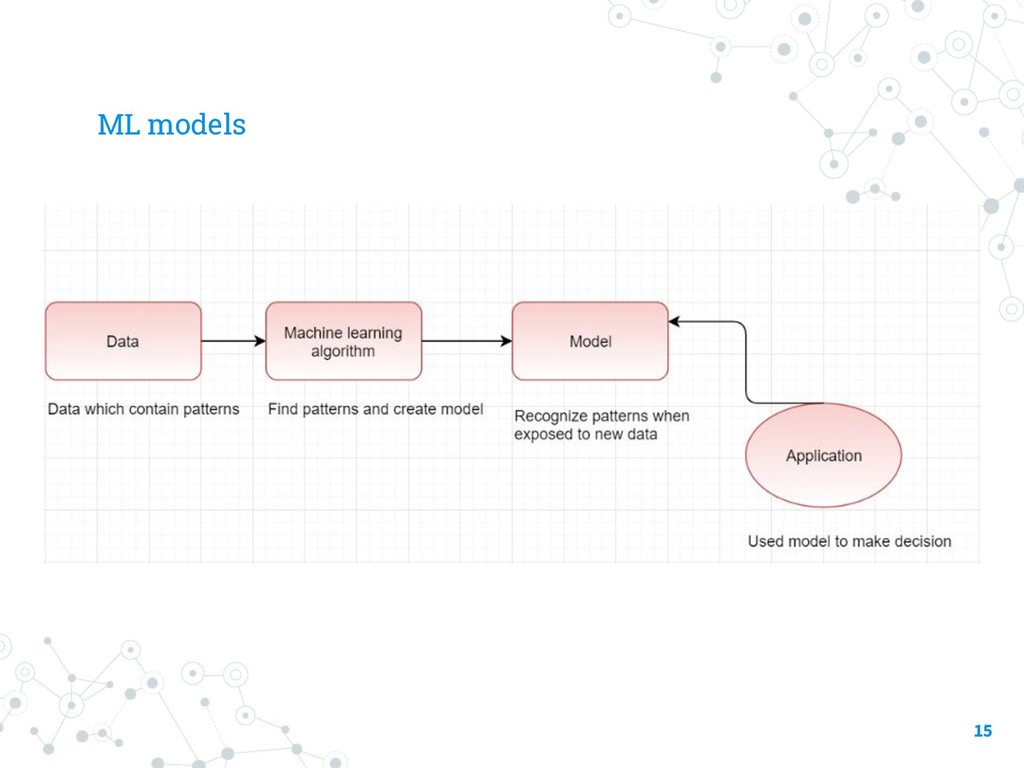
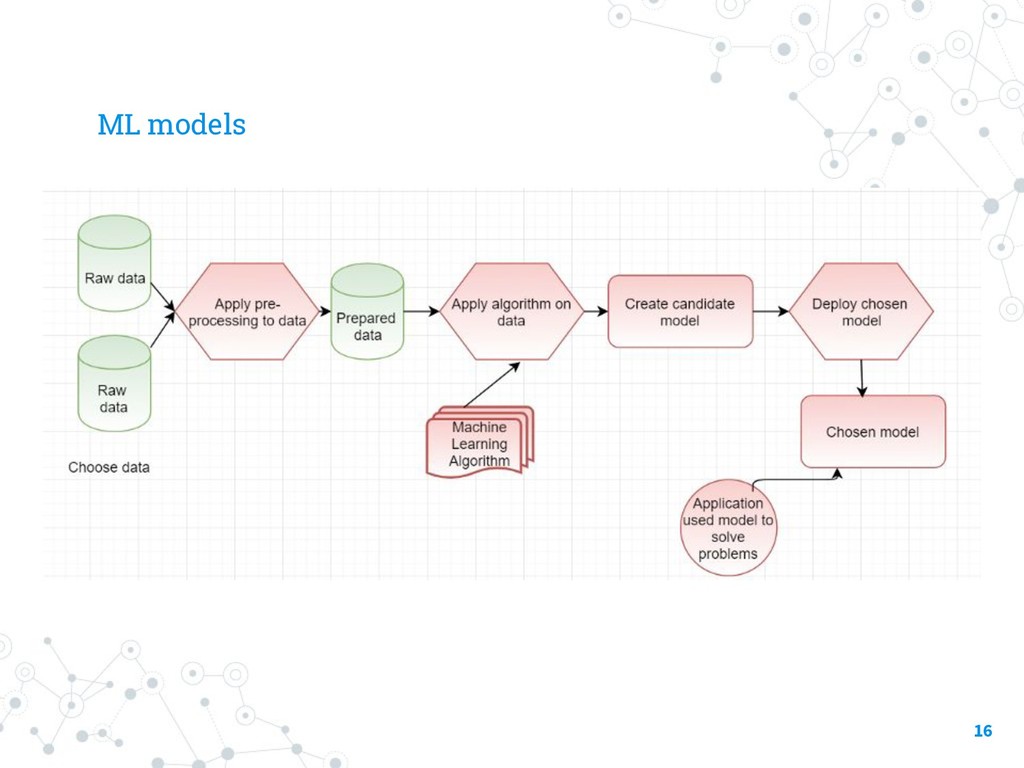
    Create and train models • Choose best model • Apply the model 14
  11. Applications • Image processing • NLP and Speech recognition •

    Predictions ◦ Diagnostic ◦ Business and customers ◦ Natural events • Robotics/real time decisions 17
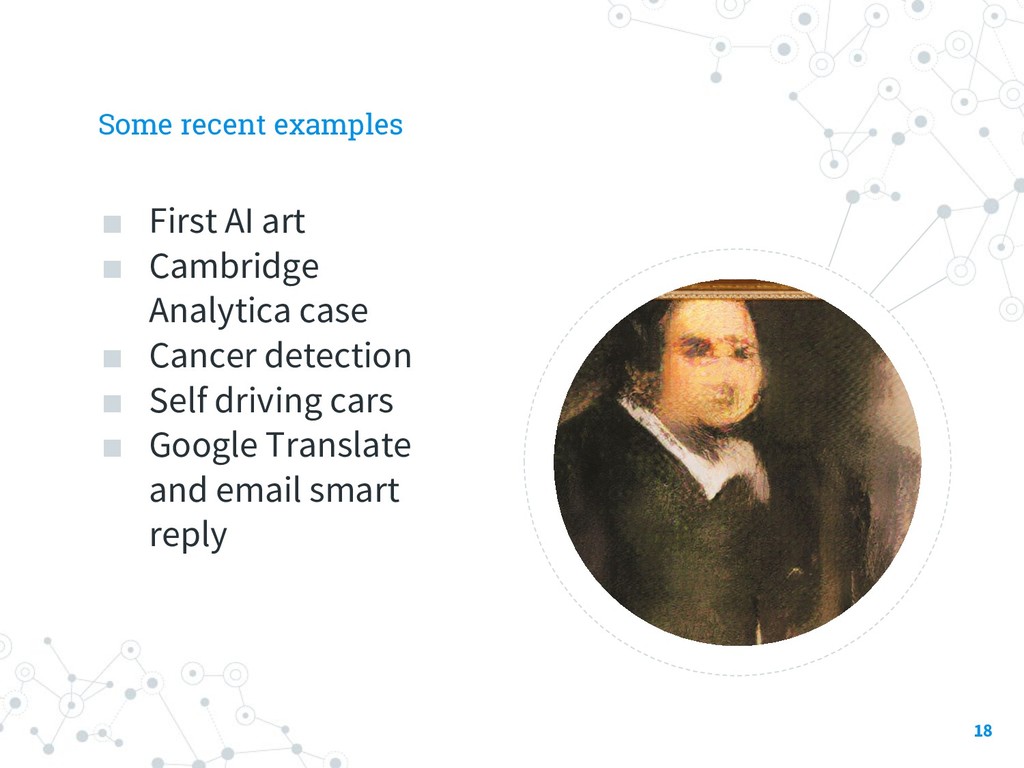
  12. Some recent examples ▪ First AI art ▪ Cambridge Analytica

    case ▪ Cancer detection ▪ Self driving cars ▪ Google Translate and email smart reply 18
  13. ML frameworks ▪ Cloud Vision ▪ ML kit ▪ TensorFlow

    ▪ Amazon Rekognition ▪ Facebook Pytorch ▪ OpenCV ▪ Azure cloud ML 19
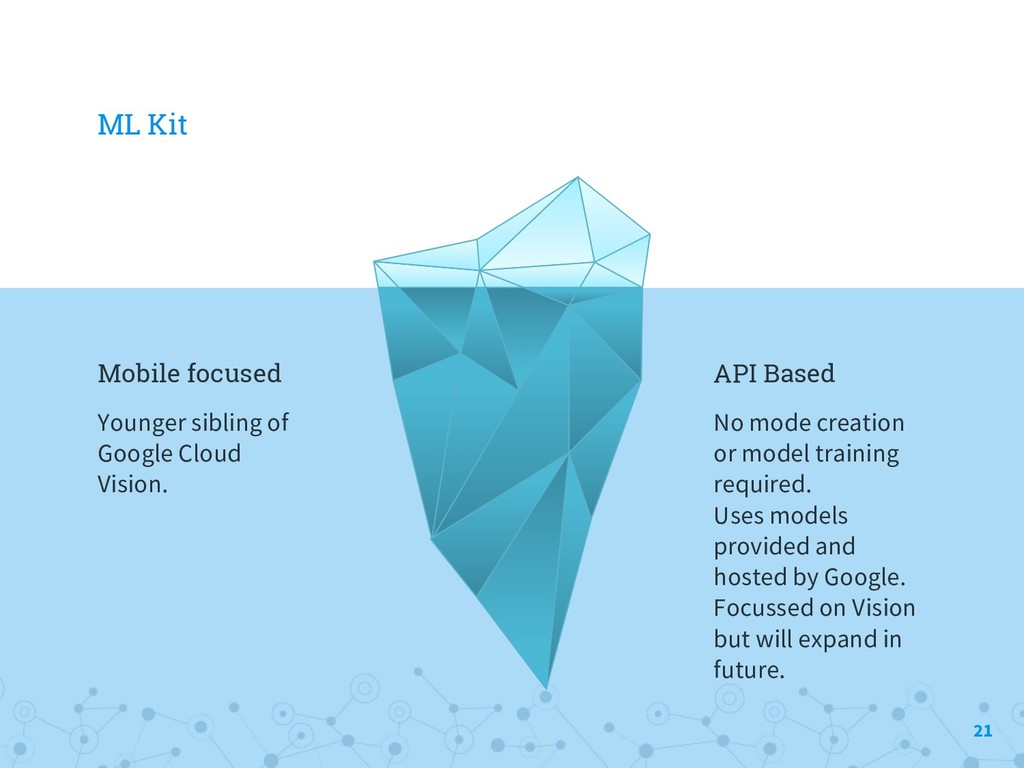
  14. ML Kit Mobile focused Younger sibling of Google Cloud Vision.

    API Based No mode creation or model training required. Uses models provided and hosted by Google. Focussed on Vision but will expand in future. 21
  15. What problem does it solve? ▪ Doing ML from scratch

    is doable but hard ▪ Huge data required ▪ Knowledge of math and ML science required ▪ Domain knowledge required 22
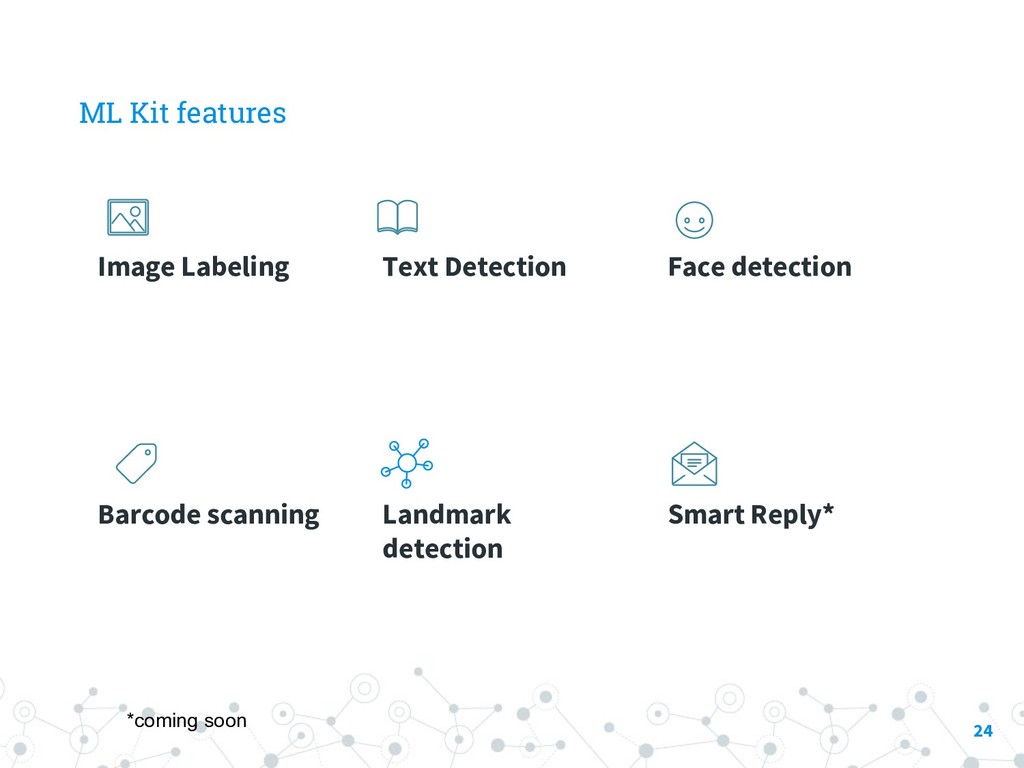
  16. ML Kit features Image Labeling Text Detection Face detection Barcode

    scanning Landmark detection Smart Reply* 24 *coming soon