Upgrade to Pro — share decks privately, control downloads, hide ads and more …

Object Calisthenics - 9 steps to better OO code
Object Calisthenics - 9 steps to better OO code
Talk about a concept called "Object Calisthenics". It's a set of rules introduced by Jeff Bay to help write better object-oriented code.

Avatar for Paweł Lewtak
Paweł Lewtak

September 30, 2016

More Decks by Paweł Lewtak

Other Decks in Programming

Transcript

  1. "Calisthenics are exercises consisting of a variety of gross motor

    movements; often rhythmical and generally without equipment or apparatus." Wikipedia
  2. You need to write code that minimises the time it

    would take someone else to understand it - even if that someone else is you Art of Readable Code by Dustin Boswell, Trevor Foucher
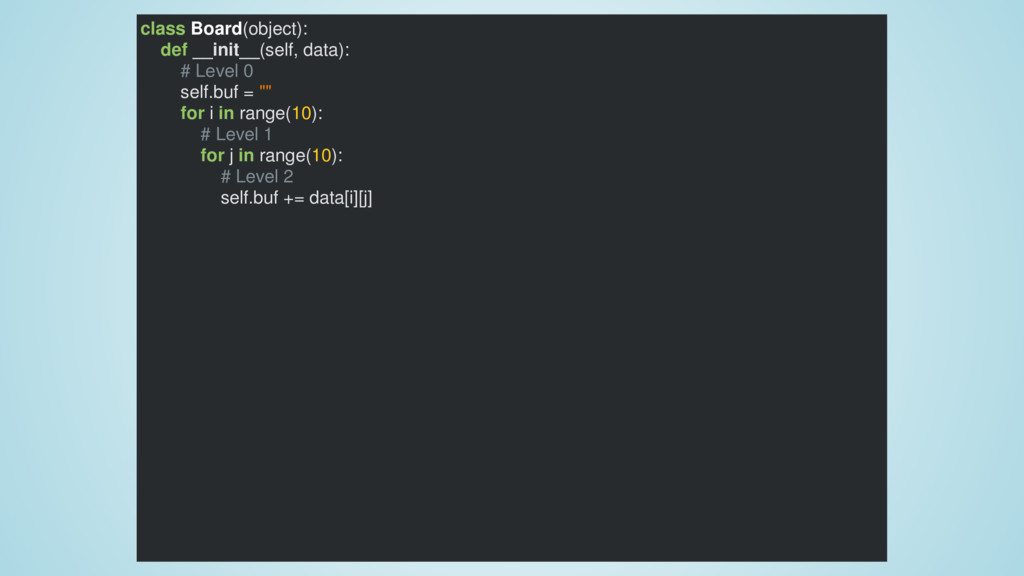
  3. class Board(object): def __init__(self, data): # Level 0 self.buf =

    "" for i in range(10): # Level 1 for j in range(10): # Level 2 self.buf += data[i][j]
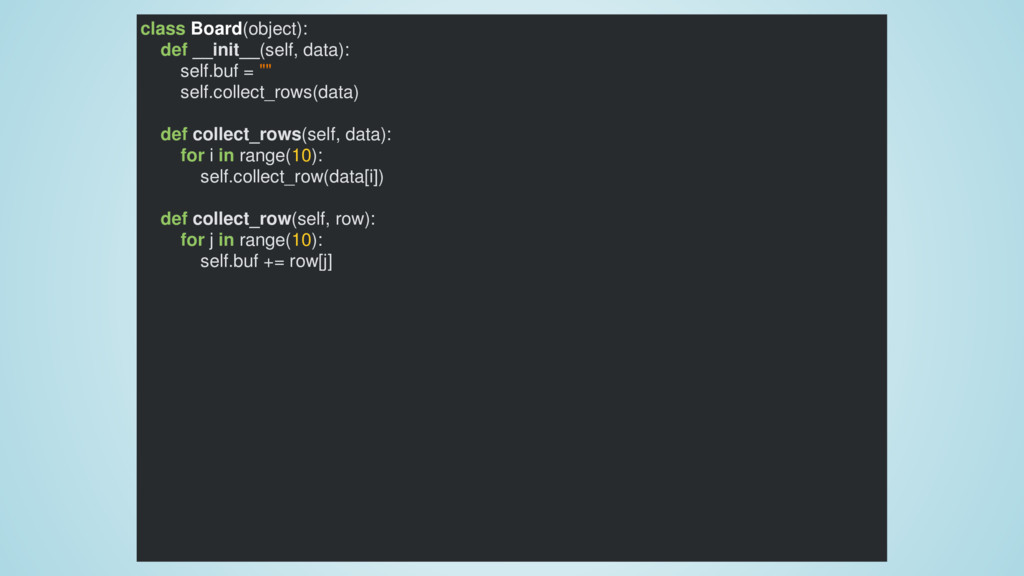
  4. class Board(object): def __init__(self, data): self.buf = "" self.collect_rows(data) def

    collect_rows(self, data): for i in range(10): self.collect_row(data[i]) def collect_row(self, row): for j in range(10): self.buf += row[j]
  5. class UserService(object): def register(self, username, email, promo_code = False): user

    = self.create_user(username) if email: send_email(user, email) if promo_code: send_promo_code(user, promo_code)
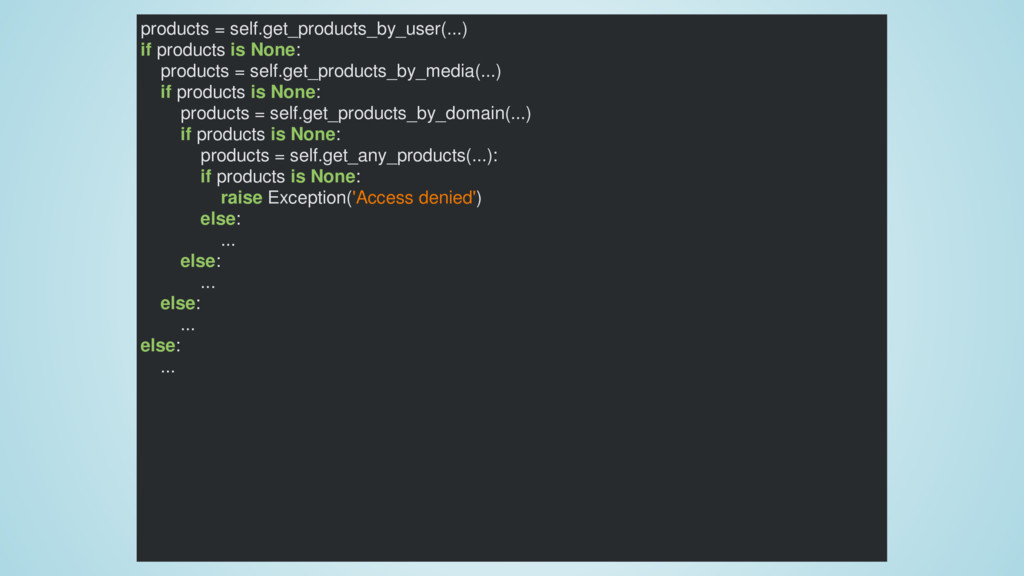
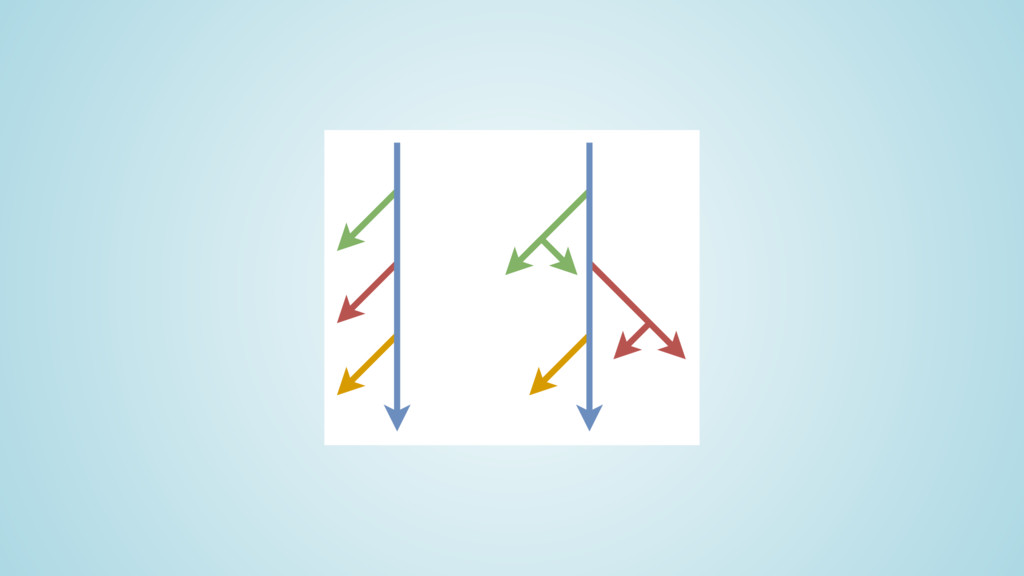
  6. products = self.get_products_by_user(...) if products is None: products = self.get_products_by_media(...)

    if products is None: products = self.get_products_by_domain(...) if products is None: products = self.get_any_products(...): if products is None: raise Exception('Access denied') else: ... else: ... else: ... else: ...
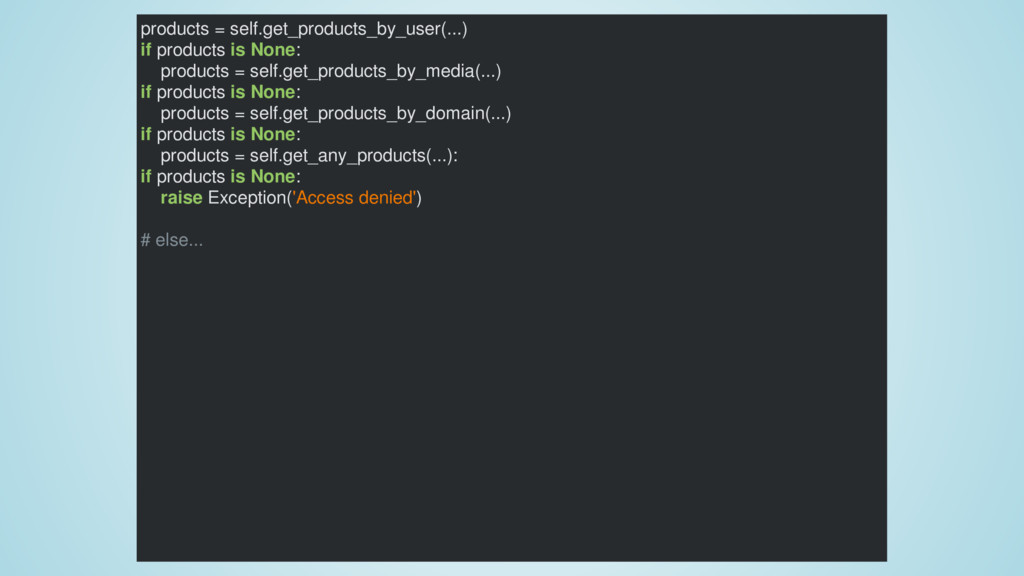
  7. products = self.get_products_by_user(...) if products is None: products = self.get_products_by_media(...)

    if products is None: products = self.get_products_by_domain(...) if products is None: products = self.get_any_products(...): if products is None: raise Exception('Access denied') # else...
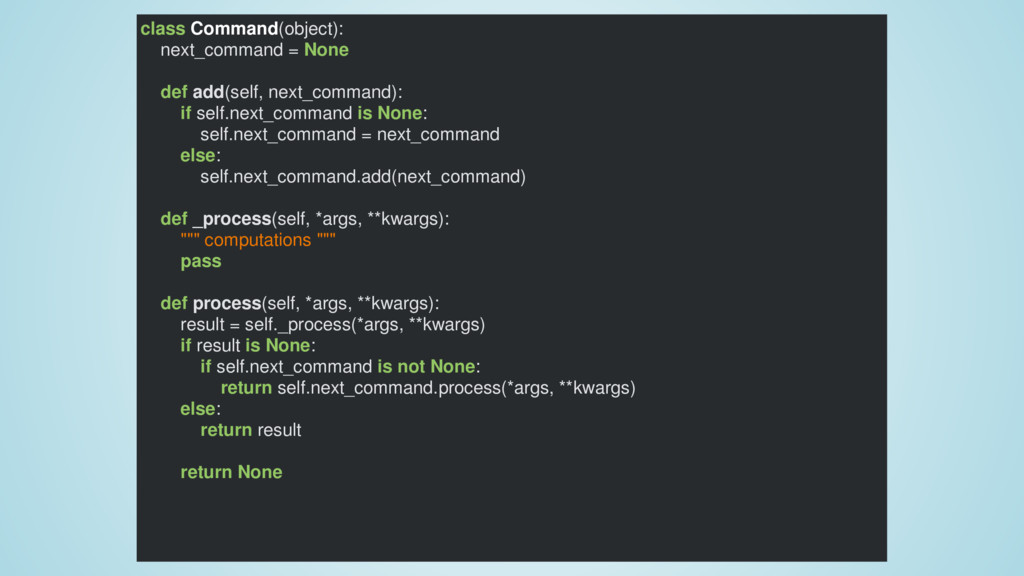
  8. class Command(object): next_command = None def add(self, next_command): if self.next_command

    is None: self.next_command = next_command else: self.next_command.add(next_command) def _process(self, *args, **kwargs): """ computations """ pass def process(self, *args, **kwargs): result = self._process(*args, **kwargs) if result is None: if self.next_command is not None: return self.next_command.process(*args, **kwargs) else: return result return None
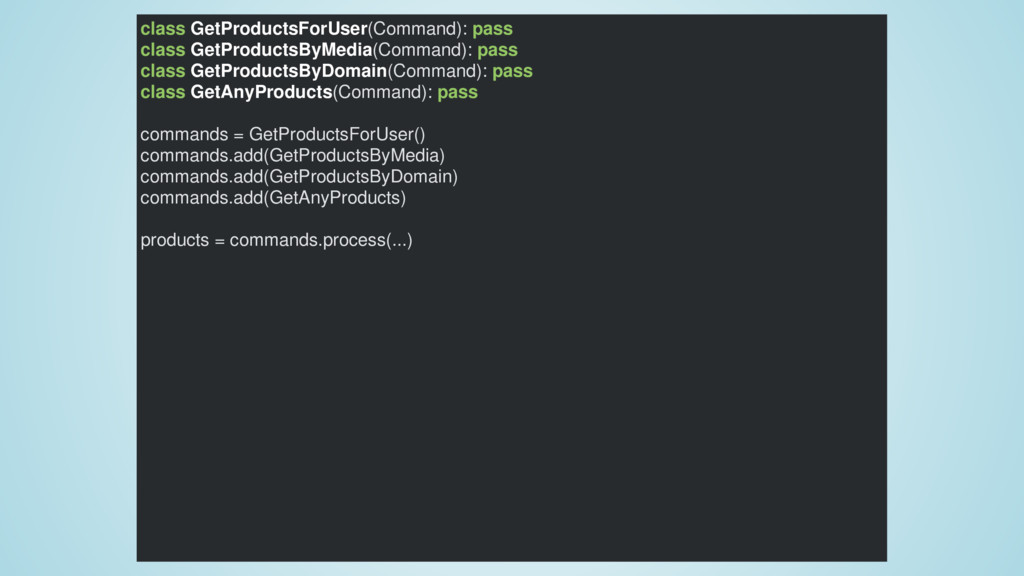
  9. class GetProductsForUser(Command): pass class GetProductsByMedia(Command): pass class GetProductsByDomain(Command): pass class

    GetAnyProducts(Command): pass commands = GetProductsForUser() commands.add(GetProductsByMedia) commands.add(GetProductsByDomain) commands.add(GetAnyProducts) products = commands.process(...)
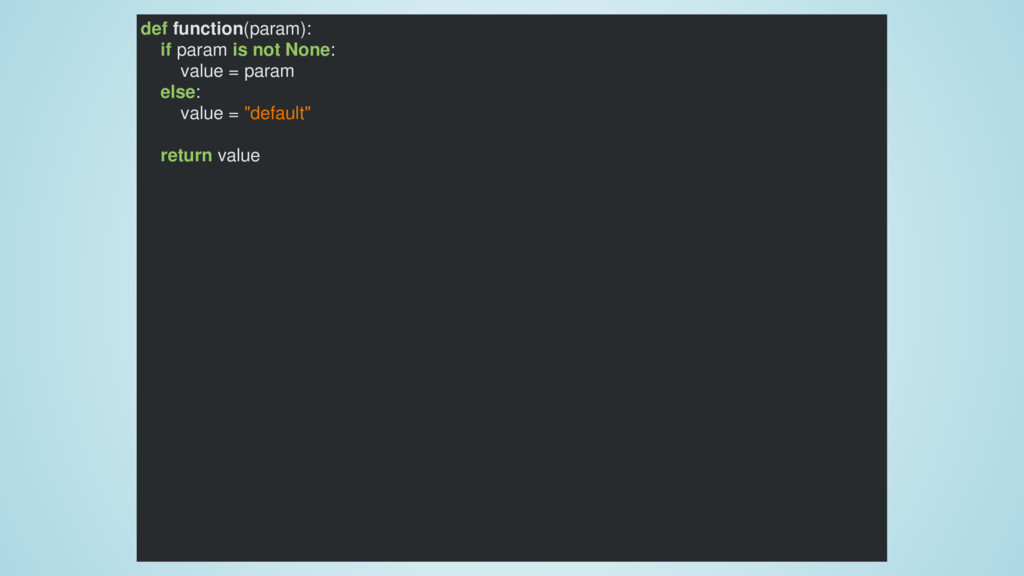
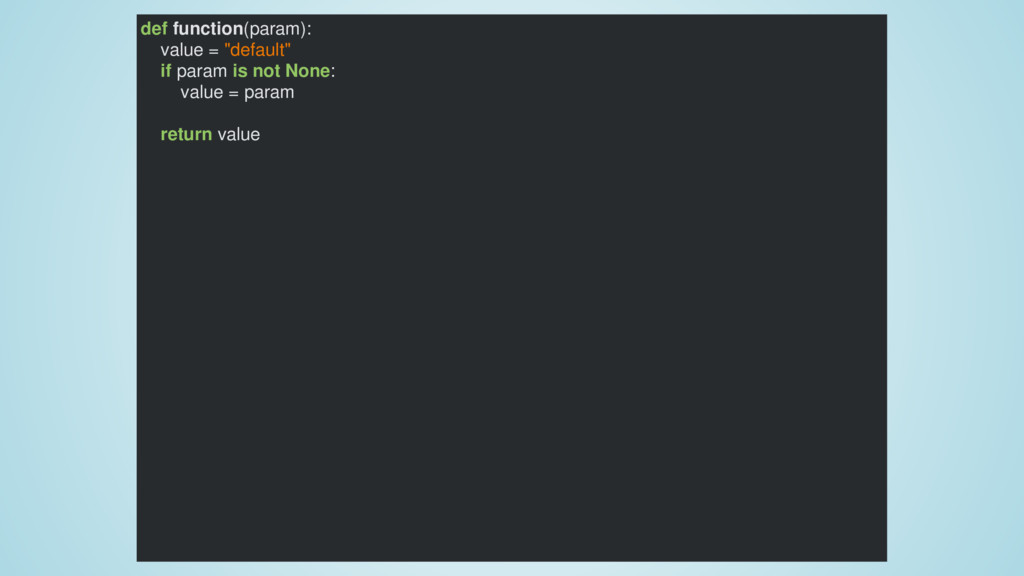
  10. def function(param): if param is not None: value = param

    else: value = "default" return value
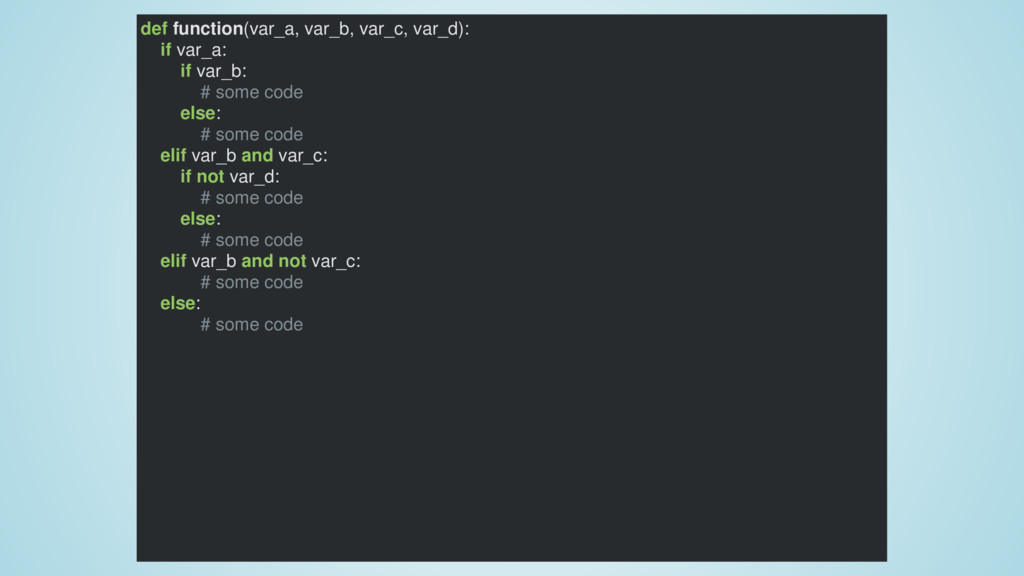
  11. def function(var_a, var_b, var_c, var_d): if var_a: if var_b: #

    some code else: # some code elif var_b and var_c: if not var_d: # some code else: # some code elif var_b and not var_c: # some code else: # some code
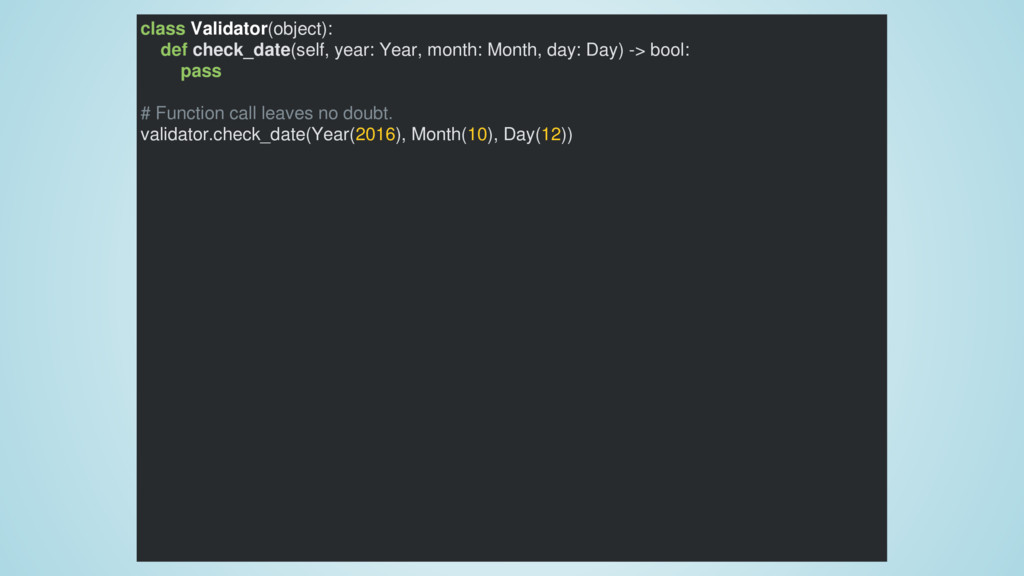
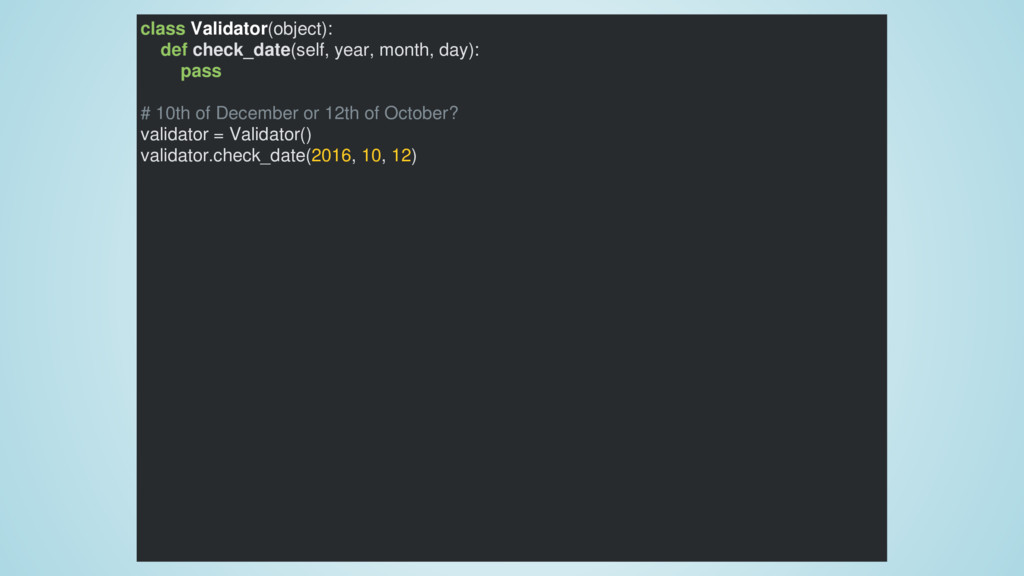
  12. class Validator(object): def check_date(self, year, month, day): pass # 10th

    of December or 12th of October? validator = Validator() validator.check_date(2016, 10, 12)
  13. class Validator(object): def check_date(self, year: Year, month: Month, day: Day)

    -> bool: pass # Function call leaves no doubt. validator.check_date(Year(2016), Month(10), Day(12))
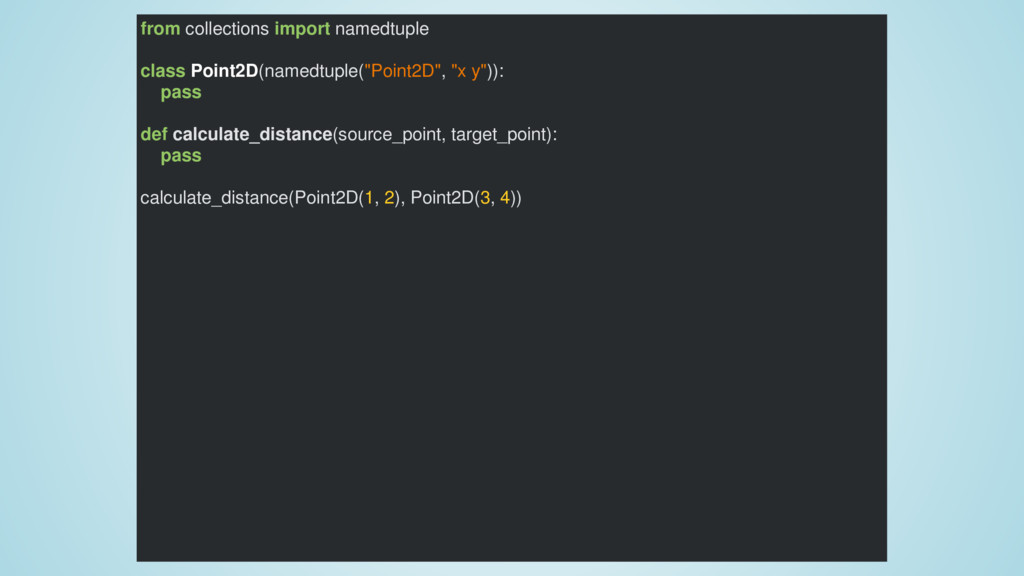
  14. from collections import namedtuple class Point2D(namedtuple("Point2D", "x y")): pass def

    calculate_distance(source_point, target_point): pass calculate_distance(Point2D(1, 2), Point2D(3, 4))
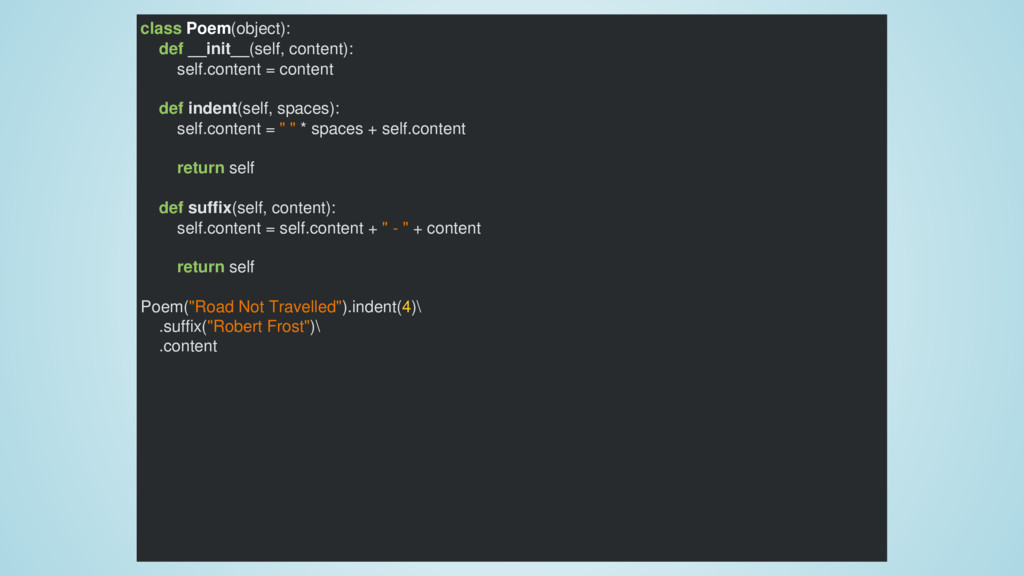
  15. class Poem(object): def __init__(self, content): self.content = content def indent(self,

    spaces): self.content = " " * spaces + self.content return self def suffix(self, content): self.content = self.content + " - " + content return self Poem("Road Not Travelled").indent(4)\ .suffix("Robert Frost")\ .content
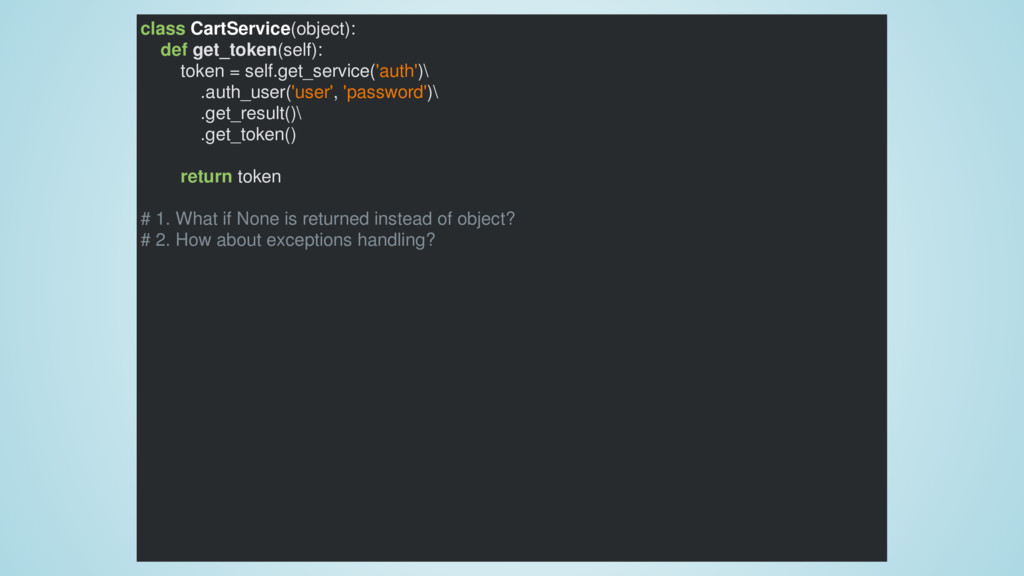
  16. class CartService(object): def get_token(self): token = self.get_service('auth')\ .auth_user('user', 'password')\ .get_result()\

    .get_token() return token # 1. What if None is returned instead of object? # 2. How about exceptions handling?
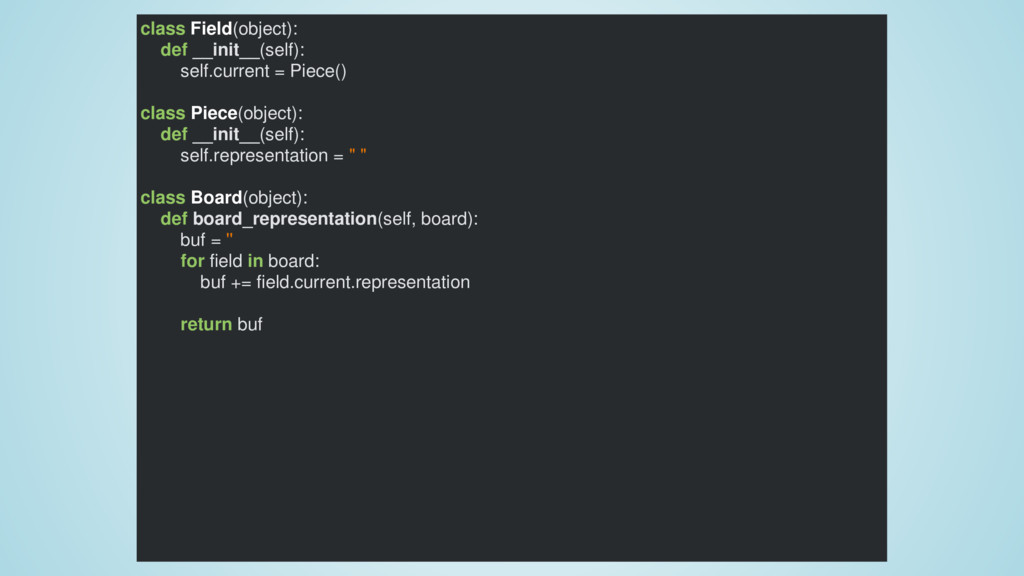
  17. class Field(object): def __init__(self): self.current = Piece() class Piece(object): def

    __init__(self): self.representation = " " class Board(object): def board_representation(self, board): buf = '' for field in board: buf += field.current.representation return buf
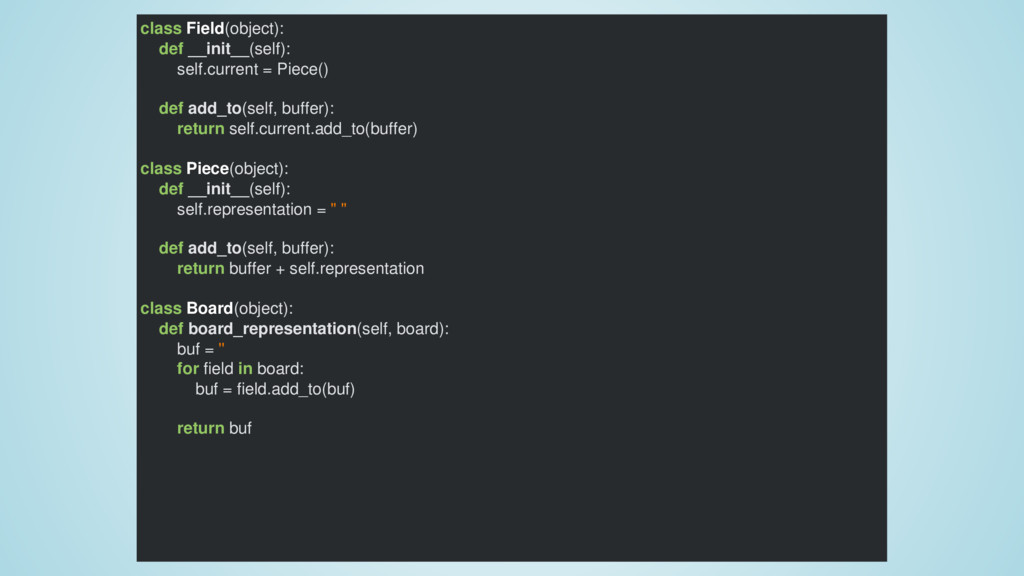
  18. class Field(object): def __init__(self): self.current = Piece() def add_to(self, buffer):

    return self.current.add_to(buffer) class Piece(object): def __init__(self): self.representation = " " def add_to(self, buffer): return buffer + self.representation class Board(object): def board_representation(self, board): buf = '' for field in board: buf = field.add_to(buf) return buf
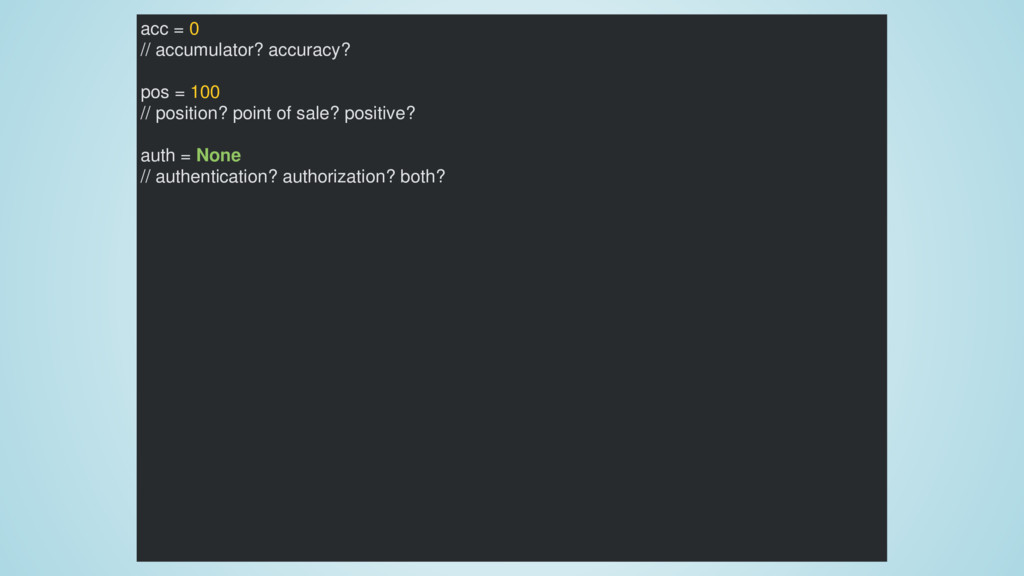
  19. acc = 0 // accumulator? accuracy? pos = 100 //

    position? point of sale? positive? auth = None // authentication? authorization? both?
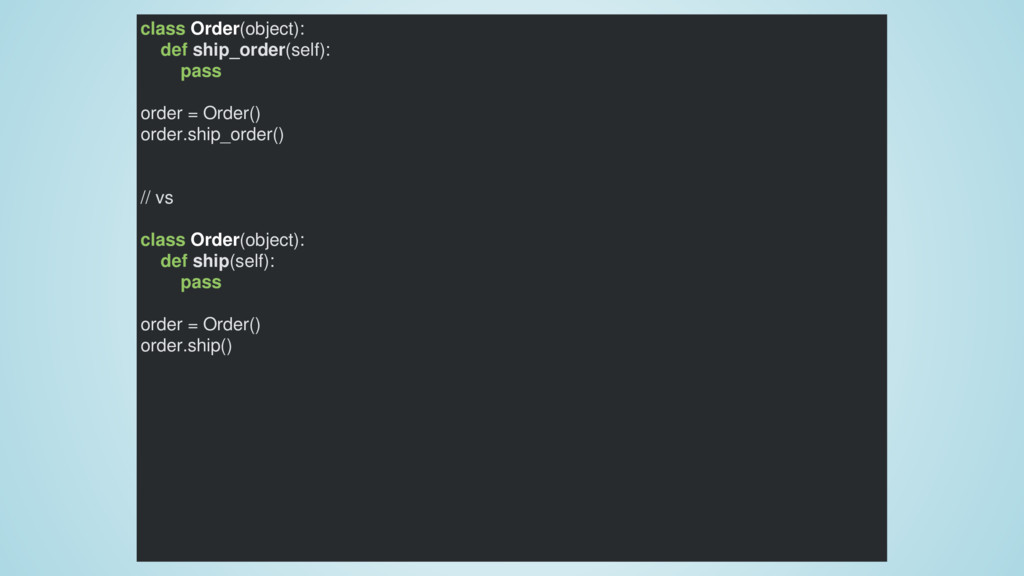
  20. class Order(object): def ship_order(self): pass order = Order() order.ship_order() //

    vs class Order(object): def ship(self): pass order = Order() order.ship()
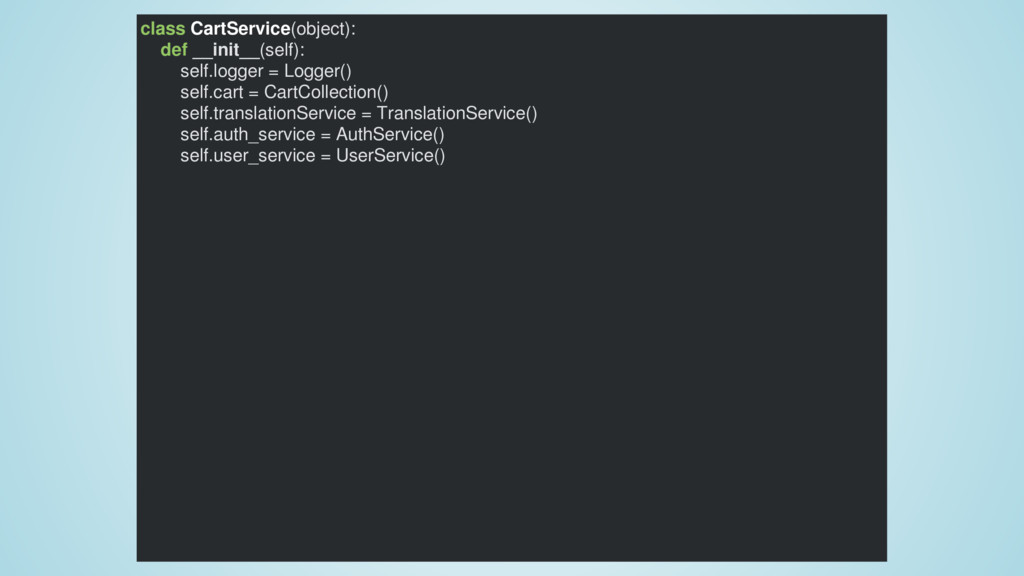
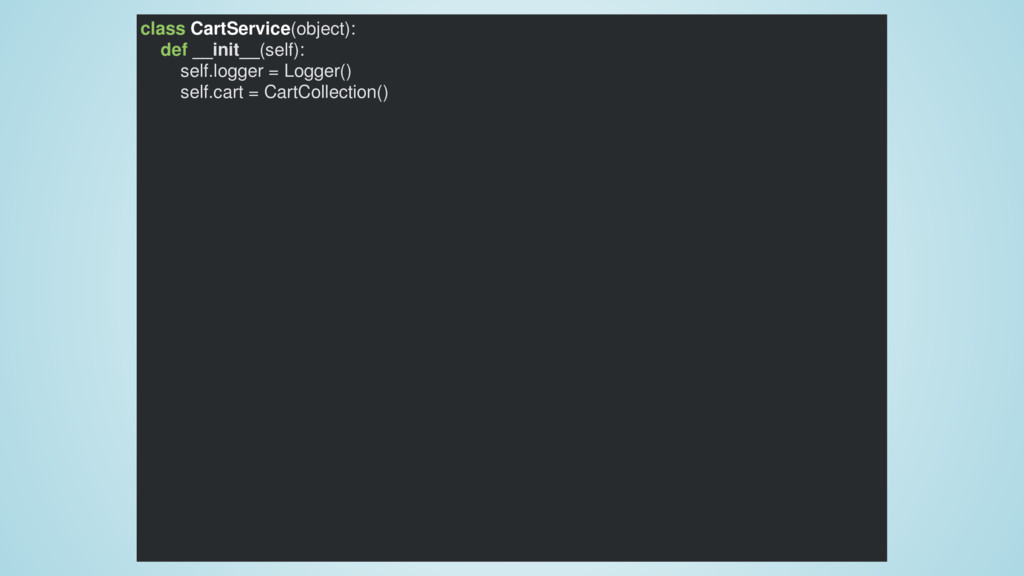
  21. class CartService(object): def __init__(self): self.logger = Logger() self.cart = CartCollection()

    self.translationService = TranslationService() self.auth_service = AuthService() self.user_service = UserService()
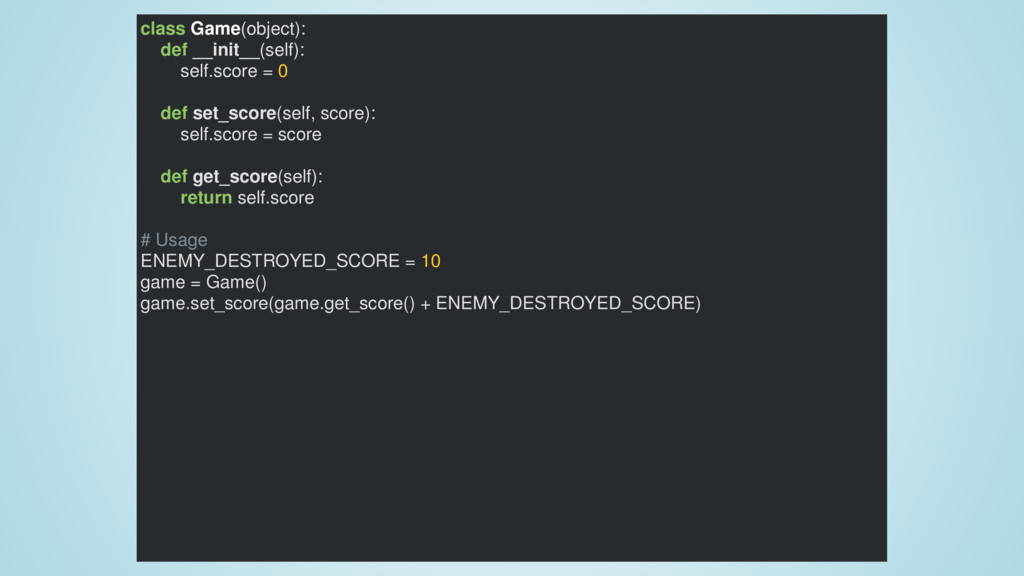
  22. class Game(object): def __init__(self): self.score = 0 def set_score(self, score):

    self.score = score def get_score(self): return self.score # Usage ENEMY_DESTROYED_SCORE = 10 game = Game() game.set_score(game.get_score() + ENEMY_DESTROYED_SCORE)
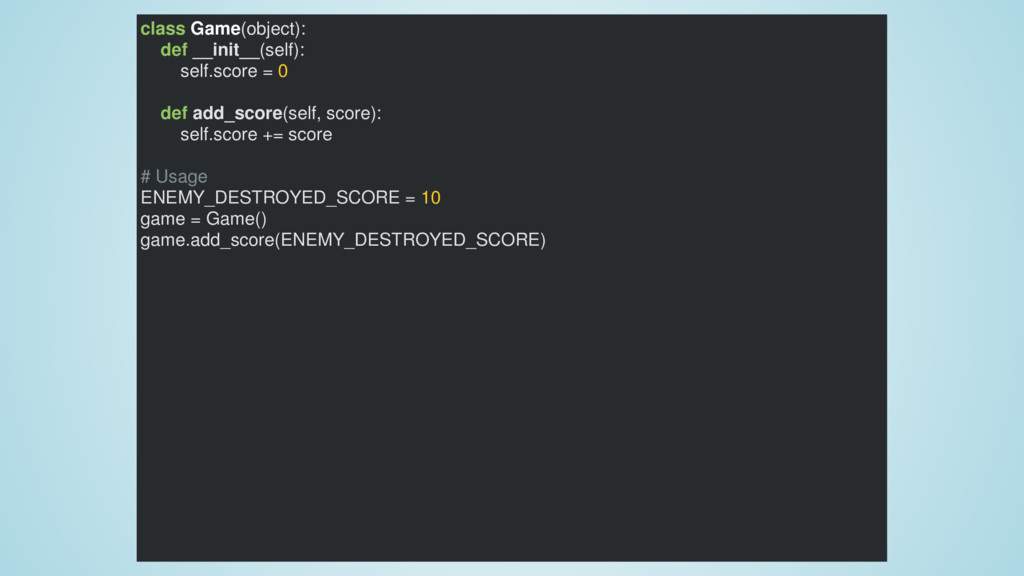
  23. class Game(object): def __init__(self): self.score = 0 def add_score(self, score):

    self.score += score # Usage ENEMY_DESTROYED_SCORE = 10 game = Game() game.add_score(ENEMY_DESTROYED_SCORE)
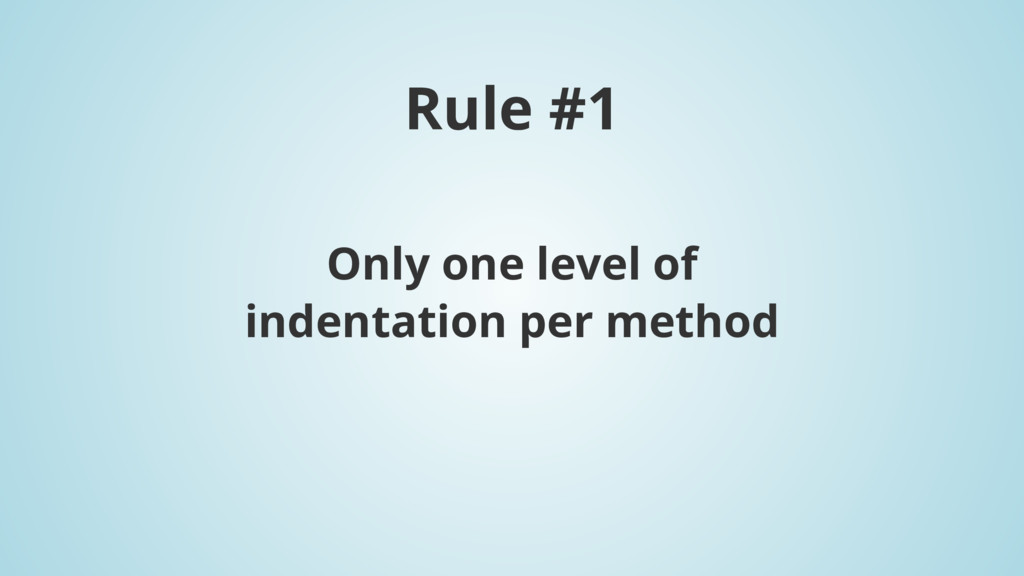
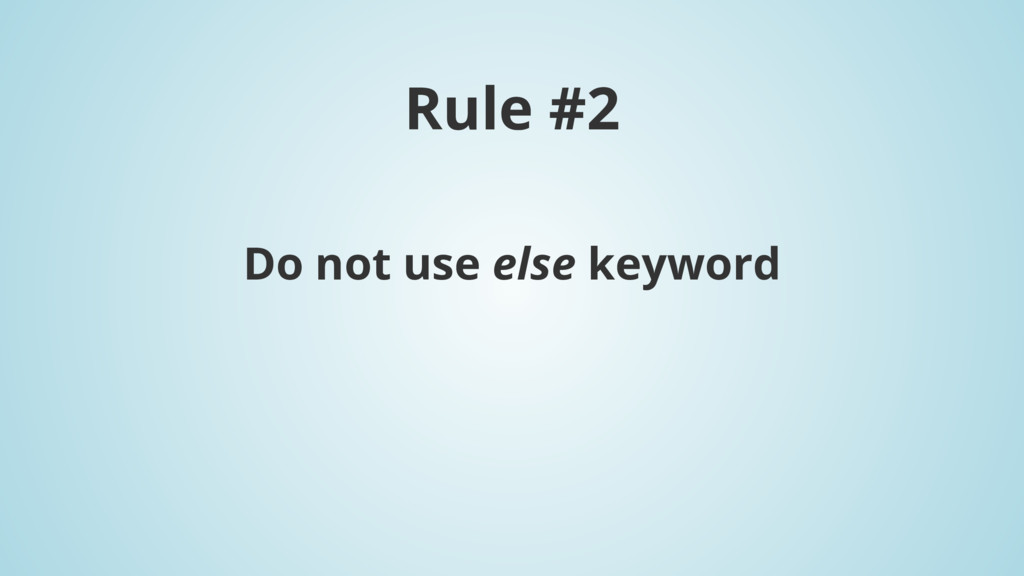
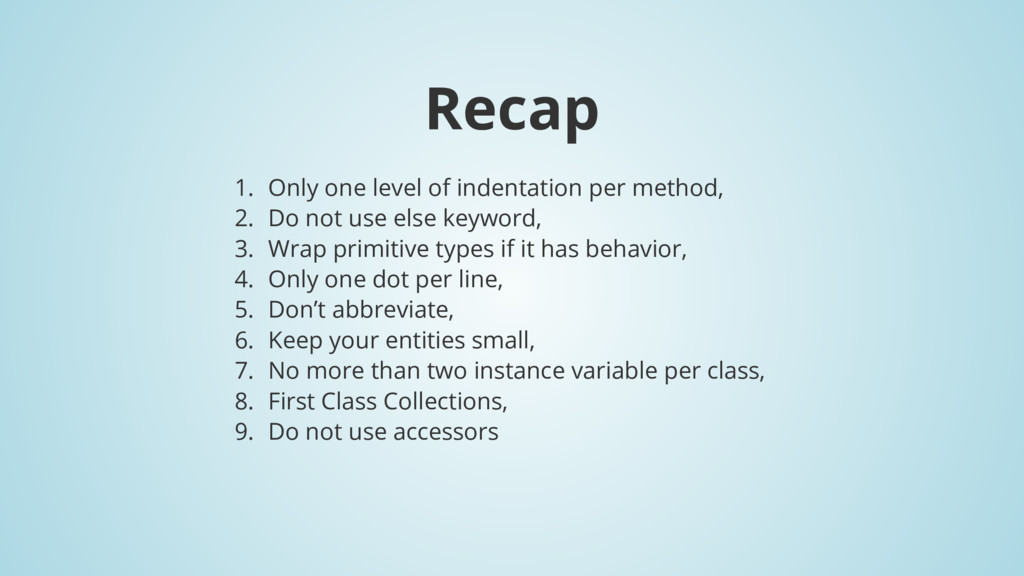
  24. Recap 1. Only one level of indentation per method, 2.

    Do not use else keyword, 3. Wrap primitive types if it has behavior, 4. Only one dot per line, 5. Don’t abbreviate, 6. Keep your entities small, 7. No more than two instance variable per class, 8. First Class Collections, 9. Do not use accessors