Upgrade to Pro — share decks privately, control downloads, hide ads and more …
2nd hardest thing in computer science

Sponsored · Your Podcast. Everywhere. Effortlessly. Share. Educate. Inspire. Entertain. You do you. We'll handle the rest. →

2nd hardest thing in computer science

It's a talk about naming things in the code but not limited to the code.

Avatar for Paweł Lewtak

Paweł Lewtak

June 08, 2017

More Decks by Paweł Lewtak

Other Decks in Programming

Transcript

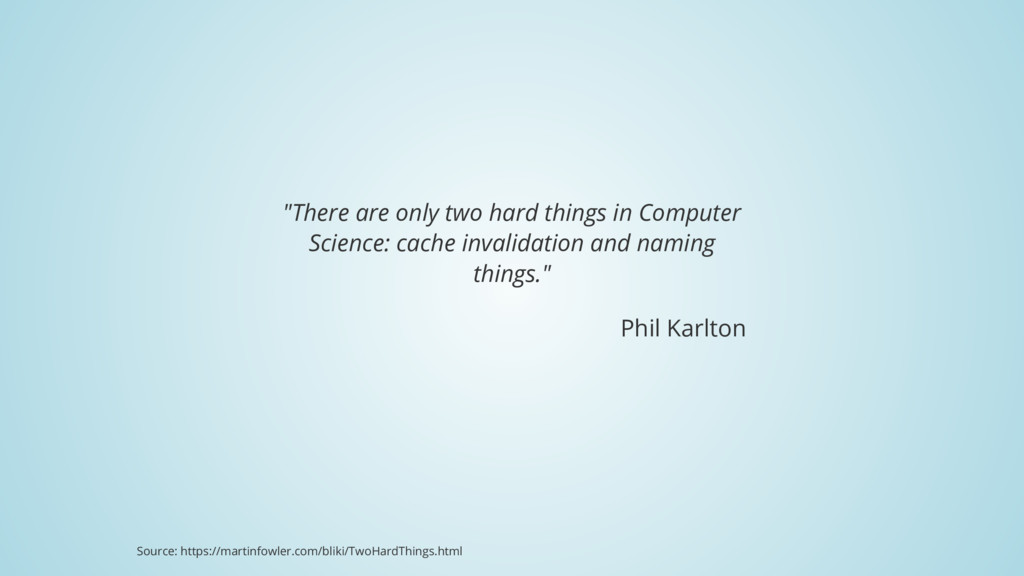
  1. "There are only two hard things in Computer Science: cache

    invalidation and naming things." Phil Karlton Source: https://martinfowler.com/bliki/TwoHardThings.html
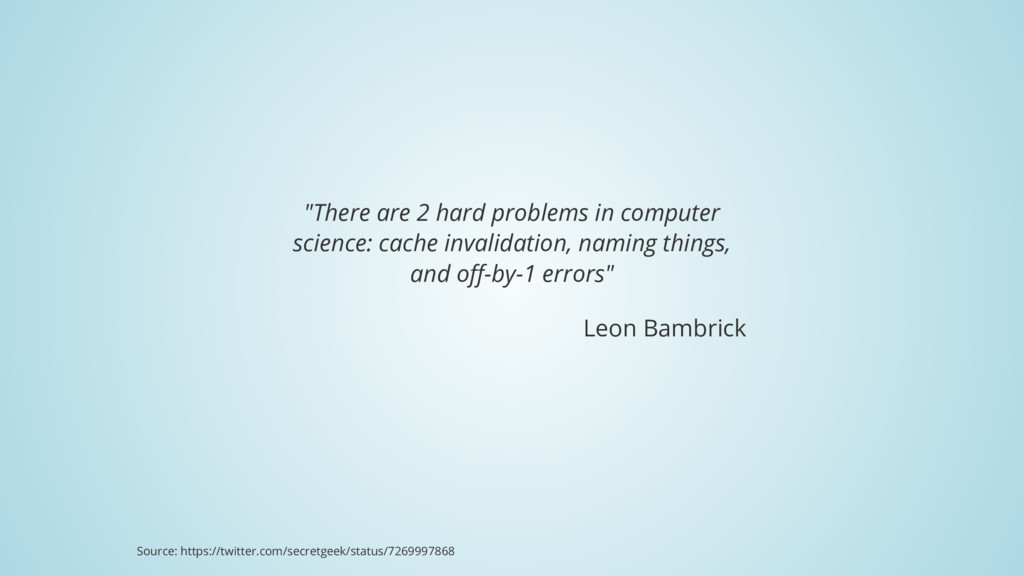
  2. "There are 2 hard problems in computer science: cache invalidation,

    naming things, and off-by-1 errors" Leon Bambrick Source: https://twitter.com/secretgeek/status/7269997868
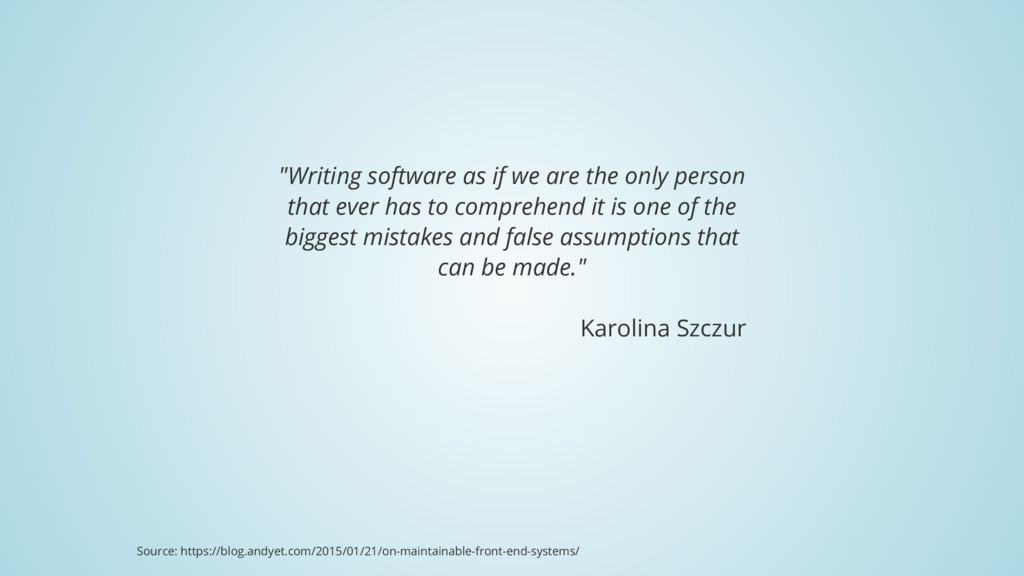
  3. "Writing software as if we are the only person that

    ever has to comprehend it is one of the biggest mistakes and false assumptions that can be made." Karolina Szczur Source: https://blog.andyet.com/2015/01/21/on-maintainable-front-end-systems/​
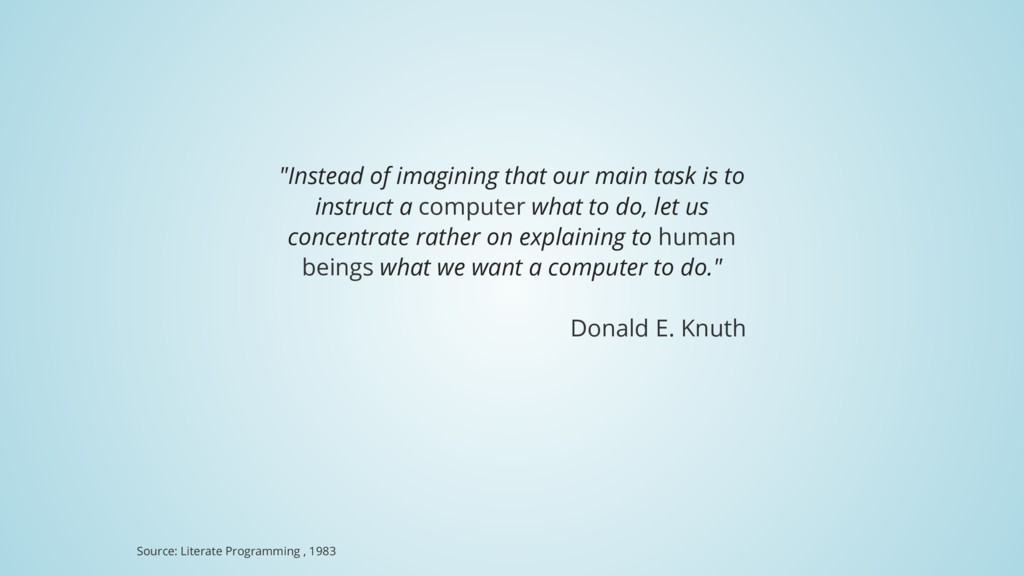
  4. "Instead of imagining that our main task is to instruct

    a computer what to do, let us concentrate rather on explaining to human beings what we want a computer to do." Donald E. Knuth Source: Literate Programming , 1983
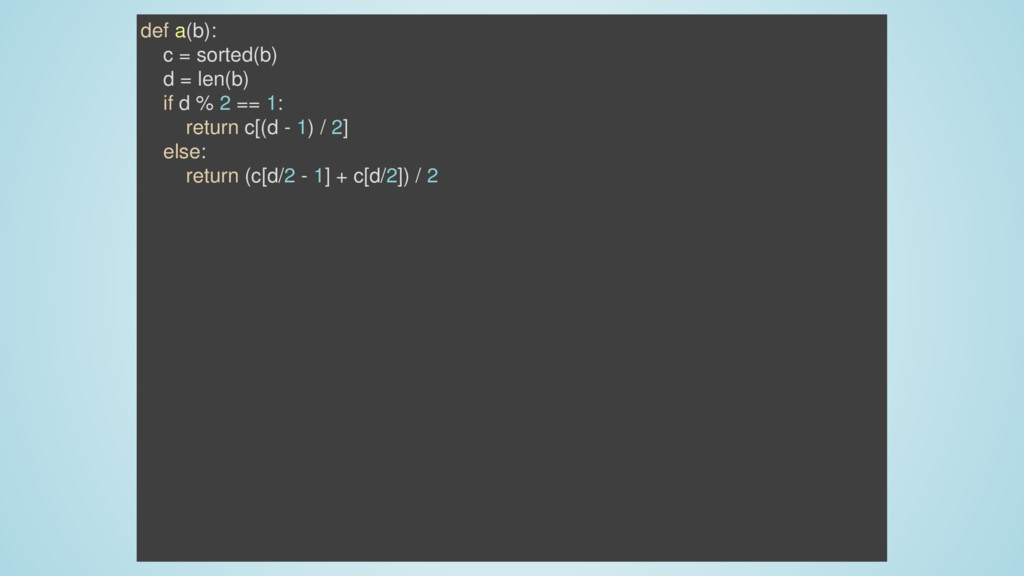
  5. def a(b): c = sorted(b) d = len(b) if d

    % 2 == 1: return c[(d - 1) / 2] else: return (c[d/2 - 1] + c[d/2]) / 2
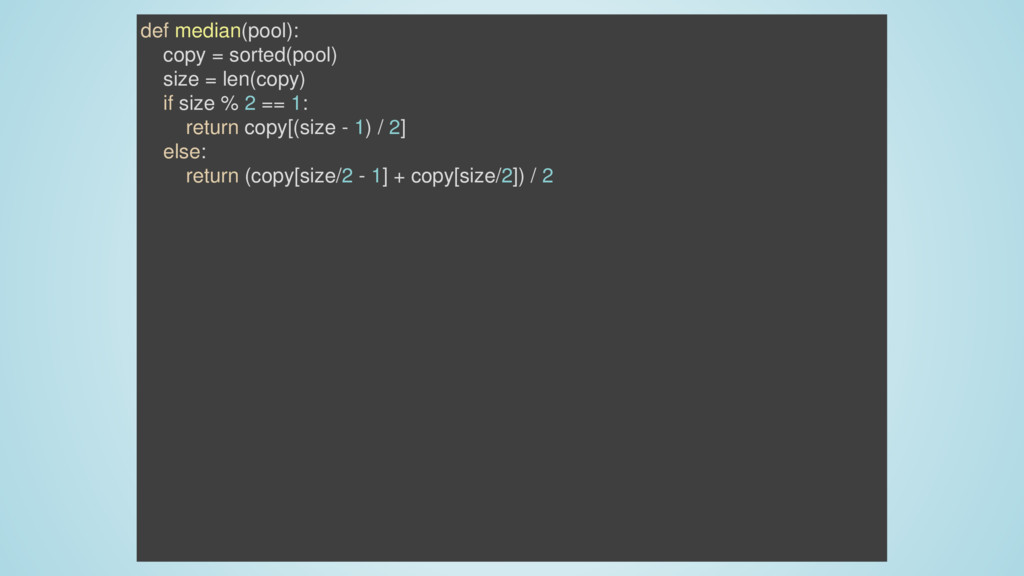
  6. def median(pool): copy = sorted(pool) size = len(copy) if size

    % 2 == 1: return copy[(size - 1) / 2] else: return (copy[size/2 - 1] + copy[size/2]) / 2
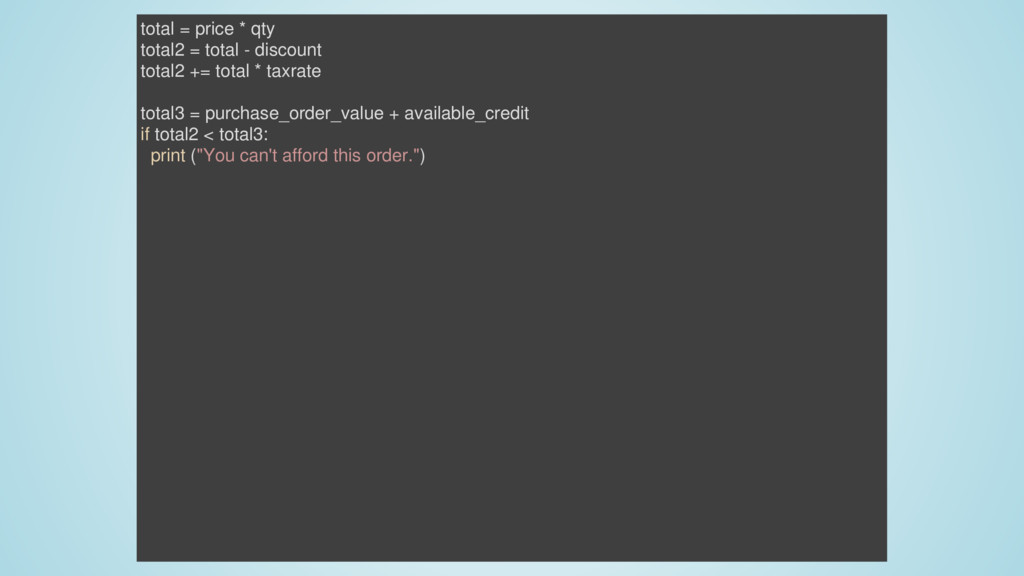
  7. total = price * qty total2 = total - discount

    total2 += total * taxrate total3 = purchase_order_value + available_credit if total2 < total3: print ("You can't afford this order.")
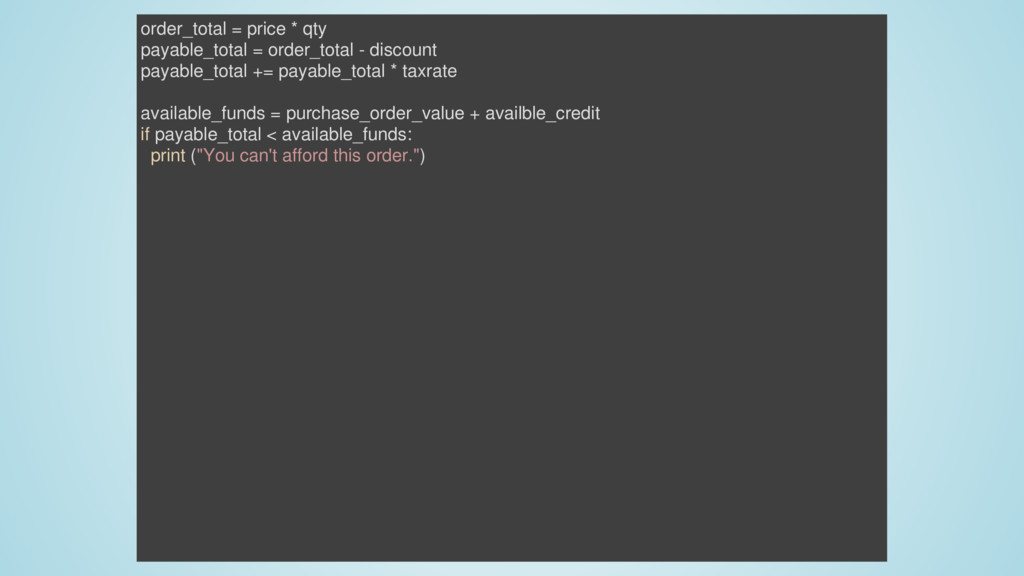
  8. order_total = price * qty payable_total = order_total - discount

    payable_total += payable_total * taxrate available_funds = purchase_order_value + availble_credit if payable_total < available_funds: print ("You can't afford this order.")
  9. "No-one sets out to write legacy code" Rachel Willmer Source:

    https://twitter.com/amokleben/status/868377283496751104?s=09
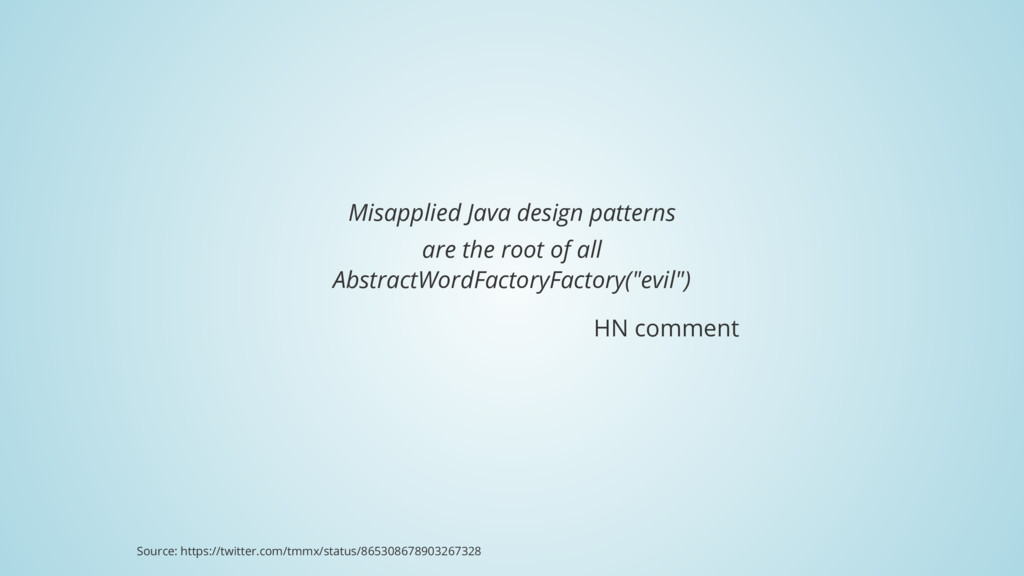
  10. Misapplied Java design ​patterns are the root of all AbstractWordFactoryFactory("evil")

    HN comment Source: https://twitter.com/tmmx/status/865308678903267328
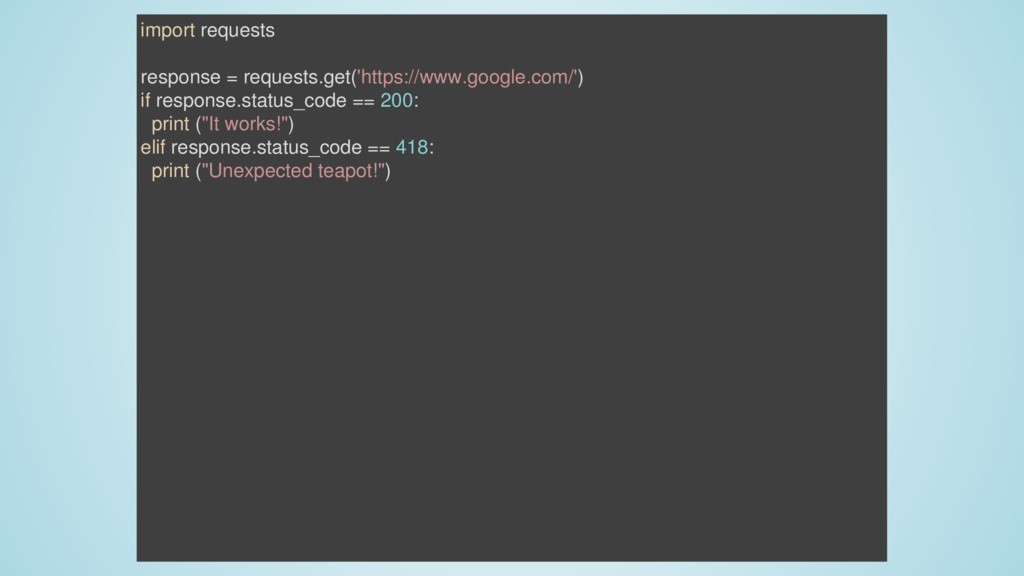
  11. import requests response = requests.get('https://www.google.com/') if response.status_code == 200: print

    ("It works!") elif response.status_code == 418: print ("Unexpected teapot!")
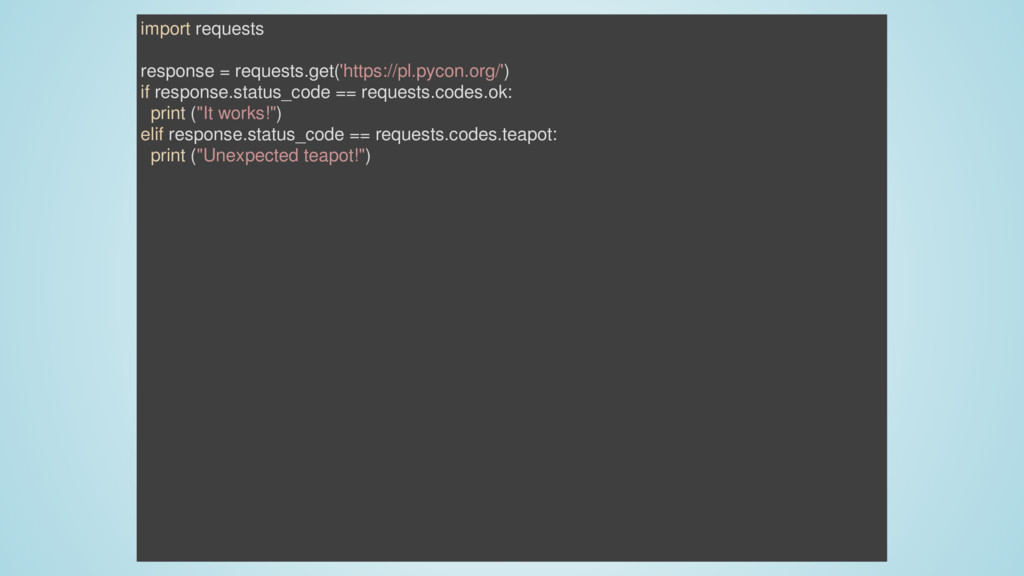
  12. import requests response = requests.get('https://pl.pycon.org/') if response.status_code == requests.codes.ok: print

    ("It works!") elif response.status_code == requests.codes.teapot: print ("Unexpected teapot!")
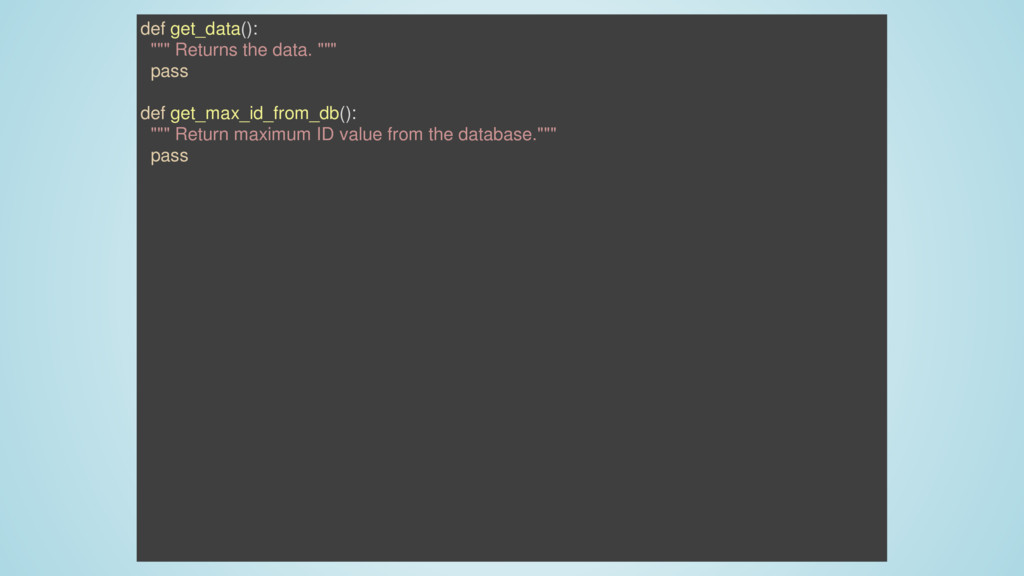
  13. def get_data(): """ Returns the data. """ pass def get_max_id_from_db():

    """ Return maximum ID value from the database.""" pass
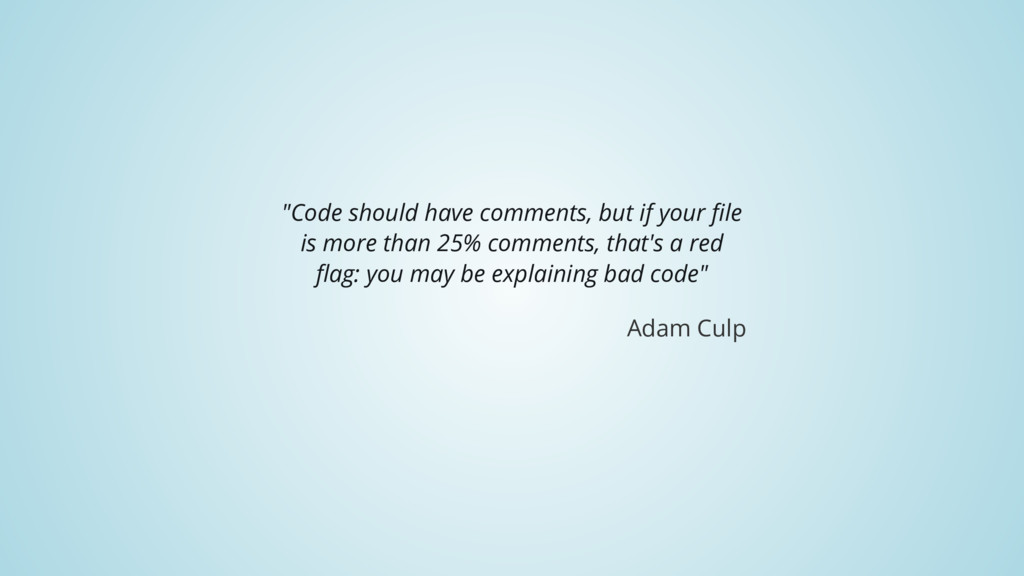
  14. "Code should have comments, but if your file is more

    than 25% comments, that's a red flag: you may be explaining bad code" Adam Culp
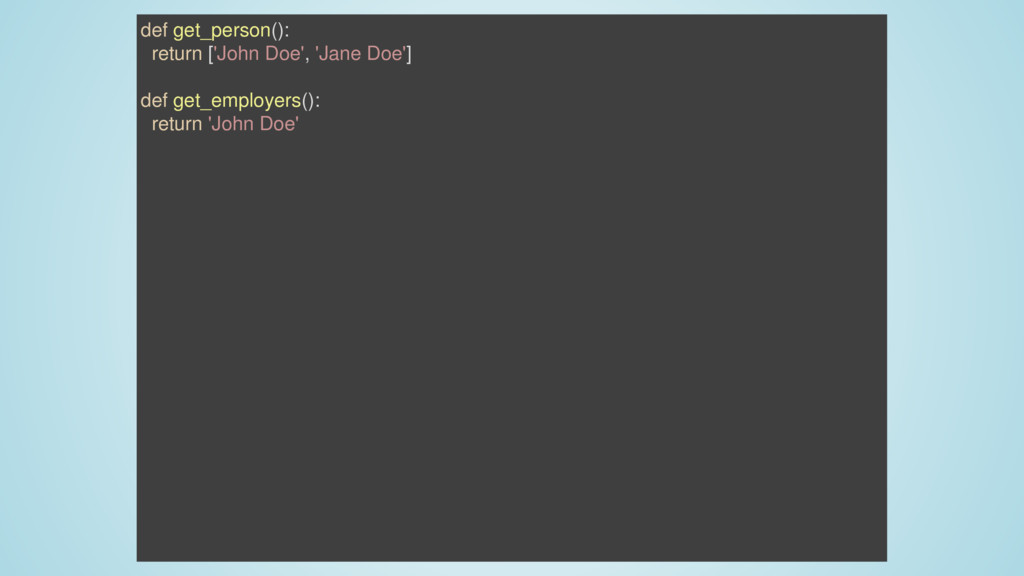
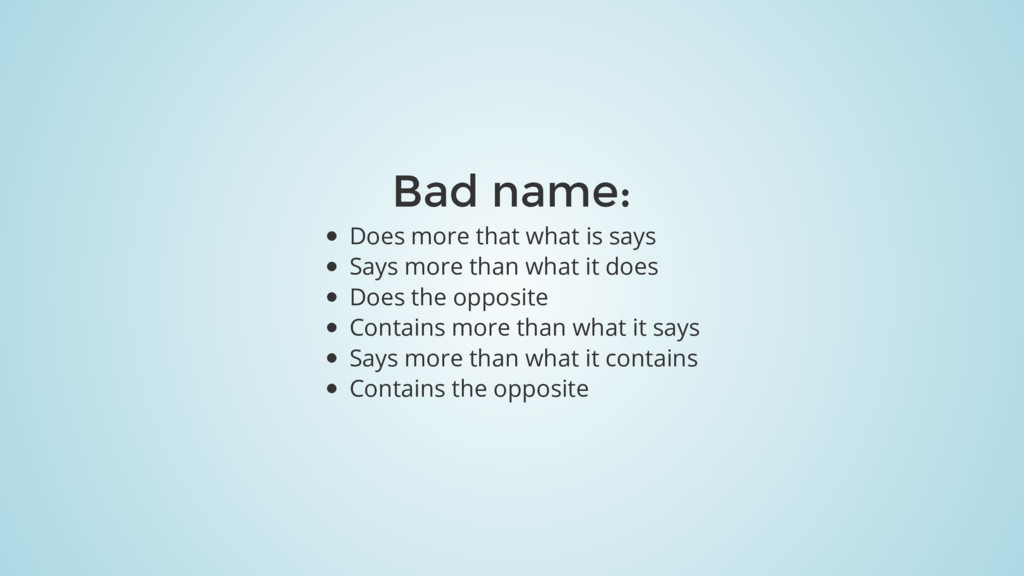
  15. Bad name: Does more that what is says Says more

    than what it does Does the opposite Contains more than what it says Says more than what it contains Contains the opposite
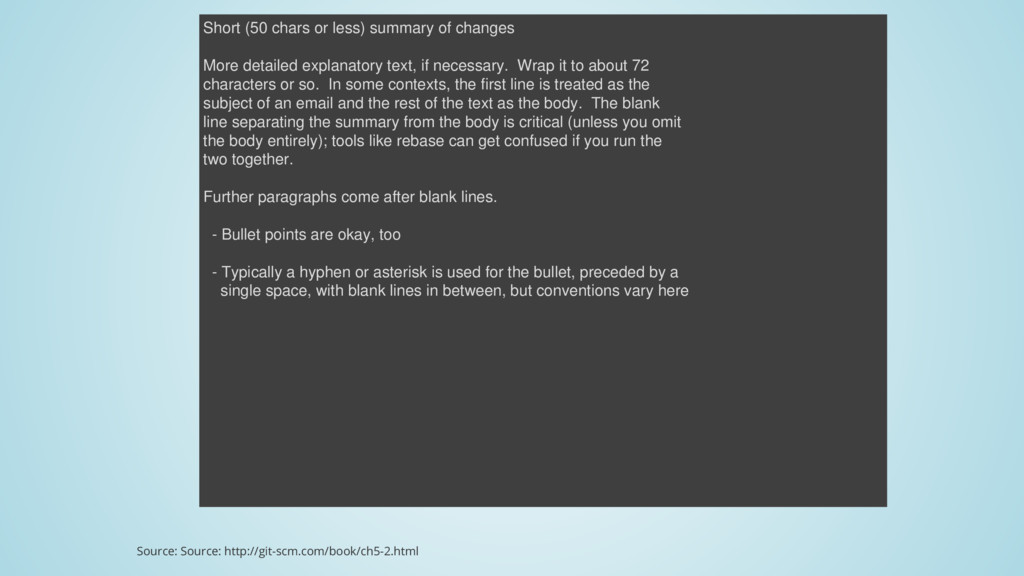
  16. Short (50 chars or less) summary of changes More detailed

    explanatory text, if necessary. Wrap it to about 72 characters or so. In some contexts, the first line is treated as the subject of an email and the rest of the text as the body. The blank line separating the summary from the body is critical (unless you omit the body entirely); tools like rebase can get confused if you run the two together. Further paragraphs come after blank lines. - Bullet points are okay, too - Typically a hyphen or asterisk is used for the bullet, preceded by a single space, with blank lines in between, but conventions vary here Source: Source: http://git-scm.com/book/ch5-2.html