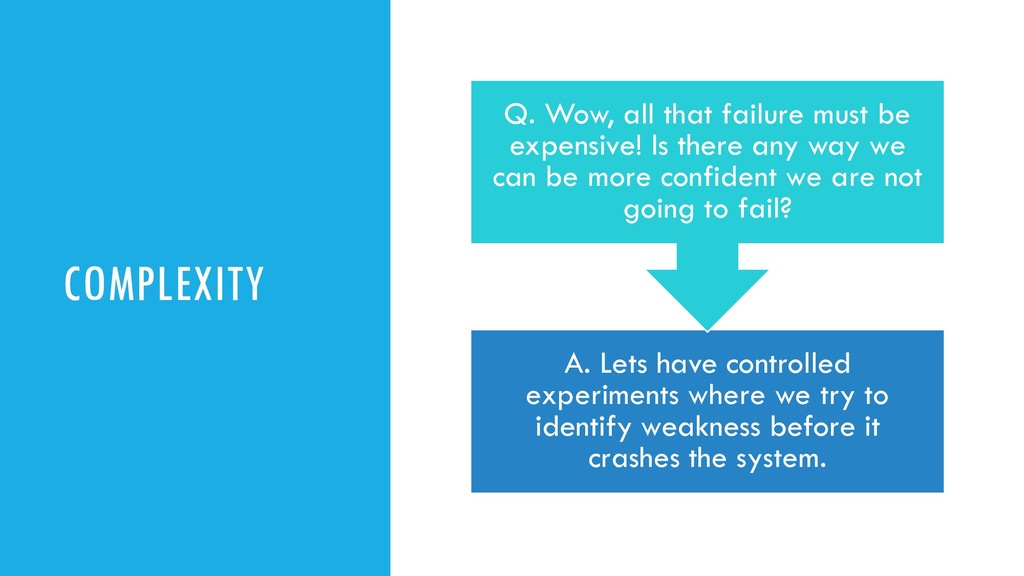
identify weakness before it crashes the system. Q. Wow, all that failure must be expensive! Is there any way we can be more confident we are not going to fail?
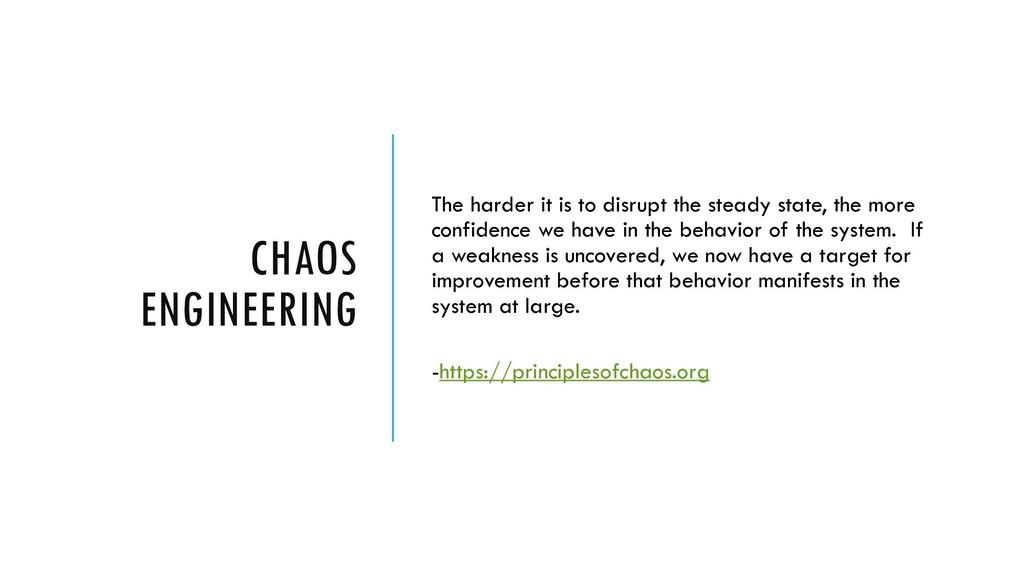
state, the more confidence we have in the behavior of the system. If a weakness is uncovered, we now have a target for improvement before that behavior manifests in the system at large. -https://principlesofchaos.org
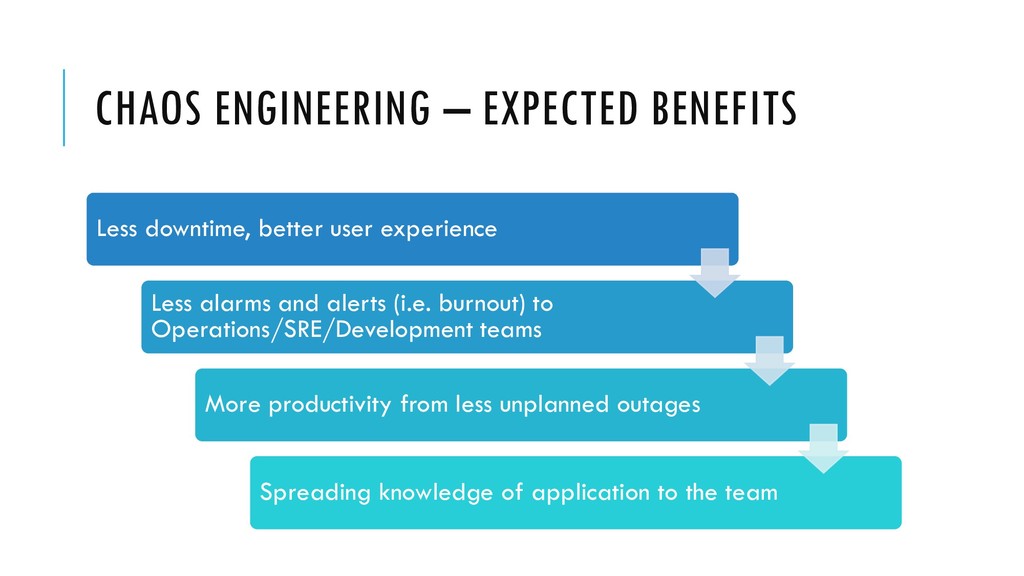
Less alarms and alerts (i.e. burnout) to Operations/SRE/Development teams More productivity from less unplanned outages Spreading knowledge of application to the team
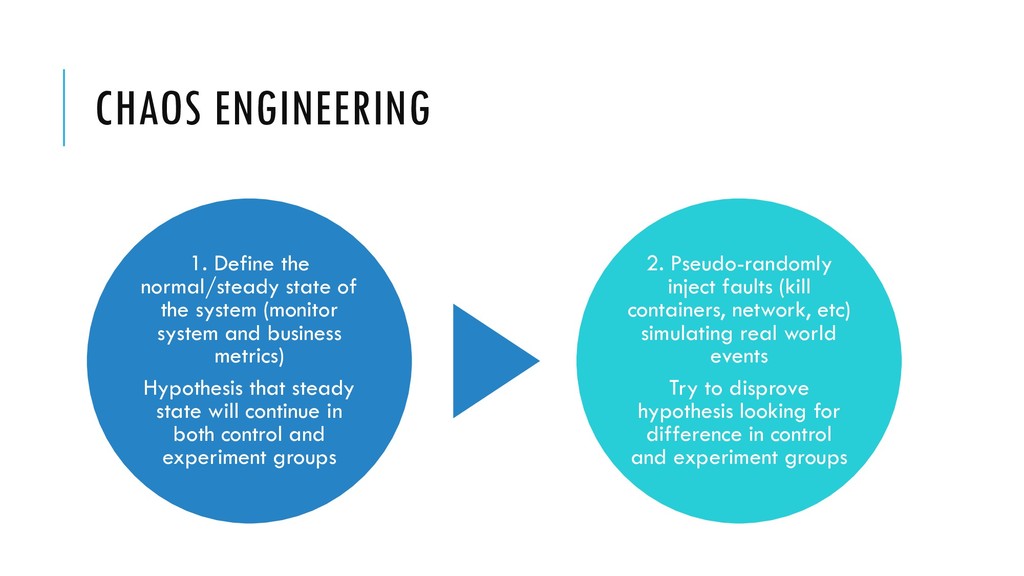
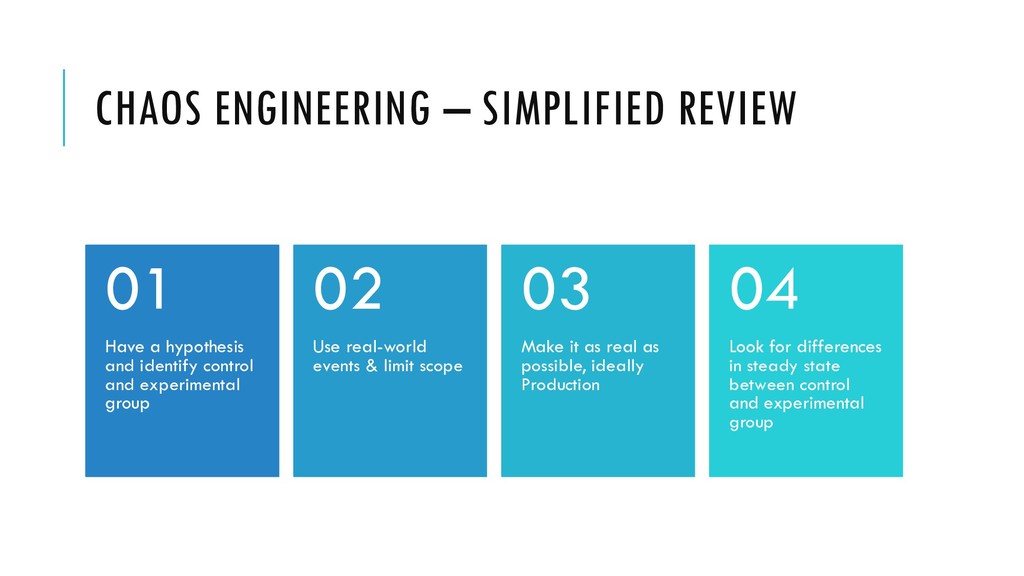
(monitor system and business metrics) Hypothesis that steady state will continue in both control and experiment groups 2. Pseudo-randomly inject faults (kill containers, network, etc) simulating real world events Try to disprove hypothesis looking for difference in control and experiment groups
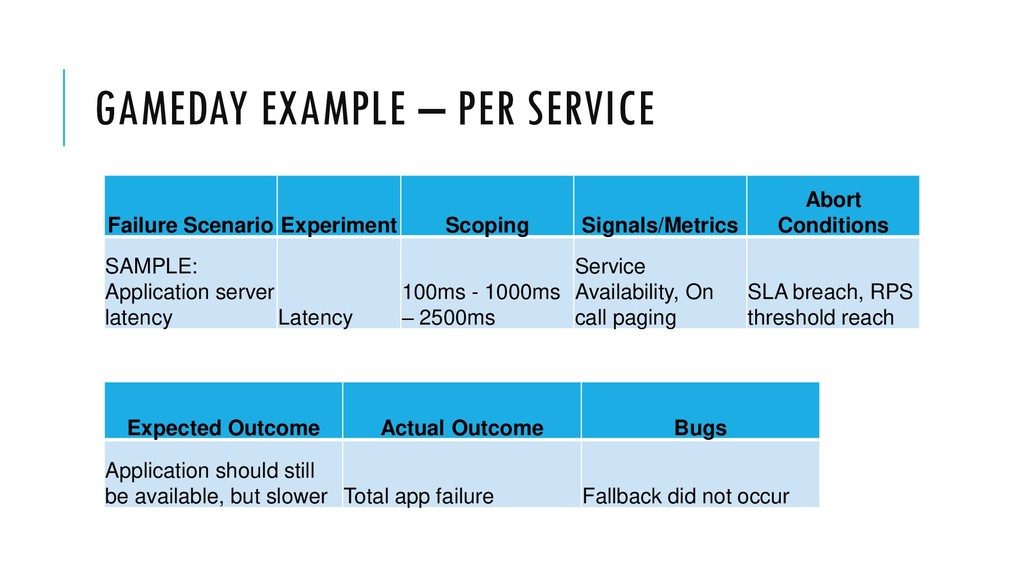
Abort Conditions SAMPLE: Application server latency Latency 100ms - 1000ms – 2500ms Service Availability, On call paging SLA breach, RPS threshold reach Expected Outcome Actual Outcome Bugs Application should still be available, but slower Total app failure Fallback did not occur
control and experimental group 01 Use real-world events & limit scope 02 Make it as real as possible, ideally Production 03 Look for differences in steady state between control and experimental group 04
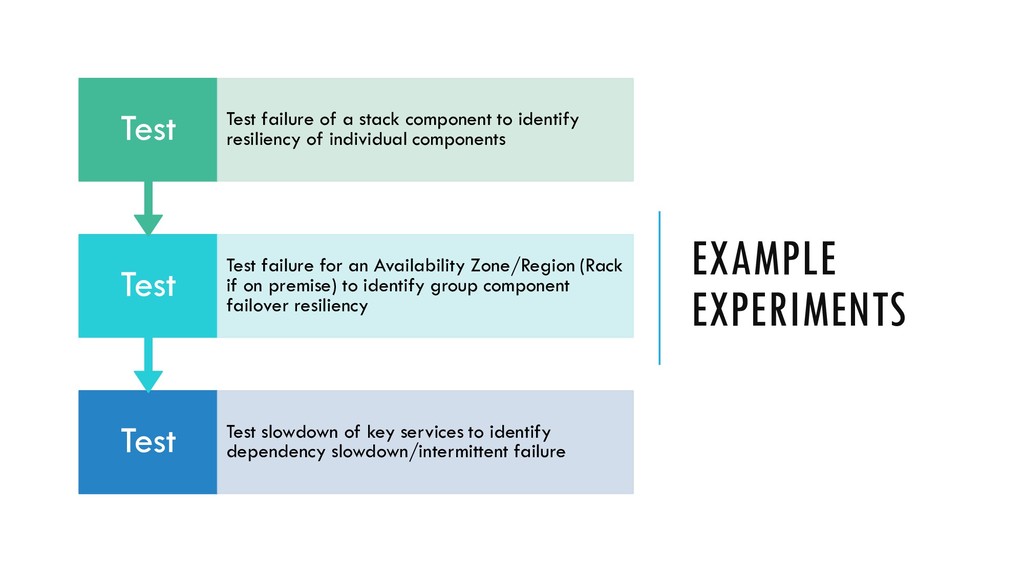
dependency slowdown/intermittent failure Test Test failure for an Availability Zone/Region (Rack if on premise) to identify group component failover resiliency Test Test failure of a stack component to identify resiliency of individual components


 ichirokano2
 moro
 kasacchiful
 siroemk
 mofurune
 skydoves
 kmars0605
 syumai
 yub0n
 rkaga
 taiseiue
 ryu1013
 palkan
 akihiro_kokubo
 tmiket
 geshan
 baasie
 marketingsoph
 colly
 aleyda
 axbom
 rakko
 popppiees
 addyosmani