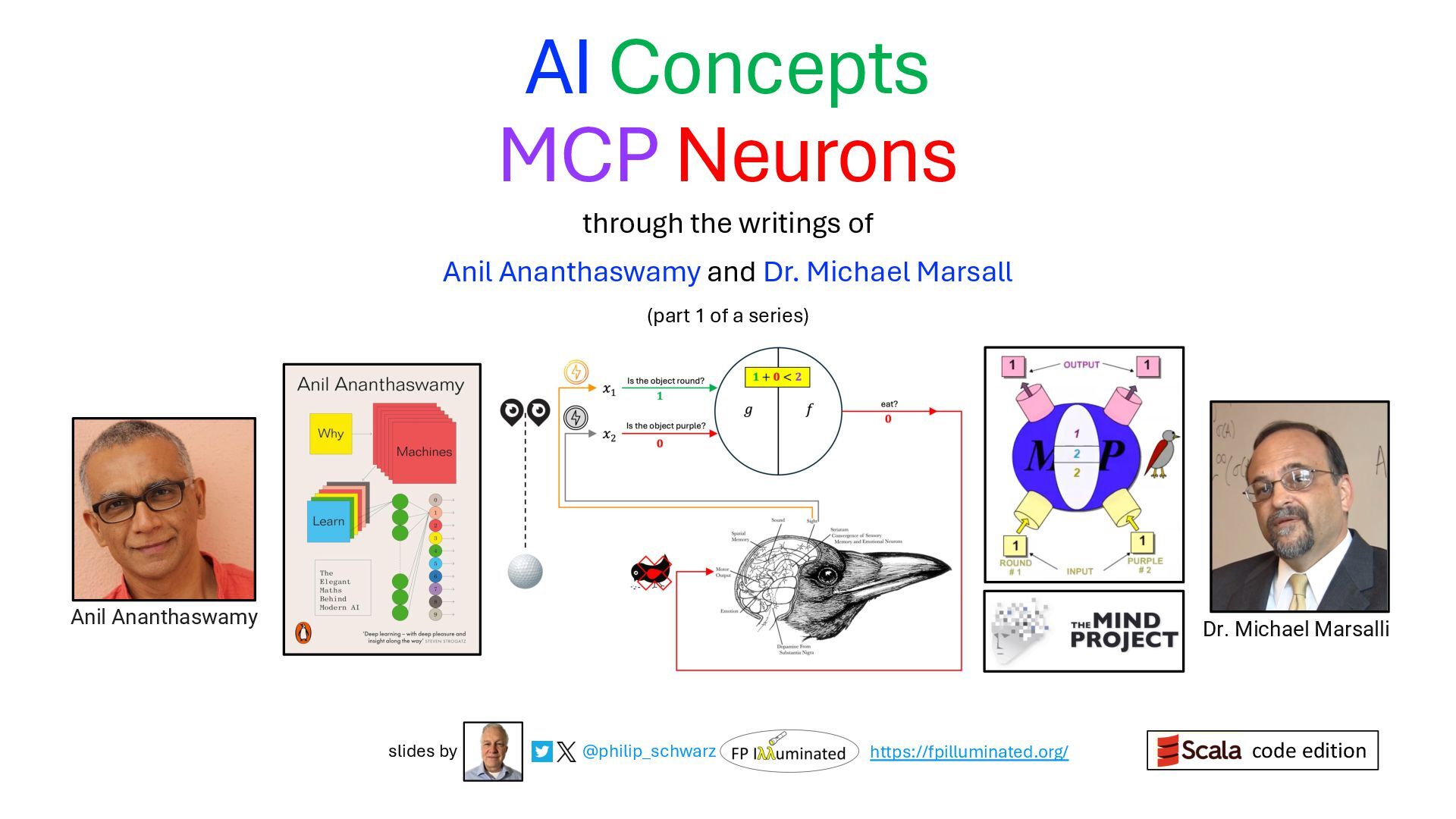
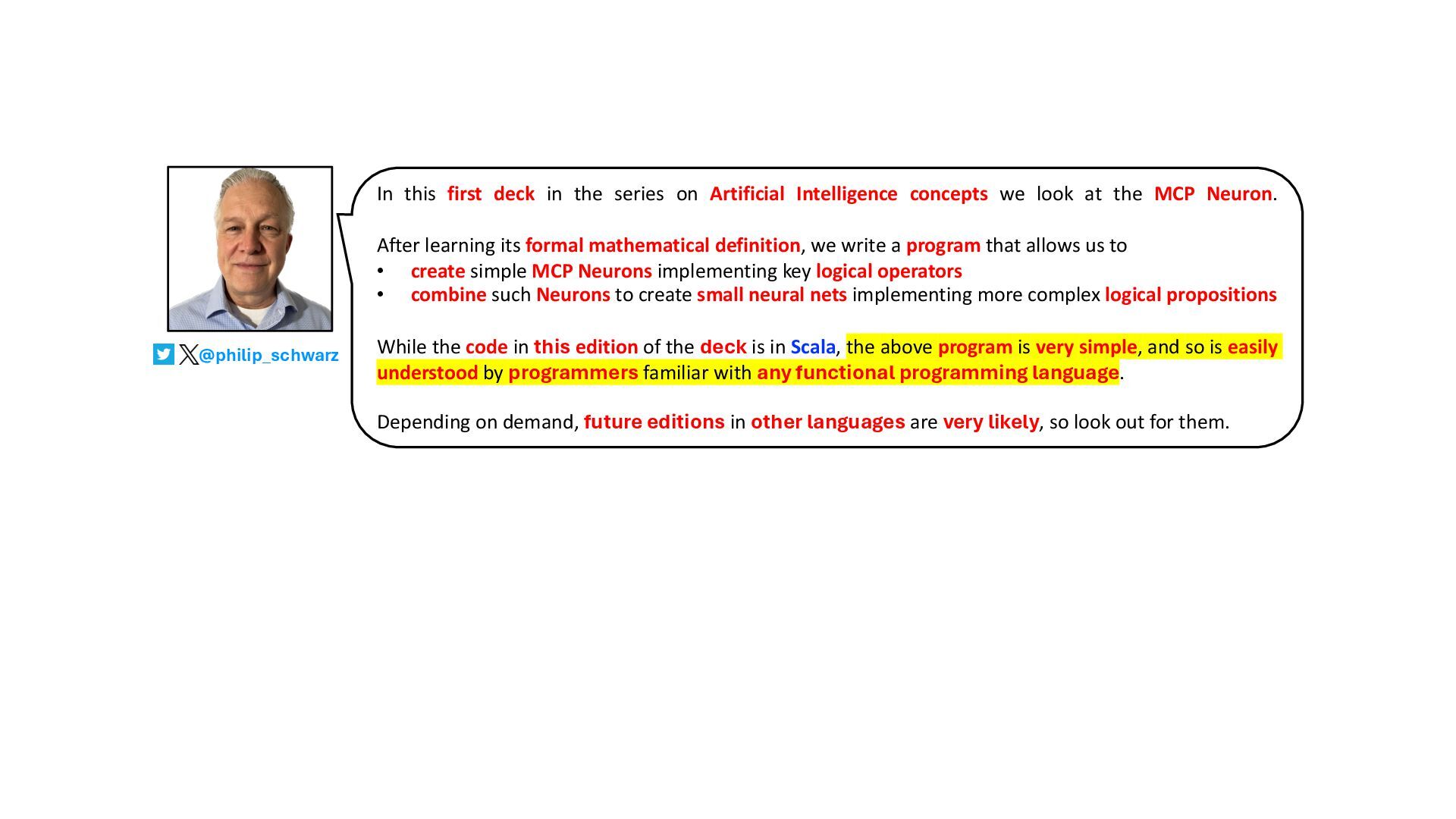
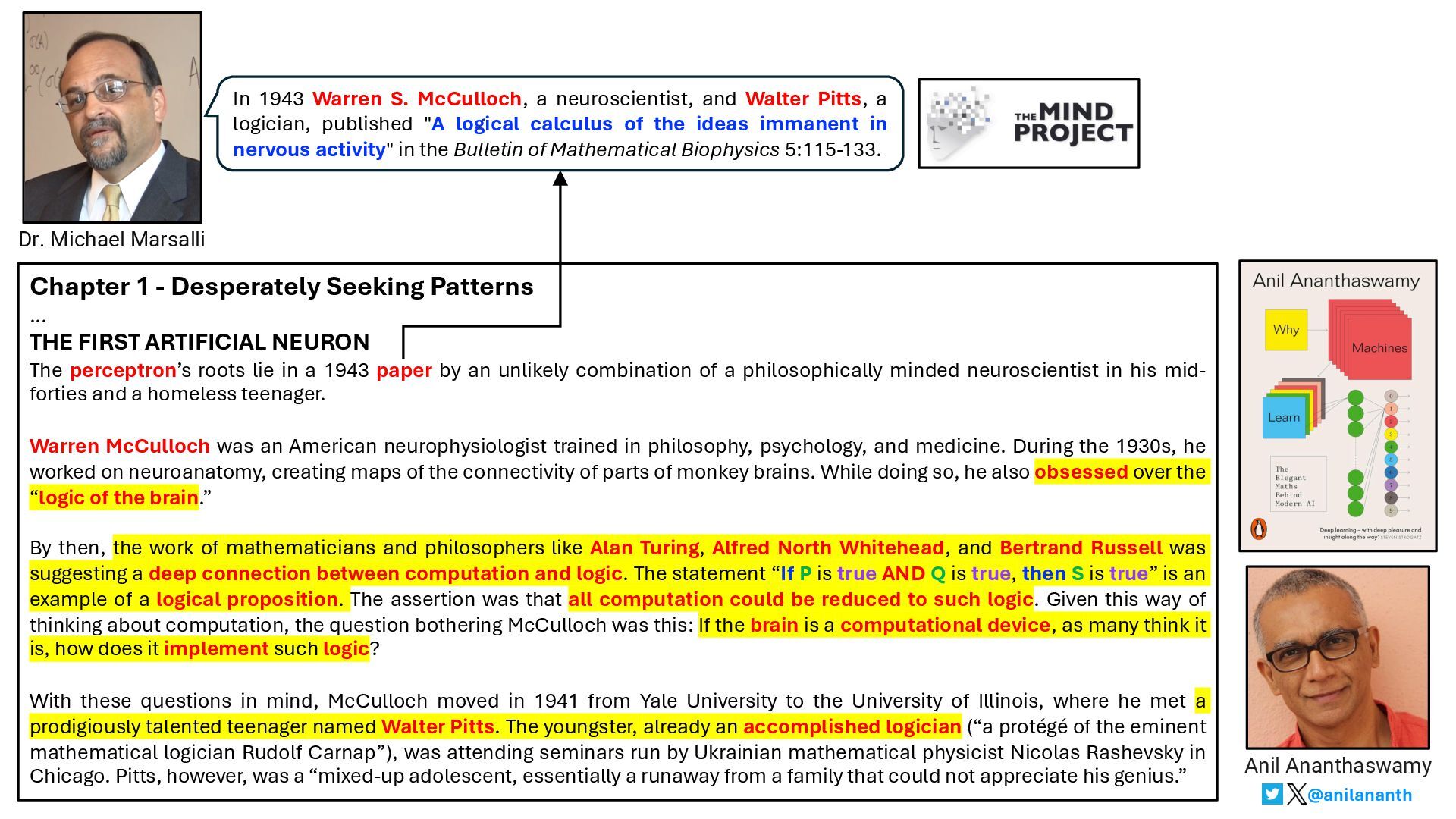
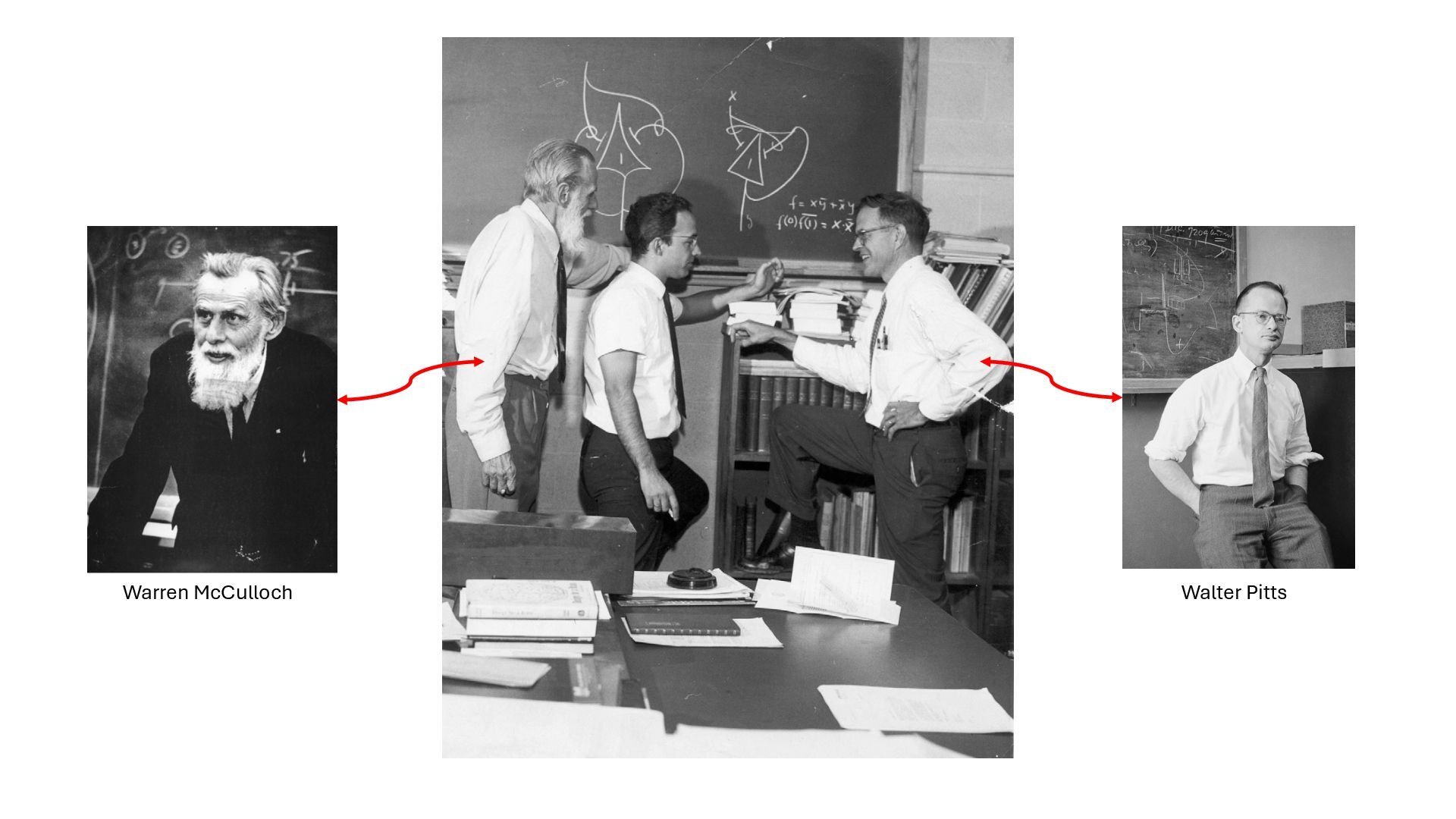
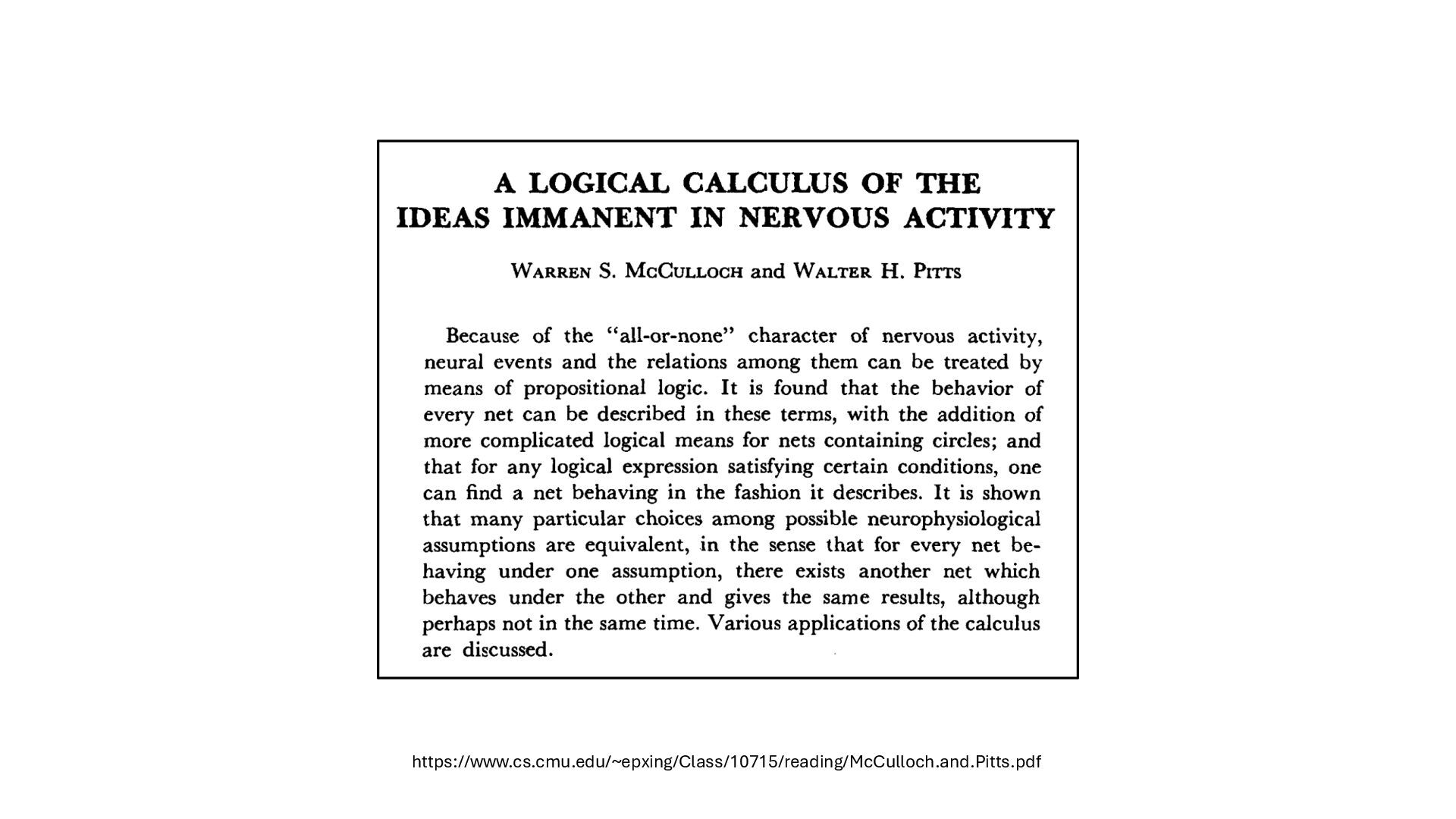
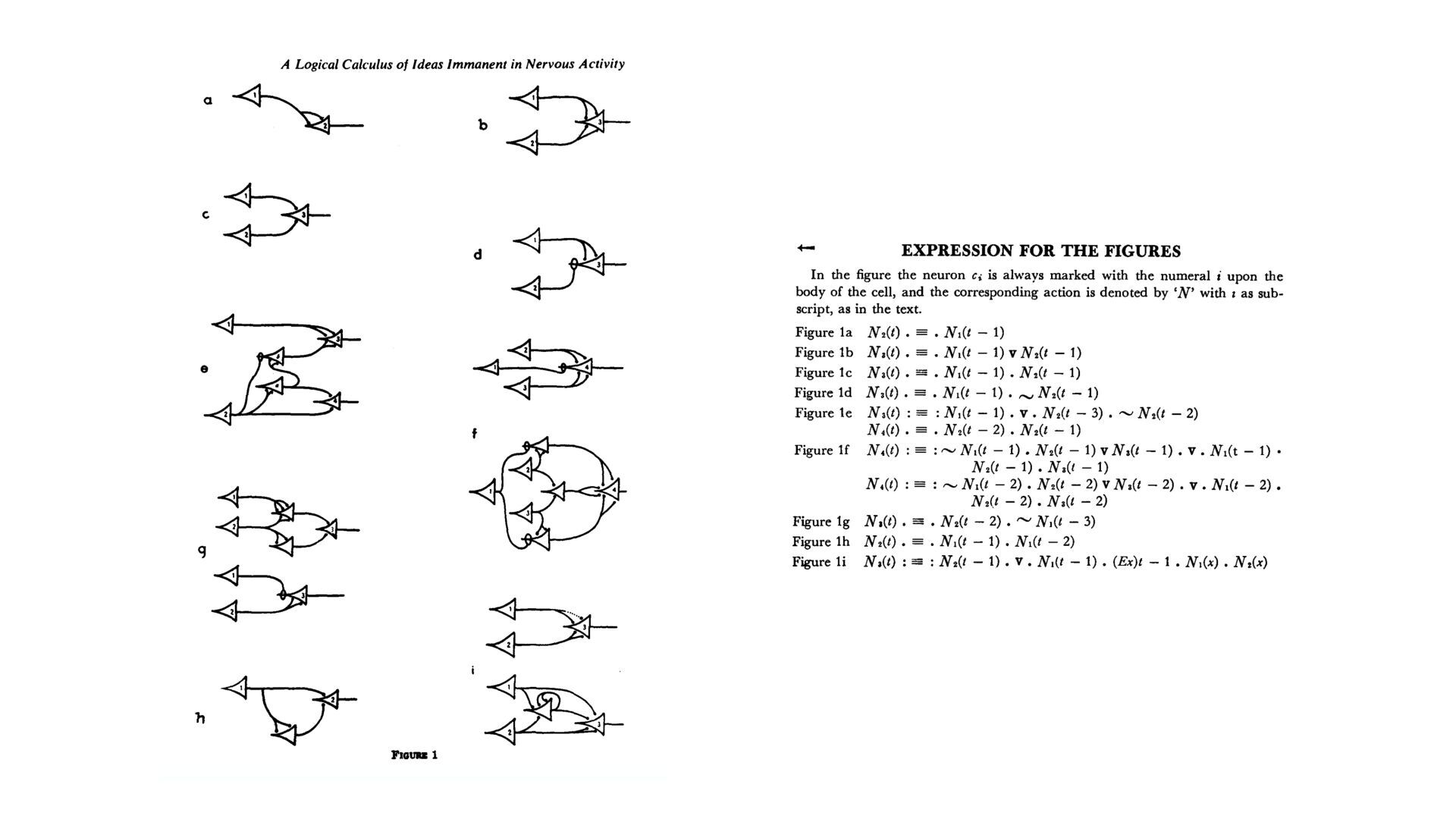
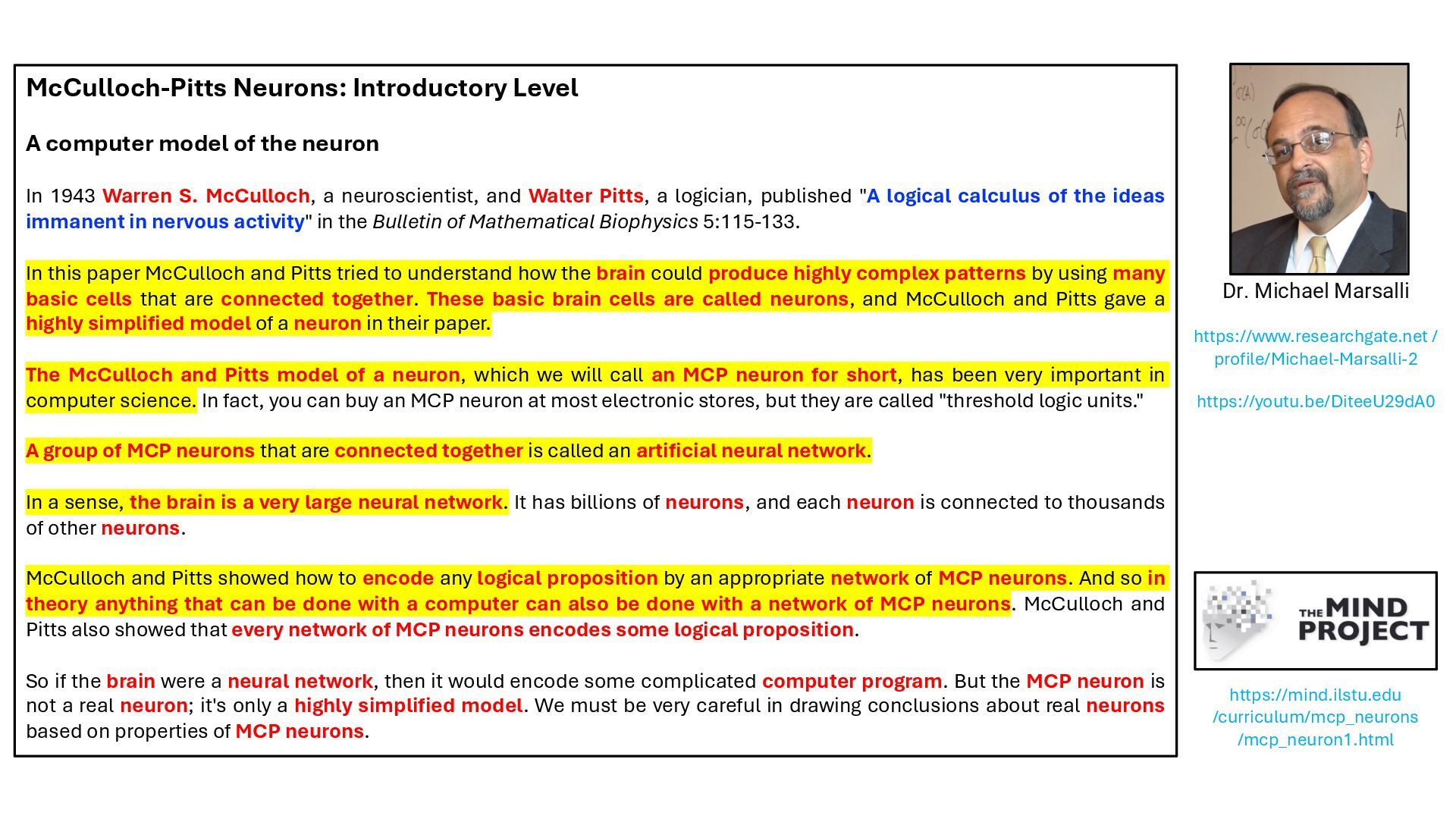
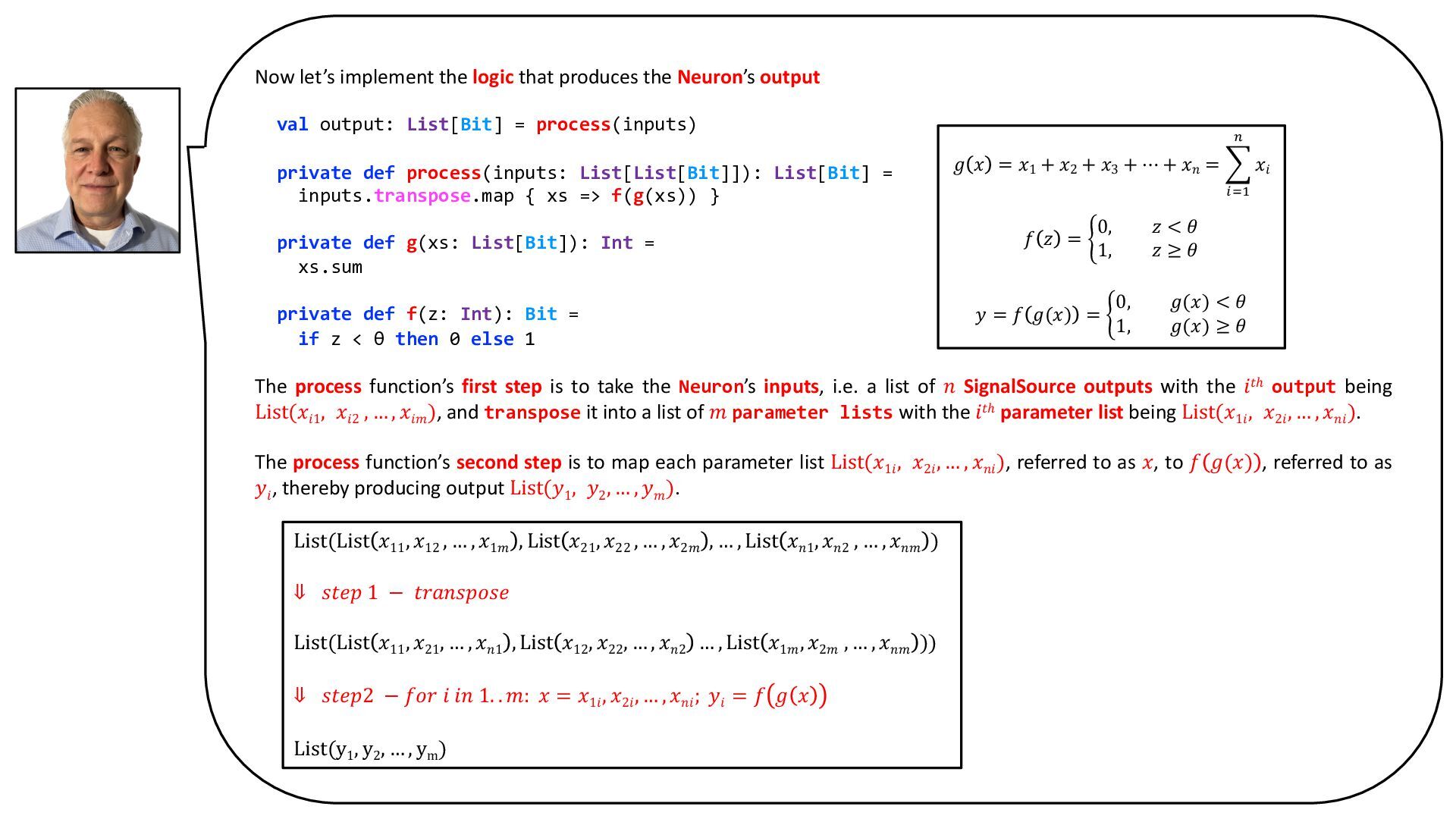
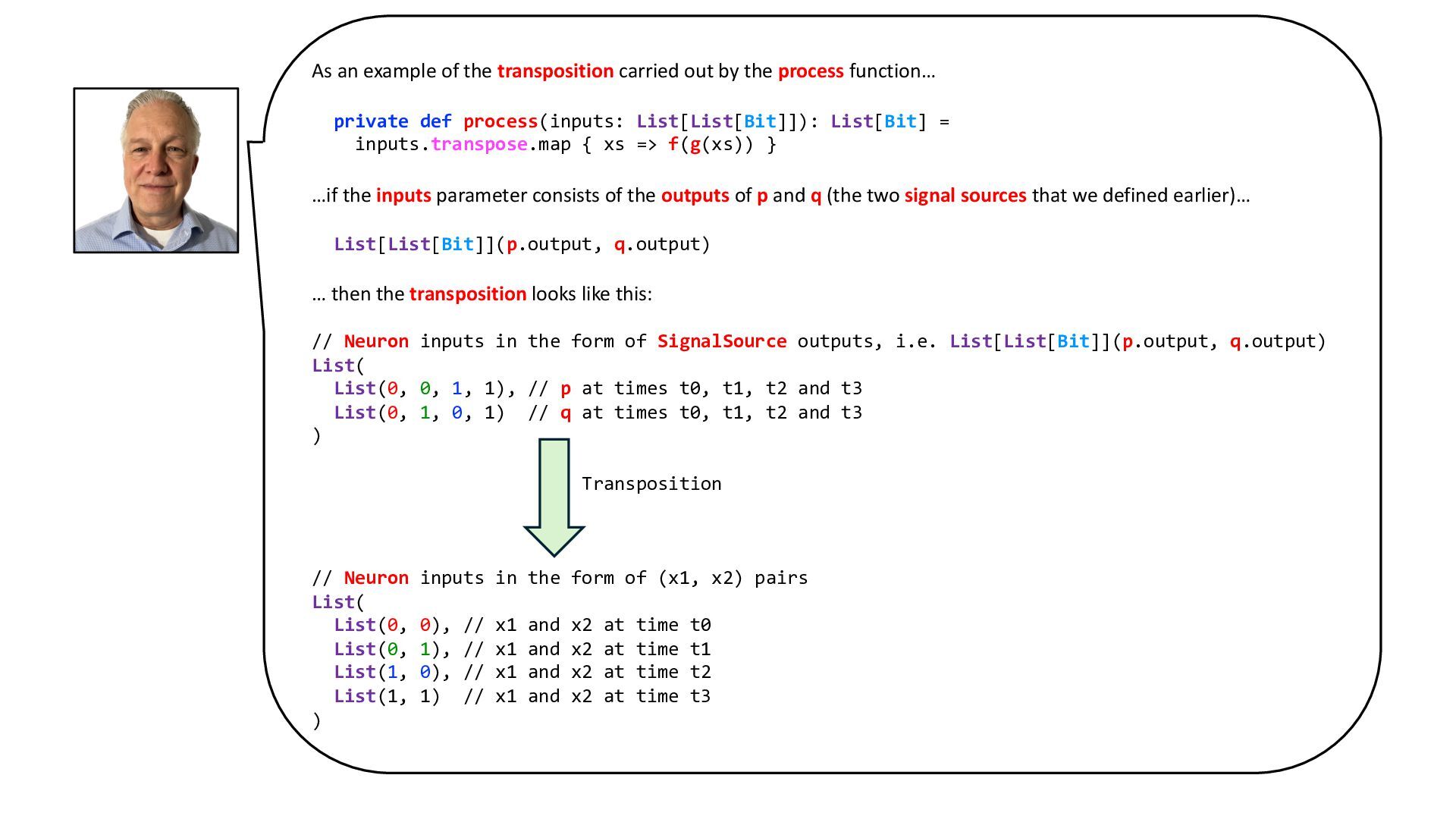
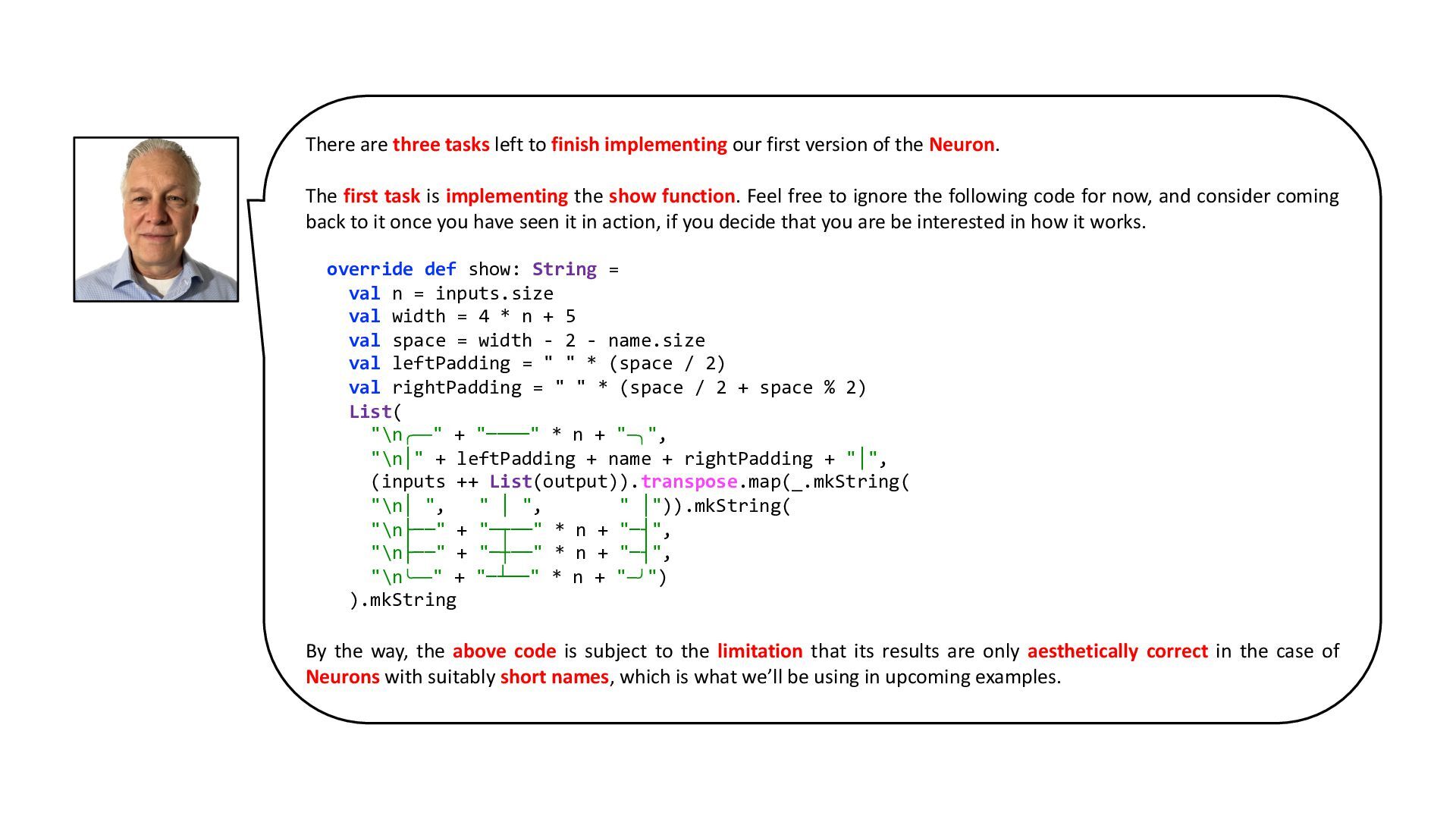
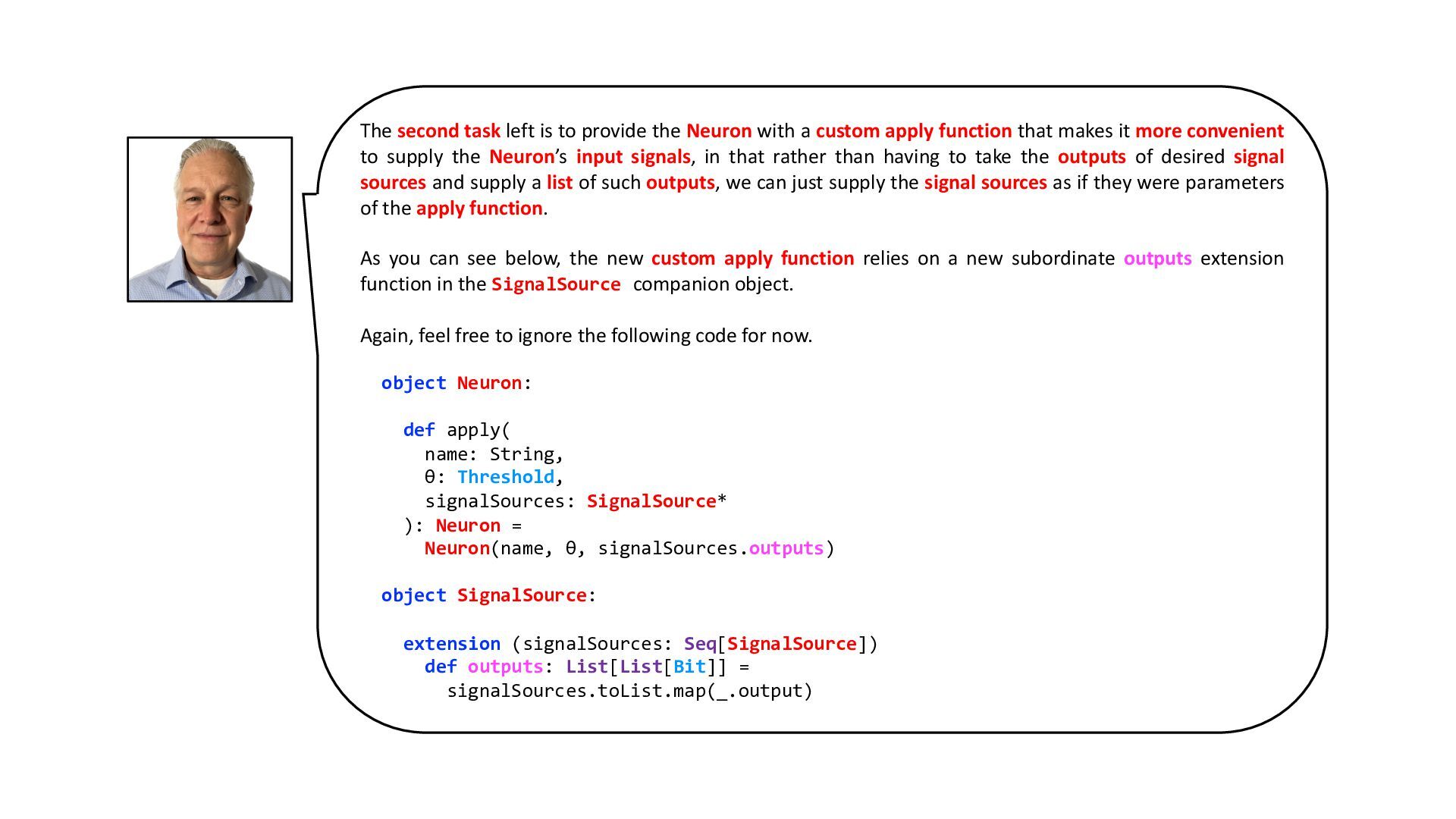
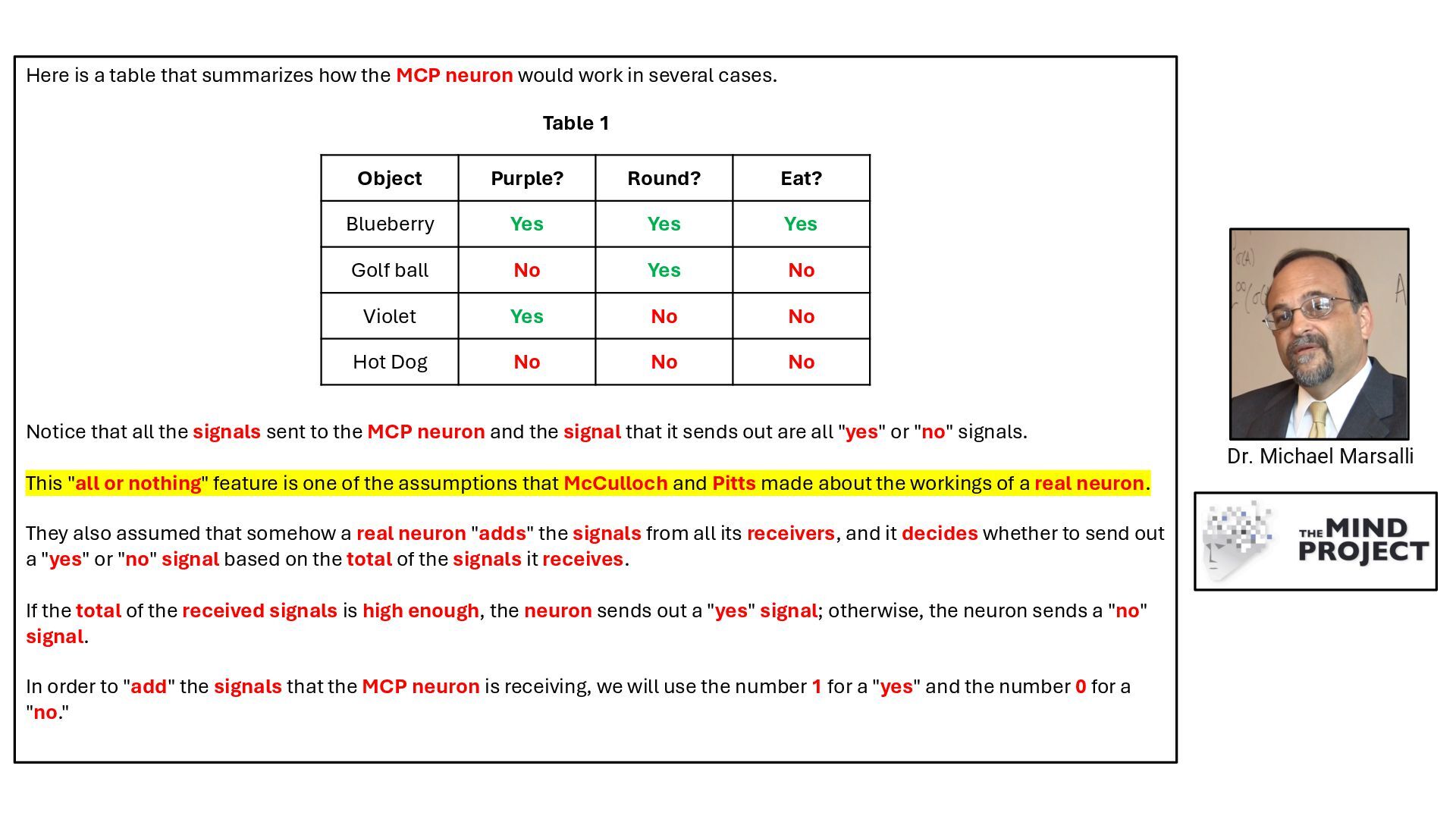
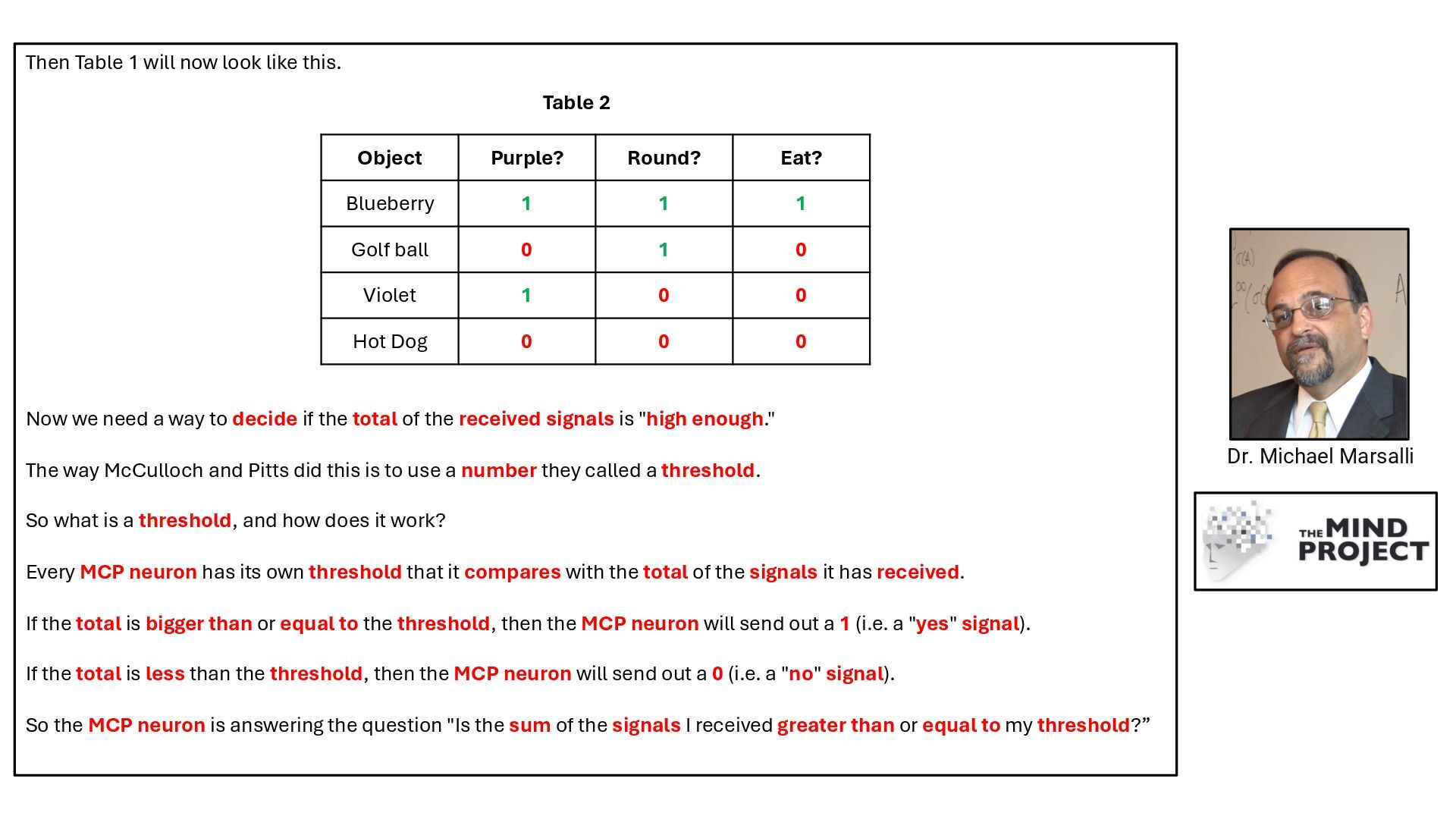
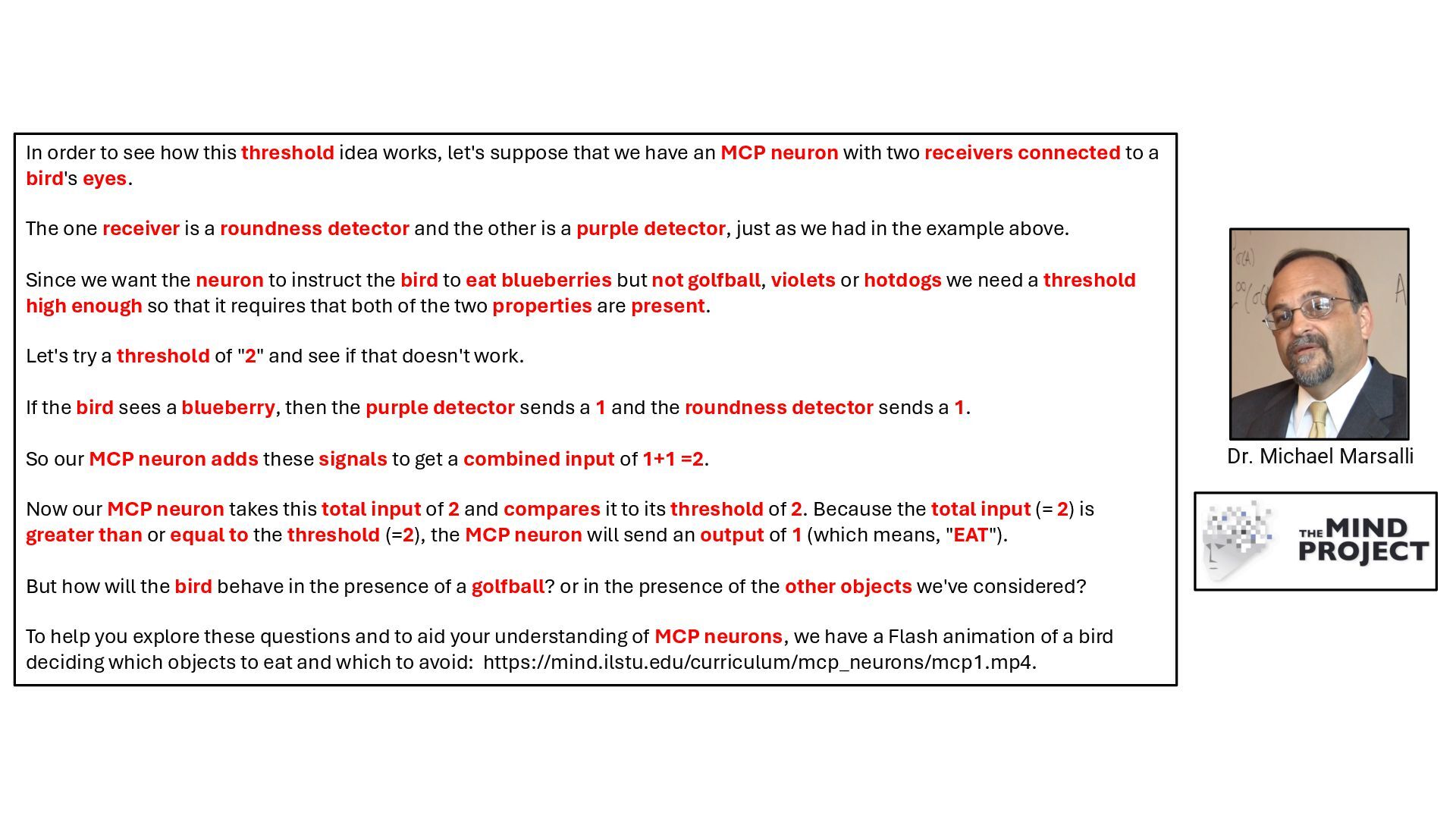
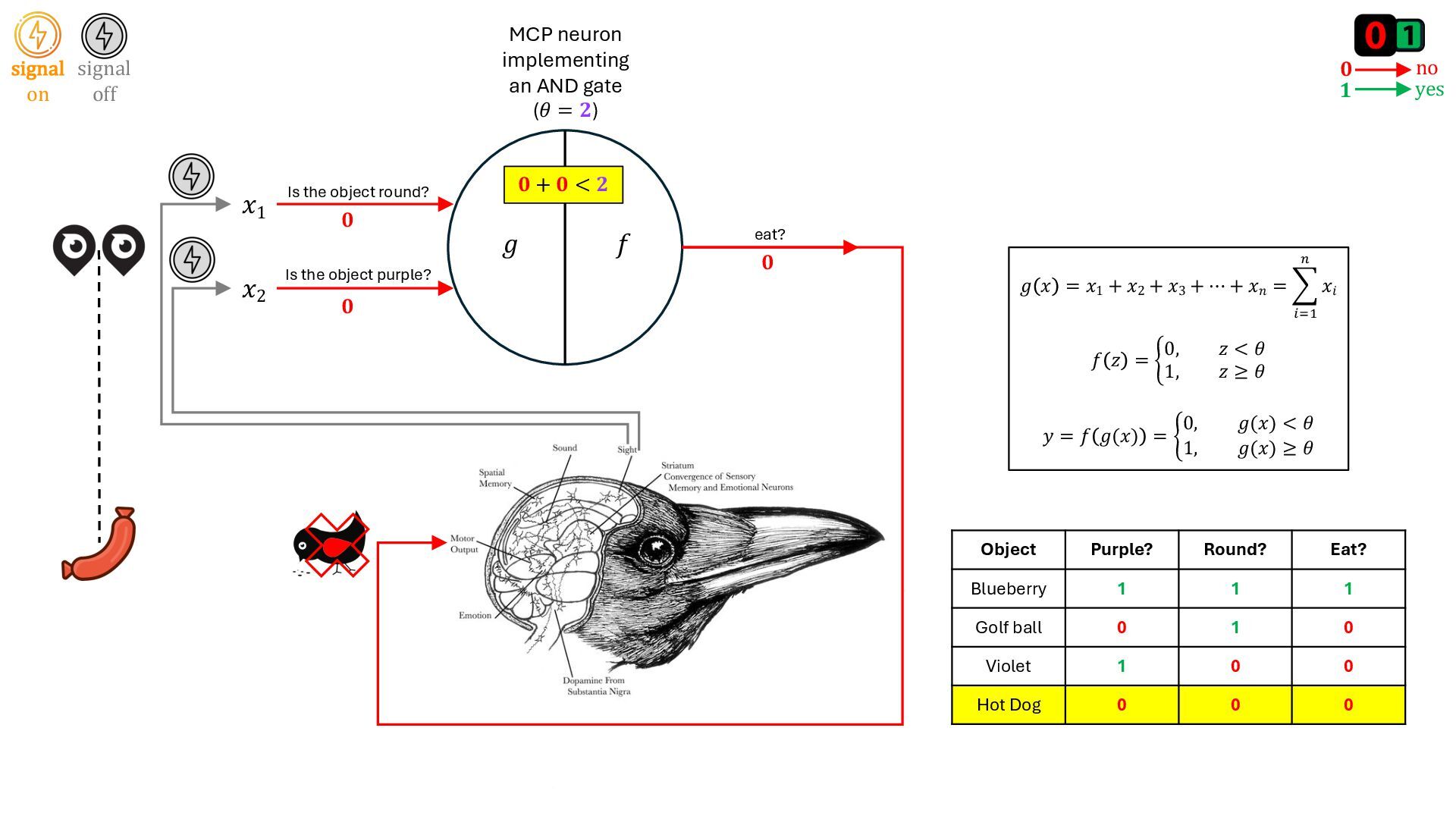
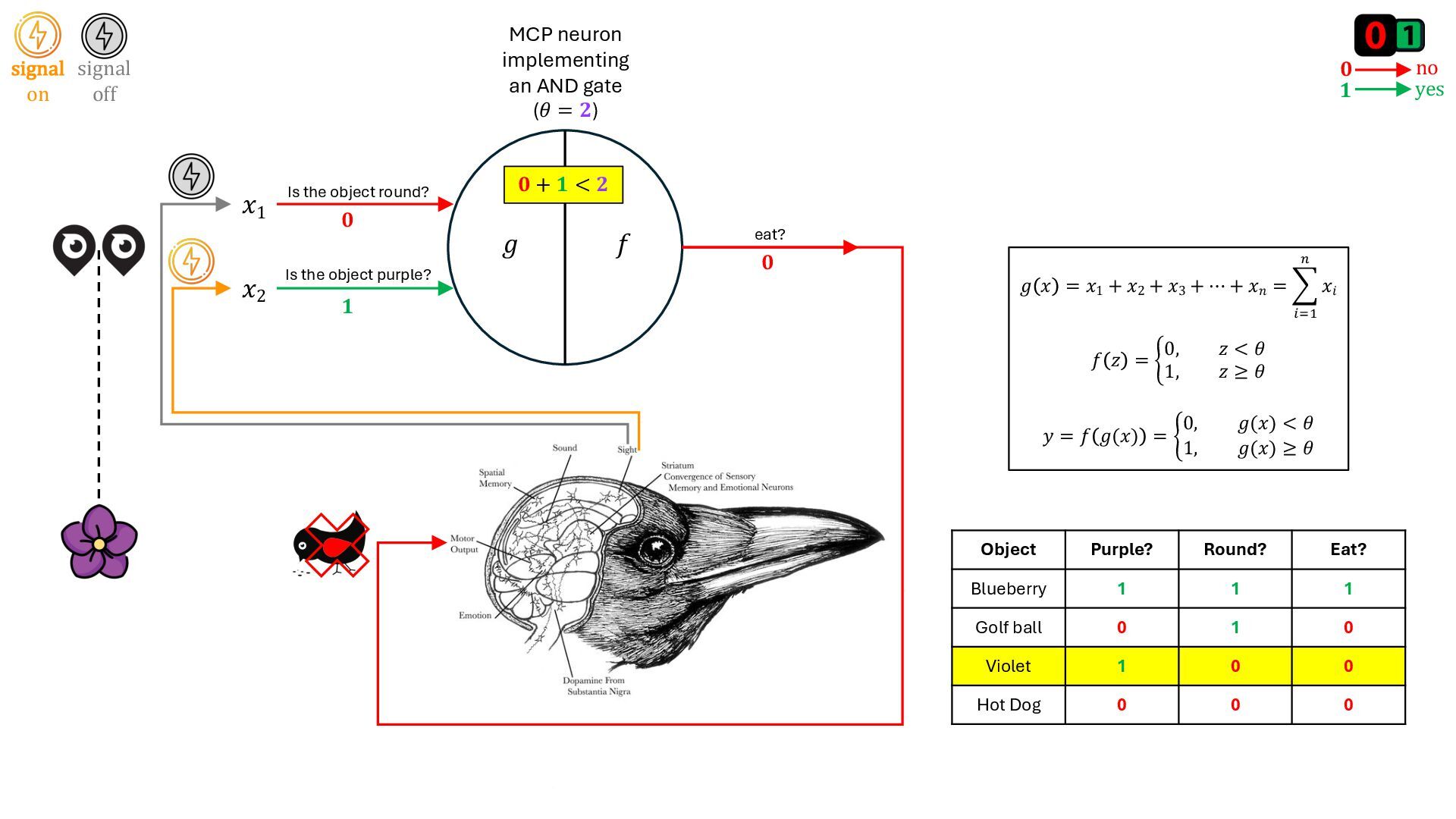
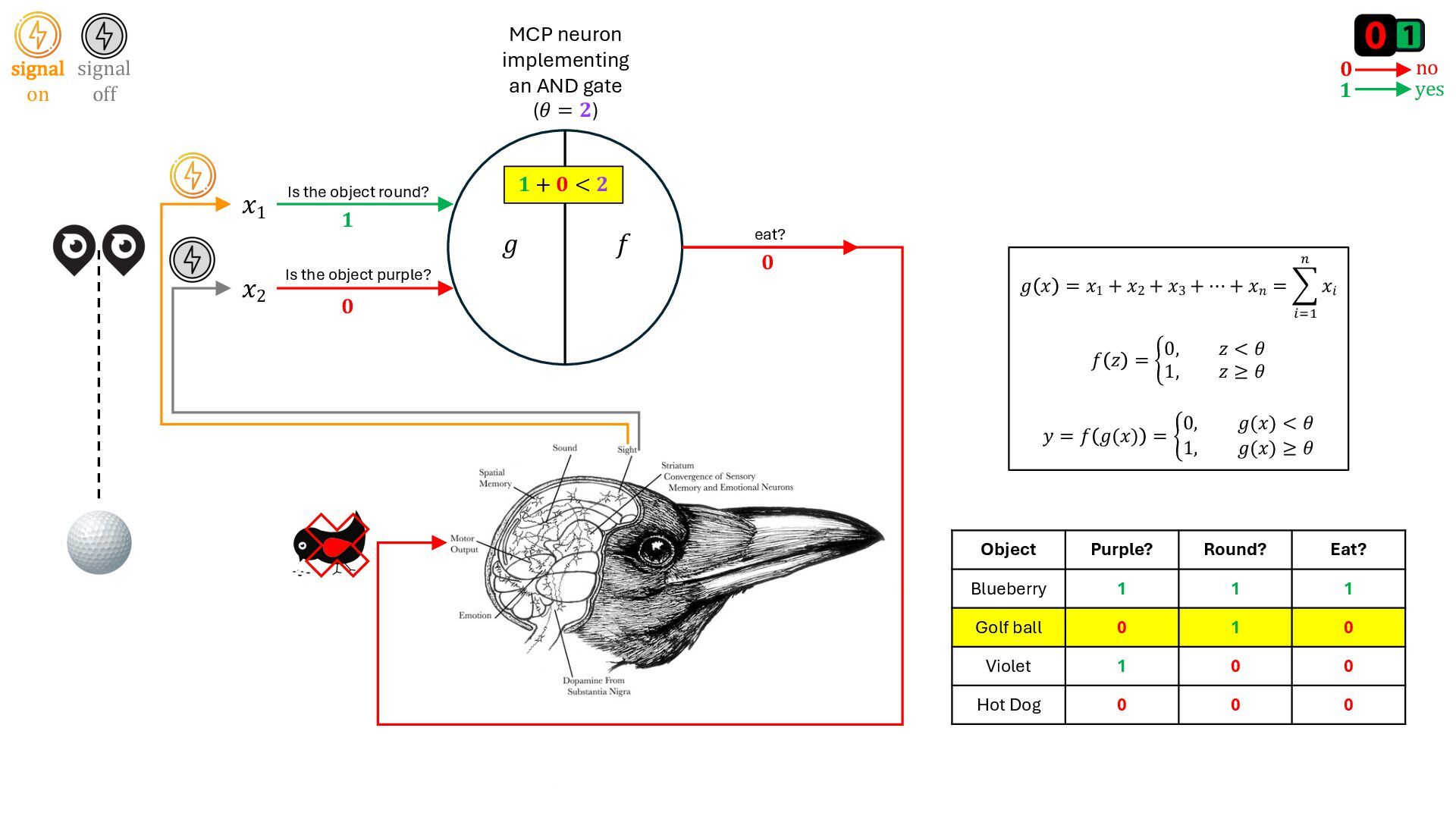
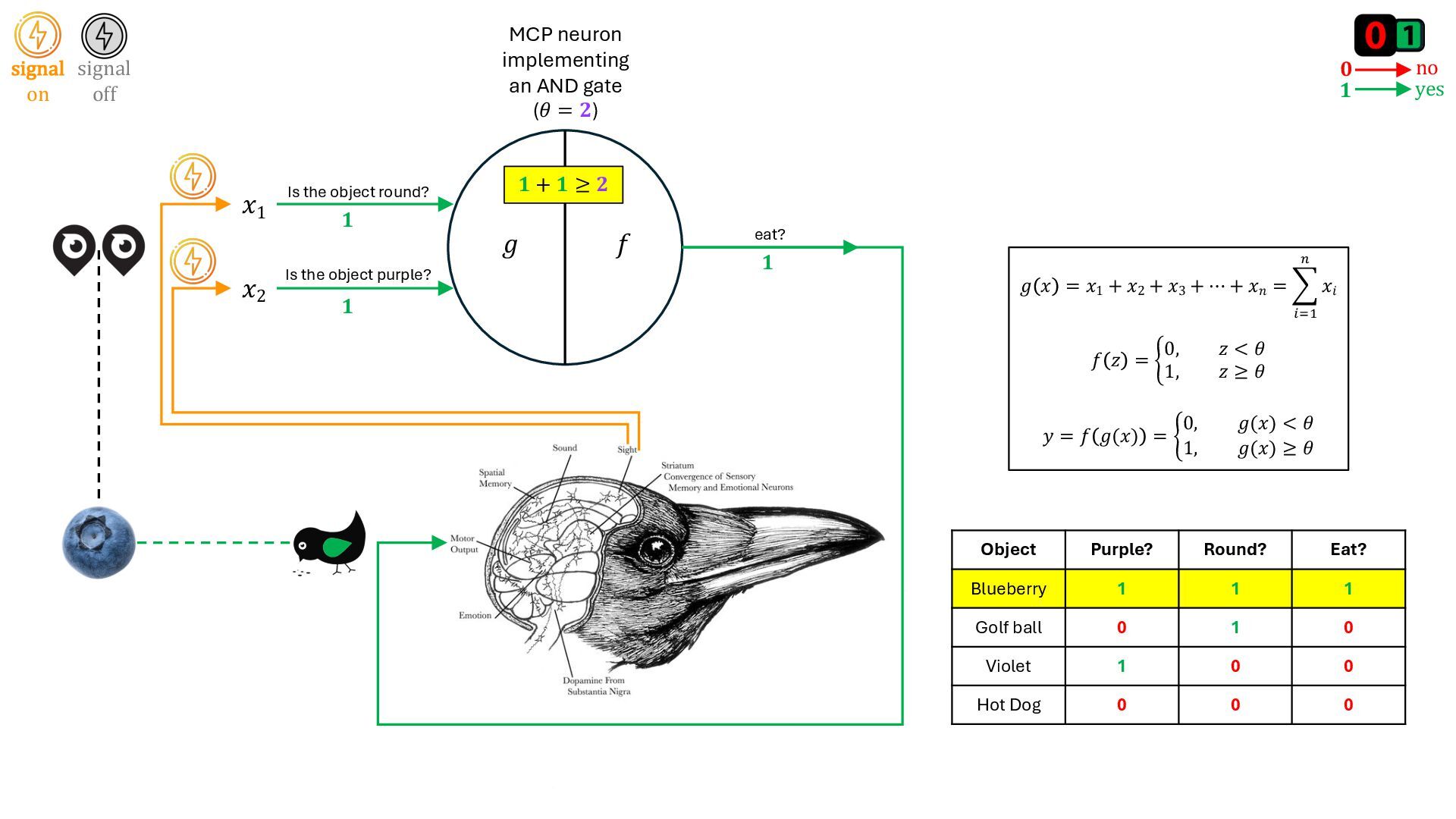
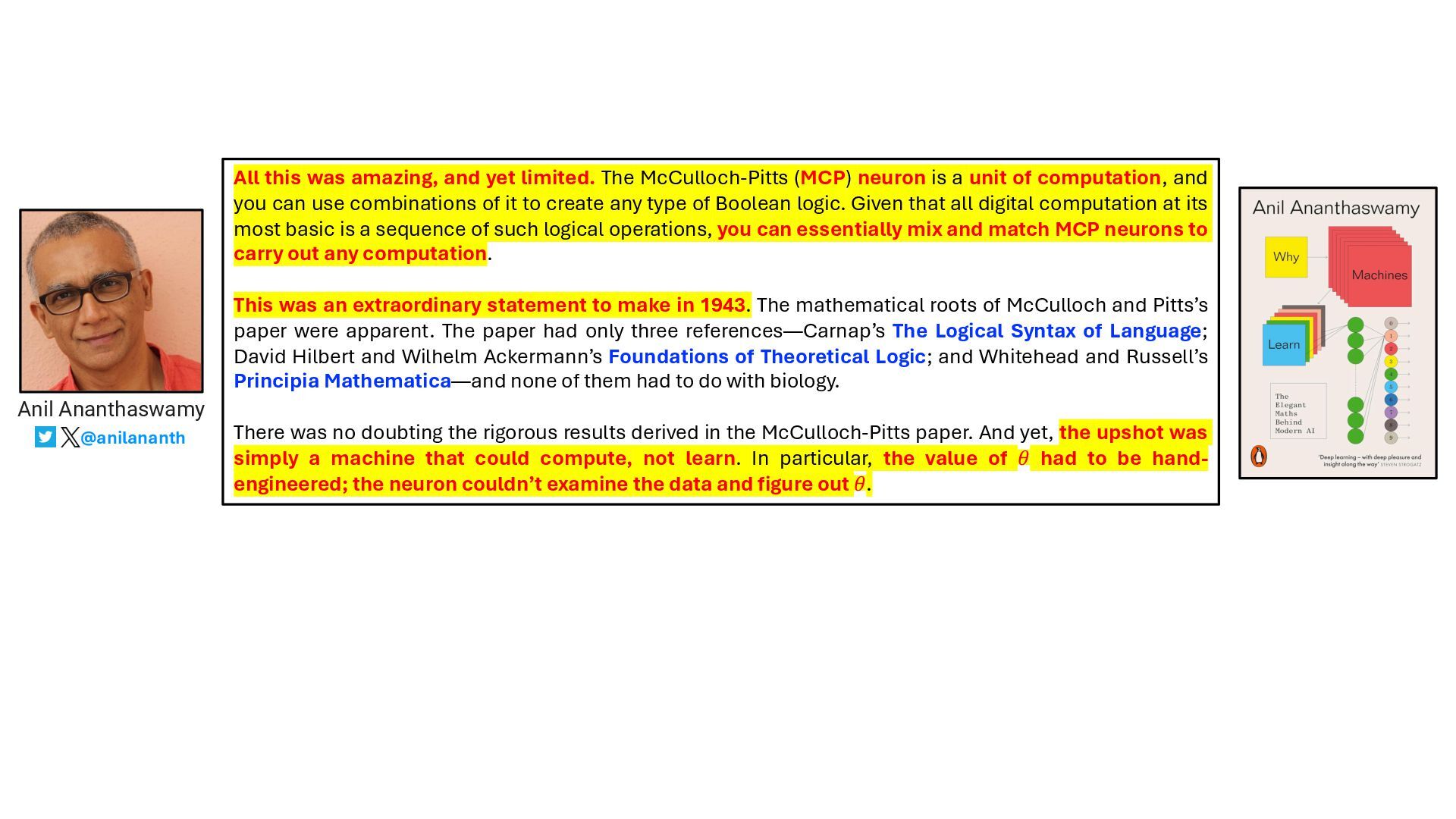
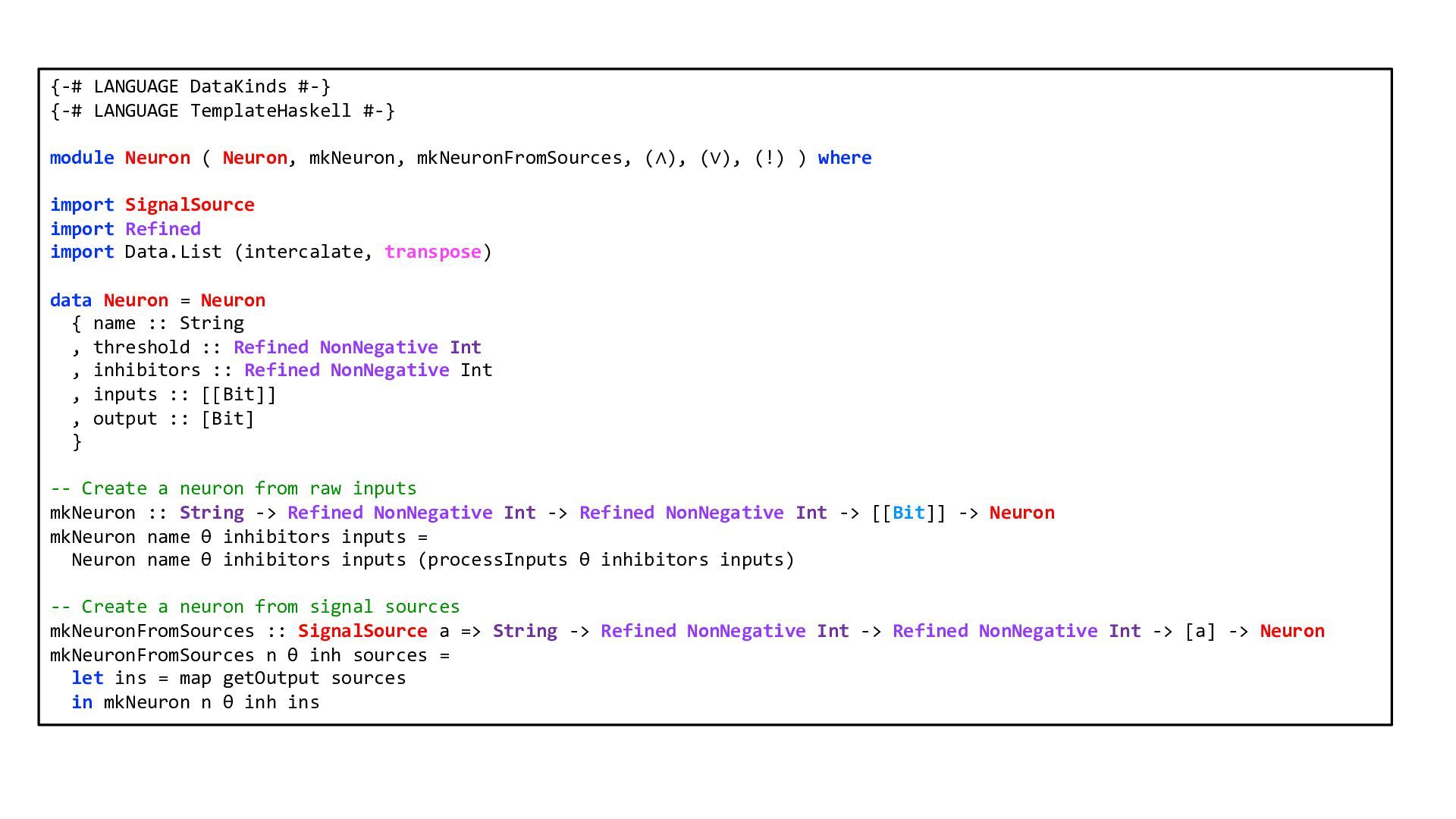
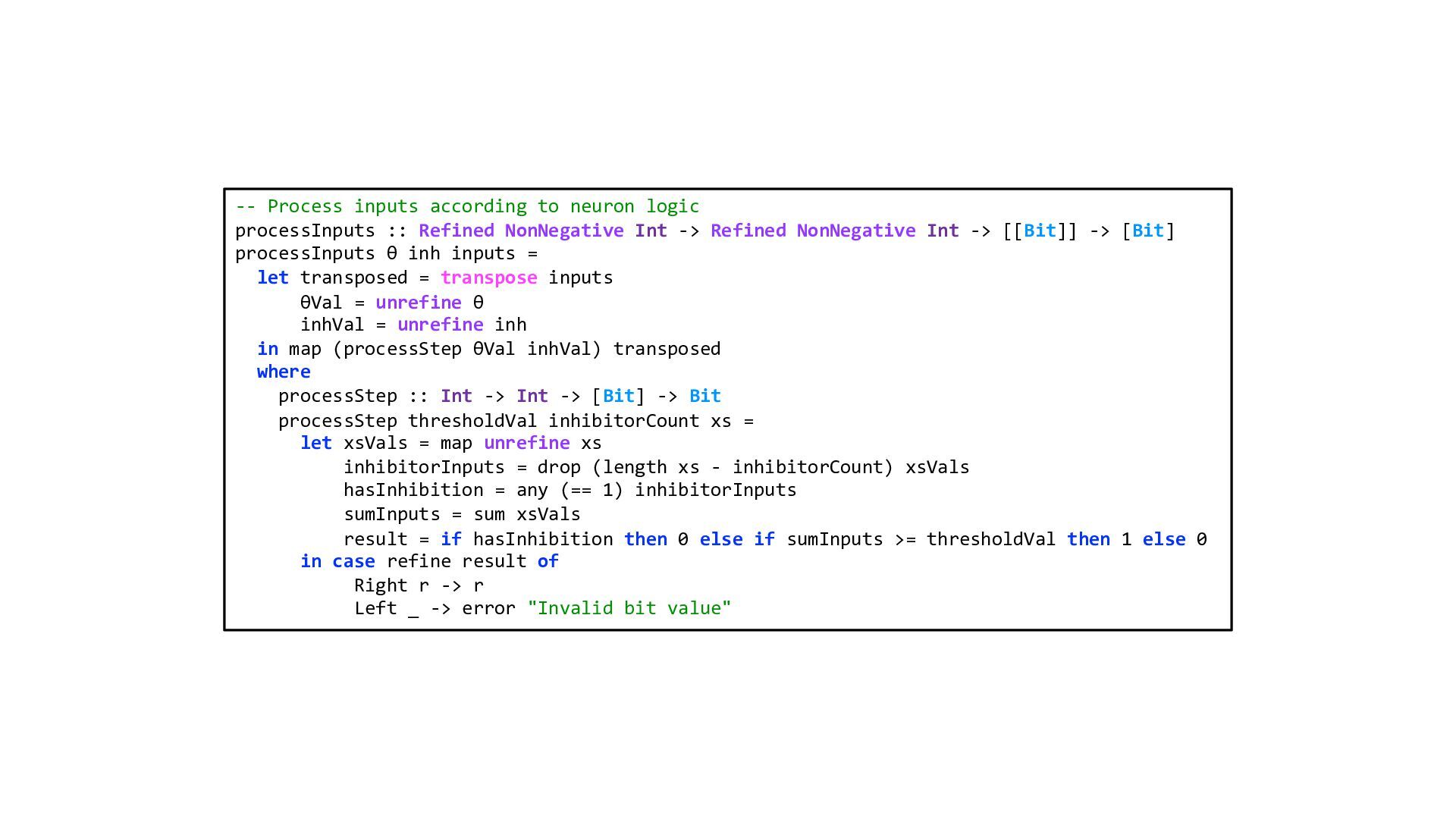
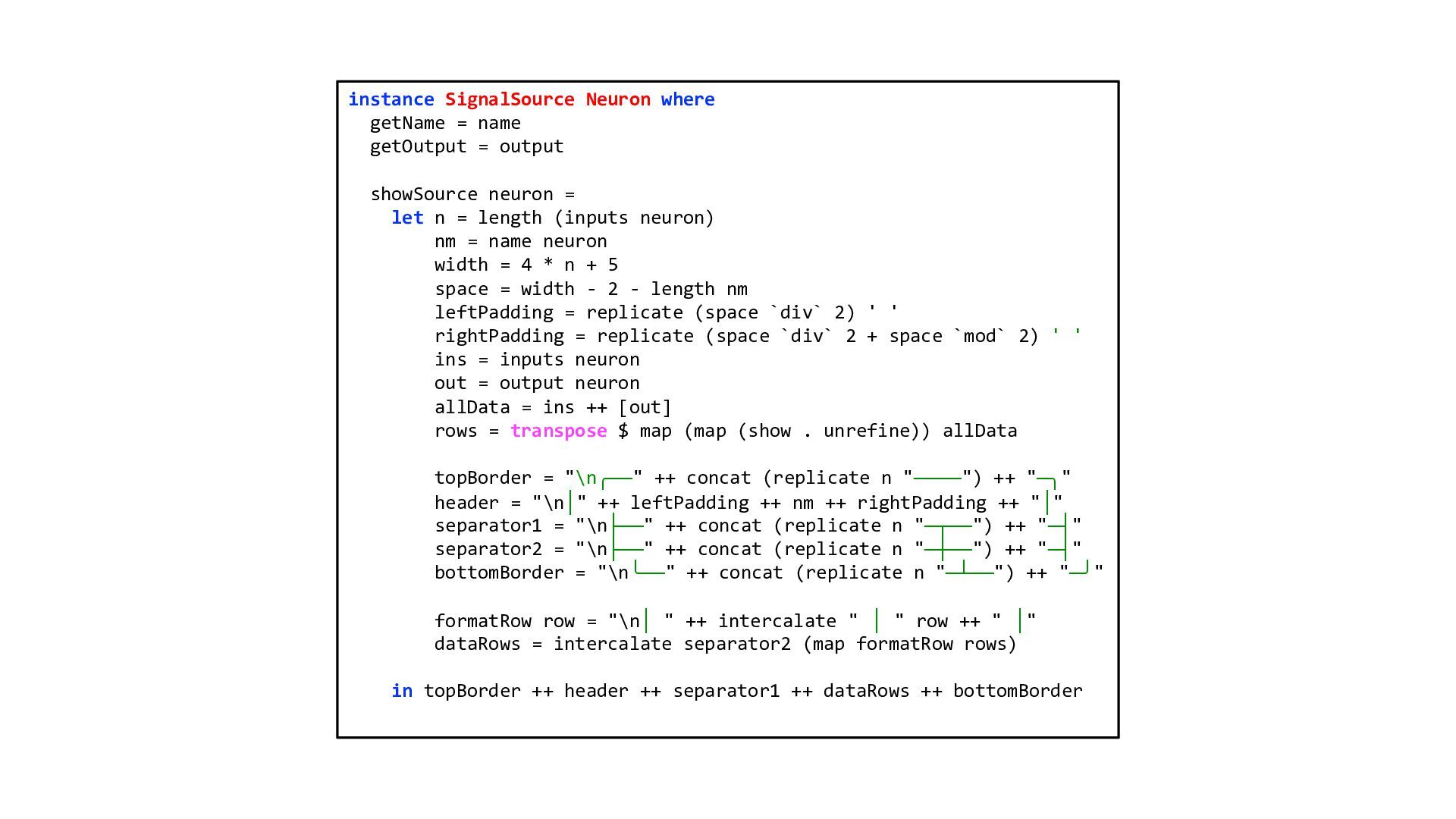
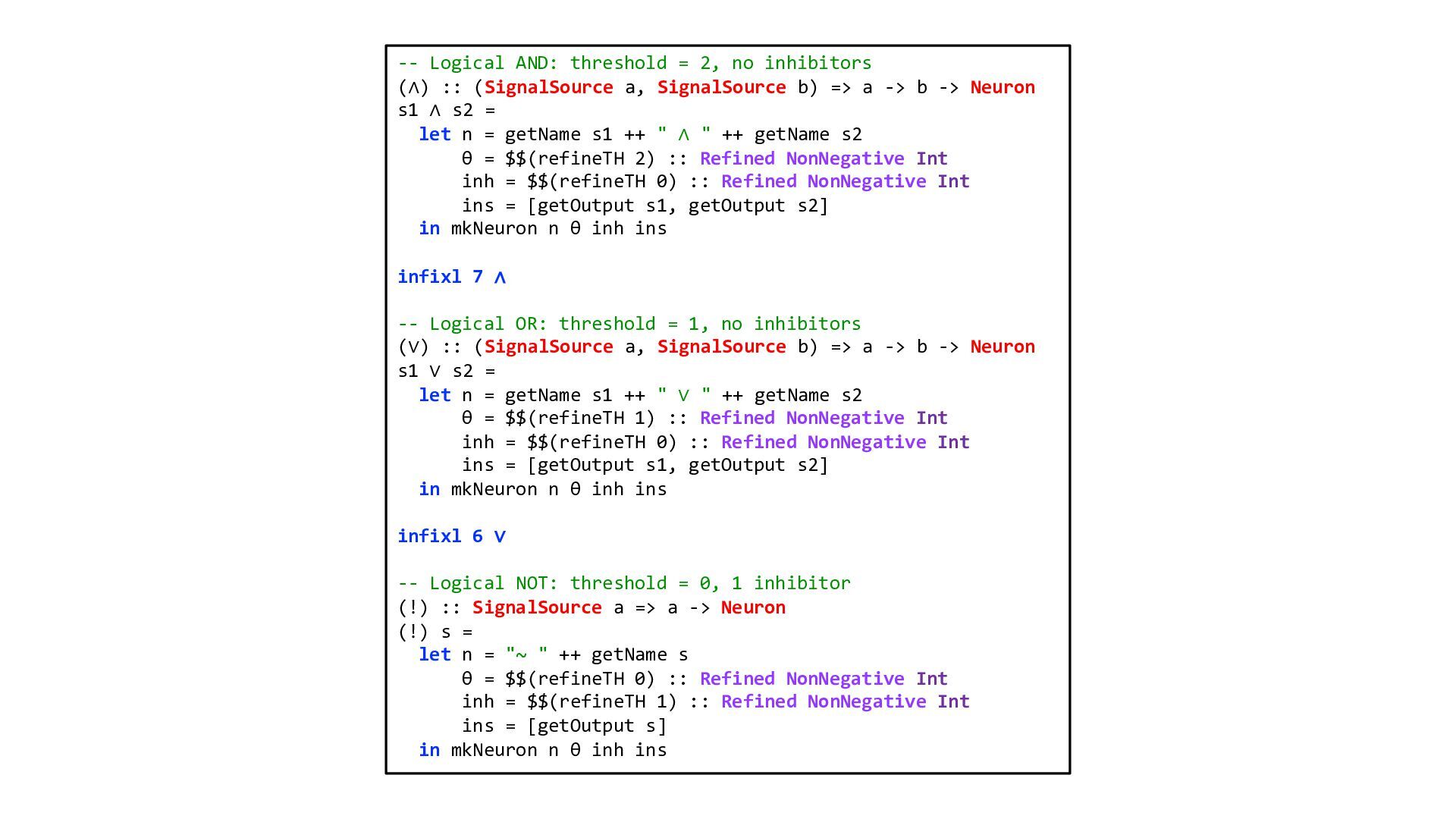
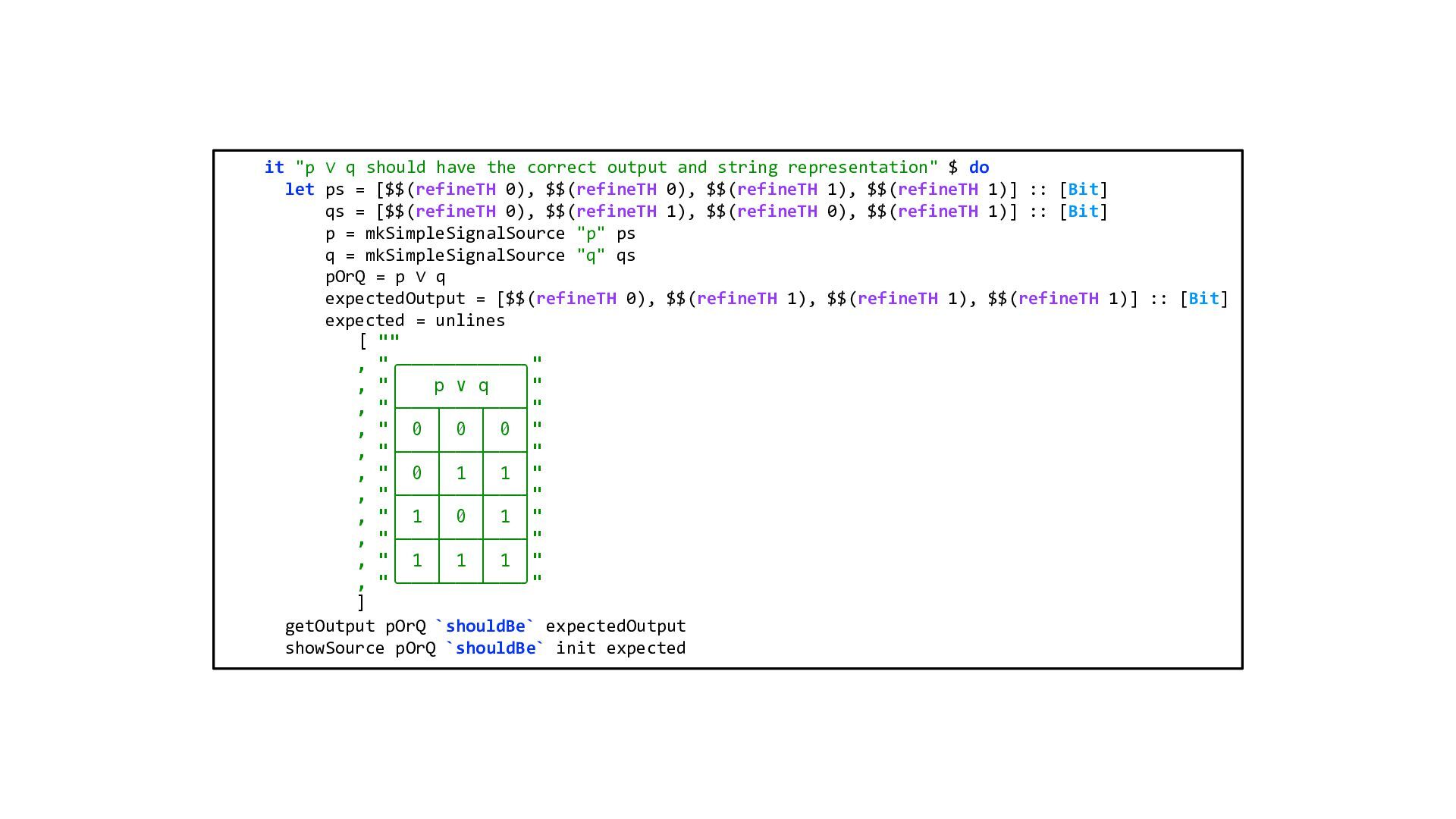
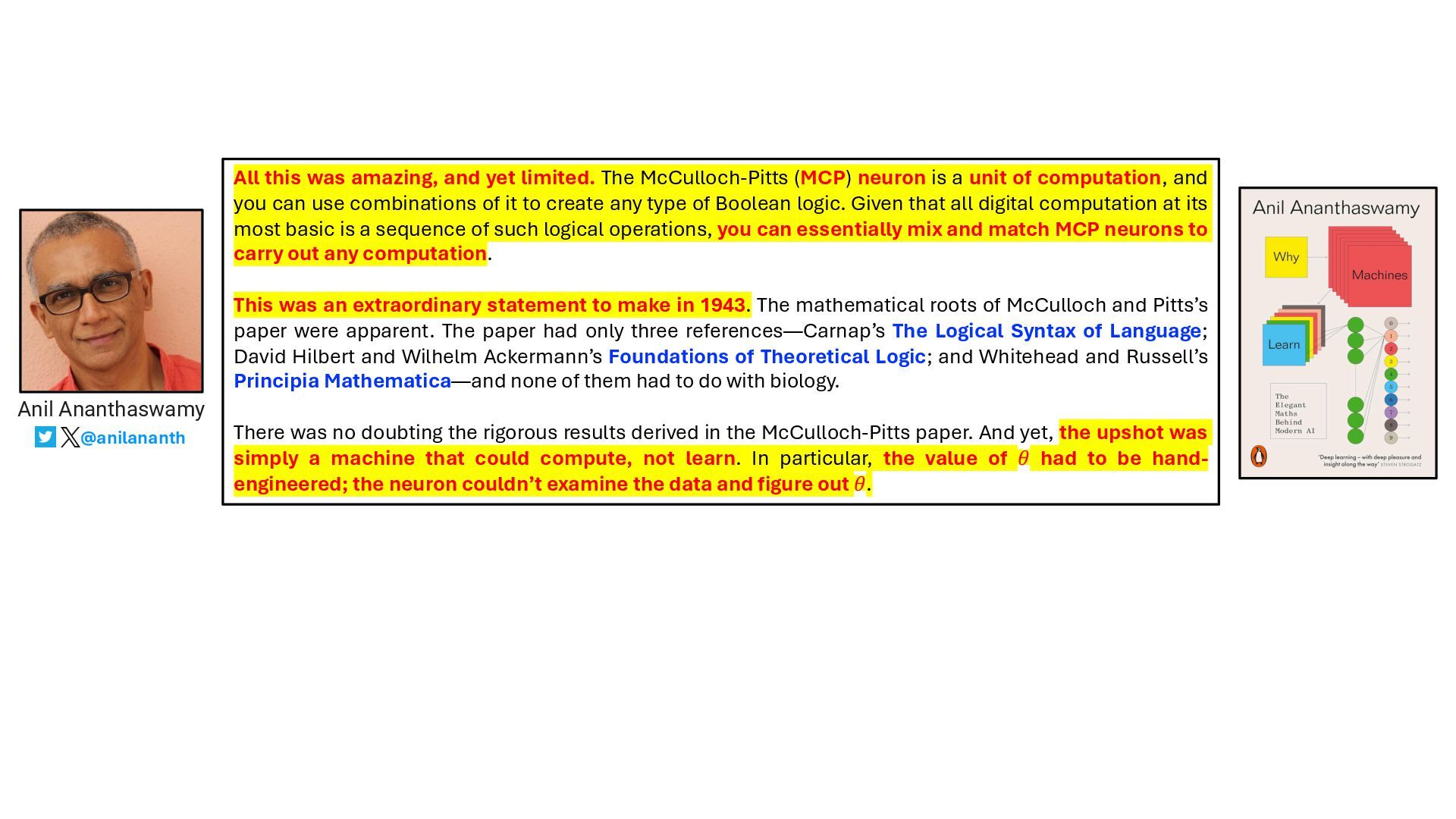
In this first deck in the series on AI concepts we look at the MCP Neuron.
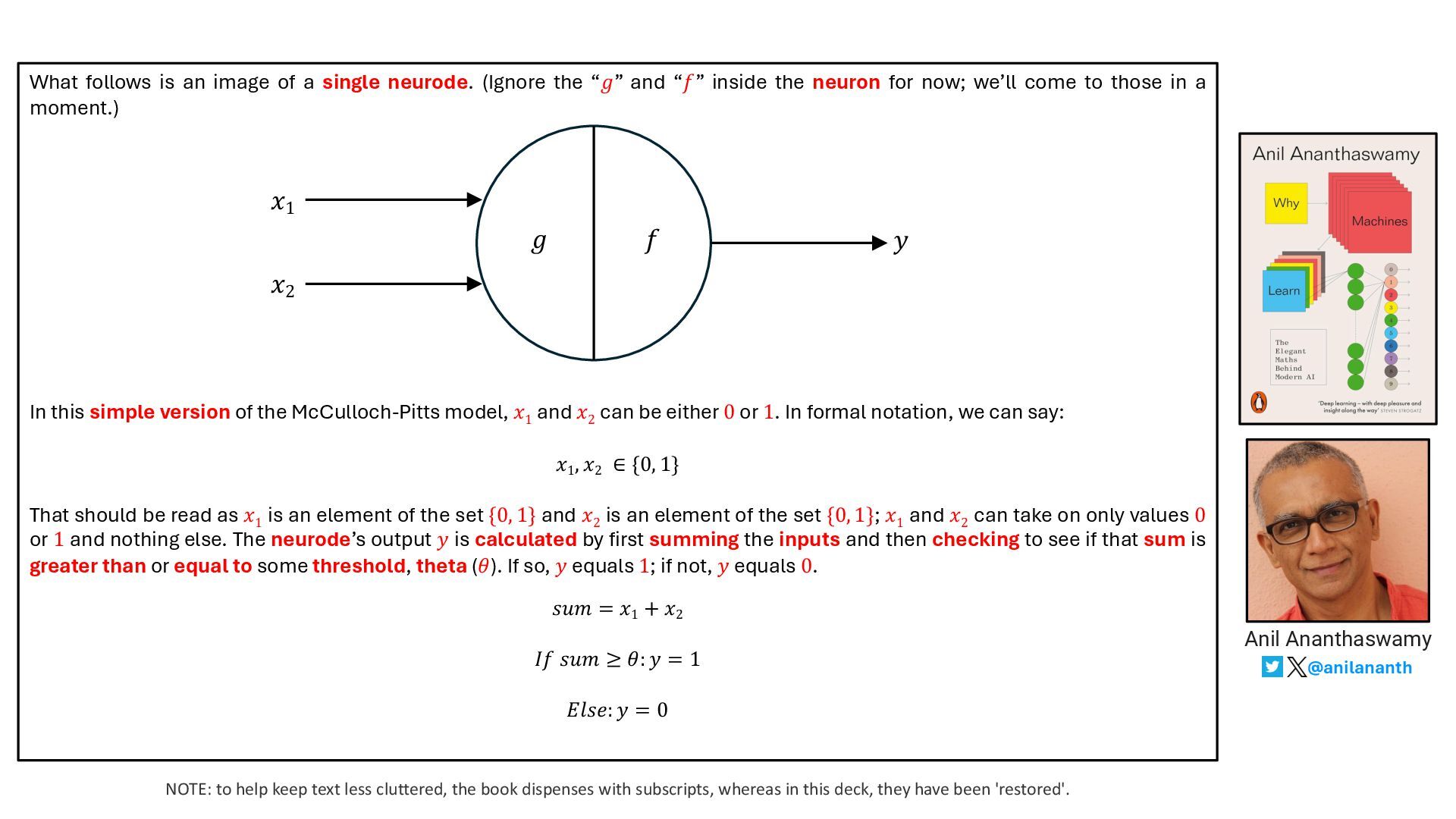
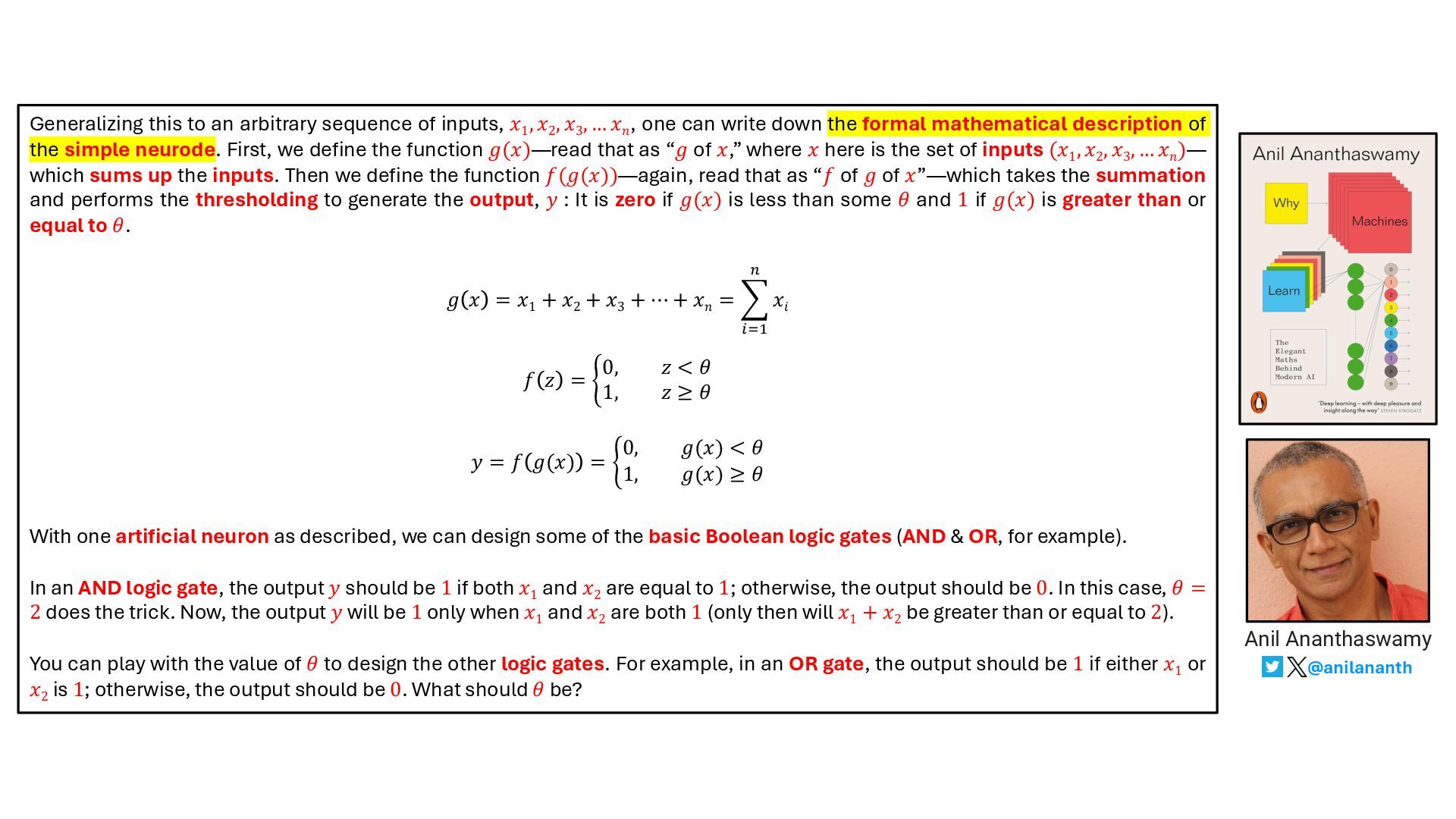
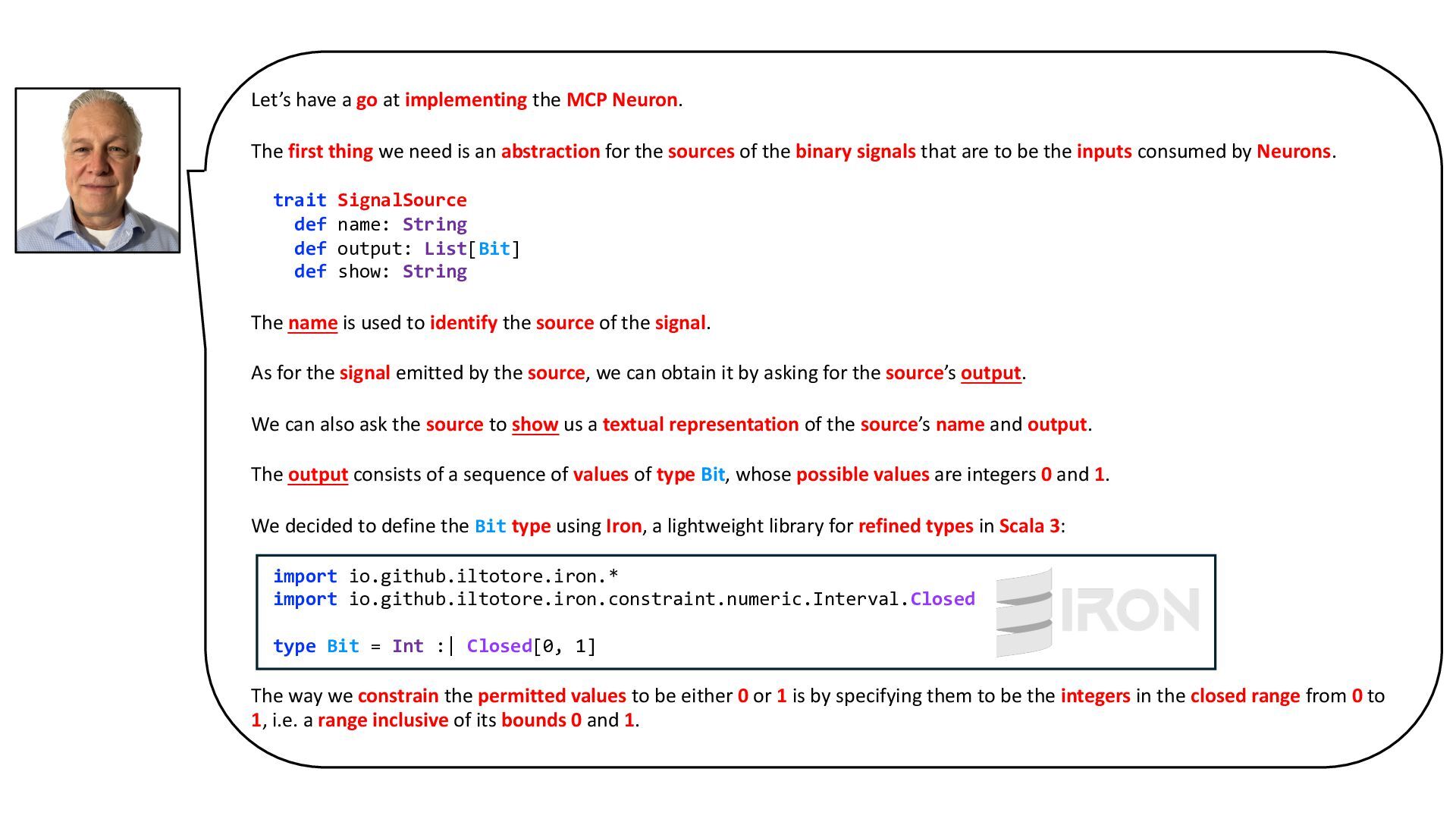
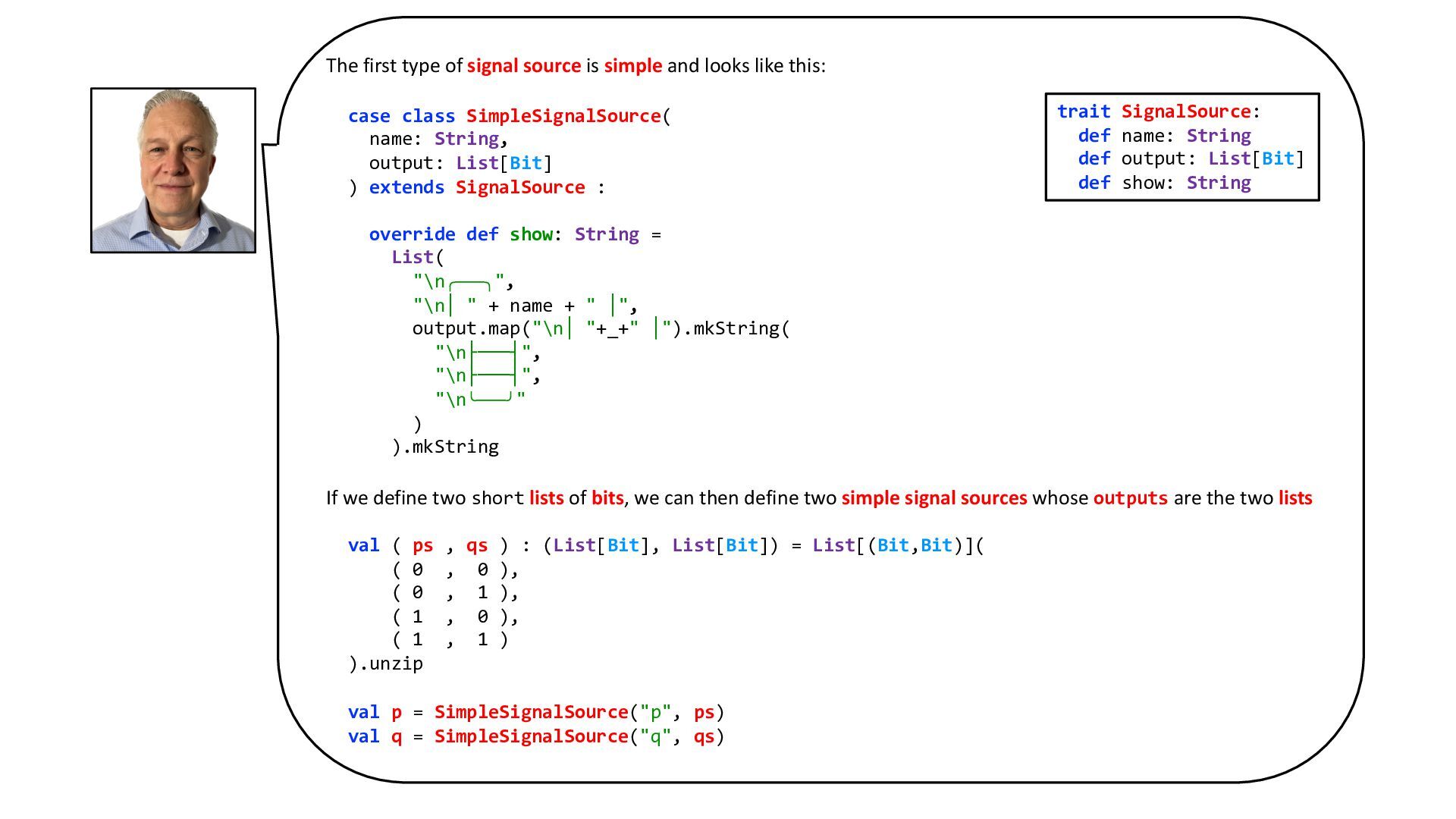
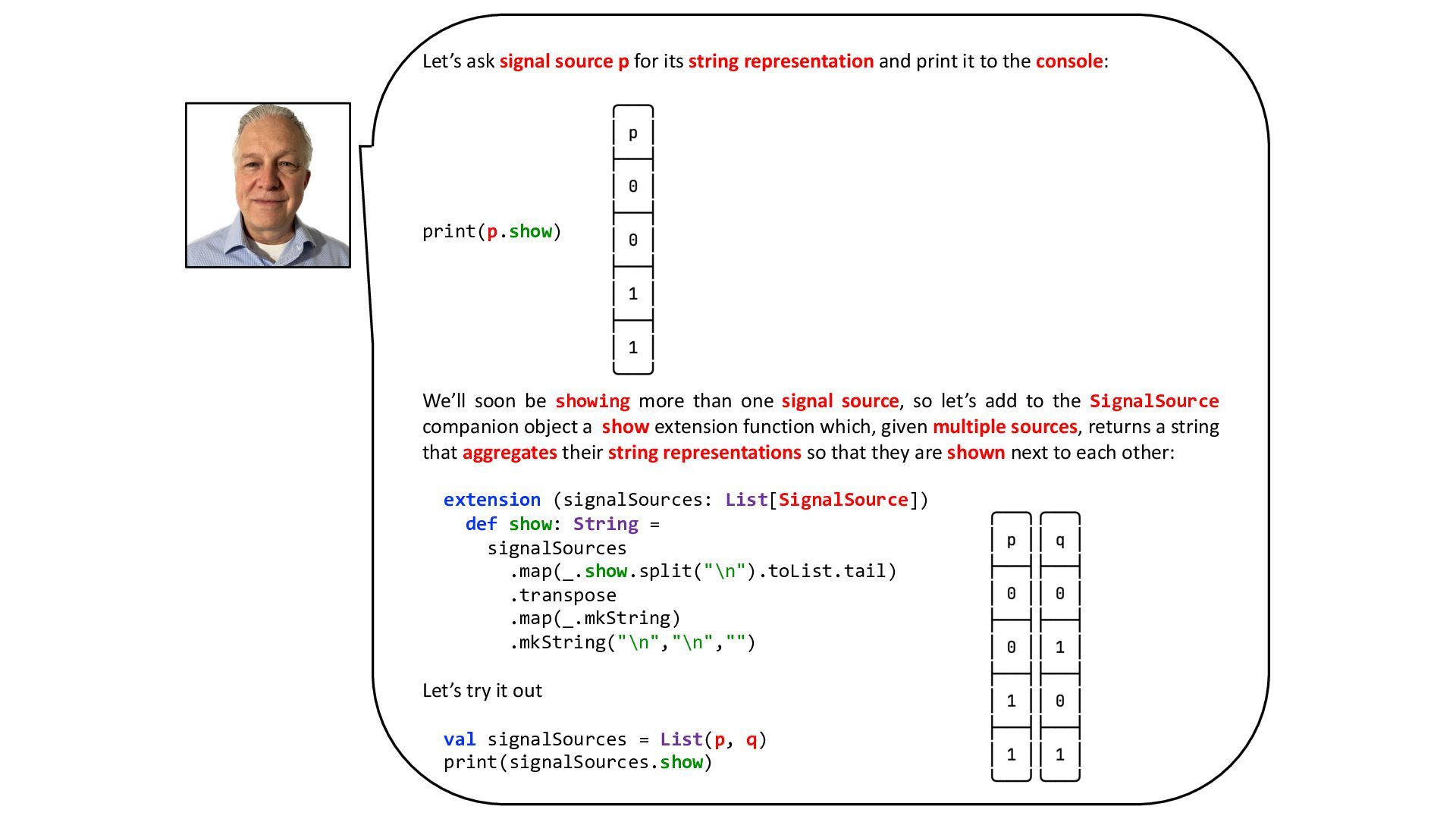
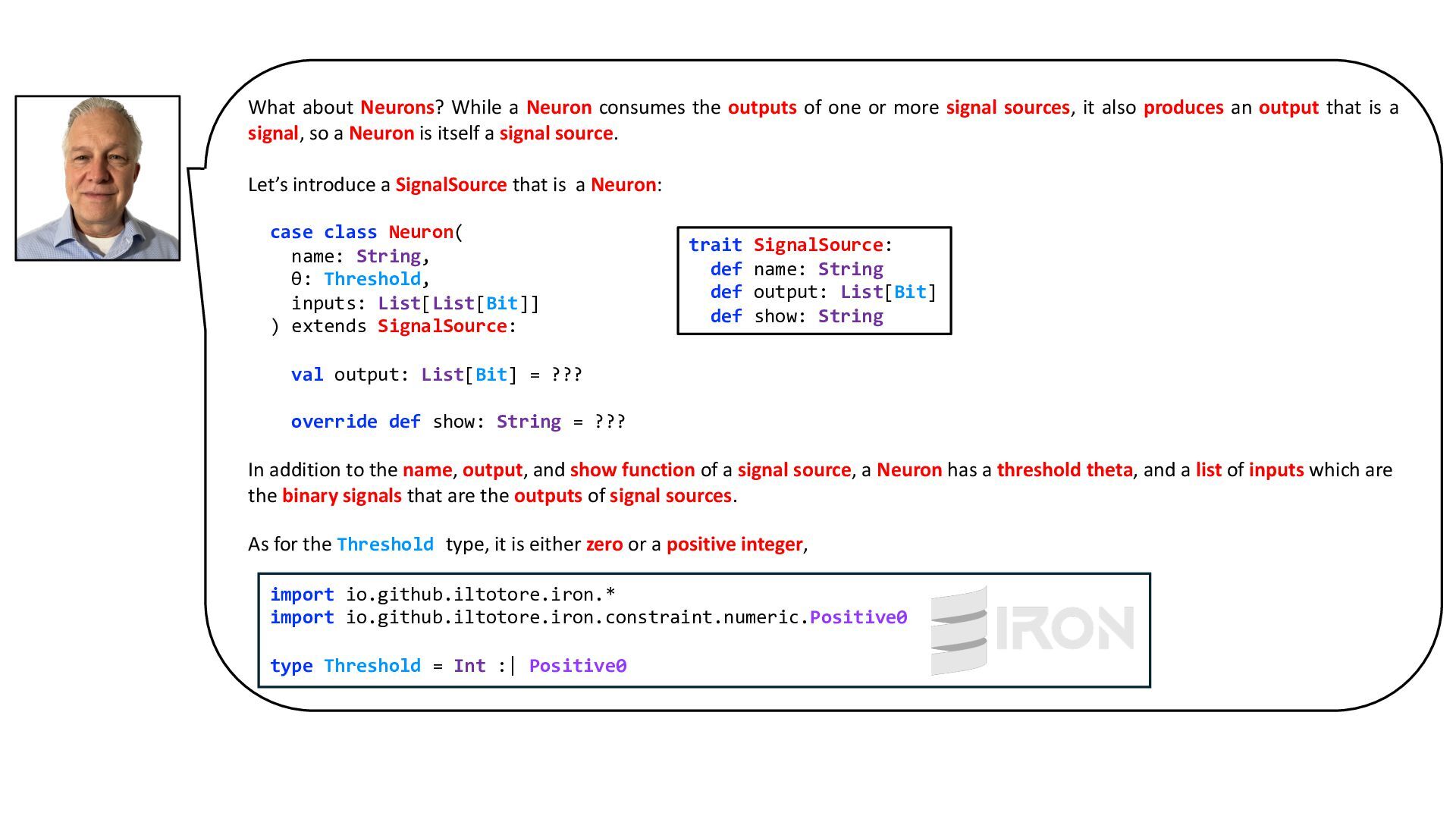
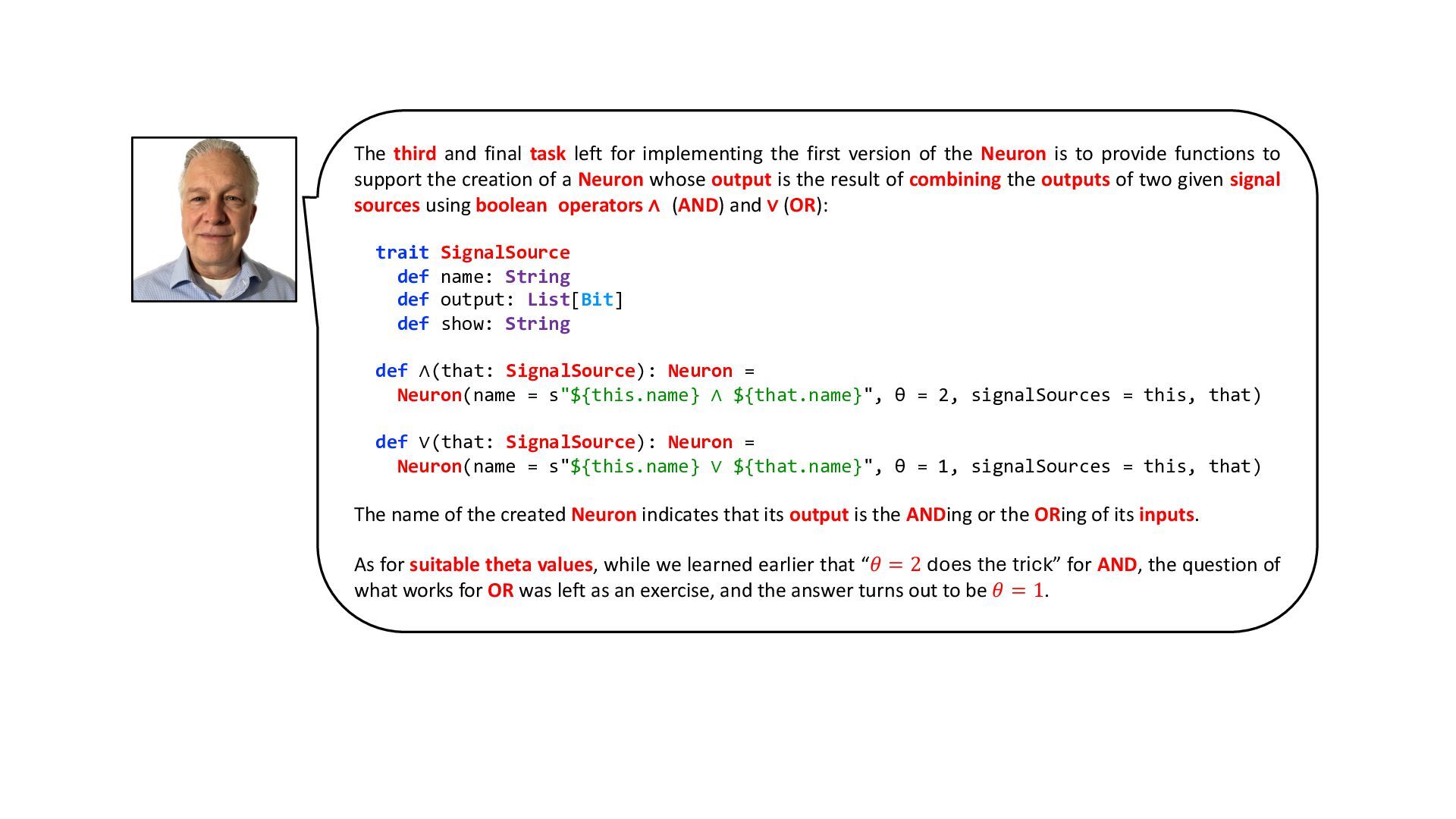
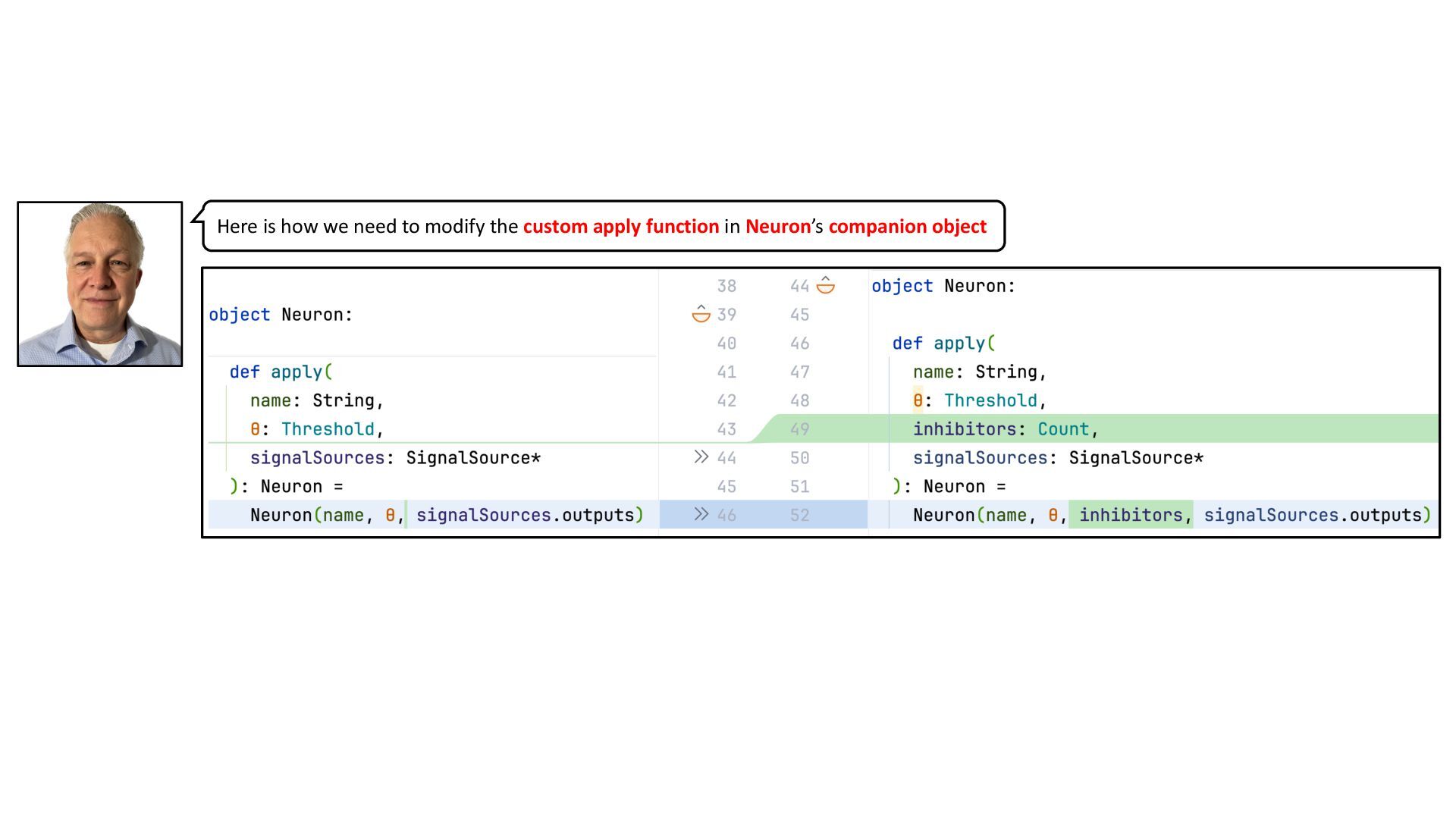
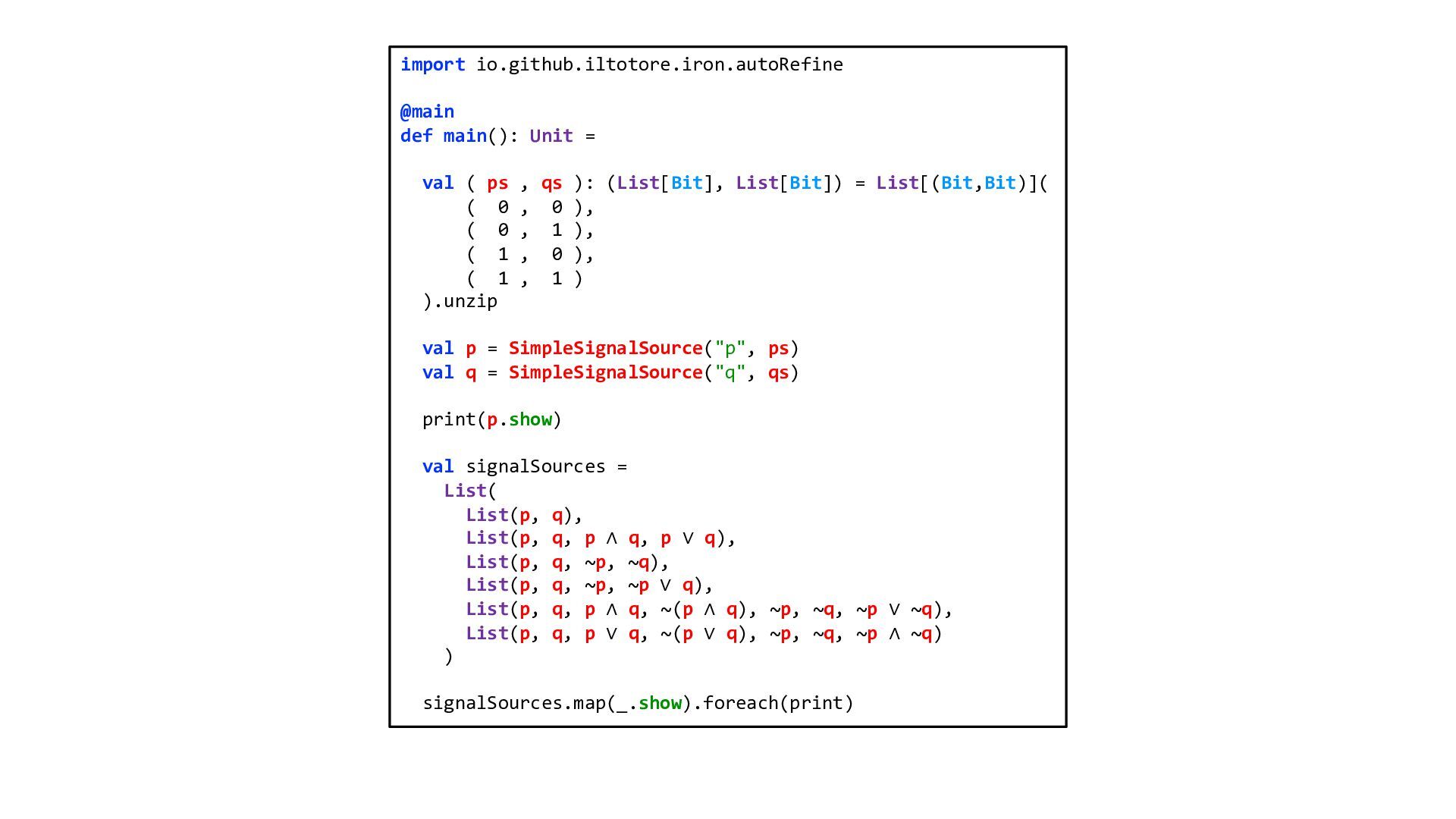
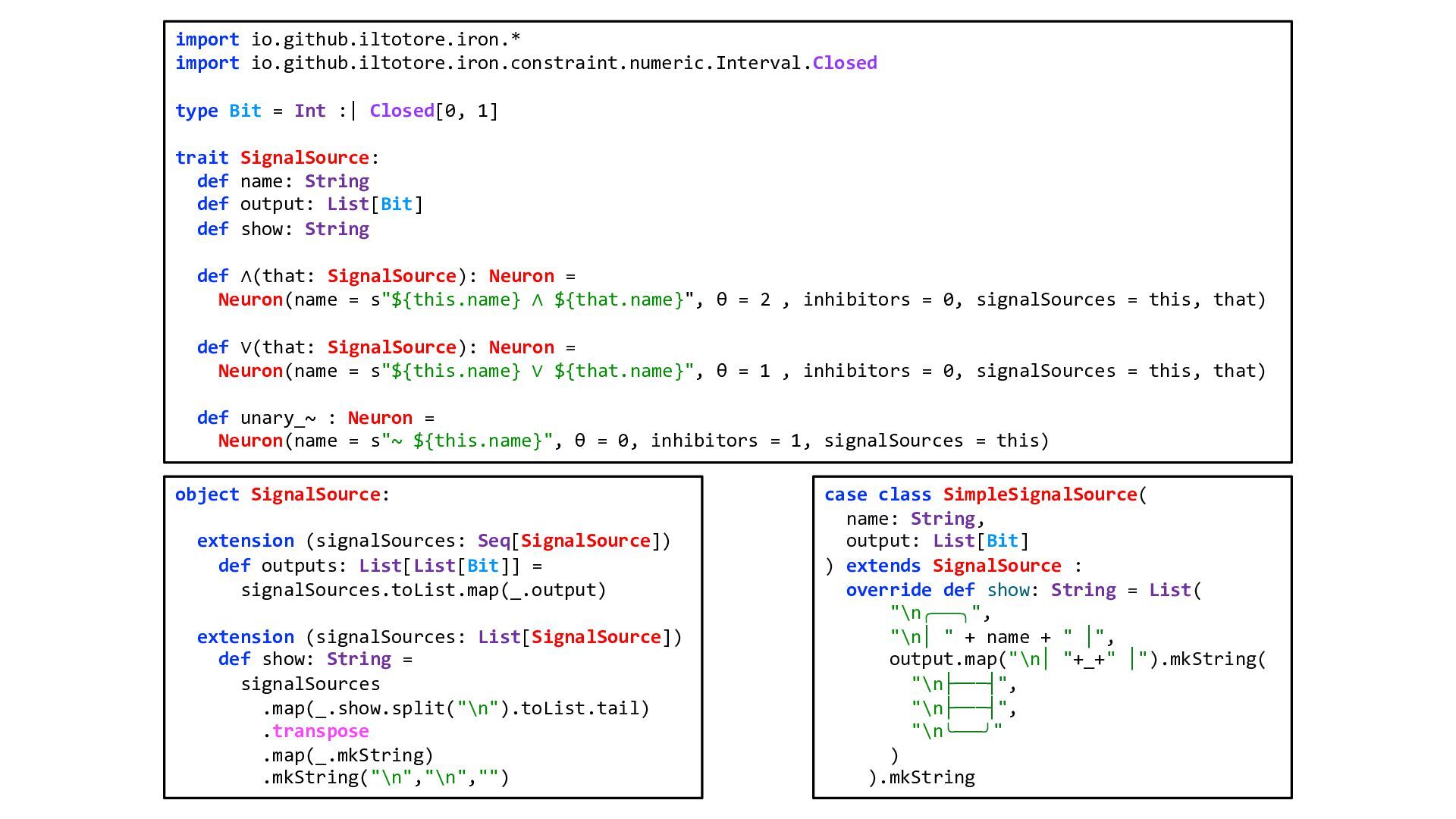
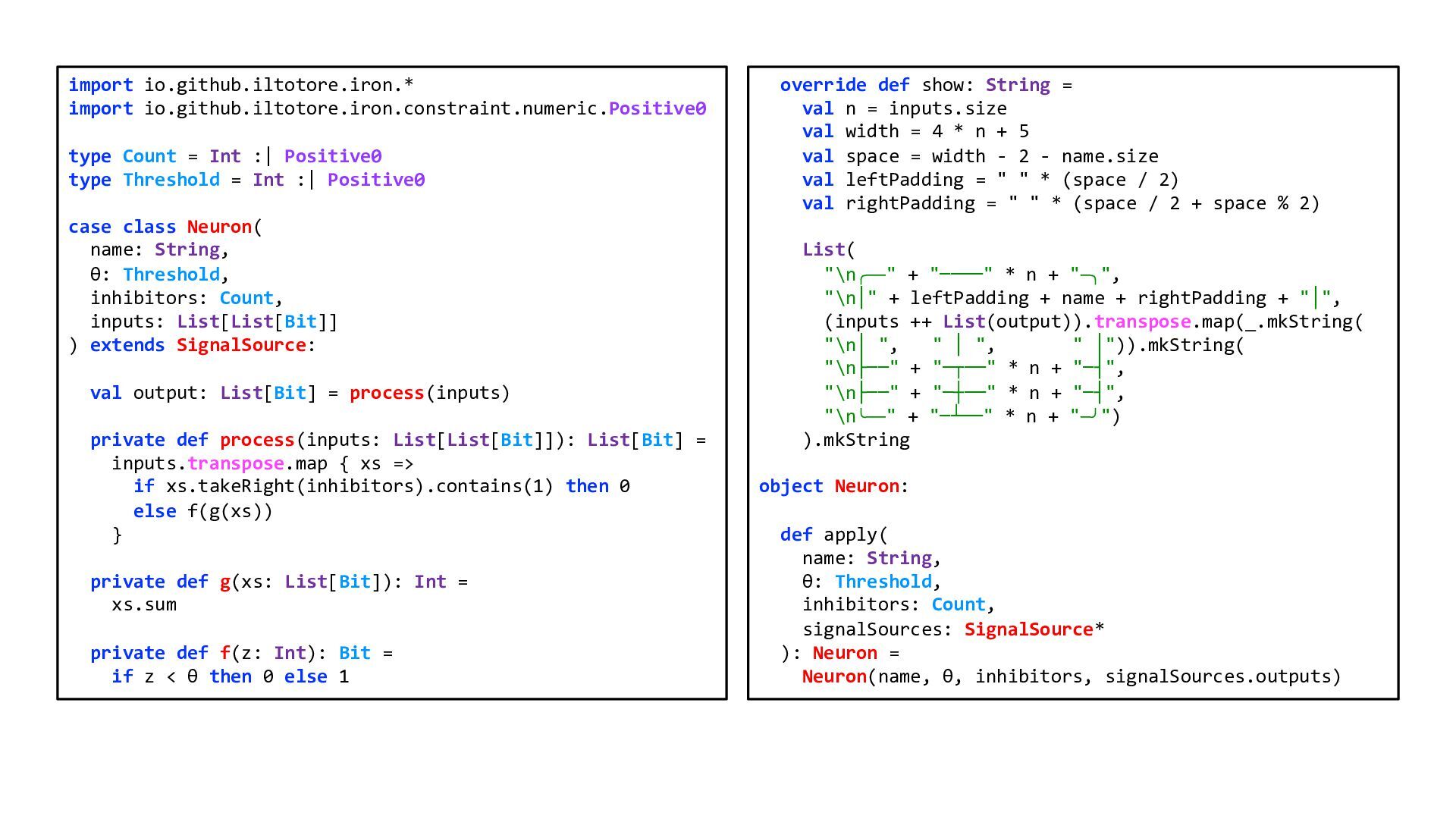
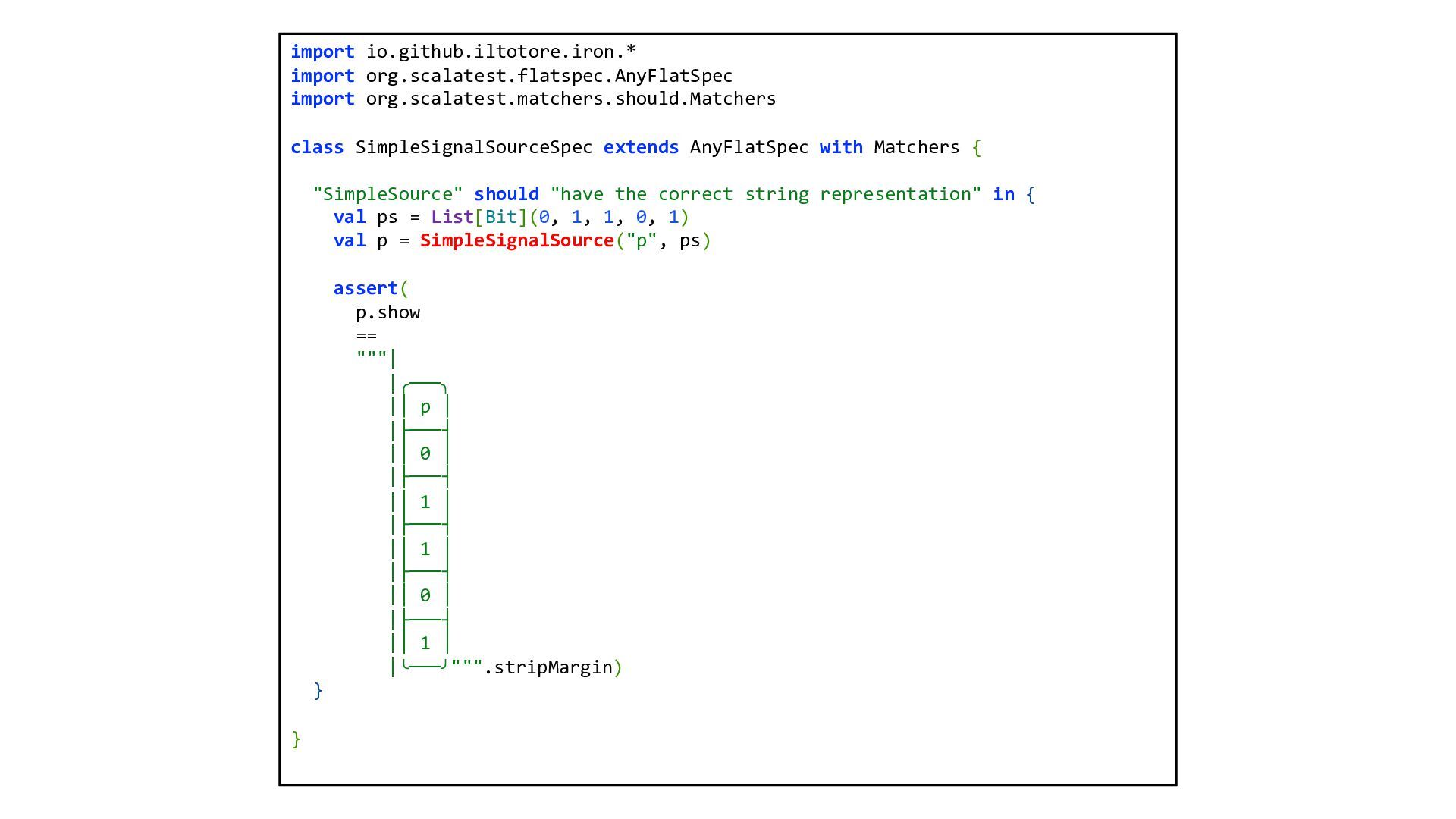
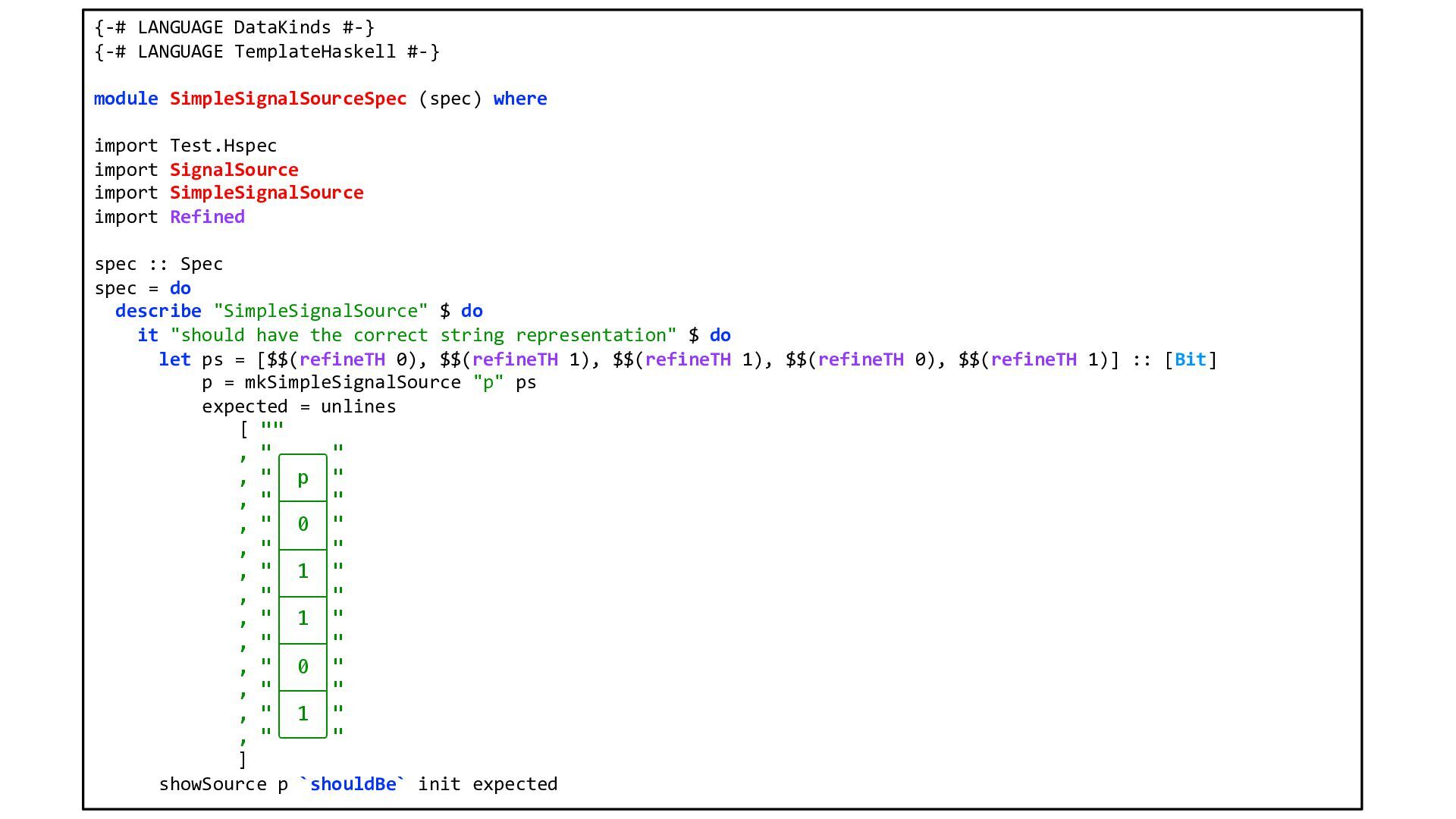
After learning its formal mathematical definition, we write a program that allows us to:
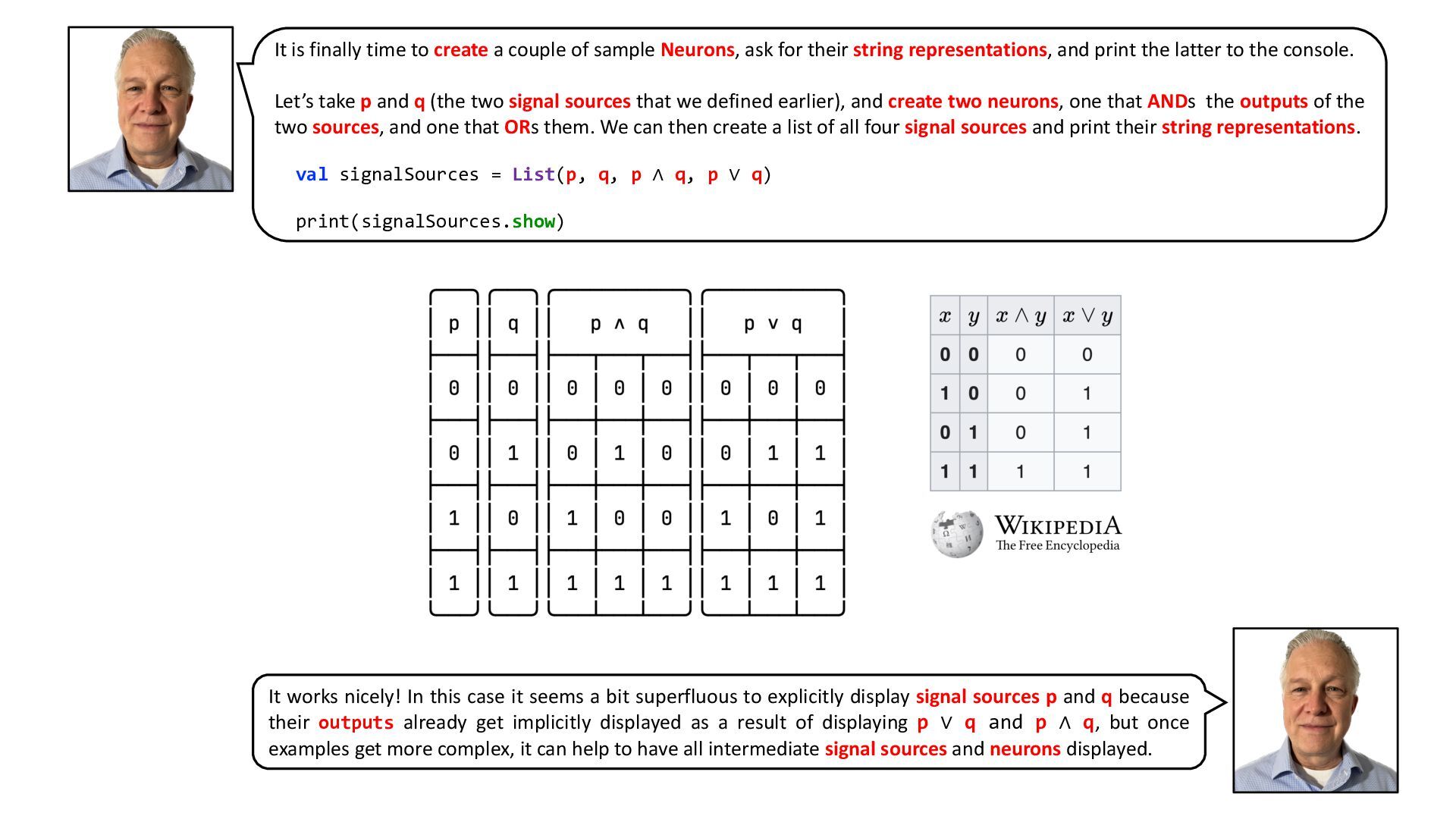
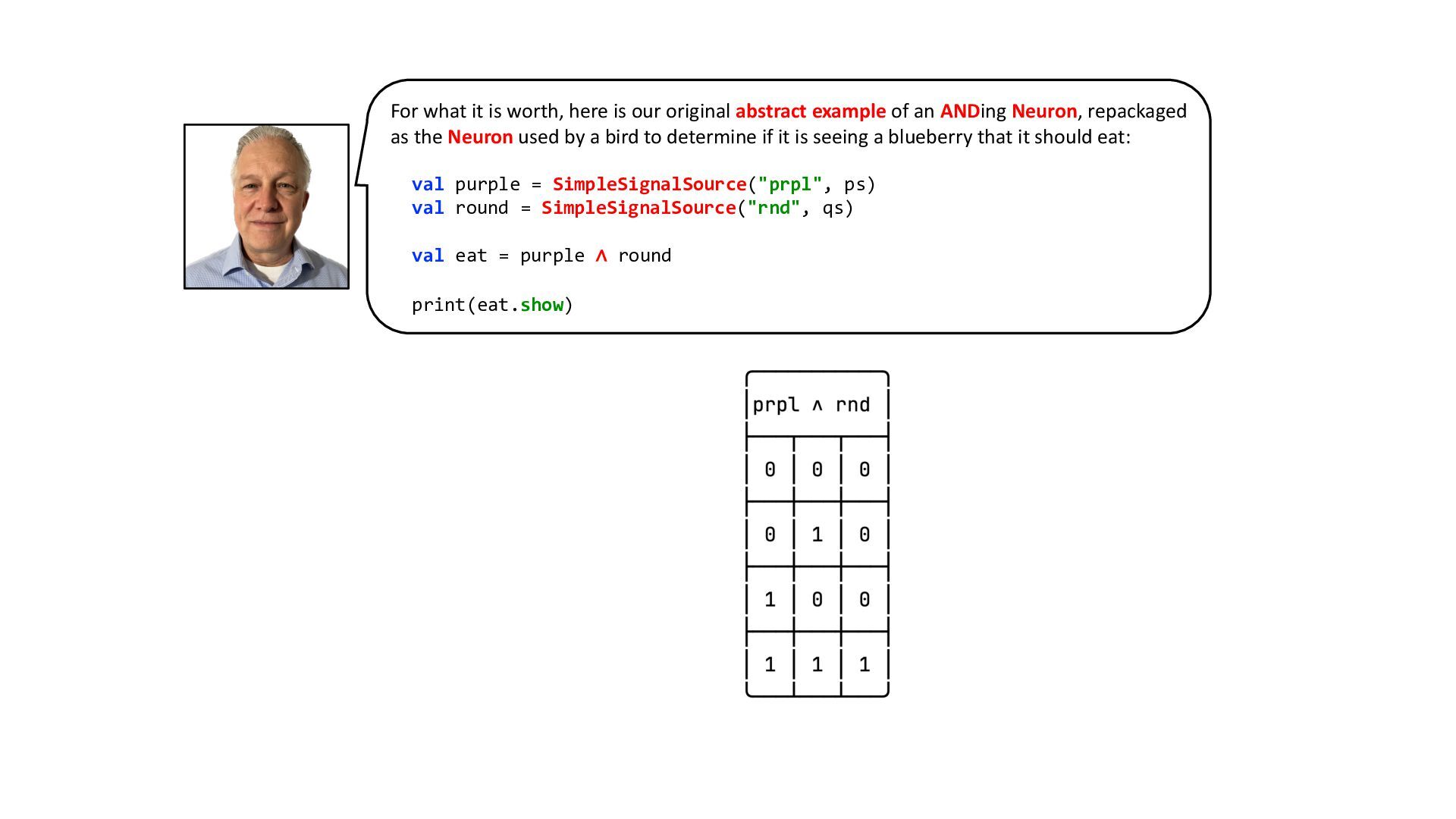
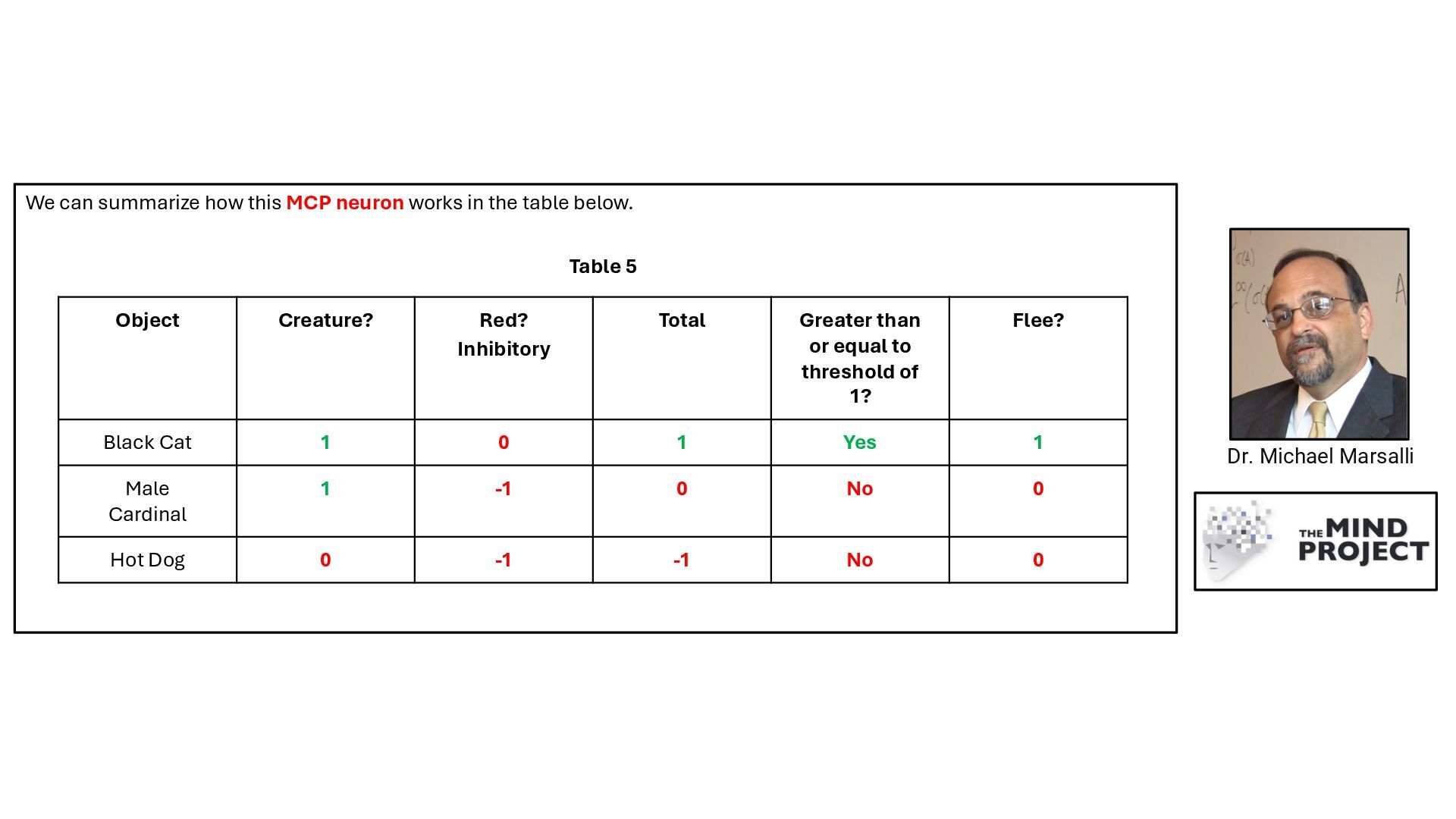
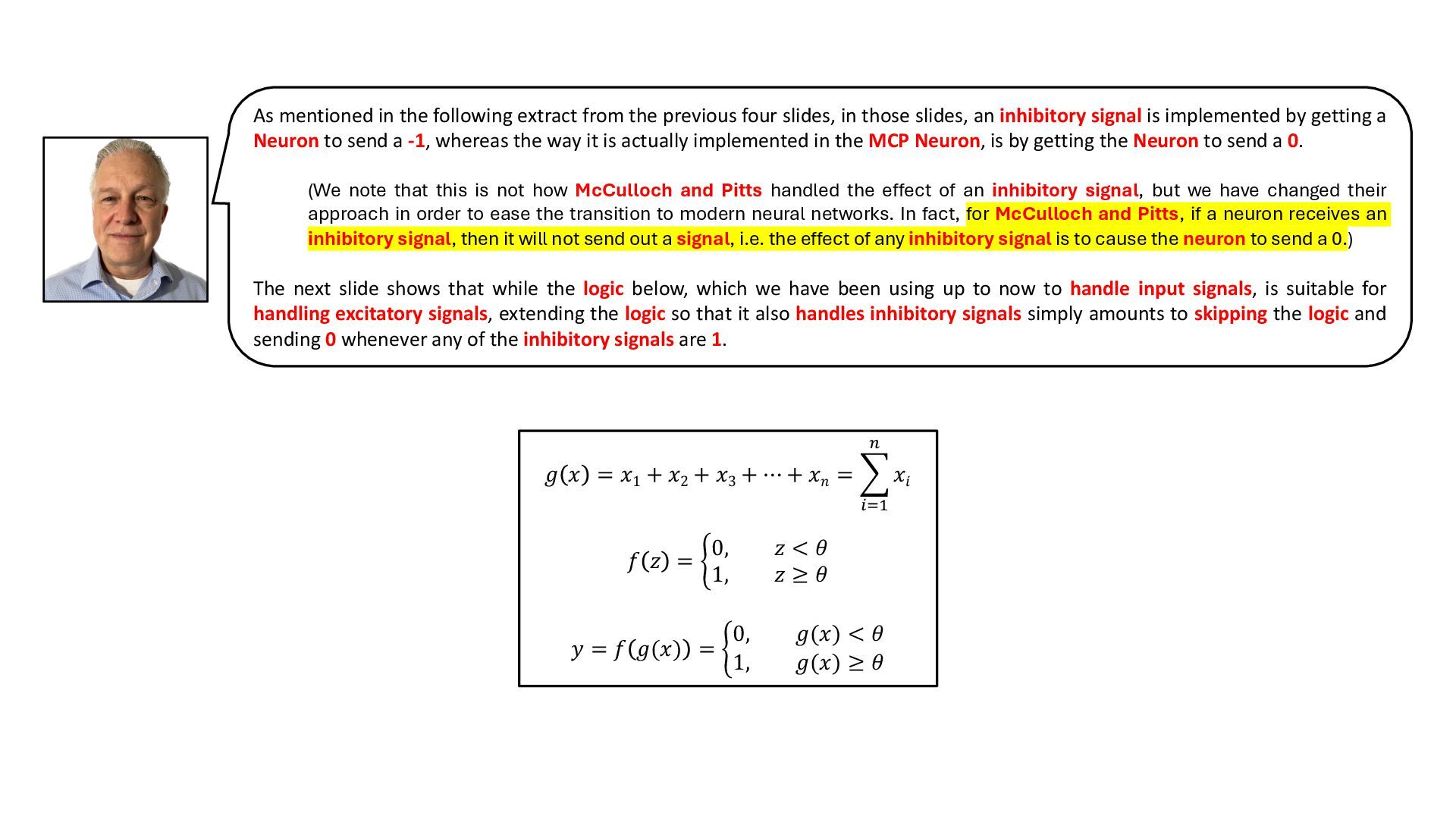
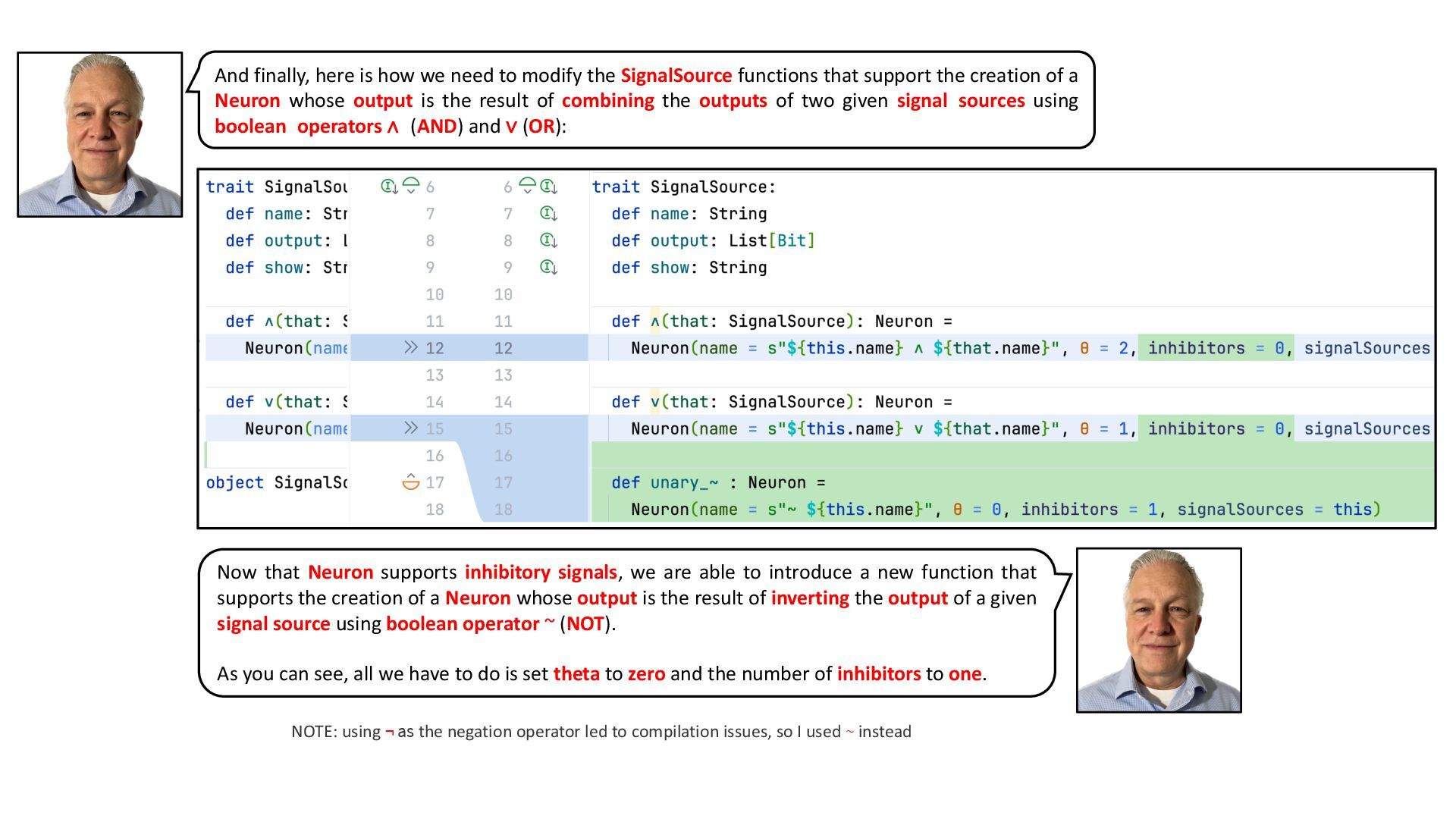
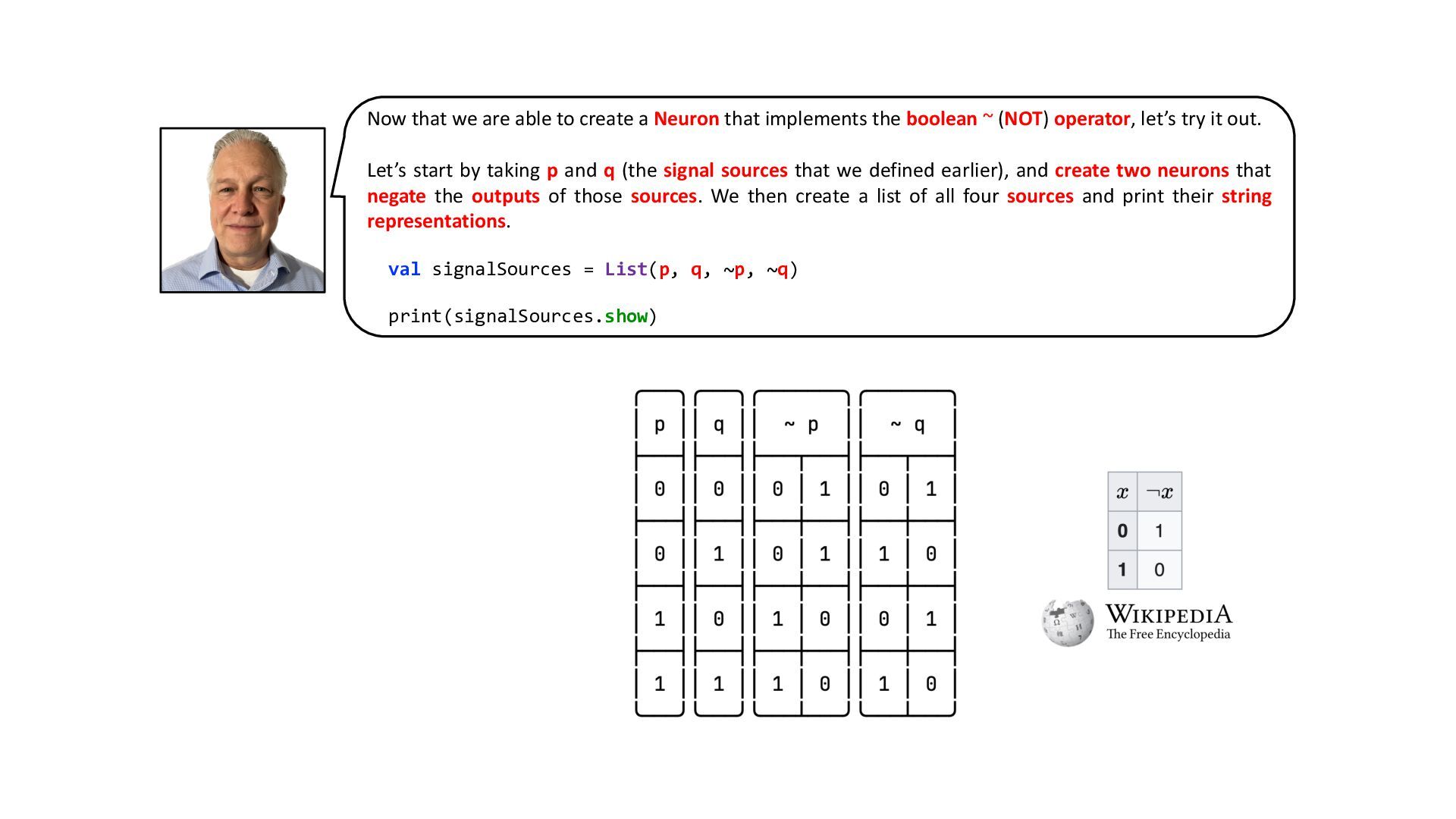
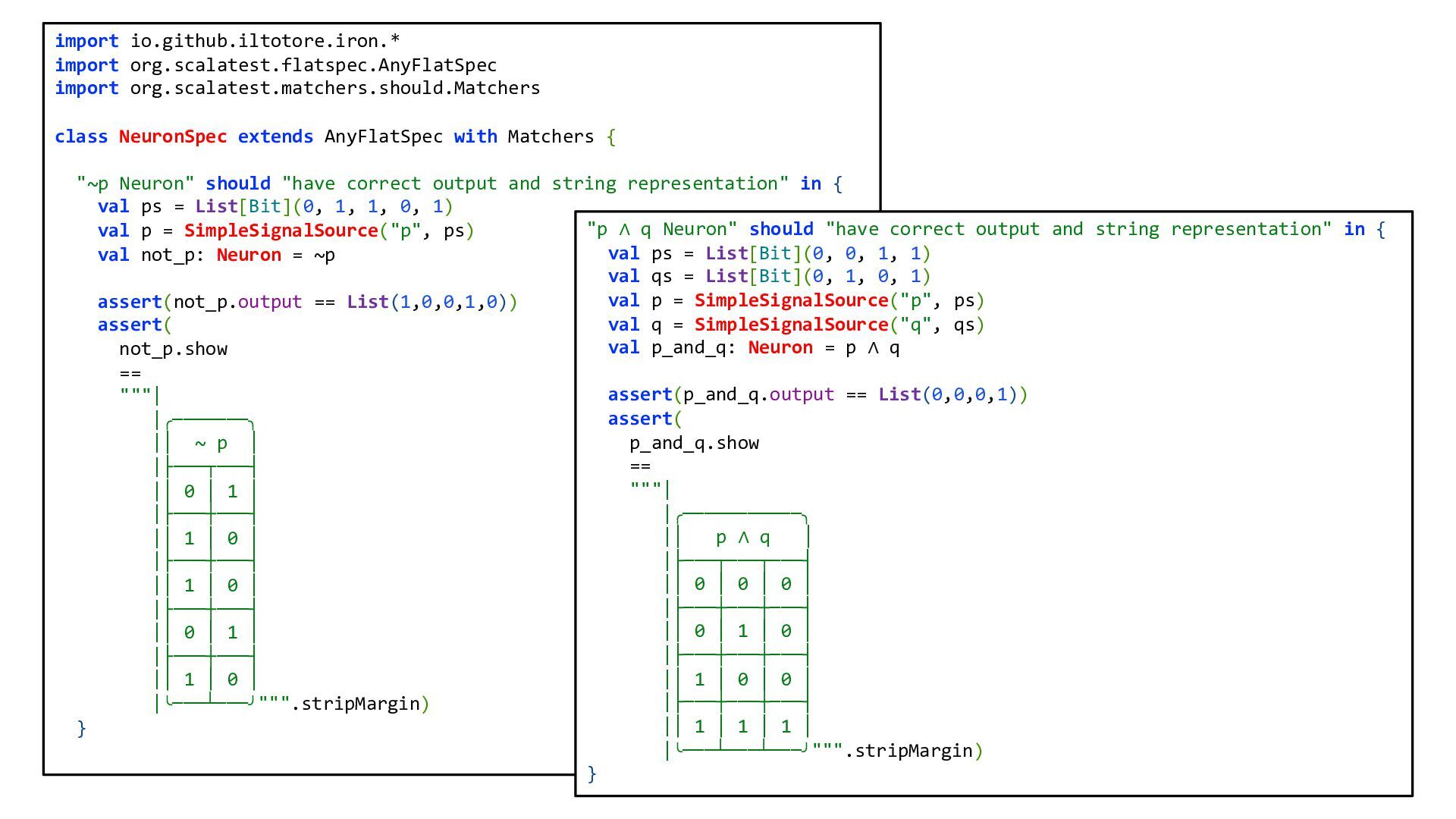
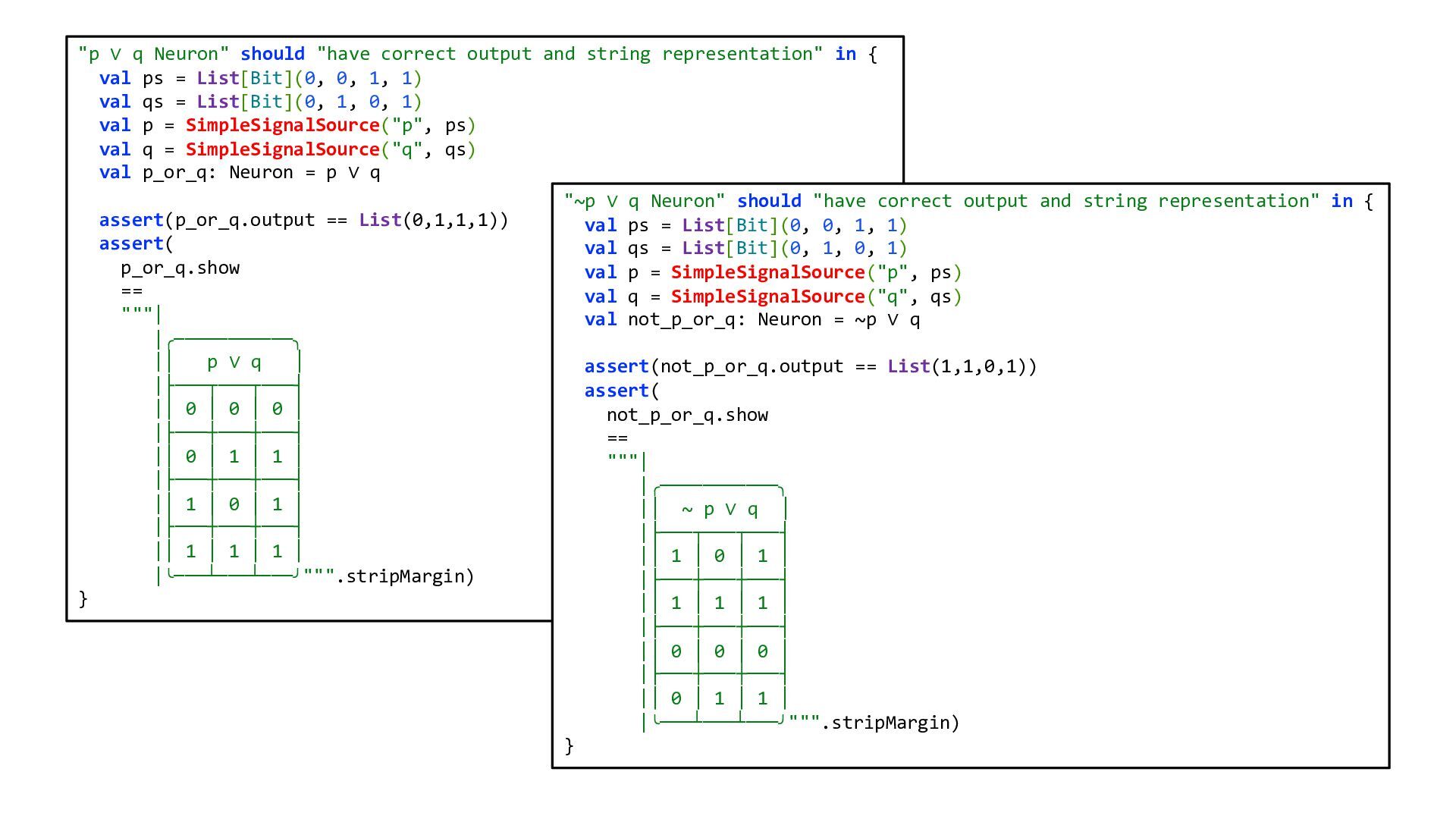
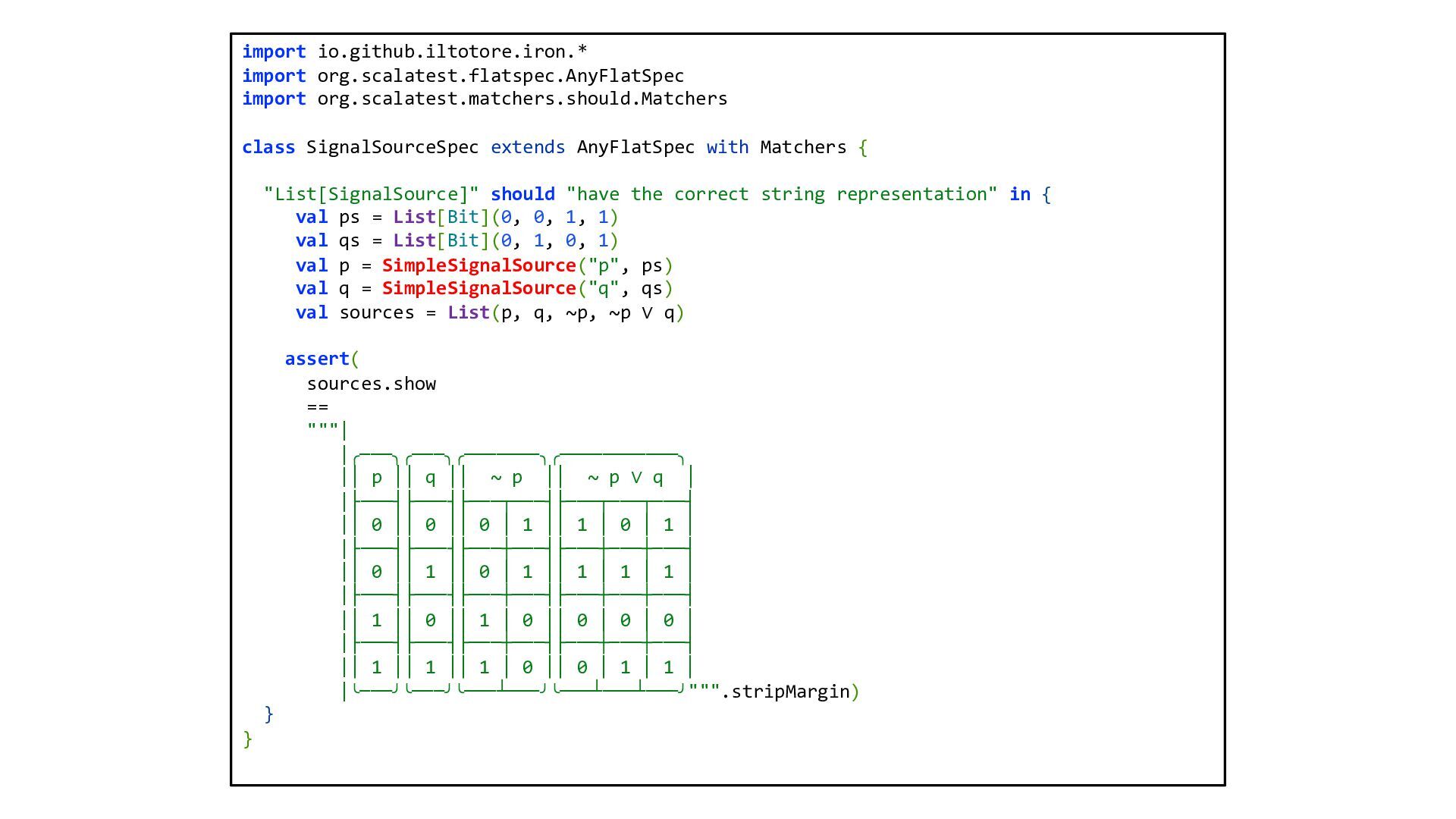
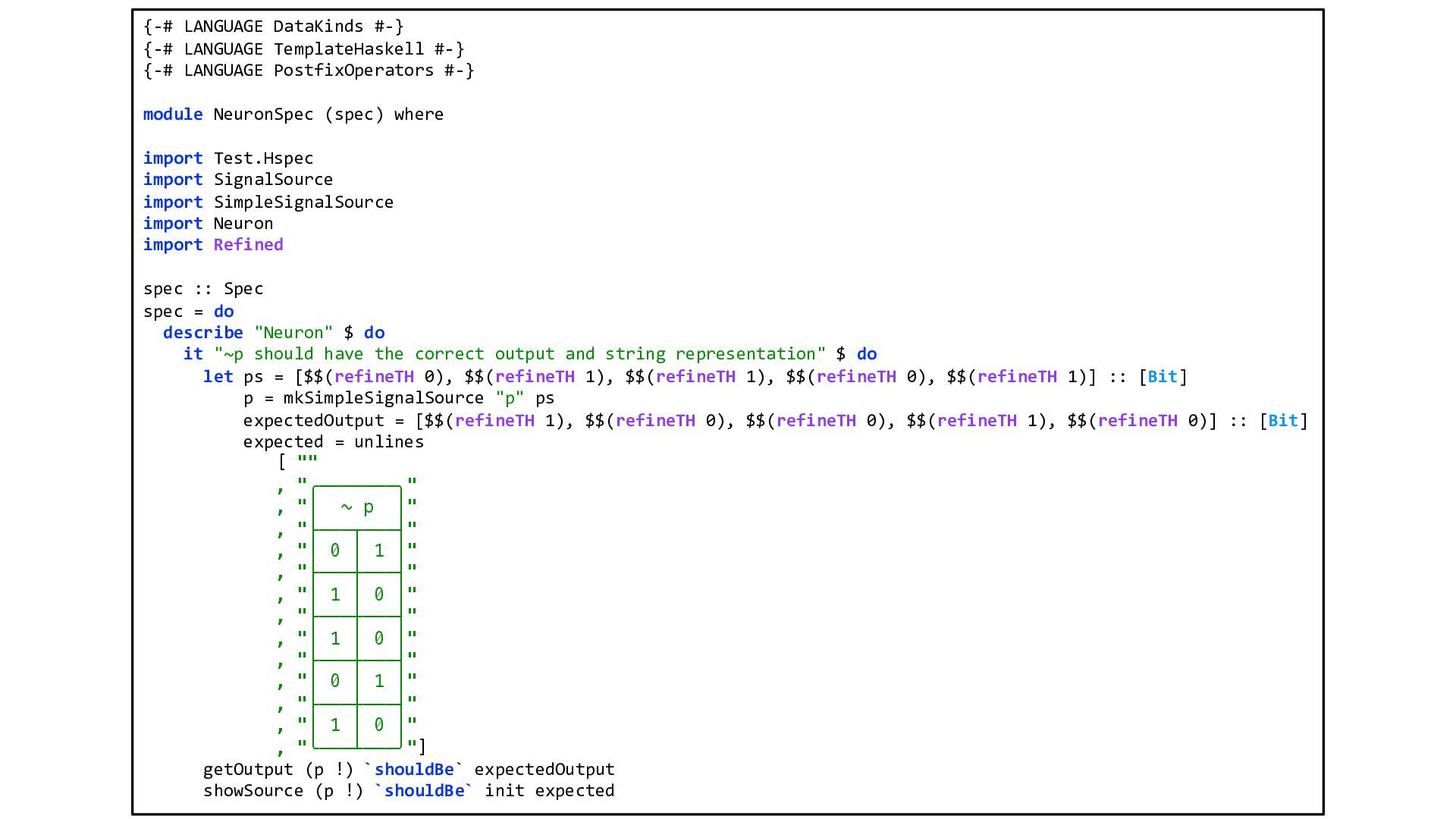
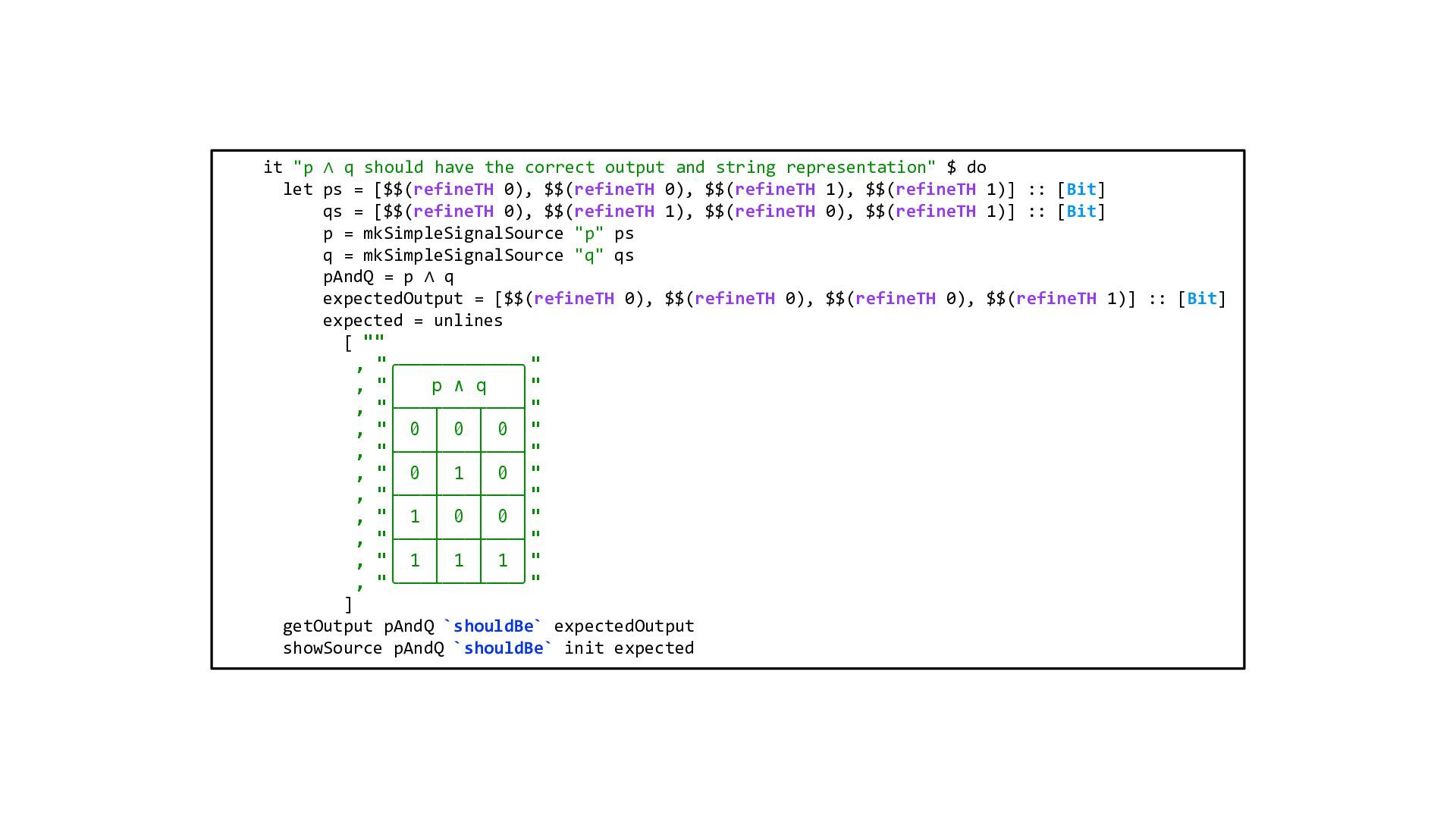
* Create simple MCP Neurons implementing key logical operators
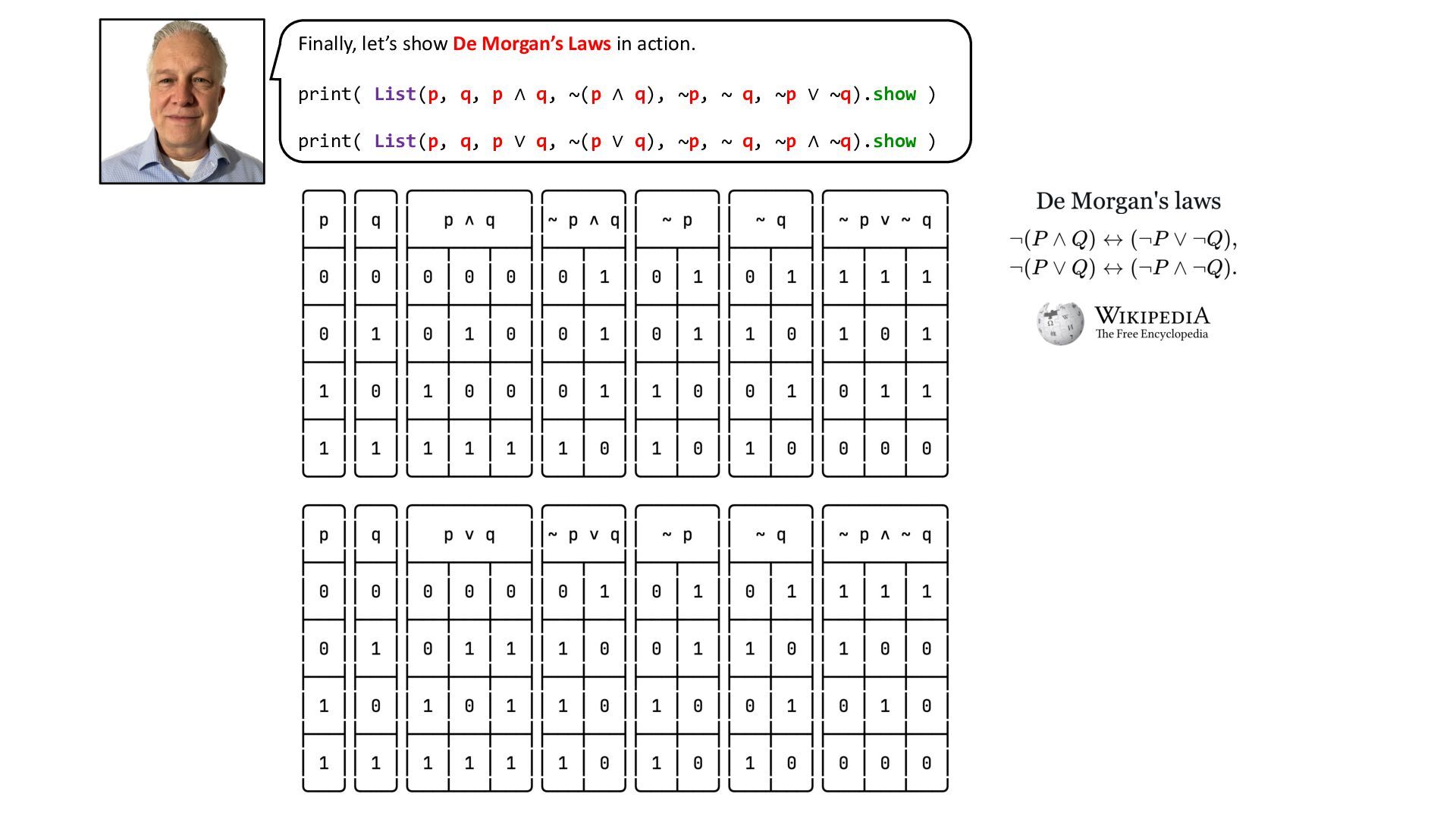
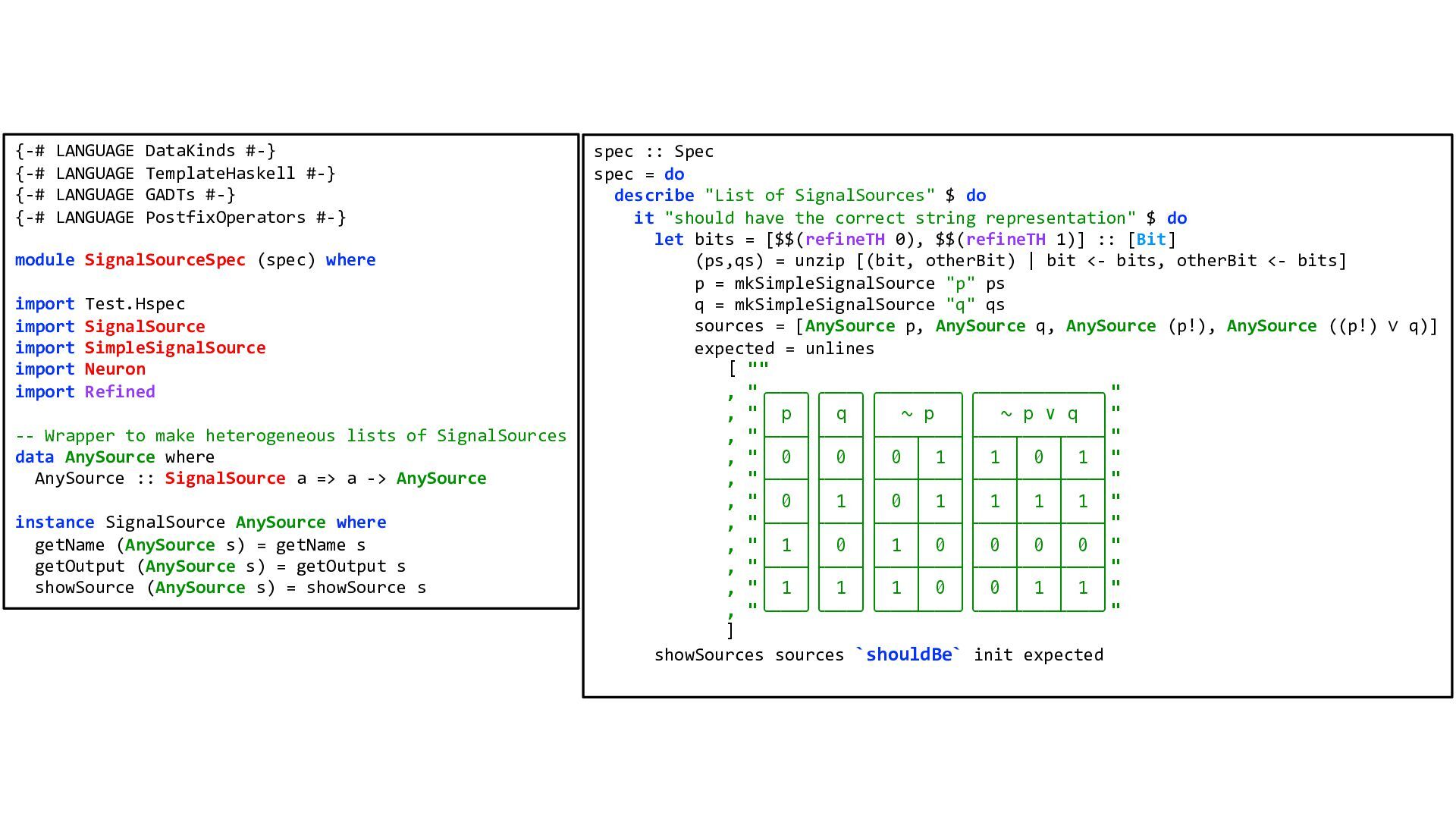
* Combine such Neurons to create small neural nets implementing more complex logical propositions.
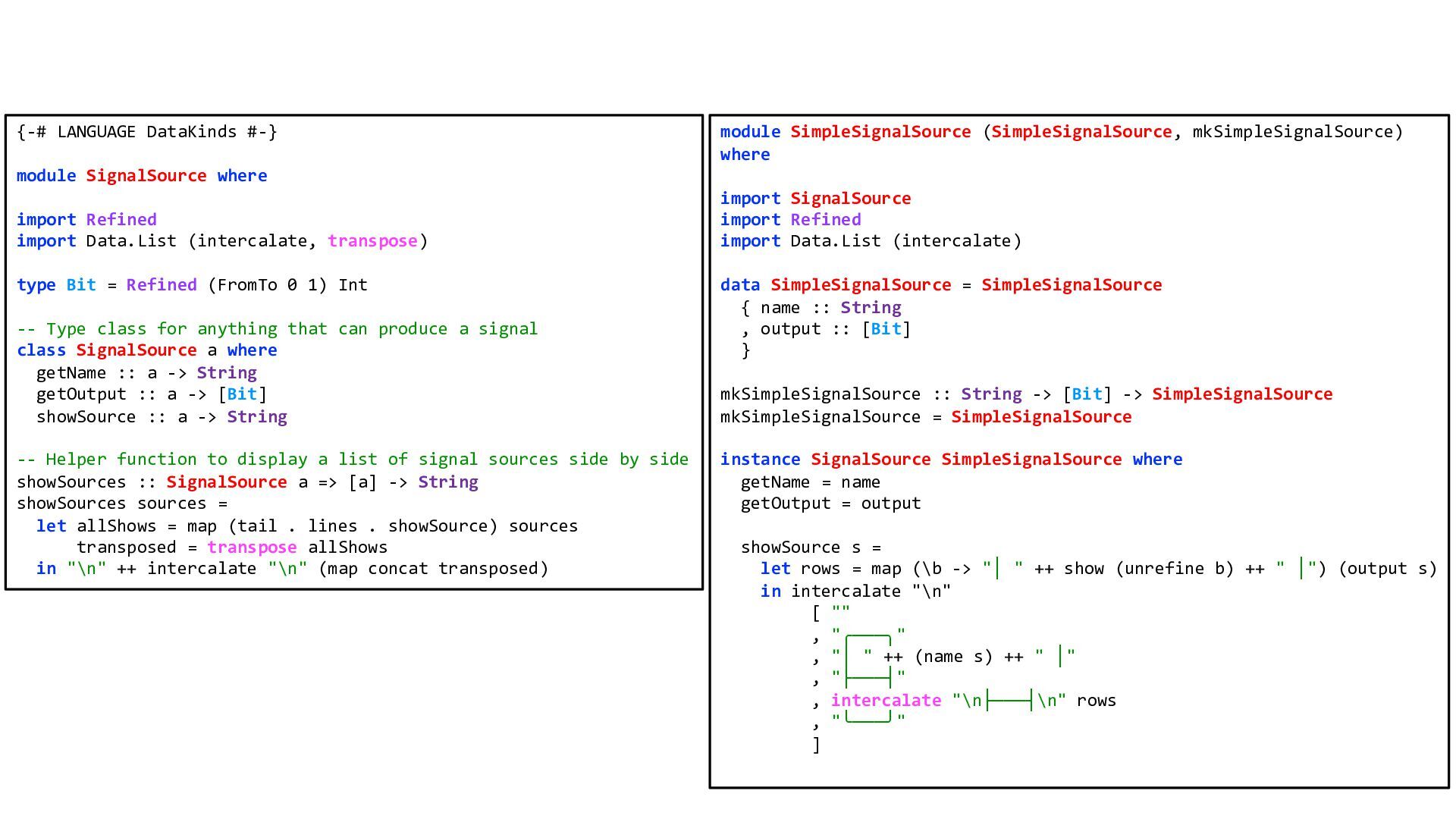
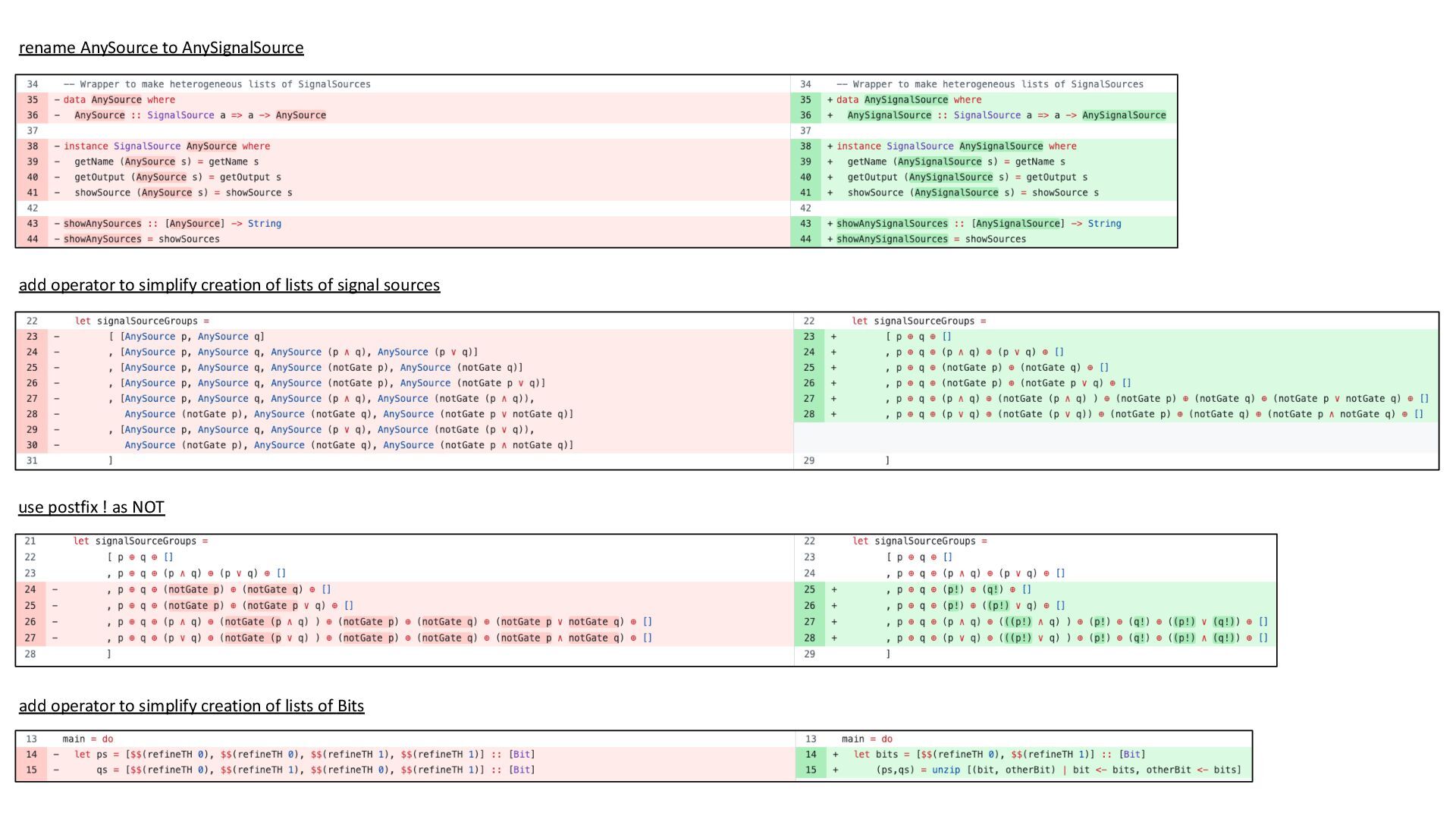
We then ask Claude Code, Anthropic’s agentic coding tool, to write the Haskell equivalent of the Scala code.
Keywords: "Artificial Intelligence","Neuron","Neurode","MCP Neuron", "Artificial Neuron", "Neural Net", "Warren McCulloch", "Walter Pitts", "propositional logic", "boolean logic", "AND", "OR", "NOT", "excitatory signal", "inhibitory signal", "Scala", "Haskell|", "Claude Code"

https://fpilluminated.org/deck/271
More details about this deck: user feedback, github repo, etc.


 philipschwarz
 o0h
o0h
 oku053
 morizo_1984
 florets1
 minodriven
 econanringo
 kaityo256
 nokomoro3
 tomokon
 irinanazarova
 rkaga
rkaga
 ken_tunc
 tammyeverts
 smashingmag
 jnunemaker
 marktimemedia
 samanthasiow
 akademiya2063
 mfonobong
 marketingsoph
 thekraken
 tmiket
 davidcarrasco
 inesmontani