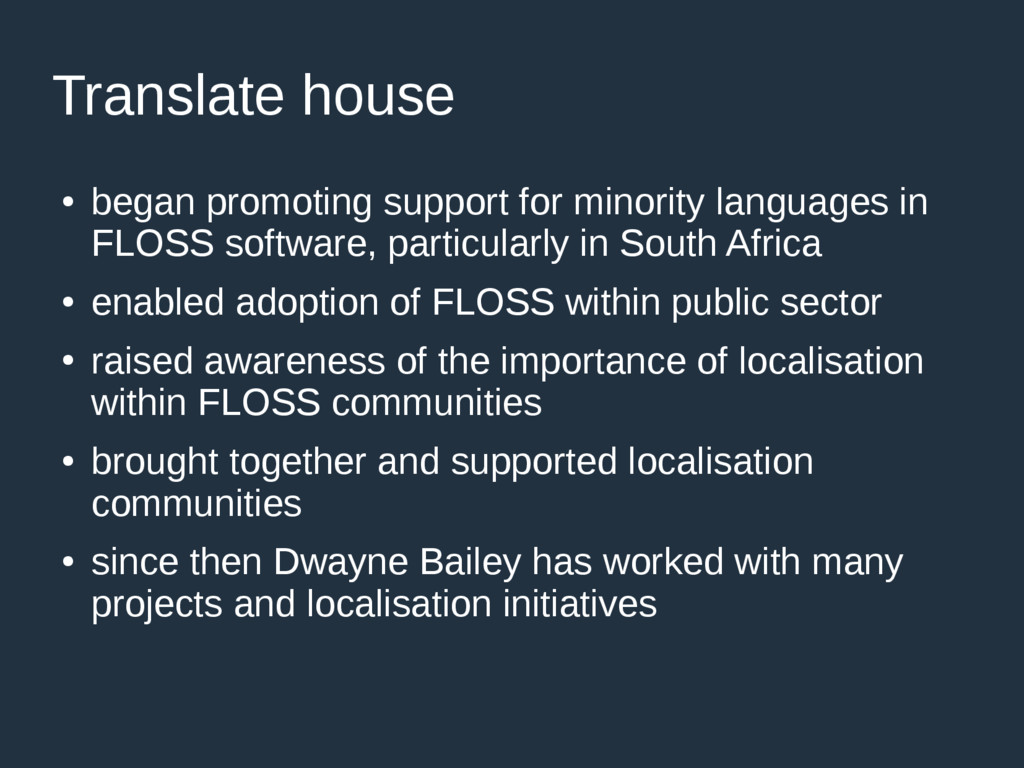
FLOSS software, particularly in South Africa • enabled adoption of FLOSS within public sector • raised awareness of the importance of localisation within FLOSS communities • brought together and supported localisation communities • since then Dwayne Bailey has worked with many projects and localisation initiatives
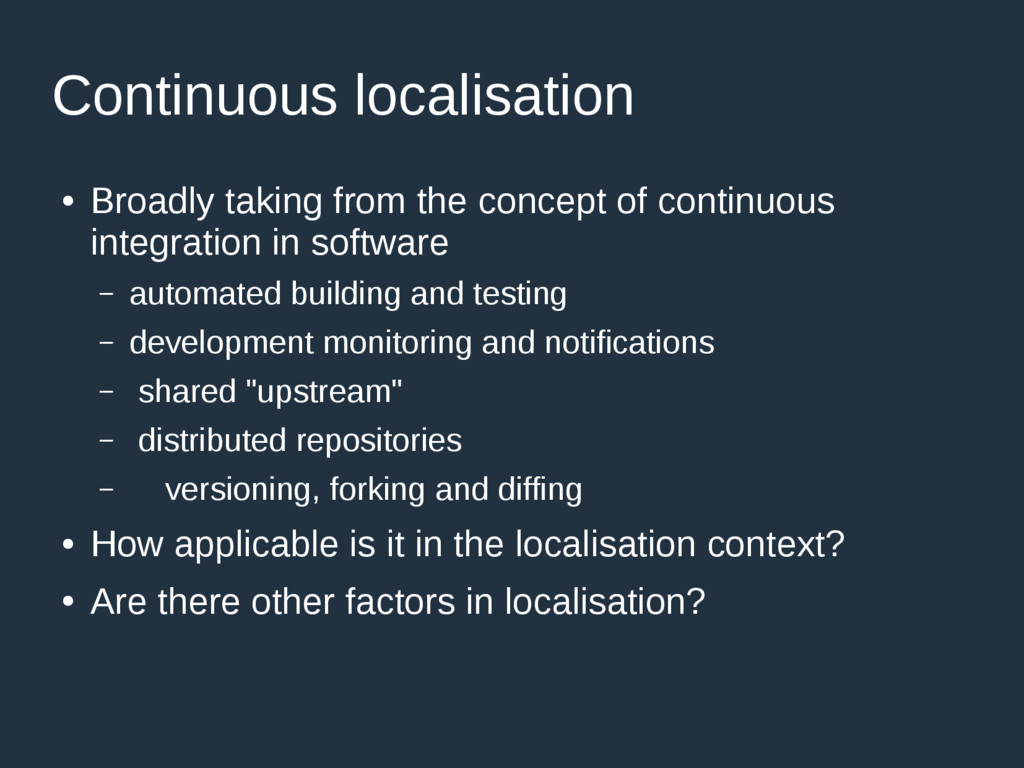
integration in software – automated building and testing – development monitoring and notifications – shared "upstream" – distributed repositories – versioning, forking and diffing • How applicable is it in the localisation context? • Are there other factors in localisation?
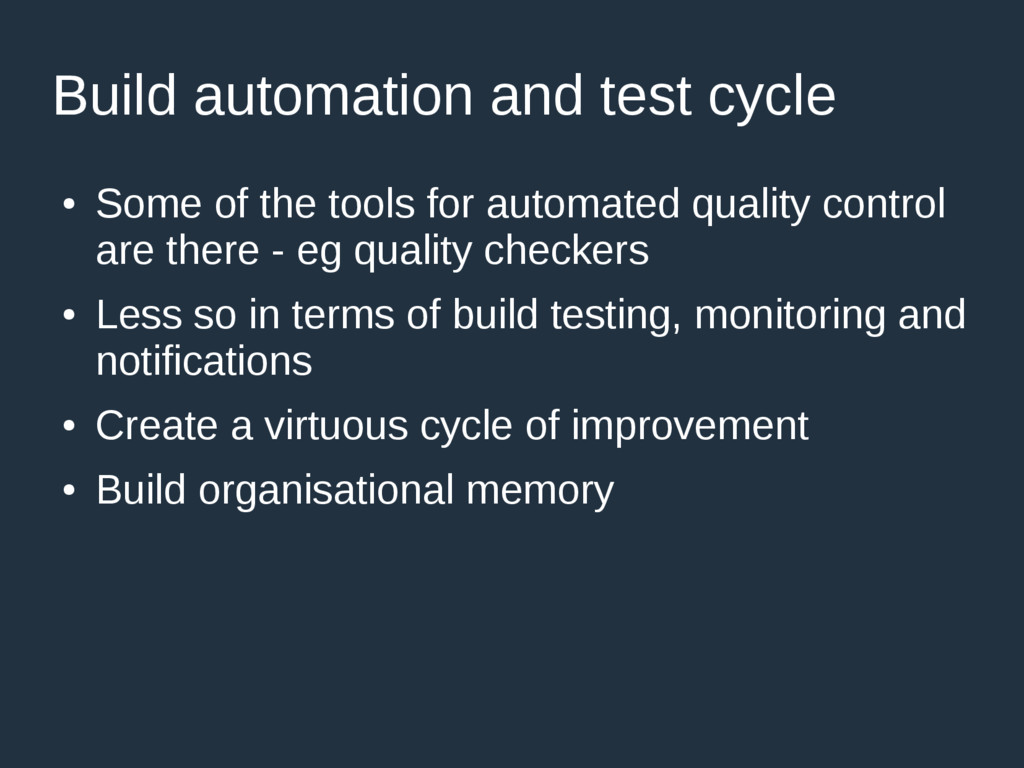
for automated quality control are there - eg quality checkers • Less so in terms of build testing, monitoring and notifications • Create a virtuous cycle of improvement • Build organisational memory
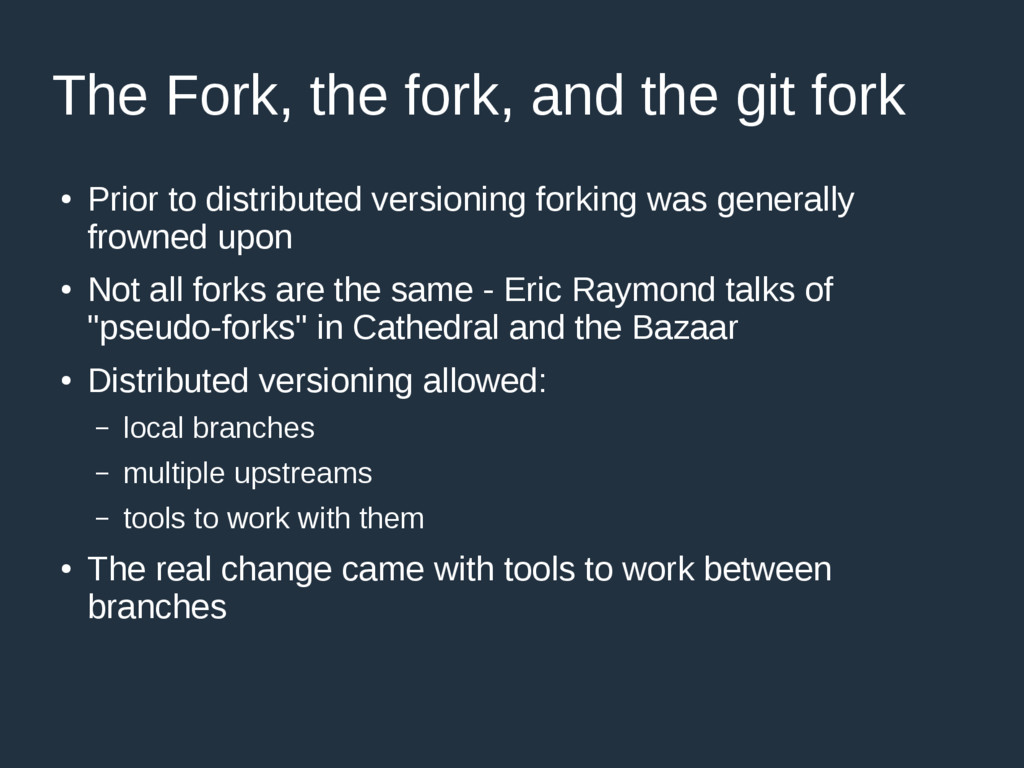
to distributed versioning forking was generally frowned upon • Not all forks are the same - Eric Raymond talks of "pseudo-forks" in Cathedral and the Bazaar • Distributed versioning allowed: – local branches – multiple upstreams – tools to work with them • The real change came with tools to work between branches
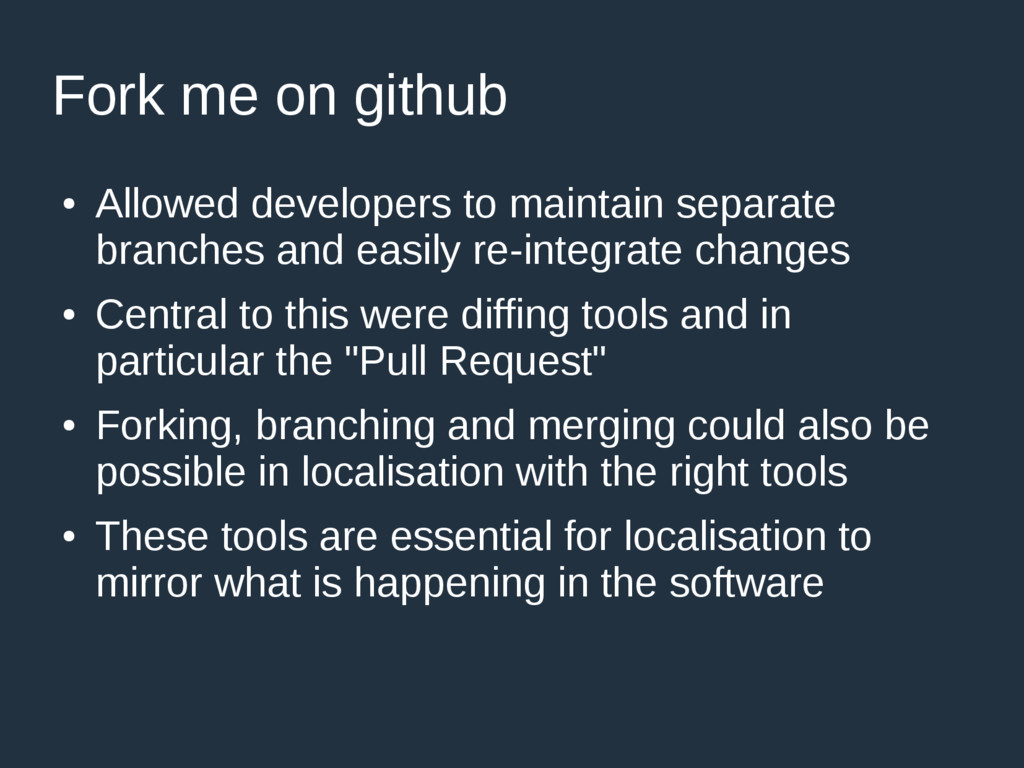
branches and easily re-integrate changes • Central to this were diffing tools and in particular the "Pull Request" • Forking, branching and merging could also be possible in localisation with the right tools • These tools are essential for localisation to mirror what is happening in the software
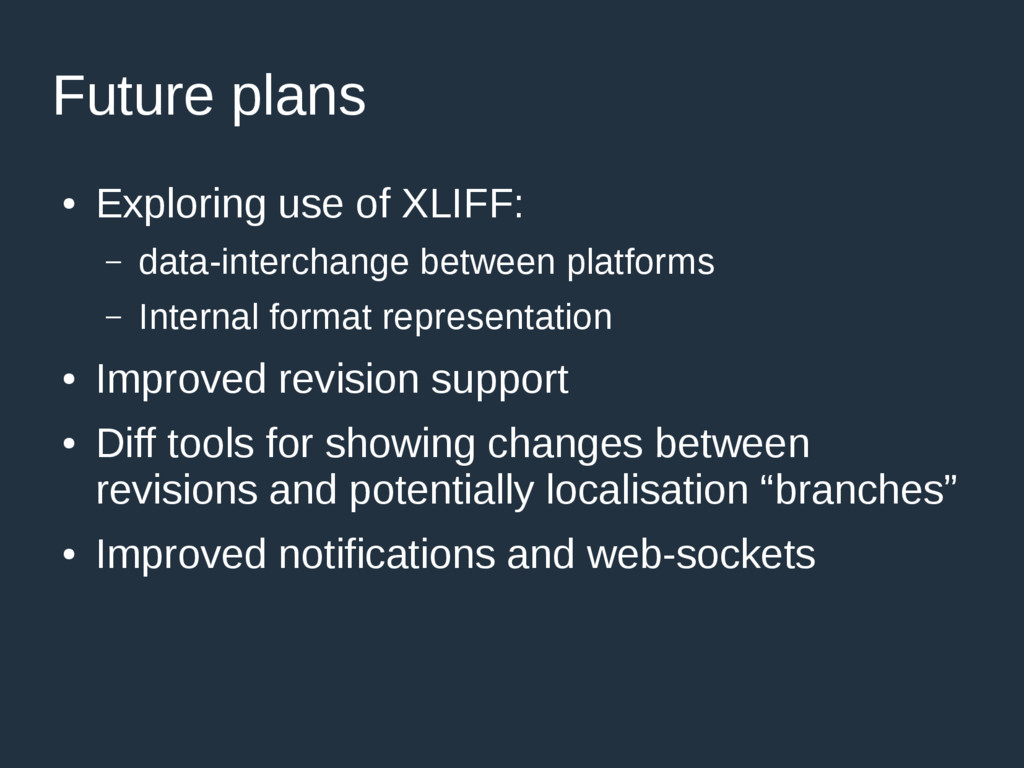
platforms – Internal format representation • Improved revision support • Diff tools for showing changes between revisions and potentially localisation “branches” • Improved notifications and web-sockets


 phlax
 tomokusaba
 occhi
 ludicmind
 rfdnxbro
 kaminashi
 bitkey
 yamanoku
 keeg
 codatum
 pfn
 teamlab
 kentarofujii
 khoart
 csswizardry
 bkeepers
 mojombo
 jonoalderson
 kristinabergwall1
 chikuwait
 danielanewman
 takai
 baasie
 ipullrank
 pwiseman