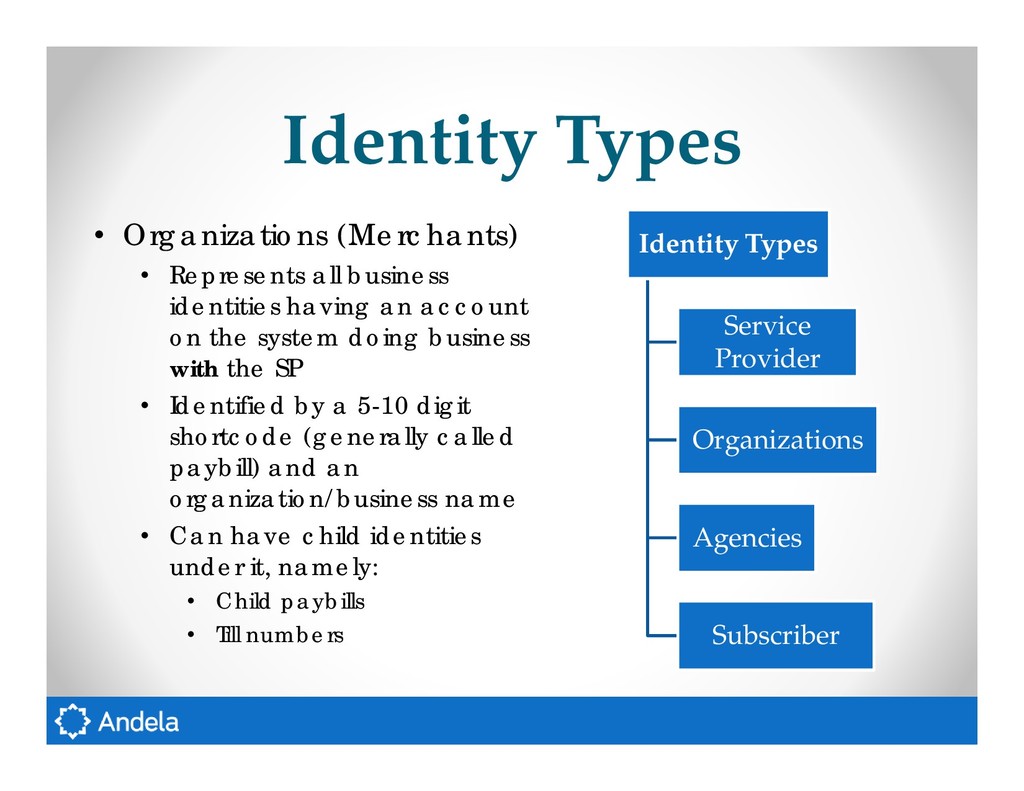
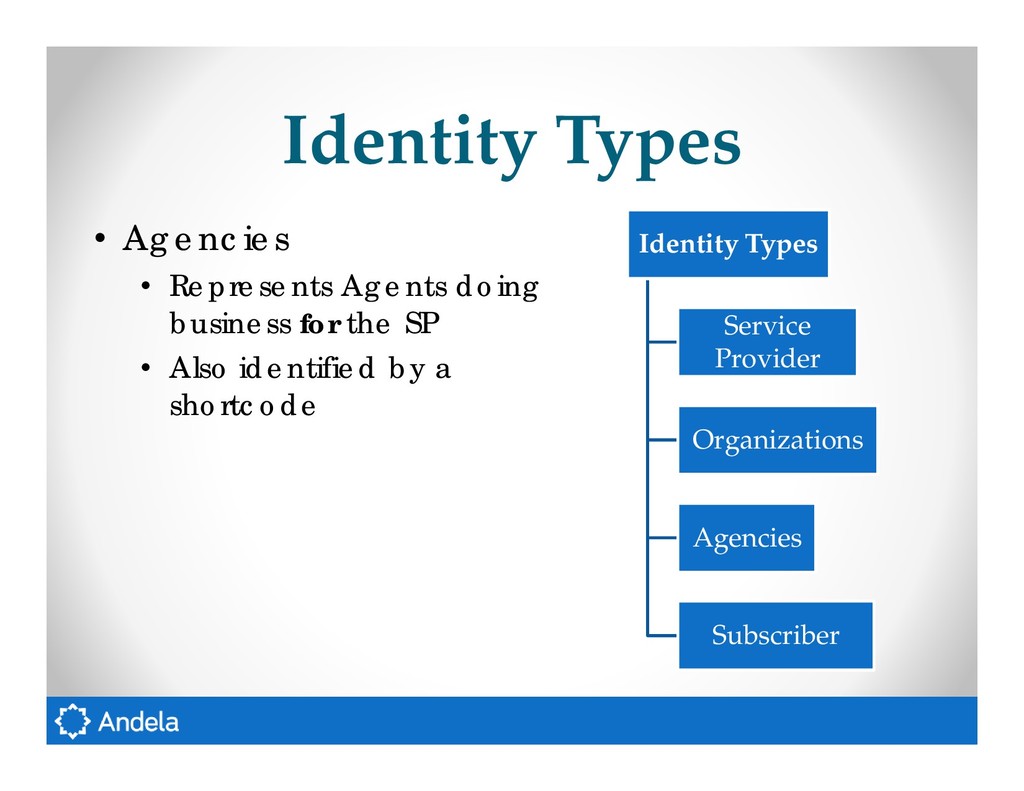
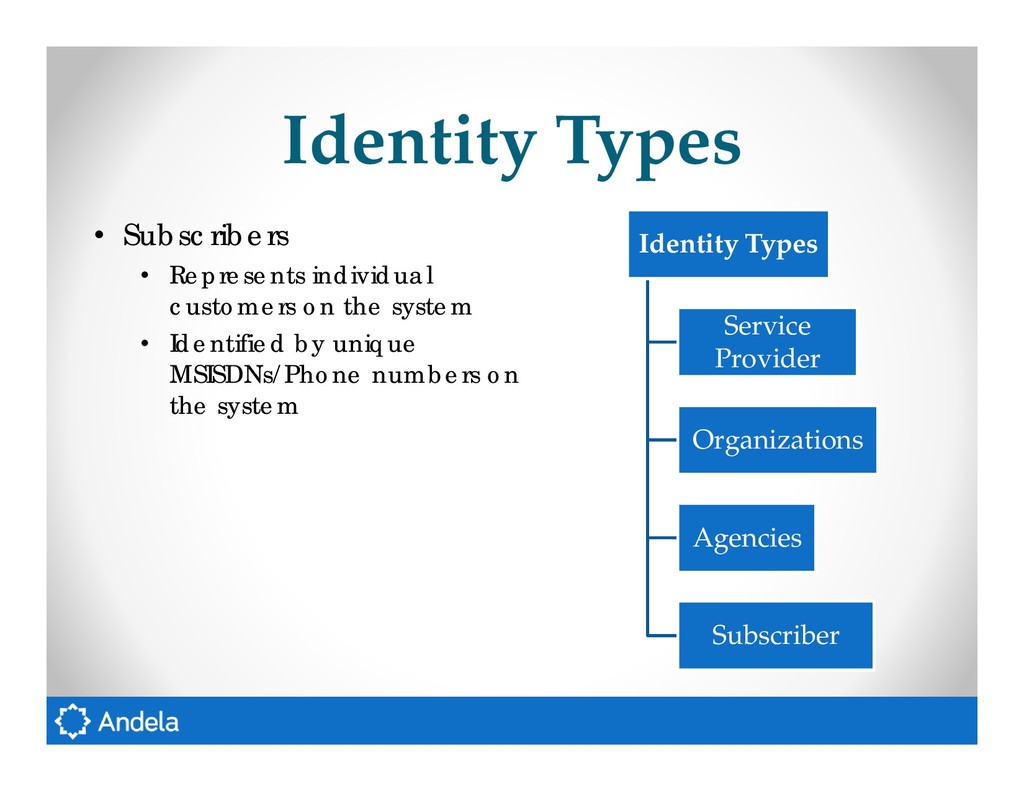
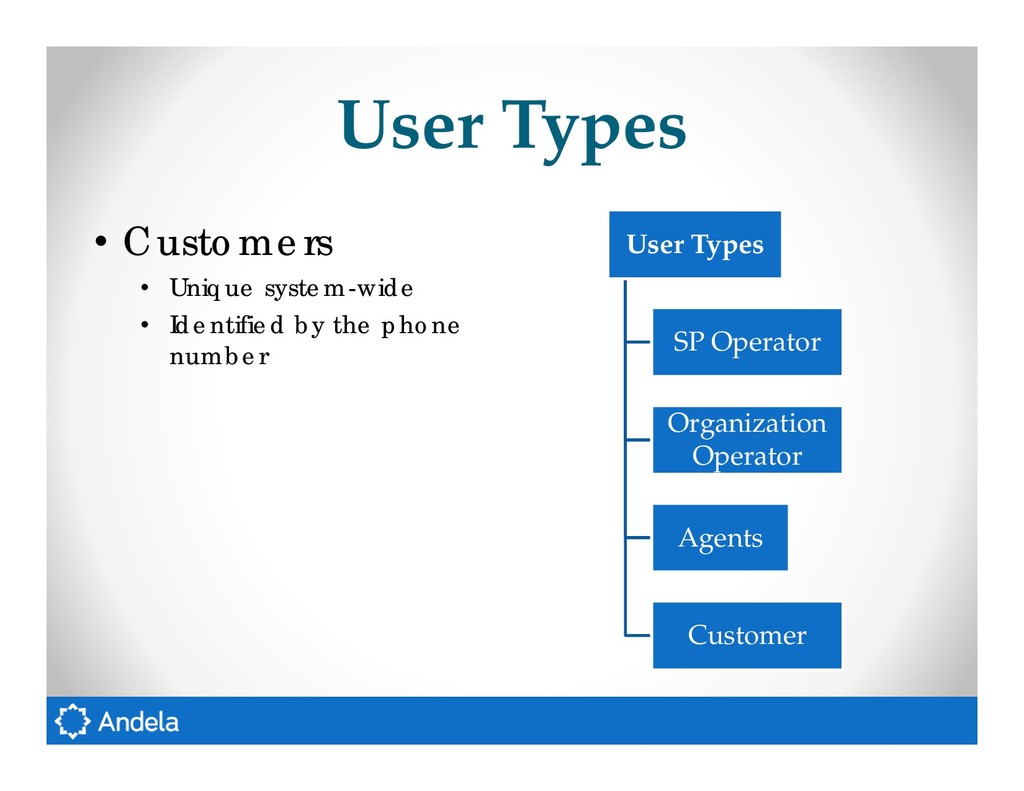
Organizations (Merchants) • Represents all business identities having an account on the system doing business with the SP • Identified by a 5-10 digit shortcode (generally called paybill) and an organization/business name • Can have child identities under it, namely: • Child paybills • Till numbers
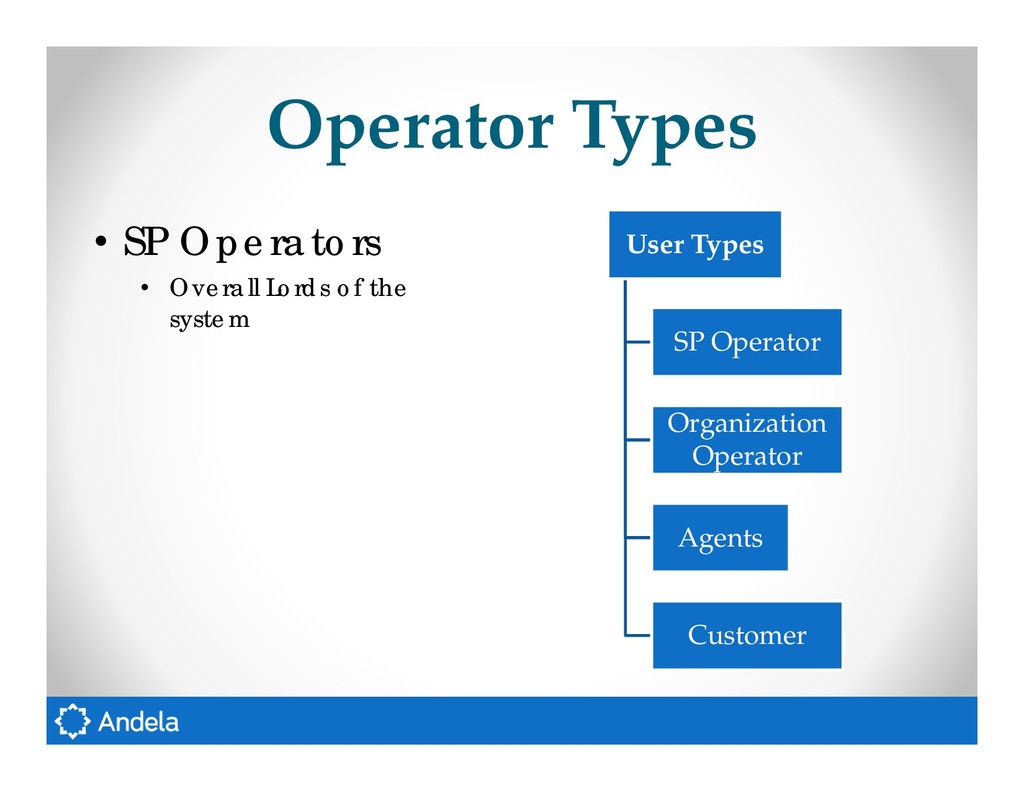
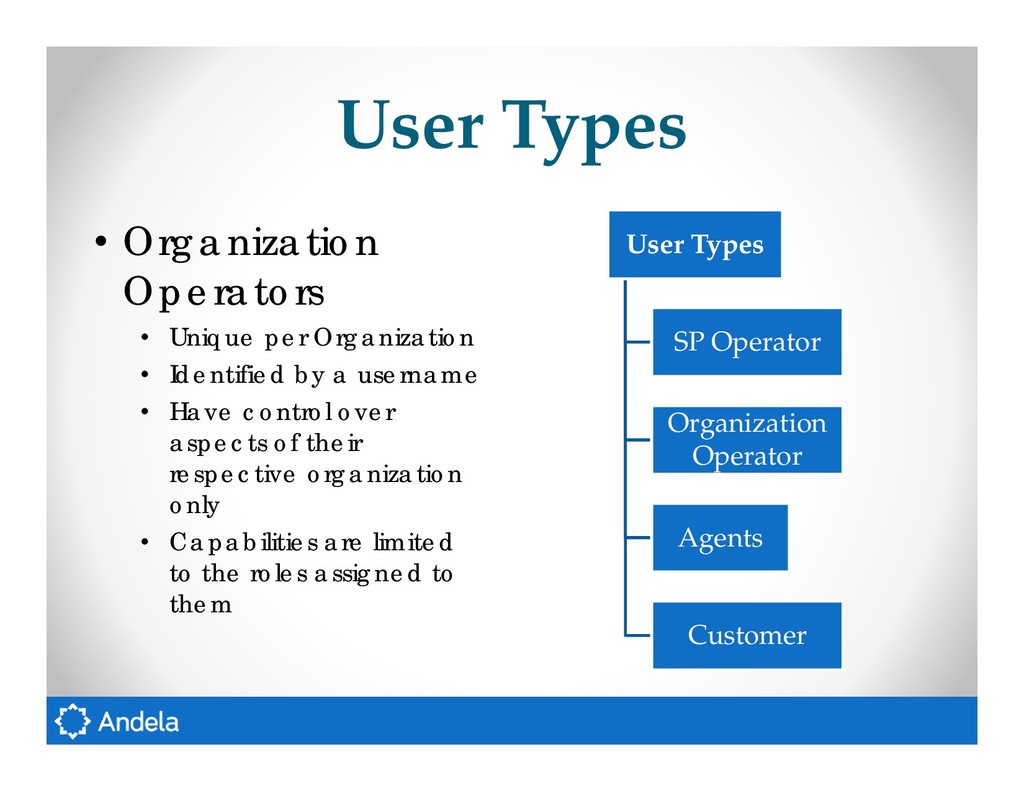
• Organization Operators • Unique per Organization • Identified by a username • Have control over aspects of their respective organization only • Capabilities are limited to the roles assigned to them
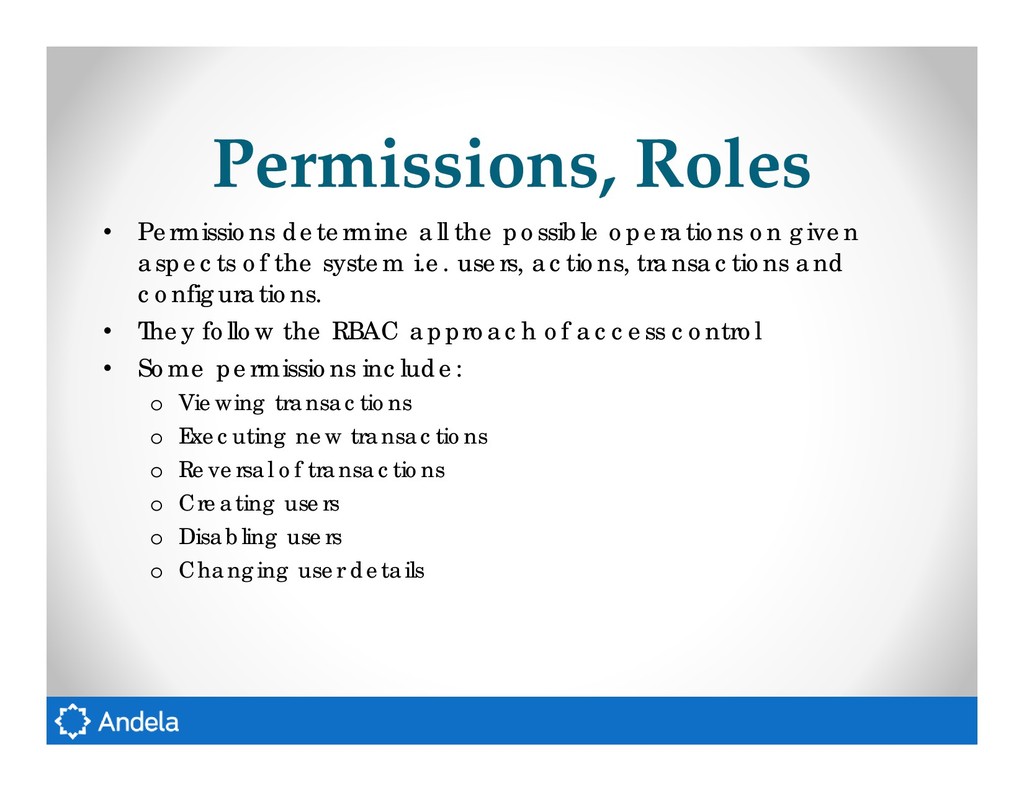
given aspects of the system i.e. users, actions, transactions and configurations. • They follow the RBAC approach of access control • Some permissions include: o Viewing transactions o Executing new transactions o Reversal of transactions o Creating users o Disabling users o Changing user details
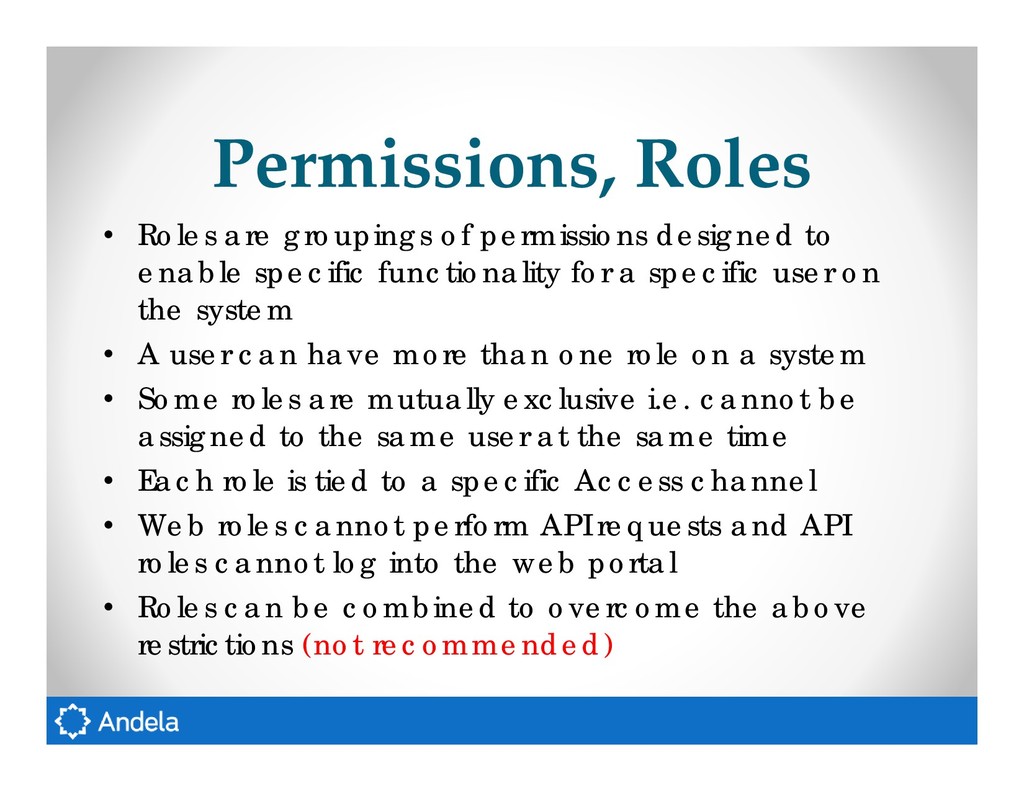
enable specific functionality for a specific user on the system • A user can have more than one role on a system • Some roles are mutually exclusive i.e. cannot be assigned to the same user at the same time • Each role is tied to a specific Access channel • Web roles cannot perform API requests and API roles cannot log into the web portal • Roles can be combined to overcome the above restrictions (not recommended)
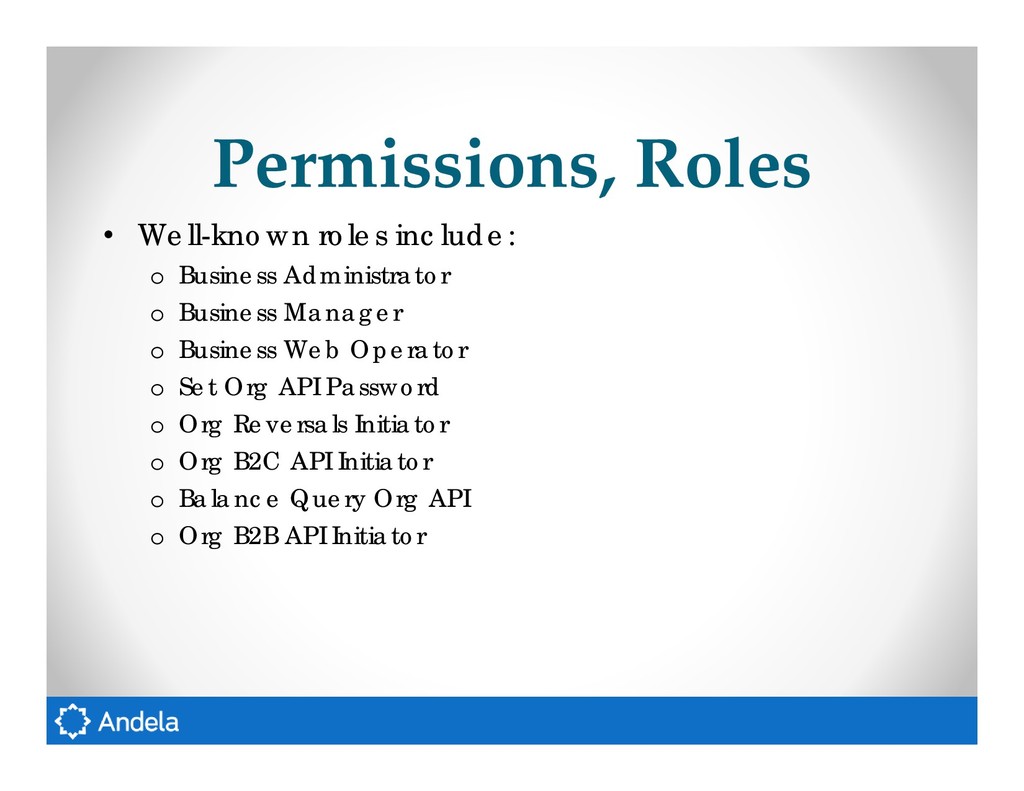
Business Manager o Business Web Operator o Set Org API Password o Org Reversals Initiator o Org B2C API Initiator o Balance Query Org API o Org B2B API Initiator
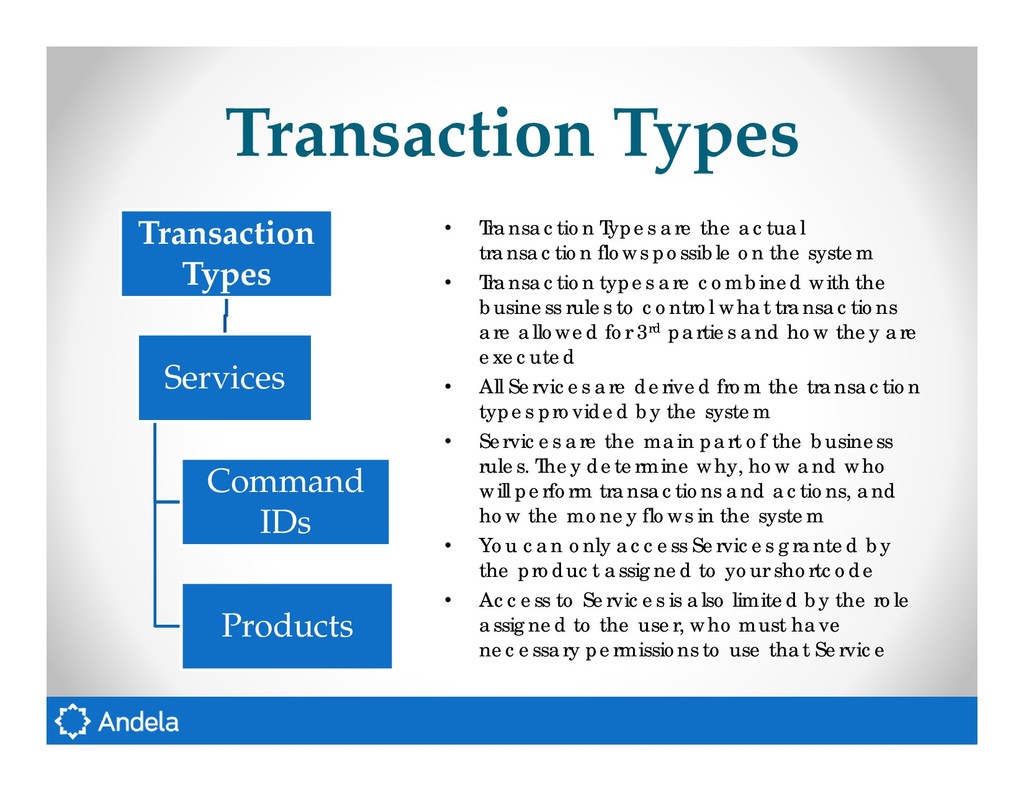
Types are the actual transaction flows possible on the system • Transaction types are combined with the business rules to control what transactions are allowed for 3rd parties and how they are executed • All Services are derived from the transaction types provided by the system • Services are the main part of the business rules. They determine why, how and who will perform transactions and actions, and how the money flows in the system • You can only access Services granted by the product assigned to your shortcode • Access to Services is also limited by the role assigned to the user, who must have necessary permissions to use that Service
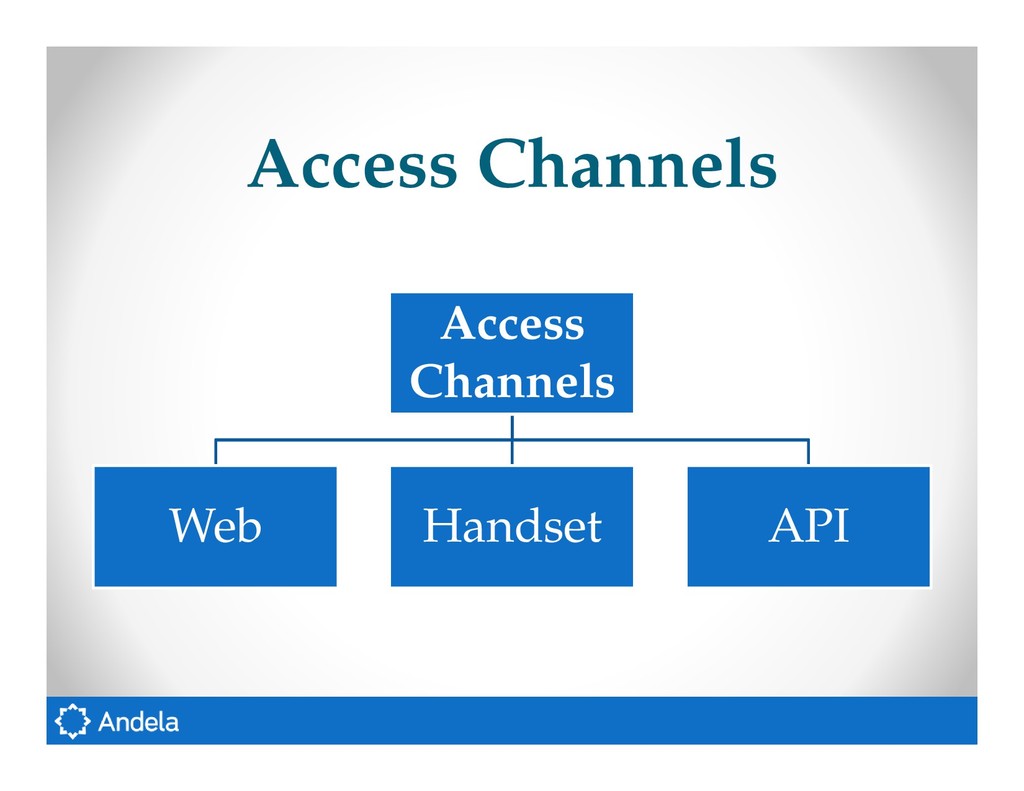
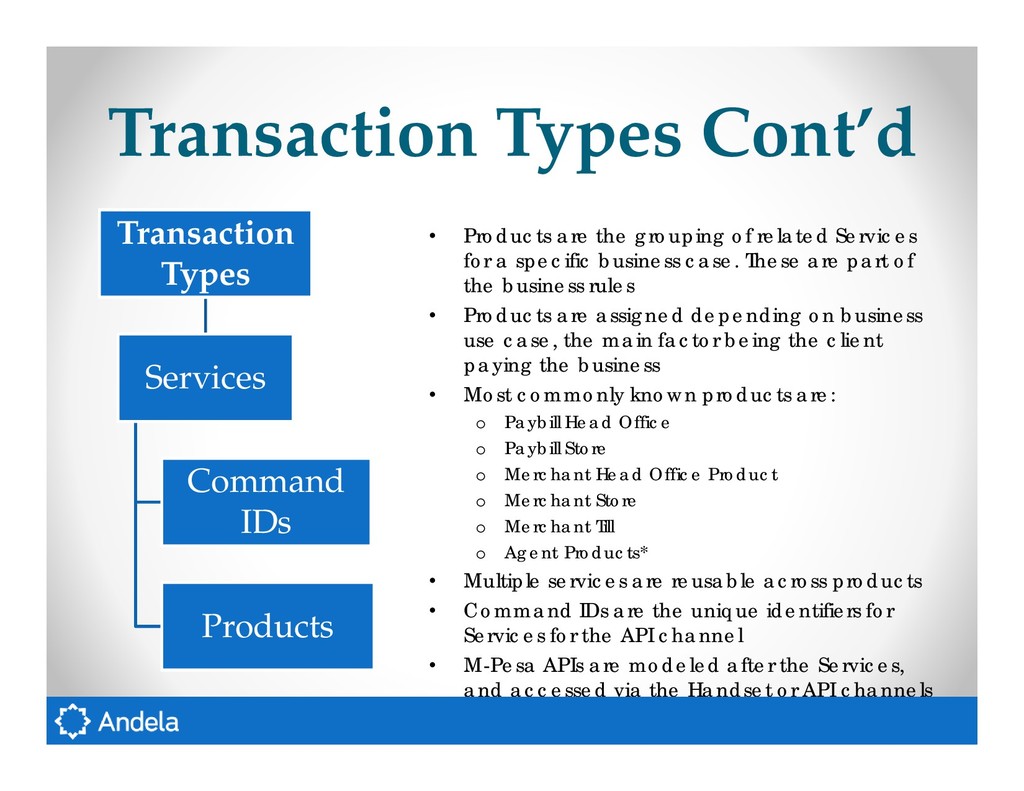
Products are the grouping of related Services for a specific business case. These are part of the business rules • Products are assigned depending on business use case, the main factor being the client paying the business • Most commonly known products are: o Paybill Head Office o Paybill Store o Merchant Head Office Product o Merchant Store o Merchant Till o Agent Products* • Multiple services are reusable across products • Command IDs are the unique identifiers for Services for the API channel • M-Pesa APIs are modeled after the Services, and accessed via the Handset or API channels
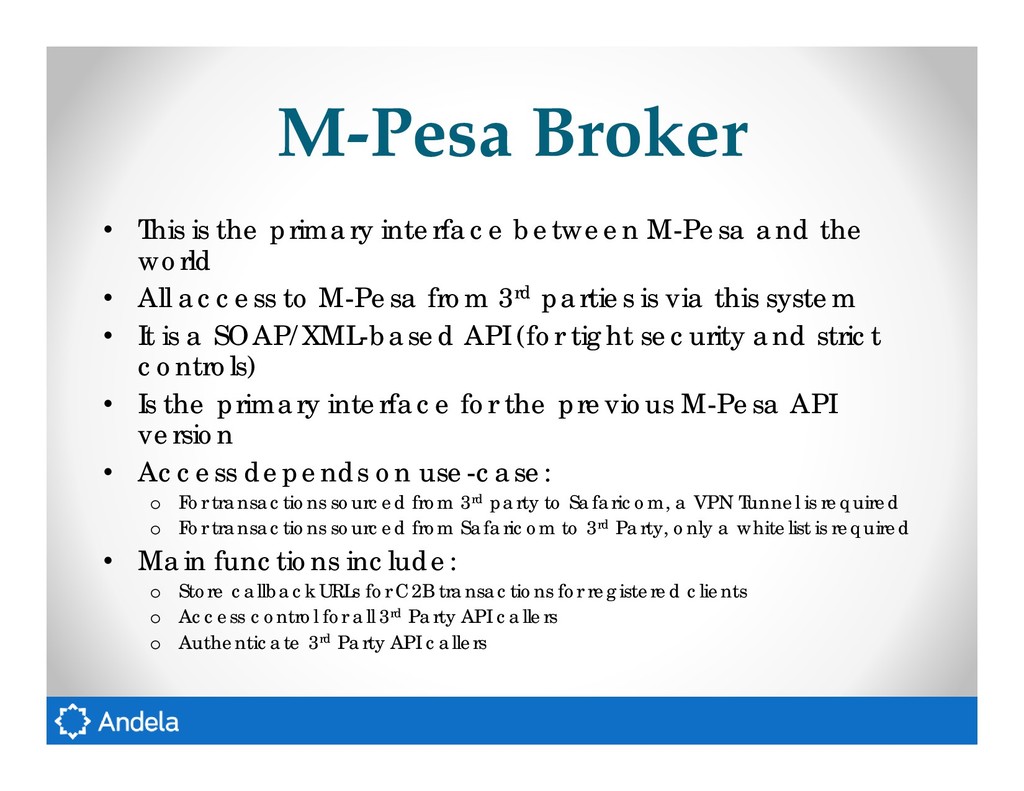
and the world • All access to M-Pesa from 3rd parties is via this system • It is a SOAP/XML-based API (for tight security and strict controls) • Is the primary interface for the previous M-Pesa API version • Access depends on use-case: o For transactions sourced from 3rd party to Safaricom, a VPN Tunnel is required o For transactions sourced from Safaricom to 3rd Party, only a whitelist is required • Main functions include: o Store callback URLs for C2B transactions for registered clients o Access control for all 3rd Party API callers o Authenticate 3rd Party API callers
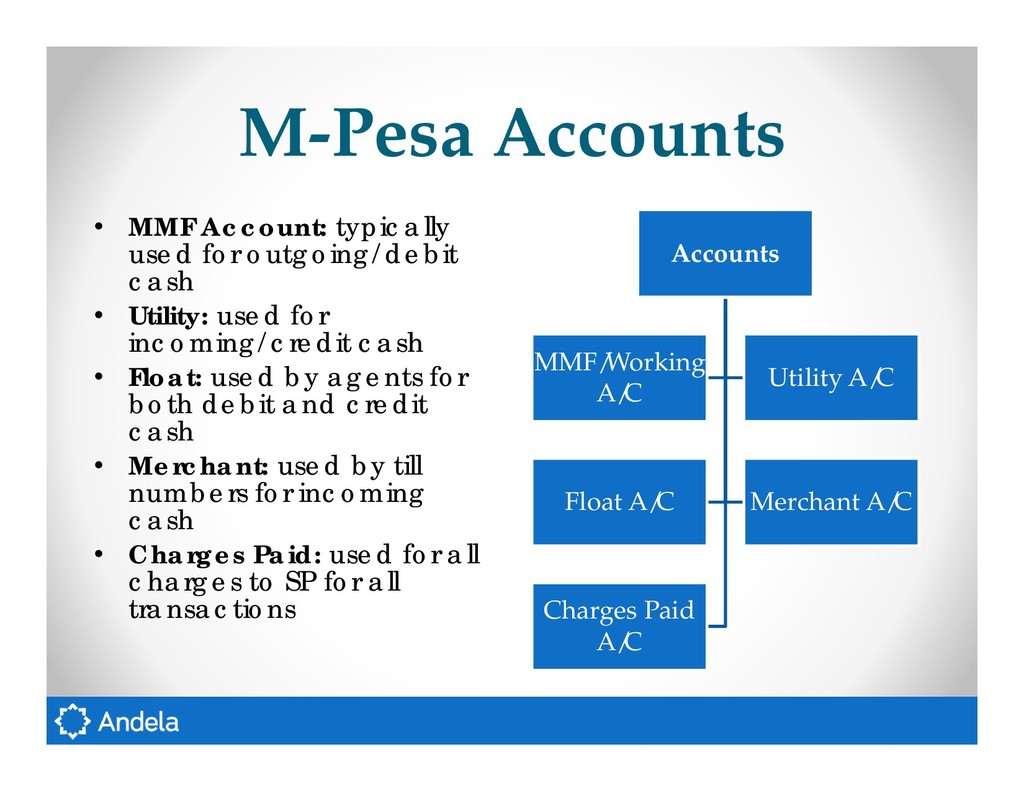
A/C Charges Paid A/C • MMF Account: typically used for outgoing/debit cash • Utility: used for incoming/credit cash • Float: used by agents for both debit and credit cash • Merchant: used by till numbers for incoming cash • Charges Paid: used for all charges to SP for all transactions
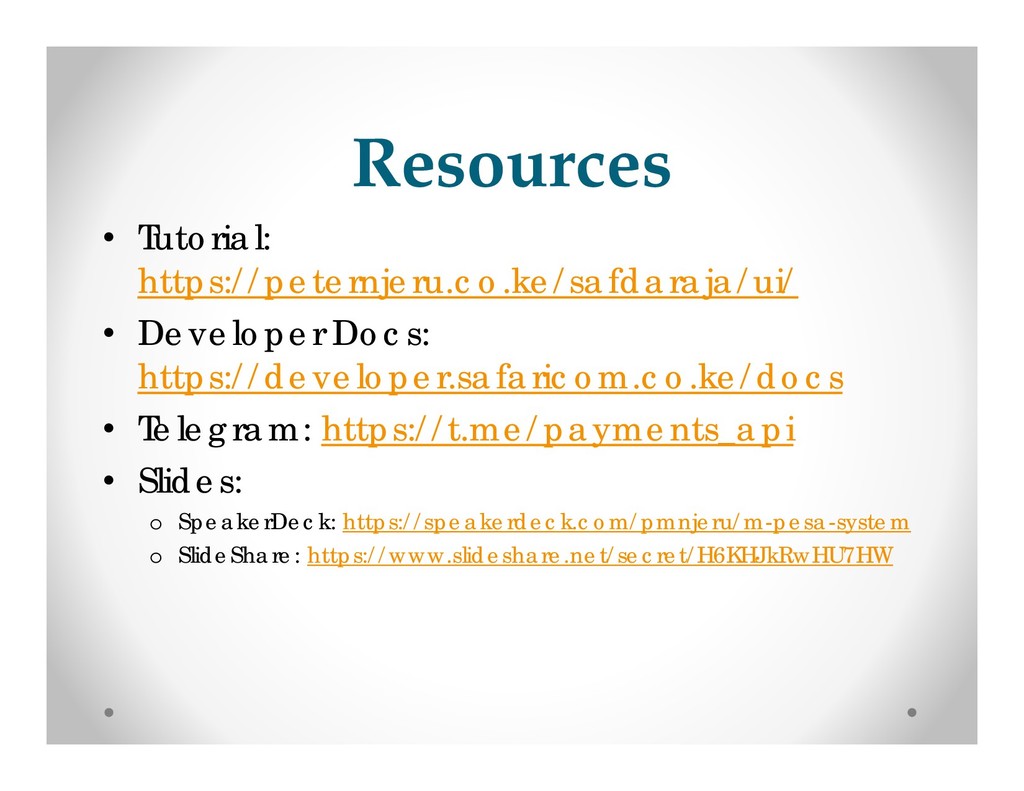
https://t.me/payments_api • Slides: o SpeakerDeck: https://speakerdeck.com/pmnjeru/m-pesa-system o SlideShare: https://www.slideshare.net/secret/H6KHJkRwHU7HW


 popppiees
 ryanjones
 aleyda
 akihiro_kokubo
 kneath
 bcantrill
 bkeepers
 khoart
 shpigford
 tapps
tapps
 jonrohan