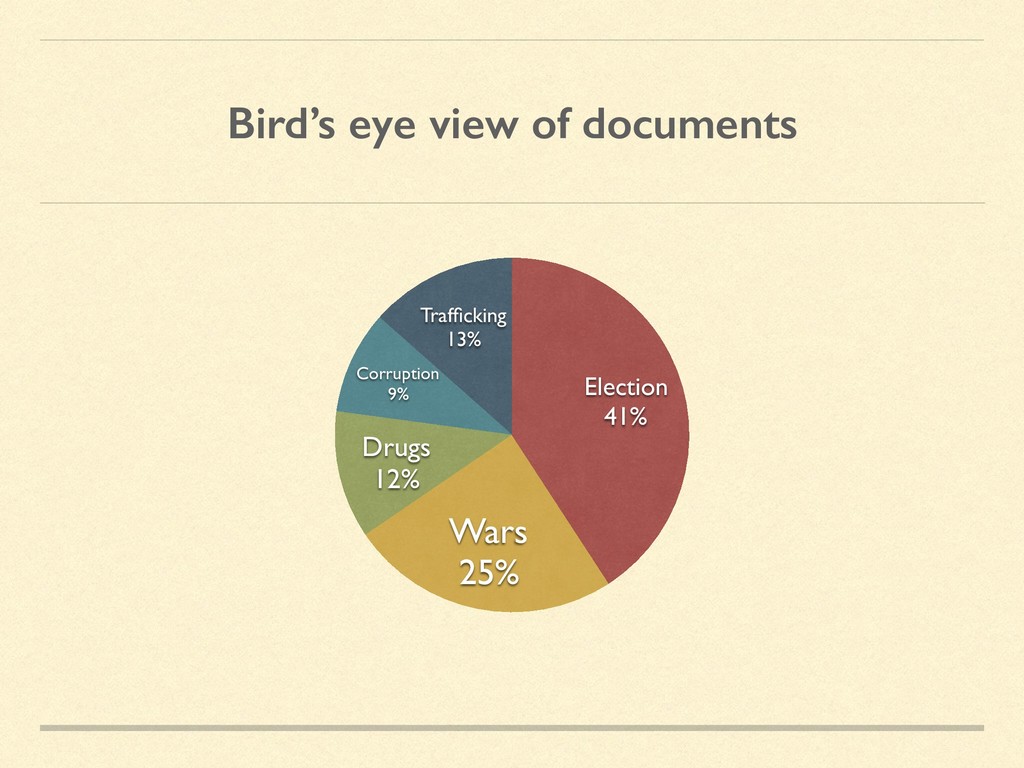
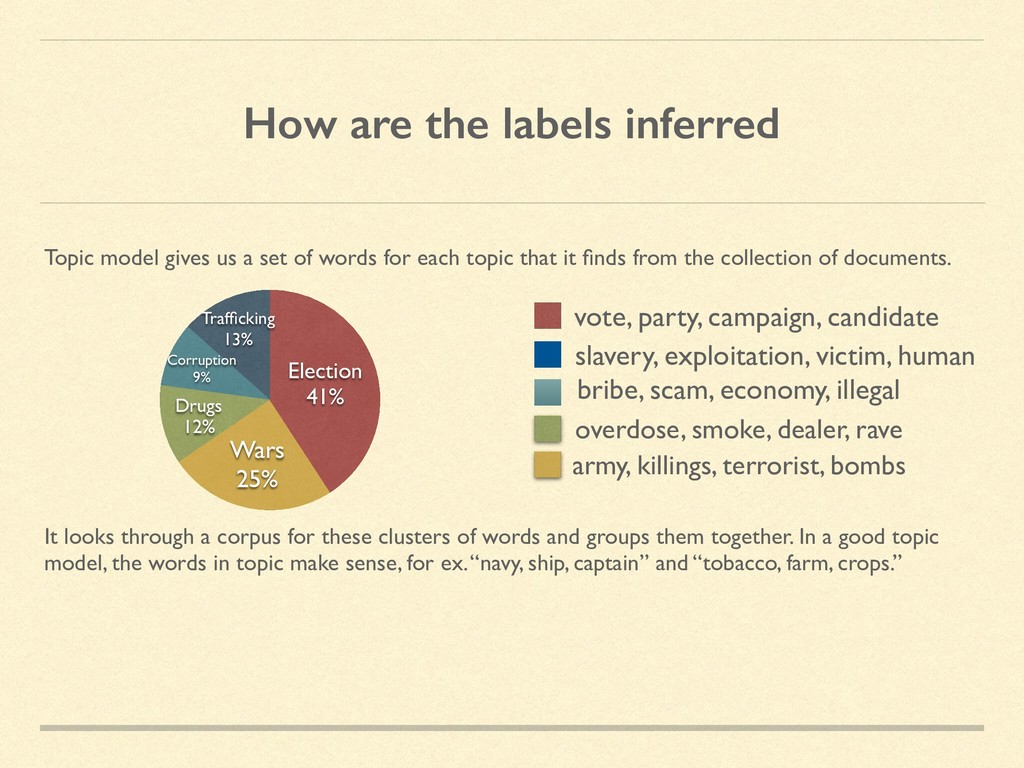
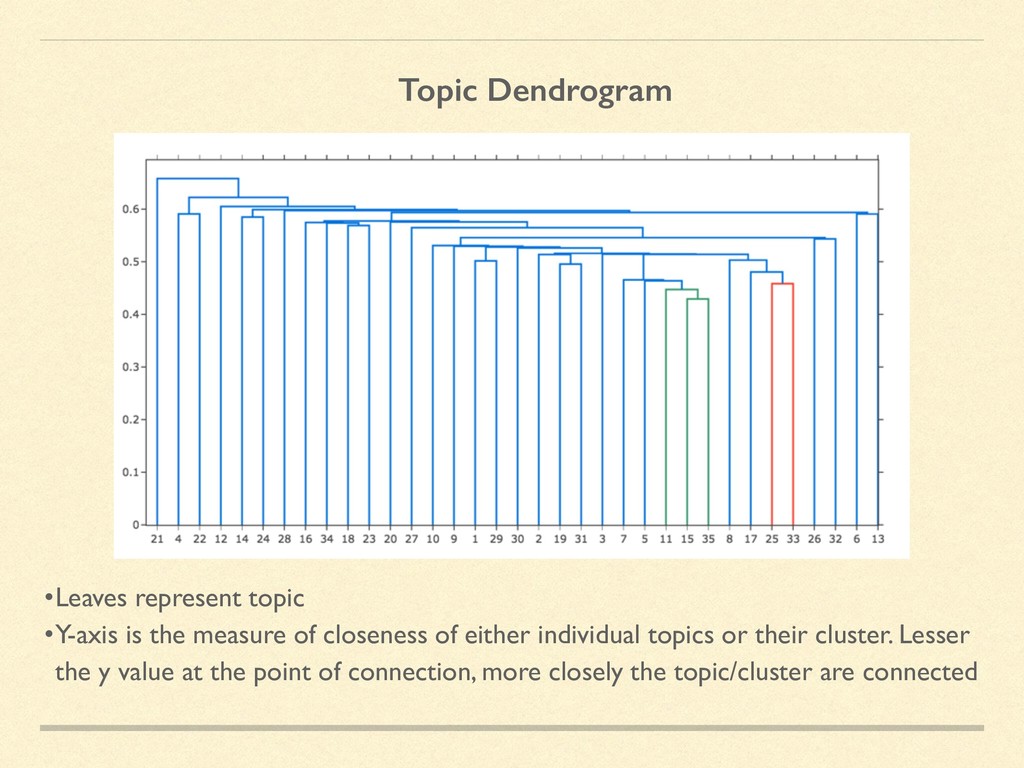
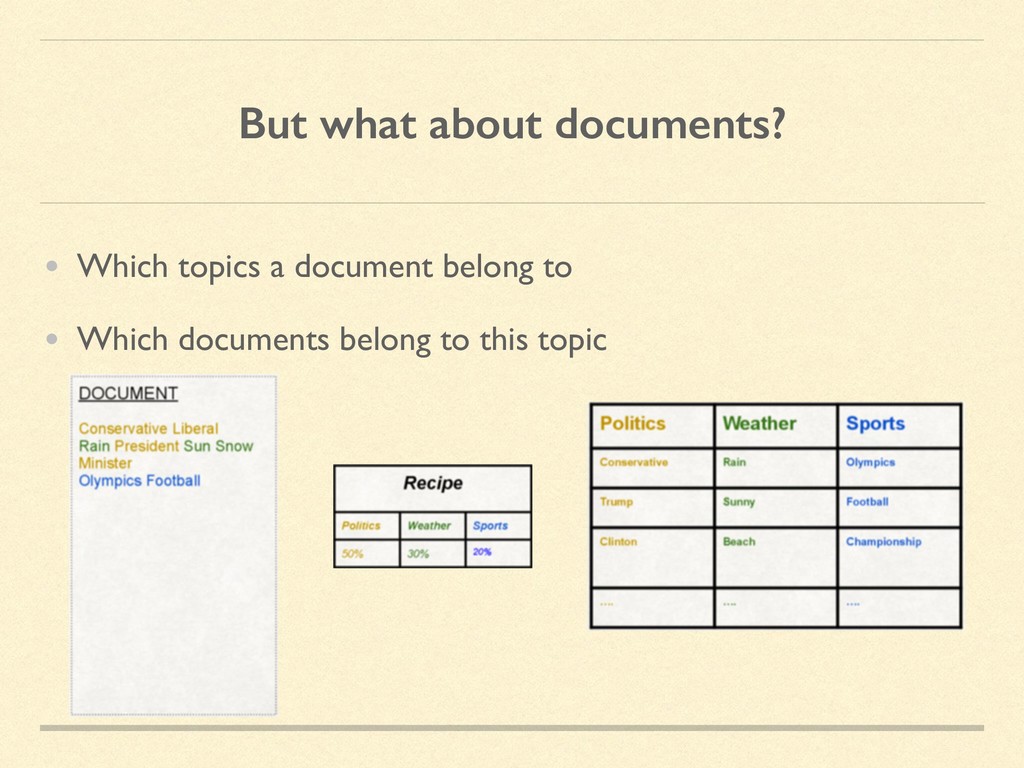
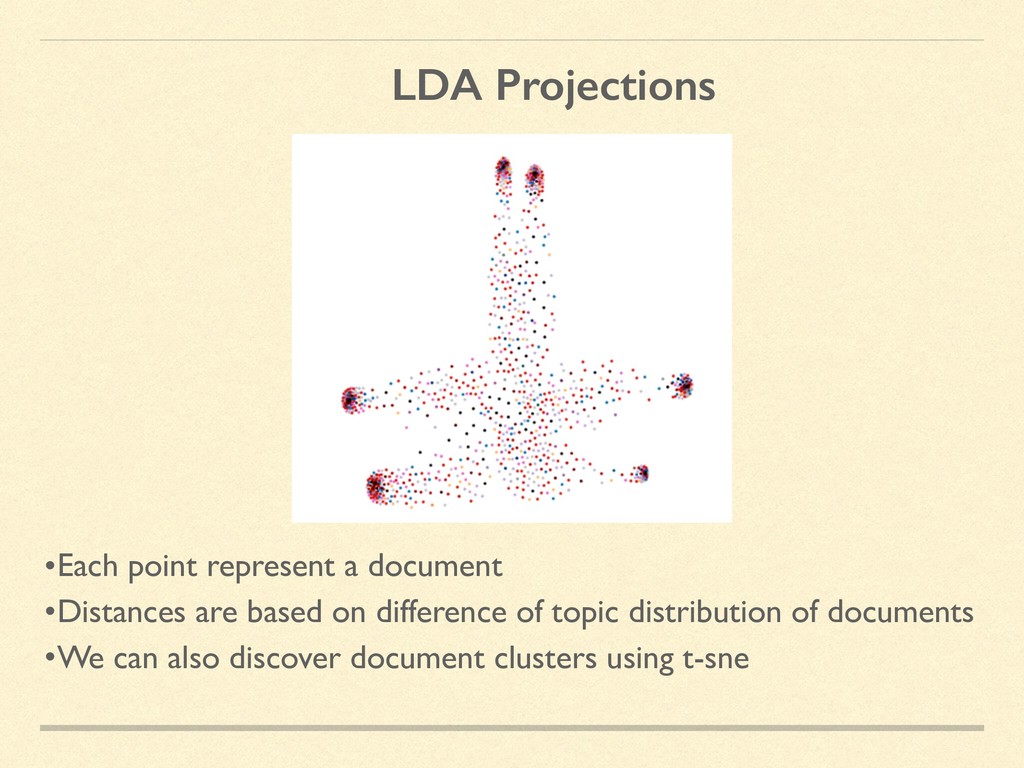
set of words for each topic that it finds from the collection of documents. It looks through a corpus for these clusters of words and groups them together. In a good topic model, the words in topic make sense, for ex. “navy, ship, captain” and “tobacco, farm, crops.” army, killings, terrorist, bombs Trafficking 13% Corruption 9% Drugs 12% Wars 25% Election 41% overdose, smoke, dealer, rave bribe, scam, economy, illegal vote, party, campaign, candidate slavery, exploitation, victim, human
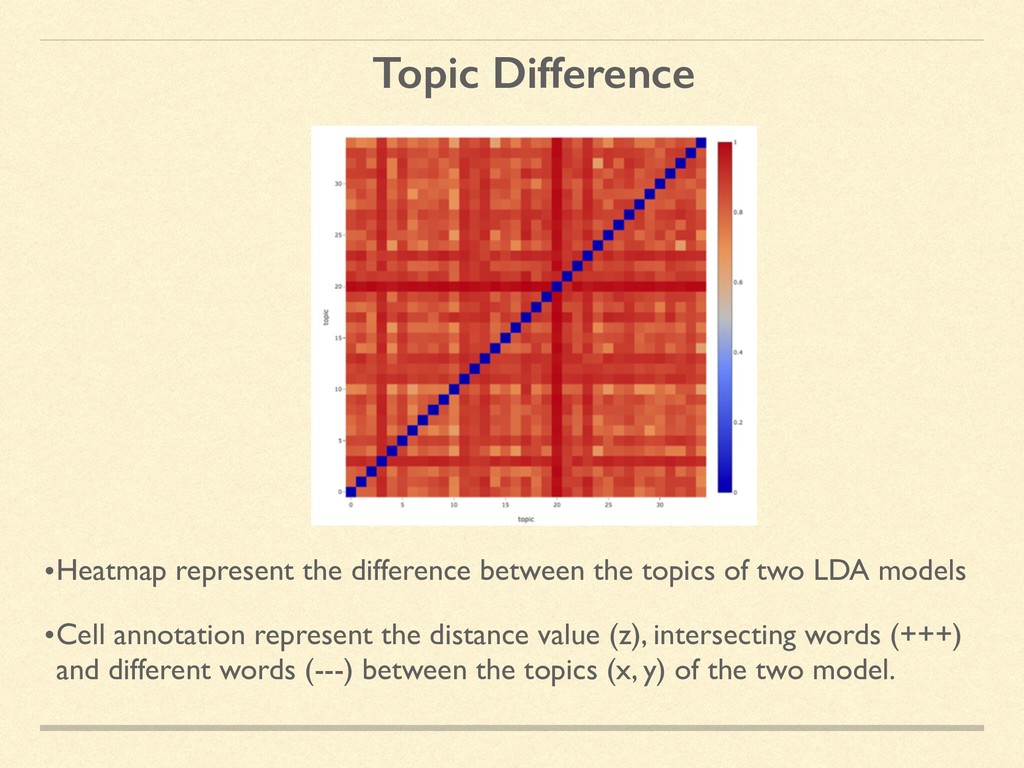
two LDA models •Cell annotation represent the distance value (z), intersecting words (+++) and different words (---) between the topics (x, y) of the two model.
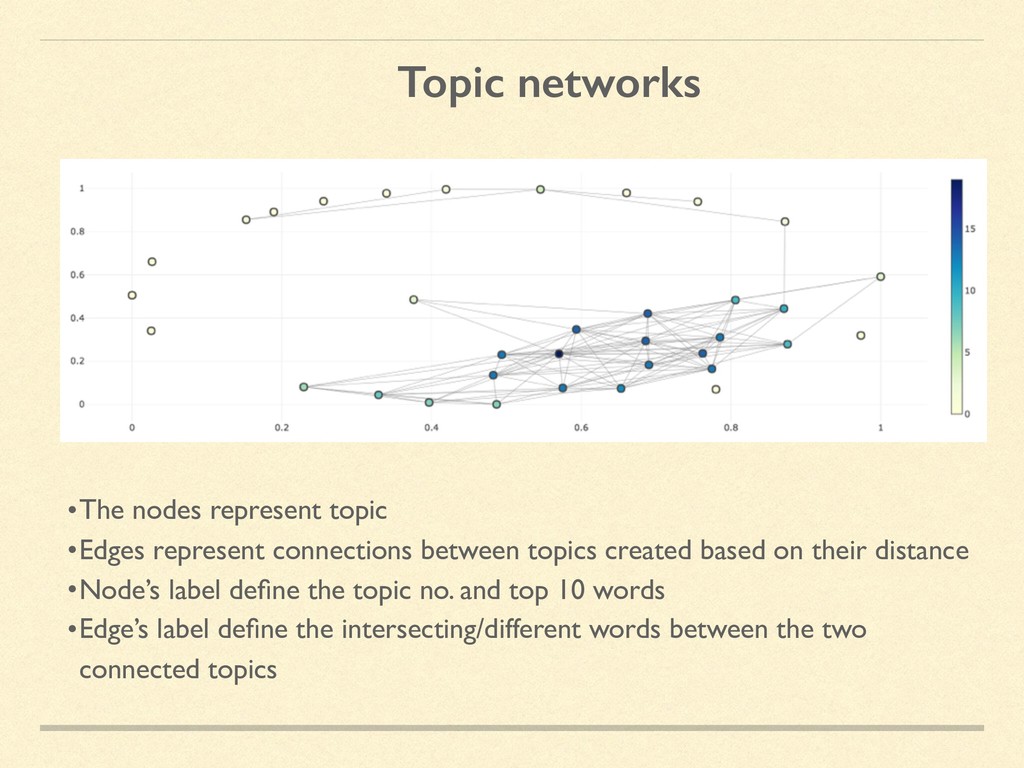
topics created based on their distance •Node’s label define the topic no. and top 10 words •Edge’s label define the intersecting/different words between the two connected topics


 pydatalondon
 pfn
pfn
 gionn
gionn
 cmusudakeisuke
 yu23ki14
 linedevth
 jtakeda
 watany
 yamaguchitk333
 usanchuu
 reuven
 kakehashi
 kentarofujii
 honzajavorek
 garrettdimon
 jct
jct
 orderedlist
 mraible
 jlugia
 reverentgeek
 inesmontani
 apolaine
 ryanjones
 katiecoart
 joshbly