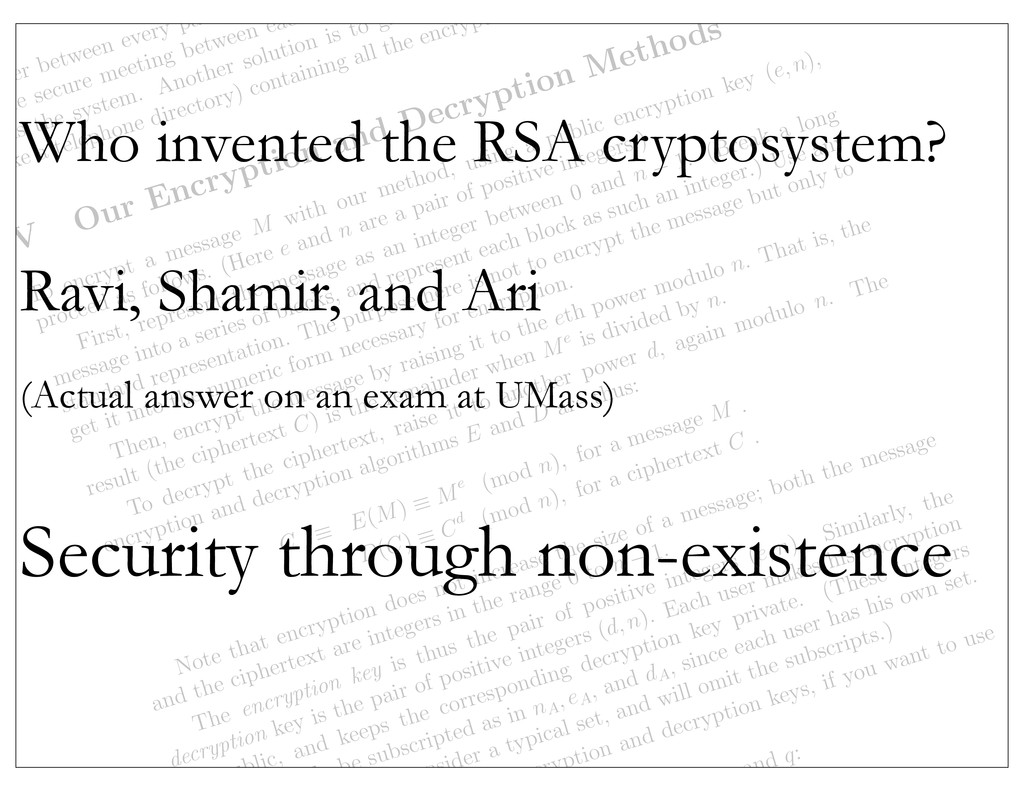
answer on an exam at UMass) Security through non-existence rier between every pair of use ngle secure meeting between each user a oins the system. Another solution is to give each like a telephone directory) containing all the encryption keys V Our Encryption and Decryption Methods To encrypt a message M with our method, using a public encryption key (e, n), proceed as follows. (Here e and n are a pair of positive integers.) First, represent the message as an integer between 0 and n 1. (Break a long message into a series of blocks, and represent each block as such an integer.) Use any standard representation. The purpose here is not to encrypt the message but only to get it into the numeric form necessary for encryption. Then, encrypt the message by raising it to the eth power modulo n. That is, the result (the ciphertext C) is the remainder when Me is divided by n. To decrypt the ciphertext, raise it to another power d, again modulo n. The encryption and decryption algorithms E and D are thus: C ⇤ E(M) ⇤ Me (mod n), for a message M . D(C) ⇤ Cd (mod n), for a ciphertext C . Note that encryption does not increase the size of a message; both the message and the ciphertext are integers in the range 0 to n 1. The encryption key is thus the pair of positive integers (e, n). Similarly, the decryption key is the pair of positive integers (d, n). Each user makes his encryption y public, and keeps the corresponding decryption key private. (These integers perly be subscripted as in nA , eA , and dA , since each user has his own set. ly consider a typical set, and will omit the subscripts.) r encryption and decryption keys, if you want to use es p and q:
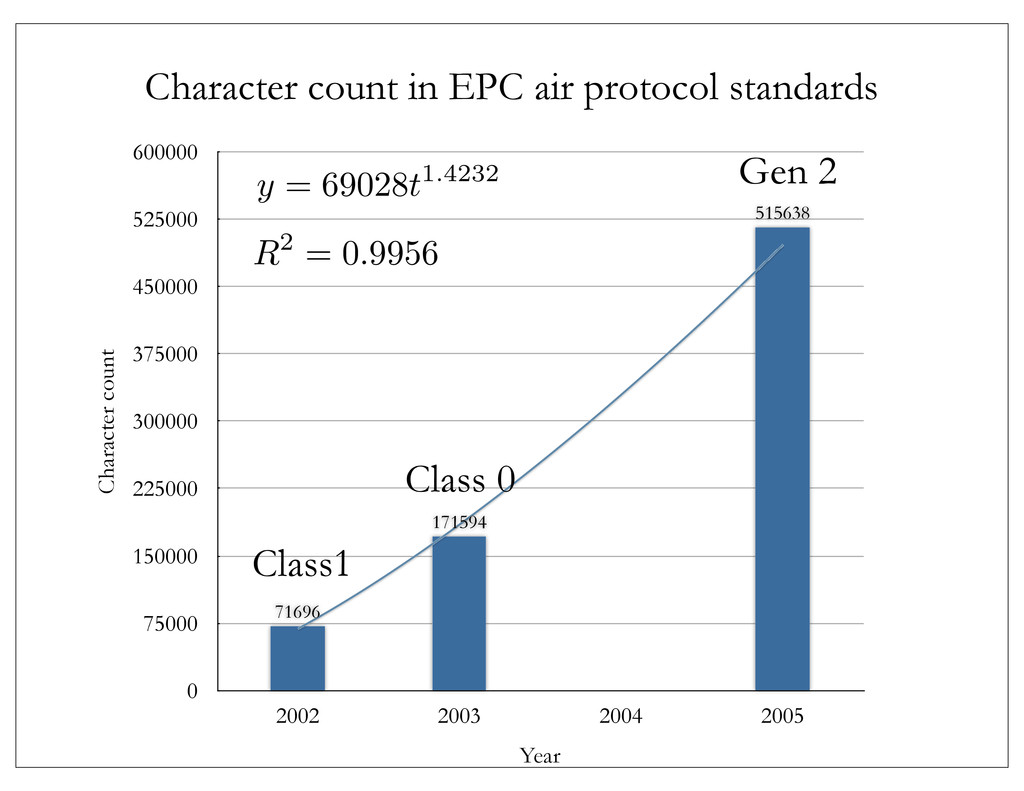
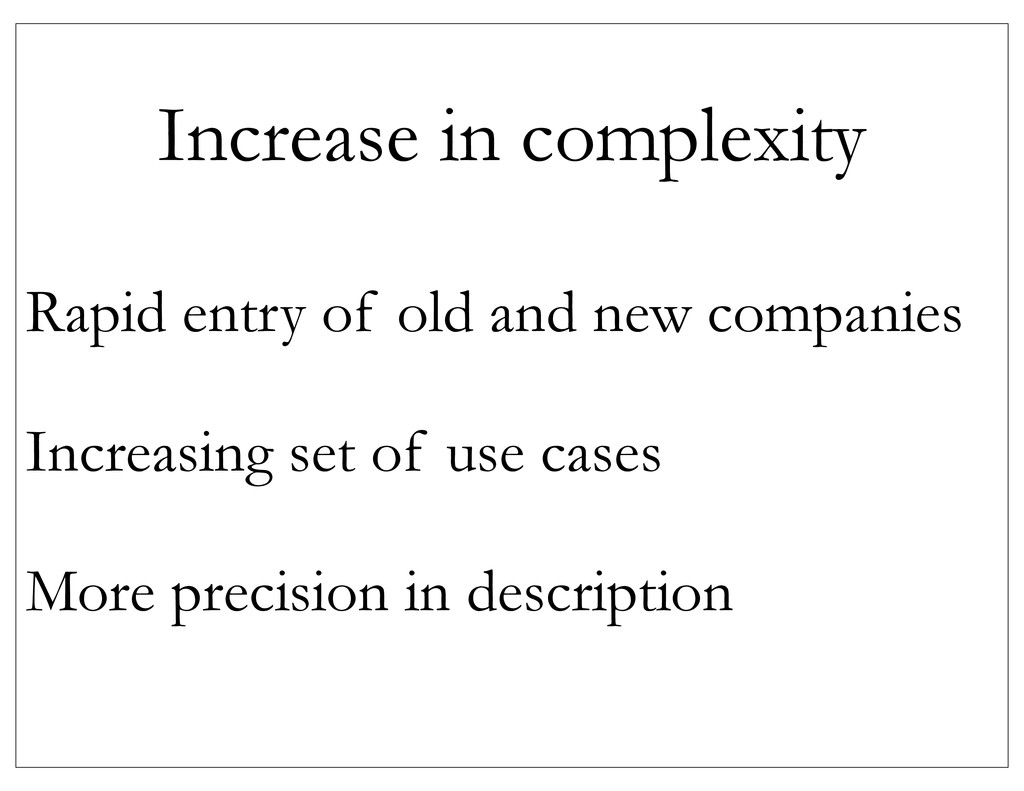
2003 2004 2005 515638 171594 71696 Character count Year Character count in EPC air protocol standards Class1 Class 0 Gen 2 y = 69028t1.4232 R2 = 0.9956
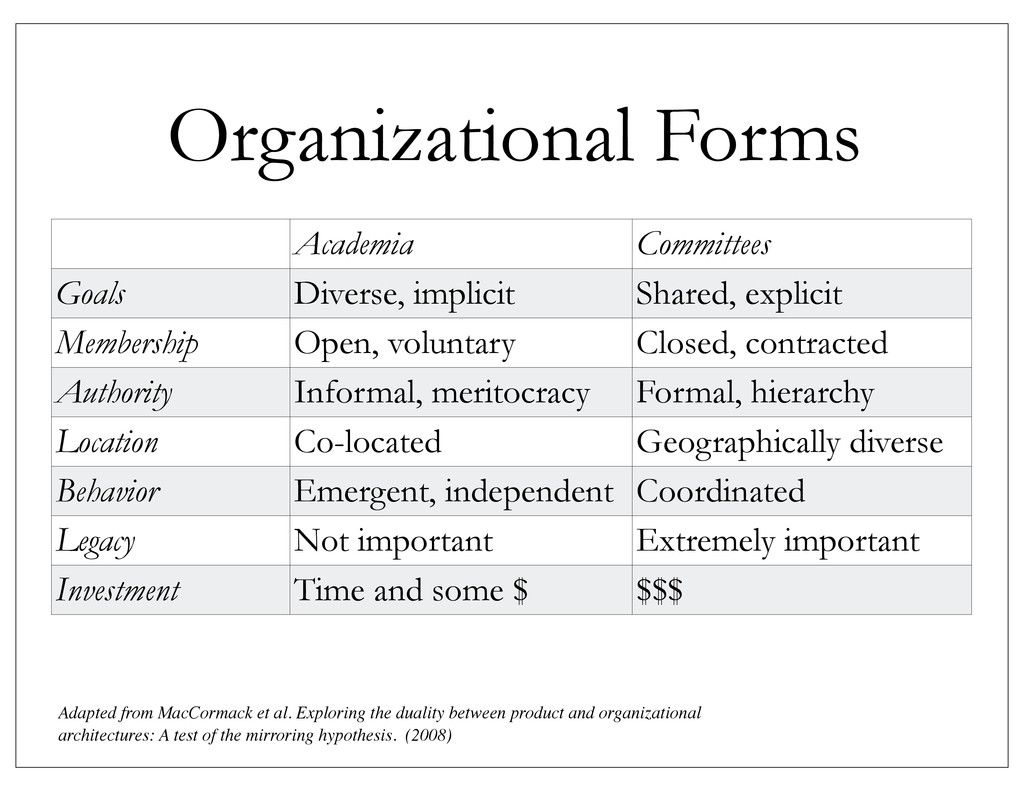
Open, voluntary Closed, contracted Authority Informal, meritocracy Formal, hierarchy Location Co-located Geographically diverse Behavior Emergent, independent Coordinated Legacy Not important Extremely important Investment Time and some $ $$$ Adapted from MacCormack et al. Exploring the duality between product and organizational architectures: A test of the mirroring hypothesis. (2008)
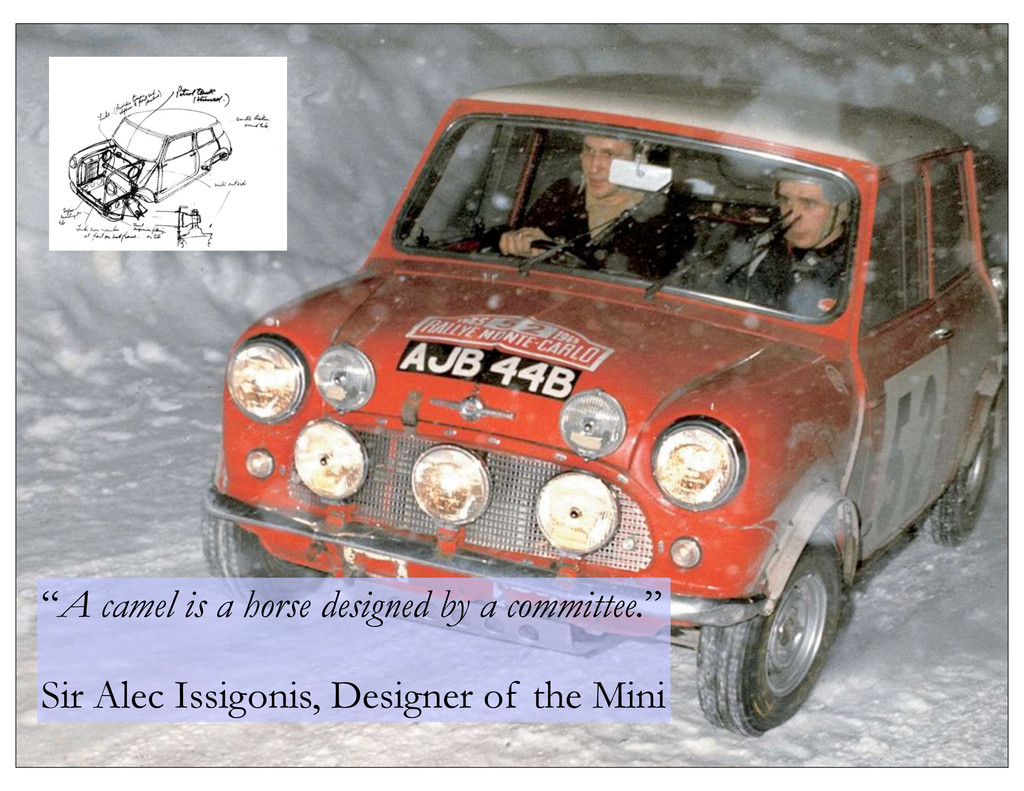
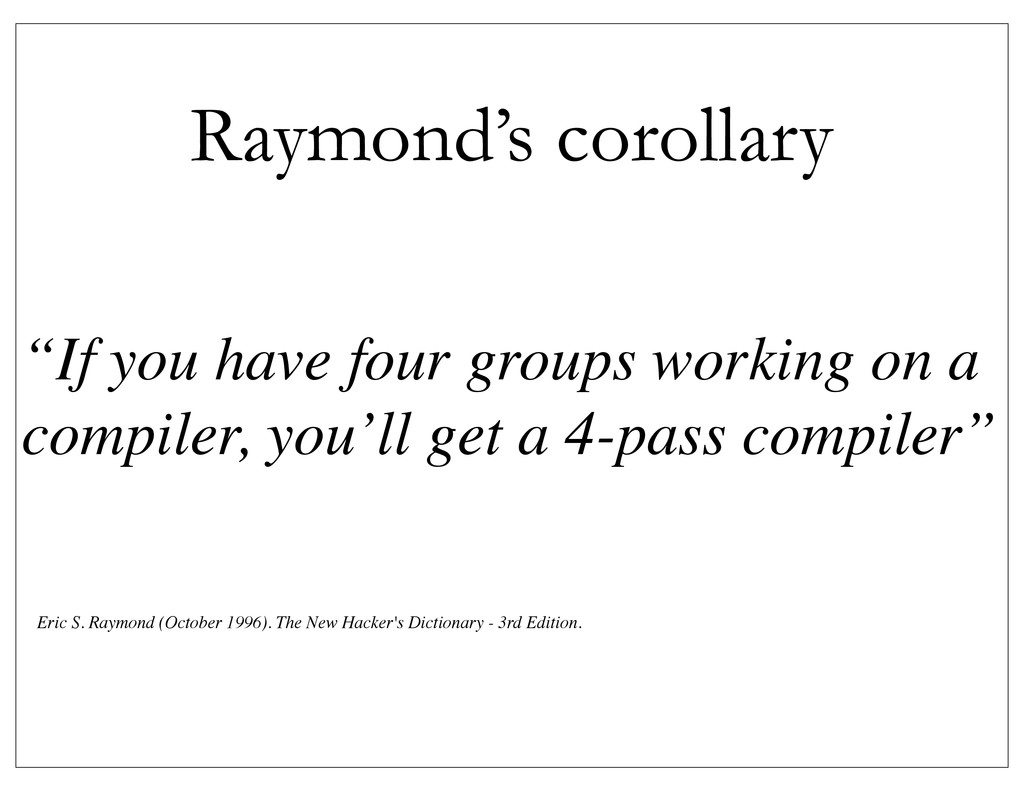
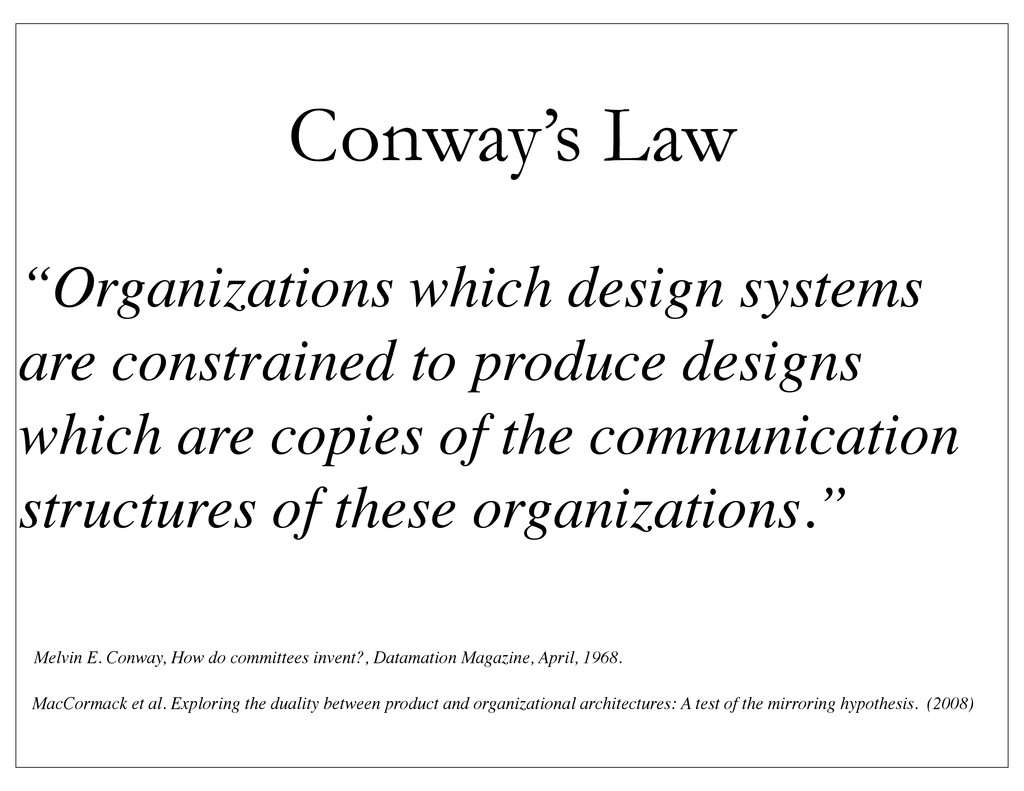
designs which are copies of the communication structures of these organizations.” Melvin E. Conway, How do committees invent?, Datamation Magazine, April, 1968. MacCormack et al. Exploring the duality between product and organizational architectures: A test of the mirroring hypothesis. (2008)
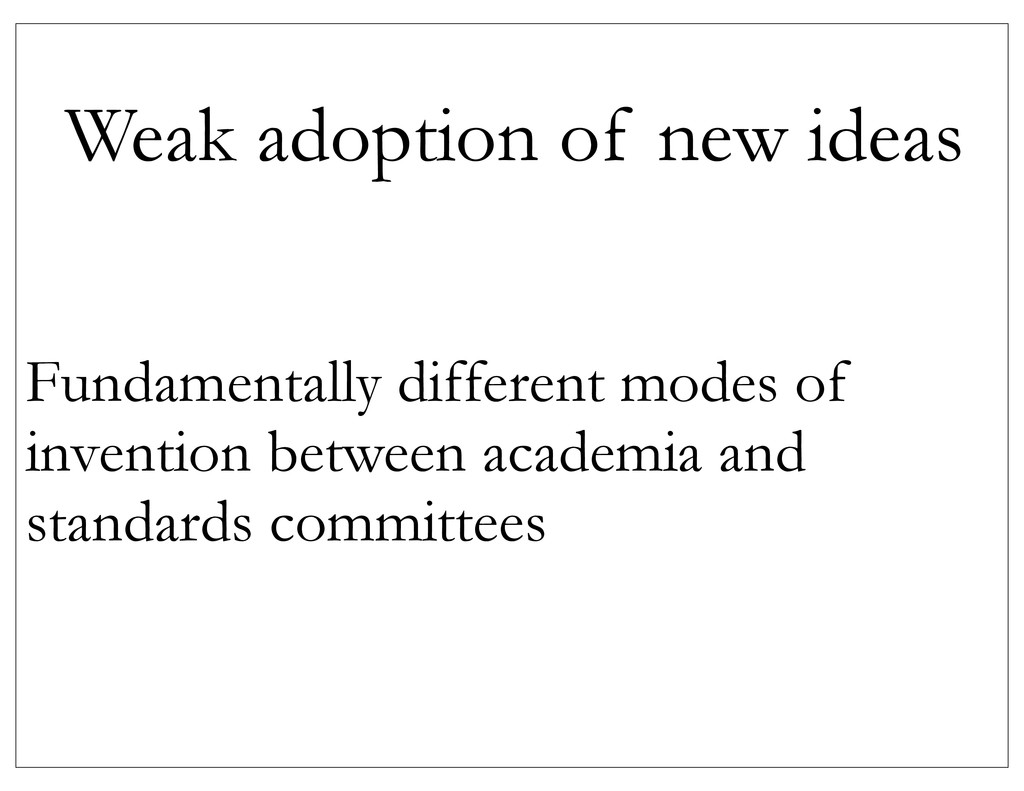
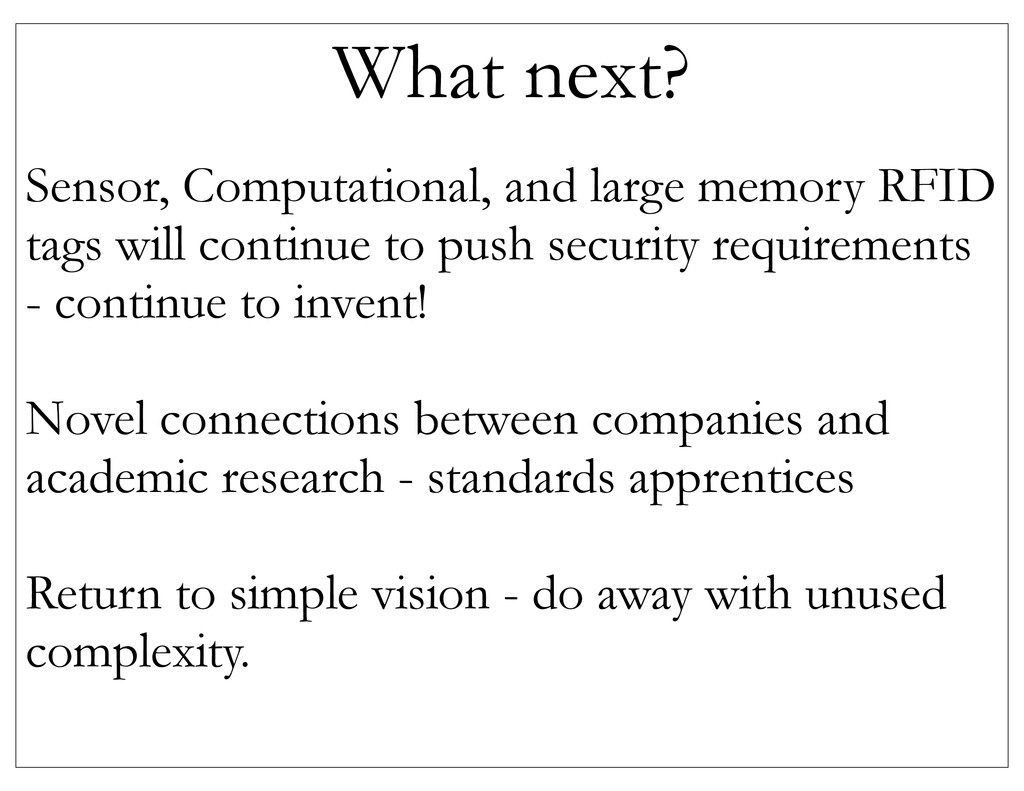
push security requirements - continue to invent! Novel connections between companies and academic research - standards apprentices Return to simple vision - do away with unused complexity. What next?

 Your Podcast. Everywhere. Effortlessly.


 ravipappu
 axbom
 lara
 dugsong
 jonrohan
 malarkey
 brad_frost
 aemeredith
 helmedeiros
 geshan
 rakko
 hannesfritz
 minecr