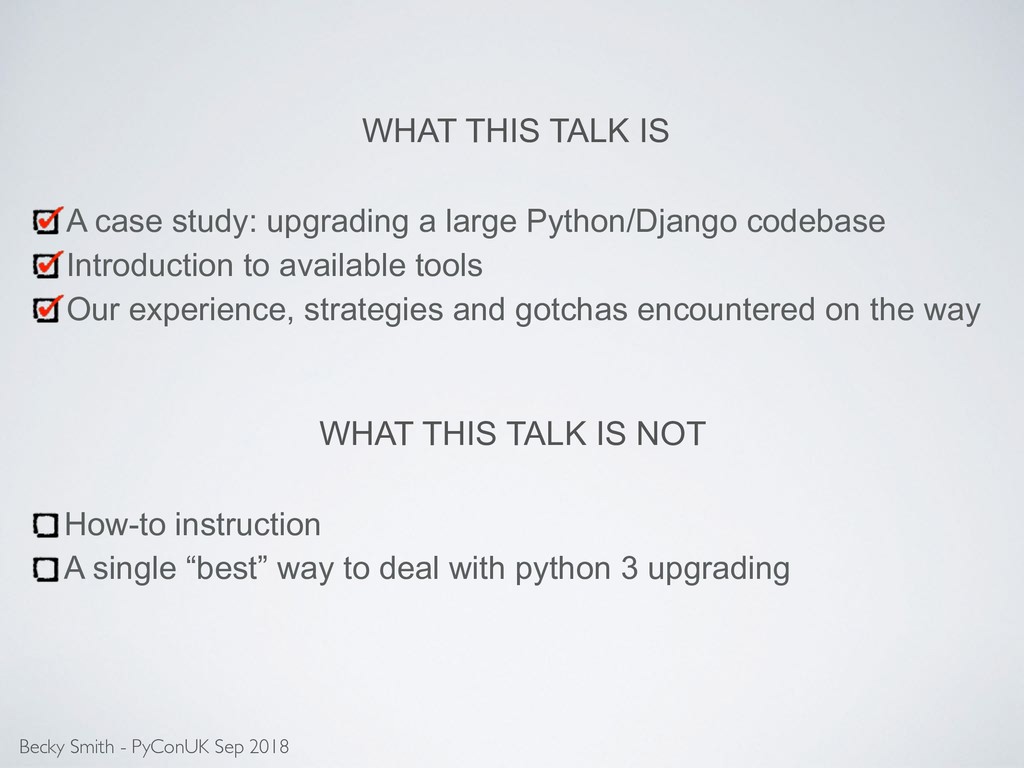
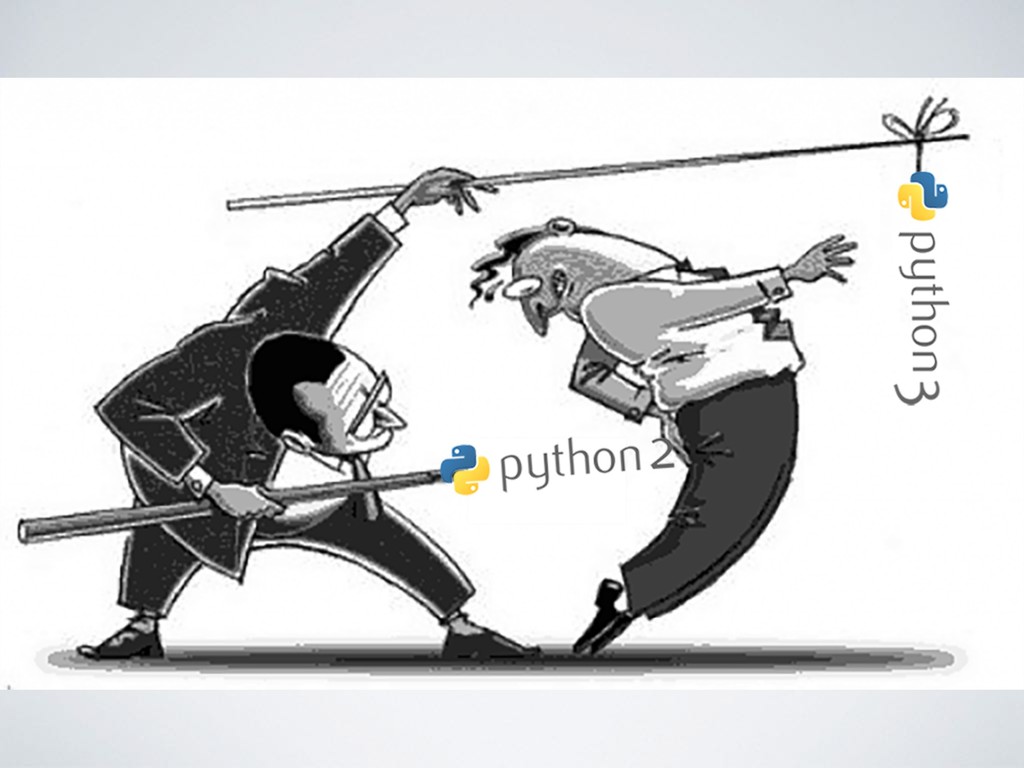
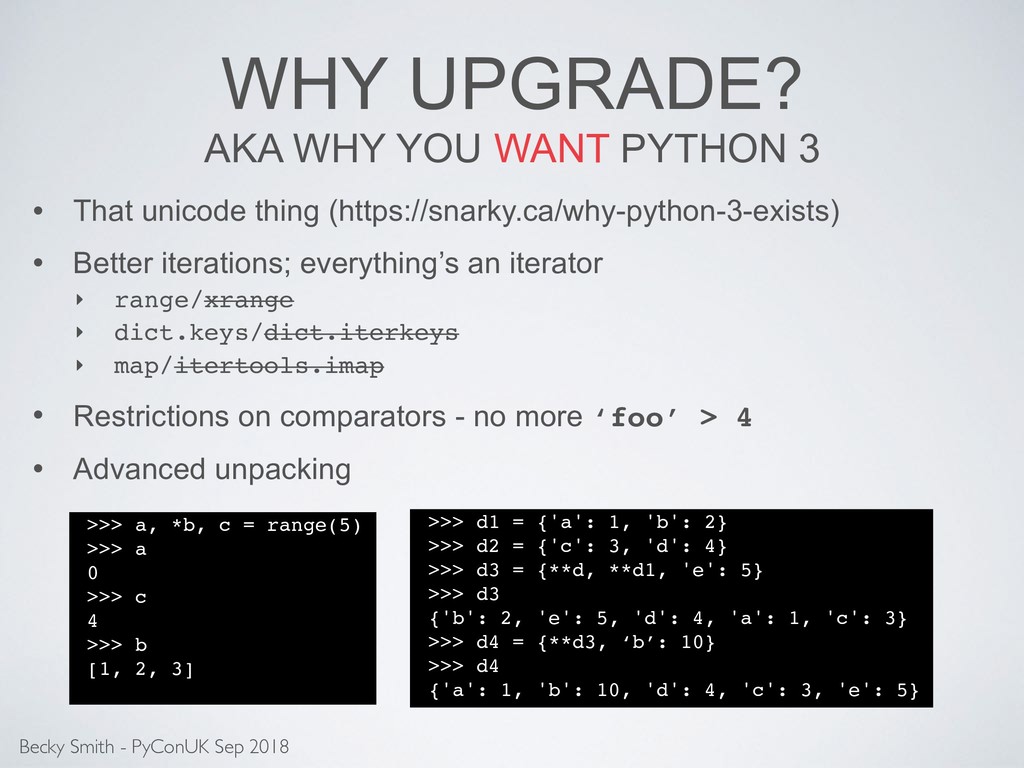
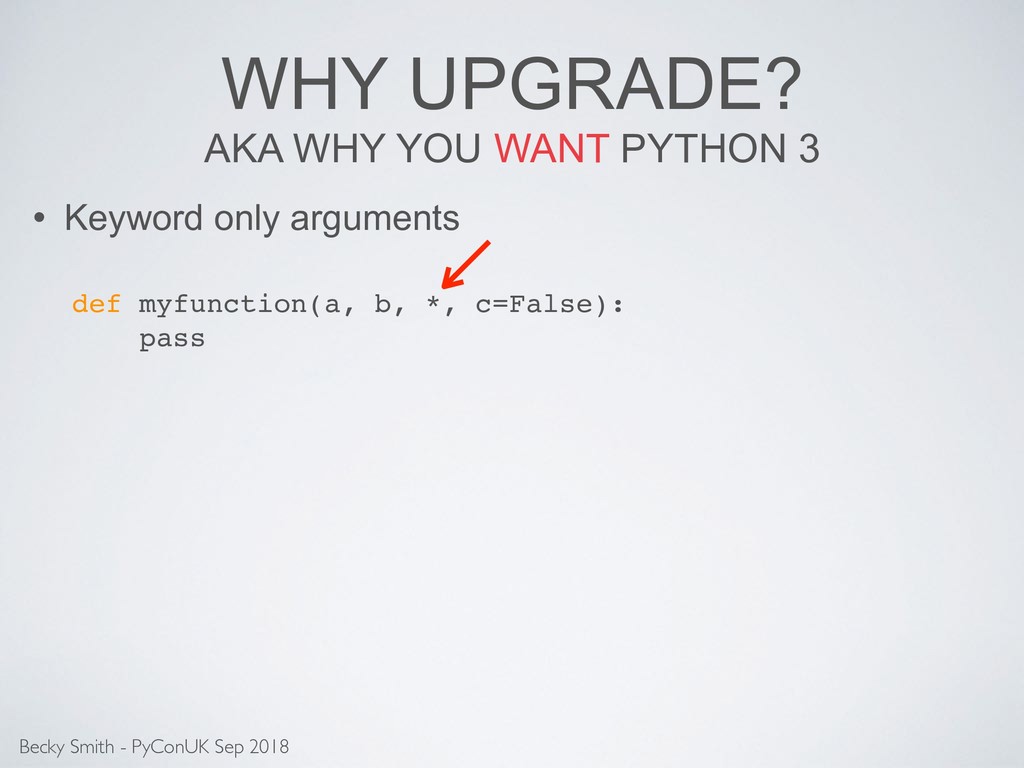
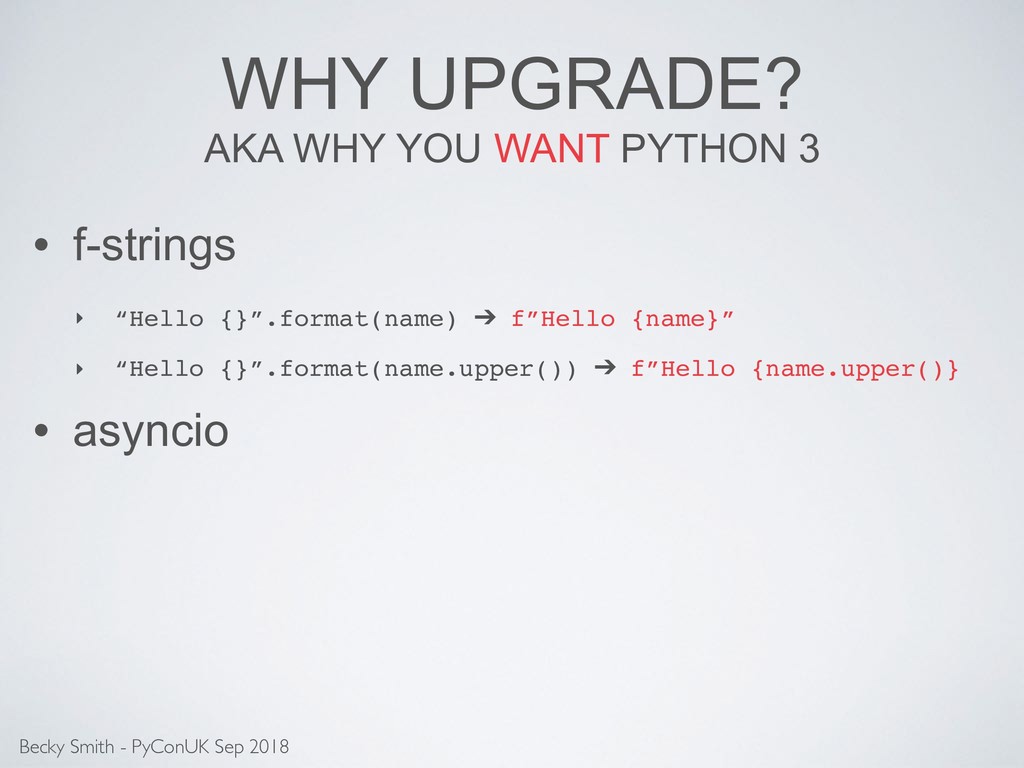
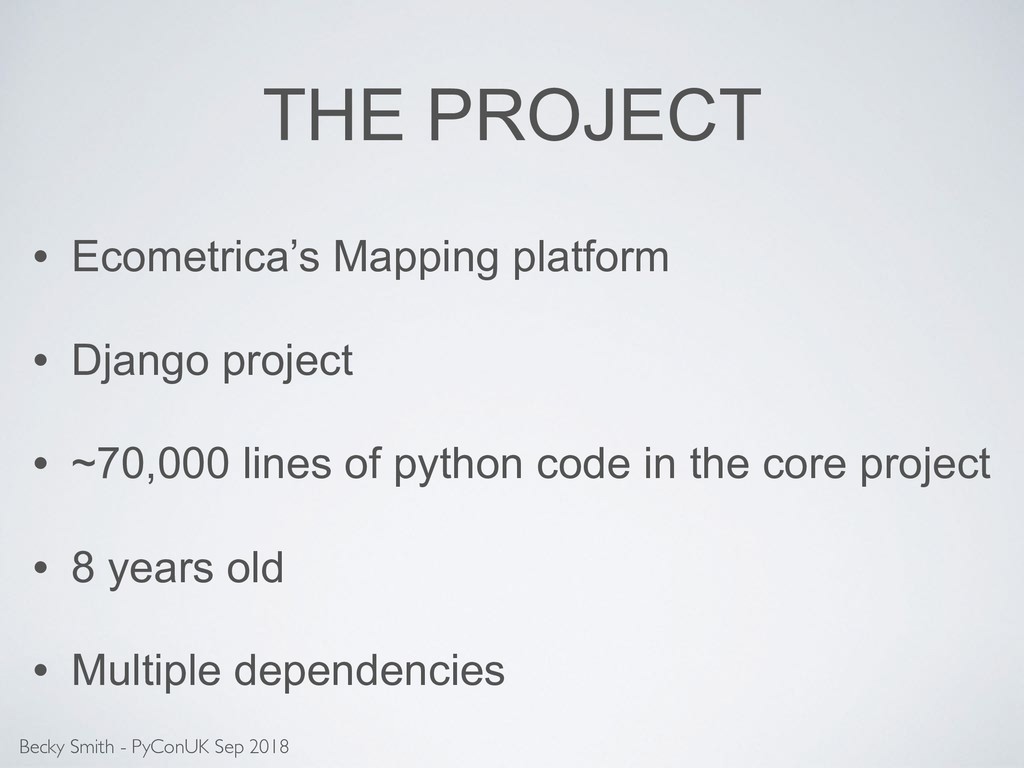
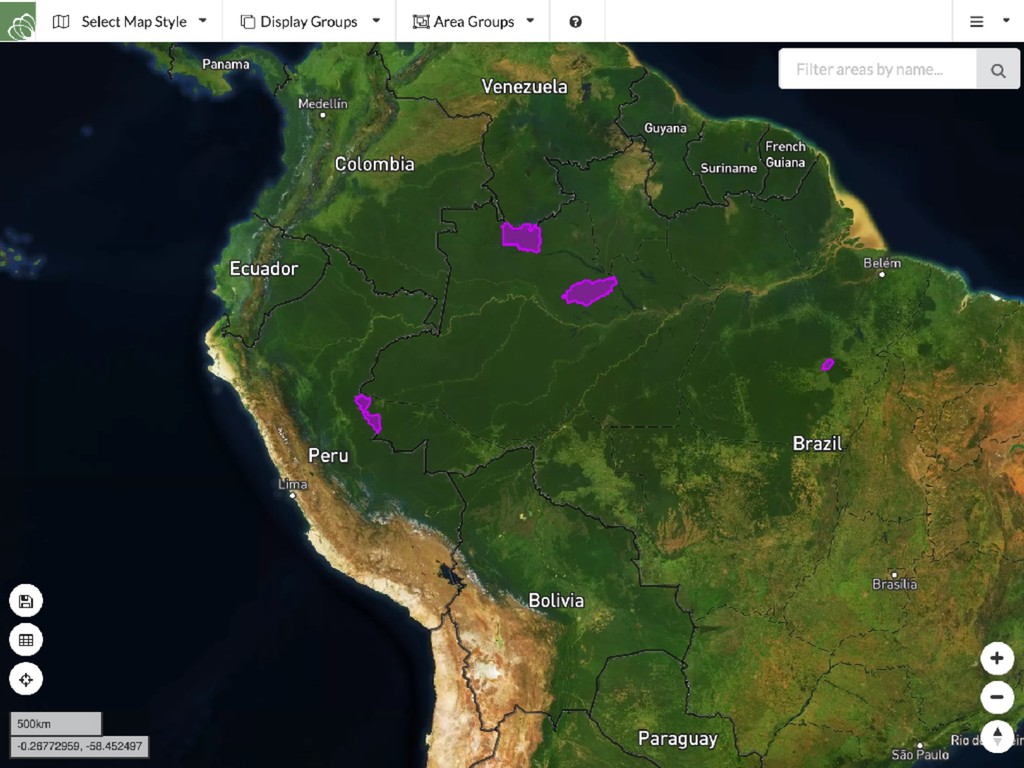
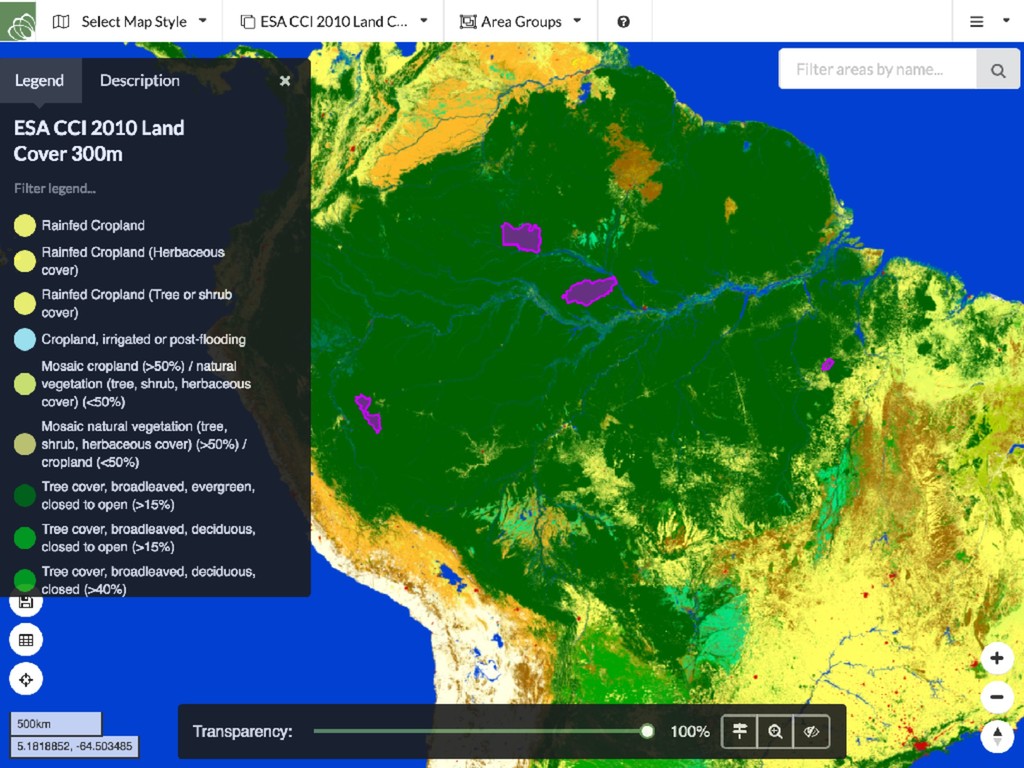
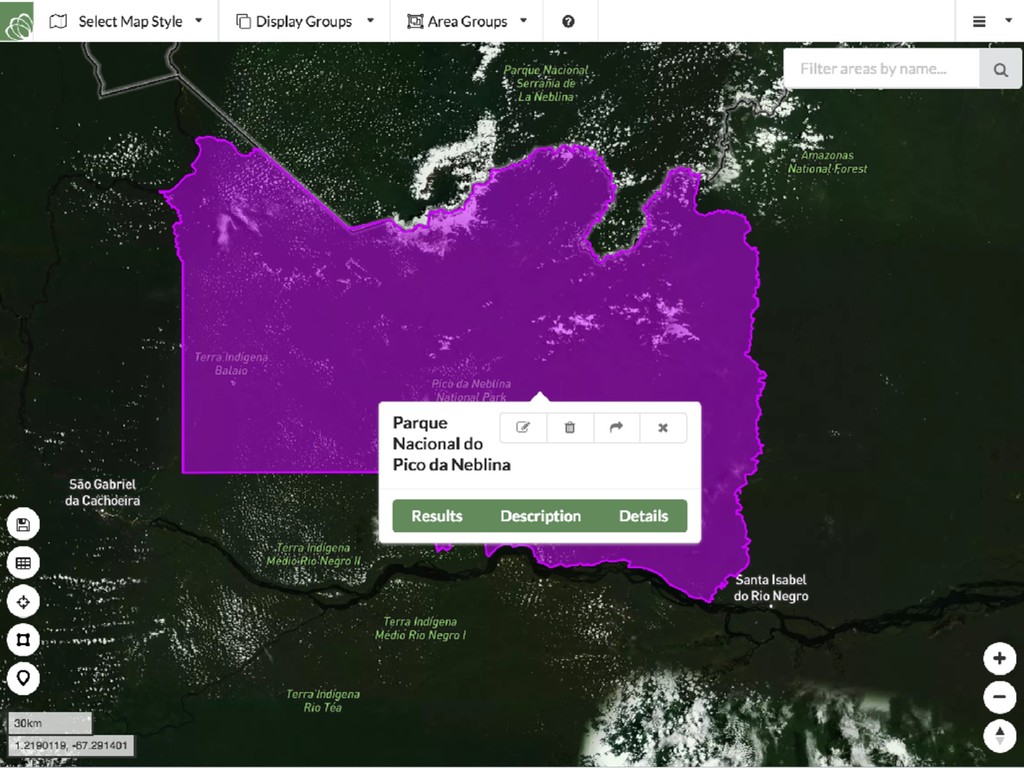
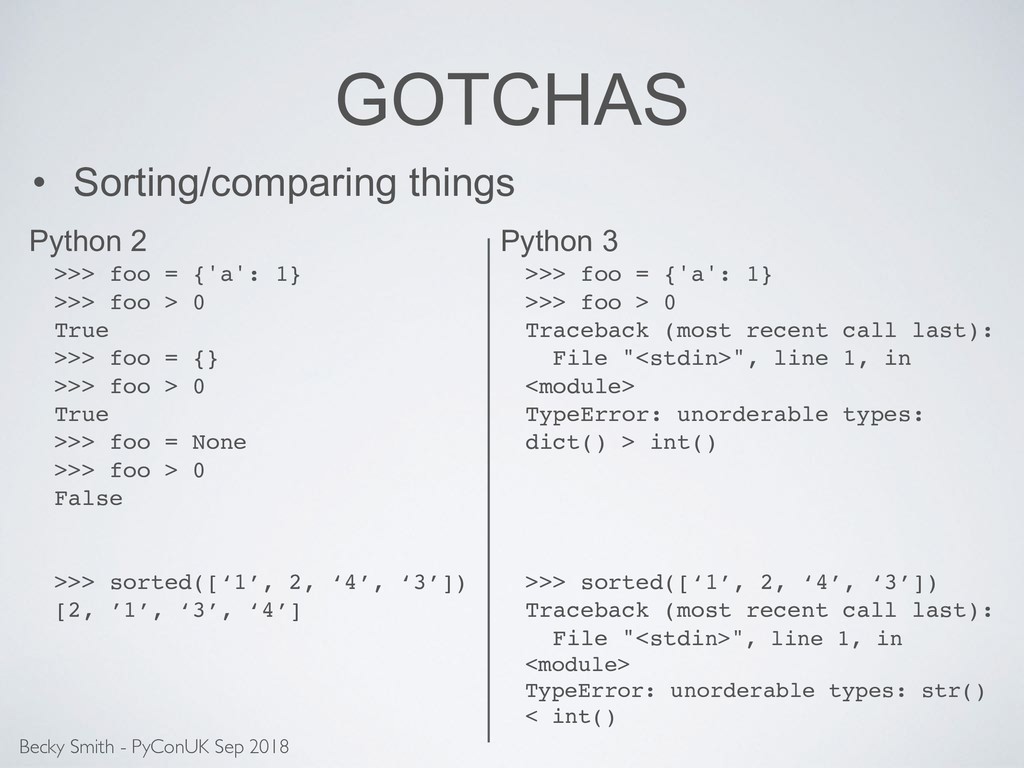
A case study: upgrading a large Python/Django codebase Introduction to available tools Our experience, strategies and gotchas encountered on the way WHAT THIS TALK IS NOT How-to instruction A single “best” way to deal with python 3 upgrading
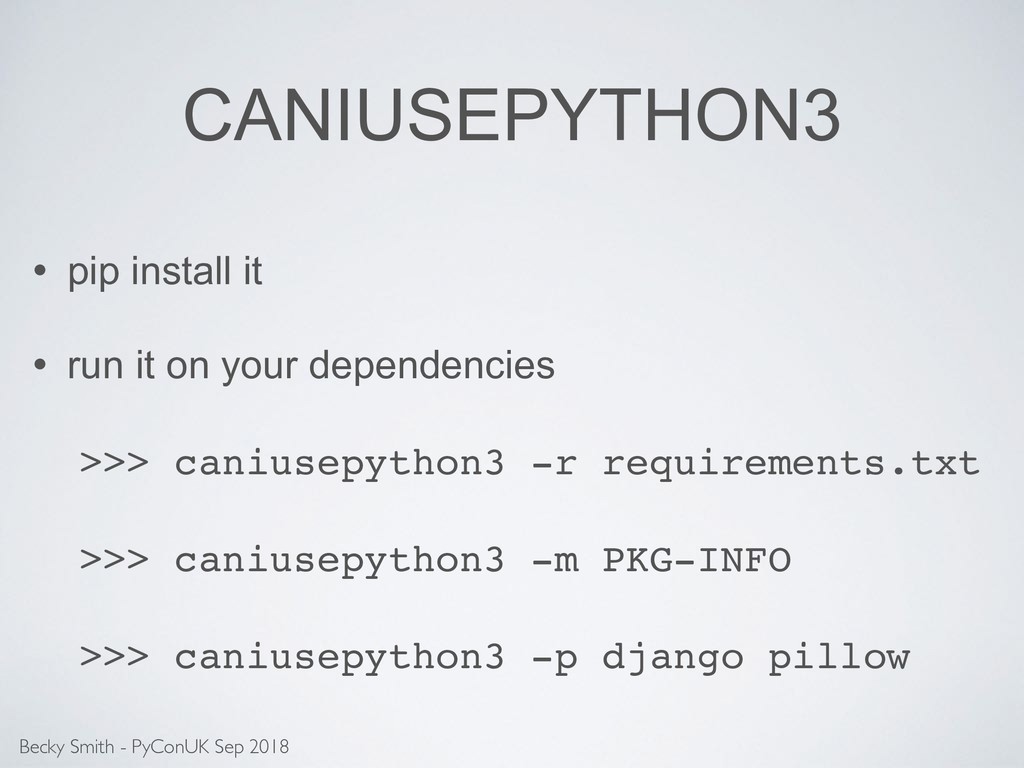
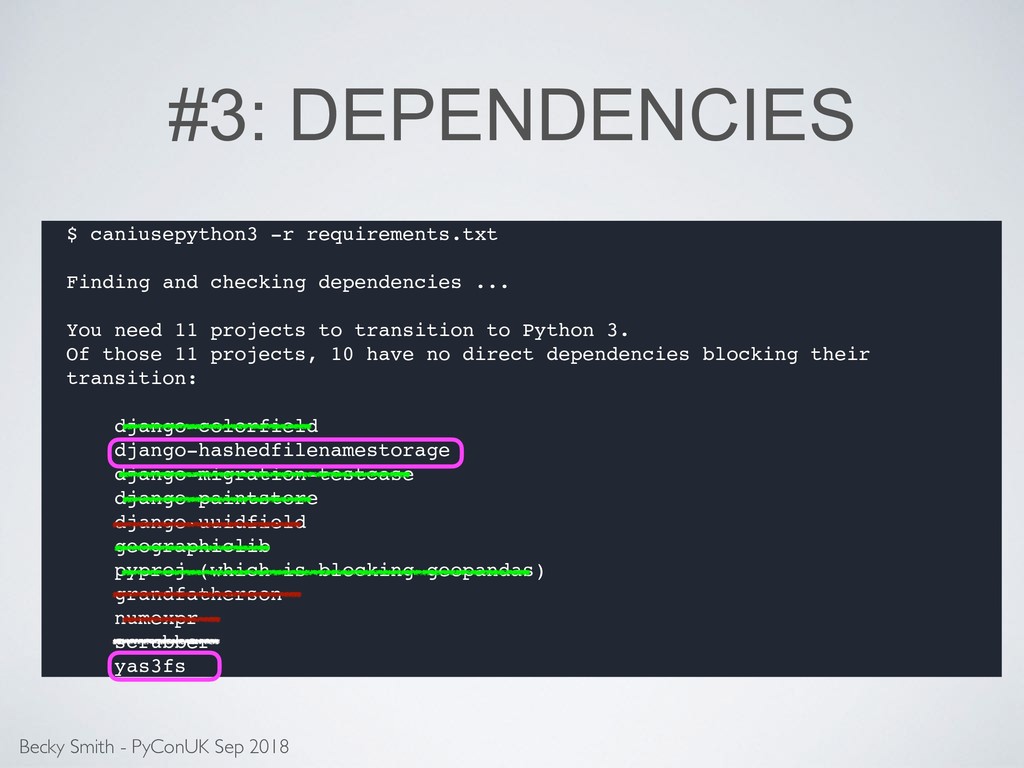
-r requirements.txt Finding and checking dependencies ... You need 11 projects to transition to Python 3. Of those 11 projects, 10 have no direct dependencies blocking their transition: django-colorfield django-hashedfilenamestorage django-migration-testcase django-paintstore django-uuidfield geographiclib pyproj (which is blocking geopandas) grandfatherson numexpr scrubber yas3fs
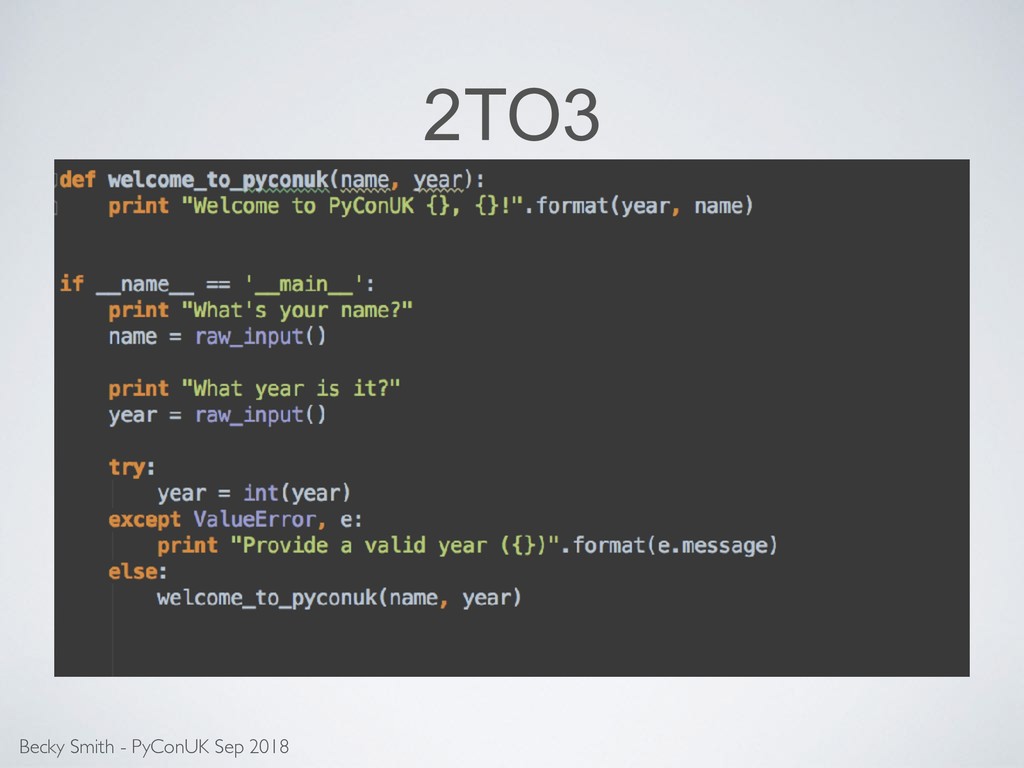
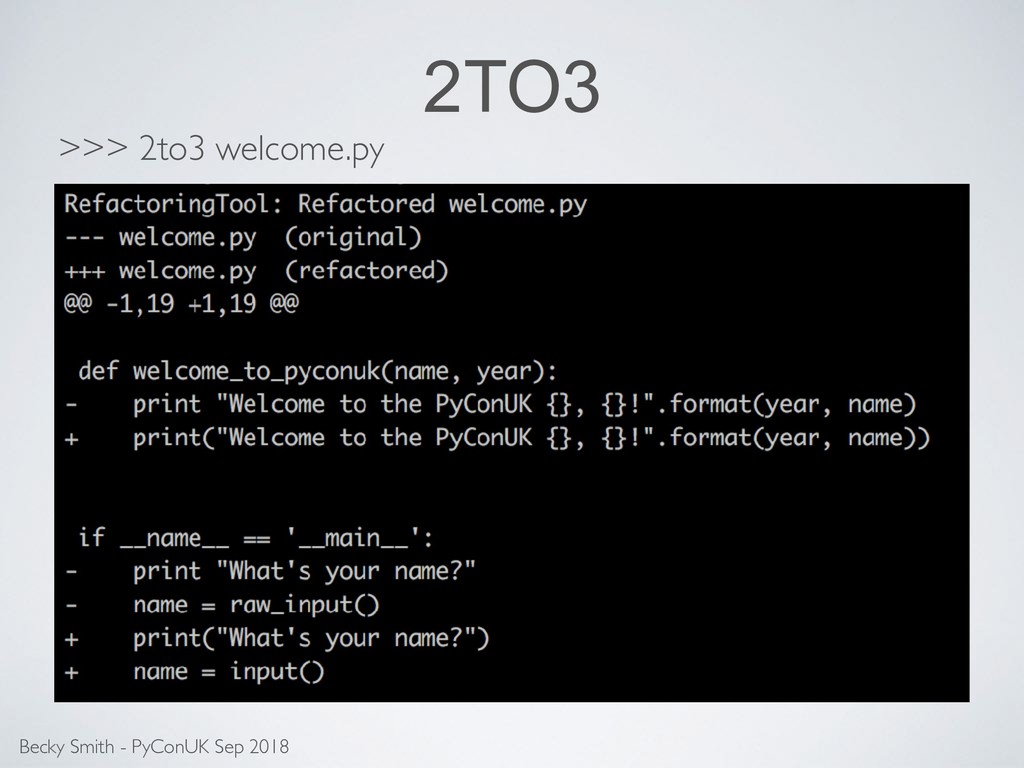
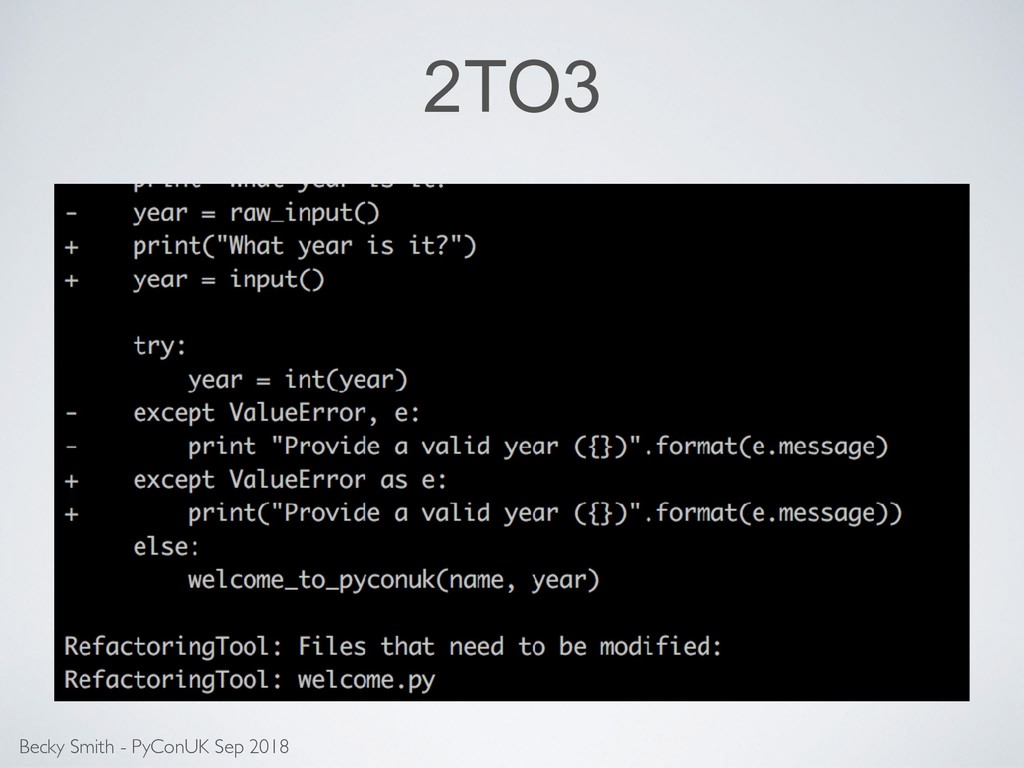
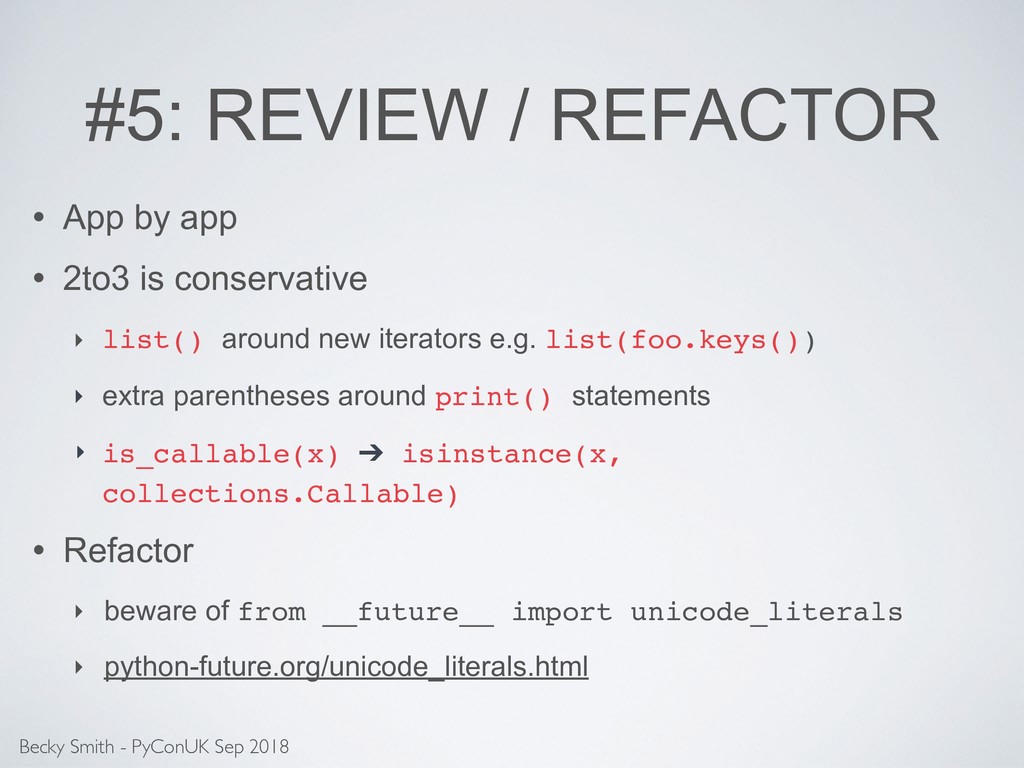
• App by app • 2to3 is conservative ‣ list() around new iterators e.g. list(foo.keys()) ‣ extra parentheses around print() statements ‣ is_callable(x) ➔ isinstance(x, collections.Callable) • Refactor ‣ beware of from __future__ import unicode_literals ‣ python-future.org/unicode_literals.html
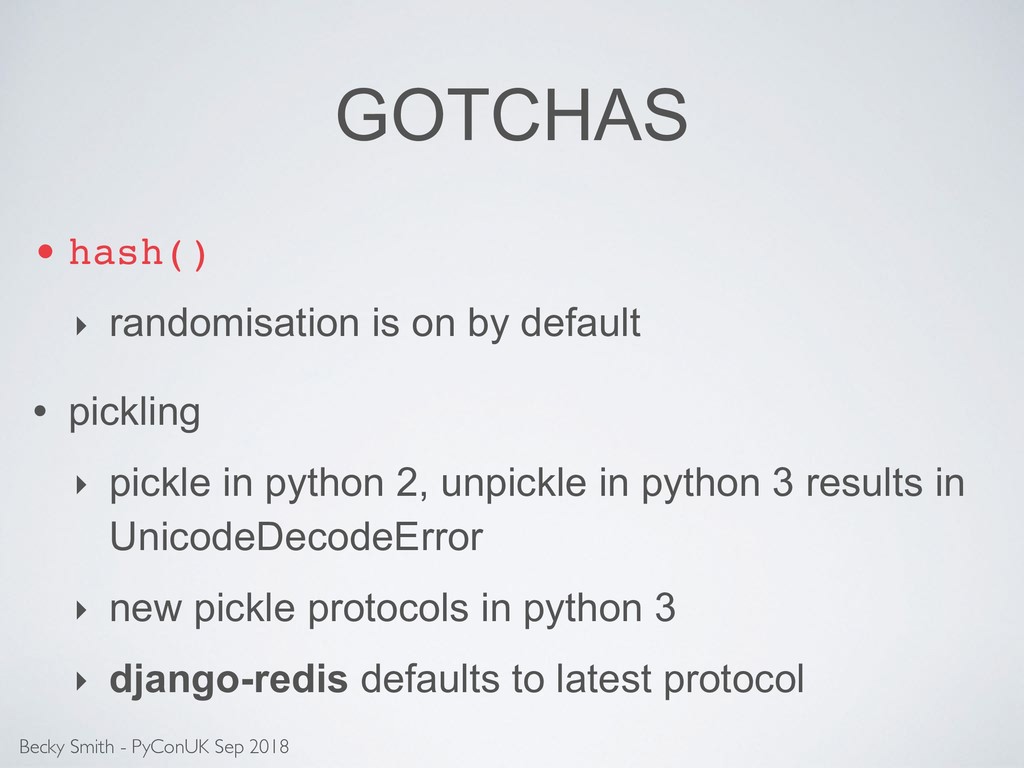
randomisation is on by default • pickling ‣ pickle in python 2, unpickle in python 3 results in UnicodeDecodeError ‣ new pickle protocols in python 3 ‣ django-redis defaults to latest protocol
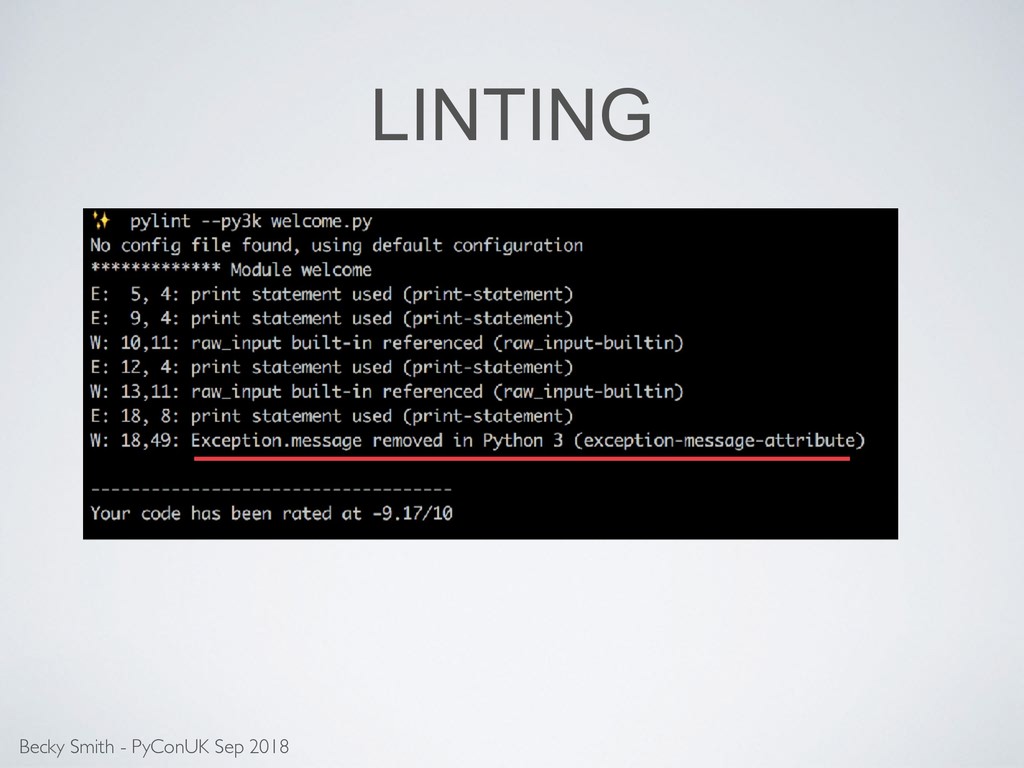
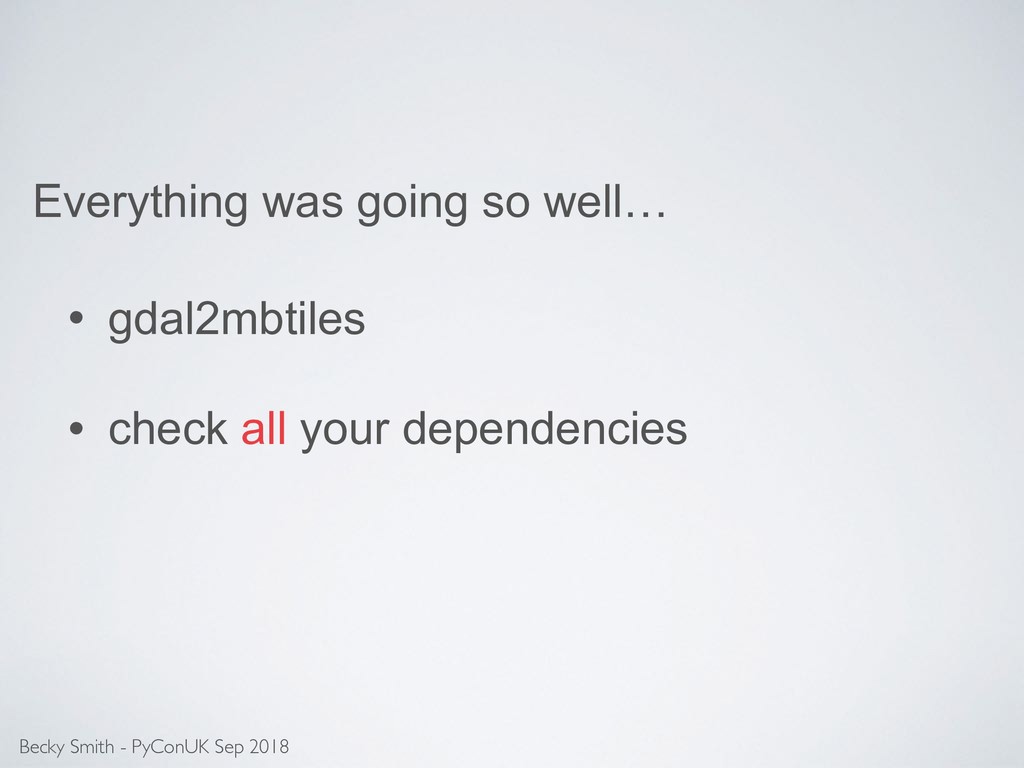
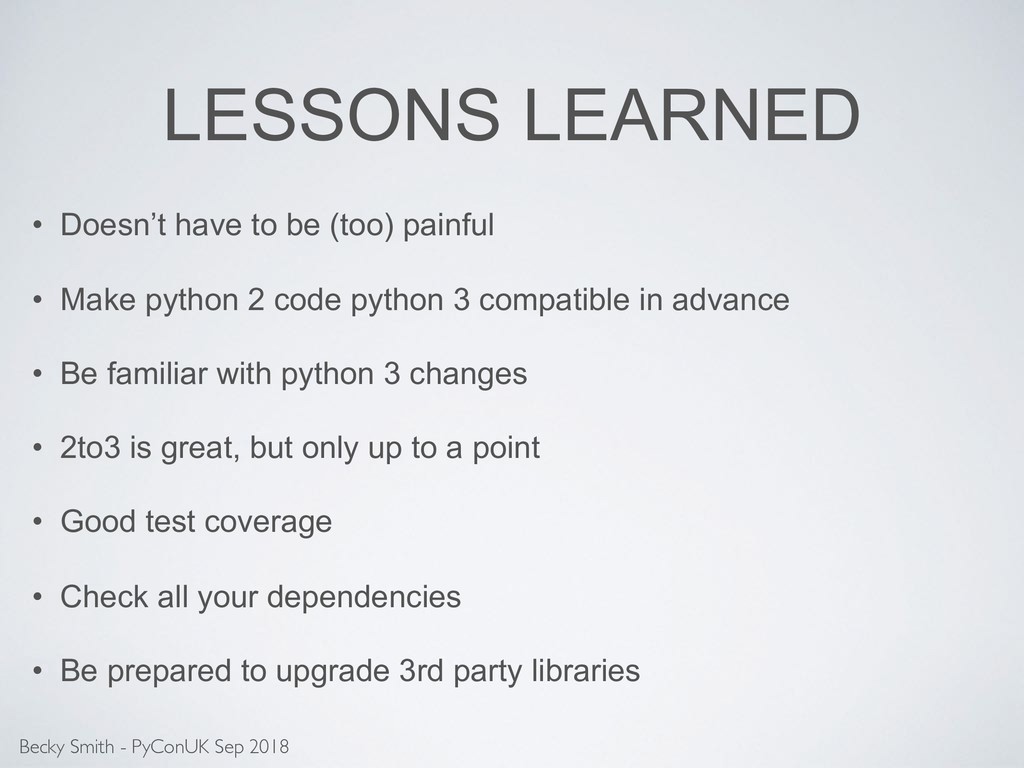
have to be (too) painful • Make python 2 code python 3 compatible in advance • Be familiar with python 3 changes • 2to3 is great, but only up to a point • Good test coverage • Check all your dependencies • Be prepared to upgrade 3rd party libraries


 rebkwok
 yutobara
 lynnswap
 rkaga
 mofurune
 morizo_1984
 rollbear
 suneo3476
 nabondance
 optim
 nao_randd
 eed3si9n
 ichirokano2
 vanstee
 dugsong
 sstephenson
 sergeychernyshev
 aleyda
 chriscoyier
 danielanewman
 tamaranovitovic
 tammyeverts
 davetheseo
 rakko