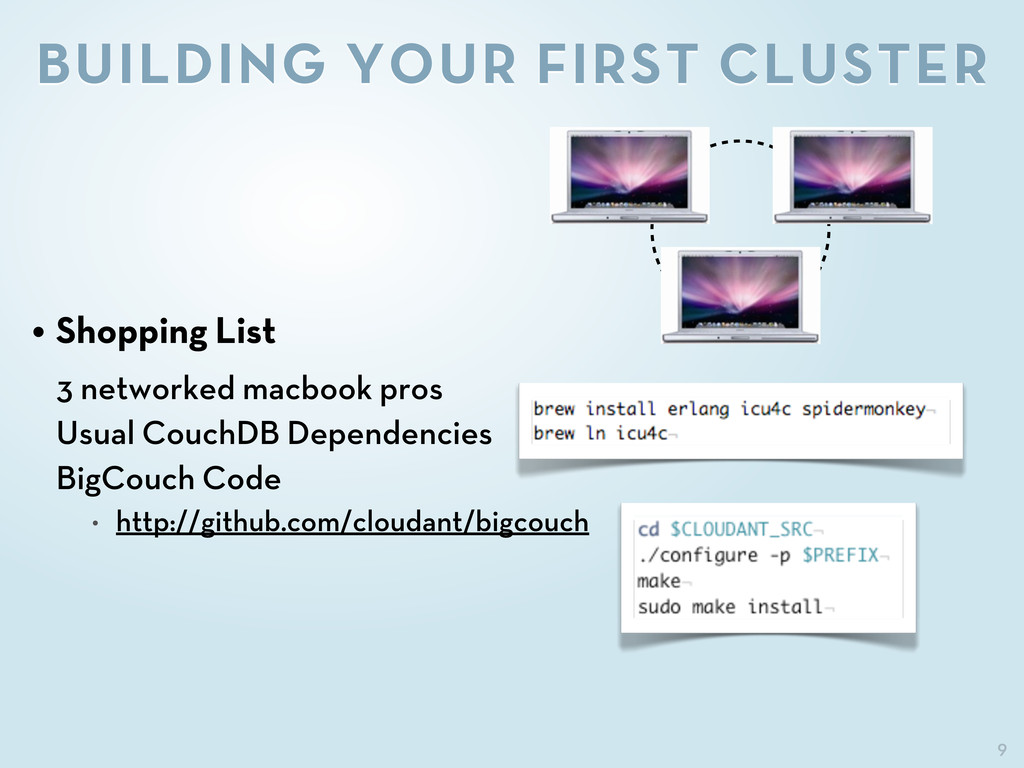
MIT 2010 BigCouch Putting the “C” back in CouchDB Open Core: 2 years Development Contact [email protected] kocolosk in #cloudant or #couchdb or #erlang @kocolosk
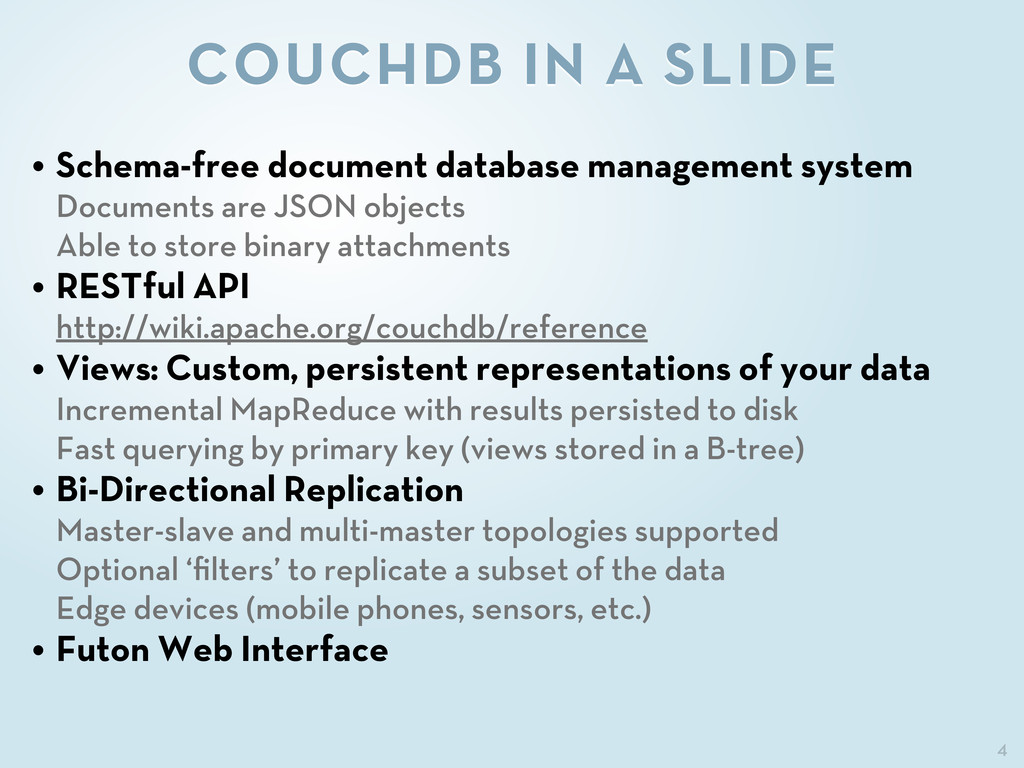
system Documents are JSON objects Able to store binary attachments • RESTful API http://wiki.apache.org/couchdb/reference • Views: Custom, persistent representations of your data Incremental MapReduce with results persisted to disk Fast querying by primary key (views stored in a B-tree) • Bi-Directional Replication Master-slave and multi-master topologies supported Optional ‘filters’ to replicate a subset of the data Edge devices (mobile phones, sensors, etc.) • Futon Web Interface
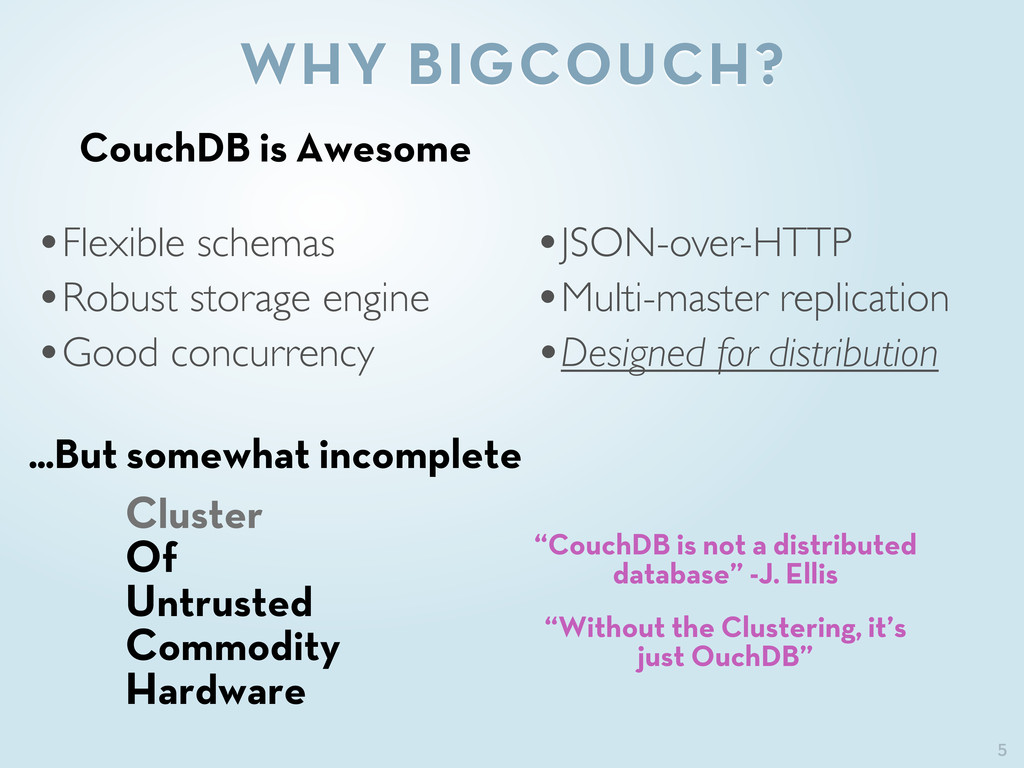
Of Untrusted Commodity Hardware “CouchDB is not a distributed database” -J. Ellis “Without the Clustering, it’s just OuchDB” •Flexible schemas •Robust storage engine •Good concurrency •JSON-over-HTTP •Multi-master replication •Designed for distribution
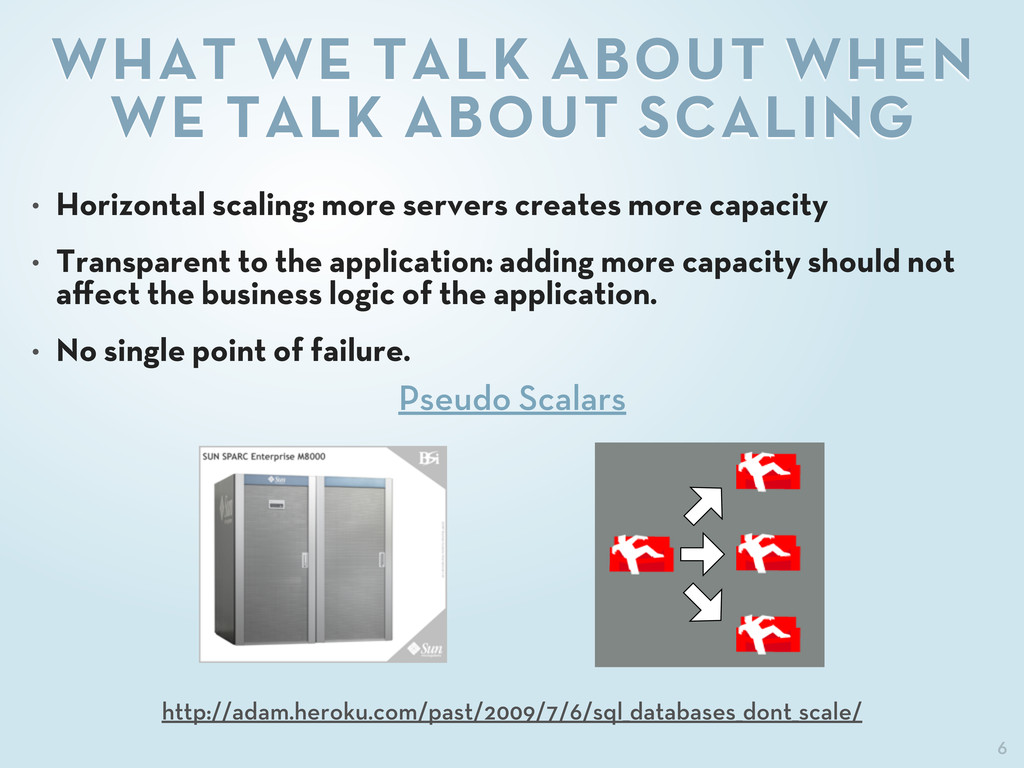
• Horizontal scaling: more servers creates more capacity • Transparent to the application: adding more capacity should not affect the business logic of the application. • No single point of failure. http://adam.heroku.com/past/2009/7/6/sql_databases_dont_scale/ Pseudo Scalars
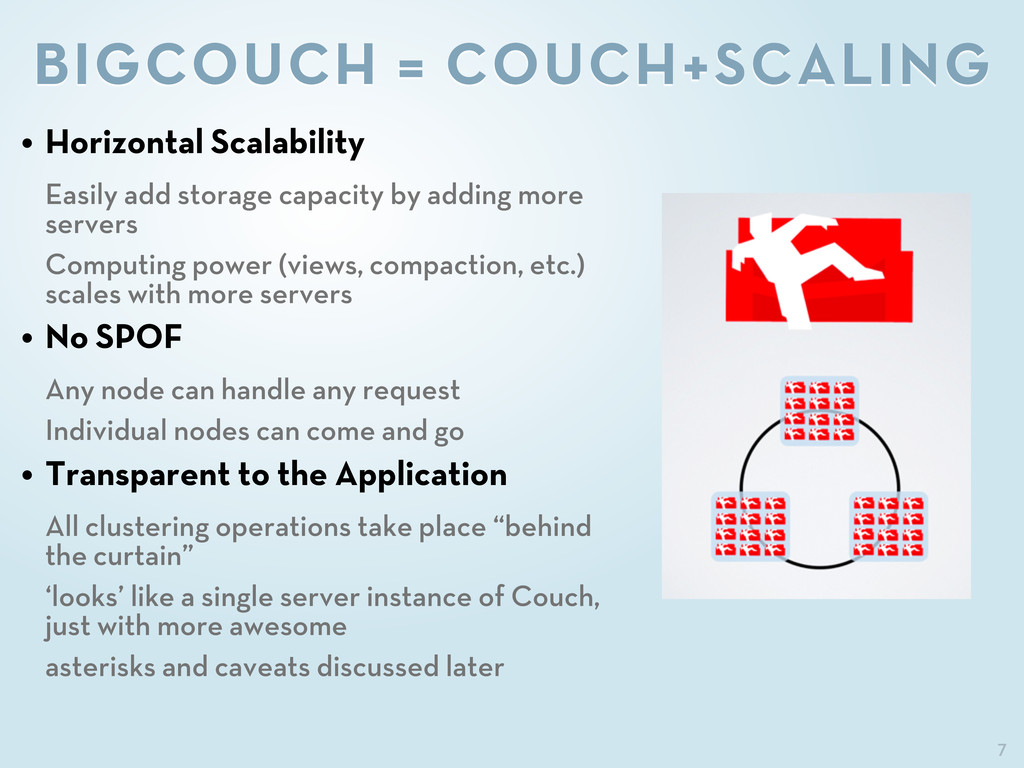
capacity by adding more servers Computing power (views, compaction, etc.) scales with more servers • No SPOF Any node can handle any request Individual nodes can come and go • Transparent to the Application All clustering operations take place “behind the curtain” ‘looks’ like a single server instance of Couch, just with more awesome asterisks and caveats discussed later
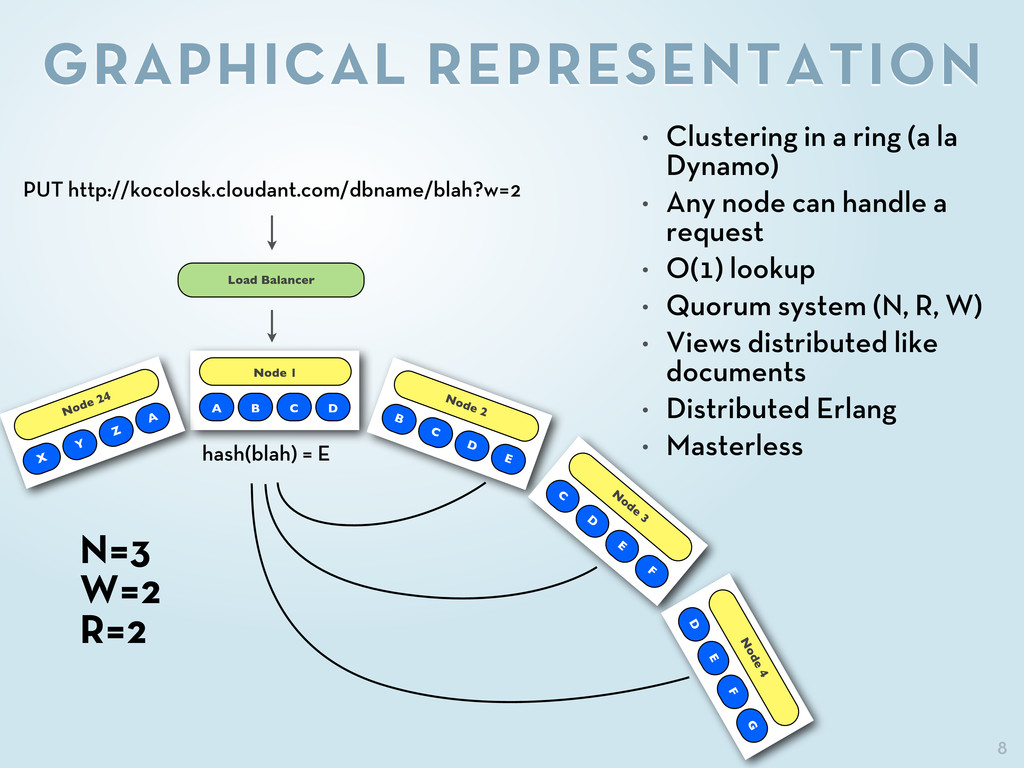
N=3 W=2 R=2 Node 1 A B C D Node 2 B C D E N ode 3 C D E F Node 4 D E F G Node 24 X Y Z A • Clustering in a ring (a la Dynamo) • Any node can handle a request • O(1) lookup • Quorum system (N, R, W) • Views distributed like documents • Distributed Erlang • Masterless
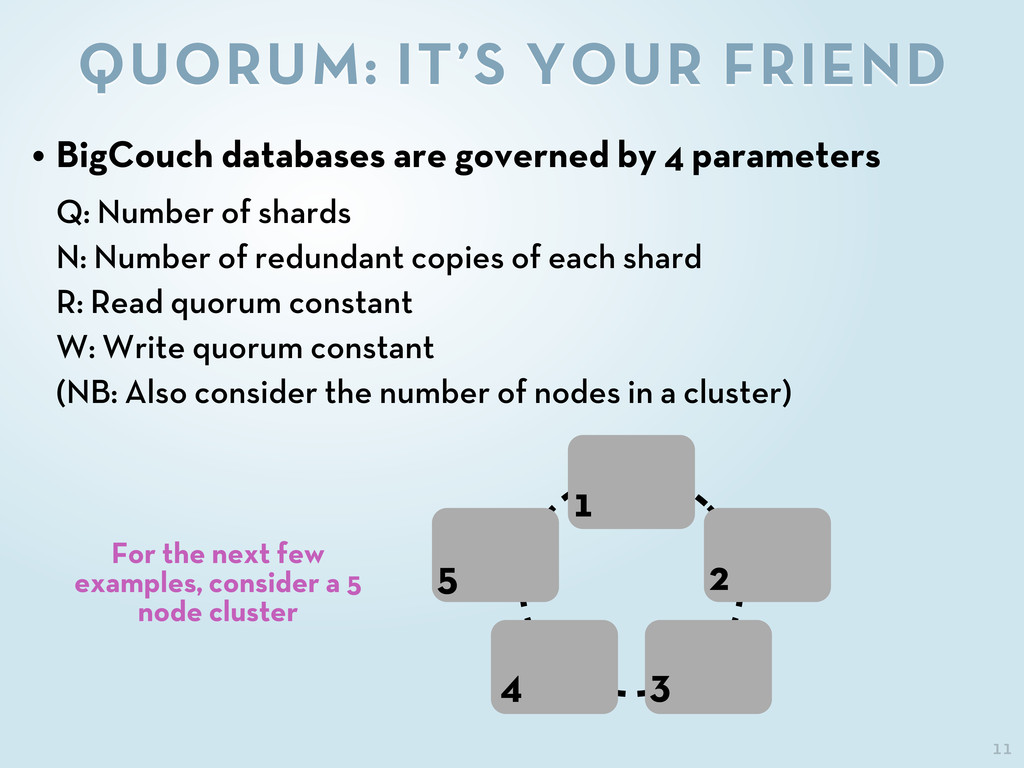
by 4 parameters Q: Number of shards N: Number of redundant copies of each shard R: Read quorum constant W: Write quorum constant (NB: Also consider the number of nodes in a cluster) For the next few examples, consider a 5 node cluster 1 2 3 4 5
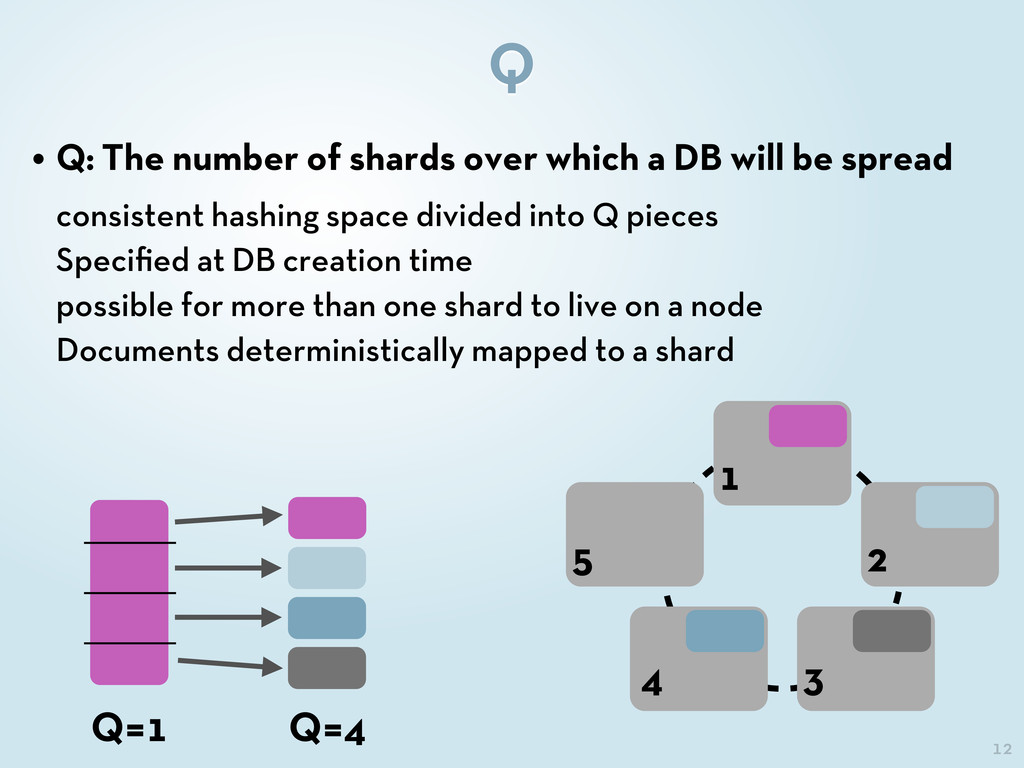
a DB will be spread consistent hashing space divided into Q pieces Specified at DB creation time possible for more than one shard to live on a node Documents deterministically mapped to a shard Q=1 Q=4 1 2 3 4 5
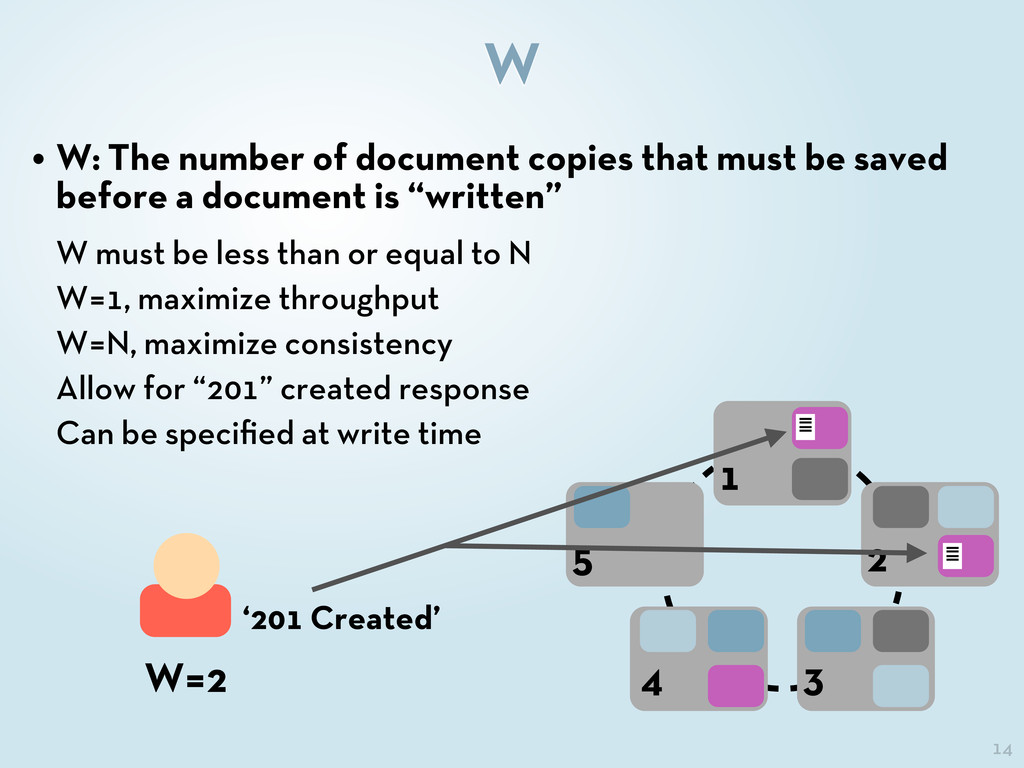
must be saved before a document is “written” W must be less than or equal to N W=1, maximize throughput W=N, maximize consistency Allow for “201” created response Can be specified at write time 1 2 3 4 5 W=2 ‘201 Created’
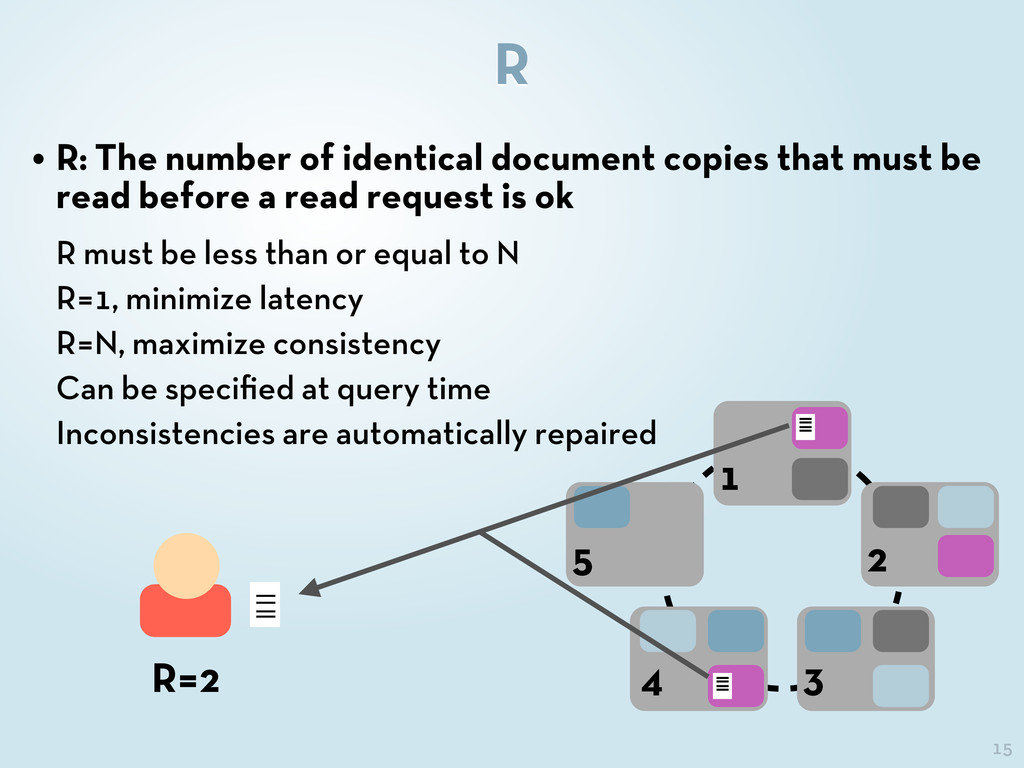
that must be read before a read request is ok R must be less than or equal to N R=1, minimize latency R=N, maximize consistency Can be specified at query time Inconsistencies are automatically repaired 1 2 3 4 5 R=2
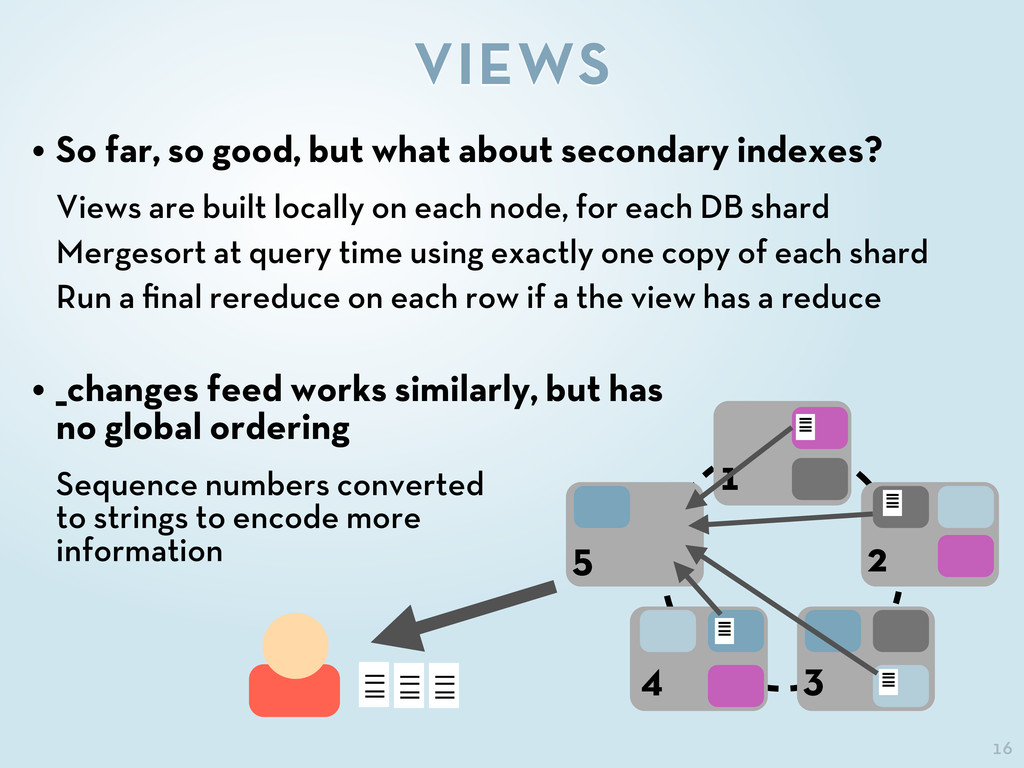
indexes? Views are built locally on each node, for each DB shard Mergesort at query time using exactly one copy of each shard Run a final rereduce on each row if a the view has a reduce • _changes feed works similarly, but has no global ordering Sequence numbers converted to strings to encode more information 16 1 2 3 4 5
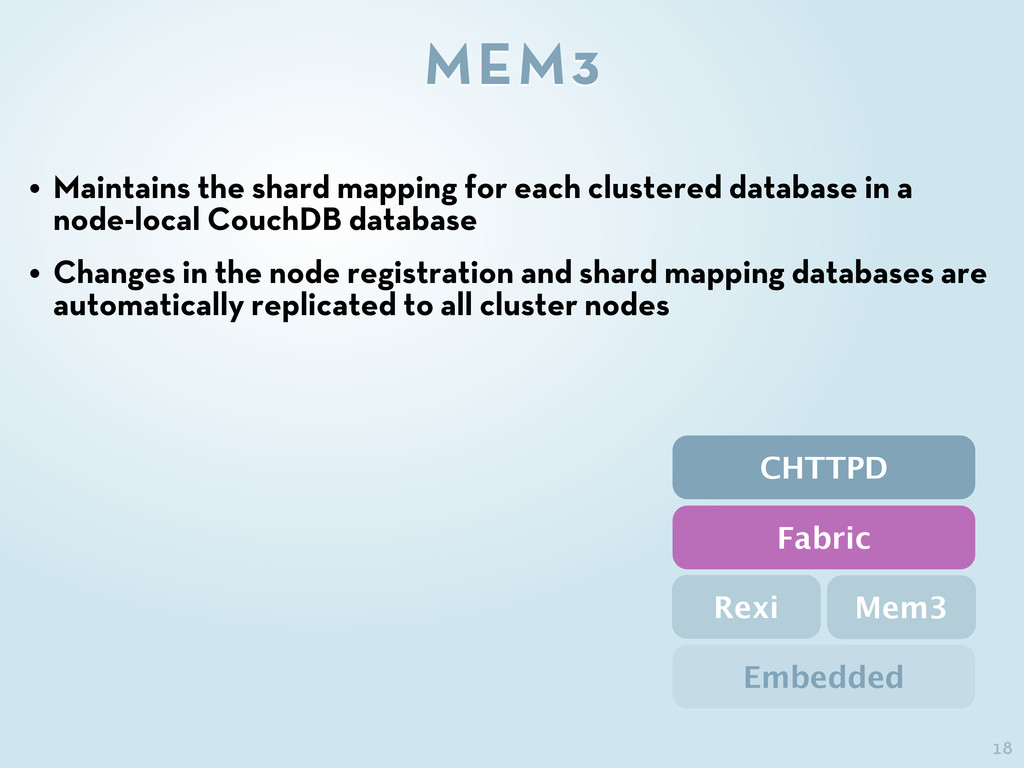
shard mapping for each clustered database in a node-local CouchDB database • Changes in the node registration and shard mapping databases are automatically replicated to all cluster nodes
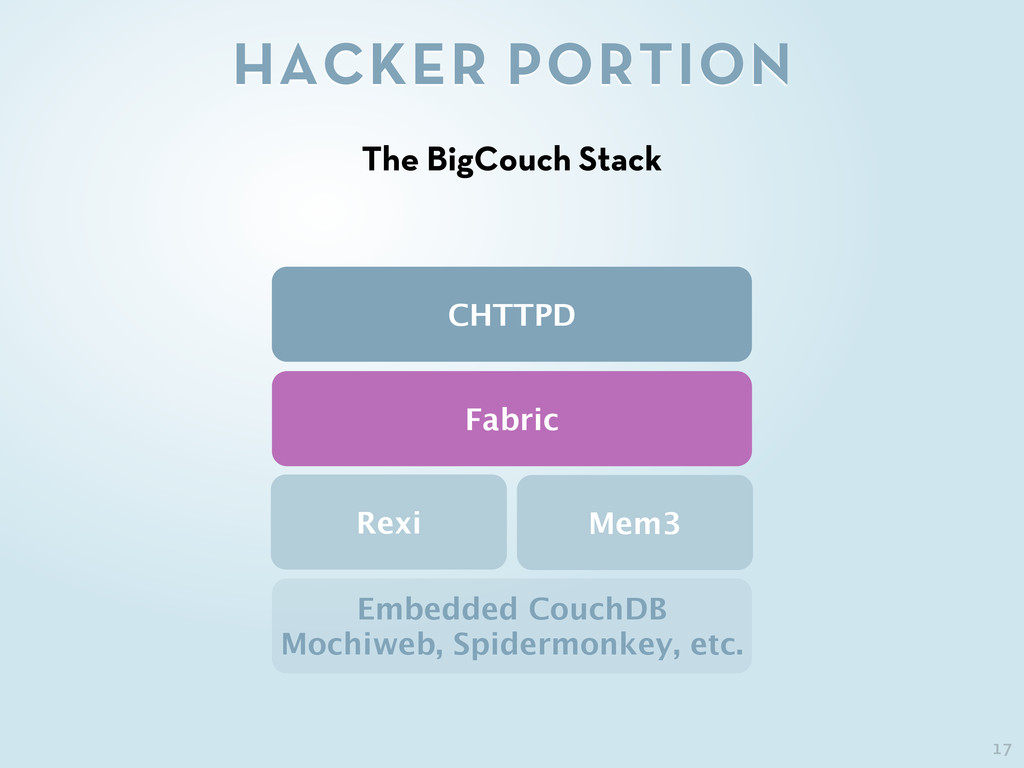
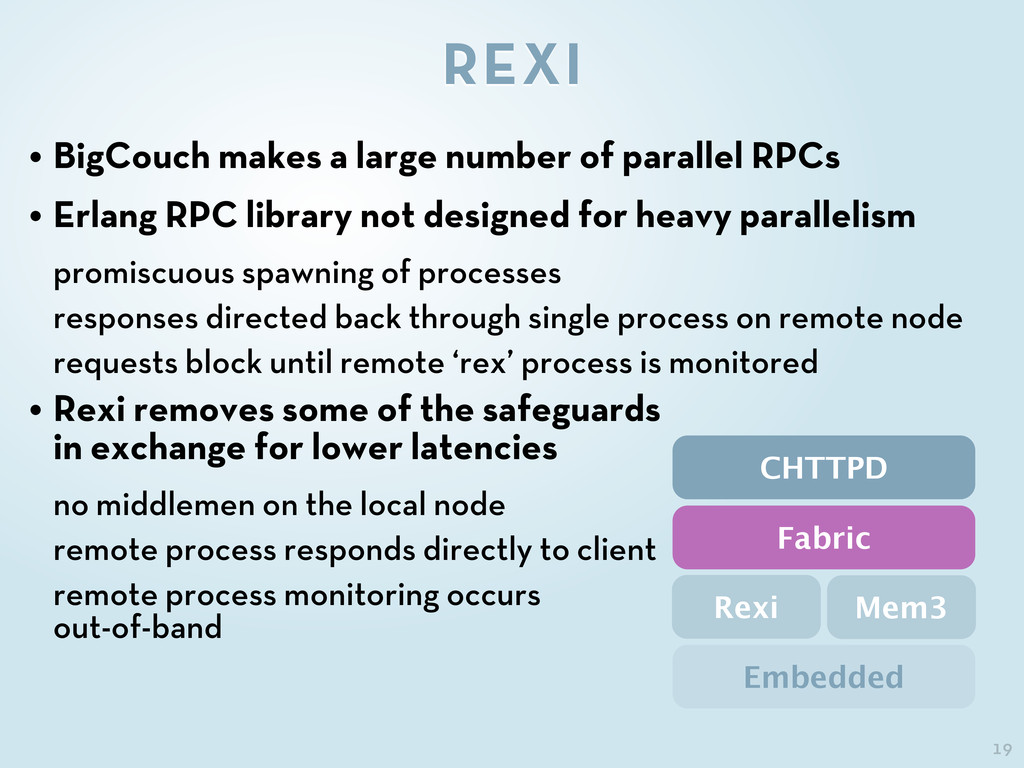
a large number of parallel RPCs • Erlang RPC library not designed for heavy parallelism promiscuous spawning of processes responses directed back through single process on remote node requests block until remote ‘rex’ process is monitored • Rexi removes some of the safeguards in exchange for lower latencies no middlemen on the local node remote process responds directly to client remote process monitoring occurs out-of-band
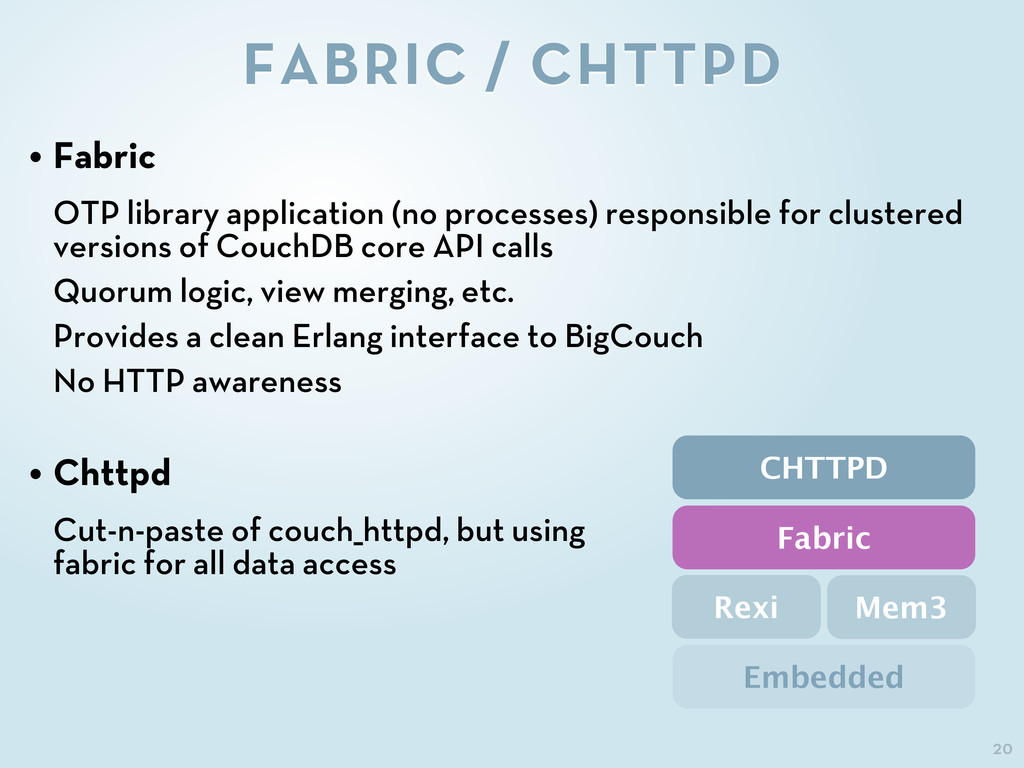
Fabric OTP library application (no processes) responsible for clustered versions of CouchDB core API calls Quorum logic, view merging, etc. Provides a clean Erlang interface to BigCouch No HTTP awareness • Chttpd Cut-n-paste of couch_httpd, but using fabric for all data access


 rlee319
 malarkey
 danielanewman
 palkan
 jeffersonlam
 elsirapls
 marketingsoph
 joshbly
 aleyda
 samtorres
 szymonslowik
 axbom
axbom
 baasie