Why Industrial Chains Fail — and What Actually Prevents It
Explore causes of industrial chain failures including wear, misalignment, lubrication gaps, and shock loads, and learn consistent prevention strategies for improved reliability and performance.
The signs are usually there — gradual wear, slight misalignment, a bit more noise than usual. Most chain failures don't arrive suddenly. They've been building for a while.
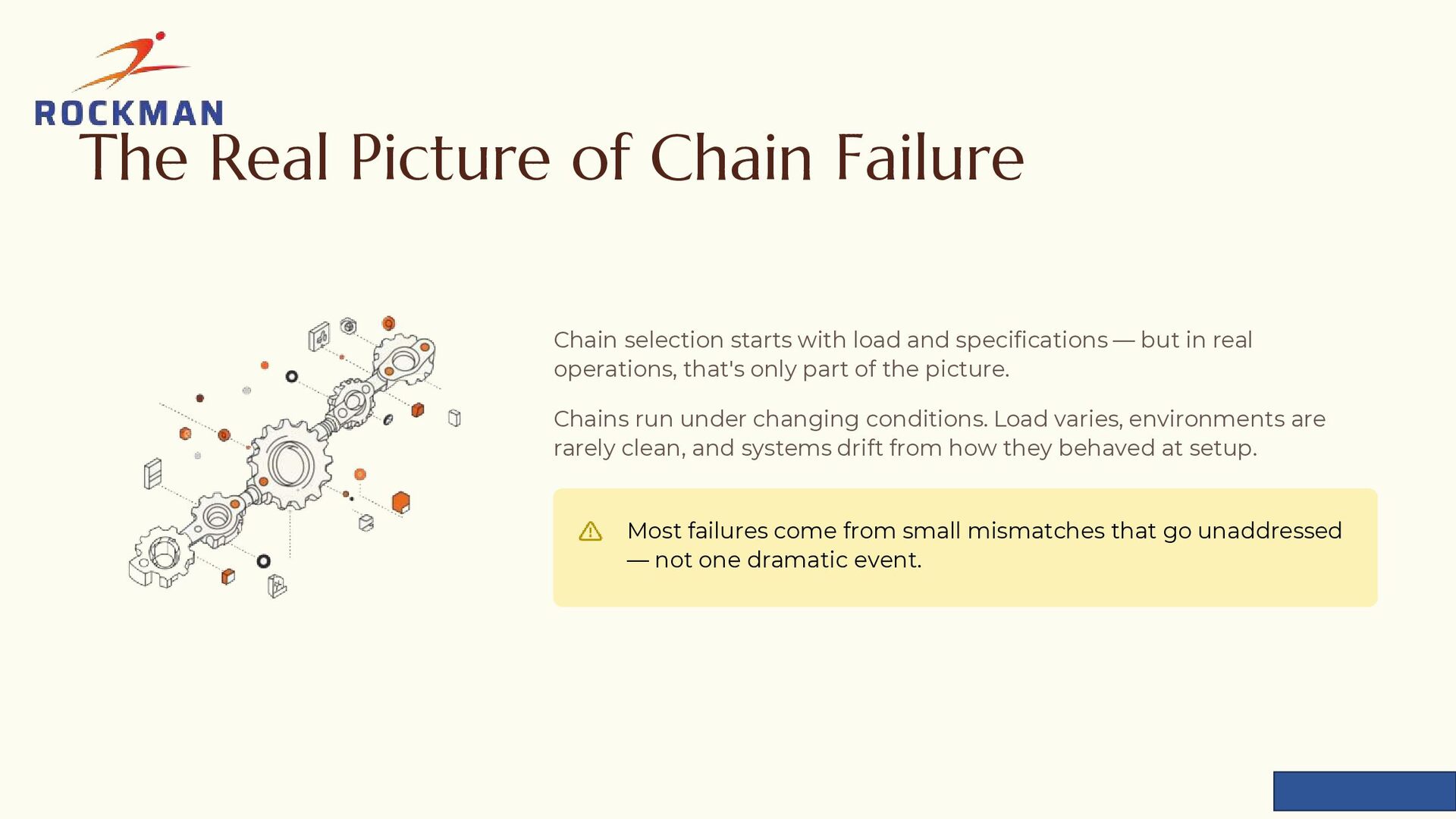
load and specifications — but in real operations, that's only part of the picture. Chains run under changing conditions. Load varies, environments are rarely clean, and systems drift from how they behaved at setup. Most failures come from small mismatches that go unaddressed — not one dramatic event.
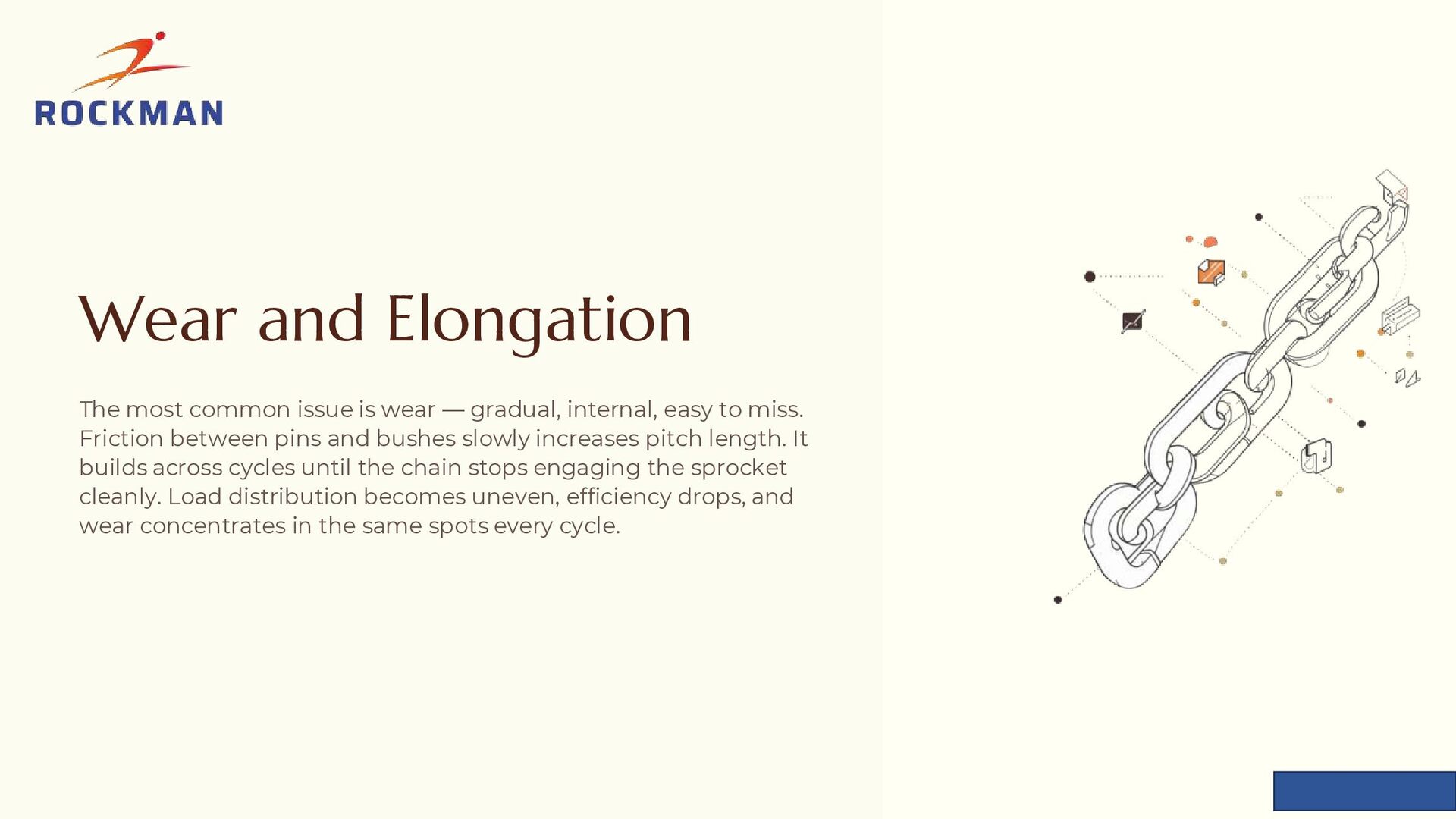
gradual, internal, easy to miss. Friction between pins and bushes slowly increases pitch length. It builds across cycles until the chain stops engaging the sprocket cleanly. Load distribution becomes uneven, efficiency drops, and wear concentrates in the same spots every cycle.
chain runs under uneven stress — wear accelerating in specific areas. It creeps in slowly: installation error, shaft movement, or structural shifts nobody noticed. Lubrication Gaps Without proper lubrication, friction builds, heat follows, and wear accelerates. Lubricant must reach the right contact points and hold up under actual operating conditions — not just at time of application. Inconsistent lubrication is behind many premature failures — often assumed to be fine rather than actually checked.
abrasives — grinding away at the chain from the inside. In harsher environments, contamination affects chain behaviour in ways that aren't obvious until something breaks. Shock Loads Sudden starts, hard stops, unexpected load spikes push stress beyond design limits. Even if average load looks acceptable, repeated shock loads do cumulative damage. The average figure doesn't tell the full story.
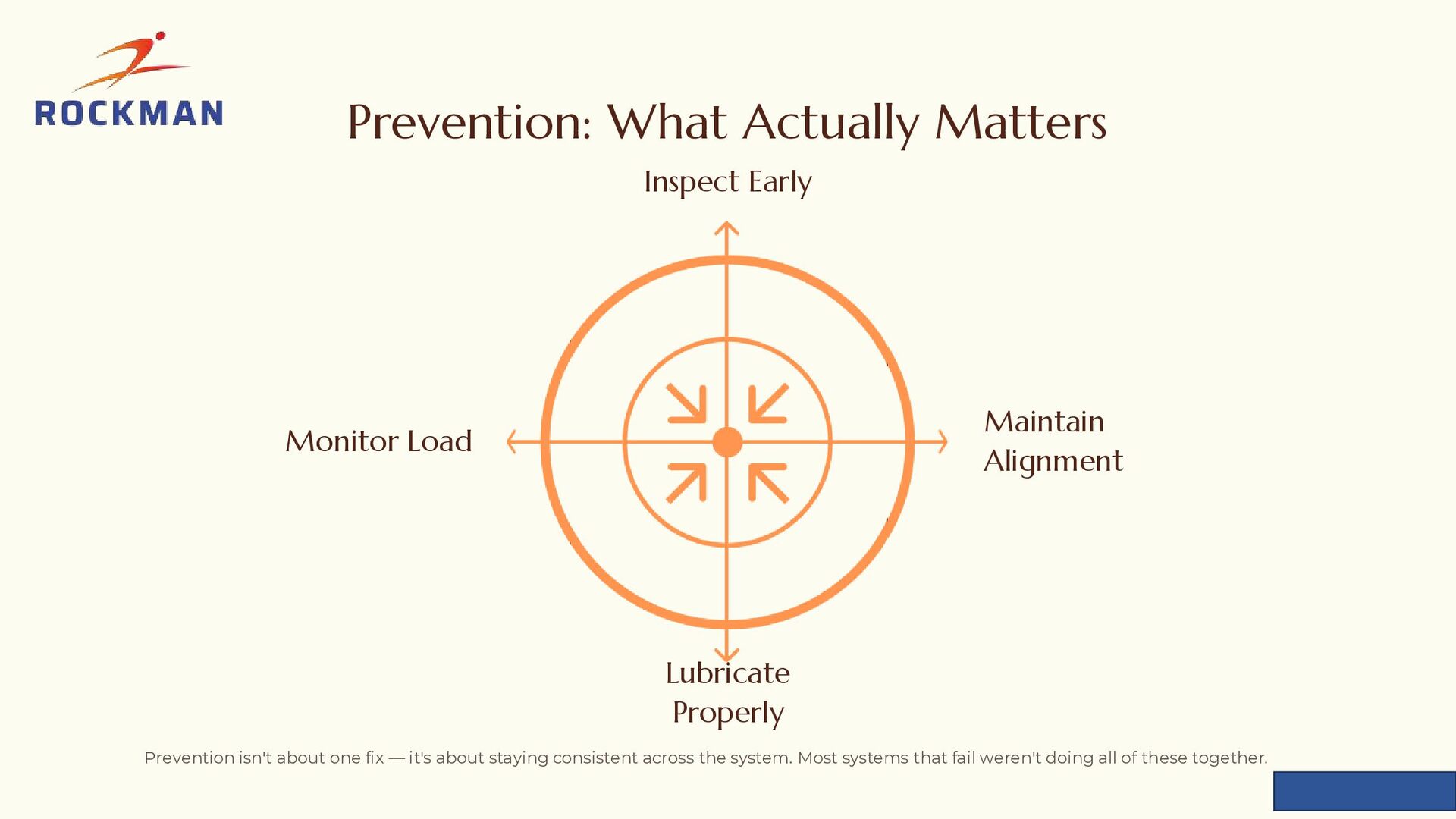
Inspect Early Prevention isn't about one fix — it's about staying consistent across the system. Most systems that fail weren't doing all of these together.
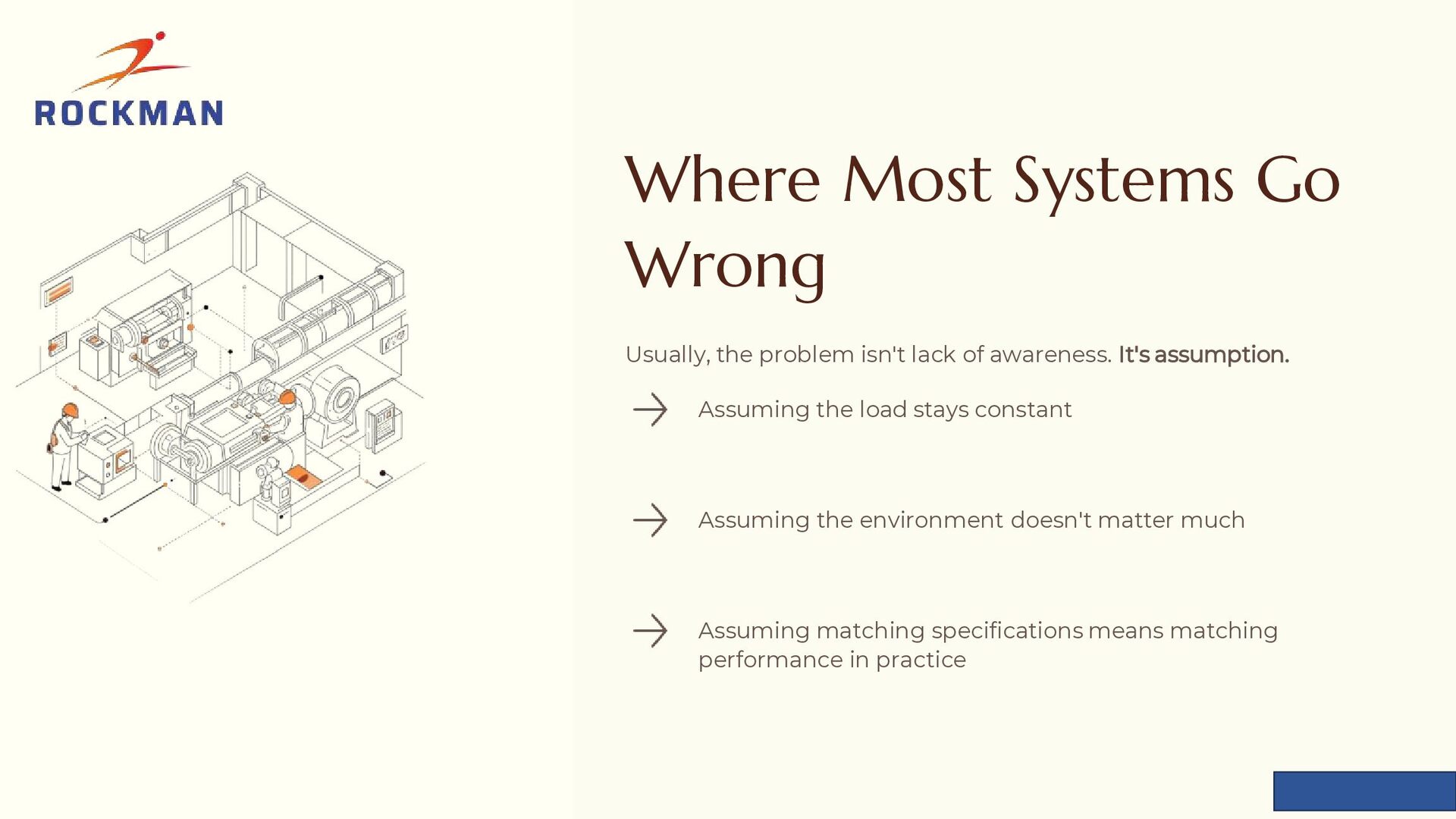
of awareness. It's assumption. Assuming the load stays constant Assuming the environment doesn't matter much Assuming matching specifications means matching performance in practice
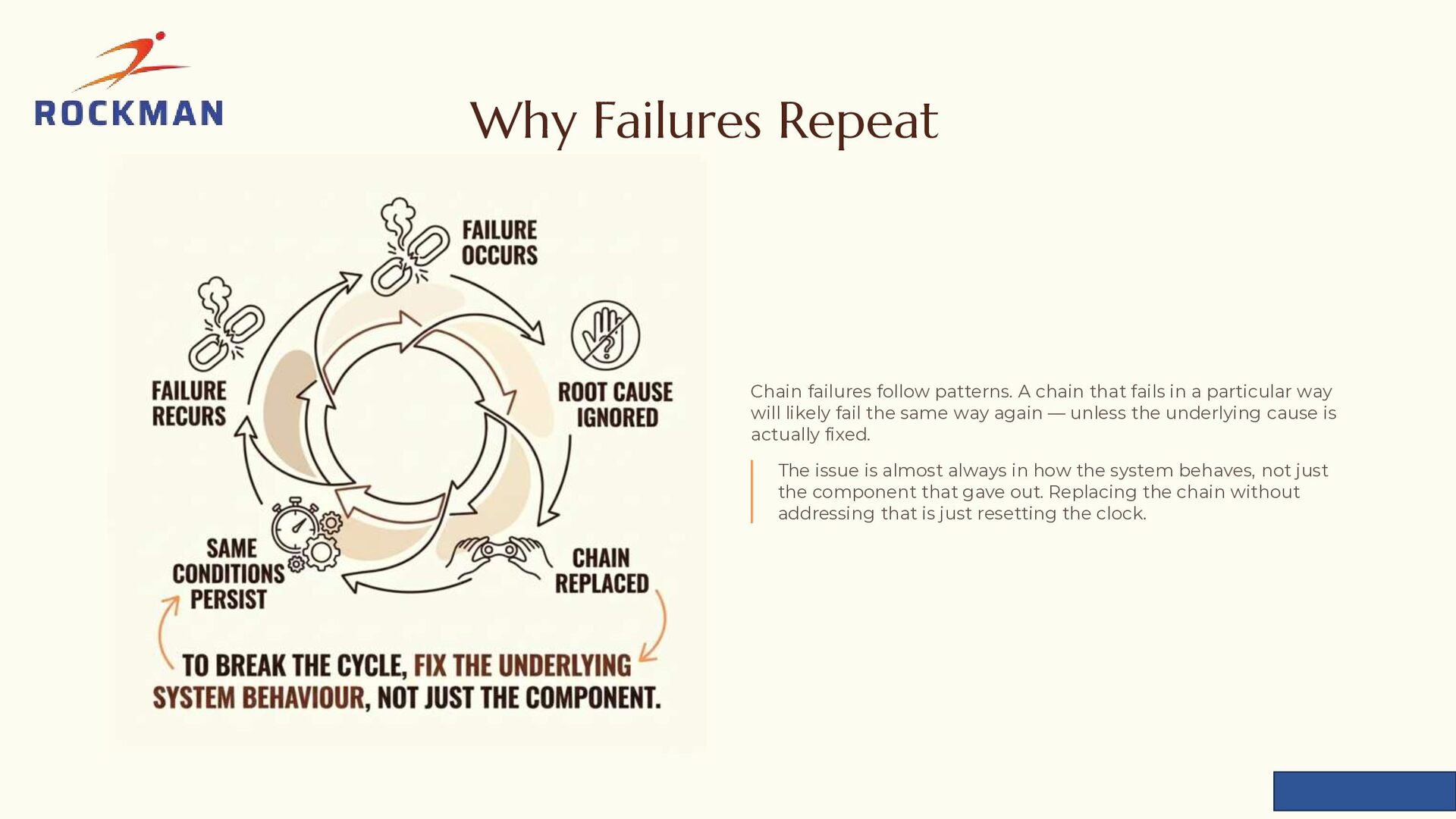
fails in a particular way will likely fail the same way again — unless the underlying cause is actually fixed. The issue is almost always in how the system behaves, not just the component that gave out. Replacing the chain without addressing that is just resetting the clock.
through consistency — in how chains are manufactured and in understanding how they'll actually be used. Dimensional Accuracy Tight tolerances across every component Controlled Materials Consistent properties under real conditions Stable Performance Strength that holds when conditions aren't ideal
and load variations compound over time — each manageable alone, harder together. 2 Assumptions Are the Risk Most failures are set up long before they happen — through unchecked assumptions about load, environment, and performance. 3 Consistency Is the Answer Prevention doesn't need to be complicated. It just needs to be consistent.


 rockmanindustries
 stephenakadiri
 varn
 gurzu
 jnunemaker
 nonsquared
 takai
 kristinabergwall1
 watany
 katarinadahlin
 mza
 tmiket
 jakevdp