Aluminium Die Casting Defects: What Causes Them and How They're Controlled
Explore causes, common types, and process-level controls of aluminium die casting defects to ensure consistent, high-quality production and prevent failures.
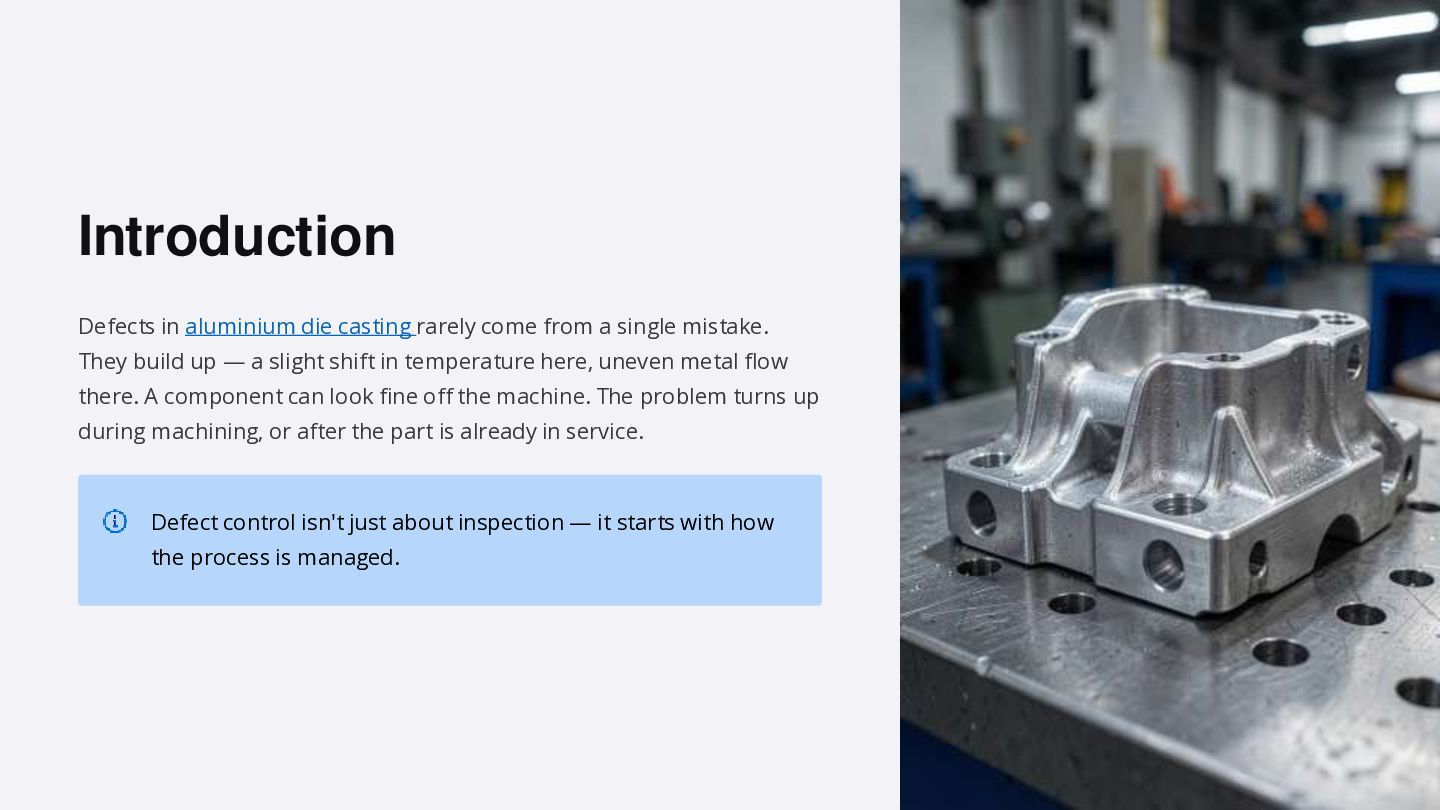
single mistake. They build up — a slight shift in temperature here, uneven metal flow there. A component can look fine off the machine. The problem turns up during machining, or after the part is already in service. Defect control isn't just about inspection — it starts with how the process is managed.
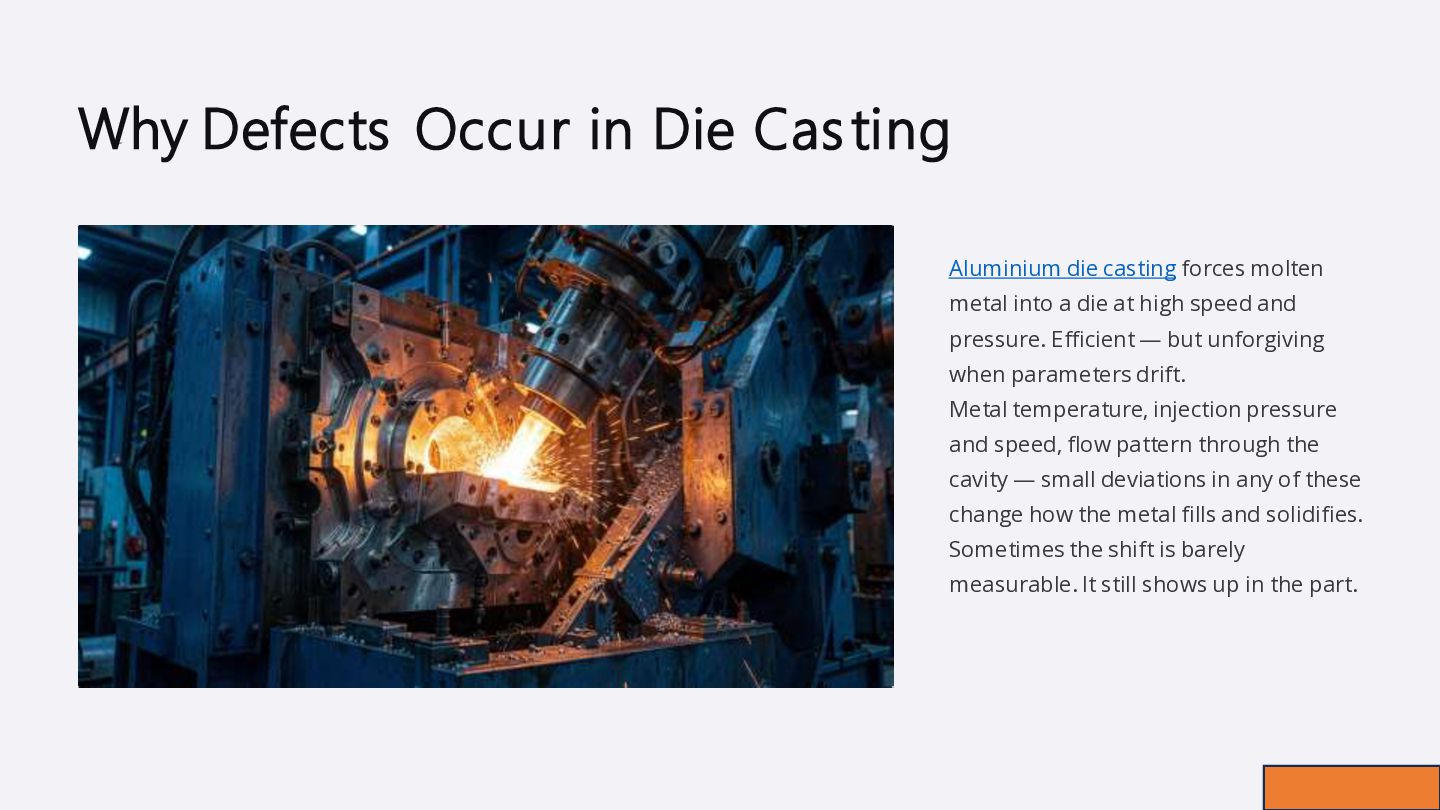
molten metal into a die at high speed and pressure. Efficient — but unforgiving when parameters drift. Metal temperature, injection pressure and speed, flow pattern through the cavity — small deviations in any of these change how the metal fills and solidifies. Sometimes the shift is barely measurable. It still shows up in the part.
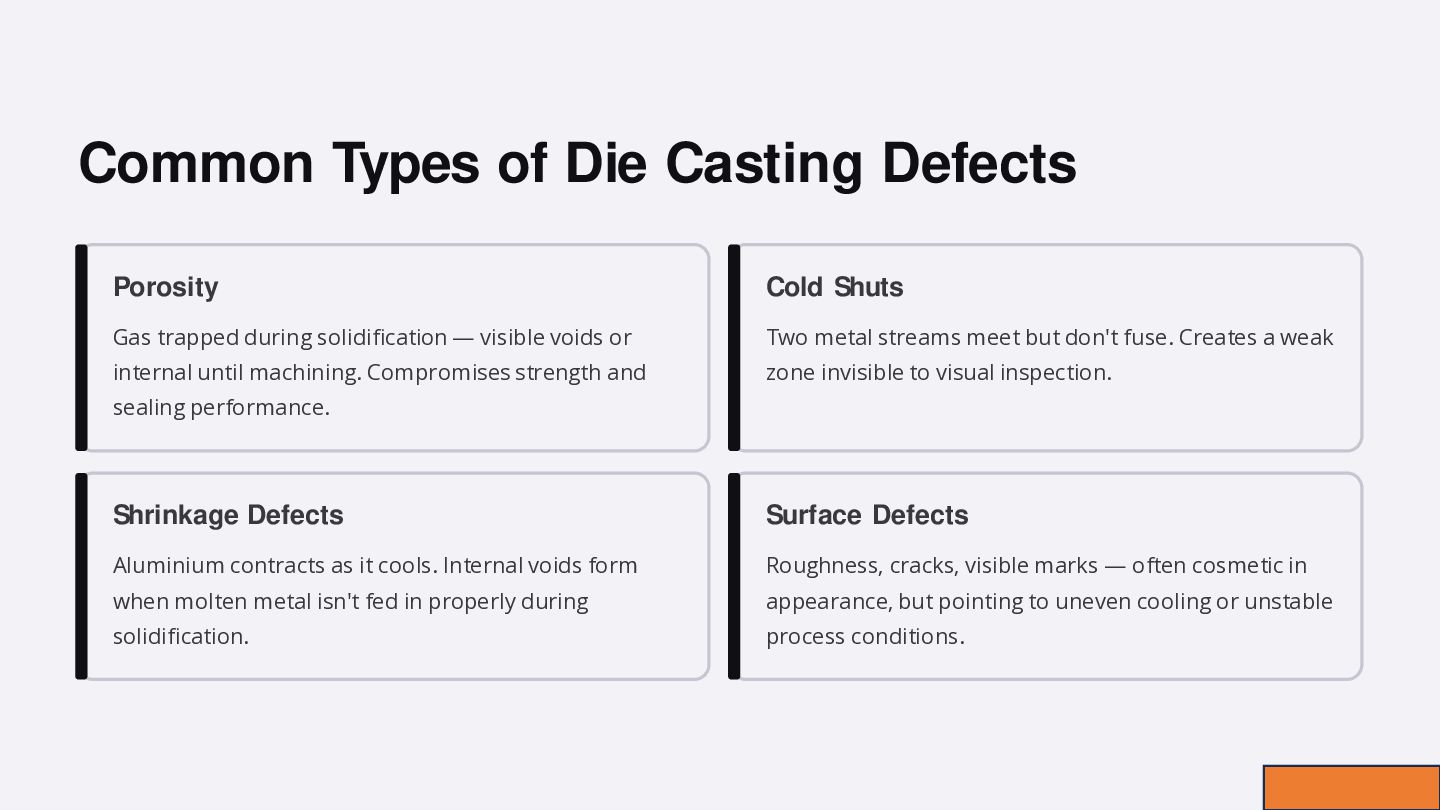
solidification — visible voids or internal until machining. Compromises strength and sealing performance. Cold Shuts Two metal streams meet but don't fuse. Creates a weak zone invisible to visual inspection. Shrinkage Defects Aluminium contracts as it cools. Internal voids form when molten metal isn't fed in properly during solidification. Surface Defects Roughness, cracks, visible marks — often cosmetic in appearance, but pointing to uneven cooling or unstable process conditions.
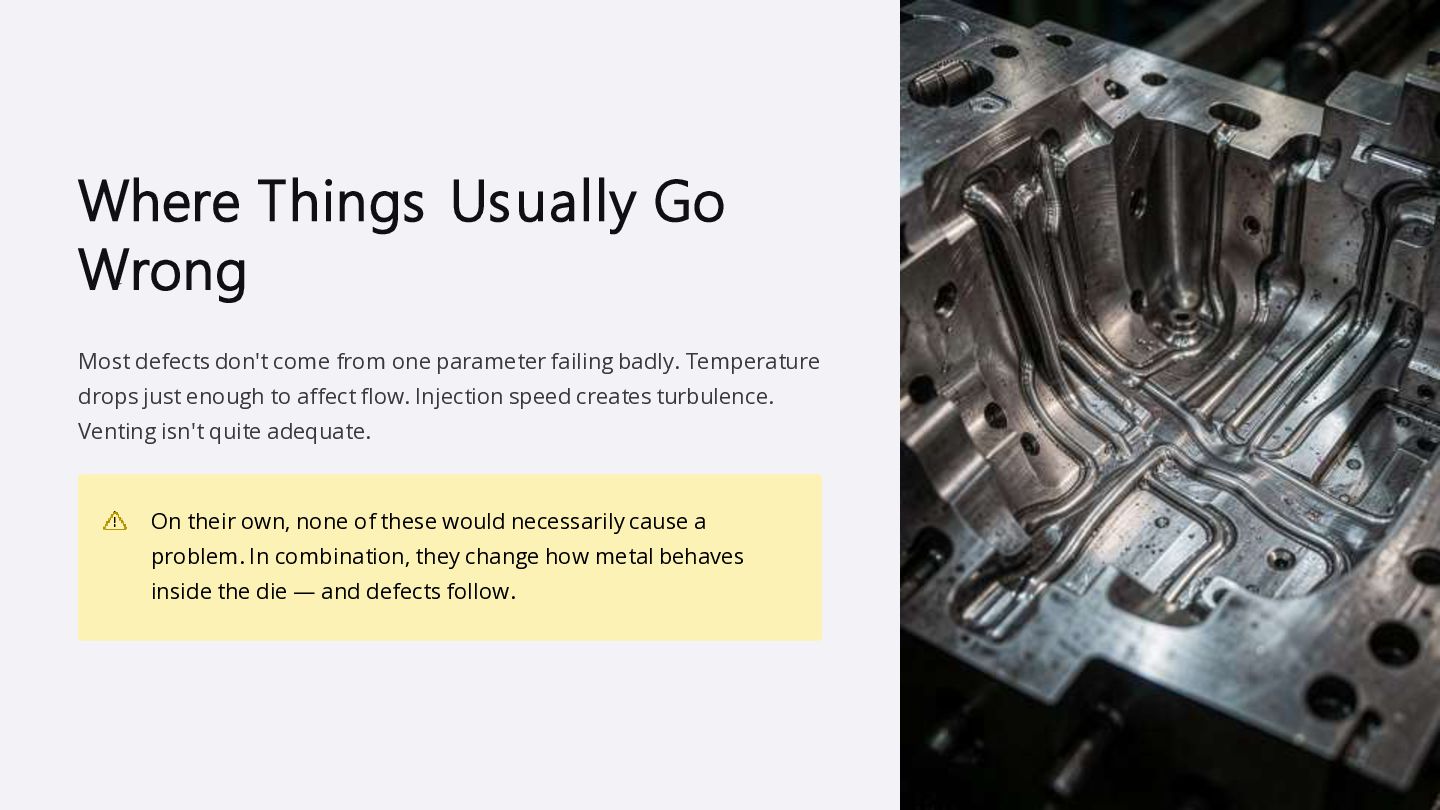
one parameter failing badly. Temperature drops just enough to affect flow. Injection speed creates turbulence. Venting isn't quite adequate. On their own, none of these would necessarily cause a problem. In combination, they change how metal behaves inside the die — and defects follow.
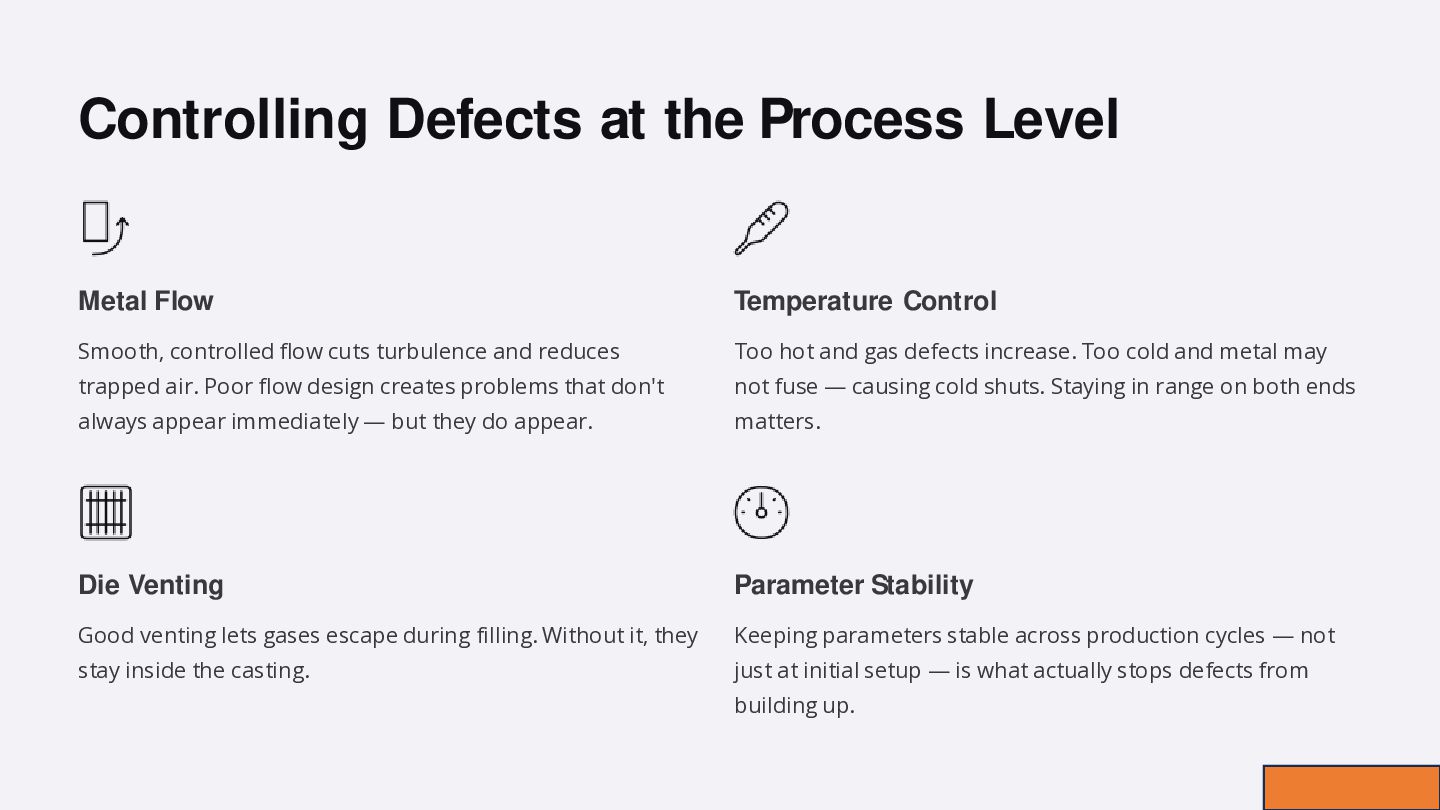
flow cuts turbulence and reduces trapped air. Poor flow design creates problems that don't always appear immediately — but they do appear. Temperature Control Too hot and gas defects increase. Too cold and metal may not fuse — causing cold shuts. Staying in range on both ends matters. Die Venting Good venting lets gases escape during filling. Without it, they stay inside the casting. Parameter Stability Keeping parameters stable across production cycles — not just at initial setup — is what actually stops defects from building up.
prevent them. X-ray and pressure testing reveal internal problems — but by the time a defect shows up, it already exists. What inspection is genuinely useful for is spotting patterns: the same issue appearing in the same spot across multiple parts, pointing back to something unstable in the process. The Core Principle That's useful information — but it's working backward. Quality in die casting has to be built into the process itself.
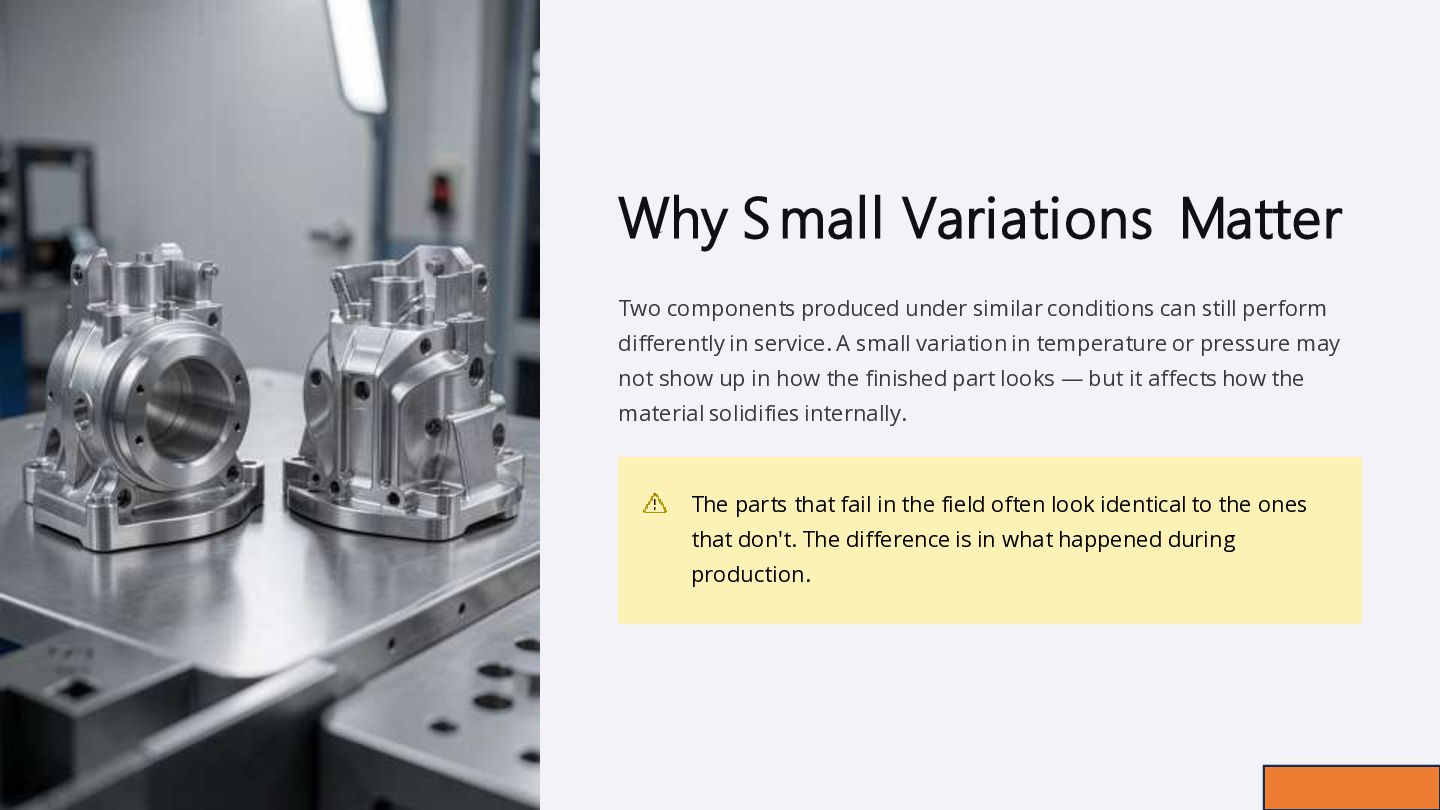
can still perform differently in service. A small variation in temperature or pressure may not show up in how the finished part looks — but it affects how the material solidifies internally. The parts that fail in the field often look identical to the ones that don't. The difference is in what happened during production.
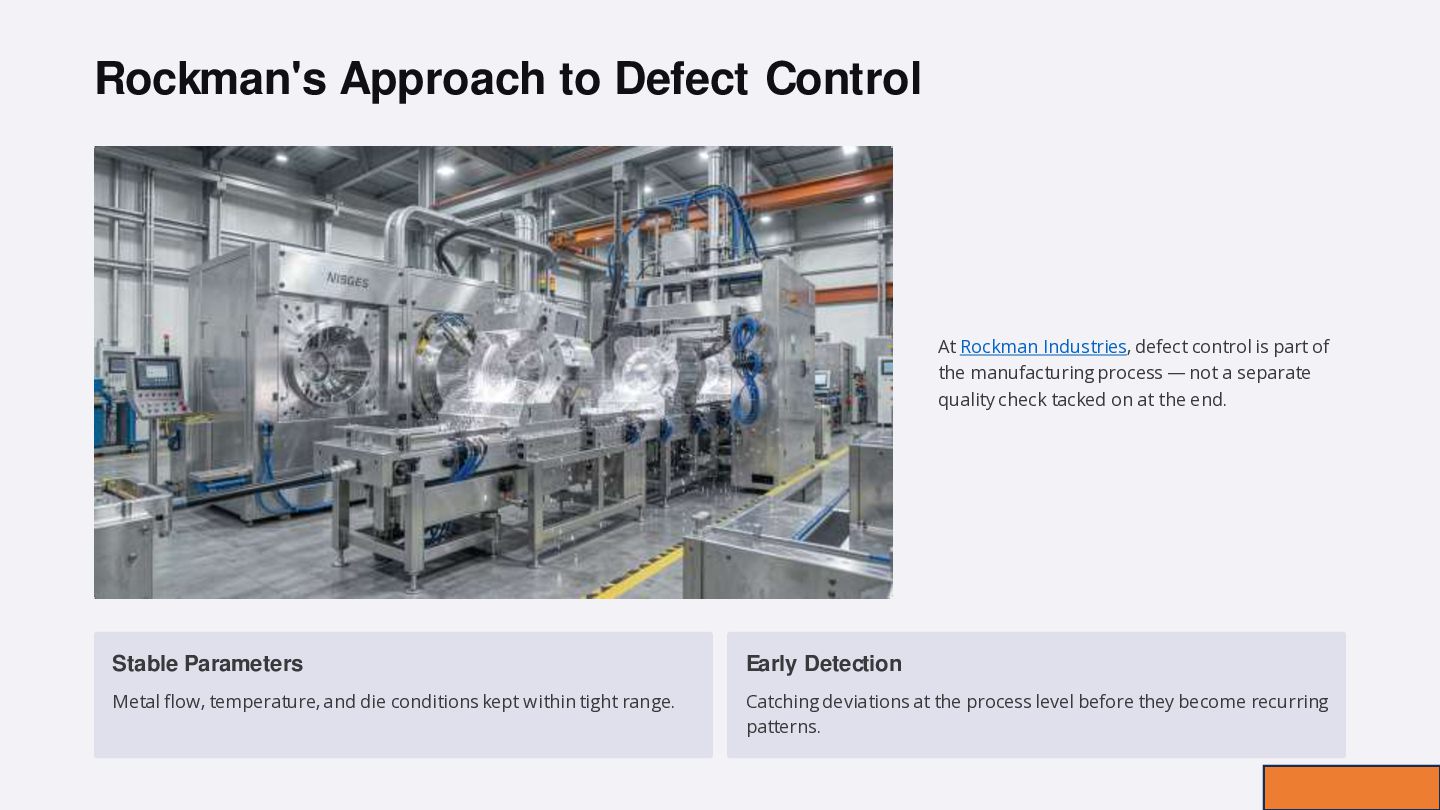
is part of the manufacturing process — not a separate quality check tacked on at the end. Stable Parameters Metal flow, temperature, and die conditions kept within tight range. Early Detection Catching deviations at the process level before they become recurring patterns.
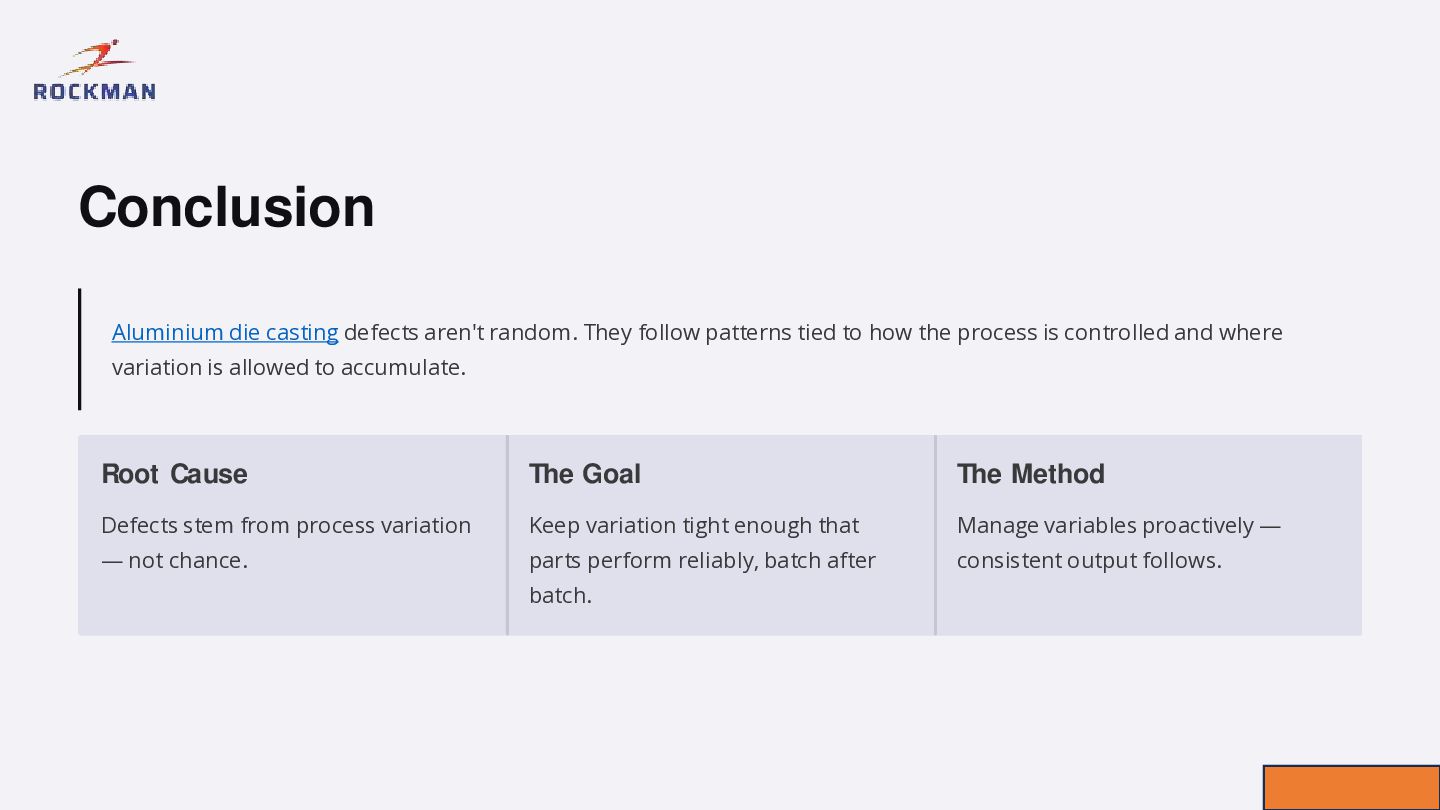
tied to how the process is controlled and where variation is allowed to accumulate. Root Cause Defects stem from process variation — not chance. The Goal Keep variation tight enough that parts perform reliably, batch after batch. The Method Manage variables proactively — consistent output follows.


 rockmanindustries
 jacobtomlinson
 geoffreycrofte
 kimpetersen
 sachag
 thoeni
 geshan
 frankvandijk
 bluesmoon
 aki_iinuma
 cassininazir
 skoyamalab
 aleyda