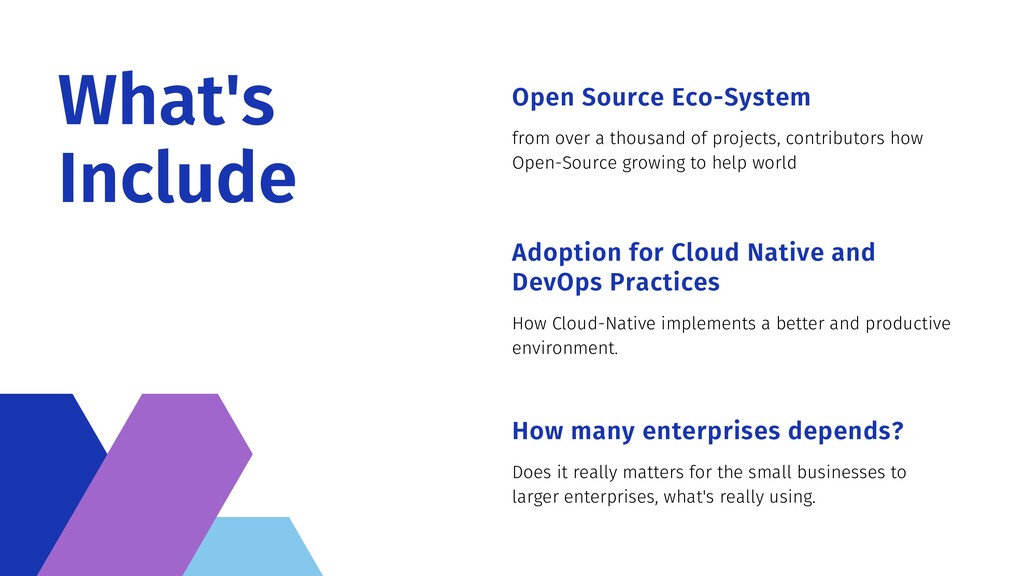
Cloud Native and DevOps Practices from over a thousand of projects, contributors how Open-Source growing to help world Open Source Eco-System Does it really matters for the small businesses to larger enterprises, what's really using. How many enterprises depends? What's Include
than just use "tool x" Open Standards Share experience and code for generic problems “Cloud-native technologies empower organizations to build and run scalable applications in modern, dynamic environments such as public, private, and hybrid clouds.” - CNCF SOFTWARE FREEDOM DAY '21 SRI LANKA According to the Cloud Native Computing Foundation (CNCF), there are at least 6.5 million cloud-native developers on the planet today
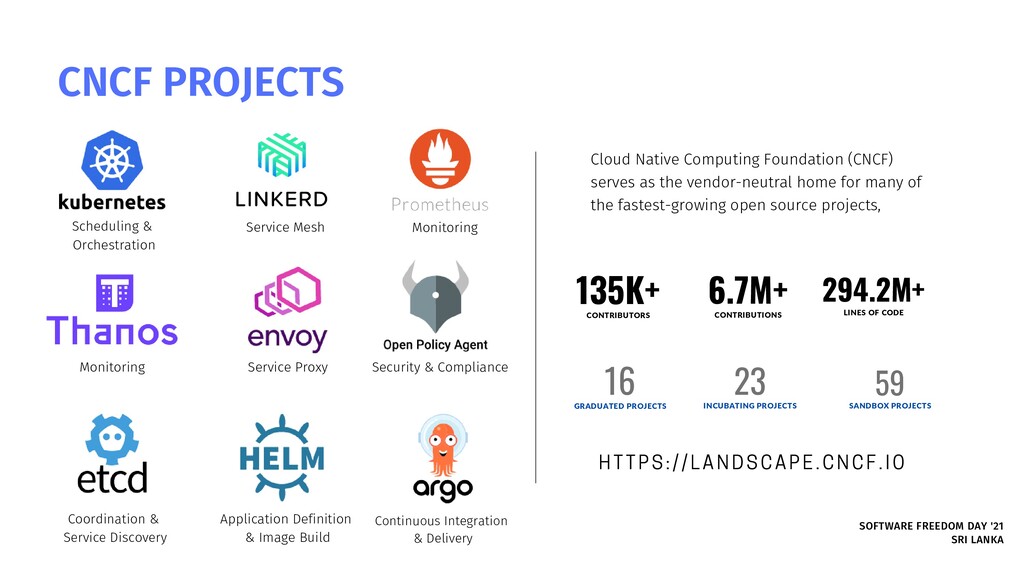
Computing Foundation (CNCF) serves as the vendor-neutral home for many of the fastest-growing open source projects, Scheduling & Orchestration Coordination & Service Discovery Continuous Integration & Delivery Monitoring Security & Compliance Service Mesh Service Proxy Monitoring Application Definition & Image Build 135K+ CONTRIBUTORS 6.7M+ CONTRIBUTIONS 294.2M+ LINES OF CODE 16 GRADUATED PROJECTS 23 INCUBATING PROJECTS 59 SANDBOX PROJECTS HTTPS://LANDSCAPE.CNCF.IO
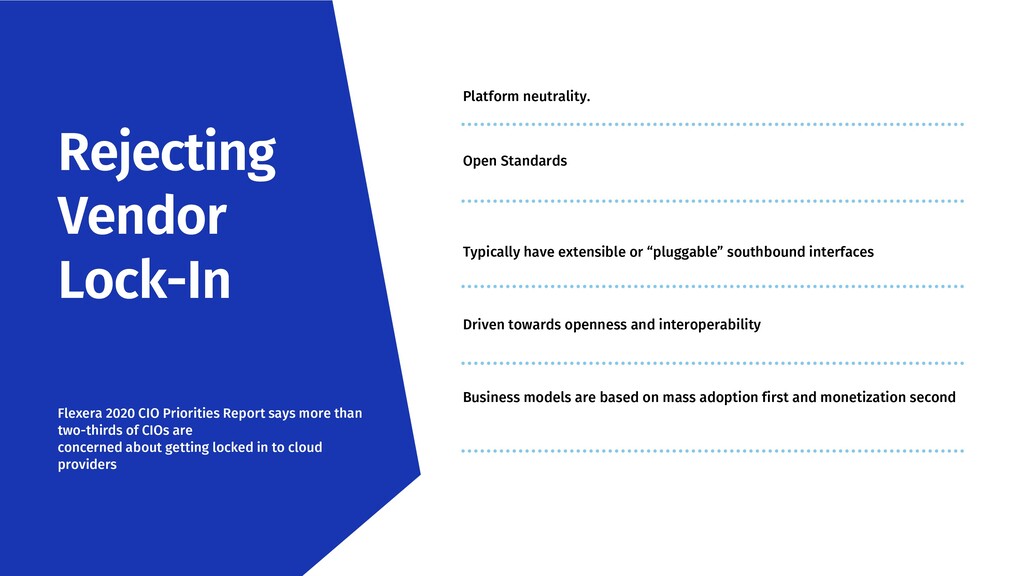
or “pluggable” southbound interfaces Driven towards openness and interoperability Business models are based on mass adoption first and monetization second Flexera 2020 CIO Priorities Report says more than two-thirds of CIOs are concerned about getting locked in to cloud providers
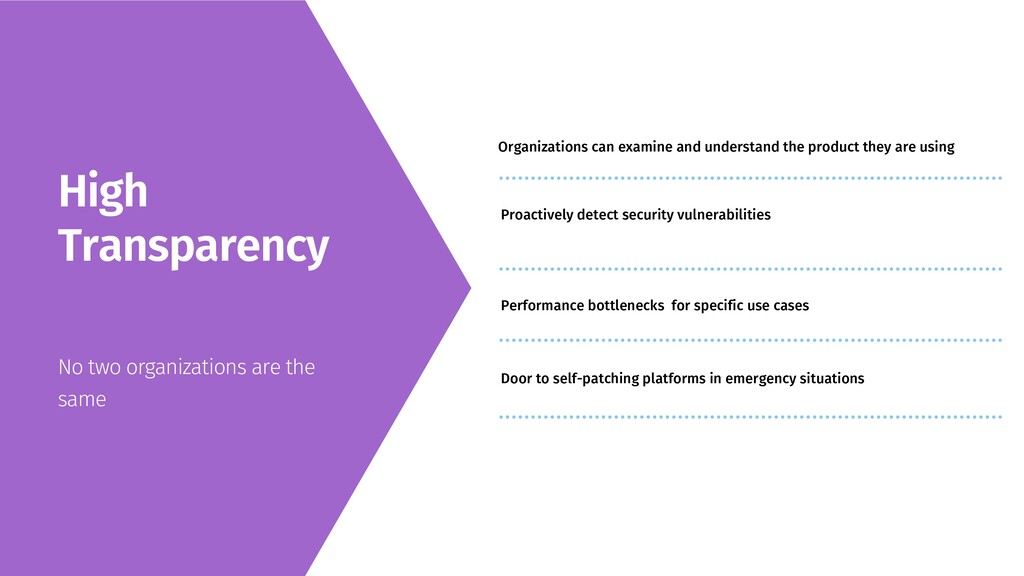
examine and understand the product they are using Proactively detect security vulnerabilities Performance bottlenecks for specific use cases Door to self-patching platforms in emergency situations
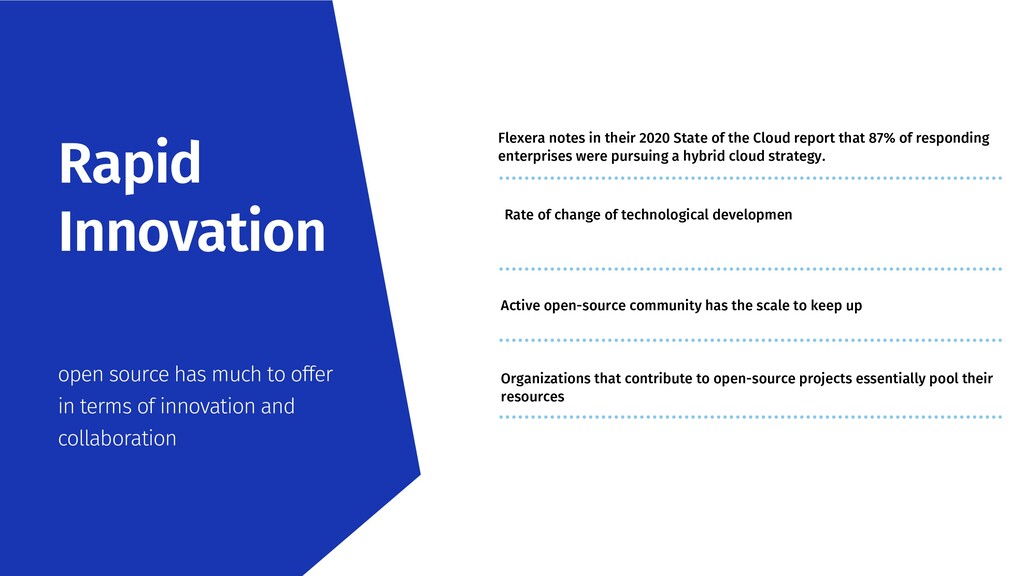
of innovation and collaboration Flexera notes in their 2020 State of the Cloud report that 87% of responding enterprises were pursuing a hybrid cloud strategy. Rate of change of technological developmen Active open-source community has the scale to keep up Organizations that contribute to open-source projects essentially pool their resources
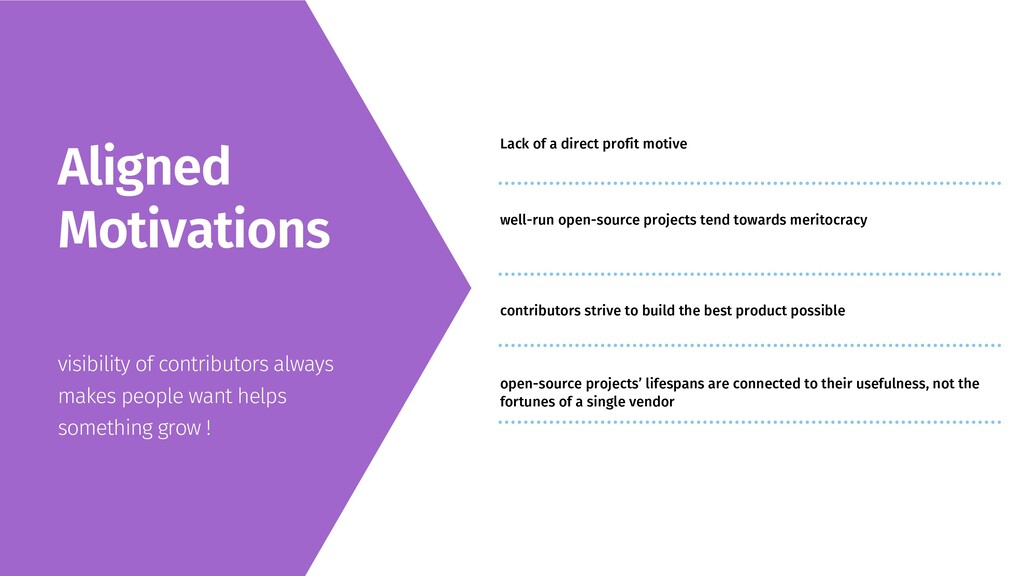
something grow ! Lack of a direct profit motive well-run open-source projects tend towards meritocracy contributors strive to build the best product possible open-source projects’ lifespans are connected to their usefulness, not the fortunes of a single vendor
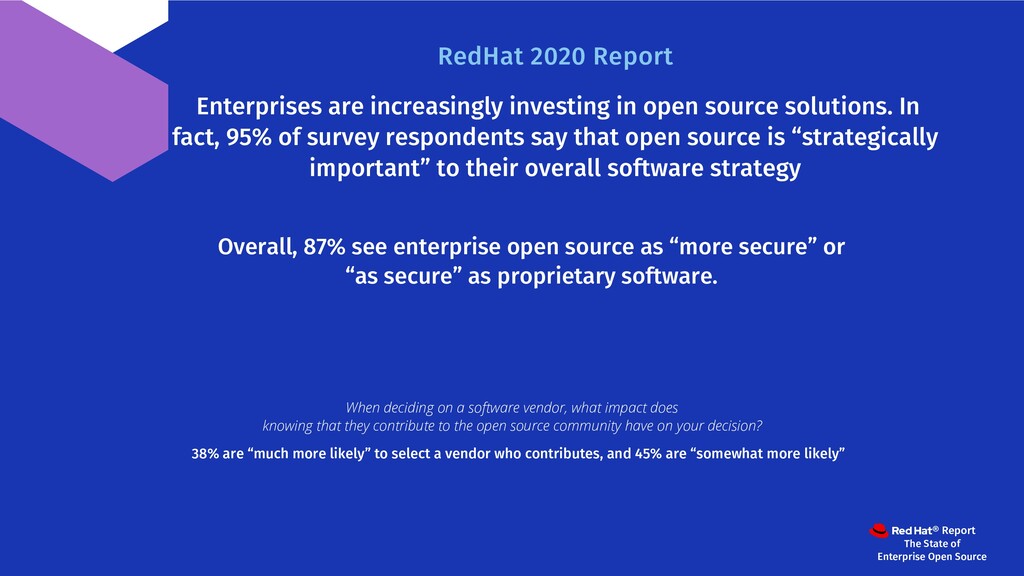
solutions. In fact, 95% of survey respondents say that open source is “strategically important” to their overall software strategy The State of Enterprise Open Source ® Report Overall, 87% see enterprise open source as “more secure” or “as secure” as proprietary software. When deciding on a software vendor, what impact does knowing that they contribute to the open source community have on your decision? 38% are “much more likely” to select a vendor who contributes, and 45% are “somewhat more likely”
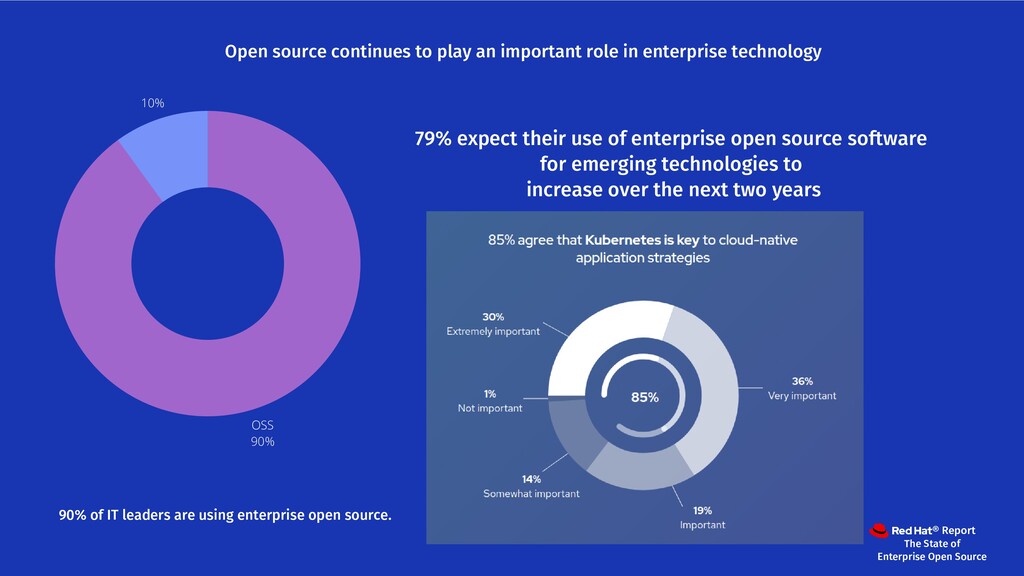
Report Open source continues to play an important role in enterprise technology 90% of IT leaders are using enterprise open source. 79% expect their use of enterprise open source software for emerging technologies to increase over the next two years
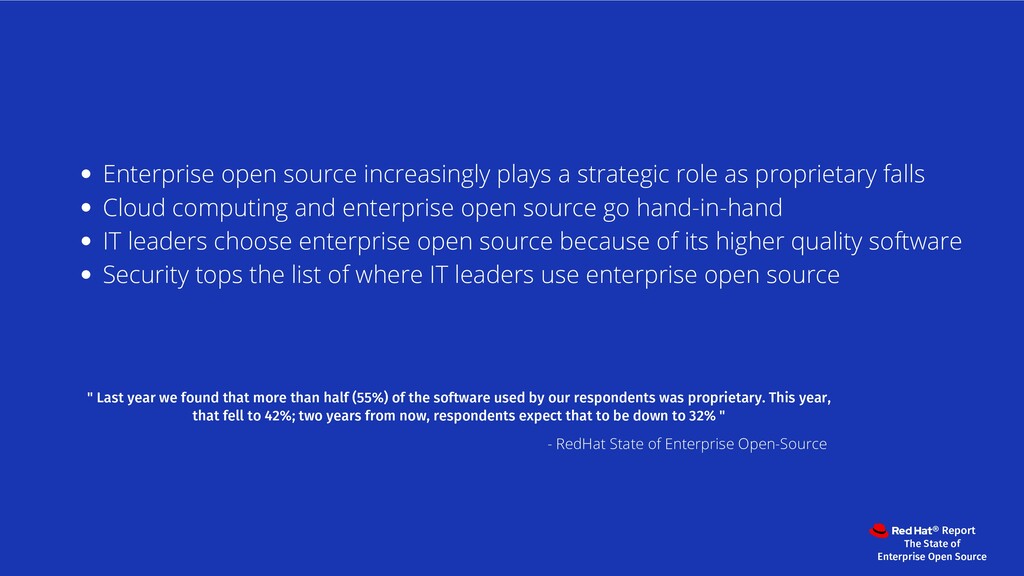
falls Cloud computing and enterprise open source go hand-in-hand IT leaders choose enterprise open source because of its higher quality software Security tops the list of where IT leaders use enterprise open source " Last year we found that more than half (55%) of the software used by our respondents was proprietary. This year, that fell to 42%; two years from now, respondents expect that to be down to 32% " The State of Enterprise Open Source ® Report - RedHat State of Enterprise Open-Source
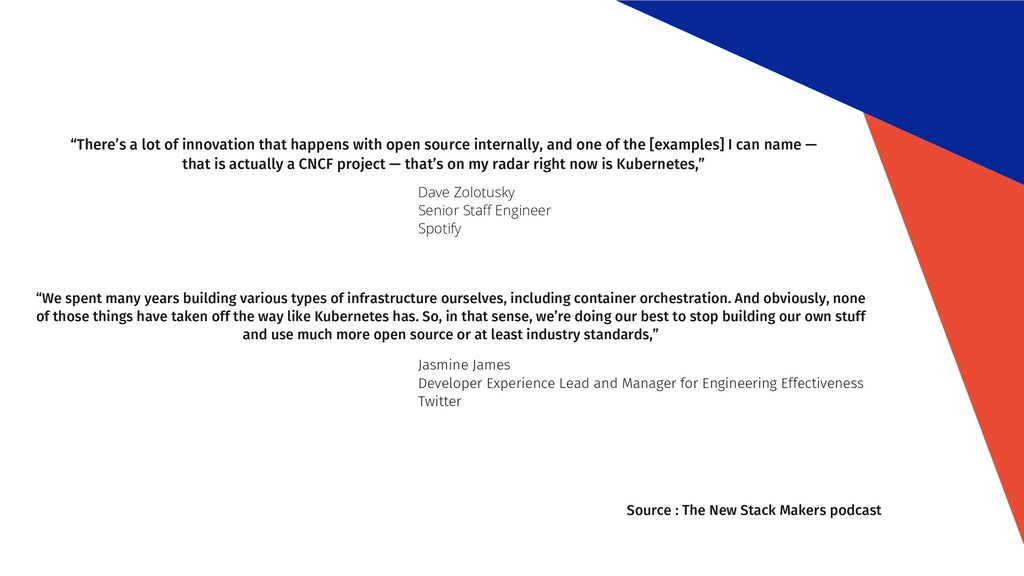
including container orchestration. And obviously, none of those things have taken off the way like Kubernetes has. So, in that sense, we’re doing our best to stop building our own stuff and use much more open source or at least industry standards,” “There’s a lot of innovation that happens with open source internally, and one of the [examples] I can name — that is actually a CNCF project — that’s on my radar right now is Kubernetes,” Dave Zolotusky Senior Staff Engineer Spotify Jasmine James Developer Experience Lead and Manager for Engineering Effectiveness Twitter Source : The New Stack Makers podcast


 ruwanranganath
 yuuuuuuu168
 carta_engineering
 shugo
 jyouryuusui
 genda
 recruitengineers
 iktakahiro
 rfdnxbro
 kzkhykw1991
 finengine
 yamanoku
 takanorip
 inesmontani
 davidcarrasco
 keavy
 zakiyama
 jct
 pauljervisheath
 popppiees
 addyosmani
 brettharned
 notwaldorf