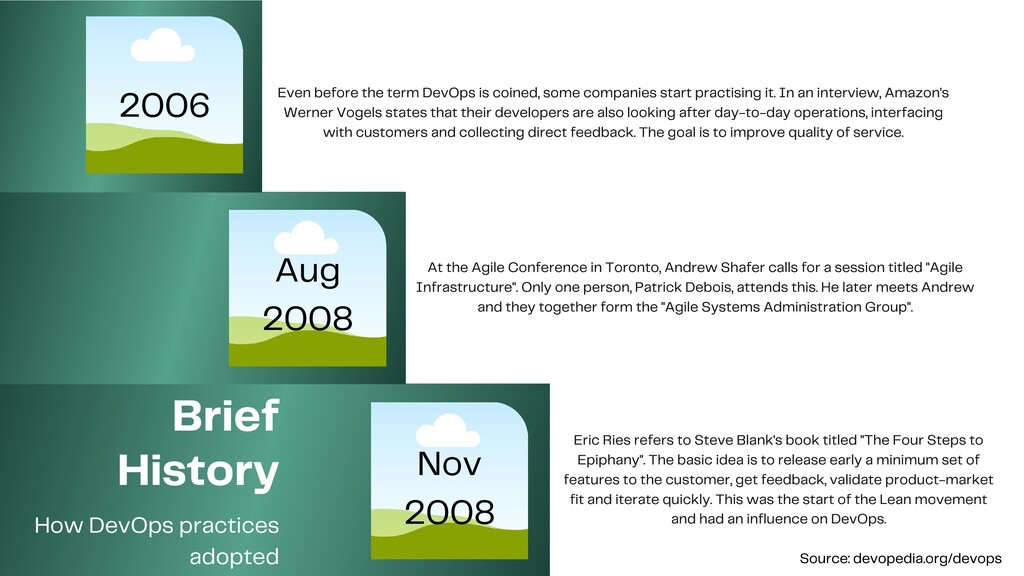
practising it. In an interview, Amazon's Werner Vogels states that their developers are also looking after day-to-day operations, interfacing with customers and collecting direct feedback. The goal is to improve quality of service. At the Agile Conference in Toronto, Andrew Shafer calls for a session titled "Agile Infrastructure". Only one person, Patrick Debois, attends this. He later meets Andrew and they together form the "Agile Systems Administration Group". Eric Ries refers to Steve Blank's book titled "The Four Steps to Epiphany". The basic idea is to release early a minimum set of features to the customer, get feedback, validate product-market fit and iterate quickly. This was the start of the Lean movement and had an influence on DevOps. Source: devopedia.org/devops Brief History How DevOps practices adopted 2006 Aug 2008 Nov 2008
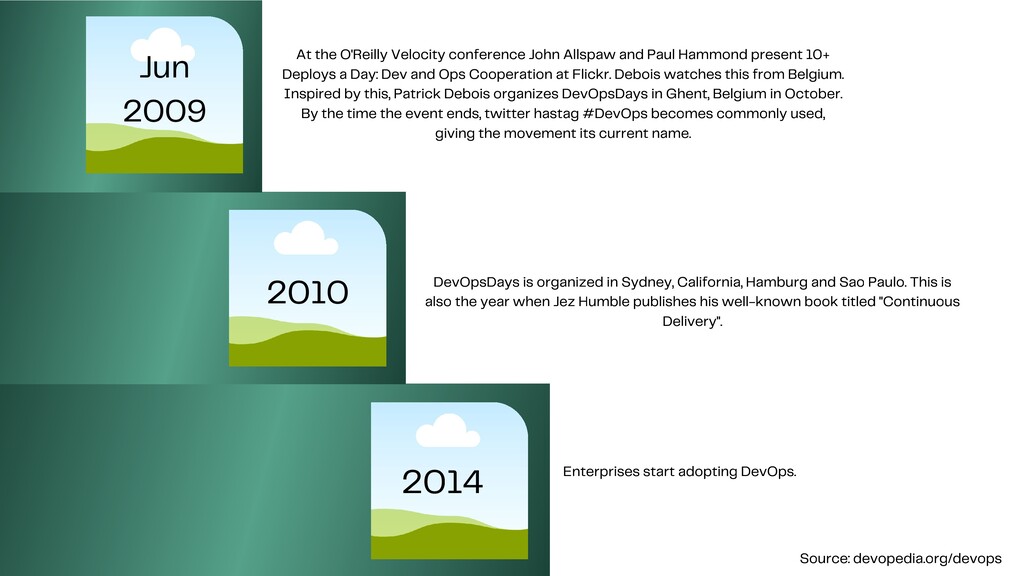
present 10+ Deploys a Day: Dev and Ops Cooperation at Flickr. Debois watches this from Belgium. Inspired by this, Patrick Debois organizes DevOpsDays in Ghent, Belgium in October. By the time the event ends, twitter hastag #DevOps becomes commonly used, giving the movement its current name. DevOpsDays is organized in Sydney, California, Hamburg and Sao Paulo. This is also the year when Jez Humble publishes his well-known book titled "Continuous Delivery". Enterprises start adopting DevOps. Source: devopedia.org/devops 2010 Jun 2009 2014
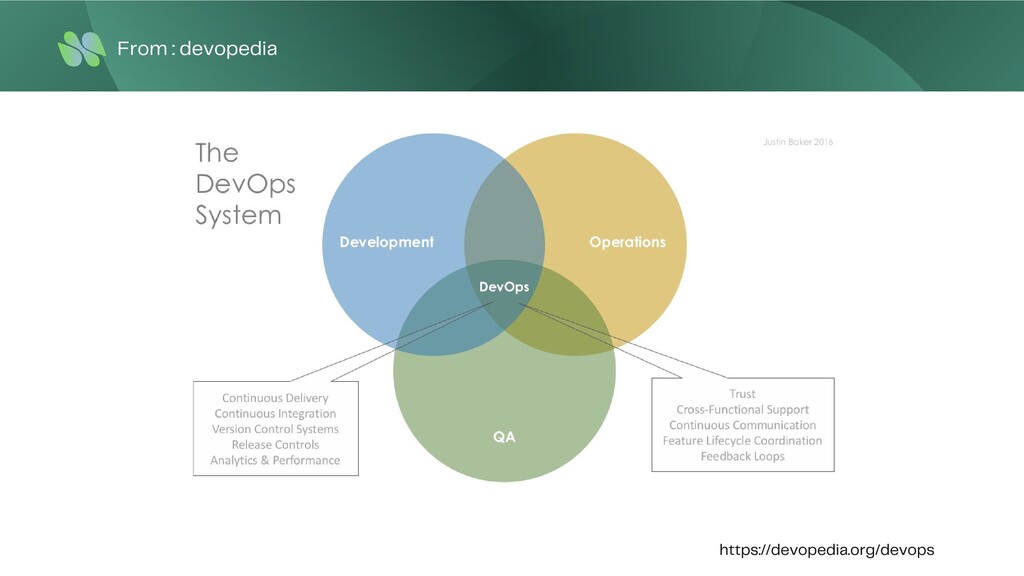
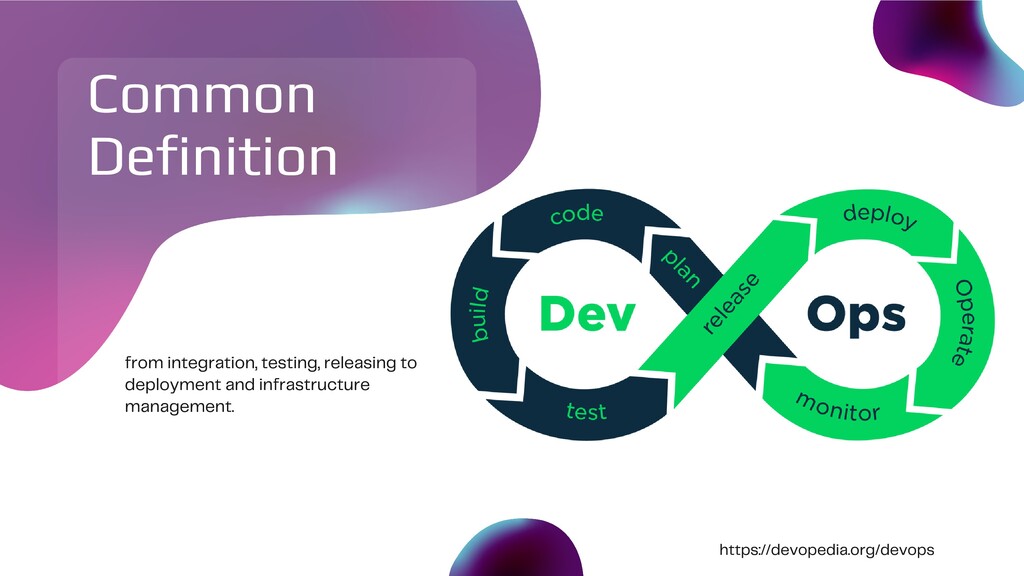
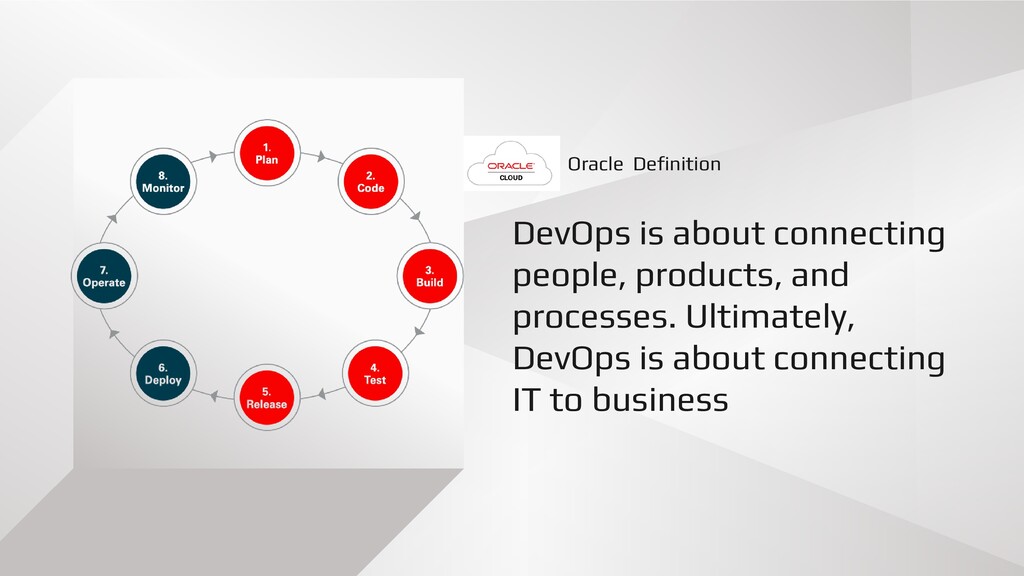
your Canva Presentation your audience can watch at their own pace. DevOps is a cultural, professional movement focused on how we build and operate high-velocity organizations, born from the experiences of its practitioners. DevOps is largely founded in an organization’s skillful collaboration and communication, and the culture that results. DevOps is the practice of operations and development engineers participating together in the entire service lifecycle, from design through the development process to production support. DevOps is ops who think like devs and devs who think like ops. The point of dev-ops is that developers need to learn how to create high-quality, production-ready software, and ops needs to learn that Agile techniques are actually powerful tools to enable effective, low-risk change management. Ultimately, we’re all trying to achieve the same thing – creating business value through software. The Devops movement is characterized by people with a multidisciplinary skill set - people who are comfortable with infrastructure and configuration, but also happy to roll up their sleeves, write tests, debug, and ship features.
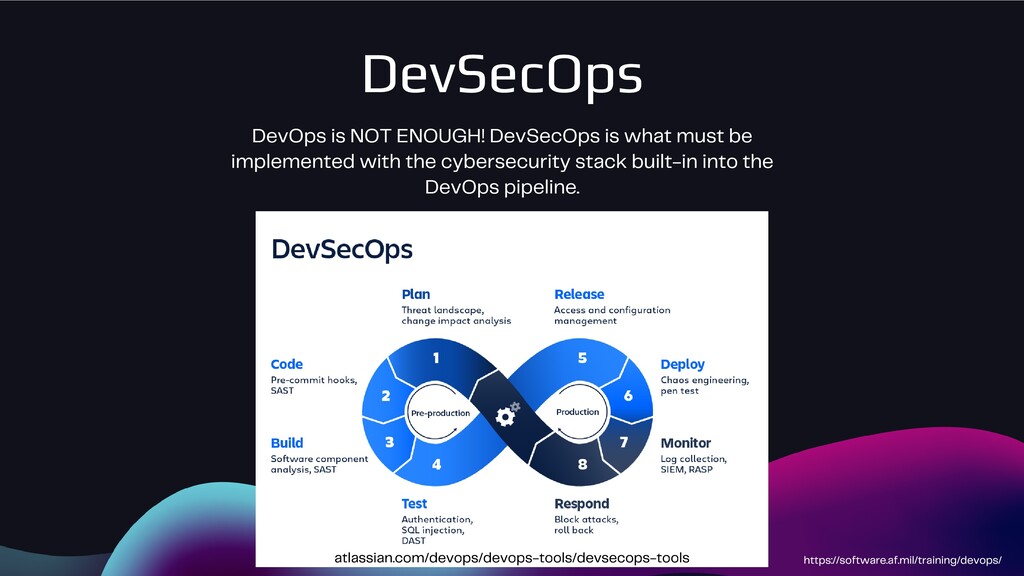
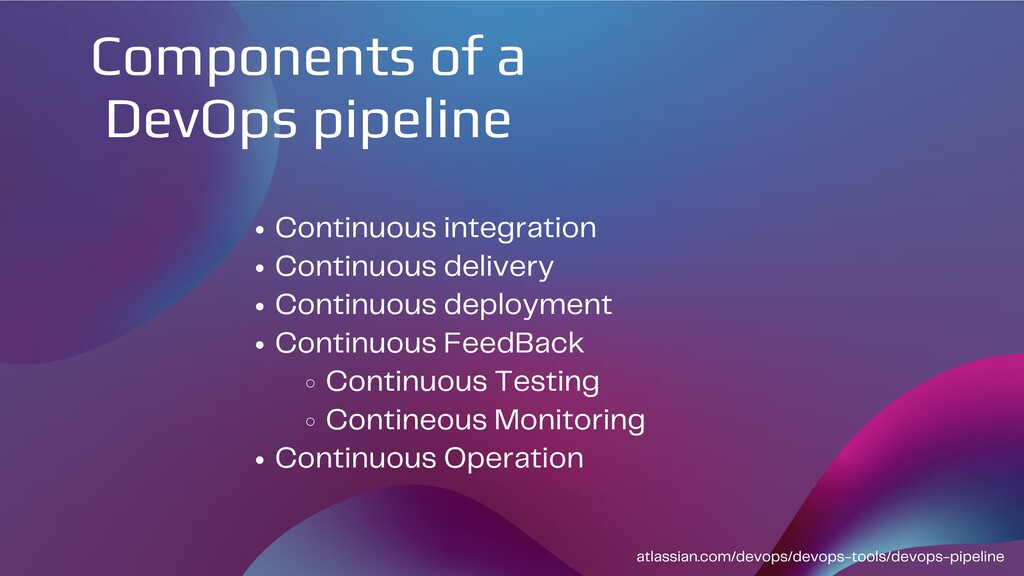
implemented with the cybersecurity stack built-in into the DevOps pipeline. https://software.af.mil/training/devops/ atlassian.com/devops/devops-tools/devsecops-tools
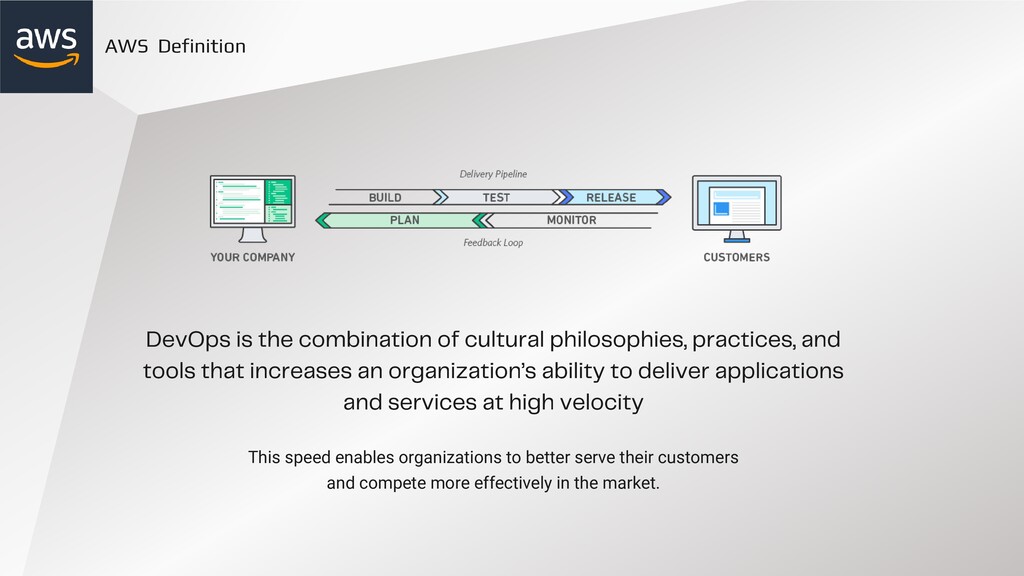
compete more effectively in the market. DevOps is the combination of cultural philosophies, practices, and tools that increases an organization’s ability to deliver applications and services at high velocity AWS Definition
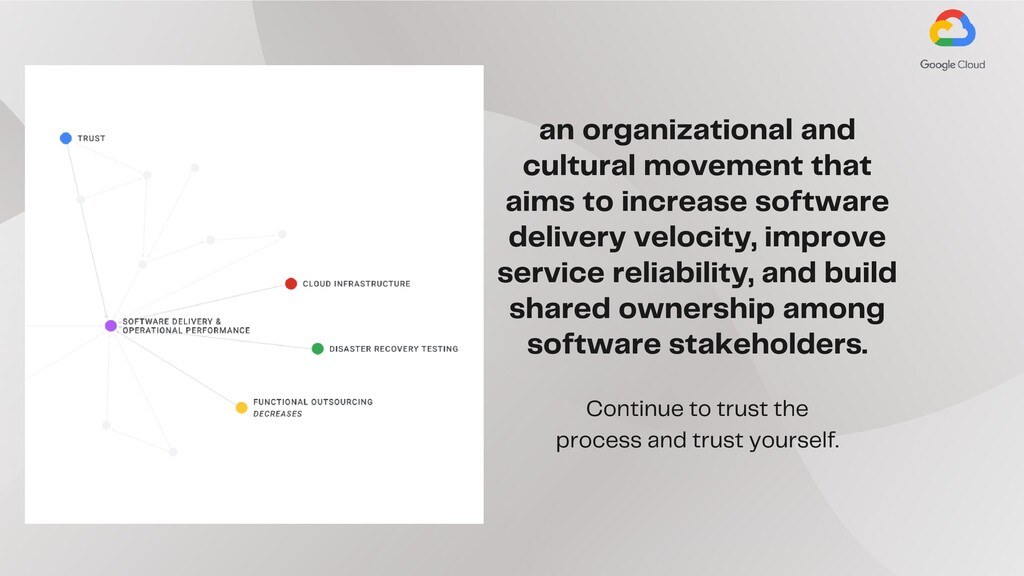
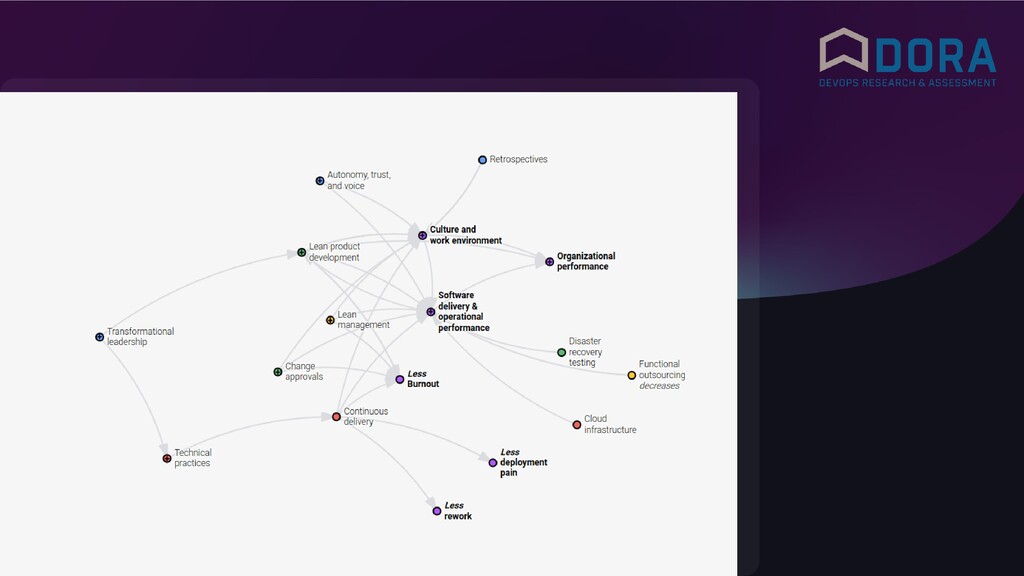
and cultural movement that aims to increase software delivery velocity, improve service reliability, and build shared ownership among software stakeholders.
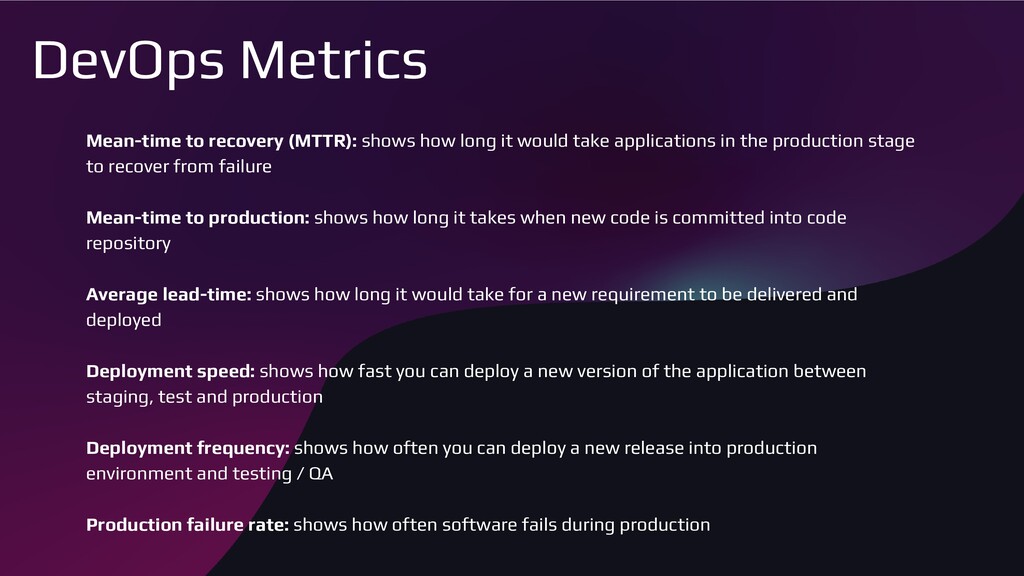
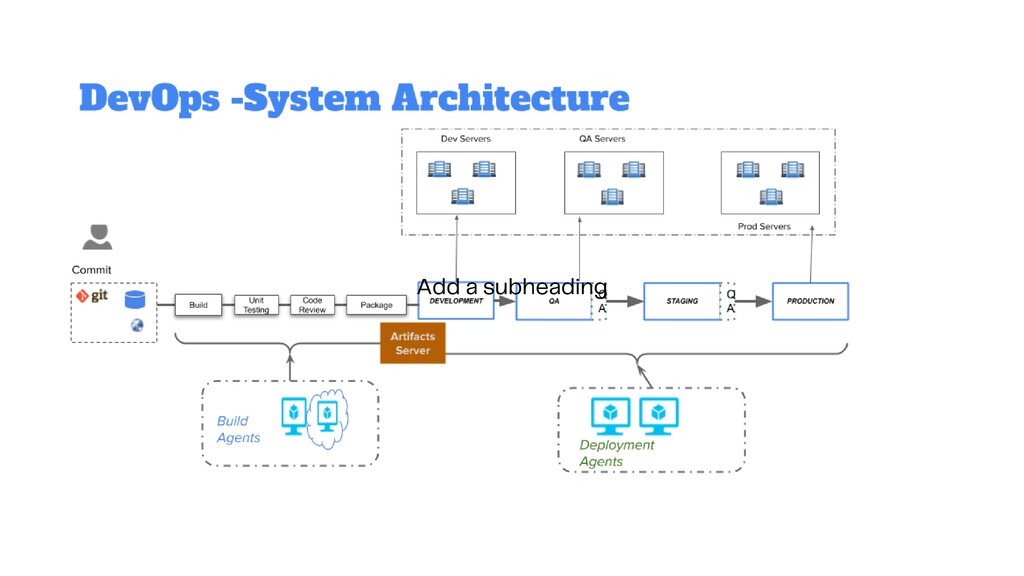
would take applications in the production stage to recover from failure Mean-time to production: shows how long it takes when new code is committed into code repository Average lead-time: shows how long it would take for a new requirement to be delivered and deployed Deployment speed: shows how fast you can deploy a new version of the application between staging, test and production Deployment frequency: shows how often you can deploy a new release into production environment and testing / QA Production failure rate: shows how often software fails during production
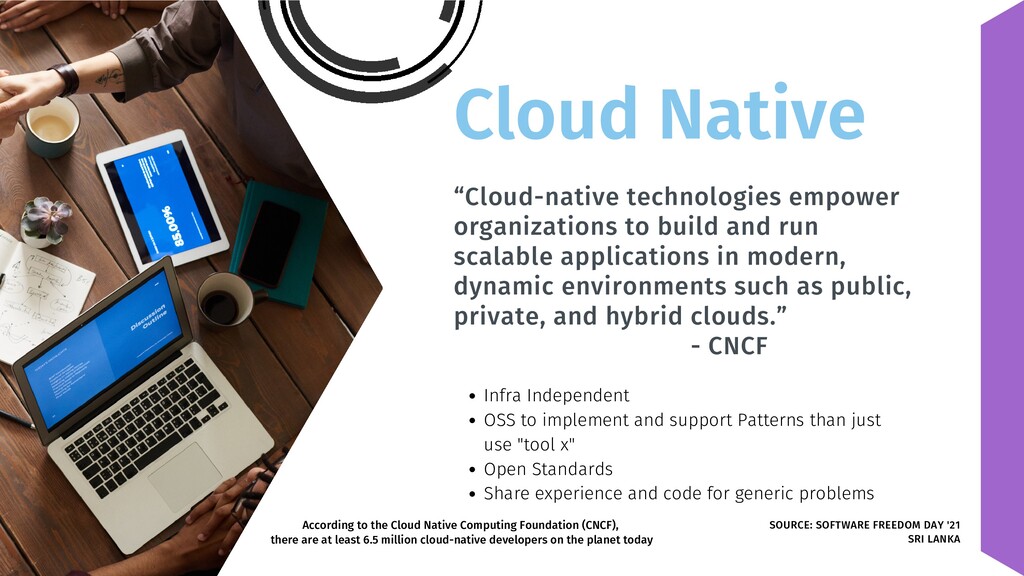
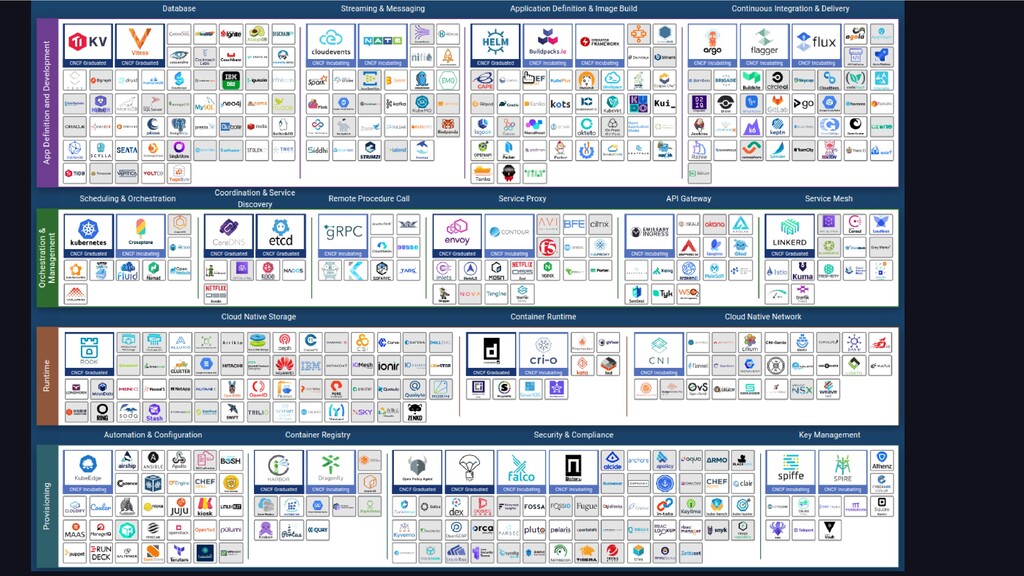
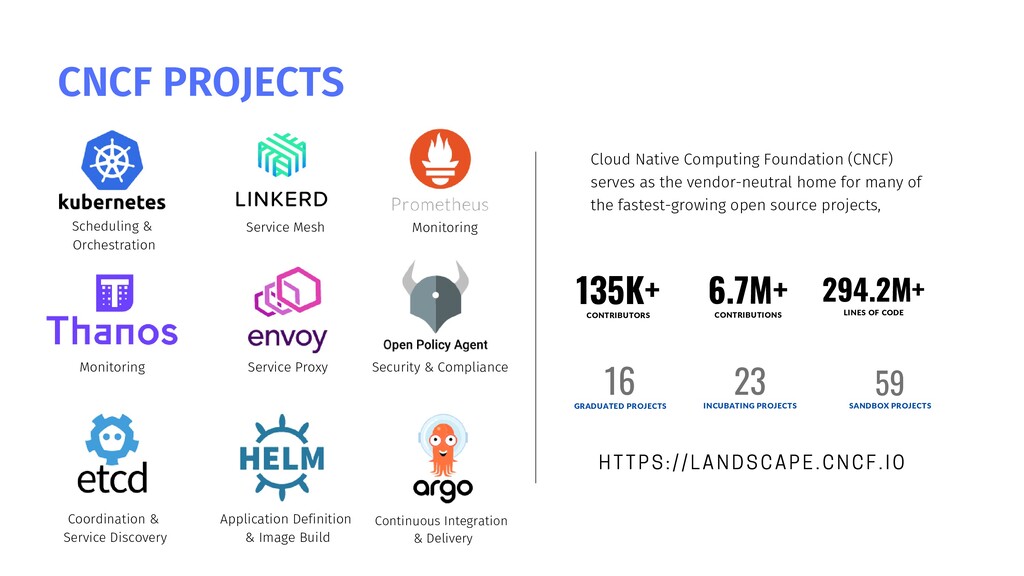
than just use "tool x" Open Standards Share experience and code for generic problems “Cloud-native technologies empower organizations to build and run scalable applications in modern, dynamic environments such as public, private, and hybrid clouds.” - CNCF SOURCE: SOFTWARE FREEDOM DAY '21 SRI LANKA According to the Cloud Native Computing Foundation (CNCF), there are at least 6.5 million cloud-native developers on the planet today
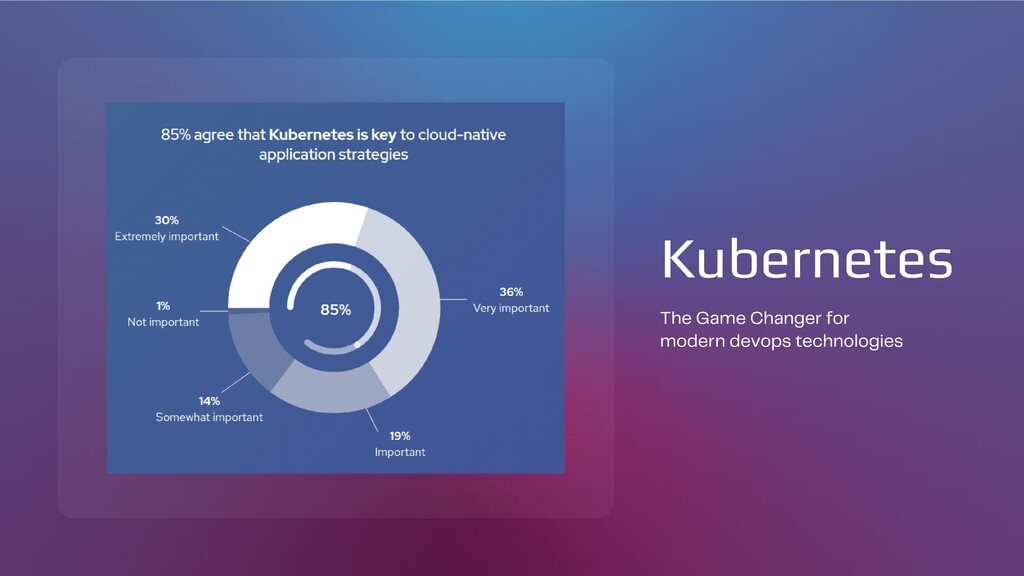
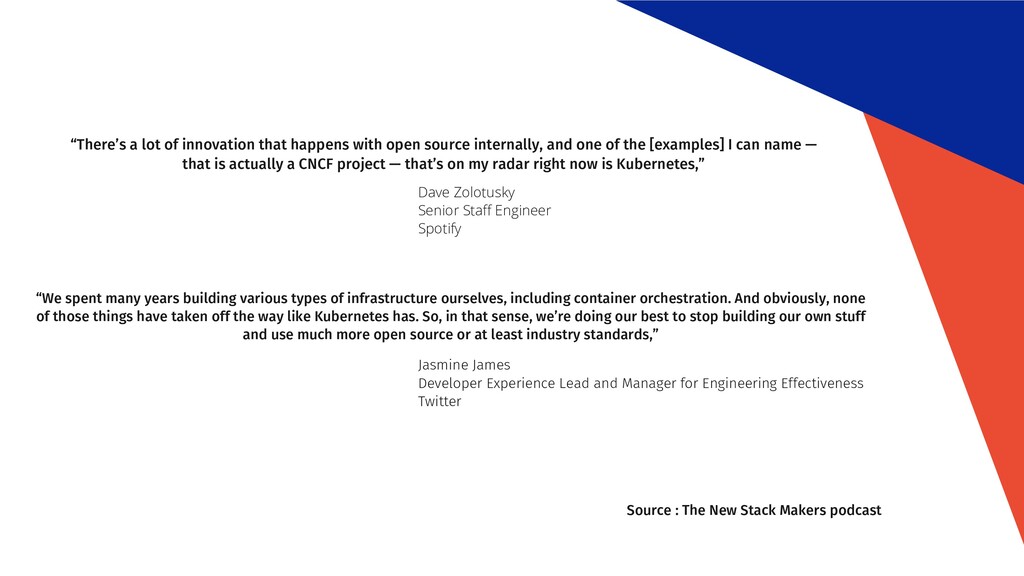
including container orchestration. And obviously, none of those things have taken off the way like Kubernetes has. So, in that sense, we’re doing our best to stop building our own stuff and use much more open source or at least industry standards,” “There’s a lot of innovation that happens with open source internally, and one of the [examples] I can name — that is actually a CNCF project — that’s on my radar right now is Kubernetes,” Dave Zolotusky Senior Staff Engineer Spotify Jasmine James Developer Experience Lead and Manager for Engineering Effectiveness Twitter Source : The New Stack Makers podcast
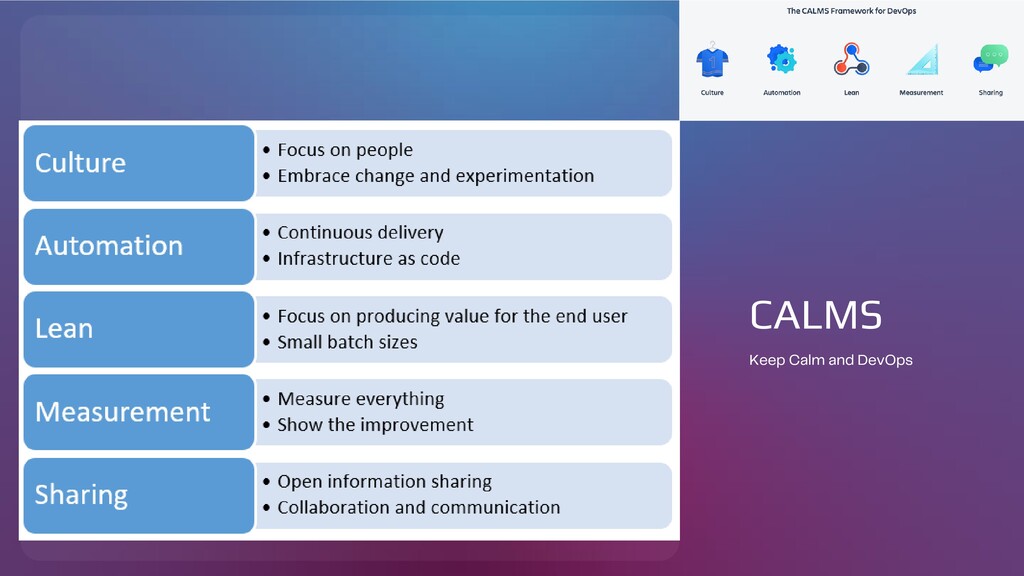
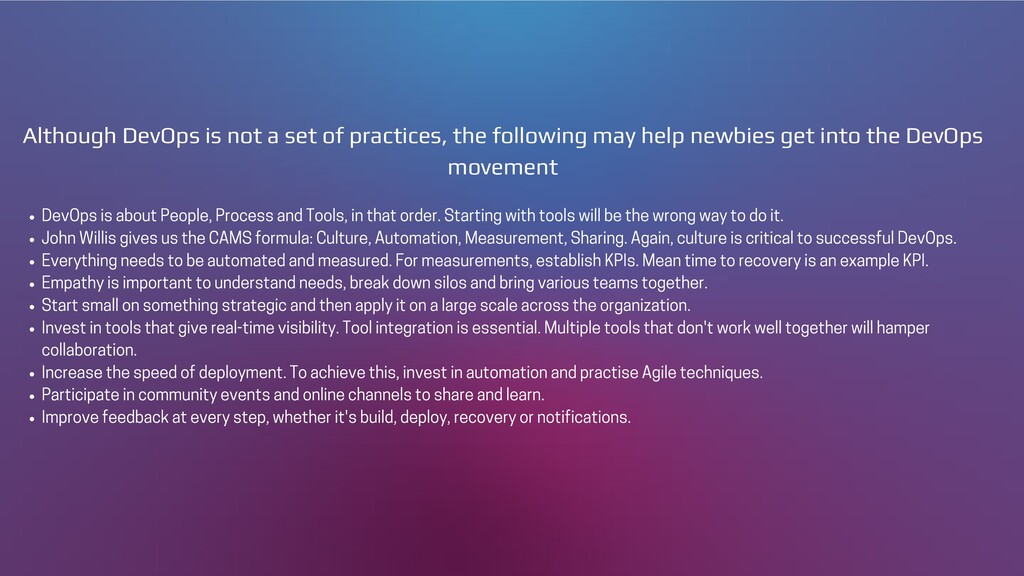
Starting with tools will be the wrong way to do it. John Willis gives us the CAMS formula: Culture, Automation, Measurement, Sharing. Again, culture is critical to successful DevOps. Everything needs to be automated and measured. For measurements, establish KPIs. Mean time to recovery is an example KPI. Empathy is important to understand needs, break down silos and bring various teams together. Start small on something strategic and then apply it on a large scale across the organization. Invest in tools that give real-time visibility. Tool integration is essential. Multiple tools that don't work well together will hamper collaboration. Increase the speed of deployment. To achieve this, invest in automation and practise Agile techniques. Participate in community events and online channels to share and learn. Improve feedback at every step, whether it's build, deploy, recovery or notifications. Although DevOps is not a set of practices, the following may help newbies get into the DevOps movement


 ruwanranganath
 yazm
 ykanoh
 pfn
 terurou
 namiki64
 ivry_presentationmaterials
 y0hgi
 yahonda
 jyouryuusui
 kaminashi
 recruitengineers
 3n
 shlominoach
 ipullrank
 uxyall
 akademiya2063
 mayatellez
 aleyda
 sergeychernyshev
 jct
 hatefulcrawdad
 honzajavorek